Wednesday, May 27, 2026


Critically endangered New Zealand parakeet gets lifeline from randy pair


A critically endangered New Zealand parakeet known as kakariki karaka has seen its numbers surge thanks to a pair of super breeders now responsible for more than 10 percent of the total population. Parents Nacho and Trixie were paired up in 2024 at the Isaac Conservation and Wildlife Trust in Christchurch and have since produced 55 chicks, including 33 this year alone.


Issued on: 27/05/2026 
By: FRANCE 24

Nacho – part of a breeding pair of the rare New Zealand kakariki karaka parakeets – has produced 55 chicks in two years, more than 10% of the total population of the critically endangered bird. © Leigh Percasky, AFP via The Isaac Conservation and Wildlife Trust

One of the world's rarest parakeets has seen its numbers surge thanks to a pair of super breeders now responsible for more than 10 percent of the total population.

The New Zealand native kakariki karaka – or orange-fronted parakeet – is critically endangered and has twice been declared extinct, only to be rediscovered.

There are around 450 of the birds left, mainly in sanctuaries and predator-free islands but also in wild populations.

Parents Nacho and Trixie were paired up in 2024 at the Isaac Conservation and Wildlife Trust in Christchurch and have since produced 55 chicks, including 33 this year alone.

Wildlife manager Leigh Percasky praised "super-mum" Trixie.

"The breeding season has ended and yet she's still producing eggs and raising chicks," Percasky said.

"Ideally we'd prefer her to stop so she can have a rest, but she shows no signs of that with another seven chicks in her most recent clutch.

"Nacho also deserves credit as he's responsible for finding food for both Trixie and the chicks which is incredibly busy."
Captive breeding

Wayne Beggs, lead of the Department of Conservation's kakariki karaka recovery programme, said breeding pairs like Nacho and Trixie were ensuring the species didn't go extinct.

"We rely on the captive breeding programmes as without them we couldn't establish new sites," Beggs said.

"The wild populations are very vulnerable to predators, so we always need backup populations."

Percasky said Nacho and Trixie had made a "massive contribution" to the survival of their species, but he wants the love birds to "have a well-earned break" after their latest clutch.

"I'm not sure where they get all their energy from."

(FRANCE 24 with AFP)
Iran switches World Cup base camp to Mexico, as Washington closes door on squad

Iran's base camp for the 2026 World Cup was on Tuesday switched from the United States to Mexico, after US authorities refused to host the squad for the tournament, which starts on 11 June in Mexico City.


Issued on: 26/05/2026 - RFI
Iran will compete in a fourth consecutive World Cup. © Luisa Gonzalez / Reuters

By: Paul Myers

Mexico's President Claudia Sheinbaum said she agreed to the change after tournament organisers Fifa approached her government.

She said the US did not want Iran staying in the country overnight during the month-long tournament, even though Iran is scheduled to play three Group G matches there.

"We have no reason to deny them the possibility of staying in Mexico," Sheinbaum said during her daily meeting with journalists.

The White House and the US State Department have not officially commented on the change.

From Tucson to Tijuana

A few weeks after US and Israeli aircraft launched strikes on the Iranian capital Tehran, US President Donald Trump said Iran was welcome to participate in the World Cup.

However, he added that he did not believe it was appropriate for Iran's team to be in the US, for their own safety.

Iran had been scheduled to stay in Tucson in Arizona. They will now be based in Tijuana, just over 200km from Los Angeles. Tucson lies some 800km from Los Angeles.

Under the new arrangement, they will travel from Mexico to Los Angeles just before each game and return to Mexico afterwards.

Iran will open its Group G campaign against New Zealand in Los Angeles on 15 June. Six days later in the city, they take on Belgium. Iran conclude the group stage on 26 June against Egypt in Seattle.

Mehdi Taj, head of Iran's football federation, said the swap would help avoid visa-related complications and allow direct Iran Air flights to Mexico.

Original schedule

In March, Taj said Iran was in talks with Fifa about moving its group matches to Mexico on safety grounds.

Sheinbaum said Mexico would be open to hosting the games, but Fifa said it would maintain its original schedule.

Iran advanced to a fourth consecutive World Cup after coming through two qualifying stages in the 47-member Asian Football Confederation.

Between November 2023 and June 2024, they topped a group containing Uzbekistan, Turkmenistan and Hong Kong to move into the third round, where Iran finished at the top of a six-team pool to reach the World Cup.

On 16 May, Iran's head coach Amir Ghalenoei named a 30-man provisional squad for a training camp in Turkey.

Iran will play Gambia on 29 May in a warm-up match before travelling to Tijuana.

(with newswires)
UK prepares mine-sweeper for Hormuz as part of wider Franco-British coalition

The United Kingdom is preparing a mine-sweeping mission to help reopen the Strait of Hormuz, as part of a wider Franco-British coalition that would move in once a peace deal ends the Iran war and commercial shipping returns.

'GREATEST MILITARY IN THE WORLD' HAS NO MINESWEEPERS


Issued on: 26/05/2026 - RFI

Britain's royal navy flagship the HMS Bulwark (DOWN) Britain's royal navy supply vessel RFA Wave Knight ( TOP L) and Britain's royal navy supply vessel RFA Lyme Bay pictured at dock in the port of Gibraltar in 2014. (Illustration photo) AFP - MARCOS MORENO


Hundreds of British sailors are preparing aboard the RFA Lyme Bay off Gibraltar – the UK territory on the southern tip of the Iberian peninsula – for a possible deployment to the Gulf, where the closure of the Strait of Hormuz has disrupted shipping and pushed up the cost of fuel, fertiliser and food.

The mission remains contingent on diplomacy: British officials say any operation to secure the strait would begin only after hostilities have ended and an agreement is in place.

The Royal Fleet Auxiliary vessel is being loaded with ammunition and sonar-equipped mine-hunting sea drones before linking up with the UK destroyer HMS Dragon and allied ships for air support. The force would then travel through the Suez Canal towards the Persian Gulf as part of an international effort led by Britain and France.

Since the start of the crisis, Paris and London have agreed to turn diplomatic support into a practical military plan, convening dozens of partner countries behind an independent, strictly defensive mission to protect merchant shipping, reassure insurers and carry out mine-clearance once conditions allow.

Armed Forces Minister Al Carns has presented the preparations as a practical response to a crisis that London did not start but is now helping to solve. When recently asked by reporters visiting the vessel in Gibraltar what US President Donald Trump wanted from his British ally after criticising NATO partners for not doing more, Carns said Britain had the capacity to “pull together 40 nations” and shape a response to a complex and unforeseen problem.

Clearing a path

The Strait of Hormuz has been effectively closed by Iran since the US and Israel launched the war on 28 February, blocking at least 6,000 ships from passing through, according to Carns. Before the conflict, the waterway carried around a fifth of global shipments of oil and liquefied natural gas, making its reopening a critical prize for governments and markets alike.

The immediate priority would be to clear a transit lane allowing around 700 stranded ships to leave. A second lane would then be cleared for vessels entering the Gulf. Fully clearing the strait, however, could take months or even years.

According to the Royal Navy’s Mine and Threat Exploitation Group, Iran could have deployed a wide variety of mines, including rocket-propelled, cabled and seabed devices triggered by sound, movement or light. The British mine-sweeper is carrying autonomous systems that can scan the seabed and water column with sonar in about half the time it would take a crewed vessel to map the same area.

However, there remains uncertainty over whether mines have in fact been laid. To date, the US has not found or destroyed any mines in the strait and reported that no ships have been damaged, although commercial traffic has continued at much lower levels.


Diplomacy edges forward


The military preparations are unfolding alongside cautious diplomacy. President Trump said at the weekend that a deal with Iran had been “largely negotiated”, although he later urged both sides to take their time and said the US blockade on Iranian ships would remain in place until an agreement was “reached, certified, and signed”.

This comes as US Secretary of State Marco Rubio struck a cautious tone on Monday, saying Washington would give diplomacy every chance to succeed but would deal with Iran “another way” if no acceptable agreement emerged. He said there was a “pretty solid” proposal on the table to reopen the strait, begin a time-limited nuclear negotiation and move towards a broader settlement.

Iran, for its part, said progress had been made but warned against expecting an imminent breakthrough. Foreign ministry spokesman Esmaeil Baqaei said Tehran and Washington had reached conclusions on “a large portion” of the issues under discussion, but added that no one could claim a signing was close.

Iranian officials have accused Washington of shifting its positions, while Tehran is also seeking sanctions relief and the release of frozen funds.

The emerging framework, according to US officials, would see Iran agree in principle to reopen Hormuz in exchange for the lifting of the US naval blockade. More difficult questions – including the fate of Iran’s highly enriched uranium, nuclear limits, sanctions and regional conflicts involving Israel, Lebanon and Hezbollah – would be pushed into further negotiations, potentially over a 60-day period.

Markets have responded with some optimism, with oil prices falling 6 percent to two-week lows as hopes of a settlement grew. Yet even a deal that firms up the fragile ceasefire in place since early April will not immediately end the global energy squeeze.

(with newswires)
CRIMINAL CAPITALI$M

Former Lafarge cement chiefs released pending Syria terrorism financing appeal

The former CEO of French cement firm Lafarge, Bruno Lafont, and his right-hand man at the company Christian Herrault are to be released from prison under judicial supervision, pending their appeal over convictions handed down in April for financing terrorism in Syria.


Issued on: 26/05/2026 - RFI

Bruno Lafont pictured arriving on the day of the verdict in the trial of the French cement group Lafarge, accused of financing terrorism in Syria, 13 April. AFP - BEHROUZ MEHRI

The Paris Court of Appeal ruled on Tuesday that the two former executives could leave custody pending the appeal trial.

It said that pre-trial detention was “not the indispensable means” of ensuring they appear in court for the appeal.

The court also took into account what it described as the “shock of imprisonment” for the two men.

Lafont, 69, the former head of the CAC 40 cement giant, and 75-year-old Herrault, its former deputy managing director, were sentenced on 13 April by the Paris Criminal Court to six years and five years in prison respectively.

Both were immediately remanded in custody after the ruling.

On 19 May they applied to be released while awaiting a trial, after appealing their convictions.

French court fines Lafarge, hands ex-CEO jail term for funding IS in Syria
Release conditions

As part of their judicial supervision, the Court of Appeal barred both men from leaving French territory. It also set bail at €100,000 for Lafont and €90,000 for Herrault, with the sums to be paid by 2 July.

However, the court did not grant a request from prosecutors to prevent the two men from contacting one another. The pair had reportedly been held in the same cell at La Santé prison in Paris.

They were expected to be released by the end of Tuesday.

Lafont’s lawyer, Jacqueline Laffont, welcomed the decision, telling French news agency AFP she was “relieved” and “above all reassured when magistrates, as is the case today, apply the law”.

Lafarge on trial in Paris over alleged payments to Islamic State in Syria
Payments to jihadists

Lafont and Herrault were among nine defendants convicted on 13 April over payments made in Syria in 2013 and 2014 through Lafarge Cement Syria, the group’s local subsidiary.

The court found that nearly €5.6 million had been paid to armed jihadist groups in an effort to keep Lafarge’s cement plant in Jalabiya, northern Syria, running during the country’s civil war.

The case has become one of the most closely watched corporate accountability trials in France, involving a company once seen as a flagship of French industry. Lafarge has since been absorbed by its Swiss rival Holcim.

Lafarge itself was fined the maximum penalty of €1.125 million. The company was also ordered, jointly with four former executives, to pay a customs fine of €4.57 million for failing to comply with international financial sanctions.

All those convicted – including the company – have appealed. A hearing is expected in the coming months, in a case that has raised questions about corporate conduct, risk-taking and responsibility in conflict zones.

(with newswires)
Deforestation in Brazil's Amazon slows to lowest level in six years

Brazil cut deforestation in the Amazon to its lowest level since 2019 in 2025, with tougher environmental enforcement helping reduce forest loss even as five trees continued to be felled every second in the world’s largest rainforest.


Issued on: 27/05/2026 - RFI

Brazil lost 985,000 hectares of native vegetation in 2025, though deforestation in the Amazon fell to its lowest level since 2019, according to monitoring network MapBiomas. AP - Victor R. Caivano

South America’s biggest country lost 985,000 hectares of native vegetation in 2025 – down 20.6 percent from the previous year, monitoring network MapBiomas announced on Wednesday.

The figure was the lowest since the network began keeping records in 2019.

Deforestation in the Amazon alone fell by 23.5 percent, while reductions were recorded across Brazil’s six major ecosystems.

The figures are good news for President Luiz Inacio Lula da Silva, who is seeking a fourth term in October elections after making the fight against deforestation one of the central goals of his administration.

Tougher enforcement

Preserving forest cover is considered important in tackling climate change because trees absorb carbon dioxide from the atmosphere.

Illegal logging surged during the presidency of far-right former leader Jair Bolsonaro. Lula has pledged to eradicate illegal deforestation completely by 2030.

“We are seeing an increase in enforcement actions and sanctions (...) which have a direct correlation with the drop in deforestation in all Brazilian biomes,” MapBiomas technical coordinator Marcos Rosa told the French news agency AFP.

Official data from Brazil’s National Institute for Space Research, known as INPE, has also shown deforestation declining since Lula returned to office in 2023.

The MapBiomas figures do not include forest lost to fires. After a record fire season in 2024, Brazil was relatively spared major infernos in 2025.

“In the Amazon, the world’s largest rainforest, where deforestation slowed by 23.5 percent, five trees are still felled every second,” the monitoring network said.

Pressure on the Cerrado

The hardest-hit biome in 2025 was once again the Cerrado, a vast and biodiverse savanna south of the Amazon.

More than half of all vegetation loss recorded in Brazil last year took place in the Cerrado, MapBiomas said.

Agriculture accounted for 99 percent of vegetation loss across the country, according to the consortium of universities, non-governmental organisations and technology companies that tracks land-use changes in Brazil.

Election backdrop

Environmental policy is expected to remain a major issue ahead of Brazil’s presidential election campaign.

Lula hosted the Cop30 climate summit in the Amazonian city of Belem in 2025 as part of efforts to present Brazil as a leader on environmental protection.

The summit placed global attention on rainforest protection and efforts to end deforestation, with Brazil promoting new international forest protection initiatives during the talks.

Criticism from environmental groups has nevertheless continued over the government’s support for a major oil exploration project near the mouth of the Amazon River.

(with AFP)


Germany signs major Canadian LNG agreement amid Middle East energy fears

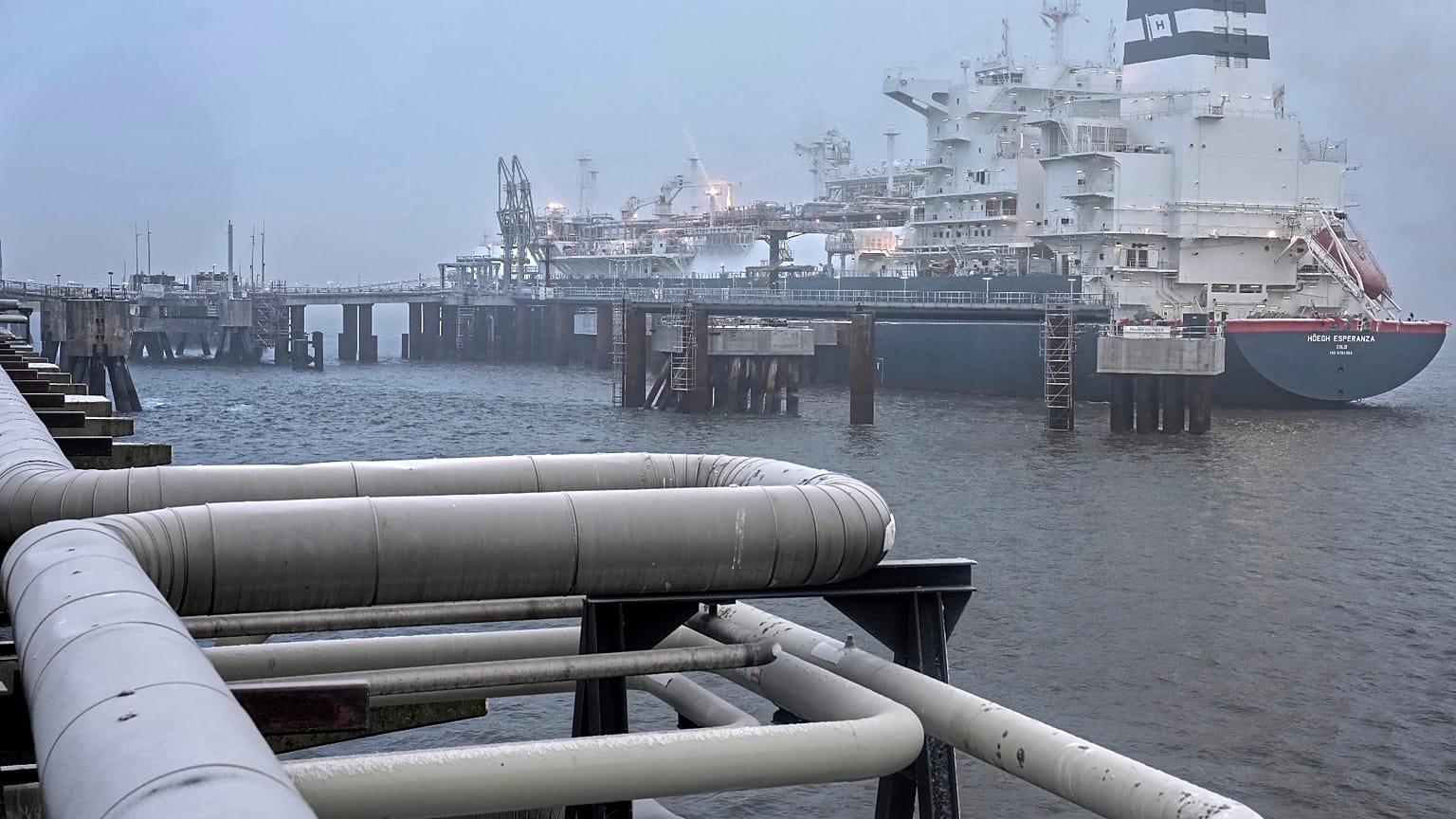
FILE - The 'Hoegh Esperanza' Floating Storage and Regasification Unit (FSRU) is anchored during the opening of the LNG terminal in Wilhelmshaven, Germany. 17 December 2022
Copyright AP Photo/Michael Sohn, pool, File

By Doloresz Katanich with AP
Published on

Canada has reached an agreement to export liquefied natural gas to Germany from a planned Pacific coast terminal, an official familiar with the matter said on Tuesday.

Canada is set to deepen energy ties with Germany as Europe grapples with a prolonged energy crisis linked to the war in Ukraine — and now escalating conflict in the Middle Eas

Canada will sign an agreement with Germany’s SEFE group — Securing Energy for Europe — for supplies from the proposed Ksi Lisims export facility on the coast of British Columbia, AP reported, citing sources familiar with the matter.

The sources spoke on condition of anonymity because they were not authorised to speak ahead of Wednesday’s announcement.

Up to 1 million metric tonnes of liquefied natural gas per year will be exported under the agreement.

The planned exports from Canada would amount to roughly one-eighth of Germany’s LNG imports last year in energy terms. Germany imported 106 terawatt hours of gas through LNG terminals in 2025, according to the Bundesnetzagentur, the country’s federal energy regulator.

SEFE is a major German energy company. It was previously the German subsidiary of Gazprom before Berlin nationalised it in 2022 as Europe struggled with an energy crisis tied to the war in Ukraine.

After European countries backed Ukraine, Russia sharply reduced natural gas supplies, triggering an energy crisis that fuelled inflation and forced some factories to scale back or shut down because of soaring energy prices.

Before the war, Germany was one of the largest importers of Russian gas in Europe.

Germany continues to rely on LNG imports as part of its efforts to replace Russian pipeline gas supplies.

Overall, with the Iran war unfolding, concerns are growing that Europe’s largest economy could face renewed energy shocks.

Germany’s economic outlook has weakened sharply amid the conflict and energy market instability. In April, the German government halved its 2026 growth forecast to 0.5% of GDP, citing the impact of energy shocks linked to the war in Iran.

The latest indicators suggest Germany’s economy remained weak in May, with both manufacturing and services under pressure, pointing to continued contraction in the private sector. However, Germany’s ifo Business Climate Index rose unexpectedly during the same month.

Canada looks beyond US market

Canadian Prime Minister Mark Carney has set a target of doubling non-US trade within a decade. Energy-rich Canada currently exports almost all of its oil and gas to the United States.

British Columbia Premier David Eby said earlier on Tuesday that a deal to supply Canadian LNG to Germany would mark a key step towards the partners behind the Ksi Lisims project taking a final investment decision on the CA$10 billion (€6.6 billion) plant and export terminal.

Ksi Lisims, located on Pearse Island near the border with Alaska, has secured the permits it requires, but the consortium has yet to make a final investment decision that would allow construction to begin.

Eby said securing long-term offtake agreements with buyers is a crucial step before the project can move forward.

The partnership has already signed supply agreements with a subsidiary of Shell and France’s TotalEnergies.

 Why is Europe heating up faster than the rest of the world?


Europe is in the grip of an early-season heatwave, with record May temperatures driven by a “heat dome” of hot air over the western part of the continent. Scientists point to human-caused emissions, shifting atmospheric patterns and rapid Arctic warming as key factors amplifying extreme heat across the region.


Issued on:  27/05/2026 - 
By: FRANCE 24

Temperature records for May were broken in France and Britain. © Stephane de Sakutin, AFP

Europe, which is in the throes of a record-smashing heatwave this week, is the world's fastest-warming continent and stretches into an even more rapidly heating Arctic.

After record high temperatures for May were broken in Britain, Ireland and France on Monday and Tuesday, the continent still faces more brutal heat in the coming days.

A so-called "heat dome" of warm air from northern Africa trapped under a high-pressure system over western Europe is behind the sort of heat not usually seen until high summer.

Here is a look at why Europe is warming faster than elsewhere:

A higher degree

The planet is around 1.4C warmer than in preindustrial times, defined as 1850-1900.

By comparison, Europe is around 2.4 hotter than the preindustrial era, according to the EU's Copernicus Climate Change Service.

"Almost all of this heat is driven by the human-induced greenhouse effect from fossil fuel emissions, with the actual distribution of this excess heat determined by (several) factors," Ben Clarke, researcher in extreme weather and climate change at Imperial College London, told AFP.

Changing weather patterns

Shifts in atmospheric circulation have driven more frequent and more intense heatwaves in the European summer, according to Copernicus.

High-pressure systems, which bring settled weather and higher temperatures, have become more common in Europe, Copernicus Director Carlo Buontempo said.

"If you look over the last 20, 30 years, there has been a prevalence, especially in summer, of those sort of anticyclonic conditions that are making heatwaves more likely," Copernicus Director Carlo Buontempo told AFP.

Whether the increased frequency of that specific type of high-pressure system is due to climate change or is just a "statistical fluctuation" is still a scientific debate, Buontempo said.

Such high-pressure systems are also known as "blocking highs" as they can remain stationary and stop other weather systems from moving into a region.

Explaining how they work, Mary Bourke, geography professor at Trinity College Dublin, told AFP: "The sky is exposed to us, there are no clouds. It's a stable mass of air that is bringing warm air down to the surface and taking away moist air, so the air is not only warm, but it's also dry."

Rapidly warming Arctic

Another major reason is geography.

"Europe is connected to the Arctic, which is warming much faster than the rest of the planet," Clarke said.

The Arctic is 3.2C warmer than in preindustrial times, according to Copernicus.

The region's rising temperatures are partly due to a process known as the albedo feedback.

Bright snow and ice reflect much of the sun's heat back into space, but as they melt they reveal darker, heat-absorbing surfaces such as land and the ocean.

"So as sea ice melts it leads to greater absorption of heat, which in turn further warms waters and melts more ice," Clarke said.

Melting snow

In other parts of Europe, the area where snow was very frequent in winter has shrunk, Buontempo said.

"We have many of the historical regions that had a week or more of freezing condition now, not having that. And this means exposing dark land rather than white snow," he said.


Falling air pollution

Stricter air quality regulations have reduced aerosol emissions since the 1980s.

But tackling the pollutant had the side effect of contributing to global warming, as these tiny airborne particles have a cooling effect by reflecting sunlight and making clouds more reflective.

"While a reduction in air pollution is hugely important for respiratory health, it also increases the solar radiation at the surface, as many types of particulate matter deflect sunlight," Clarke said.


Varying degrees

The rate of temperature change varies across Europe.

Eastern and southeastern Europe, and parts of central Europe including the Alps, have warmed by 0.5C-1C per decade over the last 30 years, according to Copernicus.

Western and southwestern Europe, and sub-Arctic Finland, Norway and Sweden, warmed by 0.2C-0.5C per decade.

Svalbard, a Norwegian Arctic archipelago that is home to polar bears, has reached warming of 1.5C-2C per decade.

One of the fastest-warming places on Earth, Svalbard had record high summer temperatures from 2022 to 2024. Last year it saw its fourth warmest summer on record.

(FRANCE 24 with AFP)

Record heat has ‘fingerprints of climate change all over it’. What can Europe expect this summer?

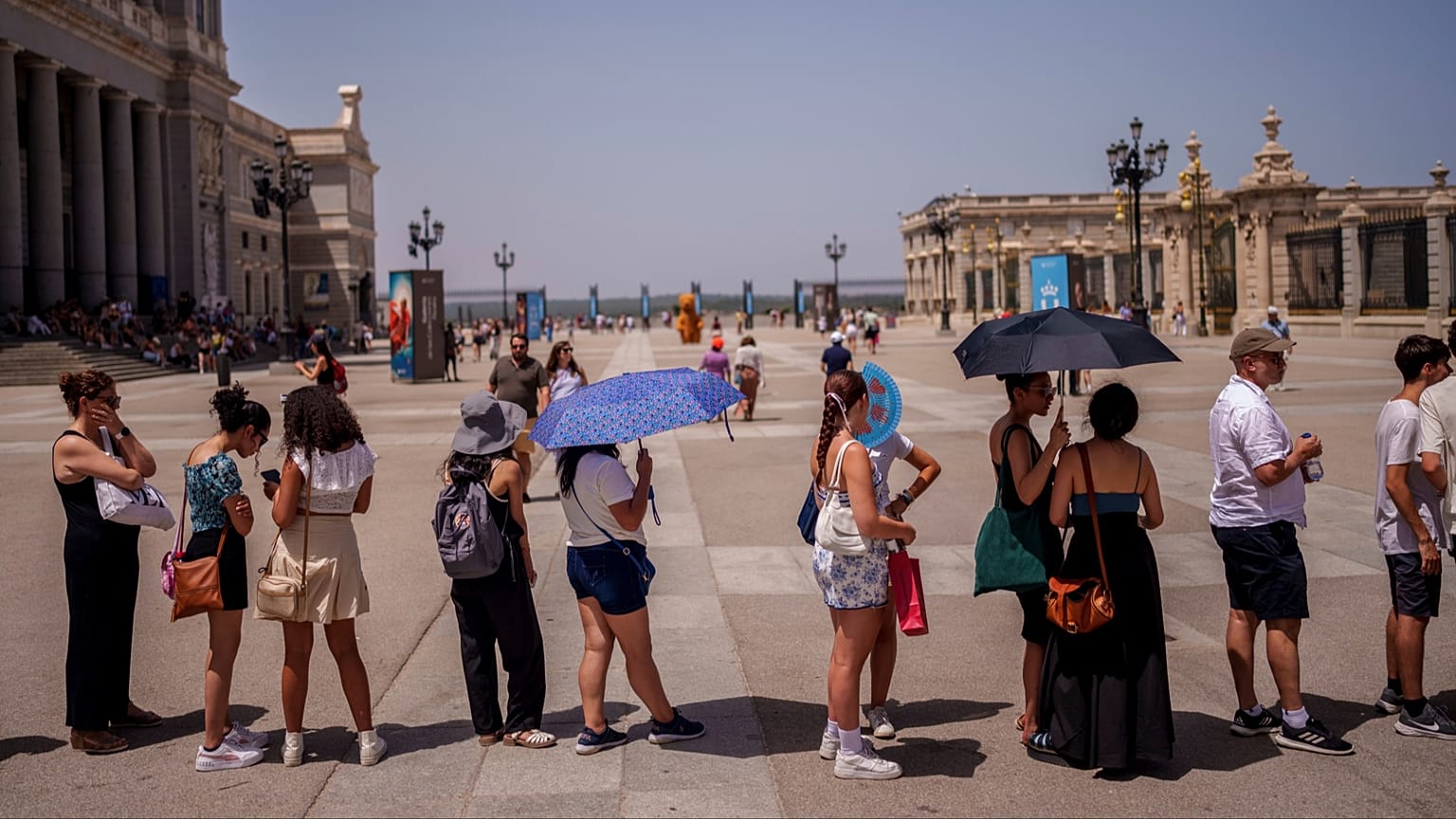
People queue to enter the Royal Palace during a hot and sunny day of summer in Madrid, Spain, Wednesday, July 19, 2023.
Copyright Copyright 2023 The Associated Press. All rights reserved.

By Liam Gilliver
Published on

"The climate we are living in today is simply not the one we grew up with, and our buildings and infrastructure are woefully unprepared for what's next.”

Record May temperatures have sweltered huge parts of Europe, as countries remain trapped under a “powerful” heat dome – but experts warn the worst is yet to come.

France’s weather agency Météo France declared on Monday (25 May) that new monthly highs had been logged at more than 350 weather stations, with the highest temperature of 37.1°C registered near Hossegor, close to Biarritz. The intense heat has been linked to multiple deaths, and shows no signs of shifting.

The UK record for the hottest May day was also broken for a second consecutive day yesterday, as temperatures in parts of London surpassed a scorching 35°C.

According to weather forecaster WFY24, dozens of European capitals witnessed temperatures far above the climatological normal high for this time of year.

London faced the biggest anomaly, with temperatures exceeding 16°C above average May conditions, while Paris (+14°C), Berlin (+11°C), Lisbon (+10°C) and Madrid (+10°C) also faced exceptionally high temperatures. Even cooler regions like Oslo experienced balmy temperatures of 18°C, an additional 3°C from average temperatures for late May.

Is climate change behind Europe’s sweltering May temperatures?

While forecasters have blamed the sustained intense temperatures on a heat dome, which locks in extreme heat, the phenomenon itself is becoming more common due to human-caused global warming.

“This record-breaking heat has the fingerprints of climate change all over it,” says Friederike Otto, a professor of Climate Science at Imperial College London.

“Temperatures on this scale were once exceptional even at the height of summer. Seeing 35°C in the UK during spring is absolutely astonishing, but the science is very clear – climate change makes these heatwaves hotter, longer and far more frequent.”

Otto warns that temperature records will continue until global emissions are cut and countries reach net zero.

“The climate we are living in today is simply not the one we grew up with, and our buildings and infrastructure are woefully unprepared for what's next,” she adds.“While we have made some progress in cutting emissions, it is not fast enough.”

Which countries will be hit hardest by rising temperatures in 2026?

The EU’s Copernicus Climate Change Service (C3S) and the European Centre for Medium-Range Weather Forecasts (ECMWF) predict that summer 2026 will likely be influenced by a “relatively weak atmospheric pressure pattern”.

This can heavily impact temperature by limiting winds, which often leads to stagnant, hot days.

Seasonal temperature is likely to be above average in all regions this summer, with the most confident signal over southeastern parts of the continent – while C3S also points to below-average rainfall in eastern parts of Europe.

Ioanna Vergini, founder of world weather forecast WFY24, tells Euronews Earth that Europe should brace for “compound heat-and-drought in the south, a wildfire arc from Portugal to Greece, followed by flash-floods in autumn.”

For every 1℃ rise in air temperature, the atmosphere can hold around seven per cent more moisture, which can lead to more intense and heavy rainfall.

“Southern Europe remains the most vulnerable hotspot, but central and eastern Europe are warming the fastest and they’re the least adapted to 35°C+ days they now face routinely,” Vergini says. “Cities are where people die.”

Infrastructure such as concrete and asphalt absorbs heat, which keeps outdoor temperatures high, especially in cities. This is known as the urban heat island effect.

How can Europeans deal with extreme heat this summer?

European cities are quickly addressing the need to protect citizens from heat stress. Spain, for example, is home to the world’s most extensive network of climate shelters – providing access to public buildings that have free seating, water and air conditioning.

In Barcelona alone, there are already 400 climate shelters in public buildings such as libraries, museums, sports centres and shopping malls. Other cities are catching onto the incentive, with the General Council of Bucharest approving the establishment of climate shelters earlier this month.

Cities like Paris have also been preparing for rising temperatures for decades, making efforts to turn heat-trapping streets into a “green oasis”. Since 2020, more than 6,000 parking spaces and 1.3 hectares of asphalt have been removed to enable the streets to be greened.

By 2024, there were almost 100 Parisian streets with planters, allowing nature to thrive alongside urban life. Trees and plants improve air quality, creating an added benefit for polluted cities.

More than 100,000 trees have been planted in Paris since 2020 to provide more shade for residents and increase the absorption of heat-trapping gases.

“Know your country’s heat warnings, check on elderly neighbours and don’t trust the night to cool off,” Vergini adds.

“Tropical nights (where the temperature never drops below 25°C) are now routine in southern Europe and compound the daytime stress on the body.”

The expert urges authorities to stop treating heat planning as “reactive” and make sure measurements are scheduled. “Seasonal forecasts give multi-month lead time, what’s missing is the operational use of it,” she says.


Temperatures soar across Europe as 'heat dome' drives May records


A “heat dome” is driving unusually high temperatures across Europe, pushing readings well above seasonal norms. The UK and France have already set May records while Spain and Italy are facing heat alerts and limits on outdoor work. Scientists say climate change is making these kinds of extreme heat events more common.


Issued on: 27/05/2026 - 
By: FRANCE 24


A woman shields herself from the sun with an umbrella during a heatwave in London, Britain, May 26, 2026. © Jack Taylor, Reuters

Forecasters in Europe warned Tuesday of exceptional heat as record temperatures driven by a "heat dome" push temperatures well above seasonal norms across the continent.

The surge follows a record-breaking Monday, with France logging its hottest day in the month of May on record, according to its weather agency, and the United Kingdom also posting unprecedented highs.

A so-called "heat dome" of warm air from northern Africa trapped under a high-pressure system over western Europe is behind the high temperatures not usually seen until high summer.

Restrictions on outdoor work were imposed in parts of Italy, beaches in southwest France filled earlier than usual and farmers reported accelerated harvests as temperatures went beyond 30C across the region.

Scientists say human-driven climate change is amplifying such extremes, with Europe warming faster than the global average and heatwaves growing more frequent and severe.

Temperatures in Spain were expected to peak later this week at 38C, while parts of Italy imposed restrictions on working outdoors.

In the United Kingdom, the Met Office weather agency said Monday was the hottest May day on record, with temperatures hitting 34.8C at Kew Gardens, southwest London, a full two degrees above the previous high.

"This heat would be exceptional in the UK even in mid-summer, let alone May," it said on X.

"The weather here, it's like a mini version of hell. It's boiling. It's like really hot," said 10-year-old Liza Nizari on a visit to London, where temperatures normally average about 17C or 18C at this time of year.

The Met Office forecast a drop later in the week.

Lindy Brand-Daloze, a 66-year-old Australian living in London for 12 years, said: "It's warm, but it's climate change, isn't it? So, you know, (we have) probably got to get used to this."

Scientists say human-induced climate change is making extreme weather events like heatwaves, droughts and floods more intense, resulting in temperature records being broken more frequently.

Met Office meteorologist Greg Dewhurst told AFP the increase in extreme temperatures was "a good indication of climate change in action" and more likely to become "the new norm".

Climate advisers last week warned the UK government that the country was "built for a climate that no longer exists" and urged it to adapt infrastructure like schools and hospitals for a warming planet.

In 2022, temperatures in the UK soared above 40C for the first time since records began.

A record May temperature of 28.8C was recorded at two weather stations in Ireland: Killarney in the southwest and Clonmel in the south, Met Eireann data showed.

A grass fire broke out near Arthur's Seat hill near Edinburgh, sending smoke over the Scottish city that saw temperatures climb to 25C, according to fire fighters and the BBC.

Heatwave alert

Across the Channel, weather agency Meteo-France said that for France as a whole, "Monday was the hottest day recorded for the month of May since measurements began".

It said highs of 33C to 36C in regions were expected, adding that the spell was likely to last at least until the end of the week.

French Prime Minister Sebastien Lecornu was to hold a meeting Thursday with key ministers to go over government preparations for the heatwave.

The capital, Paris, on Saturday notched up its first temperature above 30C of the year, hitting 31.9C.

On Sunday, a man died during a 10-kilometre running race in Paris, civil defence services said, while 10 more had to be taken to hospital in critical condition after a race in the capital's suburb of Maisons-Alfort, the authorities said.

The sweltering heat on Monday melted tennis fans at Roland-Garros in Paris.


Outdoor work restricted

In Spain, the State Meteorological Agency (Aemet) warned the "extraordinarily high temperatures for this time of year" will continue across the country all week, except in the Canary Islands, in the Atlantic Ocean, off the northwest coast of Africa.

"Widespread tropical nights" are also forecast in southwestern Spain from Wednesday, with temperatures peaking from Wednesday to Friday at between 36C and 38C, it wrote on X.

Farther east, Italy's Lazio region, which includes Rome, on Monday approved rules limiting work in conditions "with prolonged exposure in the sun" between 12:30pm and 4pm.

The measures apply, for example, to farms, construction sites and in the logistics sector and apply until September 15.

Similar rules had been put in place last year but only from May 30.

(FRANCE 24 with AFP)


Five of seven people trapped in flooded Laos cave for more than a week found alive, rescuers say

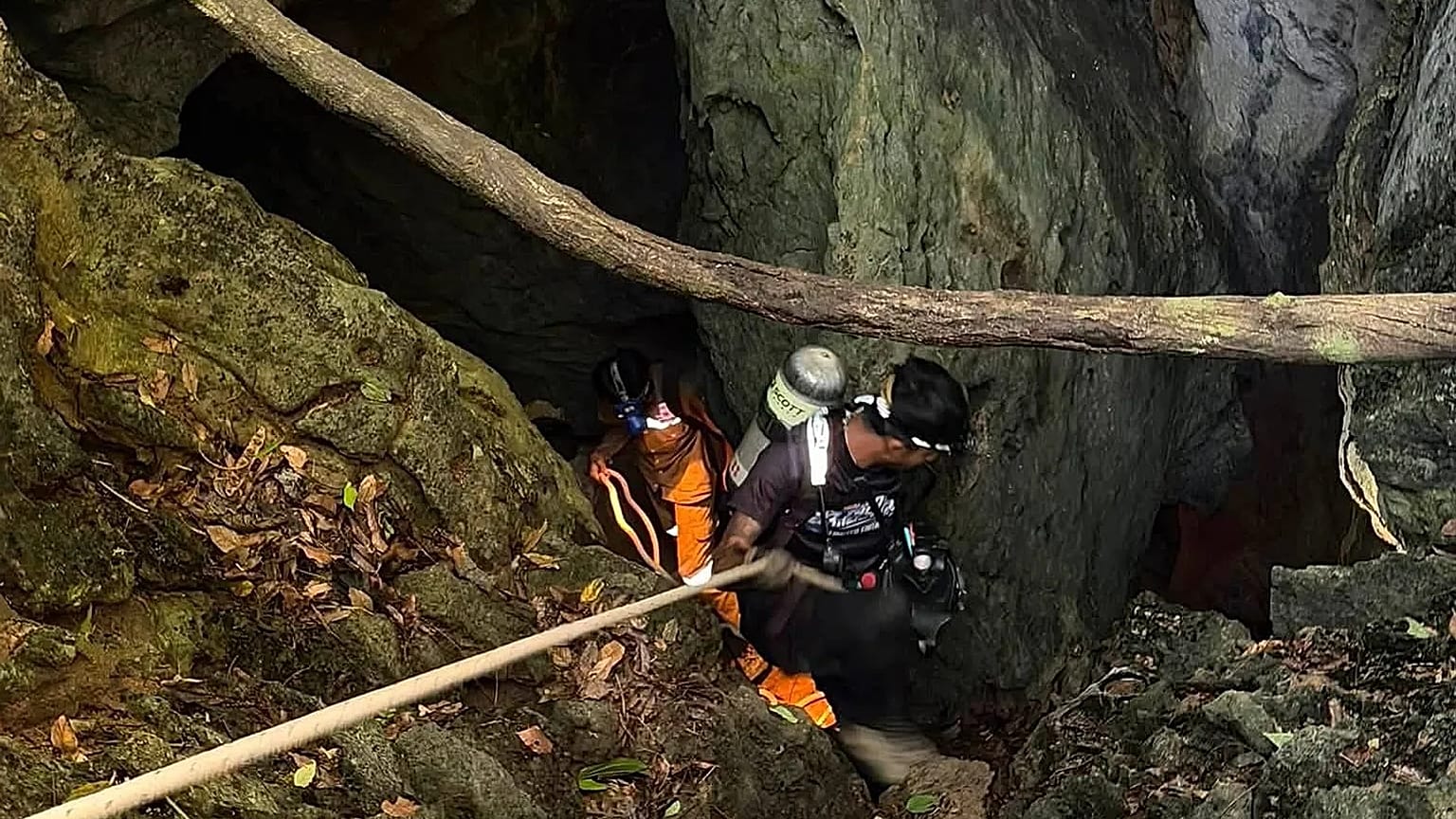
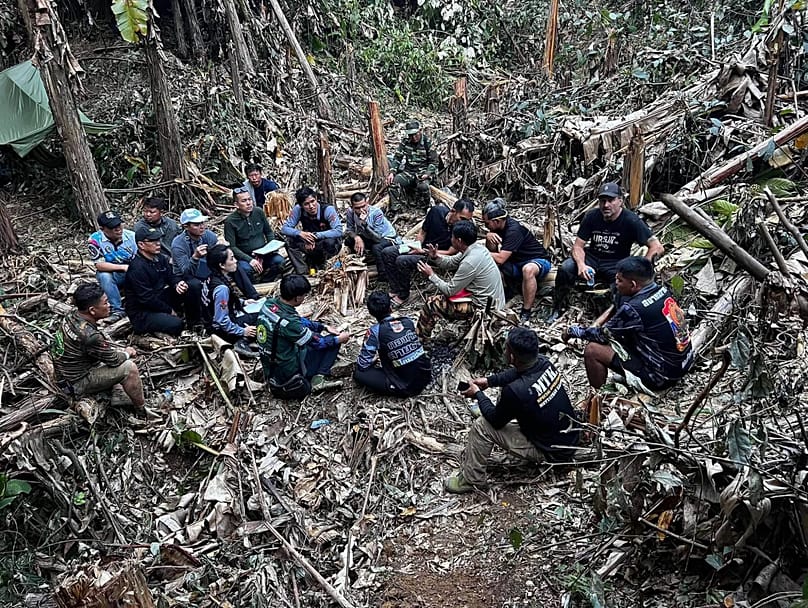
Rescuers try to reach people who have been trapped in a cave in Xaisomboun province, 26 May, 2026
Copyright Metta Tham Rescue Kalasin via AP/Metta Tham Rescue Kalasin via AP


By Gavin Blackburn
Published on

The cave is located in a rugged, remote area in Xaisomboun province’s Longcheng district, about 120 kilometres north of the capital, Vientiane.

Five villagers stuck in a flooded cave in central Laos for more than a week were found alive, rescuers said on Wednesday, but two others remain missing.

The villagers entered the cave in Xaisomboun province on 19 May, but heavy rain triggered flash flooding that blocked the exit and trapped seven people, according to Lao and Thai rescue teams involved in the operation.

Bounkham Luanglath of the Lao organisation Rescue Volunteer for People, which has been working closely with local authorities in the rescue efforts, told the Associated Press news agency that five people were found safe and alive but two more are still missing and the search for them will continue.

“I’m still shaking. Our team made it happen,” he said in a voice message.

A video posted by a Thai rescue group involved in the mission appeared to show the moment divers emerged from the water and discovered the trapped villagers.


Rescuers try to reach people who have been trapped in a cave in Xaisomboun province, 26 May, 2026 AP Photo

In the footage, the villagers, each wearing a headlamp, were sitting on a rock surrounded by floodwater.

Other videos showed rescuers inside and outside the cave cheering, jumping around and hugging each other after the discovery.

Rescue workers from neighbouring Thailand arrived at the site over the weekend. Those helping include divers from several nations who took part in the complicated 2018 rescue of 12 schoolboys and their soccer coach who were trapped for more than two weeks in a cave in northern Thailand before being safely extricated.

The cave is located in a rugged, remote area in Xaisomboun province’s Longcheng district, about 120 kilometres north of the capital, Vientiane.

Rescuers at the scene have detailed on social media the challenging mountainous terrain and heavy rain that has hampered their work.

Rescuers try to reach people who have been trapped in a cave in Xaisomboun province, 26 May, 2026 Metta Tham Rescue Kalasin via AP/Metta Tham Rescue Kalasin via AP

Videos shared online by Thai rescuers showed that reaching the cave’s entrance requires a steep hike on foot of roughly four kilometres. The entrance is also steep and rocky and barely wide enough for a single person at a time to climb through.

There has been no official confirmation on why the villagers went into the cave. However, Bounkham has said that the cave was frequented by local residents looking for gold, even though authorities had repeatedly warned them against entering the cave because of safety concerns.


Fact check: Viral hantavirus map does not show confirmed cases


By James Thomas
Published on


A map circulating online has been used to falsely suggest that the hantavirus is spreading rapidly in Europe, but its creator says it was intended to track news coverage.

A map shared widely online has been used to falsely claim that the Andes strain of the hantavirus is spreading rapidly across Europe and North America

The pictures are screenshots of a map from HantavirusMap.com, which have spread on X and TikTok in the aftermath of a hantavirus outbreak on the cruise ship MV Hondius.

Social media users are claiming that the red and orange markers on the map show confirmed hantavirus cases across the world, particularly in Europe and North America.

This is, however, misleading. The screenshots from the website do not show new cases of hantavirus but rather aggregate news articles and community alerts from around the world.

For example, when you hover over Spain, the map shows a red alert with the number 18.

This has been misinterpreted as if there are this number of hantavirus cases in Spain, when in reality there are currently two confirmed cases of hantavirus in Spain linked to the MV Hondius outbreak.

The second case concerned an individual who was in preventive quarantine and had close contact with someone identified as part of the initial outbreak, according to Spain's Health Ministry, who stressed that the "risk situation" for the general population remains unchanged.

Online posts misinterpret the map as showing an inaccurate number of hantavirus cases worldwide.
Online posts misinterpret the map as showing an inaccurate number of hantavirus cases worldwide. @kluskachytruska

The website itself has a disclaimer saying that the map shows “news signals, not confirmed cases,” before showing a WHO update on the confirmed number of cases.

The site’s creator, Bas Witkop, told The Cube, Euronews’ fact-checking team, that he built the tool to aggregate public reports and official updates, not to track confirmed infections.

He said people had taken screenshots of the map and added voiceovers claiming it showed confirmed infections, in turn, making the situation appear more alarming than in reality.

Witkop has since added clearer disclaimers and stricter classification rules after seeing online users misinterpret the map.

The European Centre for Disease Prevention and Control (ECDC) said, in its 26 May update, that 13 cases of the virus had been reported in total, including 11 confirmed cases and 2 probable.

Health authorities said that the identification of additional cases was expected, as the Andes hantavirus has a long incubation period.

The agency added that the risk to the wider EU/EEA population "remains very low."

Most hantaviruses spread through contact between infected rodents and humans. The Andes variant of the virus can indeed spread between humans, although health agencies say this requires close and prolonged contact with the symptomatic person.

The hantavirus outbreak on the MV Hondius triggered a wave of online health misinformation.

The WHO has previously warned that misinformation can spread rapidly during health emergencies, creating what it called an “infodemic”, or, an abundance of information that makes it harder for people to find trustworthy guidance on the actual health risks.

Researchers say the outbreak has reignited many of the same online misinformation patterns that spread during the COVID-19 pandemic.


MEPs accuse EU of copy-pasting Microsoft lobbying into data centre law

Cars drive past data centres in Virginia, July 16, 2023.
Copyright AP Photo / Ted Shaffrey

By Marta Pacheco
Published on

At the core of the dispute is a European Commission rule on data centre ratings, which EU lawmakers say would significantly restrict public access to information about the environmental performance of individual facilities.

European lawmakers are pressuring the European Commission to make environmental information from highly polluting data centres publicly available in upcoming rules, citing a deep-dive investigation by corporate watchdogs showing the EU executive is “copy-pasting” text suggested by Microsoft.

“It is one thing for Microsoft to seek to protect its interests; it is quite another for the Commission to incorporate its demands almost word for word into European law,” Greens/EFA lawmaker David Cormand (France) told Euronews, commenting on the report by the watchdog Corporate Europe Observatory and AlgorithmWatch.

In a recent letter addressed to Environment Commissioner Jessika Roswal, 35 Green and Socialist MEPs asked the EU executive to delete a Microsoft amendment and restore "full transparency" regarding the environmental impact of data centres.

The signatories argue that the EU executive's draft rules include text "almost word-for-word identical to wording suggested by the US tech company Microsoft and the lobby group DigitalEurope".

"It states that the Commission and the member states will keep all information on individual data centres confidential", reads the letter.

The MEPs argue that the influence of corporate lobby reflects a broader democratic problem in Brussels, where complex laws are often shaped with limited public visibility despite having significant environmental and economic consequences.

Tripling data centre capacity in the EU

The plea comes as the EU executive prepares to present a much-delayed dual strategy on 3 June. According to a leak seen by Euronews, the plan is intended to set out how the bloc will provide energy for artificial intelligence (AI) and data centres and use AI and digitalisation to optimise the energy system itself.

The EU wants to triple its data centre capacity within 5 to 7 years, citing aggressive competition from China and the US's integration of AI into their energy systems. The EU executive claims that without action, the bloc risks falling behind technologically, threatening its future industrial competitiveness.

But for EU lawmakers, it is "extremely worrying" that vital information linked to the environmental impact of data centres is being withheld from the public.

"This is especially concerning given that the rapid build-out of data centres across Europe is putting increasing strain on electricity grids and contributing to rising electricity prices," reads the MEPs' letter, which also notes that AI workloads will increase electricity demand dramatically.

Unlawful provision and environmental footprint

The signatories claim the provision goes far beyond protecting legitimate trade secrets and instead risks placing almost all operational emissions and energy-use data behind closed doors. That, they argue, would undermine the intent of the Energy Efficiency law, which was designed to improve transparency and allow public scrutiny of high-energy industries.

The controversy comes at a sensitive moment for the EU, which is trying to balance two competing priorities: investment in cloud computing and AI infrastructure on the one hand, and legally binding climate and energy efficiency targets on the other.

Currently, there are roughly 3,000 data centres in Europe and roughly 300 so-called hyperscale data centres designed to handle increasingly growing AI data. Ireland, Germany, the Netherlands and the Nordics have the biggest concentration of data centres in the EU.

These facilities are major consumers of electricity and water, and the prospect of many more popping up rapidly across Europe as demand for AI computing grows has raised serious concerns about grid pressure and environmental impact.

While they don't create airborne pollution like factories, data centres contribute indirectly through carbon dioxide emissions from electricity demand, diesel backup generation and construction. Large facilities also typically require huge cooling systems, which leads to water stress concerns during droughts or competition with local communities and farmers.

"The Commission has granted Big Tech an early win: crucial information on individual data centres’ energy use, and their environmental and climate impact will be kept secret – despite the underlying directive explicitly calling for their publication," stated the Corporate Europe Observatory.

"As the Commission is set to put the new ‘updated’ Delegated Act in force soon, the conclusion should be clear: the Commission has to redo its homework and delete the copy-pasted Microsoft amendment."