Thursday, April 10, 2025


Pakistan Welcomes $2B Investment From Maersk

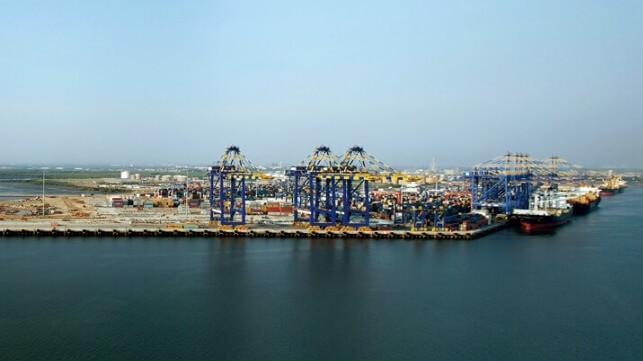
Port Qasim, Pakistan (Sana Sneha / CC BY SA 4.0)

Published Apr 10, 2025 7:30 PM by The Maritime Executive


Pakistan has welcomed a $2 billion investment from the global shipping giant Maersk. On Tuesday, Pakistan Prime Minister Shehbaz Sharif met with Robert Maersk, Chairman of the A.P Moller- Maersk board, who was on a business tour in the country. Sharif hailed the investment as a significant boost to Pakistan’s maritime sector.

Maersk initially announcedthe investment last year in October, during the signing of a Memorandum of Understanding(MoU) between Denmark and Pakistan on maritime development. At the time, the MoU was signed by Danish Minister for Industry and Business Morten Bodskov and Pakistani Minister for Maritime Affairs Qaisser Ahmed Shaikh.

Prime Minister Sharif has directed Pakistani authorities to fast-track conversion of the MoU into a formal agreement. He also directed formation of a technical working group to accelerate drafting of a maritime collaboration agreement with Maersk, with recommendations to be presented within a month.

“Pakistan has a crucial role as an economic corridor for trade with Central Asia, a key factor for our company. Maersk is committed to modernizing Pakistan’s port logistics and equipping them with advanced technology to establish a major maritime trade hub in the region,” said Robert Maersk.

Maersk also emphasized that his company has a long history in the region, with the first Maersk ship arriving in Pakistan in 1924. Maersk is reportedly exploring options of developing a deep-water container terminal, with a focus on Karachi and Port Qasim.

The investment from Maersk coincides with reforms in Pakistan port sector announced by the Prime Minister’s Office on Monday. A maritime taskforce is already in place tasked with the responsibility of reviving Pakistan’s maritime economy. Some of the recommendations by the taskforce include setting up a National Dredging Company, which will oversee dredging of all ports in the country. In addition, a plan of action has been prepared for the rehabilitation and reconstruction of the Pakistan National Shipping Corporation (PNSC) through a public-private partnership for the next 25 years.

“The pace of installing the latest scanners at all ports should be accelerated. Trade tariffs should be reviewed to bring the country’s ports to a competitive standard,” Sharif said in a meeting with the taskforce.    

Top image: Port Qasim, Pakistan (Sana Sneha / CC BY SA 4.0)

ALT. FUEL

Louis Dreyfus Obtains AiP for its Hydrogen-Powered SOV Design

Hydrogen SOV
Courtesy Louis Dreyfus Armateurs

Published Apr 10, 2025 7:46 PM by The Maritime Executive


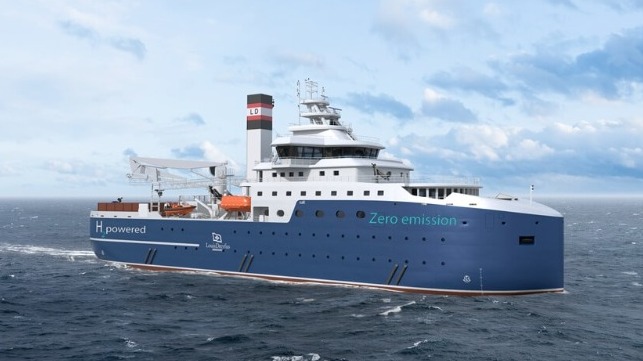
The French shipping company Louis Dreyfus Armateurs (LDA) has received an Approval in Principle for its new liquid hydrogen-based SOV design. The Level 1 AiP was given by Bureau Veritas Marine& Offshore. This brings the groundbreaking Service Operation Vessel (SOV) design closer to reality.

The 100% hydrogen-powered SOV will be able to operate 95 percent of the time with zero carbon emissions during standard operations. This will lead in a reduction of an estimated 4,000 tonnes of annual CO2 emissions. The vessel will have capacity to accommodate up to 90 technicians for up to 14 days at sea, eliminating the need for additional offshore infrastructure. Refueling has been streamlined, as bunkering can be completed in six hours using trailers, eliminating the need for high-cost port facilities.

LDA introduced the hydrogen SOV concept design back in March 2024, in cooperation with Norwegian naval architecture company Salt Ship.

“We believe in developing purpose-built SOVs tailored to specific projects and needs. We are already offering alternative fuel options such as full electric and dual-fuel methanol. We firmly believe that hydrogen will be one of the options in the near future. This AiP represents a key step in making hydrogen-powered maritime operations a reality,” said LDA.

Other projects working to develop liquid hydrogen-powered vessels include the H2ESTIA Project, led by the Dutch innovation company NIM and supported by the Dutch government. The project launched last month, and aims to design, construct and demonstrate a hydrogen-powered bulk vessel to operate in the North Sea and beyond. The short-sea and inland shipping company Van Dam Shipping will manage the vessel.

However, in its bi-annual 2025 Hydrogen Market Outlook report this week, BloombergNEF indicated that the hydrogen sector has been in decline. “Costs have remained high and demand stayed low as a result. Policy has failed to bridge the gap between prices suppliers need to build viable projects and the prices buyers need to get justifiable business case. As a result, investments in the sector fell in 2024, with developers canceling projects,” said Martin Tengler, Head of Hydrogen Research, BloombergNEF.

But Tengler believes a rebound could be expected in places such as Europe, China, Japan and South Korea, where there are incentives offering developers opportunities for investment.


Fincantieri and Viking Unveil World's First H2-Powered Cruise Ship

H2 cruise ship
Courtesy Fincantieri

Published Apr 8, 2025 12:24 PM by The Maritime Executive


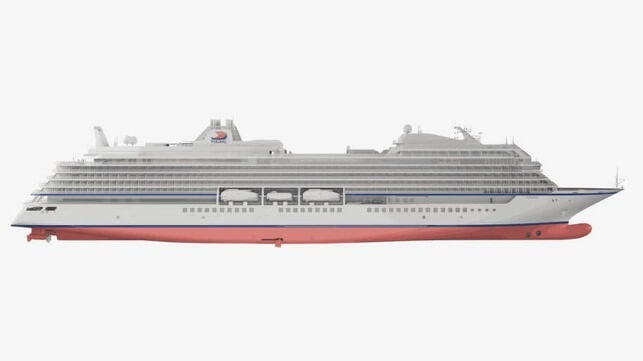
Fincantieri and Viking have announced the world's first hydrogen-powered cruise ship designed to use the alternative fuel for both propulsion and auxiliary power. The future Viking Libra is already under construction at the Ancona yard in Italy, and will deliver towards the end of 2026. 

Viking Libra is a small 54,000 GT vessel with room for about 1,000 guests. With H2 fuel cell power, it will be able to operate with zero carbon emissions, which will soon be a regulatory requirement for operations in Norway's World Heritage fjords (a major attraction in Viking's core Scandinavian market). 

It will be fitted with fuel cells producing up to six megawatts of power, equivalent to roughly 8,000 horsepower of generator capacity. The PEM fuel cell technology and related equipment are supplied by the Fincantieri subsidiary Isotta Fraschini; to solve the supply chain problems of hydrogen bunkering, it uses a containerized fuel storage system to load and store the fuel.

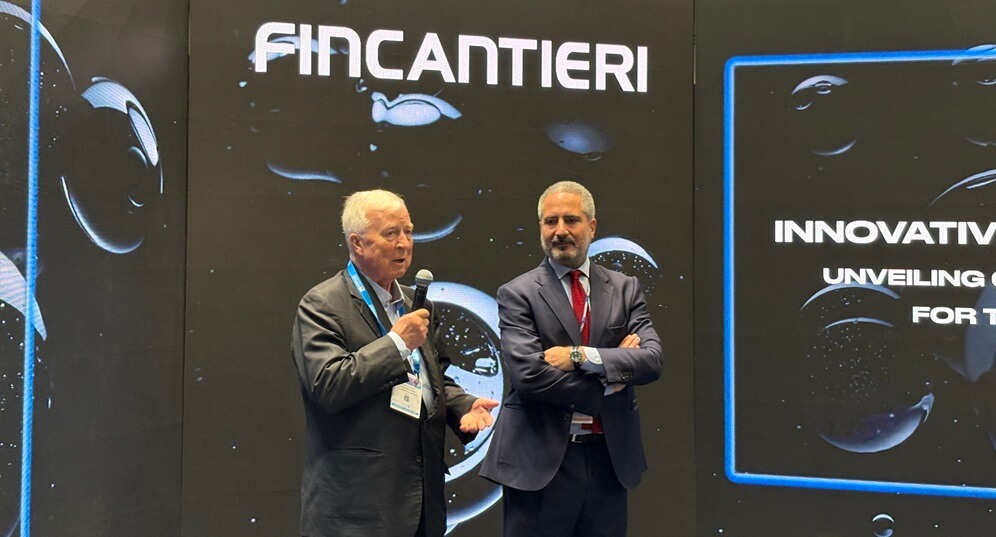
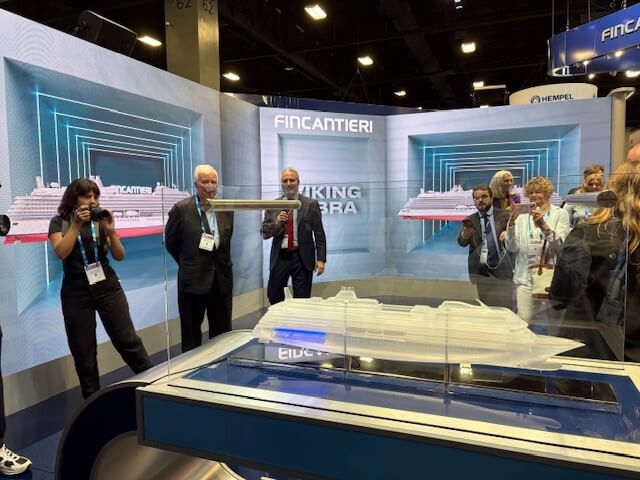
Viking chief Torsten Hagen (left) unveils Viking Libra at Seatrade Cruise Global 2025 (Allan Jordan / TME)

 “LNG is not a way to the future, but . . . this new solution is a good bet for the future," said Viking chairman and CEO Torsten Hagen in a presentation at Seatrade Cruise Global.  

Viking said that price is an issue for H2-powered operation, but they believe that the price will come down in the future, and they want to illustrate a path forward for the industry. The containerized approach addresses the challenges of storage and distribution, and makes it possible to add incremental power capacity with more 1.5 MW units.

"Viking made the principled decision to invest in hydrogen, which offers a true zero-emission solution," said Hagen. "We look forward to welcoming the world's first hydrogen-powered cruise ship to our fleet." 

A follow-on vessel, Viking Astrea, will also be fitted for hydrogen power and is already under construction at Ancona. In a parallel announcement, Fincantieri said that it has signed a 2+2 contract with Viking for additional vessels, starting with a firm orders for two hulls to deliver in 2031. 

"We are driving a systemic evolution by integrating cutting-edge technologies, fostering supply chain innovation, and creating a model for the widespread adoption of hydrogen," said Fincantieri CEO Pierroberto Folgiero in a statement. 

Allan Jordan / TME


Grimaldi Orders Nine Methanol-Ready Ropaxes for Med and Baltic Routes

Grimaldi methanol roro
Courtesy Grimaldi

Published Apr 9, 2025 10:07 PM by The Maritime Executive


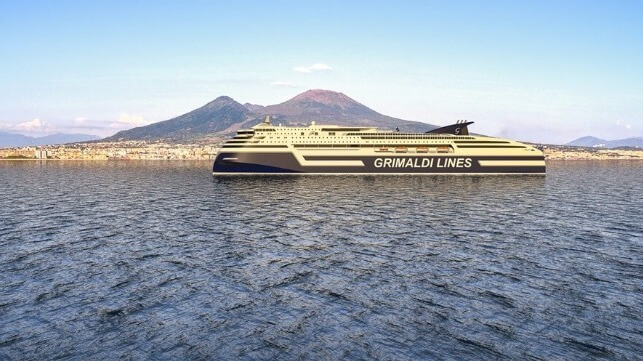
Italy’s short-sea transportation company Grimaldi Group is accelerating investments in a younger and more efficient fleet of eco-friendly ro-pax carriers, committing $1.3 billion for nine newbuilds at China Merchants Jinling Shipyard (Weihai).

The company says that the nine pioneering vessels, which are part of its fleet expansion and renewal program, will be equipped with engines capable of running on methanol and will be designed to move rolling cargo and passengers in the Mediterranean and the Baltic Sea.

The newbuilds will be delivered between 2028 and 2030, and will be used by the group’s three brands - Grimaldi Lines, Minoan Lines and Finnlines. Four will be operated under the Grimaldi Lines brand sailing under the Italian flag, while two will be for Minoan Lines, under the Greek flag. These six, belonging to the “Next Generation Med” class, will serve routes in the Mediterranean. The other three, which debuts as the “Hansa Superstar” class, will be delivered to Finnlines to serve routes in the Baltic Sea.

At a length of 229 meters, the Mediterranean ro-pax vessels will have a cargo capacity of 3,300 lane meters for rolling freight and over 300 cars and up to 2,500 passengers. The Baltic Sea newbuilds will be 240 meters long with a cargo capacity of 5,100 lane meters for rolling freight plus 90 cars and up to 1,100 passengers.

Grimaldi has a long relationship with China Merchants, and the new orders extend that partnership with the introduction of fuel-efficient technology. The new vessels will have optimized hull and propeller designs, energy-efficient onboard power management systems, shore power readiness and the application of silicon-based hull coatings. They will reduce CO? emissions per transported cargo unit by more than 50 percent compared to vessels currently operating on the same routes, Grimaldi says.  

“The new Next Generation Med and Hansa Superstar classes are the result of a thorough study of our customers’ needs and, more broadly, those of shipping. Today more than ever, the latter requires quality, efficiency and environmental sustainability to remain a key mode of national and international freight and passenger transport,” said Emanuele Grimaldi, Grimaldi Group Managing Director.

He added that the performance in CO? emission reduction and the use of methanol are critical components in the company’s net zero goals. Grimaldi is working to achieve zero emissions by 2050.

The new order comes just weeks after the company took delivery of the last of 14 hybrid ro-ro ships of its "fifth generation" class, built at China Merchants Jinling shipyard in Nanjing. This year and next year, the company also expects to start taking delivery of five new pure car and truck carriers from China Merchants.


MAN 175D Engines Selected for Carbon Capture Storage Application

MAN Energy Solutions

Published Apr 10, 2025 12:21 PM by The Maritime Executive


[By: MAN Energy Solutions]

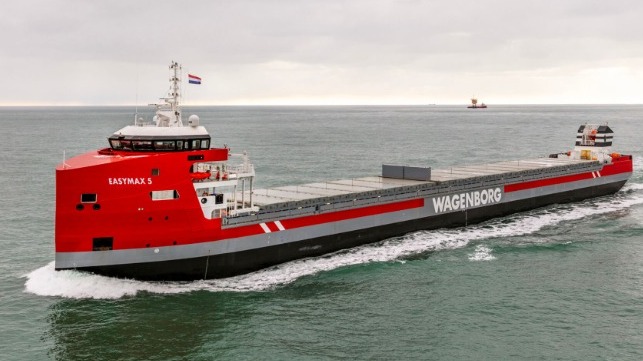
The Royal Niestern Sander shipyard in the Netherlands has ordered 2 × MAN 16V175D MEM engines (2,400 kWm/1,800 rpm) in connection with the building of an MPV (Multi-Purpose Vessel) vessel – ‘Easymax 5’ – for Dutch outfit, Wagenborg Operator. The engines will be employed as GenSets for power generation aboard the purpose-built CO2 carrier, which will be employed in the offshore, substrate storage of CO2.

The vessel will be the fifth under the EasyMax concept jointly developed by Wagenborg and Niestern Sander with a cargo capacity of 14,000 tons. It will ultimately be chartered by Ineos, Denmark and the 175D engines are scheduled for delivery during 2025.

The CO2 for storage will come from a bio-gas plant in Denmark, from where it will be transported to Esbjerg on the Danish west coast for loading aboard the vessel before proceeding to the Greensand storage site in the Danish North Sea. The MAN 175D GenSets are intended to give the Easymax 5’s CO2 pump and DP2 systems more power during discharge into offshore storage.

Bart Speckens, Regional Sales Manager, MAN Energy Solutions, said: “This order represents a new type of reference for the 175D. In general, 175D is a versatile engine with the lowest environmental footprint and operating costs in its class due to its high fuel-efficiency and long service-intervals. We’re proud to be involved in such a crucial project that ultimately will sequester millions of tonnes of carbon dioxide from hard-to-abate industries.”

In keeping with its slogan of ‘Moving Big Things to Zero’, MAN Energy Solutions provides the shipping industry with green engines that can operate on climate-neutral fuels, but also offers the actual carbon-capture-and-processing technologies essential for global industry to achieve net zero. Once captured, CO2 can be stored and reused to form the backbone of a circular carbon economy. Of the 18 large-scale facilities currently in commercial operation globally, fully eight employ MAN CO2 compression technology.

About the MAN 175D engine
MAN Energy Solutions developed the MAN 175D engine range to supplement and complete its product portfolio in the maritime sector. Available in three variants of 12-, 16- and 20-cylinders, the engine is available with an output ranging from 1,500 to 4,400 Kilowatts and is optimised for propelling ferries, offshore support ships, tugs and other working vessels. Other market areas, such as superyachts, planing yachts and naval marine applications are also served by additional engine variants.

The 175D is also an extremely eco-friendly engine, having been designed from the outset for low fuel consumption, coupled with compliance to the latest exhaust-gas-emission standards and considering as well future-fuel requirements where it is already cleared for operation on biofuels such as FAME and HVO.

The products and services herein described in this press release are not endorsed by The Maritime Executive.


At a Pivotal Meeting, Nations Decide Whether to Cut Ship Emissions

Smoke
iStock

Published Apr 7, 2025 6:51 PM by The Conversation


[By Simon Bullock, Christiaan De Beukelaer and Tristan Smith]

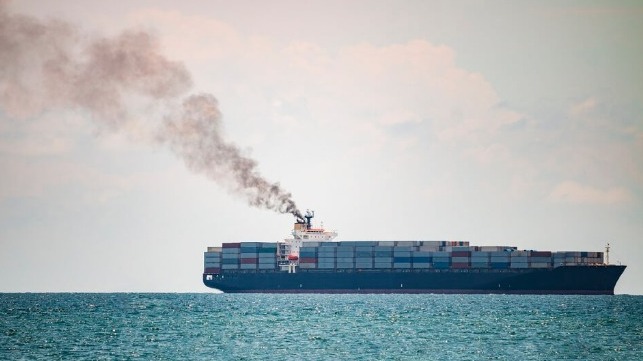
You’re probably reading this article on a device assembled in Asia, using materials shipped there from all around the world. After it was made, your phone or laptop most likely travelled to your country on a huge ship powered by one of the world’s largest diesel engines, one of thousands plying the world’s oceans. All this maritime activity adds up: international shipping burns over 200 million tonnes of fossil fuels a year.

The sector is trying to clean up its act. Its 2023 global climate strategy set a “strive” ambition of 30% cuts in greenhouse gas emissions by 2030, relative to 2008 emissions and 80% by 2040. That’s close to a level of ambition that can deliver on the Paris climate agreement, but this target urgently needs policies to make it happen. This is also urgent: 2030 is only five years away.

The technology to deliver a rapid transition exists. Wind propulsion technology – yes, sails – can be fitted to existing ships, and much of the sector could soon switch to zero-emission fuels if they were seen as a good investment.

That said, the transition needs to be fast and will be costly. This raises questions about who is to foot the bill.

That’s the backdrop for a pivotal meeting this week in London at the International Maritime Organization (IMO). The IMO is the United Nations’ agency, made up of 175 nation states, charged with coordinating a response on shipping’s climate pollution. At this meeting, nations will take a series of decisions that will have a profound impact on whether the sector makes a rapid transition away from fossil fuels, or if it continues to limp along on its current high-carbon course.

There are two crucial and interlinked decisions to be taken, and at the moment the proposals range from strong to exceptionally weak. Outcomes could go either way.

The efficiency of shipping hasn’t got much attention, even though it’s an important part of reducing emissions. One key policy is the Carbon Intensity Indicator, which measures how much carbon is emitted per tonne of cargo for every mile travelled. The IMO’s current strategy requires improving this efficiency by 40% by 2030, compared to 2008 levels.

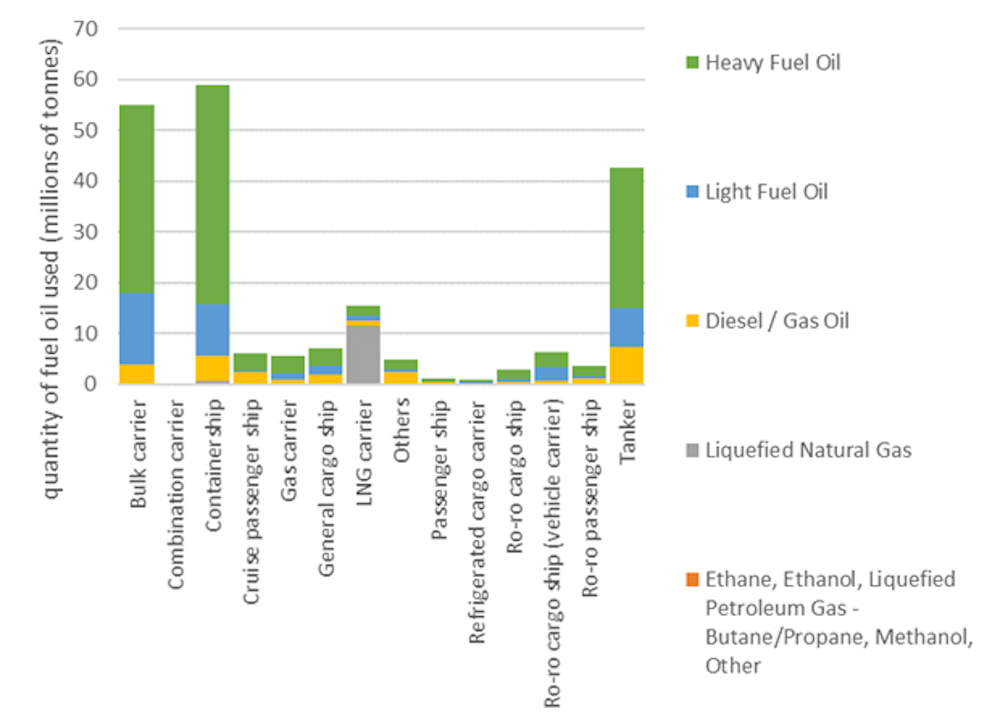
Annual fuel oil consumption (by ship type):

How different fuels were used by different ship types (2023 data). IMO Future Fuels, CC BY-NC-SA

But here’s the problem: global demand for shipping is expected to grow by around 60% in that same time. So even with a 40% efficiency boost, total emissions from shipping could stay the same – or even go up – because so much more cargo will be moved.

Despite this, many countries haven’t updated their policies to reflect this growing demand or to align with the IMO’s updated “30% cuts by 2030” target.

Some countries, including Palau – a Pacific island nation vulnerable to climate change – and the UK, have pushed for stronger action. But there remains a long way to go before the world agrees on an ambitious path forward.

Green energy

The more hotly debated issue is around a fiendishly complicated set of “mid-term measures”. A key part of this is creating a “global fuel standard” – essentially, targets for how much “zero emission” (or “green”) fuel ships must use and by when.

These rules would come with penalties or costs for using polluting fuels, which would effectively put a price on greenhouse gas emissions. Experts have long agreed that putting a price on shipping pollution is the most effective way to encourage cleaner and more efficient practices. But despite nearly 20 years of discussions, countries still haven’t agreed how to do this.

Decisions are further complicated by wrangles over how to fairly distribute the revenues from these penalties.

The good news is that the world is less than a week away from a decision which will put a price on shipping pollution in some form. The bad news is that proposals on the table could easily deliver a weak, uncertain price signal which doesn’t push the industry to invest in more green solutions. And the fuel standard itself might fall short of the ambitious climate targets set in 2023.

Until now, talks on improving shipping efficiency and on pricing polluting fuels have happened separately. A big task at the IMO summit in London is to integrate the two into one coordinated plan.

From a climate perspective, these policies should be judged by whether they will work together to cut shipping emissions by 30% by 2030 (the IMO’s current target).

As things stand, that outcome is still possible – but is now an uphill battle. Agreement this week is crucial and countries will show their true colours. If they can’t agree to agree more ambitious policies it will undermine the IMO’s ability to regulate shipping emissions.

Historically, the IMO tends to take its biggest decisions in the last hours of Thursday in week-long negotiations. Both ambitious and more cautious countries have a lot on the line, as the measure adopted will be legally binding for all of them.

A positive result depends on whether powerful groups such as the European Union line up to support ambitious measures, as as proposed by African, Caribbean, Central American and Pacific countries as well as the UK.

Although countries have agreed on climate targets for shipping, some still refuse to support the policies needed to actually phase out fossil fuels fast enough. That stance much change. If done right, IMO negotiations this week could be a turning point – not just for shipping, but for renewable energy and climate action worldwide.

Simon Bullock is a Research Associate in Shipping and Climate Change, University of Manchester.

Christiaan De Beukelaer is a Senior Lecturer in Culture & Climate, The University of Melbourne.

Tristan Smith is a Reader in Energy and Transport, UCL.

This article appears courtesy of The Conversation and may be found in its original form here

The Conversation

The opinions expressed herein are the author's and not necessarily those of The Maritime Executive.
 

Norwegian Cruise Line Charters Oldest Cruise Ships to Sail in India 

cruise ship
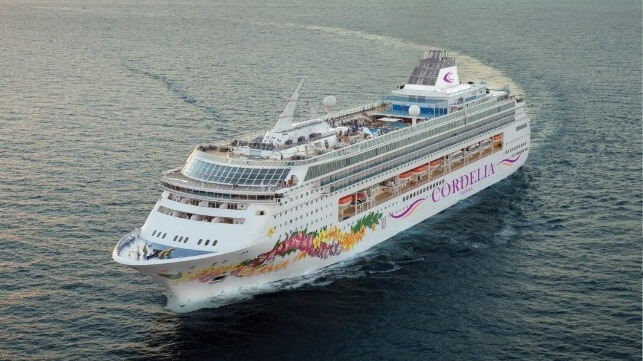
Rendering of the rebranded Norwegian Sky under charter for the cruises in India (Cordelia Cruises)

Published Apr 8, 2025 7:59 AM by The Maritime Executive


Norwegian Cruise Line has made a deal to charter its two oldest cruise ships as the company pursues its fleet modernization efforts. It is part of a strategy that has also seen the publicly traded parent company, Norwegian Cruise Line Holdings, charter two other ships from its luxury brands to launch a new residential cruise line.

India’s Cordelia Cruises, the only dedicated cruise line in India, will be taking the Norwegian Sky on charter in 2026 and the Norwegian Sun the following year in 2027. The company was started post-pandemic with a single ship but recently reported it was looking to expand its operation.

The cruise ships Norwegian Sky (77,104 gross tons) and Norwegian Sun (78,309 gross tons) were the company’s first effort at modernization in the late 1990s. Started in 1965, the brand had failed to keep pace with competitors and due to financial difficulties had not added new cruise ships at the same pace as Carnival Cruise Line and Royal Caribbean International in the 1990s. 

The Norwegian Sky had been ordered by Costa Cruises as a sistership to the Costa Victoria and was under construction in Germany at Bremer Vulkan when the yard experienced financial difficulties in 1996 and construction was suspended. Norwegian acquired the incomplete ship and finished it at Lloyd Werft introducing it in 1999. It has accommodations for approximately 2,000 passengers and sailed for the cruise line in the Caribbean and a brief period in Hawaii as the Pride of Aloha between 2004 and 2008.

Norwegian decided to build a sistership which became Norwegian Sun in 2001. The company had also planned a third sister but did not go forward with the order.

The smallest ships in the fleet they also predated Norwegian’s open cruise concept without assigned dining and multiple restaurants. The ships were adapted to the concept but lacked the space to have the full amenities of what the company markets as “Freestyle Cruising.” 

CEO of Norwegian Cruise Line Holdings Harry Sommer called the decision to charter a total of four ships from the fleet part of a “disciplined approach to fleet optimization.” Norwegian this week is introducing the third cruise ship in its new series, Norwegian Aqua, and Sommers notes it has a total of seven cruise ships ordered for the brand, including a new class of 200,000-gross ton plus ships.

Cordelia Cruises in its announcement said it would be “unlocking new destinations, introducing longer itineraries, and reimagining what cruising means for India and beyond.” The company to date has operated short cruises on the Empress acquired from Royal Caribbean International. The renamed Cordelia Sky will enter service from Mumbai in August 2026. The company has not announced itineraries for the Sun which will be leaving Norwegian in the fourth quarter of 2027.

Norwegian has also chartered the Seven Seas Navigator from Regent Seven Seas Cruises and the Insignia from Oceania Cruises to Crescent Seas, a residential cruise line. These charters are scheduled to begin in 2026 and 2027.  The company has three new cruise ships on order for Oceania Cruises, and two cruise ships for Regent Seven Seas Cruises. All of the new ships are being built by Fincantieri in Italy.


Woodside Sells $5.8B Stake in its Louisiana LNG Project

Pre-FID construction under way at Louisiana LNG (Woodside)

Published Apr 7, 2025 11:37 PM by The Maritime Executive


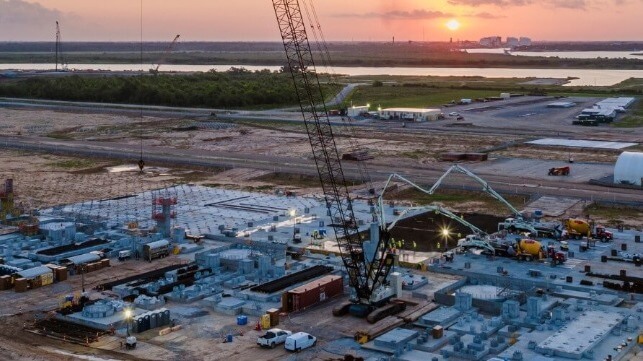
Australian oil and gas company Woodside Energy is selling down its equity stake in its Louisiana LNG project, starting with the sale of a 40 percent stake to U.S.-based investment firm Stonepeak.

Woodside is getting near to a final investment decision on the LNG production and export project, which it acquired in a $900 million takeover of developer Tellurian last October. The cost of implementing the entire five-train facility near Lake Charles, Louisiana is estimated at $27 billion.

The Australian company says that the sale of the 40 percent stake to Stonepeak is timely. Stonepeak is expected to inject $5.7 billion in capital expenditure into the project, covering 75 percent of the project’s capital needs in both 2025 and 2026.

Woodside says that the stake sale reduces its capital expenditure profile and brings the project one step closer to a FID. Talks continue with other potential partners as Woodside aims to sell another 10 percent stake in the project. Its aim is to retain a 50 percent operating stake in the megaproject, which will produce 27.6 million metric tons per annum (MTPA) when complete.

The transaction is expected to close in the second quarter, subject to a positive FID and the needed regulatory, legal, and other approvals. At that point, Stonepeak is expected to make available $2 billion as part of its capex contribution.

The Louisiana LNG project is being built in four phases. Phase I includes two trains with a capacity to produce 11 MTPA, while Phase II has one train with a capacity of 5.5 MTPA. In December last year, Bechtel was awarded the contract for phases one and two, which are estimated to cost $900 to $960 per tonne of capacity. Construction is already well under way, ahead of a final investment decision. 

“The project represents a compelling opportunity to invest in a newbuild LNG export facility nearing FID approval with an attractive risk-return profile and best-in-class partners in both Bechtel and Woodside to construct and operate the asset,” said James Wyper, Stonepeak Senior Managing Director and Head of US Private Equity.

He added the significant additional capacity from the Louisiana LNG project will be central in further propelling the status of the U.S as a leading LNG exporter. The country exported 11.9 billion cubic feet per day of LNG in 2024, remaining the world’s largest exporte


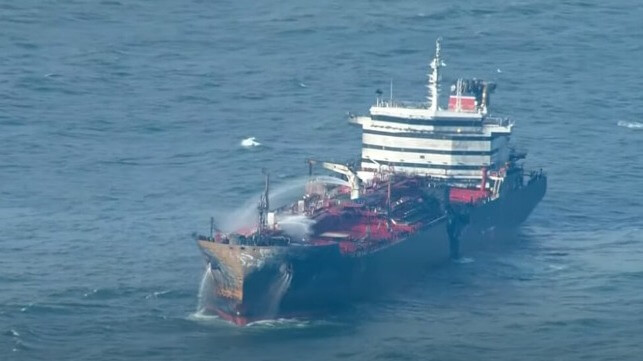
Cargo Pumped Off of Damaged Tanker Stena Immaculate

Stena Immaculate after the allision (HM Coastguard)

Published Apr 9, 2025 7:20 PM by The Maritime Executive


The transfer of jet fuel cargo from the damaged tanker Stena Immaculate has been completed, according to HM Coastguard, and salvors are now preparing to bring the vessel into a port of refuge in the UK. 

On March 10, the Portuguese-flagged feeder Solong was on a routine coastal voyage off Hull, UK, making 16 knots on a steady southbound course. Without slowing or maneuvering, Solong rammed the port side of the anchored product tanker Stena Immaculate, penetrating two tanks. Both vessels caught fire, and the crew of the Immaculate abandoned ship after an initial attempt to fight the blaze. 

One crewmember from Solong is missing and presumed dead, and the boxship suffered extensive fire damage; debris from Solong's cargo, including pelletized plastic, has washed up along nearby beaches in the UK. The boxship's master has been arrested on suspicion of gross negligence manslaughter.  

After the casualty, salvors for Stena Immaculate's owner stabilized the situation on board the tanker and brought another vessel - Fure Vyl - alongside for an STS transfer. The fuel has now been pumped off the Immaculate, preparing her for a safe entry into the port of Great Yarmouth later this week. 

"HM Coastguard continues to support local authorities in their response to onshore pollution from the Solong as a result of the collision [sic] . . . in both Norfolk and Lincolnshire. The clean-up operation has now moved from a proactive to reactive response. HM Coastguard will continue to keep the overall situation under close review," said Chief Coastguard Paddy O’Callaghan in a statement. 

HM Coastguard has asked the public to keep an open eye for nurdle pollution and to report it via the agency's online tip portal. 


Gulf of Guinea: What Kind of Cooperation in the Maritime Environment?

Guinea
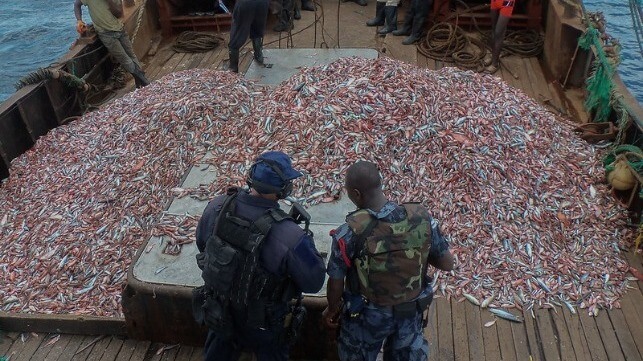
A U.S. training and assistance team joins a fishery inspection boarding in the Gulf of Guinea (File image courtesy USN)

Published Apr 10, 2025 1:00 PM by Francois Morizur


The world's major balances are changing rapidly as a result of changes in governments, regional tensions and fierce trade battles.

The great global institutions, the offspring of the last two world wars, are losing their credibility as the blocs decouple and the law of the strongest returns. Against this backdrop, it may be worth analysing these rapid changes and determining their current and future impact on the Gulf of Guinea and its neighbouring countries.

The center of global tensions is gradually shifting towards the Levant  and the Indo-Pacific. World trade is and will remain mainly maritime, and the importance of the Straits has been brought home to us in recent months. New partners are extending their spheres of influence (China, Turkey, Russia, Brazil, etc.), while others with longer histories are reducing their footprints (UK, France, Spain, Portugal).

Crises and rising regional antagonisms are diverting military resources away from the Gulf of Guinea towards emerging areas of tension (Baltic Sea, Eastern Mediterranean, Red Sea and Gulf of Aden, Persian Gulf and Western Pacific).

The Yaounde architecture was built following the technical agreement of 6 May 2009.  It was intended to be ambitious and to be based on existing structures (ECCAS/ECOWAS). In 2013, the Yaounde process initiated the construction of this interregional cooperation architecture based on an Interregional Coordination Centre (CIC Yaounde), two regional centres (CRESMAC & CRESMAO) and five multinational centers (MMCC A, D, E, F, G). The armed arm of the architecture, the CIC, was tasked with steering the joint maritime strategy between the various players in the zone, working on coordination, cooperation, interoperability and pooling.

The mission

The Yaounde Architecture (Y.A) was initially built around one main threat: maritime piracy.

While this threat was very prevalent around Nigeria and Cameroon, the epicenter of this criminal activity at the turn of the 2010/2020s, the peripheral states (countries in zones A, G & F) had very little to do with this problem.

This specific focus on maritime piracy led to a delay in the structuring and operational rallying of regional centers that were not, or were only marginally, involved (MMCC A, MMCC F, MMCC G). However, the coastal countries were faced with much wider threats in terms of type and impact (illegal fishing, illegal trafficking, pollution, etc).

The initial uniformity of the ‘Y.A. tool’ and the definition of initial missions and objectives thus slowed down the growth of this organization.

Resources

The Yaounde architecture must receive funding from the member countries to enable it to function properly. However, this initial agreement was never met, with economic crises affecting the majority of contributing countries.

These funding shortfalls have had a severe impact on the operation of the various centers due to a lack of material and human resources. Although significant progress has been made over the last 20 years, military maritime resources (ships, aircraft, personnel, intelligence resources) are still inadequate for the maritime areas to be controlled.

Coordination

Although there have been some notable successes in regional cooperation, coordination and cooperation are mainly affected by the general lack of resources. This cooperation is most effective in managing long-term crisis situations. It requires improvements in preventive cooperation and in post-incident management. However, this need is complex when it involves ships flying very different flags, international operators and crews, and transnational areas of activity. 

Bilateral partnerships have been set up on top of the Yaounde architecture for the benefit of countries in the same Y.A. zone or even countries belonging to different Y.A. zones. National administrations have also established links between state, regional or interregional structures, following the example of Shared Awareness and Deconfliction (GoG-MCF/SHADE).  Finally, the initial innovative initiatives set up in zone D (military vessels under TACON MMCC) have not been strengthened or replicated in other zones of the Yaounde architecture.

Cooperation

In view of these difficulties and the complexity of actions aimed at securing maritime areas, it is essential to determine the objectives to be pursued, the appropriate and financeable requirements needed to meet these objectives, and the mechanisms and timetables for implementation. This task is made all the more difficult by the fact that countries have more or less appropriate intelligence, deterrence and intervention resources at their disposal, that they face very different problems and threats, and that their internal resources are more or less constrained.

Numerous cooperation programs, whether financial, training, material or operational, are run by a wide range of partners: countries, unions of states and international organisations.

These programs, which sometimes run over several years, can occasionally ‘overwhelm’ the overall coherence expected at a national or regional level. Beneficiary countries may also be disoriented by the overlapping of disparate and incomplete procedures, concepts and resources, making it impossible to provide a simple, effective and coherent tool.

In 2023, ECCAS has convened a meeting in Kinshasa to redefine the strategic axes of the integrated policy for the seas and shared continental waters of ECCAS, as well as the strategy for the safety and security of vital interests at sea and in the shared continental waters of ECCAS Member States, thus marking the need to refresh and possibly reorientate regional policy in this area. This regional brainstorming should, in this context, probably involve two areas of reflection: first, on the primacy of initial interregional, regional or bilateral cooperation; and second, on the format, nature and points of application for this cooperation.

Francois Morizur is a maritime security expert.

The opinions expressed herein are the author's and not necessarily those of The Maritime Executive.
 1% PLAGUE 


Study: Yachts are Spreading Termites Around the World

iStock
iStock / Art Wager

Published Apr 9, 2025 10:16 PM by The Maritime Executive


Infested boats are aiding the transportation of invasive termites across the globe, spreading insect species that cause economic damages running into the billions of dollars, a new study reveals.

The study by researchers at the University of Florida concludes that recreational vessels - yachts, cabin cruisers, sailboats and similar personal craft - have become the main means of transportation for termite stowaways.

Aided by maritime transportation, the damage caused by the invasive termite species like the Formosan subterranean, Asian subterranean and West Indian drywood is significant and continues to rise. Since 2010, termite infestations have been linked to an annual economic impact exceeding $40 billion globally, with the Formosan subterranean alone causing an estimated $20 to $30 billion in damage.

Although historically termites have been suspected of being able to travel long distances on floating debris after natural disasters like hurricanes, tsunamis or landslides, private boats have made it much easier for termites to spread. The fact that recreational boats are not routinely checked for termites has allowed small vessels to become mobile breeding grounds for colonies, with the end result being unchecked spread.

“Instead of a few termites accidentally crossing oceans once in a million years, we now have a high probability of them traveling on infested boats every year, dramatically increasing their spread potential,” said Thomas Chouvenc, lead researcher.

In the study published in the ScienceDirect journal, researchers summarized a combination of field surveys, genetic analysis and historical data to make a compelling case that boats, particularly those used for recreation, are a major cause for the spread of termites across continents. In fact, owing to the fact that termite pests are excellent at associating with human activity, boats provide an ideal environment for them to travel far beyond their native habitats.

The study states that most termites remain within their native regions, unable to thrive in urban environments. However, the species responsible for the most damage have adapted to urban climates.

Once an infestation is established in a boat, it can easily spread onshore. The termites, often carried in hidden colonies aboard boats, can spread to other on shore regions when flying termites are attracted to city lights. Once colonies are established on land, the species continue to spread, creating new infestations in other boats and urban areas.

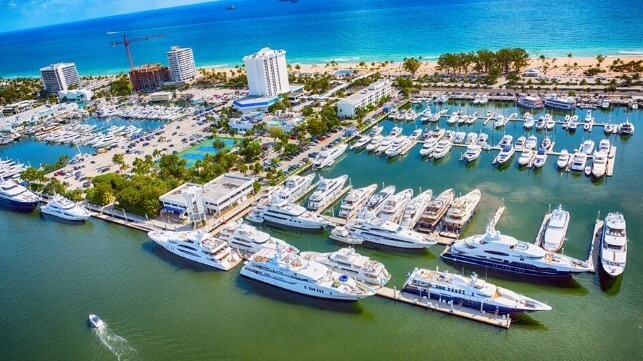
A case in point is South Florida, popularly known as the "yachting capital of the world," which has also become a hot spot for invasive termite species - thanks to the many discoveries of termite colonies in recreational boats.

Data by the National Marine Manufacturers Association show that Florida is the top state in the U.S when it comes to recreational boating, boasting more than one million registered boats with an annual economic impact of $31.3 billion.

“In Florida and many other tropical regions, the risk is high because recreational boating is so prevalent,” warned Chouvenc. “Boats in these areas are likely to be infested, but unless owners take proactive steps, the spread of termites will continue unchecked.”

By becoming the preferred means of transportation for termite stowaways, boats are aiding in their economic destruction - particularly for homeowners and businesses due to their tendencies to damage wood in structures and infest trees.

Chouvenc says that regular inspection of vessels for signs of infestation is one of the main ways to curb the spread of invasive termites