Monday, May 25, 2026


Op-Ed: America Needs Fully-Funded Hurricane Forecasting

Hurricane Hunters
To keep last year's Hurricane Hunter flights going, retired scientists volunteered to do safety-critical work for free (NOAA file image)

Published May 24, 2026 4:26 PM by The Conversation


[By Brian Tang]

The 2026 Atlantic hurricane season starts June 1, and while early outlooks suggest that a developing El Niño might result in a tamer season than in the past few years, with below-average hurricane activity, all it takes is one big storm hitting a populated area to make it a bad hurricane season.

Every year, Americans rely on accurate forecasts when hurricanes might be developing to know when to stock up on supplies, prepare for power outages or evacuate.

Those forecasts have improved dramatically in recent decades, but the improvements can’t be taken for granted. Over the past year, federal funding cuts and job losses in the very programs that are helping make Americans safer from extreme weather threaten to stall progress and stretch forecasting resources to the breaking point.

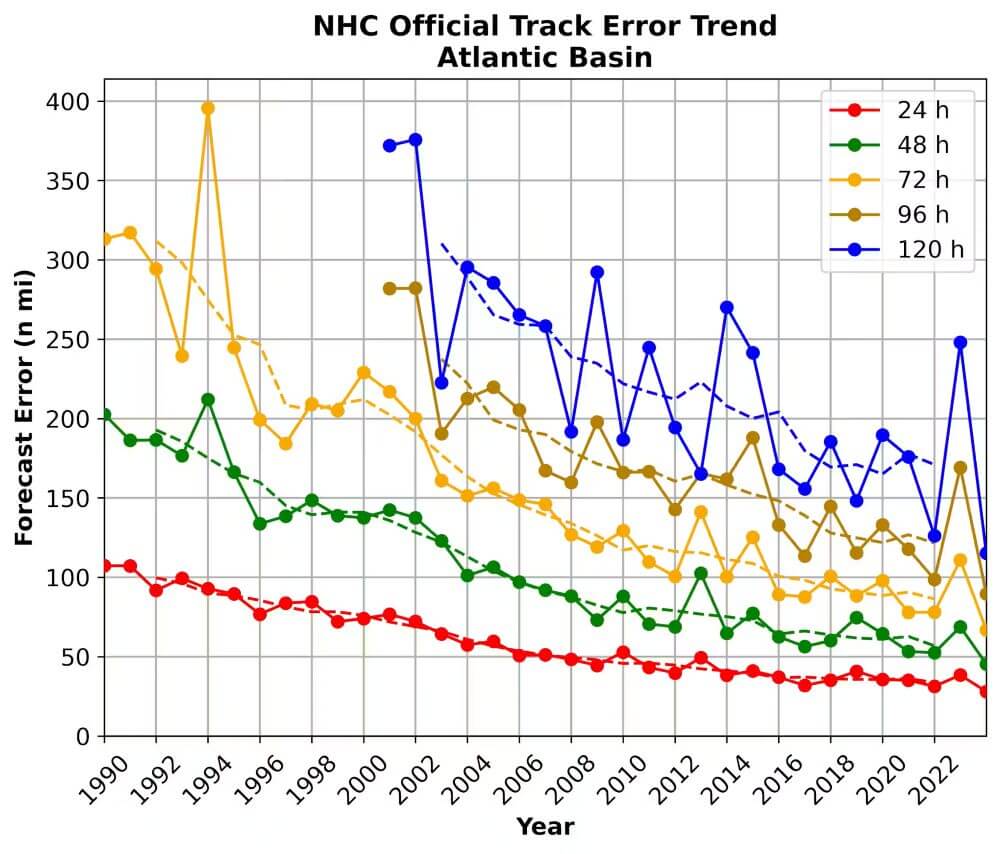
Hurricane track forecasts have become more accurate over the past three decades. For example, recent forecasts showing where a storm is expected to be in 96 hours have been, on average, about as accurate as a 24-hour track forecast was in the early 1990s. That gives people more time to evacuate. The lines show how many miles off the National Hurricane Center’s official storm tracks were. National Hurricane Center.

I am an atmospheric scientist whose research focuses on hurricanes, including how and why they intensify or weaken. I also work with scientists at the National Oceanic and Atmospheric Administration, NOAA, to analyze observations collected by reconnaissance aircraft and evaluate computer model forecasts of hurricanes.

Here’s what forecasters rely on during hurricane season and why investing in science, forecasting technologies and the people who run them matters.

Flying through hurricanes

To have the best chance of an accurate hurricane forecast, computer models and meteorologists need to know about the location, intensity and structure of a hurricane, along with the environment that surrounds it. Satellites are crucial for tracking storms from above, but many details can be collected only inside the storm, where satellites can’t see.

That’s why NOAA relies on “hurricane hunters” – a group of skilled pilots and scientists who fly through storms all season long to collect storm data, which is quickly transmitted to forecasters and computer models.

When storms are developing, the U.S. Air Force Reserve and NOAA conduct several hurricane hunter flights per day to provide the most up-to-date storm information. During these missions, the crews often fly directly into the storm, through screaming winds and heavy rain, to release instrument packages called dropsondes.

The dropsonde is a feat of science and engineering, able to accurately measure the temperature, humidity, wind and pressure in hostile conditions. This data is radioed back to the aircraft. From there, it is processed and transmitted to NOAA, where forecasters analyze it and computer models use it to initialize forecasts.

I and many hurricane scientists have used dropsonde data collected over the years to build a better understanding of how hurricanes behave. A recent study showed that computer model forecasts of hurricane tracks were up to 24% more accurate when they included dropsonde data than those that didn’t.

Simulating hurricanes

A big reason hurricane forecasts have gotten better has been federal investments in computer models that can simulate these storms.

In 2008 the U.S. government funded the NOAA Hurricane Forecast Improvement Project, leading to substantial advancements in computer modeling and forecast accuracy. Computer models got better at incorporating the observations gathered by aircraft, showing air movements and rain bands in greater detail.

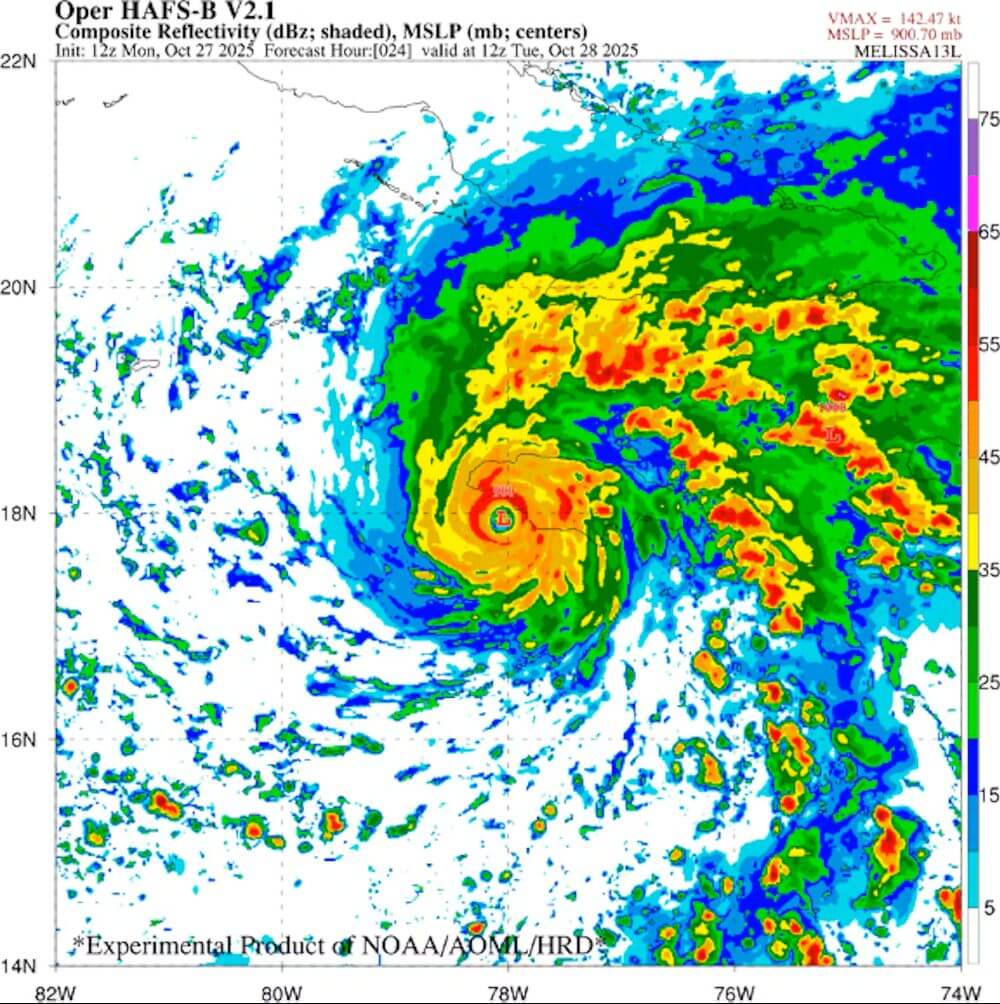
A HAFS radar forecast shows Hurricane Melissa as it approaches Jamaica in October 2025. The HAFS model performed well in forecasting the intensification and extreme strength of the Category 5 storm in the days leading up to its landfall in Jamaica. NOAA/AOML/HRD

The flagship NOAA hurricane model is now the Hurricane Analysis and Forecast System, which does a better job of predicting rapid intensification, among other things, than its predecessors.

When storms rapidly intensify, as several have done in recent years, they can pose an acute risk to coastal communities. More accurate forecasts give people and communities better information to decide how to prepare and when they need to evacuate. Improvements since 2007 have resulted in an estimated US$2 billion in savings per hurricane landfall and many lives saved.

That’s a huge return on investment. In 2024, NOAA’s entire budget was $6.7 billion.

Keeping an eye on the storms ahead

There are some exciting developments ahead in hurricane observations and modeling.

NOAA in 2024 ordered two new aircraft, expected to be delivered by 2030, to begin replacing its aging hurricane hunter fleet so fights and their data collection can continue.

Private companies working with NOAA have deployed and tested autonomous drones – both in the air and sail drones on the ocean surface – that can collect data in areas where quality observations are hard to get.

Additionally, artificial intelligence weather models have emerged, such as Google DeepMind, which made a big splash as the most accurate forecast model of the 2025 hurricane season.

Some lingering dark clouds

Despite these promising developments, a different storm is eroding the bedrock upon which the national weather forecast enterprise sits.

Cuts in funding and staffing have stressed NOAA’s ability to collect critical observations. Last year, retired NOAA scientists volunteered to staff hurricane hunter reconnaissance flights so the missions could still be flown.

The Trump administration proposed cutting NOAA’s budget by more than a quarter, including dismantling its Office of Oceanic and Atmospheric Research. Congress rejected many of the administration’s proposed budget cuts, ultimately approving a $6.1 billion budget in March 2026, still down from the previous budget.

The National Center for Atmospheric Research, which led the development of computer models and dropsonde technology, has also been targeted by the Trump administration to be dismantled. The American Meteorological Society warns this decision “will harm meteorological research and innovation in the United States with severe consequences to current and future efforts of the weather enterprise to protect life, property, and the nation’s economy.”

I worry about the funding and staff cuts stressing systems that keep scientific progress marching forward and warn Americans about hazardous weather. Losing staff and support raises the risk of critical failures, such as delayed severe weather warnings and broken equipment causing new blind spots when storms threaten. In the long run, failing to invest risks stagnation or even reversing the hard-fought progress the U.S. has made in advancing weather prediction.

With coastal populations and development expanding over the past few decades, and storms becoming stronger, the vulnerability of the U.S. to costly, damaging hurricanes has increased dramatically. It is more important than ever that public investment in hurricane science and forecasting continue.


Brian Tang is a Professor of Atmospheric Science at University at Albany, State University of New York.

This article appears courtesy of The Conversation and may be found in its original form here

The Conversation

The opinions expressed herein are the author's and not necessarily those of The Maritime Executive.

 

Microplastics Could Affect the Ocean's Ability to Absorb Carbon

Marine microplastics affect algae’s ability to grow and photosynthesize. Researchers have now calculated what impact this has on the ocean’s ability to absorb CO2.

Francesca Verones, NTNU

Published May 24, 2026 7:07 PM by Gemini News


[By Ingebjørg Hestvik]

“We study how plastic affects what we call ecosystem services, that is, the services we receive from ecosystems. When the ocean absorbs carbon dioxide from the atmosphere, we consider it as a service the ocean performs for us,” says researcher Francesca Verones. Photo: Francesca Verones, NTNU

You have probably heard this before: more than 70 per cent of our planet is covered by oceans.

Nearly half of all photosynthesis on Earth takes place in the ocean, and this is largely thanks to microplankton – tiny, single-celled plants that drift freely in the upper, sunlit layers of the water column.

When these tiny algae bloom, they do so by converting sunlight, water and carbon dioxide into oxygen and energy-rich sugars, the latter of which are used to build new algae cells.

Microplastics are everywhere

Unfortunately, algae have now got a new marine neighbour to contend with. Microplastics (tiny plastic particles) are currently found everywhere in the ocean – from the most densely populated coastal areas to remote waters in the Arctic and Antarctic.

“The ocean plays a crucial role in absorbing carbon from the atmosphere. Between 25 and 30 per cent of all human-generated CO2 is absorbed by the ocean. Phytoplankton plays an important role in this process. So, what happens if marine microplastics affect the plankton?”

The person asking the question is researcher Francesca Verones. She and her colleagues at NTNU’s Department of Energy and Process Engineering are working to quantify the impact of plastic on the ocean – not merely in terms of localized pollution, but in relation to everything the ocean means to us: as a source of food, as a carbon sink and as a recreational area.

“We are investigating how plastic affects what we call ecosystem services – meaning the services we receive from ecosystems. For example, we can view the fact that the ocean absorbs CO2 from the atmosphere as a service that the ocean provides for us,” explained Verones.

Blocking out sunlight

The researchers have collected phytoplankton data from various climate zones around the world and used laboratory data to determine the extent to which growth is limited by microplastics. They have then used this data to calculate the average impact that a certain concentration of microplastics will have on algae in different regions or climate zones, as well as on a global scale.

“We need to talk about plastic pollution,” says researcher Francesca Verones. “People are quite familiar with the fact that plastic in the ocean is a problem, but are still surprised when they learn that much of the plastic comes from our own local environment.”

“Microplastics affect algal growth in various ways. The toxicity of certain types of plastics, such as PVC, is a problem in its own right, but plastic can also reduce the amount of sunlight that penetrates deeper into the water column, causing physical damage or leading to oxidative stress in the algae cells,” explained Verones.

The results of the study show that the negative impact on carbon uptake was greatest in arid and tropical regions. These climate zones have the highest carbon uptake and are also the most vulnerable to the harmful effects of microplastics.

“In these areas, we found that microplastics could reduce carbon uptake by 25,000 and 48,000 tonnes, respectively, over the course of a year. Although it may sound a lot, it is not a huge percentage,” emphasized Verones.

The total amount of carbon absorbed by the ocean in a year is estimated at two billion tonnes.

“But we must bear in mind that the amount of microplastics in the ocean is increasing all the time. All the plastic that is discarded in the natural environment will eventually end up in the ocean. So the concentrations are going to keep on increasing,” she said.

Life cycle perspective

The aim of the study was to incorporate the effect that microplastics have on carbon uptake into a life cycle assessment of plastics.

A life cycle assessment provides insight into the overall environmental impact of a product – from the moment it is created or manufactured, through its use, until it is eventually discarded and breaks down.

“Life cycle assessment is a method in which all the different stages of a product’s life cycle are examined, enabling the various impacts to be assessed simultaneously. There could be thousands of factors involved. The goal is for it to be as comprehensive as possible,” said Verones.

This may involve how much water is used in production, how much energy is consumed during use, the extent to which the product can be recycled, and not least, how the waste generated affects the environment. The research is part of a broad EU-funded project that investigates how plastic affects the ocean from a life cycle perspective.

“The project has three focus areas.  We are studying how plastic affects biodiversity, for example when animals become entangled in or ingest plastic. We are also investigating how plastic affects the spread of invasive species, for example by species attaching themselves to plastic and being transported around the world. The third area focuses on how plastic affects ecosystem services, such as carbon uptake,” explained Verones.

A triple crisis

“This is the first time researchers have investigated how plastic affects carbon uptake in the world’s oceans and incorporated the findings into a life cycle assessment. The reason we choose to do it this way is that life cycle assessments are one of the few methodologies capable of covering all aspects of what the UN calls ‘the triple planetary crisis’,” said Verones.

The triple planetary crisis refers to the three most pressing, interrelated challenges facing humanity today: climate change, pollution and loss of biodiversity. Each of these challenges has its own causes and consequences, and according to the UN, all of them must be addressed if we are to have a viable future on this planet.

“There is a climate crisis, a nature crisis and a pollution crisis. Life cycle assessments are able to address all of these aspects. If we are to find a solution, we need to look at the big picture,” concluded Verones.

This article appears courtesy of Gemini News and may be found in its original form here

The opinions expressed herein are the author's and not necessarily those of The Maritime Executive.
 

The Aramid Shield: Snare Drones for Active Subsea Defense

Propeller
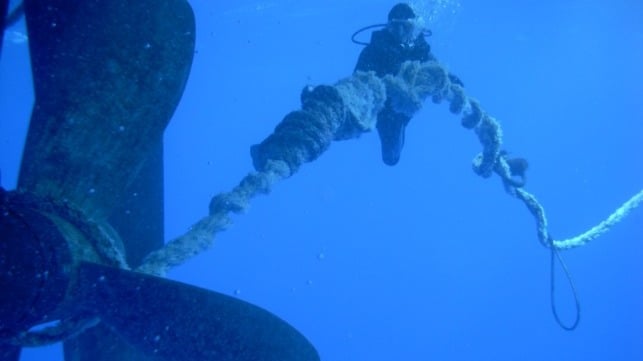
A fouled propeller is always a problem, and it could be an intentional problem with the right technology (NOAA file image)

Published May 24, 2026 7:23 PM by CIMSEC


[By Franciszek Kopczewski]

In January and February 2025, Chinese-operated ships Shunxing 39 and Hong Tai 58 committed similar sabotage tactics. Both ships dragged their anchors for miles, intentionally targeting and cutting the critical undersea cables that connect Taiwan to the global internet.

This was not an isolated incident of maritime negligence. These vessels were employing a refined gray zone harassment tactic first observed in February 2023, when Chinese ships severed the two main arteries leading to the Matsu Islands. That 2023 incident resulted in a digital blackout for 50 days, paralyzing the lives of 13,000 residents and stripping the island of its ability to communicate with the central government.

Russia and China routinely weaponize commercial shipping to hide behind the veneer of plausible deniability and evade accountability from international law. China’s primary tool in this domain is the People’s Armed Forces Maritime Militia (PAFMM). These fishing boats are civilian only on paper. In reality, they operate as a subsidiary arm of the People’s Liberation Army (PLA), capable of conducting swarming operations that overwhelm coast guard capacities. In the Baltic Sea, the Russian Federation employs a similar modus operandi through its shadow fleet – a disorganized but coordinated mass of tankers operating under flags of convenience and ignoring international safety standards. Most recently, the Russian tanker Eagle S was identified as the primary suspect in the cutting of the Estlink 2 cable. Every incident follows the same script: Anchors drag across cables, the ships in question claim innocent navigational error, while the timing and location of the damage suggest coordinated intent to harm. Democratic regimes, bound by the rule of law and the aiming to avoid escalation, consistently struggle with this malign activity.

The Mismatch of Traditional Hulls

The current maritime defense architecture relies on a binary choice that no longer fits the reality of the gray zone. On one hand, both the Baltic states and Taiwan possess gray hulls – commissioned ships of national navies like frigates and destroyers. While powerful, these assets are ill-suited for combating asymmetric sabotage. The persistent mismatch between conventional naval architecture and gray-zone provocation creates a state of strategic paralysis. Gray hulls are designed for high-intensity conflict, leaving commanders with a binary choice: passive observation or disproportionate kinetic escalation. Without intermediate force capabilities, a billion-dollar destroyer is not a deterrent, but a high-priced witness to institutional helplessness. Furthermore, maintaining gray hulls in a constant state of alert to shadow hundreds of potential saboteurs is economically unsustainable.

Meanwhile, national coast guards, or white hulls, operate under a regime of chronic mission saturation. Tasked with search-and-rescue, fisheries enforcement, and border security, these fleets lack the hull numbers required for persistent, point-to-point protection of thousands of kilometers of linear seabed infrastructure. Expanding these organizations to meet the surveillance requirements of a contested EEZ is not merely a budgetary hurdle but a logistical impossibility; the procurement cycles and manpower demands for a fleet capable of providing a credible presence over every vulnerable cable segment would cripple national maritime budgets. This creates a permanent surveillance deficit that cannot be solved by building more manned platforms, but only by shifting the burden to autonomous, scalable systems.

Since traditional hulls cannot secure maritime infrastructure, a new category of sea power is required. With the rapid development of robotics and drone technologies, Taiwan and the Baltic states must pivot toward an undersea asymmetric buffer. While the Danes now monitor infrastructure with surface drones and Poland’s WB Group develops UUV for the same purpose, these concepts currently focus on ISR (intelligence, surveillance, and reconnaissance). However, eyes alone will not stop this aggression. Passive monitoring only provides a front-row seat to the destruction of one’s sovereignty. States must move beyond deterrence by detection. The gap in defense is the lack of intermediate force capabilities (IFC). IFCs are defined as tools and effects designed to bridge the gap between presence and lethal force. They provide commanders with scalable options to impede, disable, or neutralize targets without causing permanent damage or loss of life. In the context of seabed infrastructure, IFCs represent the only viable path out of the binary trap of doing nothing versus starting a war.

From Monitoring to Active Occlusion

To achieve true security, maritime operational posture must transition from passive detection to active non-lethal intervention. Taiwan’s Submarine Cable Automatic Warning System (SAWS) is a world-class monitoring tool, but it lacks a physical means by which to stop the crime. The answer lies in dual-use drones: platforms capable of ISR and snaring. The breakthrough approach here relies on what the U.S. Department of Defense officially categorizes as occlusion technology, a developing class of non-lethal weapons (NLW) designed to physically obstruct a vessel’s propellers in a reversible but effective manner.

In the context of our proposed system, this translates to active propulsion occlusion: the mechanical incapacitation of a vessel’s drive system through the deployment of aramid snares. Unlike traditional naval weapons that target the hull and risk lethal escalation, this capability focuses exclusively on the propulsion train, rendering the target immobile without causing kinetic damage or environmental hazards.

To understand the viability of this mechanism, it is essential to look at material science. Aramid fibers, most commonly known by the commercial brand name Kevlar, are a class of synthetic polymers characterized by extraordinary tensile strength, impact absorption, and high thermal resistance. While vessels occasionally experience accidental propeller entanglements with standard maritime ropes or discarded fishing gear made of polyethylene and nylon, these conventional plastics are suboptimal for intentional occlusion. Under the massive torque and friction generated by a commercial ship’s drive shaft, standard ropes typically melt or snap. Conversely, steel cables could withstand the friction but are far too heavy to be deployed by compact, autonomous drones.

Aramid fibers offer a unique asymmetric advantage: they are exceptionally lightweight for drone payloads, yet they refuse to yield, stretch, or melt under extreme friction. When deployed into the water column, these snares aggressively bind the spinning propeller shaft, safely stalling the engine and rendering the target immobile without causing kinetic damage or environmental hazards. This non-lethal entanglement forces a critical tactical pause. It immobilizes the ship without harming the crew, giving white hulls the time needed to arrive, board, and facilitate legal prosecution.

The Legal Frontier: From Passive Penalization to Active Prevention

This initiative transcends mere tactical innovation; it represents a fundamental legal necessity aimed at closing a systemic gap in the Law of the Sea. While Article 113 of UNCLOS (United Nations Convention on the Law of the Sea) obliges states to ensure that the injury or breaking of a submarine cable is a punishable offense, the international community currently lacks the means to apprehend perpetrators red-handed during maritime disruptions. Snare drones address this by functioning as instruments of pre-emptive law enforcement, establishing a rigorous chain of custody and physical evidence that effectively strips aggressors of their plausible deniability.

To codify this shift, Taipei and the Baltic states should spearhead a ‘Cable Guardian Coalition’ – a framework defining autonomous snare drones as legitimate ‘cable cops’ for maritime law enforcement. This evolution of Article 113 mandates that state obligations move toward active prevention in the age of hybrid warfare, establishing a new customary norm: within critical infrastructure zones, the right of innocent passage terminates exactly where documented sabotage begins.

An Aramid Shield concept can serve as the operational framework for this defense, a technical architecture that integrates autonomous drone swarms with the aramid-based occlusion capabilities described above. To mitigate accusations of unlawful maritime interference, the shield must operate under a rigorous, three-tier behavioral protocol. When the SAWS system detects anomalous vessel behavior – such as anchor dragging within a designated cable corridor – the drone does not engage immediately. Instead, it first issues directional acoustic and radio warnings. Only after explicit instructions are ignored and a designated exclusion zone above the infrastructure is breached does the drone deploy its snares. This controlled escalation – a hallmark of IFCs – shifts the burden of consequence onto the sabotaging captain, transforming immobilization from an arbitrary defensive act into a direct result of the aggressor’s own refusal to comply.

The ultimate legal safeguard must be a state-backed liability framework. In the event of a system error resulting in the immobilization of a vessel with a genuine mechanical failure, the host state would provide immediate compensation for vessel tie-up. This is a cold calculation: the cost of a one-time payout for a ship’s delay is a rounding error compared to the billions in losses generated by a digital blackout. By absorbing this risk, states like Taiwan or Poland signal to the international community that the integrity of the global data backbone is a non-negotiable priority, over-riding minor maritime traffic disputes.

The Economic Perspective: Prevention vs. Repair

The global fleet of cable repair ships is dangerously limited. Currently, fewer than 60 such vessels exist worldwide, and they are often booked months in advance. A single sabotage event can lead to long queues and astronomical repair costs. The financial argument for autonomous intervention is compelling when viewed through the lens of a cost-exchange ratio. While a single sabotage event can incur repair costs exceeding $1 million-compounded by catastrophic, multi-billion dollar GDP losses during connectivity blackouts, a swarm of fifty mass-produced AUVs represents only a fraction of the price of a single naval frigate. Investing in prevention via a scalable drone architecture is not merely a tactical choice, but a long-term strategic necessity that offsets the cumulative expenses of a decade’s worth of potential repairs.

The strategic value of this autonomous persistence is best illustrated in high-density maritime chokepoints, such as Taiwan. The concentration of critical infrastructure in nodes like Tamsui and Fangshan, where the loss of a few square kilometers of seabed could effectively decapitate regional digital sovereignty – makes them ideal candidates for shore-based drone launchers. By establishing automated response zones at these specific cable landing stations (CLS), defenders can achieve a level of weather-independent, zero-hour readiness that traditional naval patrols, often delayed by transit times from distant ports, cannot provide. Similar vulnerabilities exist in the Luzon Strait (Philippines) or the Okinawa prefecture (Japan), where the seabed is becoming a theater of gray-zone competition. This model of localized, high-readiness persistence is not a niche solution for the Pacific, but a blueprint for securing any critical maritime hub.

The Risks: Aramid Shield is Not a Silver Bullet

Every asymmetric solution carries its own set of risks. The Aramid Shield is no exception, and its success depends on managing three critical vulnerabilities. First is the risk of narrative inversion. Beijing and Moscow are masters of lawfare. Both countries will likely frame the non-lethal immobilization of their civilian vessels as a hostile act against international shipping. Even without drawing blood, the act of snaring a propeller can be weaponized in the media to cast the defender as the aggressor. To counter this, if possible every drone intervention should be backed by real-time video evidence to prove the vessel was engaged in sabotage.

Second is the escalation of escorts. If China perceives snare drones as a serious threat to its maritime militia, it may justify the deployment of armed naval escorts to protect its fishing fleet. This would raise the cost of intervention, forcing a direct confrontation between gray hulls – precisely the scenario IFC is designed to avoid.

Third is the technological cat-and-mouse game. The effectiveness of occlusion is not permanent. Adversaries will adapt by installing propeller cages, reinforced propulsion systems, or acoustic deterrents to jam AUV sensors.

Finally, attribution remains the core challenge. A snared vessel can still claim mechanical failure or randomness. Without a rapid-response white hull presence to board and inspect the ship immediately after it is immobilized, the physical evidence provided by the snare might be lost or dismissed in international courts. To avoid accusations of maritime harassment, the use of snare drones must be tied to a strict behavioral trigger. A vessel only loses its innocent passage status when its actions – such as unannounced anchoring or hovering over critical coordinates – violate standard maritime transit protocols.

Conclusion: The Aramid Shield

The global frontiers, from the Baltics to the First Island Chain are the new laboratories of asymmetric innovation. The synergy between frontline states, from Poland and Ukraine to Taiwan, Japan, and the Philippines must be industrial, not just political. By establishing a shared technological standard for modular mission payloads, these nations can build a scalable deterrent that great powers often overlook.

Policymakers must understand that infrastructure security is not a one-time investment but a constant operational struggle. There is an urgent need for a unified legal framework that recognizes AUVs as legitimate tools of maritime order. While the "Silicon Shield" protects Taiwan from a full-scale kinetic invasion, an "Aramid Shield" is required to prevent digital strangulation in the gray zone. Across the Indo-Pacific and Europe, the cost of inaction is too high; if critical cables are severed, the most advanced semiconductors will mean nothing if the data can never leave the factories. In the gray zone, silence is a signal of weakness, but a snare is a signal of resolve. The era of passive monitoring must end. The era of active undersea defense must begin.

Franciszek Kopczewski is a geostrategic analyst specializing in asymmetric warfare. He is a guest contributor to international outlets including Eurasia Review and the Polish-based Uk?ad Si?. 

This article appears courtesy of CIMSEC and can be found in its original form here.

The opinions expressed herein are the author's and not necessarily those of The Maritime Executive.


Three Dead, One Injured in Lifeboat Accident on Malaysian FSO

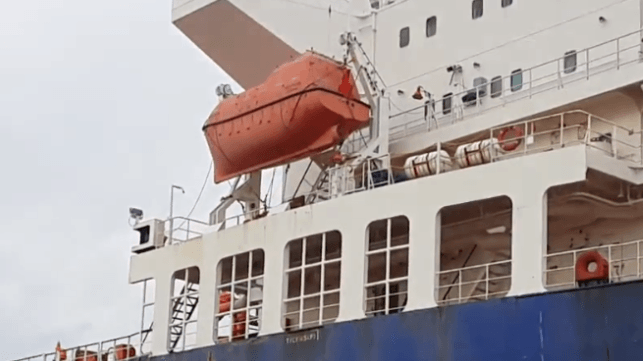
Lifeboats are among the most dangerous appliances aboard merchant ships

Lifeboat
File image

Published May 24, 2026 10:20 PM by The Maritime Executive


On Saturday, three men were killed and one was injured aboard a rig off Malaysia during maintenance work on a lifeboat, according to Ekonomi Rakyat. 

At about 1250 hours Saturday afternoon, four contractors boarded a lifeboat for a maintenance check at the Sepat FSO unit off the east coast of peninsular Malaysia, a busy region or offshore oil and gas production. A parted wire rope or hook system mishap (initial accounts differ) caused it to fall into the water below, according to local media accounts. 

The four victims were evacuated to a hospital in Kuala Terengganu. Three were pronounced dead when they arrived at about 1800 hours, and the fourth remains under close monitoring. 

The deceased have been identified as Ahmad Fikri Zakaria, 38; Nik Muhammad Hafifi Asri Ab Majid, 37; and Muhammad Faezuan Hakim Mohammad Bustamam, 28, according to the New Straits Times.  

Bustamam's wife, Nurkhaeryna Dhania Azreen Khairil Azri, told local outlet Sinar that she had just heard from her husband on the morning of the accident. "This morning he WhatsApped me saying he couldn't wait to go home and wanted to take a vacation," she said. "After I replied to the message, he didn't respond at all."

Initial reports suggested that the incident involved a lifeboat drill, but Petronas later confirmed that the casualty occurred  during maintenance.


Lifeboats are among the most dangerous appliances aboard merchant ships: because of their height above the waterline, there are steep consequences for any mechanical fault. Corrosion, fatigue, wear and human error - exacerbated in some cases by system design shortcomings - all create an opportunity for a fall. 

By the nature of their function, lifeboats are often used with multiple people on board, increasing the impact of any one incident. In decades past, lifeboat drill failures were responsible for an estimated one out of six seafarer deaths, and claimed hundreds of lives over the years. Accidents during exercises caused so many fatalities that IMO authorized masters to keep crew off of lifeboats during abandon-ship drills. This policy regularly saves lives, but has not eliminated risk: crewmembers or contractors still need to go aboard lifeboats periodically in order to conduct routine maintenance. 


Small Fishing Vessel Survives Collision With a Megamax Boxship

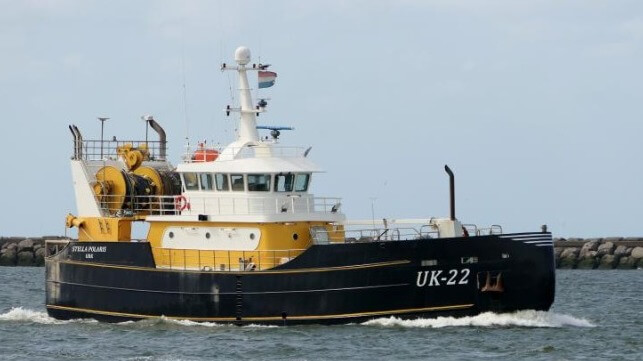
Stella Polaris (VesselFinder)

Published May 24, 2026 11:16 PM by The Maritime Executive


On May 21, a small fishing vessel collided with a 230,000 dwt container ship in the Dutch sector of the North Sea. The smaller vessel sustained significant damage but miraculously remained afloat.

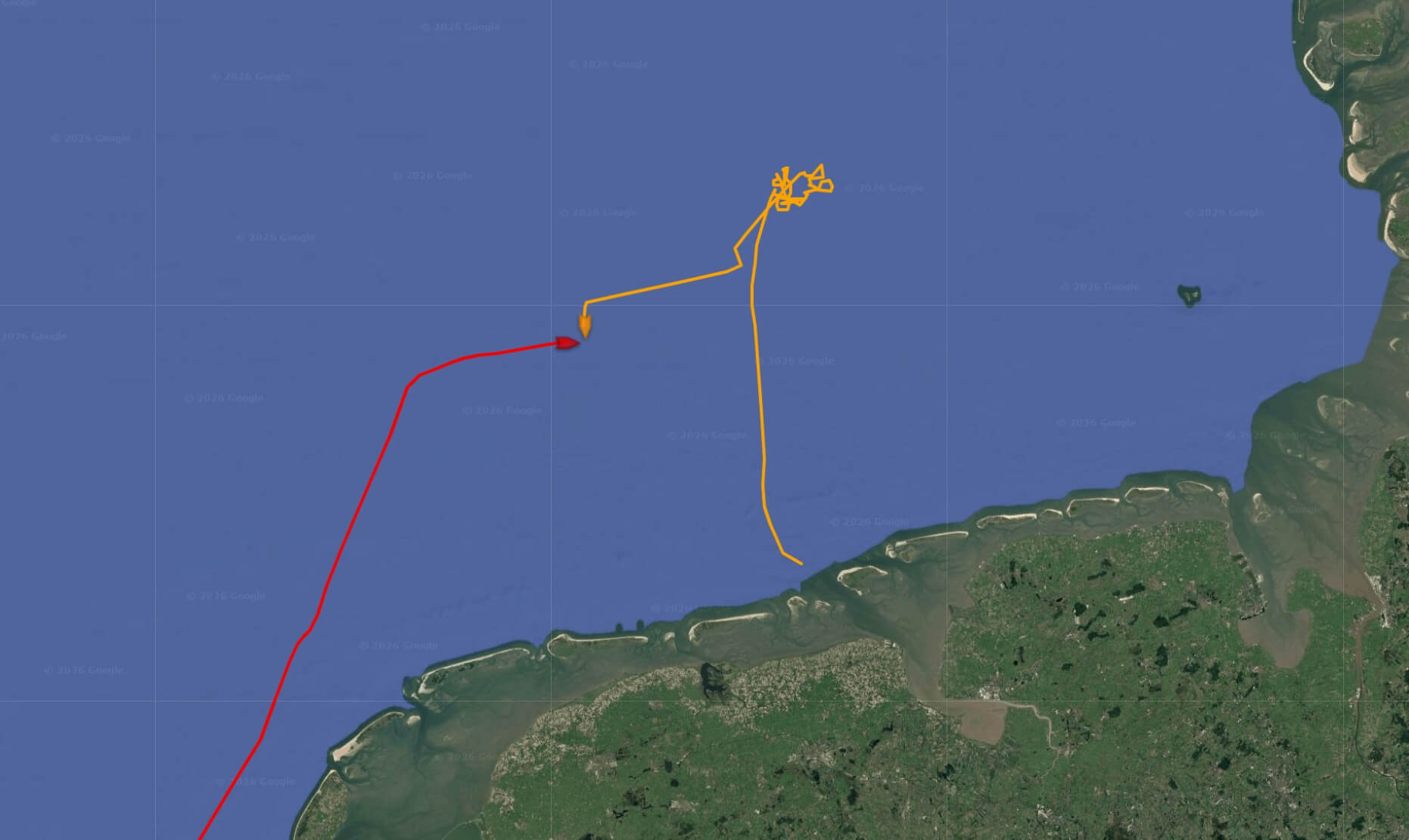
On the morning of May 20, the 24,000 TEU container ship Singapore Express departed the Maasvlakte district of the port of Rotterdam and got under way, headed for Hamburg. She had rounded the West Frisian Islands and turned eastwards, making about 7-8 knots, when she encountered Stella Polaris (UK-22, IMO 8700802). The Polaris had been engaged in fishing in the North Sea and was headed southwards making nine knots, putting her in a crossing situation with Singapore Express. The two vessels collided at about 0100 GMT at a position to the north of Terschelling, AIS data provided by Pole Star Global shows.

Singapore Express (red) and Stella Polaris (orange) collide in the North Sea (Pole Star Global)

After the collision, Singapore Express slowed to two knots, then regained speed and proceeded onwards to the Port of Hamburg. Stella Polaris was towed into port at Harlingen. 

Images taken by local media outlets show extensive damage to Stella Polaris' wheelhouse, which appears to have been crushed down by several feet. The small vessel's bow was also dented. No damage to Singapore Express has been reported.

Despite the potential severity of the incident, only one crewmember aboard Stella Polaris sustained minor injuries, according to local maritime outlet Cutover. An investigation into the cause of the casualty is under way.

Top image courtesy VesselFinder


Kenya Acquires New Ferry for a Crossing Plagued by Safety Concerns

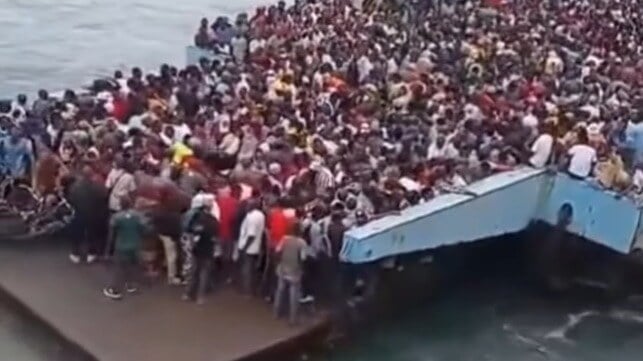
Crowds push their way aboard the Likoni ferry at will (Kenyan social media, 2026)

Published May 24, 2026 11:50 PM by The Maritime Executive


Kenya is moving to address perennial challenges at the Likoni ferry crossing in the coastal city of Mombasa with the acquisition of a new vessel, which will ease the pressure on an aging fleet. The ferry is the only transport connection on the south shore of Mombasa's central island; the north half of the island connects to the mainland with three road bridges.

In recent months, the 1,600-foot Likoni channel crossing has become a major source of safety concerns. Disturbing bystander videos show high risks due to chaotic crowd control, vessel breakdowns and vehicle accidents as thousands of commuters cross the channel connecting Mombasa Island to the mainland south coast.

The rising safety risks at the crossing stem from infrastructure challenges and operational hazards that face the Kenya Ferry Services. The state agency operates an aging fleet that offers services to over 300,000 people and 6,000 vehicles that cross the channel every day.  


The ferries that offer service on the channel are the MV Mvita and MV Pwani, which were bought in 1969 and 1974 respectively, and the MV Nyayo, MV Harambee, and MV Kilindini, all bought in 1990. Two other ferries, the MV Kwale and MV Likoni were acquired in 2010 while MV Jambo was purchased in 2020. Notably, Harambee, Nyayo, and Kilindini lost their classification in 2010 due to unseaworthiness.

Operating an aging fleet continues to cause major safety risks and challenges at the channel. The challenges include overcrowding and boarding chaos with massive crowds of pedestrians, motorcycles, and vehicles competing for limited space on the ferries. The vessels experience frequent mechanical failures, including engine malfunctions and broken ramps.

In addition, the steep descents to the ferry ramps lack safety barriers, which has repeatedly led to tragic accidents - including vehicles plunging into the channel or hitting crowds on the ramps. A case in point was in September 2019 when a woman and her four-year-old daughter died after their car rolled backward off the ramp of Harambee and plunged into the Indian Ocean.

The Kenyan government is moving to ease the ferry crossing challenges at the Likoni channel after President William announced plans to acquire a new vessel at a cost of $23 million. The high capacity ferry is expected to be delivered in the next six months.

“I’ve just witnessed the people of Mombasa trying to cross the sea using the ferry this morning. I want to tell you that my government is building you a new ferry before December this year at a cost of KSh3 billion,” said the Kenyan president. He added that an additional $3.8 million will be spent on improving mobility and transport infrastructure within the coastal city of Mombasa to spur economic activities, specifically tourism.


Chamber of Shipping of America Honors Crews for Maritime Safety Performance

Crowley
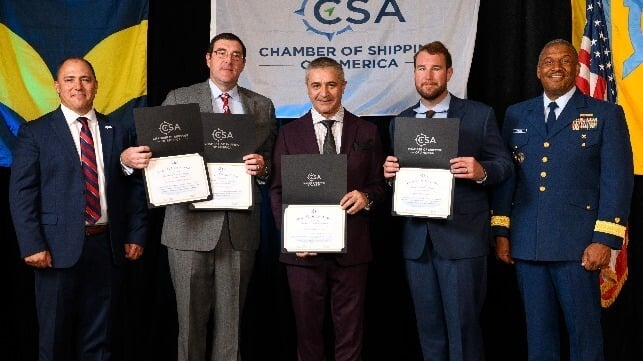
The Chamber of Shipping of America recognized 48 Crowley-owned or -managed vessels with 2026 Jones F. Devlin Safety Awards for operating at least two consecutive years without a lost-time injury.

Published May 24, 2026 5:27 PM by The Maritime Executive


[By: Crowley]

The Chamber of Shipping of America has recognized 48 Crowley-owned or -managed vessels with 2026 Jones F. Devlin Safety Awards for achieving a combined 427 years of service without a lost-time injury.

The Jones F. Devlin Safety Award recognizes merchant vessels that operate for at least two consecutive years without a crew member experiencing a lost-time injury. The awarded Crowley vessels include tugs, barges, commercial container ships and tank vessels operating globally.

The Chamber also honored the crews of El Coquí and Stena Immaculate with Ship Safety Achievement Awards for lifesaving and emergency response actions during separate incidents at sea in 2025.

The crew of El Coquí, Crowley’s U.S.-flagged combination container/roll-on/roll-off ship serving Puerto Rico and the mainland, was recognized for helping rescue four sailors from the SV Mariposa after the sailboat struck a submerged reef and sank near Silver Bank north of the Dominican Republic. After receiving a U.S. Coast Guard distress alert, El Coquí’s crew altered course, navigated challenging conditions and worked with the Coast Guard and a nearby vessel to bring the sailors to safety.

The U.S. crew of Stena Immaculate, a tanker previously managed by Crowley through its joint venture with Stena Bulk USA, was honored for its emergency response after their anchored vessel was struck by another ship in the North Sea. Despite a ruptured cargo tank and fire, the crew acted quickly to protect the safety of all 23 mariners, contain the fire to help mitigate further damage, and evacuate.

“We thank the Chamber of Shipping of America for recognizing Crowley vessels and crews for their commitment to safety,” said Meaghan Atkinson, vice president of safety and environmental assurance at Crowley. “These awards reflect the dedication to safety our mariners demonstrate every day and the skill they bring to every operation, from routine work to emergency response. Congratulations to our mariners and shoreside teams for this well-deserved recognition.”

The annual awards were presented during the Chamber of Shipping of America’s Ship Safety Award Luncheon in May. The event recognizes vessels and crews across the maritime industry for outstanding safety performance.

The products and services herein described in this press release are not endorsed by The Maritime Executive.


Fincantieri's US Shipyards Recognized by Shipbuilders Council of America

Fincantieri Bay Shipbuilding, Fincantieri ACE Marine, and Fincantieri Marine Repair honored for significant safety achievement, accident prevention, and continuous improvement

Fincantieri

Published May 24, 2026 7:28 PM by The Maritime Executive


[By Fincantieri]


Fincantieri reaffirmed its leadership position in advanced shipbuilding and maritime innovation, announcing that three of its U.S. shipyards — Fincantieri ACE Marine (Green Bay, Wisconsin), Fincantieri Marine Repair (Jacksonville, Florida), and Fincantieri Bay Shipbuilding (Sturgeon Bay, Wisconsin) — have received national safety awards from the Shipbuilders Council of America (SCA) for 2025.

The awards received reflect a structured and continuous approach to safety, regarded as a core pillar of the Group’s industrial culture and a key enabler of operational excellence across its U.S. operations.

Fincantieri ACE Marine and Fincantieri Marine Repair were awarded the “Excellence in Safety” recognition, granted to shipyards that achieve a Total Recordable Incident Rate (TRIR), one of the industry’s key indicators for measuring workplace safety performance, below the industry average established by the Shipbuilders Council of America. The result confirms the robustness of the Group’s safety management systems and its consistent focus on the highest operational standards.

In parallel, Fincantieri Bay Shipbuilding and Fincantieri Marine Repair received the “Improvement in Safety” award, reserved for shipyards achieving a TRIR reduction of at least 10 percent compared to the previous year. The recognition highlights the effectiveness of the continuous improvement processes implemented and the active role played by teams in reinforcing responsible and shared behaviors on a daily basis. In this context, the award represents a particularly significant milestone for Fincantieri Marine Repair, which receives a national safety recognition for the first time.

Fincantieri ACE Marine was also honored with the “Significant Safety Achievement” award, standing out as one of only three U.S. shipyards to have maintained a TRIR below 1.0 in 2025. This exceptional result attests to the systemic integration of safety within production processes and day?to?day operational management.

Taken together, these recognitions reflect the Group’s strategic focus on fostering an industrial culture in which safety is a foundational value, cutting across all functions and embedded in every phase of shipbuilding and ship repair activities. Within this framework, Fincantieri’s U.S. shipyards contribute to setting reference standards for the industry, underpinned by a shared commitment to responsibility, trust and respect for people. 

The recognitions also reflect Fincantieri’s broader commitment to continuously strengthening its safety culture through innovation, workforce engagement and increasingly proactive prevention models across the Group’s industrial operations. This approach supports the progressive evolution of safety management from a reactive to a more predictive model, leveraging continuous improvement, data analysis and advanced technologies to reinforce prevention across all activities.

The Shipbuilders Council of America is the national trade association representing the U.S. shipbuilding, maintenance and repair industry. Its annual safety awards program is based on rigorous criteria, including TRIR performance, and underscores the importance of workforce protection and operational discipline as pillars of the entire industrial sector.

The products and services herein described in this press release are not endorsed by The Maritime Executive.