Thursday, February 11, 2021

'Rivers of gold' rush through the Peruvian Amazon in stunning NASA photo

The Peruvian Amazon glitters like gold in a gorgeous new photo taken aboard the International Space Station.
© Provided by Live Science Mining pits glitter like gold
 in this aerial photo of the Peruvian Amazon

While that glow is just sunlight reflecting off hundreds of pits of muddy water, there is plenty of gold in them thar hills. Each glistening pool is a gold-prospecting pit, according to NASA's Earth Observatory website, likely dug by independent miners looking to unearth some of the Amazon's ancient treasures.

"Each pit is surrounded by de-vegetated areas of muddy soil," Justin Wilkinson, a grant specialist at Texas State University, wrote for Earth Observatory. "These deforested tracts follow the courses of ancient rivers that deposited sediments, including gold."

Peru's Madre de Dios state, shown in this picture, is home to one of the largest independent gold mining industries on Earth, Wilkinson wrote. As many as 30,000 small-scale miners (working outside of government regulations) prospect illegally in the area, tearing up the rainforest with excavators and dump trucks in order to unearth the gold underneath.

Illegal mining can be a boon to impoverished workers in Madre de Dios, but a detriment to the Amazon; according to a 2011 study in the journal PLOS One, gold mining is the single greatest cause of deforestation in the region.

These unregulated operations also pose a risk to local communities. Miners mix sediments with boiled mercury in order to separate gold from other minerals, according to Nature.com. As a result, up to 55 tons (50 metric tons) of mercury end up in rivers or the atmosphere every year. Locals who eat a lot of fish from these polluted rivers are more than three times as likely to have mercury poisoning than non-fish-eaters, a 2012 PLOS One study found.

But from space, these harsh realities blur out of focus. For the astronaut who took this photo on Dec. 24, 2020, the world far below was just a river of gold.

Originally published on Live Science.
SASKATCHEWAN

For Peat’s Sake’: Group opposed to peat moss mining in the La Ronge area ups the ante


A group opposed to a peat moss mining project south of La Ronge hopes to raise awareness through an online speaker series starting this week
.

Starting on Feb. 10, the group is holding an online speaker series featuring Elders and Indigenous conservation activists from northern Saskatchewan. They hope to raise awareness about the importance of peat bogs, or muskeg, to traditional ways of life and land-based food sources.

Quebec-based company Lambert Peat Moss Inc. raised the ire of some La Ronge area residents when it went public with a proposal to extract peat moss from four locations near the Lac La Ronge provincial park.

Eleanor Hegland, an educator at the Lac La Ronge Indian Band’s Bell's Point Elementary School, spoke with the Northern Advocate on location in the muskeg south of La Ronge.

Hegland said the loss of muskeg caused by peat moss mining would disturb the ecological balance of the region and rob her descendants of their ability to live off the land. She said she was ripped away from her home in the bush as a child and taken to residential school. Mining in the muskeg would be a repeat of the same colonialism that took her away from her land and put her in residential school as a child, she said.

“For us, we need this to survive. We still have lots of medicine in the muskeg that we use to keep us healthy,” Hegland said.

“For me, even being put in a residential school and taken out of my trapline as a young girl and I was sent to Prince Albert. In the Little Red River Park, that’s where I got my ability to think of home. The trees, the flowers and the different seasons. To me it was so powerful.”

Lambert sent a letter to La Ronge area residents last fall as part of the consultation process. The project would last 80-100 years and would be done in sections.

“It is important to note that an entire area is not all harvested at once. Rather, small areas are harvested and then reclaimed as the next area would be harvested,” the letter said.

“Lambert has developed procedures that increase peat productivity, while reducing the potential effects on the environment… Lambert will implement a progressive restoration process that will aim at restoring peat fields soon after they are no longer needed for the project.”

The company promised to implement a restoration plan that would “aim to re-establish vegetation cover and restore the movement and distribution of water” that Lambert said would lead to the return of peatland to its natural state.

But residents who use the muskeg on a regular basis say they can’t wait that long. Nor do they believe that Lambert will be able to fully restore the area once it is mined.

One of the parcels of land intended for development is near Potato Lake, which is abundant in wild rice and is also used for recreation, fishing, trapping and the gathering of ingredients for medicines used by traditional healers.

WSP Consulting is conducting an environmental impact assessment (EIA) for Lambert.

Janna Foster-Willfong, a team lead in environmental impact assessments at WSP said in an email on Jan. 15 that the EIA cannot be submitted without a completed consultation and engagement report.

The report would need to show what activities were undertaken by Lambert, what input was received and how Lambert addressed or accommodated any concerns that were raised, she said.

“The wildlife and wildlife habitat, caribou, vegetation and socio-economic chapters are still underway. It will be a long while before the EIA will be finalized because there remains a lot of consultation and engagement to be completed,” Foster-Willfong said.

“Online consultation and engagement has been challenging and face-to-face meetings are so much better; therefore, much of the consultation and engagement is awaiting the return of in-person meetings.”

Local author and conservationist Miriam Korner, who runs her dog team and forages near Potato Lake, started a group called, For Peat's Sake - Protecting Northern Saskatchewan Muskegs.

A Change.org petition launched by Saskatoon resident Chantal Barreda in October to oppose the project now has over 20,000 signatures.

“Feb. 2 was world wetlands day. The most important thing to realize is how important the wetlands are on a global scale. So if something in northern Saskatchewan is threatened it does not only concern the people in northern Saskatchewan. It concerns us all because this is a very effective and simple way to have a carbon sink,” Korner said.

“I think we need to start to look not just regionally in our areas but start to have an understanding of how our actions locally influence things on a global level. The peat has the ability to capture carbon but if that peat is taken it will actually be a carbon producer.

It turns from a carbon sink to a carbon producer and while that process is happening the peatlands are drying out. What that means for northern Saskatchewan is a higher risk of forest fires.”

Shane Bird, a youth worker at the Northern Lights School Division and member of the Lac La Ronge Indian Band, rediscovered his connection to the land and his roots by spending time in the muskeg. Now he takes youth out on the land to make that same connection for themselves.

Bird spoke with the Northern Advocate while preparing a fire to make muskeg tea with a plant that grows in wetlands and is called maskêkopakwa in Cree.

“It’s to empower the youth with that knowledge so that they can pass it on to their future generations,” Bird said.

“I think it’s important because it’s our lost identity, it’s our connection to mother earth and to the land; to the water, the fire, the sun and the earth. It’s something that we have lost along the way through intergenerational trauma.”

One of the youths in Bird’s group is 19-year-old Tyrell Tremblay. Tremblay said that he has been coming to the muskeg since he was a boy with his family.

“This is where we do a lot of hunting and a lot of our medicines come from the muskeg. I want my kids to experience it and to hunt on these lands and to gather medicine from it. There’s a lot of flu going around and we need our medicine,” Tremblay said.

“They are taking our medicine away and affecting our people’s mental health. Keep in mind that you’re affecting a whole community, you’re affecting a lot of people when you destroy this. It would disconnect me from my land and my way of life. This is all medicine right here and it helps with your mental health being out here. It’s therapeutic.”

Reconnecting with her traditional way of life through the muskeg helped Hegland heal from her experience in residential school. She wants youth like Tremblay to maintain their connection to the same land that she was so violently taken away from.

“It’s so important that the youth learn this and we want our future generations to have the same inherent right that we had to the heritage of the beautiful land, clean water, muskegs and the birds and the animals so that they’ll be able to sustain themselves,” Hegland said.

“I’m here because it’s my heritage to protect the land. It was left to me clean and it provided all the things I needed. So I want to protect the environment and the water and to teach the young people that the land provides for us and the planet earth is for all of us.”

To attend the speaker series you can visit the group’s Facebook page called, For Peat's Sake - Protecting Northern Saskatchewan Muskegs.

Michael Bramadat-Willcock, Local Journalism Initiative Reporter, The Northern Advocate
15 new record lows set in Alberta as extreme cold continues


© Provided by Global News Extreme cold warnings are issued when very cold temperatures or wind chill creates an elevated risk to health such as frost bite and hypothermia.

Environment Canada says 15 new record lows were set in Alberta on Monday due to an “unseasonably cold” arctic ridge of high pressure.

This is in addition to 26 records that were broken over the weekend, the national weather agency said.


Of the 15 communities with new record lows on Monday, the coldest was in Red Deer, which saw temperatures drop to -43.9 C — breaking the city’s previous record of -40.6 C, set back in 1936.


The record low temperatures seen throughout the province on Feb. 8 include:

Breton

New record of -37.5 C

Old record of -32.0 C set in 1994

Records in this area have been kept since 1939

Cold Lake

New record of -36.6 C

Old record of -35.8 C set in 1994

Records in this area have been kept since 1952

Edmonton (at the Edmonton International Airport)

New record of -40.8 C

Old record of -35.8 C set in 1979

Records in this area have been kept since 1959

Elk Island National Park

New record of -40.9 C

Old record of -35.6 C set in 1979

Records in this area have been kept since 1966

Hendrickson Creek

New record of -41.2 C

Old record of -35.5 C set in 2017

Records in this area have been kept since 1995

High River

New record of -33.2 C

Old record of -33.0 C set in 1994

Records in this area have been kept since 1913

Highvale

New record of -33.8 C

Old record of -32.0 C set in 1979

Records in this area have been kept since 1977

Lac La Biche

New record of -39.2 C

Old record of -38.9 C set in 1979

Records in this area have been kept since 1944

Lacombe

New record of -40.5 C

Old record of -39.4 C set in 1936

Records in this area have been kept since 1907

Milk River

New record of -32.4 C

Old record of -31.7 C set in 2017

Records in this area have been kept since 1994

Red Deer

New record of -43.9 C

Old record of -40.6 C set in 1936

Records in this area have been kept since 1904

Red Earth Creek

New record of -39.5 C

Old record of -35.8 C set in 2019

Records in this area have been kept since 1994

Taber

New record of -35.7 C

Old record of -35.5 C set in 1994

Records in this area have been kept since 1947

Vegreville

New record of -41.7 C

Old record of -37.0 C set in 1994

Records in this area have been kept since 1918

Wainwright

New record of -37.5 C

Old record of -36.0 C set in 1994

Records in this area have been kept since 1966

As of 7:30 a.m. on Wednesday, an extreme cold warning remained in place for all of Alberta, with wind chill values between -40 and -55 expected.

"This prolonged cold snap is expected to persist into the weekend for many areas of Alberta," Environment Canada said. "There will be some moderation in temperature at times, typically during daylight hours."

Extreme cold warnings are issued when very cold temperatures or wind chill creates an elevated risk to health such as frostbite and hypothermia.

Environmental law group to challenge Alberta oil inquiry in court


CALGARY — An environmental law charity is to ask a judge today to shut down Alberta's inquiry into the purported foreign funding of anti-oil campaigns.
© Provided by The Canadian Press

Ecojustice argues in its written submissions that the inquiry was formed for an improper purpose, which the law charity says was to intimidate those concerned about the environmental effects of oil and gas development.

The group also contends there's a reasonable apprehension of bias and that the inquiry is dealing with matters outside of Alberta's jurisdiction — arguments the provincial government disputes in its submissions.

Lawyers for the provincial government say cabinet is entitled — and mandated — to decide what's in the public interest and what issues warrant a public inquiry.

The inquiry was one plank of the so-called fight-back strategy the United Conservatives touted during the 2019 election campaign.

The deadline for the inquiry headed by forensic accountant Steve Allan has been delayed three times and its budget has been increased by $1 million to $3.5 million.

The hearing before Court of Queen's Bench Justice Karen Horner has been scheduled for two days. Its initial April 2020 court date was pushed back due to the COVID-19 pandemic.

This report by The Canadian Press was first published Feb. 11, 2020.

The Canadian Press


ALBERTA SAFE INJECTION SITE
Suspension of iOAT could lead to patients dying, lawyer argues during injunction hearing

UCP LAWNORDER SACRIFICES LIVES
TO EVANGELICAL IDEOLOGY

Patients who suffer from severe opioid use disorder could face irreparable harms including risk of death or sexual assault if a government-funded treatment program is halted next month, an Alberta court heard Wednesday.
© Provided by Calgary Herald Civil rights lawyer Avnish Nanda.

Clinics in Calgary and Edmonton, which provide injectable opioid agonist treatment (iOAT), are slated to close in March following a decision by the United Conservative government, pending the outcome of a court challenge.


Shuttering those clinics would lead to “adverse health effects” for iOAT patients, who are likely to return to using street opioids, experience homelessness, contract sexually transmitted infections or lose access to primary care, argued Edmonton lawyer Avnish Nanda during Wednesday’s injunction hearing.

He said at least one iOAT patient, who is not a plaintiff in the lawsuit, has died since the UCP government announced last year it would not renew a grant dedicated to Alberta’s iOAT program .

Industry Leader In Drone Logistics Part Of Massive, Future PlaySEE MORESponsored by VALUETHEMARKETS


The program has been described as a “last resort” for people with severe opioid addiction who have been unsuccessful with other forms of treatment such as methadone or suboxone.

Eleven iOAT patients with chronic opioid use disorder launched a legal challenge against the provincial government in September, alleging the decision to halt iOAT services violates their constitutional rights.

Justice Grant Dunlop reserved his decision Wednesday. His ruling is expected by the end of February, which will determine whether iOAT patients can continue receiving treatment until the lawsuit reaches a conclusion, even if the matter is still before the courts beyond March.

Nanda argued the pilot program, which launched in 2018 under the former NDP government, never explicitly stated an end date. He said they introduced iOAT with the intention of making it a permanent frontline treatment option.

The government’s counsel argued any perceived harm is speculative and the program was never guaranteed for an indefinite amount of time.

“iOAT is not just about treating someone’s severe opioid use disorder. It’s about addressing the broader health needs. It’s about finding a way to engage this patient in the health-care system,” Nanda told the court.

“If you remove any component to that, whether it’s wraparound services or injectable medication, it ceases to be iOAT.”

Nanda said the scope of an alternative program proposed by the government remains unknown.

He cited a cross-examination of Mark Snaterse, executive director of addiction and mental health for Alberta Health Services, who compared iOAT to the “Cadillac model” of service and said alternatives would likely be of lesser quality.

“My concern here today is that, what if we get a vehicle that just has an engine but not the transmission? What if it has no doors?” Nanda said. “What if it has certain components, parts, of what iOAT is and Alberta claims it’s iOAT, but really it’s not?”

Nate Gartke, a lawyer representing the government, acknowledged “there will be some changes” in how the service is offered.

“The current model of iOAT clinics is … a Cadillac service. It’s the gold standard. It’s attempting to provide as many treatments as possible in one location,” Gartke told the court.

“Just because a Cadillac service is not being provided, (Snaterse) still does say that it will be ‘a very good car.’ We’re not going to be providing them a car that doesn’t have a transmission or windows. We’re going to be providing them with a fully functioning service.”

Lillian Riczu, co-counsel to Gartke, said the plaintiffs have a “weak and frivolous case.”

“There will be minimal variation in the delivery method, however the variation in the delivery does not result in any harm, let alone irreparable harm to the applicants,” said Riczu, adding the same suite of ancillary services will be available through the Opioid Dependency Program in Alberta.

“Alberta’s evidence demonstrates that iOAT was a pilot study, it’s a controversial treatment and is only offered at a handful of jurisdictions around the world and in a limited number of Canadian cities.”

Nanda posed concerns about the government’s alternative treatment option, including whether there would be sufficient staffing, access to the same wraparound supports and trust in service providers.

There is no grant in place yet for the alternative service.
Related
'A matter of life and death': U of C study details benefits of threatened opioid treatment program
'It is a death sentence': Patients launch lawsuit after UCP cuts funding for opioid treatment program
Open letter calls on province to reverse decision ending a 'life-saving' opioid dependency program
Patient says iOAT provided ‘hope for a better life’

One plaintiff testified the closure of iOAT is a “death sentence” for her.

She said program staff had become “the only real family” she’s ever known. Through iOAT, she stopped using street opioids, found housing and left sex work, which previously helped support her substance use.

The program gave her “hope for a better life,” she testified in an affidavit.

But its anticipated end forced her back to her previous lifestyle.

“I returned to street opioid use because I felt like the system had abandoned me again and I knew that without iOAT I had no other option to manage my opioid use disorder.”

She also returned to sex work.

In December, she testified three men violently raped her and “dumped her in the snow.” She later tested positive for HIV at the iOAT clinic, which she believes is a result of the rape.

“I am so upset and angry with the government. It should be ashamed for what it is doing and the lives that are being ruined with the closure of iOAT,” she testified.

“The government gave us hope with iOAT, had us trust them, and now that has all been taken away, forcing us back into the streets with the violence and dangers we managed to avoid.”

She said the only reason she sought help after the December incident was because she trusts staff at iOAT and additional services were accessible at the Calgary clinic, such as the sexual transmitted infection screening.

Nanda said iOAT patients share similar stories to one another, including trauma endured prior to using opioids. He said many have a distrust of the health-care system due to prior circumstances.

“We’re really talking about the most vulnerable and marginalized group of opioid use disorder patients in Alberta,” he told the court. “It’s that only through iOAT they have aspirations, they have goals beyond the next time they use opioids. They’re talking about ambitions and plans and goals that they never thought possible.”

Nanda called the program a “one-stop shop” for medical care for patients.

“It’s the only effective treatment available and recognized for folks with severe opioid use disorder,” he said.

The injunction hearing followed the release of a University of Calgary study this week which detailed the benefits of iOAT, according to 23 patient interviews.

Clients said the service “transformed” their lives, citing improved mental health, decreased reliance on street drugs, fewer withdrawal symptoms and an overall improvement to their quality of life.

Researcher Jennifer Jackson also highlighted other studies of similar programs in the Netherlands and B.C., which showed between 13 and 20 per cent of patients die when services are scrapped.

The province is already seeing record-high opioid-related deaths. A staggering 904 fatalities were recorded between January and October — marking the deadliest year on record with two months of data still undisclosed.

“The only reasonable, factual conclusion is that, at best, there is uncertainly about whether this is iOAT or it’s not iOAT,” Nanda told the court.

“If that is the case, then the harms that I’ve described about relapse back to street opioid use all manifests.”

Myanmar protesters march for sixth consecutive day

The military junta continues to arrest senior government figures, despite ongoing protests. Protesters say they will continue until the junta ends.


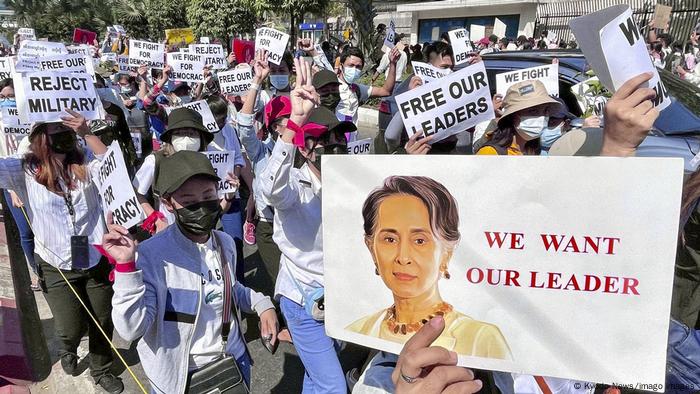
Protesters carry signs reading "free our leaders" as they gather in Myanmar's economic capital Yangon


Protesters gathered across Myanmar on Thursday for the sixth straight day of anti-coup demonstrations.

In capital Naypyitaw, hundreds of people came to support the civil disobedience movement. They carried placards supporting ousted leader Aung San Suu Kyi and chanted anti-junta slogans. Despite previous clashes, Thursday's early marches were peaceful.

Protesters also gathered in the cities of Dawei and Mandalay, as well as the commercial hub of Yangon, where they urged employees of Myanmar's central bank not to go to work.

"We aren't doing this for a week or a month — we are determined to do this until the end when [Suu Kyi] and President U Win Myint are released," one bank employee who had joined the protest told news agency Agence France-Presse.


Watch video 02:29Myanmar's youth drive opposition to military coup

Junta arrests more government aides

Pro-junta forces arrested the deputy speaker of the parliament's lower house and a key aide to Suu Kyi, Kyaw Tint Swe, according to monitor Assistance Association for Political Prisoners. More than 200 people have been arrested since the coup, the group said.

Suu Kyi's National League for Democracy (NLD) party, said five people linked to the toppled government were grabbed from their homes overnight, and that the top leadership of the former electoral commission had all been arrested.

Watch video03:33 Myanmar military's response 'clearly escalating'

Why are people protesting?

Senior military figures seized power last week, claiming widespread voter fraud in November's elections, where the NLD won a landslide victory.

They arrested elected officials and quickly stacked political offices and the court system with loyalists.

The military originally seized power in 1962 and strictly governed the country until democratic elections in 2010. Under civilian rule, the country was embroiled in ethnic tensions and rights abuses, however Suu Kyi and her party enjoyed widespread domestic popularity.

Since the coup, people have protested in the tens of thousands and established a civil disobedience campaign. This was met with military violence, with harsh crackdowns and widespread arrests.


AUNG SAN SUU KYI: FROM FREEDOM FIGHTER TO PARIAH
Darling of democracy
Aung San Suu Kyi, the daughter of Myanmar's assassinated founding father Aung San, returned to her home country in the late 1980s after studying and starting a family in England. She became a key figure in the 1988 uprisings against the country's military dictatorship. Her National League for Democracy (NLD) was victorious in 1990 elections, but the government refused to honor the vote   PHOTOS 123456789


More international sanctions


Western nations have condemned the coup and its subsequent crackdown, with the US announcing further sanctions on Wednesday.

"I again call on the Burmese military to immediately release democratic political leaders and activists," US President Joe Biden said, as he announced sanctions. "The military must relinquish power."

European Union foreign policy chief Josep Borrell also warned of possible sanctions.

United Nations Special Rapporteur on the situation of human rights in Myanmar, Tom Andrews, warned that all military members engaged in human rights abuses risked prosecution.


aw/rs (AFP, Reuters, AP)

 REST IN POWER

 AND REMEMBER HELL IS THE PARTY PLACE

Larry Flynt, porn mogul and Hustler publisher, dies at 78

The self-styled free speech champion 

was best known for being the publisher of Hustler magazine. 

His family is yet to confirm the cause of his death.


      LARRY FLYNT WAS THE EIGHTIES


US porn mogul Larry Flynt, who was best known as the publisher for Hustler magazine, died at the age of 78 in Los Angeles, his publicist said, confirming earlier media reports. 

Celebrity news outlet TMZ, which broke the news, said Flynt died of heart failure. However, his family members are yet to confirm the cause of his death. 

Flynt was married five times and had five daughters and a son, as well as grandchildren. 

He described himself as a "smut peddler who cares" and was a self-styled free speech champion. 

Flynt published the first issue of Hustler in 1974, as a counterpart to Playboy magazine. He soon expanded his publishing business into other titles. He then expanded his business to include porn sites, clubs and a casino. His empire was estimated to be worth between $100 million to $500 million (€82.5 million to €412.7 million).

Self-styled free speech advocate

Flynt was a self-styled free speech advocate, involved in many controversies throughout his life. One of the most well-known ones was a 1988 case in which the US Supreme Court made a ruling protecting writers and artists mocking public personalities

The case, Hustler v Falwell, involved a parody ad about televangelist Jerry Falwell published in Hustler magazine.

In 1978, Flynt was shot by a white supremacist for publishing the photo of an interracial couple in Hustler. The shooting left him partially paralyzed, with permanent spinal cord damage. 

tg/sms (AFP, Reuters)

Tokyo Olympics head Yoshiro Mori to resign over sexist remarks — reports

The former prime minister and current president of the summer games' organizing committee is due to step down after saying that women speak too much in meetings. The remarks sparked outrage at home and abroad.


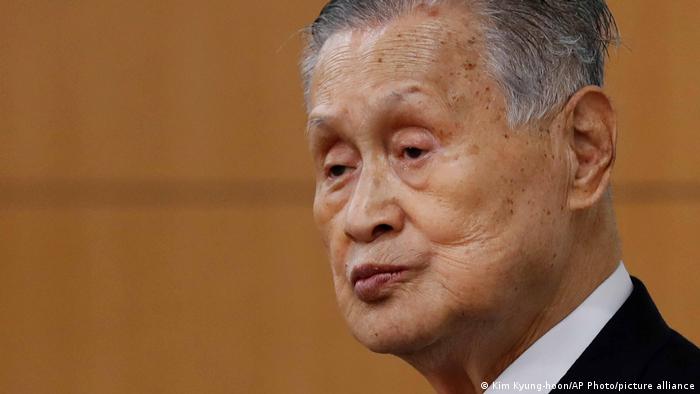
Yoshiro Mori, head of the Toyko 2020 Olympic organizing committee, has been facing growing calls to step down

Yoshiro Mori, president of the Tokyo Olympics organizing committee, is set to resign after facing backlash for sexist comments, Japanese media reported Thursday.

The controversial comments by the 83-year old former prime minister at a Japanese Olympic Committee board meeting in the first week of February ignited a firestorm.

"If we increase the number of female board members, we have to make sure their speaking time is restricted somewhat, they have difficulty finishing, which is annoying," Mori said.

"We have about seven women at the organizing committee but everyone understands their place," he added.

At a hastily called news conference on February 4, Mori attempted to retract his remarks. Admitting they were "inappropriate" and against the Olympic spirit, he declined at that point to resign.

Female opposition lawmakers protested against Mori's sexist remarks


With opposition lawmakers demanding his resignation, the Fuji News Network and public broadcaster NHK reported that he has told officials of his wish to step down.

The Mainichi daily newspaper reported he intends to announce his resignation at a meeting on Friday.
History of blunders

Mori's brief tenure as prime minister between 2000 to 2001 was marked by a string of gaffes and blunders. This included continuing to play golf even after learning that a Japanese fishing boat had been struck and sunk by a US submarine, killing nine.

While in office, his ratings began sliding within weeks. A year later they were in the single digits.

Mori remained a lawmaker until 2012, working on Japan-Russia relations as well as sports-related advocacy.

This included helping Japan's bid for the 2019 Rugby World Cup and the Tokyo 2020 Olympics.

Watch video03:15 Japan: Uncertainty dampens enthusiasm for Summer Games

Mori, who has battled lung cancer for years, previously said his last public service to his country would be leading the now delayed Tokyo Summer Games to a successful conclusion.

When pressed recently on whether he really thought women talked too much, he said: "I don't listen to women that much lately, so I don't know."

Another hurdle for the Summer Games

The Tokyo Summer Games have been struggling to overcome a number of obstacles, including ballooning costs and a plagiarism scandal involving the official logo, before being postponed by the coronavirus pandemic.

Recent polling indicates that nearly 80% of the Japanese public are opposed to holding the Summer Games as scheduled this year due to concerns about the coronavirus.


mb/rs (Reuters, AFP)
Two Chechen gay men in 'mortal danger' after being arrested in Russia, alleged in supporting terrorism

Two gay men from Chechnya face “mortal danger” after being abducted from Russia and forcibly returned to Chechnya under terrorism investigation, a Russian LGBT rights group has stated.

© Provided by National Post Banner with Putin wearing makeup appeared on a protest against the LGBTQ prosecution in Chechnya near the Russian embassy in 2017.

According to the Russian LGBT Network, Salekh Magamadov, 20, and Ismail Isayev, 17, resided in Nizhny Novgorod, east of Moscow, when they were kidnapped last Thursday by both Chechen and Russian police. The two men are confined for allegations of supporting terrorism,” the Network told The Guardian . They were sent to a police station in Chechen town Gudermes this Saturday.

Magamadov and Isayev fled Chechnya last year in June through the LGBT group after they were arrested and tortured in Chechnya by special police in April 2020 for operating an opposition channel on the Telegram app, called Osal Nakh 95.

Based on Russian media, they were detained on suspicion of posting offensive publications, comments and photographs of other people, for which they were alleged in terrorism. But Tim Bestsvet, the Russian LGBT Network spokesperson, said they were arrested “initially because of their sexual orientation,” the Moscow Times reported.

Both Magamadov and Isayev were forced to record a video apologizing for running the Osal Nakh 95 channel.

Bestsvet told the Guardian that he is worried for the safety of the two men, referring to other incidents when men had been returned to Chechnya, where they vanished or died.

“There have been cases when relatives brought back to Chechnya people that we had evacuated and then these people would die or, we can say, were probably murdered,” Bestsvet told the Moscow Times.


According to the LGBT Network, law enforcement officers detained Magamadov and Isayev in their apartment in Nizhny Novgorod on Feb. 4. The LGBT group later received a frightening phone call from the two men with screaming in the background.

After their lawyer Alexander Nemov arrived at the apartment 30 minutes later, he found the evidence of a struggle and noticed that both Magamadov and Isayev had disappeared.

The LGBT Network reported that the neighbours saw people in black uniforms entering the building a few hours before the incident happened. They claim those people could have been the Russian SWAT-team.

Regional Police Precinct could not affirm the two arrested were in their custody.

Euronews stated that Nemov has visited Chechnya to speak with his clients but was not allowed to see them. The LGBT Network reoirted that the police failed to explain why the men were arrested and did not provide any information to the lawyer for at least two days.

On Sunday, the LGBT Network posted on their Instagram that Magamadov and Isayev were forced to reject the lawyer’s assistance, making the LGBT group send them a new one.

Although Magamadov is more than 18-years-old, Isayev, who is 17-years-old, is a minor and can deny legal representation through his parents, the Moscow Times said.

Bestsvet said Isayev’s father went to the Chechen police station on Saturday and was pressured to prevent his son from seeing the lawyer.

Akhmed Dudayev, an aide of the Chechnya’s leader Ramzan Kadyrov, told the Guardian that the men had admitted they helped an illegal armed group headed by Aslan Byutukayev , who was named as a Specially Designated Global Terrorist by the U.S. in 2016. If convicted of terrorism, the men could face up to 15 years of jail time in Chechnya.

Dudyaev also claimed the arrest was legal and that any effort to sway the case would be “senseless and futile,” The Guardian reported.

Russian republic Chechnya has been condemned for alleged oppression of the LGBT community since 2017, and many gay people claimed they were tortured by law enforcement.

In a response to the alleged persecution of gay people in Chechnya, the Russian LGBT Network based in Saint Petersburg has aided 200 people to leave the republic either to foreign countries or to other areas in Russia.

The Guardian stated the Chechnya officials rejected reports of such allegations, although several men had reported police brutality and abductions.

Kadyrov was also alleged in other human rights violations, claiming “there are no gay men in Chechnya.”

NOT CAPITALI$M BUT SELF EMPLOYMENT
Cuba opens door to more capitalism, after a long wait

Cuba took a long-awaited and likely irreversible step towards massively expanding the island's private sector over the weekend
.
© Yamil Lage/AFP/Getty Images Cuban farmers in Vinales,
 Pinar del Rio province, Cuba, on January 10, 2021.

On Saturday, Cuba's communist-run government announced that Cubans will soon be able to seek employment or start businesses in most fields of work.

Previously, Cubans were restricted to working in just 127 officially approved private sector job descriptions. Some of those legalized activities over the years included working as a barber, tire repairer, palm tree trimmer or "dandy," as the government referred to Cubans who dressed up to pose with tourists for photos.

But many Cubans chafed that the government's list did not include opportunities created by recently increased access to the internet and Cubans' own seemingly limitless ability to innovate and invent.

Now they will have the ability to work in over 2,000 different fields.

"The new measures for self-employment approved by the Council of Ministers will expand significantly the activities one can carry out. A new and important step to develop this kind of work," tweeted Cuban official Marino Murrillo Jorge, "the reforms czar," who has been overseeing its glacially-paced attempt to modernize the local economy.

Self-employment and capitalism were all but forbidden in Cuba until its near-total economic collapse, brought about by the fall of Soviet Union, then the island's largest trading party.

Gradually, and with regular backtracking, the Cuban government allowed Cubans to stop working low-paid state jobs and go into business for themselves. By the government's own statistics, more than 600,000 Cubans now work in the private sector, although the number is likely far higher when accounting for the island's thriving black market.

Still, Cuban government officials often have treated the island's entrepreneurs as a necessary evil and a possible Trojan Horse that could allow opponents in the United States to at long last bring down the revolution.

And while the official line from Cuban officials is that they have been implementing free market reforms "without hurry but without stopping," the opening had stalled out as the government seemed to doubt the wisdom of further empowering Cuban entrepreneurs.

But with the widespread impacts of the pandemic and as Raul Castro, 89, is expected to step down in April as head of the Cuban communist party, the organization that charts the island's long-term economic planning, Cuba in 2021 has finally embarked on two major reforms: Unifying its labyrinthine dual-currency system and now lifting restrictions on jobs.

The government will still prohibit or restrict Cubans from privately undertaking 124 activities. While those activities have yet to be disclosed, they will likely continue the state's monopoly on health care, telecommunications and mass media.

The new measure, over time, will likely alter the face of the island's economy, said Cuban economist Ricardo Torres.

"We don't know yet which 124 activities will remain prohibited but it's safe to assume that the possibilities will be expanded for professionals," Torres told CNN. "An old demand in a country that has made an enormous investment in education. "

The changes come too as Cuba seeks to improve relations with the US after four years of a barrage of new economic sanctions from the Trump administration.

"This is long overdue, it's welcome news, and the United States should affirm that the embargo was never intended, and will not be used, to penalize private enterprise in Cuba," Sen. Patrick Leahy (D-VT) posted on his Twitter account.

"After more than half a century isn't it time to repeal a Cold War embargo that has failed to achieve any of its objectives, and has only made life harder for the struggling Cuban people?"

Earlier this month, Leahy, a long-time advocate for improved relations with Cuba, co-sponsored a long-shot bill to lift the nearly six-decade-old US economic embargo on the island.

Cuba's endlessly inventive and long suffering entrepreneurs will be watching to see what happens.

© Yamil Lage/AFP/Getty Images People queue to buy food in Havana, on February 2, 2021, as COVID-19 cases surge in the island nation. - Cases in Cuba, one of least-affected nations in the region by the coronavirus pandemic, have been surging in recent days. (Photo by Yamil LAGE / AFP) (Photo by YAMIL LAGE/AFP via Getty Images)