Extreme heat is reaching Europe’s most northern cities. These mayors are determined to solve it

From Athens to Oulu, European mayors are among 50 worldwide teaming up to protect citizens against extreme heat.
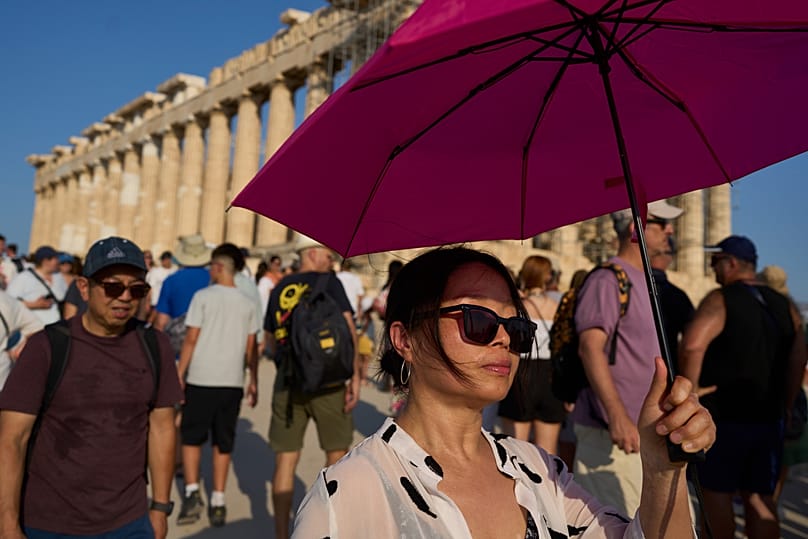
Last July, Antalya on the Turkish Riviera broke records when temperatures crept above a scorching 46°C. Home to more than 2.6 million people – and millions more tourists each summer – the Mediterranean city was long accustomed to heat.
But something had shifted.
“In recent years the heat has changed in character: heatwaves that are longer, more intense and more frequent, straining our residents, our outdoor workers, our health services and the millions of visitors we host each year,” says Melike Kireçcibaşı, Head of Antalya’s Climate Change and Zero Waste Department.
Antalya is not alone. Extreme heat is now the deadliest climate hazard on Earth, killing nearly half a million people every year.
Europe’s May heatwave – which saw temperatures in France run 10 to 15 degrees above normal, breaking all-time spring records and causing deaths across the continent – was described by UN climate chief Simon Stiell as a “brutal reminder of the spiralling impacts of the climate crisis”.
With the World Meteorological Organization (WMO) warning that a potentially powerful El Niño is now developing, set to amplify already-rising temperatures across Europe and beyond this summer, the pressure on cities to act has never been greater.
Now, on World Environment Day (5 June), more than 50 mayors – from Athens to Oulu to Yangzhou – are joining forces. The United Nations Environment Programme’s new ‘50@50’ initiative brings cities together to share tested solutions, stress-test their systems against future heat scenarios, and accelerate action before the next heatwave strikes.
“Extreme heat is already reshaping daily life in cities around the world,” says Inger Andersen, UNEP’s Executive Director. “50@50 helps local leaders move faster by sharing practical solutions that protect people, reduce inequality and strengthen urban resilience.”
Mapping heat exposure for targeted action
Prompted by rising temperatures, Antalya embarked on the EU-supported CLIMAAX-MUHIR project – a province-wide heat-risk assessment modelling current and future dangers.
“The findings were sobering,” Kireçcibaşı tells Euronews Earth. “Our climate projections show heatwave occurrence rising sharply under a high-emissions scenario; some districts could see several-fold increases in heatwave frequency by mid-to-late century.”
The project also mapped where vulnerable populations and extreme heat intersect – and the results were stark. Although built-up areas make up just 2.56 per cent of Antalya’s territory, they house around 56 per cent of its population, and the city’s highest-risk heat zones overlap almost precisely with where people actually live. “That tells us where to act first,” says Kireçcibaşı.
Guided by these findings, Antalya developed a Heat Action Plan directing cooling infrastructure, shade, green spaces, early-warning systems and health support to the neighbourhoods that need them most.
Redeveloping the most vulnerable neighbourhoods
A similar approach is underway in Athens – another 50@50 participant – where an Urban Heat Atlas identifies where heat exposure and social vulnerability overlap. The initiative is driving the redevelopment of Elaionas, one of the city’s most thermally vulnerable districts, where a new 215,000-square-metre metropolitan park is being created.
Athens has committed to planting 5,000 trees every year; since 2024, more than 12,400 have already gone into the ground. Progress can be tracked in real time through the Athens Trees digital platform, designed to build public trust and citizen engagement.
“Combined with school gardens, microforests, neighbourhood parks and cooling elements in public spaces, these interventions are helping us create a cooler and healthier urban environment,” says Elissaios Sarmas, CEO of Develop Athens.
Both cities hope their hotspot-mapping techniques will be among the most transferable contributions to the 50@50 network.
That sharing of knowledge is the initiative’s core purpose. Building on its own 50°C simulation exercise – in which the city stress-tested its systems against temperatures it has not yet experienced but scientists say it will – Paris is now helping to extend that model across the network.
“Extreme heat is becoming a defining challenge for cities worldwide,” says Emmanuel Grégoire, Mayor of Paris. “Cities must act together to anticipate extreme heat and protect their residents. Cooperation is our most powerful tool.”
Over the next year, a dozen cities will conduct their own extreme heat stress tests with support from UNEP, the C40 Cities Climate Leadership Group and the City of Paris.
Heat is hitting from the Mediterranean to the Arctic Circle
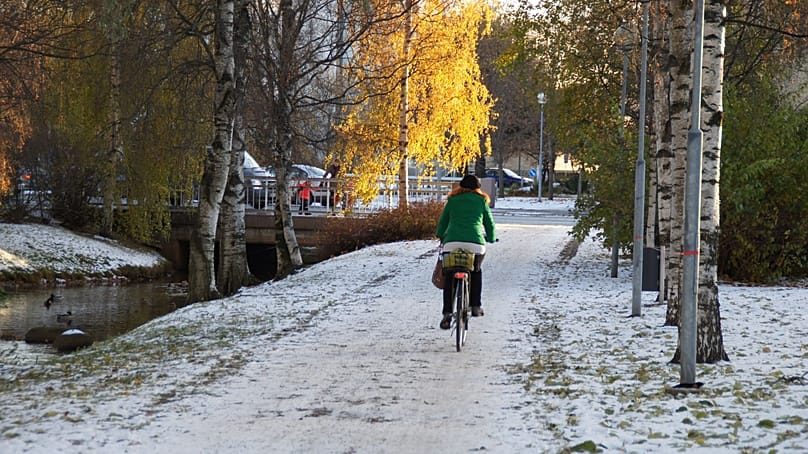
Perhaps the most striking signal of how far the extreme heat problem has travelled comes from a city near the top of the world. Oulu, the EU’s northernmost large city in Finland, sits close to the Arctic Circle – and yet it too has joined 50@50.
Last year, Finland endured three consecutive weeks of 30°C temperatures in a “truly unprecedented” heatwave. An ice rink in the north of the country opened up to those seeking refuge from the heat, while local hospitals were inundated. The heatwave also sparked concerns over the welfare of reindeer, who risked overheating.
“The urban heat islands are starting to form and make urban spaces uncomfortable,” says City Architect Sanna Pääkkönen. The challenge is compounded by the fact that the Finnish city was built for an entirely different climate.
“Most of our apartments, schools, daycare centres and working environments are built with cold winters in mind – and now they are getting too hot in summer,” Pääkkönen explains.
Beyond heat, Oulu’s Climate Roadmap must also contend with more frequent flooding, storms, and the disruption that shifting freeze-thaw cycles bring to buildings and infrastructure designed for reliable permafrost.
City planners are now factoring sunlight, heat and shading into new urban developments – and investing in cycling and pedestrian infrastructure to cut the car emissions that drive the temperatures they are scrambling to adapt to.
The thread connecting Antalya’s heat maps, Athens’ new parks and Oulu’s rewritten planning rules is the same: cities can no longer design for the climate they have. They must design for the one that is coming.
That a city near the Arctic Circle is now planning for summer heat it was never built to handle demonstrates how rapidly the problem is moving. Keeping pace with it, 50@50’s organisers argue, requires cities to stop trying to solve it alone.
Spring storms are becoming increasingly common in Europe
image:
Zhi-Bo Li, researcher in climatology at the University of Gothenburg.
view moreCredit: Xin-Wen Zhang
Storm Dave, which swept across northern Europe over the Easter weekend, is a recent example of what new research from the University of Gothenburg has revealed. Spring storms forming over the North Atlantic have become more common than they were 80 years ago, and this is due to climate change.
In the northern hemisphere, storm seasons follow a seasonal cycle. Storms are weakest and least frequent in summer, and most intense in winter. As a result of global warming, storm patterns and their course have changed, and several studies have indicated that winter storms appear to be occurring more frequently and with even greater intensity.
Less Arctic sea ice
“One factor that may be contributing to the formation of more storms is the reduction in Arctic sea ice. Open water can release more heat and moisture into the atmosphere than when there is a layer of ice covering the sea. The shrinking sea ice also means that storms can take new paths across the Arctic oceans,” says Zhi-Bo Li, researcher in climatology at the University of Gothenburg.
Most climate research focus on how climate change has affected the peak and off-peak seasons for storms, in winter and summer. However, in a new study, Zhi-Bo Li and his colleagues have chosen to investigate how storms in the Northern Hemisphere have changed during spring and autumn from the 1940s to the present day.
Changes in spring and autumn
“We can see that storms over the North Atlantic, the North Pacific and the Arctic Ocean have changed very noticeably during spring and autumn. A storm as powerful and persistent as Dave used to be quite rare in April, but now we are seeing them occur more frequently and pass through longer distances. Previously, many spring storms would fizzle out over the British Isles, but now they sometimes reach as far as Scandinavia,” says Zhi-Bo Li.
The researchers have used historical weather data from 1940 to 2024 to build up a picture of how storms have changed. The main finding of the study is that these changes vary depending on the season and region. In the Arctic, north of the 65th parallel, spring storms are becoming more powerful, lasting longer and travelling further. In the North Atlantic, more spring storms are forming than before, whilst in the North Pacific, it is the autumn storms that have intensified and are lasting longer.
Study fills a gap
“Generally speaking, we are seeing a clear change in the storm landscape in the Northern Hemisphere. Our study fills a gap in our understanding of how storms behave during the transition from winter to summer; these are significant changes that have previously been overlooked. This is crucial if we are to develop better weather forecasts and plan effective adaptations to a changing climate.”
Journal
Journal of Geophysical Research Atmospheres
Method of Research
Data/statistical analysis
Subject of Research
Not applicable
Article Title
All-Season Analysis of Extratropical and Arctic Cyclones Over the Northern Hemisphere Oceans During 1940–2024

No comments:
Post a Comment