Friday, February 12, 2021


9 Dracula film adaptations 1921-2021

Dracula, created by Irish author Bram Stoker, is the prototype of all vampires and a favorite of filmmakers to this day. The first adaption came out 90 years ago.


'Nosferatu' (1921)

Back in 1921, when German director Friedrich Wilhelm Murnau started shooting for "Nosferatu," there was no such thing as a "horror movie." Played by Max Schreck, the vampire Count Orlok was one of the scariest characters ever featured in a silent movie at the time. The gloomy, bald figure with bat-ears, thick eyebrows and long canines could have come directly from the depths of hell.

PHOTOS
123456789
UK court: Nigerian farmers can sue Shell over pollution

Britain's Supreme Court has ruled that more than 40,000 people can make claims against the European energy giant following decades of oil spills in the Niger Delta region.


The UK's Supreme Court has said that Nigerian farmers and fishermen have a high chance of success in their lawsuit against Shell

A group of Nigerian farmers and fishermen can sue Royal Dutch Shell PLC in English courts over pollution from decades of oil spills, Britain's highest court ruled on Friday.

Five justices on the UK's Supreme Court said the Anglo-Dutch firm may owe a "duty of care'' to the claimants over the actions of its Nigerian subsidiary. Shell had argued that it was not responsible.

Friday's ruling overturns a 2017 decision against the Ogale and Bille communities of Nigeria's Niger Delta, who brought legal claims for compensation and clean-up costs following decades of repeated spills in the oil-rich region.

Justice 'unlikely in Nigeria'


The claimants argued that they could not expect justice in a Nigerian court and that the case against Shell and its subsidiary, the Shell Petroleum Development Company of Nigeria (SPDC), should be heard in London.

The claimants allege their lives and health have suffered because repeated oil spills have contaminated the land, swamps, groundwater and waterways and that there has been no adequate cleaning or remedial action.

In its ruling on Friday, the court said a lower appeals court had "materially erred in law'' when it ruled against the claimants. The Supreme Court justices said the appeal had "a real prospect of success."


Watch video 02:23 Shell ordered to pay for Niger Delta oil spills

Daniel Leader, a partner at the farmers' firm of lawyers, Leigh Day, hailed the decision as a "watershed moment."

"Increasingly, impoverished communities are seeking to hold powerful corporate actors to account and this judgment will significantly increase their ability to do so," Leader added.

Shell blames sabotage


Shell said it was disappointed with the ruling. The energy giant has blamed sabotage for oil spills and says crude oil spills caused by theft surged by 41% in 2019.

"Regardless of the cause of a spill, SPDC cleans up and remediates. It also works hard to prevent these sabotage spills, by using technology, increasing surveillance and by promoting alternative livelihoods for those who might damage pipes and equipment,” Shell said in a statement.


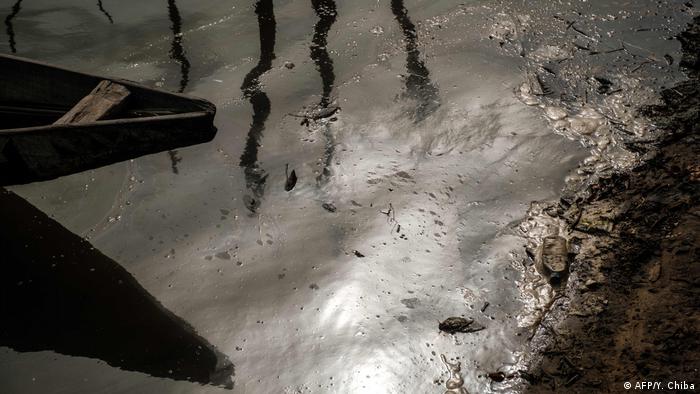
Oil continues to be visible on Nigerian rivers following oil spills a decade ago

The UK decision follows two weeks after the Netherlands ordered Shell to compensate Nigerian farmers for oil spills on land in two Delta villages. The Dutch ruling comes after 13 years of legal battles.

In 2015, Shell agreed to pay out 55 million pounds ($83.4 million) to the Bodo community in Nigeria in compensation for two oil spills, which was the largest ever out-of-court settlement relating to Nigerian oil spills.

The UK court also made a seminal ruling nearly two years ago in a case involving mining company Vedanta.

The decision allowed nearly 2,000 Zambian villagers to sue Vedanta in England for alleged pollution in Africa. Vedanta ultimately settled out of court in January.

mm/dj (AFP, AP, Reuters)
Opinion: France keeps Chad despot Idriss Deby in power

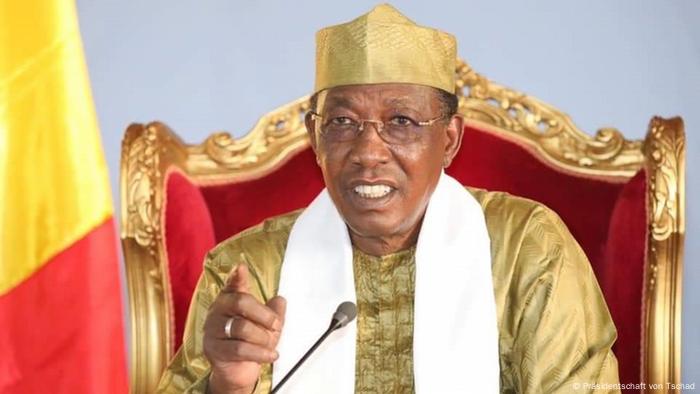
In April, Idriss Deby will vie for a sixth term as president of Chad. He could not have remained in power so long without being propped up by the former colonial power, DW's Eric Topona writes.


Idriss Deby's reign is safe from domestic dissidents
 so long as he has backing in Europe

With the help of France, on December 1, 1990, Idriss Deby successfully toppled the government of Chadian President Hissene Habre, to whom he had long been loyal. The coup ended one of the bloodiest dictatorships on the African continent.

That day, Deby told the people of Chad, who had been yearning for justice, freedom and prosperity, that he would bring them not gold or silver but freedom and democracy. On April 11, Deby will be vying for a sixth term as president, with neither gold nor silver, nor democracy for that matter, in sight. 


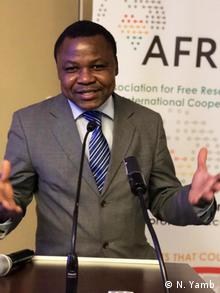
DW's Eric Topona

When Deby made his promise back in 1990, the world was undergoing significant political shifts. In Europe, for example, Communist dictatorships were falling swept away. And the people of Chad, whose freedoms had been trampled upon by the previous regime, were hungry for democratic reforms.
Chad's constitutional changes

Deby took a page out of the playbook of other former French colonies by convening a national conference in 1993 to draw up a new constitution. Adopted in 1996, that constitution allowed the president a maximum of two terms in office. But it was amended in 2005 to remove the two-term limit, essentially clearing the way for future power grabs.

By the time Chad had become an oil-producing country, Deby had emerged as a self-styled strongman. Instead of diversifying the economy, modernizing its infrastructure or spending oil profits evenly throughout Chad, he took a different approach. He viewed his country's newfound revenue not as belonging to the people, as one would expect, but rather as his own money — which went straight into his family's pockets.

Chad has been exporting oil since 2003. In 2012, Infrastructure and Transportation Minister Adoum Younoussmi said petroleum was what brought the country growth. According to his ministry, Chad produced more than 120,000 barrels of oil a day, earning revenues of around €4.5 billion between 2004 and 2011. Not bad for a country of just 15 million people.
Diverting Chad's wealth

The government had promised that the wealth generated would go to alleviating poverty in one of the poorest countries in the world. Schools, streets and hospitals were built, albeit of a low quality, in the north of the country, where the president happens to be from. The south fared far worse. In southern Chad, and especially the country's oil producing region, the population continues to live in abject poverty.

The lion's share of the funds are either lining the pockets of Chad's ruling minority or have been invested in arms to fend off numerous coup attempts. Normal people in Chad continue to suffer. Mortality rates from famine, malaria and dysentery remain high, with no access to clean drinking water, functioning hospitals or trained doctors in many regions — despite the fact the government had pledged to earmark 70% of the country's oil revenues for fighting poverty.

Chad has become the property of a single man and the circle he rules with. On paper, the country is still a democracy. But the reality is very different. Journalists are regularly thrown into jail. Granted, these breaches of the rule of law are not only the president's doing. His henchmen also abuse their power. The country's opposition is prohibited from gathering and since 2015 has been barred from organizing demonstrations. Those who do so risk imprisonment.

But Deby has nothing to fear. Chad continues to enjoy a special relationship with France and plays a key role in fighting terror in the Sahel region. Paris has effectively written him something of a blank check, and has on many an occasion bailed him out militarily when others tried to topple him.

France would be well advised to improve its ties with Chad's younger generation and forces of change. This would mean a break with Deby and his ruling clan, who are impeding any hope for democracy. Many in Chad are skeptical that April's elections will be free and fair. It seems unlikely that the will of the people will be respected.
Saudi activist Loujain al-Hathloul no longer in jail but still not free

As far as Saudi Arabia is concerned, Loujain al-Hathloul was a threat to national security. Some believe the new US administration under Joe Biden had a hand in her release.


Al-Hathloul says the fight for more rights isn't over

She spent 1,001 nights in jail, or just under three years, and now the famous Saudi Arabian human rights activist is out on probation. "Loujain is at home," her sister Lina al-Hathloul wrote on Twitter. She also posted a screenshot of a video conversation with her sister in which she was seen smiling.

Her other sister, Alia al-Hathloul, said this about her sister's release during an online press conference: "It was a very special moment when I saw her, a moment I'll never forget. She's such a strong woman. That's the woman I know. We're happy she'll now be able to sleep in a warm bed."

The human rights activist says one of the first things she wants to do is eat ice cream and her sister Alia, who lives in Belgium, said she had popped out to the supermarket to buy ice cream to celebrate with her sister.

For years, Loujain al-Hathloul had challenged the ban on women driving and other legal restrictions in Saudi Arabia. The restrictions were imposed under the country's guardianship system, which required that females have male guardians with them at all times. She was arrested and jailed in May 2018.

Saudi Arabia, a few weeks later, changed the law prohibiting women from driving and observers believe that Crown Prince, Mohammad bin Salman, a self-styled reformer himself, didn't want it to look like the role of female activists had forced the change in the law.

In December 2020, a judge sentenced her to five years and eight months in prison after finding her guilty of violating the country's counter-terrorism law. She was charged with violating national security and of maintaining contacts with foreign governments in an attempt to change the country's political system. At the time of the verdict, she had already spent over two years in custody while awaiting trial.

For years, Loujain al-Hathloul had challenged the ban on women driving and other legal restrictions in Saudi Arabia

The fight isn't over

Loujain al-Hathloul's family had hoped that she would get out of jail on probation in the coming months. With 1,001 days in jail now behind her, her sister Lina still doesn't think the matter is over. "Loujain is home, but she isn't free," she said.

She may be home but she's still not allowed to leave the country for five years. If she does so, she'll be violating her parole. Her parents too have had trouble leaving the country in recent years. Officials never told them why.

Saudi Arabia's counterterrorism court, which was established in 2008, has its own definition of what it considers to be terrorism, according to Middle East expert Guido Steinberg from the German Institute for International and Security Affairs (SWP). "The government in Saudi Arabia defines what exactly terrorism is," he said. "What we have here is a political trial set in motion by political leadership. This court was established to accomplish such things."


According to Loujain's supporters, she can be sent back to jail at any time over the next three years if she is seen as having violated her parole in any way. That's why her sister Lina thinks she won't be going on social media anytime soon. Her Tweets are now considered illegal and any activity in this regard would be considered a cybercrime.

The 31-year-old activist's release from jail was hailed internationally. Amnesty International called her release long overdue and leaders around the world, including French President Emmanuel Macron and US President Joe Biden echoed that sentiment. 

Did the US government play a role in her release?
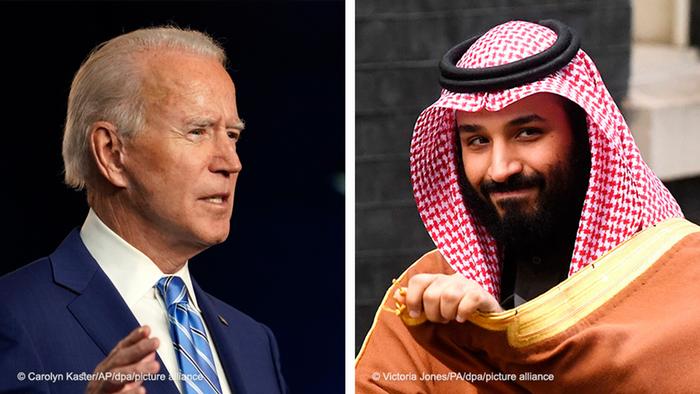

US President Joe Biden has promised a tougher stance towards Saudi Arabia

Bidensaid back on the campaign trail in 2020 that if elected president, human rights violations in Saudi Arabia would be dealt with in a much stricter way than was the case during the Trump administration. According to SWP's Guido Steinberg, it's very possible that the change in power from Trump to Biden played a "very important role" in her release.

The timing of the court decision — three weeks after Biden took office — is not mere coincidence, many say. Loujain's sister Alia also thinks pressure from Washington helped get her sister out of jail earlier.

Former US President Donald Trump maintained warm relations with the Saudi Crown Prince and saw him as an ally in the region against Iran. Despite numerous human rights violations and the murder of Saudi journalist Jamal Khashoggi, he never swayed from his pro-Saudi stance. Numerous human rights activists and critics of the Saudi government remain in jail today, including the activists Nassima al-Saddah, Maya al-Zahrani and Samar Badawi, the sister of the prominent blogger Raif Badawi. And Steinberg doesn't expect the situation to improve anytime soon. "The tolerance the Saudi government has had for opposition figures, even moderate opposition figures, has become less and less over the last few years."

Loujain al-Hathloul wants justice to be served

Lina al-Hathloul is not exactly optimistic when it comes to improvements on human rights in her country. "Loujain's release from jail is of course good for her and good for us, her family. But that doesn't change anything with regard to the systemic problems the country faces. Women won't be getting more rights just because she's been released from jail. As long as she is prevented from being an activist, nothing will change," she said.

But don't expect Loujain al-Hathloul to give up the fight anytime soon. She wants justice because she was tortured, her sister Alia said. "She will never be able to forget what happened to her."

According to her family and Amnesty International, she was tortured with electric shocks and also beaten. The Saudi government, however, denies these claims. She has tried to prove in court that she was tortured but so far in vain. According to her sister Lina, the burden of proof is on Loujain to prove that she was mistreated.

This article was translated from German.



BioNTech starts vaccine production at new site in Germany

Vaccine developer BioNTech has launched production of the COVID-19 vaccine it developed with US giant Pfizer at a new plant in the German town of Marburg. The facility could significantly boost the EU's vaccine supply.


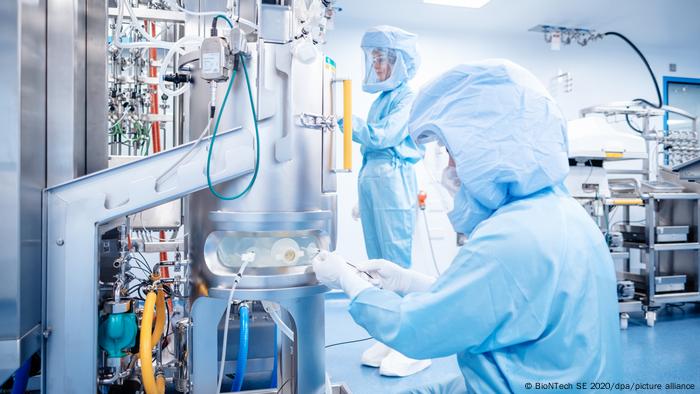
The company wants to produce 250 million jabs in the first half of 2021

On Wednesday, the German vaccine maker BioNTech on Wednesday announced that it had started production at its new facility in the town of Marburg, a development that it is hoped might significantly boost the European Union's vaccine supply.

The company reported that it had already begun making the active ingredient of the BioNTech-Pfizer jab.

"We started the manufacturing process at the Marburg facility with the execution of the first step: the production of mRNA, which is the active pharmaceutical ingredient," BioNTech announced in a statement.

After purification, according to the company, lipids are to be added to form lipid nanoparticles — the delivery vehicle for the drug. The purified and concentrated product will then be transported to a "production partner" site for completion under sterile conditions, BioNTech reported.

Watch video 12:06 Focus on gene vaccines in fight against COVID-19

The main EU plant for production of the vaccine is Pfizer's factory in Puurs, Belgium.

BioNTech plans to produce up to 250 million doses of the COVID-19 vaccine in Marburg in the first half of 2021.

The European Medicines Agency (EMA) is expected to carry out its first quality checks on the medical products from the site in February or March.

"The first vaccines produced at the Marburg site are expected to be delivered at the beginning of April," BioNTech said.
Trouble with the EU

BioNTech announced in mid-January that shipments of the jabs for the EU would be delayed because of necessary modifications at the Puurs factory.

The news took the bloc — now under fire over its sluggish vaccine rollout— by surprise. The company said in early February it would meet its contractual commitments for the first quarter and pledged to send up to 75 million extra doses to the EU in the spring.

Watch video 06:35 Coronavirus vaccines: Can we stay ahead of the variants?

Brussels has ordered a total of 600 million doses of the so-called Comirnaty vaccine from BioNTech and Pfizer.

BioNTech said it expected the site in Marburg, some 75 kilometers (almost 50 miles) north of Frankfurt, to become "one of the largest mRNA manufacturing sites in Europe." The expected annual production capacity, it said, would be 750 million doses.

To ramp up the scope for vaccine production, BioNTech bought the Marburg plant from Swiss drugs giant Novartis last year. It retained some 300 employees already working there.

China's Tianwen-1 enters Mars orbit

A day after the UAE's Hope probe entered into orbit around Mars, China has followed suit. The Tianwen-1 craft arrived on time, ahead of Friday's Lunar New Year celebrations. In May, the probe will land a rover on Mars.

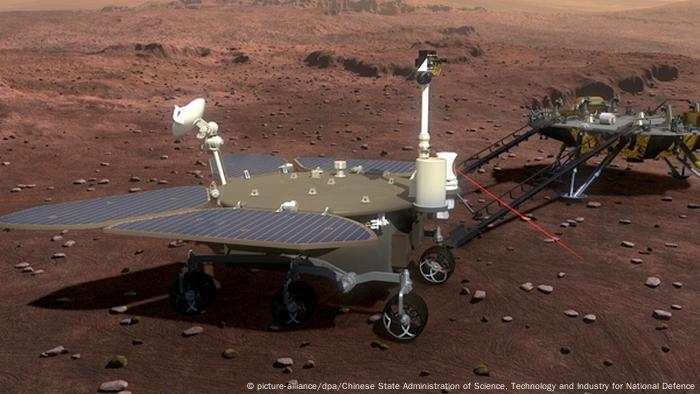
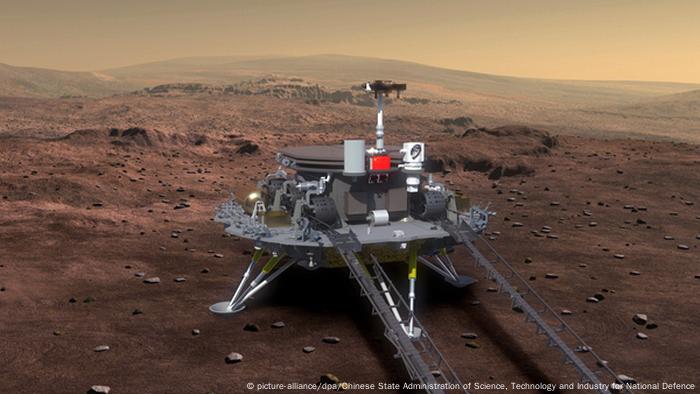
Tianwen-1's lander will descend to the red planet in May

Space missions are never easy, whether you're sending astronauts a mere 400 kilometers (248 miles) up to the International Space Station, or communications satellites a few thousand kilometers up. Things can and do go wrong.

Mars missions are the next level. The planet is farther away, and harder to get to as a result.

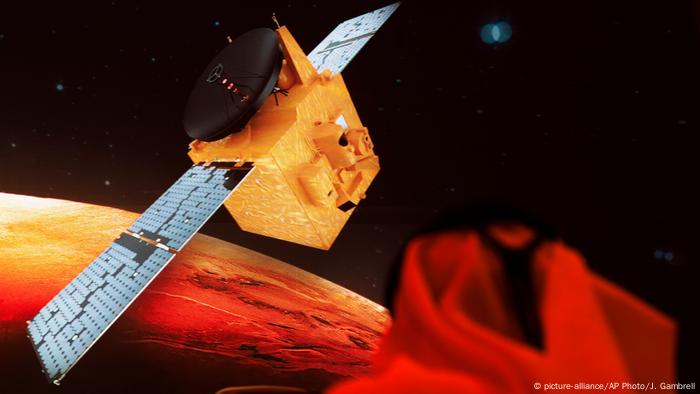
But, a day after the UAE's Emirates Mars Mission successfully delivered its Hope probe into orbit around Mars, China has also arrived.

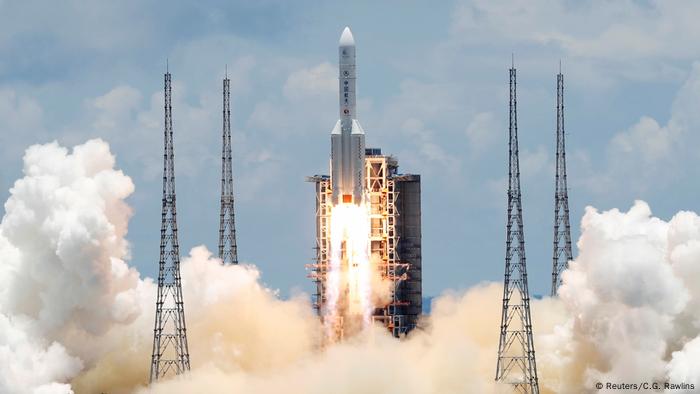
The Tianwen-1 spacecraft entered into orbit around Mars on Wednesday, seven months after launching from Earth and traveling 450 million kilometers.

As with the UAE's Hope probe, the Tianwen-1 spacecraft conducted a "braking" operation to decelerate its speed so that it could be captured by Mars' gravity and avoid overshooting its target or crashing into it.

Tianwen-1 launched on July 23, 2020, riding on a Chinese Long March 5 rocket

So it's perhaps with good reason that China did not announce an exact arrival time, or stream the operation live as the UAE did on Tuesday.

As the AP news agency put it ahead of the operation: "Chinese authorities, always cautious about possible failure, have not announced a planned arrival time."

Indeed, all they said in advance was that the spacecraft was on track to arrive before the Lunar New Year on Friday.

On the previous Friday, February 5, Tianwen-1 performed a fourth "orbital correction" maneuver. That was necessary to make sure that the spacecraft would be ready for its arrival in orbit, according to the China National Space Administration.

Tianwen-1's Mars mission


The goal of Tianwen-1 is to survey the atmosphere from orbit over a two-year period.

About 4 billion years ago, the atmosphere of Mars changed and liquid water evaporated. But scientists don't know why. There may be deposits of water underground, known as subsurface water.

So the mission is intended to go deeper than the Hope probe will. It is scheduled to land a rover on the surface of Mars in May.

A precise location has not been named, but the mission controllers have been looking at the southern part of a region called Utopia Planitia.

The solar-powered rover is expected to operate for a few months, looking for subsurface water — signs of life below the surface of the planet.

It will be roving Mars along with American landers, such as NASA's Mars 2020 Perseverance rover and its accompanying Ingenuity helicopter

Instruments on the probe and rover


Tianwen-1's orbiter, or probe, is carrying 13 "payloads." A payload can be a communications or Earth observation satellite, but in this case the payload is the mission's instruments.


Tianwen-1 includes a probe that will orbit Mars and a lander that will search for subsurface water on the planet


For instance, there's a remote sensing camera and a ground penetrating radar.

Once the lander and rover detach from the probe and land on the surface of Mars, additional instruments include a subsurface penetrating radar (SPR).

As the name suggests, the SPR's main scientific objective is to investigate the Martian soil below the surface of the planet to determine its thickness and make-up.

The rover weighs around 200 kilograms (about 440 pounds). As it will be powered by solar panels, power would be impeded by a landing in the planet's northern hemisphere — landing at the equator is better for solar power.

It will investigate the ground with radar, perform chemical analyses on the soil, and look for biomolecules and biosignatures.

Race to return Martian rock

It's been reported that if it succeeds in landing a rover on Mars, China will become only the second nation to do so. But that's not strictly true.


On February 9, 2021, the UAE's Hope Probe entered Martian orbit.


It is true that many have tried and failed, including European and Japanese missions. It is also true that the United States is the only country to have a relatively consistent track record of landing rovers on Mars, independently.

But the Americans do also collaborate on missions. The InSight mission, for instance, is an in-situ laboratory investigating seismic activity on Mars. And that would not have been possible without European engineering.

NASA is also working with the European Space Agency on developing sample return missions to bring the first pristine samples from Mars back to Earth. The US Mars 2020 Perseverance rover, which is due to land on February 18, is seen as a first step towards that goal.

But the Americans and Europeans will have to hurry, because they are not alone now. China sees its own mission, Tianwen-1, as a step towards future missions that would also bring back rock and soil samples from Mars to Earth.


INSIGHT MARS LANDER MOMENTS
NASA scientists jump for joy
InSight is a $1 billion international project. It includes a German mechanical mole that will burrow down 16 feet (5 meters) to measure Mars' internal heat. The lander also has a French seismometer for measuring quakes, if they exist on our smaller, geologically calmer neighbor. Because of the distance between Earth and Mars, it took eight minutes for confirmation to arrive. PHOTOS 12345


AFRICA

Cabo Verde: Painting to protect the sea

Residents of the Terra Branca neighborhood in the city of Praia have painted their houses with images of marine animals. They want to raise awareness about the need to preserve the sea.

Trump-loving prophets in crisis after their predictions fail to pan out: report

Sky Palma RAW STORY
February 11, 2021


(Shutterstock.com)

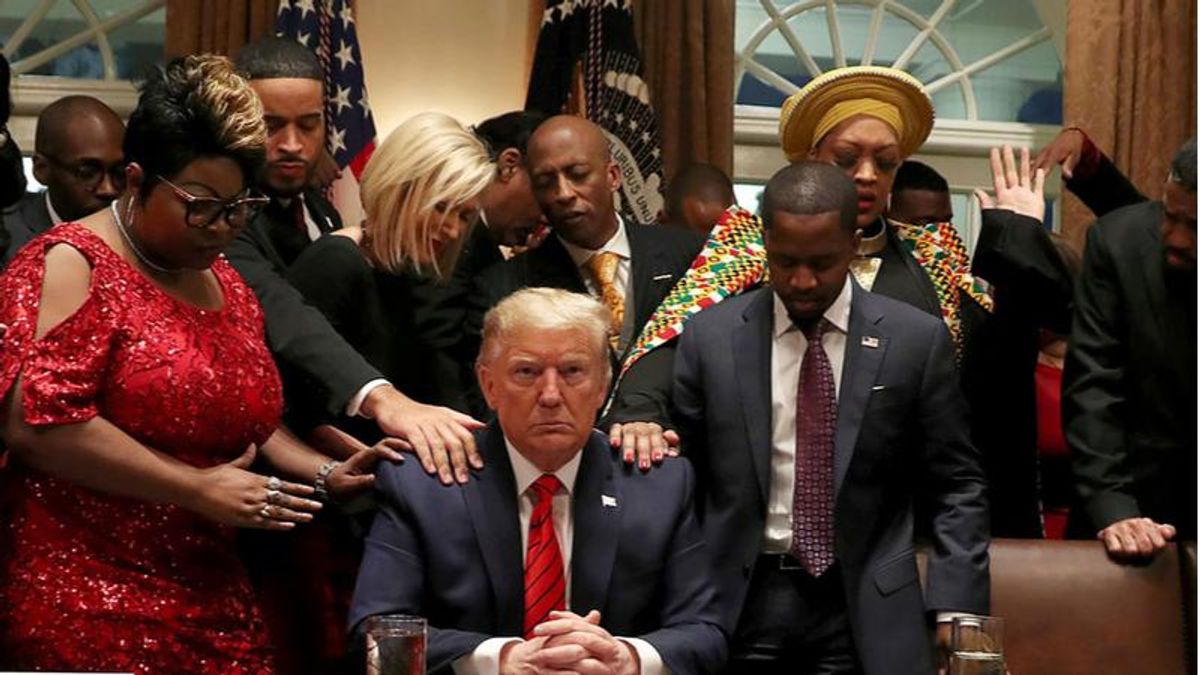
Throughout Donald Trump's presidency, a movement within the evangelical community that cast him as a savior sent by God grew their own immense following. Within that movement was a faction of self-described "prophets" who spewed QAnon-adjacent conspiracy theories and predictions that Trump would resume the mantle of his presidency -- even after it was clear that Joe Biden would be inaugurated.

Now, according to the New York Times' Ruth Graham, their movement is in crisis as more and more people -- even within their ranks -- are taking note of their failed prophecies.

One of those prophets was Jeremiah Johnson, who was one of Trump's earliest supporters within the evangelical movement. Johnson garnered a following of hundreds of thousands of people who believed wholeheartedly his predictions about such topics as the coronavirus pandemic, the makeup of the Supreme Court, and other debated social issues. "And they took comfort ahead of the presidential election last fall when Mr. Johnson shared a prophetic dream of Mr. Trump stumbling while running the Boston Marathon, until two frail older women emerged from the crowd to help him over the finish line," Graham writes.

When Biden was inaugurated, Johnson admitted to his followers that he was wrong. But both followers and leaders alike within the prophetic movement are still standing by the predictions.

"The backlash to Mr. Johnson's apology was immediate," writes Graham. "On Facebook, he reported that he received 'multiple death threats and thousands upon thousands of emails from Christians saying the nastiest and most vulgar things I have ever heard toward my family and ministry.' He also said he had lost funding from donors who accused him of being 'a coward, sellout, and traitor to the Holy Spirit.'"

But as Graham points out, the popularity of self-appointed prophets shows no signs of waning.

"There's this idea that you can't trust anybody except these trusted individuals," said Brad Christerson, a sociologist at evangelical Biola University. "It's a symptom of our time. People don't trust institutions, and people think that all mainstream institutions are corrupt: universities, science, government, the media. They're searching for real sources of truth."

Read the full report over at The New York Times. BEHIND PAYWALL
Trump's pathology infects the millions who follow him -- and this narcissistic symbiosis could grow even worse

Bandy X. Lee, DC Report @Raw Story
February 11, 2021


In 2017, Dr. Judith Herman and I stated in The Dangerous Case of Donald Trump: 37 Psychiatrists and Mental Health Experts Assess a President: "Power not only corrupts but also magnifies existing psychopathologies, even as it creates new ones."

We warned of an authoritarian cult of personality and growing contempt for the rule of law, which would spread throughout the culture unless stopped. Donald Trump's presidency was dangerous not because of his individual afflictions but his capacity, as president, to amplify and exacerbate society's defects, especially if he faced no accountability.


To the end of his presidency, he was not contained or held accountable. The American Psychiatric Association advanced a perverse version of "the Goldwater rule" to silence expert alarms, the way the Department of Justice revived a controversial internal Office of the Legal Counsel memo to place a president above the law. As a result, Donald Trump may have left the office of the presidency, but "Trumpism" not only continues but flourishes. As the House managers in the impeachment trial have reminded us with their effective use of videos of the Capitol insurrection, the Trump infection, once spread, manifests in deadly, violent behavior.


JOYFUL MEMORIES FROM TRUMPS YOUTH


Donald Trump may have left the office of the presidency, but 'Trumpism' not only continues but flourishes.

We have already seen copycats arising everywhere in lesser positions. Marjorie Taylor Greene, a newly-elected Republican representative from Georgia, has shocked many with her brazen promotion of dangerous QAnon conspiracy theories and endorsement of violence, including execution, against Democrats.

Even while being stripped of her committee assignments, she responded with defiance: "I woke up … laughing thinking about what a bunch of morons the Democrats are for giving someone like me free time." Rep. Lauren Boebert (R-Colo.) is a similar personality, having flaunted her carrying a pistol in violation of the District of Columbia's anti-gun laws, argued for the right to bring firearms onto the House floor, and on Jan. 6 tweeted about the whereabouts of the House Speaker Nancy Pelosi (D-Calif.), as the insurrectionists were actively looking for her in the Capitol.


Lack of Accountability

For mental health experts who have been warning against these dangers for years, this behavior is only expected: criminal minds see lack of accountability as a green light. Lesser examples of emboldened behavior include Capitol riot suspect Jenny Cudd asking to leave the country on vacation, while Kenosha, Wis., shooter Kyle Rittenhouse is not only out on bond but changing his address without permission and making it difficult for the authorities to find him

A dangerous president has shown that he absorbs a powerful message when an OLC memo protects all criminality, including those that threaten national security, or that "the Goldwater rule" silences all criticism, even when doing so endangers public health. Trump came to believe he could even destroy democracy to stay in power.

Disabling any kind of intervention, therefore, not only kept a problem from being solved, but enabled it. Allowing a criminally-minded and mentally-impaired person to continue in the presidency for four years has sent a powerful message to similar personalities as Greene or Boebert: that elected office could serve as a cover for lawlessness or incapacity. We as a society have mobilized delusions of grandeur, impunity, and omnipotence as a legitimate way of warding off intolerable inner feelings of inadequacy, inferiority, and powerlessness.


Epidemic of Violence

As a specialist in public health approaches to violence prevention, it is not difficult for me to see that these are the conditions for epidemics of violence, including the increasing rate of violence among women. Violence is not an issue of individual mental illness but of societal disorder, and the conditions that encourage violence are well-known.

While violence is the end-product of a long process, a lack of political will—or even the use of violence as a political tool for amassing power—has hampered prevention. Instead, our nation has fostered and propagated it. It is now remarkable that a former president's act of insurrection, sedition and even treason, according to some Constitutional scholars, will likely remain without conviction because of the physical threats his followers pose for senators who might vote in favor of it.
Report Advertisement

In my first public-service book, I emphasized that he would grow more dangerous with time, and that, without intervention, his dangers would eventually spiral beyond control. Our failure to contain him and his followers has created a "silent pandemic" that contributes to other societal mental health problems, including a worsening of the viral pandemic itself, as well as drug addiction, depression, suicides, and homicides. In my most recent book, Profile of a Nation: Trump's Mind, America's Soul, I outline two major dynamics that are a consequence of allowing Donald Trump's pathologies to spread.


Wounded Leader


"Narcissistic symbiosis" is one, referring to the magnetic collusion that happens when a narcissistically wounded leader and followers meet. The leader, hungry for adulation that can compensate for an inner sense of inadequacy and worthlessness, projects grandiose omnipotence, while the followers, who are needy from societal stress or developmental injury, yearn for a parent figure whom they can emulate.

Such bonds make "shared psychosis," also called "folie à millions" ("madness among millions") at the national level, more likely to occur. Shared psychosis refers to the infectiousness of severe symptoms that goes beyond rational strategy or ordinary group psychology. When a highly symptomatic individual is granted an influential position with prolonged exposure to the public, conditions are set for the person's symptoms to spread. Delusions, paranoia, or violence-proneness transmit to previously healthy individuals especially powerfully. The treatment is the removal of exposure, as we have seen with the dramatic fall of approval ratings following the ban of Donald Trump from various social media platforms.


Disordered Thinking


This is not the end, however, and "the ecology" must change. The culture needs to stop normalizing, legitimizing, and glorifying disordered thinking, for once it is admitted into the mainstream, it will not go away or give up power easily, and is not amenable to facts or logical persuasion. As stated at our recent National Town Hall, we must convict, set limits on violent behavior, and return society to justice, order, and reality. We must also address the socioeconomic conditions that gave rise to poor collective mental health in the first place by reducing economic, racial, and gender inequalities.

Once an individual or a group succumbs to pathology, it is characteristic to make further maladaptive choices that descend one further into sickness. One such choice may be to use violence to ward off narcissistic needs or challenges against one's cherished delusions. This is why prevention, before resistances develop, is important. Mental health professionals who understand pathological dynamics need to engage actively with social scientists, policymakers and politicians for urgently needed interventions

REICHIANS KNOW THIS AS THE EMOTIONAL PLAGUE DISCUSSED IN WILHELM REICHS WORKS; LISTEN LITTLE MAN, THE MURDER OF CHRIST AND THE MASS PSYCHOLOGY OF FASCISM
Case dismissed against New York cops who pushed elderly man to the ground and gave him a brain injury

Sarah K. Burris
February 11, 2021

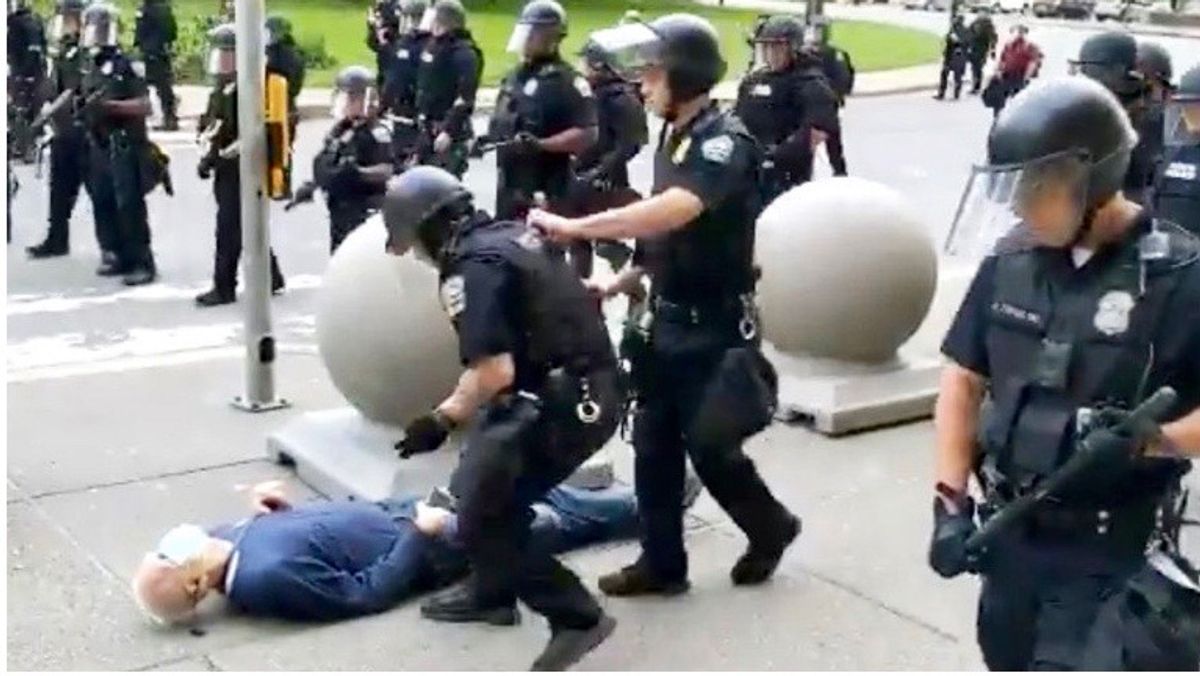
Buffalo Police with man bleeding from the Ear (Screen Capture)

During a protest in Buffalo, New York, 75-year-old Martin Gugino, a faithful peace activist and Catholic church volunteer, was shoved to the ground by police officers and was knocked unconscious. 

 HE IS AN AN ANARCHIST PACIFIST WITH THE CATHOLIC WORKERS MOVEMENT

The incident was filmed and posted online showing Gugino bleeding from his ears and ultimately "sent him to the hospital for a month to recover from a brain injury and a fractured skull," said USA Today last August.

Now, according to the New York Daily News, the charges against the two officers who shoved the man, are being dismissed.

"Buffalo Police Department officers Robert McCabe and Aaron Torgalski had faced felony charges" for their actions against the man, "fracturing his skull and causing him to bleed from his head."

Erie County District Attorney John Flynn said at a press conference Thursday, that the video of the crime was enough for him to bring charges, but the grand jury refused to bring it to trial