Saturday, October 16, 2021


Can Indonesia Become a Fisheries Leader Again?

With the former fisheries minister jailed for corruption, Indonesia has the chance to resume a hard line on illegal fishing
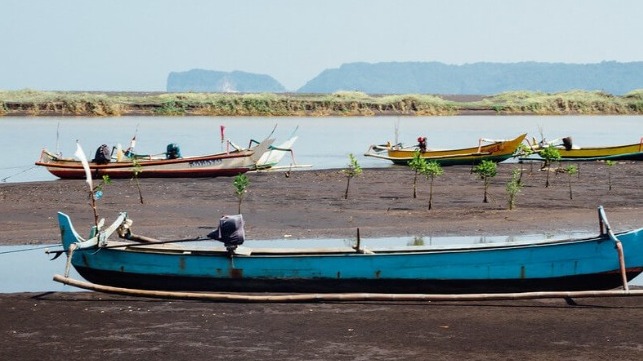
indonesian fishing boats at java
Fishing boats on the shore, Java, Indonesia (Adam Cohn / CC BY-NC-ND 2.0)

PUBLISHED OCT 15, 2021 6:08 PM BY CHINA DIALOGUE OCEAN


[By Nithin Coca]

This July, Indonesia’s former fisheries minister Edhy Prabowo was sentenced to five years in prison after a court found him guilty of accepting bribes to lift a ban on the export of lobster larvae.

The decision by the Corruption Eradication Commission (KPK) was widely praised by environmentalists and fisheries organisations. But the case remains a sign that Indonesia has fallen away from its position as an exemplar of sustainable oceans policy.

Edhy’s sentencing came a little more than two years after President Joko “Jokowi” Widodo unexpectedly appointed him instead of sticking with incumbent fisheries minister Susi Pudjiastuti. Susi had become popular in Indonesia thanks to her hard line on illegal fishing, which included blowing up culpable vessels. Entering at the beginning of Jokowi’s second term, Edhy undid several of Susi’s policies as the president pushed for a greater focus on GDP growth over long-term sustainable practices.

“It’s the same president, but a different direction,” said Arifsyah Nasution, oceans campaigner at Greenpeace Indonesia, on the changes since Jokowi’s 2019 re-election. “We’ve had several major setbacks, and still we don’t have any progressive direction from the current government.”

Edhy was replaced by Sakti Wahyu Trenggono in December 2020, shortly after the KPK announced its case against him. The new fisheries minister has made some positive moves, but it remains to be seen if he’ll return to the more dramatic, effective and popular policies of Susi.

From sustainable management to prioritizing the economy

Indonesia has more than 17,500 islands and the ocean makes up more than three-quarters of its territory. The fisheries sector is central to the economy, providing $27 billion in gross domestic product, supporting seven million jobs, and supplying more than half of the country’s animal-based protein intake.

Despite being the world’s largest archipelago nation, Indonesia had played a relatively small role in global fisheries and ocean policymaking. That changed when Jokowi picked Susi to be his first fisheries minister in 2014. Relatively unknown but with extensive experience of fisheries, she soon made waves globally with her decisive action on behalf of Indonesian fishers.

During her five years at the head of the ministry, Susi took a hard-handed approach, most visibly through her policy of seizing and sinking foreign vessels fishing illegally in Indonesian waters. She also made public the country’s boat-tracking data, and pushed to reduce environmentally dangerous fishing practices by small-scale fishers.

“She was willing to take on the power elite when it came to the large-scale commercial fishing industry that was detrimental to both the fishing communities and fisheries resources,” said Sally Yozell, director of the Environmental Security programme at the Stimson Center in Washington DC.

Susi proposed the lobster larvae export ban in 2016. Lobster aquaculture in countries like Vietnam and China depends on imports of larvae and juveniles. They are first caught in Indonesian waters before being transported and grown in submerged cages abroad, and then sold as adults often at a large profit.

Indonesia is one of a few countries able to export large numbers of lobster larvae, and their stocks had been depleted by exploitation prior to the ban. It was also hoped that limiting exports would encourage lobster farming domestically, providing income for coastal communities.

Along with her boat-scuttling policies, she introduced policies to stem the use of environmentally harmful fishing methods such as bottom trawl nets, which scrape the ocean floor and damage coral reef ecosystems and bottom-dwelling species. The health of fisheries duly improved, with studies showing an increase in biomass in Indonesian waters and a reduction in illegal, unreported and unregulated fishing.

Under Edhy, the boat destruction stopped, bottom trawl nets returned and data-sharing with the non-profit Global Fishing Watch (GFW) ended.

Since the departure of Susi in 2019, there have been several leadership and staff changes in the fisheries ministry, said Ko-Jung Lo, GFW’s regional manager for Asia. “The renewal of our agreement with the ministry was delayed because of these changes and, as a result, Indonesia suspended its Vessel Monitoring System data feed to our map.”

Uncertain future

Not everyone was happy about Susi’s policies. She had opponents in the capital, Jakarta, and among business interests. This, along with a shift towards more economy-minded decision-making, is believed to have led to her replacement.

“Globally, almost everyone was disappointed to see someone who was working to manage the fisheries sustainably, in a country that is the world’s second largest producer of seafood, be replaced,” said Yozell. “She was really trying to balance sustainably managing fisheries with the economic needs of the fishing industry.”

Since taking over, the current fisheries minister, Sakti Wahyu Trenggono, has shown more willingness to engage with civil society, and has been in contact with Susi, according to Arifsyah. In June, he brought back the ban on exporting lobster larvae, and the following month, he reimposed bans on destructive purse seine and bottom trawl fishing. There are concerns, though, about the ministry potentially giving licences to foreign fishing boats to operate in Indonesia.

Bustar Maitar, CEO of Indonesian NGO EcoNusa, said that reducing the number of permits given to foreign fishing boats “will surely provide larger space to small fishers”. He added: “The Indonesian native fishers therefore could catch fish in Indonesian waters.”

Also of concern is Indonesia’s Omnibus Law on Job Creation, a 1,028-page bill that became law late last year. The broadest amending of Indonesia’s legal code in decades, it modified or annulled 79 different laws that govern land use, environmental impacts, infrastructure and much more. It has the potential to speed up the implementation of environmentally harmful development projects such as ports, coal plants and land reclamation – without proper local consultation or environmental impact analysis.

“We’re concerned that the omnibus law will result in more conflicts on the ground, because the environment and coastal communities will be deprioritised,” said Arifsyah.

Despite the uncertainty at the fisheries ministry, GFW is focusing on working with local governments and organisations, especially on a challenge that Susi wasn’t able to address during her first term – managing small-scale vessels.

“Small-scale fisheries are a vital source of nutrition and income for many communities in Indonesia. Yet nearly all small-scale fishing, which makes up almost 90 percent of Indonesia’s fishing sector, is unmonitored and unreported,” said Lo. “With more affordable tracking technology and better monitoring data, we would like to support Indonesia’s small-scale fisheries sector [in] efforts to promote legal, reported and regulated fishing activity.”

Arifsyah hopes that Sakti, and President Jokowi, turn back to the model implemented under Susi, which also means playing an active role in global conferences and negotiations.

“Let’s bring back Indonesia’s leadership in the international forum,” said Arifsyah. “Share the challenges, and be proactive in commitments around saving the ocean and ending human trafficking. That is something that we hope the current minister takes forward.”

Nithin Coca is a Southeast Asia based freelance journalist who covers development, environment, and sustainability. His feature and news pieces have appeared in global media outlets including Al Jazeera, Quartz, Engadget, Foreign Policy, The Diplomat, Vice, and several regional publications in Asia and the United States.

The opinions expressed herein are the author's and not necessarily those of The Maritime Executive.

STATE CAPITALI$M IS STILL CAPITALI$M

Chinese Shipyard Closes Due to Lack of Profitability 

Chinese shipyard ceases operations due to debts and lack of profits
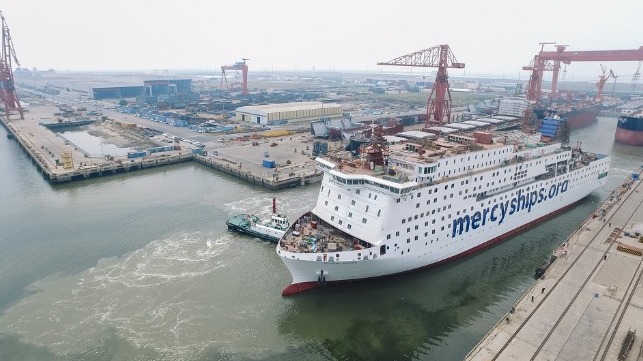
Hospital ship Global Mercy in 2020 at the Tianjin shipyard (Mercy Ships)

PUBLISHED OCT 13, 2021 3:09 PM BY THE MARITIME EXECUTIVE


One of China’s mid-sized shipbuilders, Tianjin Xingang Ship Heavy Industry, announced that it will stop all operations as of the end of October. The disbanding of the company comes despite the recent resurgence in shipbuilding orders and China’s overall leadership in the industry.

The Shanghai International Maritime Information Research Center reported that the shipyard is shutting down for the second time in its history due to heavy financial debts. They reported that insufficient profits from shipyard operations in recent years led to the decision to cease operations. The shipyard announced that it has discharged its labor contracts with employees and will stop all of its operations and production by the end of the month. 

Tianjin Xinjiang had relocated its operations in 2017 focusing both on new ship construction up to 500,000 tons and ship repair for ships up to 300,000 tons. It had a capacity to build ships up to about 1,000 feet in length.

In operation since 1940, the shipyard had previously been reorganized about twenty years ago. It filed for bankruptcy in 2000 but completed a restructuring of the operations the following year.

Tianjin completed construction to the 39,000 gross ton Global Mercy for Stena RoRo in June 2021. The vessel, which is the world’s largest civilian hospital ship, will begin operations in 2022 for Mercy Ships. First steel for the vessel was cut in 2015 with the floating out taking place at the beginning of 2020. Especially design for Mercy Ships, it is being billed as the most technologically advanced ship of its kind. It has six operating rooms, 200 beds, a laboratory, general outpatient clinics, and eye and dental clinics. The total area of the hospital department is more than 75,000 square feet.

The shipyard also completed the construction of two 210,000 dwt bulk carriers built for COSCO Shipping Bulk Transportation Co. The vessels, each of which measures 984 feet in length, were delivered in May and June 2021, promoted as a new generation of a large bulk carrier. The shipyard said the vessels’ design incorporated “intelligence, green, environmental protection, energy-saving, and reliable” technology.

The reports indicate that Tiajin’s operations will likely be divided up going to other parts of the Chinese state-owned China State Shipbuilding Corporation, which has also been undergoing a reorganization to improve results. Tianjin's shipbuilding business is expected to be taken over by Dalian Shipbuilding Industry while the ship repair business will become part of Shanhaiguan Shipbuilding. The reports did not include any details on the size of the shipyard’s orderbook.


U.S. Coast Guard Locates Wreck of Famed Cutter USRC Bear

As a steamship, commissioned warship, Revenue Cutter and Coast Guard Cutter, Bear served for nearly nine decades in icy waters

cutter bear
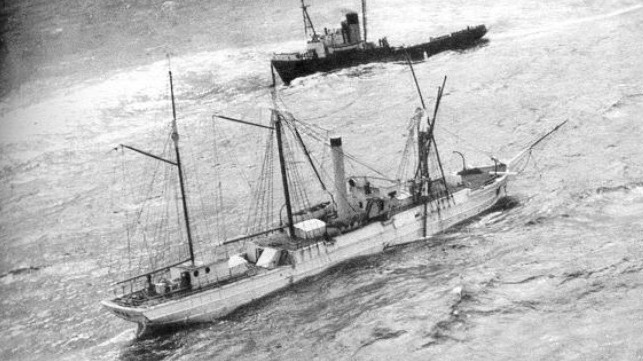
The former USRC / USS / USCGC / SS Bear going down off Nova Scotia, 1963 (USCG)

PUBLISHED OCT 15, 2021 4:04 PM BY THE MARITIME EXECUTIVE


The U.S. Coast Guard and the National Oceanographic and Atmospheric Administration (NOAA) have identified the location of the lost Coast Guard cutter Bear, one of the most significant vessels in the history of U.S. Arctic exploration. 

The seal hunting steamship Bear was built at Dundee Shipyard in Scotland in 1874, and she served the first ten years of her life in the Newfoundland sealing fleet. Her wooden hull was stout and heavy, with three layers of six-inch planking and an iron-plated bow for service in ice. In 1884, the U.S. Navy purchased her and put her immediately into service in the search for the lost Greely Expedition, an ill-fated U.S. Army mission to Ellesmere Island in the Canadian Arctic. Bear and three other vessels retrieved the seven survivors of the mission at Cape Sabine. 

After this mission, the U.S. Navy transferred USS Bear to the U.S. Treasury for service in the Alaskan Arctic. She would serve the U.S. Coast Guard (and its predecessors) for the next 41 years. In the Alaskan Patrol, she was the sole federal presence in a far-flung frontier, ferrying government officials; holding trials; enforcing the law; conducting search and rescue; providing medical care; and taking soundings to improve safety of navigation.

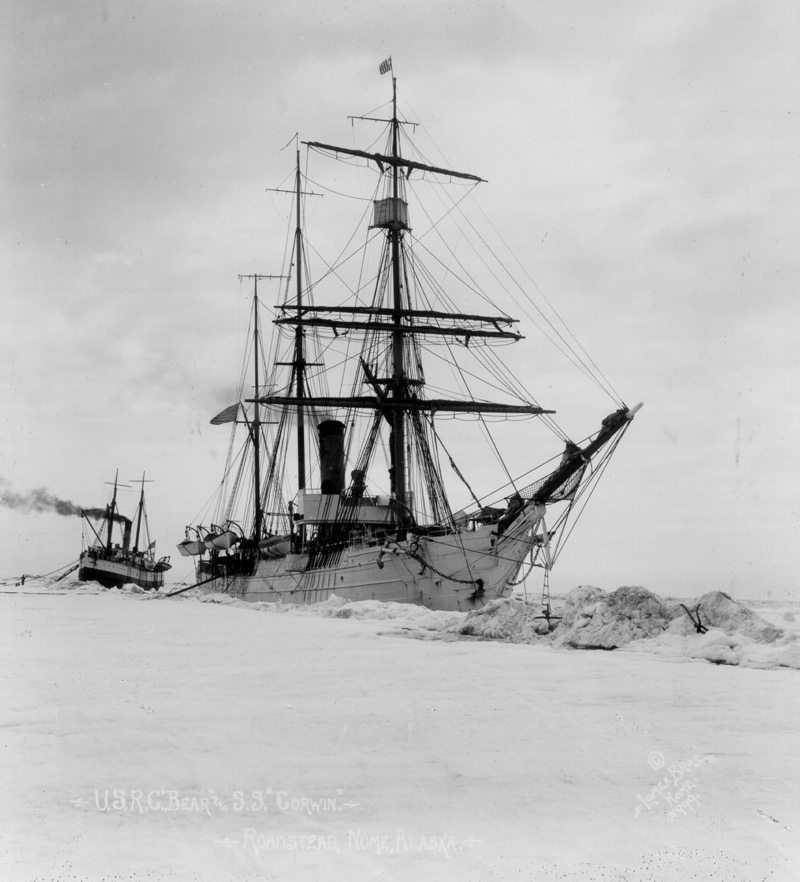
Revenue Cutter Bear, center, assisting SS Corwin in ice at Nome, Alaska (USCG)

Under the command of her most famous C/O, Capt. "Hell Roaring" Mike Healy, the ship and her crew also helped introduce reindeer to Alaska, providing a new source of food for native tribes. The Bear also played a high-profile role in the famous Overland Rescue of 1897, when Bear's crew rescued the crews of eight icebound whaling ships near Point Barrow - driving a herd of the same reindeer with them to provide the survivors with food and transport. 

She continued her work in the Arctic until 1926, when she retired to Oakland and became a museum ship. Not one to sit idle for long, she was purchased and put back into service for the Byrd Expedition to Antarctica in 1931, then recommissioned into the Navy in 1939 - just in time to get ready for WWII. In the Second World War, she served in the Greenland Patrol in the northeast Atlantic until 1944, when she was replaced by a more modern vessel. 

In 1948, Bear was resold into commercial sealing service once more, but the market for seal fur was not what it once was, and she lay idle at berth for many years. In 1962, she was resold and refitted for use as a floating restaurant. While under tow to Philadelphia, her new commercial home port, she went down in a storm about 100 nm off the coast of Nova Scotia. One of her masts collapsed in the gale and punched through the hull, sending her below. 

Her location was lost to the world until 2019, when a new Coast Guard vessel of the same name - the medium-endurance cutter USCGC Bear - located two possible targets for the wreck site during a sonar survey.  U.S. Coast Guard and NOAA researchers returned to the area earlier this year on the USCG buoy tender Sycamore, bringing a remotely operated vehicle (ROV) equipped with high-resolution underwater video cameras. Despite challenging conditions on site, the team managed to obtain footage that positively identified the wreck as the Bear.

“Several elements were fundamental considerations for the identification,” said NOAA maritime heritage coordinator Joe Hoyt at a news conference this week. "It was within a few miles of where we expected it to be. The consistency and general dimensions in the layout of the vessel, the lack of an engine, but evidence of engineering space consistent with the historic record. It had an engine that had been [removed] prior to its loss."

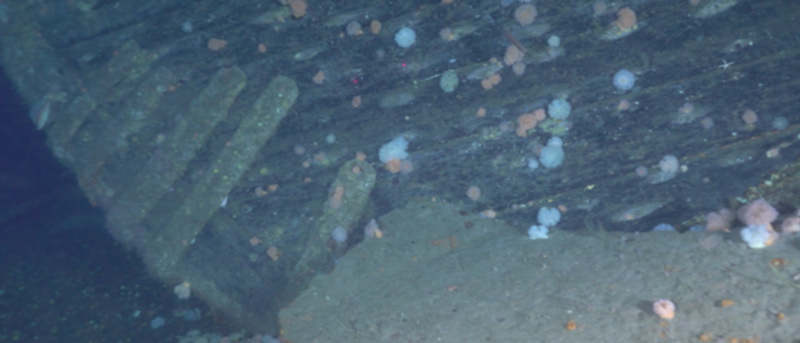
In addition, video of the wreck's forefoot - the very bottom of the bow - showed five iron bow staples matching the appearance of the Bear's construction, as documented by period photos of shipyard repairs. The ROV search also found a large iron casting believed to be Bear's propeller post. 

Iron bow staples on USRC Bear in a period shipyard photograph (above) and on the wreck (below) (NOAA)


Testing to Begin on the Tallest, Most Powerful Wind Turbine Ever Built

tsting to begin on tallest and most powerful offshore wind turbine installed to date
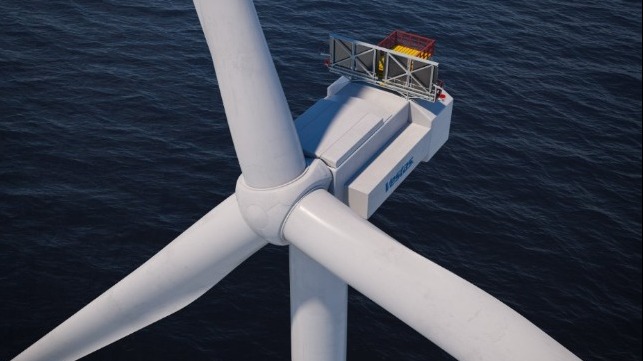
When installed the new 15 MW wind turbine is expected to be the tallest and most powerful to date (Vestas)

PUBLISHED OCT 15, 2021 5:41 PM BY THE MARITIME EXECUTIVE


Testing on what is expected to become once installed the tallest and most powerful offshore wind turbine in the world is due to begin in the fourth quarter of 2022. Developed by Vestas, the V236-15 MW will stand over 900 feet with a production output of 80 GWh/year. It is likely to become a stepping stone, as plans for 16 MW wind turbines have already been announced.

Vestas has decided to install the V236-15 MW offshore prototype wind turbine at the Østerild National test center for large wind turbines in Western Jutland, Denmark. The installation of the prototype turbine will take place in the second half of 2022 and its first kWh is planned for the fourth quarter of that year. The prototype will be installed onshore to facilitate easy access for testing before installation, and the main prototype components will have already undergone thorough testing and verification at Vestas' test facilities. 

The prototype development work has already progressed across Vestas’ R&D and production sites in Denmark. The blade molds have been developed at Vestas’ blade factory in Lem and the 380-foot prototype blades will begin manufacturing later this year at Vestas’ offshore blade factory in Nakskov. The nacelle will be developed and assembled at the offshore nacelle factory in Odense. All large components will be preassembled and transported to Østerild, where the installation will take place.

With a swept area exceeding 43,000 m2, the V236-15.0 MW is on track to become the next step in the growth of offshore wind power generation. Producing around 80 GWh/year, it will generate enough power for around 20,000 households and displace more than 38,000 tons of CO2. According to Vestas, the V235-15.0 MW is designed to be part of larger installations reducing the number of turbines at the park level.

Launched in February 2021, Vestas reports that the new turbine has its first pre-selected tenderer status with the 900 MW He Dreiht project in Germany.

The turbine may be a stepping stone, as wind turbines continue to grow in size. Several manufacturers have discussed 16MW turbines or larger. Chinese wind turbine manufacturer MingYang Smart Energy in August 2021 announced plans for the first 16MW unit which they said would also be available as a prototype in 2022. 

Big Six banks join Mark Carney-led Net-Zero Banking Alliance


Ian Bickis, The Canadian Press


We can drive 'an investment boom' if we deliver on climate goals: Mark Carney

Mark Carney, vice vhair of Brookfield Asset Management, also Former Governor at the Bank of England and Bank of Canada, joins BNN Bloomberg and Bloomberg TV to discuss the climate talks underway at the UN General Assembly this week and the investment opportunity that stems from pursuing global climate goals of moving towards lower carbon emissions.

TORONTO -- Canada's Big Six banks together announced Friday that they will join the global Net-Zero Banking Alliance championed by former Bank of Canada governor Mark Carney.

The commitment by the banks, which include Bank of Montreal, Canadian Imperial Bank of Commerce, National Bank of Canada, Royal Bank of Canada, Bank of Nova Scotia and TD Bank, comes ahead of the UN climate summit set to start in Glasgow at the end of the month and where a major focus will be on finding the finances to fund the climate promises.

The industry-led alliance commits signatory banks to aligning their lending and investment portfolios with net-zero emissions by 2050, as well as to setting intermediate reduction targets for 2030 or sooner.

The alliance, part of the wider Glasgow Financial Alliance for Net-Zero that is chaired by Carney, also requires members to publish emissions data and take a “robust approach'' to carbon offsets.

Carney said in a statement that the financial systems needs to transform to ensure a “prosperous and just transition to net-zero'' and that by joining the alliance, Canadian banks are “bringing their deep expertise and strong balance sheets to drive solutions for the sustainable economy.''

The alliance has, however, come under criticism for not going far enough, including ads published last week by more than 90 environmental groups that urged Carney to be more ambitious with membership requirements.

The groups want to see more immediate targets laid out to phase out fossil fuel funding, a prohibition on financing any new fossil fuel projects, and a goal of halving financed emissions by 2030.

Keith Stewart, senior energy strategist with Greenpeace Canada, said in an email Friday that Canadian banks have to do more than join the alliance.

“The world is accelerating toward a zero-carbon economy and Canadian banks are still playing catch up. Until they commit to a near-term phasing out of all financial support for fossil fuels and to fully respect Indigenous rights, they will still be part of the problem.''

Dave McKay, chief executive of RBC, said in a LinkedIn post that the bank would work with businesses, including fossil fuel companies, to establish and accelerate their climate plans.

“This includes working with clients in emitting sectors, whose reduction strategies and increased investment in renewables and clean tech projects are critical to reaching Canada's emissions targets.''

Canada's big banks have made various other climate commitments in the past, including in the past year individual pledges to achieve net-zero by 2050 by all the banks except Scotiabank, which had said it agreed in principal but had not until Friday specifically committed to the goal.

The six banks join Vancity and HSBC in the alliance, which were the only banks operating in Canada to sign on when it was first announced in April, as well more than 60 other banks that together represent more than US$40 trillion in assets.
Global Energy Crisis Hits Singapore as Power Provider Goes Bust

Stephen Stapczynski and Dan Murtaugh, Bloomberg News

Boat Quay during lockdown in Singapore. Photographer: Lauryn Ishak/Bloomberg , Bloomberg

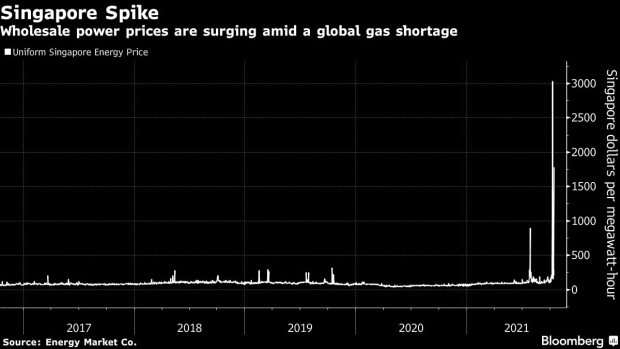
(Bloomberg) -- A record-breaking spike in electricity prices is short-circuiting Singapore’s efforts to liberalize its power sector, in the latest sign that the global crisis is delivering a blow to both energy suppliers and their customers.

Electricity supplier iSwitch Energy will cease power retail operations on Nov. 11 due to “current electricity market conditions,” the company said on its website Wednesday. Existing customers will be transitioned to SP Group, Singapore’s state-owned power provider.

The surge in wholesale electricity prices is erasing profits for many independent retailers in Singapore, according to James Whistler, the global head of energy derivatives at Simpson Spence Young, which brokers electricity futures. “There is clearly a gas shortage that is causing issues, pipeline capacity is low and LNG supplies might not have been coming through either.”

Singapore is the latest victim of a global fuel shortage that has sent power prices rallying in the U.K. and triggered widespread electricity curtailments in China. Suppliers that aren’t hedged against the volatile price moves can end up having to buy energy at a much higher cost than they have sold to customers.

The threat to the industry is similar to what has been happening in the U.K., where several smaller energy providers have gone out of business as they struggle to cope with a rally in gas and power prices. Despite a shortage of gas, there is still enough to provide electricity to consumers in Singapore. ISwitch said that service wouldn’t be interrupted.

Nonetheless, the development complicates Singapore’s effort to liberalize its power sector in a bid to boost competition. From November 2018, the government allowed all consumers across Singapore to pick power providers, resulting in a proliferation of independent retailers to rival the state-run utility. The departure of smaller players will give consumers fewer choices and potentially higher monthly bills.

Singapore’s Ministry of Trade and Industry earlier this month advised households to conserve electricity as fuel prices have skyrocketed.

Grid operator SP Group and the Energy Market Authority, which oversees the power market, didn’t immediately respond to requests for comment.

Singapore generates nearly all of its electricity with imported natural gas, either via pipeline or liquefied carrier. While spot prices for liquefied natural gas are trading at a record high, Singapore has been largely insulated from the rally due to its dependence on long-term contracts, which are primarily linked to the price of oil.

However, record-high LNG spot rates appear to have started boosting Singapore’s power futures contracts through the next year, according to SSY’s Whistler.

“It seems clear that based on where spot prices are, where the futures prices are trading, LNG benchmarking has made its way into Singapore,” he said. “That’s a shift from where I think Singapore thought they were.”

©2021 Bloomberg L.P.
The Inconsistent Ethics of Whale Research

Countries that formally oppose whaling also routinely fund scientific research that relies on the products of whaling


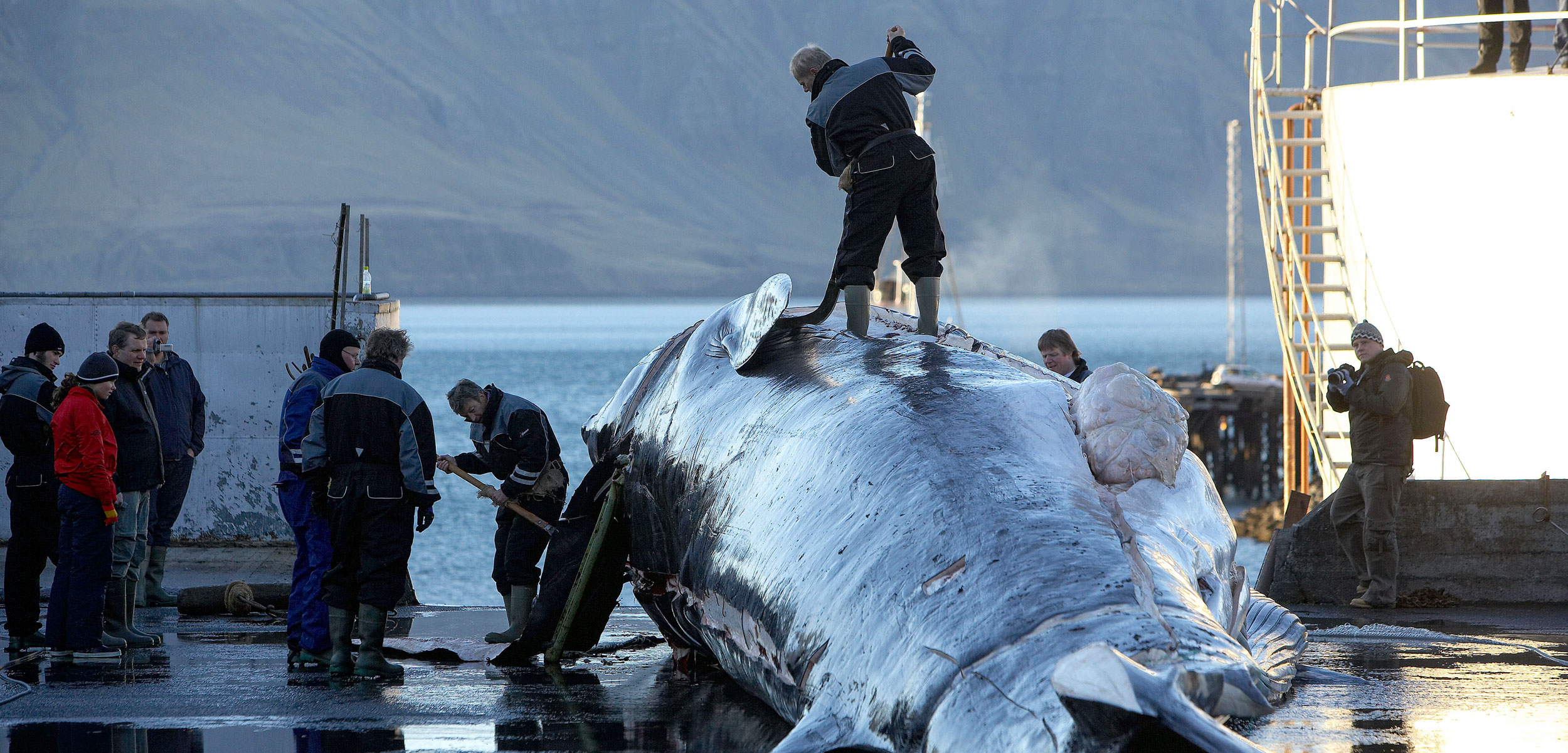
Scientists around the world work with samples collected by commercial whalers
Photo by Arctic Images/Alamy Stock Photo


.by Kieran Mulvaney
October 6, 2021 | 

Nearly 40 years after a majority of the member states of the International Whaling Commission (IWC) voted in 1982 to suspend commercial whaling indefinitely, whaling continues, albeit to a lesser extent—as does scientific research using the products of that whaling. And according to a new study, that research is not confined to scientists from whaling nations: researchers from countries whose governments boast staunch anti-whaling policies are also working with whaling companies to procure meat, tissue, and other whale products for research.

The study’s authors reviewed 35 peer-reviewed papers and conference abstracts describing research that relied on products from Icelandic whaling since 2003, when that country resumed whaling following an 11-year hiatus. They argue that their findings highlight “the need for improved ethical guidelines for whale research involving samples or data from controversial sources such as Icelandic whaling.”

Of 59 institutions involved in the research identified in the study, almost half were from four countries—Spain, Sweden, the United Kingdom, and the United States. These countries supported the 1982 vote and formally objected to the fact that when Iceland resumed whaling in 2003 it did so after rejoining the IWC. Of the papers the authors looked at, approximately half were partly funded by government grants from one or more of those countries.

The goal of the paper is not to name and shame the individual scientists who are using the products of whaling in their research. Instead, study coauthor Vassili Papastavrou of the International Fund for Animal Welfare, who wrote the paper with independent whale researcher Conor Ryan and Peter Sand at LMU Munich in Germany, argues that the thicket of ethical and legal issues surrounding whaling is too tangled to expect individual scientists to navigate it by themselves.

“There’s a whole load of international law around whales and the decisions that have been taken, and these are all beyond the skill set of the average academic,” Papastavrou insists. “We’re not saying what’s right or wrong. We’re not the arbiters. But there really is a need for a proper set of ethical guidelines to help everyone involved work out what to do.”

The issue is more than one of mere inconsistency, says Hal Whitehead, a biologist and whale expert at Dalhousie University in Nova Scotia who was not involved in the study. While some researchers may excuse using the products of whaling on the grounds that those whales were going to be killed anyway, their very involvement may make future whaling more likely, he says.

“It is a problem when the science that is being done on the products of whaling is being used to justify the whaling,” he says.

Two guidelines, Papastavrou argues, would prevent a situation in which governments with anti-whaling policies are funding research that relies on the whaling they oppose.

For one, says Papastavrou, “I think any government funding should have a requirement for a proper ethical examination of what the research is. And is what you’re proposing to do legal in your own country?” The latter would, he argues, bring such research into line with standards established in the past few decades by the medical research community, which now prohibits offshoring medical trials to countries with less strict regulations. Additionally, he and his coauthors quote an American Medical Association guideline that states, “If data from unethical experiments can be replaced by data from ethically sound research and achieve the same ends, then such must be done.”

One of the scientists whose work was included in the analysis, Alex Aguilar at the University of Barcelona in Spain, questions what he sees as Papastavrou and his colleagues’ assumption of a consensus that commercial whaling is unethical. Aguilar argues that commercial whaling “is a perfectly acceptable activity for many IWC member countries.”

Aguilar also points out that the Society for Marine Mammalogy’s guidelines for the treatment of marine mammals in field research state that, where possible, activities such as hunting “should be utilized as a source of material for scientific studies of marine mammals.”

In contrast, another researcher whose work was cited by Papastavrou and colleagues says that he does feel there should be “more ethical guidelines instituted by journals as well as professional societies.”

The researcher, who asked not to be named out of concern for unintentionally embarrassing or besmirching colleagues, previously was attracted by the idea that using meat and tissue samples to procure data about whale biology could potentially lead to better conservation efforts.

More recently, however, his stance has changed. “Aided not only by my own conscience and evolution as a scholar, but also from a sea change in scientific methods and perspective, I am now much less comfortable using such tissues of questionable provenance than ever before. Not only would I not use such tissues again, but I would be happiest if no one did.”
Chile’s Kelp Forests Seem Nearly Unchanged Since the Voyage of the Beagle

In a changing world, South America’s subantarctic kelp forests hold firm


The location and size of Chilean undersea forests of giant kelp have been remarkably stable for at least two centuries. Photo courtesy of Alejandra Mora Soto

.by Jake Buehler
October 15, 2021

Biting winds sail off the Pacific past craggy peaks and seaside cliffs. Below, the olive-green and brown tangles of giant kelp canopies swirl and sway just under the ocean’s surface. This is Chile’s Magallanes Region, situated along the frigid southwestern tip of South America, and here the rhythmic lapping of waves makes time feel like an unending loop, never moving forward. This is especially true for the kelp forests—they’ve been here, seemingly unchanged, for centuries.

With kelp forests around the world declining because of climate change and overharvesting, the reason why Chile’s subantarctic giant kelps have persisted so well is a mystery. It’s one that scientists, including Alejandra Mora Soto, a Chilean biogeographer at the University of Oxford in England, are just beginning to unravel.

Giant kelp is the world’s largest algae, capable of growing dozens of meters long. The species is found in cool coastal waters in both the northern and southern hemispheres and is the most widely distributed kelp on Earth. Mora Soto was entranced by the lush Chilean kelp forests and wanted to know how they had changed over time. But these forests have been relatively unstudied, and there was very little information about their geographical extent.

Using a combination of satellite and aerial drone imagery, Mora Soto and her colleagues mapped the kelp forests off Chile and those around the Falkland Islands and South Georgia Island. But to see how much they had changed, she also needed to step back in time. Mora Soto had read about the same kelp forests in Charles Darwin’s Voyage of the Beagle. She examined old nautical charts of the region, including those created by the Beagle’s captain, Robert FitzRoy, to see how the forests had changed over the past 200 years. When she compared these older charts—which still smelled like the sea—with the modern ones, they were strikingly similar. Many of the 300 subantarctic kelp forests in the survey have been growing in the same place, covering nearly the same area, for almost two centuries.


Researchers compared images taken by drone, such as this one, with older nautical charts to see how the distribution and size of kelp forests had changed over time. Image courtesy of Alejandra Mora Soto

But why were these monstrous algae so persistently plentiful?

Mora Soto and her team developed a list of characteristics, such as the wave exposure, currents, and steepness of the sea bottom, that could potentially influence the size of the kelp forests. Comparing these factors with forest size, they found that in many areas, forests that face ocean currents whipping past the region are larger than forests in more sheltered invaginations of the coast. This may be because water movement and turbulence agitate nutrients in the environment, which the kelps absorb.

Kelp forests also seem stable in the region’s quiet fjords, clinging to the vertical walls of cliffs as they plunge into the depths. Here, freshwater runoff from melting glaciers causes the water to be murkier, with more variable salinity, than locations on the outer exposed coast. Previous research suggests that the kelps living in fjords have adapted to these changing conditions by evolving workarounds that aid photosynthesis, allowing them to persevere as the glaciers above them liquefy.

But the main reason for South America’s southernmost kelp forests’ long-term persistence is that the region has had a relative lack of marine heatwaves, Mora Soto says. Giant kelp suffers once ocean temperatures reach around 15 to 17 °C. The heat can partially cut off the kelp’s supply of nutrients by dampening upwelling from deep waters. But the subantarctic kelps don’t appear to have experienced these temperatures in recent decades, in contrast to other kelp ecosystems around the world.

Adriana Vergés, a marine ecologist at the University of New South Wales in Australia who was not involved with this research, says that if researchers can identify the factors that have helped these southern kelp forests persevere, they can potentially export that knowledge to other kelp ecosystems.

“There’s a lot that we can learn from pristine ecosystems,” says Vergés. “If we want to truly understand the resilience of kelp forests, studying systems that have been persistent and well preserved for centuries can be immensely useful.”

However, giant kelp ecosystems vary considerably throughout their global range, so the lessons that can be drawn from Chile’s unexpectedly hardy kelp forests may be limited.

“The only thing in common for kelp forests are the kelp itself,” says Mora Soto, noting that unlike their counterparts along the Pacific coast of North America, the southern kelp forests don’t have any sea otters, salmon, or herring. Because southern forests have food webs that include different species, it is difficult to compare the ecology of kelp forests across hemispheres.

Cayne Layton, an ecologist at the University of Tasmania in Australia who also wasn’t involved in the study, adds that the survey only looked at the kelp part of the kelp ecosystem. Anything else that may have changed, such as the abundances of species living in the ecosystem, wouldn’t have been detected by this study.

Though the kelp itself appears to have been stable for the past 200 years, it is facing new challenges. Local salmon aquaculture operations in particular are a potential threat. The excess food and animal waste from the fish farms causes an influx of nutrients, which may have a hand in driving massive toxic algal blooms.

In the summer of 2021, the Argentinian province of Tierra del Fuego banned open-net-pen salmon farming in Patagonian and subantarctic island waters. Mora Soto says Chile should do the same. Chile has more kelp forests than almost any other country in the world, she says, “and we’re not protecting them.”
Letting Carbon Sink with the Fishes


Fish fall to the seafloor when they die, sequestering carbon in the deep. Our penchant for catching big fish is breaking the cycle.


October 13, 2021 | 

Fisheries generate their share of environmental concerns, but carbon emissions are rarely among them.

Gaël Mariani, a PhD candidate in marine ecology at the University of Montpellier in France, was wondering if ocean fisheries might emit more carbon than one might think. Specifically, he was researching natural marine processes that policymakers might leverage to sequester excess carbon, when he became curious if catches were short-circuiting one such process: the carbon pump that kicks in when fish die naturally in the ocean, instead of snagged in nets and on hooks.

Most marine corpses, including fish, fall to the seabed. (Dead whales are referred to as “whale falls,” and smaller bits of decayed organisms fall as “marine snow.”) This movement channels some carbon out of the upper ocean and sequesters it in the deep for hundreds, even thousands, of years. But what if the fish is caught instead?

Mariani and his colleagues studied global catches of large fishes such as rays, tuna, billfish, and sharks from 1950 to 2014. They found that the sheer biomass of all those fish corresponded to 37.5 million tonnes of carbon that has ended up in the atmosphere. If those fish had remained in the ocean, even though some would have been eaten and their biomass would have remained in the upper ocean, more than half of their constituent carbon would instead have been stored in the seabed. (If you’re wondering, one tonne of carbon dioxide would fill a cube about the size of a three-story house.)

This short animation breaks down the process.

Critically, Mariani also found that nearly half of these fishes were taken by fisheries that aren’t profitable without government subsidies.

Boris Worm, a marine biologist at Dalhousie University in Nova Scotia, says that while Mariani’s totals aren’t that large compared with the carbon emissions of other sectors, the subsidies signify to him that the costs and benefits of the deep-sea fishing industry should be reconsidered, both ecologically and economically. “It’s not feeding the world,” he says.

Worm points out another reason beyond carbon sequestration to let fish fall. “It also brings carbon to a community that is also incredibly food starved,” he says. That’s important because climate change is reducing the nutrients that reach the deep sea through global trends like a shift to conditions that favor smaller plankton species, and increased stratification among ocean layers so that changes in salinity and temperature become physical barriers to sinking nutrients.

So, while accounting for fish falls can’t replace the benefits of emissions cuts, tallying the carbon in tumbling tuna or senescent sharks could inform better fisheries policy, and result in a bit less carbon in the air and a few more nutrients in the deep.
Eco-friendly, lab-grown coffee is on the way, but it comes with a catch

Beanless brews can cut deforestation and greenhouse gas emissions dramatically – but what will happen to workers in traditional coffee-growing regions?
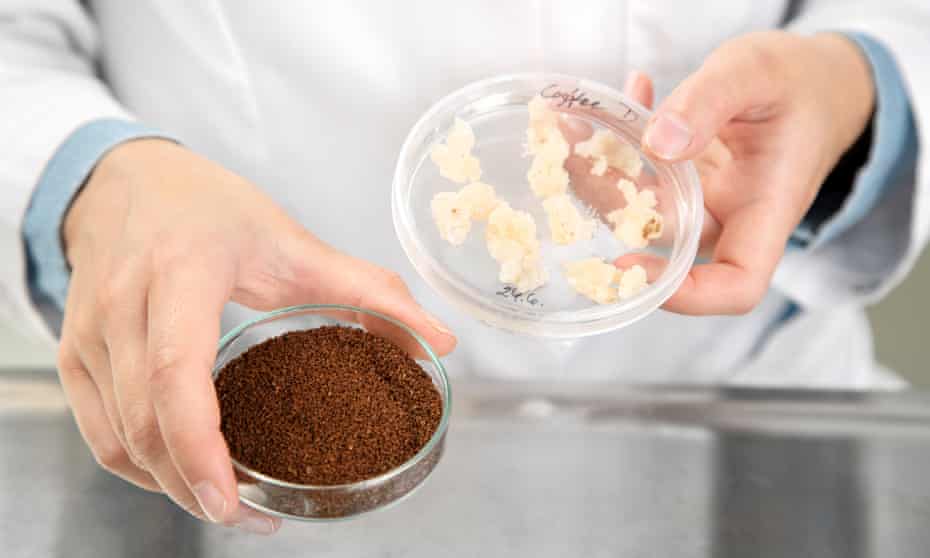
Coffee cell cultures, right, and roasted coffee, left, produced in a lab by VTT, a Finnish research institution. 
Photograph: VTT

Supported by


Nadra Nittle
Sat 16 Oct 2021

Heiko Rischer isn’t quite sure how to describe the taste of lab-grown coffee. This summer he sampled one of the first batches in the world produced from cell cultures rather than coffee beans.

“To describe it is difficult but, for me, it was in between a coffee and a black tea,” said Rischer, head of plant biotechnology at the VTT Technical Research Centre of Finland, which developed the coffee. “It depends really on the roasting grade, and this was a bit of a lighter roast, so it had a little bit more of a tea-like sensation.”

Rischer couldn’t swallow the coffee, as this cellular agriculture innovation is not yet approved for public consumption. Instead, he swirled the liquid around in his mouth and spit it out. He predicts that VTT’s lab-grown coffee could get regulatory approval in Europe and the US in about four years’ time, paving the way for a commercialized product that could have a much lower climate impact than conventional coffee.

The coffee industry is both a contributor to the climate crisis and very vulnerable to its effects. Rising demand for coffee has been linked to deforestation in developing nations, damaging biodiversity and releasing carbon emissions. At the same time, coffee producers are struggling with the impacts of more extreme weather, from frosts to droughts. It’s estimated that half of the land used to grow coffee could be unproductive by 2050 due to the climate crisis.

In response to the industry’s challenges, companies and scientists are trying to develop and commercialize coffee made without coffee beans.

VTT’s coffee is grown by floating cell cultures in bioreactors filled with a nutrient. The process requires no pesticides and has a much lower water footprint, said Rischer, and because the coffee can be produced in local markets, it cuts transport emissions. The company is working on a life cycle analysis of the process. “Once we have those figures, we will be able to show that the environmental impact will be much lower than what we have with conventional cultivation,” Rischer said.

American startups are also working on beanless coffee. In September, Seattle-based Atomo Coffee released what it called the world’s first “molecular coffee” in a one-day online pop-up, charging $5.99 a can.

The startup, which has raised $11.5m, makes its coffee by converting the compounds from plant waste into the same compounds contained in green coffee. Ingredients, including date seed extracts, chicory root, grape skin as well as caffeine, are roasted, ground and brewed. This method results in 93% lower carbon emissions and 94% less water use than conventional coffee production, as well as no deforestation, according to Atomo.

Tanks in Atomo’s factory. The food tech startup is making beanless coffee from plant waste. Photograph: Atomo

“The industry has known about the deleterious effects of coffee farming for a long time, whether we’re talking deforestation or major water usage,” said Atomo’s co-founder Jarret Stopforth. “[Before starting Atomo] I was thinking to myself, ‘There’s got to be a better way to do this.’”

Atomo’s facility can produce about 1,000 servings of coffee a day. The goal is to increase that to 10,000 servings a day over the next 12 months, said Stopforth, and in two years to move into a facility that can produce 30m servings of coffee a year. Stopforth says that Atomo will start the initial phase of the new factory build within the next three months.

Alternative coffee companies like Atomo not only have the potential to help tackle the climate crisis but to benefit the industry generally, said Sylvain Charlebois, a professor in food distribution and policy at Dalhousie University in Halifax, Nova Scotia.

Take arabica beans, said Charlebois. “You need specific climatic patterns, and it’s much better if you’re more in control in a laboratory environment than just trying to rely on Mother Nature.” Technology can help stabilize production and make it more predictable, he said.

But it’s unclear how many people would be willing to give up conventional coffee for one of its beanless counterparts. A 2019 survey by Dalhousie University found that 72% of Canadians say they would not drink lab-grown coffee.

Maricel Saenz, founder and CEO of San Francisco-based Compound Foods said she was working to “reinvent” coffee and to show people why doing so matters. Compound Foods, which has secured $4.5m in seed funding, says it recreates coffee farm production in the lab. The startup uses microbes and fermentation technology to grow a variety of flavors and aromas, Saenz said.

Maricel Saenz, founder of Compound Foods, which makes beanless coffee. 
Photograph: Compound Foods

Preliminary results from a carbon life cycle analysis indicate that the company’s coffee produces a tenth of the greenhouse gas emissions and water use of traditional coffee, Saenz said. She plans to introduce her product by late 2022 and expects pricing to be similar to specialty coffees. “As we improve our processes, we aim to decrease our prices,” she said.

As the population grows and pressure increases on natural resources, Saenz said, “we need to be producing food in more efficient ways, using a lot of the biotechnology and fermentation tools that are now at our disposal.”

But Daniele Giovannucci, president and co-founder of the Committee on Sustainability Assessment, a consortium that focuses on agricultural sustainability, is concerned that scaling up lab-grown coffee could affect the livelihoods of the millions of workers in the traditional coffee industry, especially in countries such as Ethiopia where coffee is central to the economy. “What’s going to happen to all these people?” Giovannucci asked. “What are they going to do, because this is a key cash crop?”

There’s a risk, he said, that lab-grown coffee could create significant socio-economic problems that could drive even greater climate change effects. “It is not clear if, in the end, its net effect may worsen global sustainability, along with many millions of lives.”

Saenz, who is from Costa Rica, a coffee-exporting country, said, “I know many coffee producers, so it’s something that I definitely worry about.” But, she added, “the number one threat that coffee farmers have today is climate change” – whether that’s heat that disrupts ripening times, or unexpected frosts as Brazil experienced in the summer, which severely damaged crops.

Saenz said her company will collaborate with non-profits to support small coffee farmers transitioning to more sustainable agricultural practices, including providing training and crop insurance.

While lab-grown coffee shows real promise, said Charlebois, the politics should not be underestimated, especially as so many farmers depend on conventional methods of producing crops and many of them live in developing economies. “Scalability is not an issue for lab-grown coffee,” he said, “but regulations and general acceptance of the technology will be greater challenges.”