Or just another Big Oil boondoggle?
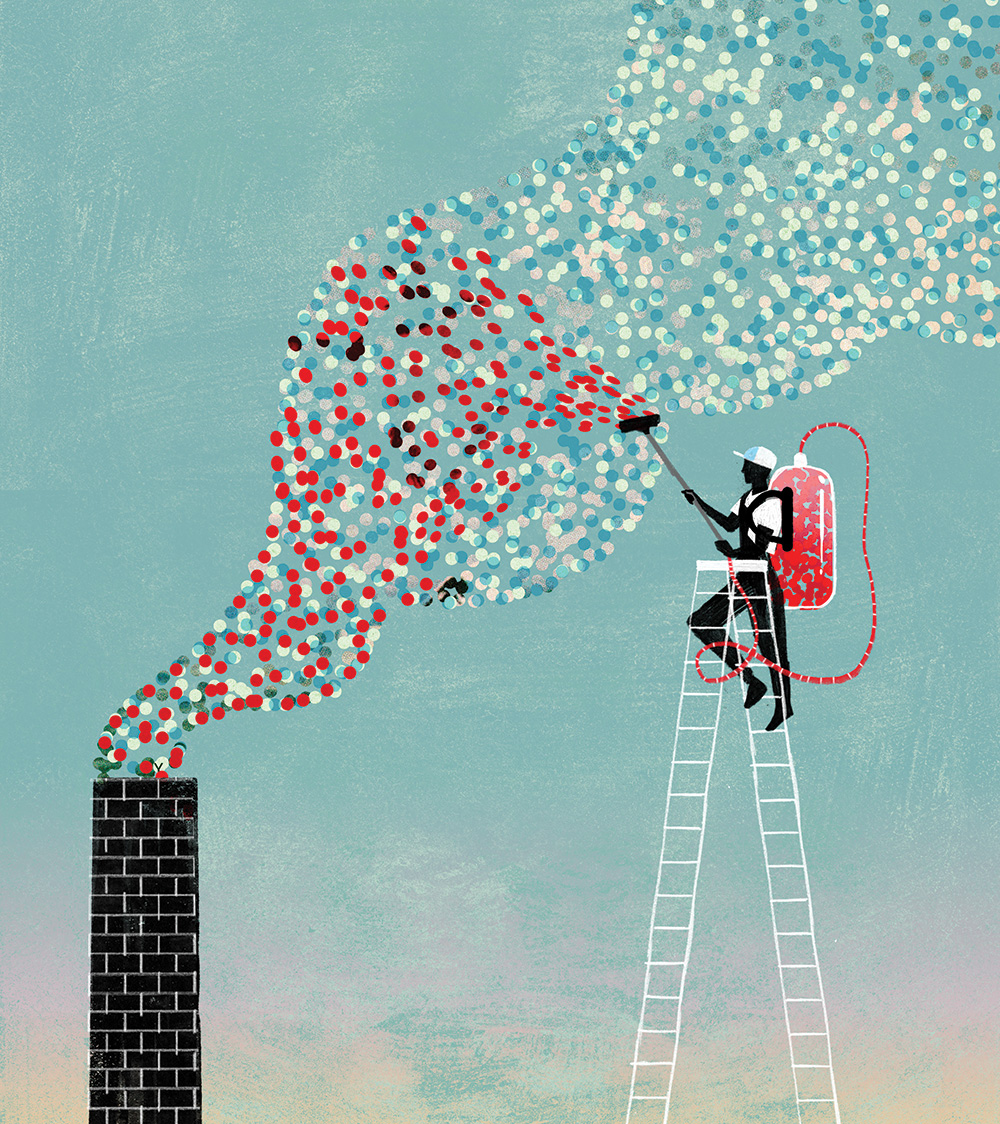
Keith Negley
Mother Jones
ENVIRONMENT
LONG READ
In British Columbia, there’s a little valley where the Squamish River snakes down past the cliffs of the Malamute, a popular hiking spot. The hills in all directions are, like much of BC, thickly forested with firs. And nestled in that valley is a newfangled industrial plant that aims to replicate what those millions of trees do: suck carbon dioxide out of the air.
The plant was built by Carbon Engineering, a pioneer in the technology known as direct air capture (DAC). In a long, squat building, a huge ceiling fan draws air inside, where it reacts with a liquid chemical that grabs hold of CO2 molecules. This “sorbent” flows into a nearby machine that transforms the gas, which is then stored in pressurized tanks. The goal is to help rid the atmosphere of its most ubiquitous climate change culprit. The Squamish plant will process up to 1,000 metric tons of CO2 annually. That’s a minuscule drop in the bucket of the planet’s annual emissions, an estimated 33 billion metric tons last year, but this plant is only a pilot facility.
If the process can be scaled up massively, what might happen to all the captured CO2? There are several possibilities, CEO Steve Oldham explains. You could, for example, sell some of it to companies like soda makers or concrete manufacturers. You could also convert it into liquid fuel to burn in cars, trucks, planes, and power plants. That would release still more CO2, but in Oldham’s vision, which involves a vast network of his company’s machines, you would simply run that pollution right back through the process. You could do it over and over, he says, allowing a society to burn fossil fuels in perpetuity without adding to global warming. Call it catch-and-release. Oldham thinks we should all hop on board with this mode of carbon recycling: “We can’t wait. We have to get on with decarbonizing now.”Given our plodding embrace of renewables, the IPCC figured we’d have to start pulling carbon directly out of the atmosphere by 2100. A lot of carbon. Ten billion metric tons per year.
Of course, governments around the world could go much further than catch-and-release. They could flat-out try to reverse climate change by using direct air capture to grab surplus atmospheric carbon and bury it deep in the Earth—rewinding the Industrial Revolution. Ridding the atmosphere of the billions of tons of so-called legacy carbon we’ve emitted over the past 150 years wouldn’t come cheap. At current prices, nations would have to shell out, collectively, about $5 trillion a year for the rest of the century. But a dire report in August from the UN Intergovernmental Panel on Climate Change (IPCC) warned that our climate situation could decline so rapidly that we are left with little choice. Policymakers may well decide that removing all that legacy carbon is worth the cost, Oldham argues. “I personally like the analogy of water treatment,” he says. “When water was a problem with cholera and typhoid, governments worldwide built a water treatment infrastructure. It’s part of what they provide to their citizens. Today we have an air problem, so we need an air-treatment infrastructure.”
Solving climate change with CO2-sucking machines? It sounds, at first, like something from a Neal Stephenson sci-fi novel—or a particularly delirious Silicon Valley TED Talk. And for years, indeed, DAC resided in mad-scientist territory. Only a handful of startups worldwide were fiddling with prototypes, and few serious investors were paying attention.
That all changed in 2018, with the release of an earlier IPCC report. The panel warned that if we wanted to keep the planet from warming by more than 1.5 degrees Celsius—the goal of the Paris agreement on mitigating climate change—we’d need to slash atmospheric CO2 dramatically. Planting forests would help. Shifting to renewables would be crucial, too. But given humanity’s plodding embrace of wind and solar, the IPCC figured we’d have to start pulling carbon directly out of the atmosphere by 2100. A lot of carbon. Ten billion metric tons per year, equal to nearly a third of our current CO2 output.
Direct air capture, along with other capture and sequestration schemes—from planting trees to figuring out how to make marine organisms lock up surplus carbon—was suddenly hot, perhaps even crucial to our long-term survival. Policymakers and corporations, and even some environmentalists, snapped to attention. By spring 2021, more than 100 of the world’s largest companies—including PepsiCo, Alaska Airlines, Colgate-Palmolive, and Wall Street giants like Morgan Stanley—had pledged to get to “net zero” emissions by 2040, and Elon Musk’s foundation put up $100 million for the XPrize, a four-year competition to spur development of any tech, including DAC, that results in “negative emissions.”
Public money has begun flowing in, too. The federal government and a couple of states have passed tax credits for firms that can pull carbon out of the atmosphere. The infrastructure bill the Senate green-lighted in August contains $11.5 billion for various carbon-capture efforts, including $3.5 billion to build four “regional direct air capture hubs” that the feds hope will create big networks of clean-energy jobs. The Democrats’ $3.5 trillion budget blueprint included $150 billion to compensate energy producers that switch to lower-emissions processes—a move favored by the swing vote of Joe Manchin—that could include direct air capture. And some Democrats are pushing higher tax credits for DAC in particular. In June, the Department of Energy announced a modest $12 million grant to support, as Energy Secretary Jennifer Granholm put it, the “brilliant innovators” developing DAC technologies that can “help us avoid the worst effects of climate change.” Even a few tech firms, like Stripe and Shopify, have budgeted millions to buy up CO2 sequestered by any reasonable means. “You’ve got this enormous momentum,” says Erin Burns, executive director of the think tank Carbon180.
In response, the DAC pioneers are gleefully rushing out new plants. Climeworks, based in Switzerland, is contemplating a facility in the Middle East. New York’s Global Thermostat is gearing up to create its first large-scale installation next year in Chile. Oxy Low Carbon Ventures (a division of the oil giant Occidental) will use Carbon Engineering’s technology to build a Texas plant eventually capable of removing up to 1 million metric tons of atmospheric CO2 per year, 1,000 times the rate of the Squamish facility.
This may all sound like a smart idea, but it grows more complex as you look closely at the world these companies envision. The only viable path to saving the planet, according to the entrepreneurs, is to get fossil fuel companies on board. That’s partly because Big Oil has the infrastructure and know-how to build these kinds of facilities at scale and to pipe captured CO2 to locations where it can be permanently sequestered. But it’s also because, in the eyes of the DAC inventors, internal combustion will be with us for a while yet. They envision using DAC mostly for catch-and-release over the next few decades: Harvest CO2 from the air, convert it into synthetic fuels, burn those fuels, and recapture the CO2. We wouldn’t start removing legacy carbon until 2060 or 2070 because only then will DAC, by small improvements, become cheap enough that companies and nations (at today’s tax rates, anyway) will be open to paying for it
Their tech can save us in the long run, the inventors insist. In the meantime, they’re looking for help from the government—and from their partners at companies like ExxonMobil, Shell, and Occidental Petroleum.
2. THE SCIENTISTS WHO SAW OUR PREDICAMENT COMING
The concept of direct carbon removal came about in the late 1990s, as a handful of scientists contemplated a dismal reality: Despite growing awareness that carbon dioxide from human activities was warming the planet, with potentially catastrophic results, humanity seemed in no hurry to stop burning fossil fuels.
One of those scientists was Klaus Lackner, a soft-spoken theoretical physicist who had grown interested in climate engineering. We met at his lab at Arizona State University, where his grad students were tinkering with a tiny wind tunnel, blowing air over Lackner’s CO2-sucking materials to try to eke more performance out of them. His team is still in its early experimental days, he tells me; the researchers are not entirely confident DAC will be viable at a huge scale. “I’m not promising anything,” he says. “All I really promise you is if we fail to make an attempt to make direct air capture work, life is a lot harder.”
A tall and lanky German immigrant, Lackner predicted back in the ’90s that fossil fuel emissions would increase dramatically because a rapidly developing China—and global south—would demand the same opportunities for inexpensive growth that other nations had enjoyed. Back then, solar and wind power couldn’t compete with fossil fuels on cost.
With emissions poised to explode, Lackner figured the only way to manage the problem was to suck them up again. In 1999, he co-authored a paper for a conference on “coal utilization and fuel systems,” calling for the development of DAC technology. “My concern was that we are going to have pretty excuses why we can have a little more CO2 in the atmosphere—unless we have a cheap solution to get it back,” he recalls. He envisioned a certification system: If a company wanted to release a ton of CO2, it would have to prove it had already removed a ton. “If you want to extract fossil carbon, be my guest,” Lackner told me. “But you have to show me that an equal amount of carbon has been put away.”
He traveled the world over the next few years, talking up his idea, and found two other scientists thinking along similar lines. One was Peter Eisenberger, an old friend and fellow physicist who ran the Earth Institute at Columbia University. Back in the ’70s and ’80s, as the head of Exxon’s R&D lab, Eisenberger had toyed with the notion of harvesting CO2 from the air—he called it “artificial photosynthesis.” The other kindred spirit was David Keith, a Harvard physicist who’d been researching solar geoengineering, a way to curb warming by limiting the amount of sunlight that strikes the Earth. All three men would ultimately launch companies to develop DAC.
Keith was first to pull it off. In 2004, he formed a research group at the University of Calgary and dove into the chemistry. Capturing CO2 was not a new art; designers of submarines and spacecraft had been doing it for decades to keep the air on board breathable. Fossil fuel companies, too, had devised “scrubber” systems to capture the CO2 from smokestacks, though these were never deployed at scale—possibly because the firms considered them too expensive. Sorbent chemicals that could sequester CO2 at various temperatures were available. The difficulty is that CO2 is very dilute in everyday air—about 0.04 percent. Any DAC system would have to move huge volumes of air to grab a relatively small amount of carbon. Still, it seemed doable: “The more that we looked into this from an academic perspective, the more we found there’s no scientific showstopper here,” says Geoff Holmes, a member of Keith’s original research group who is now Carbon Engineering’s director of business development. One big challenge involved engineering and design: Do you make millions of small devices and scatter them all over the world or build a smaller number of giant plants? Can you power these plants with renewable energy, or with a sufficiently small amount of fossil fuels that they will scoop up far more carbon than they release?
Keith’s group chose to go big, designing plants that might capture a million metric tons of CO2 or more annually—roughly equivalent to the emissions of 217,000 cars. Another cost-saving decision his group made at the outset: They would work only with existing off-the-shelf parts and technologies. For example, they would expose their sorbents to outside air using the same kinds of cooling towers deployed by factories worldwide. To purify the captured CO2, they repurposed tech from wastewater treatment and mining sectors. The final step in Carbon Engineering’s process involves temperatures of up to 900 degrees Celsius—energy intensive—so they designed a plant that could run on either renewables or natural gas. If gas, the resulting emissions could be trapped and fed through the very process they were enabling.
Keith and his partners officially launched Carbon Engineering in 2009 with $3.5 million in seed money from the likes of Bill Gates and Murray Edwards, a Canadian billionaire who made his money extracting dirty crude from Alberta’s tar sands. Another $3 million came later from government sources. By 2015, the group was encouraged enough by its lab results to build the Squamish prototype.
Mastering direct air capture, Holmes told me, was a mission of thousands of tiny tweaks. There was “no single lightbulb,” he says. “Nobody ran out of the lab and said, ‘Yeah, I solved it!’” It seemed to him the DAC learning curve was akin to that of solar panels, which after decades of incremental improvements—maybe a 2 percent better yield each year—are now the world’s cheapest energy source to build and install.
The other teams took slightly different routes. Klaus Lackner wanted a system so small you could put it anywhere, and one that required very little power to operate. He set about creating a “mechanical tree” with rows of dry sorbents studded throughout. Unlike rival devices, his trees don’t need fans to blow air past the sorbents; they rely on the wind. This means they only need power a few times a day, when the “leaves” collapse into a tank where the CO2 is extracted with steam. Each tree removes only a small amount of carbon, but because the devices use so little electricity, Lackner envisions installing them in forestal quantities—millions of units. With CO2 equally distributed in the lower atmosphere, you could put them anywhere on Earth with a power source and sufficient infrastructure to bury, transport, or otherwise use the extracted carbon.The machine loomed about 60 feet high. Up top, I could see a row of fans blowing air past a large metal accordion containing sorbent-coated ceramics.
Eisenberger co-founded Global Thermostat with Graciela Chichilnisky, an economist from Columbia University who helped devise the carbon-trading mechanisms in the Kyoto Protocol. Like Lackner, the pair opted for a smaller, lower-power design. Fans blow air over sorbent-coated ceramic cubes, which several times an hour are hit with steam to remove bound CO2. They designed the system to pair with industrial processes—you might install one next to a factory’s air conditioning unit, whose waste heat could be harnessed to help power the machine. (Early plants built by Climeworks, whose tech is roughly comparable, are powered by geothermal energy.)
This past May, I visited SRI International, a research lab in Menlo Park, California, to get a firsthand look at Global Thermostat’s prototype. The machine loomed about 60 feet high, with a thicket of PVC piping snaked around its broad metal base. Up top, I could see a row of fans blowing air past a large metal accordion containing sorbent-coated ceramics. I watched as the accordion collapsed into the base, where the CO2 is extracted.
As cutting-edge tech goes, the machine was anticlimactic. It would blend in with any industrial machinery you might find on a work site. That’s precisely the point, Chichilnisky had told me over the phone last winter. Like Lackner, she and Eisenberger envision installing millions of units in cities and industrial parks worldwide, harnessing waste heat to draw down carbon pollution. “It’s farming the sky,” she said.
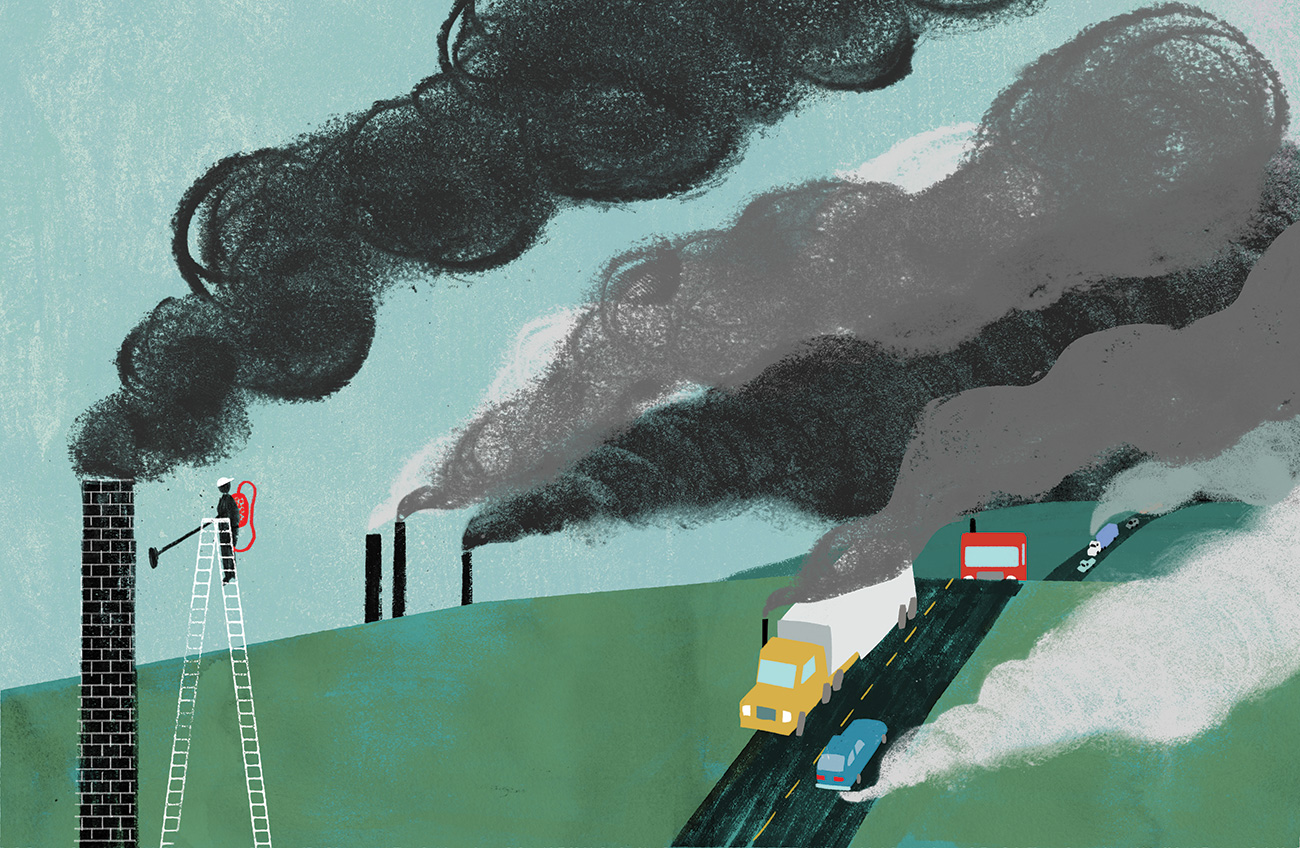
Keith Negley
3. CLIMATE MODELERS IN A PANIC
If DAC ever really takes off, you can thank the psychology of climate modelers.
By the early 2000s, the scientists were predicting a bleak future. They had taken into account myriad factors that influence warming, including the volume and potency of heat-trapping gases, the rate at which those gases are increasing in prevalence, and the Earth’s natural mechanisms for capturing and sequestering carbon, like trees. It was clear that the world’s nations had made little progress in weaning themselves off fossil fuels. So the climatologists began wondering: What if you included “net negative” technologies that would artificially remove CO2 from the air?
A few scientists had theorized that one might do this using a new process they dubbed Bioenergy With Carbon Capture and Sequestration (or Storage). You could sow endless cycles of fast-growing trees or crops, burn that biomass to generate electricity, capture the resulting CO2 from your plant’s smokestack, and inject it deep into the ground (ideally amid porous rock like basalt, which has oodles of tiny crevices that CO2 molecules can populate). In theory, if you replaced thousands of fossil fuel plants with BECCS plants, you could generate lots of electricity and come out net negative because your biomass had already, via photosynthesis, sucked a lot of carbon out of the air—and now that carbon is buried. Sure enough, when scientists incorporated BECCS into their models, it helped balance the books. They could produce scenarios with lots and lots of power plants that would begin to walk humanity back from the climatic abyss.
The BECCS hubbub came to a head after the 2015 Paris agreement, when 191 countries signed on to an aggressive new goal: They would take collective action to limit warming to “well below” 2 degrees Celsius by 2100 and work hard to keep it to 1.5 degrees. The IPCC was asked to create four pathways that would keep warming within the promised range. The rosiest one assumed nations would take immediate action to retool their energy streams, roll out renewables, and electrify transportation. Carbon-removal technologies would not be needed.Factoring biomass carbon capture and storage into climate models “was an avoidance strategy” for terrified scientists. “You just don’t want to look the truth in the eye.”
The other three pathways took a dimmer, more realistic view of human nature. These assessments assumed countries would embrace renewables slowly and that we would “overshoot” within a few decades. We would emit so much CO2 that, absent drastic measures, we’d pass well beyond 1.5 degrees—with devastating effects, including wilder and spikier weather, and hundreds of millions more deaths from severe droughts, fires, floods, and famine. To ameliorate the overshoot, we would have to ramp up carbon sequestration efforts. That would require lots of afforestation—the opposite of deforestation—and we’d have to get serious about forcing coal- and gas-fueled power plants to trap emissions at the source.
But even that wasn’t enough. We would also, the IPCC said, require “net negative” technologies—including BECCS plants. The panel’s three alternative pathways all assumed we would build lots of these, picking up speed until, by 2050, we were pulling up to 10 gigatons of CO2 from the air each year, and twice that by 2100. Only then could we make it to 2100 with less than 1.5 degrees of warming.
There was just one howling problem: Large-scale BECCS, energy experts agree, is a fantasy. The idea looks neat on paper, but rolling it out as the IPCC envisioned would require an untenable amount of real estate. You’d have to devote up to 40 percent of global cropland just to grow trees and plants to burn, the National Academy of Sciences calculated in one study. Another paper estimated that the scheme would require a territory the size of India. “We don’t have the land,” Felix Creutzig of the Mercator Research Institute on Global Commons and Climate Change told me bluntly. He was part of a group that studied all the ideas humans have come up with to capture carbon, including BECCS, afforestation, DAC, and various methods for absorbing CO2 into the ocean.
Afforestation and reforestation run into the same problem that BECCS does. Planting enough trees to reach net zero by 2050, Oxfam reported in August, would require 4 billion acres, equivalent to more than 80 percent of all the existing farmland on the planet. As for the notion of closing the gap with BECCS, “If you include biodiversity for just one second, it’s mostly out of the question,” Creutzig says. That’s why there are next to no BECCS plants in operation today.
The truth is, some of the climatologists who used BECCS in their models all those years knew it would never be viable, longtime climate modeler Wolfgang Knorr told me. “It was an avoidance strategy,” a coping mechanism for terrified scientists, he says. “You just don’t want to look the truth in the eye—that we waited too long” to stop burning fossil fuels.
DAC, by contrast, wasn’t a fantasy. The tech, already under development, didn’t require nearly as much land as BECCS. Even tens of millions of machines would take up far less space than biomass crops. In engineering-speak, DAC can scale. And as it does, it should get ever cheaper and more efficient. Most technologies follow a developmental learning curve akin to Moore’s Law in the computer industry: The more you make of something, the better you get at doing so efficiently, and the cheaper the technology becomes. (Typically, every time you double the quantity of an item on the market, the price drops by 10 to 20 percent.) That’s how PCs went from costing thousands of dollars in the 1970s to $25 for a Raspberry Pi computer today. Biological solutions are very tricky to scale; machines not so much.
In any case, the 2018 IPCC report made policymakers and investors suddenly take DAC much more seriously. The panel’s new report, even more dire, restated its case: Carbon-sucking on a massive scale was almost certainly going to be necessary. The DAC entrepreneurs couldn’t have asked for better timing. Most had already proved they could capture CO2 from the air. The big remaining question was: Who would pay them enough to do it at scale?
4. WHO WANTS TO BUY A TON OF CARBON DIOXIDE?
That’s a tricky question. Right now, companies like Climeworks or Carbon Engineering charge an estimated $500 per ton of captured CO2. Hitting the IPCC’s goal of sequestering 10 gigatons a year by midcentury would run $5 trillion a year. Most observers think the price has to come down to $100—and ideally far less—to make DAC viable.
The only way to drive down those costs, the inventors say, is to subsidize their operations. If they can roll out thousands of DAC machines over the next couple of decades, the price will certainly plummet. But someone needs to be willing to pay $500 a ton to get things started. In 2019, Stripe, which makes payment-processing software, announced a small climate fund to buy atmospheric carbon at any price from anyone who sequesters it permanently. So far it has spent $8 million, including purchases from Climeworks and Charm Industrial, which liquefies plant waste from farms into an oil and then buries it. Stripe is paying well over $500 a ton, says Nan Ransohoff, the company’s climate guru, but “we’re looking for projects that have the potential to get to under $100 by 2040.” Specifically, projects that won’t require too much land.
Virtually every player in the fledgling carbon-removal industry makes the case for government investment to prime the pump, much as public support seeded wind and solar development in past decades. President Obama’s 2009 stimulus bill included a modest sum for research into climate solutions. The previous year, Congress had approved lucrative subsidies under Section 45Q of the tax code for any firm that captures and sequesters CO2 by the ton—the law was amended in 2018 to include DAC by name. (The Biden administration is seeking to expand the 45Q program.) California and Washington, meanwhile, have created tax credits for firms that sequester CO2.
These subsidies have enabled DAC projects that are profitable—if barely. The most ambitious one to date is the Texas plant that Oxy Low Carbon Ventures is building with Carbon Engineering to remove up to 1 million metric tons of CO2 per year. The terms are private, but Oldham, Carbon Engineering’s ceo, emphasizes the government’s role: For each ton captured, the 45Q credit pays up to $35, and California’s offset covers $200. (The California credit applies to carbon that’s hoovered up in Texas, or any state—location doesn’t matter.) “You can just make the economics work,” Holmes told me.
The partners intend to use the captured carbon for enhanced oil recovery—injecting CO2 into near-depleted wells to help extract what’s left.
But the project’s details quickly veer into territory that makes environmentalists queasy. That’s because the corporate partners intend to sequester the carbon using a method called “enhanced oil recovery.” That is, they’ll inject the CO2 into near-depleted oil and gas wells to help extract what’s left. Energy firms have used this technique for decades to maximize profits. Historically, for example, Occidental Petroleum has had to pay about $25 a ton for the CO2 it uses, so capturing that CO2 instead makes its operation a bit more profitable.
This makes business sense. But to many environmentalists, it seems nuts. “If you ask people, ‘Hey, do you think it’s a good idea to suck carbon out of the air?’ they’ll say, ‘Yeah, it’s a great idea!’” says John Noël, the senior climate campaigner for Greenpeace. “And then if you say to them, ‘Do you think you should take that carbon and shove it in the ground to push more gas and oil out there?’ they’re like, ‘What? That sounds crazy!’”
Federal and state governments, whose representatives often enjoy the support of fossil fuel interests, don’t find this crazy at all. Industry lobbyists worked closely with elected leaders to make sure firms using DAC for enhanced oil recovery would be eligible for sequestration credits. But the cooperation goes further. DAC inventors and their backers explicitly argue that scaling up requires they work hand in glove with Big Oil. The only viable path, most will say, involves extending the era of internal combustion and fossil fuel power by decades.
After CO2 is extracted by direct air capture, there are four proposed outcomes for the captured greenhouse gas—each with its own drawbacks.»»
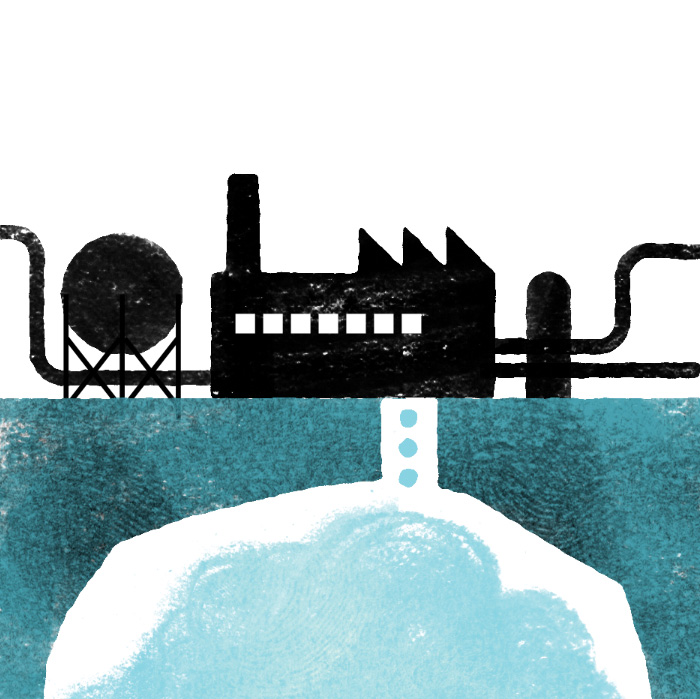
Burial
CO2 is transported to locations whose underground geology enables permanent sequestration.
But the project’s details quickly veer into territory that makes environmentalists queasy. That’s because the corporate partners intend to sequester the carbon using a method called “enhanced oil recovery.” That is, they’ll inject the CO2 into near-depleted oil and gas wells to help extract what’s left. Energy firms have used this technique for decades to maximize profits. Historically, for example, Occidental Petroleum has had to pay about $25 a ton for the CO2 it uses, so capturing that CO2 instead makes its operation a bit more profitable.
This makes business sense. But to many environmentalists, it seems nuts. “If you ask people, ‘Hey, do you think it’s a good idea to suck carbon out of the air?’ they’ll say, ‘Yeah, it’s a great idea!’” says John Noël, the senior climate campaigner for Greenpeace. “And then if you say to them, ‘Do you think you should take that carbon and shove it in the ground to push more gas and oil out there?’ they’re like, ‘What? That sounds crazy!’”
Federal and state governments, whose representatives often enjoy the support of fossil fuel interests, don’t find this crazy at all. Industry lobbyists worked closely with elected leaders to make sure firms using DAC for enhanced oil recovery would be eligible for sequestration credits. But the cooperation goes further. DAC inventors and their backers explicitly argue that scaling up requires they work hand in glove with Big Oil. The only viable path, most will say, involves extending the era of internal combustion and fossil fuel power by decades.
After CO2 is extracted by direct air capture, there are four proposed outcomes for the captured greenhouse gas—each with its own drawbacks.»»
Burial
CO2 is transported to locations whose underground geology enables permanent sequestration.
Downside
Requires 65,000-plus miles of risky pipelines
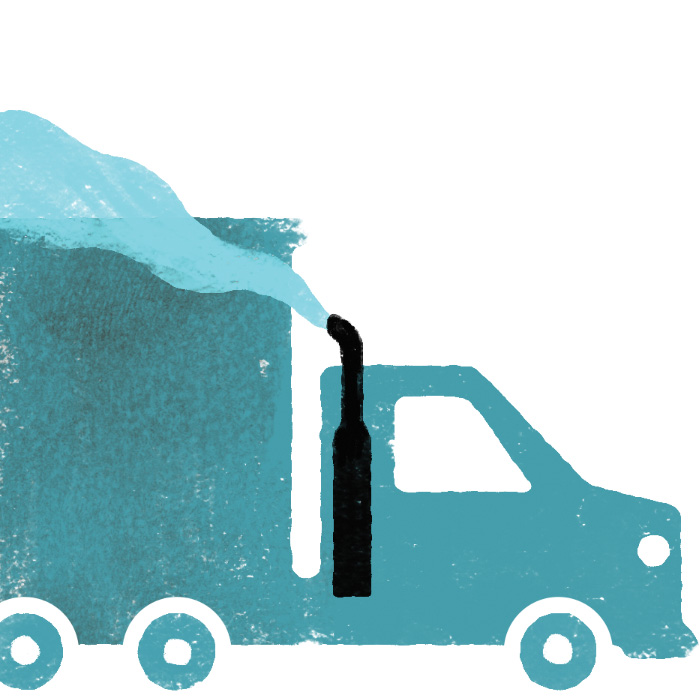
Synfuels
CO2 is converted into liquid hydrocarbons to be burned in existing engines and power plants.
Downside
Extends fossil fuel era and creates additional pollution
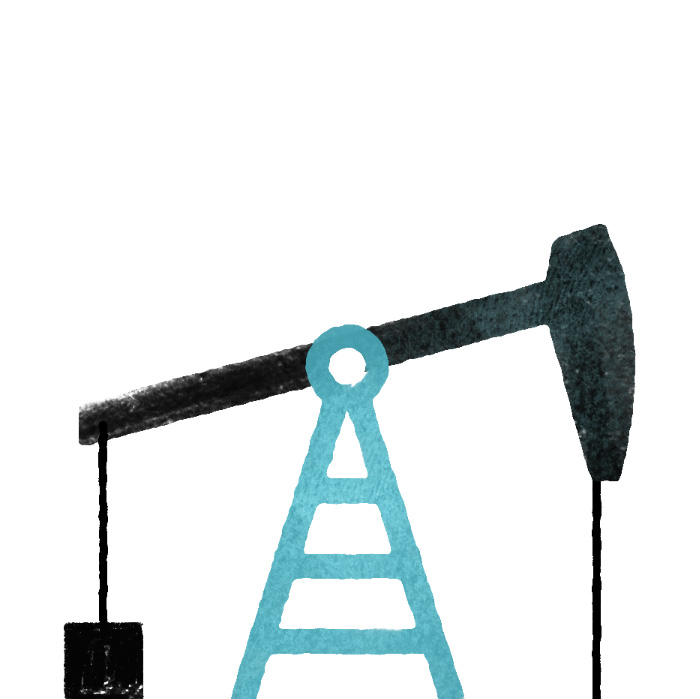
Enhanced oil recovery
CO2 is pumped deep into gas and oil wells to boost production output.
Downside
Extends fossil fuel era and requires pipeline expansion
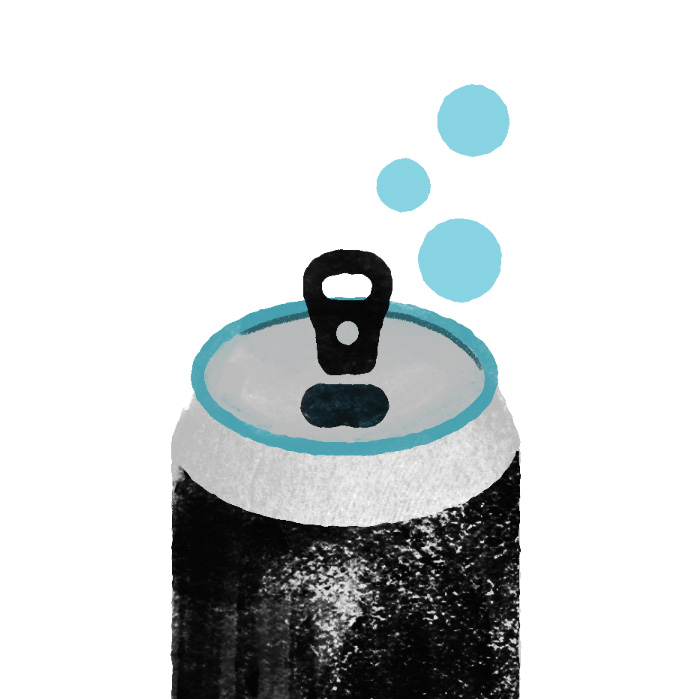
Manufacturing
CO2 is diverted to produce beverages, dry ice, cement, carbon-fiber materials, and more.
Downside
Existing markets are minuscule.
Requires 65,000-plus miles of risky pipelines
Synfuels
CO2 is converted into liquid hydrocarbons to be burned in existing engines and power plants.
Downside
Extends fossil fuel era and creates additional pollution
Enhanced oil recovery
CO2 is pumped deep into gas and oil wells to boost production output.
Downside
Extends fossil fuel era and requires pipeline expansion
Manufacturing
CO2 is diverted to produce beverages, dry ice, cement, carbon-fiber materials, and more.
Downside
Existing markets are minuscule.
5. A VISION OF SYNTHETIC FUELS
It’s worth explaining the argument of the DAC visionaries in detail, if only to grasp their worldview. If you want to remove 10 billion metric tons of CO2 per year, they say, you can’t do it with DAC unless you drive the price down. Enhanced oil recovery is a kick-starter. That means more fossil fuels get dug up and burned, but the net emissions are less than they would have been. More importantly, proponents note, enhanced oil recovery provides an immediate market for the captured carbon. Oil firms need a lot of CO2 to make eor work. The only other markets that exist, such as making carbonated beverages and dry ice, are relatively tiny. Potentially bigger markets—like mixing CO2 into concrete or using it to manufacture carbon-fiber materials for cars, clothes, and even buildings—are still gestational.
The next phase of the DAC boosters’ argument is even more audacious: Their tech should be used first to produce synthetic fuels for internal combustion engines. This, they argue, will decarbonize the world faster than trying to move over to solar- and wind-powered vehicles and power plants. On the surface, this seems a strange, circuitous detour. Solar and wind have become extremely cheap energy sources with vanishingly few emissions. Most environmentalists—and the Biden administration, which recently called for a massive solar expansion—think we should scale them up aggressively and immediately. But wind and solar have a major storage and distribution problem. Sun is plentiful in Arizona, and wind abundant in Texas, but as yet, we have no efficient way to deliver that electricity to Boston or North Dakota. And storing electricity for use at night or during windless periods requires batteries, which necessitates resource-intensive mining.“I think it’ll be a while before we get the whole of the internal-combustion-engine type mechanisms off the planet.”
In this regard, liquid fuels are still superior. They hold more energy per pound than today’s batteries do. Oil and gas firms also have experience storing them and shipping them around the country—and the existing infrastructure to do just that. Liquid fuels, DAC proponents point out, are still needed to power large vehicles, most notably long-haul airplanes, because today’s batteries are too heavy—a point that many environmentalists I spoke with conceded. “I think it’ll be a while before we get the whole of the internal-combustion-engine type mechanisms off the planet,” Carbon Engineering’s Oldham tells me. “There are a lot of them. In many different places.” Even vehicles that can be electrified now, like light cars, aren’t being electrified anywhere near fast enough.
And so, as the DAC boosters argue, our best bet is to work within the existing oil-and-gas infrastructure. You would use DAC to suck up tons of CO2 and use solar or wind energy to convert it into carbon monoxide and oxygen. Separately, using electrolysis, you’d split water into hydrogen and oxygen. Combining the hydrogen with the carbon monoxide under the right conditions yields fuels that can be used, with minor engine modifications, to power ships, trucks, and planes. Burning the synfuels emits CO2, but if you go the catch-and-release route, you create, in Oldham’s words, a “closed loop.”
Another way to think about it, Lackner says, is that you’re creating a liquid battery to hold wind and solar power. You waste some energy in the process, but you’ve solved your storage and distribution problem. Energy firms in Texas could use solar-powered DAC to produce tank loads of synfuels and then ship them to Boston to generate power when the sun is down.

Drivers will still gun their gasoline engines, but the climate effect will be, in theory, net neutral.
The immediate benefit, by this logic, is that you’re decarbonizing internal combustion. Drivers will still gun their gasoline engines, but the climate effect will be, in theory, net neutral. For every tailpipe coughing out CO2, a DAC unit somewhere on the planet will suck up the equivalent amount and put it back into service as fuel. “I could put it wherever it’s cheapest, like in China or in Australia,” Lackner says.
“You make the oil companies and all their infrastructure part of the solution, not part of the problem,” adds Eisenberger, Global Thermostat’s co-founder. “You take an enormous pressure off the need for capital investment.”
Fulfilling the “net neutral” part of the vision will require a massive expansion of solar and wind capacity. Global Thermostat chose Chile for its first synfuel plant because of that nation’s abundant wind resources. GT is building the carbon-grabbers and Siemens the electrolysis element, and ExxonMobil will produce the synfuels.
If you accept the premise of using liquid fuels as a battery, the inventors point out that creating a huge synfuels market would vastly accelerate the improvement of DAC technology, making it cheaper by the year. A successful scale-up, Lackner predicts, would bring the cost as low as $50 per ton within a few decades—cheap enough for governments to tackle legacy carbon. But the drawdown wouldn’t begin until about 2060, after we’d made transportation net neutral.
If and when we manage to pull it off, removing mass quantities of carbon will require an enormous number of DAC machines. To hit the IPCC’s goal of 10 billion tons per year by midcentury, according to a recent study in Science, you’d need 30,000 plants the size of Carbon Engineering’s Texas facility. With the smaller Climeworks or Global Thermostat units, you’d need 30 million, and with Lackner’s trees, probably a lot more.
Building carbon extractors on such a scale sounds almost delusional. But Lackner counters that it’s really not, when you consider other human endeavors. After all, he points out, “We are building nearly 100 million cars and trucks a year.”
The immediate benefit, by this logic, is that you’re decarbonizing internal combustion. Drivers will still gun their gasoline engines, but the climate effect will be, in theory, net neutral. For every tailpipe coughing out CO2, a DAC unit somewhere on the planet will suck up the equivalent amount and put it back into service as fuel. “I could put it wherever it’s cheapest, like in China or in Australia,” Lackner says.
“You make the oil companies and all their infrastructure part of the solution, not part of the problem,” adds Eisenberger, Global Thermostat’s co-founder. “You take an enormous pressure off the need for capital investment.”
Fulfilling the “net neutral” part of the vision will require a massive expansion of solar and wind capacity. Global Thermostat chose Chile for its first synfuel plant because of that nation’s abundant wind resources. GT is building the carbon-grabbers and Siemens the electrolysis element, and ExxonMobil will produce the synfuels.
If you accept the premise of using liquid fuels as a battery, the inventors point out that creating a huge synfuels market would vastly accelerate the improvement of DAC technology, making it cheaper by the year. A successful scale-up, Lackner predicts, would bring the cost as low as $50 per ton within a few decades—cheap enough for governments to tackle legacy carbon. But the drawdown wouldn’t begin until about 2060, after we’d made transportation net neutral.
If and when we manage to pull it off, removing mass quantities of carbon will require an enormous number of DAC machines. To hit the IPCC’s goal of 10 billion tons per year by midcentury, according to a recent study in Science, you’d need 30,000 plants the size of Carbon Engineering’s Texas facility. With the smaller Climeworks or Global Thermostat units, you’d need 30 million, and with Lackner’s trees, probably a lot more.
Building carbon extractors on such a scale sounds almost delusional. But Lackner counters that it’s really not, when you consider other human endeavors. After all, he points out, “We are building nearly 100 million cars and trucks a year.”
6. THE DANGER OF BUSINESS AS USUAL
Many environmentalists view the game plan of the DAC visionaries as preposterous, a complex bank shot that can’t possibly work. The sheer scale of the endeavor “would make dealing with coronavirus look like playtime,” says June Sekera, a visiting scholar at the New School for Social Research, who analyzed 200 academic papers on DAC to identify its risks. Sekera came away from her analysis convinced that extracting, shipping, and burying so much captured CO2 would invite disaster.
Sure, one could co-locate DAC plants alongside synfuel plants, but to bury billions of tons of excess carbon permanently would be, Sekera says, a logistical nightmare. First you’d need to transport the CO2 from your DAC installations to locations with the type of subterranean rock needed to sequester the gas. This would require a web of specialized high-pressure pipelines crisscrossing the country. (Existing oil and gas pipelines won’t cut it.) We would need, by one estimate, at least 65,000 miles of them by 2050—12 times more than we have today. This and other considerations led the authors of a 2020 study in the journal Nature Communications to declare DAC an “energetically and financially costly distraction.”CO2 pipeline leaks could be lethal. Heavier than air, the gas hovers near the ground, where it can sicken and asphyxiate pets, livestock, and people.
What’s more, CO2 pipeline leaks could be lethal. Carbon dioxide is heavier than the nitrogen and oxygen that dominate the air we breathe. If a pipeline breaks, concentrated CO2 initially hovers near the ground, where it can sicken and asphyxiate pets, livestock, and people. (Recent pipeline ruptures in Louisiana and Mississippi, where CO2 is used for enhanced oil recovery, sent dozens to the hospital.) And if history is any guide, the new pipelines would be routed through some of America’s poorest areas, says Carroll Muffett, CEO of the Center for International Environmental Law, who opposes DAC. “When you’re adding carbon capture or direct air capture at—or around—industrial facilities, those facilities are overwhelmingly concentrated in communities of color,” he adds. “That’s true not only in the US, but around the world.”
And finally, we have the energy paradox. The machines needed to suck up 10 billion tons of CO2 each year would consume more than half the world’s current energy supply, according to a 2019 study in Nature. Using DAC to build a closed-loop cycle with synthetic fuels would require even more energy, and a huge expansion of solar and wind capacity.
So why, environmentalists often wonder, would we bother to expend all of that clean energy on DAC? Instead, why not just push hard to electrify our economies and get rid of as many oil-burning engines as we can, as fast as we can? The sooner we do so, the less DAC we’ll need in the long run, says Lindsay Meiman, a communications specialist with the environmental group 350.org. “We have those solutions—we have them,” she says. “It’s about the political will and investment and the priority.” The government should prioritize investments in “free public transit to create millions of jobs that will dismantle these current fossil fuel projects.”
“Once you start doing the numbers, you realize that it makes much more sense to just eliminate most of your emissions,” says David Morrow, research director at American University’s Institute for Carbon Removal Law and Policy.
Perhaps the biggest problem with the way DAC is now being rolled out and subsidized, critics say, is that it lets fossil fuel interests go on with business as usual. As Muffett sees it, the petroleum giants regard partnerships with companies like Global Thermostat and Carbon Engineering as a survival ploy. Polluters spent the past few decades claiming they could capture CO2 from smokestacks to make coal- and gas-powered electricity emission-free, but they never did. Now they’re claiming we can extract carbon from the sky. For fossil fuel firms, “any technology that says, ‘Hey, we don’t have to stop emitting this stuff—we can just find a way to make it disappear,’ is highly desirable,” Muffett says.
7. A PROGRESSIVE CASE FOR CARBON-SUCKING
Despite their deep skepticism, even many environmentalists repulsed by the fossil fuel industry have a nagging question in the back of their heads: What if carbon sequestration is necessary? What if humankind can’t—or won’t—move fast enough on renewables, and discovers later this century that the IPCC was right: We simply have to get rid of that excess carbon? Greenpeace’s Noël is hotly opposed to Big Oil and Gas. “We need to have a political, financial, and cultural full-court press to isolate the fossil fuel industry in all corners of life,” he practically shouted at me over the phone. “In policy circles they should not be allowed at the table. They should not be allowed to advertise. They shouldn’t be invited to any serious meeting.” He thinks they’re using DAC as a ruse: “The technology has been captured, manipulated, utilized, thrown into a PR machine.”
Yet still—still—Noël admits it’s probably a good idea for governments to fund scientists and engineers to work on DAC technologies. He’d like us to have the option in pocket, in case it’s ever needed. “I have a 9-month-old daughter and we’re at 415 parts per million” of CO2, he says. Given the serious effects we’re already seeing from climate change, Noël is deeply worried about what it’ll look like decades from now if we fail to hit the brakes on emissions. He’s fine with someone doing the work as long as it’s “fully decoupled from the fossil fuel industry.” Other environmentalists offered the same cautious approval. Morrow told me carbon-sucking should be our last resort, to be used sparingly only after we’ve shifted as much of the economy as possible toward renewables: “The role that DAC can play is an important but limited one, where we’re cleaning up stuff that we don’t have a good way to clean up otherwise, or drawing down legacy carbon.”
One can even make an explicitly progressive case for DAC. That’s the view of Holly Jean Buck, an assistant professor of environment and sustainability at the University at Buffalo, and author of the book Ending Fossil Fuels. Buck points out that America is not only wealthy—in part because we enjoyed cheap energy for decades while emitting CO2 freely—but we also have lots of land that’s geologically suited for sequestration; more than most countries. As a matter of environmental justice, the United States could pursue DAC at home to help counter the emissions of a developing global south: “We put away some carbon and other countries can continue to have more time to figure out what their transition pathway looks like.”
It’s also possible that, managed correctly, DAC could become a good source of union-scale jobs in the United States. Erin Burns, the head of Carbon180, points out that the solar industry has suffered politically here, in part because we ceded most of our panel-making to China, so solar has not yet produced many manufacturing jobs. (Installation jobs are booming, however.) We could do better this time around by developing policies that compel domestic DAC firms to use locally produced steel, pay union wages, and seek meaningful input from affected communities. Burns hails from southern West Virginia, where coal-mining communities haven’t reaped many good jobs from renewables: “We want to learn from that experience and say, ‘Okay, what does it look like to scale up direct air capture in a way that’s just and equitable?’”Skeptics say direct air capture should be wrested away from the oil and gas industry. Yet no one has envisioned a clear path to making DAC a reality without it.
DAC skeptics all insist that control of the development and rollout be wrested away from the big polluters. Yet no one really has set out a clear path to make DAC viable without the fossil fuel sector. The government can fund researchers to figure out sequestration science and build prototypes, but it doesn’t possess the human or industrial resources to design and mass-produce DAC machines. Most large-scale things the government procures now are built by contractors anyway, so at best it would be outsourcing construction of government-owned CO2 pipelines and DAC machines to major industries, including oil and gas.
Even so, the public may have a surprisingly robust voice even in how the private sector tackles this problem. Because no free market yet exists for captured CO2, anyone pursuing DAC technology will require generous subsidies. This means, as Buck points out, that input and lobbying from environmental and public interest groups can shape the trajectory. For example, every skeptic I interviewed wants Congress to amend the 45Q credit so fossil fuel firms can’t collect when they use captured CO2 for oil recovery. Sen. Ron Wyden (D-Ore.) has proposed legislation—the Clean Energy for America Act—that would do precisely that. (Going out on a limb, Buck posits that the feds could even nationalize oil and gas companies and force them to roll out DAC. Those industrial giants helped create a socialized crisis, after all, she says, so maybe the public should take ownership of them, just as the feds took on massive—if temporary—stakes in several automakers after the 2008 bailouts.)
Lastly, the progressive argument insists that DAC isn’t our first tool of choice. Before devoting major public funds to incentivize it, we should first throw our subsidies at renewables. As for sucking up carbon, we’d want to pursue as many low-tech, nature-based techniques as possible. Just how far can we push reforestation? Ocean sequestration—such as treating beaches with chemicals that compel sand to suck up CO2 or growing plankton that metabolizes it—could be explored more aggressively. And though BECCS might be a boondoggle, farms do produce a lot of biowaste—about 104 million tons a year—that can be used for sequestration.
But we still might need those DAC machines. When I first spoke with Lackner, he argued that humanity had already blown far past the ideal time to step away from oil and gas. “In 1980, we could have said, ‘Let’s stop!’ And instead we procrastinated,” he told me. We’ll be lucky if his technology works as well as he hopes. When I visited his lab in the summer, it had the atmosphere of all the tech startups I’ve ever visited: a lot of excitement, but no guarantees. DAC is the classic industrial Wild West tale—nobody has any idea who’ll win or whether winning is even possible.
Yet Lackner is hopeful, in his dry and chill fashion. He took me outside to a gravelly construction area where, later this year, his team will install the first prototype of his next-generation carbon-sucking tree. A cherry picker stood in the middle of the ground. Lackner’s latest tree consists of a 30-foot stack of sorbent disks. It may not look like much, he said, but neither did windmills in the ’80s and ’90s, and look how powerful they are today. “If we can pull wind energy out of the air,” he said, “we can pull CO2 out.”








.png)