Thursday, February 24, 2022

Can cryptocurrency ever be environmentally friendly?

A Costa Rican hydropower plant has transformed into a green crypto-mining operation. But can energy-hungry cryptocurrencies such as bitcoin ever be compatible with climate targets?



Eduardo Kopper is happy about his decision to now be a Bitcoin miner


At the end of 2020, after 30 years in operation, Eduardo Kopper had to shut down the turbines of his hydroelectric plant, Poas I, located in Costa Rica's Central Valley region.

The Costa Rican Institute of Electricity — the country's public electricity distributor — rejected Kopper's bid to sell his energy because the country has a surplus of renewable power.

"Essentially, we couldn't do anything," Kopper said. "It was a worrisome situation. We were trying to at least sustain our workers."

It was then that he learned about bitcoin. The cryptocurrency is a huge energy consumer, with a carbon footprint comparable to Kuwait's, according to the Bitcoin Energy Consumption Index.
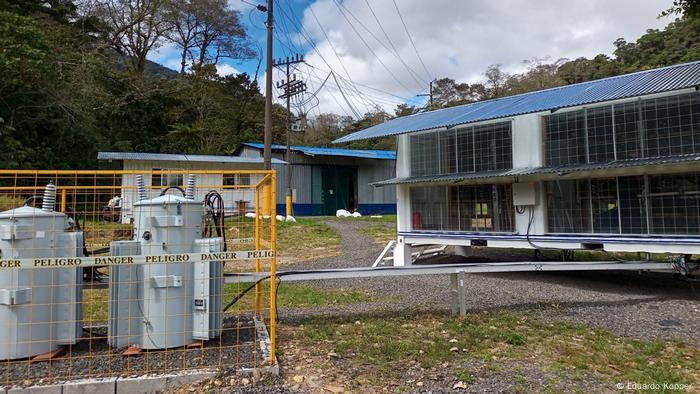

The Poas I hydropower plant in Costa Rica became a crypto-mining operation


Dedicating his plant to Bitcoin mining struck Kopper as a way to convert his green energy directly into currency. By April 2021, after three months of inactivity, Poas I was back — as a renewables-powered cryptocurrency mining center.

And Kopper isn't the only one. Miners across the Americas, and particularly in the United States, are jumping on the "green Bitcoin" bandwagon.

Large US crypto mining companies — such as Bitfarms and Neptune Digital Assets — are now marketing their operations as "green." Legislators in Brazil, meanwhile, are debating a tax exemption for renewable-powered crypto mining.
A waste of precious energy?

Bitcoin's staggering energy consumption is central to how its blockchain technology functions. New bitcoins are "mined" by solving complex math puzzles, a feature called "proof of work." This ensures the blockchain network is decentralized. But it also demands a vast amount of processing power, as miners race to solve these problems first.

Cognizant of the environmental impact of the energy-hungry currency, more than 200 companies and individuals launched the Crypto Climate Accord last year, committing to net-zero operations by 2030, mainly by switching to renewable power sources.


BITCOIN EXPLAINED: HOW IT WORKS AND WHAT IT IS GOOD FOR
The cryptic token
Bitcoin is thought of as a digital currency because it exists only virtually, without any physical coins or notes. It resides in a decentralized, encrypted network that is independent of commercial or central banks. This allows Bitcoin to be exchanged under the same conditions all around the globe. It's also a cryptocurrency, because it uses encryption to conceal users' identities and activities.
1234567891011

But not everyone sees green mining as a win-win solution to cleaning up the dirty currency. Economist and Bitcoin expert Alex de Vries said expending precious renewable power on "random computation," rather than sectors that provide jobs and other economic benefits to a national economy, can be problematic.

In fact, until recently, renewables already played a major role in crypto mining, as they're often the cheapest source of power. A study by cryptocurrency analysis firm CoinShares estimated that in 2019, at least 74% of Bitcoin's global energy consumption came from renewables, much of it cheap Chinese hydropower.

But, in 2021, the Chinese government banned all cryptocurrency-related activities, in part because of their huge energy consumption. Sweden, meanwhile, has called on the European Union to ban crypto mining, arguing that it diverts renewable power that could be used to decarbonize other sectors, putting climate targets in jeopardy.
The Costa Rican exception

Jose Daniel Lara, a Costa Rican energy researcher at UC Berkeley, concedes that in Costa Rica, which has an energy surplus, there's some logic to green cryptocurrency mining. Ideally, Costa Rica would export its surplus power. But that just isn't possible at the moment. As much as its energy-poor neighbor Nicaragua, for example, might benefit from Costa Rican energy, it doesn't have the infrastructure to import it.


A different kind of mine water: Poas I's storage basins are used to generate electricity to power more than 600 computers


Bitcoin mining has allowed Kopper to revive two of his shuttered 1 MW hydropower plants and convert the electricity into something that can be exported without the need for physical power grids. "Here we found a way to transform energy into a digital token," he said.

He installed a containerlike storage room for central processing units, sealed it against Costa Rica's abundant heat and moisture, and began by renting some of these CPUs to mining companies abroad. Now, he's also mining bitcoins himself. He's avoided laying off his staff of 25 employees, and is planning to reactivate a third plant in the coming months.

The Poas I crypto-mining center is the first of its kind in Costa Rica, but Kopper has had interest from other private energy providers in the country looking to join the business. And elsewhere, companies claim that crypto mining can actually help solve challenges inherent to renewable power production.
Crypto mining as grid-stabilizing technology

In Texas, the tech company Lancium is building bitcoin mines that will run on renewable energy. But instead of competing with traditional power consumption, it's marketing the project as a way to stabilize the grid.

The difficulty with renewables — such as Texas' growing wind capacity — is that electricity production fluctuates with the weather. An oversupply can cause grid congestion, and even result in blackouts, which is why fossil-fueled power stations that can be ramped up or down are often used to balance renewables-heavy power systems.

Lancium says its model allows bitcoin operations to provide this service instead, by simply ramping mining activity up or down according to how much excess power is available. Lara says in this way, projects like Lancium's could actually support the expansion of renewable power and reduce the need for fossil fuels.


Hydroelectric power drives the computers in Poas I, but is that enough to make bitcoin truly sustainable?


Miners migrate to fossil-fueled economies


Globally, de Vries said, the green cryptocurrency wave isn't having much of an impact on its colossal carbon footprint.

After China banned crypto mining, operations migrated west — in particular to fossil fuel-rich Kazakhstan, as well as the United States. "The new locations just don't offer the same amount of renewables," de Vries said.

In August 2020, the US was home to 5% of global bitcoin mining. A year later, that figure had risen to 35% according to data from the University of Cambridge. Texas in particular is positioning itself as a crypto capital, but despite projects like Lancium's, most of the state's power supply still comes from coal and gas.

Watch video01:35Bitcoin the power guzzler


A more energy-efficient crypto model

Kopper insists that, with a global shift toward renewables, green mining could clean up bitcoin's carbon footprint in the long run. "We're making an effort to differentiate dirty Bitcoin from clean Bitcoin," he said. "It might take some time for consumers to recognize this, but I think it's a matter of time."

But de Vries believes that making cryptocurrencies more energy-efficient would be a better solution. Some — like Cardano and Binance — are already using a different model called "proof of stake," by which miners put their own coins at stake to engage in transactions, instead of solving computations.

"If you're using proof of stake, you don't need a hardware competition anymore," de Vries said. "You just need a device with connection to the internet. Just the proof of work part increases the energy needed by a factor of 10,000."

Ethereum, the world's second-largest cryptocurrency, is planning to switch to proof of stake this year. The technology is still new, but de Vries says if it works for Ethereum, other currencies could follow.

For Kopper, however, proof of work is still essential to his successful new business model. And he has no plans to return Poas I to its former use.

"As we're learning how to optimize the mining process, we're achieving better profitability," he said. "Today, I'd think we're not going back. We've found a new market for our electricity."

Edited by: Ruby Russell

DW RECOMMENDS


Not Quite Green - The Energy Transition’s Downsides

Electric vehicles, wind and solar power: The age of fossil fuels is grinding to a halt. At the same time, demand for other raw materials is rising. It’s a billion-dollar business, with serious environmental consequences.


US seizes $3.6 billion in cryptocurrency linked to hack

The US Justice Department announced its "largest financial seizure ever" and the arrest of a New York couple for allegedly laundering money stolen through a 2016 hacking.


Net zero by 2050: 9 charts showing the world's progress

The pressure is on for leaders attending the 26th climate conference to prevent global warming from accelerating further, but there is still a long way to go.

AUDIOS AND VIDEOS ON THE TOPIC


What is cryptocurrency?
Terror threat morphs in Mozambique

The insurgency in Mozambique's Cabo Delgado province is spreading to neighboring regions, according to a new study. This comes despite the intervention of SADC and Rwandan troops.


Mozambican armed force are fighting Islamist insurgents in Cabo Delgado

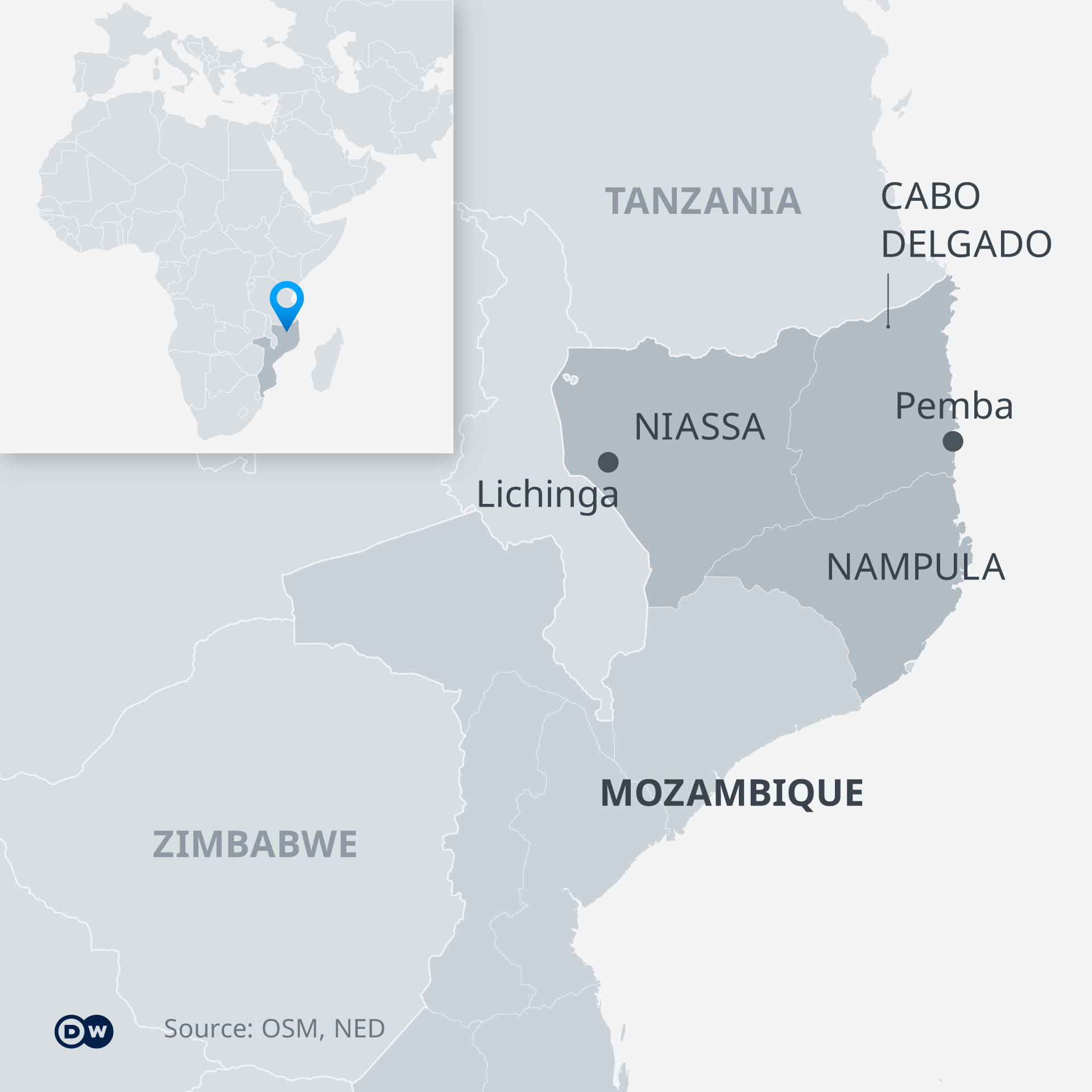
Mozambique's al-Shabab militia, whose name comes from the Arabic for youth and which has no relation to Somalia's al-Shabab terrorist group, has been carrying out brutal attacks in the nation's most northern province, Cabo Delgado, since 2017.

The Islamic militants have now taken control of entire areas of Cabo Delgado and have expanded their operations inside and outside of Mozambique, according to a new joint study by the Geneva-based Global Initiative Against Transnational Crime and the Hanns Seidel Foundation in Germany.

This comes despite the deployment of troops from Rwanda and the Southern African regional bloc, SADC, to help Mozambique's military fight the armed uprising, Julian Rademeyer, one of the study's lead authors, told DW.

The study, "Insurgency, Illicit Markets and Corruption: The Cabo Delgado Conflict and Its Regional Implications" was published on Thursday.
Surge in attacks

In the past week alone, extremists have attacked at least eight villages in Cabo Delgado, completely burning down five of them on the border to Tanzania, the Catholic Denis Hurley Peace Institute told Germany's Catholic news agency, KNA.

According to Rademeyer, the study's authors are "already seeing some of the elements of al-Shabab scattering to other provinces and renewing attacks and violence."

The group is said to be responsible for recent attacks in Niassa province, which borders Cabo Delgado to the west, as well as in Nampula province to the south.


In addition, al-Shabab has strengthened its networks outside of Mozambique, said Rademeyer, , a organized crime expert at the Global Initiative Against Transnational Crime. He said this could have long-term consequences for other countries in southern African region.

The group has links to forces allied with the so-called Islamic State in the Democratic Republic of Congo and has also recruited fighters from neighbors Tanzania and South Africa, he said.

Allowing criminal groups to flourish

By increasing the general lawlessness of Cabo Delgado, al-Shabab's gains in the province have spurred the growth of illicit trafficking through northern Mozamique.

"Cabo Delgado province serves as a key economic corridor and has historically for hundreds of years," Rademeyer said.

"But it also serves as a key corridor for illicit trafficking flows," he said, especially for the smuggling of heroin and amphetamines.

Heroin comes from Afghanistan through Iran to northern Mozambique and onward to neighboring South Africa, the largest consumer market for heroin in the southern African region and a major transit point for trafficking to Europe and the United States.

Cocaine, primarily originating Brazil, also passes through northern Mozambique to Australia.

On top of this, people, illegally logged timber, wildlife products, precious stones and gold move through Cabo Delgado.
Robbery and extortion

According to study, al-Shabab itself only participates directly in a small way in the illegal trafficking.

Rather, the group finances itself by demanding protection money from local businesses and looting cash, weapons and goods during attacks. The terrorist group also raise funds through kidnapping and demanding ransoms for people's release.

Rumors abound that al-Shabab harvests organs from people it captures in attacks and then trades these on the international market.

The study found absolutely no evidence of this, Rademeyer said. Rather, he said, the rumors are probably an example of how disinformation spreads within the conflict zone and how this disinformation can be used as a propaganda tool by Mozambique's government.
Empowering the forgotten population

To create lasting peace, the government needs to invest in local development and strengthen the forgotten civilian population, the study recommends.

Martin Abang Ewi, from South Africa's Institute for Security Studies in South Africa, told DW that he agrees with the findings.

"The security situation in Cabo Delgado remains very fragile and dire," Ewi said.

About 734,000 people were internally displaced in Cabo Delgabo, Niassa and Nampula provinces as of December 2020, according to the UN's humanitarian affairs coordination agency, OCHA, and 1.1 million are severely food insecure.


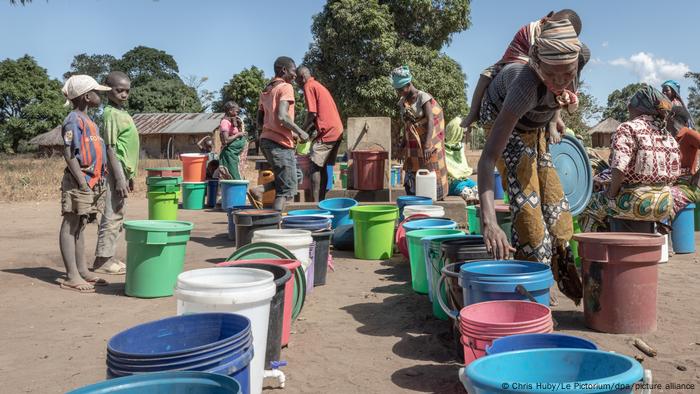
Fights over water frequently break out among the internally displaced persons

"The humanitarian situation is ... getting worse, [and] the government is not capable of meeting the needs of people on the ground," Ewi said.

The World Food Program, which is the only agency providing food to people internally displaced in Cabo Delgado, is "overwhelmed," he said.

Another approach to solving the conflict is for the international community to make a greater contribution, particularly in the fight against terror, Ewi said.

Mozambique's government has too little capacity to do this on its own, he said.

This article was translated from German.
CRIMINAL CAPITALI$M
Switzerland extradites key figure of 'Cum-Ex' scandal to Germany

Swiss authorities handed over a German lawyer accused of scamming German and European governments in one of Germany's biggest tax fraud scams in recent memory. The elaborate scheme cost treasuries €55 billion.


The 'cum-ex' scandal was unearthed by investigative reporting, years after Germany had closed the legal loophole allowing the practice

Swiss authorities on Thursday extradited a German lawyer sought by Germany on account of being a key leader of a massive tax fraud scheme called "Cum-Ex."

Hanno Berger, 71, was handed over to German police officials in the city of Konstanz in southern Germany, prosecutors based in Frankfurt said.

The German states of Hesse and North Rhine-Westphalia both sought his extradition. Berger was to appear immediately before a district court in Wiesbaden, the capital of Hesse, near Frankfurt, for a custody order.

Berger has been accused of being one of the main architects of a multibillion-euro tax fraud scheme that operated from 2005 until 2012.


Watch video  42:31 The Billion-Euro Heist - A state prosecutor hunts the tax mafia

How the situation evolved


Berger was arrested in Switzerland, where he lived in exile, in July. Switzerland's Federal Criminal Court ruled in favor of extraditing Berger to Germany last December.

Prosecutors accused Berger and others of promoting the tax fraud scheme. Berger, who helped represent himself, has always denied any wrongdoing, defending his activity as permissible by law.

Berger, a lawyer and tax consultant, cost German state governments billions of dollars. Other European states cumulatively lost more than €55 billion ($65 billion).

Even though Germany's top court has issued millions of dollars in fines on some individuals involved in the case, it is unlikely that governments will be able to make up for the loss.

Cum-Ex (Latin for "with-without") saw traders exploiting a loophole and making millions from state governments by filing bogus tax claims. They particularly profited in the wake of the 2008-09 financial crash. The practice involved participants' loaning each other shares in large companies so that it appeared to tax authorities that there were two owners of the shares, not one. Then both owners would report having paid taxes on share dividends, without it being done. This ultimately allowed traders to reclaim double the taxes they were owed.

Germany closed the loophole in 2012.

rm/msh (Reuters, dpa)
Actual greenhouse gas volumes exceed official reports
By the Howard Center for Investigative Journalism

1 of 4
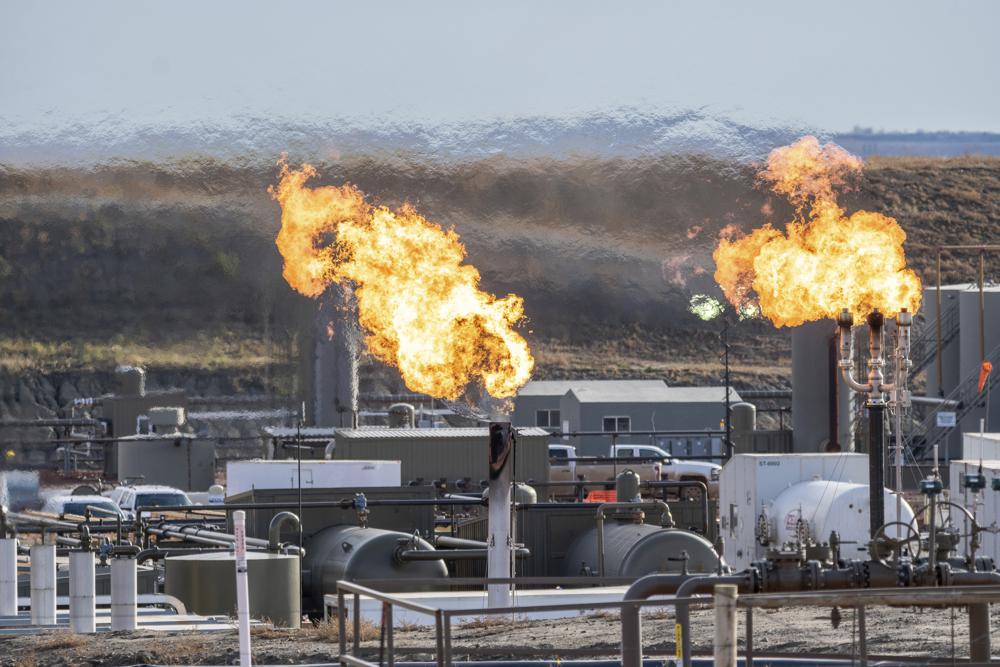
Flares burn on the Fort Berthold Indian Reservation in North Dakota on Oct. 27, 2021. Over much of the last decade, oil and gas operators in Texas and a dozen other U.S. states have flared, or burned off, at least 3.5 trillion cubic feet of natural gas, according to an analysis of satellite data by the Howard Center for Investigative Journalism. 
(Isaac Stone Simonelli/The Howard Center for Investigation via AP)


AUSTIN, Texas (AP) — Wayne Christian wanted to brag, he said, rocking in his burgundy leather chair atop the dais of the powerful Railroad Commission of Texas. Colleagues and staff were doing “a darn good job,” and people who “gripe about the environmental issues” were misinformed.

The self-congratulatory pause came during an October meeting of the agency that oversees a more than $400 billion oil and gas industry in the top-producing state of the top-producing country on a rapidly warming planet.

Christian, a former Grammy-nominated gospel singer, complained that negative media reports had obscured “the good job our staff and this industry has done for a cleaner environment, the cleanest industrialized nation on the planet.”

Then the chairman and his two fellow elected commissioners returned to their agenda and, without debate, approved 39 more requests from oil and gas companies seeking permission to burn off or vent natural gas that’s rich in methane, a powerful greenhouse gas.

Over much of the last decade, oil and gas operators in Texas and a dozen other U.S. states have flared, or burned off, at least 3.5 trillion cubic feet of natural gas, according to an analysis of satellite data by the Howard Center for Investigative Journalism. That amount equals more than $10.6 billion in revenue based on the market value of natural gas from 2012-2020. The industry has also directly released unknown amounts of gas into the atmosphere through a process called venting. Between them, flaring and venting release a noxious cocktail of carbon dioxide, methane and other pollutants.

Climate scientists have warned that without steep, immediate reductions in emissions of carbon dioxide and methane, the world will miss its chance to avert the deadliest and most destructive effects of climate change, which is already contributing to unprecedented wildfires, floods and other natural disasters across the planet. Epidemiologists have also linked flaring emissions to preterm births.

Flaring has surged alongside the fracking boom that’s helped producers unlock previously unreachable fossil fuels and boosted local, state and national economies over the last decade and a half. The United States now produces enough oil and natural gas to be energy independent, its volumes surpassing Saudi Arabia and Russia.

Flaring occurs mostly at oil wells, but even companies that primarily produce and sell natural gas burn off some of it. Companies argue that they flare and vent for safety and maintenance and because selling or reusing the gas is not financially feasible. The industry and its regulators even refer to this gas as “waste.” But experts say a valuable resource is being squandered because of weak regulations, ineffective tracking of flaring and venting, and a lack of economic incentives to capture and sell the gas.

“The atmosphere is a free dumping place,” said Robert L. Kleinberg, senior research scholar at the Center on Global Energy Policy at Columbia University. “It’s like throwing garbage out the window back in the Middle Ages.”

Regardless of the reasons, every act of flaring and venting releases methane, which traps heat 80 times more effectively than carbon dioxide over a 20-year period, making methane reduction one of the fastest routes to reducing global warming, experts say.

During the U.N. climate summit in Glasgow, Scotland, in November, the Biden administration unveiled its proposal to slash methane emissions by the U.S. oil and gas industry, the country’s largest industrial source of methane. While plans for a methane fee died in Congress, the Environmental Protection Agency has proposed new regulations to eliminate venting at both new and existing oil wells and require companies to capture and sell gas whenever possible.

Experts say eliminating routine flaring is technically and politically feasible, and some companies are already working toward that goal.

“No one has any reason to put methane into the air for beneficial purpose,” said Kleinberg.

But regulators are largely unaware of the amount of gas being flared and vented, the Howard Center found. It’s a blind spot that’s developed under limited federal oversight and a patchwork of state regulations, lax enforcement and inconsistent data collection.

For at least 17 years, government auditors have warned that bad data was blinding regulators to the amount of greenhouse gases being pushed into the atmosphere by the oil and gas industry’s flaring and venting. In 2004, the U.S. Government Accountability Office recommended improved data collection and oversight. Specifically, the GAO suggested standardized reporting for flaring and venting data across all states, and the use of satellite data to improve the accuracy of flaring information. As recently as 2016, the same office warned that natural gas emissions from oil and gas production on federal land weren’t being tracked consistently.

“You can’t regulate what you don’t measure,” said Gunnar Schade, an atmospheric scientist at Texas A&M University who has used satellite data to study flaring in Texas. “We actually don’t have a good handle on what goes in the atmosphere for various reasons — some of them by design, some of them by negligence.”

The satellite flaring volumes calculated by the Howard Center, with the guidance of scientists who pioneered and used the methodology, far exceed the total reported to regulatory agencies in the 13 states designated by the U.S. Energy Department as having significant ongoing or potentially increasing flaring activity. They also far surpassed the total published by the Energy Information Administration, the U.S. Energy Department analytics agency that says it gets its data from the states.

Laws in those top-flaring states vary widely on when companies can flare or vent, whether they need prior approval, how much they can emit and if or how they’ll be penalized if they’re caught breaking the rules, the Howard Center found. All of the regulations — even the strictest — have myriad exceptions. The federal government doesn’t regulate flaring and venting except on federal and tribal lands and in federal waters.

Four of the states maintain little or no information on flaring and venting volumes, the Howard Center’s investigation found. In those that do keep volume data, it’s based on self-reported information from oil and gas operators, some using estimations rather than metered measurements. There are few regular audits for accuracy or completeness.

“You’re totally at the whim of what the self-reporting is,” said Tim Doty, a former senior technical adviser at the Texas Commission on Environmental Quality, which is charged with maintaining air quality in what satellite data shows is the nation’s top-flaring state. “Some of the companies are trying to do the right thing, but not all the companies are trying to do the right thing.”

Satellite technology offers a way to gauge the accuracy of self-reported flaring volumes. While it comes with limitations, the technology is generally regarded as the best available, independent tool for measuring flaring volumes, though not one that state and federal regulators have adopted.

The methodology was pioneered in 2012 by Christopher Elvidge, a scientist then working at the National Oceanic and Atmospheric Administration. It uses satellites equipped with Visible Infrared Imaging Radiometer Suite instruments to detect flares from oil and gas operations and estimate the volumes of gas they burn, based on the infrared light they give off. When Elvidge later moved to the Colorado School of Mines’ Earth Observation Group, the program went with him.

Reporters at the Howard Center gathered and analyzed the satellite data for the top-flaring states from 2012 through 2020. They then compared those totals to company-reported flaring volumes collected by regulators in the same states.

The satellite data showed Texas, North Dakota and New Mexico were the top-flaring states, by large margins. It also revealed vast discrepancies compared to state-reported volumes.

Some states allow companies to report combined totals for their flaring and venting volumes, making it impossible to draw a meaningful comparison with the flaring-only volumes picked up by satellites. But in Texas, for example, satellite data indicated the volume of flared gas alone was almost double the amount reported for both flared and vented gas — raising questions about underreporting. And in Montana, the companies’ combined flaring and venting volume reports were nearly 150% higher than the flaring-only volumes detected by satellites — highlighting the unknowns surrounding venting.

The disparities persisted even in states that require oil and gas operators to separately report flaring and venting volumes, which should allow for a fair comparison against the satellite data. In North Dakota, for instance, satellites detected 25% more flaring than was reported by companies. In Wyoming, the discrepancy was roughly the same — but in the opposite direction.

Some of the discrepancies, scientists say, may result from the fact that some states don’t require companies to report every instance of flaring, and that the roving satellites don’t catch every flare, especially small or intermittent ones.

But the fact that company-reported volumes differed dramatically from those of an empirical check indicates that government data is inaccurate or incomplete and that policymakers don’t know the extent of the greenhouse gases resulting from flaring and venting, even as they attempt to craft climate change legislation.

“There’s almost been a kind of tacit agreement that we’ll accept the estimates,” said Barry Rabe, a senior fellow at the Brookings Institution who studies public and environmental policy. “Until such time that there’s political or public pressure to make those numbers more accurate, it’s easier just to look the other way.”

___

Reporters Aydali Campa, Jimmy Cloutier, Sarah Hunt, Mollie Jamison, Laura Kraegel, Isabel Koyama, Maya Leachman, Michael McDaniel, Andrew Onodera, Kenneth Quayle, Nicole Sadek, Isaac Stone Simonelli, Rachel Stapholz, Sarah Suwalsky, Zoha Tunio, Zach Van Arsdale and Alexis Young contributed to this story. It was produced by the Howard Center for Investigative Journalism at Arizona State University’s Walter Cronkite School of Journalism and Mass Communication, an initiative of the Scripps Howard Foundation in honor of the late news industry executive and pioneer Roy W. Howard. For more see https://azpbs.org/gaslit. Contact us at howardcenter@asu.edu or on Twitter @HowardCenterASU.
BLACK VOICES AGAINST ARYAN NATION
Abolition newspaper revived for nation grappling with racism

By PHILIP MARCELO

1 of 4
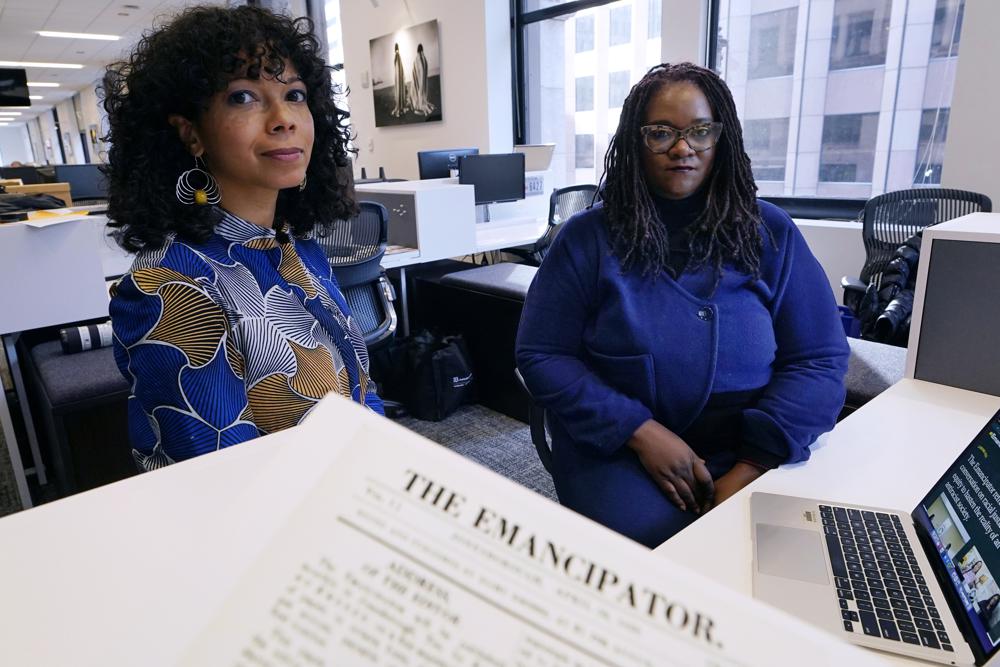
Amber Payne, left, and Deborah Douglas co-editors-in-chief of the new online publication of "The Emancipator" pose at their office inside the Boston Globe, Wednesday, Feb. 2, 2022, in Boston. Boston University's Center for Antiracist Research and The Boston Globe's Opinion team are collaborating to resurrect and reimagine The Emancipator, the first abolitionist newspaper in the United States, which was founded more than 200 years ago. The new incarnation of The Emancipator will explore ways to reframe the national conversation around racial injustice. (AP Photo/Charles Krupa)

BOSTON (AP) — America’s first newspaper dedicated to ending slavery is being resurrected and reimagined more than two centuries later as the nation continues to grapple with its legacy of racism.

The revived version of The Emancipator is a joint effort by Boston University’s Center for Antiracist Research and The Boston Globe’s Opinion team that’s expected to launch in the coming months.

Deborah Douglas and Amber Payne, co-editors-in-chief of the new online publication, say it will feature written and video opinion pieces, multimedia series, virtual talks and other content by respected scholars and seasoned journalists. The goal, they say, is to “reframe” the national conversation around racial injustice.

“I like to say it’s anti-racism, every day, on purpose,” said Douglas, who joined the project after working as a journalism professor at DePauw University in Indiana. “We are targeting anyone who wants to be a part of the solution to creating an anti-racist society because we think that leads us to our true north, which is democracy.”

The original Emancipator was founded in 1820 in Jonesborough, Tennessee, by iron manufacturer Elihu Embree, with the stated purpose to “advocate the abolition of slavery and to be a repository of tracts on that interesting and important subject,” according to a digital collection of the monthly newsletter at the University of Tennessee library.


Before Embree’s untimely death from a fever ended its brief run later that year, The Emancipator reached a circulation of more than 2,000, with copies distributed throughout the South and in northern cities like Boston and Philadelphia that were centers of the abolition movement.

Douglas and Payne say drawing on the paper’s legacy is appropriate now because it was likely difficult for Americans to envision a country without slavery back then, just as many people today likely can’t imagine a nation without racism. The new Emancipator was announced last March, nearly a year after the killing of George Floyd by Minneapolis police in May 2020 sparked social justice movements worldwide.

“Those abolitionists were considered radical and extreme,” Douglas said. “But that’s part of our job as journalists — providing those tools, those perspectives that can help them imagine a different world.”

Other projects have also recently come online taking the mantle of abolitionist newspapers, including The North Star, a media site launched in 2019 by civil rights activist Shaun King and journalist Benjamin Dixon that’s billed as a revival of Frederick Douglass’ influential anti-slavery newspaper.

Douglas said The Emancipator, which is free to the public and primarily funded through philanthropic donations, will stand out because of its focus on incisive commentary and rigorous academic work. The publication’s staff, once it’s ramped up, will largely eschew the typical quick turnaround, breaking news coverage, she said.

“This is really deep reporting, deep research and deep analysis that’s scholarly driven but written at a level that everyone can understand,” Douglas said. “Everybody is invited to this conversation. We want it to be accessible, digestible and, hopefully, actionable.”

The publication also hopes to serve as a bulwark against racist misinformation, with truth-telling explanatory videos and articles, she added. It’ll take a critical look at popular culture, film, music and television and, as the pandemic eases, look to host live events around Boston.

“Every time someone twists words, issues, situations or experiences, we want to be there like whack-a-mole, whacking it down with the facts and the context,” Douglas said.

Another critical focus of the publication will be spotlighting solutions to some of the nation’s most intractable racial problems, added Payne, who joined the project after working as a managing editor at BET.com and an executive producer at Teen Vogue.

“There are community groups, advocates and legislators who are really taking matters into their own hands so how do we amplify those solutions and get those stories told?” she said. “At the academic level, there’s so much scholarly research that just doesn’t fit into a neat, 800-word Washington Post op-ed. It requires more excavation. It requires maybe a multimedia series. Maybe it needs a video. So we think that we are really uniquely positioned.”

The project has already posted a couple of representative pieces. To mark the one-year anniversary of the Jan. 6 insurrection at the U.S. Capitol building, The Emancipator published an interview with a Harvard social justice professor and commentary from a Boston College poetry professor.

It also posted on social media a video featuring Ibram X. Kendi, founding director of BU’s anti-racism center and author of “How to be an Antiracist,” reflecting on white supremacy. Kendi co-founded the project with Bina Venkataraman, editor-at-large at The Boston Globe.

And while the new Emancipator is primarily focused on the Black community, Douglas and Payne stress it will also tackle issues facing other communities of color, such as the rise in anti-Asian hate during the global coronavirus pandemic.

They argue The Emancipator’s mission is all the more critical now as the debate over how racism is taught has made schools the latest political battleground.

“Our country is so polarized that partisanship is trumping science and trumping historical records,” Payne said. “These ongoing crusades against affirmative action, against critical race theory are not going away. That drumbeat is continuing and so therefore our drumbeat needs to continue.”
 MATERNAL MORTALITY KILLS BLACK MOTHERS
US Pregnancy-related deaths climbed in pandemic’s first year

Pregnancy-related deaths for U.S. mothers climbed higher in the pandemic’s first year, continuing a decades-long trend that disproportionately affects Black people, according to a government report released Wednesday.

By LINDSEY TANNER

Cots and cribs are arranged at the Mountain America Expo Center in Sandy, Utah, on April 6, 2020, as an alternate care site or for hospital overflow amid the COVID-19 pandemic. According to a National Center for Health Statistics report released on Wednesday, Feb. 23, 2022, maternal mortality rates for U.S. women climbed higher in the pandemic's first year, continuing a trend that disproportionately affects Black mothers. (AP Photo/Rick Bowmer, File)

Overall in 2020, there were almost 24 deaths per 100,000 births, or 861 deaths total — numbers that reflect mothers dying during pregnancy, childbirth or the year after. The rate was 20 per 100,000 in 2019.

Among Black people, there were 55 maternal deaths per 100,000 births — almost triple the rate for whites.

The report from the National Center for Health Statistics does not include reasons for the trend and researchers said they have not fully examined how COVID-19, which increases risks for severe illness in pregnancy, might have contributed.

The coronavirus could have had an indirect effect. Many people put off medical care early in the pandemic for fear of catching the virus, and virus surges strained the health care system, which could have an impact on pregnancy-related deaths, said Eugene Declercq, a professor and maternal death researcher at Boston University School of Public Health.

He called the high rates “terrible news” and noted that the U.S. has continually fared worse in maternal mortality than many other developed countries.

Pregnancy-related deaths per 100,000 births climbed from 44 in 2019 to 55 in 2020 among Black people and from 13 to 18 among Hispanics. The 2020 rate among whites, 19 per 100,000 births, was essentially unchanged.

Reasons for those disparities are not included in the data. But experts have blamed many factors including differences in rates of underlying health conditions, poor access to quality health care and structural racism.

“This is incredibly sad news and especially scary for Black women,” said Dr. Laura Riley, OB-GYN chief at Weill Cornell Medicine in New York.

Dr. Janelle Bolden, an assistant OB-GYN professor at Northwestern University’s Feinberg School of Medicine, said the report is not surprising.

“The pandemic has uncovered the disparities in access to care, healthcare quality and delivery. It has also laid bare the lack of support for public health and social agencies that many people rely on for basic needs,″ Bolden said. “These disparities and inadequacies lead to poor care and worse outcomes.”

The U.S. maternal mortality rate has more than tripled in 35 years. A decade ago, it was 16 deaths per 100,000 births. It has climbed along with rising rates of obesity, heart disease and cesarean sections, which all increase risks for people giving birth.

___

Follow AP Medical Writer Lindsey Tanner at @LindseyTanner.

___

The Associated Press Health and Science Department receives support from the Howard Hughes Medical Institute’s Department of Science Education. The AP is solely responsible for all content.
Italian city fundraises to pay retirees’ rising energy bills

By MARIA GRAZIA MURRU

1 of 13
Luigi Boni, a 95-year-old Florentine retiree, shows the latest water bill in his house during an interview with The Associated Press in Florence, Italy, Thursday, Feb. 17, 2022. Boni said that he can't cope with the more than 50% hike in water, gas and electricity bills this winter. Boni was included in a relief program 'Adopt a bill' that collects and redistributes donations from wealthier fellow citizens to help pay the utility bills of those elderly people in need. (AP Photo/Domenico Stinellis)


FLORENCE, Italy (AP) — Florence is famed for its contributions to Italian art, architecture and cuisine. But these days, local leaders in the city regarded as the birthplace of the Renaissance are concerned with more mundane matters: paying the bills.

Amid soaring energy costs across Europe, officials at Palazzo Vecchio — the building that serves as Florence’s city hall as well as a museum —-have teamed up with a local nonprofit to help fixed-income retirees keep their power on through an “Adopt-a-Bill” fundraising campaign.

“Florence is a city where you live well, and for this reason, too, people live very long,” Mayor Dario Nardella said.

A significant number of Florence’s retirees, however, live on less than 9,000 euros ($10,205) a year and can’t afford to make ends meet with an expected 55% increase in home electricity costs and a 42% hike in residential gas bills, he said.

Widower Luigi Boni, 96, confirms that. He says that by the end of February, he will have emptied his bank account and spent his monthly pension check of under 600 euros ($680) before covering utilities.

“Either I eat or I pay the rent,” Boni said as he sat on his sofa with a daily newspaper in his hands.

To assist him and others among Florence’s estimated 30,000 residents over age 65 and living alone, the city administration launched the fundraising campaign with the nonprofit Montedomini Foundation, which runs projects aimed at helping the city’s retirees.

The campaign raised 33,000 euros (more than $37,000) in its first few days. Private citizens, including Florentines living abroad, made more than 200 donations, according to the city’s welfare counselor, Sara Funaro.

“Our goal is to raise funds to make sure that every elderly person who asks us for help can receive help to cover the increase in bills due to (energy costs) increasing,” Funaro said.

Spiking energy prices are raising utility bills — and driving a record rise in inflation — from Poland to the United Kingdom. In response, governments across Europe are rushing to pass aid for residents and businesses as utility companies pass on costs to consumers.

In Turkey, where the economic pressure is extreme and has fueled protests, Istanbul, Ankara and Izmir are among opposition-led municipalities with similar “Adopt-a-Bill” initiatives. Istanbul’s municipal website says nearly 49 million Turkish lira (about $3.6 million) was donated since 2020, covering 320,000 utility bills.

Italian Premier Mario Draghi’s government has passed measures valued at more than 8 billion euros ($9 billion) to help blunt the impact of soaring energy prices for businesses and individuals.

The government’s most recent decree, issued Friday, also had a forward-looking component: it looked to accelerate Italy’s transition to more renewable energy sources, particularly solar power, to make the country less dependent on imported supplies.

Italy currently imports 90% of its gas, much of it from Russia, and Draghi has insisted that any European Union sanctions to punish Russia for recognizing two separatist-controlled areas of eastern Ukraine must exempt the energy sector.

The Italian mayors’ association has said the government’s response has so far been insufficient to help cities cope with hundreds of millions of euros in additional energy costs, making them choose between balancing budgets or cutting services.

Florence, Rome and other cities kept their municipal monuments and local government buildings dark on Feb. 10 to draw attention to the situation.

Florence’s Adopt-a-Bill campaign enjoys popular support. As well as being a top tourist destination, the capital of Italy’s Tuscany region has a long record of successfully providing social services to poor and vulnerable residents.

“It’s a great initiative because you can help people who can’t make it to pay a bill that in a shameless way has reached unsustainable costs,” said Luca Menoni, the owner of a butcher’s shop in Florence’s Sant’Ambrogio indoor food market.

“I myself am paying a (electricity) bill double what I used to,” Menoni said.

Boni may be getting some help with his energy bills to get him through the winter and stave off an expected move into a nursing home. But he still has a tight budget that doesn’t allow many luxuries.

“Steaks? Meat? Let’s not even talk about it. I eat (cheap) packaged food,” he said. After his wife died, he said, “I became an expert in economic cooking.”

___

Nicole Winfield in Rome, and Zeynep Bilginsoy, in Istanbul, contributed to this report.
South Korea’s presidential race puts misogyny in spotlight

By JUWON PARK, KIM TONG-HYUNG and KIM JUNG YOON

1 of 10
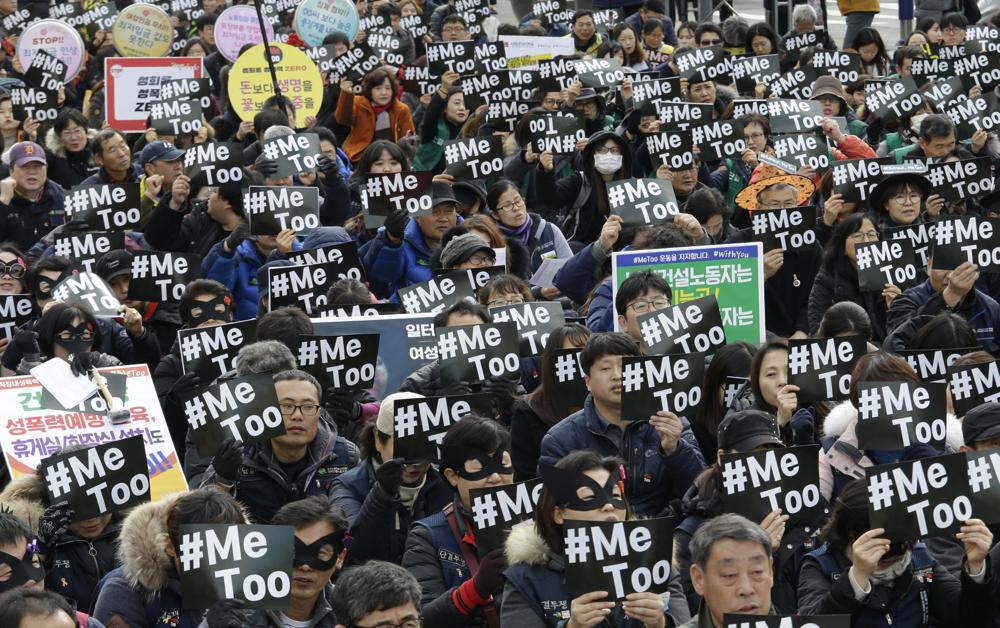
Demonstrators supporting the #MeToo movement stage a rally to mark the International Women's Day in Seoul, South Korea, March 8, 2018. For years, the story of South Korean women has been defined by perseverance as they made gradual but steady progress in the workplace and fought against a deeply entrenched culture of misogyny and harassment. (AP Photo/Ahn Young-joon, File)


SEOUL, South Korea (AP) — As South Korea enters a bitter presidential race, Hong Hee-jin is one of many young women who feel that the country’s politics has become dominated by discrimination against women, even outright misogyny.

“Women are being treated like they don’t even have voting rights,” the 27-year-old office worker in the capital, Seoul, said.

For years, South Korean women have made slow but steady progress in the workplace as they confronted an entrenched culture of male chauvinism and harassment. But this extremely tight presidential race, which culminates March 9, has exposed the fragility of what’s been won.

Top conservative candidate Yoon Suk Yeol and his liberal rival Lee Jae-myung — both men above 55 — are fighting for what they see as a “male” vote crucial for victory. They have increasingly focused their messages on young men who decry gender equality policies and the loss of traditional privileges in a hyper-competitive job market.

“Politicians are taking the easy path,” Hong said. “Instead of coming up with real policies to solve problems facing young people, they are fanning gender conflicts, telling men in their 20s that their difficulties stem from women receiving too many benefits.”

The tensions can be seen on the streets. Hundreds of women have marched in protest against the “election of misogyny.” Small but vocal groups of anti-feminist men have staged rallies in response.

Divisive gender politics has grown as South Korea deals with a fast-aging population, a plummeting birth rate, soaring personal debt, a decaying job market and stark inequality. There’s also the growing nuclear threat from North Korea and fears of being squeezed in the confrontation between the United States and China.

No campaign issue, however, has caused more debate than Yoon’s vow to abolish the Ministry of Gender Equality and Family, which the candidate says promotes policies unfair to men.

A former prosecutor general, Yoon, 61, has also vowed stronger penalties for false sexual crime reports. Critics say this makes up only a small number of rape claims, and that the threat of tougher punishment could intimidate victims from coming forward amid a recent male backlash against the #MeToo movement.

Liberal ruling party candidate Lee, 57, has taken a cautious approach to gender issues, while clashing with Yoon over the economy and North Korea policy.


Narrowly trailing Yoon in the polls, Lee has faced calls to appeal to more young men, whose support of conservative candidates in mayoral by-elections in Seoul and Busan may have led to a shocking double-defeat for the liberals.

Lee has described gender tensions as related to joblessness and says men shouldn’t be discriminated against. He said he plans to keep the gender ministry, but under a different Korean name that no longer includes the word “women.”

Yoon’s campaign has been influenced by his party’s chairman, Lee Jun-seok, a 36-year-old Harvard-educated “men’s rights” advocate who describes hiring targets for women and other gender equality policies as “reverse discrimination.” Lee calls feminist politics “blowfish poison.”

Yoon during a presidential debate on Monday repeated an argument that South Korea no longer has any structural barriers to women’s success, saying discrimination is now about “individual versus individual.”

The World Economic Forum ranks South Korea 102 out of 156 nations in an index that examines gender gaps in jobs, education, health and political representation.

South Korea has by far the largest gender pay gap among developed economies at around 32%, according to the Paris-based Organization for Economic Cooperation and Development, and women remain significantly underrepresented in corporate boardrooms and politics. The country’s record-low birth rate underscores how many women find it impossible to combine careers and family.

Scrapping the gender ministry could weaken women’s rights and “take a toll on democracy,” said Chung Hyun-back, a scholar who served as gender equality minister in 2017-18, under current liberal President Moon Jae-in. It is also a key government department committed to helping single parents, sexual abuse survivors and the families of minorities and migrants.


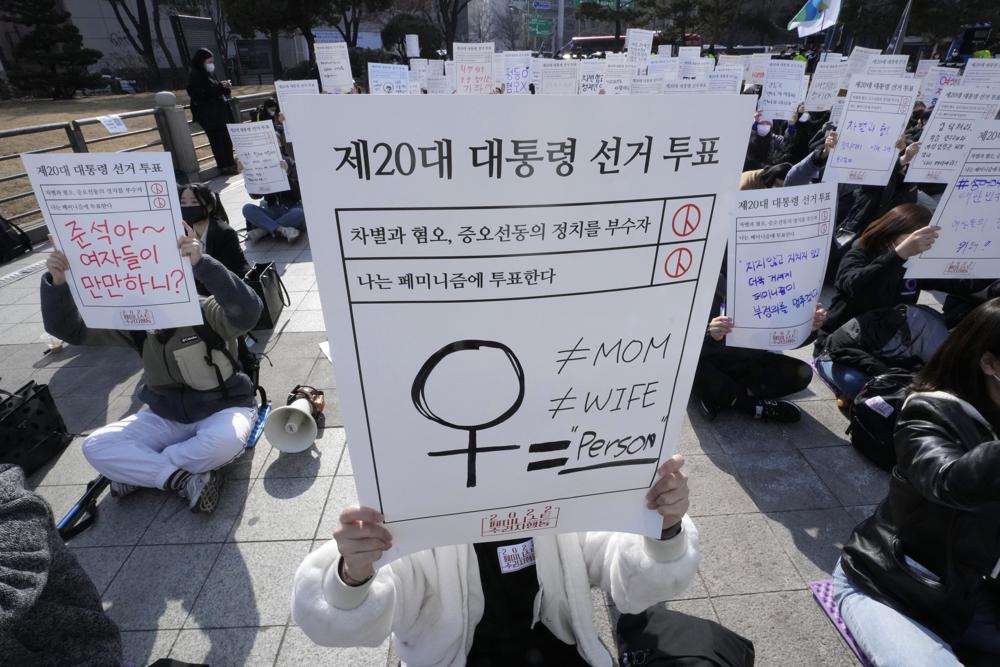
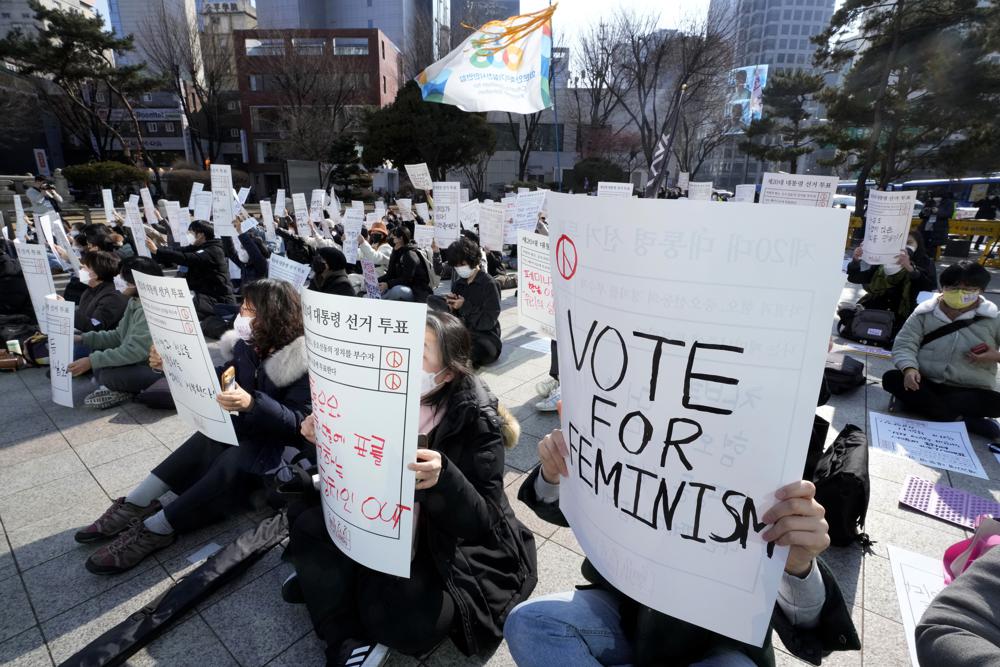
People stage a rally supporting feminism in Seoul, South Korea, Feb. 12, 2022. The signs at top read " The 20th Presidential Election Vote." For years, the story of South Korean women has been defined by perseverance as they made gradual but steady progress in the workplace and fought against a deeply entrenched culture of misogyny and harassment. 
(AP Photo/Ahn Young-joon)

The prospect frustrates Kang Ji-woo, a 36-year-old single mother who once struggled to find a job in a deeply conservative society and who receives child care support from the gender ministry. Unwed mothers in South Korea are sometimes pressured and shamed into having abortions or relinquishing their children for adoption.

“There’s no candidate worth trusting on polices aimed at helping the disadvantaged,” she said.

South Korean conservatives are galvanizing around a Trump-like brand of divisive “identity politics” that speaks almost exclusively to men after years of disarray following the 2017 ouster of the country’s first female president, Park Geun-hye, over a massive corruption scandal, according to Park Won-Ho, a Seoul National University politics professor.

Park Geun-hye had drawn power from older conservative voters who saw her dictator father, Park Chung-hee, as a hero who lifted the nation from the devastation of the 1950-53 Korean War.

Yoon is tapping into the resentment of men in their 20s and 30s who face a bleak job market while agonizing over soaring housing prices and dimming prospects for marriage and parenthood. They are increasingly sensitive to competition from women, who often outpace them at school and are more eager to break from traditional gender roles for professional advancement.

Even as many men cling to the notion that their female colleagues have it easier in the workplace — including being exempt from a mandatory 18-month military service — women have begun to more loudly criticize a male-centered corporate culture that exposes them to harassment, unequal pay and promotions, and often derails their careers after they have children.

Hong Eun-pyo, a 39-year-old who runs an anti-feminist YouTube channel, justifies higher pay for men, insisting they put in longer hours or perform more difficult tasks. “If they want to reach as high as their male peers and be paid the same wages, they should keep working and not get pregnant,” he said.

Song Tae-woong, an office worker, says young men, worried about a life path that seems tougher than their fathers, resent women’s increasing complaints about society.

“Our parents’ generation, now in their 50s and 60s, got married early and progressed step by step,” he said. “People today are ... extremely restless.”

Some experts, including Chung, think politicians are overplaying the gender grievances of certain middle-class, college-educated men who have become radicalized over the internet as they compete with women for a shrinking number of decent jobs.

Recent surveys, however, show a striking political divide between increasingly conservative young men and their more left-leaning female peers, not just over gender issues but also on the economy and national security, says Park, the politics professor. This indicates conservatives are successfully mobilizing their young male supporters to back broader agendas, including tougher approaches on North Korea and policies emphasizing economic growth over welfare spending. Younger women are left feeling largely unrepresented, polls show.

Lee Ji-young, a teacher who has risen to the top of her field in the highly competitive private tutoring business, remembers years of verbal and physical sexual harassment and unwanted advances by male colleagues who constantly questioned her competitiveness.

One colleague told her that Korean society was stable during the medieval era “because women were quiet, but that now they have ruined South Korea,” Lee said.

She said she once twisted the wrist of a male colleague when he tried to touch her backside.

“Usually women wouldn’t react this way,” Lee said. “I’ve witnessed women who would cry at home or quit work ... because they were afraid of being judged, personally and professionally.”


UN: Wildfires getting worse globally, governments unprepared

By MATTHEW BROWN

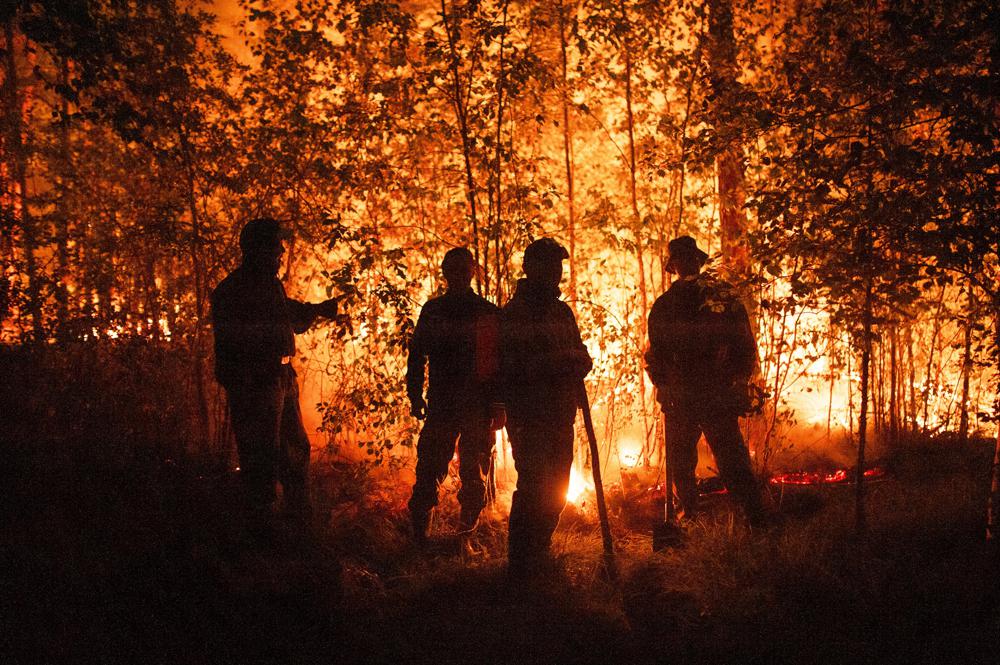
Firefighters work at the scene of forest fire near Kyuyorelyakh village at Gorny Ulus area, west of Yakutsk, in Russia Thursday, Aug. 5, 2021. A warming planet and land use changes mean more wildfires will scorch large parts of the globe in coming decades. That's according to a UN report released Wednesday, Feb. 23, 2022 that says many governments are ill-prepared to address the problem. (AP Photo/Ivan Nikiforov, File)

BILLINGS, Mont. (AP) — A warming planet and changes to land use patterns mean more wildfires will scorch large parts of the globe in coming decades, causing spikes in unhealthy smoke pollution and other problems that governments are ill prepared to confront, according to a U.N. report released Wednesday.

The Western U.S., northern Siberia, central India, and eastern Australia already are seeing more blazes, and the likelihood of catastrophic wildfires globally could increase by a third by 2050 and more than 50% by the turn of the century, according to the report from the United Nations Environment Program.

Areas once considered safe from major fires won’t be immune, including the Arctic, which the report said was “very likely to experience a significant increase in burning.”

Tropical forests in Indonesia and the southern Amazon of South America also are likely to see increased wildfires, the report concluded.

“Uncontrollable and devastating wildfires are becoming an expected part of the seasonal calendars in many parts of the world,” said Andrew Sullivan, with the Commonwealth Scientific and Industrial Research Organisation in Australia, one of the report’s authors.

The report describes a worsening cycle: Climate change brings more drought and higher temperatures that make it easy for fires to start and spread, and in turn those blazes release more climate-changing carbon into the atmosphere as they burn through forests and peatland.

Some areas including parts of Africa are seeing decreasing wildfires, in part because more land is being devoted to agriculture, said report co-author Glynis Humphrey from the University of Cape Town.

But U.N. researchers said many nations continue to spend too much time and money fighting fires and not enough trying to prevent them. Land use changes can make the fires worse, such as logging that leaves behind debris that can easily burn and forests that are intentionally ignited to clear land for farming, the report said.

Poor communities are often hit hardest by fires, which can degrade water quality, destroy crops and reduce land available to grow food.

“It impacts people’s jobs and the economic situation that people are in,” Humphrey said. “It’s integral that fire be in the same category of disaster management as floods and droughts. It’s absolutely essential.”

In the United States, officials recently unveiled a $50 billion effort to reduce fire risks over the next decade by more aggressively thinning forests around “hot spots” where nature and neighborhoods collide. Only some of that work has funding so far — about $3 billion over five years under the recently passed federal infrastructure bill, according to officials in President Joe Biden’s administration.

Critics of the administration’s plan say it continues to put too much emphasis on fighting some fires that can be useful to clear out underbrush when the flames remain relatively small and don’t threaten houses.

The U.N. researchers also called for more awareness of the dangers from wildfire smoke inhalation, which can affect tens of millions of people annuall y as plumes from major wildfires drift thousands of miles across international borders.
As climate change costs mount, Biden seeks to price damages

By MATTHEW BROWN

1 of 8
In this Nov. 15, 2016 photo, a haul truck with a 250-ton capacity carries coal after being loaded from a nearby mechanized shovel at the Spring Creek strip mine near Decker, Mont. The mine is in the Powder River Basin of Montana and Wyoming, the largest source of coal in the U.S. Environmentalists are pushing to end mining because emissions from burning coal help drive climate change. (AP Photo/Matthew Brown)

HARDIN, Mont. (AP) — In the coal fields of eastern Montana, climate change is forcing a stark choice: halt mining that helped build everything from schools to senior centers or risk astronomical future damage as fossil fuel emissions warm the planet and increase disasters, crop losses and premature deaths.

One of the largest mines in this arid region straddling the Wyoming border is Spring Creek -- a gaping hole among sagebrush hills where house-sized mechanical shovels dig up millions of tons of coal annually, much of it shipped overseas and burned in Asian power plants.

Spring Creek’s hundreds of jobs help undergird the economy of the Crow Indian Reservation and nearby parts of Wyoming. In Big Horn County, encompassing most of the reservation, taxes and royalties from coal fund almost two-thirds of government services. It’s one of the most coal-dependent communities in America.

“Everything’s got coal dust on it,” said county commissioner George Real Bird III, referring to civic projects coal money has financed since Spring Creek opened 40 years ago.

Greenhouse gas emissions from burning that coal also stoke climate change, and President Joe Biden’s administration wants to put a cost on the resulting damages to people and the environment. Highlighting the “social cost of carbon” could justify emission reduction rules for fossil fuels, transportation and other industries.

But a federal judge in Louisiana temporarily halted such efforts this month and blocked the administration from using an interim standard of $51 in damages per ton of carbon dioxide emitted.

The White House had been preparing to update its climate damage price tag in coming weeks. Many economists expected the figure to increase dramatically and even double. Republicans and business groups argued the emphasis on future climate damages would hobble the economy, particularly the energy industry.

For Spring Creek, applying the administration’s carbon cost would yield estimated damages of more than $1 billion annually from a federal government coal sale that would keep it mining at least another few years.

It’s an eye-popping number from just one of 15 mines dotting the Powder River Basin of Montana and Wyoming. But, after a federal judge in Montana ruled that the government overstated the mine’s economic benefits, the Biden administration is weighing the climate costs and reconsidering the mine’s permit.

Environmentalists want the department to stop an ongoing Spring Creek expansion and end mining. Their goal is to use the social cost of carbon to deny fossil fuel projects, not just to inform rules and policies as in the past.

BRACING FOR A DOWNTURN


Climate change already is being felt in this sparsely populated region -- where recurring droughts hit farms and ranches, lower river levels harm fishing and massive wildfires rip across the landscape.

“The impacts just from the greenhouse gas emissions from burning this coal are tremendous,” said attorney Shiloh Hernandez, who represents environmentalists against mining. “These are real impacts that cause real harm to real people.”

Pending the permit review, Spring Creek keeps digging — 13 million tons last year as Powder River Basin coal prices reached record levels when the economy rebounded from its early-pandemic slump. The mine is owned by a Navajo corporation that became the third largest U.S. coal producer when it took over bankrupt Cloud Peak Energy three years ago.

Spokesperson Erny Zah said the Navajo Transitional Energy Company values responsible mining and balances the environment against the economic needs of people around Spring Creek.

Local officials aren’t counting on coal’s recent bump to last: Over the past decade, U.S. demand plummeted and dreams of shipping more coal overseas were blocked by West Coast states. A mine next to Spring Creek closed in early 2021.

Worried Big Horn County commissioners enlisted accountant Michael Opie eight years ago to help navigate the industry’s collapse. At the time, he figured coal had about 10 years left. He won’t offer a prediction anymore.

After cutbacks hit key services such as maintenance of 1,000 miles (1,609 kilometers) of gravel roads, the county’s shifting the tax burden onto local residents to keep its sheriff’s office and other departments functioning.

“We’ve had to ... basically boil down government to the bare minimum,” Real Bird said.

Spring Creek contributed $23 million in local and state taxes and other payments last year, Zah said. The company expects 2022 to be good for coal but is bracing for another downturn — halting new equipment investment and planning to shift workers into mine reclamation jobs.

DEBATE OVER CARBON COST

The Obama administration first adopted the social cost of carbon and used it more than 80 times in cost-benefit analyses for government rules, including tightened vehicle emissions standards and regulations aimed at shuttering coal plants.

In seeking to roll back those rules, the Trump administration cut the social cost of carbon to $7 or less per ton. The lower number included only domestic climate impacts and not global damages, making it harder to justify expensive rules for industry.

Biden restored Obama’s $51-ton estimate on an interim basis and signaled an even higher number would be adopted. On Saturday, the administration appealed the Feb. 11 court ruling that blocked use of the social cost of carbon, saying it could affect more than 30 pending rules, delay permits and leasing for federal fossil fuel reserves and undermine international climate talks by silencing U.S. officials on the topic.

“It’s a little shocking to see all of the impacted actions,” said Romany Webb, a Columbia Law School researcher focused on climate change.

Republican attorneys general led by Louisiana’s Jeff Landry warned of more burdensome rules across daily life if the administration prevails — including for home appliances, vehicles and electricity. They called the use of the carbon cost possibly “the most significant regulatory encroachment upon individual liberty and state sovereignty in American history.”

But many economists say rationally confronting climate change means weighing its future costs in today’s decisions.

The $51-ton estimate came from climate models developed by three economists in the 1990s.

Two of them -- William Nordhaus at Yale University and Richard Tol at the University of Sussex in the U.K. -- say updated models show more damage than previously expected.

“Estimates are higher ... because we now better understand the impact of climate change on labor productivity -- the human body cannot work hard when it is hot and humid,” Tol said.

Nordhaus in a recent study reported a “substantial increase” in the social cost of carbon -- up to twice previous estimates. He predicted trillions of dollars in damages, equating to 2% of global income based on warming of 3 degrees Celsius (5.4 degrees Fahrenheit).

However, some economists say the models fail to capture complexities of climate change that could result in less damage than feared.

“You have to model the global climate system, you have to model the global economy and you have to do it for centuries. There’s an enormous amount of uncertainty,” said Steve Rose, a senior economist at the Electric Power Research Institute, a non-profit organization funded by utilities and government contracts.

Despite debate over the correct dollar value for climate damage, previous court rulings made clear that future impacts must be considered in some fashion, Rose and several legal experts said.

With much of Biden’s climate agenda stalled in Congress, the issue could take center stage if the administration uses executive branch rules to limit industry emissions, said Michael Greenstone, former chief economist for the White House Council of Economic Advisers.

“Climate science and climate economics have advanced rapidly,” said Greenstone, who helped establish the Obama carbon cost and argued in court to apply it at Spring Creek. He believes a major cost increase is warranted. “It would be easy to justify a value of around $200-a-ton that would represent the frontier of our understanding.”

___

Follow Matthew Brown on Twitter: @MatthewBrownAP