Wednesday, July 05, 2023

New study shows Medicaid expansion associated with increase in palliative care for patients with advanced cancers


Peer-Reviewed Publication

AMERICAN CANCER SOCIETY

New Study Shows Medicaid Expansion Associated With Increase in Palliative Care for Patients With Advanced Cancers 

IMAGE: MORE PEOPLE WITH ADVANCED CANCERS IN THE UNITED STATES RECEIVED CRITICAL PALLIATIVE CARE SERVICES, ACCORDING TO NEW FINDINGS BY RESEARCHERS AT THE AMERICAN CANCER SOCIETY. view more 

CREDIT: AMERICAN CANCER SOCIETY


ATLANTA, July 5, 2023 – More people with advanced cancers in the United States received critical palliative care services, according to new findings by researchers at the American Cancer Society (ACS). Palliative care includes supportive care managed by a healthcare team, such as relief from symptoms, pain, and stress. Researchers also found where a patient lives in the U.S. may determine their use of palliative care. Medicaid expansion under the ACA was associated with the largest increases in palliative care use. The study was published today in the July issue of the journal Health Affairs.

“Our findings are encouraging, especially with growing evidence of the important benefits of palliative care for patients with cancer,” said Dr. Xuesong Han, lead author of the study and scientific director of health services research at the American Cancer Society. “It’s imperative to know how to target ways to increase access to these services, as use, overall, still remains low in the U.S.”

For the study, researchers examined data from the National Cancer Database, a national hospital-based cancer registry jointly sponsored by the American College of Surgeons and ACS. Scientists included data from people aged 18-64 years newly diagnosed with stage IV cancers in 2010-2019.

Researchers discovered the number of eligible patients who received palliative care increased from 17.0 percent pre-expansion to 18.9 percent post-expansion in Medicaid expansion states and from 15.7 percent to 16.7 percent in non-expansion states. The study also showed palliative care associated with Medicaid expansion was largest for patients with advanced pancreatic, colorectal, lung, and oral cavity and pharynx cancers, and non-Hodgkin lymphoma.

“These study results suggest that the expansion of Medicaid coverage may increase palliative care use,” added Han. “They also point to a potentially widening geographic disparity in receipt of guideline-recommended palliative care between states with different health policies regarding income-based Medicaid eligibility requirements.”

“Research continues to underscore the impact increasing access to comprehensive, affordable health insurance through Medicaid has on cancer patient survival and the further importance of providing greater access to palliative care services to those positive outcomes. The American Cancer Society Cancer Action Network (ACS CAN) has led legislation in states to support palliative care access and continues to advocate for legislation at the federal level to promote increased access to supportive care at any age or stage of diagnosis nationwide,” said Lisa Lacasse, President of ACS CAN. “To fully improve patient quality of life, Congress should prioritize legislation that educates patients and providers about the availability and benefits of palliative care and expand federal palliative care research. It’s also crucial all remaining states expand access to Medicaid as access to comprehensive health care is key to closing the gap on the health inequities we see in these underserved areas and ensure everyone has a fighting chance against cancer.”


Other ACS authors participating in this study include: Sylvia ShiJingxuan ZhaoDr. Leticia NogueiraDr. Arif KamalDr. Ahmedin Jemal, and Dr. Robin Yabroff.

For additional information on palliative care services, visit here at cancer.org.

# # #

About the American Cancer Society
The American Cancer Society is a leading cancer-fighting organization with a vision to end cancer as we know it, for everyone. For more than 100 years, we have been improving the lives of people with cancer and their families as the only organization combating cancer through advocacy, research, and patient support. We are committed to ensuring everyone has an opportunity to prevent, detect, treat, and survive cancer. To learn more, visit cancer.org or call our 24/7 helpline at 1-800-227-2345. Connect with us on FacebookTwitter, and Instagram.

Taking good care of your teeth may be good for your brain


Poor dental health linked to decline in brain volume

Peer-Reviewed Publication

AMERICAN ACADEMY OF NEUROLOGY

MINNEAPOLIS – Taking good care of your teeth may be linked to better brain health, according to a study published in the July 5, 2023, online issue of Neurology®, the medical journal of the American Academy of Neurology. The study found that gum disease and tooth loss were linked to brain shrinkage in the hippocampus, which plays a role in memory and Alzheimer’s disease. The study does not prove that gum disease or tooth loss causes Alzheimer’s disease; it only shows an association.

“Tooth loss and gum disease, which is inflammation of the tissue around the teeth that can cause shrinkage of the gums and loosening of the teeth, are very common, so evaluating a potential link with dementia is incredibly important,” said study author Satoshi Yamaguchi, PhD, DDS, of Tohoku University in Sendai, Japan. “Our study found that these conditions may play a role in the health of the brain area that controls thinking and memory, giving people another reason to take better care of their teeth.”

The study involved 172 people with an average age of 67 who did not have memory problems at the beginning of the study.

Participants had dental exams and took memory tests at the beginning of the study. They also had brain scans to measure volume of the hippocampus at the beginning of the study and again four years later.

For each participant, researchers counted the number of teeth and checked for gum disease by looking at periodontal probing depth, a measurement of the gum tissue. Healthy readings are from one to three millimeters.

Mild gum disease involves probing depths of three or four millimeters in several areas, while severe gum disease involves probing depths of five or six millimeters in several areas as well as more bone loss and can cause teeth to become loose and eventually fall out.

Researchers found that the number of teeth and amount of gum disease was linked to changes in the left hippocampus of the brain.

For people with mild gum disease having fewer teeth was associated with a faster rate of brain shrinkage in the left hippocampus.

However, for people with severe gum disease having more teeth was associated with a faster rate of brain shrinkage in the same area of the brain.

After adjusting for age, researchers found that for people with mild gum disease, the increase in the rate of brain shrinkage due to one less tooth was equivalent to nearly one year of brain aging. Conversely, for people with severe gum disease the increase in brain shrinkage due to one more tooth was equivalent to 1.3 years of brain aging.

“These results highlight the importance of preserving the health of the teeth and not just retaining the teeth,” Yamaguchi said. “The findings suggest that retaining teeth with severe gum disease is associated with brain atrophy. Controlling the progression of gum disease through regular dental visits is crucial, and teeth with severe gum disease may need to be extracted and replaced with appropriate prosthetic devices.”

Yamaguchi said future studies are needed with larger groups of people. Another limitation of the study is that it was conducted in one region of Japan, so the results may not be generalizable to other locations.

The study was supported by the Japanese Ministry of Education, Culture, Sports, Science and Technology; Keio University; Japan Arteriosclerosis Prevention Fund; Japanese Ministry of Health, Labor, and Welfare; Teikyo University; Pfizer Japan; Bayer Yakuhin; Chugai Pharmaceutical; Daiichi Sankyo; Astellas Pharma; Takeda Pharmaceutical; Health Care Science Institute; Health Science Center; and Takeda Science Foundation.

Learn more about Alzheimer’s disease at BrainandLife.org, home of the American Academy of Neurology’s free patient and caregiver magazine focused on the intersection of neurologic disease and brain health. Follow Brain & Life® on FacebookTwitter and Instagram.

When posting to social media channels about this research, we encourage you to use the hashtags #Neurology and #AANscience.

The American Academy of Neurology is the world’s largest association of neurologists and neuroscience professionals, with over 40,000 members. The AAN is dedicated to promoting the highest quality patient-centered neurologic care. A neurologist is a doctor with specialized training in diagnosing, treating and managing disorders of the brain and nervous system such as Alzheimer’s disease, stroke, migraine, multiple sclerosis, concussion, Parkinson’s disease and epilepsy.

For more information about the American Academy of Neurology, visit AAN.com or find us on FacebookTwitterInstagramLinkedIn and YouTube.

No increase in mortality for most overweight people, study finds


BMI’s link with mortality may also vary by age, per two decades of data on more than half a million US adults


Peer-Reviewed Publication

PLOS

Body mass index and all-cause mortality in a 21st century U.S. population: A National Health Interview Survey analysis 

IMAGE: THE STUDY HIGHLIGHTS THE INCREASING RESERVATIONS OF USING BMI ALONE TO DRIVE CLINICAL DECISIONS. view more 

CREDIT: MOE MAGNERS, PEXELS, CC0 (HTTPS://CREATIVECOMMONS.ORG/PUBLICDOMAIN/ZERO/1.0/)


Body mass index (BMI) may not increase mortality independently of other risk factors in adults, according to a new study published this week in the open-access journal PLOS ONE by Aayush Visaria and Soko Setoguchi of Rutgers University, US.

The prevalence of overweight and obesity has risen dramatically over the last 25 years, and it is well-established that elevated BMI can contribute to several cardio-metabolic conditions. However, studies that have analyzed the association between BMI and all-cause mortality have been inconsistent. Most US studies have used data from the 1960s through 1990s and have included predominantly non-Hispanic White adults. 

In the new work, the researchers retrospectively studied data on 554,332 US adults from the 1999-2018 National Health Interview Survey and the 2019 US National Death Index. BMI was calculated using self-reported height and weight and participants were divided into 9 BMI categories for the analysis. Information on demographics, socio-behavioral factors, comorbidities and healthcare access was also available. On average, participants were 46 years old, 50% female and 69% non-Hispanic White. 35% of those included in the study had a BMI between 25 and 30, which is typically defined as overweight, and 27.2% had a BMI above or equal to 30, typically defined as obese.

Over a median follow-up of 9 years and a maximum follow-up of 20 years, the researchers observed 75,807 deaths. The risk of all-cause mortality was similar across a wide range of BMI categories. For older adults, there was no significant increase in mortality for any BMI between 22.5 and 34.9, which extends into the BMI categories typically considered obese. For younger adults, there was no significant increase in mortality for any BMI between 22.5 and 27.4. Overall, for adults with a BMI of 30 or over, there was a 21% to 108% increased mortality risk attributed to their weight. The patterns observed in the overall population remained largely the same in men and women and across races and ethnicities.

The authors conclude that further studies incorporating weight history, body composition and morbidity outcomes are needed to fully characterize BMI-mortality associations, but say that BMI in the overweight range is generally not associated with increased risk of all-cause mortality.

The authors add: “Our study highlights the increasing reservations of using BMI alone to drive clinical decisions. There is no clear increase in all-cause mortality across a range of traditionally normal and overweight BMI ranges; however, that is not to say that morbidity is similar across these BMI ranges. Future studies will need to assess incidence of cardio-metabolic morbidities.”

#####

In your coverage please use this URL to provide access to the freely available article in PLOS ONEhttps://journals.plos.org/plosone/article?id=10.1371/journal.pone.0287218

Citation: Visaria A, Setoguchi S (2023) Body mass index and all-cause mortality in a 21st century U.S. population: A National Health Interview Survey analysis. PLoS ONE 18(7): e0287218. https://doi.org/10.1371/journal.pone.0287218

Author Countries: USA

Funding: The authors received no specific funding for this work.

Sunscreen leaching poses minimal threat to aquatic wildlife

Reports and Proceedings

SOCIETY FOR EXPERIMENTAL BIOLOGY

Adult Daphnia microscope image 

IMAGE: THIS IS A MATURE DAPHNIA MAGNA IMAGED UNDER A MICROSCOPE AT 20X MAGNIFICATION. THE PHOTO WAS TAKEN AT THE END OF THE 21 DAY EXPOSURE TO SUNSCREEN SO THAT WE COULD MEASURE ITS BODY LENGTH. THE BLACK SPHERES ON THE BOTTOM LEFT ARE DEVELOPING EGGS. view more 

CREDIT: AARON BOYD


New research reveals that sunscreen contamination may be less harmful to wildlife than previously thought. This study by Aaron Boyd, a PhD candidate at the University of Alberta in Edmonton, Canada, demonstrates how exposure to sunscreen is actually a low risk for small aquatic animals compared to some of the suncream’s individual chemicals.

Sunscreens contain ultraviolet filters (UVFs) which have been found to be toxic to marine life such as corals, leading to the ban of some UVFs in Hawaii and Palau. If sunscreen is applied to the skin before swimming in lakes and rivers, these UVFs and other chemicals will leach into surrounding waters.

Mr Boyd’s research investigates how the chemical cocktail in sunscreen interacts to affect marine life, instead of just focusing on the UVFs and other chemicals on their own. “Researchers overwhelmingly perform studies testing the toxicity of UVFs in isolation by exposing test organisms to one chemical at a time,” says Mr Boyd. “In fact, less than 3% of aquatic toxicology studies published to date have investigated whole sunscreen mixtures, leaving a massive knowledge gap to be addressed.”

This research compared the long-term toxicity of five different sunscreen mixtures, as well as their individual UVFs, on Daphnia water fleas. Daphnia are invertebrates that are commonly found in freshwater lakes throughout the world and are a good indicator of how pollution affects aquatic life.

“We were very surprised to find that sunscreen mixtures are much less toxic to Daphnia than what would be expected based on the quantity of each UV filter present within the mixtures,” says Mr Boyd. “In fact, we found that Daphnia could survive long-term exposure to sunscreens containing octocrylene at concentrations >50x higher than what would be completely lethal to all Daphnia had they been exposed to the UVF alone.”

The rate at which new chemicals are developed and released into the environment is much faster than the rate at which scientists can proper study the consequences of contamination. “As a result,” says Mr Boyd, “it's important that we utilize our limited research resources effectively by identifying which contaminants are likely to cause harm to the environment, and which contaminants are lower risk.”

“We found that the other components of the sunscreen mixtures reduced the toxicity to such a large extent that perhaps these chemicals are not a contamination concern in most environments, allowing for us to reallocate our limited research resources towards identifying other contaminants that could be much more concerning,” says Mr Boyd. “This potentially indicates that the vast majority of studies investigating the toxicity of individual UV filters could be overestimating the toxicity of these chemicals in aquatic environments.”

Mr Boyd still strongly recommends the use of sunscreen when spending time outdoors. “Regardless of any potential environmental toxicity of sunscreens, always wear sunscreen when going outside for an extended period of time. The threat of cancer is much more severe than the potential effects that sunscreen contamination may cause!”

Artificial cells demonstrate that "life finds a way"

Peer-Reviewed Publication

INDIANA UNIVERSITY

minimal cells 

IMAGE: ELECTRON MICROGRAPH OF A CLUSTER OF MINIMAL CELLS MAGNIFIED 15,000 TIMES. THE SYNTHETICALLY STREAMLINED BACTERIUM, MYCOPLASMA MYCOIDES, CONTAINS LESS THAN 500 GENES. view more 

CREDIT: THE IMAGES BY TOM DEERINCK AND MARK ELLISMAN OF THE NATIONAL CENTER FOR IMAGING AND MICROSCOPY RESEARCH AT THE UNIVERSITY OF CALIFORNIA AT SAN DIEGO.


“Listen, if there's one thing the history of evolution has taught us is that life will not be contained. Life breaks free. It expands to new territories, and it crashes through barriers painfully, maybe even dangerously, but . . . life finds a way,” said Ian Malcolm, Jeff Goldblum's character in Jurassic Park, the 1993 science fiction film about a park with living dinosaurs.

You won't find any Velociraptors lurking around evolutionary biologist Jay T. Lennon's lab; however, Lennon, a professor in the College of Arts and Sciences Department of Biology at Indiana University Bloomington, and his colleagues have found that life does indeed find a way. Lennon's research team has been studying a synthetically constructed minimal cell that has been stripped of all but its essential genes. The team found that the streamlined cell can evolve just as fast as a normal cell—demonstrating the capacity for organisms to adapt, even with an unnatural genome that would seemingly provide little flexibility.

“It appears there’s something about life that’s really robust,” says Lennon. “We can simplify it down to just the bare essentials, but that doesn’t stop evolution from going to work.”

For their study, Lennon's team used the synthetic organism, Mycoplasma mycoides JCVI-syn3B—a minimized version of the bacterium M. mycoides commonly found in the guts of goats and similar animals. Over millennia, the parasitic bacterium has naturally lost many of its genes as it evolved to depend on its host for nutrition. Researchers at the J. Craig Venter Institute in California took this one step further. In 2016, they eliminated 45 percent of the 901 genes from the natural M. mycoides genome—reducing it to the smallest set of genes required for autonomous cellular life. At 493 genes, the minimal genome of M. mycoides JCVI-syn3B is the smallest of any known free-living organism. In comparison, many animal and plant genomes contain more than 20,000 genes.

In principle, the simplest organism would have no functional redundancies and possess only the minimum number of genes essential for life. Any mutation in such an organism could lethally disrupt one or more cellular functions, placing constraints on evolution. Organisms with streamlined genomes have fewer targets upon which positive selection can act, thus limiting opportunities for adaptation.

Although M. mycoides JCVI-syn3B could grow and divide in laboratory conditions, Lennon and colleagues wanted to know how a minimal cell would respond to the forces of evolution over time, particularly given the limited raw materials upon which natural selection could operate as well as the uncharacterized input of new mutations.

“Every single gene in its genome is essential,” says Lennon in reference to M. mycoides JCVI-syn3B. “One could hypothesize that there is no wiggle room for mutations, which could constrain its potential to evolve.”

The researchers established that M. mycoides JCVI-syn3B, in fact, has an exceptionally high mutation rate. They then grew it in the lab where it was allowed to evolve freely for 300 days, equivalent to 2000 bacterial generations or about 40,000 years of human evolution.

The next step was to set up experiments to determine how the minimal cells that had evolved for 300 days performed in comparison to the original, non-minimal M. mycoides as well as to a strain of minimal cells that hadn't evolved for 300 days. In the comparison tests, the researchers put equal amounts of the strains being assessed together in a test tube. The strain better suited to its environment became the more common strain.

They found that the non-minimal version of the bacterium easily outcompeted the unevolved minimal version. The minimal bacterium that had evolved for 300 days, however, did much better, effectively recovering all of the fitness that it had lost due to genome streamlining. The researchers identified the genes that changed the most during evolution. Some of these genes were involved in constructing the surface of the cell, while the functions of several others remain unknown.

Details about the study can be found in a paper recently featured in Nature. Roy Z. Moger-Reischer, a Ph.D. student in the Lennon lab at the time of the study, is first author on the paper.

Understanding how organisms with simplified genomes overcome evolutionary challenges has important implications for long-standing problems in biology—including the treatment of clinical pathogens, the persistence of host-associated endosymbionts, the refinement of engineered microorganisms, and the origin of life itself. The research done by Lennon and his team demonstrates the power of natural selection to rapidly optimize fitness in the simplest autonomous organism, with implications for the evolution of cellular complexity. In other words, it shows that life finds a way.

Electron micrograph of a cluster of minimal cells magnified 15,000 times. The synthetically streamlined bacterium, Mycoplasma mycoides, contains less than 500 genes.

CREDIT

Image by Tom Deerinck and Mark Ellisman of the National Center for Imaging and Microscopy Research at the University of California at San Diego.

Researchers peer into Earth's inner core: Data show solid metal sphere is 'textured'

earths core
Credit: Pixabay/CC0 Public Domain

At the center the Earth is a solid metal ball, a kind of "planet within a planet," whose existence makes life on the surface possible, at least as we know it.

How Earth's inner core formed, grew and evolved over time remains a mystery, one that a team of University of Utah-led researchers is seeking to plumb with the help of seismic waves from naturally occurring earthquakes. While this 2,442-kilometer-diameter sphere comprises less than 1% of the Earth's total volume, its existence is responsible for the planet's magnetic field, without which Earth would be a much different place.

But the inner core is not the homogenous mass that was once assumed by scientists, but rather it's more like a tapestry of different "fabric," according to Guanning Pang, a former Ph.D. student in the university's Department of Geology and Geophysics.

"For the first time we confirmed that this kind of inhomogeneity is everywhere inside the inner core," Pang said. Now a post-doctoral researcher at Cornell University, Pang is the lead author of a new study, published in Nature that opens a window into the deepest reaches of Earth. He conducted the study as part of his Ph.D. dissertation at Utah.

The other final frontier

"What our study was about was trying to look inside the inner core," said university seismologist Keith Koper, who oversaw the study. "It's like a frontier area. Anytime you want to image the interior of something, you have to strip away the shallow effects. So this is the hardest place to make images, the deepest part, and there's still things that are unknown about it."

This research harnessed a special dataset generated by a global network of seismic arrays set up to detect nuclear blasts. In 1996, the United Nations established the Preparatory Commission for the Comprehensive Nuclear-Test-Ban Treaty Organization, CTBTO, to ensure compliance with the  that bans such explosions.

Its centerpiece is the International Monitoring System (IMS), featuring four systems for detecting explosions using advanced sensing instruments sited all over the world. While their purpose is to enforce an international ban on nuclear detonations, they have yielded troves of data scientists can use to shed new light on what's going on in Earth's interior, oceans and atmosphere.

This data have facilitated research that illuminated meteor blasts, identified a colony of pygmy blue whales, advanced weather prediction, and provided insights into how icebergs form.

While Earth's surface has been thoroughly mapped and characterized, its interior is much harder to study since it cannot be directly accessed. The best tools for sensing this hidden realm are earthquakes' seismic waves propagating from the planet's thin crust and vibrating through its rocky mantle and metallic core.

"The planet formed from asteroids that were sort of accreting [in space]. They're running into each other and you generate a lot of energy. So the whole planet, when it's forming up, is melting," Koper said. "It's simply that the iron is heavier and you get what we call core formation. The metals sink to the middle, and the liquid rock is outside, and then it essentially freezes over time. The reason all the metals are down there is because they're heavier than the rocks."

Planet within a planet

For the past few years, Koper's lab has been analyzing seismic data sensitive to the inner core. A previous study, led by Pang identified variations between the rotations of Earth and its inner core that may have triggered a shift in the length of the day in 2001 to 2003.

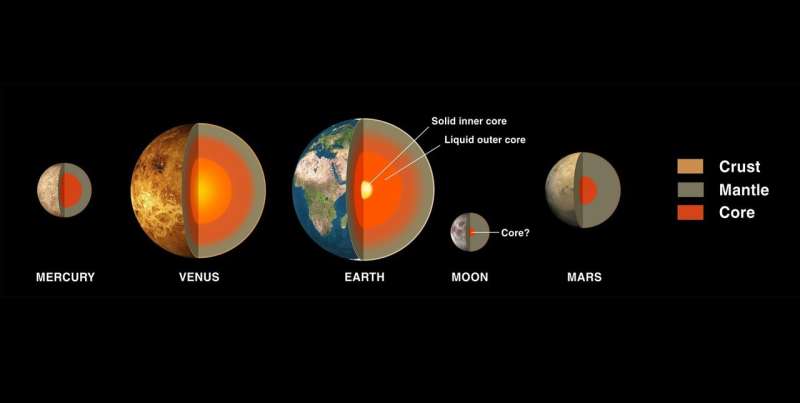
Earth's core, which measures about 4,300 miles across, is comprised mostly of iron and some nickel, along with a few other elements. The outer core remains liquid, enveloping the solid inner core.

"It's like a planet within a planet that has its own rotation and it's decoupled by this big ocean of molten iron," said Koper, a geology professor who directs the U of U Seismograph Stations, or UUSS.

The protective field of magnetic energy surrounding Earth is created by convection occurring within the liquid outer core, which extends 2,260 kilometers (1,795 miles) above the solid core, he said. The molten metal rises above the solid inner core, cools as it approaches Earth's rocky mantle and sinks. This circulation generates the bands of electrons enveloping the planet. Without Earth's solid inner core, this field would be much weaker and the planetary surface would be bombarded with radiation and solar winds that would strip away the atmosphere and render the surface uninhabitable.

For the new study, the team looked at seismic data recorded by 20 arrays of seismometers placed around the world including two in Antarctica. The closest to Utah is outside Pinedale, Wyo. These instruments are inserted in boreholes drilled up to 10 meters into granite formations and arranged in patterns to concentrate the signals they receive, similar to the way parabolic antennae work.

Pang analyzed seismic waves from 2,455 earthquakes, all exceeding magnitude 5.7, or about the strength of the 2020 quake that rocked Salt Lake City. The way these waves bounced off the inner core help map its internal structure.

Smaller quakes do not generate waves strong enough to be useful for the study.

"This signal that comes back from the inner core is really tiny. The size is about on the order of a nanometer," Koper said. "What we're doing is looking for a needle in a haystack. So these baby echoes and reflections are very hard to see."

The core is changing

Scientists first used seismic waves to determine that the inner core was solid in 1936. Before the discovery by Danish seismologist Inge Lehmann, it was assumed the entire core was liquid since it is exceedingly hot, approaching 10,000 degrees Fahrenheit, about the temperature on the sun's surface.

At some point in Earth's history, the inner core started "nucleating," or solidifying, under the intense pressures existing at the center of the planet. It remains unknown when that process began, but the U team gleaned important clues from the seismic data, which revealed a scattering effect associated with waves that penetrated to the core's interior.

"Our biggest discovery is the inhomogeneity tends to be stronger when you get deeper. Toward the center of the Earth it tends to be stronger," Pang said.

"We think that this fabric is related to how fast the inner core was growing. A long time ago the  grew really fast. It reached an equilibrium, and then it started to grow much more slowly," Koper said. "Not all of the iron became solid, so some liquid iron could be trapped inside."

Participating in the study were researchers from University of Southern California, the Université de Nantes in France, and the Los Alamos National Laboratory.

More information: Guanning Pang, Enhanced inner core fine-scale heterogeneity towards Earth's centre, Nature (2023). DOI: 10.1038/s41586-023-06213-2www.nature.com/articles/s41586-023-06213-2


Journal information: Nature 


Provided by University of Utah 


Bouncing seismic waves reveal distinct layer in Earth's inner core

Utah seismologists peer into Earth's inner core

Tapping seismic data, new research shows solid metal sphere is 'textured'

Peer-Reviewed Publication

UNIVERSITY OF UTAH


At the center the Earth is a solid metal ball, a kind of “planet within a planet,” whose existence makes life on the surface possible, at least as we know it.

How Earth’s inner core formed, grew and evolved over time remains a mystery, one that a team of University of Utah-led researchers is seeking to plumb with the help of seismic waves from naturally occurring earthquakes. While this 2,442-kilometer-diameter sphere comprises less than 1% of the Earth’s total volume, its existence is responsible for the planet’s magnetic field, without which Earth would be a much different place.

But the inner core is not the homogenous mass that was once assumed by scientists, but rather it’s more like a tapestry of different “fabric,” according to Guanning Pang, a former PhD student in the U.’s Department of Geology and Geophysics.

“For the first time we confirmed that this kind of inhomogeneity is everywhere inside the inner core,” Pang said. Now a post-doctoral researcher at Cornell University, Pang is the lead author of a new study, published July 5 in Nature that opens a window into the deepest reaches of Earth. He conducted the study as part of his PhD dissertation at Utah.

The other final frontier

“What our study was about was trying to look inside the inner core,” said U seismologist Keith Koper, who oversaw the study. “It’s like a frontier area. Anytime you want to image the interior of something, you have to strip away the shallow effects. So this is the hardest place to make images, the deepest part, and there’s still things that are unknown about it.”

This research harnessed a special dataset generated by a global network of seismic arrays set up to detect nuclear blasts. In 1996, the United Nations established the Preparatory Commission for the Comprehensive Nuclear-Test-Ban Treaty Organization, CTBTO, to ensure compliance with the international treaty that bans such explosions.

Its centerpiece is the International Monitoring System (IMS), featuring four systems for detecting explosions using advanced sensing instruments sited all over the world. While their purpose is to enforce an international ban on nuclear detonations, they have yielded troves of data scientists can use to shed new light on what’s going on in Earth’s interior, oceans and atmosphere.

This data has facilitated research that illuminated meteor blasts, identified a colony of pygmy blue whales, advanced weather prediction, and provided insights into how icebergs form.

While Earth’s surface has been thoroughly mapped and characterized, its interior is much harder to study since it cannot be directly accessed. The best tools for sensing this hidden realm are earthquakes’ seismic waves propagating from the planet’s thin crust and vibrating through its rocky mantle and metallic core.

“The planet formed from asteroids that were sort of accreting [in space]. They’re running into each other and you generate a lot of energy. So the whole planet, when it’s forming up, is melting,” Koper said. “It’s simply that the iron is heavier and you get what we call core formation. The metals sink to the middle, and the liquid rock is outside, and then it essentially freezes over time. The reason all the metals are down there is because they’re heavier than the rocks.”

Planet within a planet

For the past few years, Koper’s lab has been analyzing seismic data senstivite to the inner core. A previous study, led by Pang identified variations between the rotations of Earth and its inner core that may have triggered a shift in the length of the day in 2001 to 2003. 

Earth’s core, which measures about 4,300 miles across, is comprised mostly of iron and some nickel, along with a few other elements. The outer core remains liquid, enveloping the solid inner core.

“It’s like a planet within a planet that has its own rotation and it’s decoupled by this big ocean of molten iron,” said Koper, a geology professor who directs the U of U Seismograph Stations, or UUSS.

The protective field of magnetic energy surrounding Earth is created by convection occurring within the liquid outer core, which extends 2,260 kilometers (1,795 miles) above the solid core, he said. The molten metal rises above the solid inner core, cools as it approaches Earth’s rocky mantle and sinks. This circulation generates the bands of electrons enveloping the planet. Without Earth’s solid inner core, this field would be much weaker and the planetary surface would be bombarded with radiation and solar winds that would strip away the atmosphere and render the surface uninhabitable.

For the new study, the U team looked at seismic data recorded by 20 arrays of seismometers placed around the world including two in Antarctica. The closest to Utah is outside Pinedale, Wyo. These instruments are inserted in boreholes drilled up to 10 meters into granite formations and arranged in patterns to concentrate the signals they receive, similar to the way parabolic antennae work.

Pang analyzed seismic waves from 2,455 earthquakes, all exceeding magnitude 5.7, or about the strength of the 2020 quake that rocked Salt Lake City. The way these waves bounced off the inner core help map its internal structure.

Smaller quakes do not generate waves strong enough to be useful for the study. 

“This signal that comes back from the inner core is really tiny. The size is about on the order of a nanometer,” Koper said.  “What we’re doing is looking for a needle in a haystack. So these baby echoes and reflections are very hard to see.”

The core is changing

Scientists first used seismic waves to determine that the inner core was solid in 1936. Before the discovery by Danish seismologist Inge Lehmann, it was assumed the entire core was liquid since it is exceedingly hot, approaching 10,000 degrees Fahrenheit, about the temperature on the sun’s surface.

At some point in Earth’s history, the inner core started “nucleating,” or solidifying, under the intense pressures existing at the center of the planet. It remains unknown when that process began, but the U team gleaned important clues from the seismic data, which revealed a scattering effect associated with waves that penetrated to the core’s interior.

“Our biggest discovery is the inhomogeneity tends to be stronger when you get deeper. Toward the center of the Earth it tends to be stronger,” Pang said.

“We think that this fabric is related to how fast the inner core was growing. A long time ago the inner core grew really fast. It reached an equilibrium, and then it started to grow much more slowly,” Koper said. “Not all of the iron became solid, so some liquid iron could be trapped inside.”

Participating in the study, which was funded by the National Science Foundation, were researchers from University of Southern California, the Université de Nantes in France, and the Los Alamos National Laboratory.