Wednesday, November 20, 2024

Doctors Without Borders halts operations in Haiti's capital amid threats from police

Doctors Without Borders (MSF) said on Tuesday that it is stopping operations "until further notice" in the Haitian capital Port-au-Prince due to an increase in violence and threats to its staff from members of the Haitian police. The suspension would begin on Wednesday, MSF said.

Issued on: 19/11/2024 - 
By: NEWS WIRES
A woman looks at a damaged business in the Solino district of Port-au-Prince on November 16, 2024. © Clarens Siffroy, AFP


Doctors Without Borders (MSF) said on Tuesday that it is stopping operations across the Haitian capital Port-au-Prince and its wider metropolitan area due to an escalation in violence and threats to its staff from members of the Haitian police.

The suspension would last from Wednesday “until further notice”, said MSF.

MSF said in a statement that since a deadly attack on one of its ambulances last week, police had repeatedly stopped its vehicles and directly threatened their staff, some with death and rape threats.

“We are used to working in conditions of extreme insecurity in Haiti and elsewhere, but when even law enforcement becomes a direct threat, we have no choice but to suspend our projects,” MSF’s Haiti mission chief Christophe Garnier said.

A Kenyan police armoured vehicle patrols the Solino district in Port-au-Prince on November 16, 2024. © Clarens Siffroy, AFP

A spokesperson for Haiti’s national police declined to comment.

MSF, whose presence grew in Haiti in the wake of the devastating 2010 earthquake, is one of the main providers of quality free healthcare in the Caribbean nation and operates key services such as a trauma center and a burn clinic.

The U.N. estimated last month that just 24% of the Port-au-Prince metropolitan area’s health facilities remain open, while those outside the capital face an influx of displaced people jeopardizing their ability to provide essential care.

MSF cited four separate incidents of police threats and aggressions, including from an armed plain clothed officer it said threatened to start executing and burning staff, patients and ambulances as of next week.

The medical aid group treats on average 1,100 outpatients, 54 children in emergency situations and more than 80 sexual and gender-based violence survivors each week, MSF said, as well as many burn victims.

Garnier added that while MSF remained committed to the population it could only resume services if it receives guarantees of security and respect by armed groups, members of self-defense groups and law enforcement.

Earlier on Tuesday, police reported that over two dozen suspected gang members were killed after residents joined police to fight off attempted overnight attacks in a resurgence of “bwa kale” - a civilian vigilante movement that seeks to fight off armed gangs that control most of the capital and are fuelling a worsening humanitarian crisis.

The Iron Grip of the Gangs

(Reuters)


HAITI, LE ZOMBIE AND UNITED FRUIT COMPANY 

SEE MY GOTHIC CAPITALISM
Feb 15, 2005 — The development of capitalism in the 18th and 19th Centuries saw not only bourgeois revolutions but the revolt of slaves and the most successful ...

Full text of "The Horror Of Accumulation And The Commodification ...

https://archive.org › stream › The+Horror+of+Accumul...

Karl Marx GOTHIC CAPITALI$M The Horror of Accumulation & The Commodification of Humanity Gothic Capitalism The Horror of Accumulation and the 

COLD WAR 2.0

Danish military says it’s monitoring Chinese ship closely after undersea cables severed


Denmark's navy said Wednesday that it was shadowing Chinese cargo vessel Yi Peng 3, which is anchored off the Danish coast. While the navy has not given any reason for its presence near the idle ship, the announcement comes a day after Finland and Sweden opened investigations into the suspected sabotage of two undersea fibre-optic cables.


Issued on: 20/11/2024 -
By: NEWS WIRES
Video by: Camille KNIGHT

01:33

Chinese bulk carrier Yi Peng 3 sails under the Great Belt bridge, in Korsor, Denmark, November 19, 2024. © Yoruk Isik, Reuters


The Danish military said on Wednesday that it was staying close to a Chinese ship currently sitting idle in Danish waters, days after two fibre-optic data telecommunication cables in the Baltic Sea were severed.

Chinese bulk carrier Yi Peng 3 was anchored in the Kattegat strait between Denmark and Sweden on Wednesday, with a Danish navy patrol ship at anchor nearby, MarineTraffic vessel tracking data showed.

"The Danish Defence can confirm that we are present in the area near the Chinese ship Yi Peng 3," the military said in a post on social media X, adding it had no further comments.

It is quite rare for Denmark's military to comment publicly on individual vessels travelling in Danish waters. It did not mention the cable breaches or say why it was staying with the ship.

Swedish police later told news agency TT they were also interested in the Yi Peng 3, adding there might be other vessels of interest to Sweden's investigation.

The Chinese ship left the Russian port of Ust-Luga on Nov.

15 and was in the areas where the cable damages occurred, according to traffic data, which showed other ships to have been in the areas too.

One cable running between Sweden and Lithuania was cut on Sunday and another one between Finland and Germany was severed less than 24 hours later on Monday.

The breaches happened in Sweden's exclusive economic zone and Swedish prosecutors started a preliminary investigation on Tuesday on suspicion of possible sabotage.
Swedish Civil Defence Minister Carl-Oskar Bohlin told Reuters on Tuesday that the country's armed forces and coastguard had picked up ship movements that corresponded with the interruption of two telecoms cables in the Baltic Sea.

A Chinese government spokesperson told a daily news briefing on Wednesday that it always required its vessels to abide by relevant laws and regulations.

"We also attach great importance to the protection of seabed infrastructure and, together with the international community, we are actively promoting the construction and protection of submarine cables and other global information infrastructures," the spokesperson said.

European governments accused Russia on Tuesday of escalating hybrid attacks on Ukraine's Western allies, but stopped short of directly accusing Russia of destroying the cables.

Asked about the matter on Wednesday, Kremlin spokesman Dmitry Peskov told a regular news briefing: "It is quite absurd to continue to blame Russia for everything without any reason."

(Reuters)


Danish PM ‘Not Surprised’ If Sabotage Caused Subsea Cable Damage


By Sanne Wass
November 20, 2024

Mette Frederiksen (Andrey Rudakov/Bloomberg)

(Bloomberg) -- Danish Prime Minister Mette Frederiksen said she would not be taken aback if the severing of two data cables in the Baltic Sea a few days ago was found to be intentional.

“If the immediate assessment is that this is sabotage, and that it comes from outside, then it is obviously serious. I am not surprised that it could happen,” Frederiksen according to a report by news agency Ritzau on Wednesday.

A high-speed data cable connecting Finland and Germany was cut early Monday by what was likely an external impact, according to Finnish authorities. That incident and damage to a nearby link between Lithuania and Sweden, uncovered Sunday, are being probed by Swedish police as possible sabotage, and German Defense Minister Boris Pistorius on Tuesday said the events have to be investigated as such an act.

There’s a high likelihood that a 1,200-kilometer (750-mile) high-speed fiber optic Helsinki-Rostock link serving data centers is completely cut as all of its fiber connections are down, its owner Cinia Oy has said. A repair ship expected to reach the site next week is due to try and identify what caused the breakage.

All four nations affected by cable breaches are also members of the North Atlantic Treaty Organization. Just over a year ago, the anchor of a passing ship severed two data cables and a gas pipeline on the seabed of the Gulf of Finland, and the military bloc pledged to respond if the damage proved to be intentional.

In his remarks, Pistorius pointed to Russia as posing a hybrid and military threat to the European Union. Russia has denied involvement in any of the incidents.

©2024 Bloomberg L.P.


After Subsea Cable Damage, Five Nations Warn of Russian Hybrid Warfare

Comms cables on the seabed (USN file image)

Published Nov 19, 2024 11:26 PM by The Maritime Executive


On Tuesday, just days after two Baltic subsea cables were severed in a suspected intentional attack, five European countries issued a condemnation of Russian espionage activities within the EU. The message addressed a broad, ongoing campaign of Russian sabotage operations against Ukraine's allies. 

"Russia is systematically attacking European security architecture. Moscow’s escalating hybrid activities against NATO and EU countries are also unprecedented in their variety and scale, creating significant security risks," the foreign ministers of France, Germany, Italy, Poland, and Britain said in a statement after a meeting in Warsaw. "We are determined to stand united with our European and transatlantic partners to think and act big on European security."

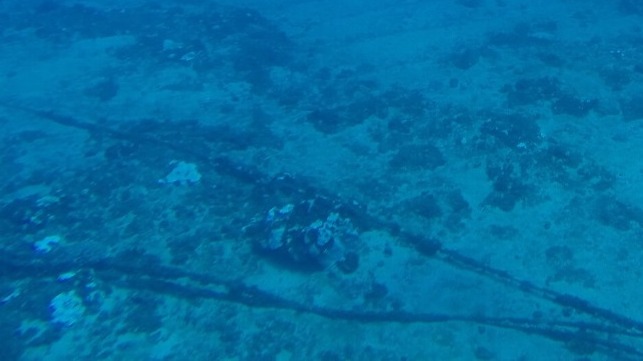
The two subsea cables were cut last weekend in back-to-back incidents. On Sunday morning at 0800, a subsea fiber connection between Lithuania and the strategic island of Gotland, Sweden went out of service due to physical damage. Overnight, the C-Lion1 cable between Finland and Germany was also severed.  According to Finland's state telecom company, Cinia, the line may have been cut by an "outside force." 

Carl-Oskar Bohlin, Sweden's civil defense minister, said Tuesday that there were notable ship movements in the vicinity of the cable damage sites at the time of the outages. Without identifying the vessels, he said that "we of course take this very seriously against the background of the serious security situation."

Open source intelligence analysts have identified a possible suspect vessel, the bulker Yi Peng 3, which displayed unusual course and speed changes while on an outbound voyage from St. Petersburg at the time of the outages. The ship was intercepted by the Danish Navy, and as of Tuesday it was anchored in the Kattegat. 

European security officials suspect that the cable breaks were acts of sabotage, and though they have not identified a culprit, Russia ranks high on the list: it has a strong motive due to European support for Ukraine, a recent history of covert attacks on EU targets, and well-developed technical capabilities for seabed warfare

"No one believes that these cables were accidentally damaged. And I don't want to believe in the versions that anchors are to blame," said German Defense Minister Boris Pistorius on Tuesday. "So we have to conclude, without knowing who did that, that this is a hybrid action. And we also have to assume, without knowing, of course, that this is sabotage."

Dutch Defense Minister Ruben Brekelmans edged closer to naming Russia as a primary suspect. "We see increasing activity of especially Russia on our seas, aimed at espionage and possibly even sabotage of our vital infrastructure," he noted in comments to the Dutch press on Tuesday. 

The last major subsea infrastructure incident in the Baltic occurred in October 2023, and it was attributed to a Chinese container ship, the NewNew Polar Bear. As the vessel transited across the northeastern Baltic Sea towards St. Petersburg, it trailed an anchor along the bottom for hundreds of nautical miles, rupturing the Baltic connector gas pipeline and severing two fiber-optic cables. 

A far larger attack on the Nord Stream pipeline system in 2022 has not been formally solved, but multiple investigations point towards Ukrainian actors, potentially with government backing. 


Two Baltic Subsea Cables Likely Severed by "Outside Forces"

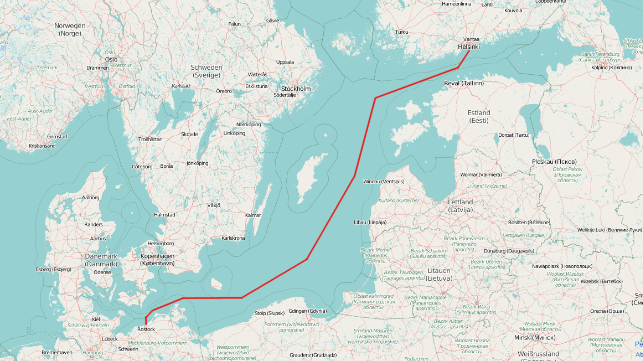
C-Lion1's route (Openstreetmap / CC-BY-SA 2.0)

Published Nov 18, 2024 5:48 PM by The Maritime Executive


Two Baltic subsea cables connecting four different NATO nations have likely been severed, according to officials in Finland and Sweden.

The first fiber-optic line in question is the C-Lion1 cable, which runs about 750 miles from Helsinki, Finland to Rostock, Germany. According to Finland's state telecom company, Cinia, the line may have been cut by an "outside force." A cable ship is preparing to get under way to make repairs, but fixing the damage could take up to two weeks. 

At about 0800 GMT on Sunday, a subsea fiber connection between Lithuania and the strategic island of Gotland, Sweden also went out of service, according to Swedish telco Telia. By the nature of the failure, the company believes that the cause was physical damage to the cable, a spokesperson told CNN. 

Suspicion immediately turned to "intentional damage," and to Russia. "Our European security is not only under threat from Russia's war of aggression against Ukraine, but also from hybrid warfare by malicious actors," the Finnish and German foreign ministers said Monday in a joint statement. "Safeguarding our shared critical infrastructure is vital to our security and the resilience of our societies."

Subsea fiber optic infrastructure is an attractive target: it can be attacked covertly with deniable methods, it is hard to defend, and - if enough damage is done all at once - an interruption could have a major impact on Western economies. 

In September, U.S. officials warned that Russia has increased its military activity near strategic subsea cables. The Russian military has been actively mapping NATO members' subsea infrastructure, maintains extensive capabilities for covert subsea interference, and has a motive for gray-zone retribution due to ongoing European support for Ukraine. It would not be a first: Russian intelligence agencies like the GRU are believed to be behind a series of recent sabotage attacks across Europe, likely connected to the EU's backing for Kyiv. "We've seen arson, sabotage and more," UK intelligence chief Ken McCallum said in October. "Dangerous actions, conducted with increasing recklessness."


Mali junta sacks Prime Minister Maiga and his government


Mali's military junta leader Colonel Assimi Goita fired Prime Minister Choguel Kokalla Maiga and his government on Wednesday. A few days previously, Maiga, who was appointed by the military in 2021, had publicly condemned the lack of clarity regarding the country's promised transition to civilian rule
.


Issued on: 20/11/2024 - 
Mali's junta leader Assimi Goita attends the first ordinary summit of heads of state and governments of the Alliance of Sahel States (AES) in Niamey, Niger on July 6, 2024. © Mahamadou Hamidou, Reuters

Mali's junta chief on Wednesday sacked civilian Prime Minister Choguel Kokalla Maiga and the government, days after Maiga issued a rare criticism of the military rulers.

"The duties of the prime minister and the members of the government are terminated," said a decree issued by Colonel Assimi Goita and read out by the secretary general of the presidency on state television station ORTM.

The West African country, plagued by jihadist and separatist violence, has been led by the military since back-to-back coups in 2020 and 2021.

In June 2022, the junta promised to organise elections and hand over power to civilians by the end of March 2024, but later postponed elections indefinitely.


Maiga, who was appointed by the military in 2021, on Saturday publicly condemned the lack of clarity regarding the end of the transition to civilian rule.

He said the confusion could pose "serious challenges and the risk of going backwards".

Maiga had been seen as isolated in his position as prime minister, with little room for manoeuvre regarding the ruling military.

His dismissal creates further uncertainty in an already troubled context.

Since 2012, Mali has been plunged into a political and security crisis fuelled by attacks from jihadist and other armed groups, as well as a separatist struggle in the north.

(AFP)


Mali seeks $160 million from Resolute Mining after detaining its CEO


Bloomberg News | November 13, 2024 | 

Mali is demanding Australia’s Resolute Mining Ltd. pay about $160 million to resolve a tax dispute after the government detained the gold producer’s chief executive, according to people familiar with the matter.


CEO Terry Holohan and two colleagues have been held in the capital, Bamako, since late last week after the Resolute boss traveled to the city for meetings with the nation’s tax and mining authorities. The detention comes as the military rulers of Africa’s third-largest gold producer ratchet up pressure on mining companies to renegotiate economic terms.

The government’s position is that Resolute – which operates the Syama gold mine – should pay the state 100 billion CFA francs ($162 million) to settle a dispute mainly concerning alleged back taxes following a sector-wide audit, the people said, asking not to be named as the matters were private.

The parties have been discussing a potential agreement that would see the company pay half that sum now and half at a later date, one of the people said.

Resolute’s shares fell as much as 4.1% in Sydney on Thursday, taking its losses to more than 35% since news of Holohan’s detention became public at the weekend. The rout has cut the company’s market value to around A$884 million ($574 million).

Resolute declined to comment on Wednesday. The claims against the firm were “unsubstantiated,” the Perth-based miner said in a statement on Nov. 11. “The company is continuing to work with the government on a resolution.”

Mali’s mines and finance ministries didn’t respond to requests for comment.
Government negotiations

Resolute previously negotiated a so-called convention for its Syama asset that runs until 2029, but the nation’s junta have upped pressure on firms with operating gold projects in the country after passing legislation last year that increases the state’s share of economic benefits from mining projects. Their toughening stance also coincides with a 25% jump in the price of bullion this year.

The authorities have also threatened to reclaim Barrick Gold Corp.’s Loulo mine permit when it expires in 2026. Mark Bristow, CEO of the world’s no. 2 gold producer, said last week that his company is discussing a “mutually acceptable outcome” with Mali’s leaders.

Allied Gold Corp. and B2Gold Corp. have recently announced agreements that will govern the future operations of their Sadiola and Fekola projects in the country. They will pay about $116 million and $204 million respectively to the state under the deals, according to company statements.

Mali has been under military rule since 2020, when interim leader Colonel Assimi Goita ousted the West African nation’s elected president, citing the previous regime’s failure to repel the Islamist insurgents. Since then, mercenaries from the Kremlin-backed Wagner Group have been deployed to the country, while European forces and a United Nations peacekeeping mission were forced to withdraw.

(By William Clowes and Katarina Höije)


'A vision of benevolence': Why Chilean poet Pablo Neruda’s legacy endures in France

EXPLAINER
Europe

French President Emmanuel Macron paid tribute to Pablo Neruda at the poet’s former home in Santiago during his visit to Chile on Wednesday, highlighting the enduring bond between the Nobel laureate and France. This connection, which began more than 80 years ago, was both literary and political, with France serving as both a refuge and a platform for Neruda’s voice during crucial moments in his life.

Chilean writer, poet and diplomat Pablo Neruda, then ambassador in France, answers journalists' questions on October 21, 1971 next to his wife at the Chilean embassy in Paris.
Chilean writer, poet and diplomat Pablo Neruda, then ambassador in France, answers journalists' questions on October 21, 1971 next to his wife at the Chilean embassy in Paris after being awarded the 1971 Nobel Literature Prize. © AFP

President Emmanuel Macron and his wife Brigitte paid tribute to Pablo Neruda during a private visit to La Chascona, the poet’s historic home in Santiago, Chile, on Wednesday. This visit, part of Macron’s Latin American tour, highlighted the profound bond between Neruda and France, a nation that continues to honour the poet's influence through schools, libraries, and cultural institutions bearing his name.

Nearly a century ago, Pablo Neruda arrived in Paris, a city that shaped his poetic and political journey. Stéphanie Decante, a professor of Hispanic literature at the University of Nanterre who translated and edited Neruda’s works, said that France had been the ultimate symbol of intellectual freedom for many Latin American writers.

“For Latin America, France was the City of Light, the centre of culture, in contrast to Spain, which was politically and culturally tainted by colonialism,” she said.

Literary awakening

Neruda’s fascination with French literature began early. While studying at the University of Chile, he immersed himself in the works of French poets such as Arthur Rimbaud and Victor Hugo, initially intending to become a French teacher.

Early acclaim for his poetry brought him respect among Chilean intellectuals, but Europe’s cultural dominance made Paris the ultimate aspiration. "What are you doing here? You must go to Paris," he recalled strangers asking him in his memoirs.

When Neruda first encountered Paris in the 1920s, he joined a wave of Latin American writers drawn to its avant-garde scene, such as Peruvian poet and writer César Vallejo. In the 1930s, Neruda formed lasting friendships with French poets Paul Éluard and Louis Aragon, whose influence expanded his literary horizons.

Aragon in particular played a pivotal role in introducing Neruda to French audiences, facilitating the publication of "L’Espagne au cÅ“ur" (Spain in the Heart) in 1938. This collection, published within Communist circles, positioned Neruda as a politically committed poet. In later decades, his work would be published by the prestigious Gallimard publishing house.

“He moved from a politically charged framework tied to the Communist Party to being represented by a publishing house that transformed him into a more universal poet”, Decante explained.

Read morePrix Goncourt: Kamel Daoud wins France's literary prize for Algerian Civil War novel ‘Houris’

From poet to rescuer

Pablo Neruda was deeply affected by the Spanish Civil War (1936 to 1939), a brutal conflict between the Republican government and Francisco Franco’s Nationalist forces that led to the Franco dictatorship. This pivotal struggle became a central focus of Neruda’s political and literary efforts. 

In Paris, he collaborated with British writer Nancy Cunard to co-found the literary review "Les Poètes du Monde Défendent le Peuple Espagnol" (Poets of the World Defend the Spanish People). Proceeds from the publication funded humanitarian aid for those suffering under Franco's regime, exemplifying Neruda’s conviction that poetry and politics could unite to serve justice and humanity.

In 1939, Neruda’s commitment took a historic turn as nearly 500,000 Spanish Republicans, including soldiers and civilians, crossed the French border following the fall of Catalonia. With France ill-prepared for such a large influx, the refugees found themselves in dire conditions, many being forced into internment camps.

As Chile’s consul for Spanish immigration, Neruda spearheaded a bold rescue mission, arranging the voyage of over 2,000 Spanish Republicans to Chile aboard a ship named "Winnipeg". He later described this effort as both “the noblest mission (he had) ever undertaken” and his “most beautiful poem".

French exit

Neruda’s ties with France deepened during his exile. In 1948, Chile’s right-wing government, led by President Gabriel González Videla, accused him of subversion due to his Communist affiliations. Forced to flee, Neruda embarked on a harrowing but poetic journey through the Andes to Argentina and ultimately to France. 

In Paris, he re-emerged as a symbol of resistance. Neruda's arrival at the World Congress of Peace Forces caused a stir when he appeared unprompted, book in hand, to read one of his poems.

“Many thought I was dead,” he later wrote in his memoirs. “They couldn’t imagine how I had dodged the relentless persecution of Chilean police.”

The Chilean authorities quickly denied his escape, claiming there was no way that Neruda had left the country. The poet was undeterred.

“Say that I am not Pablo Neruda, but another Chilean who writes poetry, fights for freedom, and is also called Pablo Neruda,” he quipped to the French press.

During his exile, Neruda was embraced by the international community. Figures like Pablo Picasso and Louis Aragon provided him with protection and assistance, helping him navigate the complexities of French bureaucracy.

A lasting legacy

By 1952, political tides in Chile shifted, allowing Neruda to return home. However, his ties to France endured. From 1970 to 1973, he served as Chile’s ambassador to France under President Salvador Allende, further cementing the bond with the country that had offered him refuge during his years of exile.

In his Nobel Prize acceptance speech in 1971, Neruda seized the opportunity to celebrate French culture once again, quoting Rimbaud: “Only with a burning patience can we conquer the splendid City which will give light, justice, and dignity to all mankind.”

Read moreHan Kang wins South Korea's first Nobel Prize in Literature

His legacy remains deeply embedded in French culture. Dozens of schools and public institutions across France bear his name, and his works are integral to the study of Spanish and poetry in classrooms. The Chilean Embassy in Paris features a commemorative plaque honouring Neruda’s time there.

A plaque commemorates Pablo Neruda's time at the Chilean Embassy in Paris.
A plaque commemorates Pablo Neruda's time at the Chilean Embassy in Paris. © Wikimedia Commons

“Neruda embodies a vision of benevolence, education, and culture for all," the University of Nanterre's Decante said. "His political influence and democratic engagement resonate through the years and will continue to do so.”

General strike in Greece against cost of living


By AFP
November 20, 2024

Public transport, schools, courts and hospitals were affected by the strike - Copyright AFP Richard A. Brooks

Thousands of people demonstrated in Athens and other cities Wednesday as a 24-hour general strike against the rising cost of living shut down public services and part of the transport network.

Some 15,000 people marched in the capital, while another 4,000 demonstrated in Greece’s second city Thessaloniki, police said.

The Greek General Confederation of Labour (GSEE) said the strike was a “riposte to the government’s refusal to take measures to guarantee a decent life for workers.

“The government has to understand that the prosperity of society depends on that of the workers,” it added in a statement.

“Urgent action is needed to fight the surge in prices, unaffordable housing and the persistence of low wages,” said Esther Lynch, secretary general of the European Trade Union Confederation (ETUC). She was in Greece to back the action, said the ETUC.

Boats from the mainland to the Aegean and Ionian islands were also hit by the strike as members of the PNO sailors’ union joined the action.

Staff at bus, metro and train services, schools, courts and hospitals joined the strike.

There is increasing anger in Greece not just at rising prices of food but also of housing, particularly acute in Athens, in a country where low wages are widespread.

Inflation hit 2.4 percent year on year in October, the statistics office Elstat reported.

On Tuesday, the Greek journalists union carried out their own 24-hour strike, calling for new collective agreements. The last one dates back to 2008, before Greece’s devastating financial crisis.

The unions, which have called several strikes since the beginning of the year, denounce the policies of the current conservative government, led by Kyriakos Mitsotakis, re-elected last year for a fresh, four-year mandate.

Mitsotakis recently announced plans to boost people’s purchasing power with an increase in the minimum wage, currently 830 euros, and pensions from January 2025.


How flood risk affects home values


University of Technology Sydney


Tempted by lower prices and a nice river view? Houses for sale in a flood zone are around 10% cheaper than surrounding areas, according to new research. However, the reduced price tag is not worth the extra risk and can burden buyers with long-term insurance costs.

Researchers examined home sales data from the Richmond area on the outskirts of Sydney, along with 2019 and 2023 flood maps for the region. They found a 10.8% price discount in the AEP 100 flood zone, 4.4% in the AEP 500 flood zone, and none in the AEP 1000 flood zone.

AEP or “Annual Exceedance Probability” is used to express the likelihood of a flood occurring in a given area each year. AEP 100 is a 1% chance or a 1-in-100-year flood risk, AEP 500 is a 1-in-500-year flood risk, and AEP 1000 is a 1-in-1000-year flood risk.

Lead author Associate Professor Song Shi from the School of Built Environment at the University of Technology Sydney (UTS) said digital flood risk maps have shaped people’s perceptions of flood risk, however low-probably risk is often dismissed, and maps can be misinterpreted.

“Home buyers sometimes think that a “1-in-100-year flood risk" means flooding will only occur once every 100 years, when in reality it means there's a 1% chance of such a flood happening in any given year,” he said.

“The chance of a flood occurring at least once in an 80-year lifetime is 55% for a 1-in-100-year flood and 15% for a 1-in-500-year flood. The likelihood of experiencing such devasting floods over a life span is much higher than people might think.”

The study shows that people tend to ignore flood risk beyond the AEP 500 flood risk zone. This can be dangerous, as extreme rain events, such as those recently witnessed in Spain that resulted in a devastating death toll, are rising due to climate change.

“In Australia, more than one in 10 houses in Australia are situated in flood zones. Flooding from intense rainfall and overflowing rivers is the most common and costliest natural disaster,” said Associate Professor Shi.

“More residents are using digital flood maps to better understand their flood risk, and plan for severe weather events. However, our study shows that beyond a certain threshold, people tend to ignore the risk, which can lead to inadequate preparation for floods.”

The study, ‘Cognitive limits of perceived flood risk on residential property values’, with co-authors Dr Mustapha Bangura and Associate Professor Sumita Ghosh from UTS, was recently published in the International Journal of Disaster Risk Reduction.

The researchers found the cost of insurance for a house in a flood zone is a significant financial burden. In Richmond, median priced homes in the AEP 100 zone have an estimated flood premium potentially as high as $4,606 annually, compared to similar homes in a no-risk zone.

Residential properties exposed to flood risk are overwhelmingly overvalued, especially in coastal areas, the researchers warn, as property price discounts do not compensate for the additional insurance costs payable.

As climate patterns intensify, understanding flood risk is becoming essential for both homebuyers seeking to make informed choices and policymakers aiming to safeguard communities and manage the impact on real estate markets.


The chilling sound of the Aztec death whistle


University of Zurich
Aztec Death Whistle 

image: 

The skull-shaped body of the Aztec death whistle may represent Mictlantecuhtli, the Aztec Lord of the Underworld. (Bild: Sascha Frühholz, UZH)

view more 

Credit: Sascha Frühholz


Many ancient cultures used musical instruments in ritual ceremonies. Ancient Aztec communities from the pre-Columbian period of Mesoamerica had a rich mythological codex that was also part of their ritual and sacrificial ceremonies. These ceremonies included visual and sonic iconographic elements of mythological deities of the Aztec underworld, which may also be symbolized in the Aztec death whistle. Their skull-shaped body may represent Mictlantecuhtli, the Aztec Lord of the Underworld, and the iconic screaming sound may have prepared human sacrifices for their mythological descent into Mictlan, the Aztec underworld.


Aztec death whistles have a unique instrumental construction

To understand the physical mechanisms behind the whistle’s shrill and screeching sound, a team of researchers at the University of Zurich led by Sascha Frühholz, Professor of Cognitive and Affective Neuroscience, created 3D digital reconstructions of original Aztec death whistles from the Ethnological Museum in Berlin. The models revealed a unique internal construction of two opposing sound chambers that create physical air turbulence as the source of the screeching sound. “The whistles have a very unique construction, and we don’t know of any comparable musical instrument from other pre-Columbian cultures or from other historical and contemporary contexts,” says Frühholz.


Death whistles very, very frightening

The research team also obtained sound recordings of original Aztec death whistles as well as from handmade replicas. Listeners rated these sounds as extremely chilling and frightening. The Aztec death whistle seems to acoustically and affectively mimic other deterring sounds. Most interestingly, human listeners perceived the sound of the Aztec death whistle to be partly of natural and organic origin, like a human voice or scream. “This is consistent ith the tradition of many ancient cultures to capture natural sounds in musical instruments, and could explain the ritual dimension of the death whistle sound for mimicking mythological entities,” explains Frühholz.  


Affective response and symbolic association

The Aztec death whistle sounds were also played to human listeners while their brains were being recorded. Brain regions belonging to the affective neural system responded strongly to the sound, again confirming its daunting nature. But the team also observed brain activity in regions that associate sounds with symbolic meaning. This suggests a “hybrid” nature of these death whistle sounds, combining a basic psychoaffective influence on listeners with more elaborate mental processes of sound symbolism, signifying the iconographic nature.    


Connecting modern humans with Aztec audiences

Music has always had strong emotional impact on human listeners in both contemporary and ancient cultures, hence its use in ritual religious and mythological contexts. Aztec communities may have specifically capitalized on the frightening and symbolic nature of the death whistle sound to influence the audience in their ritual procedures, based on the knowledge of how the sound affects modern humans. “Unfortunately, we could not perform our psychological and neuroscientific experiments with humans from ancient Aztec cultures. But the basic mechanisms of affective response to scary sounds are common to humans from all historical contexts,” says Frühholz.  


 Journal