UPDATED
TURKIYE'S MERCENARIES IN SYRIA
A New Front in Syria’s Civil War? Rebels Led by Former al-Qaeda Affiliate Take Over Aleppo
December 02, 2024
Guests Kareem Chehayeb
Beirut-based journalist reporting on Lebanon, Syria, and Iraq for The Associated Press.
Syrian opposition forces have seized most of Aleppo after launching a surprise offensive in recent days that ousted government forces from the country’s second-largest city. The offensive is being led by an armed group called Hayat Tahrir al-Sham, a former al-Qaeda affiliate that cut ties with them in 2017. Syrian and Russian forces have retaliated with airstrikes on rebel-held areas, with the London-based Syrian Observatory for Human Rights reporting 446 deaths in Syria since Wednesday. The rebel advance into Aleppo is the most significant turn in the Syrian civil war since 2020, when rebel forces were forced to retreat to Idlib. The offensive was launched at a time when the key backers of Bashar al-Assad’s government — Russia, Iran and Hezbollah — are also focused on other conflicts. “It was a surprise offensive that people did not expect at all,” says Associated Press reporter Kareem Chehayeb.
December 02, 2024
DEMOCRACYNOW!
Guests Kareem Chehayeb
Beirut-based journalist reporting on Lebanon, Syria, and Iraq for The Associated Press.
Syrian opposition forces have seized most of Aleppo after launching a surprise offensive in recent days that ousted government forces from the country’s second-largest city. The offensive is being led by an armed group called Hayat Tahrir al-Sham, a former al-Qaeda affiliate that cut ties with them in 2017. Syrian and Russian forces have retaliated with airstrikes on rebel-held areas, with the London-based Syrian Observatory for Human Rights reporting 446 deaths in Syria since Wednesday. The rebel advance into Aleppo is the most significant turn in the Syrian civil war since 2020, when rebel forces were forced to retreat to Idlib. The offensive was launched at a time when the key backers of Bashar al-Assad’s government — Russia, Iran and Hezbollah — are also focused on other conflicts. “It was a surprise offensive that people did not expect at all,” says Associated Press reporter Kareem Chehayeb.
This is viewer supported news. Please do your part today .Donate
We reject violence says Franciscan friar in Aleppo
ROME, 02 December 2024, 17:01
ANSA English Desk

© ANSA/EPA
Franciscan friars reject any form of violence and have a purely humanitarian mission, Father Bahjat Karakach, the head of the order in Aleppo, told ANSA on Monday, one day after the Franciscan complex of the Holy Land College in the Syrian city was severely damaged by a Russian air raid.
"We Franciscans reject any form of violence and, as everyone knows, our mission is of a purely humanitarian nature", Father Karakach told ANSA.
For this reason, "the College's friars have returned there to make bread.
"Here, in the city centre, our soup kitchen has resumed work, distributing over 1,000 meals", he said.
"The situation in the city is tense, especially after another air raid this morning in a nearby area", he said.
"Burying the dead is starting to be a problem, because the area of the cemetery has become dangerous", said the Franciscan friar.
ALL RIGHTS RESERVED © Copyright ANSA
Soup kitchen has reopened Karakach tells ANSA
ROME, 02 December 2024, 17:01
ANSA English Desk
© ANSA/EPA
Franciscan friars reject any form of violence and have a purely humanitarian mission, Father Bahjat Karakach, the head of the order in Aleppo, told ANSA on Monday, one day after the Franciscan complex of the Holy Land College in the Syrian city was severely damaged by a Russian air raid.
"We Franciscans reject any form of violence and, as everyone knows, our mission is of a purely humanitarian nature", Father Karakach told ANSA.
For this reason, "the College's friars have returned there to make bread.
"Here, in the city centre, our soup kitchen has resumed work, distributing over 1,000 meals", he said.
"The situation in the city is tense, especially after another air raid this morning in a nearby area", he said.
"Burying the dead is starting to be a problem, because the area of the cemetery has become dangerous", said the Franciscan friar.
ALL RIGHTS RESERVED © Copyright ANSA
Syria rebels pledge stability to Iraq as pro-Iran militias mobilise for Assad
Syria's opposition has attempted to assuage Iraq's fears over its offensive against Assad, while Iraqi militias cross the border to fight for Assad.
The New Arab Staff
02 December, 2024

Kataib Hezbollah are known to have sent more fighters into Syria to fight for Assad [Getty]
Syrian opposition factions sought on Sunday to reassure the Iraqi government that their unprecedented offensive in northwest Syria posed no threat to the neighbouring country or the region's security or stability.
In a message sent by the Syrian Salvation Government, which is the name for the Hayat Tahrir al-Sham-led (HTS) government in Idlib, the rebel factions expressed their desire to work with Iraq.
"We, in the Salvation Government, assure the Iraqi government and the brotherly Iraqi people that Syria will not be a source of concern or tension in the region," the message read.
"On the contrary, we are committed to developing and strengthening fraternal relations with Iraq to ensure regional stability and achieve the shared interests of our peoples," it added.
The statement follows a surprise offensive by HTS-led rebel forces in northern Syria, capturing Aleppo, the country's second-largest city.
In response, Iraqi authorities have reportedly deployed military reinforcements, including army and police brigades, to the Syrian border.
Additionally, Iraq has allowed the crossing of at least 200 Iran-aligned Iraqi militiamen to cross into Syria to defend Assad’s fragile rule.
"These are fresh reinforcements being sent to aid our comrades on the front lines in the north," a Syrian officer loyal to Assad told Reuters, adding the militias included well-known Iranian proxies such as Kataib Hezbollah and Fatemiyoun.
The Syrian opposition's appeals to the Iraqi government are likely to fall on deaf ears, with Baghdad unlikely to stop Iran and its proxies from entering Syria to fight for Assad.
On Sunday evening, Iraqi Prime Minister Mohammed Shia' Al-Sudani and Iranian President Masoud Bazshkian discussed the situation in Syria.
In a statement issued from Baghdad, they emphasised "the importance of working to prevent a deterioration of the situation in Syria that could threaten the security and stability of the region".
Thousands of pro-Iran militias from Iraq are already active in Syria, where they fight alongside the Assad-loyal army against rebels.
While many have used the defence of Shia holy sites, such as the shrine of Sayyida Zaynab in Damascus, as an excuse for their presence in Syria, it is known that Iran organised the forces from Iraq as auxiliaries for Assad as he battled Syria's rebel forces across the country.
Despite HTS's hard-line Sunni Islamist ideology, it has shifted away from outward expressions or acts of sectarianism and towards a more ecumenical message.
Syria's opposition has attempted to assuage Iraq's fears over its offensive against Assad, while Iraqi militias cross the border to fight for Assad.
The New Arab Staff
02 December, 2024

Kataib Hezbollah are known to have sent more fighters into Syria to fight for Assad [Getty]
Syrian opposition factions sought on Sunday to reassure the Iraqi government that their unprecedented offensive in northwest Syria posed no threat to the neighbouring country or the region's security or stability.
In a message sent by the Syrian Salvation Government, which is the name for the Hayat Tahrir al-Sham-led (HTS) government in Idlib, the rebel factions expressed their desire to work with Iraq.
"We, in the Salvation Government, assure the Iraqi government and the brotherly Iraqi people that Syria will not be a source of concern or tension in the region," the message read.
"On the contrary, we are committed to developing and strengthening fraternal relations with Iraq to ensure regional stability and achieve the shared interests of our peoples," it added.
The statement follows a surprise offensive by HTS-led rebel forces in northern Syria, capturing Aleppo, the country's second-largest city.
In response, Iraqi authorities have reportedly deployed military reinforcements, including army and police brigades, to the Syrian border.
Additionally, Iraq has allowed the crossing of at least 200 Iran-aligned Iraqi militiamen to cross into Syria to defend Assad’s fragile rule.
"These are fresh reinforcements being sent to aid our comrades on the front lines in the north," a Syrian officer loyal to Assad told Reuters, adding the militias included well-known Iranian proxies such as Kataib Hezbollah and Fatemiyoun.
The Syrian opposition's appeals to the Iraqi government are likely to fall on deaf ears, with Baghdad unlikely to stop Iran and its proxies from entering Syria to fight for Assad.
On Sunday evening, Iraqi Prime Minister Mohammed Shia' Al-Sudani and Iranian President Masoud Bazshkian discussed the situation in Syria.
In a statement issued from Baghdad, they emphasised "the importance of working to prevent a deterioration of the situation in Syria that could threaten the security and stability of the region".
Thousands of pro-Iran militias from Iraq are already active in Syria, where they fight alongside the Assad-loyal army against rebels.
While many have used the defence of Shia holy sites, such as the shrine of Sayyida Zaynab in Damascus, as an excuse for their presence in Syria, it is known that Iran organised the forces from Iraq as auxiliaries for Assad as he battled Syria's rebel forces across the country.
Despite HTS's hard-line Sunni Islamist ideology, it has shifted away from outward expressions or acts of sectarianism and towards a more ecumenical message.
Tehran, Moscow pledge support for Assad as rebels gain in Syria

Russian President Vladimir Putin meets Iranian counterpart Masoud Pezeshkian on the sidelines of a cultural forum, in Ashgabat, Turkmenistan October 11, 2024.
Iranian president and his Russian counterpart discussed the situation in Syria during a phone call on Monday with both leaders expressing their commitment to supporting the Syrian government amidst escalating rebel offensives.
“The focus was on the escalating situation in the Syrian Arab Republic,” the Kremlin said, adding that “unconditional support was expressed for the actions of the legitimate authorities of Syria to restore constitutional order and to restore the political, economic and social stability of the Syrian State.”
Russia and Tehran reaffirmed their support for Syrian President Bashar al-Assad following significant territorial losses to rebel groups, including Hay’at Tahrir al-Sham (HTS) and the Turkey-backed Syrian National Army.
Kremlin spokesman Dmitry Peskov said Monday, “We continue to support Bashar Al-Assad. Contacts are continuing at the appropriate levels. We are analyzing the situation and a position will be formed on what is needed to stabilize the situation.”
President Masoud Pezeshkian also reaffirmed Iran’s readiness to bolster Syria in what he called combating terrorism.
“The Islamic Republic is ready to provide all kinds of support to Syria to eradicate terrorism and thwart the goals of its sponsors,” he said during a during a phone call with Bashar al-Assad on Monday.
Meanwhile, Iranian Foreign Minister Abbas Araghchi met with Turkish Foreign Minister Hakan Fidan in Ankara to discuss Syria
Iranian president and his Russian counterpart discussed the situation in Syria during a phone call on Monday with both leaders expressing their commitment to supporting the Syrian government amidst escalating rebel offensives.
“The focus was on the escalating situation in the Syrian Arab Republic,” the Kremlin said, adding that “unconditional support was expressed for the actions of the legitimate authorities of Syria to restore constitutional order and to restore the political, economic and social stability of the Syrian State.”
Russia and Tehran reaffirmed their support for Syrian President Bashar al-Assad following significant territorial losses to rebel groups, including Hay’at Tahrir al-Sham (HTS) and the Turkey-backed Syrian National Army.
Kremlin spokesman Dmitry Peskov said Monday, “We continue to support Bashar Al-Assad. Contacts are continuing at the appropriate levels. We are analyzing the situation and a position will be formed on what is needed to stabilize the situation.”
President Masoud Pezeshkian also reaffirmed Iran’s readiness to bolster Syria in what he called combating terrorism.
“The Islamic Republic is ready to provide all kinds of support to Syria to eradicate terrorism and thwart the goals of its sponsors,” he said during a during a phone call with Bashar al-Assad on Monday.
Meanwhile, Iranian Foreign Minister Abbas Araghchi met with Turkish Foreign Minister Hakan Fidan in Ankara to discuss Syria
.
Iran's FM Abbas Araghchi (left) held talks with his Turkish counterpart Hakan Fidan in Ankara on December 2, 2024.
Araghchi acknowledged differences with Turkey over its backing of the Syrian National Army but emphasized a commitment to dialogue.
“We have decided to engage in closer discussions to collaboratively manage the regional situation toward peace and stability,” Araghchi said.
Fidan also expressed readiness to mediate between the Syrian government and opposition factions. However, he maintained that the Syrian conflict stems from unresolved issues over the past 13 years.
Rebel advances and humanitarian concerns
The UK-based Syrian Observatory for Human Rights reported 446 deaths over five days of intense clashes in northern Syria, including 244 rebel fighters, 61 civilians, and numerous Syrian army personnel.
Airstrikes conducted by Syrian and Russian forces targeting Aleppo and Idlib were blamed for the majority of civilian casualties, with several children among the dead.
The official Syrian news agency SANA confirmed that Russian and Syrian airstrikes in Aleppo’s eastern countryside had killed dozens of insurgents.
Assad has vowed to crush the rebels, describing the coalition of HTS and other groups as a threat to Syria’s sovereignty.
Regional and international reactions
Israel has been closely monitoring the developments in Syria. IDF spokesperson Rear Adm. Daniel Hagari said Monday that the military has observed Iran sending reinforcements to Syria.
He warned that Israel would act to prevent arms transfers to Hezbollah via Syrian territory.
“We need to make sure that we are not threatened. We are a sovereign country and we will make sure that Iranian weapons are not smuggled to Hezbollah,” he added.
“Hezbollah was defeated in the campaign and it is necessary to make sure that it does not receive weapons from Iran through Syria.”
Israel’s Foreign Minister Gideon Sa’ar earlier said that his country does not want to take sides in the Syrian conflicts.
"There is no good choice between the Syrian regime and the jihadist rebels," he said Sunday.
On the other hand, Iran’s ministry of foreign affairs blamed the US and Israel for exacerbating the situation in Syria.
Araghchi acknowledged differences with Turkey over its backing of the Syrian National Army but emphasized a commitment to dialogue.
“We have decided to engage in closer discussions to collaboratively manage the regional situation toward peace and stability,” Araghchi said.
Fidan also expressed readiness to mediate between the Syrian government and opposition factions. However, he maintained that the Syrian conflict stems from unresolved issues over the past 13 years.
Rebel advances and humanitarian concerns
The UK-based Syrian Observatory for Human Rights reported 446 deaths over five days of intense clashes in northern Syria, including 244 rebel fighters, 61 civilians, and numerous Syrian army personnel.
Airstrikes conducted by Syrian and Russian forces targeting Aleppo and Idlib were blamed for the majority of civilian casualties, with several children among the dead.
The official Syrian news agency SANA confirmed that Russian and Syrian airstrikes in Aleppo’s eastern countryside had killed dozens of insurgents.
Assad has vowed to crush the rebels, describing the coalition of HTS and other groups as a threat to Syria’s sovereignty.
Regional and international reactions
Israel has been closely monitoring the developments in Syria. IDF spokesperson Rear Adm. Daniel Hagari said Monday that the military has observed Iran sending reinforcements to Syria.
He warned that Israel would act to prevent arms transfers to Hezbollah via Syrian territory.
“We need to make sure that we are not threatened. We are a sovereign country and we will make sure that Iranian weapons are not smuggled to Hezbollah,” he added.
“Hezbollah was defeated in the campaign and it is necessary to make sure that it does not receive weapons from Iran through Syria.”
Israel’s Foreign Minister Gideon Sa’ar earlier said that his country does not want to take sides in the Syrian conflicts.
"There is no good choice between the Syrian regime and the jihadist rebels," he said Sunday.
On the other hand, Iran’s ministry of foreign affairs blamed the US and Israel for exacerbating the situation in Syria.
Erdogan hopes for ‘end to 13 years of instability’ in Syria
TURKIYE OUT OF SYRIA!
12/01/2024

ANKARA: Turkiye’s President Recep Tayyip Erdogan called for an end to “instability” in Syria and an agreement to stop the civil war which has flared up in a lightning rebel offensive.
“Our greatest wish is for Syria’s territorial integrity and national unity to be preserved, and for the instability that has been going on for 13 years to end with consensus in line with the legitimate demands of the Syrian people,” he said.
“For a long time, we have been drawing attention to the possibility that the spiral of violence in the Middle East could also affect Syria. Recent events have confirmed that Turkiye was right,” he said.
Syria’s Assad says rebel advance a bid to ‘redraw’ regional map
Turkiye was following events “moment by moment, within the context of its own national security priorities” and would take the necessary steps “to prevent any action that could harm that”, he said.
Turkiye shares a long border with Syria and since 2016, its forces and their proxies have controlled territory in northern Syria where they have conducted multiple raids to expel Kurdish fighters whom it blames for attacks in Turkiye.
Turkiye also hosts some 3.2 million Syrian refugees who have fled since the civil war broke out in 2011. There are concerns the latest bloodshed could swell those numbers.
Diplomatic relations between Ankara and Damascus were broken off when the war began, but since November 2022, Erdogan has sought a rapprochement with Syria’s President Bashar al-Assad. The effort has so far failed.
ANKARA: Turkiye’s President Recep Tayyip Erdogan called for an end to “instability” in Syria and an agreement to stop the civil war which has flared up in a lightning rebel offensive.
“Our greatest wish is for Syria’s territorial integrity and national unity to be preserved, and for the instability that has been going on for 13 years to end with consensus in line with the legitimate demands of the Syrian people,” he said.
“For a long time, we have been drawing attention to the possibility that the spiral of violence in the Middle East could also affect Syria. Recent events have confirmed that Turkiye was right,” he said.
Syria’s Assad says rebel advance a bid to ‘redraw’ regional map
Turkiye was following events “moment by moment, within the context of its own national security priorities” and would take the necessary steps “to prevent any action that could harm that”, he said.
Turkiye shares a long border with Syria and since 2016, its forces and their proxies have controlled territory in northern Syria where they have conducted multiple raids to expel Kurdish fighters whom it blames for attacks in Turkiye.
Turkiye also hosts some 3.2 million Syrian refugees who have fled since the civil war broke out in 2011. There are concerns the latest bloodshed could swell those numbers.
Diplomatic relations between Ankara and Damascus were broken off when the war began, but since November 2022, Erdogan has sought a rapprochement with Syria’s President Bashar al-Assad. The effort has so far failed.
Syria’s reigniting civil war has been kept simmering by the NATO powers

Morning Star
Morning Star is the socialist daily newspaper published in Great Britain. Morning Star es el diario socialista publicado en Gran Bretaña.
December 2, 2024
By Morning Star
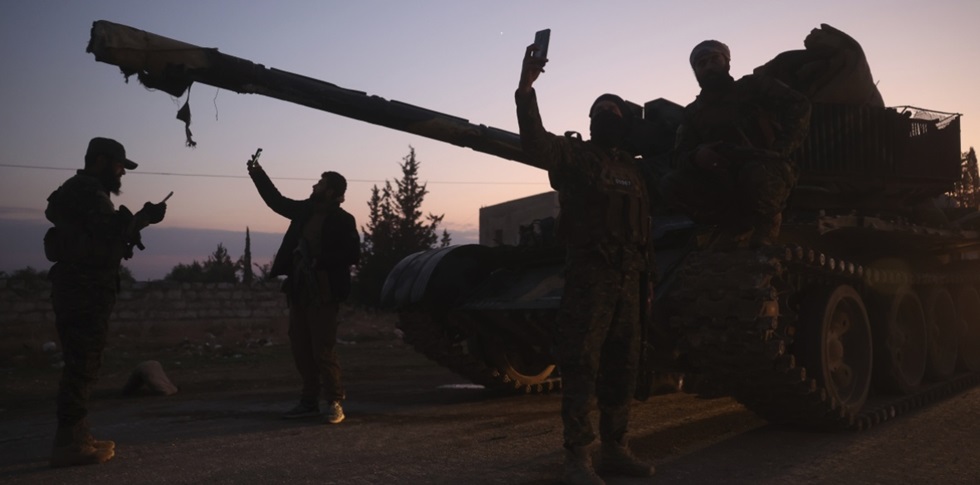
Opposition forces take control of areas outside Aleppo, Syria, November 29, 2024
Reignited civil war in Syria is down to destabilizing shockwaves from Israel’s wars of aggression in the Middle East and the malign role of NATO powers in shielding the jihadist forces in Idlib now terrorizing Aleppo.
There is no ignoring the overlapping alliances which shape this conflict. Syria is allied to Iran, which Israel has repeatedly attacked, including through bombing an Iranian consulate in Syria itself. Both are allied to Hezbollah, which has fought on the Bashar al-Assad government’s side in the civil war and which Israel seeks to crush by invading Lebanon.
It does not follow that every outbreak of violence in the region is part of a master plan, but perceptions that Hezbollah and Iran have been weakened by Israeli attacks will have encouraged the terrorist regime in Idlib to reopen hostilities.
And it is a terrorist regime, though Western reportage since the civil war began 13 years ago has been coy about the nature of Syria’s opposition.
The Idlib-based Syrian Salvation Government is dominated by Hay’at Tahrir al-Sham (HTS), itself a merger of a number of al-Qaida-affiliated Islamist groups, including Jaysh al-Sunna, whose recruitment of child soldiers was exposed in 2016, and Nour al-din al-Zinki, notorious for filming the beheading of a 12-year-old Palestinian boy in the same year.
Ahrar al-Sham, the largest of the groups, has been nicknamed the Syrian Taliban and its rule is just as repressive. An EU asylum agency briefing noted in 2020 that “the jihadist coalition HTS has been responsible for the repressive social norms and policies against female residents … resulting in further violations including executions, corporal punishments, restrictions of freedom of movement, of dress, on work, education and on access to healthcare.”
The open terrorist dictatorship of the most reactionary forces in Syria has continued in the country’s north-west to date through the illegal presence of NATO armies on Syrian soil.
It is the presence of the Turkish army that has stopped Syria’s military stamping out the last bastion of jihadist rule in the country, just as it is the presence of the US military in the north-east which has prevented reintegration of Kurdish areas.
The official rationale for stationing troops in Syria against its will is to prevent a revival of the Islamic State terror group, though once-and-future president Donald Trump was more honest when he stated the U.S. was in Syria “only for the oil,” hundreds of thousands of barrels of which have been illegally exported via Iraqi Kurdistan — with Damascus estimating revenues lost to this theft at hundreds of billions of dollars.
This underlines the hypocrisy of U.S. officials now blaming Assad for failing to engage in a “political process” to end the war. The process has been prevented by foreign occupying armies.
Assad too has his foreign allies, and Russian bombers are again conducting air raids over rebel-held territory: if HTS assumed Russia was too overstretched in Ukraine to engage (the apparently accurate assumption of Azerbaijan when it marched past Russian peacekeepers to drive the entire Armenian population out of Nagorno-Karabakh last year) it may have miscalculated.
That only emphasizes the potential of Syria’s war to draw in great powers, powers which are now far closer to direct conflict than in the war’s earlier stages. The spread of war across the Middle East comes at a huge cost in human lives, and increases the number of flashpoints for a new world war.
The answer must be to redouble our efforts for peace. These wars cannot be considered in isolation.
Stopping Israel’s genocide in Gaza and attacks on Lebanon, prioritizing a ceasefire and negotiations to end great power conflict in Ukraine, and demanding British pressure on our NATO ally Turkey to stop its jihadist allies rampaging through Syria are related priorities for the peace movement.
Opposition forces take control of areas outside Aleppo, Syria, November 29, 2024
Reignited civil war in Syria is down to destabilizing shockwaves from Israel’s wars of aggression in the Middle East and the malign role of NATO powers in shielding the jihadist forces in Idlib now terrorizing Aleppo.
There is no ignoring the overlapping alliances which shape this conflict. Syria is allied to Iran, which Israel has repeatedly attacked, including through bombing an Iranian consulate in Syria itself. Both are allied to Hezbollah, which has fought on the Bashar al-Assad government’s side in the civil war and which Israel seeks to crush by invading Lebanon.
It does not follow that every outbreak of violence in the region is part of a master plan, but perceptions that Hezbollah and Iran have been weakened by Israeli attacks will have encouraged the terrorist regime in Idlib to reopen hostilities.
And it is a terrorist regime, though Western reportage since the civil war began 13 years ago has been coy about the nature of Syria’s opposition.
The Idlib-based Syrian Salvation Government is dominated by Hay’at Tahrir al-Sham (HTS), itself a merger of a number of al-Qaida-affiliated Islamist groups, including Jaysh al-Sunna, whose recruitment of child soldiers was exposed in 2016, and Nour al-din al-Zinki, notorious for filming the beheading of a 12-year-old Palestinian boy in the same year.
Ahrar al-Sham, the largest of the groups, has been nicknamed the Syrian Taliban and its rule is just as repressive. An EU asylum agency briefing noted in 2020 that “the jihadist coalition HTS has been responsible for the repressive social norms and policies against female residents … resulting in further violations including executions, corporal punishments, restrictions of freedom of movement, of dress, on work, education and on access to healthcare.”
The open terrorist dictatorship of the most reactionary forces in Syria has continued in the country’s north-west to date through the illegal presence of NATO armies on Syrian soil.
It is the presence of the Turkish army that has stopped Syria’s military stamping out the last bastion of jihadist rule in the country, just as it is the presence of the US military in the north-east which has prevented reintegration of Kurdish areas.
The official rationale for stationing troops in Syria against its will is to prevent a revival of the Islamic State terror group, though once-and-future president Donald Trump was more honest when he stated the U.S. was in Syria “only for the oil,” hundreds of thousands of barrels of which have been illegally exported via Iraqi Kurdistan — with Damascus estimating revenues lost to this theft at hundreds of billions of dollars.
This underlines the hypocrisy of U.S. officials now blaming Assad for failing to engage in a “political process” to end the war. The process has been prevented by foreign occupying armies.
Assad too has his foreign allies, and Russian bombers are again conducting air raids over rebel-held territory: if HTS assumed Russia was too overstretched in Ukraine to engage (the apparently accurate assumption of Azerbaijan when it marched past Russian peacekeepers to drive the entire Armenian population out of Nagorno-Karabakh last year) it may have miscalculated.
That only emphasizes the potential of Syria’s war to draw in great powers, powers which are now far closer to direct conflict than in the war’s earlier stages. The spread of war across the Middle East comes at a huge cost in human lives, and increases the number of flashpoints for a new world war.
The answer must be to redouble our efforts for peace. These wars cannot be considered in isolation.
Stopping Israel’s genocide in Gaza and attacks on Lebanon, prioritizing a ceasefire and negotiations to end great power conflict in Ukraine, and demanding British pressure on our NATO ally Turkey to stop its jihadist allies rampaging through Syria are related priorities for the peace movement.
Morning Star
Morning Star is the socialist daily newspaper published in Great Britain. Morning Star es el diario socialista publicado en Gran Bretaña.
EXPLAINER
Who are Hayat Tahrir al-Sham and the Syrian groups that took Aleppo?
HTS is the largest of the armed opposition groups that routed regime forces from Aleppo. Here’s an overview.

By Al Jazeera Staff
Published On 2 Dec 2024
Syrian opposition fighters have launched a lightning offensive, capturing most of Aleppo and arriving as far south as Hama in a matter of days as government forces retreated.
The rebels’ rapid gains – the most significant since 2016 – have thrust Syria’s various opposition factions back into the spotlight.
Since President Bashar al-Assad’s brutal response to peaceful demonstrators in 2011 led to people picking up arms to defend themselves, armed opposition groups have formed, allied with others and split up several times, making it hard to pinpoint their exact sizes and compositions.
Here’s everything we know about the opposition groups involved in Operation Deterrence of Aggression with a note at the end about another operation, Dawn of Freedom:
Operation Deterrence of Aggression – the control room
This umbrella group was formed to coordinate the military operation.
It developed out of the Fateh al-Mubin operations centre, which oversaw the activities of the armed opposition in northwestern Syria under the control of the Syrian Salvation Government (SSG).
The SSG is the Idlib-based technocratic administration of the opposition-held areas in the north and was set up in 2017.
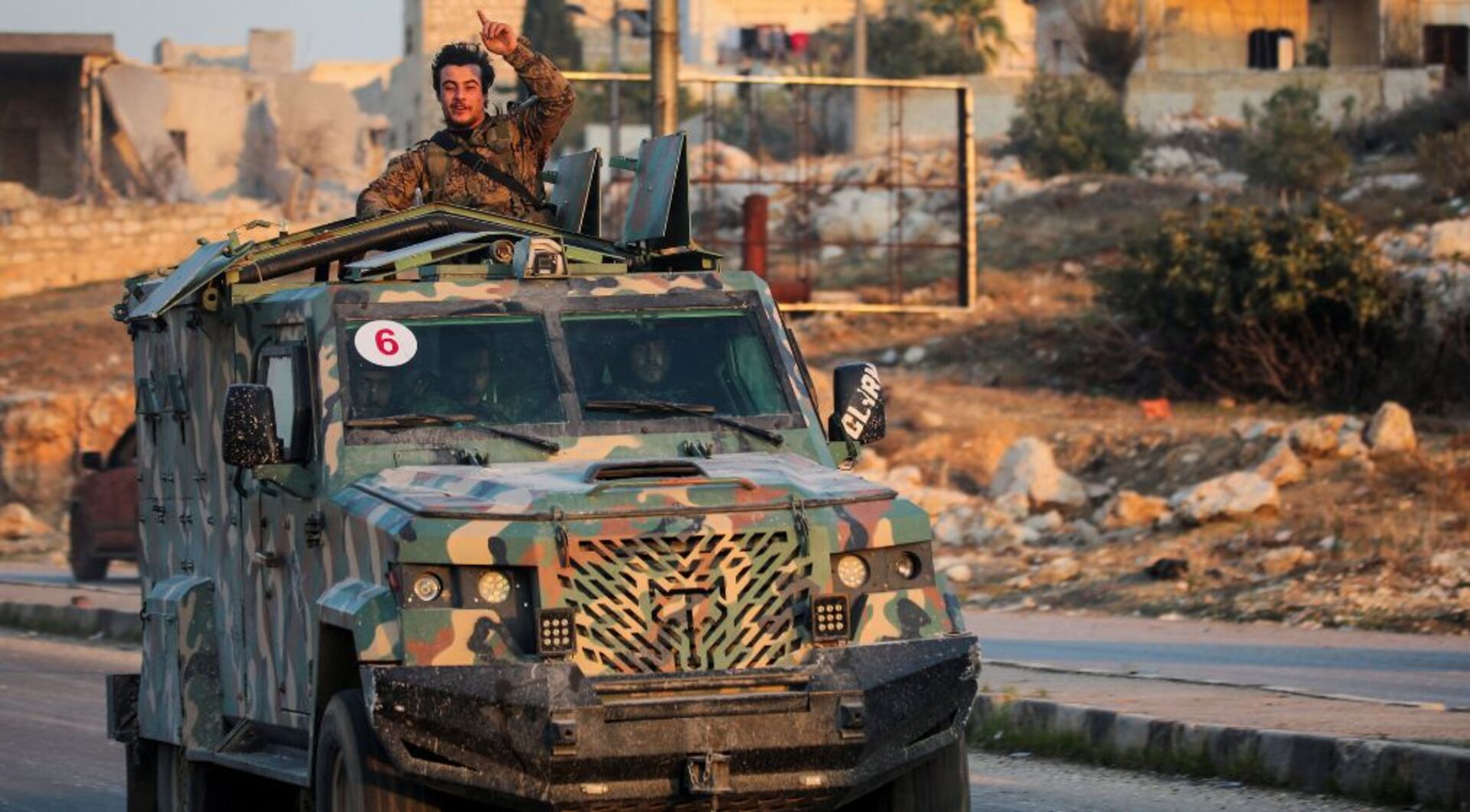
Video Duration 1 minutes 44 seconds 1:44
Hayat Tahrir al-Sham (HTS)
HTS is the biggest fighting group in Operation Deterrence of Aggression.
Formerly Jabhat al-Nusra, then Jabhat Fateh al-Sham, it is a group of allied factions, including Jabhat Fateh al-Sham, Liwa al-Haqq, Jabhat Ansar al-Din and Jaysh al-Sunna.
At the start of the Syrian war, Jabhat al-Nusra was formed in 2012 by ISIL (ISIS), from which it split a year later and declared allegiance to al-Qaeda.
It severed ties with al-Qaeda and joined with other factions to rebrand as HTS in 2017.
HTS in effect controls Idlib and is estimated to have up to 30,000 fighters.
It also has economic control over swaths of territory and the resources there, including petroleum, which is a significant source of income for it as is the Bab al-Hawa border crossing with Turkiye.
HTS is largely self-funded and is understood to control the SSG, even announcing to the people of Aleppo that the various SSG ministers based in Idlib would now be serving Aleppo as well
National Front for Liberation (NFL)
A number of the smaller fighting groups that make up the NFL participated in Operation Deterrence of Aggression, including the Jaish al-Nasr, Sham Corps and Free Idlib Army.
Advertisement
Established in Idlib in 2018, the NFL includes several northern Syrian factions, some of which also fall under the umbrella of the Free Syrian Army.
Like on many fronts, the NFL came together to counter threats by the regime to advance on Idlib.
Ahrar al-Sham Movement
Mostly active in Aleppo and Idlib, Ahrar al-Sham was established in 2011 as government forces violently repressed the Syrian revolution.
Its fighting force was estimated at more than 15,000 according to 2015 estimates.
It defines itself as a “comprehensive reformist Islamic movement, included and integrated within the Islamic Front”.
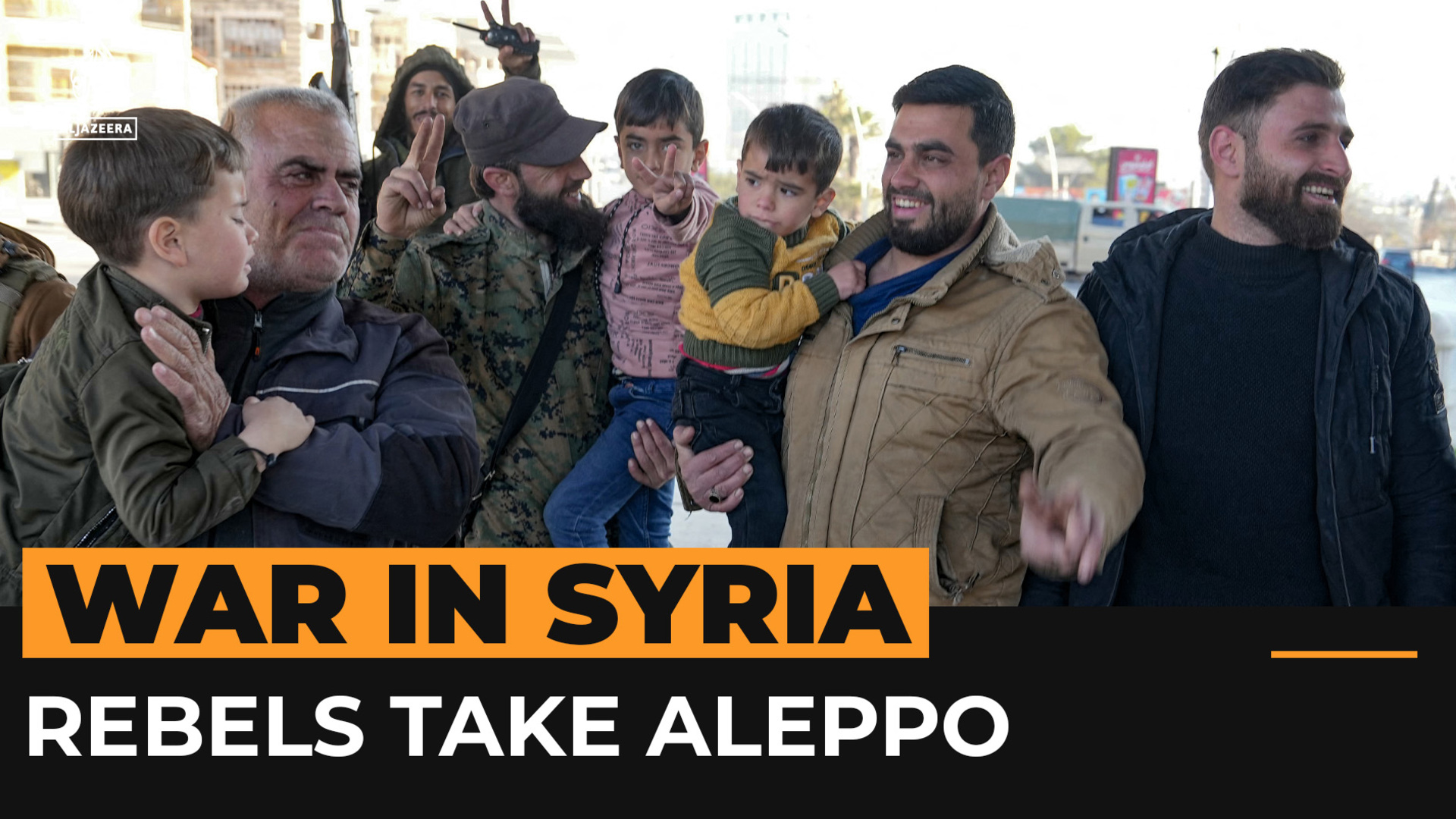
Video Duration 2 minutes 25 seconds 2:25
Jaish al-Izza
Focused in the northern reaches of the Hama governorate and some parts of Lattakia, Jaish al-Izza (the Army of Pride) is part of the Free Syrian Army.
As of 2019, it was estimated to have anywhere from 2,000 to 5,000 fighters and has received Western backing, including high-powered weapons.
Its fighters have joined the latest push into Syrian government territory, with one of its commanders, Mustafa Abdul Jaber, saying its quick success was partially due to the lack of Iranian manpower countering them.
Nur Eddin Zinki Movement
A powerful group that emerged in 2014 in Aleppo, “Zinki” tried to join forces with HTS in 2017, a move that did not work out as Zinki split off.
The two fought in 2018, and Zinki was routed from its positions of power in Aleppo in early 2019.
A year later, Zinki negotiated with HTS, and its fighters returned to the front lines, and it has had a presence among the opposition fighters since then.
 (Al Jazeera)
Syrian Opposition Leader Says Lebanon Truce Opened Door to Aleppo Assault

An anti-regime fighter tears off a poster depicting Syrian President Bashar al-Assad (L) and his brother Maher at the airport in the northern Syrian city of Aleppo on December 2, 2024. (AFP)
2 December 2024
Who are Hayat Tahrir al-Sham and the Syrian groups that took Aleppo?
HTS is the largest of the armed opposition groups that routed regime forces from Aleppo. Here’s an overview.
YOU CAN'T TELL THE PLAYERS WITHOUT A PROGRAMME
A Syrian opposition fighter shoots in the air in downtown Aleppo, Syria, on November 30, 2024 [Ghaith Alsayed/AP Photo]
By Al Jazeera Staff
Published On 2 Dec 2024
Syrian opposition fighters have launched a lightning offensive, capturing most of Aleppo and arriving as far south as Hama in a matter of days as government forces retreated.
The rebels’ rapid gains – the most significant since 2016 – have thrust Syria’s various opposition factions back into the spotlight.
Since President Bashar al-Assad’s brutal response to peaceful demonstrators in 2011 led to people picking up arms to defend themselves, armed opposition groups have formed, allied with others and split up several times, making it hard to pinpoint their exact sizes and compositions.
Here’s everything we know about the opposition groups involved in Operation Deterrence of Aggression with a note at the end about another operation, Dawn of Freedom:
Operation Deterrence of Aggression – the control room
This umbrella group was formed to coordinate the military operation.
It developed out of the Fateh al-Mubin operations centre, which oversaw the activities of the armed opposition in northwestern Syria under the control of the Syrian Salvation Government (SSG).
The SSG is the Idlib-based technocratic administration of the opposition-held areas in the north and was set up in 2017.
Video Duration 1 minutes 44 seconds 1:44
Hayat Tahrir al-Sham (HTS)
HTS is the biggest fighting group in Operation Deterrence of Aggression.
Formerly Jabhat al-Nusra, then Jabhat Fateh al-Sham, it is a group of allied factions, including Jabhat Fateh al-Sham, Liwa al-Haqq, Jabhat Ansar al-Din and Jaysh al-Sunna.
At the start of the Syrian war, Jabhat al-Nusra was formed in 2012 by ISIL (ISIS), from which it split a year later and declared allegiance to al-Qaeda.
It severed ties with al-Qaeda and joined with other factions to rebrand as HTS in 2017.
HTS in effect controls Idlib and is estimated to have up to 30,000 fighters.
It also has economic control over swaths of territory and the resources there, including petroleum, which is a significant source of income for it as is the Bab al-Hawa border crossing with Turkiye.
HTS is largely self-funded and is understood to control the SSG, even announcing to the people of Aleppo that the various SSG ministers based in Idlib would now be serving Aleppo as well
.
A damaged poster of President Bashar al-Assad in Aleppo after the Syrian army said dozens of its soldiers were killed in an attack by opposition fighters on November 30, 2024 [Mahmoud Hassano/Reuters]
National Front for Liberation (NFL)
A number of the smaller fighting groups that make up the NFL participated in Operation Deterrence of Aggression, including the Jaish al-Nasr, Sham Corps and Free Idlib Army.
Advertisement
Established in Idlib in 2018, the NFL includes several northern Syrian factions, some of which also fall under the umbrella of the Free Syrian Army.
Like on many fronts, the NFL came together to counter threats by the regime to advance on Idlib.
Ahrar al-Sham Movement
Mostly active in Aleppo and Idlib, Ahrar al-Sham was established in 2011 as government forces violently repressed the Syrian revolution.
Its fighting force was estimated at more than 15,000 according to 2015 estimates.
It defines itself as a “comprehensive reformist Islamic movement, included and integrated within the Islamic Front”.
Video Duration 2 minutes 25 seconds 2:25
Jaish al-Izza
Focused in the northern reaches of the Hama governorate and some parts of Lattakia, Jaish al-Izza (the Army of Pride) is part of the Free Syrian Army.
As of 2019, it was estimated to have anywhere from 2,000 to 5,000 fighters and has received Western backing, including high-powered weapons.
Its fighters have joined the latest push into Syrian government territory, with one of its commanders, Mustafa Abdul Jaber, saying its quick success was partially due to the lack of Iranian manpower countering them.
Nur Eddin Zinki Movement
A powerful group that emerged in 2014 in Aleppo, “Zinki” tried to join forces with HTS in 2017, a move that did not work out as Zinki split off.
The two fought in 2018, and Zinki was routed from its positions of power in Aleppo in early 2019.
A year later, Zinki negotiated with HTS, and its fighters returned to the front lines, and it has had a presence among the opposition fighters since then.
(Al Jazeera)Operation Dawn of Freedom
As the fighters involved in Deterrence of Aggression moved south towards Hama – and possibly even Damascus, some analysts expect – some of those armed opposition groups headed towards the northeast.
Abdurrahman Mustafa – the head of the Syrian Interim Government, an opposition government in northern Syrian areas not held by HTS and the SSG – announced that a new operation, Dawn of Freedom, had begun to “liberate” the northeast
Translation: As our Syrian people continue their just struggle for freedom … and with new victories achieved by the heroes of the National Army and the national and revolutionary forces, the Syrian Interim Government proudly announces the launch of Operation Dawn of Freedom to liberate areas controlled by the al-Assad regime and the separatist PKK and PYD militias. The liberation of these areas is an important step towards restoring Syrian territory … and paves the way for the return of refugees and displaced persons to their homes. All respect and appreciation to the heroes of the National Army and everyone who took up arms in defence of their people and their land against this oppressive regime. …
These armed groups – which mostly fall under the Syrian National Army, which in turn is under the Syrian Interim Government – were moving towards Kurdish-controlled areas, saying they were held by the PKK and PYD militias.
Turkiye’s PKK, or Kurdish Workers’ Party, is considered a “terrorist organisation” by Turkiye, Canada, the European Union and the United States. The PYD, or Democratic Union Party, is a left-wing Kurdish party in Syria.
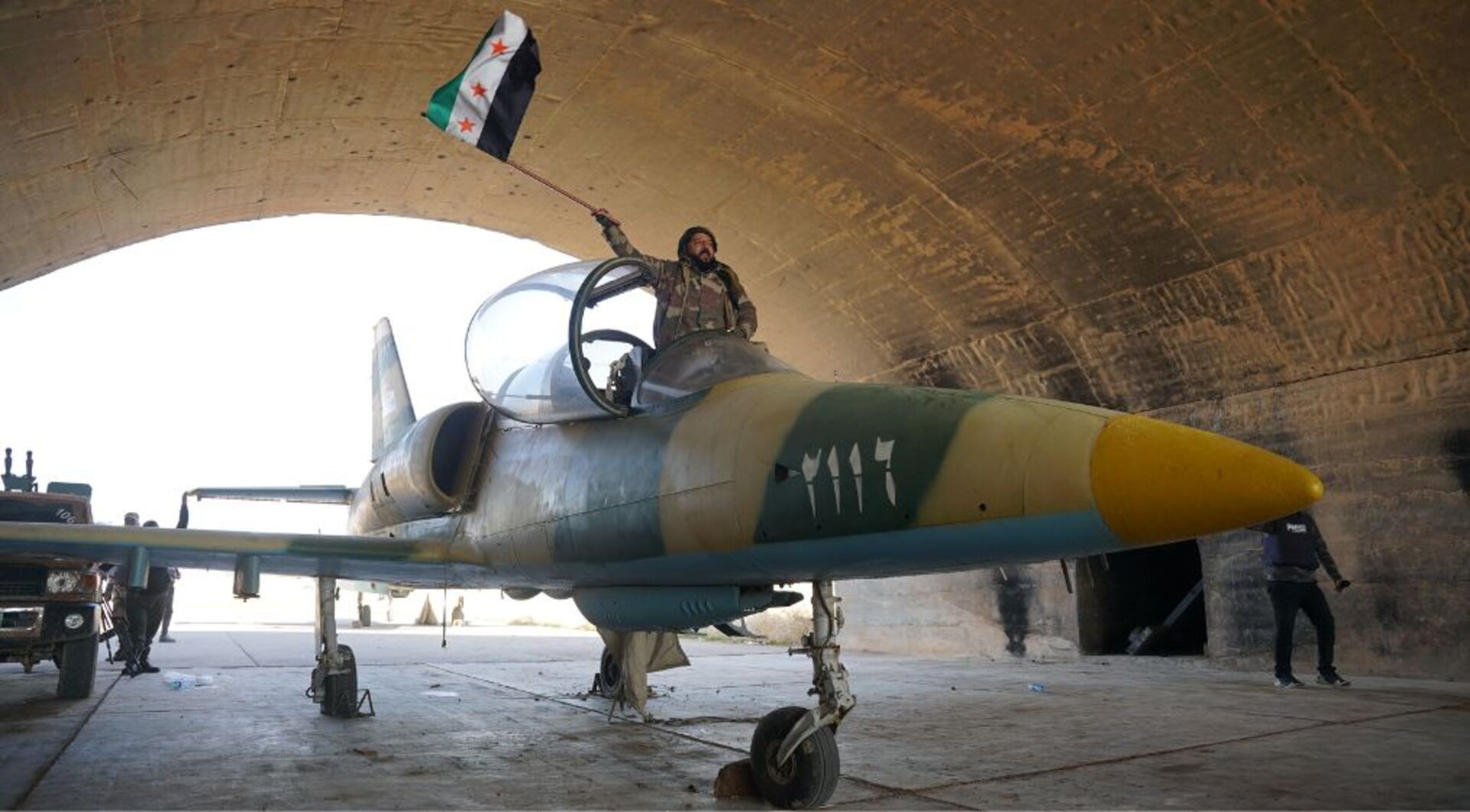
Video Duration 28 minutes 05 seconds 28:05
Source: Al Jazeera
As the fighters involved in Deterrence of Aggression moved south towards Hama – and possibly even Damascus, some analysts expect – some of those armed opposition groups headed towards the northeast.
Abdurrahman Mustafa – the head of the Syrian Interim Government, an opposition government in northern Syrian areas not held by HTS and the SSG – announced that a new operation, Dawn of Freedom, had begun to “liberate” the northeast
Translation: As our Syrian people continue their just struggle for freedom … and with new victories achieved by the heroes of the National Army and the national and revolutionary forces, the Syrian Interim Government proudly announces the launch of Operation Dawn of Freedom to liberate areas controlled by the al-Assad regime and the separatist PKK and PYD militias. The liberation of these areas is an important step towards restoring Syrian territory … and paves the way for the return of refugees and displaced persons to their homes. All respect and appreciation to the heroes of the National Army and everyone who took up arms in defence of their people and their land against this oppressive regime. …
These armed groups – which mostly fall under the Syrian National Army, which in turn is under the Syrian Interim Government – were moving towards Kurdish-controlled areas, saying they were held by the PKK and PYD militias.
Turkiye’s PKK, or Kurdish Workers’ Party, is considered a “terrorist organisation” by Turkiye, Canada, the European Union and the United States. The PYD, or Democratic Union Party, is a left-wing Kurdish party in Syria.
Video Duration 28 minutes 05 seconds 28:05
Source: Al Jazeera
Syrian Opposition Leader Says Lebanon Truce Opened Door to Aleppo Assault
An anti-regime fighter tears off a poster depicting Syrian President Bashar al-Assad (L) and his brother Maher at the airport in the northern Syrian city of Aleppo on December 2, 2024. (AFP)
2 December 2024
AD ـ 01 Jumada Al-Alkhirah 1446 AH
Syrian opposition fighters began preparations to seize Aleppo a year ago, but the operation was delayed by war in Gaza and ultimately launched last week when a ceasefire took hold in Lebanon, the head of Syria's main opposition abroad told Reuters.
The factions were able to seize the city and parts of neighboring Idlib province so quickly in part because Hezbollah and other Iran-backed fighters were distracted by their conflict with Israel, Hadi al-Bahra said in an interview on Monday.
The Turkish military, which is allied with some of the opposition and has bases across its southern border in Syria, had heard of the armed groups' plans but made clear it would play no direct role, he added.
The assault in northwestern Syria was launched last Wednesday, the day that Israel and Lebanese armed group Hezbollah began a truce ending more than a year of fighting.
"A year ago they started really training and mobilizing and taking it more seriously," said Bahra, president of the National Coalition of Syrian Revolution and Opposition Forces, the internationally-recognized Syrian opposition.
"But the war on Gaza ... then the war in Lebanon delayed it. They felt it wouldn't look good having the war in Lebanon at the same time they were fighting in Syria," he said in his Istanbul office, in the first public comments on the fighters’ preparations by an opposition figure.
"So the moment there was a ceasefire in Lebanon, they found that opportunity ... to start."
The opposition operation is the boldest advance and biggest challenge to Syrian President Bashar al-Assad in years in a civil war where front lines had largely been frozen since 2020.
Syrian and allied Russian forces have launched counter attacks, which Bahra said are "destabilizing" Aleppo and Idlib and pose the biggest risk to civilians, given the earlier opposition advances had sought carefully to avoid such casualties.
IRAN, RUSSIA
The opposition retaking of Aleppo also paves the way for hundreds of thousands of Syrians displaced elsewhere in the country and in Türkiye to return home, Bahra said.
"Due to the Lebanese war and decrease in Hezbollah forces, (Assad's) regime has less support," he said, adding Iranian militias also have less resources while Russia is giving less air cover due to its "Ukraine problem".
Damascus, which is also backed by Iran, did not immediately comment on whether the opposition sought to avoid casualties and whether it risks destabilizing the region with air raids. Assad has vowed to crush the fighters and has launched air raids.
Iran-backed Hezbollah did not immediately comment on whether its war with Israel opened the door to Syrian opposition advances in Aleppo, where it also has personnel.
Tehran has pledged to aid the Syrian government and on Monday hundreds of fighters from Iran-backed Iraqi militias crossed into Syria to help fight the factions, Syrian and Iraqi sources said.
A Turkish defense ministry official said last week that Ankara was closely monitoring the mobilization and taking precautions for its troops.
The opposition fighters are a coalition of Türkiye-backed mainstream secular armed groups spearheaded by the Hayat Tahrir al-Sham group that has been designated a terrorist outfit by Türkiye, the US, Russia and other states.
Bahra's coalition, which does not include HTS, represents anti-Assad groups including the Türkiye-backed Syrian National Army or Free Syrian Army, which took territory north of Idlib over the last week.
It holds regular diplomatic talks with the United Nations and several states.
Syrian opposition fighters began preparations to seize Aleppo a year ago, but the operation was delayed by war in Gaza and ultimately launched last week when a ceasefire took hold in Lebanon, the head of Syria's main opposition abroad told Reuters.
The factions were able to seize the city and parts of neighboring Idlib province so quickly in part because Hezbollah and other Iran-backed fighters were distracted by their conflict with Israel, Hadi al-Bahra said in an interview on Monday.
The Turkish military, which is allied with some of the opposition and has bases across its southern border in Syria, had heard of the armed groups' plans but made clear it would play no direct role, he added.
The assault in northwestern Syria was launched last Wednesday, the day that Israel and Lebanese armed group Hezbollah began a truce ending more than a year of fighting.
"A year ago they started really training and mobilizing and taking it more seriously," said Bahra, president of the National Coalition of Syrian Revolution and Opposition Forces, the internationally-recognized Syrian opposition.
"But the war on Gaza ... then the war in Lebanon delayed it. They felt it wouldn't look good having the war in Lebanon at the same time they were fighting in Syria," he said in his Istanbul office, in the first public comments on the fighters’ preparations by an opposition figure.
"So the moment there was a ceasefire in Lebanon, they found that opportunity ... to start."
The opposition operation is the boldest advance and biggest challenge to Syrian President Bashar al-Assad in years in a civil war where front lines had largely been frozen since 2020.
Syrian and allied Russian forces have launched counter attacks, which Bahra said are "destabilizing" Aleppo and Idlib and pose the biggest risk to civilians, given the earlier opposition advances had sought carefully to avoid such casualties.
IRAN, RUSSIA
The opposition retaking of Aleppo also paves the way for hundreds of thousands of Syrians displaced elsewhere in the country and in Türkiye to return home, Bahra said.
"Due to the Lebanese war and decrease in Hezbollah forces, (Assad's) regime has less support," he said, adding Iranian militias also have less resources while Russia is giving less air cover due to its "Ukraine problem".
Damascus, which is also backed by Iran, did not immediately comment on whether the opposition sought to avoid casualties and whether it risks destabilizing the region with air raids. Assad has vowed to crush the fighters and has launched air raids.
Iran-backed Hezbollah did not immediately comment on whether its war with Israel opened the door to Syrian opposition advances in Aleppo, where it also has personnel.
Tehran has pledged to aid the Syrian government and on Monday hundreds of fighters from Iran-backed Iraqi militias crossed into Syria to help fight the factions, Syrian and Iraqi sources said.
A Turkish defense ministry official said last week that Ankara was closely monitoring the mobilization and taking precautions for its troops.
The opposition fighters are a coalition of Türkiye-backed mainstream secular armed groups spearheaded by the Hayat Tahrir al-Sham group that has been designated a terrorist outfit by Türkiye, the US, Russia and other states.
Bahra's coalition, which does not include HTS, represents anti-Assad groups including the Türkiye-backed Syrian National Army or Free Syrian Army, which took territory north of Idlib over the last week.
It holds regular diplomatic talks with the United Nations and several states.
'Murdering Kurds on the street': Syrian Druze warns of Islamist extremism
"The factions that took over Aleppo destroyed Christmas trees that were set up for the holiday; they are murdering Kurds in the streets," he noted.


Situation in Syria
On Friday night, Syrian rebels, led by the Salafi-jihadist Hayat Tahrir al-Sham (HTS), captured significant parts of Aleppo, east of Idlib, coercing the Syrian Army to redeploy.
President Bashar al-Assad's regime has presented itself as a defender of minorities in the country, such as Alawites, from which Assad's family originates, Christians, and Druze.
As such, many minority groups are perceived by the rebels as "pro-Assad."
Reuters, Yuval Barnea and Seth J. Frantzman contributed to this report.
"The factions that took over Aleppo destroyed Christmas trees that were set up for the holiday; they are murdering Kurds in the streets," he noted.
DECEMBER 2, 2024
A Syrian rebel carries a weapon as he stands at the entrance of Saraqeb town in northwestern Idlib province, Syria. December 1, 2024.
(photo credit: REUTERS/MAHMOUD HASSANO)
The rebel factions that took over Aleppo do not accept other religions than Islam, a resident of the Druze city of Suwayda in southwestern Syria told Israeli state broadcaster KAN on Monday.
"The factions that took over Aleppo destroyed Christmas trees that were set up for the holiday. They are murdering Kurds in the streets," he noted, adding, "Their slogans are 'Jihad' and 'Allahu Akbar.'"
While he noted that the "current regime is dictatorial," the citizen of Suwayda added, "It allows freedom of religion and does not interfere in that domain, whereas the Islamists do not accept other religions in Syria. This is fundamentally different."
"The Syrians did not sacrifice what they sacrificed just to move from bad to worse. That is the source of concern," he told KAN. "We want the situation in Syria to improve, not deteriorate further."
With regard to Israel, he reportedly affirmed, "Our expectation from the State of Israel and the Druze in Israel is that their interest in Suwayda will be significant, as we, as Druze, do not want to be drawn into sectarian fighting. If we are attacked, we will fight with fierce determination."
The rebel factions that took over Aleppo do not accept other religions than Islam, a resident of the Druze city of Suwayda in southwestern Syria told Israeli state broadcaster KAN on Monday.
"The factions that took over Aleppo destroyed Christmas trees that were set up for the holiday. They are murdering Kurds in the streets," he noted, adding, "Their slogans are 'Jihad' and 'Allahu Akbar.'"
While he noted that the "current regime is dictatorial," the citizen of Suwayda added, "It allows freedom of religion and does not interfere in that domain, whereas the Islamists do not accept other religions in Syria. This is fundamentally different."
"The Syrians did not sacrifice what they sacrificed just to move from bad to worse. That is the source of concern," he told KAN. "We want the situation in Syria to improve, not deteriorate further."
With regard to Israel, he reportedly affirmed, "Our expectation from the State of Israel and the Druze in Israel is that their interest in Suwayda will be significant, as we, as Druze, do not want to be drawn into sectarian fighting. If we are attacked, we will fight with fierce determination."
Smoke rises as a member of the rebels led by the Islamist militant group Hayat Tahrir al-Sham drives on a motorbike in al-Rashideen, Aleppo province, Syria November 29, 2024. (credit: REUTERS/Mahmoud Hasano)
Situation in Syria
On Friday night, Syrian rebels, led by the Salafi-jihadist Hayat Tahrir al-Sham (HTS), captured significant parts of Aleppo, east of Idlib, coercing the Syrian Army to redeploy.
President Bashar al-Assad's regime has presented itself as a defender of minorities in the country, such as Alawites, from which Assad's family originates, Christians, and Druze.
As such, many minority groups are perceived by the rebels as "pro-Assad."
Reuters, Yuval Barnea and Seth J. Frantzman contributed to this report.
Turkish drone strike kills senior SDF leader in Syria’s Qamishli
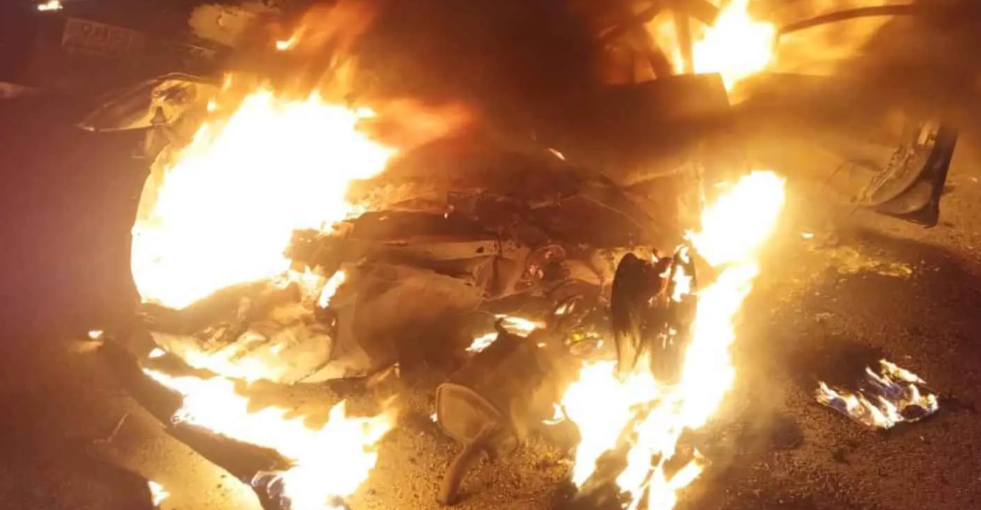
2024-12-02
Shafaq News/ A senior Syrian Democratic Forces (SDF) leader was killed, on Monday, when a Turkish drone targeted his car on a road in the countryside of Qamishli, northeast of Al-Hasakah, Syria.
Media reports indicated that the Turkish drone struck a vehicle on Ali Farou Road near the Iron Factory on the M4 international highway in Qamishli’s countryside, killing the SDF commander, his bodyguard, and the car driver.
This attack brings the total number of Turkish drone strikes on areas controlled by the Autonomous Administration of North and East Syria in 2024 to 188, according to the Syrian Observatory for Human Rights.
In a related development, SDF Commander Mazloum Abdi confirmed “rapid and unexpected” events in northwest Syria, with their forces enduring “intense attacks” from multiple directions.
On X, Abdi explained that “the collapse and withdrawal of the Syrian army and its allies forced the SDF to intervene and open a humanitarian corridor linking their areas in the east with Aleppo and Tel Rifaat, to protect civilians from massacres.”
“The corridor was attacked by armed groups backed by Turkish forces, leading to its closure, but the SDF defended it, protecting civilians in Aleppo, Tel Rifaat, and Shahba regions,” he added.
Regarding the Kurdish neighborhoods in Aleppo, Abdi confirmed that their forces continue to “resist and defend” the residents amid ongoing escalations.
Notably, Turkish attacks have killed 42 people and injured over 120, including 71 civilians, with six women and three children among the casualties. The deceased include 32 Autonomous Administration fighters, three Syrian army personnel, and seven civilians, including one woman.
The attacks, spread across multiple regions, were most concentrated in Al-Hasakah province (137), where three Syrian soldiers, 24 SDF fighters, and four civilians, including one woman, were killed. In Raqqa province, six attacks resulted in four military deaths, while 45 attacks in Aleppo’s countryside left four soldiers and three civilians dead.


2024-12-02
Shafaq News/ A senior Syrian Democratic Forces (SDF) leader was killed, on Monday, when a Turkish drone targeted his car on a road in the countryside of Qamishli, northeast of Al-Hasakah, Syria.
Media reports indicated that the Turkish drone struck a vehicle on Ali Farou Road near the Iron Factory on the M4 international highway in Qamishli’s countryside, killing the SDF commander, his bodyguard, and the car driver.
This attack brings the total number of Turkish drone strikes on areas controlled by the Autonomous Administration of North and East Syria in 2024 to 188, according to the Syrian Observatory for Human Rights.
In a related development, SDF Commander Mazloum Abdi confirmed “rapid and unexpected” events in northwest Syria, with their forces enduring “intense attacks” from multiple directions.
On X, Abdi explained that “the collapse and withdrawal of the Syrian army and its allies forced the SDF to intervene and open a humanitarian corridor linking their areas in the east with Aleppo and Tel Rifaat, to protect civilians from massacres.”
“The corridor was attacked by armed groups backed by Turkish forces, leading to its closure, but the SDF defended it, protecting civilians in Aleppo, Tel Rifaat, and Shahba regions,” he added.
Regarding the Kurdish neighborhoods in Aleppo, Abdi confirmed that their forces continue to “resist and defend” the residents amid ongoing escalations.
Notably, Turkish attacks have killed 42 people and injured over 120, including 71 civilians, with six women and three children among the casualties. The deceased include 32 Autonomous Administration fighters, three Syrian army personnel, and seven civilians, including one woman.
The attacks, spread across multiple regions, were most concentrated in Al-Hasakah province (137), where three Syrian soldiers, 24 SDF fighters, and four civilians, including one woman, were killed. In Raqqa province, six attacks resulted in four military deaths, while 45 attacks in Aleppo’s countryside left four soldiers and three civilians dead.
Pro-Iranian Militias Enter Syria from Iraq to Aid Beleaguered Syrian Army

Anti-government fighters take over the airport of the
Anti-government fighters take over the airport of the
northern Syrian town of Minagh on December 1, 2024. (AFP)
2 December 2024
2 December 2024
AD ـ 01 Jumada Al-Alkhirah 1446 AH
Iranian-backed militias entered Syria overnight from Iraq and were heading to northern Syria to beef up beleaguered Syrian army forces battling opposition fighters, according to two Syrian army sources.
Dozens of Iran-aligned Iraqi Popular Mobilization Forces (PMF) fighters from Iraq also crossed into Syria through a military route near Al-Bukamal crossing, a senior Syrian army source told Reuters.
"These are fresh reinforcements being sent to aid our comrades on the front lines in the north," the officer said, adding the militias included Iraq's Katiab Hezbollah and Fatemiyoun groups.
Iran sent thousands of Shiite militias to Syria during the Syrian war and, alongside Russia with its air power, enabled Syrian President Bashar al-Assad to crush the opposition and regain most of his territory.
A lack of that manpower to help thwart the anti-government onslaught in recent days contributed to the speedy retreat of Syrian army forces and withdrawal from Aleppo city, according to two other army sources. Militias allied to Iran, led by Hezbollah, have a strong presence in the Aleppo area.
Israel has also in recent months stepped up its strikes on Iranian bases in Syria while also waging an offensive in Lebanon which it says has weakened Hezbollah and its military capabilities.
Iranian-backed militias entered Syria overnight from Iraq and were heading to northern Syria to beef up beleaguered Syrian army forces battling opposition fighters, according to two Syrian army sources.
Dozens of Iran-aligned Iraqi Popular Mobilization Forces (PMF) fighters from Iraq also crossed into Syria through a military route near Al-Bukamal crossing, a senior Syrian army source told Reuters.
"These are fresh reinforcements being sent to aid our comrades on the front lines in the north," the officer said, adding the militias included Iraq's Katiab Hezbollah and Fatemiyoun groups.
Iran sent thousands of Shiite militias to Syria during the Syrian war and, alongside Russia with its air power, enabled Syrian President Bashar al-Assad to crush the opposition and regain most of his territory.
A lack of that manpower to help thwart the anti-government onslaught in recent days contributed to the speedy retreat of Syrian army forces and withdrawal from Aleppo city, according to two other army sources. Militias allied to Iran, led by Hezbollah, have a strong presence in the Aleppo area.
Israel has also in recent months stepped up its strikes on Iranian bases in Syria while also waging an offensive in Lebanon which it says has weakened Hezbollah and its military capabilities.
UN Envoy: What We See in Syria is a Mark of Collective Failure

Resolution 2254 was adopted by the Security Council on 18 December 2015
Geneva: Asharq Al Awsat
2 December 2024
“What we see in Syria today is a mark of a collective failure to bring about what has plainly been required now for many years – a genuine political process to implement Security Council resolution 2254,” the envoy said in a statement.
Pedersen noted that in Syria, a country torn by nearly 14 years of war and conflict, the latest developments pose severe risks to civilians and have serious implications for regional and international peace and security.
As an immediate priority, he said, “I strongly emphasize the urgent need for all to uphold their obligations under international law to protect civilians and civilian infrastructure.”
“This is a clear message to all parties engaged in hostilities of any kind. I will continue to push for civilian protection and deescalation,” the envoy added.
Pedersen then recalled the times he repeatedly warned of the risks of escalation in Syria, of the dangers of mere conflict management rather than conflict resolution, and the reality that no Syrian party or existing grouping of actors can resolve the Syrian conflict via military means.
“I call for urgent and serious political engagement – among Syrian and international stakeholders - to spare bloodshed and focus on a political solution in accordance with Security Council resolution 2254,” he said.
The envoy then affirmed his will to continue to engage all parties and stand ready to use my good offices to convene international and Syria stakeholders in new and comprehensive peace talks on Syria.
Presented by the US, Resolution 2254 was adopted by the Security Council on 18 December 2015.
It emphasizes the need for all parties in Syria to take confidence building measures to contribute to the viability of a political process and a lasting ceasefire, and calls on all states to use their influence with the Syrian government and the opposition to advance the peace process, confidence building measures and steps towards a ceasefire.
The resolution also expresses support for a Syrian-led political process that is facilitated by the UN and, within a target of six months, establishes credible, inclusive and non-sectarian governance and sets a schedule and process for drafting a new constitution.
Since the adoption of the resolution, Geneva has hosted several meetings of the parties involved in the conflict in Syria. However, those parties failed to reach an agreement, especially after Moscow established in 2017 the Astana dialogue followed in 2018 by the Sochi process.
Resolution 2254 calls on the release of any arbitrarily detained persons, particularly women and children, and on the International Syria Support Group (ISSG) states to use their influence immediately to these ends.
It demands that all parties immediately cease any attacks against civilians and civilian objects as such, including attacks against medical facilities and personnel, and any indiscriminate use of weapons, including through shelling and aerial bombardment.
Resolution 2254 was adopted by the Security Council on 18 December 2015
(UN archive)
Geneva: Asharq Al Awsat
2 December 2024
AD ـ 01 Jumada Al-Alkhirah 1446 AH
United Nations Special Envoy for Syria, Geir Pedersen, said on Sunday he is closely monitoring the situation on the ground in Syria, where a dramatic shift in frontlines was seen in recent days.
United Nations Special Envoy for Syria, Geir Pedersen, said on Sunday he is closely monitoring the situation on the ground in Syria, where a dramatic shift in frontlines was seen in recent days.
“What we see in Syria today is a mark of a collective failure to bring about what has plainly been required now for many years – a genuine political process to implement Security Council resolution 2254,” the envoy said in a statement.
Pedersen noted that in Syria, a country torn by nearly 14 years of war and conflict, the latest developments pose severe risks to civilians and have serious implications for regional and international peace and security.
As an immediate priority, he said, “I strongly emphasize the urgent need for all to uphold their obligations under international law to protect civilians and civilian infrastructure.”
“This is a clear message to all parties engaged in hostilities of any kind. I will continue to push for civilian protection and deescalation,” the envoy added.
Pedersen then recalled the times he repeatedly warned of the risks of escalation in Syria, of the dangers of mere conflict management rather than conflict resolution, and the reality that no Syrian party or existing grouping of actors can resolve the Syrian conflict via military means.
“I call for urgent and serious political engagement – among Syrian and international stakeholders - to spare bloodshed and focus on a political solution in accordance with Security Council resolution 2254,” he said.
The envoy then affirmed his will to continue to engage all parties and stand ready to use my good offices to convene international and Syria stakeholders in new and comprehensive peace talks on Syria.
Presented by the US, Resolution 2254 was adopted by the Security Council on 18 December 2015.
It emphasizes the need for all parties in Syria to take confidence building measures to contribute to the viability of a political process and a lasting ceasefire, and calls on all states to use their influence with the Syrian government and the opposition to advance the peace process, confidence building measures and steps towards a ceasefire.
The resolution also expresses support for a Syrian-led political process that is facilitated by the UN and, within a target of six months, establishes credible, inclusive and non-sectarian governance and sets a schedule and process for drafting a new constitution.
Since the adoption of the resolution, Geneva has hosted several meetings of the parties involved in the conflict in Syria. However, those parties failed to reach an agreement, especially after Moscow established in 2017 the Astana dialogue followed in 2018 by the Sochi process.
Resolution 2254 calls on the release of any arbitrarily detained persons, particularly women and children, and on the International Syria Support Group (ISSG) states to use their influence immediately to these ends.
It demands that all parties immediately cease any attacks against civilians and civilian objects as such, including attacks against medical facilities and personnel, and any indiscriminate use of weapons, including through shelling and aerial bombardment.
US, UK, France and Germany urge political solution to Syria conflict
Aleppo now under rebel control after lightning offensive
The National
December 01, 2024
The governments of the US, UK, France and Germany on Sunday said they are closely monitoring developments in Syria and called for de-escalation and a political solution after a shock rebel offensive reignited the country's civil war.
The statement from the four western nations came as US Secretary of State Antony Blinken and Turkish Foreign Minister Hakan Fidan spoke about the “rapidly developing” conflict in Syria.
Rebel troops last week seized control of the second-largest city Aleppo in a lightning offensive that so far has killed more than 400 people, most of them fighters, according to a Syrian war monitor.
We urge “de-escalation by all parties and the protection of civilians and infrastructure to prevent further displacement and disruption of humanitarian access,” the four countries' statement read. “The current escalation only underscores the urgent need for a Syrian-led political solution to the conflict”.
Similarly, Mr Blinken and Mr Fidan discussed “the need for de-escalation and the protection of civilian lives and infrastructure in Aleppo and elsewhere,” State Department spokesman Matthew Miller said.
The call came after Syrian rebels and their Turkish-backed allies launched their biggest offensive in years, seizing Aleppo from troops loyal to President Bashar Al Assad.
The flare-up has also seen pro-Turkish rebel groups attacking government troops and Kurdish People's Defence Units (YPG) fighters in and around Aleppo, a Syrian war monitor said.
Turkey sees the YPG as an offshoot of the banned Kurdistan Workers' Party (PKK), which has led a decades-long insurgency against Ankara.
Another complicating factor in the new fighting is the presence of about 900 US troops who are in northern Syria to fight ISIS alongside local partners.
Updated: December 01, 2024, 9:00 PM
Aleppo now under rebel control after lightning offensive
The National
December 01, 2024
The governments of the US, UK, France and Germany on Sunday said they are closely monitoring developments in Syria and called for de-escalation and a political solution after a shock rebel offensive reignited the country's civil war.
The statement from the four western nations came as US Secretary of State Antony Blinken and Turkish Foreign Minister Hakan Fidan spoke about the “rapidly developing” conflict in Syria.
Rebel troops last week seized control of the second-largest city Aleppo in a lightning offensive that so far has killed more than 400 people, most of them fighters, according to a Syrian war monitor.
We urge “de-escalation by all parties and the protection of civilians and infrastructure to prevent further displacement and disruption of humanitarian access,” the four countries' statement read. “The current escalation only underscores the urgent need for a Syrian-led political solution to the conflict”.
Similarly, Mr Blinken and Mr Fidan discussed “the need for de-escalation and the protection of civilian lives and infrastructure in Aleppo and elsewhere,” State Department spokesman Matthew Miller said.
The call came after Syrian rebels and their Turkish-backed allies launched their biggest offensive in years, seizing Aleppo from troops loyal to President Bashar Al Assad.
The flare-up has also seen pro-Turkish rebel groups attacking government troops and Kurdish People's Defence Units (YPG) fighters in and around Aleppo, a Syrian war monitor said.
Turkey sees the YPG as an offshoot of the banned Kurdistan Workers' Party (PKK), which has led a decades-long insurgency against Ankara.
Another complicating factor in the new fighting is the presence of about 900 US troops who are in northern Syria to fight ISIS alongside local partners.
Updated: December 01, 2024, 9:00 PM
Investigative Reports

Cycles of Deja Vu: Endless Struggles and Shifting Alliances in Syria
Within 48 hours, the factions of Fatah al-Mubeen, Ahrar al-Sham, and a handful of other groups from the so-called “Syrian National Army” had overrun vast areas previously controlled by the regime and its Iranian allies. In just 24 hours, they seized Syria’s second-largest city, taking full control.
There is no equivalent in Arabic for the phrase “Déjà vu,” which captures the feeling of seeing something and believing you’ve seen it before or experiencing something you think you’ve lived through in the past. What is happening in Syria feels like a kind of déjà vu.
You can experience déjà vu without fully understanding it—a flood of memories surfaces, some beautiful but most painful, distressing, and bleak. Over a week ago, reports began emerging of movements among Syrian Islamist armed factions. At the time, the most reasonable analysts suggested that any such movement, if it happened, would be limited in scope, aiming to stir up the stagnant swamp that has plagued the north for five years. These same years have seen Israeli forces repeatedly violate Syrian airspace to strike Iranian-linked targets, leaving them battered and exhausted.
But what transpired was monumental—in the literal sense of the word, not the metaphorical one. The enormity of the event is not diminished by the rush of many commentators to describe it as “expected” or “natural.” We’ve grown accustomed to this breed of analyst, who somehow always “knew” something was going to happen but, for some reason, chose not to share their insight beforehand.
Within 48 hours, the factions of Fatah al-Mubeen, Ahrar al-Sham, and a handful of other groups from the so-called “Syrian National Army” had overrun vast areas previously controlled by the regime and its Iranian allies. In just 24 hours, they seized Syria’s second-largest city, taking full control.
Twenty-four hours were enough for these factions to reclaim areas the Assad regime, with Russian airpower, needed four months to retake in 2016. How did Assad’s forces manage to pack up their equipment and retreat so swiftly? Isn’t this yet another déjà vu moment, one that takes those of my generation back to another withdrawal in June/July 1976?
Living on the High of Euphoria
We Syrians live on euphoria. Like all the oppressed, marginalized, and powerless, Syrians wait for an event that can lift their spirits—a sudden, overwhelming joy that compensates for years and decades of oppression. It’s a joy that floods their souls, heightens their adrenaline, and momentarily makes the misery bearable.
In such moments, Syrians pour into real streets to distribute sweets or flood virtual spaces to exchange congratulations, share videos, and hurl enormous quantities of curses. It’s a strange catharsis—expelling part of their grief, sadness, and depression through chanting, takbeer, or invective. It has happened many times.
I don’t like to recall that some Syrians celebrated on September 11, 2001, handing out sweets. Nor do I want to remember their cheers for the tyrant Saddam Hussein when he invaded a neighboring sovereign country. And I certainly don’t want to remember the frenzied joy that overtook some on October 7, 2023.
There is no shame in euphoria itself, except that it often ends with a slow descent into melancholy, dragging us through all the stages of grief: denial, anger, bargaining, depression, and finally, reluctant acceptance. Sometimes, after every swift ascent, we find ourselves plummeting again. This happened on October 6, 1973, when sudden joy drove us to the rooftops to watch the air battles and Israeli missiles being downed. We were certain we had reclaimed the Golan Heights, perhaps even reached Tel Aviv.
But by October 12, 1973, we were stunned by the halt of the Syrian advance, the counteroffensive, and the Israeli forces seizing new villages, displacing more people to Damascus and its countryside. We denied it, we raged, we bargained, we despaired—and finally, we accepted, subdued. We endured decades under the same ruler who lost the war twice but declared victory both times. And we were forced to adopt his narrative of triumph. Then he turned his weapons against us and our siblings in Lebanon.
Back to Square One
Here we are, repeating the cycle once again. Undeniably, the crumbling regime in Damascus has plunged the country into an abyss of poverty, hunger, and despair. Equally undeniable is the right of millions of displaced Syrians to hope and work toward returning to their homes.
In recent months, Russian forces, along with Assad’s regime and Iranian-backed militias, have repeatedly violated the de-escalation agreements, resuming missile and artillery shelling via drones and targeting civilians and public infrastructure.
The bombing of a school in the city of Ariha last Tuesday, which claimed the lives of several civilians, including children, was the latest episode in this series of violations. Naturally, these escalating hostile actions have intensified public pressure to halt such attacks, which are seen as a precursor to an intensified campaign to tighten the noose around opposition-held areas and exacerbate the suffering of Syrians living there.
What is abnormal, however, is for a foreign government occupying part of Syria’s territory to spearhead action, not to solve the Syrians’ plight but to address its own concerns. Almost everyone agrees on Turkey’s role in the recent developments, a fact disputed only by those deceiving themselves. Yet, while Syrians largely concur on Ankara’s involvement, they diverge on the extent, ranging from tacit approval to outright orchestration and leadership.
For my part, I find it difficult to believe that the leaders of Hay’at Tahrir al-Sham (HTS) and Ahrar al-Sham—who have previously shed much of each other’s blood—voluntarily formed a joint operations room, planned step-by-step, and executed meticulously aligned scenarios. It is almost certain that the operation was directed, planned, and led by Turkey, which managed to reconcile these “brothers-in-enmity” and align them toward a shared goal executed with precision. Let’s not forget that such a well-coordinated campaign would have been impossible without intelligence and technology that these warring factions lack.
Turkey: The “Silent Partner”?
While there is significant debate over Turkey’s direct involvement in the HTS-led offensive, there is little doubt about its logistical and strategic support for factions like the Syrian National Army. This underscores Ankara’s indirect influence on the dynamics of the battlefield.
Turkey’s role aligns with its broader strategic objectives: maintaining influence in northern Syria, countering threats posed by Kurdish groups like the YPG—which Ankara views as an existential threat near its borders—and securing its national security interests. This attack presents Turkey with an opportunity to consolidate its foothold in Aleppo while curtailing Assad’s advances in areas close to its border.
Close observers of the conflict, analyzing reports meticulously, recognize that such an offensive could not have been spontaneous. It culminated from long-term preparations overseen by Turkish intelligence. It is believed that Turkey played a role in uniting extremist factions in northern Syria under the umbrella of the Syrian National Army and HTS, enabling joint operations and tactical coordination. This reflects Turkey’s calculated approach to achieving its military and geopolitical objectives.
Not for Our Sake
It’s crucial to understand that President Recep Tayyip Erdoğan’s efforts are not motivated by goodwill toward Syrians. For over a year, Erdoğan sought a settlement with Assad through Russian mediation, but his attempts ultimately failed due to irreconcilable demands—chief among them Assad’s insistence on a full Turkish withdrawal from northern Syria.
The current conflict underscores Turkey’s refusal to relinquish its strategic foothold, anticipating potential security and political ramifications. Simultaneously, Turkish Foreign Minister Hakan Fidan’s dialogue with his Russian counterpart signals Ankara’s intent to manage the unfolding situation diplomatically while safeguarding its strategic leverage.
Erdoğan aims to bolster his negotiating position while achieving multiple objectives through this recent campaign: facilitating the return of Syrian refugees, curbing Iran’s influence, and, most importantly, neutralizing the Kurdish threat—or even eradicating it altogether.
Erdoğan could not repatriate the three million Syrian refugees in Turkey to areas under Assad’s control or to the Autonomous Administration in northeastern Syria. Nor was he able to return them to the narrow strip controlled by his Syrian military proxies under the banner of the “Syrian National Army” in the Euphrates Shield and Peace Spring regions. However, the occupation of a major city like Aleppo and its surrounding towns, extending to Hama, could create the conditions necessary for their return. This strategy might allow Erdogan to repatriate up to two-thirds of the Syrian refugees currently residing in Turkey.
Turkey’s involvement in the ongoing offensive in northern Syria reflects a calculated effort to counterbalance Iran’s influence in the region, exploiting the conflict to weaken Tehran’s strategic position. Through the military operation led by Hay’at Tahrir al-Sham, Ankara has positioned itself as a counterforce to Iran-backed militias, which have played a pivotal role in supporting the Assad regime. The offensive offers Turkey an opportunity to disrupt Iran’s operational capabilities in key areas near Aleppo and Idlib, undermining its ability to use these regions as logistical and strategic hubs to advance its broader regional agenda.
The Key Issue: The Kurds
The Kurdish question remains central. The Kurdish movement, particularly the armed faction led by the Kurdistan Workers’ Party (PKK), poses a significant challenge not just to Turkey but also to Iran. Ankara accuses the Autonomous Administration of North and East Syria (AANES), along with its political arm, the Syrian Democratic Council (SDC), and its military wing, the Syrian Democratic Forces (SDF), of being mere extensions of the PKK.
In my view, Erdoğan’s primary objective isn’t to weaken or save Assad or to bring about radical political change in Syria but to diminish—or completely eliminate—the Kurdish presence in northeastern Syria.
Regrettably, many Syrians, especially in northern and northeastern regions, share Erdoğan’s chauvinistic views. This convergence of Turkish ultranationalism and Arab chauvinism aims to dismantle the Autonomous Administration and the SDF.
I hold serious criticisms of the AANES, the SDC, and the SDF. I don’t see northeastern Syria as a genuine model of democracy. However, I must acknowledge that the political, civil, and human rights framework there is more advanced than under Assad or Erdoğan. The Kurdish component of this administration consists of Syrian citizens, first and foremost. Treating them as outsiders or enemies violates basic human rights and the principles of the Syrian revolution itself.
I recognize that a portion of the Kurdish population is emotionally and ideologically connected to the extremist and terrorist ideology of Öcalan. However, a larger segment of Syrian Arabs, in turn, align themselves with the Turks, Iranians, or even Israelis. Let us not use this point as a source of contention—it is always wiser for those living in glass houses to refrain from throwing stones.
Turkey’s multifaceted role in northern Syria reflects its balancing act between supporting opposition factions, confronting Kurdish and Iranian forces, and navigating regional diplomacy. As the conflict evolves, Ankara’s actions will remain pivotal in shaping the balance of power in Syria, highlighting its broader ambitions to consolidate influence and protect national interests in a volatile geopolitical landscape.
In Syria, we have a saying: “Whoever tries the tried has a corrupt mind.” We have already experienced the rule of extremist Islami

Within 48 hours, the factions of Fatah al-Mubeen, Ahrar al-Sham, and a handful of other groups from the so-called “Syrian National Army” had overrun vast areas previously controlled by the regime and its Iranian allies. In just 24 hours, they seized Syria’s second-largest city, taking full control.
There is no equivalent in Arabic for the phrase “Déjà vu,” which captures the feeling of seeing something and believing you’ve seen it before or experiencing something you think you’ve lived through in the past. What is happening in Syria feels like a kind of déjà vu.
You can experience déjà vu without fully understanding it—a flood of memories surfaces, some beautiful but most painful, distressing, and bleak. Over a week ago, reports began emerging of movements among Syrian Islamist armed factions. At the time, the most reasonable analysts suggested that any such movement, if it happened, would be limited in scope, aiming to stir up the stagnant swamp that has plagued the north for five years. These same years have seen Israeli forces repeatedly violate Syrian airspace to strike Iranian-linked targets, leaving them battered and exhausted.
But what transpired was monumental—in the literal sense of the word, not the metaphorical one. The enormity of the event is not diminished by the rush of many commentators to describe it as “expected” or “natural.” We’ve grown accustomed to this breed of analyst, who somehow always “knew” something was going to happen but, for some reason, chose not to share their insight beforehand.
Within 48 hours, the factions of Fatah al-Mubeen, Ahrar al-Sham, and a handful of other groups from the so-called “Syrian National Army” had overrun vast areas previously controlled by the regime and its Iranian allies. In just 24 hours, they seized Syria’s second-largest city, taking full control.
Twenty-four hours were enough for these factions to reclaim areas the Assad regime, with Russian airpower, needed four months to retake in 2016. How did Assad’s forces manage to pack up their equipment and retreat so swiftly? Isn’t this yet another déjà vu moment, one that takes those of my generation back to another withdrawal in June/July 1976?
Living on the High of Euphoria
We Syrians live on euphoria. Like all the oppressed, marginalized, and powerless, Syrians wait for an event that can lift their spirits—a sudden, overwhelming joy that compensates for years and decades of oppression. It’s a joy that floods their souls, heightens their adrenaline, and momentarily makes the misery bearable.
In such moments, Syrians pour into real streets to distribute sweets or flood virtual spaces to exchange congratulations, share videos, and hurl enormous quantities of curses. It’s a strange catharsis—expelling part of their grief, sadness, and depression through chanting, takbeer, or invective. It has happened many times.
I don’t like to recall that some Syrians celebrated on September 11, 2001, handing out sweets. Nor do I want to remember their cheers for the tyrant Saddam Hussein when he invaded a neighboring sovereign country. And I certainly don’t want to remember the frenzied joy that overtook some on October 7, 2023.
There is no shame in euphoria itself, except that it often ends with a slow descent into melancholy, dragging us through all the stages of grief: denial, anger, bargaining, depression, and finally, reluctant acceptance. Sometimes, after every swift ascent, we find ourselves plummeting again. This happened on October 6, 1973, when sudden joy drove us to the rooftops to watch the air battles and Israeli missiles being downed. We were certain we had reclaimed the Golan Heights, perhaps even reached Tel Aviv.
But by October 12, 1973, we were stunned by the halt of the Syrian advance, the counteroffensive, and the Israeli forces seizing new villages, displacing more people to Damascus and its countryside. We denied it, we raged, we bargained, we despaired—and finally, we accepted, subdued. We endured decades under the same ruler who lost the war twice but declared victory both times. And we were forced to adopt his narrative of triumph. Then he turned his weapons against us and our siblings in Lebanon.
Back to Square One
Here we are, repeating the cycle once again. Undeniably, the crumbling regime in Damascus has plunged the country into an abyss of poverty, hunger, and despair. Equally undeniable is the right of millions of displaced Syrians to hope and work toward returning to their homes.
In recent months, Russian forces, along with Assad’s regime and Iranian-backed militias, have repeatedly violated the de-escalation agreements, resuming missile and artillery shelling via drones and targeting civilians and public infrastructure.
The bombing of a school in the city of Ariha last Tuesday, which claimed the lives of several civilians, including children, was the latest episode in this series of violations. Naturally, these escalating hostile actions have intensified public pressure to halt such attacks, which are seen as a precursor to an intensified campaign to tighten the noose around opposition-held areas and exacerbate the suffering of Syrians living there.
What is abnormal, however, is for a foreign government occupying part of Syria’s territory to spearhead action, not to solve the Syrians’ plight but to address its own concerns. Almost everyone agrees on Turkey’s role in the recent developments, a fact disputed only by those deceiving themselves. Yet, while Syrians largely concur on Ankara’s involvement, they diverge on the extent, ranging from tacit approval to outright orchestration and leadership.
For my part, I find it difficult to believe that the leaders of Hay’at Tahrir al-Sham (HTS) and Ahrar al-Sham—who have previously shed much of each other’s blood—voluntarily formed a joint operations room, planned step-by-step, and executed meticulously aligned scenarios. It is almost certain that the operation was directed, planned, and led by Turkey, which managed to reconcile these “brothers-in-enmity” and align them toward a shared goal executed with precision. Let’s not forget that such a well-coordinated campaign would have been impossible without intelligence and technology that these warring factions lack.
Turkey: The “Silent Partner”?
While there is significant debate over Turkey’s direct involvement in the HTS-led offensive, there is little doubt about its logistical and strategic support for factions like the Syrian National Army. This underscores Ankara’s indirect influence on the dynamics of the battlefield.
Turkey’s role aligns with its broader strategic objectives: maintaining influence in northern Syria, countering threats posed by Kurdish groups like the YPG—which Ankara views as an existential threat near its borders—and securing its national security interests. This attack presents Turkey with an opportunity to consolidate its foothold in Aleppo while curtailing Assad’s advances in areas close to its border.
Close observers of the conflict, analyzing reports meticulously, recognize that such an offensive could not have been spontaneous. It culminated from long-term preparations overseen by Turkish intelligence. It is believed that Turkey played a role in uniting extremist factions in northern Syria under the umbrella of the Syrian National Army and HTS, enabling joint operations and tactical coordination. This reflects Turkey’s calculated approach to achieving its military and geopolitical objectives.
Not for Our Sake
It’s crucial to understand that President Recep Tayyip Erdoğan’s efforts are not motivated by goodwill toward Syrians. For over a year, Erdoğan sought a settlement with Assad through Russian mediation, but his attempts ultimately failed due to irreconcilable demands—chief among them Assad’s insistence on a full Turkish withdrawal from northern Syria.
The current conflict underscores Turkey’s refusal to relinquish its strategic foothold, anticipating potential security and political ramifications. Simultaneously, Turkish Foreign Minister Hakan Fidan’s dialogue with his Russian counterpart signals Ankara’s intent to manage the unfolding situation diplomatically while safeguarding its strategic leverage.
Erdoğan aims to bolster his negotiating position while achieving multiple objectives through this recent campaign: facilitating the return of Syrian refugees, curbing Iran’s influence, and, most importantly, neutralizing the Kurdish threat—or even eradicating it altogether.
Erdoğan could not repatriate the three million Syrian refugees in Turkey to areas under Assad’s control or to the Autonomous Administration in northeastern Syria. Nor was he able to return them to the narrow strip controlled by his Syrian military proxies under the banner of the “Syrian National Army” in the Euphrates Shield and Peace Spring regions. However, the occupation of a major city like Aleppo and its surrounding towns, extending to Hama, could create the conditions necessary for their return. This strategy might allow Erdogan to repatriate up to two-thirds of the Syrian refugees currently residing in Turkey.
Turkey’s involvement in the ongoing offensive in northern Syria reflects a calculated effort to counterbalance Iran’s influence in the region, exploiting the conflict to weaken Tehran’s strategic position. Through the military operation led by Hay’at Tahrir al-Sham, Ankara has positioned itself as a counterforce to Iran-backed militias, which have played a pivotal role in supporting the Assad regime. The offensive offers Turkey an opportunity to disrupt Iran’s operational capabilities in key areas near Aleppo and Idlib, undermining its ability to use these regions as logistical and strategic hubs to advance its broader regional agenda.
The Key Issue: The Kurds
The Kurdish question remains central. The Kurdish movement, particularly the armed faction led by the Kurdistan Workers’ Party (PKK), poses a significant challenge not just to Turkey but also to Iran. Ankara accuses the Autonomous Administration of North and East Syria (AANES), along with its political arm, the Syrian Democratic Council (SDC), and its military wing, the Syrian Democratic Forces (SDF), of being mere extensions of the PKK.
In my view, Erdoğan’s primary objective isn’t to weaken or save Assad or to bring about radical political change in Syria but to diminish—or completely eliminate—the Kurdish presence in northeastern Syria.
Regrettably, many Syrians, especially in northern and northeastern regions, share Erdoğan’s chauvinistic views. This convergence of Turkish ultranationalism and Arab chauvinism aims to dismantle the Autonomous Administration and the SDF.
I hold serious criticisms of the AANES, the SDC, and the SDF. I don’t see northeastern Syria as a genuine model of democracy. However, I must acknowledge that the political, civil, and human rights framework there is more advanced than under Assad or Erdoğan. The Kurdish component of this administration consists of Syrian citizens, first and foremost. Treating them as outsiders or enemies violates basic human rights and the principles of the Syrian revolution itself.
I recognize that a portion of the Kurdish population is emotionally and ideologically connected to the extremist and terrorist ideology of Öcalan. However, a larger segment of Syrian Arabs, in turn, align themselves with the Turks, Iranians, or even Israelis. Let us not use this point as a source of contention—it is always wiser for those living in glass houses to refrain from throwing stones.
Turkey’s multifaceted role in northern Syria reflects its balancing act between supporting opposition factions, confronting Kurdish and Iranian forces, and navigating regional diplomacy. As the conflict evolves, Ankara’s actions will remain pivotal in shaping the balance of power in Syria, highlighting its broader ambitions to consolidate influence and protect national interests in a volatile geopolitical landscape.
In Syria, we have a saying: “Whoever tries the tried has a corrupt mind.” We have already experienced the rule of extremist Islami
st factions firsthand. We’ve seen how they impose their laws on both Muslims and non-Muslims, the devout and the secular. We’ve witnessed their treatment of women, their imposition of taxes, their drug trade, and their financial corruption. We’ve seen their leaders transform from modest individuals to ostentatiously wealthy elites. Can we really trust them again after all that?
Yet, I still have a question—perhaps it’s merely wishful thinking, a desperate search for a glimmer of hope: Could this reshuffling of the cards, amidst Iran’s weakening, Russia’s challenges, Hezbollah’s retreat, and Assad’s caricature-like impotence, pave the way for a comprehensive solution in Syria?
Yesterday, I read a statement by the Syrian National Coalition that, for once, appeared balanced, measured, and written in political—not emotional—language. Part of it read:
“Syria must be brought to safety, protected from divisive and separatist projects. We want Syria to be an independent state with full sovereignty over its territory—a state governed by a system based on democracy, justice, freedom, and the rule of law that guarantees the rights of all citizens in all their components and safeguards their freedoms.”
If someone genuinely thinks in this manner and reaches out to all Syrians, perhaps they could find Syrian and international support to set them on the right path. Or perhaps not.
Yet, I still have a question—perhaps it’s merely wishful thinking, a desperate search for a glimmer of hope: Could this reshuffling of the cards, amidst Iran’s weakening, Russia’s challenges, Hezbollah’s retreat, and Assad’s caricature-like impotence, pave the way for a comprehensive solution in Syria?
Yesterday, I read a statement by the Syrian National Coalition that, for once, appeared balanced, measured, and written in political—not emotional—language. Part of it read:
“Syria must be brought to safety, protected from divisive and separatist projects. We want Syria to be an independent state with full sovereignty over its territory—a state governed by a system based on democracy, justice, freedom, and the rule of law that guarantees the rights of all citizens in all their components and safeguards their freedoms.”
If someone genuinely thinks in this manner and reaches out to all Syrians, perhaps they could find Syrian and international support to set them on the right path. Or perhaps not.

Syria’s embattled Assad seeks to shore up support after Aleppo loss
AFP
AFP
December 2, 2024

Syria offensive
Anti-government fighters tear up a poster for Syrian President Bachar al Assad as they take over the northern Syrian town of Tal Rifaat on December 1. — AFP
Syrian President Bashar al-Assad sought to shore up support from his allies Sunday, after a monitor said a shock rebel offensive saw government forces lose control of Aleppo for the first time since the start of the country’s civil war.
An Islamist-dominated rebel alliance attacked forces of the Syrian government on Wednesday, the same day a fragile ceasefire took effect in neighbouring Lebanon between Israel and Hezbollah after two months of military operations.
The Islamist Hayat Tahrir al-Sham (HTS) group and allied factions now “control Aleppo city, except the neighbourhoods controlled by the Kurdish forces”, Rami Abdel Rahman, head of the Britain-based Syrian Observatory for Human Rights, told AFP.
For the first time since the civil war started more than a decade ago, the country’s second city “is out of control of Syrian regime forces”, he said.
Iran’s Foreign Minister Abbas Araghchi travelled to Damascus on Sunday to meet Assad, saying before his departure that Tehran would “firmly support the Syrian government and army”, Iranian state media reported.
After the talks, Assad emphasised “the importance of the support of allies and friends in confronting foreign-backed terrorist attacks”.
Araghchi landed on late Sunday in Ankara, where he was expected to meet with Turkish Foreign Minister Hakan Fidan on Monday before talks with President Recep Tayyip Erdogan.
Syrian and Russian aircraft had staged deadly strikes in support of government forces earlier on Sunday, according to the Observatory.
It said strikes killed at least 12 people in Aleppo and nine civilians in the rebel bastion of Idlib.
Russia’s military confirmed it was helping Syrian government forces “repel terrorist aggression in the provinces of Idlib, Hama and Aleppo”.
The Russian and Syrian warplanes had targeted “a gathering of terrorist organisation commanders and large groups of their members” in Aleppo province, killing “dozens”, according to a military statement carried by Syrian state news agency Sana.
It also said warplanes destroyed a large vehicle convoy carrying “terrorist” ammunition and equipment in Idlib.
In the province on Sunday, bodies lay in a hospital and vehicles were torched in the street, AFP images showed.
Resident Umm Mohamed said strikes in the area had killed her daughter-in-law, who left behind five children, including a wounded little girl.
“Thank God their injuries were minor,” she told AFP from hospital.
Hundreds killed
In 2016, the Syrian army — supported by Russian air power — recaptured rebel-held areas of Aleppo, a city dominated by its landmark citadel.
Damascus also relied on Hezbollah fighters to regain swaths of Syria lost to rebels early in the war, which began in 2011 when the government crushed protests. But Hezbollah has taken heavy losses in its fight with Israel.
Before this offensive, HTS, led by Al-Qaeda’s former Syria branch, already controlled swaths of the Idlib region, the last major rebel bastion in the northwest.
HTS also held parts of the neighbouring Aleppo, Hama and Latakia provinces. The latest fighting has killed more than 412 people, mostly combatants but also including at least 61 civilians, according to the Observatory, which has a network of sources inside Syria.
The Observatory said rebel advances met little resistance.
It said on Sunday the army strengthened its positions around Syria’s fourth largest city Hama, about 230 kilometres south of Aleppo, and sent reinforcements to the north of the surrounding province.
Rebels have taken dozens of towns across the north, including Khan Sheikhun and Maaret al-Numan, roughly halfway between Aleppo and Hama, the Observatory said.
The air strikes on parts of Aleppo were the first since 2016. One resident told AFP that most locals were “holed up at home”.
‘Weak’ government
Aaron Stein, president of the US-based Foreign Policy Research Institute, said “Russia’s presence has thinned out considerably and quick reaction air strikes have limited utility”.
He called the rebel advance “a reminder of how weak the regime is”.
Aron Lund of the Century International think tank said: “Aleppo seems to be lost for the regime, and unless they manage to mount a counteroffensive soon, or unless Russia and Iran send much more support, I don’t think the government will get it back.”
“And a government without Aleppo is not really a functional government of Syria,” he added.
The United States and its allies France, Germany and Britain called on Sunday for “de-escalation” in Syria, and for the protection of civilians and infrastructure.
“The current escalation only underscores the urgent need for a Syrian-led political solution to the conflict, in line with UNSCR 2254,” read a statement issued by the US State Department, referencing the 2015 UN resolution that endorsed a peace process in Syria.
The United States unilaterally maintains hundreds of troops in northeast Syria as part of an anti-jihadist coalition without the permission of the Syrian government.
Parallel to the HTS offensive, pro-Turkiye factions in northern Syria attacked Kurdish fighters in Aleppo province on Sunday, with the Observatory saying they seized the strategic town of Tal Rifaat and nearby villages.
UN envoy Geir Pedersen said the “latest developments pose severe risks to civilians and have serious implications for regional and international peace and security”.
Slicing Syria
Syrian President Bashar al-Assad sought to shore up support from his allies Sunday, after a monitor said a shock rebel offensive saw government forces lose control of Aleppo for the first time since the start of the country’s civil war.
An Islamist-dominated rebel alliance attacked forces of the Syrian government on Wednesday, the same day a fragile ceasefire took effect in neighbouring Lebanon between Israel and Hezbollah after two months of military operations.
The Islamist Hayat Tahrir al-Sham (HTS) group and allied factions now “control Aleppo city, except the neighbourhoods controlled by the Kurdish forces”, Rami Abdel Rahman, head of the Britain-based Syrian Observatory for Human Rights, told AFP.
For the first time since the civil war started more than a decade ago, the country’s second city “is out of control of Syrian regime forces”, he said.
Iran’s Foreign Minister Abbas Araghchi travelled to Damascus on Sunday to meet Assad, saying before his departure that Tehran would “firmly support the Syrian government and army”, Iranian state media reported.
After the talks, Assad emphasised “the importance of the support of allies and friends in confronting foreign-backed terrorist attacks”.
Araghchi landed on late Sunday in Ankara, where he was expected to meet with Turkish Foreign Minister Hakan Fidan on Monday before talks with President Recep Tayyip Erdogan.
Syrian and Russian aircraft had staged deadly strikes in support of government forces earlier on Sunday, according to the Observatory.
It said strikes killed at least 12 people in Aleppo and nine civilians in the rebel bastion of Idlib.
Russia’s military confirmed it was helping Syrian government forces “repel terrorist aggression in the provinces of Idlib, Hama and Aleppo”.
The Russian and Syrian warplanes had targeted “a gathering of terrorist organisation commanders and large groups of their members” in Aleppo province, killing “dozens”, according to a military statement carried by Syrian state news agency Sana.
It also said warplanes destroyed a large vehicle convoy carrying “terrorist” ammunition and equipment in Idlib.
In the province on Sunday, bodies lay in a hospital and vehicles were torched in the street, AFP images showed.
Resident Umm Mohamed said strikes in the area had killed her daughter-in-law, who left behind five children, including a wounded little girl.
“Thank God their injuries were minor,” she told AFP from hospital.
Hundreds killed
In 2016, the Syrian army — supported by Russian air power — recaptured rebel-held areas of Aleppo, a city dominated by its landmark citadel.
Damascus also relied on Hezbollah fighters to regain swaths of Syria lost to rebels early in the war, which began in 2011 when the government crushed protests. But Hezbollah has taken heavy losses in its fight with Israel.
Before this offensive, HTS, led by Al-Qaeda’s former Syria branch, already controlled swaths of the Idlib region, the last major rebel bastion in the northwest.
HTS also held parts of the neighbouring Aleppo, Hama and Latakia provinces. The latest fighting has killed more than 412 people, mostly combatants but also including at least 61 civilians, according to the Observatory, which has a network of sources inside Syria.
The Observatory said rebel advances met little resistance.
It said on Sunday the army strengthened its positions around Syria’s fourth largest city Hama, about 230 kilometres south of Aleppo, and sent reinforcements to the north of the surrounding province.
Rebels have taken dozens of towns across the north, including Khan Sheikhun and Maaret al-Numan, roughly halfway between Aleppo and Hama, the Observatory said.
The air strikes on parts of Aleppo were the first since 2016. One resident told AFP that most locals were “holed up at home”.
‘Weak’ government
Aaron Stein, president of the US-based Foreign Policy Research Institute, said “Russia’s presence has thinned out considerably and quick reaction air strikes have limited utility”.
He called the rebel advance “a reminder of how weak the regime is”.
Aron Lund of the Century International think tank said: “Aleppo seems to be lost for the regime, and unless they manage to mount a counteroffensive soon, or unless Russia and Iran send much more support, I don’t think the government will get it back.”
“And a government without Aleppo is not really a functional government of Syria,” he added.
The United States and its allies France, Germany and Britain called on Sunday for “de-escalation” in Syria, and for the protection of civilians and infrastructure.
“The current escalation only underscores the urgent need for a Syrian-led political solution to the conflict, in line with UNSCR 2254,” read a statement issued by the US State Department, referencing the 2015 UN resolution that endorsed a peace process in Syria.
The United States unilaterally maintains hundreds of troops in northeast Syria as part of an anti-jihadist coalition without the permission of the Syrian government.
Parallel to the HTS offensive, pro-Turkiye factions in northern Syria attacked Kurdish fighters in Aleppo province on Sunday, with the Observatory saying they seized the strategic town of Tal Rifaat and nearby villages.
UN envoy Geir Pedersen said the “latest developments pose severe risks to civilians and have serious implications for regional and international peace and security”.
Slicing Syria
December 2, 2024
DAWN
AS I write this, Syrian rebels are in control of half of the ancient and strategically vital city of Aleppo. In a rapid three-day advance that saw government forces melt away, the rebels captured town after town before entering Aleppo. This is not only the biggest rebel advance in almost a decade, it is also the only time rebels have assaulted Aleppo since 2012, when they seized control of eastern Aleppo before being subjected to a brutal siege by Russian and Syrian forces in 2016, which ended in their retreat.
The offensive has upended the fragile balance established since the Russian and Iranian intervention — aided by a large deployment of pro-Iran forces like Hezbollah, various Iraqi militia groups and also the Al Fatemiyoun and Al Zeinabiyoun militias — helped Bashar al-Assad’s floundering Syrian Arab army (SAA) retain control over approximately 70 per cent of the country.
The rebels — an alphabet soup of groups with differing ideologies and composition — retained control of the rest of Syria and have enjoyed the support of a changing cast of regional actors, notably Qatar, Saudi Arabia and Turkey, which has carved out a ‘buffer zone’ in northern Syria, ostensibly as a defence against attacks by the Kurdish Syrian Democratic Forces (SDF).
The rebels have also received political and logistical support (along with not-so-covert military aid) from several Western powers, notably the US, which retains 900 soldiers in Syria, ostensibly to protest against a resurgence by the Daesh.
The rebel offensive has upended a fragile balance.
The current advance is being spearheaded by Hayat al-Tahrir Sham (HTS) along with smaller groups and seemingly a not insignificant number of foreign fighters, such as Uzbeks and Chechens. Reports also seem to indicate that the SDF is cooperating with Russia and Assad’s SAA, and while the fog of war is hard to penetrate, this would make sense given Turkey’s support for the Syrian rebels.
Interestingly, the fall of Aleppo has also been welcomed by Taliban militant Hafiz Gul Bahadur, whose group hosted several Arab fighters in the past, some of whom went on to join HTS or its predecessor groups.
HTS has an interesting history: its leader, Abu Mohammed al-Golani, was the commander of Al Qaeda’s Syria branch, and directed several bombing campaigns which targeted civilians as much as they did government forces. Since then, he has ‘moderated’ his stance enough to gain the tacit support (or at least end the opposition) of the US, which had designated HTS as a terrorist group. During Donald Trump’s first presidency, the US acknowledged that HTS was no longer on its active target list.
This offensive comes at a time when none of Assad’s allies — Iran, Russia or Hezbollah — have resources or troops that can be mobilised quickly to aid Assad’s forces, which have often proven themselves incapable of fighting.
And it is no coincidence that this offensive — while undoubtedly planned well in advance — was launched just a few days after the Israel-Hezbollah ceasefire. Having lost a great part of its most senior leadership, and having suffered casualties and a serious depletion of their war material stocks, Hezbollah is in no position to aid Assad. Hezbollah also opened itself up for infiltration and intelligence gathering by Israel due to their involvement in Syria and may eschew another such involvement so soon, even if they had the resources to manage it.
The same largely goes for Russia, which is bogged down in Ukraine, where its best generals and troops must, of course, be deployed at the expense of the hitherto quiet Syrian front. Now, while some Russian air assets are indeed being deployed, it may well be too little, and certainly far too late, to slow the advance. Strategically, the prospect of losing a chunk of Syria poses a dilemma for Russia, which relies on the Syrian port of Tartus, which is effectively Russia’s only foothold in the Mediterranean, and allows the Russian navy to repair, refuel and resupply without having to resort to its Black Sea bases.
In effect, this advance opens up new fronts for Russia, Hezbollah and Iran. The obvious beneficiaries are Israel and the US.
Depleted by its war against Israel in support of Gaza, Hezbollah needs to keep its overland supply routes open in order to be prepared for the inevitable second round with Israel, and the advance directly endangers those routes.
Israel, meanwhile, is sitting pretty, having closed the Lebanese front and redoubled its destruction of Gaza. Tel Aviv has a long history of supporting anti-Assad forces and even evacuating Al Qaeda-linked forces to occupied Golan for medical treatment by Israeli army medics. In 2018, outgoing Israeli chief of staff admitted to having armed anti-Assad rebels after years of denials. The dismantling of the ‘axis of resistance’ remains the goal and this is just one more step towards that end.
The writer is a journalist.
X: @zarrarkhuhro
Published in Dawn, December 2nd, 2024
The offensive has upended the fragile balance established since the Russian and Iranian intervention — aided by a large deployment of pro-Iran forces like Hezbollah, various Iraqi militia groups and also the Al Fatemiyoun and Al Zeinabiyoun militias — helped Bashar al-Assad’s floundering Syrian Arab army (SAA) retain control over approximately 70 per cent of the country.
The rebels — an alphabet soup of groups with differing ideologies and composition — retained control of the rest of Syria and have enjoyed the support of a changing cast of regional actors, notably Qatar, Saudi Arabia and Turkey, which has carved out a ‘buffer zone’ in northern Syria, ostensibly as a defence against attacks by the Kurdish Syrian Democratic Forces (SDF).
The rebels have also received political and logistical support (along with not-so-covert military aid) from several Western powers, notably the US, which retains 900 soldiers in Syria, ostensibly to protest against a resurgence by the Daesh.
The rebel offensive has upended a fragile balance.
The current advance is being spearheaded by Hayat al-Tahrir Sham (HTS) along with smaller groups and seemingly a not insignificant number of foreign fighters, such as Uzbeks and Chechens. Reports also seem to indicate that the SDF is cooperating with Russia and Assad’s SAA, and while the fog of war is hard to penetrate, this would make sense given Turkey’s support for the Syrian rebels.
Interestingly, the fall of Aleppo has also been welcomed by Taliban militant Hafiz Gul Bahadur, whose group hosted several Arab fighters in the past, some of whom went on to join HTS or its predecessor groups.
HTS has an interesting history: its leader, Abu Mohammed al-Golani, was the commander of Al Qaeda’s Syria branch, and directed several bombing campaigns which targeted civilians as much as they did government forces. Since then, he has ‘moderated’ his stance enough to gain the tacit support (or at least end the opposition) of the US, which had designated HTS as a terrorist group. During Donald Trump’s first presidency, the US acknowledged that HTS was no longer on its active target list.
This offensive comes at a time when none of Assad’s allies — Iran, Russia or Hezbollah — have resources or troops that can be mobilised quickly to aid Assad’s forces, which have often proven themselves incapable of fighting.
And it is no coincidence that this offensive — while undoubtedly planned well in advance — was launched just a few days after the Israel-Hezbollah ceasefire. Having lost a great part of its most senior leadership, and having suffered casualties and a serious depletion of their war material stocks, Hezbollah is in no position to aid Assad. Hezbollah also opened itself up for infiltration and intelligence gathering by Israel due to their involvement in Syria and may eschew another such involvement so soon, even if they had the resources to manage it.
The same largely goes for Russia, which is bogged down in Ukraine, where its best generals and troops must, of course, be deployed at the expense of the hitherto quiet Syrian front. Now, while some Russian air assets are indeed being deployed, it may well be too little, and certainly far too late, to slow the advance. Strategically, the prospect of losing a chunk of Syria poses a dilemma for Russia, which relies on the Syrian port of Tartus, which is effectively Russia’s only foothold in the Mediterranean, and allows the Russian navy to repair, refuel and resupply without having to resort to its Black Sea bases.
In effect, this advance opens up new fronts for Russia, Hezbollah and Iran. The obvious beneficiaries are Israel and the US.
Depleted by its war against Israel in support of Gaza, Hezbollah needs to keep its overland supply routes open in order to be prepared for the inevitable second round with Israel, and the advance directly endangers those routes.
Israel, meanwhile, is sitting pretty, having closed the Lebanese front and redoubled its destruction of Gaza. Tel Aviv has a long history of supporting anti-Assad forces and even evacuating Al Qaeda-linked forces to occupied Golan for medical treatment by Israeli army medics. In 2018, outgoing Israeli chief of staff admitted to having armed anti-Assad rebels after years of denials. The dismantling of the ‘axis of resistance’ remains the goal and this is just one more step towards that end.
The writer is a journalist.
X: @zarrarkhuhro
Published in Dawn, December 2nd, 2024
Syria offensive
DAWN
Editorial
Editorial
December 2, 2024
AFTER several years of relative calm, the Syrian civil war has begun to heat up again, with Idlib-based rebel fighters reaching the city of Aleppo. The fresh offensive comes at a time of great strife in the Middle East, and unless there is a peaceful resolution to this conflict, the flames of war will once again consume Syria, and spread to regional states. The rebels, led by Hayat Tahrir al-Sham, an outfit linked to Al Qaeda, launched the assault on Nov 27, and reports indicate they have made swift progress, with Syrian government forces suffering considerable losses. Interestingly, the fresh hostilities were initiated on the day the Hezbollah-Israel ceasefire took effect, bringing some calm to the Lebanese front. Syria has been largely quiet since 2020 when an arrangement between Russia and Iran, which support Bashar al-Assad’s regime, and Turkiye, which backs the rebels, effectively froze the conflict. Now, it is being reignited at a time when the whole region is on knife’s edge, and conflict in one theatre can quickly spread to adjacent battlegrounds.
The rebels obviously know what they are doing, for they struck at a time when Hezbollah, which played a key role in defending the Assad government, has suffered major setbacks, while Iran and Russia are embroiled in their own conflicts, the former against Israel, the latter managing its Ukraine war. However, it must be asked why the well-armed and organised rebels chose to strike the Syrian government at a time when the Palestinian people are suffering merciless violence at the hands of Israel. Surely they could have used their capabilities to send a message to Israel in solidarity with Palestine. But their guns are firmly trained on Mr Assad’s forces, and his foreign backers. In fact, further instability in Syria will only help Israel, as the government in Damascus is a central pillar of the Iran-backed ‘Axis of Resistance’. All regional states and international powers must also consider that if Al Qaeda’s ideological allies establish a strong foothold in Syria, it will fuel transnational terrorism. In this respect, the violent rise and equally violent fall of the self-styled Islamic State group should be remembered. Efforts need to be made to bring the non-violent Syrian opposition to the table with the Assad government, and defeat extremist forces that threaten the entire region.
Published in Dawn, December 2nd, 2024
AFTER several years of relative calm, the Syrian civil war has begun to heat up again, with Idlib-based rebel fighters reaching the city of Aleppo. The fresh offensive comes at a time of great strife in the Middle East, and unless there is a peaceful resolution to this conflict, the flames of war will once again consume Syria, and spread to regional states. The rebels, led by Hayat Tahrir al-Sham, an outfit linked to Al Qaeda, launched the assault on Nov 27, and reports indicate they have made swift progress, with Syrian government forces suffering considerable losses. Interestingly, the fresh hostilities were initiated on the day the Hezbollah-Israel ceasefire took effect, bringing some calm to the Lebanese front. Syria has been largely quiet since 2020 when an arrangement between Russia and Iran, which support Bashar al-Assad’s regime, and Turkiye, which backs the rebels, effectively froze the conflict. Now, it is being reignited at a time when the whole region is on knife’s edge, and conflict in one theatre can quickly spread to adjacent battlegrounds.
The rebels obviously know what they are doing, for they struck at a time when Hezbollah, which played a key role in defending the Assad government, has suffered major setbacks, while Iran and Russia are embroiled in their own conflicts, the former against Israel, the latter managing its Ukraine war. However, it must be asked why the well-armed and organised rebels chose to strike the Syrian government at a time when the Palestinian people are suffering merciless violence at the hands of Israel. Surely they could have used their capabilities to send a message to Israel in solidarity with Palestine. But their guns are firmly trained on Mr Assad’s forces, and his foreign backers. In fact, further instability in Syria will only help Israel, as the government in Damascus is a central pillar of the Iran-backed ‘Axis of Resistance’. All regional states and international powers must also consider that if Al Qaeda’s ideological allies establish a strong foothold in Syria, it will fuel transnational terrorism. In this respect, the violent rise and equally violent fall of the self-styled Islamic State group should be remembered. Efforts need to be made to bring the non-violent Syrian opposition to the table with the Assad government, and defeat extremist forces that threaten the entire region.
Published in Dawn, December 2nd, 2024
US, UAE discussed lifting Assad sanctions in exchange for break with Iran, sources say
The US and UAE reportedly see a window to drive a wedge between Assad and Iran, which helped him recapture swathes of his country during the civil war.
The New Arab Staff & Agencies
02 December, 2024

Syrian President Bashar al Assad has twice visited the UAE in recent years [GETTY]
The US and the United Arab Emirates have discussed with each other the possibility of lifting sanctions on Syrian President Bashar al-Assad if he peels himself away from Iran and cuts off weapons routes to Lebanon's Hezbollah, five people familiar with the matter said.
The conversations intensified in recent months, the sources said, driven by the possible expiry on Dec. 20 of sweeping US sanctions on Syria and by Israel's campaign against Tehran's regional network, including Hezbollah in Lebanon, Hamas in Gaza and Iranian assets in Syria.
The discussions took place before anti-Assad rebels swept into Aleppo last week in their biggest offensive in Syria for years.
According to the sources, the new rebel advance is a signal of precisely the sort of weakness in Assad's alliance with Iran that the Emirati and US initiative aims to exploit. But if Assad embraces Iranian help for a counter-offensive, that could also complicate efforts to drive a wedge between them, the sources said.
Iran's foreign minister Abbas Araqchi visited Syria on Sunday in a show of support for Assad, and UAE President Sheikh Mohamed bin Zayed Al Nahyan spoke to Assad by phone about latest developments at the weekend.
For this story, Reuters spoke to two US sources, four Syrian and Lebanese interlocutors and two foreign diplomats who said the US and UAE see a window to drive a wedge between Assad and Iran, which helped him recapture swathes of his country during the civil war that erupted in 2011.
Lebanese media have reported that Israel had suggested lifting US sanctions on Syria. But the UAE initiative with the US has not previously been reported. All of the sources spoke on condition of anonymity to discuss the back-room diplomacy.
Syria's government and the White House did not respond to questions from Reuters. The UAE referred Reuters to its statement on bin Zayed's call with Assad.
The UAE has taken a leading role in rehabilitating Assad among the mainly Sunni Muslim Arab states that shunned him after he accepted help from Shi'ite, non-Arab Iran to put down the Sunni-led rebellion against him.
The Emirates hosted Assad in 2022, his first visit to an Arab country since the start of the war, before the Arab League reinstated Syria's membership.
The UAE has long hoped to distance Assad from Iran and wants to build business ties with Syria, but US sanctions have hampered those efforts, the sources said.
A senior regional diplomat briefed by Tehran told Reuters Iran had been informed "about behind-the-scenes efforts by some Arab countries to isolate Iran... by distancing Syria from Tehran".
The diplomat said those efforts were linked to offers of possible sanctions relief by Washington.
'Carrot and stick'
Hezbollah and its patron Iran have intervened in Syria since 2012 to protect Assad against Sunni rebels - but their bases and weapons shipments through Syria have been repeatedly hit by Israel, which has sought to weaken Iran across the region.
In recent months, Hezbollah withdrew fighters from Syria, including the north, to focus on battling Israel in southern Lebanon. The rebels who swept this week into Aleppo pointed to the Hezbollah withdrawal as one of the reasons why they faced little resistance from government forces.
A US source familiar with the matter said White House officials discussed an overture with Emirati officials, citing the UAE's interest in financing Syria's reconstruction and Assad's "weakened position" after Israel's offensive against Hezbollah.
The possibility of sanctions relief for Assad, while Israel was hitting Iran's allies, created an "opportunity" to apply a "carrot-and-stick approach" to fracture Syria's alliance with Iran and Hezbollah, the US source said.
Sanctions relief
The US placed sanctions on Syria after Assad cracked down against protests against him in 2011, and the sanctions were repeatedly tightened in the years of war that followed. The toughest, known as the Caesar Act, passed Congress in 2019.
The Caesar sanctions apply across Syrian business sectors, to anyone dealing with Syria regardless of nationality and to those dealing with Russian and Iranian entities in Syria.
Assad said they amounted to economic warfare, blaming them for the Syrian currency's collapse and drop in living standards.
The sanctions will "sunset" - or expire - on Dec. 20 unless renewed by US lawmakers.
Part of the recent American-Emirati discussions centered on allowing Caesar sanctions to expire without renewal, said the US source and three of the Syrian interlocutors.
One Syrian interlocutor said the UAE had raised letting them expire with White House officials two months ago, after having unsuccessfully pushed for at least two years of sanctions relief for Assad after a deadly earthquake in Feb. 2023.
Mohammad Alaa Ghanem, a Syrian activist in Washington, D.C. with the Citizens for a Secure and Safe America, told Reuters his group had been working to extend the Caesar sanctions and assessed they had bipartisan support to do so.
"We've been in talks over this for the past couple of months, although of course no political outcome in a town like Washington can be guaranteed 100%," he said.
Arab states have other potential avenues to reward Assad for distancing himself from Iran.
A foreign diplomat based in the Gulf told Reuters both the UAE and Saudi Arabia had in recent months offered "financial incentives" to Assad to split with Iran, saying they could not have been made without coordination with Washington.
A source with knowledge of the matter told Reuters that Syria, among other crises in the region, was a topic of discussion during Saudi Crown Prince Mohammed bin Salman's visit to the UAE on Sunday.
A Lebanese interlocutor said the UAE had also pledged funds to help Syria rebuild war-ravaged infrastructure as a way to "pull Assad further away from Iran".
Iran has warned Assad not to stray far.
The senior regional diplomat briefed by Tehran said Iran's Supreme Leader Ali Khamenei conveyed a message via his senior adviser Ali Larijani, who told Assad: "do not forget the past."
"The message served as a reminder to Assad of who his true allies are," the diplomat said.
'Playing with fire'
Since Hamas militants attacked Israel on Oct. 7 last year precipitating war in Gaza, Iran has mobilised its network of allies to hit Israel.
But Assad has largely avoided joining in, even as Israel struck Hezbollah targets in his country and bombed an Iranian diplomatic compound in Damascus.
A US official said Assad had "sat out" the war to avoid further Israeli strikes on Syria, and remained under "tremendous pressure" not to allow Hezbollah to re-arm through his country.
Israel has signalled that it still has eyes on Syria. When announcing the truce with Lebanon last week, Prime Minister Benjamin Netanyahu said Israel had been thwarting attempts by Iran, Hezbollah and Syria's army to bring weapons into Lebanon.
"Assad must understand – he is playing with fire," Netanyahu said.
(Reuters)
The US and UAE reportedly see a window to drive a wedge between Assad and Iran, which helped him recapture swathes of his country during the civil war.
The New Arab Staff & Agencies
02 December, 2024

Syrian President Bashar al Assad has twice visited the UAE in recent years [GETTY]
The US and the United Arab Emirates have discussed with each other the possibility of lifting sanctions on Syrian President Bashar al-Assad if he peels himself away from Iran and cuts off weapons routes to Lebanon's Hezbollah, five people familiar with the matter said.
The conversations intensified in recent months, the sources said, driven by the possible expiry on Dec. 20 of sweeping US sanctions on Syria and by Israel's campaign against Tehran's regional network, including Hezbollah in Lebanon, Hamas in Gaza and Iranian assets in Syria.
The discussions took place before anti-Assad rebels swept into Aleppo last week in their biggest offensive in Syria for years.
According to the sources, the new rebel advance is a signal of precisely the sort of weakness in Assad's alliance with Iran that the Emirati and US initiative aims to exploit. But if Assad embraces Iranian help for a counter-offensive, that could also complicate efforts to drive a wedge between them, the sources said.
Iran's foreign minister Abbas Araqchi visited Syria on Sunday in a show of support for Assad, and UAE President Sheikh Mohamed bin Zayed Al Nahyan spoke to Assad by phone about latest developments at the weekend.
For this story, Reuters spoke to two US sources, four Syrian and Lebanese interlocutors and two foreign diplomats who said the US and UAE see a window to drive a wedge between Assad and Iran, which helped him recapture swathes of his country during the civil war that erupted in 2011.
Lebanese media have reported that Israel had suggested lifting US sanctions on Syria. But the UAE initiative with the US has not previously been reported. All of the sources spoke on condition of anonymity to discuss the back-room diplomacy.
Syria's government and the White House did not respond to questions from Reuters. The UAE referred Reuters to its statement on bin Zayed's call with Assad.
The UAE has taken a leading role in rehabilitating Assad among the mainly Sunni Muslim Arab states that shunned him after he accepted help from Shi'ite, non-Arab Iran to put down the Sunni-led rebellion against him.
The Emirates hosted Assad in 2022, his first visit to an Arab country since the start of the war, before the Arab League reinstated Syria's membership.
The UAE has long hoped to distance Assad from Iran and wants to build business ties with Syria, but US sanctions have hampered those efforts, the sources said.
A senior regional diplomat briefed by Tehran told Reuters Iran had been informed "about behind-the-scenes efforts by some Arab countries to isolate Iran... by distancing Syria from Tehran".
The diplomat said those efforts were linked to offers of possible sanctions relief by Washington.
'Carrot and stick'
Hezbollah and its patron Iran have intervened in Syria since 2012 to protect Assad against Sunni rebels - but their bases and weapons shipments through Syria have been repeatedly hit by Israel, which has sought to weaken Iran across the region.
In recent months, Hezbollah withdrew fighters from Syria, including the north, to focus on battling Israel in southern Lebanon. The rebels who swept this week into Aleppo pointed to the Hezbollah withdrawal as one of the reasons why they faced little resistance from government forces.
A US source familiar with the matter said White House officials discussed an overture with Emirati officials, citing the UAE's interest in financing Syria's reconstruction and Assad's "weakened position" after Israel's offensive against Hezbollah.
The possibility of sanctions relief for Assad, while Israel was hitting Iran's allies, created an "opportunity" to apply a "carrot-and-stick approach" to fracture Syria's alliance with Iran and Hezbollah, the US source said.
Sanctions relief
The US placed sanctions on Syria after Assad cracked down against protests against him in 2011, and the sanctions were repeatedly tightened in the years of war that followed. The toughest, known as the Caesar Act, passed Congress in 2019.
The Caesar sanctions apply across Syrian business sectors, to anyone dealing with Syria regardless of nationality and to those dealing with Russian and Iranian entities in Syria.
Assad said they amounted to economic warfare, blaming them for the Syrian currency's collapse and drop in living standards.
The sanctions will "sunset" - or expire - on Dec. 20 unless renewed by US lawmakers.
Part of the recent American-Emirati discussions centered on allowing Caesar sanctions to expire without renewal, said the US source and three of the Syrian interlocutors.
One Syrian interlocutor said the UAE had raised letting them expire with White House officials two months ago, after having unsuccessfully pushed for at least two years of sanctions relief for Assad after a deadly earthquake in Feb. 2023.
Mohammad Alaa Ghanem, a Syrian activist in Washington, D.C. with the Citizens for a Secure and Safe America, told Reuters his group had been working to extend the Caesar sanctions and assessed they had bipartisan support to do so.
"We've been in talks over this for the past couple of months, although of course no political outcome in a town like Washington can be guaranteed 100%," he said.
Arab states have other potential avenues to reward Assad for distancing himself from Iran.
A foreign diplomat based in the Gulf told Reuters both the UAE and Saudi Arabia had in recent months offered "financial incentives" to Assad to split with Iran, saying they could not have been made without coordination with Washington.
A source with knowledge of the matter told Reuters that Syria, among other crises in the region, was a topic of discussion during Saudi Crown Prince Mohammed bin Salman's visit to the UAE on Sunday.
A Lebanese interlocutor said the UAE had also pledged funds to help Syria rebuild war-ravaged infrastructure as a way to "pull Assad further away from Iran".
Iran has warned Assad not to stray far.
The senior regional diplomat briefed by Tehran said Iran's Supreme Leader Ali Khamenei conveyed a message via his senior adviser Ali Larijani, who told Assad: "do not forget the past."
"The message served as a reminder to Assad of who his true allies are," the diplomat said.
'Playing with fire'
Since Hamas militants attacked Israel on Oct. 7 last year precipitating war in Gaza, Iran has mobilised its network of allies to hit Israel.
But Assad has largely avoided joining in, even as Israel struck Hezbollah targets in his country and bombed an Iranian diplomatic compound in Damascus.
A US official said Assad had "sat out" the war to avoid further Israeli strikes on Syria, and remained under "tremendous pressure" not to allow Hezbollah to re-arm through his country.
Israel has signalled that it still has eyes on Syria. When announcing the truce with Lebanon last week, Prime Minister Benjamin Netanyahu said Israel had been thwarting attempts by Iran, Hezbollah and Syria's army to bring weapons into Lebanon.
"Assad must understand – he is playing with fire," Netanyahu said.
(Reuters)