Tuesday, January 14, 2025


Finland Bans Travel for Ninth Crewmember From Suspected Sabotage Vessel

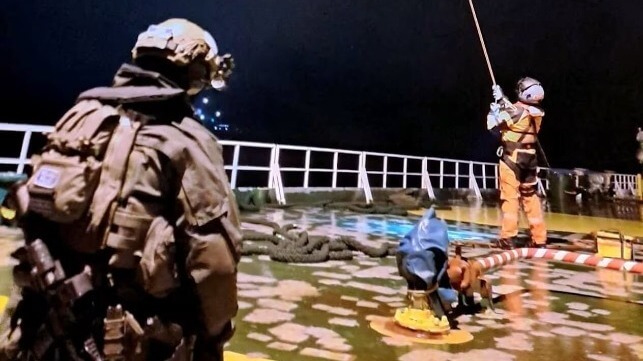
A Finnish tactical police boarding team ropes down to the deck of the Eagle S, Dec. 25-26 (Finnish Border Guard)

Published Jan 13, 2025 2:20 PM by The Maritime Executive


Finnish police have issued a travel ban to a ninth member of the crew of the tanker Eagle S, which is suspected of cutting multiple subsea power and communications cables in the Gulf of Finland on Christmas Day. 

On Dec. 25, Fingrid's EstLink 2 power transmission cable and four subsea telecom cables suddenly shut down. The outages corresponded to the position of the tanker Eagle S, an LR1 associated with the Russian-controlled "shadow fleet." In response, Finland dispatched a police tactical team in a helicopter and asked Eagle S to divert into Finnish territorial waters. The crew agreed to comply, and the tanker has been detained ever since. In addition to the police detention order, eight crewmembers were banned from leaving the country, the ship's cargo was arrested, and the vessel was given an administrative detention for multiple "serious" safety deficiencies. 

On Monday, Finland's National Bureau of Investigation announced that investigators have added a ninth crewmember to the list of criminal suspects connected to the cable damage incident. All nine face possible charges of aggravated vandalism and aggravated interference with telecommunications, and have been served with a travel ban to ensure that they stay within reach during the investigation. 

Chief Criminal Inspector Risto Lohi told YLE on Monday that the investigation is now focused on determining whether there was intent to cause the damage. The police continue to question the crew, with a focus on the deck department. 

"The investigation is now continuing with crew interviews, underwater investigation and technical investigation. At this stage, the focus is shifting to analyzing the material already collected," he said. 

Investigators confirmed Monday that they believe that the tanker could have continued onward to damage additional subsea infrastructure if it had not been stopped. Possible further targets could have included the Estlink 1 subsea cable - the backup for the Estlink 2 - and the Balticconnector gas pipeline. All of these subsea links are important for energy security in the Baltic states, which are currently attempting to wean their grids off of reliance on Russian electrical power. 

"There would have been an almost immediate danger that other cables or pipes related to our critical underwater infrastructure could have been damaged," Lohi told Reuters.

After three subsea cable damage incidents in little more than a year, NATO has agreed to take action to protect its members, including its two newest states. Sweden - which just joined NATO last year, following Finland - is now planning to contribute three naval vessels for subsea security operations in the Baltic. The warships will be under NATO control and will deploy to monitor traffic and subsea cable integrity. 

The suspected anchor-drag sabotage incidents have affected multiple NATO members. Sweden believes that an earlier cable incident involving the Chinese bulker Yi Peng 3 in Swedish waters may have narrowly missed a subsea power link. "There are traces of an anchor, probably from Yi Peng 3, also in connection with NordBalt-cable, that is, the connection between Sweden and Lithuania. This obviously illustrates the seriousness of the situation we find ourselves in," Civil Defence Minister Carl-Oskar Bohlin told media on Sunday.

On Tuesday, Finland will host the Baltic Sea NATO Allies Summit in Helsinki, where subsea security will be high on the agenda. 


Singapore Manages Response to Two Sinkings in One Weekend

Lifering
Public domain / Pixabay

Published Jan 12, 2025 2:41 PM by The Maritime Executive


On Sunday, Singapore's Maritime and Port Authority rescued eight crewmembers from a sinking tanker just off Pedra Branca, a lighthouse installation at the eastern entrance to the Singapore Strait - the second sinking in two days in the Singaporean search and rescue zone. 

At about 1540 hours, the master of the small product tanker Silver Sincere reported that the vessel was taking on water and that the crew was abandoning ship. All crewmembers safely evacuated into a liferaft, and they were saved by a good Samaritan freighter, the Intan Daya 368. All survivors were in good health when delivered to shore at Batu Ampar, Indonesia. 

With search and rescue complete, the MPA has transitioned to a pollution-control response for the Silver Sincere. Salvage tugs and a spill-abatement vessel have been activated and dispatched to the scene; as of yet, no oil pollution has been reported. 

So far, the busy traffic lanes of the Singapore Strait have not been affected, but the MPA is broadcasting a safety advisory to shipping to stay clear of the wreck site. 

Just one day earlier, a good Samaritan ship rescued the crew of a sinking Vietnamese freighter in the South China Sea, off the coast of peninsular Malaysia but within Singapore's vast search and rescue zone. The yard-and-stay freighter Dolphin 18 sent a distress call on Saturday morning and reported that they were going down. The call was received by the 2,200 TEU container feeder Nicolai Maersk, which reported it to the Singapore MPA Maritime Rescue Coordination Center (MRCC) at about 0700 hours. Nikolai Maersk safely rescued 18 crewmembers from their liferafts, and all were in good health. Dolphin 18 was reported sunk.  


New Memorial Marks 50th Anniversary of Loss of Edmund Fitzgerald

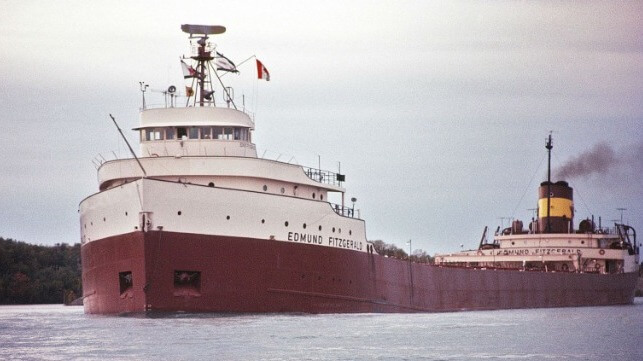
Edmund Fitzgerald

Published Jan 12, 2025 4:01 PM by The Maritime Executive


The tragic loss of bulk carrier Edmund Fitzgerald is set to be permanently engraved in a marker, five decades after it sank with the loss of all hands. 

On the 50th anniversary of the sinking of the SS Edmund Fitzgerald on Lake Superior, a group in Superior, Wisconsin, called the Friends of the Fitz is seeking to raise $7,000 to purchase a Wisconsin Historical Society marker to honor the bulker and her crew.

The marker would be installed on Barkers Island, since Superior was the last port of call for Edmund Fitzgerald. The story of the vessel's loss is a maritime legend in the Great Lakesthe bulker sank on the evening of November 10, 1975, during a particularly rough storm on Lake Superior. There were no survivors amongst the ship’s 29 crew.

Plans to erect the marker come days after Superior Mayor Jim Paine proclaimed 2025 as the “Year of the Fitz”, setting the stage for commemorative events to remember the sinking of the ship, which was a constant presence on Lake Superior for 17 years. Her wreck is located some 17 miles north-northwest of Whitefish Point, Michigan.

Built in 1958, the 729-foot-long Edmund Fitzgerald was the largest and fastest Great Lakes ship of her era. Sometimes called the Mighty Fitz or Big Fitz, the ship set multiple records for the largest season-hauls and was the first lake freighter built to the maximum St. Lawrence Seaway size. The vessel had a capacity of 26,000 tonnes.

During her productive life of service, Edmund Fitzgerald carried taconite iron ore from mines near Duluth, Minnesota, to iron works in Detroit, Toledo and other Great Lakes ports. Her tragic sinking occurred in 1975 after embarking on a voyage from Superior, Wisconsin, near Duluth carrying a full cargo of ore pellets with Captain Ernest M. McSorley in command.

On November 10, the ship was caught in a severe storm on Lake Superior, with near hurricane-force winds and waves up to 35 feet (11 meters). In these extreme conditions, she took on water and sank quickly, with the loss of all hands. Investigators were later determined that the probable cause of the accident was the sudden massive flooding of the cargo hold due to the collapse of one or more hatch covers.

“There are so many memorials out there and ways that other communities have remembered their real part in the Edmund Fitzgerald’s history and Superior is no different,” said Jenny Van Sickle, Superior City Councilor. “So the Friends of the Fitz are raising money in order to purchase and install our own official marker here in Superior.”

The historical marker will be another piece of artifact that will help keep the memories of Edmund Fitzgerald and her crew alive for decades. It will join the ship’s 200-pound bronze bell, which was recovered in July 1995 and is now on display in the Great Lakes Shipwreck Museum at Whitefish Point. The ship’s bow anchor is on display at the Dossin Great Lakes Museum.


China Wins Release of Fishing Boat Held off Somalia

fishing boat warship
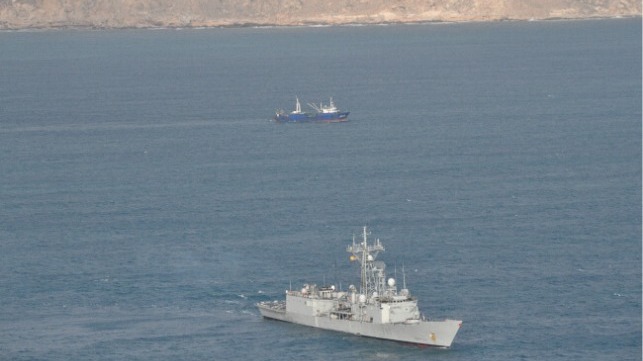
EUNAVFOR Atalanta monitored the situation but the vessel remained in Somalia's territorial waters (Atalanta)

Published Jan 13, 2025 3:18 PM by The Maritime Executive


The Chinese Embassy in Somalia announced that the fishing vessel seized by pirates in November has been released. They said the crew was unharmed and the vessel was moving into “safe waters.” 

The incident involving the fishing boat was reported at the beginning of December by EUNAVFOR Atalanta, the EU mission to monitor security off the Horn of Africa. The report said Atalanta had been notified and investigated but they classified it an armed robbery because the vessel remained in territorial waters. In today’s statement, the Chinese Embassy said attempts to sabotage the China-Somalia cooperation are in vain citing the “profound traditional friendship.”

Details of the release were not provided with the embassy only speaking of the “unremitting efforts of the Chinese government.” Atalanta had reported it was monitoring the vessel and in contact with the authorities in Somalia and China.

In mid-December, reports surfaced that the pirates increased their demand to $10 million for the release of the vessel. This came after reports said the Chinese offered $300,000 and later 1 million dollars for the release of the ship and its crew.  Associated Press in Somalia reports today it is unclear if any money was paid.

The vessel had been boarded it was revealed in late November. When Atalanta spotted the vessel, it reported “the fishing vessel is under control of the alleged pirates, some of whom are carrying AK-47s and machine guns.”

The vessel was taken to the Puntland region which is semi-autonomous of Somalia. The region is known for its support of the piracy activity.

Atalanta’s data shows that it has documented reports of 20 attacks in 2024 including ones that were not successful in seizing vessels. They said there were 15 suspicious approaches reported during the year. It however notes that there is an unknown number of unreported/unconfirmed incidents involving dhows and smaller vessels.


Turkey Sees Opportunity in Sanctioned Russian Yacht Market

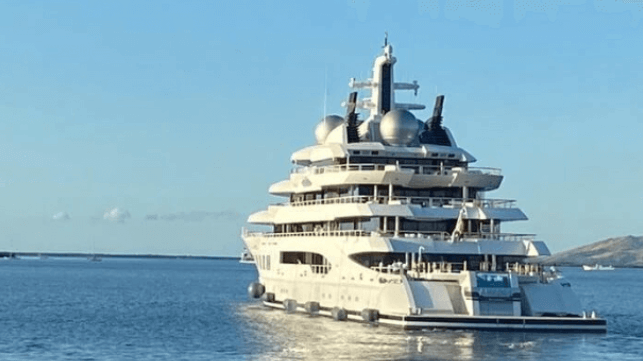
Russian yacht
Courtesy U.S. Department of Justice

Published Jan 13, 2025 6:42 PM by The Maritime Executive


Since the Russia-Ukraine war started in 2022, Turkey has become a popular destination for Russian superyachts evading western sanctions. Reportedly, this has created a new business venture for Turkish yards looking into repair and maintenance of these luxury vessels. In the past one year, some shipyards based in Tuzla, Istanbul have been expanding their capacity to service superyachts.

Last week, KRM Yacht Refit & Rebuild reported completing the installation of a 900-ton lift mobile crane, said to be the largest of its kind in Turkey. This new lift ability will allow the KRM yard in Tuzla to accommodate yachts of up to 70 meters in length.

In an interview with the Turkish media Patronlar Dunyasi, the founder of the KRM Shipyard Kerem Baser, said that the new capacity will allow his yard to repair and renew larger yachts.

“Most Russian billionaires’ yachts are currently in Turkey. They have been wanting to renovate these yachts but our previous crane could only handle smaller vessels of up to 40 meters in length. Looking ahead, we are aiming to handle renovation of yachts of up to 100 meters,” commented Dunyasi.

With intensifying economic sanctions from the West, superyachts linked to Russian oligarchs are now unable to access repair and maintenance services from European yards. According to Dunyasi, this presents a lucrative opportunity for Turkish yards.

“It is not just about maintenance and repair; the yachts can be entirely renewed or even redesigned. If a yacht is from a good manufacturer, refitting it could cost more than $6 million. This will open up new opportunities for Turkish manufacturers operating in the Tuzla shipyard ecosystem,” added Dunyasi.

Turkey maintains a neutral stance on the ongoing Russia-Ukraine war. As a result, Turkish waters have become a safe haven for superyachts linked to Russia.


China's Opening Salvo Against Taiwan Will Likely Be a Partial Blockade

A law enforcement "quarantine" of specific, strategic imports could be an attractive method for Beijing

CCG
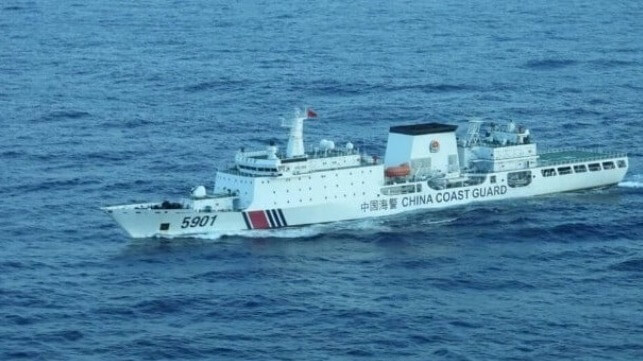
The China Coast Guard has honed its "gray zone" interdiction tactics in standoffs in the South China Sea

Published Jan 12, 2025 3:49 PM by The Strategist


[By Jane Rickards]

The West had better think carefully about how it would handle China imposing a nominally civil quarantine on Taiwan, because that’s the tactic that increasingly looks like an opening move for Beijing in taking control of the island.

A quarantine, imposing limited controls on access to the island, offered strong advantages for China even before Taiwan said in October that a blockade, surrounding it with forces to cut off all access, would be an act of war. Taiwan’s statement means China is even more likely to choose quarantine as a first step.

This use of the word ‘quarantine’ was coined in an important Center for Strategic and International Studies report last year. The authors foresaw that the Chinese government might ban only certain types of goods from entering Taiwan, or it could forbid ships from using a certain port. The measures would be enforced by nominally non-military forces, such as the China Coastguard.

Conceivably, China could see whether it could get away once with a quarantine action, then, noting success in asserting its authority, do it again and gradually tighten restrictions until they turned into a blockade—salami slicing, as it does in so many areas of international affairs.

First among the inherent advantages of quarantine for Beijing is that, unlike more warlike action, it brings no commitment to go all the way, to conquer or be defeated. It would raise no great expectation among the highly nationalist Chinese people of imminent conquest of Taiwan. So if the measure met stiff resistance, the Chinese Communist Party could back away from it, declaring that some civil administrative objective had been achieved.

Yet forcing it to back down would be difficult for Taiwan and its friends, which is another advantage of the quarantine tactic. They would have to escalate with warships and possibly armed force to stop a China Coast Guard ship from intercepting a freighter, for example. This would put Taiwan and the West in the unfortunate position of looking like the initiators of military conflict. On the other hand, if Taiwan and the West did nothing, and intimidated shipping companies mostly went along with the quarantine, China’s narrative that it had control over Taiwan would be strengthened.

Taiwanese Minister of National Defence Wellington Koo said in October that Taiwan would consider a blockade an act of war and would respond on a war footing after massive Chinese military drills were held near the island.

A quarantine would probably cause little or no disruption to China’s own trade, whereas the risk of military confrontation in a blockade could frighten ship owners into avoiding the Taiwan Strait and Chinese ports near it. This would severely affect China’s economy: most shipments that pass through the Taiwan Strait are Chinese imports and exports.

A quarantine would probably involve no dramatic announcements from Beijing. Instead, China could claim it merely needed to expand customs procedures in the Taiwan Strait and surrounding waters where China believes it has jurisdiction. This might involve the Chinese coast guard carrying out inspections of ships and boarding non-Chinese vessels to inspect their paperwork. Vessels that refuse to comply could be forced to turn back or even be hit with water cannons. The coast guard could then restrict vital imports that enter Taiwan, such as energy products. This could cripple the Taiwanese economy and have the effect of shattering the Taiwanese people’s morale and willingness to resist Beijing.

Throughout 2024, China’s coast guard increased intrusive patrols in waters around Taiwan’s outlying Kinmen archipelago, which is close to China.

In a possible early sign of a quarantine tactic, China’s coast guard in February 2024 intercepted a Taiwanese sight-seeing ferry that was sailing around Kinmen’s main island during a period when cross-strait tensions were running high. Chinese coast guard officers boarded the Taiwanese boat and asked to inspect the documentation of the crew, before disembarking a while later. Then, in mid-May, the Chinese state media outlet China Daily said, ‘In the future, this ‘Kinmen model’ of law enforcement inspections can also be applied to Matsu and Penghu islands, and even the entire Taiwan Strait.’

Among the difficult options for Taiwanese and Western response might be beefing up of Taiwan’s own coast guard, which is vastly smaller than China’s, and training it to respond to such tactics.

The US could also impose financial sanctions on China if it imposed a quarantine and persuade other democracies to join in. In doing so, the West would be hitting back at China using tactics that, like China’s quarantine, fall short of war. This might also meet the incoming Trump administration’s goal of weakening China, which it views as an economic competitor.

Whatever the response will be, plans are needed. Quarantine is so attractive a measure for China that Taiwan and its friends must be prepared.

Jane Rickards, a journalist and frequent contributor to The Economist, has lived in Taiwan since 2004.

This article appears courtesy of The Strategist and may be found in its original form here

The opinions expressed herein are the author's and not necessarily those of The Maritime Executive.


Marine Science Nonprofit Elects "The Ocean" to Join its Board

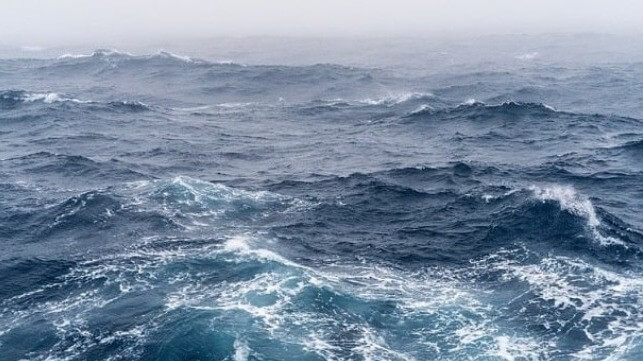
Southern Ocean wave action
Christopher Michel / CC BY SA 3.0

Published Jan 12, 2025 4:37 PM by The Conversation


[By Anna Turns]

The ocean absorbs more than 90% of the atmosphere’s excess heat trapped by human-emitted greenhouse gases. It plays a vital role in mitigating the climate crisis and our health relies on that of the ocean. But often, it is simply considered a place to extract useful resources such as food and minerals.

The charitable research institute Scottish Association for Marine Science (Sams) recently voted to make the ocean a trustee on its board, represented either by a specific person or a working group that can help hold the organization to account and speak up for the ocean’s interests. The Conversation spoke to Sams’ director, Nicholas Owens, a professor of marine science, about why he thinks this step could help charities, organizations, and businesses make decisions that are healthier for the ocean – and the planet.

How can the ocean be a board member?

The move to empower the ocean as a “board trustee” mirrors legal innovations, such as the recognition that rivers and ecosystems have legal “personhood” in countries such as Ecuador, India and New Zealand. In 2022, the Scottish beauty company, Faith in Nature, elected “nature” to its board, while adventure clothing brand Patagonia announced that Earth would be the US company’s only shareholder.

Human activities are disrupting marine ecosystems at an alarming rate. But most of these human activities are, to a significant degree, controlled by decisions taken in boardrooms. By considering how decisions will affect the ocean as a whole, our board can hopefully make significant improvements and inspire other organizations to prioritize ocean health and sustainable marine development above resource extraction or financial gain.

How significant is this move?

I believe that electing the ocean to be a trustee of Sams could be one of the most important decisions in our history. It challenges outdated models of governance and champions a future where the ocean’s voice is central to decision-making.

This might sound like a trivial gimmick, even whimsical. But after several months of careful discussion and debate, the trustees and I are convinced that even with a strong empathy for ocean conservation and a well-informed understanding of marine environmental matters, the decisions we tend to make are anthropocentric.

This is a fundamental step change. It’s a reminder to consider this extra dimension every time a decision is made at board level and to ensure that an ocean-centric perspective seeps into everything we do.

Swimming, sailing, even just building a sandcastle - the ocean benefits our physical and mental wellbeing. Curious about how a strong coastal connection helps drive marine conservation, scientists are diving in to investigate the power of blue health.

Why does a research institute run by and for humans need an ocean-centric perspective?

Human interests are usually given precedence, and concern is limited to the impact on the ocean rather than the long-term interests of the ocean. This anthropocentric approach is near universal.

Take, for example, the UN’s “ocean decade”, a major global research initiative that aims to unlock “the science we need for the ocean we want”. While the project is worthy and ambitious, the pronoun “we” is telling.

Some of the UN’s ocean decade ambitions are ocean-centric, at least in part, but most are focused on the food we take from the sea, the pollution we sometimes allow to enter the sea, and the marine urbanization we intend to develop offshore. While the ocean decade (from 2021 to 2030) is a magnificent way to mobilize the international marine science community, even the best-intentioned ambitions invariably prioritize human benefits.

So if this isn’t a gimmick, how will your board meetings now differ? Who will be speaking up for the ocean?

Our internal working group is currently deciding how to practically operate. For example, choosing between appointing one person (perhaps, an environmental lawyer) or a larger working committee to represent the voice of the ocean at each board meeting. Whatever the outcome, trustees will be holding our organisation to account from a less anthropocentric perspective.

More widely, this move has already started shifting the sorts of conversations our teams are having on a daily basis. From a research perspective, we’ve always been ethical, but now, this can be a catalyst for a deeper cultural change. I’m proud that lots of our staff are excited to work for an organisation that is taking this more considered approach.

What does it mean for your researchers and your marine research?

We already have teams focusing on the blue economy, investigating how best we can live alongside ocean ecosystems sustainably and mindfully without causing harm. But, some of the debates we have will change and affect the types of marine research we carry out in the future.

Take our deep sea research, for example. We carry out research to investigate deep-sea ecosystems. The results of our studies can be used for many purposes, including to inform the debate about deep sea mining licences.

If our research is not doing any harm, perhaps it’s fine for us to take samples and further investigate what’s there. But – and this certainly does take a leap in thinking – what would the ocean say about this? Should even research into such contentious topics be carried out?

This is a different way of looking at this argument, from a more neutral and less ego-centric perspective. By becoming more sensitive to the needs of the ocean environment, our suite of research interests may well evolve slightly in the future.

Could it lead to any negative consequences for the research institute?

Our current ethical policy is based on conventional norms. Taking an ocean-centric perspective could lead to different outcomes. If followed genuinely, this approach could result in poorer short-term financial performance. But we’re prepared to make a possible short-term sacrifice to ensure more positive outcomes for the ocean in the future.

Electing an ocean trustee is not just a practical step. It is a philosophical statement. By recognizing that humans are part of nature and not separate from it, this challenges anthropocentric models of governance that prioritize human interests over the natural world.

Our society’s survival depends on the health of the planet’s ecosystems. This philosophy is deeply rooted in many Indigenous cultures that consider nature a partner, not a commodity.

Anna Turns is Senior Environment Editor at The Conversation. Since studying biology, Anna has worked in the media for more than two decades, from TV production to magazine journalism and radio broadcasting. As a freelance environmental journalist, she has written regularly for many national publications including The Guardian, BBC Future, New Scientist and Positive News with a focus on solutions. 

This article appears courtesy of The Conversation and may be found in its original form here

Top image: Christopher Michel / CC BY SA 3.0 

The Conversation

The opinions expressed herein are the author's and not necessarily those of The Maritime Executive.
 

Canada Makes First Naval Deployment to Antarctica

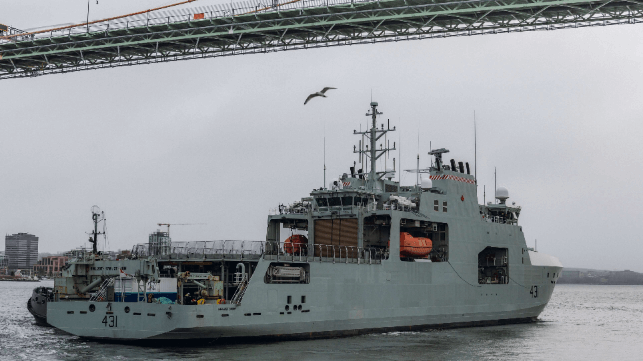
HMCS Margaret Brooke departs for Antarctica (Royal Canadian Navy)

Published Jan 12, 2025 10:31 PM by The Maritime Executive


Canada has made its first-ever naval deployment to Antarctica. Last week, the Royal Canadian Navy vessel HMCS Margaret Brooke departed Halifax bound for the South American and Antarctic regions. The deployment of the vessel marks the start of Operation Projection 2025, as Canada eyes to enhance its cooperation with partners in South America. In addition, the expedition is meant to support Canada’s Antarctic scientific research.

“It is a historic moment as our Navy takes a step further south, into the Antarctic region. The crew on board HMCS Margaret Brooke embarks on a long and strenuous journey that will bring forward Canada’s presence and diplomacy to nations throughout the Central and South Americas,” said Rear-Admiral Josée Kurtz, Commander of the Canadian Maritime Forces Atlantic.

HMCS Margaret Brooke is a Harry DeWolf – class Arctic and Offshore Patrol Vessel (AOPV). The vessel entered naval service in October of 2022 as the second AOPV delivered under the Canadian National Shipbuilding Strategy. The vessel is meant to enhance Canada’s presence in the Arctic waters. However, during this expedition, the vessel will for the first time show its operational capabilities in the Antarctic maritime domain.

The expedition is scheduled to last for four months, with the ship expected back in Halifax in May. 85 crew members are onboard, and scientists from the National Research Council will join the ship in Punta Arenas, Chile for a two-week tour south of the Antarctic circle.

“The scientists will be doing some core sampling (of the ocean floor), some oceanography and some marine geology. HMCS Margaret Brooke was deployed north of the Arctic circle this past summer. With this deployment south of the Antarctic circle, it will be the first Canadian warship to reach the northernmost and southernmost points of the Earth within the same year,” said Commodore Jacob French, Commander of the Canadian Atlantic Fleet.  


Iran's Spy Ship Activity Extends Beyond the Red Sea

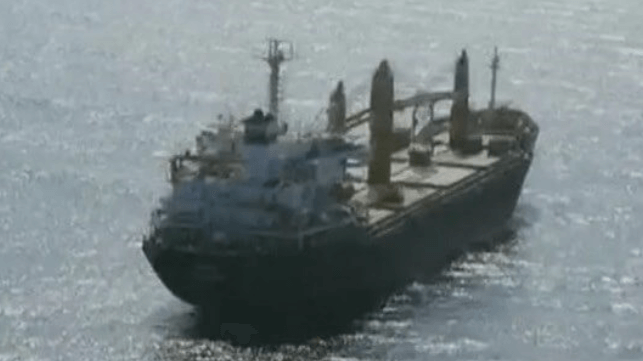
The Iranian spy ship Saviz has unusual aerials on its mast for a merchant vessel (Tasnim)
The Iranian spy ship Saviz has unusual aerials on its mast for a merchant vessel (Tasnim / CC BY)

Published Jan 12, 2025 1:38 PM by The Maritime Executive


Two U.S. Treasury-sanctioned ships have been the focus of attention for the maritime community interested in Iranian spy ship activity.  But these are not the only Iranian ships involved in intelligence activity contributing to attacks on merchant shipping.

Firstly the MV Saviz, and then the MV Behshad, maintained a picket position, stationary off the Dahlak Bank just inside Eritrean territorial waters in the Red Sea, from late 2016 until January 2024.  Both ships are controlled by the state-owned Islamic Republic of Iran Shipping Line Group (IRISL).  But their unusual patterns of activity, reporting in the Israeli press and the observed presence on-board of uniformed personnel, strongly suggested that the vessels were being operated by the Islamic Revolutionary Guard Corps (IRGC) Navy (Nesda). 

This designation was effectively confirmed when the Saviz was damaged by limpet mines on April 6, 2021, an attack subsequently acknowledged by Israel.  Saviz limped home to Bandar Abbas, and was replaced on station by her sister ship, the Behshad.  The Behshad too was forced from this position in January 2024, and took up station instead in the Gulf of Aden.  According to U.S. official speaking to ABC News the U.S. subsequently conducted a cyberattack against the Behshad, which abandoned its post off Djibouti and returned to Bandar Abbas in April 2024.

Both the Saviz and the Behshad will have played an important role in the collection of intelligence and its dissemination to Iran’s Houthi allies, in support of Houthi attacks on merchant shipping. Both vessels are equipped with standard maritime radars, one mounted forward atop a mast, a second mounted aft with a complex aerial array unusually high above the bridge, with a third radar or antenna protected by a radome on a second bridge mast. A detection range of 50 nm could be expected from such an array. 

Through a satellite receiver, the ships could also receive one-meter resolution imagery, with a less than 24-hour time delay, from Iran’s own Khayyam satellite (and probably also from the Russian Kanopus-V imagery satellite constellation). Both ships could also communicate with the Houthis’ fleet of fishing boat intelligence collectors, or launch its own small boats for scouting purposes. 

Fusing this all-source intelligence with data from aggregated Automatic Identification System (AIS) information, gathered from those ships traveling with their AIS systems turned on, both ships would be able to maintain an accurate maritime area activity plot, albeit not sufficiently timely to be used directly for target engagement by missiles or drones without closing approach target acquisition systems.

With the Saviz and Behshad now effectively chased away from the Red Sea and Gulf of Aden area, the same intelligence collection role has now likely been passed to Iran’s regular Navy (Nedaja), whose grey paint provides a degree of sovereign protection, although not necessarily from the limpet mine threat.  Currently, the Nedaja presence in the area is being maintained by the 100th Flotilla, consisting of the frigate IRINS Dena (F75) and logistics supply ship IRINS Bushehr (L422), due rotation shortly.

Saviz and Behshad, valuable assets still, have now been redeployed to safer waters.  Behshad now appears to be operating in the Straits of Hormuz area, usually off Qeshm, giving greater depth to Iran’s coastal defenses in this sensitive area.  Saviz is believed to still be on station in the northern Arabian Sea, where she was implicated in the attack by an Iranian Shahed-136 drone on the Indian-crewed chemical tanker MV Chem Pluto off Porbandar on December 23, 2023.  In the follow-up to the attack, the Indian Navy announced that they had boarded the Saviz in international waters but found nothing incriminating, a bold and resolute action for which no supporting evidence was provided and which was not accompanied by any complaint from Iran – but which appears to have brought similar such attacks to an end.

Also boarded and searched in the Indian follow-up was the IRISL container ship MV Artenos, suggesting that the Indian authorities believed this Iranian ship also had a role in the attack.  MV Artenos is an active merchantman and made 27 port calls in 2024, sailing normally between the Gulf and India.  It was also spotted in suspicious circumstances in the same month southeast of Socotra, and may therefore be acting in a covert intelligence auxiliary role.

Another Iranian container ship, the MV Shiba, also IRISL-owned and US-sanctioned, was tracked by UK commercial intelligence firm MariTrace behaving suspiciously in January 2024.  En route from Jebel Ali towards the Suez Canal, Shiba paused for 8 hours off Bandar-e Jask on January 10.  Resuming her voyage, her path would have crossed that of the tanker Suez Rajan, which was seized by the Nedaja the next day before being diverted to Jask. 

MV Shiba left from her normal commercial routing again several days later, leaving the Internationally Recommended Transit Corridor, sailing southwards to sail in close company with the Behshad for several days off Djibouti. The two ships were joined by IRINS Alborz (F-72) and IRINS Bushehr (422).  Again MV Shiba is active commercially, having made 43 port calls in 2024, but on tenuous evidence also appears to have an auxiliary intelligence role, well disguised by her legitimate commercial activity.  Other Iranian-owned merchantmen are likely to have a similar reporting role.

Much of Iran’s prosecution of asymmetric warfare makes an assumption that, whatever its own behaviors, its adversaries will be loath to break international conventions and the International Law of the Sea.  However, when those adversaries do take resolute action to protect their interests, the Iranians are exposed as defenseless and are deterred.  In this context the Nesda has not yet deployed its drone carriers Shahid Mahdavi (C110-3) and Shahid Bagheri (C110-4);  with their drone and missile arsenals, these highly vulnerable converted merchant ships pose a substantial threat – but only when they are not robustly challenged.


U.S. Sanctions Module Builder Wison Offshore for Working on Arctic LNG 2

Yamal LNG

Published Jan 13, 2025 7:47 PM by The Maritime Executive


Among other measures targeting Russia's energy sector, the Biden administration has sanctioned Zhoushan Wison Offshore for its role in supplying Novatek's Arctic LNG 2 plant with power modules - key equipment for bringing the blacklisted project online. 

According to the U.S. State Department, Wison supplied power generation modules for Arctic LNG 2's barge-based liquefaction trains, which (until recently) were under construction near Murmansk. After the modules were completed at Wison's plant, the company allowed them to be shipped to the Arctic LNG 2 construction site via a series of complex transfers. The modules were transshipped multiple times between different module carriers, including the U.S.-sanctioned ships Hunter Star and Nan Feng Zhi Xing, which have also been blacklisted for involvement in Russian energy projects. Some of these ships took steps to conceal their identity and location, the department noted. 

Wison is a leading offshore shipyard and module fabricator, and its blacklisting has implications for other customers. Among other projects, Wison is building the Nguya LNG floating liquefaction plant for Eni, a key part of the Italian supermajor's phase two development plans for new fields off Pointe-Noir. Nguya was just launched in November, and was 80 percent complete at that point; the effects of Wison's blacklisting are uncertain, but U.S. blocking sanctions typically complicate the process of making payments, since they prohibit the use of the U.S. banking system.

The State Department also sanctioned HongKong Yaqing Shipping Co. Ltd. for its role in transporting the modules from Wison, along with the company's heavy lift ship Ocean 28. It also designated two more LNG carrier operators, Skyhart Management and Avision Shipping, for managing two ships that took on blacklisted cargo from Arctic LNG 2. The department identified their vessels as the Mulan, Pravasi and Onyx. 

Also sanctioned were Rosatom Chief Executive Officer Alexey Likhachev and members of Rosatom’s board, including Vyacheslav Ruksha, head of the Northern Sea Route Directorate. In addition to its role in Russia's nuclear program, Rosatom is the operator of Russia's nuclear-powered icebreaker fleet and the manager of the Northern Sea Route - the long icebound stretch of coastal water north of Siberia. Ruksha, as head of the Northern Sea Route directorate, is Russia's lead manager for Arctic navigation between the Barents Sea and the Bering Strait.