Sunday, January 26, 2025

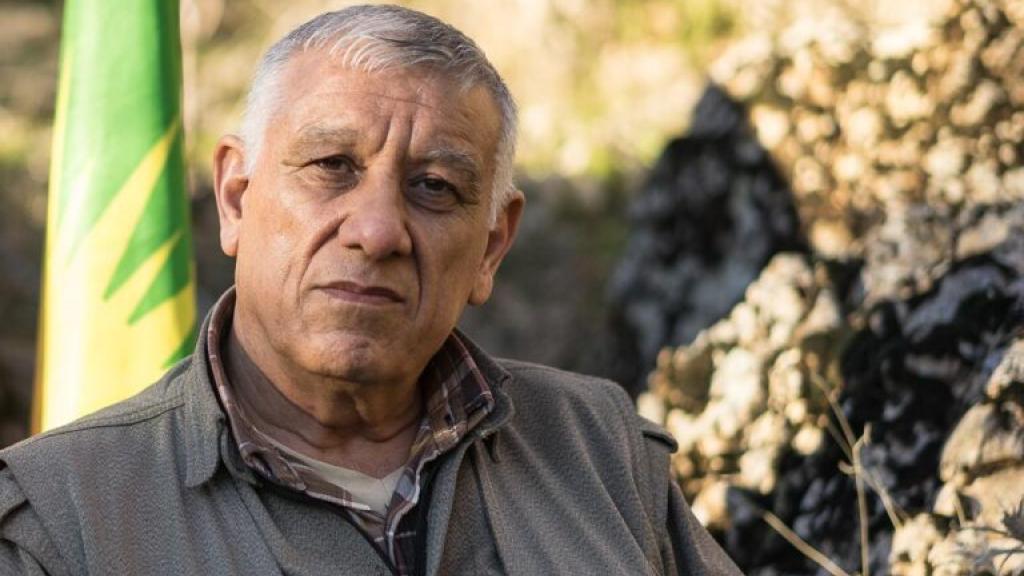
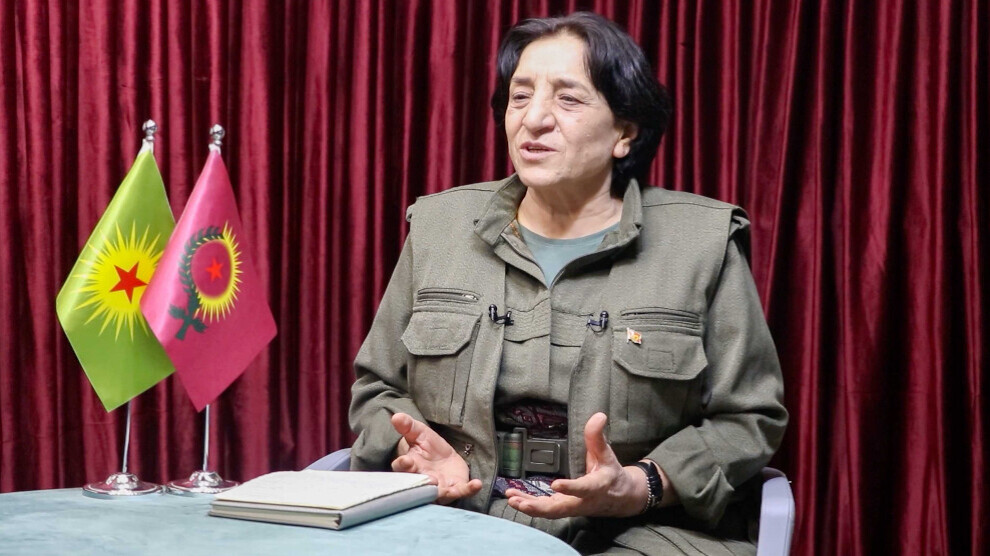
Sozdar Avesta: The Turkiye government should take steps to show it wants to solve the Kurdish question

Sozdar Avesta said that Abdullah Öcalan has a roadmap for the solution to the Kurdish question, but the state is not clear, and added that some steps are needed.


ANF
NEWS DESK
Sunday, 26 January 2025, 07:5


KCK General Presidential Council Member Sozdar Avesta spoke about the latest developments and emphasized that Erdoğan and the AKP are not clear.

On December 28, 2024, a delegation of the DEM party had a meeting with people's leader Abdullah Ocalan in Imrali. During this meeting, Öcalan issued a 7-point declaration with concrete suggestions to pave the way for a solution and for achieving peace. How do you read the efforts made by Öcalan for this process? How is this process currently developing, and where is it heading?

Before answering your question, I would like to draw attention to the current massive attacks against North and East Syria that are particularly focused on the Tishreen Dam. In the most recent attacks by the genocidal fascist Turkish state and its gangs, six very valuable and honorable patriots were martyred in one day. Among them was the Kurdish actor Bave Teyar (Cuma Xelil), who always knew how to depict the pain, happiness, beauty, and problems of our society with his art. Then again, Menice Haco Heyder, a member of the General Assembly of the PYD, who was one of the pioneering women in this resistance. I commemorate all of them with respect, love, and gratitude and offer my condolences to their families, to the Kurdish people, and to all peoples of North and East Syria. I also wish a speedy recovery to the wounded. These dishonorable and despicable attacks against the people show the whole world their level of hostility against the Kurdish people. Those who were martyred are the pioneers and heroes of our society. The enemy is taking revenge on the Kurdish people by killing the artists, intellectuals, politicians, and pioneers of this society. I strongly condemn these attacks.

Now coming to your question; as you said, the delegation went to Imrali on December 28, but of course, there was a process before that. On October 1, the president of the MHP, Devlet Bahceli, stretched out his hand to the MPs of the DEM party in the Turkish parliament. Since then, there have been many different discussions in Turkey and in northern Kurdistan. Then Rêber Apo's [Abdullah Öcalan] meeting with his family and later on with the delegation of the DEM party followed. All these are interconnected with each other and form this process. The discussions and the messages given by Rêber Apo are very decisive. The conditions in which Rêber Apo is living, especially since 2015, are severe and total isolation. All communication with the outside world has been cut off, and he is kept in a cell on the prison island. Despite this, Rêber Apo worked out seven points and formulated a declaration clearly formulating what needs to be done in order to achieve the solution of the Kurdish question and the problems in the Middle East. It is clear what the duties of the parliament, the political parties, the current government, and the party that represents the will of the Kurdish people in the legal field are. It is also fully clear what the position of Rêber Apo, who leads the people of Kurdistan and the revolution, is.

The Kurdish people and their international friends have struggled relentlessly for the Kurdish question to be discussed and solved in this way, and this struggle is still going on. The beginning of such a process itself is a result of this struggle. If the struggle had not been successful, if it had not spread to all parts of Kurdistan, if this resistance had not been carried out, if the true face of the genocidal Turkish state had not been exposed, such a process would not have emerged. Over the period of the past ten years, they have been terrorizing the people of Kurdistan, their international friends, and democratic politics.

In the meantime, the Turkish state and the AKP government have given this process a name; they call it ‘Turkey without Terror’. Comrade Helin Umit and a few other comrades have already underlined in recent interviews that it is us who strive the most for such a process to get rid of terror, because we have been subjected to the terror of the Turkish state more than anyone else. The people of Kurdistan, particularly the women, and the other oppressed peoples know what kind of terror the state is carrying out. For more than one hundred years there has been terror in Kurdistan. If it were not for this state terror, maybe there would not be a need for such a process today, because perhaps there would have been no need for the Kurdish people and the freedom movement to take up arms. Why did it come to this point? At the beginning of the movement, there were no weapons; it did not use violence as a method of struggle. When the Kurdish people needed to defend themselves, they took up arms and used them to defend themselves. Weapons were not taken to invade other people’s countries and oppress them; on the contrary, Kurdistan was invaded, plundered, and genocide was practiced against the Kurdish people. The people were displaced from their lands, and all methods of oppression were used. That is why the freedom movement resorted to arms to defend the people. Rêber Apo has been struggling according to this line for 40 years to achieve a solution. Although armed struggle was waged, Rêber Apo was always in search. The weapon was a tool to come closer to the solution of the Kurdish question. For example, in 1993, during the Turgut Ozal period, a process started with the mediation of Jalal Talabani. Rêber Apo was determined, strong and believed in himself then as he does now. He took a stance, but Turgut Ozal was poisoned and killed by the deep state, which was not in favor of a solution, and so back then, they set an end to the process.

Rêber Apo evaluated all the previous efforts and processes well, drew conclusions, and stated that he was ready for a solution. We know that he has gathered all his power for the solution of the issue and the success of the process. The declaration consisting of seven points needs to be seen in this light. The delegation went and met with all political parties of the parliament within this framework, and positive statements were made, but no practical steps were taken. One of the first steps that needs to be taken is for the parliament to step in. The parliament has to convene, and a commission needs to be established, but no such discussion is taking place. The press is solely serving the special war and is mostly talking about whether the PKK will lay down its arms today or tomorrow. And it does this using a dirty and poisonous language. They want to contaminate and obstruct this process with such attacks. These are those who sustain themselves through war, those who gain rent, and those who are enemies of the peoples. Great struggle must be waged against this. They discuss everything, but they do not discuss Rêber Apo’s rights. If they really want to develop a solution, Rêber Apo’s conditions must be improved immediately. The isolation must be fully abolished. Rêber Apo must be physically free. His security and health conditions must be ensured so that he can carry out the process. Rêber Apo must be able to share his ideas with journalists and address the public. Rêber Apo is the interlocutor, but he is in isolation and cannot speak. This is the reason why all the discussions going on at the moment make no sense, because they are only one-sided.

The AKP government is not clear. The delegation that met with Rêber Apo also drew attention to this and stated that the state has no clear position yet. Rêber Apo’s conditions must be improved in order to clarify all these and develop a solution. The government must give up its dirty language and instead respect and approach the process seriously. If they do not approach the process in this way, no matter what they say, they will not get results. Because the discussions are not serving a solution. As I pointed out before, this state terror must stop immediately.

They are arresting journalists, are attacking North and East Syria and the guerrilla, and are continuing the isolation of Rêber Apo. His lawyers and family have been requesting meetings every week, but they are not allowed. At the moment, a global campaign is being carried out for the physical freedom of Rêber Apo. This is the demand of the Kurdish people and their international friends. Dozens of renowned people have sent letters to the Council of Europe for them to play a role in ensuring Rêber Apo’s free participation in the process. This struggle must continue. No one should make the mistake of thinking that just because there are meetings with Rêber Apo and discussions on the process, the global campaign for Rêber Apo’s physical freedom has achieved its goal. Thinking like this would lead to bad results; on the contrary, the struggle must be increased even more strongly. The global campaign for the physical freedom of Rêber Apo must be developed with richer methods, actions, and activities.

In 2015, there were also efforts to solve the Kurdish question; a declaration was issued back then on February 28, but Erdogan later broke the process by saying that he was not aware of such a thing. That is something your movement is always dragging attention to, but you also highlight that the Kurdish people are stronger than ever. In your perspective, how can an outcome like the one in 2015 possibly be prevented?

For our movement and our people, our representative and interlocutor is Rêber Apo. Rêber Apo has stated that he is ready, and he has prepared a seven-point declaration. The question is how ready the power in front of him is for a solution. It is necessary to focus on this point. In 2015, the declaration announced at the Dolmabahce Palace by the then HDP delegation and the government officials created hope among everyone that the Kurdish question would now be solved. But Erdogan and the AKP were more concerned with their own interests. They made some statements about a solution, but they still haven’t convinced themselves in terms of mentality. They are not taking risks. They have a wrong understanding. They think that a solution might weaken them, but on the contrary, those who solve this question that has existed for over a hundred years will be the greatest and strongest leaders of the region. If an honorable peace is achieved between the Kurdish and Turkish people, Turkey and Kurdistan will become the rising star of the Middle East. The basis for this is ready. The freedom movement has never had a problem with the Turkish people or the peoples of the region. Despite all the violence against our people, the freedom movement has always been the movement of the peoples, internationally, and has played such a role.

Now, however, it looks as if Erdogan is once again essentially thinking about how he can win another election. He recently gave a speech to this effect at a meeting of his party. He also went to Amed (tr. Diyarbakir) and spoke there about the history of the Kurdish and Turkish people, among other things. He also went to Riha (tr. Shanliurfa), where he basically made Ibrahim Tatlises declare his candidacy for the presidency. He is such a pragmatist and manipulative person; he is hypocritical to our people and to public opinion. Every day after he makes a statement, he makes polls to see if his vote has dropped or risen. He also sacrificed the previous process to his power. At the group meeting, he said that he has instructed his friends to do the necessary work. This raises many questions, of course. Is this instruction for the solution of the Kurdish question or to complete the genocide? Is this the instruction for the attacks against our people in North and East Syria? Ideas and actions must complement each other. The attacks they conduct drive forward the war and genocide. The continuation of this shows that this is their mentality. Nothing is clear in the process so far; on the contrary, there are many contradictions. There have been many statements of the Kurdish people, the freedom movement, the PKK, and the KCK. All underline the necessity of this process and that Rêber Apo is its interlocutor.

Surely, conjunctural approaches also play a role in this process. Since November 27th, the developments in the Middle East, especially the change of the Syrian regime and the presence of many hegemonic powers in the region, have created different balances. Kurds are one of the main actors in the formation of these balances. In his last interview, comrade Cemil Bayik stated the position of our movement very clearly. Of course Kurds are not without alternatives, and of course Kurds are not helpless. For 40 years they have been waging armed struggle, for 52 years they have been gaining consciousness due to the struggle and leadership of Rêber Apo. It is well known where the Kurdish people have come from. The Kurds and their freedom movement did not want to take up arms. That is something one needs to drill on. One needs to assess in the course of what, as a consequence of what, the PKK finally decided to take up arms as a last resort. For example, when comrades Kemal, Hayri, Mazlum, Sara, Akif, and Ali went on a fast unto death in the prison of Amed, were they armed? It was 1980; the PKK had not yet started its armed struggle. But the state used such violence. It denied the Kurdish people the right to live and massacred them. That’s why the Kurdish people took up arms to defend themselves, to protect their very existence.

If they really want to solve the issue, they must take steps and approach it more seriously. They should not come with threats, blackmail, and repressive rhetoric; the Kurdish people have had enough of that. The state has been using this language for 40 years. These threats do not help anyone. Both the freedom movement and Rêber Apo read this process correctly and want to improve the brotherhood of the peoples and the democratization of Turkey. One of the seven points Rêber Apo draws attention to is the democratization of Turkey. Turkey’s democratization can only be achieved by recognizing the rights of the Kurds, recognizing the rights of the oppressed, and changing and transforming the Republic. This Republic has existed for one hundred years based on the denial of the Kurds. Approaching the Kurdish people with the same dirty language and the same mentality does not help anyone, and they will not get results in this way.

As the freedom movement, our stance on the solution is clear. As the movement and the Kurdish people, we will continue our struggle for freedom no matter what. There is no reason to step back in the struggle. But it is also not right to say that nothing is changing, that the statements and negotiations are completely empty. We are in a conjunctural process. It is still possible that this becomes a solution process, a process of the peoples. Rêber Apo gives it a great chance. The address is right; going to Rêber Apo, taking him as an interlocutor, and putting him into action is correct and a positive approach, but the basis on which this develops must be filled in. Nothing can develop on nothing. As early as 2015, Rêber Apo was saying: “If you want me to play a role, you need to amend the constitution and need to pass the necessary laws.” Devlet Bahceli said: “Let him come and speak in the parliament”. For him to be able to come to the parliament, the parliament needs to first of all take a step and needs to pass a law. Conditions must be created for Rêber Apo to play his role. He has a map, a plan to solve the Kurdish question, and believes in himself. The current government and other political parties need to pave the way for a solution. Civil society, women’s organizations, and the whole society can play a positive role in this process. The ground for this is prepared. Discussions have been going on for two or three months; the whole agenda is shaped around these discussions. This is crucial, but as I said, some people still want to manipulate the essence of this agenda, and this should not be allowed. This must be prevented, and therefore a great struggle is necessary.


‘Kurdistan is where the fate of the Middle East will be determined’: An interview with Cemil Bayik


Published 

Cemil Bayik, co-chair of the KCK Executive Council

First published at Kurdistan Democratic Communities Union.

In the interview, Cemil Bayik, co-chair of the Kurdistan Democratic Communities Union (KCK) Executive Council, extensively discusses the current process regarding the solution of the Kurdish question. He emphasizes that while peoples' leader Abdullah Ocalan is developing concrete steps towards a democratic solution, no similar attitude of the Turkish AKP government can be seen. Bayik also addresses the connection between the Kurdish question and the Third World War raging in the region.

After a long period of isolation of peoples leader Abdullah Ocalan, recently two meetings took place with him. First the MP of the DEM Party, Omer Ocalan, and then the DEM Party delegation went to Imrali. During the talks, Abdullah Ocalan pointed out his readiness for the solution of the Kurdish question and the democratization of Turkey. After the visit to Imrali, the DEM Party delegation held meetings and discussions with the parties of the Turkish parliament, thereby creating hope in the Turkish society. How do you evaluate these talks and the agenda?

Even though the delegation went to Imrali, the heavy isolation against Rêber Apo1 still continues. He cannot fulfill his role under the conditions of this heavy isolation. If the Turkish state really wants to solve Turkey’s problems, and its most fundamental issue, the Kurdish question, first of all, it must set an end to the isolation. Rêber Apo’s conditions must change. It is neither moral, political, nor human to ask Rêber Apo to solve these problems while he is in isolation. He assesses the situation in the Middle East and its effects on Turkey and sees that both are facing great problems, and he wants to solve them. He is assuming a historic role for this, searching for a solution to the problems of the peoples of Turkey and the Middle East. Based on this he issued a declaration. In it, Rêber Apo has clearly formulated his views and perspectives, and he has made it very clear on which basis the problems can be solved.

This declaration, which is based on seven particular points, made the Turkish society breathe a sigh of relief. Because this determined the future of the peoples of Turkey. And that is why we call it a manifesto. Just as Rêber Apo has pointed out his historical role, the Turkish state should also express its thoughts. The state needs to express its ideas and perspectives. In the statement of the delegation that met with Rêber Apo, they highlighted that the position and approach of the Turkish state are still not clear and that this causes suspicion. Just as Rêber Apo did, the Turkish state must clearly express what its intentions are. They must explain what they aim to do and how they will take steps. Everyone is waiting for this. But the Turkish state’s failure to take steps creates suspicion among everyone. These doubts need to be removed.

At the center of Rêber Apo’s declaration lies democratization, the question of how Turkey can become a democratic country. Because as long as Turkey is not democratized, the Kurdish question and other issues cannot be solved. This is commonly known. The current developments in the Middle East are deepening the existing problems. Especially the Kurdish question is getting bigger by the moment. As long as there is no solution, more serious problems will arise.

There is an extensive war going on in Kurdistan right now. It started with Hamas, continued with Hezbollah, spread to Syria, and made the Baath regime collapse, and now it has reached Kurdistan. Kurdistan will be the ground where the fate of the future will be determined. That is why so many forces are fighting over Kurdistan. Whoever draws the Kurds to his side will get results. Those who do not take steps in this regard will face great problems and serious dangers. That is why Rêber Apo is not only pointing out the problems but also how they can and will be solved. In this way, he takes responsibility not only for the Kurdish people but for all the peoples of the Middle East and humanity.

Against this, the Turkish state must also fulfill its responsibilities. The Imrali delegation said that there are doubts regarding the intentions of the Turkish state, and if the situation continues like this, these doubts will increase. The solution to the problems in Turkey is democratization, but the Turkish state is not taking any steps for this. It does so because if Turkey democratizes, Kurds will benefit more than anyone else. Because they still aim to eliminate the Kurds. This is their mentality, and it is what prevents them from doing anything for democratization. Turkey has reached a critical situation where it can no longer continue as before. Democratization is now the fundamental issue for Turkey. If they don’t do this, they will get even more stuck, and they will take big blows.

This is where Rêber Apo comes into play — he wants Turkey to take steps. He does not want Turkey to be like the last period of the Ottoman Empire. Because what is happening right now in Turkey resembles the last period of the Ottoman Empire. This is a great danger for Turkey. Rêber Apo is fulfilling his historical duty, and the state needs to do the same.

Looking at it, one can see that the tactics and methods of special warfare prominently characterize the whole ongoing process. A lot is being discussed, and speculations and propaganda are being spread. After Abdullah Ocalan gave his message, saying that he has the power to solve the problem, has there been any contact between you and him, or between you and the Turkish state or any outstanding power?

Nobody has reached out to us and we have not received any message so far, neither from Rêber Apo nor from the state. We are following the discussions in the press, trying to understand them, but we have not received anything officially. The Turkish state is waging a much broader war against both our people and our movement. On a daily basis they issue statements saying that they have carried out military operations here, killed so many there, and arrested many more there — so what they basically do is admit that there is no change in the Turkish state. They speak about developing brotherhood with the Kurds, and they speak about the shared, deep-rooted history, but at the same time they never act like that in practice. If they really want to develop brotherhood, then they must take the rights of Kurds as a basis. Whatever rights the Turks have in Turkey, the Kurds should also have those rights. Right now we see that the Turks have all the rights, while the Kurds are being stripped of everything. The state is in practice developing all its plans based on the question of how to destroy and eliminate the Kurds. This has nothing to do with brotherhood; this is complete deception. If they really want to solve the problem and develop brotherhood and unity, they must give up their hostile politics towards the Kurds and change their mentality. Rêber Apo wants them to take the historic opportunity to change their mentality so that they can take steps to solve the Kurdish question. If they do not change their mentality, they will lose. Maybe there are some in Turkey who see this and want to put aside the mentality that denies the existence of the Kurds and wants to destroy them, but this mentality of the state has not changed. This is what is seen in practice.

Some people may think that a message or a letter from Rêber Apo has reached the PKK, but there is no such thing. And also there has been no change within the Turkish state so far. We follow the developments in the press like everyone else. The Turkish state continues its attacks; we continue our struggle, and we will continue until the end. If this mentality does not change, if Rêber Apo’s conditions do not change, if a commission is not established in the Parliament as Rêber Apo proposed, if the constitution is not amended, we will continue our struggle. Because the Turkish state is attacking us every day with all kinds of weapons. How could we simply stop under these circumstances? Of course our struggle continues.

The seven points in the declaration created hope in the Turkish public opinion. But the AKP government, Erdogan, his media, and some AKP officials are using ugly and provocative language. Where is this language taking Turkey, and what kind of situation does it create in society?

As I mentioned at the beginning, when Rêber Apo issued the declaration, the society in Turkey was able to breathe a sigh of relief. Rêber Apo spoke to the delegation that visited him and told them to meet all parties of the parliament and to get their opinions on the current developments. He said that he is practically and theoretically capable of solving this issue. So, based on this, the delegation met with the other parties of the parliament and approached the parties that had doubts positively and made their statements accordingly. They said that if the state and the AKP are really sincere and want to solve the Kurdish question, they are ready to help; there is no problem in this regard. This shows that there have been some changes in Turkish politics. It was not like this in the past; the dominant mentality in Turkish politics was not to accept the bare existence of the Kurdish people. But now it is clear from their statements that they also want this issue to be solved. This is important. A new politics is developing, and there are discussions on this. This is positive. But when we look at the AKP, it is different. After the delegation met with them, they said, “We had a chat.” In other words, they approached it in a non-serious way, as if they were mocking. We understand from this approach that the AKP has no aim of solving the Kurdish question or democratizing Turkey. If they had such a goal, they would not have used such language; they would have approached it seriously. All the other parties were more serious; they expressed their views and criticisms. But the AKP mockingly says, “We just had a chat.” Tayyip Erdogan and some of his AKP officials want to deepen the problems in Turkey, not solve them. That is what their statements and actions are based on. They want to create a perception in society.

They say about the PKK and Rêber Apo that there is no other way left: “They have to surrender. They have to bury their weapons, and if they don’t, we will bury them with them”. They don’t talk about anything other than death and killing. Would they use such language if they were aiming for a solution? Both AKP and Erdogan do this deliberately. It is a lie that the PKK has no other path; on the contrary, new paths have opened, bigger paths than before, and the PKK can now move and work in more and various ways than it has before. The role of the Kurds and the PKK is now much bigger than before. They should not fall into heedlessness. They are the ones who will be buried in the ground if they continue like this. The situation they are in shows this. The language used by AKP and Erdogan is the language of war. It is not the language of peace and brotherhood. It is not a language that will solve any problem. It is not like they are just making propaganda or that they are giving a message to their base. Basically, they want to eradicate the Kurdish question through violence, terror, and massacre. All their speeches are about killing. They don’t talk about anything else. This language does not serve a solution. The people of Turkey need to see this. Turkey’s intellectuals, artists, academics, and people who truly love Turkey must see this and stand against it. It is in everyone’s interest to solve the Kurdish question. That is why this language must not be used and why this mentality must end. A solution is in the interest of Turkey and even the AKP, but if they continue like this, they will lose a lot, and so will Turkey as a whole.

You mentioned that the Turkish state acts according to the language of war; currently they are attacking Rojava, North and East Syria, on a daily basis. They send all kinds of gangs and mercenaries against Rojava and want to push HTS to attack the Kurds. At the same time, their policy of forcibly appointing trustees to municipalities in northern Kurdistan and Turkey is being continued. Where will this situation lead?

They are using a language of insult. They are insulting Rêber Apo, the PKK, and the Kurdish people. They are aware that the Kurdish question will determine the fate of everyone, including their own. Rêber Apo wants to play a historic role, and they are trying to prevent this. That is why they are making so many such steps at the same time. In practice, they are conducting their trustee politics, arresting Kurds, punishing them, murdering them, continuing the war, and intervening in other parts of Kurdistan, and they are daily bombing Rojava. They are doing all this to break the hope and faith of the people and the fighters in Rêber Apo and to create doubt. They want to create the perception that Rêber Apo is weak and has no power and influence; therefore, the Turkish state does exactly the opposite of what Rêber Apo is striving for. By doing so, they want to prevent Rêber Apo from playing his historical role and prevent Kurds from making great gains.

Right now, they are waging a war against Rojava under the name of the ‘Syrian National Army’ (SNA). SNA is just a name; it has nothing to do with Syria. They brought all these gangs and mercenaries from Chechnya, Kyrgyzstan, Libya, and further alike countries. Among them, there are Turkish special forces, officers, and generals. These are running this war. They are fighting under the name of SNA to deceive everyone. The Turkish state is an expert in deception. The war being waged in Qereqozakh and Tishrin is not a war waged by organizations of Syria; it is the Turkish state itself. That is something that always needs to be underlined. Information reached us that some Turkish special forces were wounded and killed in that war. There are even officers among the wounded and dead. The Turkish state thinks that they are taking great steps in Syria, but this is also simply a great deception. Maybe they are propagandizing this, as if they have really put their weight in Syria, but this is not true. Turkey fell into a big trap. They made Turkey and Erdogan do what they wanted to do. They used Erdogan in the conflict with Hamas and in the Syrian issue. In this way they created problems between Turkey and the Arabs. Turkey did not succeed in Syria. Nor would anyone hand Syria over to them. It was other forces that brought HTS to power. A different plan was executed here. HTS did not come to power by its own power; some people brought it to power, and it was not Turkey. A new Syria is being built and it is based on protecting Israel and global capital. What does Israel represent? It represents global capital; it represents the capitalist system. Protecting Israel does not only mean protecting Israel; it also means protecting the system of capitalist modernity. The system did not destroy the Baath regime so that Erdogan could come and sit down, and Syria would be at the service of the Turkish state. This propaganda of the Turkish state is just to give morale to its base. This is not true; there is a very serious situation for Turkey.

AKP’s goal is to strengthen its base. It fell to the position of the second party in Turkey and now wants to get out of that position. It wants to strengthen its power once again, to strike a blow to the autonomous system in North and East Syria through the SNA, and to put its weight in Syria with HTS. It aims to drive both the HTS and the SNA against the Kurdish, Assyrian, Armenian, and Arab people. They are doing this so that there will be no democratic Syria and that instead the country will be completely at their service. The Turkish state carries out its activities on this basis, but this is just a dream; no one will accept such a thing; it is not possible. Everyone knows about the ‘Abraham Accords’; this alliance is developing in the Middle East. Maybe the role of the Turkish state is not completely over, but it does not have the same role as before. Everyone says that Iran has suffered a big blow. It is true, maybe some balances have been in favor of Turkey, but Turkey has also suffered a big blow. It is in NATO, and it has relations with the EU; on this basis, they were running their power in the Middle East. It was getting support from those powers, but now it has been left out of the new plans.

For example, there was a meeting in Italy about Syria, and they didn’t even invite Turkey. The meeting was all about what kind of Syria would be established, and they left Turkey out. That was a clear message to the Turkish state. At the moment, the Turkish state is trying to see what it can do to gain some economic opportunities in Syria. They want to eliminate the self-administration if possible and strengthen their position in order to stay in Syria. In order not to lose Syria completely, they are paying diplomatic visits to many countries, from all Arab countries to America and England. In this way, they want to gain weight in Syria. And now the war in the Middle East has reached Iraq, Kurdistan, Iran, and Turkey. Not to forget, there is also the Cyprus issue. One has to think about why, for example, they forcibly appointed a trustee to the Akdeniz municipality. That is also linked to the Cyprus issue; they want to take measures. They are working on this basis. They think they will get results, but this is not possible.

Representatives of the Turkish state, both the foreign ministry and Erdogan, as well as further Turkish officials, stated that they have set conditions regarding North and East Syria. What do you say; would it even be possible to implement what the Turkish state is demanding?

Turkey is waging psychological warfare. They are trying to create the perception that North and East Syria will be completely eliminated in a short period of time. They want everyone to surrender to this. If they find the opportunity, without a doubt they will occupy that region. They are conducting their diplomacy for this and want to remove obstacles in front of this goal. They are making threat after threat. Every day the Turkish media is saying, “We will invade either today or tomorrow.” They are creating such pressure on North and East Syria. On the other hand, they want to put HTS into action. And they want to remove NATO’s obstacles and convince the Arab states to follow them. It is doing everything it can to destroy what has been built up in North and East Syria.

One has to highlight that the position of North and East Syria is stronger than ever before. For the Druze, for the Alawites, for those who are against HTS, North and East Syria is an alternative, even for the coalition forces. Everyone who looks at HTS with suspicion can hold on to North and East Syria. That is why the position of North and East Syria is stronger than ever before. There is a great struggle going on there right now. Therefore, I want to take this opportunity to send my greetings and respect to the resistance fighters and the people of Rojava. The fighters and the people are standing together against the attacks of the Turkish state, and they are fighting heroically. The people are going to Tishrin, resisting there for days, risking everything, even death. They are putting up a very historic struggle. The Turkish state planned to go from Manbij and until Deir ez-Zor and even capture Damascus, but they hit a wall in Qereqozakh and Tishrin. They are no longer in a position to take a step. They are getting hit every day. They may adopt new tactics, but as long as the Turkish state continues like this, it will be dealt a major blow, and its plans for Syria will be completely frustrated. If their plans fail, Erdogan will not be able to stay in power. That is why they will want to develop new tactics. Our people and the fighters there must prepare accordingly. The Turkish state is having great difficulties going against this struggle. It is not possible for them to achieve anything, so they are waging psychological warfare. Because so far they have always achieved results with psychological and special warfare policies. They scared everyone and got results this way. Now they are using this tactic again, but they have realized that these tactics won’t work here. Therefore, they may develop new tactics, and our people and the fighters fighting there must be very careful.

In 2014, the Turkish state trained and armed ISIS and had them attack the Kurds. Today, evaluations indicate that the Turkish state aims to create a conflict between HTS and the Kurds in order for its forces to come to power in Syria. Is such a scenario possible?

What is the Turkish state putting forward? The propaganda is that the PKK should get out of there, that all the outsiders should leave, and that the SDF should disband and dissolve itself. They want HTS to join these conditions and have mobilized the SNA on this basis. But those in the SNA are not the Syrian people. Maybe there are a few among them, but mostly they come from different countries. Their salaries and needs are met by the Turkish state. While the people of Turkey live in hunger, the Turkish state does not give anything to the people, saying that it doesn’t have the means, but it gives everything to the SNA mercenaries. The peoples of Turkey need to discuss this. They should point out that they are paying taxes while experiencing financial difficulties. They should question the state why it uses the means for these gangs and mercenaries, why it cuts their sustenance and gives it to them. We see that Erdogan utilizes the fact that nobody publicly discusses this and questions the state. The Turkish state hides what it does. That’s why they point to other topics and say that PKK members and all foreigners should leave the country, while almost all of its SNA fighters are foreigners. There are even many foreigners in HTS. They even have specific battalions and made some non-Syrian commanders citizens. As for those who fought and gave their lives for Syria, they want to force them out.

There is also a serious attack on the project of ‘Democratic Nation’. Before the Syrian war started, Abdullah Ocalan stated that the Kurdish and Arab alliance would turn into a strategic alliance. Great steps were taken for this, and it took shape in North and East Syria. The Turkish state wants to deal a blow to the project of the ‘Democratic Nation’. How do you assess this danger, what is your call or warning? What attitude should the Kurdish people, the Arab, Assyrian, Armenian, and Circassian people, and all the components of North and East Syria take?

The system of democratic nation has developed in North and East Syria. The women’s movement has developed, and the peoples in North and East Syria are living this reality. It is not possible for the Turkish state to achieve its goal to destroy this system, but they cannot realize this because the peoples of North and East Syria will not allow this. And they express this clearly. They protect their values and revolutionary achievements. The issue there is not only the issue of the Kurds or Kurdish gains; the issue concerns all of North and East Syria. It is about all the peoples living there, their democratic nation, and the gains the peoples have achieved. The Turkish state is consciously putting the Kurds and their gains forward. They are doing this to make other peoples feel excluded. I guess everyone is aware of these games of the Turkish state. The Turkish state wants to break the peoples against each other and make them enemies. It aims to create a war between them. They are conducting such dirty politics. They want to realize their neo-Ottoman dreams by causing a war between the peoples and isolating the Kurds. But the Kurds and the other peoples of the region are aware of this. That is why the Turkish state remains unsuccessful with its policy.

The Third World War is raging in the Middle East, and the center of this war is Kurdistan. In the First World War, the Sykes-Picot Treaty was signed, as a result of which Kurdistan was divided into four parts and the Middle East was shattered. Today, especially after the recent developments in Syria, the Sykes-Picot Treaty is no longer valid. There was the war against Hamas in Palestine, then the Hezbollah war in Lebanon, and finally the collapse of the Baath regime in Syria. You also mentioned the Abraham Accords. At the moment it seems that the war is heading over Iraq towards Iran. And both the forces of capitalist modernity and regional powers such as the Turkish state are deeply involved in this. How do you assess the situation of both Iran and Iraq?

With the First World War, the Middle East was reorganized, Kurdistan was divided into pieces, and the Arabs were torn into pieces. A new world system had been established. The forces that chose the powers in the Middle East at that time are now eliminating them one by one. They are the ones who established it in the past, and they are the ones who are abolishing it today. Until the Third World War, these powers in the Middle East were still serving the capitalist powers to a certain extent, but they have now outlived themselves. Now they are obstacles both for capitalist modernity and for the peoples of the Middle East. That is why they are removing the regimes. The war in the Middle East is between the capitalist modernity system and the status quo nation states. In this war, the status quo system of the nation state is being liquidated. The system of capitalist modernity is gradually advancing in the Middle East. The destruction of Syria means the destruction of the Middle East. The system established in the First World War is collapsing. This is why a fundamental change is taking place in the Middle East today.

The destruction of Syria prepares the grounds for the destruction of other states. Because Syria was taken as a basis when the Middle East was shaped in the first place. First the British entered Syria, then an alliance was made with France, which took Britain’s place. At that time, the borders between Arab states were not yet clear. The States had not been established yet. They started with Syria, then Lebanon, Jordan, Saudi Arabia, and Iraq were established. Syria is at the foundation of these states. Syria was the basis of the balance in the Middle East. That’s why they said there would be no peace without Syria. Because the disintegration and shaping were done through it. With the collapse of Syria, the order they established is also collapsing. The issue is not only the fall of the Baath regime. This is where Kurdistan’s role comes to the fore. It determines the fate of everyone. There are some centers of this war, and they focus on Kurdistan. Because they see that whoever takes Kurdistan will shape the Middle East. And since the war is becoming a war for Kurdistan, it has a great impact on Iran, Iraq, and Turkey. It creates a great fear in both Iran and Turkey.

They want to do in Iraq what they have done in Syria. There is such information circulating. Just as they gave Turkey a role in Syria, they want to do the same in Iraq. In this way, they want to utilize Turkey for their purposes. Erdogan and the AKP constantly say that they are “local and national,” but all of their speeches are lies. They are neither national nor local. If they continue like this, they will sacrifice Turkey like the Ottoman Empire was sacrificed. Rêber Apo wants to develop democratization in Turkey so that Turkey does not become a scourge for the peoples. He strives for the liberation of the peoples of the region from the occupation of the Turkish state. And this can only be achieved through democratization. When Turkey democratizes, the peoples of the region will also breathe a sigh of relief. Because right now the Turkish state is occupying Iraq, Syria, Turkey democratizes, the peoples of the region will also breathe a sigh of relief. and Libya. This can only be stopped through democratization. That is why Rêber Apo’s work is important.

There is a possibility that Iraq will be disintegrated. There are already some steps that have been taken in this regard. The Iraqi state is already defeated. Maybe some steps are taken in the name of the state, but one cannot say that Iraq is still a complete and functioning state. It cannot handle a new war, especially a war like the one in Syria. This would be the disintegration of Iraq. Turkey has relations with many forces in the country and is organizing some of them. Iraq made an alliance with Turkey, and Iraq just now has realized the true situation it is in. It is now realizing what Turkey did in Syria, how it hit everyone, especially Iran and Russia. I think Iraq has drawn a conclusion for itself. If it hasn’t drawn a conclusion yet, it will die by its own hand.

You are talking about the agreement that was made between the Sudani government and the Turkish government, right?

Yes, this agreement is very dangerous for Iraq, because they put everything at the service of the Turkish state. Turkey established many military bases on Iraqi soil, took many steps, strengthened its intelligence work, and deepened its works with Turkmen groups and ISIS through this agreement. That is how they utilize their signed agreement.

Iran has suffered one blow after another in the recent period. Iran is said to be the biggest loser of the Syrian war. Are Iran’s hands really tied right now? Is it unable to do anything? Or is this just a deception?

Of course Iran has been seriously hit, but no matter how much it is hit, it will want to defend itself. Iraq is now most important for Iran. After Hamas and Hezbollah were hit and the Baath regime collapsed, now the situation in Iraq came to the agenda. Iran will not easily withdraw its hand from Iraq, but America, Britain, and Israel also want to continue their moves in the Middle East, and Turkey also wants to benefit from this. Just as they wanted to benefit from what happened in Syria, they want to benefit from Iraq. Most probably the war in Iraq will expand. It is hard to tell what the outcome will be, but the role of nation states is over. Nation states are no longer strong enough to stand against global capital monopolies. Either they will compromise or they will dissolve. This also accounts for Iran and Turkey.

When Rêber Apo was interviewed by Mehmet Ali Birand years ago, he said, “I want to find an interlocutor to solve the Kurdish question on political and democratic grounds.” Any step Rêber Apo has taken was always on this basis, and he insisted on this. For example, he established a dialog with Turgut Ozal and declared many uniliteral ceasefires. Turgut Ozal also wanted to take some steps to solve the Kurdish question through political and democratic means. That is why Turgut Ozal was murdered. Again afterwards, Rêber Apo insisted on this path, and the Dolmabahce Consensus was developed. This agreement was based on the democratization of Turkey. Erdogan saw that the process developed by Rêber Apo had reached a serious stage, and he had two options; either take steps to solve the problem on political and democratic grounds or oppose it. But there was no change in Erdogan’s mentality. He wanted to eliminate the Kurds. So he overturned the table. He prevented the Kurdish question from being solved on a political and democratic basis. One needs to discuss these things. Why was the table overturned? Did Rêber Apo ask for too much at Dolmabahce? No, he made reasonable demands, and all of them were for the democratization of Turkey. So why did Erdoğan overturn the table? Why did he deepen the war? Why did he put the so-called ‘collapse plan’ into action? What was the reason? These are the questions that need to be discussed.

As I mentioned, Rêber Apo told Mehmet Ali Birand that he wanted to find an interlocutor, that he wanted to solve the issue; in this sense he declared many unilateral ceasefires and developed dialogue. He wanted to set an end to the move that was developed on August 15th, 1984; he wanted the weapons to be silenced and the Kurdish question to be solved on political and legal grounds. In his last message, Rêber Apo said, “Practically and theoretically, I have the power to solve the issue,” and he made clear that the state must fulfill its role and duty. Rêber Apo has been taking this line as a basis. He may be saying what he is saying now more straightforwardly, but it is the same thing he was saying in the past. There is nothing new.

Now again, Rêber Apo has taken a step forward, and we will see what kind of step the Turkish state, especially the AKP, will take. Everyone is waiting for this. They have not taken any step so far. Erdogan has not come to hold a meeting. Those who met with the delegation made statements saying that they “just had a chat.” Erdogan’s discourse is not about a solution; all his statements are about war, killing, and threats. It is not based on the interests of Turkey and the peoples of Turkey. Rêber Apo is undertaking a historic task by insisting on a solution, and we stand by him. All democrats, socialists, and those who want the Kurdish question and the problems in Turkey to be solved, those who love Turkey should work for a solution. They should put aside their doubts. If they work for the solution of the problem, for the democratization of Turkey, then all doubts will disappear. The democratization of Turkey serves everyone; everyone benefits from it. Therefore, everyone must fulfill their historical duty on this basis.

You mentioned Erdogan’s approach to this initiative taken by Abdullah Ocalan. A few days ago, Devlet Bahceli said in his party’s group meeting that there was a threat: “Either we live in these lands as brothers or we will be thrown out of Anatolia.”. But looking at the situation, if Abdullah Ocalan is taken lightly, if the honor of the Kurdish people is played with, and if their chauvinist rhetoric against the PKK continues, what kind of result will emerge? Do the Kurds have other options?

As I pointed out before, the position of both the Kurds and the PKK is now much stronger than ever before. The roads that had been closed to the PKK in the past are now open. The Turkish state should not miscalculate. It should not think that the PKK is in a constricted position, that through pressure and persecution it could force the Kurds to accept everything they want. That would be their death. There are much greater opportunities for both the Kurds and the PKK than before. There are many forces that can and want to establish relations with the PKK. They even want to give the PKK opportunities that they did not give before. If the Turkish state does not intend to participate in the solution of the Kurdish question, the PKK has strong alternatives. The PKK’s hands are not tied. On the contrary, everyone is making calculations over the Kurds and the PKK. The Turkish state has to think and act responsibly. Rêber Apo thinks of all peoples and wants to fulfill his duty for humanity. He wants to do this with Turkey. But if Turkey does not take steps in this regard, there are many alternatives, but they wouldn’t turn out well for Turkey. We do not want Turkey to fall into such a situation.

Rêber Apo wants to solve the issue with Turkey. Otherwise, there are many other circles and forces, and many of them want to establish relations; they want to take the Kurds and the PKK to their side, and on this basis they want to conduct politics in the Middle East. I would like to issue a warning to the Turkish state; they should not fall into an error of judgment. If Bahceli says what he says, it is because he sees some realities. Like I said, what he is saying is reminiscent of the last period of the Ottoman Empire. Mustafa Kemal saw the danger in front of Turkey. If they had not formed an alliance with the Kurds, they would not be able to get out of this danger, and they would lose completely. That’s why he formed an alliance with the Kurds. Like this, they were able to get rid of the danger and survive. The conjuncture that existed at that time also allowed this. This is how he got results and saved Turkey from danger. Bahceli realized that now again great danger is approaching Turkey. If they do not get the help of the Kurds, they will lose in a very big way. Bahceli’s concern is Turkey and the Turks. He is calculating how he can keep them alive. He knows that he can do this by forming an alliance with the Kurds. He has no other option. It is Bahceli who is fighting us more than anyone else. If he says today that we urgently need to form an alliance with the Kurds, he says this because he sees that the danger is very close. That’s why he says that nothing can be solved or won with war; that peace wins. That is correct. Some people in Turkey say that if there are discussions about peace, it means that there is war; that’s why the issue of peace itself is being discussed. This is true; why talk about peace where there is no war? Now they admit some things. I don’t know whether they accept them willingly or whether they accept them out of necessity, but our people should know that the position of the Kurds, the PKK, and Rêber Apo now is much stronger than ever before.

We have much greater opportunities than before. But no one should be complacent here. This is a must. No one must be influenced by their psychological special warfare. All the propaganda in the Turkish media is meant to deceive our people and confuse everyone. Our people should not listen to them. They should listen to Rêber Apo and the movement. They should believe in themselves, Rêber Apo, and the movement and act on this basis. I have faith in the Kurdish people. The Kurdish people are an organized and political people. They understand and distinguish many things. The Turkish state cannot influence the Kurdish people with such psychological and special warfare methods. Of course, our people still need to be careful in this regard. They should increase their struggle and develop the global campaign that was deployed for the physical freedom of Rêber Apo more strongly and everywhere. Maybe we will have some difficulties, but in the end we will win big, and it will be a win for humanity.
  • 1

    Referring to Abdullah Ocalan.

REPAK condemns Iraq’s proposed Personal Status Law

The Kurdish Women’s External Relations Center (REPAK)

REPAK drew attention to the proposed amendments to Iraq’s Personal Status Law, stating: "The state is redesigning itself through the enslavement of women, and what we are facing is the political face of ISIS."


ANF
NEWS DESK
Sunday, 26 January 2025, 09:55


The Kurdish Women’s External Relations Center (REPAK) issued a written statement regarding the Iraqi Parliament’s approval of the proposed amendments to the Personal Status Law.

Child marriages will be legitimized

REPAK’s statement said: "Despite the struggle carried out by women’s movements, the Iraqi Parliament approved the proposed amendments to the Personal Status Law. As a result of the efforts of women’s movements in Iraq and across the world, laws prohibiting the marriage of girls under the age of 18 were enacted. Within this framework, laws lowering the marriage age to 9 were rejected, and the minimum marriage age was set at 18."

The statement added: "However, with the amendment passed in the Iraqi Parliament, marriage, divorce, and inheritance will be regulated according to Islamic courts. The interpretation and decisions of Islamic courts will come into effect, thereby lowering the minimum marriage age to very young ages. This will open the door for child marriage.

The amendment was approved in exchange for the release of ISIS detainees affiliated with Sunni forces. We are witnessing numerous political negotiations within parliamentary groups, in which women are becoming the primary victims of these bargains.

Currently, the state is redesigning itself through the enslavement of women, and what we are facing is the political side of ISIS."


Call on all women to join the struggle

The statement continued: "The male-dominated state powers and patriarchal ideologies representing dictatorial regimes in the Middle East are in a political and social crisis. This crisis is also a crisis of paradigm and is on the brink of collapse. To address this crisis, the regimes in the Middle East are attempting to reconstruct patriarchal rules, male domination, and an undemocratic way of life. The alliance between the traditional family structure and state fascism seeks to sustain the current regimes by placing the enslavement of women at the center of their policies.


Over the past decade, as a result of these policies, many countries in the Middle East have reformed their governance by violating women’s rights. Within this framework, child marriages have been facilitated, and the age limit has been lowered below 18. In cases of divorce, authority is granted to the father, with Islamic courts playing a decisive role in these matters. The implementation of democratic values, women's rights, the people’s rights, democratic forces, and freedoms is the only solution to this crisis. However, they persist in refusing resolution and continue to exacerbate the crisis through deepening the war."

The statement underlined that "twelve years ago, ISIS was brought into existence, and during this period, the true faces of the regimes in Syria, Iraq, Iran, and Afghanistan were exposed. The enslavement of women was a cornerstone of these states’ existence and ideologies. However, we now see that this era has ended or is coming to an end. Today, it is evident that the struggle for women's freedom is advancing in the Middle East, and freedom has become the primary alternative. The front for democracy is being rebuilt on the foundation of women's rights. For this reason, we declare that we do not accept the proposed amendments to the law and demand that this decision be revoked. A stance that respects women must be adopted, and we call on all women and women’s movements to strengthen the struggle. We will no longer allow our lives to be controlled by others or ignored."


Long March in France on its 5th day

Politician Faysal Sarıyıldız, who participated in the Long March in France, said that everyone should support the campaign for 'Freedom for Abdullah Öcalan, a Political Solution to the Kurdish Question’.


ANF
ROUEN
Saturday, 25 January 2025


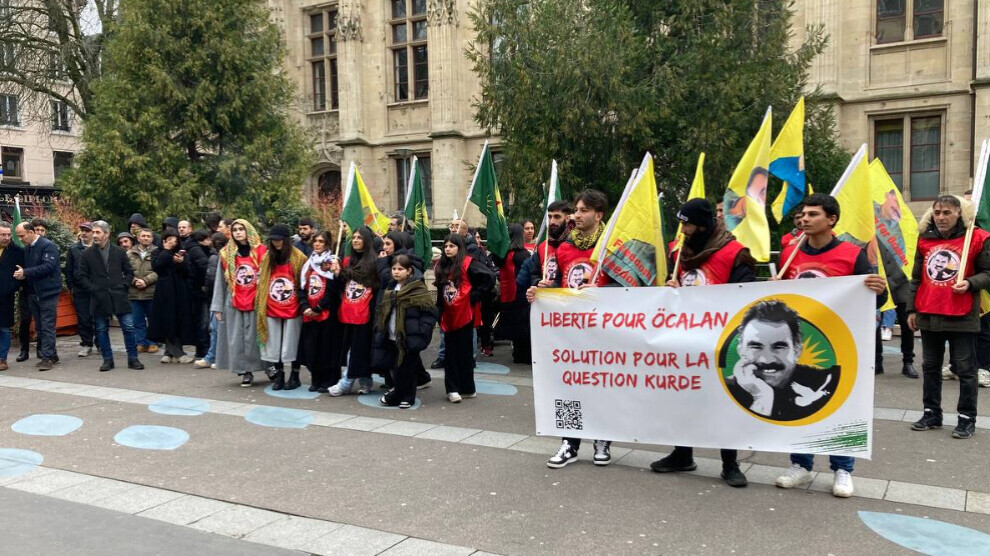
26 activists from 26 cities are staging a Long March in France to demand “Freedom for Abdullah Öcalan and a political solution to the Kurdish question”. Launched on January 21, the march will conclude with a rally in Strasbourg on February 15, the anniversary of the international conspiracy that resulted in the capture of the Kurdish leader in Kenya and his handover to Turkey in 1999.

Activists continued their action on its fifth day in the city of Rouen.

The activists gathered at Saint Sever Square and made a press statement, after which they resumed their march, accompanied by Kurds and their international friends, as well as Kurdish politician Faysal Sarıyıldız.

The activists carried out public diplomacy by distributing leaflets in French to the people living in Rouen, explaining the purpose of the “Freedom for Abdullah Öcalan, a Political Solution to the Kurdish Question” campaign and the 26-day Long March.

The activists reached Place Du Justice (Justice Square) and held a rally, which started with a moment of silence in memory of all Kurdistan Freedom Martyrs, and the martyrs of the Tishrin Dam resistance.

Politician Faysal Sarıyıldız delivered a speech, saying the following: “First of all, I respectfully greet our people and friends here. A great struggle is being waged in Rojava, at the Tishrin Dam and Qereqozax Bridge. I also salute the epic resistance there and commemorate our martyrs with respect. Bavê Teyar was martyred at Tishrin recently. To us, he means a lot. We saw an old video of him meeting with Leader Öcalan together with his brothers. We see that they got this philosophy, this will from Leader Öcalan. It is indeed a life and struggle that should be taken as an example for us. We will protect his memory.

We are going through a very historic process. As Kurdish people, we are very close to freedom. As you know, a process had started in 2013. The Freedom Movement and the Kurdish people approached that process sincerely. While leader Öcalan wanted to carry out the process with a great historical and social responsibility, the genocidal Turkish state responded with war. They burned and destroyed our cities. They massacred our people and forced them to migrate. You all remember Mehmet Tunç. At that time, the Turkish state wanted to subjugate and bring him to his knees, but Mehmet Tunç and his comrades refused, just like Şêx Saîd and Seyîd Rıza did not kneel a hundred years ago... For 10 years, the Turkish state has been attacking the Kurds with all its might. The resistance of Leader Öcalan, the Freedom Guerrillas and the resistance of our people frustrated all these attacks. They could not finish the Kurds or the Kurdish Freedom Struggle. They said they would destroy it, but today it is the Turkish state that has reached the stage of extinction.

The ‘Freedom for Abdullah Öcalan and a Political Solution to the Kurdish Question’ campaign launched on October 10, 2023 had a huge impact. Kurds stood up everywhere and said 'Freedom for Leader Öcalan and Kurdistan'. There were effective demonstrations, which continue today. The march we participate in today is one of them. I congratulate the friends who are marching. They are carrying out a very sacred action. Everyone who has a sense of responsibility and conscience should support this action, join the campaign and give strength. The march will end in Strasbourg on February 15, when there will be a march and rally. The 26-day Long March and the rally in Strasbourg are complementary actions. In particular, our people living in France should flock to Strasbourg. These actions in France will be decisive for the fate of Kurdistan. With this enthusiasm, sensitivity and responsibility, we expect our people and all the peoples living in France to come to Strasbourg.”

After Faysal Sarıyıldız's speech, a declaration was read in French detailing the international campaign and its purpose.


SYRIAN KURDISTAN

Ten years ago, the liberation of Kobanê

Ten years have passed since the liberation of Kobanê. The strategic battle of Kobanê took place between 15 September 2014 and 25-26 January 2015, when it was liberated.


ANF
NEWS DESK
Sunday, 26 January 2025,

Ten years have passed since the liberation of Kobanê. The strategic battle of Kobanê took place between 15 September 2014 and 25-26 January 2015, when it was liberated.

THE SIEGE OF KOBANÊ

ISIS mercenaries launched the first attack on the city of Kobanê on the night between 14-15 September 2014. The siege would last till 25-26 January 2015. Those months of battle would witness a defense of the values of humanity with an epic spirit of self-sacrifice which has gone down in history.

On 15 September morning, ISIS launched an attack on the southern front. Differently from the previous simultaneous attacks from all three fronts, ISIS gangs now deployed arms and militants on the southeastern and southwestern parts too and started an offensive from five fronts.


‘WE ARE GOING TO WIN THIS WAR’

It didn’t take long to see the dimension of this offensive. YPG/YPJ commanders were now understanding that this was not an ordinary attack and occupation move and witnessed a technical and numeral inequality at an awesome level. As ISIS gangs launched this offensive with all their forces and weapons in Syria, it became clear that their aim was to ensure an entire occupation of Kobanê in a short time. YPJ Commander Meryem Kobane was making this fastening; “This will not be an ordinary battle but a confrontation between the male-dominant sovereign savagery and the spiritual power and will of democratic modernity. We are going to win this war.”


ARİN MİRKAN BECOMES A SYMBOL ON MISHTENUR

Mishtenur Hill was hit by heavy weapons and tanks, and clashes broke out between the gang groups that infiltrated the hill and the YPG/YPJ fighters. The Mishtenur Hill is a sacred ground for the people of Kobanê, and it witnessed the sacred resistance of the YPG and YPJ fighters. The hill fell under ISIS control on October 5, after days of heroic resistance against heavy attacks on the hill. YPJ Commander Arin Mirkan was furious that Mishtenur Hill fell under ISIS control. She thought the gangs needed to be hit hard in Mishtenur and decided to carry out a sacrificial action. She prepared for the action in great resolve, and expertly infiltrated the gangs. She arrived at their gathering point, and there detonated the explosives on her person, killing dozens of gang members. The ISIS gangs had arrived in the city, but they got into a panic and fear in the face of the resistance up to that point and the sacrifice. As the ISIS gangs advanced, they lost their faith that “it would be handled in a week” and had come to understand that they would go through hell in Kobanê.


“HELL FOR ISIS”


After Mishtenur, the gangs started to enter the Kaniya Kurda neighborhood from the east. To the west, the Izae Hill had fallen under gang control and the YPG/YPJ fighters had taken positions in the trenches dug by Til Sheir Hill and further. To the south, the gangs had reached the Martyr Dicle Cemetery, close to the city entrance.

During those days, YPJ commander Meryem Kobane said: “ISIS will now enter the city through Kaniya Kurda. But this city will be hell for ISIS. They will be kicked right out of Kaniya Kurda.”


The resistance was taken into the city at that point. When Kobanê did not fall within a week, the Turkish media and the AKP government attempted to create an air that “if ISIS reaches the city center, Kobanê will have fallen automatically, there will be no resistance”. Because the then-Prime Minister, current President Recep Tayyip Erdoğan had expressed his expectations and wishes that “Kobanê is about to fall” when ISIS started entering the city. Erdoğan was veritably wringing his hands and expressing this desire, and YPJ General Commander Meysa Ebdo responded to it: “Kobanê will fall only in his dreams. The resistance is just starting now, Kobanê will be hell for ISIS and its supporters.”


With ISIS entering the city, Meysa Ebdo’s words came to pass with the superhuman resistance and heroism of YPJ and YPG commanders and fighters.

In the first three months of the resistance, the YPG and YPJ fighters put up resistance, and it was time for the YPG/YPJ commanders and fighters to launch the process in Kaniya Kurda that would lead to declaring Kobanê the hell of ISIS. The launch happened in early December, in the form of the Kobanê Liberation Operation.


OPERATION TIME

The operation process had begun in Kobanê, the YPG and YPJ fighters had abandoned the defensive after a long time and were gearing up for operation mode. That created great morale and enthusiasm. The YPG/YPJ fighters cleared most of the city of gangs in a short time with this morale and enthusiasm, and in the end reached the Mishtenur Hill and realized the dreams of martyrs Givara, Cudi, Dicle and many others who fell in Kobanê. After Mishtenur, the second large scale maneuver was the southern front operation. This operation cleared the gangs completely from this front.


ALL READY FOR THE FINAL BLOW


On the second day of the operation, Eastern front commander Mazlum Kobanê said, “We will herald freedom in 4 streets”, and that is what happened. On the third day of the operation, preparations were completed to deliver the final, fatal blow to ISIS gangs. The declaration of the city’s freedom would be in time for the anniversary of the canton declaration, January 27.


OPERATION STARTED

The Kaniya Kurda operation then started. Some hours into the operation, chants started to come through the radio, “Biji Serok Apo”, “Biji Berxwedane Kobanê” - one fighter jumped up in joy: “The comrades have taken Kaniya Kurda!”

Kobanê was to be declared free after Kaniya Kurda was taken. The fighters were restless with excitement. It wasn’t easy. For more than four months, they fought tooth and nail, finger on trigger at all times, through the cold, with no sleep, little food, insufficient ammunition. Always insisting on living freely, marching towards death, a resistance almost defying the laws of nature. They fought against better weapons, better logistics, better numbers and inhumane methods.


YPG FLAG FLEW IN KANIYA KURDA

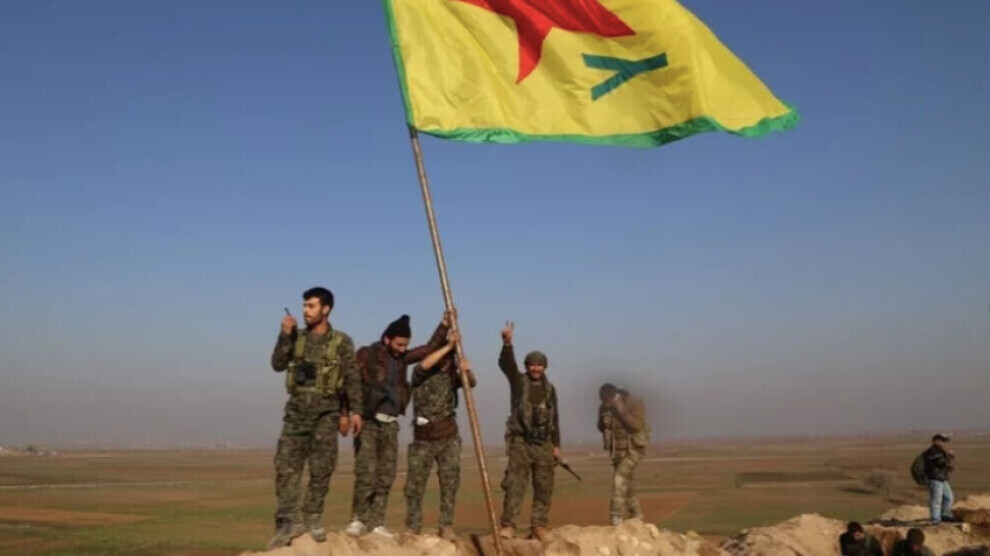
The YPG and YPJ fighters rushed to the Kaniya Kurda Hill to put up a giant YPG flag, chanting “Biji Serok Apo” and “Biji Berxwedana Kobanê”. The giant flag was put up on Kaniya Kurda Hill. Posters of Kurdish People’s Leader Abdullah Öcalan had already been put up by the previous group of fighters.


After Meryem Kobane said “We will declare to the whole world on the Kaniya Kurda hill they entered the city from that Kobanê is hell for ISIS,” her words were made into reality on the 134th day of the relentless resistance. The Kobanê resistance created a divide into “Before Kobanê” and “After Kobanê”. History was interrupted in Kobanê and was rewritten.


Strong participation in Kurdish general strike to protest death penalty in Iran

Businesses in several Kurdish cities in Iran went on strike Wednesday after Kurdish groups called for a protest against the death sentences of two female political prisoners.


ANF
NEWS DESK
Thursday, 23 January 2025


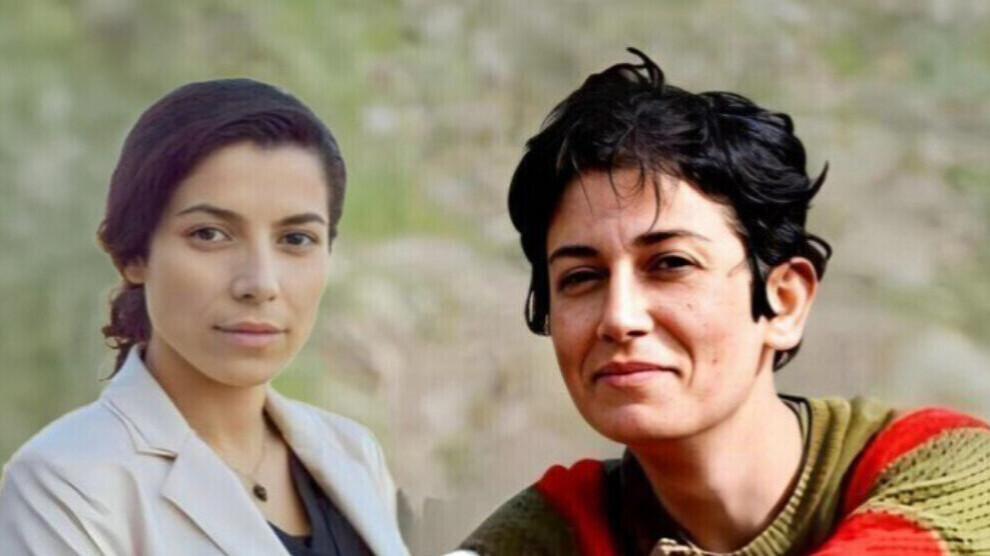
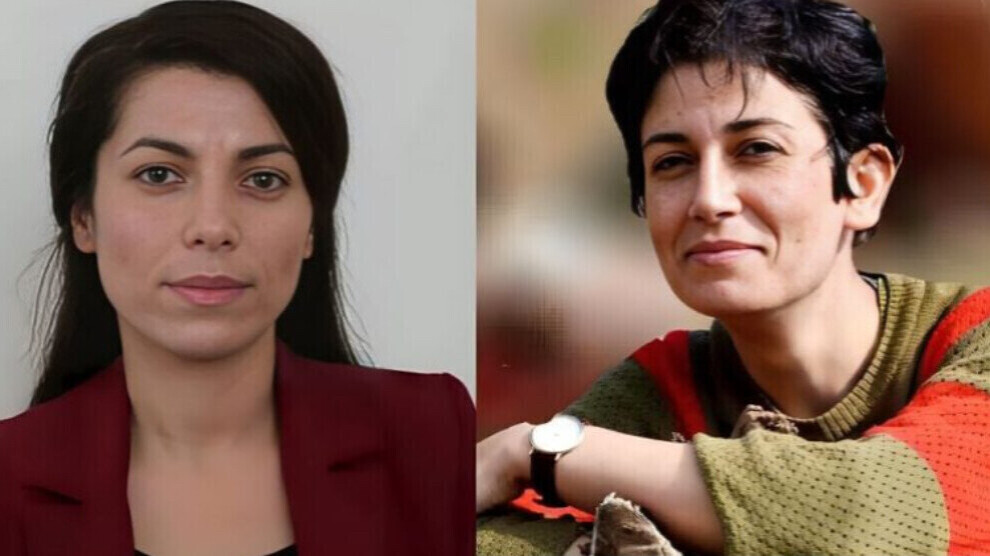
The general strike in Eastern Kurdistan (Rojhilat) on Wednesday saw many businesses in several cities closing down to protest the death sentences of two female political prisoners, social worker Pakhshan Azizi and activist Warisha Moradi.

Six largest parties in Rojhilat called for a general strike against the death penalty. The action is intended to increase the pressure on the Iranian regime to stop its state killing machine. The parties PAK, PJAK, PDK-I and the three Komala groups announced the strike on Monday in a joint call.

Images posted on social media showed closed shops in cities such as Sanandaj, Saqqez, Divandarreh, and Marivan in Kurdistan province, as well as Mahabad, Bukan in West Azarbaijan province, and Kermanshah.

Moradi was sentenced to death in November by Tehran's Revolutionary Court on charges of "armed rebellion." Azizi received the same sentence in July.

Both sentences have sparked outrage locally and internationally.

General strike in East Kurdistan today against death penalty

The six largest parties in Eastern Kurdistan have called for a general strike against the death penalty.


ANF
NEWS DESK
Wednesday, 22 January 2025, 

Six largest parties in Rojhilat have called for a general strike against the death penalty - East Kurdistan (Western Iran) is to be paralyzed today, Wednesday. The action is intended to increase the pressure on the Iranian regime to stop its state killing machine. The parties PAK, PJAK, PDK-I and the three Komala groups announced the strike on Monday in a joint call.

The Kurdish parties said: “Iran is in a crisis: poverty, unemployment and inflation are high, individual and political freedoms have been confiscated by the regime, and social injustice prevails. But instead of answering society's demands and removing grievances, the rulers in Tehran are generating more and more crises in order to subject the population to even more repression.”

This tactic also includes intensifying repression against political prisoners and escalating the use of the death penalty as a tool of repression. The Kurdish parties added: "The impending execution of social worker Pakhshan Azizi and activist Warisha Moradi is an alarming signal that requires immediate action to prevent this humanitarian tragedy. One of the effective measures is to organize a general strike throughout Kurdistan."

The joint call further explained that "The general strike, a symbol of civil resistance in Kurdistan, has always been a powerful tool to demonstrate the collective will of the people at critical moments in history. Today we are facing another historic moment in which unity and solidarity are crucial to prevent further atrocities and save the lives of people who are committed to the pursuit of freedom, justice and equality.”

The action could serve as a peaceful and civil response to the repressive policies of the Iranian government, according to the “Jin Jiyan Azadî” movement, which sent the world a first message of resistance and resilience. The general strike could also be aligned with solidarity with the political prisoners who are on hunger strike against executions every Tuesday in over 30 Iranian prisons."

The parties "call on all people in Kurdistan to join the general strike against the death penalty. By closing workplaces, markets and educational institutions, we can demonstrate the power of unity and solidarity against injustice and oppression. This action has the potential to save lives and prevent further suffering for families. Let us prove once again that Kurdistan will not remain silent in the face of such an inhumane government and will take a strong stance with unity and solidarity."

SIx parties announce general strike for Warisha Moradi and Pakshan Azizi sentenced to death in Iran

In Eastern Kurdistan, a general strike will take place on Wednesday against the death sentences against Kurdish political prisoners Warisha Moradi and Pakshan Azizi.


ANF
NEWS DESK
Monday, 20 January 2025
Six political parties and organisations issued a statement announcing a general strike on Wednesday, January 22, in Rojhilat (Eastern Kurdistan) against the death sentences handed down to Kurdish activists Warisha Moradi and Pakshan Azizi.

The joint statement by the Kurdistan Freedom Party, Party for a Free Life in Kurdistan (PJAK), Revolutionary Laborers Community of Kurdistan-Iran, Democratic Party of Kurdistan-Iran, Kurdistan Laborers Community and Kurdistan Organization of the Communist Party of Iran said the following:

“In an environment marked by a lack of political freedoms, unemployment, poverty, lack of services and many other social problems, the Iranian regime has sentenced dozens of political prisoners to death in Kurdistan and all over Iran instead of answering the demands of the people. In such an environment, urgent steps must be taken to stop the death sentences handed to Pakshan Azizi and Warisha Moradi. One of these steps is the declaration of a general strike in Kurdistan.

In Eastern Kurdistan there has always been a tradition of general strikes as an act of civil disobedience, especially in fragile times. Today, we are facing one of such times. The will of public opinion must prevent another tragedy and save the lives of people who have done nothing but love the people and fight for freedom and equality from the death penalty. This strike, which undoubtedly imposes itself in a civil and peaceful manner, can once again carry the message to the whole society to take action and protect itself as a 'Jin, Jiyan, Azadî' (Woman, Life, Freedom) revolution. This strike is also a voice for the political prisoners who courageously say 'No to the death penalty’ in more than 30 Iranian prisons every Tuesday.

We call on all the people of Kurdistan to participate in a general strike across Kurdistan on the 22nd of this month (Wednesday) against the death sentence against our struggling children. In addition, all workplaces, markets, schools should be closed and thus show the power of social unity to achieve political and humanitarian goals. This preventive step is an opportunity to save people's lives. Let us show once again that Kurdistan will not remain silent and will take a strong stand against the inhuman political power. Long live the unity and solidarity of Kurdistan society.”

Iranian court issues arrest warrant against Jina Amini's father

Emced Amini, the father of Jina Amini, said that an Iranian court has issued a detention order against him for protesting the death sentence against Pakshan Azizi.


ANF
NEWS DESK
Saturday, 25 January 2025, 

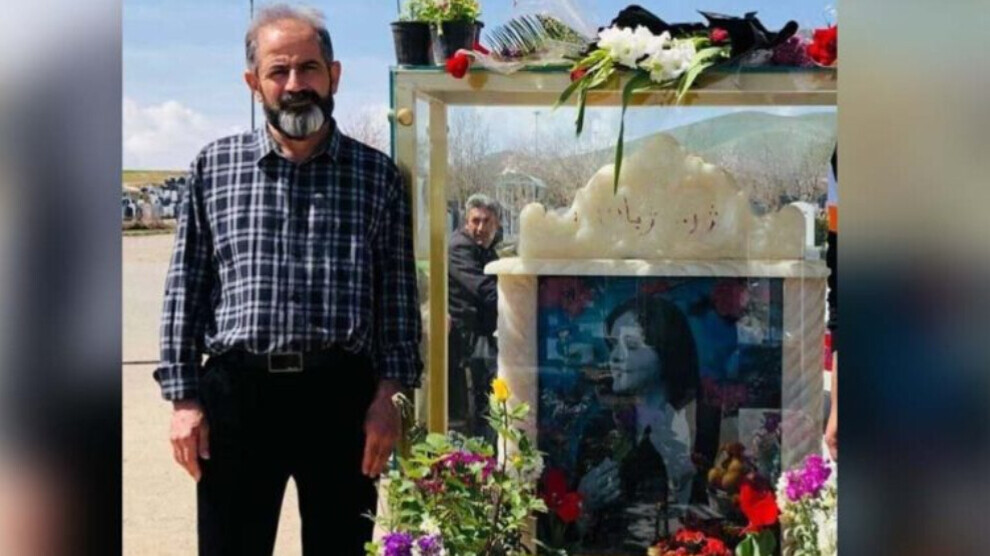
Emced Amini, the father of Jina Amini, the young Kurdish girl who was beaten and killed while in the Iranian state’s “morality” police custody on 16 September 2022, shared a message on his Instagram page about a decision by an Iranian court.

Amini said that a lawsuit was filed against him at the Saqiz Revolutionary Court on Friday, 24 January, on charges of “propaganda against the state” and “spreading false news.”

Amini stated that he was summoned to the courthouse and a detention order was issued for him, and that he will remain in custody until the trial.

It was learned that the decision regarding Emced Amini was made because of the message he published to protest the death sentence against Pakshan Azizi.
SYRIAN KURDISTAN

Turkish and mercenary attacks against North-East Syria continue

Attacks by the Turkish state and the Syrian National Army (SNA) mercenaries continue in many parts of North and East Syria.


ANF
NEWS DESK
Saturday, 25 January 2025, 16:18

The occupying Turkish state and allied mercenaries shelled the countryside of Tishrin Dam. No information was immediately available on the outcome of the bombardment.

Turkish forces bombarded the southern countryside of Tishrin Dam with warplanes, UCAVs and heavy weapons.

The occupation forces simultaneously shelled the area around Tishrin Dam with heavy weapons.

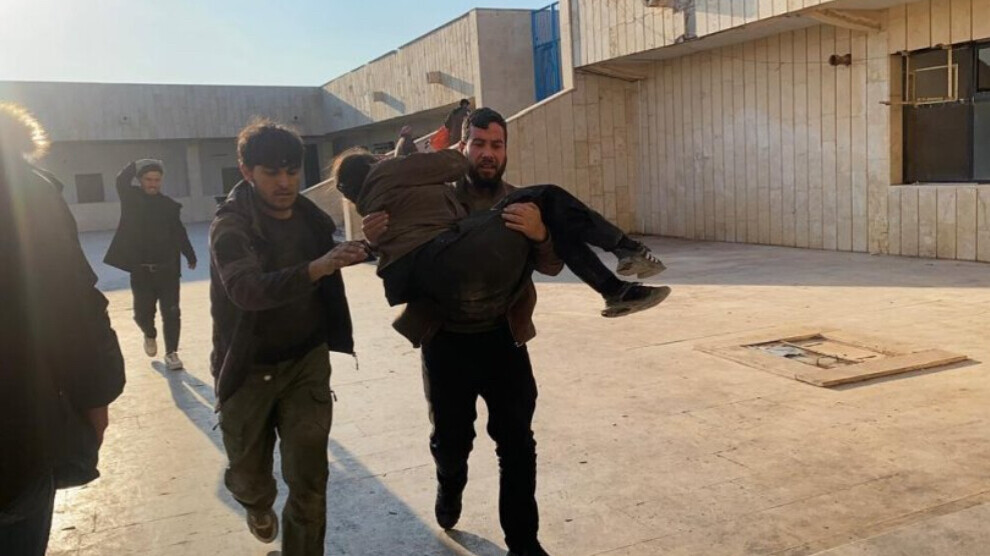
According to reports, an unmanned combat aerial vehicle (UCAV) of the occupying Turkish state bombed people at Tishrin Dam, wounding many.

Turkish forces and allied mercenaries bombarded Sirrîn city south of Kobanê in the Euphrates Canton with heavy weapons.

Turkish warplanes also bombed Sirrîn Airport and the area around Qereqozaq Bridge in the south of Kobanê. It is reported that at least 6 airstrikes were carried out in these area. Warplane activity in the region continues.

The warplanes have also bombarded the village of Bîr Hiso in the south of Kobanê city of Euphrates Canton.
Iraq Kurdistan PM insists on inclusion in BP-Iraq Kirkuk oil deal


By: TII team

Date: January 24, 2025
Masrour Barzani, the Prime Minister of Iraqi Kurdistan Region, November 2024.
 Photo: K24 TV

DAVOS,— Negotiations between Baghdad and British oil giant BP over a major redevelopment of Kirkuk’s oil and gas fields must include Iraq’s semi-autonomous Kurdish region, Kurdish caretaker Prime Minister Masrour Barzani told Reuters. The dispute underscores the ongoing tensions between Iraq’s central government and the Kurdish leadership over control of oil and gas resources.

Kirkuk, a region rich in hydrocarbons, remains at the heart of a long-standing conflict over natural resource management between the federal government in Baghdad and the Kurdish Regional Government (KRG). The Kurds lost control of Kirkuk in 2017, after briefly seizing it during the fight against ISIS in 2014.

Speaking on the sidelines of the World Economic Forum in Davos, Barzani criticized the current deal being negotiated between Baghdad and BP. “The area that Baghdad is discussing with BP is a disputed territory. According to the Iraqi constitution, decisions regarding disputed territories cannot be made unilaterally by either Baghdad or Erbil,” he said.

While Barzani expressed openness to development in principle, he stressed that any deal must involve coordination with the KRG. “We are not against development, but we are against the mechanism being used,” he added, calling for a trilateral meeting involving the KRG, Baghdad, and BP.

A source familiar with the situation suggested that the KRG might independently meet with BP representatives to push for their involvement in the deal. The Kurds plan to use their strong ties with the U.S. government to apply pressure on both Baghdad and BP.

Baghdad and BP are reportedly close to signing a multi-billion-dollar agreement to redevelop four Kirkuk oil and gas fields, with an official signing anticipated by early February. However, Barzani labeled the potential agreement “unconstitutional,” even as he acknowledged the KRG’s limited ability to halt the deal.

Neither BP nor the Iraqi oil ministry immediately responded to Reuters’ requests for comment. Iraqi Oil Minister Hayan Abdel-Ghani previously stated that the Kirkuk deal could exceed the scale of a $27 billion oil project with TotalEnergies in Basra, which was signed in 2023.

The Kirkuk oil fields, first discovered in the 1920s by a BP-led consortium, hold an estimated 9 billion barrels of recoverable oil. BP also operates in southern Iraq, where it owns a 50% stake in the giant Rumaila oil field.

However, disagreements over oil are not limited to Kirkuk. A separate conflict has halted oil exports from the Kurdistan region since March 2023. Turkey suspended the flow of oil through the KRG’s pipeline after the International Chamber of Commerce ordered Turkey to pay $1.5 billion to Baghdad for unauthorized Kurdish oil exports between 2014 and 2018.

KRG officials say the region has lost more than $20 billion in revenue since the pipeline closure, with no compensation from Baghdad. Barzani criticized Iraq’s federal government for failing to resolve the issue. “Iraq never compensated that lost money to Kurdistan, and so far, there has been no solution,” he said.

Barzani also condemned a recent amendment introduced by Iraqi Prime Minister Mohammed Shia al-Sudani to a draft bill meant to address the issue, calling it “totally unacceptable” to the Kurds.

The oil dispute comes amid broader concerns over governance and transparency in the Kurdish region. Observers and Kurdish politicians accuse the KRG of conducting oil deals in a secretive and opaque manner.

Critics allege that billions of dollars in oil revenue remain unaccounted for, with watchdogs labeling Iraqi Kurdistan as one of Iraq’s most corrupt regions. Analysts point to a lack of effective oversight mechanisms that have allowed illegal financial activities to thrive.

The Barzani family, which has long dominated Kurdish politics, faces accusations of nepotism and misusing oil revenues for personal enrichment. Masrour Barzani serves as the region’s prime minister, while his cousin Nechirvan Barzani is president. Masrour’s father, Massoud Barzani, remains a highly influential figure in Kurdish politics.

Despite these challenges, the KRG has maintained that Baghdad’s accusations of overproduction of oil are baseless. “Kurdistan is only producing 280,000 barrels per day, so how can Kurdistan be overproducing? Baghdad is attempting to shift blame onto Kurdistan for its own overproduction issues,” Barzani said.

As tensions between the KRG and Baghdad persist, the region’s oil disputes highlight deeper political and economic divisions that continue to strain relations in Iraq.

(Credit: Reuters | Agencies)

Copyright © 2025 The Insight International. All rights reserved