Sunday, January 26, 2025


The Cologne dilemma: Post-Soviet anti-war left émigré debate Ukraine war

Published 

 first forum of left-wing emigrants in post-Soviet history

First published in Russian at Rabkor. Translation by LINKS International Journal of Socialist Renewal with thanks to Serhii Slyapnikov for corrections.

Cologne Cathedral is crowded on Saturday [November 2]. Citizens rush to the shops and railway station, while at the back of the bustling streets, behind the signs of fashionable shops, left-wing émigrés from the former Soviet Union have come together for their first-ever forum. Fifty activists gathered in a small office, a five-minute walk from the Gothic cathedral. Though not large in scale, the event is impressive for its meaning: for the first time in a hundred years, left-wing émigrés from the former Soviet Union are forced to gather in Europe to unite or divide as before.

The forum was organised by a group of activists from Germany and France, in particular, the émigrés organisation Alliance of the post-Soviet Left (PSL), which consists of people from Russia and Ukraine, as well as several well-known left-wing activists in Russia and France. The event was financially supported by the Rosa Luxemburg Foundation, affiliated with Die Linke (The Left).

Although some left-wing activists declined to participate in the forum, the attendance was very diverse. Some of those gathering at the office door are familiar to me, others I see for the first time. One by one, delegates come in, take their seats, the organisers worry about water, procedures and technical details. Finally, everyone is seated, the hall is full of people. The room is cramped, they ask to open the windows. Someone in the back row jokes: “It hasn’t started yet, but it’s already stuffy.”

Around half past twelve the hall falls silent. An elderly man in a burgundy-coloured waistcoat comes out to the podium. “Hello, comrades!” he addresses the audience with a strong German accent and, reading from a piece of paper, continues with a quote from Goethe: “Unfortunately, this is all I can say in Russian. I am a representative of the Rosa Luxemburg Foundation, which helped organise this forum. I am glad to see so many young people here.”

He went on to say that Die Linke is very concerned about the war in Ukraine and is also very interested in the democratisation of Russia, but that “a change of power from the outside will not lead to anything good, we need change from within, and initiatives like this can help with that.” After reading his statement, he said he could not stay and that he would learn about the results from the relevant report. After applause, the elder put on his black velvet hat and left.

Immediately afterwards, politician and scientist Mikhail Lobanov, who has been declared a foreign agent in Russia, addressed the audience. He spoke about the political transformation the left needs to prepare for and the window of opportunity that will open before it. He also spoke about the problems of the left, which for many years perceived itself as a subculture, drew up its boundaries, and deliberately alienated liberals and the broad masses of activists in general. This is not the way to do things, Lobanov believes:

The left seeks to create a party because people want an organisation, but somehow things don’t work out. People create organisations and are just listed in them. It is not necessary to force the creation of any structures. And now I am against going down the path of party building. We are too different.

In his opinion, instead of trying to cram everyone under one banner, it is much more effective to mobilise according to the situation, to unite for a short period of time, to make actions such as those that took place in the March 2024 presidential elections, when a number of left-wing influencers called on voters to spoil the ballot paper.

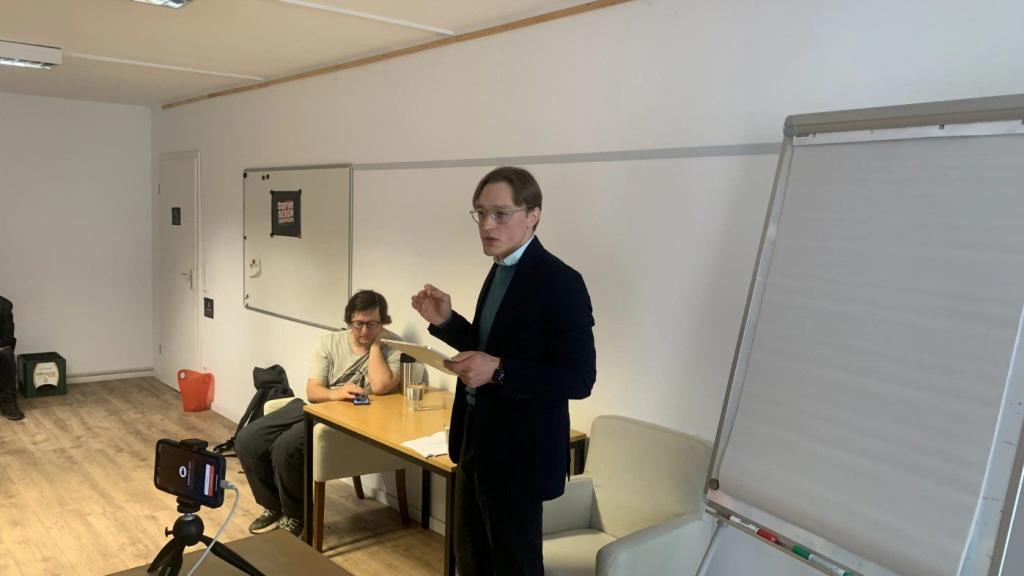
One of the organisers of the forum, Alexander Voronkov from Novosibirsk, a shaven-headed man in a white shirt and a PSL member, emerged from the audience. On the wall, just behind his back, appeared a presentation entitled “reclaiming subjectivity”. Voronkov mercilessly berated the liberal opposition, saying that the left should become independent rather than seeking friendship with anti-Communist liberals.

The left is blamed for not cooperating with liberals. But that’s the liberals’ fault. They are in need of a leftist agenda. For example, Ekaterina Duntzova had a leftist program. But why should we be the ‘little brother’ when we can be the ‘big brother’?

Laughter of approbation erupts in the hall. With a rapid-fire pace, Voronkov goes point by point through his presentation, ordering “next” for the assistant to switch the slide. In fifteen minutes, he has managed to touch on the opposition, Putin and Ukraine. Putin, according to Voronkov, also needs a left-wing agenda, and therefore “wants to be social”. Because of that the following, rather curious, distortion is taking place in social networks: liberal spokespeople are “Putinising the left” and “Bolshevising Putin”. 

Speaking about Ukraine, the speaker said that Ukrainians demand open borders, but it is as if liberals do not hear their voices. According to Voronkov, this is a mistake, and it is necessary to support Ukrainian leftists, many of whom are in opposition to Zelensky’s government.

The third speaker was Alexei Sakhnin, well known to Rabkor readers. Almost all of his speech was devoted to the conflict in Ukraine. In particular, he stated that the powers that be, from the Kremlin to the White House, have already put forward their strategies, which means that the left needs to find its own vision. 

Fighting until victory is a good idea if you’re not in the trenches. But if the left is for anything, it’s to figure out how to get out of these blood-soaked trenches. The elites can’t make peace, or even an imperialist deal. And people on both sides want a truce more and more.

The series of speeches was rounded off by Andrei Konovalov from Kirovograd Oblast. The blond, finely-dressed University of Cologne student greeted the audience on behalf of Ukrainian internationalists and thanked everyone who supported the Ukrainian people in their fight against Putin’s aggression. Konovalov spoke extensively about the interests of southeastern Ukraine and the fact that the interests of the people of Ukraine are increasingly diverging that of the government. He cited cases of mass desertion on both sides as an example.

In addition, he criticised the methods of the Territorial Centres of Recruitment (TCCs) and some Russian opposition members who, in the speaker’s opinion, misled people about the Ukrainian government. In particular, he referred to Ilya Yashin, who, according to the speaker, is mixing up the interests of the Ukrainian people and the Ukrainian government, whose interests are now as far apart as possible:

Ilya Yashin says that this is a conflict between tyranny and freedom, between progress and obscurantism, death and life. This forms a misconception. President Zelensky is lying. He lied to us before the election and I voted for him. He lied to us on the eve of the invasion, promising kebabs for the May holidays while his friends were leaving the country in a hurry. He lied to us earlier this year about 31,000 military deaths, and he continues to lie to us now, saying that forcing people into war, restricting freedoms, is something useful and necessary.

The message of his speech was that outside observers should “stop supporting Ukraine’s right-wing government just because it is waging war.” The speaker insisted that it is necessary to “recognise the violation of human rights in Ukraine” and support Ukrainians who are unable to leave the country. In this case, refusing to supply arms to Ukraine could be leverage, Konovalov said. When his time was up, the young man bowed to the hall to applause and returned to his seat.

The positions had been voiced. Now a heated discussion awaited participants.

The battle over resolutions

While the keynote speakers were speaking, a document entitled “Program of the Anti-War Left Emigration” circulated around the room. The program was drawn up by a group of activists from Germany and France, including those associated with the PSL. As it turned out, the organisers had at least two or three such programs, but the forum participants received one, which was apparently the product of collective creativity.

The public was offered a version that condemned Russian aggression against Ukraine and contained the following demands: stop the bloodshed, immediately conclude a ceasefire, investigate war crimes, punish the organisers of forced mobilisation, carry out democratic reforms in Russia, confiscate the property of Putin's accomplices, and so on. The document also declared the right of peoples’ to self-determination, within the framework of which some kind of referendums should be held in the territories occupied by the Russian Federation with the participation of those who were forced to leave. To achieve this, the authors wrote, troops would have to be withdrawn:

It is quite obvious that such self-determination cannot take place at gunpoint or under conditions of military occupation. Specific forms and guarantees for the realisation of the democratic rights of the peoples inhabiting the territory of the Russian-occupied regions of Ukraine should be discussed with the participation of the inhabitants themselves and representatives of the international community. A precondition for the realisation of these rights should be the complete genuine demilitarisation of the conflict zone in the broad sense, as well as the withdrawal of troops.

The program presented provoked a strong reaction in the hall and clearly did not suit everyone. At one point, a man with glasses, a Spanish-style beard and a gold earring in his ear, who had been sitting silently by the window, waiting for his turn to speak, took the floor. He jumped up from his chair and, holding the papers in his hands, recited: 

Someone is whispering in Mélenchon’s ear: ‘Let’s not send arms to Ukraine.’ No! We must demand sending Ukraine as many weapons as possible, and this is our anti-imperialist demand.

The one who spoke about arms shipments was Dmitri Kovalev. Between sessions he told me that he represented a small Trotskyist organisation called RCIT (Revolutionary Communist International Tendency). Its task was to distribute a letter and an alternative resolution, which was called “Russian Socialists for Peace without Annexations” (see text below). The activists distributed the document among those present and published it online. The text contains nine points that condemn the war, welcome arms deliveries, reject referendums proposed by another group, call for unconditional support for Ukraine and reparations.

The letter read: “In this situation [of large-scale military conflict], the ‘Forum of the Anti-War Left Emigration’ is planned for November 2-3 in Cologne. Unfortunately, its preparation is not entirely democratic, and among its organizers there are Russians who intentionally or unintentionally play along with Russian imperialism.”

However, stones were also thrown at European leftists, who traditionally oppose the US and NATO. The authors of the letter criticised those who have “consciously or unconsciously become allies of Putin's dictatorship”. Kovalev, who presented the letter at the forum, told Rabkor that the text was drafted by many authors as a response to the “Sakhnin resolution” (the program handed out to participants). According to the interlocutor, the program presented by the forum organisers is “monstrous, disgusting and plays into the hands of Russian imperialism” because it “does not contain a clear message that Russia is an aggressor.”

The activist explained:

Our position is very simple. We are not in favour of a war to the last Ukrainian. We want Ukrainians to decide for themselves when to stop the war, and that this decision is not provoked by the fact that they have nothing to fight with. They should have the best weapons and without any conditions, loans and bondage. And they will deal with Zelensky’s regime themselves.

Kovalev was actively supported by Artem Stasyuk, a native of Kazakhstan, now resident in Dresden and a member of Die Linke. He explained that he had come to the forum to represent an alternative position and find out what positions existed among left-wing émigrés. In his opinion, Putin, by attacking Ukraine, opened Pandora’s box and launched other destabilising processes, so the left and the entire international community needs to support Ukraine despite all the minuses of the Ukrainian government. He added:

“The key to solving the problem is to stop Russian aggression. If we allow Russia to somehow look like a winner in this war, it undermines international security.”

According to Stasyuk, Russian leftists should oppose their government, and it is not quite correct to make claims against the Ukrainian authorities in the context of war. Ukrainians, the interlocutor says, may have a different opinion, but notes that “we do not see here [at the forum] representatives of the other part of the Ukrainian left, which has functioning organisations in Ukraine.”

For example, “there are no representatives of Sotsialnyi Rukh [Social Movement].” In addition, he complained that representatives of Feminist Anti-War Resistance (FAS) had not come to the forum. “It is unlikely that the groups listed would have supported the idea of referendums”, he said.

According to Sakhnin, the forum revealed “really existing contradictions”. The left that survived the metaphorical shipwreck now needs to choose its path. Join the Western alliance or formulate an alternative.

Voronkov, who defended a similar position, decided to respond to criticisms. In his opinion, it is necessary to refuse cooperation with those who “support the war, no matter which side… We have two main enemies — capitalism and the state”, the interlocutor summarised.

“You have been accused of playing along with Putin. What is your response?” he was asked. He responded:

I believe that the continuation of the war is making the situation worse and helping Putin to win. Obviously, the West will not give as much arms as they [Ukrainian authorities] are asking for. If Western politicians wanted to do that they would have done it already.

In my opinion, the West’s strategy is to deliberately wear down Russia and Ukraine to weaken the poles of influence in Eastern Europe. How does our position help Putin? We organised a forum against Putin, we put together an organisation, our comrades in France came out demanding that North Korean soldiers not go to the front. Is that support for Putin? I think not.

On the contrary, we are trying to turn people away from the Russian regime. We talk about the problems with democracy in Russia, political prisoners, people’s survival. We support organisations from Russia that are fighting Putin. And we fight Putin ourselves.

The forum ended in the evening of November 3, when those gathered met for a debriefing. Apart from heated debates about politics, war and revolution, much of the event was taken up by workshops on practical issues (helping political prisoners, smuggling activists out of Russia), which were very constructive.

The discussion on left tactics never found its conclusion and is still ongoing. The forum resulted in two documents, two resolutions, which the participants were invited to sign privately. However, standing at the office door in the evening in a cloud of tobacco smoke, through the arguments to the point of hoarseness, it is easy to see that there are many more positions than two. A kaleidoscope of opinions, instead of a black and white dichotomy.


Draft Resolution: Russian Socialists for Peace Without Annexations 

1. This conference condemns Putin's invasion of Ukraine as a reactionary war of Russian imperialism.

2. We call for the immediate and unconditional withdrawal of all Russian troops from all territories of Ukraine.

3. There can be no peace without justice. That is why we do not maintain neutrality in this war but stand on the side of the Ukrainian people in their struggle to defeat Russian imperialism.

4. We support the right of Ukraine to receive weapons from wherever possible. This is the legitimate right of all oppressed peoples. The left and the labour movement in Western countries should neither call for sabotage of such military aid, nor condemn Ukraine for defending itself with the best weapons available. The sending of such military aid must be carried out under workers' and public control and must not be linked to political conditions or any other restrictions. Military aid should primarily, but not exclusively, come from European and American corporations that profit or have profited from war and cooperation with Russian business.

5. Only the Ukrainian people have the right to decide how and for how long to continue the struggle for national liberation. Therefore, it is unacceptable to demand a truce, capitulation or concessions regarding their territory from the Ukrainian people, including under the guise of "referendums"..

6. In this war, we are primarily against Russian imperialism. However, in principle, we are against all imperialists, against any imperialism, no matter what country it comes from.

7. The left and the labour movement in Western countries must call for a complete write-off of Ukraine's debts.

8. The Russian ruling class must pay Ukraine reparations for the enormous damage it has caused the country.

 

Asserting a Philippine foreign policy of cooperative peace for the Southeast Asian Sea


Published 

Southeast Asian Sea

It is incumbent upon the Philippines to urgently promote amity, concord and a common security arrangement for Maritime Southeast Asia. But why is this the case? And how can this be achieved? The ensuing correlated answers to these two basic questions can essentially form the basis of a much-needed paradigm shift for Philippine foreign policy going forward.

As its regional strategic environment further deteriorates, the Philippines now faces eminent challenges in response to its external affairs agenda. This is substantially due to the menacing effects induced by an acutely changing world order, at least throughout the past five years. The country must begin to pursue a new foreign policy direction to address freshly emergent international concerns.

The Philippines needs to awaken to the momentous impacts of today’s shifting international environment by securing a favourable external space of manoeuvre for itself and its broader region. The country has to decisively forge a “strategic space of non-alignment” to guarantee its freely sovereign pathway ahead. This authentically independent course of action should foster a collaboratively peaceful regional agenda and setting, one that is autonomous from great powers. It is imperative for Manila to actively advance a progressive Philippine foreign policy framework and track whose goals align with the principles of cooperative peace.

Why cooperative peace?

Before proceeding any further, let us briefly outline and review some of the key approaches and ways of thinking related to peace and security. The concept of peace basically focuses on the state of relations between and among nation-states in the international arena. In contrast, the concept of security generally concentrates on the threat perceptions of the many actors (both state and non-state) in the field of international politics. In practice, these two concepts are interrelated and applied in various peace/security-oriented theories for the study of international relations.

Among the key security concepts that inform, define and guide their normative applications in the area of foreign policy and world affairs are: a) collective defence; b) collective security; c) common security; d) comprehensive security; and e) cooperative security.

Collective defence (tending to look outward) commits all states, bound by treaty, to aid in each other’s defence should any member state be threatened or come under military attack by a state or states outside the treaty area. Likewise, collective security (tending to look inward) relates to mutual defence arrangements that principally commit each party to come to the aid of any of its other fellow members should the latter come under attack. Additionally, common security pertains to a commitment for joint survival and the preservation of security with others, and not against them, on the basis of cooperation, diplomacy and a broader emphasis on conflict resolution. Furthermore, comprehensive security asserts a multi-dimensional non-military approach as a must in the process of promoting peace and security, especially for human development purposes. Cooperative security maintains features similar to collective defence, but upholds aspects of consultation, prevention and interdependence, while being inclined toward military interventions beyond its treaty area.

On the other hand, cooperative peace favours pursuing initiatives for building mutual confidence. By undertaking cooperative activities with others, it not only maintains stability, but advances and promotes development-friendly environments conducive to sustaining relative peace and security in the long run. In view of this particular security framework, the scope and thrust of cooperative peace assuredly melds well with, and complements, the essential aspects of both common security and comprehensive security. Moreover, in advancing world peace and security, the main principles and processes of cooperative peace and common security are very much compatible with those of attaining sovereign neutrality and non-alignment in international affairs.

The preceding theoretical premises, which guide the leading peace and security concepts that clarify international relations, are among the fundamental issues and concerns that continue to spark the major discourses and debates shaping global affairs at this conjunctural moment in world history.

Additionally, linked to this understanding is the need of progressive social forces — the global working-class movement, including the international revolutionary socialist left — for anti-capitalist change to accelerate their struggles toward a successful normative application of harmonious endeavors for world peace and security. In the volatile setting of Maritime Southeast Asia, all efforts seeking to coherently fuse the rational elements of cooperative peace with common security should be the prime focus. It is this principled agenda to help bring about a peaceful regional atmosphere of amity and comity that can contribute to degrading the many growing strains and tensions worldwide.

Southeast Asia amid the imperialist world system

The world situation is swiftly and permanently evolving. This objective condition is continually shaped by dynamics underpinned by geographic, economic and political factors. Although the prevailing capitalist world system is limited by the realities of uneven and combined development, it remains dominated by a core of imperialist powers — principally the United States and China. Both are now gripped in an escalating 21st century great power competition that is largely characterised by a sharpening geostrategic contest between Washington and Beijing.

This imperialist world system faces many inherent contradictions. The latter negations are systemically manifested as a globalised polycrisis. These precarious phenomena range across multiple domains: economic, social, political, diplomatic, security, technology, climate and health. Their fallouts unfailingly spill into the bounds of the global economy.

In a general manner, the capitalist world economy persists with sluggish growth rates. This is presently shown by weak investment flows, depressed productivity levels, continuing trade frictions, high debt-servicing strains and a historically low rate of global unemployment (5% since 1991). Additionally, the social cohesion of many countries of the global periphery are consistently threatened by relatively high inflationary pressures. Correspondingly, recurring inflationary spikes are largely caused by aftershocks and tensions connected to various regional conflicts and wars of imperialist-led aggression worldwide.

The current global situation reflects a profound realignment of international and regional powers since the COVID-19 pandemic struck half a decade ago. The geopolitical flux dangerously stirs the post-2024 global regime’s balance of power. On a world scale, this destabilised atmosphere, with its imbricated antagonisms, is materially generated by a modernised international division of labour expressed through unequal exchange.

It is this turbulent world stage that Manila has to engage with.

However, the Philippine state’s bourgeois political leadership lingers in a “stoned shit high” Cold War daze. Manila remains trapped in a harmful trance invoked by a late-20th century foreign policy mindset. In clear terms, the central dynamics that animated last century’s Cold War are significantly absent in the present-day international context. Doubtless, Manila’s strategic thinking has to urgently update itself to profoundly grasp the major implications being unleashed by the intensely changing international circumstances.

The imperialist world system permanently suffers from intrinsic ruptures. As it endlessly hurls socioeconomic quandaries and geopolitical perils into the global arena, capitalism’s protectors constantly hope that the system’s organic logic will self-correct its own crises conditions. Consequently, authentic alternatives to the capitalist system will consequently and substantially emanate from global humanity’s working-class movement as the historically leading social force for change, not from the bourgeois rulers of the global interstate system.

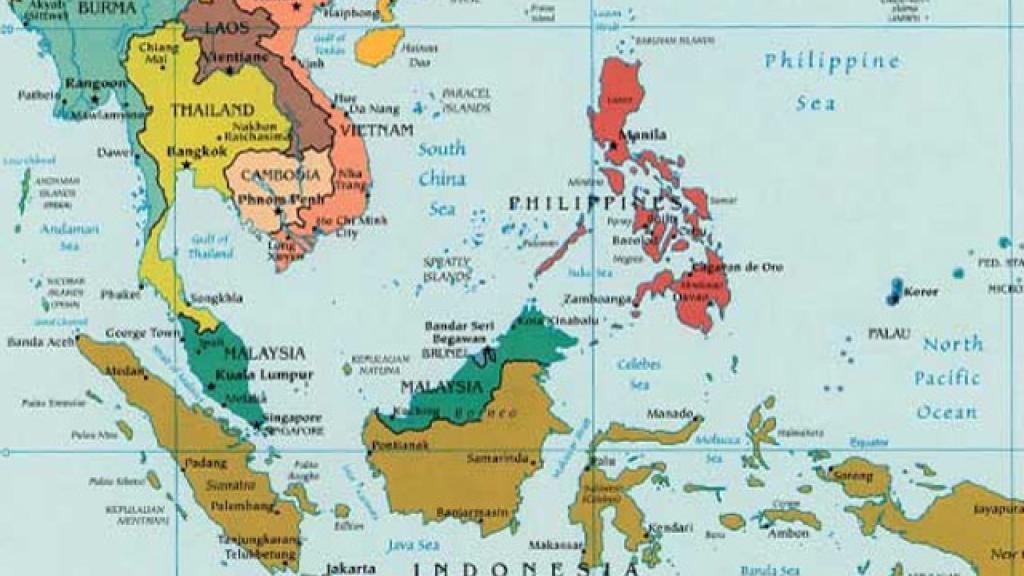
That is why the geostrategic rivalry between the US and China sharply rages on throughout the Eastern Hemisphere. This intensifying situation impinges on the littoral states around the Southeast Asian Sea (also known as the South China Sea), as it patently roils this maritime zone without abating. Nevertheless, the real nature of this inter-imperialist contestation is to primarily secure an uber-hegemony for their ruling classes in this vital realm of the world. Even so, both Washington and Beijing’s wider national goals are greatly focused on expanding their respective spheres of influence and dominance into other global zones to extract even more superprofits.

In targeting Southeast Asia, the US and Chinese onslaughts aim to guarantee their economic control over the region’s semi-peripheral and peripheral economies for their ceaseless capital accumulation. Washington and Beijing synchronously compete to sway the area’s national governments and ruling classes into anchoring their futures upon great power interests. This pattern regularly heats up as the US and China forcefully employ their contending foreign policy narratives and manoeuvres to influence various state-based regimes. The imperialist powers also typically deploy their prevalent political-diplomatic-military might to conceivably create puppet states for their own spheres.

Given its strategic geographical location, plus its economically subordinate role within the capitalist global periphery — as a maldeveloped, backward, dependent and semi-colonial country — the Philippines remains a perennial magnet for imperialist designs.

Philippine foreign policy’s determinants and alternatives

The Philippines has been partially responsible for the perilous deterioration of Maritime Southeast Asia’s security environment over the past decade. This is an accumulated result of Manila’s penchant to adopt provocative foreign policy stances and schemes that repeatedly capitulate to the US’ belligerent grand strategy agenda. By perpetually aligning and collaborating with US capital, the ruling Filipino capitalist elites eagerly promote US foreign policy interests. This is how the Filipino oligarchy consciously protects its narrow self-interests — as a US-supervised agent provocateur.

As a deplorable consequence, the Philippines endures as one of US imperialism’s vassal states in the Asia-Pacific. In the soaring inter-imperialist competition across the Southeast Asian Sea, the Philippines acts as a militarised regional destabiliser. By now, it has surely become a forward-tripwire state for the US’s heightening security confrontation with China.

It is imperative for Southeast Asian countries to steadfastly pursue genuinely independent foreign policies that are unchained to the designs of the imperialist great powers. In this regard, key elements determining potential Philippine foreign policy trajectories have to be asserted here: a) the globe’s geographical features are immutable; b) the Philippines is geographically fixed in Maritime Southeast Asia — astride China and a hemisphere away from the US mainland; c) the imperialist world system predominates the shifting international order; d) materially-driven dynamics generate great power geopolitics and realignments within the global core; e) the core’s contending alignments are reflected via opposing imperialist blocs; f) semi-peripheral and peripheral countries remain systemically subjugated, economically dependent, militarily weak(er), and readily exploitable by imperialist powers; g) within most nation-states, the capitalist classes — colluding with imperialist powers — exploit their oppressed working classes for profits via surplus extraction; h) acting through internationalist solidarity movements, oppressed nations and peoples can still transform into globally unified non-state forces to universally shape and (re)direct anti-capitalist agendas and policies; and i) through a selective application of international law’s defined precepts, principled tactical compromises can actively serve to transitionally advance strategically progressive foreign policy objectives.

These Philippine foreign policy determinants logically provide a synergized basis for any alternative external affairs strategy. So, upon these assertions, this working postulation ensues:

Southeast Asia lies within the Eastern Hemisphere. This hemisphere’s Eurasian great powers, China and Russia, maintain a strategic partnership to preserve their predominance across this domain. Despite this, the US, the preeminent great power of the Western Hemisphere, aggressively fortifies itself throughout the Afro-Eurasia-Indo-Pacific realm to boost its hegemony within the Eastern Hemisphere. This ascending US imperialist offensive is now resisted on multiple fronts by the Sino-Russo duo and their allies. In response to these ominous inter-imperialist maneuvers, the peoples of the Philippines, together with its Southeast Asian neighbours, must collectively initiate an independently peaceful path by actualising themselves into a “Maritime Demilitarised Zone for Southeast Asia” (or MDZ-SEA).

Accordingly, they should principally declare themselves as “Neutral and Non-Aligned States”, a clear principle recognised and warranted under international law. By firmly upholding impartiality, removing all foreign military bases and forces from the region, and abstaining from war or armed conflict, either directly or indirectly, the MDZ-SEA — as a maritime-based buffer zone — can mold itself into a concrete alternative reality for this area under agreed upon obligations. This will ultimately create new facts across Maritime Southeast Asia. The strategic insertion of a forward-looking regional equation may ultimately compel the US and China toward considering mutually relaxed (and therefore, less aggressive) postures for a novel detente in Southeast Asia.

By pursuing this independent track, Southeast Asian countries will foster a conjoint external policy of cooperative peace to benefit all. This progressive regional agenda can concurrently buy some vital time to eventually and necessarily reshape the character of the area’s economic-political-security architecture and processes to make them more democratic and people-centred in the future. Such a consequential task requires foreign policy measures that are integrally autonomous, internationalist, anti-imperialist, neutral and non-aligned in scope. This thrust can help to negate dangerous regional trends in the long run. In absolute terms, this would further enhance the future wellbeing of the region’s social majority — its working-class masses.

As a proposed strategic concept, the MDZ-SEA clearly offers the area a non-aligned external relations direction. As a directional line of march for the region, the MDZ-SEA’s purpose shall be to pursue an active attitude of neutrality in its relations with other states, specially with the US and China. In conducting itself — and standing firm — as an area-wide buffer zone, the MDZ-SEA’s autonomous bearing can keep its participating states concentrated on fostering vigorous forms of peaceful cooperation, instead of recklessly aligning with belligerent imperialist blocs. By advancing this regional project to bolster cooperative peace, the MDZ-SEA can act as a high-principled initiative in East Asia — a positive regional instrument aimed at denying partisan economic, political and military support for the vying great powers. Simultaneously, it should assiduously work to prevent the potentialities of a future imperialist war of aggression from breaking out in Southeast Asia.

Yet, there are some pivotal steps that need to be broadly realised to help reboot Maritime Southeast Asia’s general stability. These measures are of immediate magnitude if this strategic part of the world is to achieve a relative degree of cooperative peace. For the MDZ-SEA to evolve into a positively self-determining regional project, these proactive moves will be of crucial importance. A pressing set of policy shifts to exigently deescalate great power antagonisms have to be introduced to revamp the area’s sweeping balance in favour of peaceful activities and endeavours.

A regional strategic blueprint for Southeast Asia

A more innovative regional strategic blueprint must be launched. This initiative should concentrate on building an aura of friendship, harmony and peaceful cooperation for Southeast Asia to secure shared benefits for its peoples. A foreign policy of cooperative peace should chiefly be developed on the basis of a common security impetus. To carry this out, renovating the area’s security environment will entail necessary foreign policy changes at both the national and regional levels.

In this regard, the following objectives and measures to deepen efforts toward cooperative peace have to be seriously realised:

  • Abrogate the MDT. The Philippines must instantly abrogate the 1951 Republic of the Philippines-United States Mutual Defence Treaty (MDT). This is the two countries’ primary bilateral military instrument, which officially imposes a series of subsequent bilateral military agreements between Manila and Washington. This is the principal “legal basis” that “allows” US imperialism to maintain military bases and forces on “sovereign” Philippine territory.
  • Terminate other RP-US bilateral military agreements. The Philippines must instantly terminate all of its other bilateral military agreements with the US. These include the MDT’s associated accords: the 1947 RP-US Military Assistance Agreement (MAA), 1998 RP-US Visiting Forces Agreement (VFA), 2002 RP-US Mutual Logistics Support Agreement (MLSA), and the 2014 RP-US Enhanced Defence Cooperation Agreement (EDCA). Together, these joint security instruments merely impose and institutionalise US imperialist rule over the reactionary Philippine state.
  • Scrap defence-related agreements with other countries. The Philippines must equally scrap its similar defence-related bilateral agreements with other countries, including Australia, Canada, France, Germany, Japan, New Zealand, South Korea and Britain, among others. In a cumulative manner, these agreements only boost the Globalised NATO (North Atlantic Treaty Organization) project within the Asia-Pacific region, including its superior role over the Philippine state security apparatus — converting the latter into just another basic military unit directly under US imperialism’s overall command and control.
  • Shut down Globalised NATO in the Asia-Pacific region. All Globalised NATO troops must be withdrawn from the Asia-Pacific region; similarly, all of their corresponding military bases must be shut down straight away.
  • Shut down FPDA. All other foreign military bases, facilities and networks across the region belonging to the British-led Five Power Defence Arrangements (FPDA) — in Australia, Malaysia, New Zealand, and Singapore — must be closed down immediately.
  • Dismantle the Five Eyes intelligence alliance. Dismantle all imperialist intelligence infrastructure across the Asia-Pacific region. All physical and intelligence interception infrastructure of the Five Eyes intelligence alliance, including the Echelon intelligence network, must be promptly dismantled.
  • Uphold SEANWFZ. Firmly uphold the 1995 Southeast Asia Nuclear Weapon-Free Zone (SEANWFZ) Treaty to urgently demilitarise the area; concurrently advocate and campaign for a broader Asia-Pacific-wide nuclear weapon-free zone treaty and regime.
  • Revitalise ZOPFAN. Although ASEAN’s (Association of Southeast Asian Nations) initial attempt at regional neutrality, via its 1971 Zone of Peace, Freedom and Neutrality (ZOPFAN) initiative, attained mixed results, ZOPFAN per se remains an elementary component for deepening Maritime Southeast Asia’s neutrality and non-alignment thrusts. Because of this, the ZOPFAN concept and its inherent principles have to be reviewed and revitalised to enhance regional peace and security.
  • Advance a common security policy. Steadily promote and advance progressive regional peace initiatives as building-blocks toward a common security policy to foster a more peaceful and cooperative global order, especially for the Asia-Pacific region.
  • Advance non-alignment. Strongly support growing global moves to augment progressive non-alignment policies and endeavours to decrease and deescalate great power contestations across all the regions of the world.
  • SRAEC. Popularise and institutionalise the concept of a Shared Regional Area of Economic Commons (SRAEC) with a progressively unifying code of conduct for the Southeast Asian Sea. The SRAEC can become a positive building block and confidence-building mechanism in the context of developing cooperative peace.
  • Struggle against fascist regimes. Struggle to dismantle all authoritarian, ultra-rightist and fascist regimes in the Asia-Pacific region. Remove from power reactionary regimes that only serve as national bases of support for imperialism; replace them with working class-led states to advance and build socialism.
  • No to US imperialism’s “Axis of Aggression” in the Asia-Pacific region. Openly reject and oppose America’s deepening “Axis of Aggression” throughout the Asia-Pacific area. This directly involves the various US-led economic and security alliances across the region, including the neoliberal IPEF (Indo-Pacific Economic Framework for Prosperity), AUKUS (Australia-United Kingdom-US) trilateral security alliance, Quad (Quadrilateral Security Dialogue), American-Japanese-Korean Trilateral Pact, and the JAPHUS (Japan-Philippines-US) trilateral security alliance.
  • Support working-class solidarity and internationalism. Bolster militant working-class solidarity and internationalism (especially in supporting oppressed nations and peoples) to undermine, weaken, resist and defeat the rising global manoeuvres of imperialism. Likewise, aid all efforts to boost anti-imperialist movements and anti-fascist united fronts so as to intensify revolutionary mass struggles at the national-regional-international levels.

To be able to accomplish these progressive objectives for Southeast Asia’s long-term peace and security, its revolutionary working-class movements will need to propel a reorientation of — and a struggle to counter-think — their own societies’ predominantly backward mindsets.

Shifting the Philippines and Southeast Asia towards cooperative peace

This form of counter-hegemonic struggle is required to overcome mainstream bourgeois-reactionary foreign policy thinking, concepts and frameworks. Such a prerequisite is needed to urgently counteract the mainly national-chauvinist external relations schemes of the region’s states, and in particular their catastrophic geopolitical approaches and similarly destructive strategies. In unison, these conventional but adverse foreign policy tacks merely serve to propagate imperialist agendas and programs that uphold the contemporarily oppressive global interstate system along capitalist lines. All of these foreign policy fetters must therefore be repelled and stopped.

While the aforestated preconditions are all crucial and highly desired to conclusively attain alternative foreign policy outcomes over time, there are some transitional reforms that can be promptly implemented — but only if the Philippine state has the political will to do so.

Manila’s top foreign policy echelon is obliged to shift the country’s external affairs agenda forthwith and without delay. It must immediately end its detrimental bias of siding with one great power against another. The Philippines should stop playing the role of “the US’s trigger for a regional war with China”. By strategically changing its course of action toward a cooperatively peaceful mode, the country’s altered direction will chiefly safeguard the welfare of the Philippines, including Southeast Asia’s overall equilibrium.

This outlook and aspiration to attain cooperative peace for the region, while equally pursuing a common security approach, should critically follow a principled foreign policy line and posture: Neither Washington nor Beijing! Cooperative Peace for All in the Southeast Asian Sea now!

Rasti Delizo is a global affairs analyst. He is a member of the Bukluran ng Manggagawang Pilipino (BMP), a revolutionary socialist political centre of the Filipino working-class movement.


Syria’s ‘delayed revolution’: An interview with Asef Bayat


Published 
Asef Bayat

First published in English at Al-Jumhuriya.

On 30 December 2024, the Tehran-based reformist newspaper Ham-Mihan published an interview with Dr. Asef Bayat on recent developments in Syria. However, the newspaper censored important points related to Iran and the Islamic Republic from the final text of the conversation. Below is the revised and uncensored version of the interview with Dr. Asef Bayat.

Can the recent events in Syria be considered a result of the Arab Spring? Previously, you have viewed the events of the Arab Spring as a combination of revolution and reform, distinct from the revolutions of the 1970s and earlier. How do you describe the current events in Syria?

The recent developments in Syria represent a new form of political change, the characteristics of which we will better understand in the future as more detailed information becomes available. For now, based on what we know, there is no doubt that these events are part of the Arab Spring. Interestingly, a Palestinian friend even told me he considers this the third phase of the Arab Spring, following two earlier waves of uprising in the past decade. While it may be premature to use the term “third phase” for the events in Syria — since similar developments have not yet occurred in other countries — I think that the situation in Syria today is, in a complex way, a continuation of the revolutionary uprising that began in 2011.

This uprising began in the form of widespread popular and civil protests, where Syria’s people — men and women, young and old — rose up across its towns and cities, demanding political and economic reforms. However, several factors fragmented the uprising and transformed it into a tragic civil war: the brutal crackdown by Bashar al-Assad’s regime (reports of killings, imprisonment, and the torture of child protesters have been emerging in recent weeks), the regime’s release of Jihadi prisoners in order to radicalize the uprising, and the involvement of foreign powers (particularly Iran, Turkey, Saudi Arabia, and later the United States and Russia). The war resulted in the deaths of half a million people and the displacement of 14 million.

Nevertheless, the Syrian people’s dream of overthrowing Bashar al-Assad’s regime did not disappear. Over the past two years, even as various armed groups (often supported by foreign powers) took control of parts of Syria, popular protests like those in Sweida continued. In 2019, various armed groups came together under the initiative of Hay’at Tahrir al-Sham (HTS), which had already split from Al-Qaeda and had even fought against it, to plan a military offensive against Assad’s regime. Their opportunity came as Assad’s foreign supporters grew weaker: Iran and Hezbollah were weakened by Israel, while Russia was distracted by its war in Ukraine. With Turkey’s support, they launched their assault to overthrow the regime.

Therefore, the claim that recent developments in Syria have from the very beginning been part of a plan orchestrated by foreign powers does not appear to reflect the reality. There is no doubt, however, that the current situation has created a relative vacuum in the power structure, which foreign entities such as Israel and Turkey are exploiting to try to create new territorial realities. But this phenomenon is distinct from the historical dynamics that have brought Syria to this point.

How do you analyze the current situation in Syria, considering its history of struggles, social movements, and the role of Syrian civil society organizations and activists? More precisely, do you consider the overthrow of Bashar al-Assad’s regime the result of a movement, a revolution, or a coup d’état backed by countries such as Turkey?

The rebel groups’ advance and capture of various cities was so rapid that it surprised even them, disorienting and crushing the Syrian regime army’s will to fight so thoroughly that thousands of soldiers fled to Iraq. It was at this point that the masses of people who, whether in Syria or in exile, had long been dreaming of overthrowing the Assad regime re-emerged and once again advocated for regime change. In other words, the Syrian people have been on a “revolutionary course” since 2011. By “revolutionary course”, I mean a situation where, even after a widespread uprising and subsequent crackdown, a large segment of society has continued to think, dream, and act based on a different future in a different polity. Their judgments about national affairs have been shaped by the echo of “revolution”, the lingering belief that “these people [the regime] will go” — so that any shortcoming is seen as the government’s failure, and every act of protest as a sign of impending revolution. In this political psychology, the status quo is considered temporary, and change inevitable.

From this perspective, the events in Syria might be described as a “delayed revolution.” After all, the former regime has been overthrown, the previous status quo disrupted, and a fundamental break with the past has been achieved, with most people seeming to support this departure from the old system. However, the problem is that the rebel groups, especially Hay’at Tahrir al-Sham (HTS), have yet to present a clear vision about Syria’s social and political future. People still do not know exactly what kind of social order will be established in the country, and various social groups are projecting their own aspirations for the future socio-political system. Certain segments of society, such as Christians, Alawites, and Kurds, are deeply concerned about what lies ahead. The coming months may reveal which vision will prevail and what political consequences will follow. For now, however, Syria is in the midst of a “revolutionary honeymoon.” As a Syrian friend said to me, “Let us rejoice in the moment. We deserve to celebrate the passing of a tyrant. Let us hope for the better.”

What has been the role of women in Syria’s recent events? How can we explain the limited presence of women in rallies in the first days after the fall of the regime?

To my knowledge, women were clearly visible in the popular and civil protests back in 2011. Participation in street protests, however, is only one part of the movement: many women were working behind the scenes, handling logistics, providing medical care, and contributing to media efforts. Even as recently as last year, during the demonstrations in Sweida, women played a noticeable role. The shift happened when the revolutionary uprising turned violent. In general, when political movements escalate into armed conflicts, women often feel reluctant to take part: the issue of gender in uprisings is one I have explored in depth in my book, Revolutionary Life: The Everyday of the Arab Spring. After Syria’s peaceful protests were crushed by the regime, foreign powers got involved and rebel and jihadist groups took up arms, the popular uprising evolved into a multi-layered civil war. This “masculine” war sidelined civil protests and drove women out of public spaces.

It is also important to note the role of ideology. The misogynistic views of many Islamist and jihadist groups do not accommodate women participating in public life alongside men. In contrast, areas in the Kurdish region — where the prevailing ideology was more inclusive — saw women not only in protests but also holding administrative and political roles.

Now that the Assad regime is out of the picture, there is understandable hesitation among many women about groups like Hay’at Tahrir al-Sham (HTS), which currently leads the rebellion. HTS, under Ahmed al-Sharaa (or Muhammad al-Julani), has a history of collaboration with Al-Qaeda, even though they have since split and fought against it. Many women are reluctant to align themselves with such groups, especially given the lessons learned from Afghanistan and Iran. Ahmed al-Sharaa is now trying to provide assurances that HTS is not about enforcing the hijab or engaging in religious or ethnic discrimination, but many are skeptical. They have seen similar promises before: from Ayatollah Khomeini before the Iranian revolution, the Muslim Brotherhood before Egypt’s 2012 elections, and the Taliban when they retook power in Afghanistan. The pattern looks familiar, and the results have rarely aligned with the initial assurances. For now, everything in Syria is in flux: let us hope that the Syrian experience will be different.

In its first official statement, this group spoke about the right of women to choose what they wear. At a time when all political and social aspects of Syria are undergoing transformation, why do you think such an announcement was made, why was it necessary, and was it meant to send a message to certain countries, including Iran?

As I mentioned earlier, when this group entered Damascus and took control of other cities and regions, it began working to project a new, more moderate and pragmatic image of itself. They were keen to distance themselves from the extremism of jihadism and Al-Qaeda ideologies, and to present themselves as champions of tolerance and inclusivity. HTS seems to recognize that Syria is a deeply diverse society, home to multiple ethnic and religious communities. They also know that the Assad regime deliberately fueled ethnic and religious divisions to maintain control. Ahmed al-Sharaa appears to understand that building popular consensus, promoting social peace, and avoiding factionalism are essential for stability, both for the group’s survival and for establishing a new political order. By making this announcement, he seems to be signaling that his vision is different from that of the Islamic Republic of Iran, which enforces compulsory hijab on women. Instead, he is trying to position his government as one that is tolerant and inclusive, rather than coercive and authoritarian.

How do you foresee Mr. Julani’s future? Can he become a national leader to form an inclusive government, or will religious fundamentalists prevail?

First, let’s be clear that the success of a revolution doesn’t automatically lead to freedom and justice. The outcome depends on the revolution’s nature, the quality of its leadership, its vision, and the strategy and programs it implements. When it comes to Syria, the future remains uncertain. As I mentioned earlier, HTS, which currently leads the opposition, seems intent on projecting a moderate and inclusive image. For instance, they have emphasized respect for religious denominations and the right of women to choose their clothing. Ahmed al-Sharaa (Al-Julani) has met with Christian church leaders and worked with politicians from the former regime to ensure a smoother transition. So far, there haven’t been reports of mass arrests, detentions, trials, or executions.

But this “moderate” approach isn’t entirely new: it has a history. In 2015, Ayman al-Zawahiri, the then-leader of al-Qaeda, wrote a letter to Al-Julani (who at the time led the Al-Nusra Front, an Al-Qaeda affiliate) offering strategic advice. He encouraged Al-Julani to integrate his group into the broader revolutionary movement, form alliances with other Islamist factions, and avoid turning Syria into a launchpad for attacks on the West. It’s easy to see how this advice might shape al-Julani’s current strategy, presenting himself as a “moderate” Islamist to both Syrians and the international community in order to gain legitimacy. So far, however, there has been little to no discussion about elections, democracy, or a constitution. Al-Julani might think it’s too early for those conversations. Since clarity on plans and programs is likely to cause division, he prefers to remain ambiguous.

So, where does that leave the revolutionary event in Syria? Regardless of the uncertainty, something significant has happened. An entrenched tyrannical regime has fallen. To evaluate the revolutionary event, we need to consider the nature of the old status quo and its ability — or inability — to allow for meaningful reform. It is true that a revolutionary event does not necessarily result in a just and democratic social order, but it is undoubtedly pregnant with new possibilities in which some good things can happen. While meaningful change was unimaginable under the Assad regime, the post-revolutionary landscape, however uncertain, can offer the possibility of something better. In fact, it is ​​these unpredictable possibilities that have given hope to many concerned Syrians.

In your opinion, what factors led to the fall of Bashar al-Assad’s regime, and in what ways is the Syrian trajectory different from those of the revolutionary uprisings in Tunisia and Egypt?

I think several key factors set Syria’s path apart from Tunisia and Egypt’s, and led to what we could call a “delayed revolution.” Firstly, the opposition groups — whether Islamist, jihadist, secular, or Kurdish — were organized and had clear leadership structures. Secondly, these groups had enough military power to both capture and hold onto territories. For example, the Turkish-backed rebels controlled parts of the north, Kurdish groups held their areas, HTS and jihadists dominated Idlib, and other factions operated around Daraa. Holding the territory gave these groups the ability to govern locally, to establish political administrations, manage local economies, produce goods, and even manufacture military equipment. This control was crucial. Abu Hassan al-Hamawi, the head of HTS’s military wing, mentioned in an interview with The Guardian that their group was able to produce weapons, vehicles, and ammunition. This capability strengthened their positions and allowed them to expand into new areas. Finally — and perhaps most critically — these groups worked to forge coalitions, unite various factions, and coordinate their operations against the regime.

By 2019, HTS had recognized that the opposition’s biggest weakness was the fragmentation and infighting among its groups. When the regime’s military attacks pushed many rebels into Idlib, it created an opportunity for discussions about forming coalitions and improving coordination. This led to the establishment of a “united war room” that reportedly brought together commanders from about 25 rebel groups in the south to coordinate military efforts, including an operation to capture Damascus.

These three factors — organization and leadership, relative military power (through weapons and territorial control), and coalition-building with coordinated operations — set Syria’s uprising apart from those in, say, Tunisia and Egypt. But the cost Syria has paid is staggering: countless lives lost, cities destroyed, millions displaced, and the involvement of multiple foreign powers. It is a price far greater than what was seen in other Arab uprisings, and the future remains deeply uncertain. Still, the fall of Bashar al-Assad’s unyielding regime has created a fluid situation, and while it is impossible to predict what will come next, this openness has introduced new possibilities — some of which could potentially bring positive changes for Syria and its people.

Should we expect similar events to change the political status quo in those Middle Eastern countries that are dominated by totalitarian political systems, or was Syria an exception?

This is an interesting question. It is tempting to view the fall of the Assads’ 54-year dictatorship as a sign that we might be on the brink of a “third wave” of the Arab Spring — especially if the outcome in Syria turns out to be positive. We might see large protests in countries that have already experienced uprisings but where regimes managed to cling onto power through repression or manipulation, often becoming even harsher in the process. For instance, Iraq seems particularly vulnerable to a new wave of popular protests. The muhasasah system (communal power-sharing) in Iraq and Lebanon has essentially devolved into a kind of mafiocracy, where power is carved up among communal leaders instead of being based on citizenship and democratic principles (muwatanah). Tunisia might also see renewed efforts to protect its fragile democracy from Kais Saied’s authoritarian moves. And then, there is the case of the Islamic Republic of Iran, where public discontent continues to simmer beneath the surface. If the growing conflicts and grievances in these countries aren’t addressed — not through securitization and repression, but by tackling the root causes — then widespread protests and demands for structural change seem extremely likely.


Geopolitics


Trump, Europe and outraged virtue: malaise in imperial supremacism

Saturday 25 January 2025, by Thierry Labica


Newly elected United States President Donald Trump has set the tone with some startling foreign policy statements: annexation of the Panama Canal, outright colonisation of Greenland and, for Canada, publication on his social network of a map of North America entirely covered in the Star-Spangled Banner. As if inspired by Netanyahu brandishing the map of a single great Israel before the UN General Assembly, here is Trump, season 2.

Any real plans?

A strategy of unpredictability and generalised threat? Symptoms of the senescence of an authoritarian old man dreaming himself into the master of an empire? We can always speculate on the motives behind such provocations. Whatever his ultimate intentions, this outburst reveals a number of familiar motifs. The first is virilist aggression, which has become a key marker of the political identity of the new global far right, from Trump to Duterte to Bolsonism. Another motif is anti-feminism, from the declared anti-feminism of the former South Korean president (Yoon Suk Yol, now deposed) to that of the Vox movement in Spain and the French version of ‘anti-wokism’. From this point of view, these outbursts are fully consistent with the signals sent out by Musk to the leaders of the European far right.

They are also a sign of the clear trend towards concentration of American presidential power that has been underway for the past forty years. Trump’s posture is now only the most caricatured manifestation of this.

A return to tradition

The argument of ‘national security’, on which nothing less than the good order and freedom of the world depend, echoes word for word that of American leaders at the end of the Second World War. Anxious to perpetuate the unprecedented deployment of military bases around the world, they were already making ‘security’ the key to all their justifications: in the name of ‘security’, the Pacific, rid of the defeated Japanese power, was destined to become ‘our lake’; while some ‘didn’t care what name we chose, as long as we had absolute, uncontested control over our military base requirements’.
The outraged

The best part of this whole affair lies elsewhere. It is due above all to the spectacle offered by the ‘European partners’, who are in uproar and ‘incomprehension’ at the contempt shown by their ally, friend and protector, the universal emblem of ‘our Western values’. We learn that France and Germany were ‘categorical’: ‘Borders must not be moved by force’. For German Chancellor Scholz, alongside the President of the European Council (AntAonio Costa): ‘The principle of the inviolability of borders applies to all countries, whether they are in the East or in the West’. ‘This principle cannot and must not be undermined’ ‘The United States must apply the principles of the United Nations’ according to a German government spokesman. Finally, French foreign minister Jean-Noël Barrot, said that the EU would not tolerate US military intervention: ‘There is no question of the European Union allowing other nations of the world, whoever they may be [...], to attack its sovereign borders’. French government spokeswoman Sophie Primas denounced ‘a form of imperialism’. A sense of values, high principles, ardent indignation: the White House is shaking, that’s for sure.

Sinister liars


One small question comes to mind, along with a feeling of nausea: are these the same leaders who applauded and actively contributed to more than a year of Israeli genocide in Palestine, massively armed by the United States of Biden-Harris, and who allowed international law to be trampled underfoot? Who ferociously repressed all forms of solidarity in Germany, France and Great Britain? And denied any principle of sovereignty to Lebanon, which has been abandoned to Zionist murderous madness? And who are allowing war to rage across the Middle East, as if more than thirty years of carnage and abysmal failure were not enough? The same people are now making sordid faces of outraged virtue against the backdrop of the colonial racism they still share. Hypocrisy doesn’t kill, and that’s their good fortune.

Attached documentstrump-europe-and-outraged-virtue-malaise-in-imperial_a8830.pdf (PDF - 905.9 KiB)
Extraction PDF [->article8830]


Thierry Labica
Thierry Labica is a lecturer in British Studies at the University of Nanterre and a member of the NPA.


International Viewpoint is published under the responsibility of the Bureau of the Fourth International. Signed articles do not necessarily reflect editorial policy. Articles can be reprinted with acknowledgement, and a live link if possible.


Women

France: 50 years of the Veil law: abortion, a right never won


Friday 24 January 2025, by Manon Boltansky , Ju Chiro


On 17 January 1975, the Veil law was promulgated in France: voluntary termination of pregnancy (abortion) could now be carried out legally and in a safe environment. The right to contraception and abortion was a victory won by the struggles of the feminist movement in the 1970s, in France as in many other countries.

Mass mobilisation won a right that is vital to women’s freedom, the right to control their own fertility and thus to take control of their own destiny, a right that had been denied them for centuries by all the established powers, including in France.
The far right against women’s rights

Banning abortion kills. Before the Veil law in France, on average, one woman died every day as a result of a clandestine abortion. In the United States, where the Supreme Court ruled on 24 June 2022 that access to abortion was no longer a constitutional right, it has been banned in a dozen states, with dramatic and even fatal consequences for women’s lives and health. Wherever the far right comes to power, it restricts the right of women and gender minorities to control their own bodies. In Italy, for example, it has authorised anti-abortion groups to enter clinics. Hungary has voted to make it compulsory to listen to the foetal heartbeat before an abortion.
A right that is still fragile in France

In France, in 2024, the Macron government attempted a seduction operation by incorporating into the constitution, albeit with very serious limitations, the ‘freedom guaranteed to women to have recourse to voluntary interruption of pregnancy’. In reality, this incorporation is not a sufficient guarantee, because it is up to the legislator to establish the conditions under which this ‘freedom’ can be achieved. In concrete terms, a right-wing or extreme right-wing government or parliament could shorten the legal time limit for abortion, cut subsidies to family planning, or ban certain abortion methods, without this being unconstitutional. And speaking of the right: the ‘new’ Bayrou government, like the previous one, includes many ministers who voted against constitutional entrenchment, and others who abstained.

Against the destruction of public services, redevelop abortion clinics

Today, access to abortion is already being seriously undermined by the destruction of the public health service. There is an urgent need to defend women’s right to control their own bodies, by defending the extension of the waiting period for access to abortion. We must demand and fund the reopening of abortion centres that have closed over the last 20 years. Improve training for doctors and midwives so that they know how to carry out this procedure and provide non-judgemental support for people having abortions.

We need to develop a nationwide network of abortion facilities and professionals to guarantee access, while allowing women and the people concerned to choose their abortion method. 50 years on, we still have to fight for the right to abortion, in France and throughout the world. So that all women and people seeking an abortion can do so free of charge, wherever they want, without judgement, and so that they have a choice of method wherever they live.

L’Anticapitaliste, 16 January


Attached documentsfrance-50-years-of-the-veil-law-abortion-a-right-never-won_a8829.pdf (PDF - 905 KiB)
Extraction PDF [->article8829]


Women
Political Review of 2024 - a view from Britain
Mazan, rape as a political fact
Gender and sexualities: the reactionary offensive of the far right
The global gag rule and women’s abortion rights
Why we are closing our center for displaced women in Lviv
Abortion and reproductive rights
After Roe, the Anti-Abortion Deluge
Republican Attacks on Abortion Help Biden Campaign, But Will that be Enough Given Reaction to His Position on Israel?
The U.S. Right also Wants to Get Rid of Birth Control
Alabama Supreme Court Rules that Embryos are Children; The Right’s Latest Attack on Women
Abortion: a pillar of a broad pro-democracy and human rights coalition

Manon Boltansky


Manon Boltansky is a leading member of the NPA in France. She works in heritage restoration.

Ju Chiro


International Viewpoint is published under the responsibility of the Bureau of the Fourth International. Signed articles do not necessarily reflect editorial policy. Articles can be reprinted with acknowledgement, and a live link if possible.