Monday, June 23, 2025

'Traditional Gender Norms Are the Exact Opposite' of What UK Economy Needs, New Report Finds


A gender equality study shows that gender inequality is worsening financial hardship in deprived regions


Byline Times
Kate Bermingham
23 June 2025


Buttershaw, a residential area of Bradford, West Yorkshire, is pictured above. Yorkshire was one of the regions the report found had low levels of gender equality. Photo: Windmill Images / Alamy


As the far right movement gathers pace in the UK, and violence and hostility towards women deepens, a new study has found that gender inequality is worsening financial hardship in economically deprived regions.

The findings, from Kings College London, come weeks after polling by IPSOS for JOE Media Group of Gen Z voters revealed that over half of men believe they’re expected to do too much to support gender equality and that it has gone “too far”, and that 54% of Reform voters – many of whom are young men – believe that males are being discriminated against, as do 44% of Brexit voters.

Some of the most gender unequal regions in Britain are “left behind” communities in the north and midlands, where Reform UK saw significant gains in the May local elections.

The UK Is Failing to Tackle Violence Against Women Amid Rise of Misogynistic Influencers

Reduced budgets, rising online hate and the lack of an effective national strategy, are deepening the threat faced by women and girls, warn MPs

David Hencke


Report author Dr Caitlin Schmid told Byline Times: “We’re seeing a lot of narratives that try to take us back to more traditional gender norms, even though our research shows that is the exact opposite of what we need, and will not address the legitimate grievances that women and men have, across the country, which have come out of decades of austerity.”

Yorkshire and the Humber, Wales and Northern Ireland have the lowest levels of gender equality, researchers found, while London and the north-west of England are the most gender equal. No local authority in the UK has achieved gender equality.

Women shouldering a larger burden of childcare and domestic work, and being under-represented in politics and leadership roles are key factors blocking regional progress towards gender equality.

‘For Too Long, Men Have Been Invisible in a Media Conversation Focusing on “Violence Against Women”, Not “Male Violence”

The latest episode of the hit Media Storm podcast focuses on how journalism is still failing to challenge the structural forces of patriarchy and misogyny
Mathilda Mallinson and Helena Wadia

The report also found that gender inequality leads to poor outcomes for both women and men, such as lower wages for women, and poorer health outcomes for men.

Dr Schmid stresses that investment in childcare infrastructure is critical if we want to “unlock greater productivity” in these deprived regions, particularly in rural areas.

In regions where men are more actively involved in childcare and domestic work, they tend to experience positive health outcomes such as higher fertility and a lower risk of suicide.


The point I always want to come back to is that it’s not a zero sum game: women’s progress does not mean men’s regress, our society and our economy depends on both doing wellDr Caitlin Schmid, report author

Young men captured by the ‘manosphere’ often rely on this narrative to counter claims of misogyny, which was a central theme in Netflix’s Adolescence series which ignited public debate after its release in March, made UK TV history, and led to its creators meeting with the Prime Minister about how best to “protect our children”.

According to The Centre for Countering Digital Hate, the world’s largest incel online forum received 2.7 million visits between January and March 2025 which illustrates the scope of the problem impacting young men, and the role of the internet in spreading the message.

Netflix’s series, Adolescence dealt with the themes of misogyny Photo: Netflix

Laura Bates, author of ‘The New Age of Sexism’, also found that it takes just 30 minutes for TikTok to show extreme misogynistic content to teenage boys when they set up a new account.

But while the media focuses on young men and their far-right leanings, and painstakingly tracks the rise of Reform and its leader, Nigel Farage, little attention is paid to young women and their move to the political left. As The Guardian noted in May, ‘The real story isn’t young men supposedly voting far right. It’s what young women are up to’.

In the 2024 General Election, nearly a quarter of women aged 18-24 voted for the Green Party, around twice the number of 18-24 year old men who voted Reform.

‘The Media’s Role in Contributing to a Culture that Humiliates Victims of Rape and Sexual Assault’

The latest episode of the hit Media Storm podcast focuses on the most common mainstream myths around women and sexual assault that are perpetuated through journalism

Mathilda Mallinson and Helena Wadia


Political scientist Cas Mudde observes: “That the media chooses nevertheless to focus on young men illustrates the male gaze that continues to dominate society, which not only means that whatever men do or think is deemed inherently important and worthy of both academic and political attention, but also sets men as the norm. This ends up strengthening the far right’s political prospects.”

Keir Starmer’s attempts to appeal to right wing voters, with anti-immigration and war-mongering policies – leading to claims that Labour are Reform-lite – hasn’t helped.

Frank Riot, a political artist from south London, told Byline Times: “I think this government has no interest in doing anything materially helpful to solve gender inequality … if they try to present themselves as being a party for women I think that’s exposed by the way they’ve treated Palestinians and trans women … the gall that they have to ride this anti-trans moment and say that it’s for the safety of women and the rights of women, while they are actively participating in a genocide in Gaza.”

The 35-year-old notes that issues like period poverty and funding for endometriosis care, “are completely ignored because they’re not politically interesting, they’re not part of the culture wars, they don’t ‘rev people up’”.

Green Party Deputy Leader Zack Polanski Says UK Must Leave NATO Because of Trump

The frontrunner to become the next leader of the Green Party of England and Wales tells Byline Times the UK must now form new alliances for “peace” instead
Adam Bienkov

Emily Gulliksen, a postgrad international affairs student from north London, is deeply concerned about Labour’s role in the Gaza conflict. After voting Labour previously, she switched to the Greens in the last election.

The 26-year-old told Byline Times: “Even if all their other policies were super left, I still think (Gaza) would make me lose support for them…

“Housing is also a massive issue. Rent prices. How it’s impossible to live in London. If you’ve grown up in London and then it feels like you’re being pushed out of the city, you can’t live in the place you’ve grown up in anymore.

“… It seems so hard now, even if you go to uni and you get a really good job, that doesn’t guarantee you stability or certainty in the future, so those prospects … this is something that people in my circles talk about a lot.”
Deputy leader of the Green Party, Zack Polanski. Photo: Thomas Krych/ZUMA Press Wire

Phoebe Franklin recently joined the Green Party, “(after) being inspired by Zack Polanski’s leadership bid, especially at a time when the Labour Government seem determined to alienate the very voters who put them into power”.

Franklin, 26, said she was most concerned about economic inequality, the genocide in Gaza and trans rights.

We’re not funded by a billionaire oligarch or an offshore hedge-fund. We rely on our readers to fund our journalism. If you like what we do, please subscribe.

The increasing Gen Z gender voting gap is not unique to the UK. Recent elections across Europe, North America and Asia have seen similar trends of disengaged young men shifting to the far right, and disillusioned young women leaning to the left.

For both groups in the UK, political neglect and economic exclusion has led to alienation and resentment.

Culture wars aside, however, the data from Kings College London suggests a return to traditional gender norms – the dream of the far right – could run the UK’s economically deprived regions even further into the ground.

Written by
Kate Bermingham


Welsh aeronautical apprentice flies the flag for women in engineering
23 Jun 2025     NATION CYMRU
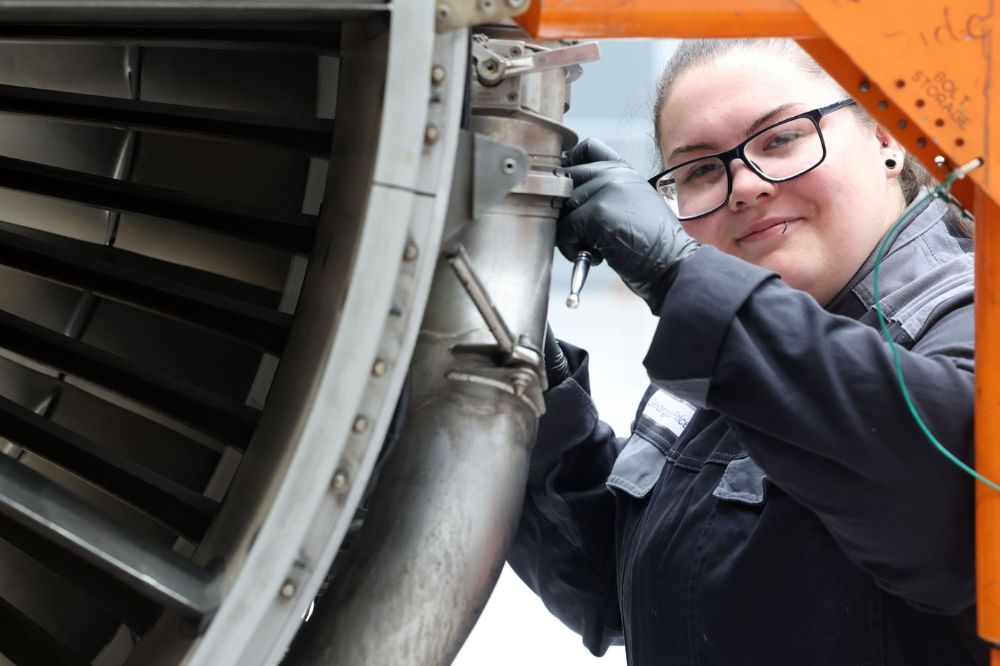
Georgia Price – Image: Welsh Government

A young apprentice from Llantrisant is breaking barriers in the aerospace industry as Wales celebrates Women in Engineering Day.

Georgia Price, 21, was the first female aeronautical engineering apprentice at Newport-based AerFin Ltd, a global aviation company specialising in aircraft and engine component support services.

Currently studying for a degree in Aeronautical Engineering at the University of South Wales, Georgia is blazing a trail for women in STEM careers.


Medals

Her achievements include winning bronze and gold medals at the Inspiring Skills Competition Wales Manufacturing Team Challenge and the Skills Academy Wales Tomorrow’s Talent Award.

Georgia said: “My advice to other women considering an engineering career is to go for it. It’s not as daunting as it may look, and everyone is so supportive and welcoming.”

Minister for Culture, Skills and Social Partnership Jack Sargeant said: “Georgia’s success story is a beacon to all young women who may today be considering a career in engineering.

“Her achievements also illustrate the value of apprenticeships as a pathway into employment and further education.”


Funding

The Welsh Government has increased its support for apprenticeships despite financial challenges and the loss of European funding.

Core funding has risen from £97m in 2020 to £144m in the most recent budget. Latest data published by Medr shows nearly 73,795 new apprenticeship starts have been supported during this Senedd term.

Georgia’s employer, AerFin, now has three female apprentices and is committed to developing local talent in the thriving aerospace sector.

Simon Bayliss, AerFin’s chief operating officer said: “Georgia is a great asset to the business.

“Apprenticeships provide the company with a great opportunity to take on and develop local talent which allows us to grow organically.”



SCOTLAND

OPINION


Making a manifesto for people and planet


23 June 2025
by Charis Chittick

Charis Chittick: a reminder that real change is possible

Like many organisations right now, at the Wellbeing Economy Alliance Scotland (WEAll Scotland), we are thinking ahead to the 2026 Scottish Parliament election.

Last month, we gathered organisations, academics and individuals together in Glasgow to co-create our manifesto for the economy.

As Scotland’s network of organisations and individuals committed to transforming our economy, it was important to us to include our members in the process of creating our manifesto.

We believe there is power in coming together. By sharing our collective expertise and experiences we can create a manifesto for our economy that has breadth and depth. A manifesto for the economy that is backed by the people of Scotland.

Working in the third sector, it’s easy to feel discouraged and deflated right now. Many times this year I have felt angry as we hear news of policy decisions that put pressure on those of us who are already struggling to survive. I am fed up with short-sighted decision making that prioritises the wrong things and puts our natural environment at risk.

Right now people in Scotland are feeling overlooked and ignored by politicians. Let down by a system that is stacked against them. For too many of us, the economy isn’t working and we are left on shaky ground. Too many of us struggle to pay our bills, heat our homes, or even buy enough to eat. We can and must do better.

As I sat in our manifesto workshops on a rare sunny day in Glasgow, my sense of hope for a better future and determination to keep going was reignited. I spend most of my time working from a small corner of my bedroom at my ‘home office’. It’s easy to forget that we are part of something bigger.

Being in that workshop, filled with people from a diverse range of organisations and backgrounds, was exactly what I needed. There was a buzz and anticipation in the room as we worked together and a reminder that change is possible.

I’m now back in my bedroom office and we are beginning to draft our manifesto for the economy. We are still in the early stages of writing it and we’ll continue to work with our members to co-create our manifesto for the economy.

But one thing is clear, the next parliamentary term is an opportunity for politicians to rebuild trust through their actions. To act on the issues that matter most to people.

We must deliver real and lasting change for people in Scotland that ensures everyone has enough to live with dignity. We must act to restore and protect our beautiful natural environment for future generations.

It’s time for our politicians to invest in a better future for Scotland by getting today’s decisions right. To commit to redesigning our economy.

If you want to join us, why not become a member of WEAll Scotland and add your voice to our manifesto for the economy.

Together, we can build a wellbeing economy where people and planet can thrive.

Charis Chittick is campaigns and communications lead at WEAll Scotland.

How we’re showing cities can be a home to people and nature

This post is by Mete Coban, deputy mayor of London for environment and energy.


For the start of London Climate Action Week, the mayor of London, Sadiq Khan, has launched a new £12 million Green Roots Fund to boost London’s green and blue spaces. This isn’t just about parks and rivers, it’s about giving Londoners the chance to shape the places where we live. Together, we can create and restore parks, community gardens, wetlands and waterways across our city.

We’re doing this not just because nature is vital for tackling climate change and making our city more resilient to extreme weather, but because we believe all Londoners deserve the physical and mental health benefits that come with access to nature. And of course, we believe all Londoners deserve safe, secure housing too.

We don’t have to choose between homes and natureLike the mayor, I had the good fortune to grow up in secure, affordable social housing. That gave me the foundation to stay close to my family, friends and school, to feel part of my community. But today, too many young Londoners don’t have that stability. Over 90,000 children in London are homeless right now, many living in inadequate temporary accommodation because of years of underinvestment in social housing.

That is why we are using planning powers to drive up affordable housing in major developments to 42 per cent. Over 25,000 affordable homes were built in London last year, the most since GLA records began.

And here’s the important thing: we know this doesn’t have to come at the cost of nature. London is already one of the greenest cities in the world and we’re determined to make it even greener as we build the homes people need.

We won’t shy away from the challenges. Our priority will always be brownfield sites first. But the scale of the housing crisis means we have to be honest. Some developments will involve land currently classed as green belt. Let’s be clear: the green belt was never an environmental policy, it was designed to stop cities spreading outwards. Some of it is magical. But some of it is concrete; much of the land that is green is damaged by pollution and pesticides.

We have a huge opportunity here: where development happens, we’ll work to make these places rich in biodiversity again. Any land released will have to follow strict rules. We won’t just protect nature, we’ll improve it. And we’ll do it in partnership: with London’s brilliant environmental groups, with housing developers, and with communities themselves.

London is already showing how it can be doneIf you think you can’t build homes and boost nature, I’d invite you to Woodberry Down in Hackney, where families in social homes look out on the beautiful East Reservoir nature reserve. Or come to Barking Riverside, where we’re creating safe habitats for seals and water voles alongside homes for Londoners.

And if you think development always means harming nature, take a walk in Camley Street Nature Park, once a coal yard, now a haven for wildlife. Or visit Maxilla Gardens, created by Tayshan Hayden-Smith and local people beneath the Westway, a powerful reminder that when communities lead, change happens.

We know that people from Black, Asian and minority ethnic communities are more than twice as likely to live in areas deprived of green space. That’s not right. The Green Roots Fund will help tackle this injustice by supporting Londoners to create the green spaces they want to see.

The Hackney I grew up in had far less nature than it does now. It would have been hard to imagine back then that car parks would become wildflower meadows, or that old reservoirs would be places to swim or spot wildlife. But we’ve shown what’s possible. With Green Roots, we’ll go further, creating more and better housing, more and better nature because, as the great reforming architect Berthold Lubetkin said, “nothing is too good for ordinary people.”

Polluter must pay, say UK voters

Zero Hour environmental campaign poll reveals four in five British voters want major polluters to pay higher taxes.


Brendan Montague | 23rd June 2025 |
THE ECOLOGIST
Creative Commons 4.0


Rachel Reeves, the British chancellor, and Ed Miliband, secretary of state for energy and climate change.

The overwhelming majority of people in Britain want the most polluting companies to face tax hikes in order to fund frontline public services, a snap poll has found.

The research, polling 2,000 UK adults was conducted by Yonder, on behalf of the Zero Hour environmental campaign, and brings into question the public’s faith in ministers’ spending plans.

Zero Hour argues that properly addressing Britain’s economic challenges and improving living standards can only be done through addressing the climate and nature crises.

Polluter

Dr Amy McDonnell, co-director of the Zero Hour climate and nature campaign, said: "These findings show the government must urgently get to grips with the cost-of-living crisis, alongside taking bold action to hold the nation’s big polluting companies to account while setting out clear plans for a fair transition to net zero.

“We know we cannot address both our economic and environmental challenges in isolation. We need more investment into our crumbling public services alongside the rapid development of cleaner energy infrastructure to lower bills, alongside strong safeguards to protect nature.

“We know the climate and nature crises threats we face pose the biggest risk to those on the lowest incomes. Ministers would be wise to redouble their efforts to address these head on by adopting the level of ambition set out in the Climate and Nature Bill.”

A total of 80 per cent want major polluters to pay higher tax, which can cover public sector spending. Two-thirds believe that building new homes and infrastructure projects should not come at the expense of the environment.

Insulation

Meanwhile, half say strengthening the UK’s protections for nature and renewable energy infrastructure will boost the UK’s national security.

Seven in 10 voters also believe the Government should consult the public on their plans to reach net zero and boost biodiversity across the country.

The findings come as ministers were under fire for cutting DEFRA’s budget by 2.7 per cent in last week’s Spending Review.

Plans set out by Ed Miliband to boost funding for home insulation, in an effort to lower household energy bills, were, however, protected by Rachel Reeves.

Restore

Campaigners say the British Government’s economic plans should not come at the expense of the environment, and that polluting industries should be hit with harsher taxes to help the world reach net zero.

In a blow for Labour, just 15 per cent of voters say the party understands the challenges working people face.

The snap poll comes ahead of the return of the landmark Climate and Nature Bill, which is set to be debated in Parliament on 11 July 2025.

The private members’ bill includes measures to restore nature, protect workers and curb emissions. Although it effectively put on ice by government whips back in January, it holds record support across the Commons, including from almost 90 Labour MPs.

This Author

Brendan Montague is editor of The Ecologist. This article is based on a press release from Zero Hour.

Sunday, June 22, 2025

UK

UK’s largest trade union saw membership jump by 200% in 10 councils won by Reform


19 June, 2025 
Left Foot Forward

Nigel Farage’s party have also set made clear their intention cut back on expenditure in local authorities, setting up the DOGE unit, and Farage warning workers in a speech celebrating his party's gains, to seek "alternative careers" if they worked on diversity or climate change initiatives

.

With workers worried about what Reform taking power means for them, the UK’s largest trade union saw its membership jump by 200% in the 10 local authorities won by Nigel Farage’s party at last month’s local elections.

Sky News reports: “Unison figures show its membership increased by an average of 272% in the week after the results were announced, which saw Reform take control of 10 councils and pick up more than 600 councillors.

“The data, shared with Sky News, shows an average of 64 people joined the union in the week beginning 5 May, following the poll in England on 1 May – compared with an average of 28 for the previous week and 21 for 2025 as a whole.”

Reform are no fans of workers’ rights, with its MPs voting against the Employment Rights Bill, opposing banning zero hours contracts and giving all workers sick pay from day one – policies which are overwhelmingly popular across the country.

Nigel Farage’s party have also set made clear their intention cut back on expenditure in local authorities, setting up the DOGE unit, and Farage warning workers in a speech celebrating his party’s gains, to seek “alternative careers” if they worked on diversity or climate change initiatives.

Christina McAnea, Unison’s general secretary urged workers at Reform controlled-councils to join her union.

Ms McAnea told Sky News: “Membership has surged in areas where Reform did well in the local elections.

“Unions exist to ensure no one can play fast and loose with the law. Any staff working for councils now controlled by Reform, and who aren’t already a UNISON member, should sign up so they can be protected too.”

Basit Mahmood is editor of Left Foot Forward


UK Trade unions issue joint call for Thames Water to be brought into full public ownership

20 June, 2025 
Left Foot Forward

With the company’s future looking precarious, trade unions have issued a joint call calling for the company’s nationalisation

.

Trade unions, including the TUC, GMB, Unison and Unite have joined forces to issue a joint-call for Thames Water to be brought into full public ownership given the company’s troubles.

The call comes after the Environment Secretary, Steve Reed, yesterday said the government is stepping up its preparations for temporary nationalisation of Thames Water, indicating it will reject pleas from the company’s creditors for leniency from fines and penalties.

The debt-ridden company, which serves about a quarter of the UK’s population, mostly across parts of southern England and London and employs 8,000 people, has been struggling for a number of years.

It has struggled to fix leaks, stop sewage spills, and modernise outdated infrastructure.

In May, the company was hit with a record £104m fine over environmental breaches involving sewage spills, after failing to operate and manage its treatment works and wastewater networks effectively. Thames Water’s creditors had demanded that it be shielded from key environmental regulations and fines as part of their rescue bid.

However, the government has indicated a rejection of such pleas.

With the company’s future looking precarious, trade unions have issued a joint call calling for the company’s nationalisation.

A joint statement said: “The chaos at Thames Water has dragged on for too long.

“The collapse of the most recent private equity investment deal is just the latest chapter in a long-running failure.

“Sticking-plaster solutions are not the answer.”

The statement went on to add: “It’s time for the government to step in and bring Thames Water into full public ownership.

“Returning Thames Water to public ownership is the best way to protect staff, serve customers, and safeguard our environment.”

Basit Mahmood is editor of Left Foot Forward
European watchdog warns austerity has undermined UK’s response to violence against women

21 June, 2025 
Left Foot Forward

In 2023, more than half of women escaping domestic abuse were turned away from safe refuges because of chronic shortages.


The Council of Europe, a body which aims to uphold human rights, democracy and the rule of law in Europe, has warned about the impact austerity measures have had on the UK’s ability to protect women from domestic violence.

In a report published this week, the council warned that years of cost-cutting have left women’s shelters and vital support services “underfunded and understaffed,” compromising the country’s compliance with the Istanbul Convention. The legally binding treaty requires member states to prevent violence against women and provide support for survivors.

According to the 130-page analysis conducted by the Council’s Group of Experts on Action against Violence against Women and Domestic Violence (GREVIO), austerity has significantly weakened women’s rights organisations and essential services, despite the UK’s adoption of what it described as a “solid policy agenda.”

The report revealed that the UK currently has 5,238 shelter places available for women fleeing domestic abuse, far short of the 6,800 minimum recommended for a population of 68 million.

In September, the Independent reported that in 2023, more than half of women escaping domestic abuse were turned away from safe refuges because of chronic shortages.

Data from the Office for National Statistics (ONS) showed that between April 2022 and March 2023, 27,754 women were referred to shelters but only 10,824 were accepted, with 16,930 women, the equivalent of one being turned away every two hours, left with nowhere to go.

Citing these statistics, the Council of Europe stated: “GREVIO notes with grave concern reports of women and children being turned away from shelters in all four nations as a result of capacity being outstripped by demand.”

The report calls for an “urgent need to increase shelter distribution” across the UK and to ensure that safety standards are upheld consistently nationwide.

Punks Against Reagan, Racism, War and the Religious Right


 June 23, 2025

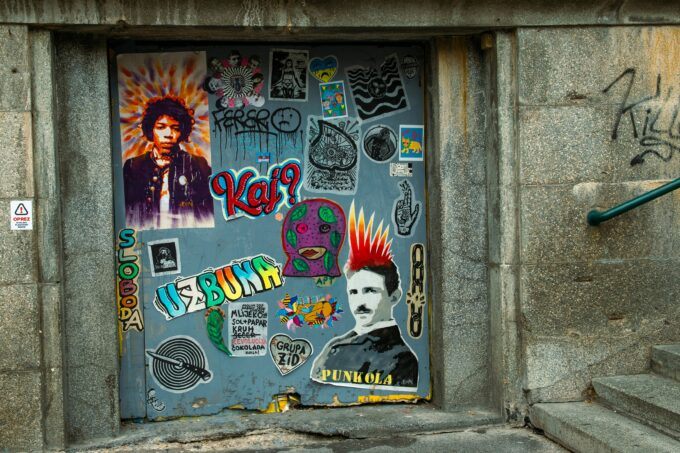
Image by Caz Hayek.

I was never a huge fan of hardcore punk music. That being said, I have seen dozens if not hundreds of punk shows. From Vancouver, BC’s DOA to Washington, DC’s Bad Brains, I long ago lost count of the number of hours I underwent aural assaults in venues the size of a bedroom to outdoor amphitheaters. If someone were to ask why, the answer is simple. Punk was the cheapest and most common live music around during the years I am writing about: 1977-1986. This was especially true in the San Francisco Bay Area. Furthermore, it was usually the most overtly political of the music around. Of course, that was left and anarchist politics. Elsewhere in the nation there were several other bands making a mark and gaining a following in the cities and towns from which they sprang.

Given that I was living in the streets, renting in apartments and crashing on couches in Berkeley, Oakland and San Francisco, the bands I ran into the most were local bands. The Dead Kennedys were foremost among them. I was friends with a guy who did sound for the band for a couple years. He was a yippie I met at a giant Grateful Dead concert in 1977 in New Jersey. We both split the east coast around the same time, ran into each other at the White Panther/Earth Peoples Park house in west Berkeley in January 1978 where a friend and I were crashing. I would see him at shows, festivals, street fairs, parties and on the street; we both watched and conversed about the scene as it slowly transitioned from a hippie freak culture to punk. We always had a good time sharing ideas, various chemicals and tall tales. Anyhow, he always got me into the Dead Kennedys shows and pretty much any other show I wanted to see at the North Beach punk palace Mabuhay Gardens. Another venue that hosted a lot of punk bands was up the street from an apartment a group of friends and I shared on Berkeley’s Dwight Way. It was a student co-op called Barrington Hall; it has its own legends. I saw many bands there; the ones I remember best are Black Flag and the Stranglers. It was at the latter show when my short-haired punk friends rescued me from some mean motherfuckers who wanted to kick my long-haired ass.

Anyhow, I digress. While I was hearing all the San Francisco and Los Angeles Bands, my east coast friends were seeing bands like Minor Threat and Bad Brains. Black Flag was blasting eardrums and California redneck psyches in Orange County not far from where Richard Nixon was whiling away his taxpayer-paid retirement. Then there were bands I had never heard rocking against the right wingers in Ohio, Texas and elsewhere in the vast wasteland that US residents call the midwest. A band from Seattle, Washington called the Fartz had a great little tune called “The Battle Hymn of Ronnie Reagan” set to the tune of “The Battle Hymn of the Republic.” Suffice it to say it wasn’t cheering on the one nation under Reagan. One band from Texas did get my notice, but not until they moved to the Bay Area. They called themselves The Dicks and it was their song called “Anti-Klan” that caught my attention when I heard it blasting from a window on the corner of Haight Street and Masonic Street—right above Uganda Liquors. The singer Gary Floyd makes the connection between the Klan and the cops crystal clear. Author Robert Fitzgerald describes The Dicks lyrical content like this in his new book Hardcore Punk in the Age of Reagan: The Lyrical Lashing of an American Presidency: “they made targeting Nazis, the Klan and racist police central to their songwriting throughout their career.” (154) Any band that did that had my attention.

Fitzgerald, who is described as the assistant principal of the Thomas Metcalf Laboratory School in his bio on the book’s back cover, is a lifelong fan of punk. His book discusses a plethora of punk bands and musicians that came and went during the year Ronald Reagan squatted in the White House, making America great again the first time around. At times little more than a catalog of bands and their anti-establishment lyrics, when considered in its entirety Hardcore Punk in the Age of Reagan becomes a unique and important history of the hard turn to the right in the United States of the 1980s. More importantly, at least in my mind, is that it is also a history of a rebellion against that turn by many of the nation’s youth; a rebellion founded in and defined by its music and the subculture that developed around it.

Fitzgerald divides the book into chapters that encompass the major political foci of the decade. In doing this, he describes the central elements of the Reagan counterrevolution: nuclear proliferation, the US counterinsurgency in Central America, the resurgence of the racist right, the brutality of the police, the rise of the religious right and the accompanying heterosexism and homophobia, and the intentional impoverishment of America’s already marginalized populations. In his discussion, Fitzgerald bounces the reader around the country, introducing bands and their music; bands and their local scenes. He looks at the lyrics and remarks on their delivery by the bands that wrote them. Reflecting on the lyrics, he points out their power and their inconsistencies, especially those that comment on the innate racism white residents of the US often (if not always) seem to hold. In the chapter titled “Police Story” which is about police brutality, police overreach and police power, the author points out that punks were calling out and going after the cops in their songs years before hiphop groups like NWA and Body Count. Of course, it was the hiphop artists who were attacked by the media and the police union (who were most likely feeding the media its stories). In part, this was because the reach of the rap songs was much greater than that experienced by the hardcore bands. However, it’s a fairly obvious statement to make that it was the hiphop genre’s identity as the music of Black people that truly brought the wrath of the police down on them. It’s not that the cops didn’t come down on the punk bands and their fans, they just came down harder on the rap musicians and their scene. After all, US cops have plenty of practice in going after African-Americans.

Hardcore Punk in the Age of Reagan is a great introduction to the world of hardcore punk in the 1980s. It is also a less-than-gentle reminder that Ronald Reagan was not much different than Donald Trump is today—a less loutish Trump, if you will. I heartily recommend reading it with a device that streams music within reach. That way, if there’s a song you don’t know or aren’t sure you remember, chances are you can find it in the internet ether and turn it up. LOUD, of course.

Ron Jacobs is the author of several books, including Daydream Sunset: Sixties Counterculture in the Seventies published by CounterPunch Books. His latest book, titled Nowhere Land: Journeys Through a Broken Nation, is now available. He lives in Vermont. He can be reached at: ronj1955@gmail.com