Friday, September 26, 2025


Steerprop to Supply CRP Propulsion for Aerospace Center Research Vessel
Steerprop
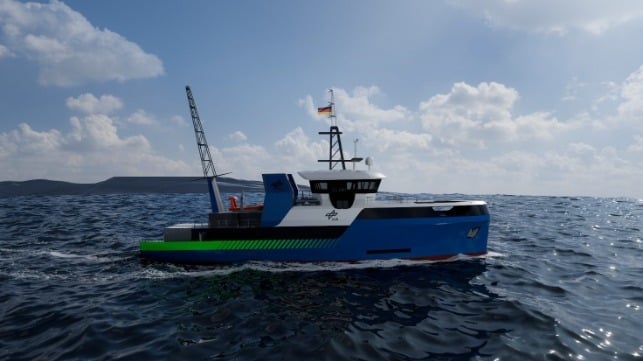
A ship model of the new research vessel at sea. The new vessel for DLR will be equipped with two Steerprop 14 CRP LM Azimuth propulsion units. Credit: © DLR. All Rights reserved.

Published Sep 24, 2025 7:42 AM by The Maritime Executive


[By: Steerprop]

Finnish propulsion specialist Steerprop has been selected to deliver its new Next Generation of Contra-Rotating Propeller (CRP) azimuth propulsions to Lloyd Werft Bremerhaven GmbH, which is building a state-of-the-art research vessel for the German Aerospace Center (DLR).

The new vessel, measuring 48 meters in length and 11 meters in breadth, will serve as a floating laboratory for maritime research. Designed to study, test, and operate on different maritime energy systems under real-life operating conditions, the vessel will become a unique platform for advancing sustainable shipping solutions. It will primarily be used for research voyages lasting from one to several days in the North Sea and Baltic Sea, accommodating up to 20 people onboard.


First delivery of Steerprop’s Next Generation of CRP


This order marks the first delivery of Steerprop’s Next Generation of CRP technology, representing a major leap in propulsion efficiency. The scope includes two Steerprop 14 CRP LM units, each rated at 750 kW and designed to Ice Class 1A standards.

The new CRP design introduces pressure lubrication for smaller applications, likely making this vessel the first in the world to implement such a solution. Pressure lubrication minimizes mechanical losses, enabling mechanical efficiency up to 98.5% compared to the typical 95%, and enabling superior fuel economy and performance.

R&D-driven propulsion optimization
Prior to the contract award, Steerprop conducted an extensive R&D study to optimize the vessel’s propulsion concept. Model tests with the design propulsors confirmed that the tailored solution would fully support the vessel’s demanding mission profile.

“Working in close cooperation with the owner and shipyard was crucial to this project,” said Juho Rekola, Director, Sales & Project Management, Steerprop. “We are proud that our Next Generation of CRP technology will contribute to groundbreaking research on energy systems in maritime industry.”


A floating laboratory for the maritime industry


Beyond energy system trials, the research vessel will provide extensive measuring capabilities, including load, torque, thrust, and ice loads. This makes it not only a platform for DLR’s work but also a valuable resource for Steerprop, other suppliers, and academic partners to conduct independent research.

The vessel’s unique role as a fuel laboratory at sea aligns with the maritime industry’s push toward decarbonization, providing vital data on energy efficiency, fuel performance, and operational impacts in real-world conditions.

The order for Steerprop was confirmed in March 2025. Construction will be carried out at Lloyd Werft Bremerhaven GmbH, with Steerprop delivering the propulsion units as part of its comprehensive scope of supply.

This collaboration underscores Steerprop’s commitment to developing propulsion solutions that meet the efficiency and sustainability challenges of tomorrow’s shipping industry.

The products and services herein described in this press release are not endorsed by The Maritime Executive.


NYK Demonstrates First Liquefied Ammonia STS Contributing to Supply Chain
ammonia sts operation
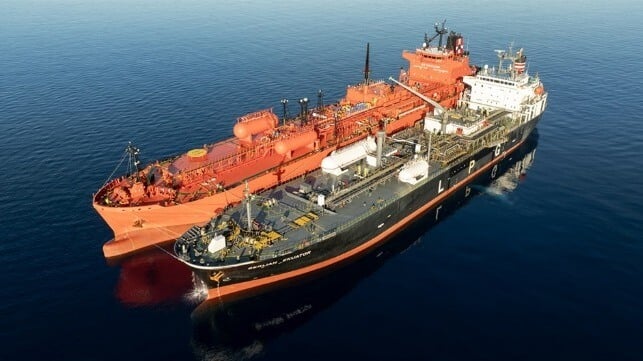
Demonstration project completed STS of liquified ammonia off the coast of Spain (NYK)

Published Sep 24, 2025 6:43 PM by The Maritime Executive


NYK reports it recently completed its first ship-to-ship transfer involving liquified ammonia. Building the expertise and transfer capabilities for the highly toxic material is seen as a critical element in building the structure to support the growth of ammonia transport and its use as a marine fuel.

With demand expected to increase, NYK says that the STS method, which is not constrained by port size or onshore equipment, is attracting attention as a flexible supply method compared to conventional land-based cargo handling methods. Currently, the regulatory environment is still being developed for ammonia, while several initiatives are working to establish the safety protocols for the handling of ammonia.

Beyond its existing applications in fertilizers and chemicals, ammonia, NYK notes, is emerging as a next-generation clean energy source. It is being developed as a carbon-free combustion alternative as well as an efficient energy carrier. Ammonia cracking is seen as a key means of transporting hydrogen. Ammonia is expected to be used in various applications, including marine fuel. 

“The success of this operation marks a significant milestone in developing an international supply network for ammonia,” reports NYK. “With the support of Trammo's longstanding experience and their designated STS specialist provider, International Fender Providers, we successfully leveraged our advanced safety management system and refined STS operational know-how to safely transfer the entire cargo of liquefied ammonia.”
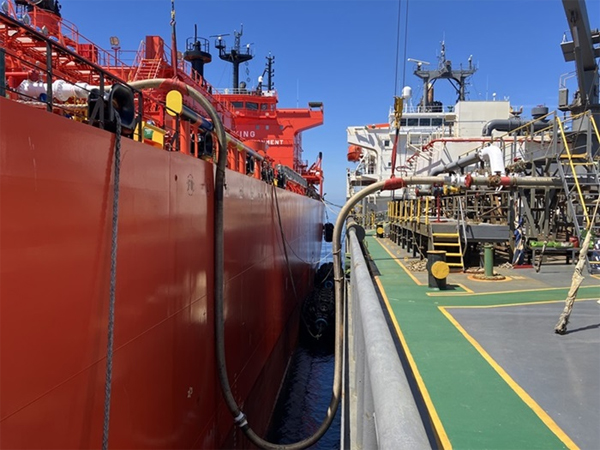


The transfer operation took place on September 2 off the coast of Ceuta, Spain. It involved the ammonia carrier Berlian Ekuator (26,776 dwt) owned by NYK and time-chartered by Mitsui & Co. Built in 2004, the vessel is registered in Panama. The liquified ammonia was transferred to the ammonia carrier Eco Enchanted (30,062 dwt), a Greek-owned vessel operated by Trammo, a leading ammonia trader.

Approximately 23,000 MT of ammonia were transferred between the two vessels. It was conducted with an STS hose connection.

NYK reports it will build on the insights and experience gained from this STS operation to further advance next-generation fuels and strengthen safe maritime transportation systems. It is part of its efforts to grow this sector of shipping and to contribute to the broader goal of achieving a decarbonized society.

 

American Cruise Lines Launches First All U.S. Cruises on the Great Lakes

American Cruise Lines

Published Sep 25, 2025 9:11 PM by The Maritime Executive


[By American Cruise Lines]

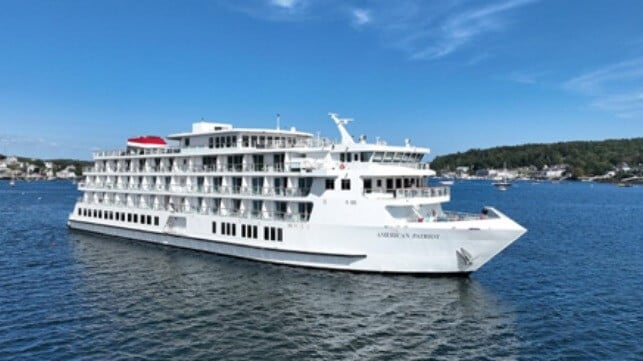
Domestic U.S. Great Lakes cruises are now available. In response to guest demand, American Cruise Lines is proud to announce the debut of three Great Lakes itineraries for the 2026 cruise season. These brand-new cruises, sailing May through August 2026, will be operated aboard American Patriot, the newest small cruise ship in the country.“

Guests have long asked for our style of cruising on the Great Lakes,” said Charles B. Robertson, President & CEO of American Cruise Lines. “We are now proud to offer these cruises as only Americancan, aboard a new small ship sailing 100% domestically.”

This announcement marks the first time in decades that an American ship will offer domestic cruises in the growing Great Lakes cruise market. Without the need to cross borders, the new cruises are a completely unique experience apart from all other cruise lines currently on the Lakes. Where other ships dock at ports intended for foreign ships and international entry, American Cruise Lines can dock in the heart of small towns, city parks, and private marinas for an authentic and exclusive experience not available with any other cruise line.

American’s 2026 Great Lakes itineraries include a 9-Day cruise visiting the Thousand Islands and Niagara Falls, while an additional 9-Day itinerary highlights Lake Michigan, Green Bay inlet, and the wilderness of The Upper Peninsula. The Line’s signature 14-Day cruise, dubbed the American Great Lakes, travels 800 miles through three of the Great Lakes (Erie, Huron, and Michigan). 

All cruises offer an included pre-cruise hotel stay and complimentary domestic airfare. Each itinerary is comprised of days filled with excursions in small towns, and time spent cruising the magnificent Lakes. All itineraries begin, end, and remain in the U.S., making a passport or international flight unnecessary for American travelers.

American Patriot is fully stabilized for smooth sailing and accommodates just 130 guests. The new ship features private balcony staterooms including Suites, and Singles available without Supplement, plus many amenities like spacious lounges including a top deck lounge and walking track, a main restaurant with views from every seat, a casual café, chart room, fitness center, laundry room, and elevators to all decks. 

American Cruise Lines foray into the Great Lakes will highlight 50 years of experience in developing and curating exceptional U.S. River cruises exploring domestic destinations and waterways. Each new itinerary offers included hotel stay, domestic air, onboard enrichment, and daily guided excursions. Fares also include everything on board the ship from fine cuisine and cocktails to Wi-Fi and gratuities. American’s Great Lakes cruise guests will relish the unparalleled comfort and elegance of the newest small ship in the region and the convenience of cruising to and from only U.S. ports of call.
 

The products and services herein described in this press release are not endorsed by The Maritime Executive.


UK’s Royal Navy Highlights Increased Monitoring of Russian Vessels

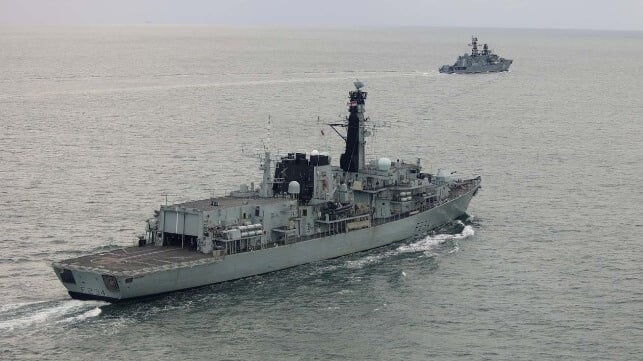
Royal Navy frigate
HMS Iron Duke on 18th mission of 2025 to monitor Russian shipping (Royal Navy)

Published Sep 25, 2025 12:59 PM by The Maritime Executive


The UK’s Royal Navy reports that it has seen an increase in the number of Russian vessels transiting the English Channel, and it is responding by maintaining its patrol efforts. They report the operation is part of the ongoing commitment to safeguard UK waters and protect national security.

The monitoring is being stepped up after numerous reports of drones possibly being launched from Russian-controlled vessels. Air traffic was suspended on Monday at Copenhagen's airport after drones which the Danish authorities said they suspected were launched from a nearby cargo ship. Germany has reported similar instances of drones in recent months also suspecting they were being launched from ships.

The latest monitoring effort began on September 20 when a well-known Russian cargo ship used for military cargoes, Sparta IV (8,870 dwt), was identified as moving west through the North Sea. The cargo ship was being escorted by the Soviet-era frigate RFN Neustrashimy (3,500 tons displacement), which was commissioned in 1993. Sparta IV has been sailing for the Russians since 2018 and is operated by a sanctioned shipping company.

The Royal Navy once again called on its Plymouth-based frigate HMS Iron Duke (4,900 tons displacement) for the monitoring operation. It was the 18th time in the past 12 months that the warship has been activated for monitoring missions. They report a total of 25 Russian vessels have been monitored, giving the Iron Duke her reputation as the escort ship of the Royal Navy. For this effort, she was joined by a Wildcat helicopter from Yeovilton’s 815 Naval Air Squadron.

“Russian warships are increasingly transiting through the English Channel,” said the UK’s Minister for Defence Readiness and Industry, Luke Pollard. “Alongside our commitment to NATO’s Eastern Sentry, this is a clear demonstration of how the UK stands firm with our NATO allies to deter Russian aggression.”

The Royal Navy utilized a combination of radar and sensors to track the Russian vessels as they sailed through the North Sea and into the English Channel. The effort also involved assets from four NATO nations.

“This type of tasking goes largely unseen, and as a ship’s company, we are extremely proud of our direct contribution to the UK’s national interests,” said Commanding Officer of HMS Iron Duke, Commander David Armstrong. 

The ships passed without incident. The Sparta IV was continuing to the Mediterranean, reports the Royal Navy. Near the Channel Islands and the island of Ushant, the Iron Duke handed over the monitoring of the cargo ship to a NATO ally.

The Russian warship ended the escort and reversed course back through the English Channel. Iron Duke continued to monitor the vessel until it entered the North Sea. Iron Duke ended the monitoring on September 23, returning to its homeport.


Carrier HMS Prince of Wales is Back in Singapore as Return Journey Begins

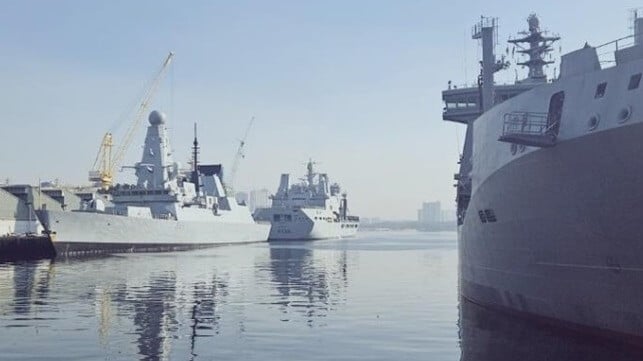
CSG ships tied up at the BDSSU Sebawang Facility (BDSSU)

Published Sep 25, 2025 9:20 PM by The Maritime Executive


HMS Prince of Wales (R09) is completing its second port call this year to Singapore, as part of the UK-led Carrier Strike Group (CSG)’s 2025 Indo-Pacific deployment. The return to Singapore marks completion of a phase of the deployment where the CSG has exercised extensively with Japanese and Korean vessels as well as the US Navy, and the CSG has now left the South China Sea.

The carrier is due to remain in port until September 25 and is docked in Singapore’s Changi Naval Base. Norwegian Nansen Class frigate HNoMS Roald Amundsen (F311), logistic vessel HMNZS Aotearoa (A11), Type 45 destroyer HMS Dauntless (D33) and RFA Tidespring (A136) have been using the naval facilities of the British Defence Singapore Support Unit at Sembawang, a small support unit the UK maintains in order to support its commitment to the Five Power Defence Arrangements (FPDA), of which Australia, Malaysia, New Zealand, Singapore and the UK (the SUMAN nations) are signatories. Type 23 frigate HMS Richmond (F239) is to join up having completed training with Philippines Navy Jose Rizal Class frigate BRP Antonio Luna (F151) off Manila.


HMS Prince of Wales leaves Singapore to take part in the FPDA’s five-day Exercise Bersama Lima. Bersama Lima is an annual exercise with air, land, and maritime components, in which the principal aim is to improve interoperability in combined operations to defend Malaysia and Singapore. Participation of the CSG will give this year’s exercise a particular maritime air focus. Australia is deploying F-35A aircraft and the Anzac Class frigate HMAS Ballarat (F155) on the exercise. Bersama Lima is the culmination of the FPDA’s annual series of Bersama tactical exercises and Suman command post exercises.

On completion of Exercise Bersama Lima, the CSG is likely to adopt a lower profile as it switches from training and defense diplomacy to an operational phase and heads westwards through the Indian Ocean towards the challenges of the Arabian Sea.


UN Trade Body Warns Shipping is in a Period of Fragile Growth, Rising Costs

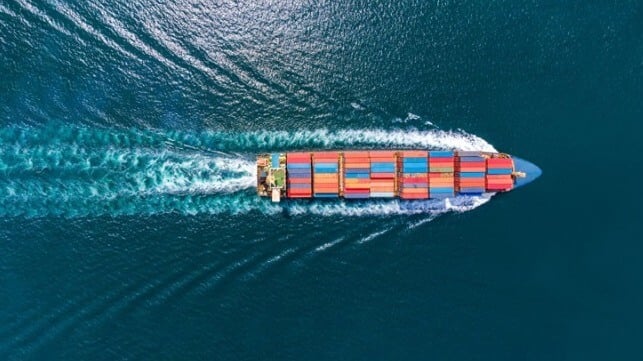
containership at sea
Shipping's slowing growth and rising costs are impacting global trade (file photo)

Published Sep 24, 2025 6:12 PM by The Maritime Executive


After years of strong growth in global seaborne trade volumes, a new report from the United Nations’ trade and development organization UNCTAD warns that global maritime trade is entering a period of fragile growth, rising costs, and mounting uncertainty. The report is calling for more action to stabilize trade policies, investments in sustainability and digitalization, cautioning that rising freight costs most endanger smaller and less developed countries, which are net importers of food and other essential materials.

According to the data from UNCTAD, global seaborne trade volumes grew a modest 2.2 percent in 2024. They warn, however, that it is expected to slow to just 0.5 percent in 2025. Vessel rerouting, for example, they warn drove ton-miles to a record 6 percent in 2024, which was nearly three times faster than trade volume growth.

They further warn that geopolitical tensions, new trade barriers, and climate pressures that are reshaping shipping routes are pushing up costs and exposing vulnerabilities in the global economy. They write that these pressures are mounting as the slowdown in global seaborne trade emerges.

“Small island developing states, least developed countries, and net food importing nations are the most vulnerable, because higher freight costs quickly translate into more expensive imports and food insecurity,” reported Regina Asariotis, Chief of UNCTAD’s Trade Logistics Branch.

The reroutings have also contributed to increases in congestion and longer waiting times at global ports. UNCTAD highlights the urgent need to invest in digital systems while finding that many developing countries continue to lag behind in digitalization. 

It also highlights the uncertainties over net-zero strategies, saying that clear regulatory signals are vital to spurring fleet renewals and new fuel infrastructure to reduce emissions. It notes that the shipping industry’s greenhouse gas emissions rose five percent in 2024, with only eight percent of the world’s fleet tonnage currently equipped to use alternative fuels. 

“Persistent high transport costs risk hitting developing countries the hardest,” said Grynspan. “Maritime transport must be resilient, inclusive, and sustainable if we are to weather the turbulent waters ahead.”

UNCTAD believes that, in addition to stable trade policies to reduce uncertainties and restore confidence in supply chains, support for vulnerable economies will be required to help mitigate higher costs likely to come as shipping transitions to meet the current environmental challenges. They believe investment is required for shipping and port infrastructure, as well as digitalization and cybersecurity. The 2025 report calls for accelerating these focuses, saying that they will reduce some of the pressures, but UNCTAD warns of “stormy seas” ahead as trade slows and costs rise.


France Awards its Largest Offshore Wind Project to TotalEnergies Consortium

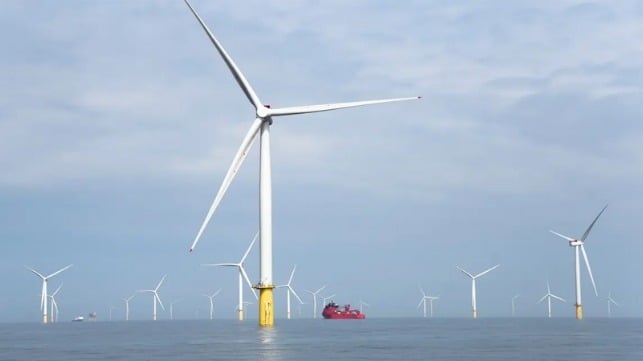
offshore wind farm
TotalEnergies will build and operate France's largest offshore wind farm (file photo)

Published Sep 24, 2025 5:16 PM by The Maritime Executive


France’s Ministry of Industry and Energy announced the selection of a consortium headed by TotalEnergies for the development and operation of the country’s largest offshore wind farm to date. The massive project, which would be TotalEnergies’ first large project in the country, represents a 50 percent increase in the company’s investment in the French energy sector.

The consortium, which consisted of TotalEnergies and RWE, was one of seven qualified to bid for the Centre Manche 2 project, which will be located approximately 25 miles off the Normandy coast. It calls for 1.5 GW of capacity, more than doubling the renewable energy that would be available in the region. The companies bid the energy price for the project at €66/MWh.

“We are very proud to have won this tender for the construction of the largest renewable energy park in France to date. It embodies Total’s transformation into TotalEnergies in France,” said Patrick Pouyanné, Chairman and CEO of TotalEnergies. The company noted that the project represents a total investment of approximately $5.3 billion, with its current total investment in French renewables at approximately $9.4 billion since 2020.

TotalEnergies highlights that it has a total portfolio of 25 GW of wind energy capacity operating or in development. This includes projects in the United Kingdom, South Korea, Taiwan, the Netherlands, Germany, the United States, and France.

As part of their proposal, the companies committed to a number of unique elements. They say they will include a portion of crowdfunding financing so that local residents and authorities in the Normandy region can invest in the project. They also committed to becoming a leader in designing the wind farm for recycling. They propose that 95 percent of the blades, towers, and nacelles, and 100 percent of generator magnets, will be recycled, reused, or repurposed.

The project, however, is already facing challenges. Partner RWE announced that after a strategic review of its investments, it wishes to exit the consortium. To do that, it will require approval from the French authorities. TotalEnergies says it will still pursue the project, assuming all the commitments. However, it will also propose to bring a new partner into the project.

The auction had been in planning for three years since 2022, but it became the last for the outgoing government. It had offered the Normandy site as well as a second site located in the South Atlantic off the island of Oleron. Nine companies had qualified, but that site has challenges, including water depth, seabed, and wind conditions, and in the end, no bids were received for the project. That is despite the terms that made it possible to bid the energy price up to €100/MWh.

The government highlights that it awarded three floating wind projects in South Brittany and the Mediterranean in 2024 and has new projects in commissioning for 2025. However, France still lags with just 1.5 GW of installed capacity, although the government highlights a cumulative 7.8 GW under construction or under development. Its goal is for 45 GW in service by 2050.

TotalEnergies reports it will proceed with the planning and studies for Centre Manche 2, anticipating a final investment decision by early 2029. Electricity production is expected to begin in 2033.


Cadeler Takes Delivery of WTIV Capable of Handling Foundations and Turbines

wind installation vessel
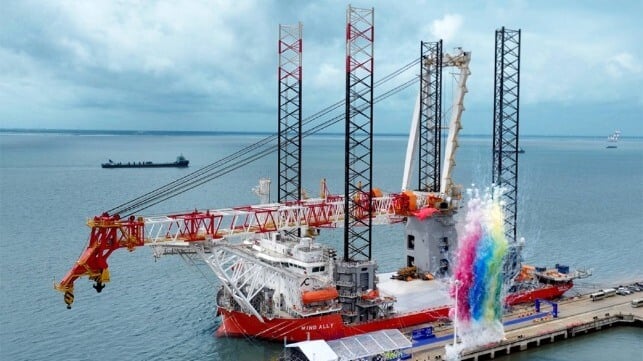
Massive vessel designed to handle foundations and turbines was named in China ahead of its delivery (Cadeler)

Published Sep 25, 2025 8:38 PM by The Maritime Executive


Wind Ally, a massive jack-up installation vessel, was delivered on September 25 to Cadeler as the company expands its capabilities and builds toward the largest fleet of jack-up installation vessels. The new ship, which is the first of three being built for Cadeler, has the ability to transition between foundation installation and wind turbines, creating greater efficiency for the projects.

The naming ceremony took place at the Cosco shipyard in Qidong, China, on September 24, followed by the delivery of the vessel on September 25. The ship will depart shortly bound for the UK, where it is under contract to start the foundation installation for Ørsted’s Hornsea 3 offshore wind farm. When completed, the wind farm will have a generating capacity of 2.9 GW, making it the world’s single largest offshore wind farm to date.


Wind Ally is a massive vessel with 5,600 square meters of deck space and the ability to carry a payload exceeding 18,000 tonnes. The vessel measures 162 meters (531 feet) in length and took more than two years to build. Its main crane is capable of lifting more than 3,300 tonnes at 39 meters. It can accommodate up to 130 crew and installation technicians.

Cadeler highlights that the vessel was designed to meet the increasing size and complexity of offshore wind turbines and foundations. It will be able to transport up to six sets of XXL monopile foundations per load and install them.

The A Class design is the result of close cooperation between Cadeler working with GustoMSC, NOV, Kongsberg, Huisman, and MAN Energy (Everllence). 

Wind Ally will be followed by sister ships Wind Ace in 2026 and Wind Apex in 2027. The company is also expanding its M class vessels, which are slightly smaller, dedicated foundation installation jack-up vessels. Wind Mover is due late this year after Wind Maker and Wind Keeper, which were delivered earlier this year. By mid-2027, Cadeler expects to be operating 12 vessels, giving it leadership in serving the offshore wind industry.


Young Crewmember Killed By Sliding Watertight Door Aboard Greek Ferry

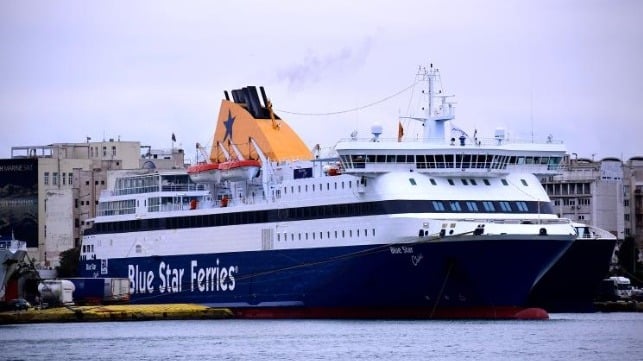
Blue Star Chios
File image courtesy VesselFinder / Nikos Palamaris

Published Sep 25, 2025 9:12 PM by The Maritime Executive


A young cadet aboard the ferry Blue Star Chios was killed Wednesday when he got caught in a sliding watertight door, according to authorities in Piraeus. 

The 20-year-old crewmember was an engineering student, and had been aboard the ship as a wiper since September 15. He was properly certified for basic training, and had undergone familiarization while boarding the ship. 

The watertight door connected a ro/ro deck with the engine room, and the crewmember was passing through the open hatch when it closed and fatally injured him. His crewmates immediately responded to the scene and retrieved him to the hatch; their efforts to save him were not successful. 

The hatch had to be manually activated, and would stop moving as soon as the actuation lever was released, officials told local media; standing rules required the hatch to be fully open before passing through it to prevent any risk of getting caught. It is unclear why the door mechanism stayed activated and continued to close on the crewmember. 

Before completing an investigation, Greek authorities have decided to employ criminal statutes. The captain and the chief engineer have been arrested and face charges of "manslaughter by negligence" for the young crewmember's death. 

The accident was the second aboard Blue Star Chios this month. On September 18, a minor aboard the ferry sustained an electric shock after coming into contact with the cable for a spotlight on deck. The child was in stable condition and was transported to a hospital in Karpathos for observation. 


Italian Coast Guard Detains Bulker for Hygiene and Crew Welfare Issues

bulker at dock
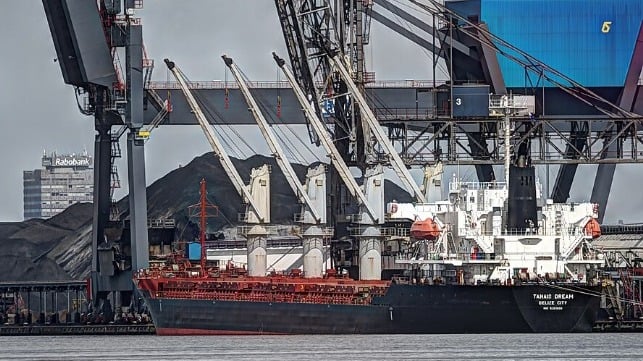
Bulker Tanais Dream in a 2021 from in Amsterdam (Alf van Beem)

Published Sep 25, 2025 4:33 PM by The Maritime Executive


The Italian Coast Guard and the port of Naples report that a bulker has been detained after its port state inspection due to a long list of concerns. They are citing issues ranging from hygiene in areas of the vessel and issues impacting crew welfare to mechanical and operational issues with the vessel.

The bulker identified as the Tanais Dream (28,600 dwt) arrived in Naples on September 22 from Las Palmas. The vessel, which was built in 2003 and operates under the flag of Belize, is reported to have an all-Russian crew. After arriving in Italy, Guardia Costiera started a standard port state inspection, which media reports said developed into “a long and complex activity” as serious irregularities were identified.

The reports state that the inspection revealed serious hygiene deficiencies in the crew cabins and public spaces on the vessel. They reported the presence of insects in the galley, provision areas, and mess. In addition, the cook is said not to have had the required certifications. The Coast Guard also raised concerns that the vessel did not have sufficient provisions aboard for the next voyage.

In the mechanical areas of the ship, they are reporting issues with the heating and ventilation for the crew cabins. There were also leaks in the engine room reported to be coming from the main engine and the generators.

The owners and operators of the vessel have been instructed to correct the deficiencies. Under the orders of the commander of the port of Naples and the regional maritime director, the coast guard reports that it will conduct a future inspection. Only when the issues have been corrected will they authorize the vessel to sail.

The vessel has also been ordered to pay a €4,000 administrative fee. They may also be charge additional fees related to the detention administration.

The Tanais Dream is reported to be carrying a load of cereal. At the end of last year, the ship drew attention when it arrived in Chattogram, Bangladesh carrying nearly 25,000 tons of rice, It was the first cargo of rice shipped between the countries. 

Based on historical records, it appears the ship has had a spotty track record with previous inspections. While it appears to be the first detention order, deficiencies have been cited in some inspections going back more than a decade. Last year, Turkish authorities cited the ship for 16 deficiencies, including multiple issues with working conditions aboard the vessel as well as documentation issues.

The Italian Coast Guard highlighted the detention as the latest as it has increased its efforts. Since the beginning of the year, Guardia Costiera reports 37 control cases for foreign-flagged vessels.


Top photo by Alf van Beem (public domain)


Fire Casualty Stena Immaculate to Depart UK Port

fire damaged tanker Stena Immaculate
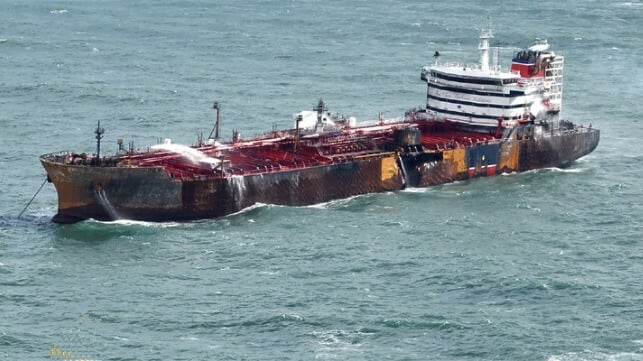
Stena Immaculate in the days after it was struck by the Solong (Havariekommando photo)

Published Sep 24, 2025 2:04 PM by The Maritime Executive


After spending approximately five months docked in Great Yarmouth, the US-flagged tanker Stena Immaculate is leaving the port, although her fate remains uncertain. The vessel was hit by the Portuguese-registered containership Solong in March while it was anchored off the UK coast, transporting over 220,000 barrels of jet fuel for the U.S. 

The 49,729 dwt tanker burned for days along with the containership off the coast, with one seafarer from the containership missing and presumed to have died in the collision. One of the tanker's tanks ruptured and spilled oil, but operator Crowley and Stena Bulk hailed the crew, which quickly responded and started the fire suppression systems before abandoning ship. The companies later hired another tanker and were able to transfer most of the fuel from the Stena Immaculate.

The ship was brought to the outer Great Yarmouth harbor, where further salvage operations were undertaken after the ship was surveyed. According to port records seen by the Great Yarmouth Mercury newspaper, the ship had been expected to be towed from the dock on Wednesday, September 24. The operation is currently delayed, with the port saying they expect the tanker will depart on Friday, September 26. The port logs show it is first to be towed approximately 10 miles north to a point near Winterton-on-Sea.

The Solong had initially been towed to Aberdeen in Scotland, where it was cleaned and cleared of debris. It was sold and towed to Belgium for recycling in August.

The incident remains under investigation, while the UK’s Marine Accident Investigation Bureau issued a preliminary update in April highlighting the lack of a lookout aboard the containership despite patchy fog in the area. The master was alone on the bridge, navigating the vessel, which was traveling at approximately 16 knots, when it hit the Stena tanker. The UK authority said that as part of its investigation, it would be reviewing the anchorage and policies for the area.

The master of Solong was arrested and has been charged with gross negligence manslaughter for the death of the crewmember on his ship. The master has pleaded not guilty but remains in custody in the UK. He was last in court on September 10, where his custody was extended. There are further hearings expected in November, followed by his trial in January 2026.

Crowley announced in August that the Stena Immaculate had been replaced by the charter of the CS Anthem for the U.S. Tanker Security Program.


Ukraine Strikes Russian Targets in Multiple Black Sea Ports

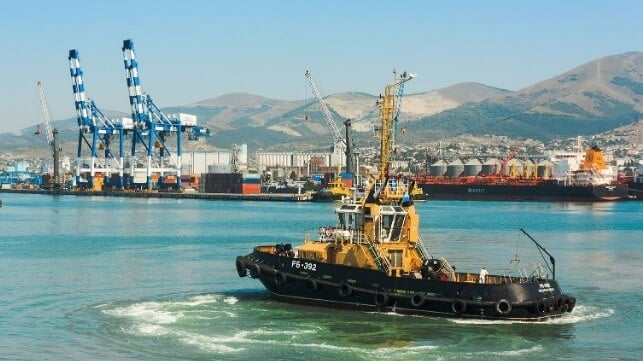
Novorossiysk sea port
Novorossiysk came under attack on Wednesday (file photo)

Published Sep 24, 2025 1:01 PM by The Maritime Executive


Russian officials along the Black Sea coast declared states of emergencies and warned citizens to seek shelter as Ukraine launched a large attack aimed at the Novorossiysk seaport. There are conflicting reports on the number of casualties, but the widespread attack caused authorities in Gelendzhik, about 25 miles to the south, to order ships to cease navigation as they warned the waters were unsafe. Tourists as far away as Sochi (75 miles) were told to leave the water and the beach for shelter.

The reports indicate a combination of sea and aerial drones started hitting the city in the early hours of Wednesday, September 24. There were no confirmations other than a statement from the Russian Defense Ministry, which said it had downed 16 drones over the Black Sea. It was later revised to say air defense forces had intercepted and destroyed 25 Ukrainian drones over seven Russian regions and the Black Sea.

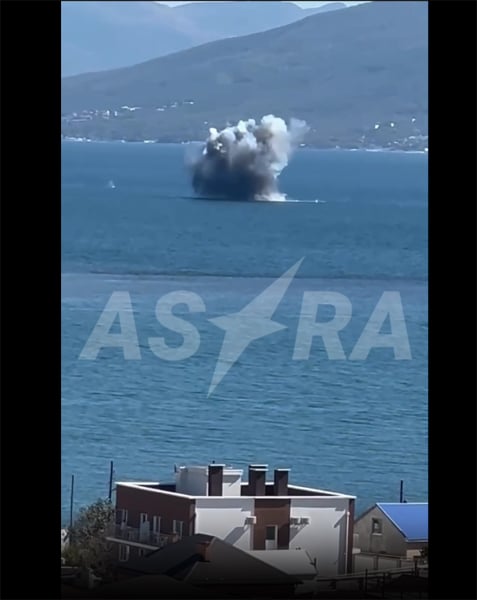
Officials were reminding residents that it is prohibited to film and post photos/videos of the attacks. However, videos began emerging online, including one showing a sea drone exploding near the city center of Novorossiysk in Tsemess Bay. Another showed shots being fired at another sea drone.


(Drone intercepted in Novotoddiysk from Telegram)


The mayor of Novorossiysk issued an alert on social media regarding a threat of unmanned boats. He later revised it, talking of drones that struck the city while warning residents to stay away from windows and rooms facing the sea. They were told to take shelter in basements or underground garages, as he said the city was in a state of emergency.

Mayor Andrey Kravchenko initially reported two people were killed and three were injured. Other government agencies were saying that casualties had risen to seven, with six taken to hospitals. After the first wave of the attack, the Operational Headquarters later warned on social media that alarms were again sounding for another potential drone attack.

Later there also came reports of drones in the Tuapse seaport to the south-east. It is one of Russia's key transportation hubs providing access for the export of oil, coal, fertilizers, metal products, and grain. The mayor also reported the sighting of drones, warning residents to leave the shoreline. At least one explosion was caught on video and posted on social media.


(Drone in the Port of Tuapse)


It is unclear what the targets were, with some reports speculating the focus was on the Black Sea fleet. Ukraine is also targeting Russia’s energy infrastructure, and today, the Caspian Pipeline Consortium (CPC) reported its offices were damaged, with two individuals injured. The mayor later contended that some of the drones had struck a hotel and other places in the center of the city. CPC and Sheskharis, Bloomberg reports, both suspended oil operations as a precaution. Combined the two terminals handle more than 2 million barrels of oil a day according to Bloomberg.

Earlier this month, Ukraine also struck Russia’s Primorsk seaport on the Baltic. Reports indicated that parts of the oil terminal were damaged. Ukraine appears to be targeting to interrupt the energy trade, but days later, reports said some operations had been restored at Primorsk.


Ukraine Condemns China’s Operating a Containership from Crimea

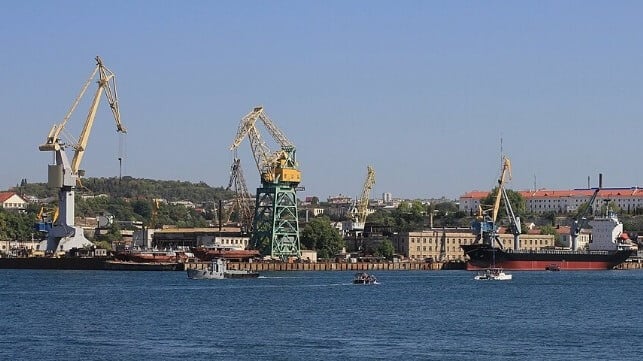
Sevastopol, Crimea
A Chinese-owned containership as made several trips to occupied Sevastopol in 2025)

Published Sep 24, 2025 4:08 PM by The Maritime Executive


Ukraine’s Ministry of Foreign Affairs is lashing out at China and calling for immediate action a day after The Financial Times revealed that a Chinese-owned containership has established service into Russian-occupied Crimea. Ukraine says it has filed an official protest with China’s foreign ministry and notified the International Maritime Organization of what it termed a conscious and brazen disregard for the sovereignty of Ukraine.

The West enacted sanctions in 2014 after Russia annexed Crimea, including barring shipping from using the ports in Crimea. According to the report in the Financial Times, international shipping has avoided the port. Ukraine has recently seized and sold small cargo ships that it accused of exporting grains and other materials from Crimea.

Using data supplied by Ukraine, the FT and others tracked the movements of the containership Heng Yang 9, and the FT reports it has made at least three trips to Crimea in recent months. Built in 2012, the 10,500 dwt containership changed owners in 2024, and its registry was transferred from China to Panama. Equisis lists the owners as Guangxi Changhai Shipping, which has also managed the ship since 2012.


Tracking data suggests the ship has repeatedly altered its transmissions, reporting it was at Port Kavkaz on the eastern side of the Kerch Strait. Analyzing satellite data, the ship appears to have traveled from Istanbul, made a stop in Novorossiysk, and then, while disguising its AIS signal, has gone into Sevastopol. FT also reports that the containers on the deck when the vessel arrived in Istanbul on September 17 were in the same configuration as the vessel spotted in Sevastopol days earlier.

FT believes the vessel is being used for exports coming from the industrial and agricultural regions of Donetsk and Kherson, also in occupied Ukraine. They cite Russian reports of a new railway into Crimea that was designed to handle containers from Russia.

Ukraine’s Foreign Minister Heorhiy Tykhy said in a statement that the vessel was deliberately concealing its movements and transmitting false data. They are calling for China to take urgent measures to prevent these violations, although China does not recognize the Western sanctions. China, in the past, has said, however, that companies are advised to avoid contact with occupied Crimea.


Top photo by George Chernilevsky of Sevastopol in 2012 (Public Domain)


Typhoon Ragasa Disrupts Shipping Across Southern China

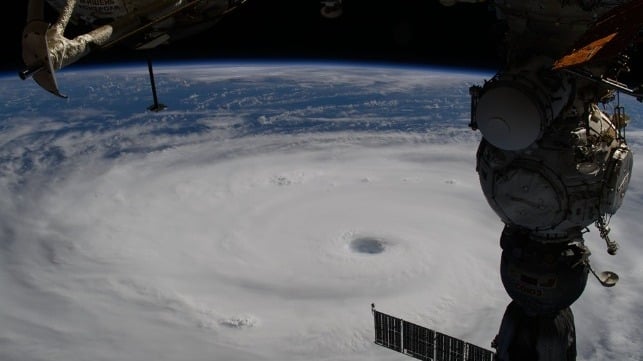
Typhoon Ragasa from the International Space Station (Jonny Kim / NASA)

Published Sep 24, 2025 7:18 PM by The Maritime Executive


A super typhoon has disrupted shipping in southern China and Taiwan over the last few days, forcing port closures and diversions. No marine casualties have yet been reported, but on shore the toll is significant, including 14 dead in a levee failure in Taiwan. 

Super Typhoon Ragasa formed in the Western Pacific last week and headed northwest for Taiwan on a gradual, erratic path. Strengthening into the equivalent to a category 5 hurricane, it packed peak wind speeds of more than 100 knots, making it the world's most powerful storm of 2025. It passed south of Taiwan, sparing the island of the worst risks. However, in eastern Hualien county, torrential rain from the storm caused a naturally-occurring barrier lake to burst its banks, sending mud and water rushing downstream. 14 people were killed in the resulting flood (revised downward from initial reports of 17 deaths). 

In coastal Guangzhou, southern China's economic powerhouse, the typhoon forced sweeping shutdowns at ports, airports, and public places. Forecasts predicted powerful winds, up to 17 inches of rain and coastal wave heights of up to 23 feet. Residents were advised to shelter in place and avoid going outside until after the storm passed, and social media postings showed sold-out supermarket shelves in major commercial hubs like Shenzhen. On Ragasa's arrival in Hong Kong and Macau, the storm caused considerable property damage. 

The region's thriving container-freight hubs in Hong Kong, Shenzhen and Guangzhou closed on Monday as the storm approached, and terminal operators secured their facilities to reduce the risk of damage. The shutdown happened just ahead of China's "Golden Week" holiday, the annual factory closure that typically prompts a flurry of shipping activity in the weeks prior.

Affected terminals included SCT, CCT, MCT Terminals and Yantian International Container Terminals (YICT). From Monday on, only outbound transits were permitted for container ships, and small vessels at berth were ordered to be secured in port. 

It is the second time in a month that a storm has disrupted southern China's terminals, following Typhoon No. 16 in early September - and it may not be the last. Storm Opong is right behind, and is on track to strengthen into a typhoon by Thursday. Opong's trackline should take it across southern Luzon and out into the South China Sea over the next several days, then onwards towards Hainan.