Sunday, September 28, 2025

French ex-president Sarkozy sentenced to 5 years in prison in Libya campaign financing case


A French court on Thursday sentenced ex-president Nicolas Sarkozy to five years in prison for accepting illegal campaign funds from late Libyan strongman Muammar Gaddafi. Sarkozy, who was convicted of criminal conspiracy but acquitted on other charges, denounced his conviction as "extremely serious for the rule of law". His lawyer confirmed an appeal has already been filed.


Issued on: 25/09/2025 -
By:
FRANCE 24
Video by:
Claire PACCALIN/
James ANDRE/

F
ormer French President Nicolas Sarkozy talks to journalists after the verdict in his trial related to alleged Libyan funding of his successful 2007 presidential bid, Paris, France, September 25, 2025. © Stéphanie Lecocq, Reuters
17:09


A court on Thursday sentenced former French president Nicolas Sarkozy to five years in prison over a scheme for late Libyan dictator Moamer Kadhafi to fund his 2007 presidential run.

In a verdict that will make the rightwinger the first French postwar leader to serve jail time, the Paris criminal court convicted Sarkozy, 70, on criminal conspiracy charges.

However, it acquitted the former head of state, France's president from 2007 to 2012, of corruption and personally accepting illegal campaign financing.

The court ordered that Sarkozy should be placed in custody at a later date, with prosecutors to inform him on October 13 when he should go to prison.

He was also fined €100,000 ($117,000) and banned from holding public office. He has been convicted already in two separate trials but always avoided jail, in one case serving his graft sentence with an electronic tag, which has since been removed.

Sarkozy, who was present in court for the verdict accompanied by his model and musician wife Carla Bruni-Sarkozy as well as his three sons, looked ashen-faced and shaken after the verdict.

But he vowed to appeal and his lawyer Christophe Ingrain later confirmed one had been filed.

The verdict was "extremely serious for the rule of law", Sarkozy told reporters after leaving the courtroom, adding that he would "sleep in prison with my head held high".

"This injustice is a scandal," he said.

After her husband finished addressing reporters, Bruni-Sarkozy, in a sign of the family's anger, snatched away the microphone muffler of the Mediapart news website which had published the first revelations on the case.

Sarkozy will have to serve his sentence while awaiting the outcome of his appeal.

He is to be the first French leader to be incarcerated since Philippe Petain, the Nazi collaborationist head of state of France's Vichy regime, who was jailed after World War II.
'Exceptional gravity'

Prosecutors argued Sarkozy and his aides, acting with his authority and in his name, struck a deal with Kadhafi in 2005 to illegally fund his victorious presidential election bid two years later.

The public prosecutor accused Sarkozy of entering into a "Faustian pact of corruption with one of the most unspeakable dictators of the last 30 years".

Investigators believe that in return, Kadhafi was promised help to restore his international image after Tripoli was blamed by the West for bombing a plane in 1988 over Lockerbie, Scotland, and another over Niger in 1989, killing hundreds of passengers.

The presiding judge, Nathalie Gavarino, said the offences were of "exceptional gravity".

The court's ruling, however, did not follow the conclusion of prosecutors that Sarkozy was the beneficiary of the illegal campaign financing.

He was acquitted on separate charges of embezzlement of Libyan public funds, passive corruption and illicit financing of an electoral campaign.

Another defendant in the trial, Alexandre Djouhri, who is accused of being the intermediary in the scheme, was sentenced to six years and ordered to be placed immediately under arrest.

Sarkozy's right-hand man, Claude Gueant, and ex-minister Brice Hortefeux were ordered to serve six and two years respectively.

Hortefeux, 67, will be able to serve his term with an electronic tag, while Gueant, 80, will not go to prison, due to his health.

Hortefeux told BFMTV he was "angry" at the sentence.

Eric Woerth, Sarkozy's 2007 campaign treasurer, was acquitted.
Accuser's death

The judgment came two days after the death in Beirut of Franco-Lebanese businessman Ziad Takieddine, a key accuser in the case.

Takieddine, 75, had claimed several times he helped deliver up to €5 million ($6 million) in cash from Kadhafi to Sarkozy and the former president's chief of staff in 2006 and 2007.

He then spectacularly retracted his claims, before contradicting his own retraction, prompting the opening of another case against both Sarkozy and Bruni-Sarkozy, on suspicion of pressuring a witness.

Sarkozy has faced repercussions beyond the courtroom, including losing his Legion of Honour -- France's highest distinction -- following the graft conviction.

But he still enjoys considerable influence and popularity on the French right, and has on occasion had private meetings with President Emmanuel Macron.

Interior Minister Bruno Retailleau, who leads Sarkozy's right-wing Republicans party, expressed his "full support and friendship", adding he had "no doubt" the ex-president will "devote all his energy" to defending himself on appeal.

(FRANCE 24 with AFP)


From power to prison: The stunning downfall of France's former president Nicolas Sarkozy

Nicolas Sarkozy, once a dynamic and controversial leader who promised to transform France, has been sentenced to five years in prison for criminal conspiracy tied to illegal campaign funding from Libya. This marks a stunning fall for Sarkozy, who has faced numerous legal battles since leaving office in 2012 and now becomes the first French head of state to face jail time in decades.


Issued on: 25/09/2025 
By: FRANCE 24
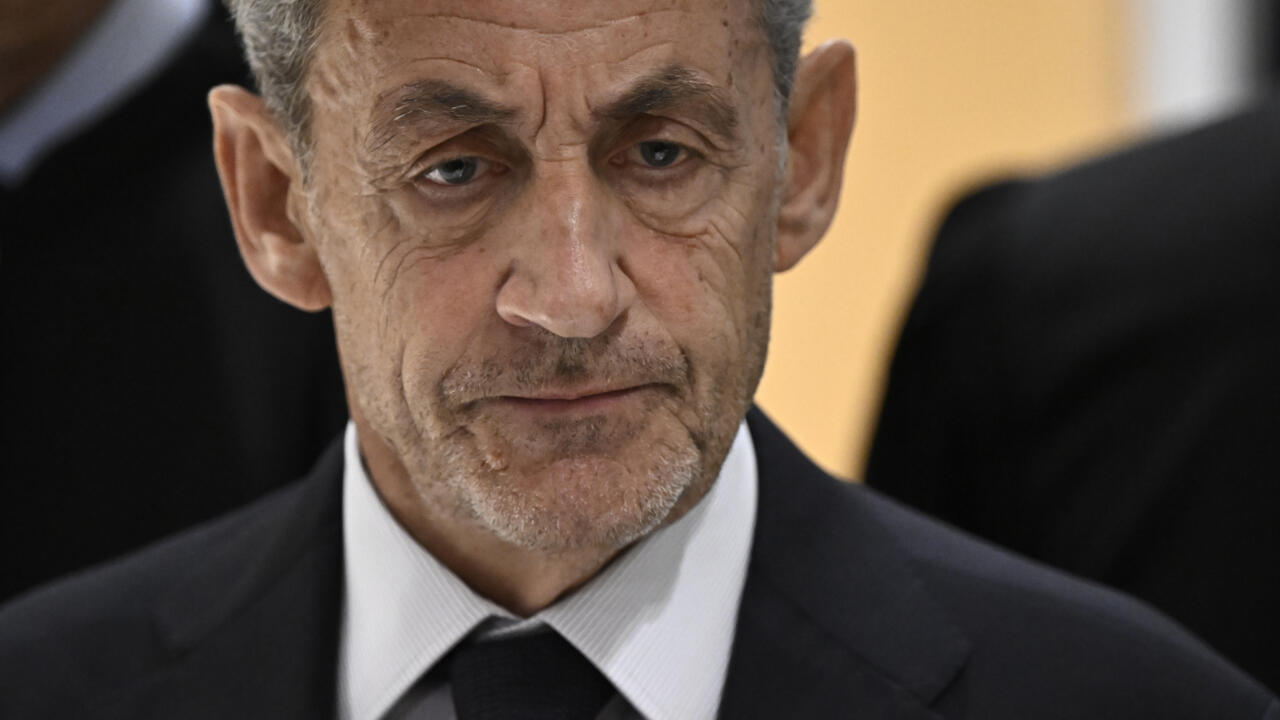
The verdict was a stunning reverse for Sarkozy © Julien De Rosa, AFP


Nicolas Sarkozy entered the Elysée Palace in 2007 boasting hyperactive energy and a vision to transform France, but lost office after just one term and the ex-president is now set to go to prison in a spectacular downfall.

Embroiled in legal problems since losing the 2012 election, Sarkozy, 70, had already been convicted in two separate cases but managed to avoid going to jail.

But after a judge sentenced him on Thursday to five years for criminal conspiracy over a scheme to find funding from Libya's then-leader Moamer Kadhadi for his 2007 campaign, Sarkozy appeared to acknowledge that this time he will go behind bars.

Prosecutors have one month to inform Sarkozy when he must report to jail, a measure that will remain in force despite his promised appeal.

"I will assume my responsibilities, I will comply with court summonses, and if they absolutely want me to sleep in prison, I will sleep in prison but with my head held high," he told reporters after the verdict.

"I am innocent. This injustice is a scandal. I will not accuse myself of something I did not do," he added, declaring that hatred towards him "definitely has no limits".

The drama and defiance were typical of Sarkozy, who is still seen by some supporters on the right as a dynamic saviour of his country but by detractors as a vulgar populist mired in corruption.


'Won't hear about me anymore'

Born on January 28, 1955, the football fanatic and cycling enthusiast is an atypical French politician.
Sarkozy trial: Everything you need to know
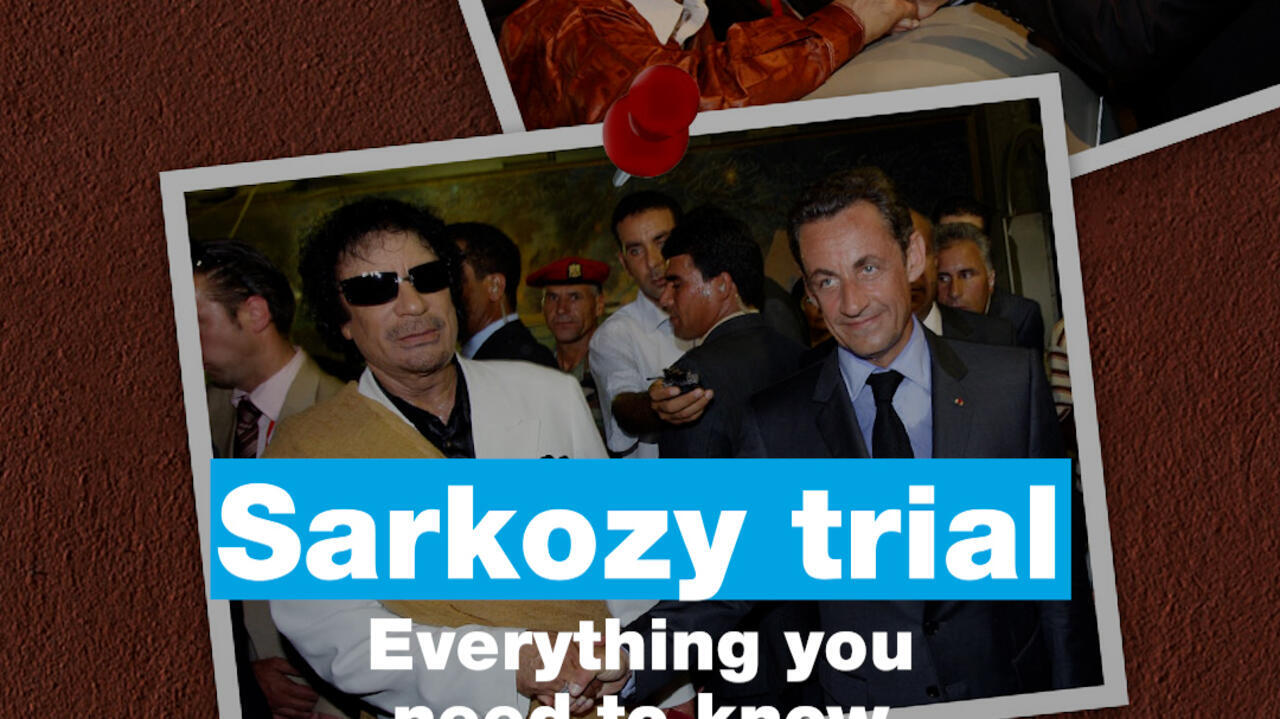
Sarkozy trial: Everything you need to know © France 24
02:17


The son of a Hungarian immigrant father, Sarkozy has a law degree but unlike most of his peers did not attend the exclusive Ecole Nationale d'Administration, the well-worn production line for future French leaders.

After winning the presidency at age 52, he was initially seen as injecting a much-needed dose of dynamism, making a splash on the international scene and wooing the corporate world. He took a hard line on immigration, security and national identity.

But Sarkozy's presidency was overshadowed by the 2008 financial crisis, and he left the Elysée with the lowest popularity ratings of any postwar French leader up to then.

Few in France have forgotten his visit to the 2008 agriculture show in Paris, when he said "get lost, dumbass" to a man who refused to shake his hand.
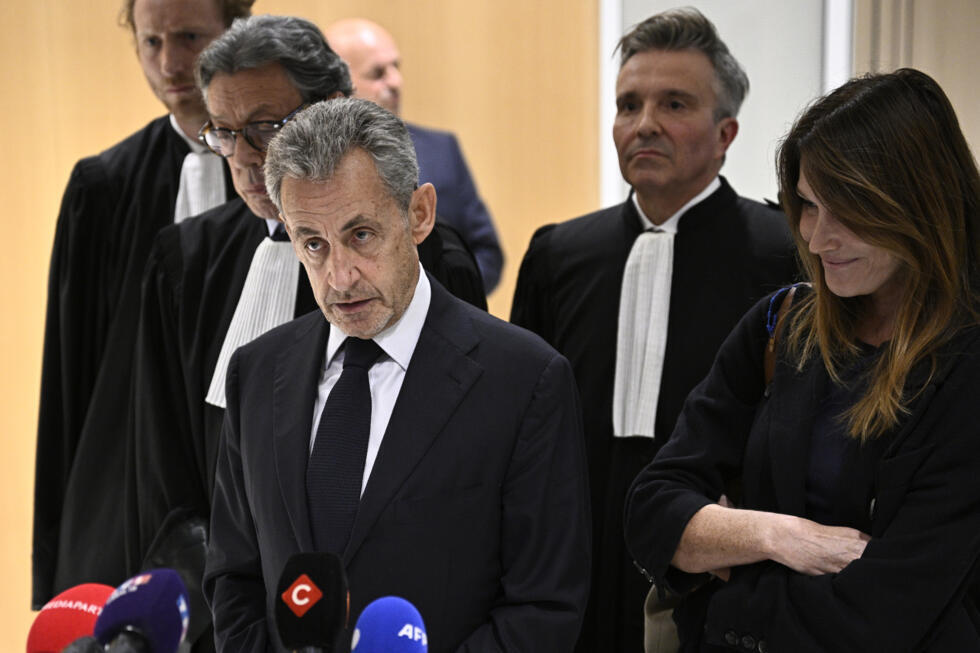
He was flanked by his wife Carla Bruni © Julien de Rosa, AFP

Sarkozy failed to win a second mandate in 2012 in a run-off against Socialist François Hollande, a bruising defeat over which he remains embittered more than a decade on.

The 2012 defeat made Sarkozy the first president since Valéry Giscard d'Estaing (1974-1981) to be denied a second term, prompting him to famously promise: "You won't hear about me anymore."

That prediction turned out to be anything but true, given his marriage to superstar musician and model Carla Bruni and a return to frontline politics. But the latter ended when he failed to win his party's nomination for another crack at the presidency in 2017.

The series of legal woes left Sarkozy a behind-the-scenes political player, far from the limelight in which he once basked, although he has retained influence on the right and is known to meet President Emmanuel Macron.

But Sarkozy is tainted by a number of unwanted firsts: while his predecessor and mentor Jacques Chirac was also convicted of graft, Sarkozy was the first postwar French former head of state to be convicted twice and the first to be formally given jail terms.

Already stripped of the Legion of Honour, France's highest distinction, he will now be the first French head of state to go to jail since Philippe Pétain, France's nominal leader during the Nazi occupation.

(FRANCE 24 with AFP)


What does former French President Nicolas Sarkozy's conviction mean for France?
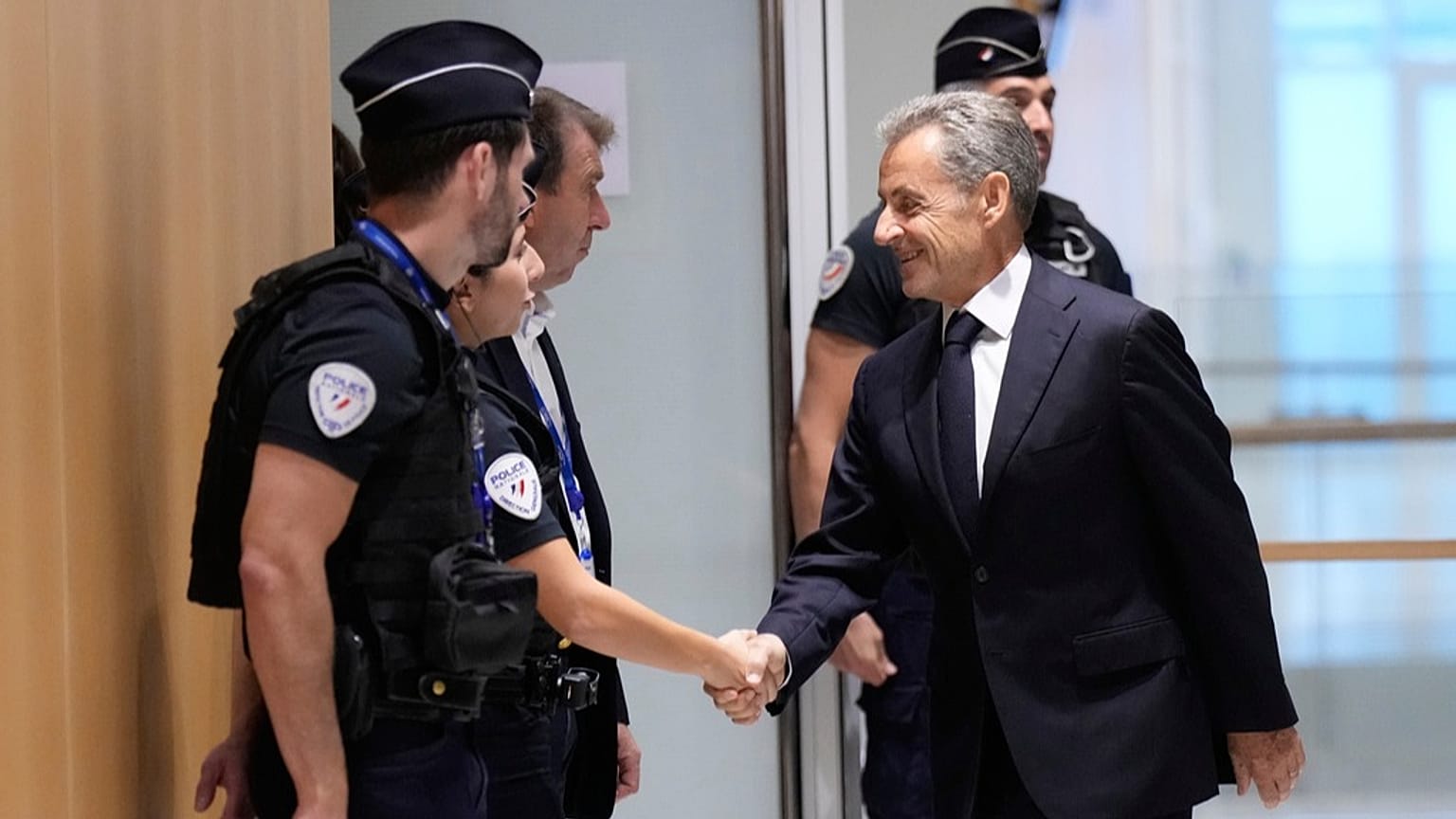

Copyright AP Photo

By Sophia Khatsenkova
Published on 25/09/2025 -EURONEWS

Sarkozy received a five-year prison sentence for criminal conspiracy in a complex scheme allegedly involving the former Libyan regime of Muammar Gaddafi.

Former French President Nicolas Sarkozy was found guilty on Thursday of criminal conspiracy in a long-running case alleging that he sought illegal financing from late Libyan dictator Muammar Gaddafi to secure his 2007 election victory.

The Paris court handed Sarkozy a five-year prison sentence, a €100,000 fine and a five-year ban on holding public office.

In a shocking twist, 70-year-old Sarkozy was also given a deferred detention order, effective immediately.

He must appear before prosecutors by 13 October to be notified of when his imprisonment will begin. His incarceration must start within a maximum period of four months.

Under French law, this measure applies even if he appeals. Because of his age, however, he can request conditional release.
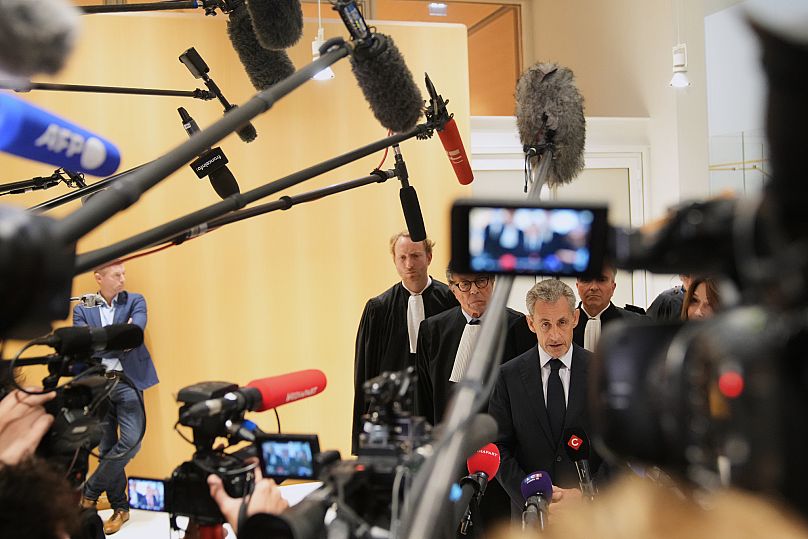
Former French President Nicolas Sarkozy speaks with the media after a Paris court sentenced him to five years in prison, 25 September, 2025 AP Photo

However, the court acquitted him of passive corruption, embezzlement of Libyan public funds and illegal campaign financing, concluding that prosecutors had failed to prove Libyan money directly flowed into Sarkozy's campaign.

The conspiracy charge, the court explained, stemmed from Sarkozy's involvement in a group that prepared a corruption offence between 2005 and 2007.

The chief judge noted that Sarkozy allowed his close associates to approach Libyan officials "to obtain or try to obtain financial support in Libya for the purpose of securing campaign financing."

However, the judge concluded they could not determine with certainty that Libyan money was ultimately used to pay for the campaign.

Sarkozy vows to fight on

After the sentencing, Sarkozy told journalists the ruling was "of extreme gravity for the rule of law" and said he would appeal.

"I will take responsibility. I will comply with the summons of justice. And if they absolutely want me to sleep in prison, I will sleep in prison. But with my head held high. I am innocent," he declared.

Reactions were sharply divided. On the left, many seized the chance to mock the former leader.

Green MP Benjamin Lucas quipped, "In the end, Sarkozy got his new five-year term," referring to the length of a presidential mandate in France.

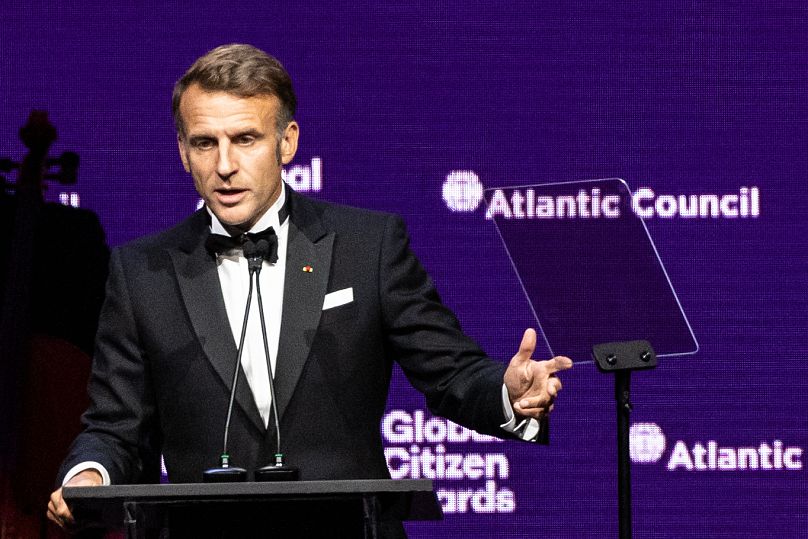
French President Emmanuel Macron speaks at the Global Citizen Awards ceremony in New York, 24 September, 2025 Stefan Jeremiah/Copyright 2025, The AP. All rights reserved

On the right, the verdict was slammed as disproportionate. Conservative Les Républicains party senator Stéphane Le Rudulier called it "a tsunami of shame" and urged President Emmanuel Macron to pardon Sarkozy.

Far-right figurehead Marine Le Pen warned that the ruling set a dangerous precedent by imposing immediate enforcement despite appeal rights.

Marine Le Pen was herself found guilty earlier this year of misappropriating EU public funds in the case involving parliamentary assistants for her party the National Front, now called the National Rally.
A long-running and sprawling case

The ruling also concerned 11 co-defendants, including three of Sarkozy's former ministers.

Businessman Ziad Takieddine, considered a key intermediary and one of Sarkozy's most vocal accusers, died in Beirut earlier this week at the age of 75, never standing trial.

Another intermediary, Alexandre Djouhri, along with other figures linked to Gaddafi's inner circle, was also implicated.

Muammar Gaddafi, Libya's longtime dictator, was toppled and killed in an uprising in 2011, ending his four-decade rule of the North African country.

The three-month trial examined a wide range of evidence, from trips to Tripoli to suspicious offshore transfers.

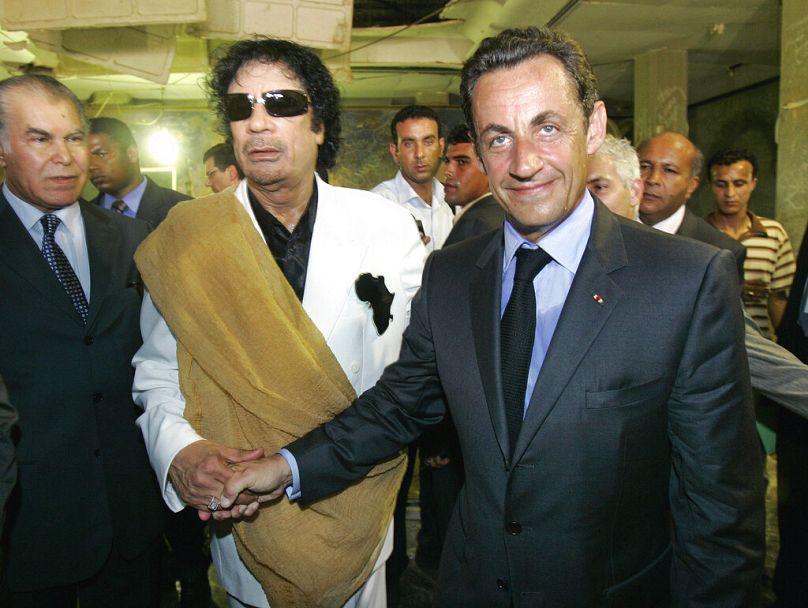
July 2007 - Libyan leader Moammar Gaddafi, left, shakes hands with French President Nicolas Sarkozy as they visit a house bombed by American airplanes MICHEL EULER/2007 AP

Judges also reviewed claims that Sarkozy's government had shielded Gaddafi's former chief of staff, Bechir Saleh.

Prosecutors alleged that Sarkozy and his associates forged a corruption pact with the Gaddafi regime in exchange for campaign financing.

The pact reportedly included promises to rehabilitate Libya's international standing and grant leniency to Abdallah Senoussi, Gaddafi's brother-in-law, who had been convicted in France for his role in a 1989 airline bombing over Niger that killed 170 people.

But the court dismissed a key piece of evidence that was revealed in 2012 by French investigative journal Mediapart: a document signed by Gaddafi's former intelligence chief, Moussa Koussa, which suggested €6.5 million had been sent for Sarkozy's campaign. Judges said the document "now appears more likely" to be forged.

Related


Political and legal fallout


The verdict further complicates Sarkozy's growing list of legal challenges. On 8 October, France's highest court will review his appeal in the Bygmalion case, which saw him sentenced to one year in prison for overspending on his failed 2012 re-election bid.

He has also been convicted in the so-called Bismuth case, involving corruption and influence peddling.

Between January and May, the former head of state had to wear an electronic ankle bracelet, an unprecedented punishment for a former president.

He has lodged an appeal for that case with the European Court of Human Rights.


Young artist from Martinique sheds light on the plight of coral reefs

The hidden world of coral reefs is home to thousands of plant and animal species. But it's a world under threat from pollution and the coral bleaching caused by global warming. Hervé Lechar, an artist from Martinique, uses his work to communicate his love for the sea, while issuing a stark warning for its future.


Issued on: 28/09/2025 - RFI


Hervé Lechar’s rayograms of corals are on display at the 'Double Trouble’ exhibition at Art Emergence from 17 September to 2 November. © Hervé Lechar / Photo RFI
02:28


By: Ollia Horton


Recently graduated from the Caribbean Campus of Arts in Martinique, one of France’s 42 public art and design schools, Lechar is representing the school at a new exhibition just outside Paris entitled "Double Trouble".

The exhibition is part of the Art Emergence event, which showcases young artists and provides them with mentoring.

Lechar's "Eye Sea the Invisible" project explores themes of memory and traces left behind, using both photographic techniques and ceramic sculpture.

"My work is all about light. It’s a tool to help me reveal what is invisible," he told RFI at the opening of Art Emergence.


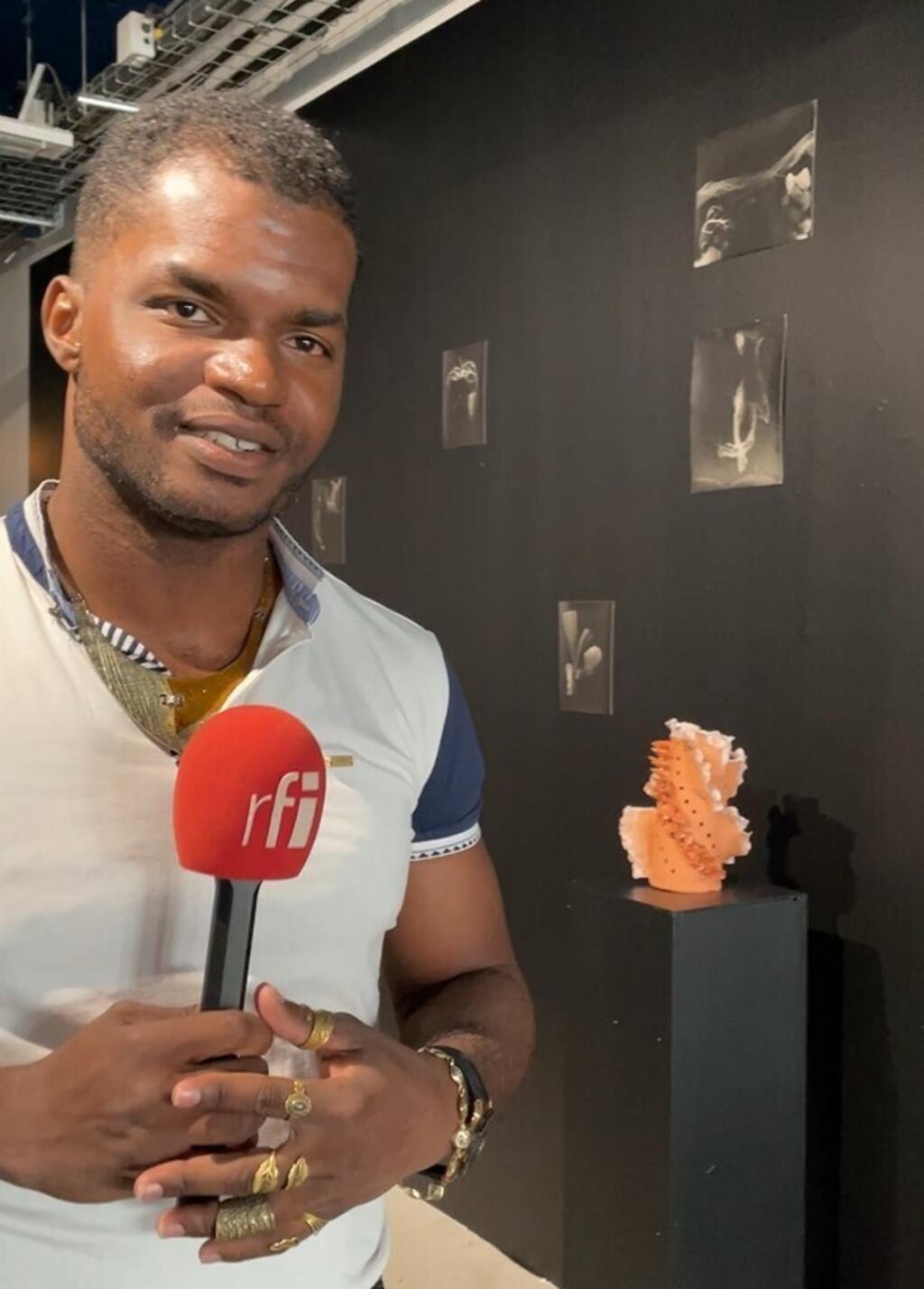
Hervé Lechar, an artist from Martinique taking part in the "Double Trouble" exhibition at the Art Emergence festival in Romainville. © RFI / Ollia Horton

'A memory within a memory'

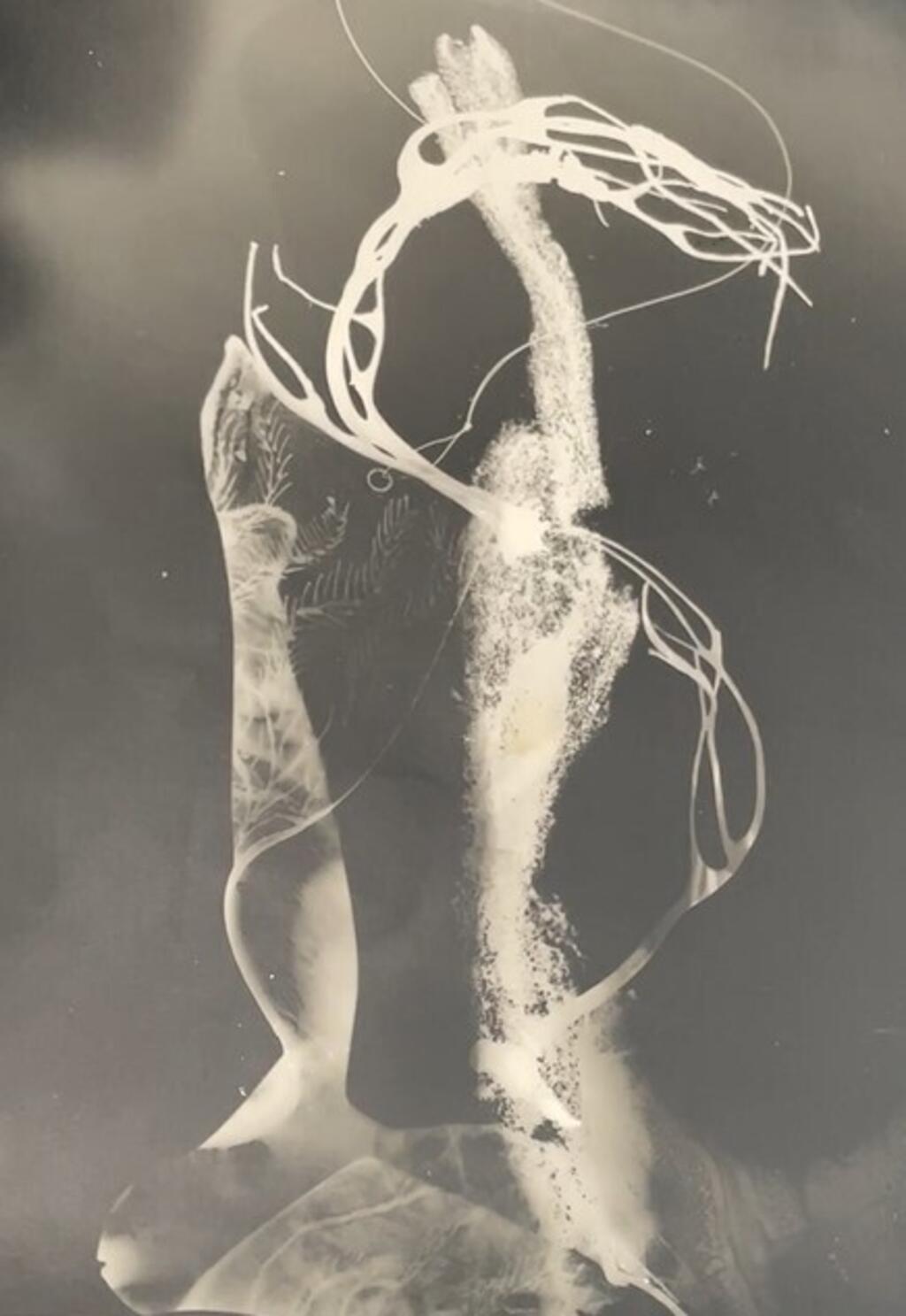
His delicate black and white images appear to be abstract, but on closer inspection white shapes of coral and algae appear, silhouetted on the pitch-black background.

He documents an unknown underwater universe, paying homage to the sea – an integral part of his life since his childhood on the French Caribbean island of La Martinique.

Using a technique that produces what are known as "rayograms", made famous by surrealist artist Man Ray, he places objects, such as coral, directly on to sheets of photosensitised paper and exposes them to light, without using a camera.

This allows him to play with contrasts, to highlight what he calls "absence and presence".

"These are my memories, my treasures that I have collected and used," he says of the coral he uses in the works. "My technique makes traces of them, it’s a memory within a memory."
Coral bleaching

Lechar points to tiny pieces of plastic that appear in his work, saying sadly that plastic pollution has become omnipresent in the ocean, much of it invisible to the naked eye.

He has also noticed that the coral is changing colour, in some cases dying, due to an increase in ocean temperatures which "bleaches" the corals.

This phenomenon – linked to climate change – has been recorded across the globe in tropical waters, from the Caribbean to Asia and Australia.


A rayogram of coral by Hervé Lechar. 
© Hervé Lechar / Photo RFI


In one of his images, he points to something resembling a flame. "This makes me think of fire, and as we know, heat is harmful to corals."

He points to this as an element of paradox in this work, because the presence of these dangerous elements makes the images more intriguing and, in some ways, more beautiful.

"There is clearly a committed message about the environment, but it is also mixed with my experience and my personal history. How I have understood the marine world, how I feel about it and how I see it in the future," Lechar says.

By bringing this visual exploration to a wider public, he hopes to share his admiration for the natural realm – and his fears over the death of coral reefs.

National platform


The first collective exhibition of its kind, Art Emergence aims to highlight the diversity of the future contemporary art scene at a national level.

Organisers Artagan worked with public and private bodies to bring together an exhibition, a multi-arts festival and open days in artists’ workshops, and also provides a mentoring programme for the young artists involved to learn how to make a living from their craft.

One of the three curators of "Double Trouble" is Temitayo Olalekan, a multidisciplinary artist from Nigeria, now based in Marseille.

He says the Art Emergence event is unique because it gives graduate art students a major national platform – exposure not often granted to young artists at the beginning of their career.

Explaining their works to journalists and visitors is also part of the challenge.

"It’s extremely gratifying to see the artists evolving and speaking about their portfolios," he told RFI.

Art Emergence runs until 2 November.
US backtracks on Ghana visa curbs as country becomes deportation hub

The United States has reversed its visa restrictions on Ghana as the west African nation emerges as a key deportation hub in President Donald Trump's immigration crackdown. While Accra maintains it has received nothing in return for taking in deportees, one political scientist told RFI an agreement to take in more west African deportees was the "only plausible explanation".


Issued on: 28/09/2025 - RFI

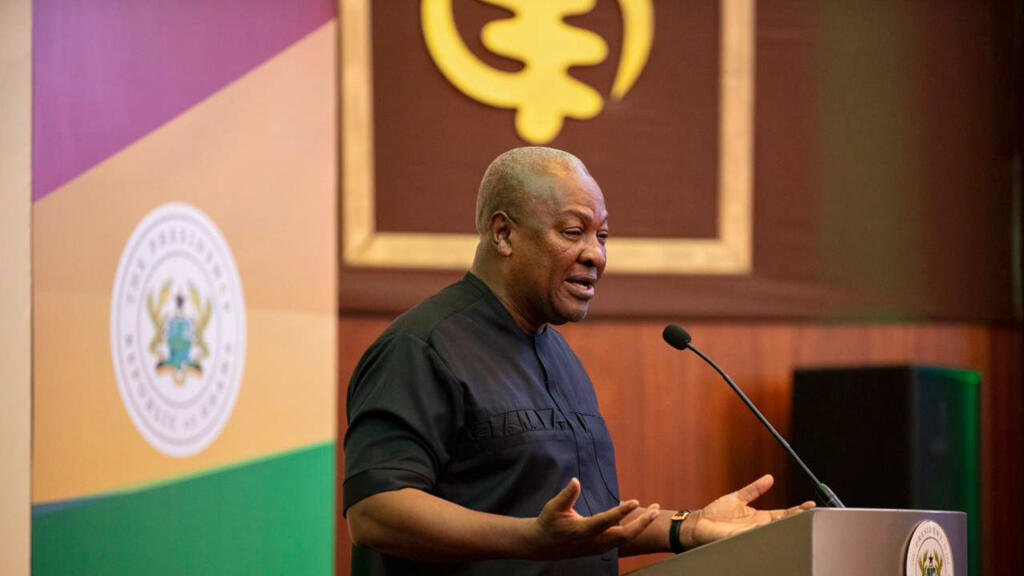
Ghana's President John Mahama says the agreement to take in west Africans deported from the US is being done on "humanitarian" grounds. © Ghanian presidency via AP

Earlier this month, Ghanaian President John Mahama revealed that the country was accepting west Africans deported by the United States – the fifth African nation to do so.

US President Donald Trump has made so-called "third-country" deportations a hallmark of his anti-immigration crackdown, sending people to countries where they have no ties or family.

Accra has insisted it has received nothing in return for taking in the deportees, though Mahama acknowledged that the deal was struck as relations were "tightening" – with Washington imposing tariffs as well as visa restrictions in recent months.

"The US visa restrictions imposed on Ghana" have been "reversed", Ghanaian Foreign Minister Samuel Okudzeto Ablakwa said.


In a post on X, Ablakwa said the "good news" was delivered by US officials on the sidelines of the United Nations General Assembly.

In June, the United States announced restrictions on most visas for nationals from Cameroon, Ethiopia, Ghana and Nigeria, restricting them to three months and a single entry.

"Ghanaians can now be eligible for five-year multiple entry visas and other enhanced consular privileges," Ablakwa said.

Migration deal?

Ablakwa attributed the US turnabout to "months of negotiations" without providing futher details.

At least 14 west Africans have been sent to Ghana since the beginning of September, though neither Accra nor Washington has made details of the arrangement public.

For political analyst Bright Simons, honorary vice-president of the Ghanaian think tank Imani, the Trump administration’s sudden change of course strongly suggests Ghana has agreed to take in further west African deportees.

“This is the only plausible explanation," Simons told RFI. "Ghana has made no announcement suggesting, for instance, a more favourable visa reciprocity policy towards the United States. The question is therefore: what prompted the US government to withdraw its restrictions? The only sensible answer is that Ghana offered something extra – and in this case, it was agreeing to take in deportees from third countries.”

Simons underlines that Cameroon and Nigeria remain under Washington’s sanctions. Both countries were hit by the same visa restrictions in July and have not since concluded migration agreements with the United States.

Alleged rights abuses

All of the 14 west Africans Ghana has taken in had won protection from US immigration courts against being deported to their home nations, their lawyers have told RFI. At least four of them have been forwarded on to their country of origin.

After weeks of detention in Ghana, allegedly under military guard and in poor conditions, six of the deportees were abruptly sent to Togo last weekend and left to fend for themselves, Samantha Hamilton, a lawyer for civil rights organisation (AAJC), that has filed a lawsuit in the US on behalf of the migrants, told RFI.

Another plane able to carry 14 people has since arrived in Ghana, though it was unclear how many people were on it.

Ghana has said it is accepting west Africans on humanitarian grounds and that the deal is not an "endorsement" of US immigration policy.

The return to the previous system has come as a relief for many Ghanaians. In 2024, Ghana ranked fifth on the continent for US visa approvals, and second for student visas.

(with AFP)
Sought by luxury labels, Nigerian leather reclaims home market

Kano (Nigeria) (AFP) – Most Nigerian leather, often semi-finished, is exported to Europe and Asia and turned into luxury items bearing international brand labels, with zero trace of its origins.


Issued on: 26/09/2025 - RFI

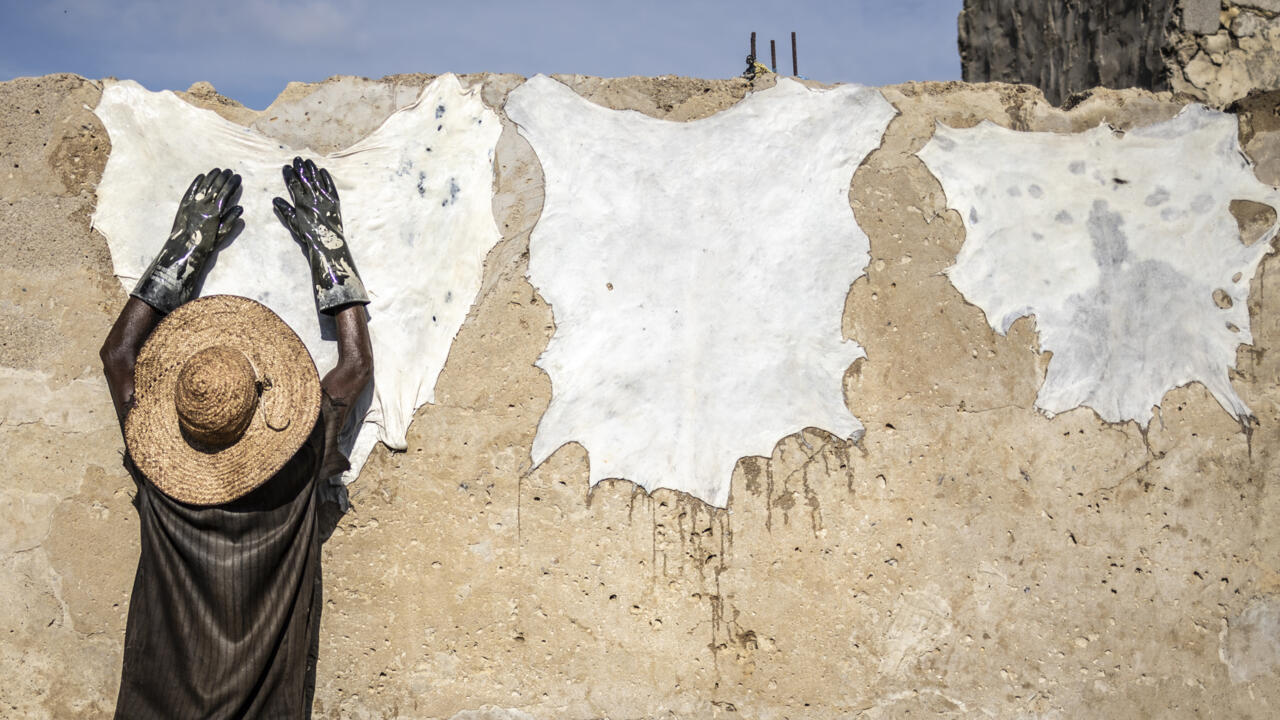
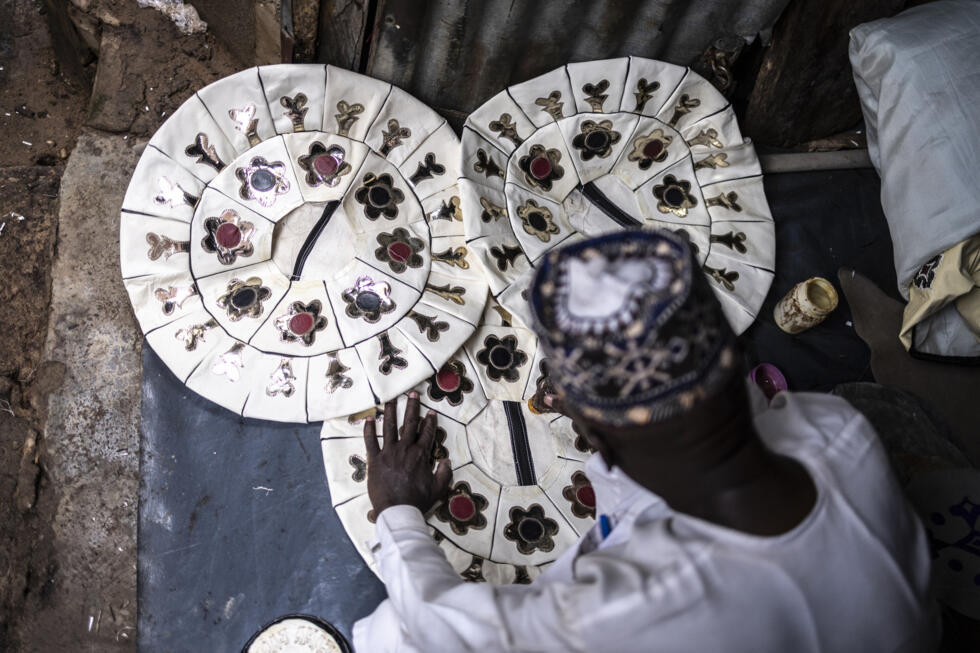
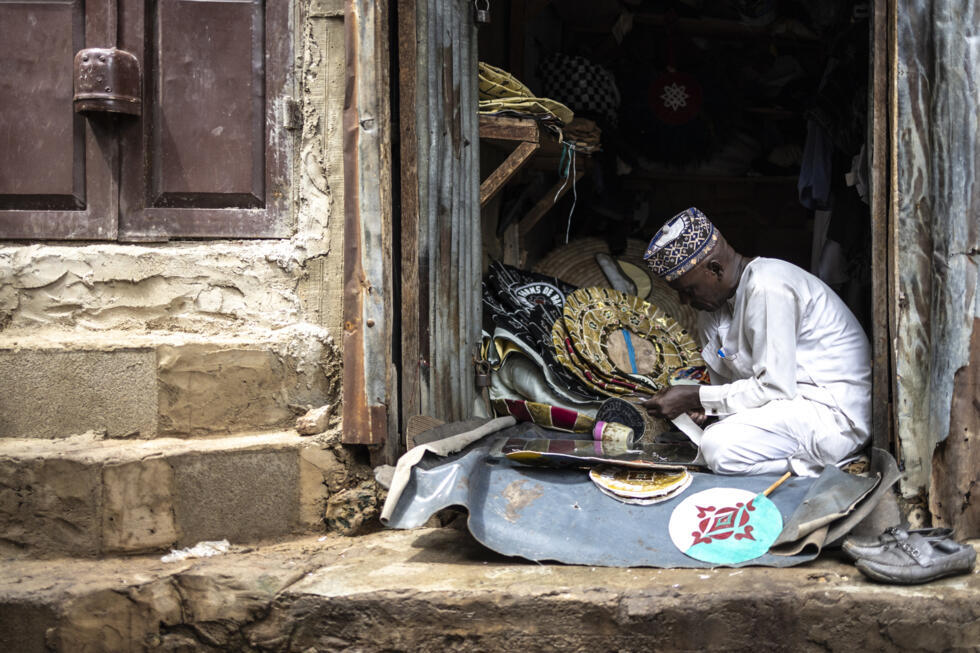
At the Majema traditional tannery in Kano, all the work is done by hand © OLYMPIA DE MAISMONT / AFP

But with her homegrown brand, Isi Omiyi creates high-end pieces to try to reclaim Nigeria's leather identity.

In her apartment in the Lagos metropolis, she has created a boutique corner where bags, wallets and shoes are carefully displayed on shelves, some carrying price tags of up to $1,500.

"Leather is part of our heritage. I can't just stand by and watch others receive all the credit for work that we started here," the 56-year-old designer told AFP.

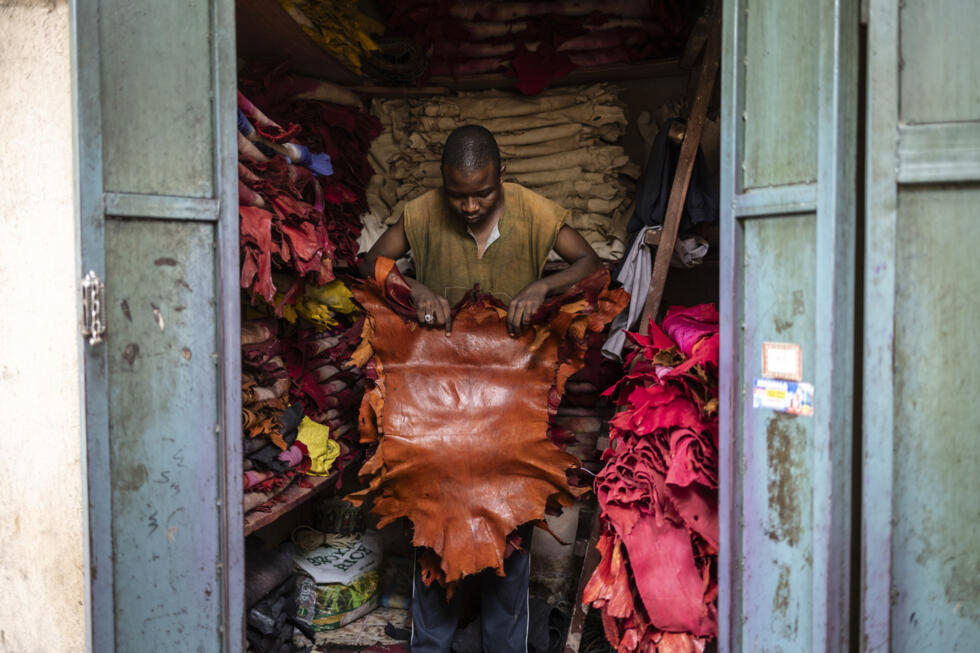
Local leather is sold at the Kurmi market in Kano -- but Nigeria exports 90 percent of its leather © OLYMPIA DE MAISMONT / AFP


Her mission is to amplify "Made In Nigeria" craftsmanship.

She "would like these foreign brands to indicate on their products: 'originally from Nigeria' and 'made in Italy', 'made in France,' or elsewhere, because most of them don't," Omiyi said.

According to the country's export promotion agency, Nigeria exports 90 percent of its leather, mainly to Italy and Spain, which make up around three-quarters of the total volume.

Leather exports generate about $600 million in annual revenue, said Oluwole Oyekunle, a researcher at the Nigerian Institute of Leather and Science Technology in Samaru in northern Kaduna state.

- Kano, cradle of tanneries -

In Kano, a state in northern Nigeria, major international luxury brands source leather through intermediaries, who link them with tanners.

The state counts 11 tanneries.

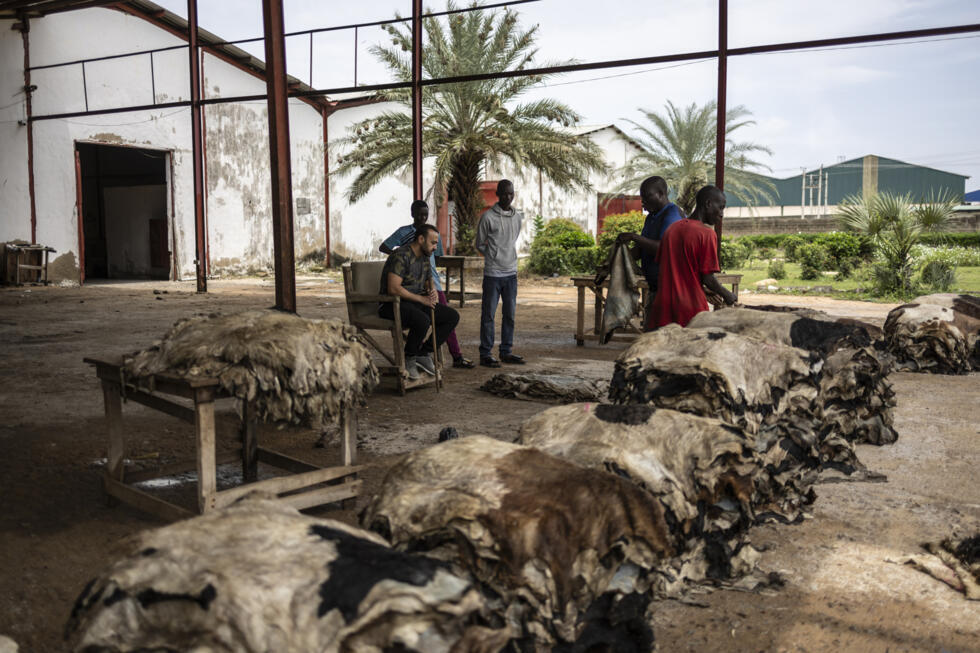
Ztannery, operational since 2010, takes daily delivery of dozens of fresh hides of goats and sheep from across Nigeria and neighbouring countries. They are sorted and treated over nine days.

Ztannery processes goat and sheep hides from across Nigeria © OLYMPIA DE MAISMONT / AFP

"We process from zero to semi-finished leather, which is 80 percent of the whole process," said company owner Abbas Hassan Zein, 47.

Intermediaries ship the hides to Europe, where they undergo further treatment before being sold to luxury brands like "Gucci, Ferragamo, Prada, Louis Vuitton, all the big names", Zein added.

"And this is where the process goes from 'Made in Nigeria' and the balance 10 percent of the finished leather is lost and becomes 'Made in Italy' or 'Made in China,'" he added.

Modern tanneries with state-of-the-art machinery like Ztannery only accept large orders paid in dollars or euros, cutting off access by local designers who would pay in local currency.

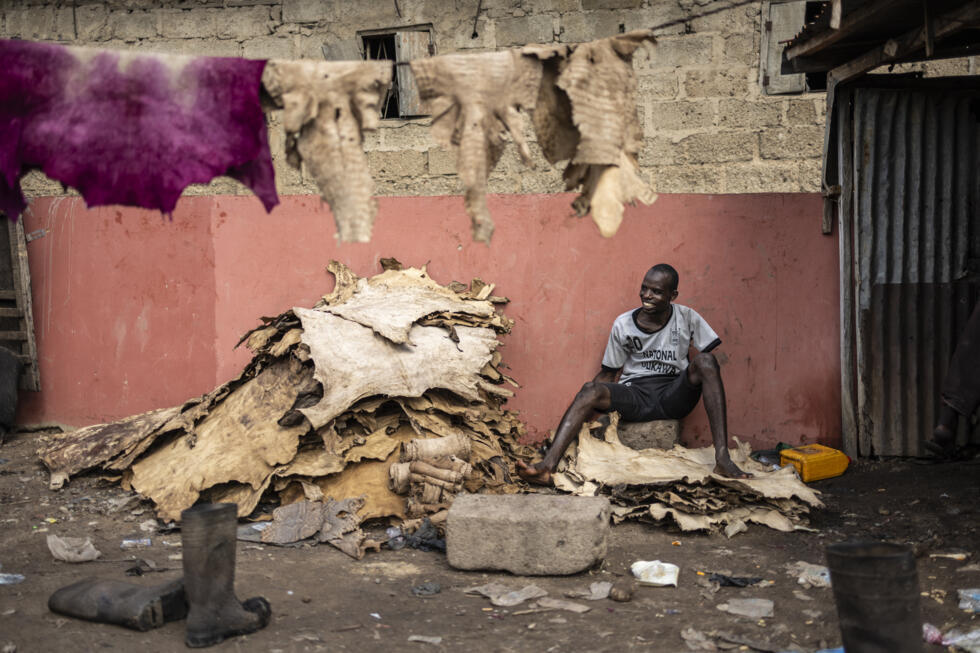
At the Majema tannery, workers clean and treat the hides on the floor © OLYMPIA DE MAISMONT / AFP

Many turn to the traditional Majema tannery, founded in 1932 in the heart of Kano city.

Here, everything is done manually. Dozens of tanners clean and dye hides directly on the earthen floor amid plastic bags and bottles.

"Our customers come from the north and south, and we also export to neighbouring countries such as Niger, Cameroon, Chad, Cotonou (Benin) and Europe," said tannery manager Mustapha Umar, 52, standing in front of goat hides hanging from wires, waiting to be dyed the next day.

- 'Expression of heritage' -


In 2017, Femi Olayebi, founder of the Nigerian brand FemiHandbags, created the Lagos Leather Fair, an annual event that brings together approximately 100 leather professionals in Nigeria's commercial hub.

"There was a need for a platform dedicated to designers, products and leather suppliers, demonstrating that Nigerians, with their own resources, are capable of creating items that are worth purchasing," said Olayebi.

Kano supplies overseas luxury giants, but some of the leather goes to make local handicrafts such as pouffes © OLYMPIA DE MAISMONT / AFP


Public and private ventures are growing in the sector in Africa's most populous country.

In Kano, Indian, Chinese and some European producers -- not necessarily from the big names -- "have started showing interest of coming here to do the manufacturing", said Tijjani Sule Garo, of GB Tannery, a family business spanning three generations.

Back in Lagos, the state government in August launched a factory in the Mushin neighbourhood, with the target of producing leather goods and creating 10,000 jobs, located near one of the country's largest leather markets.

Nigerian leather-work is seen as an expression of heritage 
© OLYMPIA DE MAISMONT / AFP

To compete against global leather industry giants, Olayebi stresses the need for "better machines, better access to high-quality Nigerian leather, and above all, better training".

For David Lawal, 26, brand executive for Morin.O, it all boils down to promoting Nigerian identity.

Many customers seek a "timeless expression of heritage", narrated through leather products created in Nigeria and crafted by Nigerians, said Lawal.

© 2025 AFP


Deadly protests erupt in Madagascar over chronic blackouts and water cuts

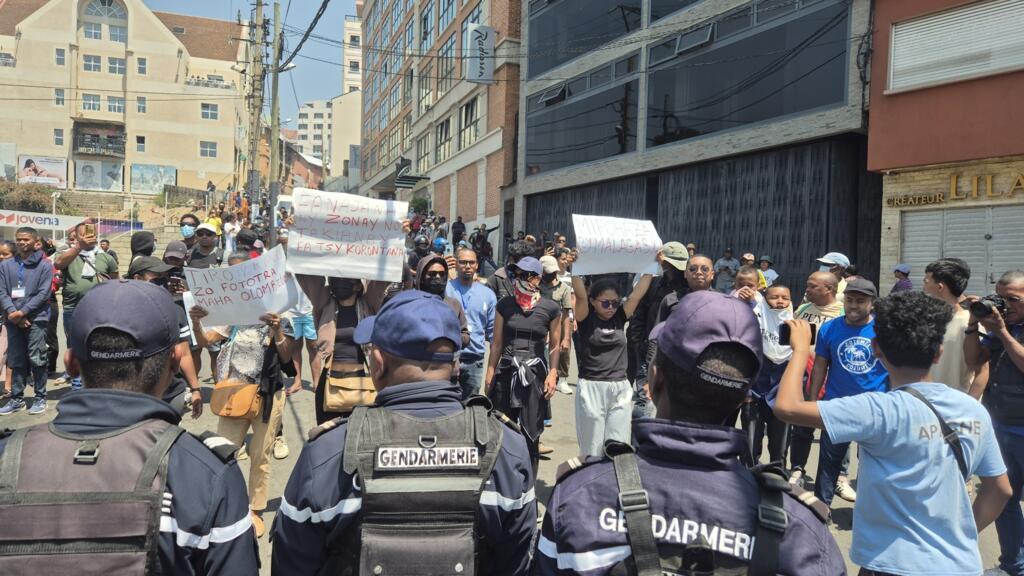
Anger over chronic water and electricity shortages has exploded into deadly unrest in Madagascar, prompting a night-time curfew in the capital. At least five people were killed in mass protests in Antananarivo on Thursday, hospital sources said.


Issued on: 26/09/2025 - RFI

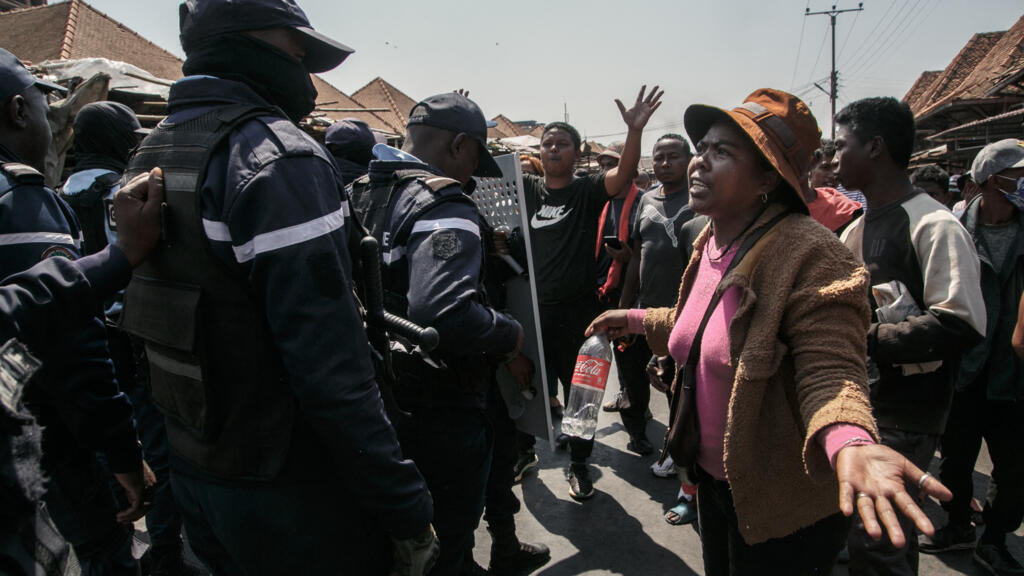
Protesters face security forces as they demonstrate against repeated water and electricity outages in Antananarivo, Madagascar, on 25 September 2025. © Rijasolo / AFP


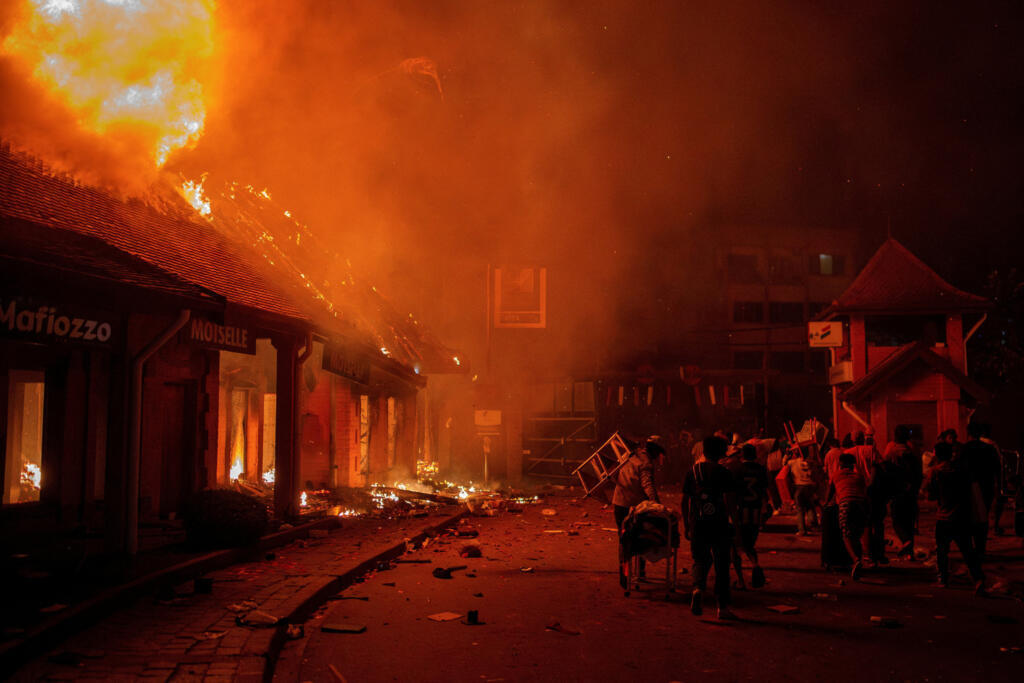
Despite the curfew, demonstrators built barricades of burning tyres and rubbish and ransacked shops. Cable car stations were also attacked as unrest spread through the city.

RFI correspondent Guilhem Fabry reported that loud blasts were heard near the city centre until about 2am on Friday and that a strong smell of smoke hung in the air.

Authorities have imposed a curfew in Antananarivo from 7pm to 5am, saying it will stay in place “until public order is restored”.

Schools across the capital and nearby districts were closed on Friday, and the suspension was extended to the city of Antsirabé, where clashes also broke out.

Burning shops during a demonstration to denounce frequent power outages and water shortages in Antananarivo, Madagascar, on 25 September 2025. © Zo Andrianjafy / Reuters


Tear gas, rubber bullets

Thursday’s protests in Antananarivo, which began as peaceful marches, were met with tear gas, rubber bullets and large numbers of police.

What started as demonstrations against the shortages quickly escalated into one of the biggest challenges faced by President Andry Rajoelina in years.

Hundreds of people tried to reach central Ambohijatovo Square despite a government ban on gatherings, but were blocked by heavy security.

Protesters split into smaller groups to get around the cordons, carrying banners denouncing the outages and accusing the government of failing to guarantee basic rights.

Police fired tear gas and rubber bullets as masked officers charged the crowds.


Protesters wave placards near Ambohijatovo Square in Antananarivo, on 25 September 2025. © Sarah Tétaud/RFI

Online mobilisation

Two lawmakers have reportedly had their homes vandalised, including senator Lalatiana Rakotondrazafy – a former minister and vocal supporter of Rajoelina.

Addresses of pro-government figures had been widely shared on social media, amid massive online mobilisation.

While most of the posts called for peaceful protests, some included addresses of officials to "target" or even DIY guides for making explosives.

Security forces claim that bad actors are taking advantage of the protests to destroy property, while legislators have tried to frame the movement as a plot.

Ahead of Thursday's protests, 13 out of 18 senators denounced what they called an "attempted coup d'état" by the opposition.

Rajoelina has yet to address the situation. Having spoken at the UN General Assembly in New York earlier in the week, it remains unclear whether the president has returned to Madagascar.

He first came to power through a coup in 2009, before going on to win presidential
 elections in 2018 and 2023.


Persistent shortages

Only around a third of Madagascar’s 30 million people have access to electricity, according to the International Monetary Fund. Power cuts often last more than eight hours a day.

Poor governance of the state-owned utility, Jirama, is at the heart of the problem and for months there have been protests outside their headquarters in Antananarivo.

Madagascar is one of the poorest countries in the world, with 75 percent of people living below the poverty line.

Yet Jirama uses up 10 percent of the state's revenue. Critics point to mismanagement and corruption as key factors behind the company's failings.
Global Sumud Flotilla set to continue its mission to Gaza as Frontex declines to provide protection


Copyright Copyright 2025 The Associated Press. All rights reserved

By Malek Fouda & Fortunato Pinto
Published on 27/09/2025 - EURONEWS

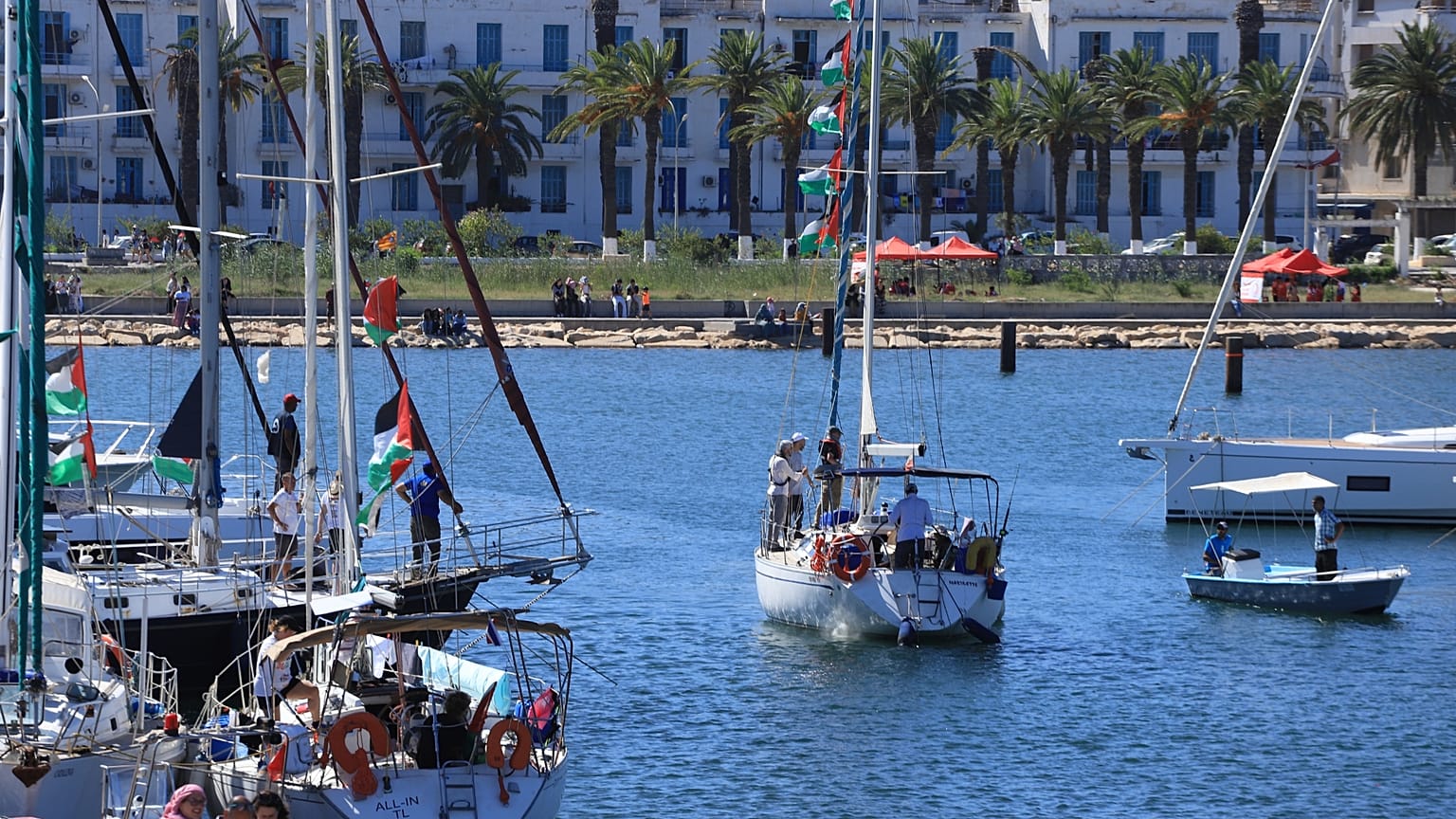
The Global Sumud Flotilla's mission to break Israel's siege on Gaza continues, but without the Family Boat, which is stranded off Crete due to a serious engine malfunction. Ten Italians have abandoned the journey after government pressure, but most have decided to continue.

Despite the Family Boat suffering an engine failure and pressures from the Italian government, the group of boats aiming to break the Israeli siege, the Global Sumud Flotilla, has decided that it will not stop its journey to the Gaza Strip.

In a video published in the night between Friday and Saturday, one of the Flotilla's spokespersons, Thiago Ávila, said that the Family Boat had suffered a "catastrophic technical failure" in the engine, preventing it from continuing its journey.

The boat had been hit in recent weeks by "incendiary drone attacks" and had to overcome technical difficulties, but due to the current failure, it can no longer safely sail.

Ávila reiterated however that the mission continues without interruption and that the aid cargo and people on board the now retired Family Boat will be relocated to other units of the flotilla.

"The need to act is more urgent than ever in light of the ongoing military operations in Gaza," said Ávila, as he renewed calls for international support.

The departure of the boats, as confirmed to Italian media outlets by Silvia Severini, an Ancona native on board the Seulle boat, is scheduled for Saturday.

Italian government pressures on the Flotilla

The Italian government has been applying strong pressure on the Flotilla to stop the journey to Gaza.

Italian President Sergio Mattarella asked the Flotilla to avoid "putting anyone in harm's way", and urged the group to heed of Prime Minister Giorgia Meloni and her Defence Minister Guido Crosetto's advice to instead send aid through humanitarian corridors.

The Italian premier has requested that a humanitarian corridor be opened to send the aid the Flotilla is carrying for delivery to Palestinians in Gaza through Cyprus. The initiative will see the aid being distributed via the Latin Patriarchate of Jerusalem.

A dozen people from the Italian delegation, as highlighted during a conference in Rome by Giorgina Levi, spokesperson for the Global Movement to Gaza, have decided to abandon the journey, but the remaining part of the approximately fifty Italians on board the flotilla's boats are carrying forward with their journeys to Gaza.

Maria Elena Delia, the Italian spokesperson for the Global Sumud Flotilla, responding to Mattarella's appeal on Friday, noted that she "appreciated the president's words" but stressed that abandoning the mission will "shift focus from the central objective".

"We are very willing to find a humanitarian corridor, which we would like to be permanent, but this cannot be an alternative to being able to freely navigate international waters. We are trying to highlight an anomaly," Delia stated.

"There is no intention to get hurt on purpose, we ask governments: is it possible to tell Israel that if they attack those boats in international waters, we will impose sanctions on them? Can we consider the possibility that Italy imposes an arms embargo or renounces some commercial agreements?"

"Israel could guarantee that once a month a naval corridor is opened so that UN ships, not the Flotilla's, can deliver aid by sea. There are many possibilities, but more needs to be done than asking us not to go to Gaza," added the activist

Frontex will not help the Flotilla

Meanwhile, the European Border and Coast Guard Agency, Frontex, has announced that it will not be able to support the Flotilla.

Speaking to Italian media, a spokesperson for the agency explained that as a civil and non-military organisation, it does not have the capacity to provide protection or escort to the Flotilla as it heads to the besieged enclave.

It comes after 58 MEPs from the Left, Greens, Socialists and Democrats, and non-attached groups had sent a letter to the President of the EU Commission, Ursula Von der Leyen, demanding urgent intervention by Frontex.


Thousands of Germans in Berlin protest, call for end to Israel-Hamas war in Gaza

Berlin: 50,000 people demonstrate against the war in Gaza
Copyright AP Photo

By Euronews
Published on 

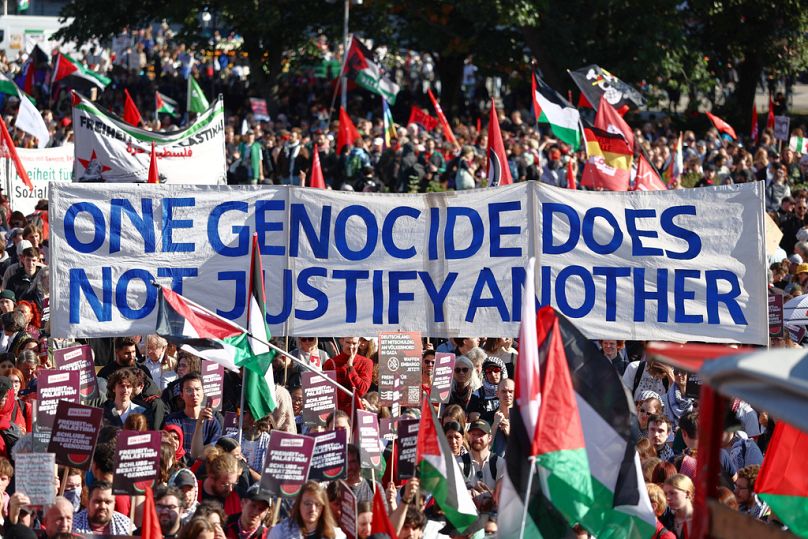
Some 50,000 people took part in the march through Berlin’s downtown area, according to police. About 1,800 law enforcement officers were deployed to monitor the demonstrators.

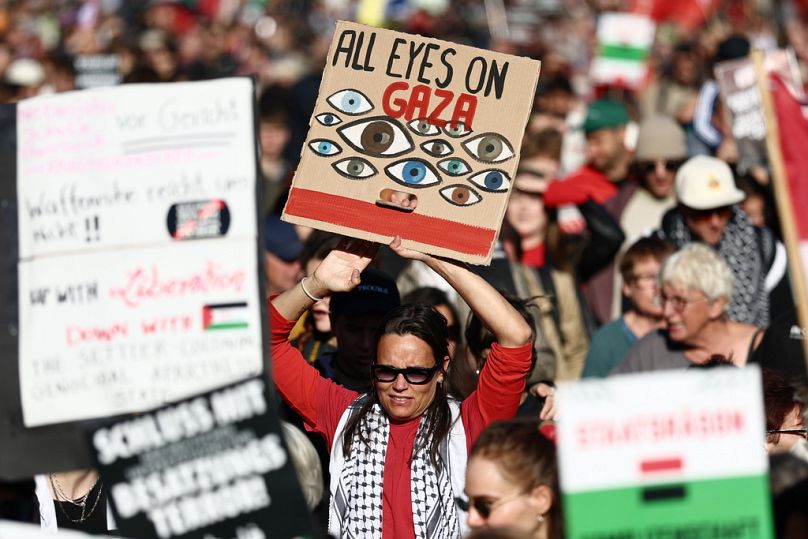
Tens of thousands of protesters took to the streets of Berlin, the German capital, on Saturday in solidarity with Palestinians in Gaza, calling for an end to the Israel-Hamas conflict in the war-devastated enclave.

Demonstrators shouted slogans like “free, free Palestine,” and demanded an end to the worsening humanitarian crisis in Gaza.

Some 50,000 people took part in the march through Berlin’s downtown area, according to police. About 1,800 law enforcement officers were deployed to monitor the demonstrators.

The protesters also called for a halt to German arms exports to Israel and demanded European Union sanctions against Israel, German news agency dpa reported.

Germany is one of Israel's leading foreign suppliers of military hardware, along with the US and Italy. In August, Berlin halted military exports to Israel for use in Gaza amid outcry over Netanyahu's plan for a renewed offensive, which Israel has since begun.

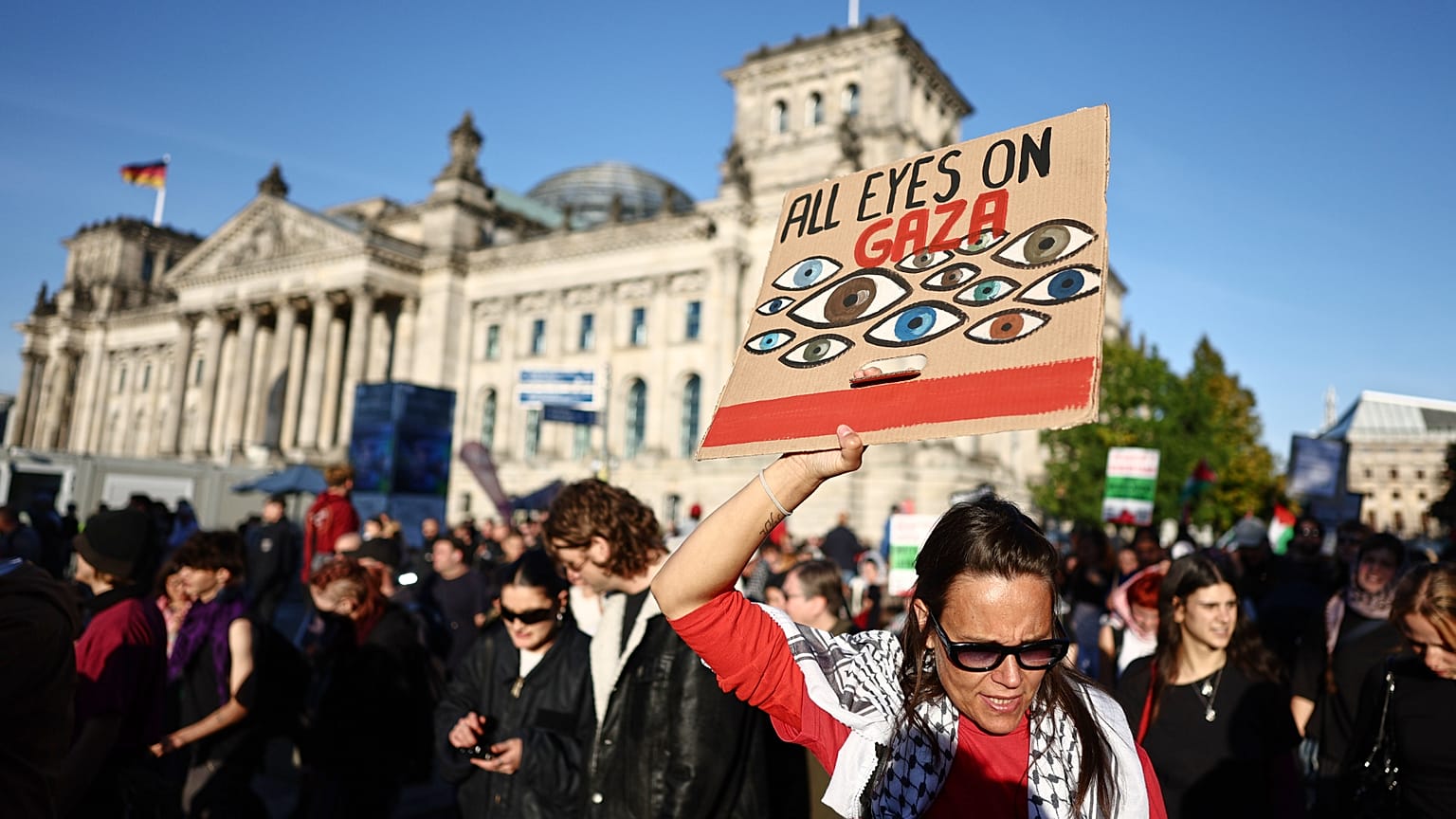
People protest against Israel during a mass demonstration called "All Eyes on Gaza" in support of Palestinians in Berlin, Germany, Saturday, Sept. 27, 2025. (AP Photo/Christop
People protest against Israel during a mass demonstration called "All Eyes on Gaza" in support of Palestinians in Berlin, Germany, Saturday, Sept. 27, 2025. (AP Photo/Christop Christoph Soeder/Copyright 2025 The AP. All rights reserved.

Protests in Berlin on Saturday reportedly began from Alexanderplatz, with demonstrators marching to the Victory Column in the Tiergarten district of Berlin.

Around 50 organisations and associations had called for the demonstration, including Amnesty International and the party Die Linke. One of the protests, a pro-Palestine demonstration in Kreuzberg, was, however, broken up due to anti-Israel slogans.

In a separate protest, about 100 people rallied in favour of Israel and “against all forms of antisemitism,” German public broadcaster RBB reported, adding that there were isolated scuffles when the two protest groups met. It wasn’t immediately clear if the scuffles were between the different protesters or with police trying to separate them.

Protests took place simultaneously in other EU cities

Several thousand people also protested in the western German city of Düsseldorf under the slogan “we will not forget Gaza — freedom for Palestine and all oppressed peoples.”

In Geneva, about 6,000 people demonstrated for an end to the war in Gaza, Swiss public broadcaster SRF reported. Other European cities have also seen Gaza protests in recent weeks.

People protest against Israel during a mass demonstration called "All Eyes on Gaza" in support of Palestinians in Berlin, Germany, Saturday, Sept. 27, 2025. (AP Photo/Christop
People protest against Israel during a mass demonstration called "All Eyes on Gaza" in support of Palestinians in Berlin, Germany, Saturday, Sept. 27, 2025. (AP Photo/Christop Christoph Soeder/Copyright 2025 The AP. All rights reserved.

The 7 October 2023 strike on southern Israel by Hamas set off the war in Gaza. Hamas terrorists killed almost 1,200 people in the attack, primarily civilians, and kidnapped 251. Israel believes that 20 of the 48 hostages that are still in Gaza are alive.

Israel’s retaliatory offensive over the past 23 months has killed more than 65,100 people in Gaza, according to Gaza’s Health Ministry, which does not distinguish between civilians and Hamas fighters.

Germany has led efforts among the EU’s 27 member nations to block collective criticism of or efforts to stop Israel’s blockade of Gaza and military campaign, but the German government has recently shown some scepticism about its position.

The German government remains deeply concerned about the suffering of civilians in Gaza, Merz said in August when he spoke against Israel's plan for a renewed offensive in Gaza.

Petro Calls for Moving UN HQ After Trump Admin Revokes His Visa Over Protest Speech

“What the US government is doing to me breaks all the norms of immunity on which the functioning of the United Nations and its General Assembly is based,” Petro said.


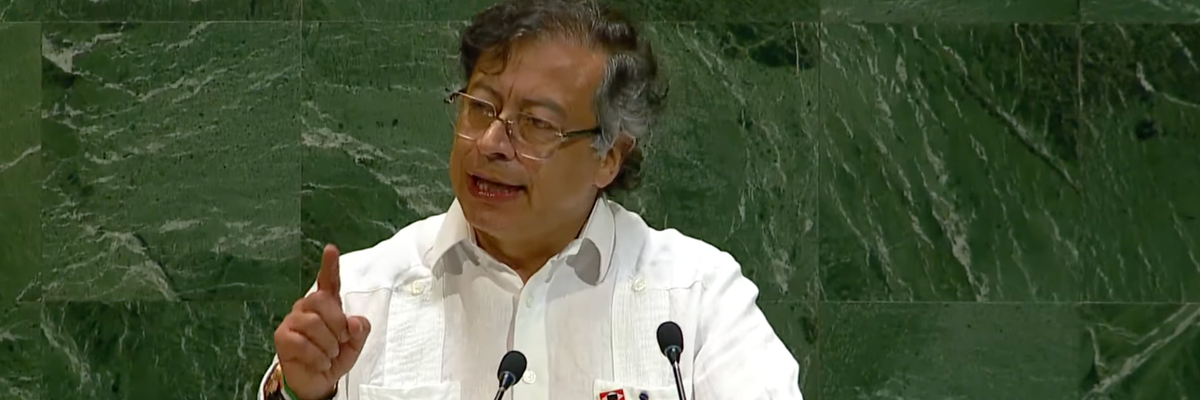
Colombian President Gustavo Petro addresses the United Nations General Assembly on September 23, 2025 in New York City.

(Photo by United Nations/screen grab)


Olivia Rosane
Sep 27, 2025
C0MMON DREAMS

The Trump administration on Friday revoked left-wing Colombian President Gustavo Petro’s visa after he spoke to crowds of protesters in New York City, urging US soldiers not to point their guns at innocent civilians and to disobey the orders of US President Donald Trump.

The US State Department wrote on social media on Friday that Petro had “urged US soldiers to disobey orders and incite violence” and that it would revoked Petro’s visa “due to his reckless and incendiary actions.”


Finnish President Says Security Council Members Who Violate UN Charter Should Lose Voting Rights


Climate Defenders Blast Trump’s ‘Reckless’ UN Speech

“Mr. Trump has violated the founding principles of the UN,” Petro wrote on social media Saturday in response to the news.

Petro, who was in New York to attend the United Nations General Assembly (UNGA), criticized Trump in a speech before the UN on Tuesday, in which he called him “complicit in genocide” for backing Israel’s war on Gaza and urged the UN to open criminal proceedings against Trump’s air strikes on boats in the Caribbean alleged to be transporting drugs.

“This is the first time the US revokes a head of state’s visa for comments made during a UNGA visit.”

While the Colombian leader had returned to his home country by the time he learned his visa had been revoked, he condemned the move as a major breach of international law.

“What the US government is doing to me breaks all the norms of immunity on which the functioning of the United Nations and its General Assembly is based,” Petro wrote on social media on Saturday.

He pointed out that heads of state attending UN proceedings are supposed to receive total immunity.

“The fact that the Palestinian Authority was not allowed entry and that my visa was revoked for asking the US and Israeli armies not to support a genocide, which is a crime against all of humanity, demonstrates that the US government no longer complies with international law,” Petro continued. “The United Nations headquarters cannot continue to be in New York.”

Petro was not the only one to question whether the UN could continue to meet in the US after the Trump administration’s actions.

“This is the first time the US revokes a head of state’s visa for comments made during a UNGA visit,” Center for Economic and Policy Research senior research fellow Francisco Rodríguez pointed out on social media. “Both [Fidel] Castro and [Hugo] Chávez gave fiery off-site speeches in NY without retaliation. The action undermines the UN’s viability as a global forum and risks violating the 1947 HQ Agreement.”

The agreement states in part that those granted immunity to attend UN gatherings “shall not be required to leave the United States otherwise than in accordance with the customary procedure” applied to all diplomats.

Craig Mokhiber, a human rights lawyer and former UN official, wrote: “This is just the latest breach of the obligations of the US to the UN. Member states must get serious about moving the UN to a safer host country. And the US-Israel axis must be held accountable.”

Israel’s nearly two-year assault on the Gaza Strip, which several human rights experts and bodies including a UN commission have named a genocide, was a key point of contention during the 80th session of the UNGA.

Petro emerged as a major voice in defense of the Palestinians in Gaza, calling for the creation of an international armed force to enter Gaza and end the genocide.

He repeated that call when he spoke to protesters outside the UN on Friday, as Israeli Prime Minister Benjamin Netanyahu was scheduled to speak.

“It is necessary to configure a more powerful army than that of the United States and Israel combined,” Petro told the crowd.


It was also during this speech that he urged US soldiers to “disobey the orders of Trump” and “obey the orders of humanity,” according to Reuters.

Colombia’s Interior Minister Armando Benedetti wrote on social media that Netanyahu’s visa should have been revoked instead.

“But since the empire protects him, they go after the only president who was capable of telling him the truth to his face,” Benedetti said.
‘She Died Free’: Tributes Pour In for Revolutionary Icon Assata Shakur

“They wanted her bound, broken, and paraded as an example, but instead, she slipped their grip and lived out her life in exile, surrounded by people who honored her struggle and her survival,” said one admirer.


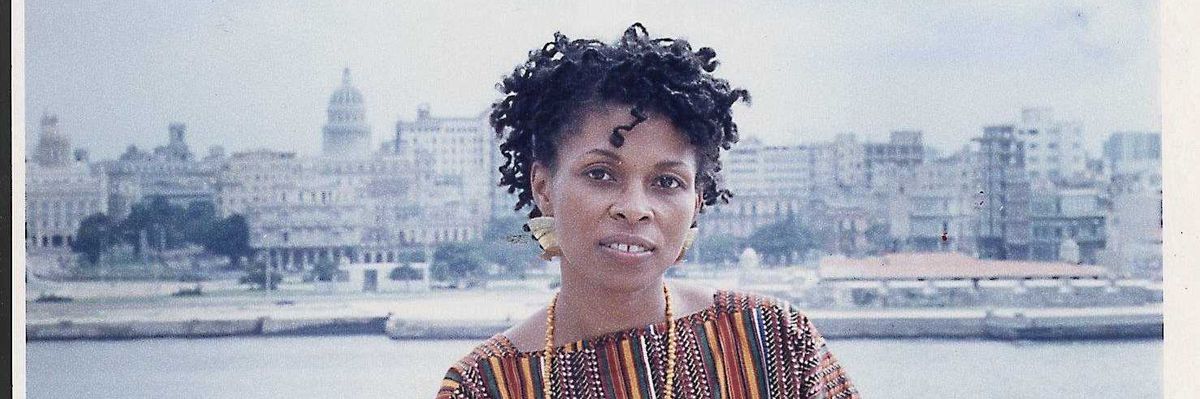
Assata Shakur with Old Havana, Cuba, in the background on October 7, 1987.
(Photo by Ozier Muhammad/Newsday RM via Getty Images)


Olivia Rosane
Sep 27, 2025
COMMON DREAMS

Assata Shakur, a Black revolutionary who inspired generations of activists to struggle for a better world, passed away on Thursday in Havana, Cuba, where she had lived in exile from the US for over four decades.

Cuba’s Ministry of Foreign Affairs announced her death on Friday, saying it was caused by a combination of “health conditions and advanced age.” She was reportedly 78 years old.

“At approximately 1:15 pm on September 25, my mother, Assata Shakur, took her last earthly breath,” her daughter Kakuya Shakur wrote on Facebook on Friday. “Words cannot describe the depth of loss that I am feeling at this time. I want to thank you for your loving prayers that continue to anchor me in the strength that I need in this moment. My spirit is overflowing in unison with all of you who are grieving with me at this time.”

Shakur, who was born Joanne Deborah Byron and was also known as Joanne Deborah Chesimard, spent the first three years of her life in Queens, New York before moving to Wilmington, North Carolina. She then returned to Queens for third grade.

“Assata’s unwavering commitment to the liberation of her people continues to inspire generations.”

“I spent my early childhood in the racist segregated South,” she recalled in a 1998 letter to Pope John Paul II. “I later moved to the northern part of the country, where I realized that Black people were equally victimized by racism and oppression.”

Shakur became active in the anti-Vietnam War, student, and Black liberation movements while attending Borough of Manhattan Community College and the City College of New York. After graduation, she joined first the Black Panther Party and then the Black Liberation Army (BLA).

“I have been a political activist most of my life, and although the US government has done everything in its power to criminalize me, I am not a criminal, nor have I ever been one,” she wrote in 2013.

In 1973, she and two other BLA activists were stopped at the New Jersey Turnpike by two state troopers. By the end of the encounter, both Shakur’s friend Zayd Malik Shakur and trooper Werner Foerster were shot dead. In 1977, Shakur was convicted of Foerster’s murder in a trial she described as a “legal lynching.” Throughout her life, she maintained her innocence.

“I was shot once with my arms held up in the air and then once again from the back,” she wrote of the shootout.

She was sentenced to life in prison plus 33 years, but didn’t long remain behind bars.

“In 1979, fearing that I would be murdered in prison, and knowing that I would never receive any justice, I was liberated from prison, aided by committed comrades who understood the depths of the injustices in my case and who were also extremely fearful for my life,” she wrote.

In 1984, she claimed asylum in Cuba. Throughout her life, she also remained staunchly committed to the cause of liberation for all oppressed peoples.

“I have advocated and I still advocate revolutionary changes in the structure and in the principles that govern the United States,” she wrote to John Paul II. “I advocate self-determination for my people and for all oppressed inside the United States. I advocate an end to capitalist exploitation, the abolition of racist policies, the eradication of sexism, and the elimination of political repression. If that is a crime, then I am totally guilty.”

During her exile, her writings, including her 1987 autobiography, gained a wide audience and brought her story and voice to younger activists.

“It is our duty to fight for our freedom,” she wrote in one of the book’s most famous passages. “It is our duty to win. We must love each other and support each other. We have nothing to lose but our chains.”


She was also influential in the world of music and hip-hop, serving as godmother to Tupac Shakur and inspiring songs by Public Enemy and Common, among others.

The US government did not give up its pursuit of her. In 2013, under President Barack Obama, the Federal Bureau of Investigation named her the first woman on its “Most Wanted Terrorist” list. The FBI and the state of New Jersey also doubled the reward for information leading to her capture. That reward will now never be claimed.

“She died free!” one of her admirers, who uses the handle The Cake Lady, wrote on social media on Friday. “The US government, after decades of pursuit, never got the satisfaction of putting her in a cage. They wanted her bound, broken, and paraded as an example, but instead, she slipped their grip and lived out her life in exile, surrounded by people who honored her struggle and her survival.”


News of her passing inspired tributes from social justice and anti-imperialist leaders and organizations, including former Ohio state Sen. Nina Turner and Rep. Ayanna Pressley (D-Mass.)

“We honor the life of comrade Assata Shakur, a revolutionary who inspires and pushes all of us in the struggle for a better world,” wrote anti-war group CodePink on social media.


Community organizer Tanisha Long posted: “Assata Shakur joins the ancestors a free woman. She did not die bound by the carceral system and she did not pass away living in a land that never respected or accepted her. Assata taught us that liberation can not be bargained for, it must be taken.”

The Revolutionary Blackout Network wrote, “Thank you for fighting to liberate us all, comrade.”


The New York-based People’s Forum said: “We honor Assata’s life and legacy as a tireless champion of the people and as a symbol of hope and resistance for millions around the world in urgent fight against racism, police brutality, US imperialism, and white supremacy. Assata’s unwavering commitment to the liberation of her people continues to inspire generations.”

The Democratic Socialists of America vowed to “honor her legacy by recognizing our duty to fight for our freedom, to win, to love, and protect one another because we have nothing to lose but our chains.”

Black Lives Matter organizer Malkia Amala Cyril lamented to The Associated Press that Shakur died during a global rise of authoritarianism.

“The world in this era needs the kind of courage and radical love she practiced if we are going to survive it,” Cyril said.

Several tributes featured Shakur’s own words.

“I believe in living,” she wrote in a poem at the beginning of her autobiography.

“I believe in birth. I believe in the sweat of love and in the fire of truth. And i believe that a lost ship, steered by tired, seasick sailors, can still be guided home to port.”
Trump tariffs: Who stands to lose from new US pharma duties?

Arthur Sullivan
DW
September 27, 2025

The US president's latest tariff move will see the US impose 100% levies on imports of branded or patented pharmaceutical goods from October 1. What could it mean for global trade?


Will US patients become the losers of Donald Trump's new tariffs on pharma imports
Image: Anthony Behar/SipaUSA/picture alliance

The news came in much the same way as previous tariff bombshells from the US president had — suddenly, via social media, and with much left unclear.

In a post on his social media site late on Thursday, Donald Trump announced steep new tariffs on US pharmaceutical imports.

"Starting October 1st, 2025, we will be imposing a 100% Tariff on any branded or patented Pharmaceutical Product, unless a Company IS BUILDING their Pharmaceutical Manufacturing Plant in America,” he wrote on Truth Social.

So far, pharmaceutical goods have been exempt from the so-called reciprocal tariffs Trump announced back in April. That was mainly because earlier this year, the US government opened a national security probe examining the possibility of tariffs on pharma goods.

Trump has regularly threatened that pharmaceutical products would be hit with tariffs since returning to office in January so the move itself is not a major surprise, even if the timing is.

What exactly will the move mean for drugs companies?

There were two possible exemptions in Trump's announcement. He said the tariffs will not apply to so-called generic drugs, apparently meaning drugs and pharmaceuticals that use the same ingredients and are used in the same way as existing, branded drugs, originally covered by chemical patents.

However, Deborah Elms, head of trade policy at the Hinrich Foundation in Singapore, says the distinction between branded and generic drugs is not entirely clear because there can be a "big difference."

"There's a lot of branded, generic drugs for example. That all seems to be smashed together in Trump's announcement. At this stage, we just don't know how it will play out," she told DW.

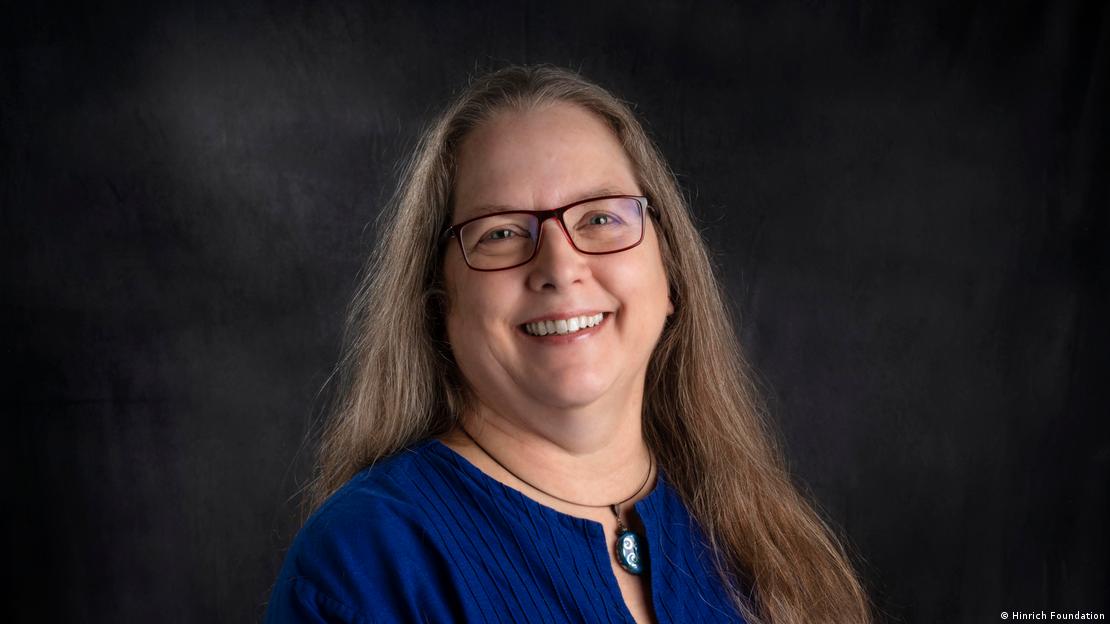
Deborah Elms says it's still not clear what exactly will exempt a company from Trump's pharma tariffs
Image: Hinrich Foundation

The other distinction Trump announced is that the tariffs will not apply to companies that produce drugs in the US or who plan to build factories there.

He wrote that "IS BUILDING" will be defined as "breaking ground" and/or "under construction." Therefore, there will be "no Tariff on these Pharmaceutical Products if construction has started," he added.

Elms says this carve-out could be significant but emphasized that because all there is to go on so far is a social media post from Trump.

If she were a pharma executive now she would be "buying a shovel and digging a hole somewhere," she suggested, in order to declare that her company had broken ground and was "preparing for a factory development."

"It's unclear what would be sufficient to avoid tariffs. They could come up with a lot of criteria that either qualifies or disqualifies. I can imagine that there will be a lot of confusion over this," said Elms.

Neil Shearing, Capital Economics' group chief economist, believes the announcement "is not quite as big a move as it appears at first sight" because the exemption for firms producing within the US is "more significant."

"Many of the world's largest pharmaceutical companies either already have some production in the US or have announced plans to build production in the near future. This would appear to make them exempt from the new tariffs," Shearing wrote in a note to clients.


Several large pharmaceutical companies have recently pledged to begin new construction in the US, such as Eli Lilly, AstraZeneca, Roche Holding and GSK.

A report by US business daily Wall Street Journal earlier this month identified more than a dozen drugmakers which had pledged to spend more than $350 billion (€299 billion) collectively by the end of this decade on drugmaking and related activities within the US.

Which countries will be worst affected?


According to the United Nations Comtrade Database, the US imported around $213 billion worth of pharmaceutical products in 2024.

Data from the MIT Observatory of Economic Complexity identified Ireland, Germany, Switzerland, Singapore and India as the top five exporters of pharmaceuticals to the US in July 2025. The EU accounts for around 60% of all US pharma imports.

However, it is unclear how pharmaceutical firms operating from Ireland, Germany or other EU nations will be impacted. That's because when details of the US-EU trade agreement were released in late August, it appeared that EU pharma tariffs would be limited to 15%, in line with most other tariffs in the deal.

Simon Harris, Ireland's Minister for Foreign Affairs and Trade, announced he would be "studying the impact of this announcement" but stressed that the August trade agreement made clear that tariffs on pharma products would be capped at 15%. "This remains the case," he said in a press release.

Ken Peng, head of Asia investment strategy at Citi Wealth, thinks the generic drugs exemption would be "good news for the likes of India and China, who mostly do not provide branded drugs to the US market."


Generic drug production has largely moved to Asian countries because of their cost advantage over most Western companies
Image: INDRANIL MUKHERJEE/AFP/Getty Images

However, Nathalie Moll, director general of the European Federation of Pharmaceutical Industries and Associations, believes the new tariffs will "increase costs, disrupt supply chains and prevent patients from getting lifesaving treatments," as she said in a statement.

Following the announcement on Thursday, shares in Asian and European pharma companies fell.

What about US consumers?

Trump has long claimed that tariffs would boost US consumers. But Deborah Elms argues that for various reasons, that will not be the case, and patients are about to "pay an awful lot more money" for pharmaceutical products.

Admitting that there could be some "long-term benefits" to homeshoring pharma production "such as securing supply," she says high US production costs mean it often makes sense for pharmaceuticals to be made elsewhere.

And so she expects "higher costs for US patients," and less pharma imports from abroad.

"In many cases, they will not reach US patients at all. So...it's also access issues. What is the benefit of this from a consumer perspective? Almost none."

Edited by: Uwe Hessler

Arthur Sullivan Reporter and senior editor focused on global economic stories with a geopolitical angle.@drumloman86