Sunday, October 19, 2025


Annie Dillard a la Rachel Carson a la David Quammen — Meet Journalist Caroline Tracey


Sometimes a great notion is the undeniable beauty of nature and social justice struggle meeting language of evocation and narrative art to present a bird's eye view on what it means "to be with" earth


Caroline Tracey’s debut book, a blend of environmental reportage and memoir titled Salt Lakes: An Unnatural History, is forthcoming in March 2026 from W.W. Norton.

Originally from Colorado, Caroline holds a doctorate in geography from the University of California, Berkeley. She is a recipient of the Waterston Prize for Desert Writing, the Ira A. Lipman Fellowship in Journalism and Human and Civil Rights, a Silvers Foundation Work-in-Progress grant, and an Andy Warhol Foundation Arts Writers Grant, among other honors. In 2025, she received the inaugural On the Brinck | Places Prize for writing about the Southwest. She has also taught writing as a visiting professor at Deep Springs College.

As a journalist and critic, Caroline’s work focuses on the environment, migration, and the arts in the US Southwest, Mexico, and their borderlands. Her reporting appears in the New Yorker, n+1New York Review of Books, High Country News, and elsewhere, as well as in Spanish in Mexico’s Nexos. Her literary and art criticism appears in the Nation, the New Republic, and elsewhere, and has been commissioned by SFMOMA and the National Gallery of Art. Read more here.

Caroline lives with her wife, Mexican architect Mariana GJP, between Tucson, Arizona and Mexico City.

*****

So, the show is upcoming, Dec. 10. She’s the kind of writer we need covering climate, envirogees, the nuances of the Borderlands, finding the unusual in the world, and normalizing what it means to be a protector of land, culture, ecology, and the web of life.

These amazing salt lakes, which are basins for larger lakes draining and evaporating over thousands of years.

LISTEN here to our talk, prerecorded for my Finding Fringe: Voices from the Edge radio program.
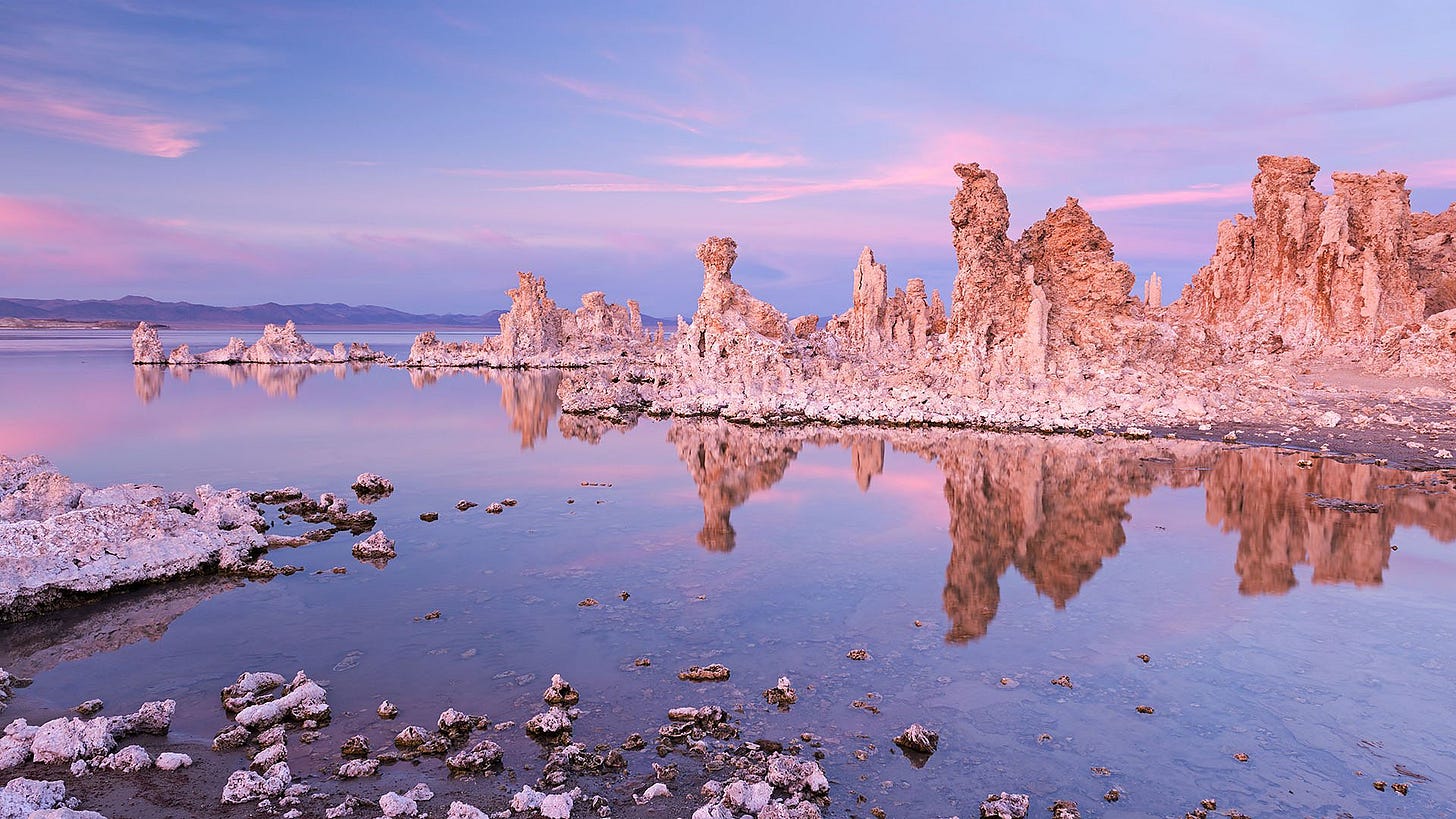
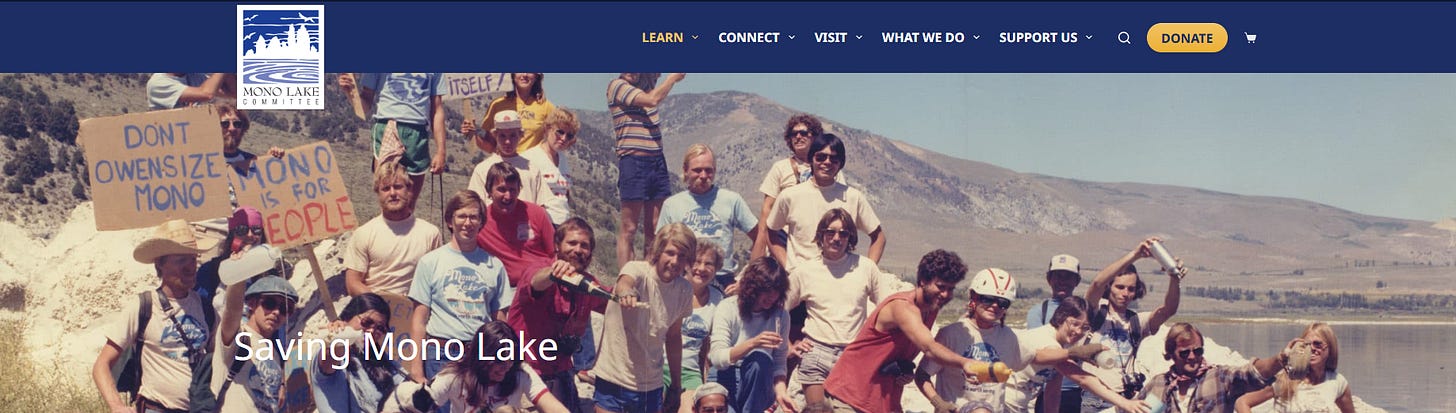
Mono Lake: How to save an endangered wonder of nature

The good old days, into NOW:

These books are valuable, man, as they pile up in my office, and I hope to get Caroline’s new book; she’ll be at the Tucson Book Festival in March 2026, and alas, we hope to see her up here in the Pacific Northwest:

The Song of the Dodo: Island Biogeography in an Age of Extinction: Quammen, David: 8601416681139: Amazon.com: Books

A gem: Learn about this amazing Madagascar as that real Island Biogeography!

Island of Evolution: The One and Only Madagascar - Duke Lemur Center

I’ve had folk on about the Sky Islands and US-Mexico borderlands.

It will be well worth the journey to find her pieces outside or behind paywalls:


The state of journalism was discussed. The state of immigration predicated on economic conditions and environmental pressure were discussed.

Ironically, many of the environmental crusaders in the Southwest are parachutists, coming to the area from other areas of US and Canada. White people, in a land of cultures, indigenes, and here we are, the irony of so many good-intentioned people moving in and putting pressure on ecosystems in and around Tucson, and farther out, where that lovely lifestyle of the Sonoran Desert is their nirvana.

I brought up, briefly, Andre Vltchek‘s

Stop Millions of Western Immigrants!

Tens of millions of European and North American immigrants, legal and illegal, have been flooding both the cities and countryside in Asia, Latin America, and even Africa.

Tens of millions of European and North American immigrants, legal and illegal, have been flooding both the cities and countryside in Asia, Latin America, and even Africa.

Western migrants are charging like bulls and the ground is shaking under their feet; they are fleeing Europe and North America in hordes. Deep down they cannot stand their own lifestyle, their own societies, but you would hardly hear them pronounce it. They are too proud and too arrogant! But, after recognizing innumerable areas of the world as suitable for their personal needs – as safe, attractive and cheap – they simply pack and go!

We are told that some few hundred thousand African and Asian exiles are now causing a great “refugee crises” all over Europe! Governments and media are spreading panic, borders are being re-erected and armed forces are interrupting the free movement of people. But the number of foreigners illegally entering Europe is incomparably smaller than the number of Western migrants that are inundating, often illegally, virtually all corners of the world.

No “secret paradise” can be hidden any longer and no country can maintain its reasonable price structure. Potential European, North American and Australian immigrants are determined to enrich themselves by any means, at the expense of local populations. They are constantly searching for bargains: monitoring prices everywhere, ready to move at the spur of the moment, as long as the place offers some great bargains, has lax immigration laws, and a weak legal framework.

Everything pure and untapped gets corrupted. With lightning speed, Western immigrants are snatching reasonably priced real estate and land. Then, they impose their lifestyle on all those “newly conquered territories”. As a result, entire cultures are collapsing or changing beyond recognition.

Overall, Western immigrants are arrogant and stubborn; they feel no pity for the countries they are inundating. What surrounds them is only some colorful background to their precious lives. They are unable and unwilling to “adopt” local customs, because they are used to the fact that theirs is the “leading culture” – the culture that controls the world.

They come, they demand, and they take whatever they can – often by force. If unchecked, they take everything. After, when there is almost nothing left to loot, they simply move on. After them, “no grass can grow”; everything is burned, ruined and corrupted. Like Bali, Phuket, Southern Sri Lanka, great parts of the Caribbean, Mexico and East African coast, just to name a few places.

Caroline is bright, quick-witted, and a real journalist’s journalist. Listen to the interview.

This Is How Northern Mexico Became a Climate Migration Destination

Great writers before Caroline’s emergence:

Teaching a Stone to Talk: Expeditions and Encounters by Annie Dillard | Goodreads

The legacy of "Silent Spring"

[The Rio Grande flows in a rugged and scenic part of northern New Mexico in May 2011. BobWick]Rio Grande river

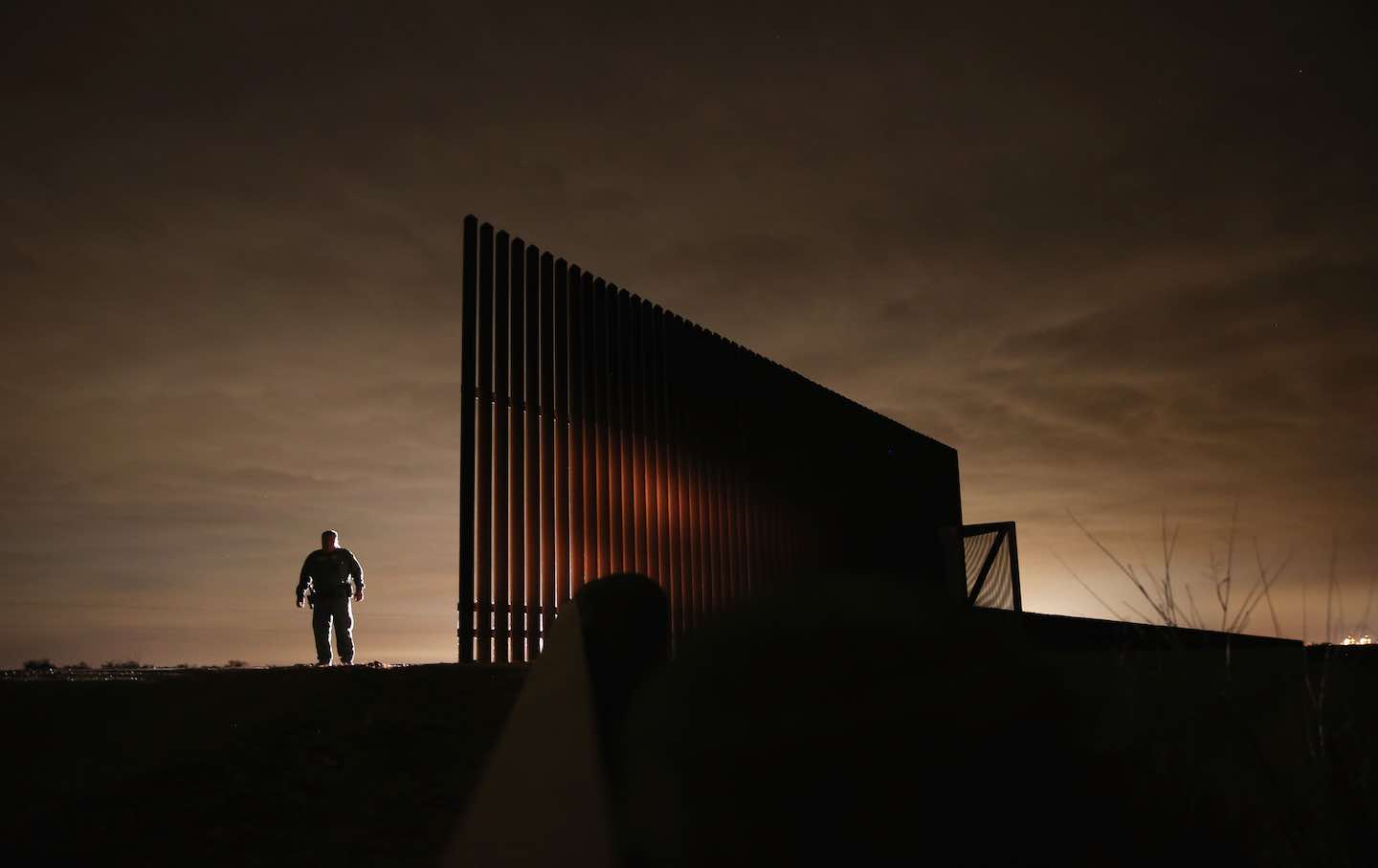
Here, behind a paywall: “The Indefensible Job of Policing the Border . . .
Against the Wall, a former border officer’s memoir, argues that when it comes to protecting the border, cruelty is the point.

In the summer of 2021, I sat in on a presentation given by two members of the US Border Patrol’s Missing Migrants Program—a small initiative of the agency to devote resources to identifying the recovered remains of deceased migrants—to a group of college students on a trip to learn more about the US-Mexico border.

The presentation took place at the South Texas Human Rights Center in Falfurrias, a town of 5,000 long considered the epicenter of migrant death in the state, despite being 75 miles north of the border. The reason for the deaths is that the town is the site of a major Border Patrol checkpoint that migrants must circumvent on foot; many lose their lives in the hot, immense shrubland of the local ranches.
Paul Haeder has been a teacher, social worker, newspaperman, environmental activist, and marginalized muckraker, union organizer. Paul's book, Reimagining Sanity: Voices Beyond the Echo Chamber (2016), looks at 10 years (now going on 17 years) of his writing at Dissident Voice. Read his musings at LA Progressive. Read (purchase) his short story collection, Wide Open Eyes: Surfacing from Vietnam now out, published by Cirque Journal. Here's his Amazon page with more published work AmazonRead other articles by Paul, or visit Paul's website.
Withering vines: California grape farmers abandon fields as local wine struggles


By AFP
October 18, 2025


Wine grapes rot on the vine at an abandoned Central Valley wine grape vineyard in Lodi, California, where farmers are turning to alternate crops due to falling demand - Copyright AFP Patrick T. Fallon


Paula RAMON

For more than a century, Lodi’s grape growers have supplied the old wineries that make this Californian city famous. But rocketing costs, falling demand and competition from imports mean some are now abandoning their vineyards.

Randy Baranek, whose family has farmed these hillsides for generations, said thousands of acres (hectares) of vines — a quarter of Lodi’s production — have been removed in the last two years.

“I’ve never seen anything like this,” he told AFP.

Baranek said an acre of vines can produce between eight and ten tons of grapes, which can be sold for a maximum of $3,000.

“Our costs are between $3,000 and $4,500 an acre to farm,” he said, as he picked his way through abandoned Chardonnay vines.

“We’re twirling the toilet.”

Even ripping out the vines is difficult, said Baranek, with California’s strict environmental rules making it expensive to convert a field, prompting some farmers to leave them to go wild.

Such abandoned plots have become commonplace in Lodi, where around 130 varieties of grapes are grown, and which is known particularly for its Zinfandels.


– Slowing demand –


The decline in production has been consistent over the last few years, reaching its lowest point in two decades in 2024, when 2.9 million tons of grapes were harvested, said Stuart Spencer, executive director of the Lodi Winegrape Commission.

This year, that figure is expected to fall by a further 400,000 tons.

Spencer says a shift in the shape of the wine market in the United States is at the root of the changes.

After three decades of growth, in which California, Oregon and Washington state forged a domestic consumer base previously enamored with the Old World wines of France, Italy and Spain, the last three years have been challenging.

“The whole spectrum of those that contribute to the wine industry are struggling right now,” he said.

On the consumer side, changing tastes and habits mean “people are just drinking less,” he said.

The economy is also crimping demand, said Spencer.

“The inflation we’ve seen over the last few years is really impacting the consumer’s wallet.”

Vintners are reacting to this slowdown in demand by seeking out other suppliers.

“One of the big changes we’ve seen here in California is our largest wineries, who are also the largest grape buyers, are choosing to import cheap, bulk wine instead of purchasing local grapes,” said Spencer.

That price differential, he says, is the result of a skewed market.

“European wine growers are heavily subsidized by the EU… So we are at a disadvantage. We are not playing on a fair, level playing field.”


– Almonds –


Some farmers are reluctantly giving up the grapes, at least on a portion of their land, opting instead for in-demand and lower-cost products like almonds.

It is not a decision they take lightly, because replanting a vineyard can cost tens of thousands of dollars.

It can also affect the wider community, with fewer workers needed for crops like almonds, whose harvest is largely automated.

“There’s no other talk on the streets; we’re all very worried,” said one worker who has toiled in the area’s vineyards for ten years. “I don’t know what I would do without this.”

Kevin Phillips is among those who have made the leap, converting one of his generations-old vineyards to an almond orchard.

The area has good water supplies — key for thirsty almond trees — and the crop can cost just a quarter of what it does to farm grapes, he said.

But one of the major attractions for a farmer is that demand is robust, and selling them is very straightforward.

“With wine grapes, you’ve really got to go out there and you’ve got to talk to wineries, you’ve got to make connections, you’ve got to hope that things work, you’ve got to hope that all the stars line up,” he said.

“Almonds, you don’t have to talk to anybody. There’s just a demand.”

For Phillips, who said he made the difficult decision to rip out his vines after a few bottles of wine, the move is bittersweet.

“It’s so much easier” to farm almonds, he said.

“And I hate to say this, because I’m a wine guy.”
As Planet Burns, US Banking Agencies Ditch Climate Risk Rules

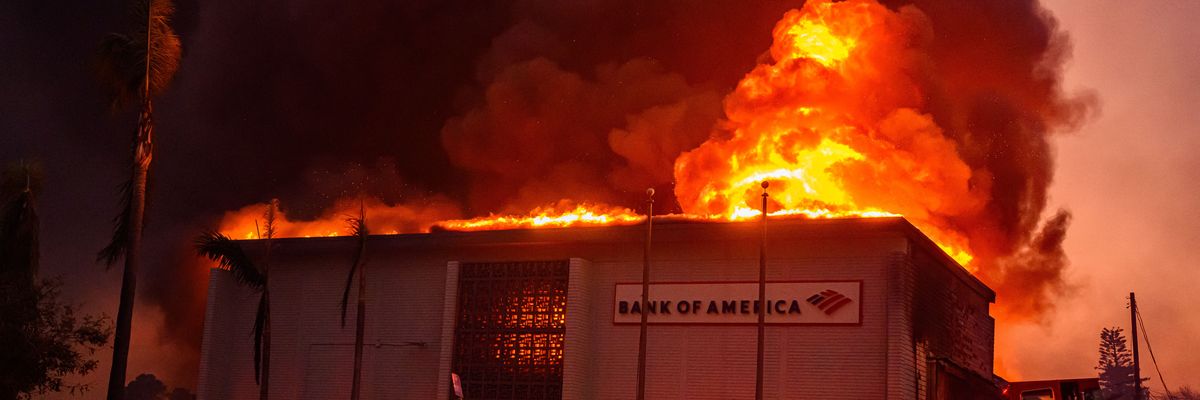
Federal Reserve Chair Jerome Powell recently warned that due to climate disasters, “there will be regions of the country where you can’t get a mortgage, there won’t be ATMs, banks won’t have branches.”


A Bank of America is fully engulfed in flames along Lake Ave. during the Eaton fire in the Altadena area of Los Angeles County, California, on January 8, 2025.
(Photo by Josh Edelson/AFP)

Stephen Prager
Oct 17, 2025
COMMON DREAMS

Federal regulators have rescinded a set of guidelines for large banking institutions to consider the financial dangers of the climate crisis when making decisions about business strategy, risk management, and strategic planning.

On Thursday, the Federal Deposit Insurance Corporation (FDIC), Office of the Comptroller of the Currency (OCC), and the Federal Reserve Board announced that they would immediately withdraw their interagency Principles for Climate-Related Financial Risk Management for Large Financial Institutions, a framework that required financial institutions with $100 billion or more in assets to consider climate risks.

The guidelines were first issued in 2023, which was, at the time, the hottest year on record. That year, the US experienced a record number of weather and climate-related disasters—including a massive drought across the south and Midwest, historic wildfires in Hawaii, and major flooding events across the country—that caused at least $92 billion worth of damage.

In October of that year, Federal Reserve chair Jerome Powell said: “Banks need to understand, and appropriately manage, their material risks, including the financial risks of climate change.”

The OCC, meanwhile, explained that “financial institutions are likely to be affected by both the physical risks and transition risks associated with climate change.” This included both the risks to the safety of people and property “from acute, climate-related events, such as hurricanes, wildfires, floods, and heatwaves, and chronic shifts in climate,” as well as changes due to “shifts in policy... that would be part of a transition to a lower carbon economy.”

But these concerns have not carried over to the administration of President Donald Trump, who recently referred to climate change as a “con” and has sought to purge the federal government of any acknowledgement of the scientific consensus that it is being caused by human fossil fuel usage, which he has moved to aggressively expand.

In a joint release Thursday, the agencies said they “do not believe principles for managing climate-related financial risk are necessary because the agencies’ existing safety and soundness standards require all supervised institutions to have effective risk management commensurate with their size, complexity, and activities,” adding that “all supervised institutions are expected to consider and appropriately address all material financial risks and should be resilient to a range of risks, including emerging risks.”

Elyse Schupak, policy advocate with Public Citizen’s climate program, criticized the withdrawal of the guidelines, calling it “an irresponsible and politically motivated move in the wrong direction.”

“The increase in the frequency and severity of climate disasters and the rapidly escalating property insurance crisis mean the agencies should be working harder to understand and mitigate climate-related financial risks faced by banks and the financial system—not backtracking,” she said. “Effective bank regulation requires looking squarely at all risks to supervised institutions, including climate risks, and addressing them before they have destabilizing effects. This approach, rather than politics, should guide regulator action.”

The move comes as the globe is reaching the point of no return for the climate crisis. Global temperatures have already soared to between 1.3°C and 1.4°C above preindustrial levels and are expected to pass the 1.5°C threshold within the next five years, at which point many of the worst effects will become unavoidable. These effects include more frequent heatwaves, sea level increases, more frequent severe storms, and aggressive droughts.

In addition to the human toll, these entail considerable financial damage. In December 2024, the Congressional Budget Office (CBO) estimated that if the Earth continues to warm at current rates, the nation’s gross domestic product (GDP) will be 4% lower than if temperatures had remained stable.

It predicted that sea level rise—projected 1 to 4 feet by the turn of the century—would cause anywhere from $250 billion to $930 billion worth of losses to property owners, mortgage lenders, insurance companies, and the federal government. Other untold costs, it said, would be borne as a result of heightened mortality from heat, declines in available food and water, increased rates of illness, and forced migration due to unlivable conditions.

Testifying before Congress earlier this year, Powell noted that banks and insurance companies have been pulling out of coastal areas at risk of flooding and places prone to wildfires due to the financial risk.

State Farm had recently canceled thousands of policies in the Pacific Palisades neighborhood of Los Angeles shortly before it was hit with massive wildfires in January. He warned that as climate change worsens, financial institutions will deem it too risky to serve large portions of the country.

“If you fast forward 10 or 15 years,” Powell said, “there will be regions of the country where you can’t get a mortgage, there won’t be ATMs, banks won’t have branches, and things like that.”

Schupak said: “For the Federal Reserve, capitulation to the politics of climate denial championed by the Trump administration is a threat to both its legitimacy and efficacy, which will be hard to repair.”

“Powell has admitted that the Federal Reserve has done the ‘bare minimum’ on climate,” she continued. “Now it will do even less, putting the banks it supervises and the broader financial system at risk.”

 OPINION - Why the Nobel Committee must reconsider its award to Maria Corina Machado


The decision to award Maria Corina Machado a Nobel not only diminishes the credibility of the prize but risks turning it into a symbol of Western hypocrisy rather than global justice

Edward Ahmed Mitchell | 17.10.2025 TRT/AA


- The author is the deputy director of the Council on American-Islamic Relations (CAIR).


ISTANBUL

Of all the awards that the Nobel Committee hands out every year, the Nobel Peace Prize has long been the most prominent. From Dr. Martin Luther King Jr. to South African President Nelson Mandela, the Nobel Peace Prize has often highlighted monumental figures of history who peacefully advanced causes of justice while overcoming remarkable challenges.

Yet this year, the Nobel Committee's decision to honor Venezuelan politician Maria Corina Machado has betrayed the values that once defined the award. Far from embodying the legacy of Dr. King or Mandela, Ms. Machado has consistently aligned herself with movements and leaders that promote war, xenophobia, and bigotry.

Earlier this year, she addressed the Patriots of Europe, a far-right gathering of anti-Muslim and anti-immigrant fascists. Speakers included Dutch politician Geert Wilders and French far-right leader Marine Le Pen. As Reuters reported, "All the speakers railed against immigration and most called for a new ‘Reconquista,’ a reference to the medieval re-conquest of Muslim-controlled parts of the Iberian Peninsula by Christian kingdoms." The rally, Reuters added, was opened by a video message from none other than Machado.

Ally of Israel’s ruling Likud Party

Her address to the Patriots of Europe was not a one-time dalliance with racists and fascists. Her party, Vente Venezuela, entered into a formal alliance in 2020 with Israel's ruling Likud Party, a partnership she personally signed and that remains in effect today. Likud is a far-right, openly racist, and genocidal political party that has spent decades leading the fight to perpetuate occupation, apartheid, and mass violence against Palestinians – policies now under investigation by the International Criminal Court and the International Court of Justice.

Machado has praised Israel’s government, declared that "the struggle of Venezuela is the struggle of Israel," and pledged to move Venezuela's Embassy to Jerusalem despite Israel's ongoing illegal occupation of the entire city.

Although the Nobel Committee claims that Ms. Machado peacefully supports democracy in Venezuela, she has called for foreign military intervention to topple the Maduro government and even expressed support for bombing unidentified individuals in boats off the country's coast.

By choosing Machado, the Nobel Committee has sent a dangerous message – that moral inconsistency, extremism, and alignment with fascist movements can be overlooked whenever a politician opposes a Western adversary. The decision not only diminishes the credibility of the Nobel Peace Prize but risks turning it into a symbol of Western hypocrisy rather than global justice.

What the Peace Prize should reward

The Nobel Peace Prize should go to a person who has shown moral consistency by peacefully pursuing justice for all people, not to a politician who claims to support democracy in her own nation while supporting war, fascism, xenophobia, and anti-Muslim bigotry abroad.

If Machado wishes to prove she is worthy of the Nobel Peace Prize, she should immediately renounce her alliance with the Likud Party, apologize for addressing the Patriots of Europe conference and renounce anti-Muslim fascism, and retract her support for violence as a means of securing political change. If she refuses to take these steps, the Nobel Committee should do the honorable thing: rescind the award and select a laureate whose life’s work truly reflects peace and justice – one of the countless activists, journalists, healthcare workers, or human rights defenders who have peacefully pursued justice for all.

The Nobel Peace Prize made a mistake this year. There is still time to correct it.

*Opinions expressed in this article are the author's own and do not necessarily reflect Anadolu's editorial policy.


The CIA Wins Another Nobel Peace Prize


While millions waited in hopes that the Global Sumud Flotilla would win this year’s Nobel peace prize for its epic solidarity with Palestine, the Norwegian committee charged with granting the award gave it to Maria Corina Machado instead, veteran CIA coup plotter in Venezuela. As the late Gore Vidal aptly advised, “Never underestimate the Scandinavian sense of humor.”

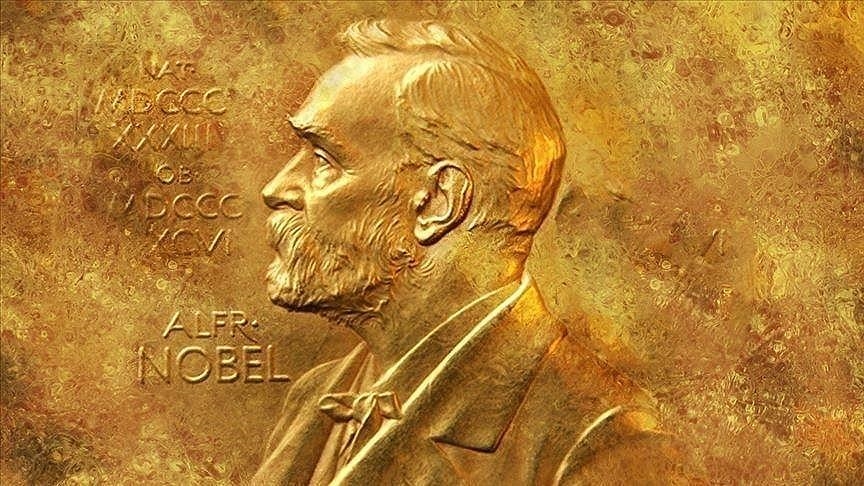
A day later in Gaza, the Israeli army destroyed the children’s hospital Al Rantisi with dynamite charges exponentially more powerful than those conceived by their inventor Alfred Nobel (1833-1896), creator of the prize that carries his name. With the victims’ bodies barely cold in the rubble where the hospital previously stood, Machado praised the Holy State as a “genuine ally of liberty” while sending compliments to the “long-suffering Venezuelan people” as well as President Trump: “I accept this award in your honor, because you really deserve it.”

Congratulations poured in, among them, from Barack Obama, who won the peace prize in 2009 on his way to authorizing seven wars in Muslim countries (Afghanistan, Pakistan, Libya, Yemen, Somalia, Iraq, and Syria). Also from Guatemalan president Bernardo Arevalo, who called Machado a “world class Venezuelan,” an appraisal that would have shamed his father (Juan Jose Arevalo), the first democratically elected president of the Central American republic and author of The Shark and the Sardines, a strong anti-imperialist essay whose title alone captures the historic power dynamic between Washington and Latin America.

Machado, a pseudo-Venezuelan “sardine” eager to sell-out her country to the “shark” in Washington, was received in the White House in 2005 by George W. Bush in recognition of the quality of her aspirations, and twenty years later she is still at it, imploring Trump to invade Venezuela in the name of liberty, democracy, and the struggle against narco-terrorism. Of course this has nothing to do with Venezuelan’s proven oil reserves of 303.8 billion barrels, the most of any country in the world. Perish the thought.

Dr. Nobel, an arms manufacturer who got the idea for awarding a peace prize from his secretary Bertha Felicie Sophie, who was a pacifist and feminist, as well as the author of Lay Down Your Arms (1889). In his will, Nobel stated that the profits from his considerable fortune were to reward “the person who shall have done the most or the best work for fraternity between nations, for the abolition or reduction of standing armies, and for the holding and promotion of peace congresses.”

Since its creation (1901) the prize has been accompanied by pious Eurocentrism and conditioned by Great Power geopolitics that have more to do with tweaking the conditions of permanent war than they do with establishing peace. This was never more evident than in the case of Woodrow Wilson, who won the prize in 1919.

Elected on a peace platform, Wilson immediately plunged the U.S. into the bloodiest war in world history (at the time) — World War I — transforming an expensive battlefield stalemate into a lopsided victory for the Allies, who promptly imposed a bitter and humiliating “peace” on starving Germany, which began to take growing note of the German-supremacist denunciations of an obscure Austrian corporal. Forgotten was Wilson’s Fourteen Points declaration he had boomed across the Atlantic on the pretext it contained the secret to human happiness and permanent world peace. Once his complete lack of strategic sense was revealed at Versailles, Europe’s veteran imperialists ignored his pious nostrum about establishing a “machinery of friendship” in favor of perpetuating European colonialism, leaving Wilson unable to convince even his own country to join his crowning glory — the League of Nations.

Other “great” Americans who won a Nobel peace prize include Nordic-supremacist Teddy Roosevelt, for whom war was a greater thrill than life itself, and whose popular book series, The Winning of the West, was worthy of Himmler. He estimated that “nine out of every ten” Indians were better dead than alive, deemed “coloreds” degenerate by nature, and looked on Latin peoples (“damned dagoes”) as little more than children. He applauded U.S. civilian massacres in the Philippines, which killed hundreds of thousands.

However, the most genocidal U.S. winner of the peace prize would have to be the late Henry Kissinger, who befriended apartheid South Africa, ushered General Pinochet into power in Chile, gave the green light to Indonesia’s mass extermination of East Timor’s mountain people, and killed millions of Indochinese with saturation bombings. His comment about the Cambodian phase of the latter attacks, which paved the way for Pol Pot’s rise to power, make an ideal epitaph for the career of the clueless foreign policy expert: “I may have a lack of imagination, but I fail to see a moral issue involved.”

With the Scandinavian sense of humor continuing to enrich our political folklore, there’s no reason for Donald Trump to lose hope.

Michael K. Smith is the author of Portraits of Empire. He co-blogs with Frank Scott at www.legalienate.blogspot.comRead other articles by Michael.
Trump CIA Intervention in Venezuela Risks Another US War of Choice, Experts Warn

“Using covert or military measures to destabilize or overthrow regimes reminds us of some of the most notorious episodes in American foreign policy,” said a former adviser to Sen. Bernie Sanders.


A boy walks past a mural in Caracas, Venezuela condemning US imperialism.
(Photo by Mario Tama/Getty Images)


Brett Wilkins
Oct 17, 2025
COMMON DREAMS


President Donald Trump’s authorization this week of Central Intelligence Agency operations aimed at toppling Venezuelan President Nicolás Maduro prompted warnings from foreign policy experts of yet another US war of choice and the introduction of a bipartisan Senate resolution aimed at blocking unauthorized military action against the South American country.

“Reports that the Trump administration has authorized covert efforts seeking to foment regime change in Venezuela are deeply concerning,” Matt Duss, executive vice president of the Center for International Policy, a Washington, DC-based think tank, said Thursday in a statement.


RECOMMENDED...


Trump Admin Reportedly OKs CIA Action in Venezuela Amid Growing Alarm Over Bombed Boats


‘No War Crimes Are Off Limits’ as Trump Reportedly Mulling Bombing Targets in Venezuela

“These reports follow on the administration’s unlawful and unauthorized use of military force against vessels and their crews in the Caribbean—which constitute extrajudicial killings,” added Duss, a former foreign policy adviser to Sen. Bernie Sanders (I-Vt.).


Trump said Wednesday that he had authorized the CIA to conduct covert operations inside the South American nation “for two reasons”—at least the first of which is a lie.

“Number one, they have emptied their prisons into the United States of America,” he said. “And the other thing, the drugs, we have a lot of drugs coming in from Venezuela, and a lot of the Venezuelan drugs come in through the sea.”

There is no credible evidence that the Venezuelan government has systematically or deliberately released prisoners and sent them to the United States. The claim—which has been popularized by Trump and some Republicans—has been repeatedly debunked by experts and US officials.

As for drugs, while Venezuela is a transit point for cocaine—mostly produced in neighboring Colombia—the amount of narcotics entering the United States via the country is relatively insignificant compared with routes via MexicoCentral America, and the Pacific coast.

Approximately 90% of US-bound cocaine enters the country via Mexico, according to the US Drug Enforcement Administration and other government agencies. Venezuela is also not a significant source of fentanyl, which is the leading cause of overdoses in the US and is also trafficked primarily through Mexico.

“Using covert or military measures to destabilize or overthrow regimes reminds us of some of the most notorious episodes in American foreign policy, which undermined the human rights and sovereignty of countries throughout Latin America and the Caribbean,” said Duss.

According to John Coatsworth, a historian specializing in Latin America, the US has launched at least 41 interventions that successfully overthrew governments in the hemisphere since 1898. The number of US military interventions in the region is much higher.

The US has been meddling in Venezuelan affairs since the 19th century, going back to an 1895 boundary dispute between Venezuela and Britain and possibly earlier. Since then, Washington has helped install and prop up brutal dictators and assisted in the subversion of democratic movements, including by training Venezuelan forces in torture and repression at the notorious US Army School of the Americas.

This century, successive US administrations beginning with George W. Bush have worked to thwart the Bolivarian Revolution launched by former President Hugo Chávez and continued under Maduro. Under Trump, the US has deployed a small armada of warships and thousands of troops off the coast of Venezuela, a rattling of proverbial sabers familiar to students of US imperialism in Latin America.

Tens of thousands of Venezuelans have also died as a result of US economic sanctions on Venezuela, according to research from the Center for Economic and Policy Research.

“The CIA has been sent to Venezuela for regime change,” Maduro said Thursday in Caracas. “Since its creation, no US government has so openly ordered this agency to kill, overthrow, or destroy other countries.”

“If Venezuela did not possess oil, gas, gold, fertile land, and water, the imperialists wouldn’t even look at our country,” he added.

Duss noted that the United States is “still dealing with many of the harmful consequences of these disastrous interventions in today’s challenges with migration and the drug trade.”

“Such interventions rarely lead to democratic or peaceful outcomes,” he stressed. “Instead, they exacerbate internal divisions, reinforce authoritarianism, and destabilize societies for generations.”

As Tim Weiner, the Pulitzer Prize-winning author of multiple histories of the CIA, said in a Friday interview with CNN senior politics writer Zachary Wolf, former Cuban leader Fidel Castro “survived covert action under presidents from [Dwight] Eisenhower onward and outlived them all.”

Weiner said that even operations considered successes created tremendous problems.

“The successes, for example, in Guatemala, ushered in dictatorships and led to the deaths of hundreds of thousands of people,” he said, referring to the 1954 CIA overthrow of reformist Guatemalan President Jacobo Árbenz—codenamed PBSUCCESS—which led to decades of bloody repression and a US-backed genocide against Indigenous Mayan peoples.

Writing for Responsible Statecraft on Thursday, Joseph Addington, associate editor and Latin America columnist at The American Conservative, asserted that any US invasion of Venezuela “comes with a number of costs and risks American policymakers should bear in mind and carefully weigh against the potential benefits of intervention.”

“There is no free lunch in geopolitics,” he argued.

Addington cited an example of the US ousting a drug trafficking leader, who was an erstwhile ally and CIA asset:
The most obvious costs are those of the initial invasion. The American invasion of Panama in 1989, to overthrow the government of Gen. Manuel Noriega, was carried out by a force of some 27,000 US troops, 23 of which were killed and hundreds more wounded. Venezuela is vastly larger than Panama, and while its military is very poorly equipped, it likewise dwarfs the forces that were available to Noriega. The Center for Strategic and International Studies estimates an invasion of Venezuela would require nearly 50,000 troops, some of which will not return home. Any American government should be extremely conscientious about the causes on which it spends the lives of American soldiers.

“The real risks of such an operation, however, come after the invasion,” Addington said. “Toppling Maduro’s government is one thing; there is no real chance that the impoverished and corrupt Venezuelan armed forces can put up a serious fight against the American military. But occupying and rebuilding the country is another, as the US learned to its chagrin in the Middle East.”

Duss noted that “Trump ran as an anti-war candidate and casts himself as a Nobel Prize-worthy peacemaker,” and that “a majority of Americans oppose US military involvement in Venezuela.”

“Lawmakers must make clear that Trump does not have the American people’s support or Congress’ authorization for the use of force against Venezuela or anywhere else in the region,” he said.

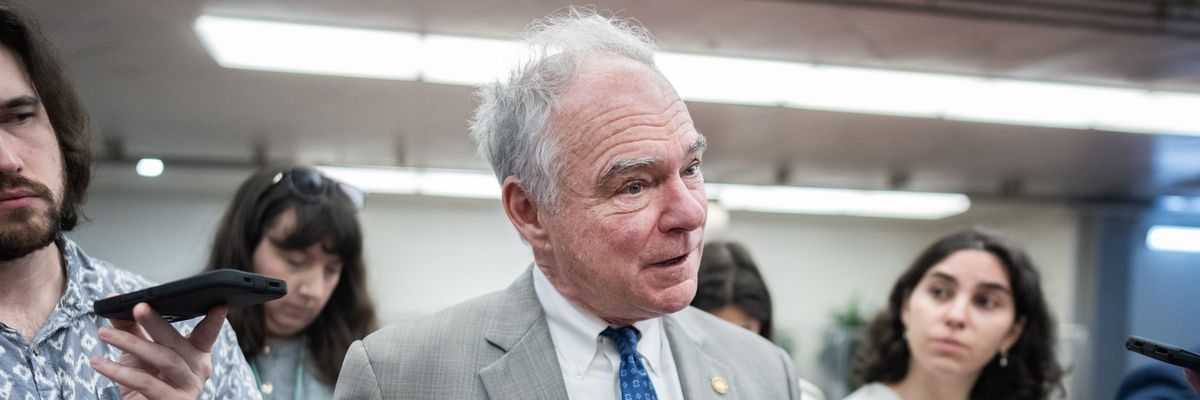
On Friday, a bipartisan group of US senators—Tim Kaine (D-Va.), Rand Paul (R-Ky.), and Adam Schiff (D-Calif.)—introduced a war powers resolution that would bar US military action within or against Venezuela.

“I’m extremely troubled that the Trump administration is considering launching illegal military strikes inside Venezuela without a specific authorization by Congress,” Kaine said in a statement. “Americans don’t want to send their sons and daughters into more wars—especially wars that carry a serious risk of significant destabilization and massive new waves of migration in our hemisphere.”

“If my colleagues disagree and think a war with Venezuela is a good idea,” he added, “they need to meet their constitutional obligations by making their case to the American people and passing an authorization for use of military force.”

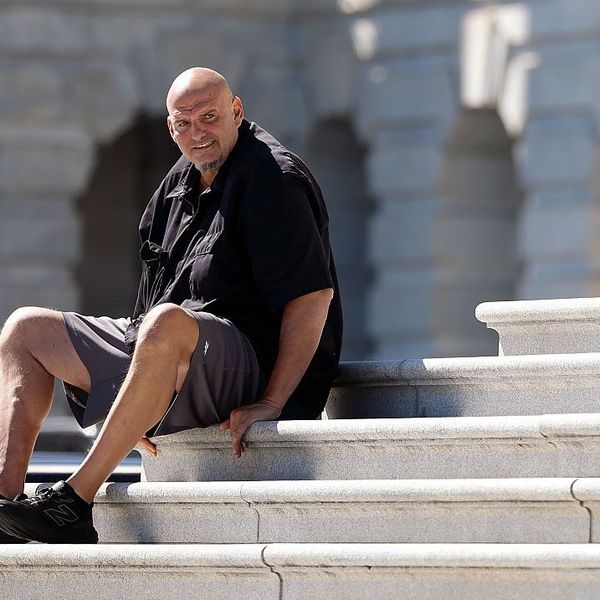
It’s the second time Kaine and Schiff have tried to introduce such a measure. Earlier this month, Democratic Sen. John Fetterman joined his GOP colleagues in voting down a Venezuela war powers resolution. Paul joined Democrats independent Sens. Bernie Sanders (Vt.) and Angus King (Maine) in voting for the legislation.

Senators Launch Bipartisan Bid to Block Trump War on Venezuela


“Congress has not authorized military force against Venezuela,” said Sen. Adam Schiff. “And we must assert our authority to stop the United States from being dragged—intentionally or accidentally—into full-fledged war.”


Sen. Tim Kaine (D-Va.) talks with reporters in the US Capitol on October 1, 2025.
(Photo by Tom Williams/CQ-Roll Call, Inc. via Getty Images)

Julia Conley
Oct 17, 2025
COMMON DREAMS


With President Donald Trump floating potential military action within Venezuela and authorizing operations by the Central Intelligence Agency after launching several deadly strikes on boats near the South American country, three lawmakers from both sides of the aisle on Friday said they would force a new vote on blocking the White House from carrying out an attack there.

Sens. Tim Kaine (D-Va.) and Adam Schiff (D-Calif.) last week introduced a measure to rein in Trump’s bombing of boats in the Caribbean, which the White House has claimed are being used to traffic drugs into the US and present an imminent threat.


SHEEP IN WOLF'
S CLOTHING

Fetterman Joins GOP to Kill War Powers Resolution Against Trump’s Extrajudicial Venezuela Bombings


The measure failed, with one Democrat, Sen. John Fetterman (Pa.) joining most of the GOP in opposing it and two Republicans, Sens. Rand Paul (Ky.) and Lisa Murkowski (Alaska), supporting it.

Kaine and Schiff on Friday were reportedly hoping that a new bipartisan measure, introduced with Paul, would garner more support from the Republicans.

They said they would force a vote on a war powers resolution to block the use of force by US troops “within or against” Venezuela unless it was “explicitly authorized by a declaration of war or specific authorization for use of military force.”

The 1973 War Powers Act requires Congress to consider and vote on resolutions regarding a president’s power to enter an armed conflict without congressional authorization.

“Congress has not authorized military force against Venezuela. And we must assert our authority to stop the United States from being dragged—intentionally or accidentally—into full-fledged war in South America,” said Schiff.

“Americans don’t want to send their sons and daughters into more wars—especially wars that carry a serious risk of significant destabilization and massive new waves of migration in our hemisphere.”

The lawmakers announced the resolution as it was reported that two survivors of the military’s most recent drone strike on a boat have been detained by US forces, with legal experts questioning whether they are prisoners or war or criminal suspects.

The White House has insisted it is acting within its rights to defend US security by striking boats it believes are carrying drugs—even as details have emerged calling into doubt the allegations that the vessels pose a threat.

Venezuela is not a significant source of drugs that are trafficked into the US—a fact that Secretary of State Marco Rubio dismissed when a reporter brought it up soon after the military began bombing boats, at least six of which have been struck so far. At least 27 people have been killed, and the grieving family of one victim spoke out Thursday and said they had not been involved in drug trafficking.

Even if the vessels were carrying illegal substances, legal experts and critics in Congress have stressed in recent weeks that they should be dealt with, as in the past, by federal law enforcement agencies, as Congress has not authorized military action against Venezuela or drug cartels.

“The American people do not want to be dragged into endless war with Venezuela without public debate or a vote,” said Paul. “We ought to defend what the Constitution demands: deliberation before war.”

Kaine told reporters on Thursday the Congress’ knowledge of legal rationale for the boat strikes amounts to “a complete black hole.”

Meanwhile, Trump has suggested this week he could further escalate attacks on Venezuela, saying the Caribbean Sea is “very well under control”—even though Vice President JD Vance has joked that the US could accidentally strike fishing boats in its operations there.

“We are certainly looking at land now,” Trump said Wednesday.

Kaine said he was “extremely troubled that the Trump administration is considering launching illegal military strikes inside Venezuela without a specific authorization by Congress.”

“Americans don’t want to send their sons and daughters into more wars—especially wars that carry a serious risk of significant destabilization and massive new waves of migration in our hemisphere,” said Kaine. “If my colleagues disagree and think a war with Venezuela is a good idea, they need to meet their constitutional obligations by making their case to the American people and passing an authorization for use of military force.”

“I urge every senator to join us in stopping this administration from dragging our country into an unauthorized and escalating military conflict,” said the senator.

The New York Times reported that Sen. Todd Young (R-Ind.) could potentially join the effort to pass the war powers resolution after voting against last week’s measure, which he said was too broad.

“I am highly concerned,” Young said after the vote last week, “about the legality of recent strikes in the Caribbean and the trajectory of military operations without congressional approval or debate and the support of the American people.”
IMPERIALIST BULLY
Trump calls Colombian president 'illegal drug dealer' in dispute over US strikes
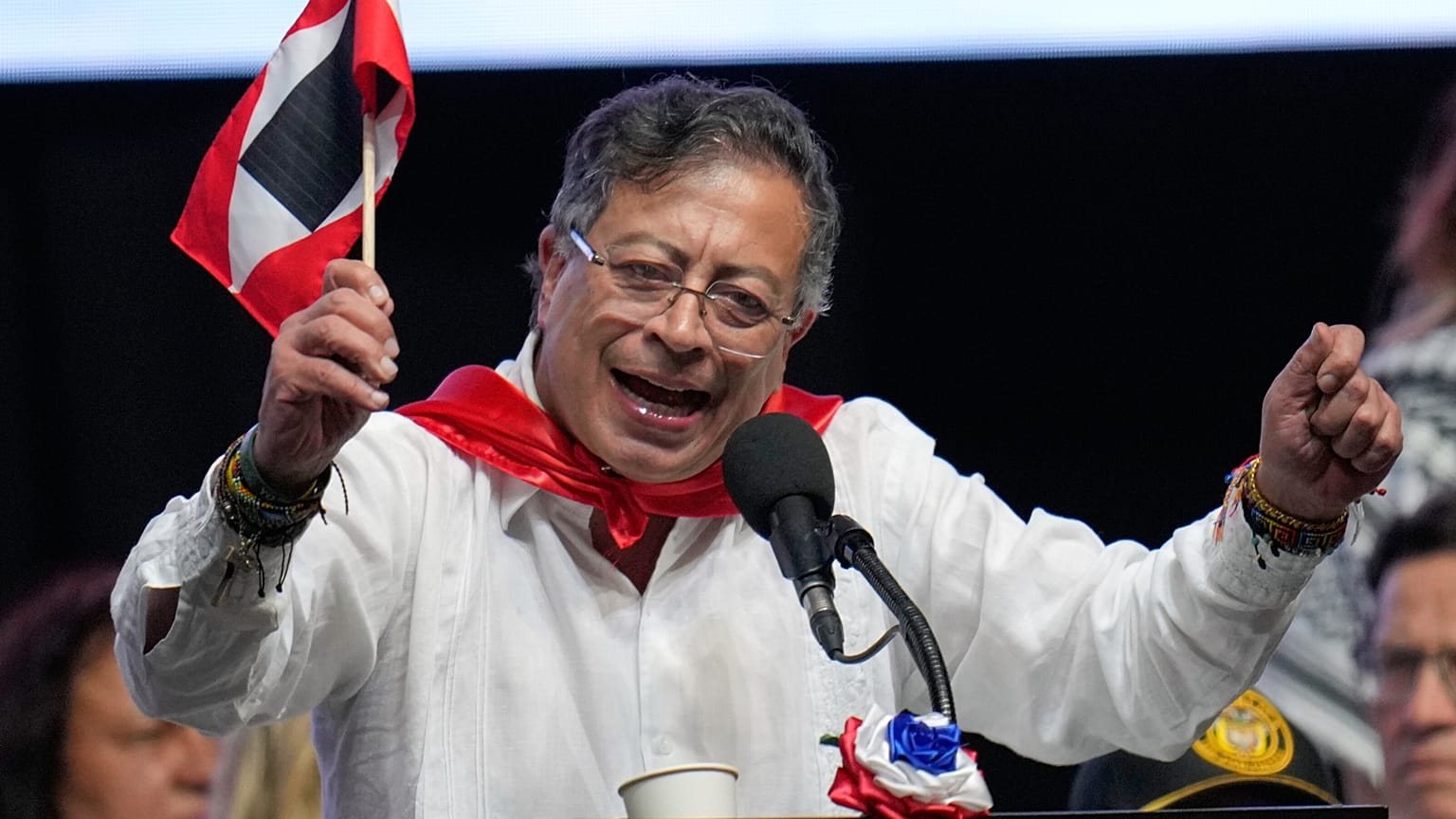
Copyright AP Photo/ Fernando Vergara

By Euronews 19/10/2025


Trump's comments come after Petro accused the US government of assassination and demanded answers after the latest American strike in Caribbean waters.

US President Donald Trump lashed out at his Colombian counterpart Gustavo Petro on Sunday and announced he would slash US funding to the country.

He accused the Colombian leader of doing "nothing to stop" drug production, in what is the latest sign of friction between Washington and one of its closest allies in Latin America.

In a social media post, Trump referred to Colombian President Gustavo Petro as "an illegal drug dealer" who is "low rated and very unpopular." He warned that Petro "better close up" drug operations "or the United States will close them up for him, and it won’t be done nicely."

Earlier on Sunday, Petro accused the US government of assassination and demanded answers about a US strike on an alleged drug trafficking boat on 16 September.

Petro said a Colombian man was killed and identified him as Alejandro Carranza, a fisherman from the coastal town of Santa Marta. He said that Carranza has no ties to drug trafficking and that his boat was malfunctioning when it was hit.

"US government officials have committed murder and violated our sovereignty in territorial waters," Petro wrote on X. "The Colombian boat was adrift and had a distress signal on, with one engine up. We await explanations from the US government."

Petro said that he has alerted the attorney general's office and demanded that it act immediately to initiate legal proceedings internationally and in US courts. He continued to post a flurry of messages into early Sunday about the killing.

Colombian and Ecuadorian citizens repatriated after latest strike

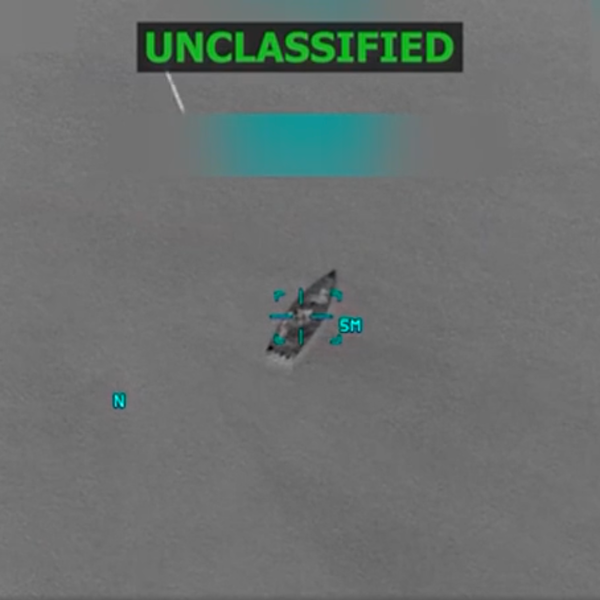
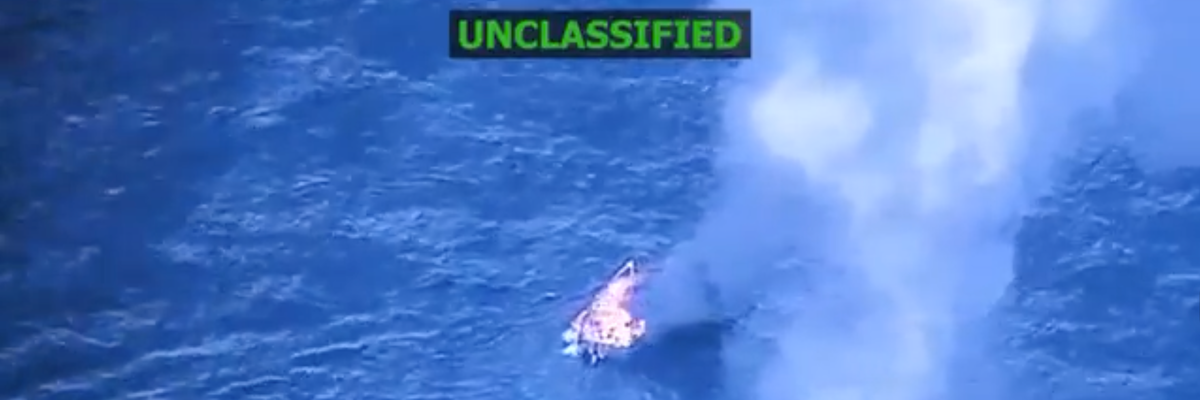
Trump also shared a video on his Truth Social Platform earlier on Sunday appearing to show the latest military strike on a submarine in the Caribbean accused of being a drug-carrying vessel.

In the clip, a vessel can be seen moving through the waves, its front portion submerged inches below the water’s surface. Then, several explosions are seen, with at least one over the back of the vessel.

The strike, carried out on Thursday, killed two people, according to Trump. Two survivors were taken into custody and later sent back to their home countries of Ecuador and Colombia, according to Trump.

"It was my great honor to destroy a very large DRUG-CARRYING SUBMARINE that was navigating towards the United States on a well known narcotrafficking transit route," Trump said in a social media post. "US Intelligence confirmed this vessel was loaded up with mostly Fentanyl, and other illegal narcotics."

Petro confirmed Saturday on X that the Colombian man who was detained aboard what he called a “narco submarine” was home.

"We are glad he is alive, and he will be prosecuted according to the law," Petro wrote in a brief post.

Ecuador's Ministry of the Interior also confirmed the return of the Ecuadorian citizen, identified as Andrés Fernando Tufiño Chila.

The ministry noted that two prosecutors met with Tufiño Chila and determined he had not committed any crimes within the country’s borders and that there was no evidence to the contrary.

With Trump’s statement on his Truth Social platform of the death toll, that means US military action against vessels in the region have killed at least 29 people.

The president has justified the strikes by asserting that the United States is engaged in an "armed conflict" with drug cartels.

He is relying on the same legal authority used by the George W. Bush administration when it declared a war on terrorism after the 9/11 attacks, and that includes the ability to capture and detain combatants and to use lethal force to take out their leadership.

Trump is also treating the suspected traffickers as if they were enemy soldiers in a traditional war.


Colombia accuses US of violating sovereignty in strike
DW with Reuters and AFP
October 19, 2025

The US said it was repatriating survivors of a "drug-carrying submarine" which was struck by US forces earlier this week. Colombia said the US violated its sovereignty and killed a fisherman in a September strike.


Colombia's President has accused the United States of violating his nation's sovereignty and killing a fisherman, after US president Donald Trump said that American forces had carried out another strike as part of his controversial military clamp down against "narcoterrorists."

"US government officials have committed a murder and violated our sovereignty in territorial waters," Colombian leader Gustavo Petro said on Saturday in a statement on X.

Petro identified the fisherman as Alejandro Carranza, adding that he had "no ties to the drug trade".

Carranza reportedly died in a September strike by US forces on his boat while he was fishing the Caribbean, as per a video testimony of his family members, which was shared by Petro on X.

The President said that the Colombian boat was "adrift" and had its distress signal up because of an engine failure.

"We await explanations from the US government," Petro added.


Survivors from 'drug boat' strike repatriated

Colombia's allegations come shortly after Trump confirmed a US strike in the Caribbean on Thursday on what he called "a drug-carrying submarine".

"It was my great honor to destroy a very large DRUG-CARRYING SUBMARINE that was navigating towards the United States on a well known narcotrafficking transit route." the US President said on his Truth Social platform on Saturday.

Trump gave no evidence. However, he shared a short video clip which appeared to show a semi-submersible vessel in the water before being struck by at least one projectile.

Trump said that US intelligence confirmed that the vessel was "loaded up with mostly Fentanyl, and other illegal narcotics".

Four people were on board the vessel , two of whom died in the targeted strike.

The US military conducted a helicopter rescue for the two remaining survivors of the strike.

The individuals, who were the first to survive such US attacks, were taken into custody.

On Saturday, Trump said the two survivors were being repatriated to their home countries, Ecuador and Colombia.

Petro confirmed that the Colombian suspect had returned to his country and would face prosecution.

"We have received the Colombian detained on the narco submarine, we are happy he is alive and he will be processed according to the law," the Colombian President said in a post on X.

Trump's drug crackdown

The strike on Thursday is reported to be the sixth US attack on "narco" boats off the coast of Venezuela.

The Trump administration says that 27 people have been killed in the strikes.

The US action has triggered concern among experts over the legality of such extrajudicial killings.

Edited by: Saim Dušan Inayatullah


US Military Holding Survivors of Latest Trump Extrajudicial Boat Bombing: Reports

“For the first time,” said one human rights advocate, “there are witnesses to what he tries to pass off as acts of war but are really murders which the International Criminal Court may be able to prosecute.”


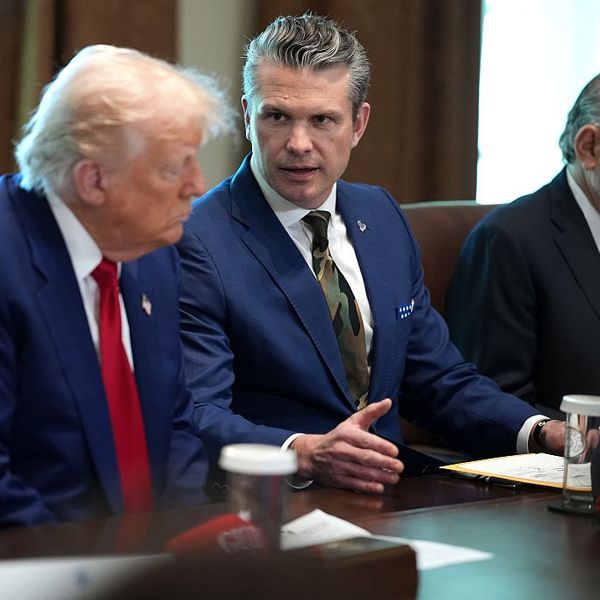
US President Donald Trump and Secretary of Defense Pete Hegseth announced that they bombed another boat in the Caribbean on October 3, 2025.
(Photo: screenshot/Donald Trump/Truth Social)

Jessica Corbett
Oct 17, 2025
COMMON DREAMS

This is a developing story… Please check back for updates…

Multiple media outlets reported Friday that the US military is holding two survivors of President Donald Trump’s sixth known strike on a boat in the Caribbean—bombings he claims are targeting drug smugglers and which critics argue are blatantly illegal.

Reuters was the first to report the news of survivors detained after a Thursday strike, citing several unnamed sources. According to the outlet, “Five sources familiar with the matter said the US military staged a helicopter rescue to pick up the survivors of the attack and bring them back to the US warship.”

The Associated Press confirmed the development, citing two unnamed sources who said there were survivors brought to a Navy ship. The outlet added that “the survivors of this strike now face an unclear future and legal landscape, including questions about whether they are now considered to be prisoners of war or defendants in a criminal case.”

The Intercept also spoke with two government sources who said that survivors are being held on a warship. Brian Finucane, a former State Department lawyer who is a specialist in counterterrorism issues and the laws of war, told the outlet, “Given that there is no armed conflict, there is no basis to hold these survivors as law of war detainees.”

“The Trump administration is already using a make-believe armed conflict to kill people,” Finucane added. “Will it also use this make-believe armed conflict to detain people as well?”

Trump told reporters at the White House on Friday that the US attacked “a drug-carrying submarine,” and Secretary of State Marco Rubio, who was beside him, said that more details would be forthcoming.


The reporting comes amid broader alarm about the Trump administration’s push for regime change in Venezuela. However, human rights advocates, Democrats in Congress, legal scholars, and other critics have condemned all of Trump’s boat bombings—which have killed at least 27 people—as murders.

This is the first reported case of survivors. Former Human Rights Watch executive director Kenneth Roth said Friday, “For the first time, some people survive a Trump-ordered strike on a boat in the Caribbean, meaning there are witnesses to what he tries to pass off as acts of war but are really murders which the International Criminal Court may be able to prosecute.”


Trump threatens land strikes in Venezuela after blowing up boats


David Edwards
October 15, 2025 
RAW STORY

President Donald Trump said he was looking at military strikes on land in Venezuela after weeks of targeting boats off the country's coast.

While speaking to reporters at the White House on Wednesday, Trump insisted that the U.S. Coast Guard could not effectively stop drug traffickers.

"We've been doing that for 30 years, and it has been totally ineffective," he insisted. "Some of these boats are seriously, I mean, they're world-class speed boats, and — but they're not faster than missiles."

"Right now we have, I would say, none coming in through the seas. In fact, I don't know about the fishing industry," he continued. "We've almost totally stopped it by sea. Now we'll stop it by land."

"I don't want to tell you exactly, but we are certainly looking at land now, because we've got the sea very well under control."

According to The New York Times, the Trump administration recently authorized the CIA to conduct covert operations in Venezuela.