Sunday, November 16, 2025


‘AI deception is a threat to democracy. It’s time the law caught up’


Photo: lilgrapher/Shutterstock

Last month George Freeman MP woke up to find a video circulating online that appeared to show him defecting from the Tories to Reform UK. It was slickly produced, believable enough to fool casual viewers, and entirely fake. 

Freeman went to the Norfolk Police. They took it seriously and initially treated it as a potential false communications offence under the Online Safety Act 2023. However, they later decided that it did not meet the legal test for a crime.

The wrong that has been perpetrated against Freeman and the public in this case is clear: intent to deceive. 

‘Satire makes fun of power. Deceit undermines truth.’

Our law already recognises that impersonation can be an offence. For example, pretending to be a police officer is a criminal offence because society relies on believing that the person in uniform really has the authority they claim. The same logic should apply to politics. 

There have long been calls for new rules to govern election content, aiming to prevent misleading communication in our politics. The arrival of generative AI has made it even more urgent to bring forward a new code of conduct for campaigning. The main objection to doing so is that it might curtail free speech.

However, when someone deliberately uses technology to impersonate a political candidate, they’re not exercising free expression; they’re committing a form of democratic fraud. The difference between satire and deceit is as old as politics itself. Satire makes fun of power. Deceit undermines truth.

READ MORE: Artificial intelligence: ‘If progressives don’t harness AI, the populist right will’

‘Using AI to impersonate a candidate can cross into deception’

There was a period of time when there was a lot of hype about generative AI in politics but minimal signs of its impact. That has now shifted. Candidates and parties are increasingly using AI-generated videos, images and voice clips to shape messaging, to dramatise policy stakes, and to mock opponents. This is the new normal. 

For example, in October, Donald Trump reposted an AI-generated video showing himself as a fighter-pilot wearing a crown and dropping sludge-like “faeces” on protesters during the “No Kings” demonstrations. It was clearly fantastical in nature. Nobody thought he was claiming to have actually done it.

And in New York’s mayoral race, Andrew Cuomo’s campaign released an AI-generated video on Halloween, depicting his opponent Zohran Mamdani trick-or-treating; among other barbs, it showed Mamdani taking 52% of the candy on offer instead of the customary one as a way of attacking his tax policy. The video was fairly realistic and featured a very accurate voice clone. But the production was still a bit shonky. The situation was clearly satirical. And it featured a large disclaimer throughout highlighting the use of AI. As such, nobody would have mistaken it as genuine. 

These examples illustrate that generative AI can be used to depict politicians but stay on the right side of the line. But using AI to impersonate a candidate in a video can cross into deception. In Cuomo’s case, the combination of cloning Mamdani’s image/voice and presenting him in ways he never had, means the Halloween advert came close to that line. Had the disclaimer only appeared at the end, or the quality been 20% higher, it may have crossed it.

READ MORE: ‘Streeting, Akehurst, who next? How campaigns can fight deepfake attacks’

‘AI is enabling those intent on manipulating voters’

The test as to whether a piece of content is satire or misrepresentation should be whether the median voter believes the candidate genuinely said or did what is being presented. The moment the audience questions – even for a second – if they’re in the realm of drama, or reality, it’s a problem. 

It’s worth noting, AI isn’t a necessary ingredient for misleading claims in election content. For years, our politics has been poisoned by things like dodgy leaflets posted through doors designed to mislead voters into thinking a candidate said something they did not. AI is simply enabling those intent on manipulating voters to make their misleading claims much more believable.

While we must address deception, it is equally important to recognise why parody must be protected. Britain has a rich tradition of political parody, from Spitting Image to Private Eye to the endless stream of mash-ups that lampoon ministers every week. These aren’t threats to democracy; they’re part of it. Parody signals to the audience that it’s a joke. The humour only works because we know it’s not real. That’s the line any sensible law must hold. Outlawing political impersonation shouldn’t muzzle humour, commentary or criticism. It should simply criminalise the use of artificial intelligence or digital tools to deceive voters about who’s speaking.

‘AI could change an election unless the law catches up’

A deep-fake designed to make a candidate appear to say something they never said, especially during an election, is no different in spirit from distributing a fake ballot paper. It’s a direct assault on the integrity of the democratic process.

The Norfolk Police’s decision not to progress Freeman’s case makes clear that there is currently a significant gap in the law. The Online Safety Act 2023 doesn’t cover it. Section 106 of the Representation of the People Act 1983 makes it illegal to publish false statements about a candidate’s personal character or conduct during an election. That’s a narrow and outdated safeguard. It doesn’t cover impersonation, and it doesn’t apply outside campaign periods. Defamation law is too slow and too costly to help in the middle of a fast-moving online storm. By the time a candidate proves a deep-fake is false, the clip has already gone viral.

New rules, properly enforced, could change this and the upcoming Elections Bill is the perfect opportunity. Within that legislation, as part of a code of conduct on campaigning, we need an offence that focuses on intent and authenticity. A simple principle: it should be illegal to create or distribute digital content that falsely purports to be a political candidate (or claims to be speaking for them), with the intent to deceive voters. Alongside that, a clear exemption for parody, satire or artistic expression. A law like this wouldn’t protect politicians from mockery but it would protect the public from manipulation.

Freeman, speaking at a recent event in the House of Commons on disinformation in campaigning, said: “I dread an election in which videos are put out 24 hours before saying that Justin has a secret habit and everyone goes, ‘Well, I’m not voting for him.’ It could change an election”. He’s right. It could, and soon it will, unless the law catches up.


Cyber Proofing

Cyber

Published Nov 14, 2025 11:44 PM by Sean M. Holt

(Article originally published in Sept/Oct 2025 edition.)


With the Coast Guard's final cybersecurity rule in effect as of July 16, 2025 and the training mandate due January 12, 2026, the marine transportation system is being pushed to treat cyber risk as an operational reality.

Two voices, one from a maritime technology company and one from a safety-and-risk leader, point to the same answer: If the industry wants resilience, it must move beyond checklists toward engineered controls, measurable hygiene and contracts that create accountability.

SECURITY OPERATIONS CENTERS

Now a part of DNV, Singapore-based CyberOwl is focused on a stubborn problem for shipowners: the practical visibility of onboard operational technology.

"One of the toughest challenges in cybersecurity for shipping is how to simplify gaining visibility of both connected and presumably unconnected operating technology (OT) systems," says CEO Daniel Ng. "As part of DNV, collaboration with OEMs has become significantly more meaningful."

The aim is to push some responsibility upstream so security data is logged, passed and delivered consistently from design through operation. That reduces fragile retrofit needs and gives owners a clearer evidentiary trail.

Ng argues that fear of a security operations center (SOC) often comes from enterprise pricing that does not fit maritime economics. "Putting in place a SOC service does not have to be as hard or expensive as people imagine," he says, if costs are predictable on a per-vessel/per-day basis.

He recommends a minimum viable capability where a complete SOC is not feasible. Configure alerts for a few safety-critical use cases with onboard equipment, focusing on network bridging (creating a direct path between two otherwise separated networks at the data-link level, making them act as one) and remote access. Keep a "zero-hour" (when a new threat first appears) incident response arrangement so a maritime-experienced team can deploy quickly.

He cautions that this stopgap usually costs more over time than a right-sized SOC that shuts incidents down early and steadily improves hygiene.

ATTACK VECTORS

The attack picture is blunt.

"Unfortunately, the top vector is still USB," Ng notes. "This represents 75 percent of all the malware incidents we saw during 2024. That trend continues in 2025 so far." Physical USB locks do not fix the problem. He calls them "a poorly understood control that is clearly not working" because crews can unlock them and warns that inspecting for them encourages security theater and distracts from controls that lower risk.

Remote access as an ingress route is also rising "from four percent of the incidents we saw in 2023 to 13 percent in 2024," a byproduct of digitalization and supply chain exposure.

The practical prescription remains simple and effective: Segment critical systems and implement USB controls that work in practice rather than appearance.

DETECTING THREATS & BUILDING DEFENSES

CyberOwl's answer to the so-called "evidence problem" is to make proof easy to produce.

The company's OT Security Manager mines maintenance documents and spreadsheets to build a defensible inventory to roughly sixty to seventy percent accuracy without installing software onboard. Crews then verify the remainder through targeted walkthroughs or scans while AI flags inconsistencies. Medulla, CyberOwl's cybersecurity monitoring platform, then turns that baseline into a hygiene scorecard mapped to IMO guidance, IACS E26 and E27 and NIST so crews can produce a ready-to-show evidence pack in minutes.

Ng also urges the industry to look upstream at how E26 (which sets minimum requirements for the cyber resilience of ships) plays out in practice. He concludes that while E26 is imperfect, it's a reasonable step.

The issue is where implementation begins, at the shipyard. Many newbuilds come from yards where cybersecurity receives less attention, and that mindset flows to owners who must operate and maintain the result. He cautions that some yards simplify for convenience by pushing a single template for network architecture, securing class approval and then telling owners it's the only way to safeguard a ship. That approach hinders fleetwide harmonization and locks in design choices that may not serve the operator.

Procurement is where behavior changes fast.

"We're seeing an increasing number of charterparty contracts demanding minimum-level cybersecurity, particularly in the oil and gas segments," Ng says. He wants OEM supply-and-service contracts to spell out responsibilities, liabilities and incident support for safety-critical systems where owners lack direct control over vendor equipment, such as black boxes.

FROM RULES TO READINESS

Michael DeVolld, Senior Director for Maritime Cybersecurity at ABS Consulting, says cyber connects when it lives in daily work: "Cyber resonates best when integrated into the policies and procedures crews already use, not treated as something separate."

He points to tabletop exercises alongside fire or spill drills and real-world cases where cyber events disrupted navigation, cargo operations and port logistics. "At the end of the day, cyber connects best when framed in the same terms crews already live by – safety, reliability and continuity."

He widens the lens to the economy: "Too often, cyber is seen as an IT issue, not a supply chain crisis. The Suez Canal blockage is a telling parallel. It wasn't a cyber incident, but one ship that caused billions in losses and cascading congestion. A cyberattack could create the same disruption, only faster and across multiple ports or vessel classes. The knock-on effects – demurrage, delayed cargo, missed contracts and even inflation – can scale quickly. Insurance exclusions are growing, leaving operators more exposed than they realize. The risk is not just corporate, it's systemic. The sooner we recognize cyber as an economic stability issue, the better prepared we'll be."

Training is both the near-term test and the long-term project.

"I see a split in how operators approach the 2026 training deadline," DeVolld says. "Some are leaning in early, working with the Coast Guard and experienced consultants to understand the intent and tailor training to operations. Others assume their corporate off-the-shelf training will check the box, and that could result in a major gap. Generic programs often do not prepare crews, facility operators or contractors for the realities of maritime systems."

His fix is to embed role-based practice in the safety culture that crews already live by and to scale sensibly for smaller firms: "Cybersecurity should be taught from the beginning, built into maritime academies, woven into STCW training and treated as core professional knowledge."

On the technology side, he wants higher-quality software and systems from shipyards, vendors and integrators through secure coding, rigorous testing and disciplined integration so vulnerabilities are engineered out before they reach operations: "AI can support defense by detecting anomalies faster and making sense of complex systems, but it's not mature enough to be a foundation. Every new product seems AI-driven, yet AI cannot replace the basics – governance, configuration, skilled people and tested plans."

He also warns: "Phishing campaigns are more sophisticated. Deepfakes and disinformation are eroding trust, and reconnaissance tools are mapping targets with alarming speed. Combine that with risks of model manipulation and reduced human oversight, and vulnerabilities multiply. AI should be a tool to augment human operators, not a substitute for the fundamentals that make systems resilient."

Vendors are part of daily operations, so procurement must carry weight.

ABS Consulting recommends writing clear cyber expectations into contracts and service levels, covering how remote access is authorized and logged, the timelines for fixes, and incident support. Modernization should be deliberate on ship and shore with critical networks separated, remote access tightened, failover paths tested and coordination with authorities exercised before inspections or incidents.

EMBEDDED RESILIENCE

Maritime cybersecurity will mature when evidence replaces theater, design anticipates operations and people practice until response feels routine.

From bridge to berth, the playbook is simple: Measure what matters, contract for accountability, modernize deliberately and train for the job you actually do. Do that, and resilience becomes embedded in daily work everywhere.

The opinions expressed herein are the author's and not necessarily those of The Maritime Executive.

ICYMI

BHP liable for 2015 Brazil dam collapse, UK court rules in mammoth lawsuit

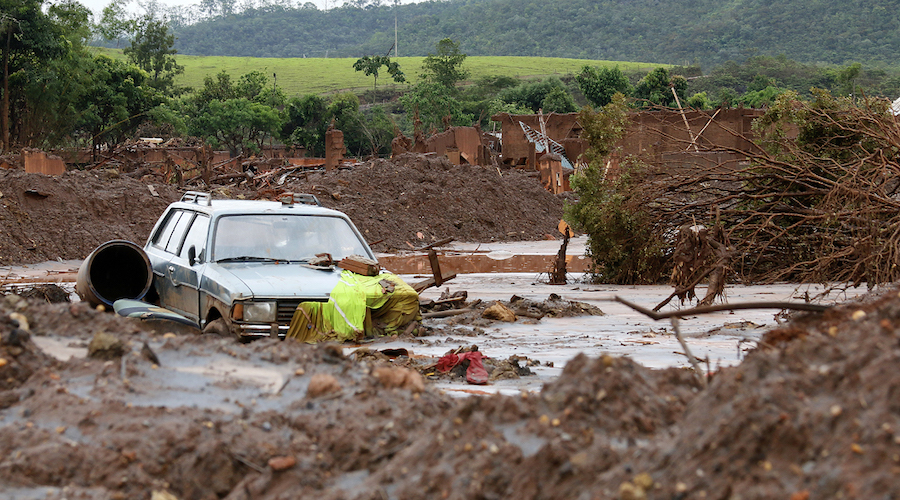
Rupture of Samarco’s Fundao dam in 2015. (Photo by Rogério Alves | TV Senado Courtesy of Agência Senado| Flickr.)

BHP is liable for the 2015 collapse of a dam in southeastern Brazil, London’s High Court ruled on Friday, in a lawsuit the claimants’ lawyers previously valued at up to £36 billion ($48 billion).

Hundreds of thousands of Brazilians, dozens of local governments and around 2,000 businesses sued BHP over the collapse of the Fundao dam in Mariana, southeastern Brazil, which was owned and operated by BHP and Vale’s Samarco joint venture.

Brazil’s worst environmental disaster unleashed a wave of toxic sludge that killed 19 people, left thousands homeless, flooded forests and polluted the length of the Doce River.

A separate claim against Vale was filed in Dutch courts in 2024 on behalf of nearly 1,000 businesses and more than 77,000 individuals hit by the dam break.

Judge Finola O’Farrell said in her ruling that continuing to raise the height of the dam when it was not safe to do so was the “direct and immediate cause” of the dam’s collapse, meaning BHP was liable under Brazilian law.

BHP said it would appeal against the ruling and continue to fight the lawsuit.

BHP’s president of Minerals Americas Brandon Craig said in a statement that 240,000 claimants in the London lawsuit “have already been paid compensation in Brazil”.

“We believe this will significantly reduce the size and value of claims in the UK group action,” he added.

RBC Capital Markets analyst Marina Calero said a final resolution was unlikely before 2030, with significant uncertainty around which claims would ultimately be considered valid.

“Based on BHP’s estimates of overlap with Brazil’s compensation scheme, Vale and BHP could each face roughly $2.2 billion in additional payments,” Calero said in a note.

Claimants celebrate major ruling

Gelvana Rodrigues da Silva, who lost her seven-year-old son Thiago in the flood, said in a statement: “Finally, justice has begun to be served, and those responsible have been held accountable for destroying our lives.”

“The judge’s decision shows what we have been saying for the last 10 years: it was not an accident, and BHP must take responsibility for its actions,” she added.

The claimants’ lawyers accused BHP, the world’s biggest miner by market value, of “cynically and doggedly” trying to avoid responsibility as the mammoth trial began in October.

BHP contested liability and said the London lawsuit duplicated legal proceedings and reparation and repair programs in Brazil.


In the trial’s first week, Brazil signed a 170 billion reais ($31 billion) compensation agreement with BHP, Vale and Samarco, with BHP saying nearly $12 billion has been spent on reparation, compensation and payments to public authorities since 2015.

BHP said after Friday’s judgment that settlements in Brazil would reduce the size of the London lawsuit by about half.

A second trial to determine the damages BHP is liable to pay is due to begin in October 2026.

($1 = 0.7451 pounds)

($1 = 5.4039 reais)

(By Sam Tobin and Clara Denina; Editing by Kate Holton and Mark Potter)

FRACKING BY ANY OTHER NAME

The AI Boom Is Driving a Massive Geothermal Energy Revival

  • Enhanced geothermal energy, a reliable, zero-carbon source, is attracting significant investment from Big Tech and high-powered investors to meet the massive energy demand spurred by the AI boom.

  • By borrowing advanced drilling technologies from the oil and gas industry, enhanced geothermal aims to make the energy source abundant and financially feasible in virtually any location on Earth, not just geologically active areas.

  • Both US public and international energy forecasts predict a dramatic increase in geothermal's share of the global energy mix, with potential growth of up to 300 gigawatts in the US by 2050 and over 800 gigawatts globally.


Geothermal energy is becoming Big Tech’s newest darling. Silicon Valley is upending its deep pockets into enhanced geothermal startups in a bid to stay one step ahead of the massive energy demand growth trend being spurred by the AI boom. Geothermal boasts key advantages over leading clean energy technologies, most notably the fact that it’s a constant, baseload clean energy source and that it’s one of vanishingly few zero-carbon alternatives with broad bipartisan support in the United States. As a result, this relatively niche and nascent technology may finally be ready for its close-up.

Until very recently, geothermal energy was only viable in geologically anomalous places where heat from the Earth’s core naturally made its way up to the Earth’s crust – such as through hot springs and geysers. As such, thermally active countries like Iceland were able to meaningfully integrate geothermal energy into their national energy mixes, but very few other countries and regions could. As such, geothermal accounts for less than 1% of the world’s energy mix today, and just 0.4% of the United States’ utility-scale energy generation. 

But all of that is changing as ‘enhanced geothermal’ exits theoretical modelling and enters the real world. Enhanced geothermal borrows drilling technologies from the oil and gas industry’s hydraulic fracturing sector, and is even exploring borrowing tech from nuclear fusion to essentially melt away layers of rock to reach greater and greater depths. The idea is that if we can dig deeply and cost-effectively enough, geothermal energy could be available, abundant, and financially feasible practically anywhere on Earth. 

As a result, enhanced geothermal energy startups are currently generating a lot of buzz. One such venture, Houston-based Fervo Energy, is backed by Bill Gates and Google, among other high-powered investors. Fervo has already secured the largest-ever commercial contract for geothermal power, having inked an agreement to provide 320 megawatts of power to Southern California Edison utility.

The firm has proven the efficacy of its enhanced approach at a pilot plant in Nevada, and is now “dramatically” scaling up its operations at a Utah plant and readying itself for commercial operations in 2026, all while showing a “70% reduction in drilling time year on year (see chart) while achieving high temperatures and flow rates” according to a recent report from The Economist, which proclaims that “geothermal energy looks set to go from niche to necessary.”

The United States’ public sector seems to be just as bullish as the private sector. The Trump administration has backed the sector’s development and refrained from slashing funding for geothermal in the same ways it has for other clean energy technologies. “His administration is embracing geothermal energy, which is primed for a very American boom,” the Atlantic reported earlier this year.

The Department of Energy recently revised its outlook to increase geothermal’s projected share of the national energy mix, predicting that by 2050, geothermal technologies could provide up to 300 gigawatts of energy. That’s a huge figure, clocking in at more than three times the current output of the nation’s nuclear power sector – the most productive nuclear power sector in the world. The scale of that projected growth is hard to overstate – today, geothermal produces less than four gigawatts in the United States. 

Global geothermal numbers are also set to rise in a dramatic fashion. The International Energy Agency, too, has revised its long-term forecast to give geothermal a larger slice of the pie, reporting that the technology’s global potential is over 800 gigawatts by 2050, up from 15 gigawatts today. This kind of growth would make a genuine impact in global energy and emissions trends, and could be pivotal to avoiding an AI-driven global energy crunch. A report released earlier this year by New York-based research firm the Rhodium Group estimates that “geothermal could economically meet up to 64% of expected demand growth by the early 2030s.”

By Michael Kern for Oilprice.com 


The UK Is Transforming Coal Mines Into Geothermal Hubs

  • Flooded coal mines across the U.K. are being converted into geothermal heat sources capable of supplying clean district heating.

  • Early projects in Wales and County Durham show promise but require regulatory reform and government incentives to scale.

  • Supporters say mine-water geothermal could cut emissions, lower heating costs, and revive former mining communities with new energy jobs.

Coal mines are finding a second life as companies invest in repurposing huge, disused coal sites into geothermal power projects. In the U.K., the government and energy companies have been discussing the idea for several years, and it seems to be gaining momentum with the launch of the first geothermal mine projects this year. 

Energy companies have realised the potential of flooding abandoned coal mines to provide vast quantities of geothermal power, as water in coal mines can reach a temperature of up to 20 degrees Celsius. Mine water geothermal heat (MWGH) systems use the water from flooded coal mines, which is heated through a natural process, to supply clean heat to houses and businesses in the surrounding area. This works by using heat exchangers and pumps to recover the heat and distribute it to buildings via district heating networks.

Heating currently contributes around 40 percent of energy use in the U.K. The country’s building heating is a major contributor to emissions, accounting for between 17 and 18 percent of total greenhouse gases, primarily from burning natural gas. Therefore, developing cleaner heat production methods is key to decarbonising the U.K. in line with government climate targets.

A recent report suggests that around a quarter of U.K. homes sit on top of sites where MWGH could be used to provide low-cost, low-carbon heat. “With the right support in place, MWGH could be built out at scale within five years. It’s not technologically complex, relatively speaking, but it takes some governance and social organisation,” Simone Abram, the co-author of the report, explained. Abram used Denmark as an example of where the technology has already been successfully rolled out.

In addition to providing clean energy, the redevelopment of coal mines could bring energy jobs back to former mining areas, with the need for specialists in drilling, engineering, and operations. This could help reinvigorate struggling economies across the country. The authors of the report also highlight the importance of community consultation to gain support for development. Community engagement will help demonstrate how MWGH projects can bring economic growth back to disadvantaged towns and cities, as well as provide clean heating and new job opportunities.

Despite the ongoing discussion between energy companies and the U.K. government about the potential for MWGH, the U.K. has been slow to develop its first geothermal projects of this type. This is largely due to the high set-up cost and the complex regulatory environment. To support development, the U.K. government must update its energy regulations to allow companies to develop this type of geothermal project. The provision of grants and low-interest loans by the state could also help to encourage higher levels of private investment in the sector.

Earlier in the year, the Mining Remediation Authority (MRA), formerly known as the Coal Authority, launched the U.K.’s first MWGH project near Ammanford in Wales. The project uses floodwater from an abandoned mine as a renewable source of heating for a warehouse. Roughly 25 litres of water per second is pumped from the Lindsay pit each day, before being treated and filtered through natural waterways.

The MRA hopes to develop several other MWGH projects in south and north-east Wales to develop it into a geothermal energy hub. However, some projects have been hard to get off the ground due to the lack of familiarity with the energy source. For example, a similar heat scheme was halted by Bridgend council in 2021 over concerns of rising costs. However, the Welsh government has acknowledged the “significant role mine water heat can play in our journey to net zero.”

The MRA also commenced construction works in March on the Dawdon mine in County Durham, in the north of England. The MWGH project is expected to provide heating for a new housing development, a new primary school, a village centre, and innovation hubs once complete. Vital Energi has been appointed to design, build, and operate the system, which is expected to provide clean heat for the next 40 years.

The authority also launched the Gateshead Mine Water Heat Living Laboratory this year to study thermal and hydrogeological behaviour across operational MWGH projects. It is thought to be the first project of its kind globally. 

Fiona Todd from the MRA explained, “Our Living Laboratory will provide invaluable insights into the behaviour of mine water heat systems and help us understand how multiple schemes co-exist within the same region… This research is crucial for maximising the opportunity presented by mine water heat and supporting its development as a reliable, low-carbon heat source across the U.K.”

The U.K. sees significant potential in the repurposing of coal mines to develop geothermal energy projects, to provide clean heating for up to 25 percent of the country’s population. However, to accelerate the growth of the sector, the government must revise its energy regulations to simplify the framework for developing such projects. The introduction of financial incentives from the state could also help to attract more private investment to the sector. 

By Felicity Bradstock for Oilprice.com