Monday, November 17, 2025

Asian hornet explosion leaves Alsace beekeepers fighting for their hives

Beekeepers in eastern France are racing to contain an explosion in numbers of Asian hornets since 2023 that is devastating hives.


Issued on: 16/11/2025 - RFI

The Asian hornet is one of the best-known invasive alien species in Europe. 
AFP - ELAINE THOMPSON


Armed with thermal-imaging binoculars, beekeepers in Alsace have taken to tracking insects with forensic zeal.

Their target is the Asian hornet, an invasive predator whose numbers have surged across the region over the past two years, wreaking havoc on local bee populations.

“For me, nest-hunting has become part of the job. If I want to keep beekeeping, I don’t have a choice,” says Mathieu Diffort, who runs around 100 hives in the rural Sundgau, near the Swiss border.

Diffort and his business partner, Philippe Sieffert of the Api&Co bee and enviromantal protection company, spend much of their season in the painstaking business of locating and destroying hornet nests.


Public reports


The yellow-legged hornet first arrived in France in 2004, but only reached the Haut-Rhin in 2023. It is now firmly entrenched, warns Sean Durkin, the local representative of the Bee Health Defence Group (GDSA), which is scrambling to contain the spread.

Between 15 and 20 nests were reported in the department in 2023, then around 100 the following year, and “this year we will exceed 400,” he said. The number of hives attacked or decimated has soared.

GDSA volunteers are stepping up their communication efforts, urging the public to report any nests they spot in the wild via the website lefrelon.com.

When a nest is reported, a specialist is dispatched to destroy it using a drone, a basket or a pole.

On a November morning, Diffort’s target is perched at the top of an oak tree, 25 metres above the ground. Dressed in thick protective clothing, he uses a telescopic pole to inject organic insecticide powder into the enormous oval concretion.


Public health issue


Local authorities “must set aside a budget” for this kind of intervention, because “the phenomenon is set to grow,” says Olivier Pflieger, deputy mayor of Hirtzbach.

“It’s a problem for beekeeping, but also for public health,” he added. His sister died last year from allergic shock after being stung by a hornet.

In Hirtzbach, a nest was spotted by a former forest ranger. “I had walked past it 20 times and hadn’t seen it,” says Marion Federspiel. One of her six hives, located around 200 metres away, was completely destroyed.

Some colonies can settle in abandoned barns, where she worries no one will notice them.

Diffort first tries to time the insects’ movements, then after being captured with bait, a hornet is marked with a coloured pen and released. The time it takes to return allows him to estimate the distance to its nest. Repeated at least three times, the method can yield a fairly precise location.

Another tactic is to scan the treetops with thermal-imaging binoculars, which help him spot nests from afar thanks to the heat – of around 30 degrees – they emit.


‘We have to live with it'

He is also testing a high-tech approach: attaching a tiny transmitter to the back of a hornet, anaesthetised with CO², so he can track its movements using a rake antenna connected to a smartphone.

The challenge is to find the nest in under three hours, before the transmitter’s battery runs out.

For now, the method is still unreliable and, crucially, expensive – especially as the transmitter can’t always be retrieved.

In this costly and time-consuming endeavour, Diffort admits he feels “a little lonely” and would welcome more funding for research. He stresses that the future of beekeeping and biodiversity is at stake, as well as food security, since bees are vital for pollination.

“We’re working with bits of string, with derisory resources,” Durkin says. The Asian hornet “can’t be eradicated now, so we have to live with it – and try to limit its proliferation as much as possible".

(with newswires)

New research shows how friends’ support protects intercultural couples


Society for Personality and Social Psychology


New research examines how social approval from different sources predicts relationship quality for intercultural couples. Researchers found that having supportive friends can be a powerful protective factor, especially when they face disapproval from family or society more broadly.

The research, published in Social Psychological and Personality Science, advances research on intercultural relationships by drawing on a large sample of people in such relationships. This sample allowed researchers to study how social approval varies across cultural backgrounds, racial pairing, relationship length, and gender.

“The results highlight that friends and family can play distinct roles: for example, people from more collectivistic cultures, such as Latine and Middle Eastern backgrounds, and those in the early stages of relationships tend to value family approval more,” says lead author Hanieh Naeimi, of the University of Toronto. “Ultimately, this research underscores how vital it is for intercultural couples to build supportive social networks that understand and respect their relationship.”

Researchers asked 757 participants about the level of social approval they think their relationship receives from family, friends, and society more broadly. Participants also reflected on both the quality of their relationship and their commitment to it.

Approval from friends emerged as the strongest predictor of relationship quality, particularly for couples in which both partners come from minority cultural backgrounds. Family approval also mattered, but mainly for couples from collectivistic cultures and those in the early stages of their relationships.

Naeimi notes that these results are especially relevant today, in a time of increasing global mobility combined with racial and social division.

“Our findings highlight that friendships can help buffer couples against disapproval, fostering connection in an increasingly polarized world,” explains Naeimi.

The authors warned against downplaying the importance of family approval or overemphasizing the role of support from friends. They note that the effects of social approval depend on cultural background, relationship length, and couple composition.

This research also focuses on intercultural romantic partnerships and should not be generalized to apply in all types of relationships.

Going forward, Naeimi would like to explore how friends provide support – whether through validation, advocacy, or inclusion – and how these dynamics unfold over time. In the meantime, she explains that this study can help us understand intercultural relationships and the unique challenges they face.

“This research reminds us that love does not happen in a vacuum – it is shaped by our social worlds,” says Naeimi. “Supportive friends, families, and communities can make all the difference.”

Could the Destruction of the ACA Force Democrats to Champion Medicare for All?

After caving on the shutdown and letting the GOP gut the Affordable Care Act, Democrats must chart a new health policy.

November 17, 2025

People join in a "Hands Off!" protest against the Trump administration on April 5, 2025, in Riverside, California.David McNew / Getty Images

After the longest government shutdown in U.S. history, Senate Democrats faltered and ended their standoff with their Republican colleagues. Democrats had initially dug in for the funding fight, they said, to protect subsidies for the Affordable Care Act (ACA). These government tax credits, set to expire at the end of the year, keep health insurance affordable for the millions of Americans who are covered through the ACA.

In the end, the only concession Democrats extracted from Republicans was a “promise” to hold a vote on the ACA subsidies — a vote that is almost certain to fail. Ultimately, seven Democrats and one independent — Sen. Angus King (I-Maine), who caucuses with the Democrats — broke ranks with their party and voted to approve the Republican-backed budget. Why these Democrats chose to cave, and why they did so at this juncture, has mystified observers and fellow party members.

To begin with, Democrats saw some of their strongest electoral results of either Trump era on Election Night, sweeping gubernatorial contests and winning important victories across the country. There should have been a strong sense that momentum was on the party’s side. At the same time, polling showed that Democrats were winning the messaging battle over the shutdown, with more voters blaming Republicans than Democrats for the standstill. Trump’s approval rating had also fallen to the lowest point of his second term, even dipping below the lowest moments of his first term. Among the Democratic base, fighting for the ACA subsidies was popular, with more than 80 percent of Democrats backing the standoff, even as Republicans ratcheted up public pressure by ending SNAP benefits and canceling flights.


It is a searing indictment of the U.S. health care system that more than 20 million people can lose coverage overnight based on the decisions of just 100 elected officials.

With so much seemingly working in their favor, why did Democrats abruptly cave? Sen. Jeanne Shaheen (D-New Hampshire) publicly cited a sense of intractability — that there was no clear path to ending the shutdown without one side conceding. Shaheen reportedly led a group of moderate Democratic senators who worked with Republicans to bring the standoff to an end. Meanwhile, Senator Tim Kaine of Virginia surely felt pressure from his constituents to reopen the government and end furloughs for federal workers, given that Northern Virginia is home to hundreds of thousands of federal employees.

For other Democrats, however, the rationale is far murkier. Theories abound: some observers point to a general lack of strategy within the caucus, while others blame Minority Leader Chuck Schumer (D-New York) for a failure of leadership. More partisan voices have argued that Democrats simply could not stomach watching Republicans inflict so much pain on SNAP recipients, federal workers, and the public at large. There is also speculation that some senators worried that forcing Republicans to eliminate the filibuster might have set a precedent that moderate Democrats feared could later empower their own party’s progressive flank.

Related Story

6 in 10 Americans Back Medicare for All — Poll
The poll's results stand in stark contrast to Trump's “Big Beautiful Bill,” which cuts federal health care spending. By Chris Walker , Truthout July 11, 2025


In bailing Republicans out, though, Democrats have created more problems for themselves. First, outrage is growing within the party’s own ranks, taking particular aim at Schumer. This internecine discord is unlikely to die down anytime soon. And, with insurance subsidies still likely to expire for more than 20 million people in the U.S., the party now partially owns the forthcoming health care crisis. If Democrats had won real concessions from Republicans or had forced the GOP to overturn the filibuster to unilaterally reopen the government, they would have kept themselves insulated from the consequences. Instead, they now bear partial responsibility for the looming ACA catastrophe.

While the government shutdown disrupted many aspects of U.S. life, its most lasting legacy may be the harsh light it once again cast on the fragility of the U.S. health care system. It is a searing indictment of the U.S. health care system that more than 20 million people can lose coverage overnight based on the decisions of just 100 elected officials.

This moment naturally raises the question of whether Democrats are prepared to pursue more permanent and decisive action to guarantee health care for all people in the U.S. The party currently sits in the minority in Congress and does not control the White House. Yet with Trump’s favorability cratering and the 2025 election results hinting at potential Democratic gains in the midterms, the party may soon regain significant governing power. The question, then, is what Democrats would do to address the health care crisis if they were once again tasked with legislating.

In 2020 — the last competitive Democratic presidential primary — support for Medicare for All was a major issue. While proposals under that label vary, most involve establishing a single-payer national health insurance program in which the federal government covers all health care costs for everyone in the U.S.

If millions lose health care coverage heading into the 2026 midterms, Democrats may rediscover the appeal of a bold, populist policy guaranteeing universal coverage.

Bernie Sanders made Medicare for All central to both his 2016 and 2020 campaigns, popularizing the idea that “health care is a human right.” At one point, as many as 10 Democratic presidential hopefuls expressed initial support for Medicare for All. Some later retreated from that stance: Kamala Harris backtracked after having supported it in the Senate, while Pete Buttigieg shifted to “Medicare for All Who Want It,” which would have left the private insurance system largely intact. Ultimately, firm support for a true Medicare for All system remained strongest on the party’s left flank, represented by Sanders and Elizabeth Warren.

If Republicans allow ACA subsidies to expire, however, health care reform is almost certain to return to the political forefront. Single-payer, universal health care bills introduced this session in both chambers of Congress have struggled to gain support from even half of their respective Democratic caucuses. Until now, though, Democrats could rely on the ACA as cover for not backing more comprehensive health care reform. But if Republicans genuinely begin dismantling Barack Obama’s signature domestic policy achievement — something they have long threatened — Democrats could suddenly find themselves without that shield. And if millions lose health care coverage heading into the 2026 midterms, Democrats may rediscover the appeal of a bold, populist policy guaranteeing universal coverage.

Still, the barriers to passing anything resembling Medicare for All remain steep. The Democratic Party is deeply divided on the issue, and with over $7 million in PAC spending from the health insurance industry during the 2024 cycle alone, that sector’s influence continues to present a formidable obstacle. Yet the collapse of the ACA subsidies — and Democrats’ complicity in that collapse — may force a reckoning. The question now is whether the party is prepared to meet the health care crisis it helped create with the sweeping solutions the moment demands.


This article is licensed under Creative Commons (CC BY-NC-ND 4.0), and you are free to share and republish under the terms of the license.


Sam Rosenthal is the political director at RootsAction and serves on the Democratic Socialists of America’s National Electoral Committee. He was formerly a staffer at Our Revolution and lives in Washington, D.C.


Vance Blames Immigrants, Biden in Response to Affordability Questions

There is no significant relationship between immigration rates and rising housing costs in the US, experts have said.

November 17, 2025

Vice President J.D. Vance speaks during a MAHA discussion on November 12, 2025 in Washington, D.C.Alex Wong / Getty Images

In an interview with Fox News last week, Vice President JD Vance downplayed the significance of rising inflation and costs for consumer goods in the U.S., claiming that any price increases are not the result of Trump administration policies.

Unlike President Donald Trump, Vance recognized that costs are up compared to last year. But he blamed former President Joe Biden for the increases.

The Trump White House “inherited this terrible inflation crisis from the Biden administration,” Vance said.

The vice president then blamed immigrants for the administration’s lack of action to make housing more affordable. (A new report from the National Association of Realtors, published earlier this month, notes that the median age of homebuyers in the U.S. is now 40 years old — the highest age ever recorded by the organization.)

“A lot of young people are saying, ‘Housing is way too expensive.’ Why is that? Because we flooded the country with 30 million illegal immigrants who are taking houses that ought, by right, go to American citizens,” Vance said.

This claim — frequently peddled by Vance and Trump to deflect blame for the state of the economy — is blatantly false, housing and immigration experts say.

There is “no significant relationship between unauthorized immigrants and general house price growth for each state in the U.S.,” said a joint study from researchers at Texas A&M and the University of Maine published earlier this year.

The National Immigration Forum similarly blasted such reasoning in an explainer on the subject last month, stating:

While immigrants do contribute to rising housing demand, they are not the primary drivers of increasing housing costs. Instead, factors such as housing shortages, restrictive zoning laws, and shifts in housing preferences in the wake of the pandemic are the more dominant forces behind rising prices. Furthermore, immigrant workers are essential to the housing supply, making up a crucial segment of the construction workforce that can address shortages and improving housing stock.

Christopher J. Calton, a research fellow at a nonpartisan think tank called The Independent, condemned the administration in May for blaming immigrants for rising prices.

“The simple truth is that we would have a severe housing shortage even if President Trump were to deport every undocumented immigrant tomorrow,” Calton said, adding that, “the longer we scapegoat immigrants for America’s self-imposed housing shortage, the longer it will take us to solve it.”

Beyond his bigoted remarks about immigrants, Vance’s other claim in the interview — that inflation is the fault of the previous administration — is also flawed.

While inflation was high under the Biden administration, most economists attributed it at the time to the reopening of the economy following the COVID pandemic, as demand for products went up and disruption in supply chains affected prices. “Greedflation” — when corporations use the effects of inflation to justify raising prices higher than is necessary in order to make more profits — also played a role in costs going up.

Even so, year-over-year inflation shrank slightly from 3.0 percent in 2023 to 2.9 percent in 2024. So far in 2025, it appears that inflation is on track to rise by 3.0 percent again.

While not a significantly huge increase, the rate change suggests that Vance’s arguments about an “inherited” inflation problem are false — if prices were getting better under Trump’s watch, that number would be lessening, not growing.

What’s more, studies demonstrate that Trump’s various tariffs have indeed contributed to a rise in retail prices for consumers, amounting to an effective tax rate of about 18 percent on American shoppers, the highest level since 1934.

Trump repeatedly promised to lower prices on the campaign trail last year, vowing to do so “on day one” of taking office. However, just weeks after he won his second term, Trump admitted that he might not be able to keep his pledge.

“I’d like to bring them down. It’s hard to bring things down once they’re up. You know, it’s very hard,” Trump said.

Presently, Trump is deflecting from concerns about affordability. In response to off-year elections earlier this month that saw huge wins for Democrats across the country, Trump insisted that voters were not casting their ballots based on concerns about affordability, describing the concept as a “con job” by Democrats. Instead, Trump said he and Republicans “are the ones that have done great on affordability.”

“Our groceries are way down. Everything is way down, and the press doesn’t report it,” Trump said during a White House event nearly two weeks ago.

But that claim is false: Grocery store prices, similar to inflation overall, have increased by 2.7 percent since Trump won the 2024 presidential election.

Trump also disregarded rising prices in a lengthy Truth Social post over the weekend, writing that he and Republicans “are winning BIG” on “the Economy” and “Affordability.”

Voters, however, do not seem to agree: A Quinnipiac University poll published in mid-October shows that only 38 percent of Americans give the president positive marks on his handling of the economy, while 57 percent said they disapproved of his job performance on the issue.
'I was not the right kind of Jew,' says US Jewish teen deported from Israel

(RNS) — Since its founding in 1948, Israel has welcomed American Jews and encouraged their immigration. Now certain Jews supporting Palestinians, like Leila Stillman-Utterback, are deported.


Leila Stillman-Utterback, 18, helps with the Palestinian olive harvest in the West Bank in October 2025. She was deported from Israel on Oct. 31, 2025.
 (Photo courtesy of Leila Stillman-Utterback)


Yonat Shimron
November 11, 2025

(RNS) — Leila Stillman-Utterback assumed she had a certain privilege working with Palestinians in the West Bank in their struggle against violent settlers who are threatening their lives and livelihoods.

She was, after all, an American Jew.

So, on a four-month solidarity program in Israel, the 18-year-old high school graduate from Vermont volunteered to be among Palestinians as part of a protective presence campaign in the South Hebron Hills. She also spent several days helping Palestinians in a different part of the West Bank pick olives during their fall harvest amid intensifying attacks from settlers.


But on Oct. 29, she and another American Jewish volunteer were arrested in the Palestinian village of Burin, deported from Israel and banned from returning for 10 years.

“I had always been told that my Jewishness protected me from deportation,” said Stillman-Utterback, speaking to RNS from her family home in Vermont. “I understand that the current government does not want people like me or like other activists doing work in the West Bank, but I think I felt a sense of betrayal. I was being told that I was not the right kind of Jew.”

RELATED: Israel deports two US Jews who volunteered to help Palestinians pick olives

Israel has begun deporting international activists volunteering to help Palestinians in the West Bank. Since the beginning of the olive harvest this fall, 42 such activists have been deported, according to evidence presented by the Israeli police at a hearing in the Knesset, or Israeli parliament.

But the deportation of American Jews, in particular, appears to be a significant escalation. Since its founding in 1948, Israel has welcomed American Jews and encouraged their immigration. Tens of thousands of American Jews have moved there. American Jews have raised billions of dollars for Israel and have volunteered there in droves, especially after the Hamas attacks on Oct. 7, 2023.

But many American Jews have also sought to work toward what they see as a fairer, more equitable Israeli society. As Jewish settler attacks against Palestinians in the occupied West Bank have spiked in number and severity, American Jews and others, alongside Israelis on the left, have sought to resist.


Achvat Amim, or “Solidarity of Nations,” is a Jerusalem-based organization that engages with the Israeli-Palestinian region through grassroots human rights work and education. More than 60% of its participants are U.S. Jews. (Photo courtesy of Achvat Amim)

Several Jewish groups, including Achvat Amim, or Solidarity of Nations, and Rabbis for Human Rights, have mobilized to prevent human rights violations and to live out Jewish values of care for the stranger.

“Settler violence is out of control at the moment,” said Anton Goodman, director of partnerships for Rabbis for Human Rights. “This is very worrying, and this is happening across the West Bank, and it’s going unchecked with total impunity. The authorities are not cracking down on it. What they’ve chosen to crack down on instead is those people who are coming to volunteer to pick olives with Palestinians.”

On Wednesday (Nov. 5), dozens of masked settlers descended on an industrial zone in the northern West Bank, setting cars, fields and several buildings ablaze.

Stillman-Utterback also spoke by Zoom about her experience in a Knesset hearing on Wednesday.

Before heading off to college, she said, she signed up for the program in Jerusalem to learn more about the Israeli-Palestinian conflict and volunteer with Palestinians.

Her mother, Danielle Stillman, is a rabbi and associate chaplain at Middlebury College. Stillman-Utterback grew up in a Jewish home imbued with Jewish traditions.

“I was taught very strongly that at the center of Judaism is being accountable for making the world a better place, and for honoring all human life,” Stillman-Utterback told RNS. “When I learned about and then started to see the extremist settler violence in the West Bank and Israel’s actions in Gaza, it went against what I knew to be central to Judaism.”

The Stillman-Utterbacks had spent a year living in Jerusalem when Leila was in 10th grade and her mother was taking a sabbatical at a Conservative movement seminary. During that year, Leila attended weekly demonstrations against the government’s plans to remake the judicial system, which many Israelis protested, viewing the plans as an effort by the right-wing government to remove basic guardrails of democracy.

She arrived back in Israel on a tourist visa in September and spent the first part of the fall learning about the conflict as part of Achvat Amim’s 12-member cohort.

Achvat Amim does not take a political position on the conflict but works toward “self determination for everyone who calls this place home.” Between 60% and 80% of its participants are U.S. Jews.

Since starting the program, Stillman-Utterback spent some time doing protective presence work in Masafer Yatta, a collection of 19 hamlets recently portrayed in the 2024 Oscar-winning documentary “No Other Land.” And she volunteered with a group from Rabbis for Human Rights to help Palestinians under attack to harvest their olive trees, a critical part of their livelihoods.

Israeli settlers have targeted the olive harvest in recent years, unleashing waves of violence. Across the West Bank, settlers have cut, bulldozed, uprooted and set olive trees on fire.

Stillman-Utterback harvested olives at least six times this fall, without incident, prior to getting on a minibus on the morning of Oct. 29 alongside a group from Rabbis for Human Rights. The group of 11 set out for the village of Burin in the northern West Bank.


Foreign peace activists and volunteers help Palestinian farmers harvest their olive trees in the West Bank town of Silwad, Oct. 29, 2025.
(AP Photo/Nasser Nasser)

As the bus she was riding in approached the village, it was stopped by the army, and the group was told that the area was a closed military zone. The group then decided to approach the olive groves from another direction. They made it to the groves and spent two hours picking olives.

As they headed back to the bus, the army approached them once again and took them all to the police station in the town of Ariel. There they were detained for several hours and their phones were confiscated. At first, Stillman-Utterback said she wasn’t too worried. The Israeli citizens in the group were questioned and released with a promise not to return to the West Bank for 15 days.

But then Stillman-Utterback and another American Jewish woman were told they would face a deportation hearing at 3 a.m. at Ben Gurion International Airport.

The decision to deport was swift. Stillman-Utterback said she assumed the authorities were acting on the assumption that she had entered a closed military zone. She said she did not know where she was or what the zone’s boundaries were.

There were no seats available that day on flights to the U.S., and the two women were shuttled to a detention facility in Ramleh for one more day and another administrative hearing — via Zoom — before boarding a flight to the U.S. on Oct. 31.

“It became clear to me that the situation had kind of moved out of my hands, and it didn’t really matter what I would say in those hearings,” said Stillman-Utterback. “I don’t think the system had much respect for the details of whether I was innocent or guilty, or what had really happened that day. A decision was made based on the fact that we had both been helping Palestinians and doing solidarity work.”


Leila Stillman-Utterback, 18, during a solidarity program in Israel. 
(Photo courtesy of Leila Stillman-Utterback)

In a press statement, the Israeli police said they were “acting firmly and in accordance with the policy of the Minister of National Security, Itamar Ben Gvir, and the directives of Israel Police Commissioner Daniel Levy, to locate and stop foreign elements engaged in intentional provocations that generate clashes and misrepresent events in the area, undermining public safety.”

Stillman-Utterback and the other American, who declined to be identified, are appealing the ruling. Both Achvat Amim and Rabbis for Human Rights are paying for their appeal and have hired a lawyer from the Human Rights Defenders Fund, a legal firm in Israel.

Both groups said no one in their programs has been deported before.

“There’s no question that incidents like this show how rapidly the reality on the ground is changing and how we need to update our practices and have constant conversations with our participants so they understand the risks that they’re taking,” said Becca Strober, Achvat Amim’s education director.

The Achvat Amim program is open to adults — Stillman-Utterback is among the youngest — and they will be the ones deciding where they want to do their solidarity work, Strober said.

Stillman-Utterback plans to travel and spend time with friends this winter. She’s been accepted to Williams College in Williamstown, Massachusetts, next fall and is thinking of majoring in international relations and philosophy.

Her connection to Israel remains strong, she said.

“It feels tragic to me to think about not being able to go back for 10 years,” Stillman-Utterback said.

At the same time, she understands she is not welcome there.

“I think my deportation is a sign to people like me that it’s unsafe for us to do this work, and that this is not the kind of Judaism that the Israeli government wants to support. They want to support a Judaism that allows for violence. The violent actions of the settlers directly goes against what I see as Judaism.”
US Plans for Indefinite Division of Gaza, Leaving Palestinian Side in Ruins

A US official said that keeping Gaza whole is “aspirational” and “not going to be easy.”


By Sharon Zhang , 
November 17, 2025


Displaced Palestinian children search for plastic to use for cooking near Gaza's port in Gaza, Palestine, on November 13, 2025.Majdi Fathi / NurPhoto via Getty Images

The U.S. and other world powers are reportedly preparing for an indefinite division of Gaza along the Israeli-occupied yellow line, as the U.S.’s plans falter and millions of Palestinians are set to pay the price.

Currently, under the ceasefire agreement that Israel is repeatedly violating, all of the Palestinians in Gaza have been forced into a small zone adjacent to the sea. This zone makes up less than half of Gaza’s land, with Israeli forces occupying a large area entirely surrounding the designated area for Palestinians that makes up 53 percent of the enclave.

U.S. news sources, citing U.S. and European officials, report that there isn’t a set plan for the current division to end, with the lives of millions of Palestinians — living in tents set up amid the rubble — currently in limbo.

The Guardian reports that the U.S. is planning to enclose Palestinians in a “red zone,” as established by the yellow line, where Palestinians would be forced to live among the ruins of Israel’s genocide. Meanwhile, reconstruction would begin in the “green zone,” which is occupied by the Israeli military.

“Ideally you would want to make it all whole, right? But that’s aspirational,” a U.S. military official told the outlet of the U.S.’s plans. “It’s going to take some time. It’s not going to be easy.”

Related Story

Our Road Back to the Ghost Town of Gaza City Is Paved in Pain and Loss
On my journey home, memories of my former life flooded me: the streets once beautiful, full of cars and smiling faces. By Dalia Abu Ramadan , Truthout  November 13, 2025


Reuters reports, citing six European officials, that plans to move on from the initial phase of the ceasefire under President Donald Trump’s 20-point plan have stalled, leaving no pathways past the current division.

Negotiations regarding the role of the Israeli military, Hamas’s armaments, and an “International Stabilisation Force” are at an impasse. International governments are resisting pledging to send troops for the force, and advocates for Palestinian rights are criticizing the plan for an international force as a push for a colonial land grab. Meanwhile, Israel is vehemently resisting wording in Trump’s plan to create a “credible pathway” for a Palestinian state.

For weeks, the U.S. was promoting an idea for “alternative safe communities,” under which Palestinians would live in camps within the Israeli-occupied portion of the Strip. But those plans were dropped last week, The Guardian found.

Meanwhile, Palestinians are facing continued Israeli violence. Israel has broken the ceasefire agreement nearly 300 times in just the first month of its implementation, Gaza officials have said, killing at least 242 Palestinians and injuring 622 others.

Soldiers are still carrying out attacks on a near-daily basis. This includes Israeli incursions past the yellow line, as well as killings of Palestinians who, sometimes unknowingly, cross the yellow line the other way. Israel is still only allowing a fraction of the aid it’s supposed to under the ceasefire agreement, continuing to starve Palestinians and deprive them of basic needs.

An indefinite standstill in negotiations would inflict yet more violence and suffering upon Palestinians. Numerous officials have warned against maintaining this scenario.

“We don’t want to reach a situation of no war, no peace,” said Majed al-Ansari, Qatar’s foreign ministry spokesperson and adviser to the prime minister, last week.

“Gaza must not get stuck in a no man’s land between peace and war,” said U.K. Foreign Secretary Yvette Cooper at a Middle East forum last week.

Health Care Workers Spoke Out for Their Peers in Gaza. Then Came Backlash.


Medical institutions are silencing their staff and impeding efforts to build solidarity with medical workers in Gaza
.

November 17, 2025

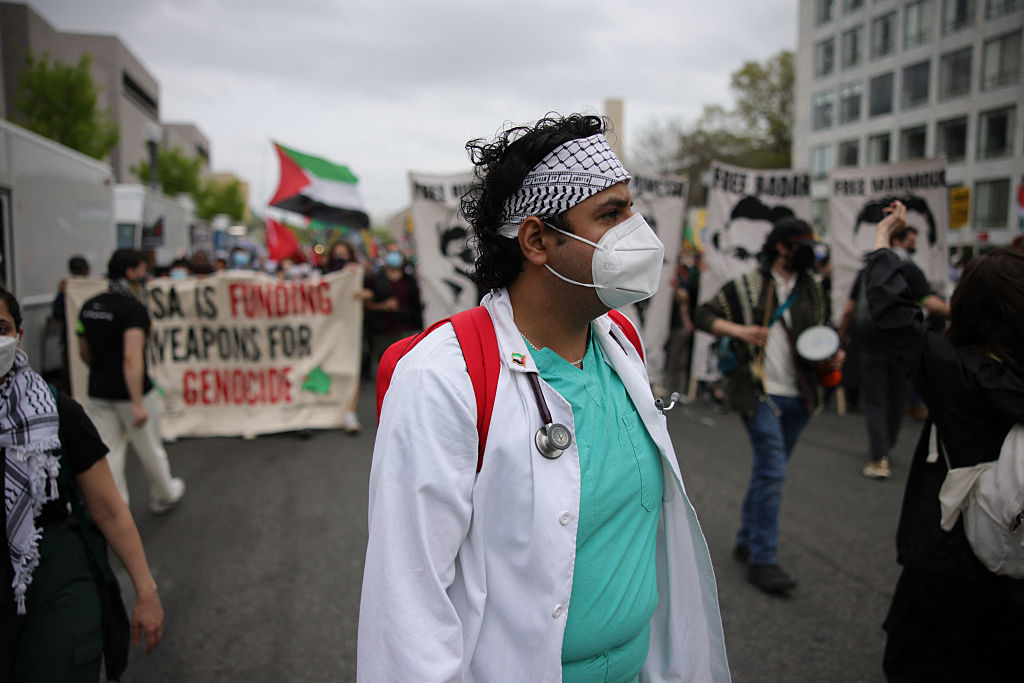
A person dressed in medical scrubs participates in a pro-Palestine march to the U.S. Immigration and Customs Enforcement headquarters in Washington, D.C., on April 5, 2025.BRYAN DOZIER / Middle East Images / AFP via Getty Images

Chandra Hassan, an associate professor of surgery at the University of Illinois Chicago (UIC) College of Medicine, spent three weeks in Gaza in January 2024, treating patients who had survived tank shelling, drone strikes, and sniper fire amid Israel’s ongoing genocide. When Nasser Hospital in Khan Younis came under siege, Hassan and the MedGlobal doctors he was serving with were forced to flee. “We were evacuated when they bombed just across the street from the hospital [and] tanks were rolling in,” Hassan told Truthout.

When Hassan returned home to Chicago, he was eager to share his experiences and advocate for an end to Israel’s assault on Gaza, which has killed an estimated 68,000 Palestinians since October 2023. Among the dead are over 1,500 health care workers, including doctors and nurses Hassan worked alongside.

But instead of being welcomed like he had been after previous missions to conflict zones in Ukraine and Syria, Hassan soon found himself on the receiving end of a doxxing and harassment campaign. StopAntisemitism, a pro-Israel group that doxxes people it accuses of antisemitism, shared screenshots of some of Hassan’s LinkedIn posts to its X account. Hassan said his employer received around 1,500 emailed complaints the day StopAntisemitism posted his information.

“I was speaking up for the human rights of Palestinians [because] it’s like, you’re witnessing another genocide, you need to talk about it,” Hassan told Truthout. But StopAntisemitism “put my picture, and they wrote that I’m [an] antisemite.”

Hassan is one of more than 15 health care workers in eight states who told Truthout they faced silencing, harassment, or workplace retaliation for Palestine-related speech, including giving a talk on health issues in Palestine, endorsing statements condemning the killing of health care workers in Gaza, or wearing a keffiyeh or other symbols of Palestine solidarity at work. Many said they felt that their hospitals, clinics, or professional societies had become increasingly hostile working environments since October 2023.


Amid Destroyed Health System, Gaza Sees Severe Outbreak of Autoimmune Disorder
Guillain-Barré syndrome could be a manageable disease anywhere with proper treatment — but not in Gaza. By Hend Salama Abo Helow , Truthout November 8, 2025


The experiences that health care workers shared suggest that organized campaigns of complaints and harassment from pro-Israel groups against health care workers have intensified, and that anti-Palestinian racism is entrenched across health care institutions nationwide. In a 2024 survey, the Institute for the Understanding of Anti-Palestinian Racism (IUAPR) also found widespread anti-Palestinian racism in health care: More than half of the 387 health care provider respondents “reported experiencing silencing, exclusion, harassment, physical threat or harm, or defamation while advocating for Gaza and/or Palestinian human rights.” Half said they were “afraid to speak out.”

Many of those who spoke to Truthout shared that fear and expressed concerns for their patients and profession: “The reality on the ground is that racism is running unchecked throughout our medical institutions, and as a result, health care workers don’t have the training they need, accountability is not happening at the level of the medical institutions, and our communities are not being served,” Asfia Qaadir, a psychiatrist specialized in trauma-informed care for BIPOC youth, told Truthout. “Racism is about erasure, and ultimately, our patients are paying the price.”
A Pattern of Censorship

Reports of health care workers being silenced for Palestine-related speech began to emerge almost as soon as Israel launched its attack on Gaza in October 2023, even in spaces with a stated commitment to anti-racism or health equity.

At the University of California, San Diego (UCSD) School of Medicine, a group of medical residents on a social justice committee began planning an on-campus discussion about Gaza that November. “We have done so without any kind of second thought for things like trans rights, abortion rights, Black Lives Matter, a lot of other social justice issues,” Heather, a UCSD medical resident who is using a pseudonym for fear of reprisal, told Truthout.

But when she and colleagues approached their faculty advisers about securing space to host a forum, they were told “that no conversations around Palestine should be occurring in the workplace, so if it’s on campus or during work hours, we were not allowed to use that time and space to even have conversations around Palestine at all.”

The following May, faculty at Dartmouth College’s Geisel School of Medicine and Harvard Medical School (HMS) invited Alice Rothchild to speak on their campuses. Rothchild, a retired obstetrician-gynecologist, has visited Gaza several times and grew up in a traditional Jewish family, experiences that she said strengthened her commitment to speaking out against Israel’s genocide: “The horrific thing for me as a Jew is that it’s being done by a country that quote, unquote ‘speaks for the Jews,’ although it obviously doesn’t speak for all Jews,” she told Truthout. “I grew up shortly after the Holocaust ended with ‘never again, never again, never again,’ and here it is happening.”

Rothchild’s scheduled talks, titled “Health and Human Rights Consequences of the War on Gaza,” at Dartmouth on May 16 and “The Impact of War on Maternal and Newborn Health in Gaza” at HMS-affiliated Brigham & Women’s Hospital on May 21, 2024, had to be moved off campus just days beforehand after administrators at the institutions withdrew support for the events, according to emails reviewed by Truthout.

Geisel School of Medicine did not respond to a request for comment before deadline. HMS and Brigham & Women’s Hospital declined to directly answer questions about their involvement.

Christine Harb, a family medicine doctor, had a similar experience when she was invited to speak about Palestinian culture and health care in Gaza at Hennepin County Medical Center (HCMC) in Minneapolis on June 7, 2024. On June 4, just a few days before the event was scheduled, the hospital’s chief health equity officer told organizers that the talk had to be postponed because the Health Equity Department had “received significant concerns … from several team members, particularly those of the Jewish faith,” according to an email reviewed by Truthout. That email also specified that Harb would need to submit her notes and slides in advance if the talk were rescheduled; it never was.

“Never had we been censored in such a way,” Eiko Mizushima, an occupational therapist and former executive co-chair of HCMC’s Asian Collective, an employee group organized under the hospital’s Health Equity Department, told Truthout. “It was unprecedented, [and] it was because it’s about Palestine.”

Organizers told Truthout that they had only been made aware of one email questioning the event from an HCMC employee and no complaints. That email, which Truthout reviewed, asked organizers to share “specifically what Dr. Harb will be addressing” and said “radicalism has no place” at the hospital. Mizushima told Truthout she expressed concern to the chief health equity officer over the employee’s characterization of Harb, a Palestinian American, as radical and was accused of misrepresenting the email.

HCMC did not respond to a detailed list of questions about the cancellation of Harb’s talk before deadline.

Other health care workers who spoke to Truthout described having Palestine-related events quashed or disparaged by leadership at their institutions, including talks, film screenings, and training opportunities. Two said they were discouraged from sharing information about vigils to mourn health care workers killed in Gaza; one said a director forbid her from holding a moment of silence for slain Palestinian children at the beginning of a meeting of a diversity, equity, and inclusion council, which the interviewed health care worker chaired at the time, because the director said doing so would be “exclusionary.”

Many sources shared that they had to navigate restrictive codes of conduct not applied to other speakers or discussions of other topics.
Hostile Working Environments

For Palestinian, Arab, and Muslim health care workers, as well as other employees of color, racism and Islamophobia were issues in the workplace well before October 2023. “The whole weaponizing of the concept of what does it mean to be antisemitic is a narrative that’s very long-running and is pretty powerful,” Sarah, a California-based Muslim registered nurse who is using a pseudonym for fear of reprisals, told Truthout. “And I think that Islamophobia really dovetails with anti-Palestinian racism in American culture.”

Sarah told Truthout she experienced both when she was in nursing school more than a decade ago. After she told a colleague on their lunch break that she did not buy Coca-Cola because the Palestine solidarity movement had flagged the beverage company’s ties to Israel, the colleague notified leadership, who, according to Sarah, then conspired to prevent her from securing a job at the hospital after completing her fellowship program. “It became a conflict about whether or not I would be able to be hired there, [and] it turned out to be a dead end for me,” she said.

Now, the pace at which workers who express solidarity with Palestinians are being pushed out of the medical field seems to be increasing. Many of those affected have been women of color. Since October 2023, University of California, San Francisco (UCSF), has terminated the employment of violence prevention advocate Denise Caramagno and associate professor of internal medicine Rupa Marya and served nurse practitioner and midwife Bridget Rochios a notice of intent to terminate her employment in cases related to their public critiques of Zionism or expressions of solidarity with Palestinians or Palestinian allies.

Elizabeth Milos also left her job of 18 years as a medical interpreter at UCSF Health in August 2025, even though she had planned to stay at least another 14 months until she turned 65 and gained access to more affordable health care. But in June, a doctor filed a formal complaint against her, claiming she had “engaged in harassing conduct and created a hostile environment” when she “wore a keffiyeh and refused to remove [it],” on two separate occasions, according to records reviewed by Truthout.

After a months-long investigation, in October, an independent investigator concluded that Milos had not violated the university’s anti-discrimination policy but had violated the dress code. Fearing retaliation and a lack of support from her union, Milos had already left. “It was a very oppressive environment,” she told Truthout.

Following the cancellation of Harb’s talk at HCMC, Mizushima and two other chairs of the Asian and Muslim Collectives resigned from their roles. Mizushima also resigned from her job at the hospital later that year, in September 2024, citing the hostile working environment and retaliation. “I can’t work at a hospital where I can just experience racism and nothing’s done about it,” she told Truthout.

The stakes are particularly high for medical students and residents, who face a grueling path to professional certification and little recourse if expelled or terminated before completing their training. Gabrielle Wimer, a former student at Columbia University’s Vagelos College of Physicians and Surgeons, told Truthout she was “going in circles” when she was penalized for participating in an hours-long sit-in at Barnard Library in March 2025 demanding divestment and an end to campus repression. Wimer was arrested and then suspended for five weeks. While the case against Wimer was later dropped and she completed her coursework, she told Truthout she worried about her future: “All I did was sit in a library and ask for my university not to contribute to genocide and apartheid.”
Outside Pressures

Right-wing and pro-Israel groups and individuals are driving censorship and harassment against health care workers, according to sources who spoke to Truthout. “There’s an alignment between right-wing extremists in the current government of the [U.S.] with the right-wing extremist government in Israel and pro-Israel supporters, [who] exercise a lot of state and economic power,” Jess Ghannam, co-founder of the Institute for the Understanding of Anti-Palestinian Racism and a professor at UCSF Health, told Truthout.

Recently, Ghannam has been on the receiving end of a doxxing and harassment campaign spurred by Mothers Against College Antisemitism, a national nonprofit founded soon after October 7, 2023. Ghannam was targeted after speaking at a campus screening of the documentary “Gaza: Doctors Under Attack.”

Like Hassan and Ghannam, other health care workers who spoke to Truthout described receiving threats and harassing messages after pro-Israel groups, such as StopAntisemitism, Mothers Against College Antisemitism, Canary Mission, Physicians Against Antisemitism, Accuracy in Media, and StandWithUs, posted their personal information online.

Harb told Truthout that when one such group targeted her while she was a medical resident at the University of Minnesota, she received dozens of threatening messages. But Harb said she could not afford to take time off without extending her residency. “I was nervous about not being able to finish my education,” she told Truthout. “I’m trying to be tough and take up space, [but] it’s hard when people are threatening to behead you.”

Some organizations are less public about influencing policies at medical institutions. Qaadir, who works at PrairieCare-Newport, one of the largest mental health systems in the Midwest, told Truthout she was reprimanded and barred from teaching after the Jewish Community Relations Council of Minnesota and the Dakotas wrote to PrairieCare-Newport to complain about a clinical training she gave on trauma-informed care for Black, Indigenous, and Palestinian patient populations. The recorded training was never published — a change from standard procedure, according to Qaadir.

“It’s unprecedented that an outside organization would pressure a hospital at the highest levels and then that, within less than a day, changes practice and policy,” Qaadir told Truthout. PrairieCare-Newport said via email that Qaadir’s “session included personal opinions and beliefs that were not shared by all and were not fully representative of PrairieCare’s mission,” but did not respond to questions about what content was at issue.

The influence of pro-Israel groups is strengthened by a federal administration eager to crack down on political speech, particularly on college campuses. This August, the House Committee on Education and Workforce launched investigations into antisemitism at UCSF, UIC, and UC Los Angeles (UCLA) medical schools. Letters announcing the investigations and demanding internal documents from campus leadership repeatedly cite posts from StopAntisemitism’s social media accounts.

Health care workers who spoke to Truthout also expressed concern about the role of donors in influencing decision-making around crackdowns on speech. Several pointed to examples of board members and executives at companies that profit from the genocide who also serve in administrative or advisory roles at their hospitals or universities, such as Debra Reed-Klages, who sits on the boards of directors at UCSD’s Rady Children’s HospitalLockheed MartinCaterpillar, and Chevron. Lockheed Martin and Caterpillar sell weapons and military machinery to Israel, while Chevron provides the natural gas that fuels Israel’s military bases, prisons, and police stations, as well as illegal settlements in the West Bank.

Some hospitals and medical schools also receive substantial funding from philanthropists known to back pro-Israel groups and efforts. UCSF’s system of children’s hospitals, for example, is named after Marc Benioff, whose company, Salesforce, has significant investments in Israel’s tech scene. Meanwhile, the Helen Diller Family Foundation, the largest contributor to the UC system and sponsor of a hospital under construction at UCSF Health, donates to Canary Mission and several groups linked to Israeli troops. These include Friends of the Israeli Defense Forces and the Jewish Institute for National Security of America, which facilitates exchanges between U.S. and Israeli police and military agencies.

Sherene Razack, co-chair of UCLA’s Task Force on Anti-Palestinian, Anti-Arab and Anti-Muslim Racism, which published an investigation into conditions at the medical school in January 2025, said the result of these outside forces is an environment where “The administration consistently ignores incidents of racism against Palestinians, Arabs, and Muslims, and anyone associated with them,” while reports against students and faculty for Palestine-related speech are “taken all the way to the top.”

Qaadir told Truthout this sort of pressure is a violation of professional ethics. “As a physician, our basic oath is to protect life, and it’s not restricted to a certain geographic area [or] a certain population of people. It’s to speak up and to do everything we can to protect life,” she said. “If physicians are retaliated against for speaking up, if we can’t do that…that sounds like a bankrupt profession, and we need to take it back for the sake of our communities.”


This article is licensed under Creative Commons (CC BY-NC-ND 4.0), and you are free to share and republish under the terms of the license.


Marianne Dhenin is an award-winning journalist and historian. Find their portfolio or contact them at mariannedhenin.com.

UN Security Council set to vote on international force for Gaza


By AFP
November 16, 2025


The United Nations Security Council is set to vote on a US-drafted resolution endorsing President Donald Trump's peace plan for Gaza - Copyright POOL/AFP/File CHARLY TRIBALLEAU


Amélie BOTTOLLIER-DEPOIS

The UN Security Council is set to vote Monday on a US-drafted resolution bolstering Donald Trump’s Gaza peace plan, especially the deployment of an international force, as Washington warns that a failure to act could lead to renewed fighting.

The draft, which has been revised several times as a result of high-stakes negotiations, “endorses” the plan, which allowed for a fragile ceasefire between Israel and Hamas to take hold on October 10 in the war-wracked Palestinian territory.

The Gaza Strip has been largely reduced to rubble after two years of fighting, sparked by Hamas’s attack on Israel on October 7, 2023.

The latest version of the text, seen by AFP, authorizes the creation of an International Stabilization Force (ISF) that would work with Israel and Egypt and newly trained Palestinian police to help secure border areas and demilitarize the Gaza Strip.

The ISF also would work on the “permanent decommissioning of weapons from non-state armed groups,” protecting civilians and securing humanitarian aid corridors.

In addition, it would authorize the formation of a “Board of Peace,” a transitional governing body for Gaza — which Trump would theoretically chair — with a mandate running until the end of 2027.

Unlike previous drafts, the latest version mentions a possible future Palestinian state.

Once the Palestinian Authority has carried out requested reforms and the rebuilding of Gaza is underway, “the conditions may finally be in place for a credible pathway to Palestinian self-determination and statehood,” the draft says.

That eventuality has been firmly rejected by Israel.

“Our opposition to a Palestinian state on any territory has not changed,” Netanyahu said at a cabinet meeting on Sunday.

The UN Security Council vote is set for 5:00 pm (2200 GMT) Monday.


– Russian objections –


Veto-wielding Russia has circulated a competing draft, saying the US document does not go far enough towards backing the creation of a Palestinian state.

Moscow’s text, seen by AFP, asks the Council to express its “unwavering commitment to the vision of the two-state solution.”

It does not authorize a Board of Peace or the deployment of an international force for the time being, instead asking UN Secretary-General Antonio Guterres to offer “options” on those issues.

The United States has intensified its campaign to earn support for its resolution, hitting out at “attempts to sow discord” among Council members.

“Any refusal to back this resolution is a vote either for the continued reign of Hamas terrorists or for the return to war with Israel, condemning the region and its people to perpetual conflict,” the US ambassador to the United Nations, Mike Waltz, wrote in The Washington Post.

The US has made known that it has the backing of several Arab and Muslim-majority nations, publishing a joint statement of support for the text signed by Qatar, Egypt, the United Arab Emirates, Saudi Arabia, Indonesia, Pakistan, Jordan, and Turkey.

Several diplomats told AFP that despite Russian criticism and hesitance on the part of other member states, they expect the US draft to be adopted.

“The Russians know that while a lot of Council members will go along with the US plans, they share concerns about the substance of the US text and the way Washington has tried to fast-track it through New York,” Richard Gowan of the International Crisis Group told AFP.

He however said he doubts that Moscow will use its veto on a resolution backed by Arab nations.

“I think it is more likely that China and Russia will abstain, register their skepticism about the plan and then sit back and watch the US struggle to put it into action,” Gowan said.