Monday, November 17, 2025

ECMWF and European Partners win prestigious HPCwire Award for "Best Use Of AI Methods for Augmenting HPC Applications” – for AI innovation in weather and climate


ECMWF


St. Louis, Missouri, 17th November 2025 - The European Centre for Medium-Range Weather Forecasts (ECMWF) and several National Meteorological Services across Europe (AEMET, DMI, DWD, FMI, GeoSphere, KNMI, Meteo-France, MeteSwiss, MET No, RMI, SMHI and UKMO) have been honoured with the 2025 HPCwire Readers’ and Editors’ Choice Award for “Best Use of AI Methods for Augmenting HPC Applications”. The award was announced at the 22nd annual HPCwire Readers’ Choice Awards ceremony, held during the SC25 International Conference for High Performance Computing, Networking, Storage, and Analysis. 

The winning collaboration was recognised for its work on Anemoi, a portable, scalable, open-source framework for building and running the next generation of AI-driven weather and climate applications. Anemoi enables the efficient creation of AI-ready datasets and supports AI model training and inference across diverse HPC architectures, including EuroHPC systems. This innovation already powers a range of AI weather and earth system models, including those developed within the EU’s Destination Earth initiative to support climate adaptation and resilience. 

The full list of award winners is available at https://www.hpcwire.com/2025-hpcwire-awards-readers-editors-choice (page is password-protected until the embargo is lifted), and additional information can be found on the HPCwire website. 

“Alongside our collaborators from national Met Services in Europe, we are very proud to have won this global award. This is a testament of the rapid progress we have made in harnessing AI within the European Meteorological Infrastructure. It reflects our commitment to combining high-quality data resources, operational expertise, and a strong legacy of collaboration to advance weather and climate prediction. It is especially significant because the voting comes from our peers in the HPC and AI communities,” said Dr Matthew Chantry, Strategic Lead for Machine Learning at ECMWF. 

“While the early advances in applying AI to science and engineering are producing exciting and impressive results, traditional HPC continues to drive breakthrough discoveries for mission-critical workloads and applications,” said Tom Tabor, CEO of TCI Media, publishers of HPCwire. “The 2025 Readers’ and Editors’ Choice Awards truly capture this dynamic era of innovation. Across the globe, grand challenge problems are being tackled - and often solved - thanks to HPC, now amplified and accelerated by AI. We extend our sincere gratitude and warmest congratulations to all of this year’s winners.” 

The annual HPCwire Readers’ Choice Awards are determined through a global nomination and voting process, as well as selections from the HPCwire editorial panel. The awards are a highlight of the supercomputing community calendar, recognising outstanding achievements in high performance computing, networking, storage, and data analysis. 

Ioan Hadade, Team Lead for HPC applications at ECMWF who collected the award, said: “It was fantastic to receive an HPCwire Readers’ Award for the second consecutive year, following last year’s recognition for DestinE’s Climate Digital Twin and its breakthroughs in kilometre-scale modelling on EuroHPC systems. Now, to see our Anemoi framework and the AI workflows we are pioneering on EuroHPC, also in the context of DestinE, acknowledged by our peers in the HPC and AI communities is especially rewarding. This highlights the momentum we are building in advancing weather and climate prediction through innovative technology and collaboration.”   

ends 


About ECMWF 
The European Centre for Medium-Range Weather Forecasts (ECMWF) is a world leader in numerical weather prediction, providing high-quality data for weather forecasts and environmental monitoring. As an intergovernmental organisation, ECMWF collaborates internationally to serve its 35 Member and Co-operating States and the wider community with global weather predictions, data, and training. ECMWF’s research and operational center operates 24/7, focusing on medium- and long-range forecasts, and maintains one of the world’s largest meteorological data archives, including ERA5, funded by the EU Copernicus programme. 

Our mission: Deliver global numerical weather predictions focusing on the medium-range and monitoring of the Earth system to and with our Member States.    

For further information, please contact: pressoffice@ecmwf.int or Lorna Campbell +44 (0)7836 625999. 

About HPCwire 
HPCwire is a leading news site and weekly newsletter covering the world’s fastest computers and the people who run them. Since 1987, HPCwire has been the trusted source for news, analysis, and community developments in high performance, AI, and data-intensive computing across academia, government, science, and industry. Subscribe at www.hpcwire.com

ECMWF and the National Meteorological Services across Europe developing Anemoi

Partner 

Full name 

Country 

Website 


AEMET 

Agencia Estatal de Meteorología 


Spain 

https://www.aemet.es/  

DMI 

Danish Meteorological Institute 


Denmark 

https://www.dmi.dk/  

DWD 

Deutscher Wetterdienst 


Germany 

https://www.dwd.de/  

FMI 

Finnish Meteorological Institute 


Finland 

https://en.ilmatieteenlaitos.fi/  

GeoSphere 

GeoSphere Austria 


Austria 

https://www.geosphere.at/  

KNMI 

Royal Netherlands Meteorological Institute 


Netherlands 

https://www.knmi.nl/  


Météo-France 

French National Meteorological Service 


France 

https://meteofrance.com/  

MeteoSwiss 

Federal Office of Meteorology and Climatology MeteoSwiss 


Switzerland 

https://www.meteoswiss.admin.ch/  

MET No 

Norwegian Meteorological Institute 


Norway 

https://www.met.no/  

RMI 

Royal Meteorological Institute of Belgium 


Belgium 

https://www.meteo.be/  

SMHI  

Swedish Meteorological and Hydrological Institute 


Sweden 

https://www.smhi.se/  

UKMO 

United Kingdom Met Office 


United Kingdom 


https://www.me

 D.E.I. VS. WHITE MEDICINE U$A 

Research finds persistent racial disparities in cesarean births


Findings highlight critical need to address inequities, structural racism in maternal health care


Oregon Health & Science University


Researchers at Oregon Health & Science University’s Center for Women’s Health have identified recent national trends in cesarean births, noting significant racial and ethnic disparities.

The study, published today in JAMA Network Open, found that despite a slight decrease in the overall rate of cesarean births in the United States, the increased risk of cesarean births for Black individuals has persisted.

A concerted effort to decrease the rates of cesarean births in the United States began in 2014, when the American College of Obstetrics and Gynecology published obstetric care and labor management guidelines aimed to safely encourage vaginal births.

In the decade following this guidance, the overall rate of cesarean births has decreased slightly, but not for everyone: OHSU’s study found that the rate of cesarean births increased for Black individuals, a group that already experiences the highest rate of this procedure of all races and ethnicities.

“There are many reasons why someone might come into a labor and delivery unit and need a cesarean delivery — it’s a critically important, life-saving procedure — but race is not one of them,” said Marie Boller, M.D., an OBGYN and maternal-fetal medicine specialist in OHSU’s Center for Women’s Health and the study’s lead author. “These findings are cause for concern, because we know these disparities have no biological basis and are rooted in structural racism.”

In a retrospective observational cohort study, researchers analyzed data from over 30 million births between 2012 and 2021. Findings revealed that for Black individuals, the risk of cesarean birth was higher compared with individuals from other racial and ethnic groups, and further, the disparity only continued to increase over the study period.

After adjusting for other reasons cesarean might be indicated, risk of cesarean birth for Black individuals was 12% higher in 2012 and 17% higher in 2021 compared to other racial and ethnic groups. This was consistent across the spectrum of birthing scenarios: For a first birth, risk of cesarean was 20% higher for Black individuals in 2012 and rose to 23% higher in 2021. For Black individuals who'd had a prior vaginal delivery and no prior cesarean, the risk of cesarean birth was 32% higher in 2012 and 33% higher in 2021. 

The research team hopes this work can contribute to the important national conversation around structural racism in maternal health care and inspire hospitals and health systems to develop interventions to better support Black birthing people.

“We need to implement quality improvement efforts that reduce unnecessary cesarean births among this population but also address the structural racism that drives these outcomes,” Boller said. “This should include upstream interventions that support healthier pregnancies from the very beginning, even before conception.”

Patient-centered care, improved birth outcomes

Researchers emphasize that this data is just one element of a much larger story of obstetric inequity. Stark disparities exist across the spectrum of maternal and infant health: Black individuals face significantly higher rates of pregnancy-related death rates, and their infants are much more likely to have certain birth risk factors, such as preterm birth.

Aaron Caughey M.D., Ph.D., chair of the Department of Obstetrics and Gynecology in the OHSU School of Medicine and senior author of the study, says implicit bias, or the internalized stereotypes that unconsciously affect actions and decisions being made by clinicians, play a big role. 

“At OHSU, we strive to provide compassionate, high-quality care to everyone who comes through our doors,” Caughey said. “This work requires ongoing evaluation of the systems and societal factors that influence that care, and how each of us as individual providers play into that.”

On an institutional level, it’s important to acknowledge implicit bias and offer ongoing education, training and resources for clinicians to address their biases, he says. At OHSU, every cesarean delivery is reviewed on a case-by-case basis so clinicians can discuss the medical indications that led to that method of delivery and identify learnings and potential areas for improvement in patient care.

On a structural level, building a diverse health care workforce that reflects the communities being cared for is key, he says. In practice, this would require significant investments in pipeline programs that improve access to education and career opportunities for the communities that are disproportionately impacted.

Ultimately, Boller says it will take a collective effort among obstetrics providers to create an impact for patients. 

“Moving the cesarean rate down happens one family at a time, one conversation at a time, so we need to continue to be thoughtful with each person in front of us,” Boller said. “It requires all of us to be patient, curious and committed to continuous improvement in our practice.”

Iran's Kharrazi urges Trump to pursue 'real negotiations' based on equality

Iran's Kharrazi urges Trump to pursue 'real negotiations' based on equality
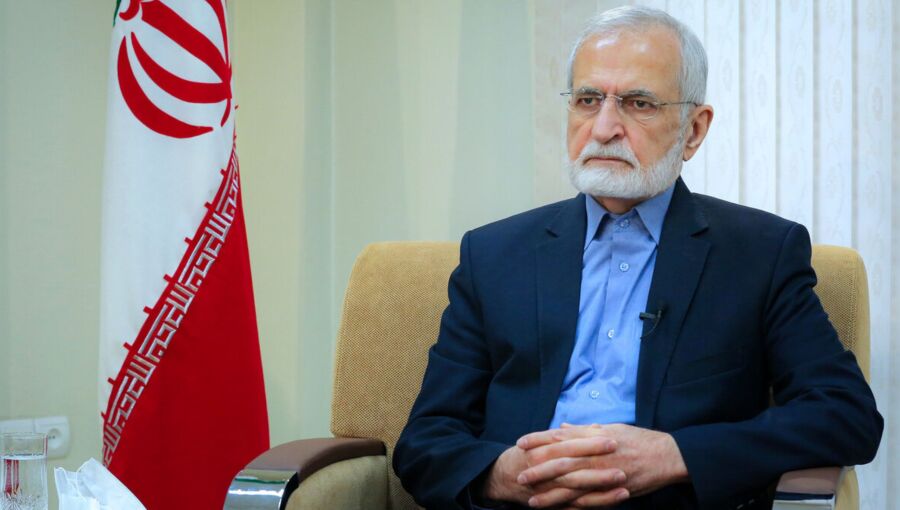
Kamal Kharrazi, head of Iran’s Strategic Council on Foreign Relations. / CC: ISNA
By bnm Tehran bureau November 17, 2025

Kamal Kharrazi, head of Iran’s Strategic Council on Foreign Relations, on November 16 called on US President Donald Trump to engage in “real negotiations” founded on mutual respect and the principle of equality, ISNA reported.

Former foreign minister Kharrazi and other senior figures in the Islamic Republic's echelons are part of an old inner circle which echoes the view of the Supreme Leader Ayatollah Ali Khamenei's position, although not overtly.

Talks between Tehran and Washington were halted following the 12‑day war with Israel, during which the United States also took part by bombing Iranian nuclear sites. Since then, no direct dialogue has taken place, though Iranian officials have reported some exchange of messages through intermediaries.

"We are not running away from negotiations," said Kharrazi in a speech on Sunday while addressing an international conference, entitled “International Law Under Attack: Aggression and Defence”  in Tehran on November 16.

He argued that the US is unprepared for genuine dialogue, seeking instead to impose its demands through military and economic pressure. “This method is rejected, and Iranians will not submit to it. They will stand against bullying,” he declared.

He advised Trump to study the experiences of previous US administrations, which found that Iran would not submit to pressure or threats and remains determined to defend its rights and independence.

In the meantime, the advisor to Iran's Leader added that "However, we are not prepared to negotiate under pressure from force of weapons and criminal actions."

"Therefore, my advice to Trump is to adopt a positive approach and show his readiness to negotiate based on equality and mutual respect. Then, he will see what the results will be," Kharrazi added.

Kharrazi advised President Trump to study the experience of his predecessors, noting: “Just as they were compelled to recognise Iran as an independent and resilient nation, you too will have to accept this reality.”

He reiterated that Iran will not abandon uranium enrichment for peaceful purposes, will not relinquish its defensive capabilities, and will not compromise its independence.

One of the central disputes in past negotiations has been enrichment, with Washington insisting on zero enrichment while Tehran has maintained it as a legitimate right for civilian use. The US has also pressed for restrictions on Iran’s missile programme, which Iranian officials regard as a non‑negotiable element of national defence.


Mexico's Gen Z protest draws older crowd as violence mars rally

Mexico's Gen Z protest draws older crowd as violence mars rally
Protesters dismantled sections of the perimeter fencing, prompting police to deploy tear gas. According to AP, approximately 120 people were injured, around 100 of them police officers.
By Alek Buttermann November 17, 2025

Public demonstrations in Mexico over the weekend have renewed focus on security concerns, government accountability and the growing influence of digital platforms in political mobilisation. Although organisers of the November 15 march in Mexico City framed it as a youth-driven action, available attendance estimates and media coverage suggest a more mixed demographic profile, with no clear indication that Generation Z dominated the turnout.

According to El País, the Mexico City march drew about 17,000 people, most of whom were older than 30, despite its branding as a Generation Z mobilisation. The denounced highlighted what it described as a disproportion between the movement’s rhetoric and its demographic reality. President Claudia Sheinbaum stated, in comments, that “very few young people” joined and condemned the vandalism that occurred at the end of the route.

"Mexico is invincible because there is no separation between the government and the people," said Sheinmabum, pointing out that the majority of citizens reject those who wish to incite unrest.

Calling for peaceful demonstrations, she added that "Violence must never be used for change; protest should always be peaceful."

Security concerns dominated the protests. The recent killing of Carlos Manzo, the outspoken mayor of Uruapan, served as a central catalyst. Manzo had publicly demanded more aggressive action against cartel violence. Demonstrators carried white flags, hats associated with his political movement and banners declaring “Todos somos Carlos Manzo”. His death remains under investigation.

Clashes near the National Palace intensified the political stakes. Protesters dismantled sections of the perimeter fencing, prompting police to deploy tear gas. According to AP, approximately 120 people were injured, around 100 of them police officers. The Secretary of Public Security of Mexico City, Pablo Vázquez, confirmed around 20 arrests.

The government has focused heavily on what it characterises as a coordinated digital operation. The New York Times noted that federal officials presented evidence alleging an “inorganic, paid” online campaign costing nearly $5mn. El País detailed a separate official report linking the protest’s amplification to influencers, bots and accounts associated with Atlas Network. Sheinbaum argued, as quoted by multiple outlets, that the public had a right to know who “promoted the mobilisation”.

Opposition figures, including former president Vicente Fox and businessman Ricardo Salinas Pliego, publicly endorsed the demonstrations. Salinas Pliego rejected government accusations of involvement, demanding proof and denouncing official claims as defamatory.

Despite Sheinbaum’s approval ratings remaining above 70%, the protests come amid mounting pressure over her security agenda. Structural issues such as corruption, extortion and cartel fragmentation remain unresolved, while recent violence in Michoacán has intensified public frustration.

A new mobilisation has already been announced for November 20, though organisers have provided few logistical details beyond a broad call for “justice and security”.

Iraq's Kurdistan dissolves Unit 80, integrates forces into Peshmerga Ministry

Iraq's Kurdistan dissolves Unit 80, integrates forces into Peshmerga Ministry
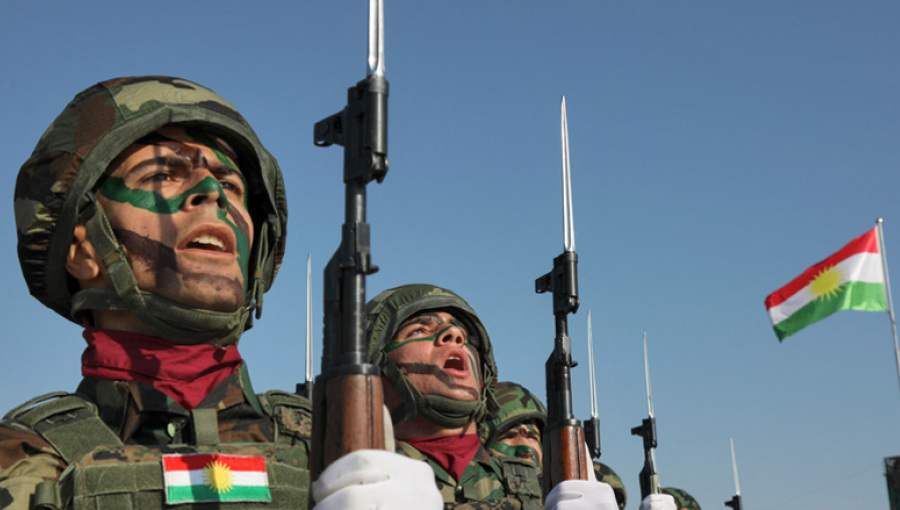
Kurdish forces in Iraq. / CC: Kurdistan 24
By bnm Baghdad bureau November 17, 2025

Iraq's Kurdistan Regional Government has dissolved Unit 80 military forces, which will operate as First Region Command within the Peshmerga Ministry framework, Kurdistan24 reported on November 17.

Unit 80 was the main Peshmerga force affiliated with the Kurdistan Democratic Party (KDP) in the Kurdistan Region of Iraq. It is one of the largest and most prominent units within the Peshmerga, historically operating under the direct control of the KDP rather than the unified Ministry of Peshmerga Affairs. 

A source from the Kurdistan Regional Government's Peshmerga Ministry said a regional decree has been issued to dissolve Unit 80 forces, which will be integrated into the ministry under the new command structure.

The source, who requested anonymity, said First Region Command will comprise six joint brigades of Peshmerga forces, with the decision to be implemented soon.

The dissolution forms part of the ninth cabinet's reform programme aimed at reorganising the Peshmerga Ministry and unifying Peshmerga forces under a single command structure.

The source said officials are scheduled to meet with a US military delegation on November 18 to discuss coordination and logistical support for Peshmerga forces.

Unit 80 represented one of the separate military formations that operated in Iraqi Kurdistan outside the formal Peshmerga Ministry structure. The integration marks a step in the regional government's efforts to consolidate military forces under unified command as part of broader defence sector reforms.

The Iraqi government in Baghdad has historically been wary of the powerful, party-controlled units like Unit 80 (KDP) and Unit 70 (PUK) within the Peshmerga forces, viewing their autonomy and partisan allegiances as an obstacle to central authority and national security.

Baghdad has long advocated for the integration of these units under the Ministry of Peshmerga Affairs (MoPA) as part of a broader effort to unify, centralise, and depoliticise the Kurdish military, making it more accountable to Baghdad and less susceptible to influence by regional parties.

Turkey historically generally viewed strong, unified Kurdish-populated military forces, such as the KDP's Unit 80, as a potential threat to its national security, especially due to concerns about Kurdish separatism and the influence of Kurdish political and military organisations in Iraq and Syria.