Wednesday, February 11, 2026

Canada's tighter immigration policy divides the country

Issued on: 11/02/2026 

05:40 min


Canada is undergoing a historic demographic shift: according to Statistics Canada, the country is experiencing its sharpest population decline since World War II. Behind this phenomenon is an unprecedented tightening of migration policy, after years of openness under former prime minister Justin Trudeau. As a result, the number of foreign students and temporary workers has plummeted in order to "reduce pressure on housing, public services and infrastructure", according to authorities.

The policy is sparking debate across the country, with thousands of skilled workers who have been ordered to pack their bags saying they feel "betrayed" and taking the state to court. They are backed by many local elected officials.

Trade unions and business organisations across Canada also denounce the plan, calling it "economic suicide".

Our correspondents Joanne Profeta and François Rihouay report, with Fraser Jackson.
BY:

François RIHOUAY

Joanne PROFETA

Fraser JACKSON


WE BUILT IT, WE PAID FOR IT

Canada's Carney says Ontario-Michigan bridge tensions will be 'resolved' after Trump call


Canadian Prime Minister Mark Carney said Tuesday that he had a call with US President Donald Trump and said tensions would be "resolved" after Trump threatened to block a $4.7 billion bridge project between Canada and the United States.

Issued on: 10/02/2026 - 
By: FRANCE 24
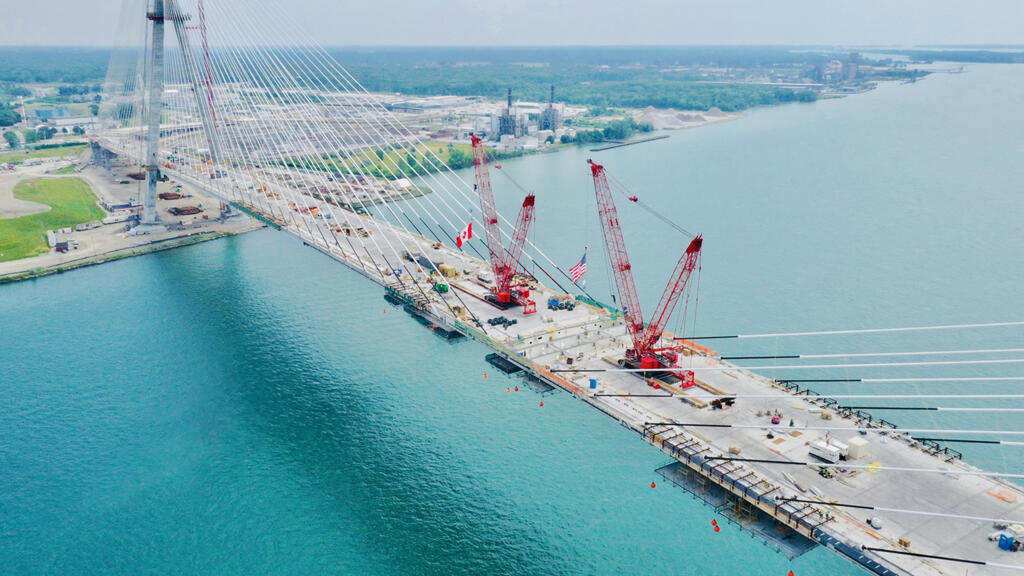
Spanning the Detroit River, the Gordie Howe International Bridge will be the longest cable-stayed bridge in North America. © Business Wire via AP

Canadian Prime Minister Mark Carney said he spoke to US President Donald Trump Tuesday about a new bridge connecting Canada and the US, assuring that the president's complaints about the project will be "resolved".

Trump said the United States should own "at least half" of the still under-construction Gordie Howe International Bridge that links the Canadian province of Ontario with the US state of Michigan.

Work on the $4.7-billion bridge – named after the late Canadian-born National Hockey League great and Detroit Red Wings star Gordie Howe – started in 2018. It is due to open this year.

According to a fact-sheet issued by the Windsor-Detroit Bridge Authority, the bridge was financed entirely by Canada and will be jointly owned by the governments of Canada and the state of Michigan.

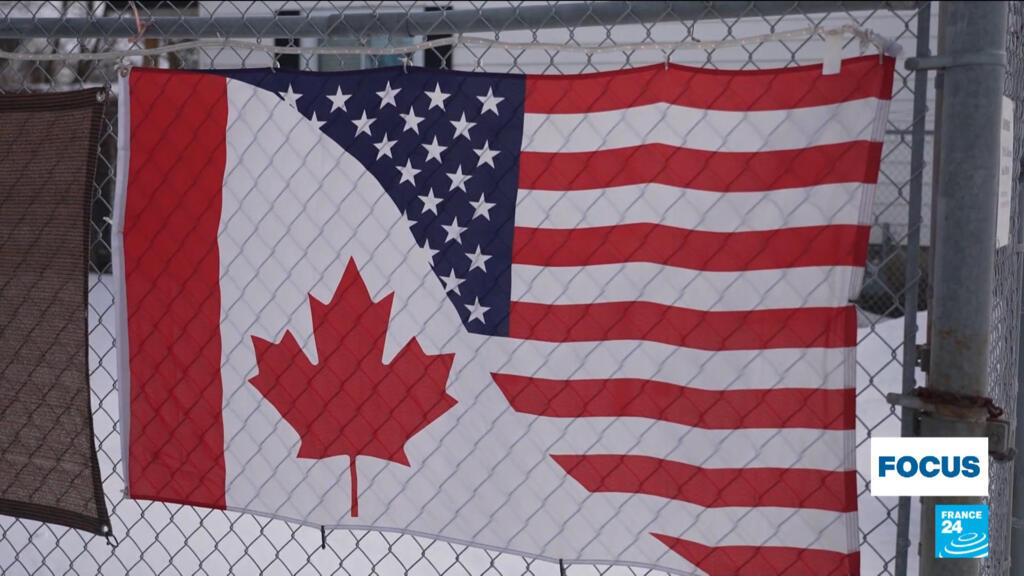
US-Canada relations cool at the border over Trump's tariffs and threats

FOCUS © FRANCE 24
05:19


"I spoke to the president this morning. Regarding the bridge, the situation is going to be resolved," Carney told reporters in Ottawa without giving details.

"I explained that Canada, of course, paid for the construction of the bridge; that the ownership is shared between the state of Michigan and the government of Canada," Carney said.

Trump, who has repeatedly suggested that Canada become the 51st US state, threatened to block the opening of the bridge in a social media post late Monday.

"I will not allow this bridge to open until the United States is fully compensated for everything we have given them, and also, importantly, Canada treats the United States with the Fairness and Respect that we deserve," Trump posted on Truth Social.

"We will start negotiations, IMMEDIATELY."

Among other complaints, Trump alleged Canada used "virtually" no US products to build it.

Carney said he told Trump "there's Canadian steel, Canadian workers, but also US steel, US workers that were involved" in construction.

Carney did not comment on Trump's allegation that as a consequence of Canada pursuing a trade deal with China, Beijing would "terminate" ice hockey.

Washington threatened to slap 100 percent tariffs on Canada after Carney visited Beijing last month and sealed a preliminary trade deal with China.

(FRANCE 24 with AFP)


What's behind Trump's threats on the US-Canada Gordie Howe International bridge?


Issued on: 11/02/2026 - FRANCE24

Play (06:28 min)


US President Donald Trump is threatening to block the opening of a new cross-border bridge between the US and Canada over concerns Washington has been treated unfairly over the course of the project. In this edition, we see whether Trump's claims about the bridge are fair and whether other motives could explain his threats. Also, Argentinians want an update on the method used to calculate inflation, which hasn't changed since 2004.


 Mass shooting in British Columbia leaves 10 dead and dozens wounded


A school shooting in Tumbler Ridge, British Columbia, has left at least eight people dead, including the suspected shooter, and more than 25 more wounded, Canadian authorities said Tuesday. Two additional deaths were reported at a nearby home believed to be linked to the attack.


 11/02/2026
By: FRANCE 24
Video by: Oliver FARRY


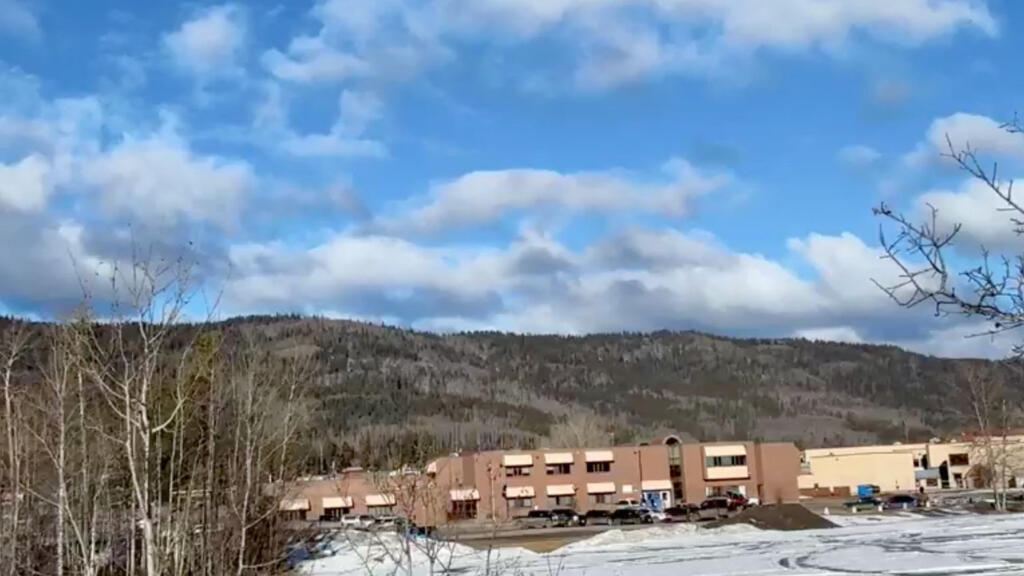
Vehicles are parked outside the Tumbler Ridge Secondary School, the site of a deadly mass shooting in Tumbler Ridge, British Columbia, Canada, February 10, 2026, in this screengrab obtained from a social media video. © Trent Ernst via Reuters
01:33


A shooting at a school in British Columbia left at least eight people dead, including a woman whom police believe to be the shooter, with two more people found dead at a home believed to be connected to the incident, Canadian authorities said Tuesday.

The Royal Canadian Mounted Police said more than 25 people were injured, including two with life‑threatening injuries, after the shooting at Tumbler Ridge Secondary School.

RCMP Superintendent Ken Floyd told reporters that investigators had identified the shooter but would not release a name, and that the suspect's motive remained unclear.

“We are not in a place to understand why or what may have motivated this tragedy,” Floyd said.

He added that police are still investigating how the victims are connected to the shooter.

School shootings are rare in Canada.

The town of Tumbler Ridge, which has a population of about 2,400 people, is more than 1,000 kilometres north of Vancouver, near the border with Alberta.

“As part of the initial response to the active shooting, police entered the school to locate the threat. During the search, officers located multiple victims. An individual believed to be the shooter was also found deceased with what appears to be a self‑inflicted injury,” the RCMP said in a statement.

“Six additional individuals, not including the suspect, have been located deceased inside the school. Two victims have been airlifted to hospital with serious or life‑threatening injuries. A third victim died while being transported to hospital.”

The Peace River South School District said earlier Tuesday that there was a “lockdown and secure and hold” at both the secondary school and Tumbler Ridge Elementary School.

Canada's Prime Minister Mark Carney said he was "devastated" by the "horrific" shooting. "My prayers and deepest condolences are with the families and friends who have lost loved ones to these horrific acts of violence," Carney said in a social media post.

Larry Neufeld, the member of the legislature for Peace River South, told reporters at the legislature that an “excess” of resources, including RCMP and ambulance support, had been sent to the community.

He said he did not want to release any more information over concerns that it might jeopardise the safety of the ongoing operation.

The provincial government website lists Tumbler Ridge Secondary School as having 175 students from Grades 7 to 12.

Tuesday's shootings were Canada's deadliest rampage since 2020, when a gunman in Nova Scotia killed 13 people and set fires that left another nine dead.

(FRANCE 24 with AP)


Attacker kills at least nine and injures dozens in British Columbia school shooting

School shootings are rare in Canada.

By Euronews
Published on 

At least nine people were killed after a school shooting in Tumbler Ridge, British Columbia, with the suspected gunman also dead and several injured.

A suspected shooter has killed at least nine in a school shooting in British Columbia on Tuesday, one of Canada's deadliest such attacks in decades.

Six people were found dead inside Tumbler Ridge Secondary School and another victim died while being transported to hospital, the Royal Canadian Mounted Police (RCPM) said.

The suspected shooter was also found dead at the school with what appeared to be a self-inflicted injury.

"As part of the initial response to the active shooting, police entered the school to locate the threat. During the search, officers located multiple victims. An individual believed to be the shooter was also found deceased with what appears to be a self‑inflicted injury,” RCMP said in a statement.

Two more people were found dead at a residence in Tumbler Ridge believed to be connected to the incident, police said.

“Six additional individuals, not including the suspect, have been located deceased inside the school. Two victims have been airlifted to hospital with serious or life‑threatening injuries. A third victim died while being transported to hospital,” RCMP said.

About 25 others were treated for non-life-threatening injuries at a local medical centre, police said.

RCMP Superintendent Ken Floyd said that investigators knew the identity of the shooter but would not release a name, however the reason of the shooting remains unclear.

“We are not in a place to understand why or what may have motivated this tragedy,” Floyd said.

Floyd added that police are still investigating how the victims are connected to the shooter.

Canadian Prime Minister Mark Carney expressed his condolences to the victims’ families and stated that the government “are in close contact with their counterparts to ensure the community is fully supported as best we can.”

“I am devastated by today’s horrific shootings in Tumbler Ridge, BC My prayers and deepest condolences are with the families and friends who have lost loved ones to these horrific acts of violence. ” he wrote in a post on X.

“Our ability to come together in crisis is the best of our country — our empathy, our unity, and our compassion for each other.” he added.

Schools placed on lockdown

Both the secondary school and the Tumbler Ridge Elementary school were placed on “lockdown and secure and hold,” the Peace River South District said earlier on Tuesday.

According to Larry Neufeld, the member of the legislature for Peace River South, an "excess" of resources including RCMP and ambulance support were deployed into the community, without releasing more information over concerns of jeopardising the safety of the ongoing operation.

School shootings are rare in Canada.

The small town of Tumble Ridge is located more than 1,000 kilometres north of Vancouver, close to Alberta.

According to the provincial government website, Tumbler Ridge Secondary School lists 175 students in grades 7 to 12.


LA REVUE GAUCHE - Left Comment: Search results for EMOTIONAL PLAGUE

Thailand: Gunman opens fire at school
DW
FEBRUARY 11, 2026

Three people have reportedly been injured in a shooting incident at a Thai school.

A gunman opened fire at a school in Songkhla Province in southern Thailand on Wednesday, with a police official saying three people were injured.

Another official told Reuters news agency that the gunman had been detained and that the hostages he had been holding had all been released.

The provincial administration had said earlier on social media that an 18-year-old man had entered the Patongprathankiriwat School in the town of Hat Yai and had taken several students and teachers hostage.

What have Thai officials said about the shooting incident?

"The perpetrator has been captured," Deputy Superintendent Wichian Soboon told Reuters.

He added that two people — a student and ‌a teacher — were wounded in the incident, with other reports saying the suspect had also been injured after being shot by police.

In a conflicting casualty count, the Songkhla provincial government said in a statement that there had been no victims, though "about two to three gunshots were heard" after the gunman entered the school

Gun violence and ownership are not uncommon in Thailand.

In 2022, a ⁠former police ​officer killed 36 people, including 22 children, in a gun-and-knife attack at a nursery in the country's east.

More to follow.
Why public transport fails to protect women


Issued on: 06/02/2026 - FRANCE24

PLAYING TIME 12:57 min


From Tokyo to Toronto, Delhi to Paris, millions of women plan their journeys: choosing where to sit, when to travel, and how to stay alert. More than 70 percent of women worldwide have encountered sexual harassment in public spaces, including on transit. Here in France, the number of victims of sexual violence on public transport, recorded by law enforcement, has increased by 86 percent in almost a decade. Some 91 percent of victims are women.


To unpack why women's safety in public transport is a global problem, and what real solutions could look like, Jennifer Ben Brahim speaks with urbanist, speaker and writer Leslie Kern. She has written extensively about gender, gentrification and feminism, such as in her book "Feminist City: Claiming Space in a Man-Made World". We talk about how despite research showing that women are more likely to rely on public transport than men, it is not at all adapted to their needs.

Also, how a recent attempted rape of a woman on a Paris commuter train made headlines and led to a petition calling for women-only carriages. They already exist in countries like Japan, Mexico and India, where women have to grapple with harassment, dilapidated infrastructure and a lack of accountability.


Gisele Pelicot publishes memoir of rape trial that shook France

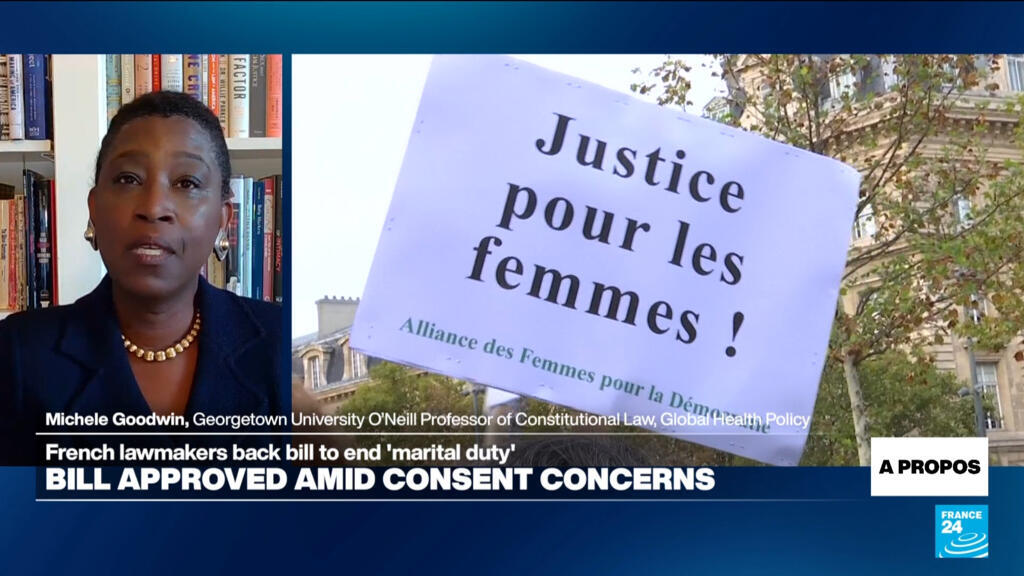
Gisele Pelicot on Tuesday published a memoir reflecting on the landmark rape trial in France that made her a global symbol in the fight against violence against women, after she chose to confront her attackers in open court.


Issued on: 10/02/2026 -
By: FRANCE 24


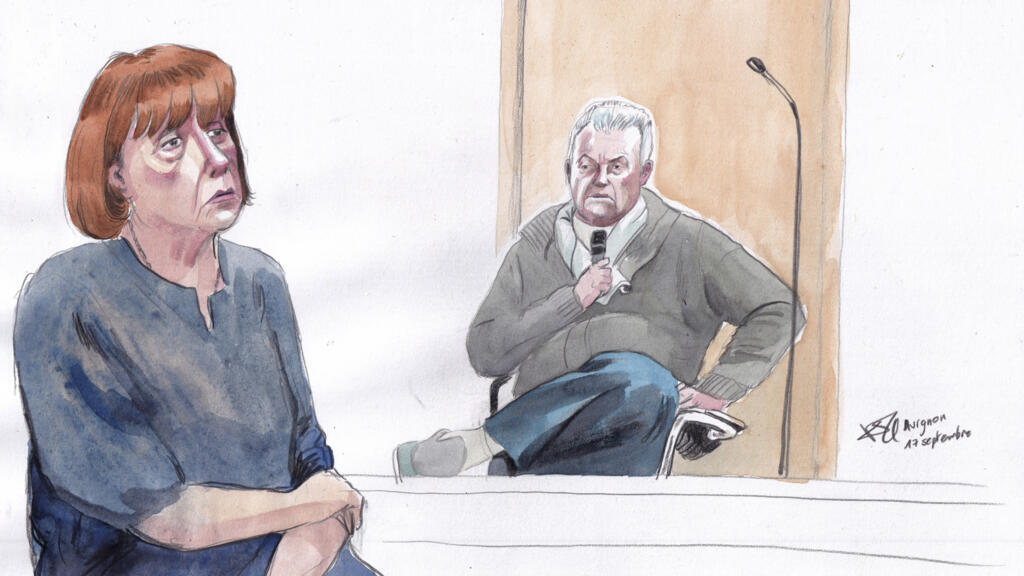
This courtroom sketch by Valentin Pasquier shows Gisele Pelicot, left, and her ex-husband Dominique Pelicot, right, during his trial at the courthouse in Avignon, southern France, on September 17, 2024 © Valentin Pasquier, AP

Gisele Pelicot, the survivor of mass rapes organised by her husband at their home in southern France, has published her memoirs about the trial that turned her into an internationally celebrated figure in the movement to end violence against women.

Le Monde published some extracts of the original French on Tuesday.

Pelicot was drugged with tranquillisers for a decade by her ex-husband, Dominique Pelicot, then raped by him and dozens of men he recruited online.

In the 2024 trial in Avignon that garnered global attention, she declined the option to hold it behind closed doors, saying she wanted the world to know what she had been subjected to.

“When I think back to the moment I made my decision, I realise that if I had been 20 years younger, I might not have dared to refuse a closed session,” she wrote in her first-person account, titled "A Hymn to Life: Shame Has to Change Sides" in English and "Et la joie de vivre" in the original French.

The book, written with journalist and novelist Judith Perrignon, will be published by Flammarion on February 17, in a worldwide release in 22 languages.


A PROPOS © FRANCE 24
12:49


“I would have been afraid of the stares, those damned stares that a woman of my generation has always had to deal with,” she explained in an excerpt published by the newspaper.

“Perhaps shame fades all the more easily when you’re 70, and no one pays attention to you any more. I don’t know. I wasn’t afraid of my wrinkles, or my body,” she confided.

In the nearly four-month trial, 51 men, including her husband, were convicted.

Her courageous decision to lift the closed-door proceedings and her dignity during the hearing contributed to making Gisele Pelicot a leading figure in the fight against violence against women.

The book chronicles her “vague feelings” before the trial: “The closer it got, the more I imagined myself becoming a hostage to their stares, their lies, their cowardice, and their contempt,” she wrote. “Wasn’t I protecting them by closing the door?”

Her book also recounts her disbelief when police first showed her photos of the rapes taken by her husband.

“I didn’t recognise the men. Or this woman. Her cheek was so flabby. Her mouth so limp. She was like a rag doll.”

(FRANCE 24 with AFP)


Judge seeks to declassify documents in 2013 killing of RFI journalists in Mali

More than a decade after the killing of RFI journalists Ghislaine Dupont and Claude Verlon in northern Mali, a French judge is requesting to declassify more documents that may shed new light on the case.


Issued on: 09/02/2026 - RFI

French journalists Ghislaine Dupont (R) and Claude Verlon (L), were murdered in Mali in 2013. AFP - SIA KAMBOU

The anti-terrorism investigating judge looking into the assassination of the journalists sent the request last month to the French Ministry of the Armed Forces.

This comes after a request from the plaintiffs in the civil lawsuit.

“There have already been several declassifications, but they were limited, with documents heavily redacted,” Danièle Gonod, president of the Association of Friends of Ghislaine Dupont and Claude Verlon, told French news agency AFP.

According to Gonod, authorities had previously invoked the top-secret nature of the documents, citing the need to protect French sources in Mali.

French forces had been supporting Mali against insurgents for nearly a decade, but were pulled out in the wake of a military takeover in August 2020.

“Today, there is no longer a single French soldier in Mali, so there are no sources left to protect,” Gonod said.

Ghislaine Dupont, 57, and Claude Verlon, 55, were abducted while reporting for RFI and killed on 2 November, 2013 near the town of Kidal, just months after France launched Operation Serval to counter jihadist groups threatening to seize the Malian capital of Bamako.

Unanswered questions

While the group al-Qaeda in the Islamic Maghreb had previously claimed the murders of Dupont and Verlon, the precise circumstances surrounding their deaths have never been fully clarified.

According to French authorities, a convoy of French soldiers discovered the journalists’ bodies near the pick-up truck driven by their abductors. Investigators said the vehicle had broken down, bolstering the theory of a failed hostage-taking carried out by a jihadist group. The reporters were said to have been slain by gunfire.

However, Danièle Gonod says that telephone data gathered during the investigation points to “a real jihadist network, political and organised, with ties to Algeria".

Discrepancies in French Army account on 2013 murder of RFI reporters in Mali

The judge is now requesting intelligence on two suspects believed to be still alive: Sidan Ag Hita, one of the alleged masterminds, and Hamadi Ag Mohamed, one of four men said to have carried out the abduction.

The judge noted that Sidan Ag Hita had since become “an important jihadist leader”, reportedly negotiating directly with the Malian state over hostage releases.

The judge also requested information on Cheikh Ag Haoussa, a Tuareg leader who was due to meet the journalists in Kidal.

According to the judge, Haoussa was allegedly seen hours before the abduction in the company of Baye Ag Bakabo, identified as the head of the team that kidnapped and killed the two journalists.
Deadly attacks stall trade in key corridor between Senegal and Mali

More than 4,000 empty shipping containers are stranded inside Mali as insecurity on the main trade route to Senegal makes transport too dangerous, raising fears of supply disruption and higher prices in a country where most imports pass through the port of Dakar.


Issued on: 07/02/2026 - RFI

A container ship operated by CMA CGM, a French shipping giant that serves West Africa. Its vessels and containers are among those affected by disruptions on the Mali-Senegal trade route. AFP - SAMEER AL-DOUMY

The Malian Shippers’ Council, a body attached to Mali’s transport ministry, this week said the situation has become a major concern for national and regional supply chains.

It warned that empty containers are running dangerously low at the port of Dakar, threatening supplies to Mali and putting pressure on Malian businesses.

The authorities demanded the return of more than 4,000 containers still inside the country, most of them owned by shipping giants MSC and Hapag-Lloyd. It is not clear how long the containers have been blocked.

RFI contacted the Malian Shippers’ Council and the transport ministry for an explanation on why the containers remained blocked, but neither responded.

Route too dangerous

A Malian entrepreneur, who said he also has containers waiting to be returned to Dakar, told RFI that while the authorities wanted to send a positive signal to shipping companies, “they have no solution to offer”.

“We can’t find a transporter willing to make the journey,” the business owner said – pointing to a rise in jihadist attacks in recent months in the Kayes region near the Senegalese border.

The risk, he said, became brutally clear last Thursday, when at least a dozen truck drivers were killed after their convoy was ambushed, despite being escorted by the army. “You can’t force people to take that risk.”

He added that empty containers are not escorted on return journeys and warned of the threat posed by homemade mines and the very poor state of the road, which forces trucks to travel slowly and leaves them exposed for longer.

Another Malian business owner said trucks have also been stuck in the capital, Bamako, because of fuel shortages.

The disruption has been linked to an embargo imposed in early September by the jihadist group JNIM, which has been gradually contained by the Malian army but continues to heavily disrupt supplies of petrol and diesel.

Customs hold-ups


Operators have also complained about delays at customs in Bamako.

“Containers can wait several days before being taken off a truck, then several weeks or even months before all the formalities are completed,” one of them told RFI, while also alluding to problems of corruption.

“Angry drivers sometimes just leave without the containers,” the man said.

Customs procedures in Bamako have recently been sped up, but only for fuel tankers entering the country, to make fuel distribution easier and limit the impact of the jihadist embargo.

Meanwhile shipping companies are also facing a major financial hit. The price of a new container is around €5,000 – so 4,000 of them unreturned adds up to some €20 million worth of equipment.

Economists say logistics costs are quickly passed on to consumers, who are at risk of being hit hard given that nearly 70 percent of Mali’s imports pass through the port of Dakar.

With Ramadan approaching, Mali’s transitional authorities have repeatedly said they are working to secure supplies and fight price hikes.

Two-way street

The current blockage comes just months after tensions flared in the opposite direction. In November, full containers were stuck at the port of Dakar, waiting to be transported to Mali beyond the allowed storage period.

Mali later secured a full cancellation of storage penalties for Malian companies and was granted a three-month deadline to clear the containers. At the time, more than 2,000 were blocked at the port.

Mali’s transport minister, Dembélé Madina Sissoko, travelled to Dakar to plead the country’s case. According to the Malian Shippers’ Council, only 304 containers are now still waiting at the port.

The council has given their owners until 24 February to collect them, warning that no exemption will be granted after that deadline.

Shipping companies have not spoken publicly on the issue and have allowed Mali’s transitional authorities to relay their concerns, raised during a meeting in Dakar on 20 January.

Three months ago, shipping lines CMA CGM and MSC briefly suspended deliveries to Mali, citing insecurity and fuel shortages. The measures were later lifted after talks with Mali’s transitional authorities, although the details of those negotiations were not made public.

This story was adapted from the original version in French by David Baché.
A PIECE OF THE ACTION FOR PROTECTION

DR Congo weighs price of security in minerals deal with US

A minerals-for-security deal between the United States and the Democratic Republic of Congo is facing a constitutional challenge in Kinshasa, with critics warning the government may be underselling the country’s vast mineral wealth. The partnership was praised by US President Donald Trump during a visit to Washington last week by President Félix Tshisekedi.


Issued on: 09/02/2026 - RFI

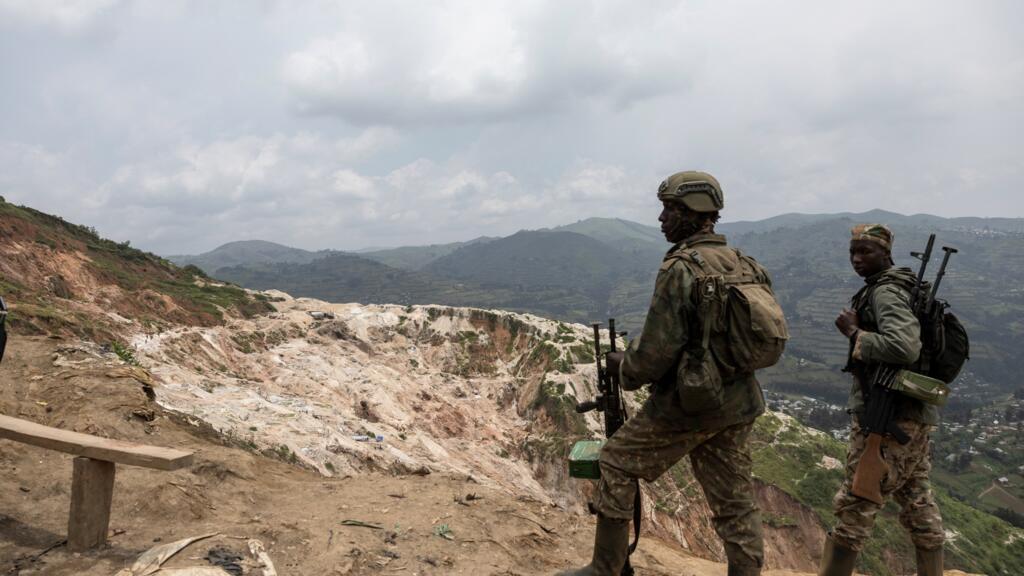
M23 soldiers stand at the mining pits in Rubaya on 5 March, 2025. Ravaged by conflict for 30 years, eastern DRC is believed to hold between 60% and 80% of the world's reserves of coltan, an essential mineral for manufacturing electronic equipment. © AFP - CAMILLE LAFFONT

By:Zeenat Hansrod

Congolese lawyers and human rights defenders filed a petition on 21 January arguing the agreement should have been approved by parliament and may even require a referendum under the constitution.

Last Thursday, Trump praised Tshisekedi at the annual National Prayer Breakfast in Washington – a gathering of US political leaders and foreign dignitaries – calling him a “good guy”.

Asking Tshisekedi to stand up and be applauded as a strong partner to the United States, Trump added that he was a “very brave and wonderful man".

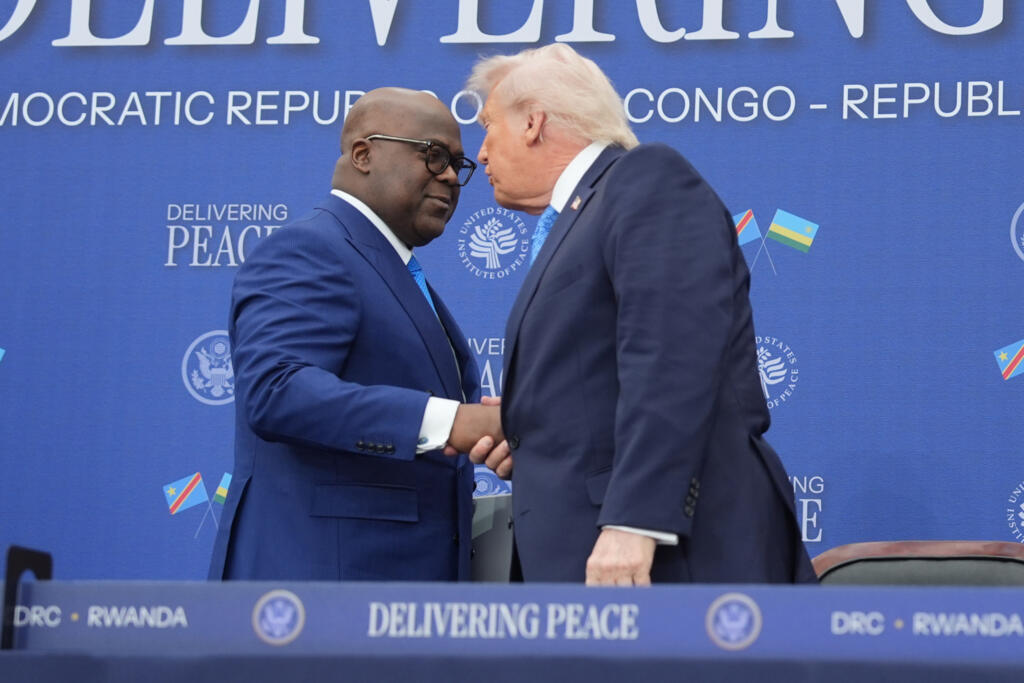
The praise came two months after Congo and the United States signed a Strategic Partnership Agreement on critical minerals, linked to the Washington Accords, a US-brokered peace deal between Congo and Rwanda signed on 4 December by Tshisekedi and Rwandan President Paul Kagame.

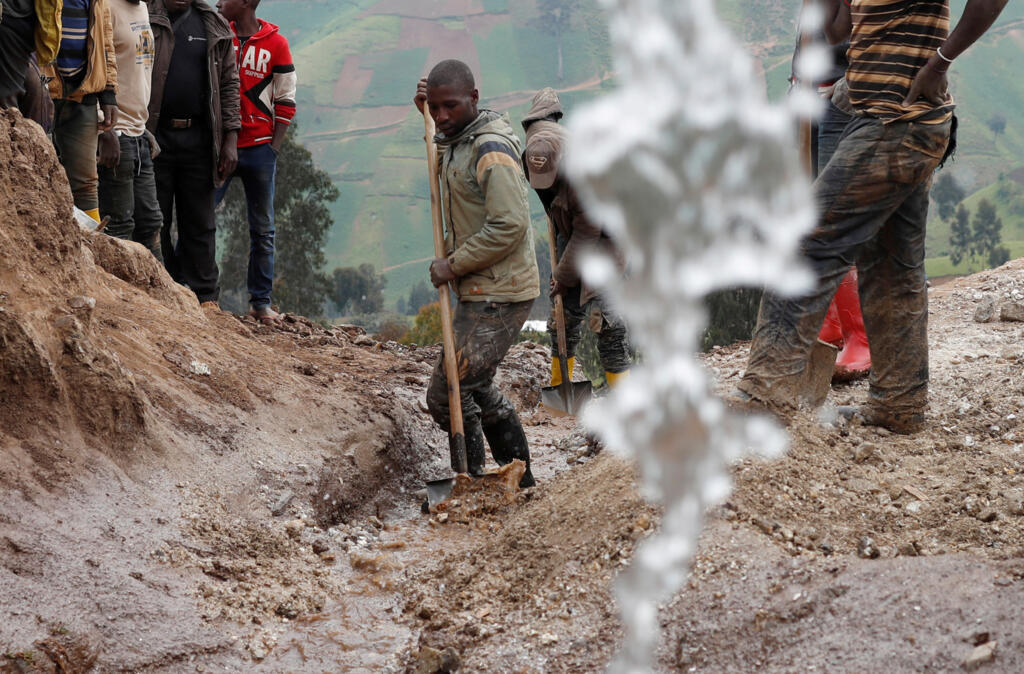
Miners work in a coltan mine in Birambo, Masisi territory, North Kivu Province of Democratic Republic of Congo, 1 December, 2018. © Reuters/Goran Tomasevic

Minerals and security

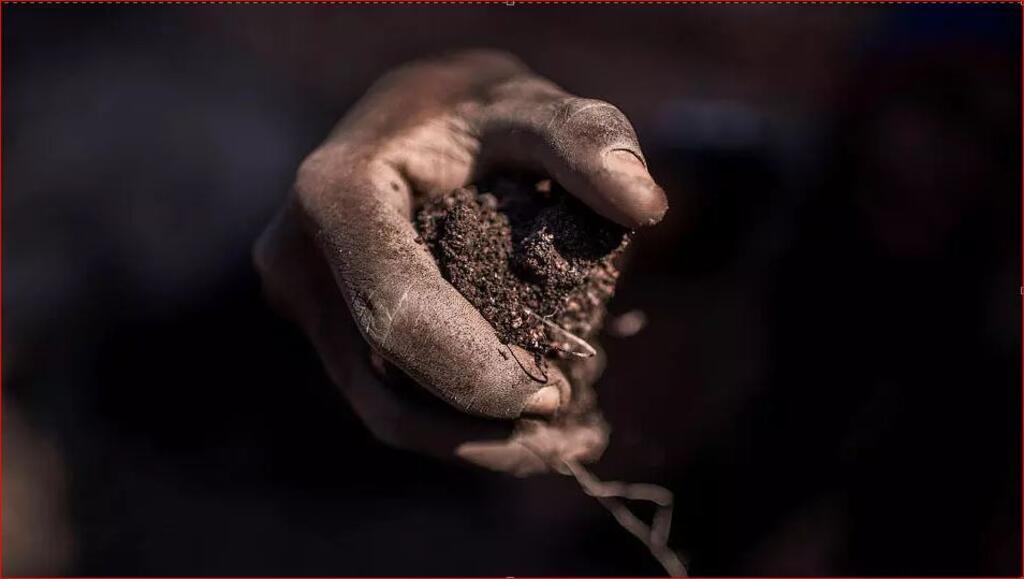
The move gives the US preferential access to Congolese minerals including cobalt and coltan – which are essential for batteries, electronics and defence manufacturing.

Washington says the arrangement will help stabilise eastern Congo while reducing US reliance on China for critical minerals.

In early February, the United States stepped up efforts to secure critical mineral supply chains. Secretary of State Marco Rubio convened 54 countries and the European Commission for talks on critical minerals, attended by Tshisekedi and six other African delegations.

Last December, while celebrating his “America First” foreign policy, Trump told supporters: “I actually stopped the war with Congo and Rwanda. And they said to me, ‘Please, please, we would love you to come and take our minerals.’ Which we’ll do.”

The agreement has triggered debate in Congo about sovereignty, oversight and who benefits from the country’s mineral wealth.

RFI spoke to Maurice Carney, who heads Friends of the Congo, a Washington-based organisation supporting the Congolese lawyers and civil-society groups behind the constitutional challenge.

RFI: The Trump administration is selling this agreement as a big win for both the Americans and the Congolese. Trump said Tshisekedi and he signed the largest minerals deal in US-Africa history. How is it violating the Congolese constitution?

Maurice Carney: It violates various aspects of the constitution, in particular section 214, which states that international agreements should go through the Congolese parliament and may even be subjected to a referendum. The lawyers are arguing that this never happened.

It hasn’t been presented to parliament, even though the agreement calls for changes in Congo’s laws, fiscal policy, mining laws and quite possibly constitutional changes.If you look at what has unfolded over the past year in Congo’s market, the Congolese government instituted a ban on cobalt because it felt the Chinese were flooding the market and wanted to rein in cobalt exports, which it was able to do successfully.

Now, according to this agreement with the United States, if Congo wanted to do that again in the future, it would be required to report quarterly to the US ambassador in Kinshasa about any fiscal or trade policy changes it would like to make. It would also have to be presented to the Joint Steering Committee for discussion and consensus.

The Joint Steering Committee of this agreement is made up of five US representatives and five DRC representatives.

The Democratic Republic of Congo is the world’s largest producer of cobalt. © Getty Images


RFI: Is Trump or the Trump family personally gaining from the strategic partnership agreement with DRC, given reports documenting how Trump and his family have profited since his accession to the White House, reaping billions shadowed by conflicts of interest?

MC: I know there are groups here in Washington doing investigative work to see whether Trump and his family are benefiting, but they haven’t released their reports yet.

We do know that people close to him are lined up to benefit from some of these investments. For example, Bloomberg News has reported that former campaign finance co-chair Gentry Beach, who runs a company in Texas, is preparing to invest in the Rubaya coltan mines currently under occupation by the M23 and Rwandan soldiers.

RFI: China is made to look like a big bad wolf, thriving in eastern DRC’s unstable environment, according to Congressman Ronny Jackson, keeping American companies out by colluding with Kinshasa to impose unreasonable taxes on them. How fair and sustainable do you think the US will be compared with China?

MC: That’s a good question. I think the characterisation of China is really a mischaracterization because China has just been ahead of the United States. It has been willing to go into the Congo where the United States has not.

The United States had one of the largest copper and cobalt mines in the Congo through its company Freeport McMoRan and had ownership of the Tenke Fungurume mines. They sold them on the market and China bought them.

So the US is trying to play catch up. We don’t know the extent to which it will be successful. But certainly, China hasn’t been a bad actor.

It has done business with the Congolese government and negotiated with the Congolese government. That’s what there is to it.

As for the agreement that’s been signed, the United States has laws and standards, and we don’t see them being applied. For example, when entering into agreements abroad around minerals, we usually seek prior and informed consent from local communities. Local communities in Congo have been excluded from all these discussions.

There are questions of labour rights, human rights and environmental rights, and we haven’t seen any of those pursued by the United States before any of these deals have been signed or money has been distributed.

Some 50 members of Congress wrote to Trump in 2025 calling on the administration to address how the minerals-for-security agreement would deal with labour, human rights, environmental protections and informed consent from local communities. We haven’t seen a response to that letter.


Democratic Republic of the Congo President Felix Tshisekedi (L) shakes hand with United States President Donald Trump (R) at the signing ceremony of the Washington Accords with Rwanda on 4 December 2025. © AP/Evan Vucci

RFI: How is Congo’s rapprochement with Washington affecting relations with China?

MC: China hasn’t said much, and I’m not sure there’s much that can be said.

The Chinese do business differently on a global scale than the United States. They confine themselves mostly to business transactions, economics and trade, whereas the United States gets involved in politics.

RFI: How is that going to translate on the ground, in terms of China’s presence in DRC?

MC: At the moment, it’s a status quo. China got its deals.

The deals aren’t being challenged by the DRC government. In fact, one of the big questions before the agreement was made public was what the DRC had to offer, considering China controls about 80 percent of the copper and cobalt mines in the Congo.

You see that the United States is not able to encroach on those deals, other than the aspect of the strategic partnership agreement that says Congo can offer its minority stake in existing deals.

If you look at the deals being established, the US government has had to, for example with the Orion and Glencore deal, establish joint partnerships.

In fact, the US doesn’t even have mining companies there. They’re setting up and trying to catch up. China is in the pole position, so to speak.

The big question is whether the United States will be able to catch up. China is far ahead, not only in minerals extraction but also in processing and refining across the supply chain.

RFI: Is the US government investing more than American private companies in DRC through this agreement?

MC: Absolutely. The US government is taking the lead and investing in two areas. One is the mines for critical minerals. The second is infrastructure to ship those minerals out, particularly through the Lobito Corridor in Angola.

What we see unfolding is not just memorandums of understanding and agreements, but money and investment flowing directly from the US government. We’re up to around 3.8 billion dollars lined up to be invested through the International Development Finance Corporation.

This interview has been lightly edited for clarity


Cambridge University museum set to return Benin bronzes to Nigeria

A Cambridge University museum will shortly return around 100 Benin bronzes to Nigeria as part of a major restitution initiative, the UK's weekly newspaper the Observer has reported.


Issued on: 10/02/2026 

Benin Bronzes exhibited at the National museum Onikan in Lagos on 21 June, 2025. AFP - TOYIN ADEDOKUN

By: Melissa Chemam with RFI

The institution backed a 2022 claim by Nigeria's National Commission for Museums and Monuments (NCMM) calling for the return of 116 objects looted by British armed forces during the 1897 sacking of Benin City.

The term "Benin bronzes" refers to objects crafted from brass and ivory as well as bronze, which were seized during the colonial-era military expedition.

Among the returned bronzes that will travel in the coming months are wood and ivory sculptures, as well as commemorative heads of King Oba and Queen Mother Lyoba Idia.

The decision follows the formal request from the National Commission for Museums and Monuments in Nigeria (NCMM), made in January 2022, for the return of artefacts.

The University’s Council supported the claim and authorisation from the UK Charity Commission was subsequently granted.

"Physical transfer of the majority of the artefacts will be arranged in due course," the university’s council added.

Seventeen pieces will remain on loan and on display at the museum for three years in the first instance, to be accessible to museum visitors, students and researchers in the UK.
'Pride and dignity'

A return that contributes to "restoring the pride and dignity" of the Nigerian people, according to Olugbile Holloway, Director General of the NCMM.

"By agreeing to cede some of its approximately 500 works from Benin City, the British institution has decided to respond favorably to a request made in 2022 by the Commission," he said.

He added that "the return of cultural items for us is not just the return of the physical object, but also the restoration of the pride and dignity that was lost when these objects were taken in the first place."

Professor Nicholas Thomas, Director of the Museum of Archaeology and Anthropology, in Cambridge said: “It has been immensely rewarding to engage in dialogue with colleagues from the National Commission of Museums and Monuments, members of the Royal Court, and Nigerian scholars, students and artists over the last ten years."

Over the period, support has mounted, nationally and internationally, for the repatriation of artefacts that were appropriated in the context of colonial violence, he added.

"This return has been keenly supported across the University community.”

Blood and Bronze: unveiling the British Empire's brutality in Nigeria

European move

The university’s decision is in line with similar commitments made by other UK, US and European museums. The Netherlands also announced last year the restitution of more than 100 Benin bronzes to Nigeria.

Netherlands agrees to return 119 Benin statues to Nigeria

Other institutions in the Uk also agreed to return stolen artefacts to Ghana.

These returns come as pressure mounts on Western museums and institutions to address the restitution of African artefacts plundered during colonial times by the USA, France, Germany and Belgium.

French senators adopted a bill in January to simplify the return of artworks looted during the colonial era to their countries of origin.

However, the British Museum still refuses to return part of its collection.