Thursday, February 12, 2026


South America seen as West’s safest minerals bet: report


AI created image by MINING.COM

South America is emerging as the most stable and politically viable option for Western countries trying to rebalance critical mineral supply chains away from China, according to new research from Verisk Maplecroft.

The study comes as the United States and its allies intensify efforts to secure supplies of lithium, copper, cobalt, nickel, graphite and rare earth elements, driven by concerns over technology dependence, supply-chain resilience and geopolitics. 

Recent moves include US plans to expand strategic stockpiles and a 55-country push to establish a preferential critical minerals trade bloc.
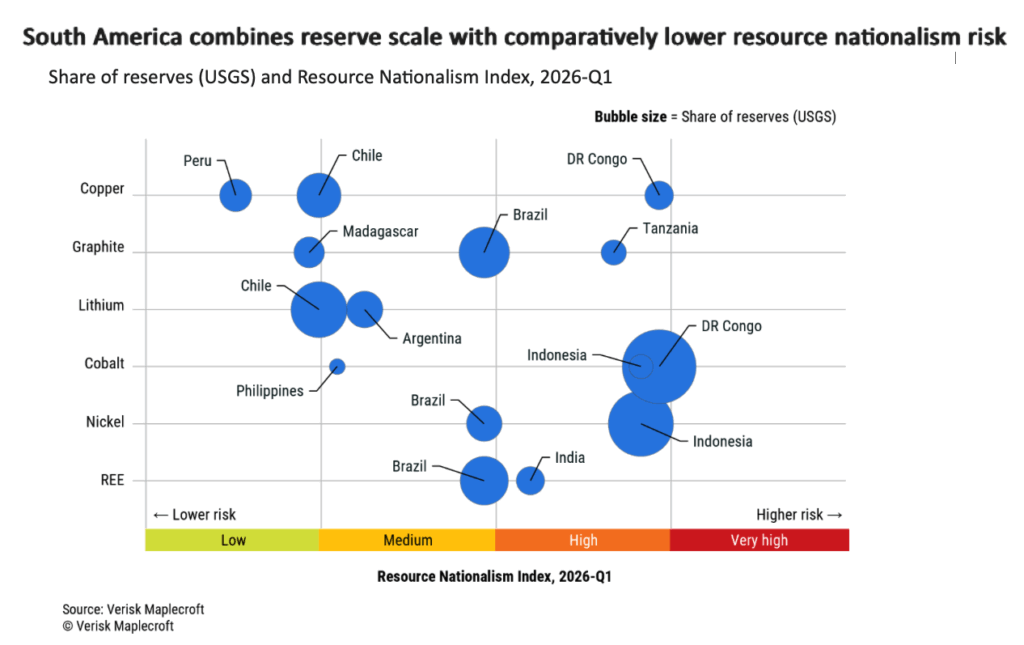
Verisk Maplecroft assessed 10 emerging markets with major reserves using its Resource Nationalism Index and Political Risk Data, finding that Argentina, Brazil, Chile and Peru stand out for combining large resource endowments with comparatively moderate levels of state intervention and political risk. Other countries in the analysis included DR Congo, India, Indonesia, Madagascar, the Philippines and Tanzania.

Low-risk Andes

Most South American producers do not rank among the world’s highest-risk jurisdictions for resource nationalism. Peru, Chile and Argentina are among the strongest performers globally, while DR Congo, Indonesia and Tanzania sit within the top 20 most exposed countries out of 198 assessed.

“What differentiates South America is not the scale of reserves, but the distribution of risk,” Jimena Blanco, Verisk Maplecroft’s chief analyst, said. “Producers consistently combine large endowments of tech-critical minerals with comparatively moderate levels of resource nationalism and political risk.”

The firm rates the region’s overall risk-adjusted opportunity as distinctly favourable, although it cautions that exposure to higher-risk jurisdictions will remain unavoidable for certain minerals. 

This is already reflected in recent Western initiatives, such as the EU’s free trade agreement with India, partly tied to rare earth ambitions, and the US Strategic Minerals Cooperation Framework with DRC launched in December 2025.
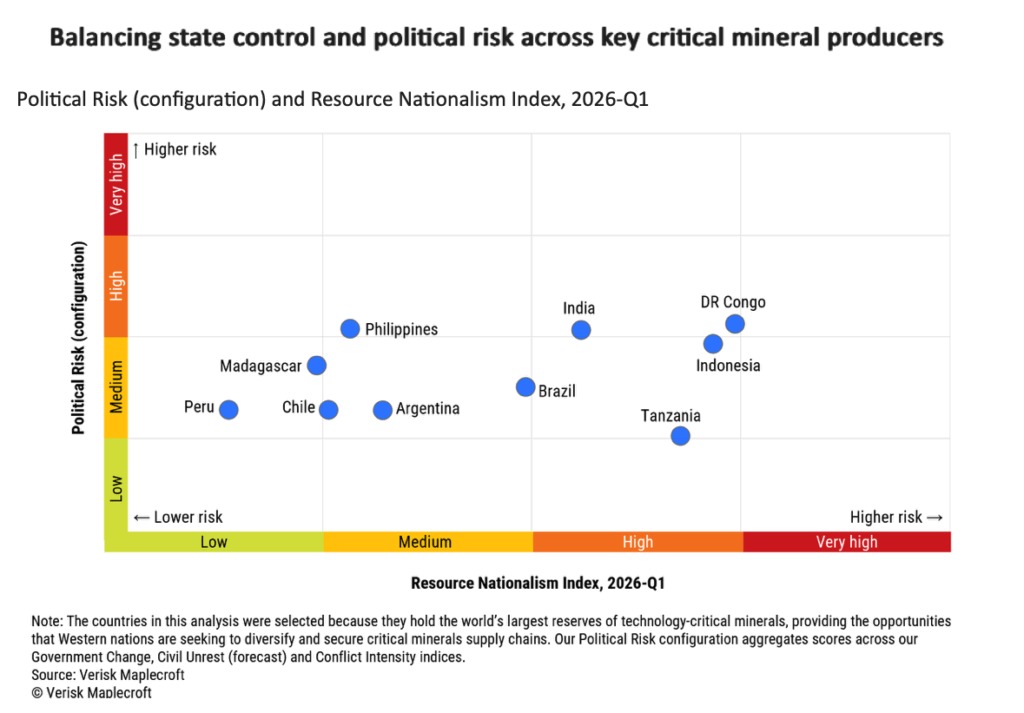
When political instability is considered alongside state intervention, many countries with major critical mineral reserves still fall into a medium-risk category, suggesting relatively supportive conditions for long-term investment. However, some producers combine high political volatility with assertive government control, increasing the likelihood of export restrictions, state ownership or domestic value-addition requirements.

India’s rare earth policies, as well as conditions in DR Congo and Indonesia, highlight this dynamic. The findings suggest that while Western governments cannot fully avoid higher-risk suppliers, South America offers a comparatively stable anchor in an otherwise constrained global landscape.

West-friendly tilt

The research also challenges assumptions about geopolitical alignment. Using its Geopolitical Alignment Tool, which tracks factors such as UN voting, trade agreements and security ties, Verisk Maplecroft found that most of the 10 countries analyzed sit on the pro-Western or neutral end of the spectrum.

Argentina and the Philippines rank as close US allies, while Chile, Madagascar and India show strategic alignment. Peru and Indonesia are broadly neutral. Only Brazil, Tanzania and DR Congo tilt further away from Washington, largely due to stronger ties with US rivals.
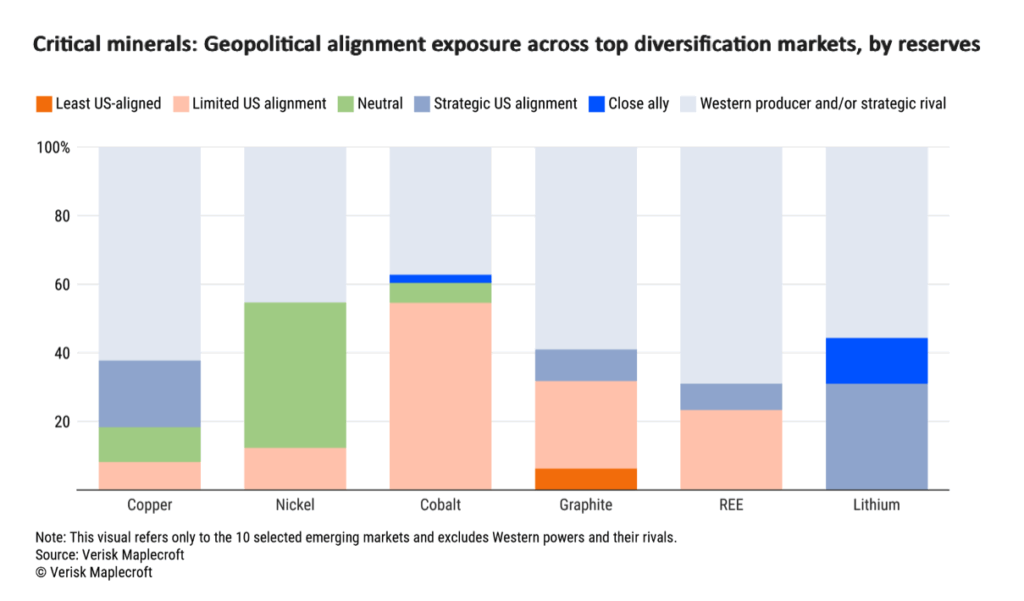
According to the report, the overlap between sizeable reserves, manageable political risk and favourable geopolitical alignment makes South America central to Western diversification strategies.

“Securing tech-critical minerals is no longer just an economic challenge,” Blanco said. “The race will be won not by eliminating risk, but by managing it better than competitors.”


How Argentina’s Lithium and Uranium Boom Could Undermine Its Energy Sovereignty

  • Argentina’s lithium and uranium reserves are attracting intense interest from global powers amid the accelerating energy transition.

  • President Milei’s pro-market reforms and alignment with the United States are reviving growth but stirring fears of resource extraction without domestic value creation.

  • Public concern is growing that foreign-led mining and nuclear deals could weaken energy sovereignty and leave lasting environmental and health costs.

Argentina is home to an enormous wealth of critical natural resources that are becoming increasingly in demand as the global energy transition continues to pick up pace. But while Argentina’s potential geopolitical advantages open new avenues for economic growth, they also come with major potential trade-offs for energy sovereignty as the world’s superpowers intensely pursue the nation’s riches of lithium and uranium.

Argentina’s economy is finally on an upswing after decades of painful decline. This change is in large part thanks to the radical cuts of right-wing President Javier Milei, who was elected to office in 2023. But while Milei’s aggressive financial reforms are having some positive impacts on the economy, his approach has been highly controversial in Argentina and on an international scale. 

Part of Milei’s strategy is a close alignment with the Trump administration. As a part of this shift, he has shown a renewed willingness to work with the United States and other international partners as part of his new nuclear plan. Milei has avowed that his nation is an “unconditional ally of the US” and Argentina was the very first partner nation to sign up for the Trump administration’s Foundational Infrastructure for Responsible Use of Small Modular Reactor Technology (FIRST) Program. 

But while Milei is cozying up to the United States, many of his constituents are expressing major reservations about a development pathway that might allow other nations to extract resources and leave locals to clean up the potentially hazardous mining sites. Past uranium extraction in the countryside has left locals beset with high occurrences of cancer and skin diseases, though no official studies have been done to confirm the connection of the uranium mine to the rise of these illnesses. As a result, communities living near uranium deposits are wary of similar future endeavors. 

Moreover, Argentina has plenty of need for its own uranium. Some argue that the nation’s uranium should be reserved for its own nuclear reactors, as the country has enough proven reserves to fill its own demand for 70 years. This approach could meet dual needs for energy security and sovereignty. But while the country could potentially build up a robust nuclear energy program with local nuclear fuel supply chains – a major asset in a playing field currently dominated by Russian and Chinese interests – Argentina remains dependent on oil and gas for 80 percent of its energy.

“Argentina doesn’t have extra uranium,” Diego Hurtado, ex-president of Argentina's nuclear regulatory authority, recently told The Guardian. “Exporting uranium isn’t an Argentine nuclear plan; it’s banana republic-style mining: ‘I’ll sell you raw materials so you can use them to generate employment and industrial capacity in your country instead of here.’”

Argentina has faced a similar dilemma concerning the country’s rich lithium deposits. While the Biden administration was eager to ink deals with Argentina to supply the “white gold” that is essential to clean energy manufacturing including EV batteries, energy storage, and solar panels, Argentinian leaders were loath to sign off on major U.S.-backed projects at the time. 

Instead of exporting raw lithium for the benefit of U.S.-based value chains, Argentinian leadership expressed the desire to develop lithium supply chains locally where they can more meaningfully benefit the long-suffering national economy. “Adding value is central for us,” Argentina Mining Undersecretary Fernanda Avila told Bloomberg in 2023. “We know the industry today is growing and there’s a lot of pressure and price volatility. But it’s about making the most of this window of opportunity, not just by shipping out lithium carbonate.”

However, things have changed dramatically since 2023 in both the United States and Argentina, and dealmaking is now taking center stage between the two countries. So far, the new liberalization of trade has been a boon to the Argentinian economy, but it also opens the nation to some serious risks. Argentina has long relied on tariffs to protect local value chains, and slashing those is opening up the market to a flood of cheap U.S. and Chinese goods that Argentinian producers just can’t compete with.

And when it comes to the energy sector, many Argentinians are worried that energy sovereignty is on the line. They want to see their own nuclear sector flourish, not watch their resources flow into northern grids with little to show for it but environmental degradation and increased public health concerns.

By Haley Zaremba for Oilprice.com


Trump orders Pentagon to buy coal power in boost to industry

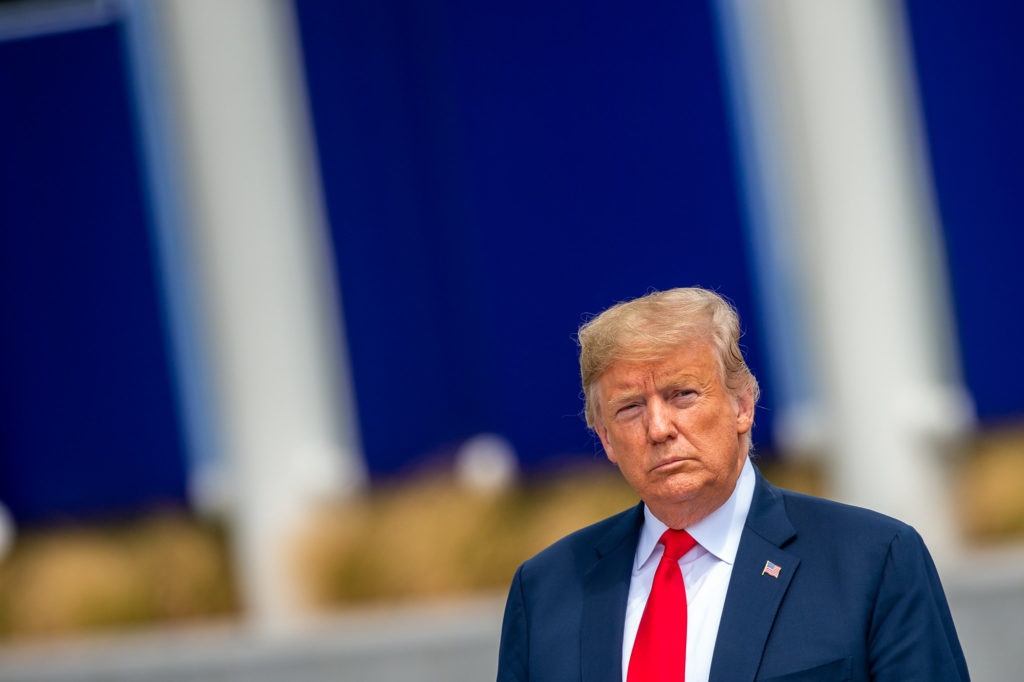
US President Donald Trump. Image: NATO North Atlantic Treaty Organization, under licence CC BY-NC-ND 2.0.

President Donald Trump moved on several fronts to prolong US reliance on coal power, as he ordered the Pentagon to purchase electricity from plants and announced millions of dollars to upgrade existing facilities.

Trump directed Defense Secretary Pete Hegseth to enter into agreements to purchase electricity from coal plants to power military operations. Under the directive, the Pentagon’s energy installation office would pursue long-term agreements offering the promise of more demand and business certainty.

“We’re going to be buying a lot of coal through the military now, and it’s going to be less expensive and actually much more effective than what we have been using for many, many years,” Trump said Wednesday during a White House event attended by miners, coal executives and energy industry leaders.

Trump hailed coal as “the most reliable, dependable” form of energy and said his administration’s actions would help boost generation, delivering lower prices for consumers and ensuring industries critical to national security had steady power supplies.

“Coal power generation is up by nearly 15% in my first year, and that number is going to be about 25 or 30% this coming year,” Trump said. “More coal means lower cost and more money in the pocket of the American citizens and in the pocket, frankly, of the United States of America. That’s not bad,” he added.

The president also extolled the Tennessee Valley Authority’s plans to continue operating two coal-fired power plants that had been on track for retirement and announced Energy Department funding to support upgrades at coal plants. The $175 million will fund upgrades at six coal plants in Kentucky, North Carolina, Ohio, Virginia and West Virginia, according to a White House official.

The shares of coal miner Peabody Energy Corp. rose as much as 9.6% in US postmarket trading. Peabody CEO Jim Grech, during the event, said the company was “working with the administration on the potential to build new coal-fueled power plants.”

The efforts mark Trump’s latest bid to bolster both the mining and consumption of coal, a fossil fuel whose use as a source of electricity in the US had declined amid competition from cheaper natural gas and renewable alternatives as well as concerns about climate change. That dynamic has shifted with policy changes from Washington and as utilities seek to meet surging electricity demand driven by the energy-hungry artificial intelligence industry.

Trump touts electricity from what he calls “clean, beautiful coal” as essential to address two of his political imperatives — both helping the US win a global competition over AI and securing lower utility bills for consumers ahead of November’s midterm elections.

The Energy Department has already issued emergency orders requiring some coal plants to keep running, and the Interior Department has moved to open more federal land for coal leasing in North Dakota, Montana and Wyoming.

At the same time Trump has moved to bolster coal, his administration is ending federal support for some projects to supply grids with wind and solar power. The administration is also easing regulations that encouraged a shift away from the fossil fuels that drive climate change.

Environmentalists said the moves represented a bid by the federal government to prop up a dirty-burning source of electricity at the expense of cleaner alternatives — far from the “all-of-the-above” approach to energy that for years united many Republicans and Democrats in Washington.

“While Americans are demanding clean, affordable energy, the Trump administration is using our tax dollars to prop up the nation’s dirtiest, least-efficient power plants,” said Manish Bapna, president of the Natural Resources Defense Council.

(By Jennifer A. Dlouhy)


China could lift coal output this year due to Indonesian curbs

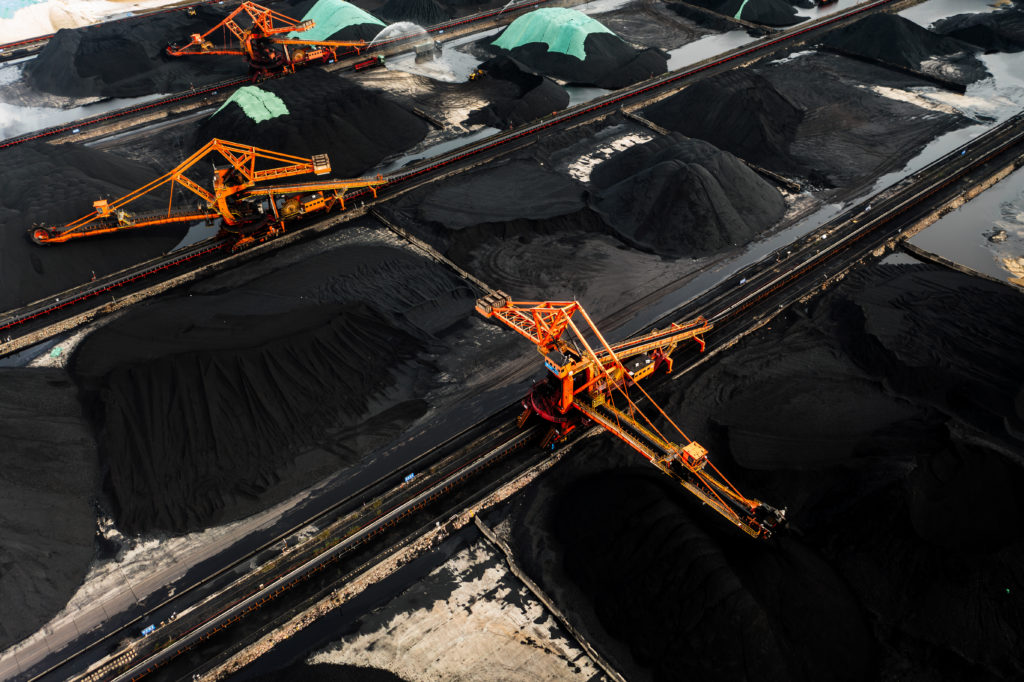
Coal storage yard in Ningbo City, China. Stock image.

China’s main coal industry body sees a drop in imports this year and potentially higher domestic production after Indonesia moved to restrict shipments in an attempt to boost prices.

The China Coal Transportation and Distribution Association cut its forecast for the country’s imports of the fossil fuel to 465 million tons in 2026, it said in a statement on Monday. That’s down from a projection of 480 million tons about three weeks ago.

China produced a record 4.8 billion tons of coal last year, despite rising pressure on the industry due to concerns over climate and mine safety, and the Indonesian curbs may increase the chances that production will keep increasing. The CCTD estimates local output will reach 4.86 billion tons this year, but said it could go higher if there’s a sharper drop in imports

Indonesia, the world’s biggest exporter of power station coal, flagged in early January that it’s looking to slash output by nearly a quarter this year to around 600 million tons in an attempt to boost returns. The move has supported prices, with Australian thermal coal futures, the regional benchmark, rising around 9% so far this year

“Global supply will tighten if Indonesia’s annual production falls below 700 million tons,” said Li Zhiyuan, a bulk commodity analyst at Kpler. Fellow coal exporters Russia and Colombia could be the biggest beneficiaries, he said.

The Southeast Asian nation accounted for about 40% of China’s coal imports last year, and its fuel is widely used by coastal power plants when it’s cheaper than domestic supplies. Chinese thermal coal prices have yet to reflect Indonesia’s plans, partly due to a lull in trading before the Lunar New Year, but the CCTD said there was growing pressure for them to move higher.


Column: India’s sponge iron boom rides to rescue South African coal

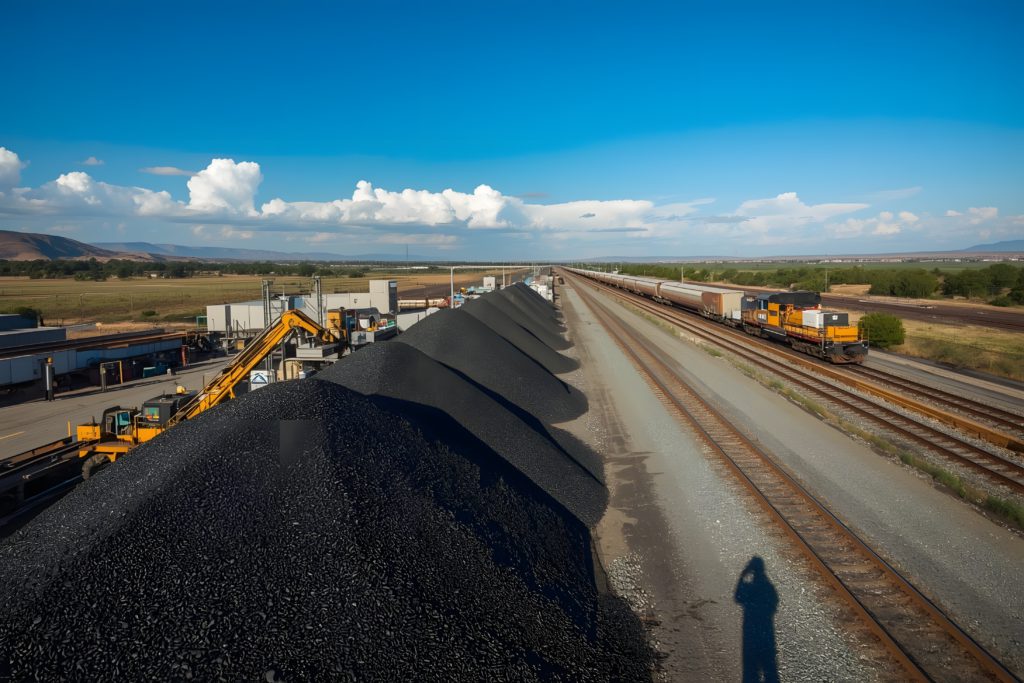
Coal mining and processing in South Africa.

Finding bullish exporters of thermal coal has been tricky of late given soft prices, lower demand from heavyweight buyers China and India, and for Indonesian miners an additional headache of uncertainty over government policy.

But there is one group of coal exporters that seem quite ebullient. South Africa’s miners are looking forward to increased demand from their top buyer India as well as improving rail infrastructure that will allow for higher volumes.

However, the coal that South African producers see strong demand for is not for the traditional use of generating electricity; rather, it is for industrial processes such as making sponge iron and cement.

The upbeat mood was very much in evidence at the South African Coal Conference, organized by McCloskey by OPIS last week in Cape Town.

The basic message was that South Africa’s rail network is finally being restored, with as much as 6 million metric tons more coal expected to be moved in 2026.


South Africa’s coal exports were 60.96 million tons in 2025, according to data compiled by commodity analysts Kpler, with half going to India.

This was up from 58.13 million tons in 2024 and marked a third straight year of gains, although it should be noted that they are still shy of the 77.2 million recorded in 2018.

If South Africa’s miners can lift exports to around 65 million tons in 2026, they are confident that they have a growing market for their product.

India is the world’s largest producer of sponge iron, an intermediate product between iron ore and crude steel.

It produced about 55.7 million tons in the 2024-25 fiscal year, according to the Sponge Iron Manufacturers Association, and analysts have estimated this may rise to around 75 million tons by 2030 given India’s strong demand for steel.

Each ton of sponge iron requires around 1.2 tons of coal to produce, and South African coal is in the sweet spot of the type needed for the process.

Sponge iron production is generally most efficient when using coal with an energy content of around 5,000 to 5,500 kilocalories per kg (kcal/kg).

While Australian, Russian and US miners also produce similar quality coal, South Africa’s proximity to India gives it an edge on a delivered cost basis.

Indonesia, the world’s largest coal exporter, generally produces lower energy coal, which is popular with Indian electric utilities because it is cheaper than grades from other producers.

With little competition from Indonesia, South Africa is the supplier of choice to India’s sponge iron producers, who struggle to source sufficient domestic coal as policy dictates that power companies have priority.

If sponge iron production does rise by 20 million tons per annum by 2030, this implies additional coal demand of 24 million tons.

South Africa will be unable to meet this by itself, but it stands to reason that the country’s exporters will be able to sell whatever volumes they can ship given the strong demand.

Cement helps

India’s cement producers also rely on imported coal, and they also expect to increase output from 453 million tons in the 2024-25 fiscal year to around 480 million in the current 12-month period.

While cement production is less coal-intensive than sponge iron, it takes up to 250 kg of coal to make a ton of cement.

This implies that rising cement output will boost India’s coal demand by several million tons a year, and the domestic market is unlikely to be able to meet all the demand growth, meaning imports will once again come to the fore.

The question is whether this demand will spark a rally in coal prices, which dropped to four-year lows in the middle of last year, and the recovery since then has been modest.

Much will depend on coal demand for the grades produced by South Africa, and that means China and the developed economies of North Asia such as Japan and South Korea will be key.


It’s likely that demand for higher quality thermal coal from these countries will be flat to trending weaker as Japan and South Korea limit coal-fired power generation and China continues to roll out renewables at a rapid pace.

But even if seaborne prices are relatively stable, South Africa’s exporters should still be able to sell all they can ship given their relative advantage over their competitors.

(The views expressed here are those of the author, Clyde Russell, a columnist for Reuters.)

(Editing by Christian Schmollinger)


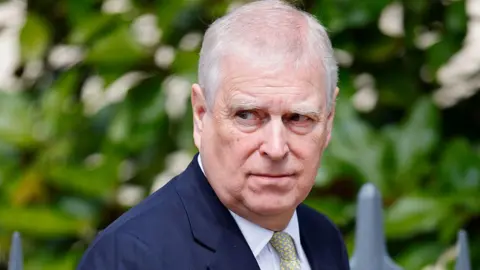
Andrew shared confidential information with Epstein as trade envoy, files suggest


Andy Verity
BBC


Andrew Mountbatten-Windsor appears to have knowingly shared confidential information with Jeffrey Epstein from his official work as trade envoy in 2010 and 2011, according to material in the latest release of files in the US seen by the BBC.

Emails from the recently-released batch of Epstein files show the former prince passing on reports of visits to Singapore, Hong Kong and Vietnam and confidential details of investment opportunities.

Under official guidance, trade envoys have a duty of confidentiality over sensitive, commercial, or political information about their official visits.

The former Duke of York, who served as trade envoy between 2001 and 2011, has been contacted for comment but is yet to respond.

Andrew has consistently and strenuously denied any wrongdoing. Being named in the Epstein files is not an indication of misconduct.

The emails indicate that on 7 October 2010, Andrew sent Epstein details of his official upcoming trips as trade envoy to Singapore, Vietnam, Shenzhen in China and Hong Kong, where he was accompanied by business associates of Epstein.

After the trip, on 30 November, he appears to have forwarded official reports of those visits sent by his then-special assistant, Amit Patel, to Epstein, five minutes after receiving them.


US Department of Justice

Andrew told BBC Newsnight in 2019 that he last saw Epstein in New York in early December 2010 to tell the disgraced financier he was breaking off the friendship.

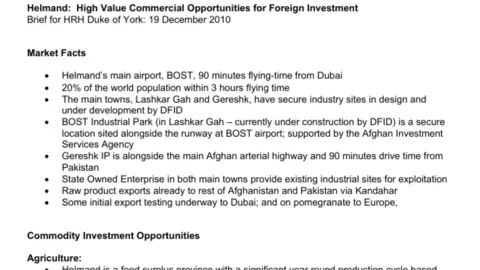
However, on Christmas Eve that year, he emailed Epstein a confidential briefing on investment opportunities in the reconstruction of Helmand Province, Afghanistan, which was overseen at the time by British armed forces and funded by UK government money.

By this time, Epstein was already a convicted sex offender.

Sir Vince Cable, who was then business secretary, said: "I was unaware of Andrew... sharing information about investment opportunities [in Afghanistan] before, this is the first I've heard of it."

In a further email dated 9 February 2011, Andrew suggests Epstein might invest in a private equity firm he visited a week before.

Official terms of reference for trade envoys state that they "are not civil servants", adding: "However, the role of a Trade Envoy carries with it a duty of confidentiality in relation to information received. This may include sensitive, commercial, or political information shared about relevant markets/visits.

"This duty of confidentiality will continue to apply after the expiry of their term of office. In addition, the Official Secrets Acts 1911 and 1989 will apply."

Andrew has faced years of scrutiny over his past friendship with Epstein.

He was stripped of his royal titles in October last year following increasing numbers of questions about his links to the late, convicted sex offender.

Earlier in February, Andrew moved out of his home in Windsor to the Sandringham Estate in Norfolk.

Buckingham Palace had announced in October that he would be moving from Royal Lodge, at the same time his title of prince was removed.

The former prince left the property on Monday night and is currently living at Wood Farm on the Sandringham Estate while his new permanent home undergoes renovations.

Brief sent by Andrew to Epstein included gold investments, file seen by BBC suggests

Sean Coughlan, Royal correspondent
James Landale, Diplomatic correspondent


The former Prince Andrew travelled the world as the UK's trade envoy

A document apparently sent by Andrew Mountbatten-Windsor to Jeffrey Epstein included information on investment opportunities in gold and uranium in Afghanistan.

The BBC has seen a briefing, prepared for Andrew by UK officials when he was a trade envoy, which he forwarded to the convicted sex offender in December 2010 and includes a list of "high value commercial opportunities" in Helmand province.

This comes after the BBC reported that the former prince had called the document "confidential," according to an email in the latest tranche of Epstein files.

Andrew has been approached for comment but has yet to respond. Previously he has strongly denied any wrongdoing in his associations with Epstein and rejected any suggestion he used his time as trade envoy to further his own interests.

Andrew shared confidential information with Epstein as trade envoy, files suggest


Police assessing claims about Andrew sharing confidential trade details


King 'ready to support' police as they assess Andrew claims over Epstein


Who is in the Epstein files?


Sir Vince Cable, who was business secretary at the time, described sharing the briefing as "appalling behaviour".

Thames Valley Police are already assessing whether to investigate the apparent sharing of documents related to Andrew's time as trade envoy.

In a new statement on Wednesday, police said: "We can confirm today that Thames Valley Police is leading the ongoing assessment of allegations relating to misconduct in public office.

"As part of this assessment, we have engaged in discussions with Specialist Crown Prosecutors from the CPS. We will provide updates as and when they are available, but at this stage it would be inappropriate to discuss further specifics of this work.

"During an assessment phase, information is evaluated to determine whether a criminal offence is suspected and whether a full investigation is required. Allegations of misconduct in public office involve particular complexities, and therefore an assessment must be conducted carefully and thoroughly."

As well as the Afghan document, Andrew also seems to have sent the disgraced financier official reports from his visits as a trade envoy to Singapore, Hong Kong and Vietnam, according to emails in the Epstein files seen by the BBC.

Emails in the files raise the possibility Andrew shared further trade documents with Epstein. One message indicates that a few seconds after sending the reports from the South East Asia visits, the former prince then sent a second batch of files called "Overseas bids".

These seem to be "Zip files" that usually contain many compressed pieces of information.

The Afghan document, which is in the Epstein files, was compiled by UK government officials specifically for the then Duke of York.

It provides an extensive overview of investment opportunities in Helmand province, at a time when the UK was militarily and politically committed to rebuilding Afghanistan.

As Andrew said in his note to Epstein, it's a "confidential brief produced by the Provincial Reconstruction Team in Helmand Province".

It was a briefing produced for Andrew - who was trade envoy between 2001 and 2011 - in the same month that he visited Helmand, where he saw UK troops based there.

It gives an assessment of the current local economy and the business opportunities, including "significant high value mineral deposits" and the "potential for low cost extraction".

This includes valuable natural resources such as marble, gold, iridium, uranium and thorium and also possible deposits of oil and gas, with the information prepared by UK government officials, working for the Helmand reconstruction team.

According to official guidance, trade envoys have a duty of confidentiality over sensitive, commercial, or political information about their official visits.


US Department of Justice


Sir Vince, who was seen as instrumental in ending Andrew's time as trade envoy, called for more transparency on Andrew's time as trade envoy.

"I have twice in the past asked to see the file on Andrew as trade envoy and, strangely, it is empty," he said.

"I met Andrew once as secretary of state, when I was invited to Buckingham Palace and he was asking me to find something useful for him to do. I didn't.

"Shortly after, in 2011, the first publicity appeared about his friend Epstein and I discontinued the envoy role," said Sir Vince.

The role of trade envoy is to promote the UK's business interests overseas and to encourage investment.

Speaking anonymously, a diplomatic source suggested that an envoy such as Andrew might legitimately have shared information with potential investors, encouraging them to support UK international business initiatives, which might have included in Afghanistan.

Andrew's apparent note to Epstein says he is going to "offer this elsewhere in my network (including Abu Dhabi)".

On the wider principle of sharing documents, a former senior trade official said many of the reports seen by a trade envoy would have been quite "pedestrian", but sometimes the former Duke of York had "really important meetings with really important people" that produced real commercial opportunities.

"So it is always possible that there were significant commercial things in the documents which would have been useful," the former official said.

"They were absolutely not for sending outside government and particularly not to somebody who might seek to use them for commercial purposes. This was certainly not something a trade envoy could possibly do and justify in any way."

The former prince continues to be dogged by his links to Epstein after the latest tranche of documents released by the US government included pictures of Mountbatten-Windsor, fully clothed, kneeling on all fours over a woman lying on the ground.

He is facing growing pressure to testify in the US about his links to Epstein and last week moved from his Windsor home to the Sandringham Estate in Norfolk.

On Monday a Buckingham Palace spokesperson said the King was ready to support the police as they consider allegations against his brother.

Investors Back Away from DP World as CEO's Links to Epstein Scandal Appear

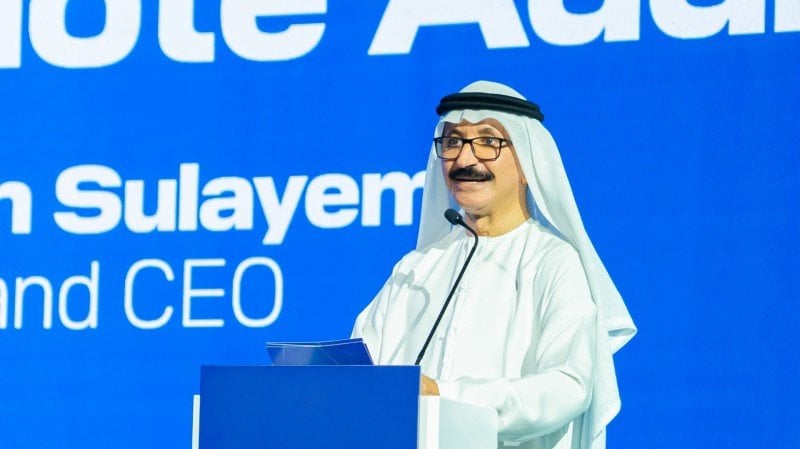
DP World chairman and CEO Sultan Ahmed bin Sulayem
Sultan Ahmed bin Sulayem had led DP World for 20 years building it into a powerhouse in ports, shipping, and logistics (DP World)

Published Feb 11, 2026 4:21 PM by The Maritime Executive


While the shipping world seemed to be far removed from the growing U.S. scandal around convicted sex offender Jeffrey Epstein, logistics giant DP World is now coming under pressure due to revelations about its long-time Chairman and CEO. Two giant institutional investors have announced they are suspending future investments with the company until it addresses the situation.

Sultan Ahmed bin Sulayem has led the global giant for nearly 20 years and built its global portfolio. At first, the reporting of his friendship with sex offender Jeffrey Epstein seemed to be prurient curiosity, but as the U.S. Department of Justice continued to release large batches of material, it became clear that it was a long-running friendship that involved messages of a sexual nature and assisting Epstein. DOJ is quick to point out that inclusion in the files is not evidence in and of itself of a crime, but the CEO’s name reportedly appears many times over many years. The friendship appears to have continued after Epstein’s conviction in 2008 and until shortly before he died in 2019.

The pension fund of Quebec, Canada, and the second largest in Canada, La Caisse (Caisse de dépôt et placement du Québec), was the first to act. It noted that the individual and the company were separate, but that it would “pause additional capital deployment,” with DP World. It said it expects DP World to address “the situation and take the necessary actions.”

La Caisse, which currently has a portfolio worth US$366 billion, has a relationship with DP World dating back a decade. It announced that it would invest $3.7 billion in 2016 into the company’s ports and terminals. In 2022, it announced another $5 billion, including investments in the Dubai port of Jebel Ali, and in September 2025, reported it would partner with DP World for the Port of Montreal expansion at Contrecoeur.

Today, February 11, the British investment giant British International Investment, with a portfolio valued at over $9 billion, announced it would also be suspending investments with DP World. Reuters reports BII is currently invested in at least four African ports alongside DP World.

Bin Sulayem, age 70, is a prominent Emirati businessman and has a close association with the royal family, which oversees DP World and the country’s other major companies. He reportedly began working at the Jebel Ali port in the 1970s, which was also the origin of DP World. He became chairman of the company in 2007 and CEO and Chairman in 2016.

According to the company, under his leadership, the company undertook strategic investments and acquisitions, and today is responsible for approximately 10 percent of the global container trade. In 2006, DP World acquired the venerable British shipping company P&O for $6.8 billion. The company also made investments, including Imperial Logistics and Syncreon, and recently announced it would be unifying its operations under the DP World brand

Bin Sulayem, in his company profile, is reported to have also established Nakheel. The real estate and tourism company in Dubai is known for major projects including The Palm, built on an artificial island, the conversion of the liner Queen Elizabeth 2 into a hotel, and other businesses, including the Dubai Multi Commodities Centre.

The company’s profile says that it contributes more than 36 percent to the GDP of Dubai and about 12 percent to the GDP of the UAE. It operates in more than 80 countries. Last year, it reported nearly $20 billion in revenues.

Seven killed in gold mine accident in eastern China, state media reports

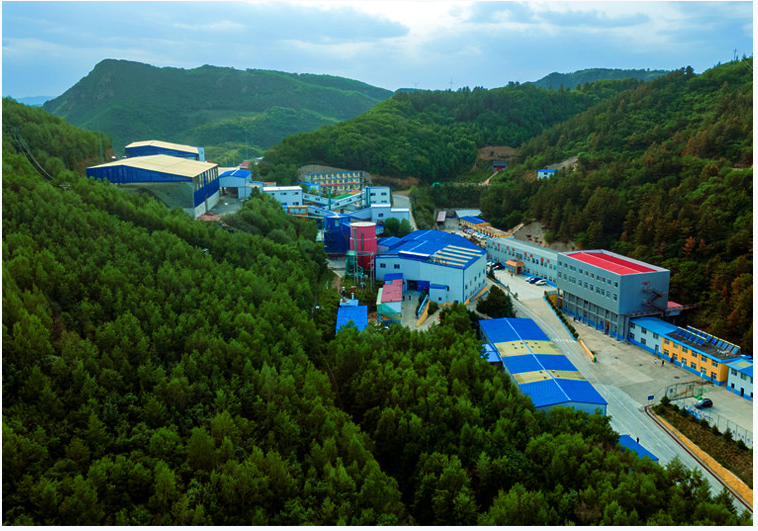
Fengning Jinlong mine and processing operations. Credit: Zhaojin Mining Industry

Seven people were killed in a gold mine accident in China’s eastern Shandong province, and authorities were investigating, state-run CCTV reported, sending shares of the mine owner, Zhaojin Mining Industry, down 6% on Tuesday.

The accident occurred on Saturday when a cage fell down a mine shaft, CCTV reported late on Monday night.

The emergency management and public security departments were investigating the cause of the accident, and whether there had been an attempt to cover it up, the report added.

The mine is owned by leading gold producer Zhaojin Mining Industry, according to the Qichacha company registry. Shares of the company were down 6.01%, as of 05:25 GMT. A person who answered Zhaojin’s main phone line told Reuters that the matter was under investigation and declined to answer further questions.

China’s emergency management ministry on Monday held a meeting on preventing accidents during the upcoming Lunar New Year holiday. It announced inspections of mines, chemical companies, and other hazardous operations.

Also on Saturday, an explosion at a biotech company in northern China killed eight people.

(By Colleen Howe; Editing by Rashmi Aich)

Mexico makes arrests after Canadian Silver miner’s workers found dead

Stock image.

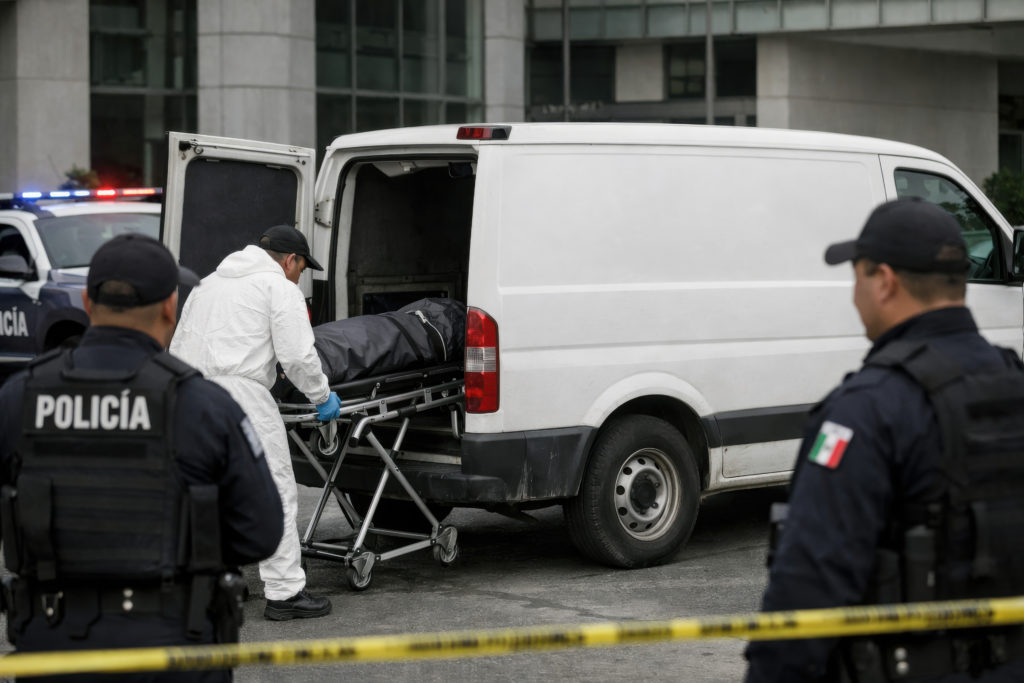
Mexican authorities said they arrested four suspects linked to the kidnapping of miners from Canada’s Vizsla Silver Corp. Panuco project east of the Pacific Coast city of Mazatlan in January.

The Attorney General’s Office said in a statement that five of Vizsla’s workers had been found dead, after 10 people were abducted from the project, and officials were working to identify another five bodies. Mexico’s Security Minister Omar Garcia Harfuch said that the miners could have been mistaken for part of a criminal group in Sinaloa State.

“In the army’s arrest of the four people presumably responsible for the illegal kidnapping, they mentioned that they confused them, according to early statements, with members of a rival group,” Garcia Harfuch said at a press briefing Tuesday.

The four suspects are part of the criminal group Los Chapitos, which has an ongoing feud with another group known as Los Mayos, Garcia Harfuch said.

Los Chapitos is considered part of the Sinaloa Cartel and led by the sons of Joaquín “Chapo” Guzmán, the drug trafficker imprisoned in the US. Los Chapitos control drug trafficking in much of western Mexico, including of fentanyl and cocaine.

The Mexican government has been trying to reduce violence in the state since 2024, when a battle between warring factions of the Sinaloa Cartel led to an increase in homicides after the capture of the cartel’s co-founder Ismael “El Mayo” Zambada. Last month, as part of efforts to quell the violence, the government deployed 1,600 more members of the military to the state.

Vancouver-based Vizsla had earlier said that the families of the missing employees informed the company that their relatives had been found dead.

Shares in the company extended declines Tuesday, after closing 12% lower in Toronto on Monday.

The developer suspended operations at the project in January, after reporting that 10 people had been taken from the site in Concordia in Sinaloa state. Vizsla said information about the incident was limited, and that it had engaged crisis management and security response teams.

Vizsla is preparing to start construction at Panuco later this year, and expects to start producing silver in the second half of 2027. The project has 31.4 million ounces of silver equivalent in proven reserves, according to the company.

(By Sybilla Gross and Maya Averbuch)