It’s possible that I shall make an ass of myself. But in that case one can always get out of it with a little dialectic. I have, of course, so worded my proposition as to be right either way (K.Marx, Letter to F.Engels on the Indian Mutiny)
Thursday, February 12, 2026
Pt
Platinum deficits to persist as EV rollout slows, Valterra says
A slower-than-expected rollout of electric vehicles will help keep platinum-group metals in supply shortfalls over the coming years, according to the chief executive officer of major miner Valterra Platinum Ltd.
The EV boom had long weighed on platinum and sister metal palladium, as a large chunk of production is used in catalytic converters to curb pollution from internal combustion engine vehicles. Still, a slower-than-expected adoption of EVs in some markets has helped boost sentiment around the metals
In December, the European Union in December eased requirements that would have halted sales of new gasoline and diesel-fueled cars starting in 2035.
PGMs “will continue to be in a supply-demand deficit for a number of years,” Valterra CEO Craig Miller said in an interview with Bloomberg TV. The pace of the transition to EVs has not been “as dramatic as some of the forecasts were,” he said.
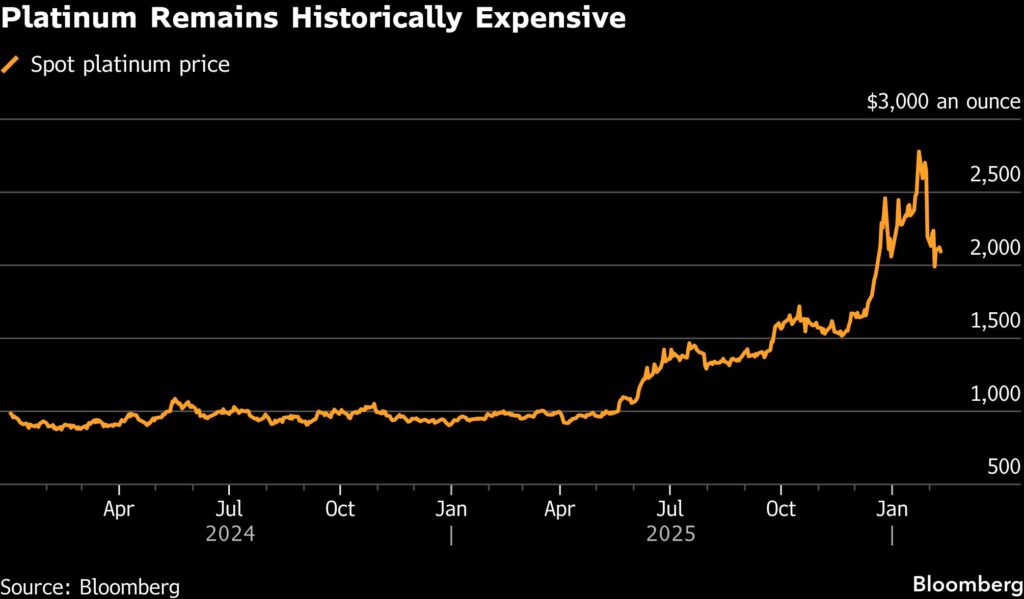
Platinum — which has been in a deficit for the last few years — spiked to a record last month. While prices have since pulled back about 28%, they remain historically high.
Aside from supply-and-demand fundamentals, platinum and palladium have also seen a wave of speculative buying over the past year, rocketing higher alongside gold and silver as investors sought precious metals as a haven.
Valterra in January said its profit likely more than doubled last year as a result of the rally. The former subsidiary of Anglo American Plc became an independent company in the middle of last year – around the time PGM prices began to recover following a lengthy downturn.
(By Jack Ryan and Jennifer Zabasajja)
China’s Premier inspects rare earth facilities, hints at leverage in US rivalry
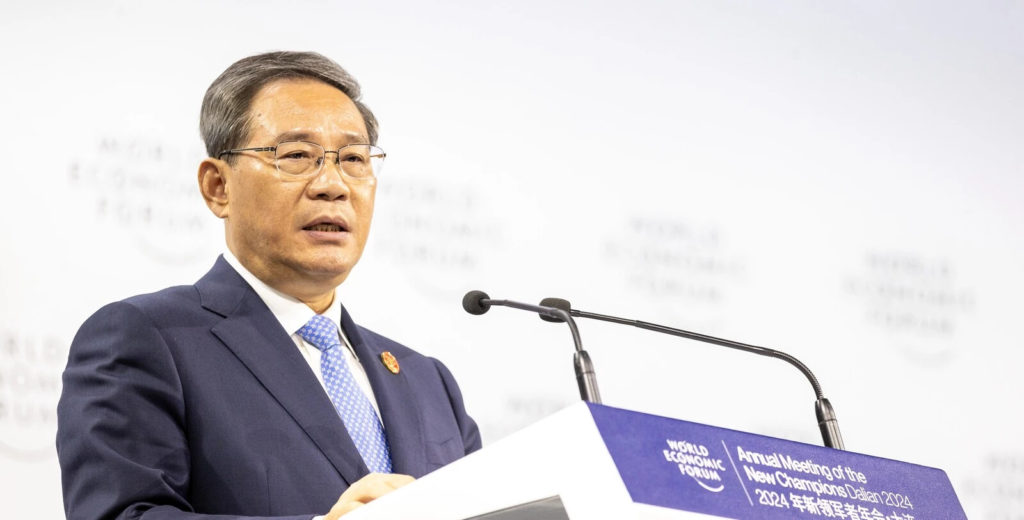
China’s second-ranking official, Premier Li Qiang, inspected rare earth facilities in the southern province of Jiangxi on Tuesday, state news agency Xinhua reported, using the visit to hint at intensifying competition with the US over strategic minerals.
Such pre‑holiday inspections are traditionally moments for China’s top leadership to telegraph policy direction before Lunar New Year festivities begin. Wednesday’s readout subtly pointed to how access to components essential to everything from autos to smartphones has become one of Beijing’s most potent bargaining chips in negotiations with Washington.
Rare earths are also key to the manufacture of weapons.
“The important value of rare earths in developing advanced manufacturing and promoting green and low-carbon transformation is becoming increasingly prominent,” Li was quoted as saying, a veiled reference to the turmoil manufacturers were plunged into last year when China abruptly tightened rare earth export controls after Washington further restricted Chinese investment in the US.
“It is necessary to promote the deep integration of industry, academia, research and application, (and) expand the application of rare earth technology,” Li added.
Analysts say the US and China face a contest to guarantee long-term access to the critical minerals, one that could see Beijing gain a new foothold in global corporate decision-making should it follow through and introduce legislation requiring companies using even trace amounts of Chinese rare earths to report their intentions to its commerce ministry.
Li did not directly mention the US in his recorded remarks. He visited a research institute under the Chinese Academy of Sciences think tank, the report added, along with several unnamed enterprises in the rare earth production line.
US Vice President JD Vance last week unveiled plans to marshal allies into a preferential trade bloc for critical minerals, proposing coordinated price floors as Washington escalates efforts.
(By Joe Cash; Editing by Chris Reese and Lincoln Feast)
Indonesia identifies eight blocks with large rare earth reserve potential
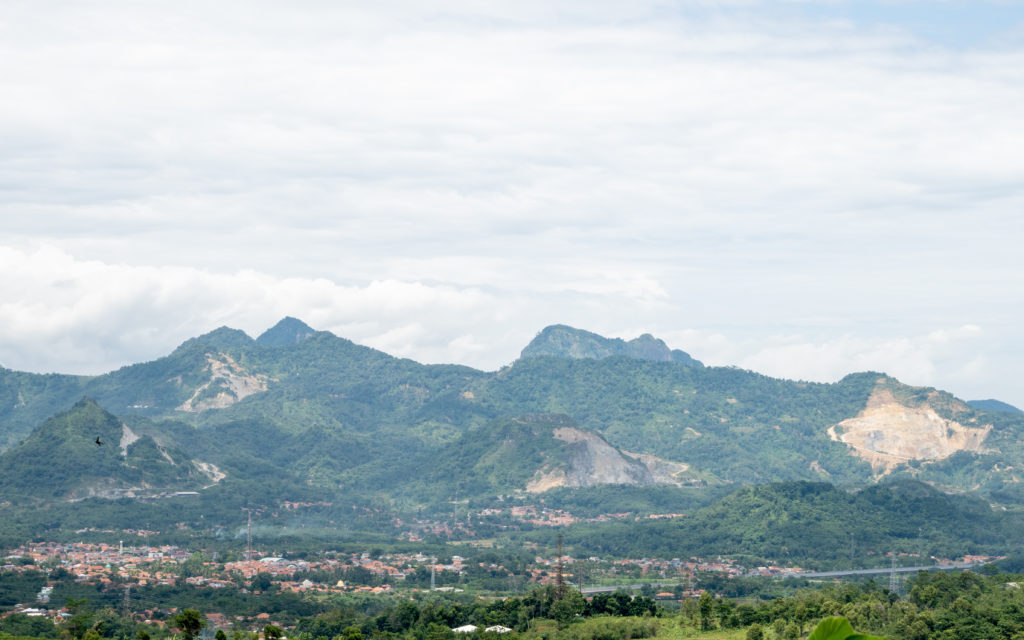
Indonesia has identified eight mining blocks with large potential for rare earth elements and plans to launch two research projects to develop rare earth processing technology, the head of a government mineral industry agency said on Monday.
Indonesia, an archipelago and the largest economy of Southeast Asia, has large reserves of a number of critical minerals as well as deposits of rare earth elements. Rare earths are a group of 17 elements including 15 silvery-white metals used to make magnets – which in turn power motion for electric vehicles, cell phones and missile systems.
The archipelago is also the world’s largest producer of nickel products as well as the biggest exporter of tin.
Mineral Industry Agency chair Brian Yuliarto said that the eight mining blocks with significant potential for rare earth elements and other strategic minerals were identified in places such as Kalimantan, Sulawesi and Bangka Belitung islands.
“Apart from rare earths, some of these blocks also contain several other minerals, namely tungsten, tantalum and antimony, which play a very large role in the defence industry,” Yuliarto told members of parliament.
The blocks will be mined by the new state-owned miner Perminas, he added.
Yuliarto declined to give details on the estimated reserves for the minerals but said they had “promising enough” reserves to compete with other countries.
He said his agency planned to launch the two research projects “in the near future” in Mamuju, West Sulawesi in the centre of Indonesia, adding that the research projects will be done in parallel with preparations for mining exploration of the rare earth elements.
(By Fransiska Nangoy; Editing by Emelia Sithole-Matarise)
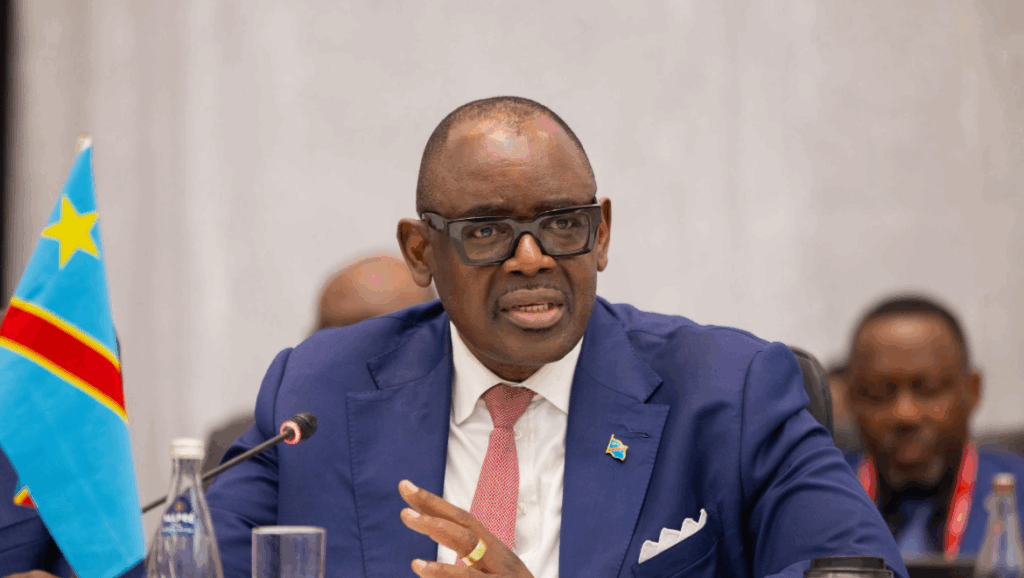
Congo says it would seek other partners if US minerals framework fails
The Democratic Republic of Congo will look for other partners if its minerals cooperation framework with the US does not lead to concrete projects, the country’s mines minister said.
“Everything we have done with America is a framework under which we will discuss questions of mutual interest. That is all it is,” Louis Watum Kabamba said on the sidelines of the Indaba mining conference in Cape Town.
“It may become a good major project. It may also become another project that does not interest them. We will continue because there are many other partners to discuss with.”
Congo, home to some of the world’s largest reserves of cobalt, copper and lithium, in December signed a framework agreement with the US aimed at developing a supply chain for critical minerals used in data centres, defence and electric vehicles.
Washington wants access to a spectrum of natural resources as it scrambles to counter China’s dominance.
But the minister said the arrangement remained preliminary.
“For those who think we are going to sell everything for nothing to America, I must be very clear: we have sold nothing. And we will sell nothing for nothing,” he added.
Watum Kabamba said Congo’s minerals endowment is exploited at less than 10% today. The central African country hosts major mining companies including Western-listed Glencore and Ivanhoe Mines, as well as China’s CMOC Group and Zijin Mining.
“The rivalry between China and the United States – we are not interested in it. We must play our own game as the DRC,” he said. “We have our own problems. We must feed people. We must invest in human capital for our youth.”
(By Clara Denina and Maxwell Akalaare Adombila; Editing by Mark Potter)
AU
Australia’s St Barbara unveils bold Canadian gold push
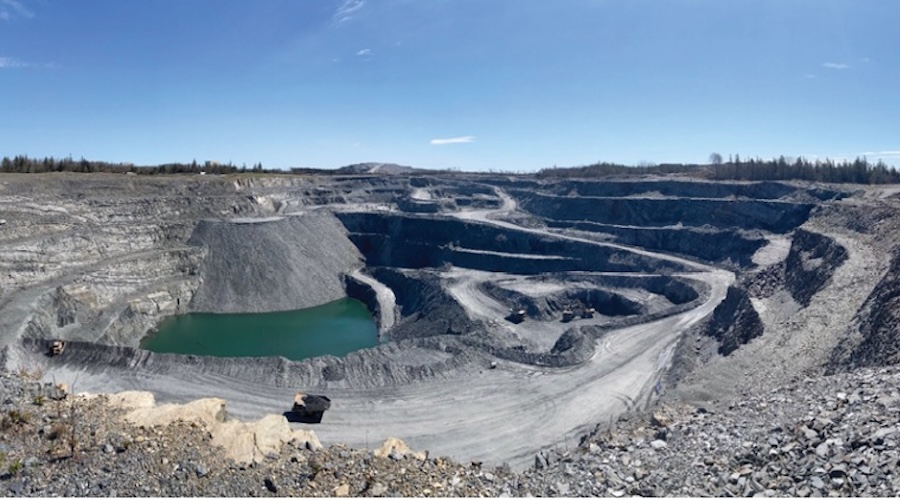
The former Touquoy gold mine in Nova Scotia. (Image courtesy of St Barbara)
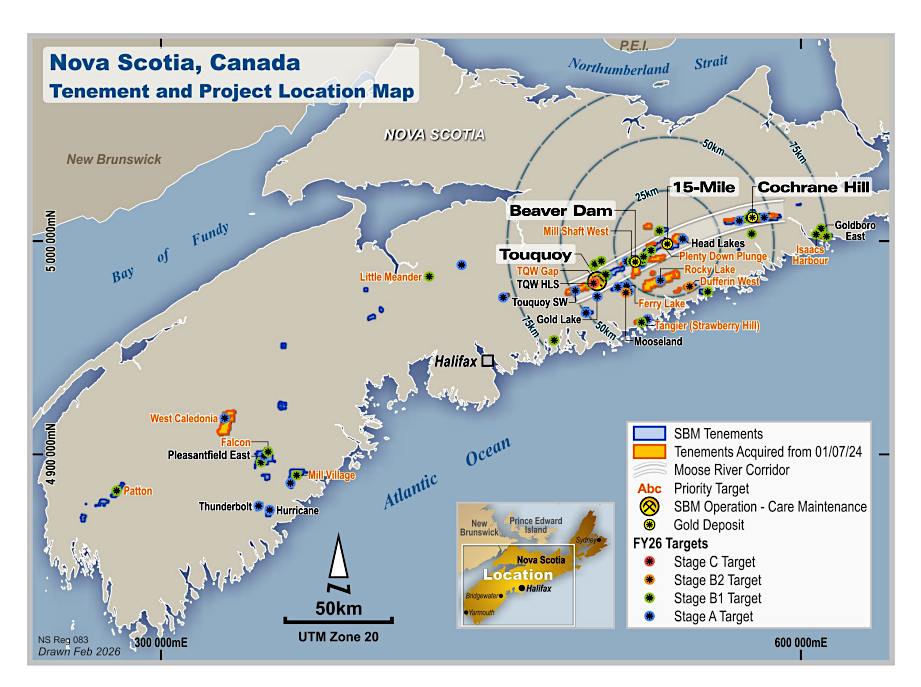
Australia’s St Barbara (ASX: SBM) has unveiled an aggressive exploration strategy in Nova Scotia as it advances plans to redevelop its 15-Mile open pit gold mine and processing hub project and reshapes its global portfolio.
The company has assembled a 697 sq. km land package in the Canadian province over the past two years, consolidating ground around its proposed 15-Mile hub despite licence reviews that trimmed its overall tenure and ongoing permitting challenges as the Touquoy mine winds down.
Since acquiring Atlantic Gold in 2019, St Barbara has built a dominant position across prospective ground, identifying 56 targets within a 75 km radius of the planned hub. The targets focus on the Moose River Formation and 12 regional prospects within the Goldenville Group metasediments.
Its landholding spans 164 km of prospective anticlines, including 75 km where the favourable Moose River Formation is exposed at surface or lies beneath shallow cover, in some areas less than 30 metres deep.
St Barbara describes the targeted gold systems as classic mesothermal deposits, comparable to those in Victoria’s goldfields, New Zealand’s South Island and California’s Mother Lode belt.
Fieldwork is set to begin in May, combining surface sampling and reverse circulation drilling, with targets refined through a comprehensive structural review supported by newly acquired geophysical data. The company has also secured ground at Rocky Lake to test for northeast extensions of the Mooseland Anticline.
The exploration push supports redevelopment plans at 15-Mile. A prefeasibility study released earlier this year projected annual production of 103,000 oz at all-in sustaining costs of $1,188/oz over an initial 11-year mine life. At a gold price of $3,000/oz, the project carries a post-tax net present value of A$1.4 billion and an 80% internal rate of return. St Barbara estimates the C$283 million cost to relocate the Touquoy plant and rebuild infrastructure could be repaid in about 12 months.
Spot gold remains above $5,000 per ounce. Before 15-Mile enters production, St Barbara expects to process Touquoy stockpiles containing 38,000 ounces of the precious metal.
Renewed Canadian focus
The Nova Scotia push follows last year’s aborted attempt to spin off or sell the former Atlantic Gold assets. After failing to attract sufficient interest, St Barbara opted to advance development instead, citing what it sees as a more workable permitting environment.
At the same time, the company is moving to exit its Simberi gold project in Papua New Guinea. It agreed to sell a combined 50% stake to China’s Lingbao Gold Group and PNG’s Kumul Mineral Holdings for up to A$470 million in staged cash payments and loans. The deal, expected to close by the end of March, aligns with a final investment decision on Simberi’s next phase.
St Barbara said the transaction would fully fund its share of the $325–345 million sulphide expansion, which aims to lift production to 200,000 ounces a year. Simberi’s remaining oxide operations are considered marginal due to high costs.
Shares in St Barbara rose 10.5% to 79 Australian cents in Sydney on Wednesday, valuing the company at A$950 million ($677 million). The stock has gained 34% year to date and traded traded between 19 and 82 Australian cents over the past year.
Much of the gold sector’s growth in Atlantic Canada — Nova Scotia, New Brunswick and Prince Edward Island — has occurred only in the last decade, as investors are slowly discovering the region’s potential.
Evolution Mining Ltd. will use its record profits off the back of high gold prices to push ahead with two major high-grade expansion plans, according to chief executive officer Lawrie Conway.
Australia’s second-largest gold miner will proceed with A$794 million ($562 million) worth of expansions at its Northparkes mine in New South Wales and its Ernest Henry copper-gold hub in Queensland, while also widening its footprint in Canada, Conway said in an interview with Bloomberg TV on Wednesday. The projects were chosen because of their high rate of return.
Evolution shares rose as much as 7.3% in Sydney, after the company reported a record underlying profit of A$785 million over the half year ended Dec. 31. That was up 104% on an annual basis.
The miner is focused on quality assets with higher rates of return, resisting pressure to simply pull ounces out of the ground with lower margins, Conway said. He added that Evolution’s portfolio to date is averaging an 18% return thanks to a historic rally in gold prices, which remain elevated.
“When you look at the projects in the pipeline, they range from 23% right up to 48% if you take the current price environment,” he said. “It’s the right time to be investing in these projects because they’re going to generate materially higher returns than what the portfolio is already delivering.”
The miner will fund the developments from its existing balance sheet of A$967 million, he added.
Evolution’s closest peer, Northern Star Resources Ltd., will report its half-year earnings on Thursday.
(By Paul-Alain Hunt, Shery Ahn, Avril Hong and Andy Clarke)
Ag
Silver’s historic surge fuels rush to sell heirlooms and coins
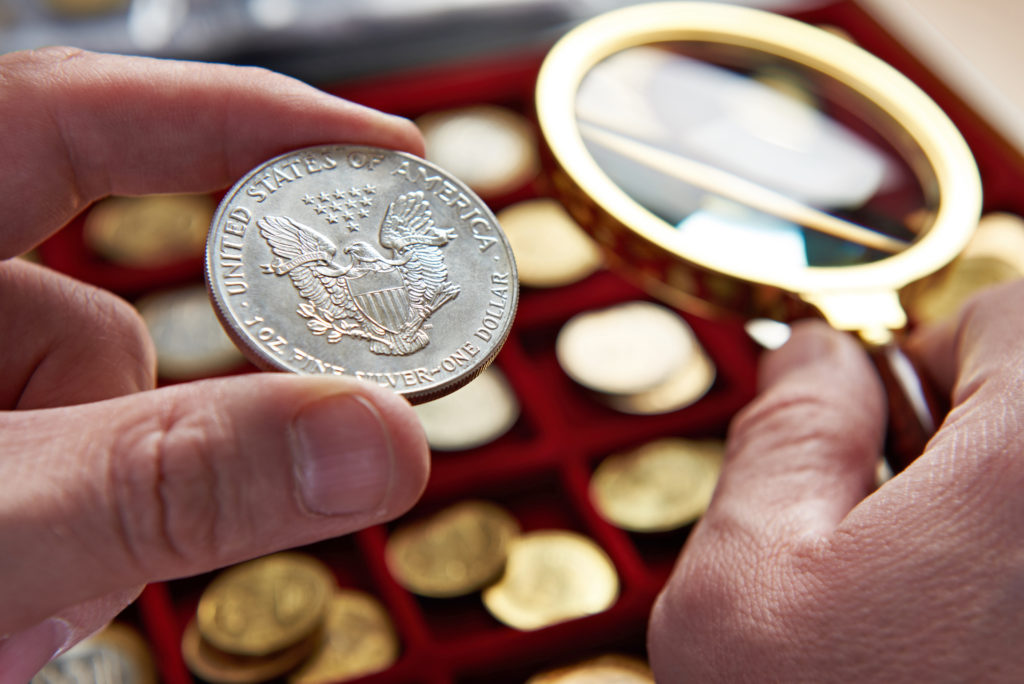
Sol Glatstein, a 79-year-old resident of Manhattan’s Upper East Side, took a bus downtown one day last month to sell a mint-condition American Silver Eagle dollar coin inherited from his parents for $100.
Until this year, Glatstein had planned to pass the coin on to his one-year-old grandson. But the recent record-breaking rally in silver prices prompted him to cash in.
Across North America, many others are doing the same. Coin and jewelry shops are seeing a rush of customers seeking to sell their collectibles, silverware and family treasures after a historic surge in silver prices.
Despite its status as a precious metal, silver has lacked the allure of gold — a more popular investment for those seeking a store of wealth. But the extreme rally in silver prices over the past few months has spurred a reappraisal of the silver items sitting in drawers and cupboards at home.
Some customers are coming in with “stuff that they’d completely forgotten that they had, and it was just sitting in a safety deposit box or in a closet somewhere,” said Greg Cohen, a senior numismatist at Stack’s Bowers Galleries, a rare coin shop on Park Avenue in Midtown Manhattan. “They never thought about it until now. And then they realize, wow, this actually added up to quite a bit.”
Glatstein had worried his silver coin might eventually be lost. After selling it at Stack’s Bowers, he said cash in hand gives him more options to treat his grandson. “I have $100. I can go to Ralph Lauren and buy him an outfit.”
It’s been a busy year at Stack’s Bowers, which has locations worldwide and is owned by Gold.com Inc. At its Manhattan store, the average number of daily visitors has grown to 50 from 30 over the last year, Cohen said. Most are there to sell, he said.
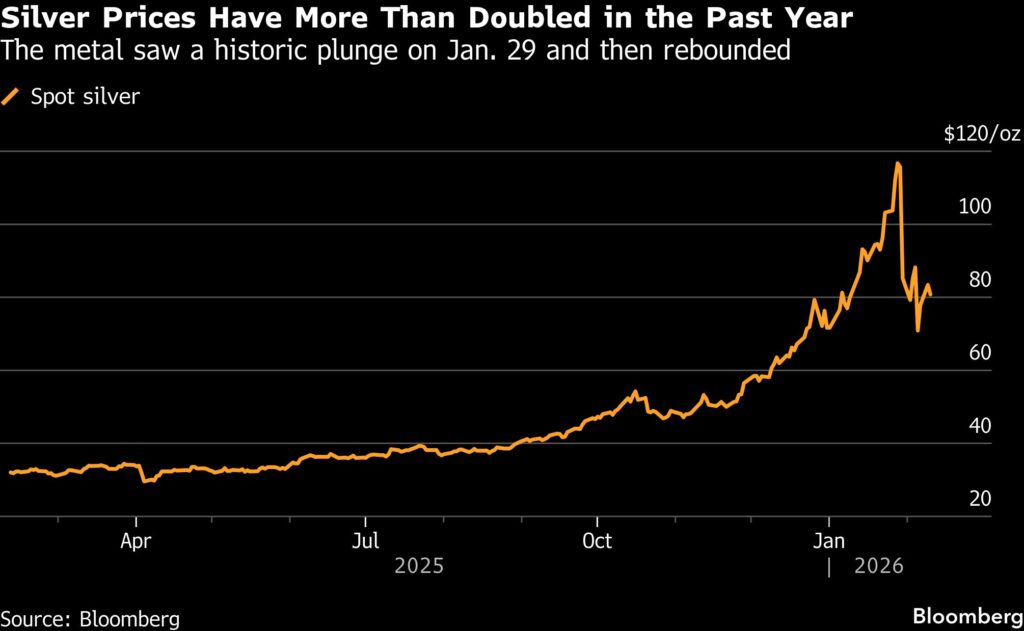
Silver prices have swung sharply in recent weeks, but remain more than double their level a year ago. That’s lifting the melt value of silverware, jewelry and coins above what many collectors once prized them for.
“Everyone’s grandma is selling their chandelier, forks and knives — anything that’s made of sterling silver to utilize the silver prices,” said Gene Furman, owner of King Gold & Pawn and Empire Gold Buyers, which has locations around the New York City area.
The decision to sell silver heirlooms over gold reflects retail investors’ price expectations, said Philip Newman, managing director at research consultancy Metals Focus. As gold hit successive record highs, many holders chose to sit tight, expecting further gains and seeing little reason to sell amid broadly healthy financial markets, he said. People are less certain about whether silver will keep climbing so they’re opting to cash in while gains are still impressive.
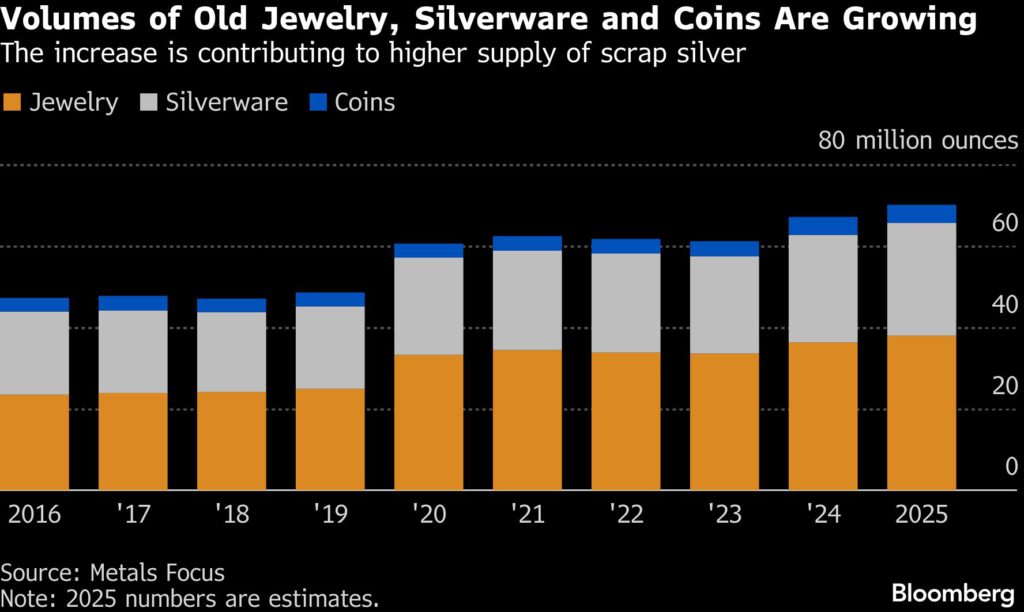
Recycled or scrap silver accounted for about 19% of total supply in 2025, and volumes from jewelry, silverware and coins have been significantly higher than analysts expected during the past year, Newman said. “We were surprised by it.”
Dealers are reporting that January was their strongest-ever month, driven by a surge in trading volumes for silver and bullion products. Silver transactions have climbed as the pre-1965 US silver dollar coins almost tripled in value since the beginning of last year.
“It’s coming in droves and droves,” Gary Tancer, owner of Coin & Jewelry Gallery of Boca Raton, said in an interview. Tancer said he bought 10 times more than he usually does in a year in January. “The average check I’m writing is probably in the eight to $10,000 range.”
Canada Gold, one of North America’s top precious-metals dealers, refined a record 2 metric tons of scrap silver in December alone, according to Chris Pollock, founder and managing partner.
“A lot of these are coins that previously people would’ve proudly kept in their coin collections,” he said. “Now we’re seeing these get melted down.”
The huge influx of silver flowing into the market is straining refiners, which take scrap and other metal-bearing materials and process them into high-purity products such as bullion bars. Heraeus Precious Metals, one of the world’s largest precious-metals refiners, is facing a backlog, said Dominik Sperzel, head of trading for the German firm.
“When you place the silver order today, it cannot just take a few weeks,” he said. “We’re already talking about months.”
Some shops have stopped buying as refiners struggle to keep up, which retired English teacher Jim Castaldo learned when he inquired about selling some mismatched silver forks to a dealer in Manhattan’s Diamond District.
“I heard that silver is going up, and I’ve had these for years,” the 82-year-old Connecticut resident said. “I had to go to a doctor’s appointment, so I figured, let me stop by and find out what’s happening.”
Meanwhile, Glatstein — whose collectible coin sale made him $100 richer — plans to keep an eye on the market because he’s still sitting on a collection of old, low-purity silver quarters and dollar coins.
“I plan to sell it all,” he said.
(By Yvonne Yue Li and Ella Feldman)
AI
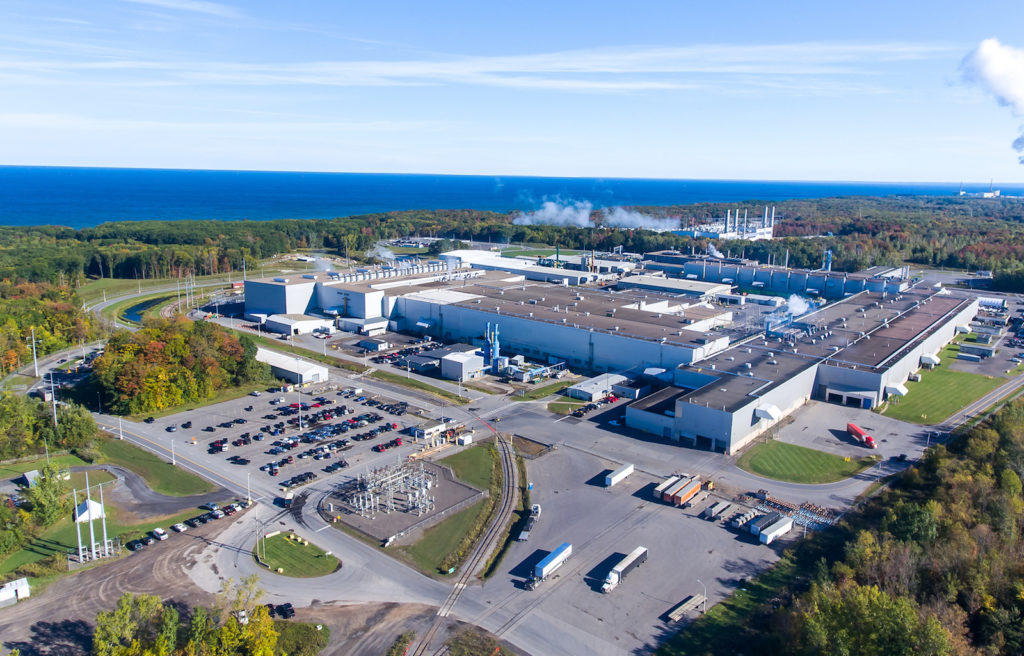
Hindalco sees up to $1.6B impact from fire at unit’s New York aluminum plant
Novelis’ facility in Oswego, NY, represents its first US operation. Credit: Novelis
India’s Hindalco said on Wednesday the fire at the New York plant of its US unit, Novelis, will hit the miner’s 2026 cash flow by $1.3 billion to $1.6 billion, and that it aims to restart the mill toward the end of the second quarter.
Earlier in the day, Ford Motor flagged that it saw lower production in the fourth quarter due to the Novelis fires, with a partial recovery expected in 2026.
Reuters reported last week that aluminum production at Novelis has not fully resumed, more than four months after a fire disrupted supplies.
Hindalco had said in November that the incident would hit cash flow by $550 million to $650 million, adding that no one was injured and the blaze was contained to the hot mill.
(By Urvi Dugar; Editing by Shreya Biswas)
Mg
Gabon dismisses energy concerns over 2029 manganese refining deadline
Gabon’s mining minister said on Wednesday that energy shortages will not be accepted as justification for missing the country’s 2029 ban on raw manganese exports, dismissing industry warnings that power constraints could delay refinery construction.
The world’s No. 2 producer of manganese, used in steelmaking and increasingly in electric vehicle batteries, introduced the policy last year to diversify its economy after decades of raw‑ore exports, joining other African states seeking to capture more value from their mineral wealth.
Power shortages are frequent in the Central African nation, hampering the expansion of energy-intensive industrialization.
Mining companies operating in the country, including France’s Eramet, have expressed a willingness to cooperate with the government on the new refining rules but have noted that power limitations remain a challenge.
Speaking on the sidelines of the Mining Indaba conference in Cape Town, Gabon Mining Minister Sosthene Nguema Nguema said alternative technologies had proven that power concerns should no longer be a barrier.
“Energy is a false debate,” Nguema said. “Some operators have already demonstrated processes that reduce energy use by 40 to 60%. So we do not expect energy to be a reason for anyone not to comply in 2029.”
Detailed timeline
Gabon exported 9.4 million metric tons of manganese in 2024, down 5.3% the previous year, according to official data. The majority of it is exported in its raw state.
Nguema said all manganese miners must submit detailed implementation timelines and show measurable progress toward compliance.
“We are providing the administrative support companies need, but the responsibility to meet the deadline is theirs,” Nguema said, reiterating that the 2029 timeline was non-negotiable.
He added that the management crisis at Eramet, which controls Gabon’s Comilog, operator of the world’s largest manganese mine in Moanda, should not affect its compliance.
“Eramet must comply like everyone else.”
Eramet’s February 1 decision to fire its CEO does not alter the group’s strategy and is unrelated to its activities in Gabon, Eramet said in an emailed statement, declining further comment.
Two iron mines
Nguema said Gabon expects two new mines — Milingui and Baniaka iron ore mines — to come online this year, part of a push to expand the sector.
He warned that companies that fail to begin construction or production will lose their licences.
“Those who promise to open mines in 2026 and have not kept their word by December 31 will be told to leave the country,” he said.
(By Maxwell Akalaare Adombila; Editing by Bate Felix and Rod Nickel)
Ni
Nickel price jumps as Indonesia’s top mine cuts output
Nickel prices rose for a fourth straight day Wednesday after Indonesia ordered the world’s largest nickel mine to sharply cut output in a move aimed at tightening global supply and lifting prices.
LME nickel climbed 2% to $17,835 a tonne as of 6:45 a.m. London time, after earlier touching $17,910, extending a rally of more than 20% since mid-December amid speculative buying and heightened geopolitical tensions.
Indonesia plans to issue production quotas of 260 million to 270 million tonnes of nickel ore this year, according to Bloomberg, slightly above an earlier estimate of 250 million to 260 million tonnes but far below the 379 million tonnes targeted for 2025. Authorities manage output through annual mining permits, known as RKABs, and can revise volumes mid-year.
PT Weda Bay Nickel will receive a 12 million tonne ore quota this year, down from 42 million tonnes in 2025. The mine, located on Halmahera in North Maluku, is owned by Tsingshan Holding Group Co, France’s Eramet SA and PT Aneka Tambang. Eramet confirmed the reduced quota and said it plans to seek a revision, while the county’s Energy and Mineral Resources Ministry said quotas remain under evaluation.
Price control
Indonesia is trying to rein in a persistent global surplus after its production surged to about 65% of world supply, triggering a two-year price slump that forced higher-cost rivals in Australia and New Caledonia to shut down.
The quota cut will weigh heavily on Weda Bay, which had planned to expand output to more than 60 million tonnes of ore to support a nearby industrial park. Instead, it has imported large volumes of ore from the Philippines to offset local shortages.
Nickel, used in stainless steel and electric-vehicle batteries, has seen weaker-than-expected demand from the battery sector as some manufacturers shift to non-nickel chemistries.
Indonesia is also curbing thermal coal output, with mining quotas in the world’s largest exporter set to fall by nearly 25% from a year earlier. The Indonesian Coal Mining Association said the cuts could force some operations to close and leave overseas buyers scrambling for alternative supplies.
Russian metal producer Nornickel’s 2025 net profit rose by 36% year-on-year to $2.47 billion, following higher prices for some metals and foreign‑exchange effects, the company said on Wednesday.
The major producer of refined nickel and palladium said 2025 revenue increased by 10% to $13.76 billion while earnings before interest, tax, depreciation and amortization rose 9% to $5.67 billion.
Platinum, palladium and copper were among metals that gained last year, but Nornickel said the LME nickel average price fell by 10% year-on-year.
Other headwinds included Western sanctions on Russia, high interest rates and a strong rouble.
Targets delivered despite headwinds
Despite the difficulties, CEO Vladimir Potanin said: “Nornickel’s management has delivered on its annual targets, primarily on production and sales.”
In a statement, he added the company expected the major macroeconomic challenges for its business to persist into 2026.
Nornickel is not subject to direct Western sanctions over Russia’s actions in Ukraine, but the measures have prompted some producers to avoid buying Russian metal. They have also complicated the process of making payments and restricted access to Western equipment.
Nornickel did not disclose its sales volumes or sales destinations. Revenue from metal sales rose 10% to $12.983 billion, mainly because of higher prices.
In response to global restrictions, the producer redirected its sales flows to Asia, which became the company’s largest market.
Capital expenditure amounted to $2.6 billion in 2025, and the company expects a similar level in 2026.
Adjusted free cash flow was $1.5 billion.
Malyshev said Nornickel’s dividend payout will depend on its debt metrics, the economic situation, and the cash flow generated by the Bystrinsky copper and gold mine, which has been operating at capacity since around 2020. Earlier, Potanin said dividends for 2025 were unlikely
The company said it expects the global nickel market surplus to reach 275,000 metric tons in 2026, assuming Indonesia maintains the status quo, and anticipates the palladium market will be balanced in the medium term.
(By Anastasia Lyrchikova; Editing by Vladimir Soldatkin and Barbara Lewis)
Li
Zijin to launch Congo’s first lithium output in June from disputed Manono deposit
Aerial view of the Manono project. (Image courtesy of AVZ Minerals.)
China’s Zijin Mining will initiate Congo’s first lithium output in June from the disputed Manono deposit and move immediately to exports, the company and state miner Cominiere said, marking a major step in Beijing’s push to secure more critical minerals in Africa.
The Manono resource, one of the world’s largest undeveloped hard‑rock lithium deposits, is at the centre of arbitration after the Democratic Republic of Congo cancelled Australian miner AVZ’s permit.
It reassigned part of the site to Manono Lithium, Zijin’s joint venture with Cominiere. Zijin holds 61%, with Cominiere and the Congolese state owning the remainder.
“Manono Lithium will produce its first tons in June, and exports will begin immediately after,” Cominiere managing director Alpha Monga Mwidia said on the sidelines of the Mining Indaba conference in Cape Town.
AVZ declined to comment. A source close to the company said they had been informed blasting took place at the site this week near an area where AVZ still keeps staff, calling it a safety and procedural concern.
Zijin declined to disclose production volumes or first‑year export targets. Mwidia said figures were not readily available.
The launch comes as lithium prices remain under pressure after an 86% collapse from late‑2022 peaks, driven by China’s stockpiling and rising domestic output.
The US has been seeking to redirect Congolese supply toward Western markets through short‑term contracting, challenging Beijing’s longstanding dominance in Africa.
Under the joint venture, all first‑phase output will be sold by Zijin, including Cominiere’s share.
“Everything will be marketed or sold by Zijin on our behalf,” Mwidia said, adding Cominiere did not contribute to the roughly $1 billion project financing but will receive revenue according to its stake.
Mwidia and Zijin said AVZ’s arbitration does not affect schedules and operations remain compliant with existing law.
By contrast, US-backed KoBold Metals, which holds rights on the opposite side of the deposit, told Reuters it will not begin construction until ownership issues are resolved.
“The Western system is different from the Eastern one,” Mwidia said. “The Chinese are more pragmatic.”
Cominiere is supplying 44 megawatts of power to the project through its unit Katamba Mining and plans to scale capacity to 120 MW for the mining sector and host communities
(By Maxwell Akalaare Adombila; Editing by Veronica Brown and Chris Reese)
Albemarle to idle Kemerton lithium hydroxide processing plant in Western Australia
The Greenbushes lithium mine, about 250km south of Perth, is the world’s biggest hard-rock lithium mine. (Image courtesy of Talison Lithium.)
Albemarle Corporation (NYSE: ALB) the world’s largest lithium producer, announced Wednesday it will idle the remaining operating train at its Kemerton lithium hydroxide processing plant in Western Australia and place it into care and maintenance effective immediately.
The news follows actions in 2024 to place Train 2 into care and maintenance and to cease expansion plans for Trains 3 and 4.
The Kemerton plant processes spodumene from Greenbushes, the world’s biggest hardrock lithium mine. Albemarle holds ownership interest and half of the offtake rights from Greenbushes through an Australian joint venture.
Kemerton, with its proven technology and commercial scale lithium hydroxide production, was built to enable the development of a Western lithium supply chain.
“Idling operations at Kemerton was a difficult decision. It follows significant actions we have taken over the past two and a half years to reduce operating costs during an extended period of price volatility in the market,” Albemarle CEO Kent Masters said in a news release.
“Unfortunately, recent lithium price improvements alone are not enough to offset the challenges facing Western hard-rock lithium conversion operations,” Masters said. “This decision improves our financial flexibility and preserves optionality.”
The decision is expected to be accretive to adjusted EBITDA beginning in the second quarter of 2026 with no impact to projected 2026 volumes, Albemarle said, adding that it will meet customer demand for lithium hydroxide through other production channels.
Albemarle’s mining interests in Australia, including its holdings in Greenbushes and Wodgina and its exploration interests in Western Australia, are not impacted by the Kemerton decision as they remain core components of the company’s strategy, it said.
Albemarle swings to quarterly loss on charges tied to Ketjen sale
Albemarle’s Silver Peak lithium operations, Nevada. (Image courtesy of Albemarle)
Albemarle, the world’s largest producer of lithium, posted a larger-than-expected quarterly loss on Wednesday and said it would idle a major Australian processing plant as it continues to face weak prices for the battery metal.
Shares of the Charlotte, North Carolina-based company fell 3.1% in after-hours trading.
Lithium prices plunged more than 90% over the past two years due in part to oversupply from China, fueling layoffs, corporate buyouts and project delays at Albemarle and peers. While prices have climbed in recent months, they still remain far below all-time highs reached in 2023.
Albemarle said it would idle the last active processing unit, or train, at its Kemerton processing plant in Western Australia after closing another train at the site last year. The company also canceled plans to add two new trains.
“Unfortunately, recent lithium price improvements alone are not enough to offset the challenges facing Western hard-rock lithium conversion operations,” CEO Kent Masters said in a statement.
The Kemerton site processed spodumene, a type of hard rock containing lithium, from the Greenbushes mine, the world’s largest lithium mine and one Albemarle co-owns with China’s Tianqi Lithium.
For the quarter ended December 31, Albemarle posted a net loss of $455.9 million, or $3.87 per share, compared to a net profit of $33.6 million, or 29 cents per share, in the year-ago quarter.
The EMILI project is based on a lithium deposit located in the Allier region, next to a kaolin site that has been mined since the mid-19th century. Credit: Imerys
France will invest 50 million euros ($59.61 million) in a minority stake in Imerys’ lithium mine project, and could be joined by other investors in the country’s flagship project for the battery metal, Imerys said.
The minerals group first announced the Emili project in 2022, with the aim of producing 34,000 tonnes annually of lithium hydroxide that could cover the lithium requirements for some 700,000 electric vehicles annually.
The French state’s investment will help cover feasibility studies before a final investment decision on the mine, currently projected to enter production in 2030, Imerys said on Wednesday.
The company expects to bring in more investors to finance the lithium project, CEO Alessandro Dazza told reporters.
It would not necessarily maintain a majority stake but would see itself as the logical choice to operate the future site, he said.
Project cost raised
Imerys increased its forecast of the total cost of the project to 1.8 billion euros from 1 billion initially, though Dazza said he expected the final amount to be “significantly” below the current estimate.
The Emili project involves developing an underground mine beneath an existing kaolin mine in central France, along with a processing facility.
The timeline for the start of production was pushed back last year to 2030 from 2028, partly due to public debate over the project’s environmental impact.
($1 = 0.8389 euros)
(By Gus Trompiz; Editing by Sudip Kar-Gupta and Bernadette Baum)