Tuesday, February 17, 2026

Why the Canadian finance minister is taking an interest in the euro
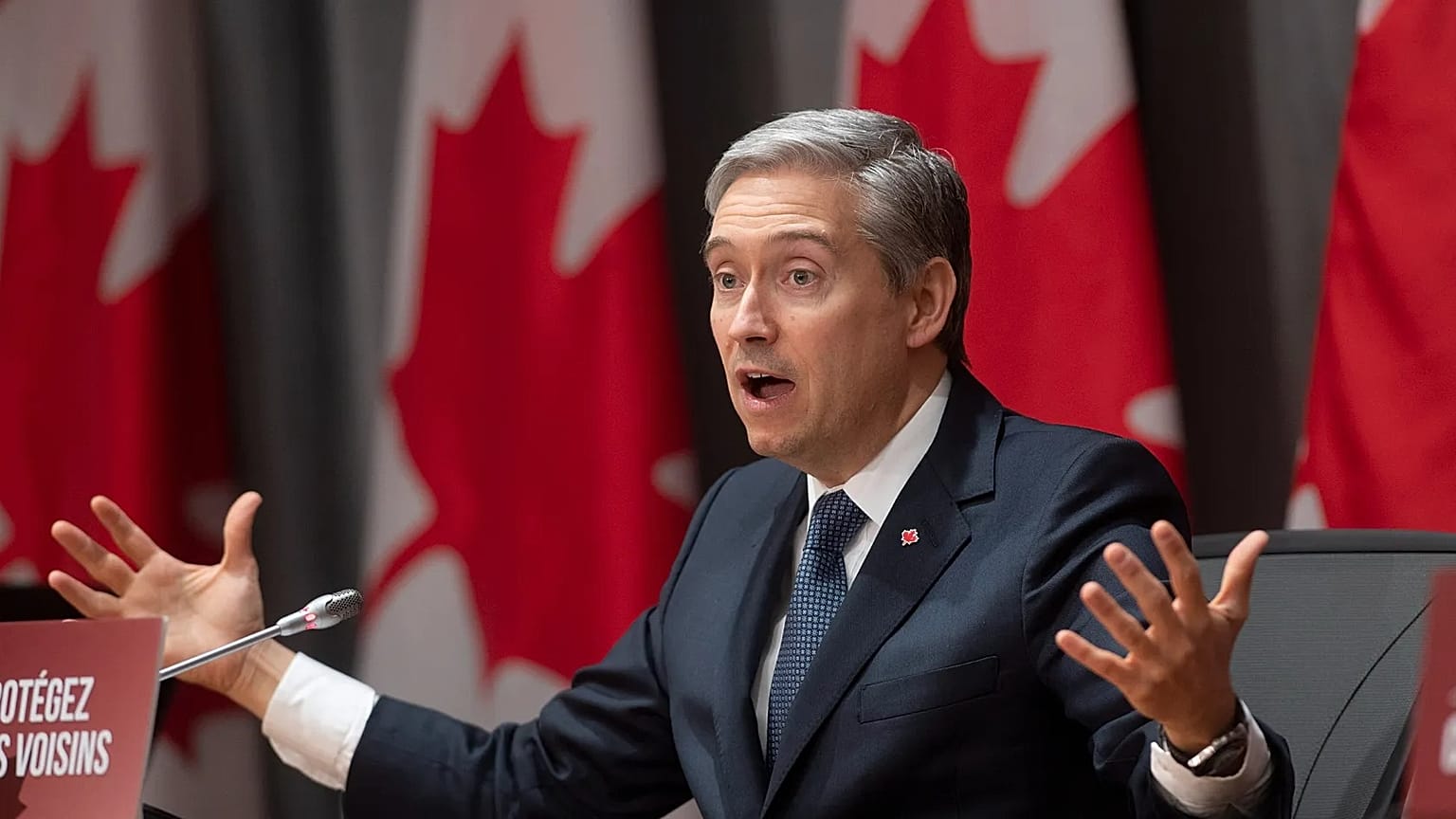
Francois-Philippe Champagne, now Finance Minister of Canada.
Copyright The Canadian Press via AP/Adrian Wyld
By Eleonora Vasques 
 Published on 

François-Philippe Champagne was the special guest at Monday’s meeting of euro area finance ministers in Brussels – the first time a Canadian representative had been invited to this restricted format, from which non-euro area ministers are normally excluded.

Canadian Finance Minister François-Philippe Champagne made a special appearance at this week's meeting of 21 ministers from the euro area, with the goal of discussing global macroeconomic imbalances.

With relations with the United States at an all-time low, Canada is looking for new global ties, including with the European Union.

In the discussion in Brussels, Champagne and the eurozone partners agreed to coordinate policy actions to promote rebalancing while at the same time containing geo-economic threats.

“As the rules-based international order is fading, Canada’s government is firmly committed to deepening our relationship with the EU and its Member States, particularly on security and defence, critical minerals, innovation and research, and trade diversification. Through strategic partnerships, we’re not only defending our shared values but also championing Canada on the world stage”, Champagne said in a statement.

The leaders said that discussion on the matter will continue in other formats, such as in the G7 and G20 upcoming meetings.

In addition to the discussions with the Canadian minister, euro area finance ministers began debating the euro’s global role in international trade and in digital monetary policy. Although no concrete strategies have been decided yet, the ministers indicated that this is the political direction the euro area intends to pursue.

Global macroeconomic imbalances occur when some countries consistently spend more than they earn, while others consistently save more than they spend, and this gap becomes large and long-lasting.

For example, the US imports more goods than it exports and therefore runs a trade deficit; in contrast, China exports more than it imports and runs a surplus. From the point of view of both the Canadian government and many European Union leaders, these and other major imbalances have left the world order open to coercive manipulation.

"Great powers have begun using economic integration as weapons, tariffs as leverage, financial infrastructure as coercion, supply chains as vulnerabilities to be exploited," Canadian Prime Minister Mark Carney said during his remarks at the World Economic Forum in Davos this January.

"You cannot live within the lie of mutual benefit through integration when integration becomes the source of your subordination."

Syrian Kurdish fighter's selfie video leads to allegations of massacre

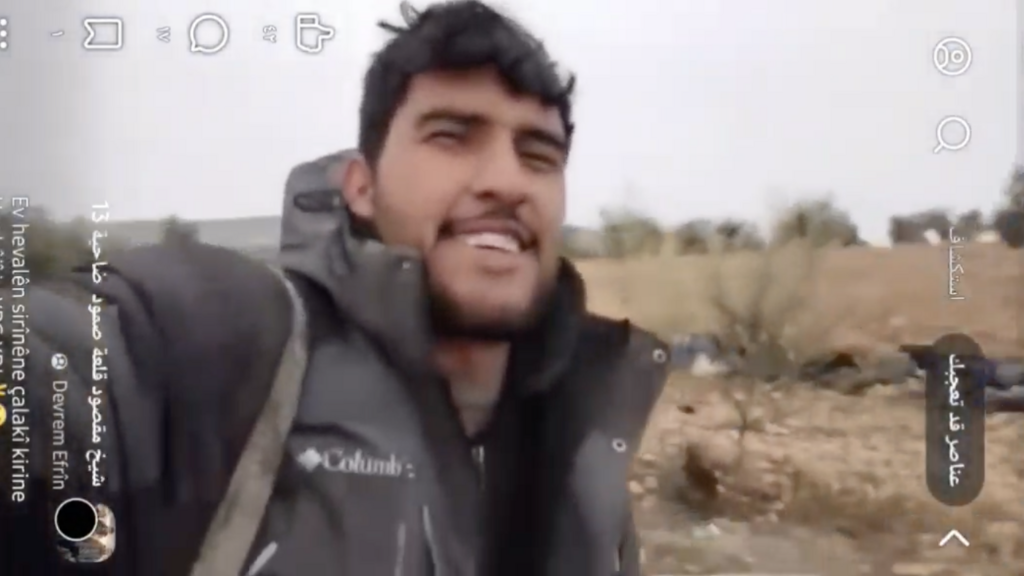
A video posted online on January 22 shows a Kurdish fighter posing selfie-style in front of 21 lifeless bodies following the evacuation of a prison in Kobane, Syria. While the Syrian Democratic Forces said the footage is authentic, they maintain the bodies were those of armed combatants – a claim contradicted by our Observer, who was released from the same prison.


Issued on: 11/02/2026 - 
The FRANCE 24 Observers/
Ahmed ALMASSALMAH


A man who appears to be part of the Syrian Democratic Forces (SDF) filmed this video selfie-style while standing in front of a row of lifeless bodies laid out on the ground. He’s smiling and has a rifle slung over his shoulder. © Facebook

Warning: readers may be disturbed by the content of this article.

The chilling video was posted on Facebook on January 22 by an account based in Germany which has since been shut down. The video is filmed by a man who appears to be part of the majority-Kurdish group the Syrian Democratic Forces (SDF), posing selfie-style in front of a row of bodies on the ground. He’s smiling broadly and has a rifle slung over his arm.

In the video, he claims that one of the fighters with the SDF – who are thought to have committed this massacre – joked that they should blow the bodies up. A second video shows bullets being fired at the bodies, though it is unclear who is shooting.

This footage documents a massacre that took place on January 22 near Kobane in northwestern Syria. A local Facebook group Radar Sarine reported that the SDF had carried out extrajudicial killings of at least 21 young men. The SDF had allegedly just released the victims from Yeddi Qawi Prison near Kobane.

Fifteen bodies recovered

The massacre documented in the video took place against a complicated backdrop. January 2026 saw significant numbers of SDF forces retreating from the Syrian cities of Deir ez-Zor and Raqqa towards Kobane. On January 19, clashes broke out between these fighters and the Syrian Army near the Tishrin Dam south of Kobane.

Sometime after that, in circumstances that are still unclear, doors were opened at Yeddi Qawi, a prison located south of Kobane, resulting in the flight of many of the people who had been imprisoned there. Sometime after that, the massacre documented in the video posted online on January 22 took place.

A Facebook page dedicated to local news reported that members of the Syrian Civil Defence had recovered the bodies of 15 victims of a massacre they said took place near Kobane and handed them over to local authorities. The bodies were then transferred to Manbij National Hospital, where the families could collect them.

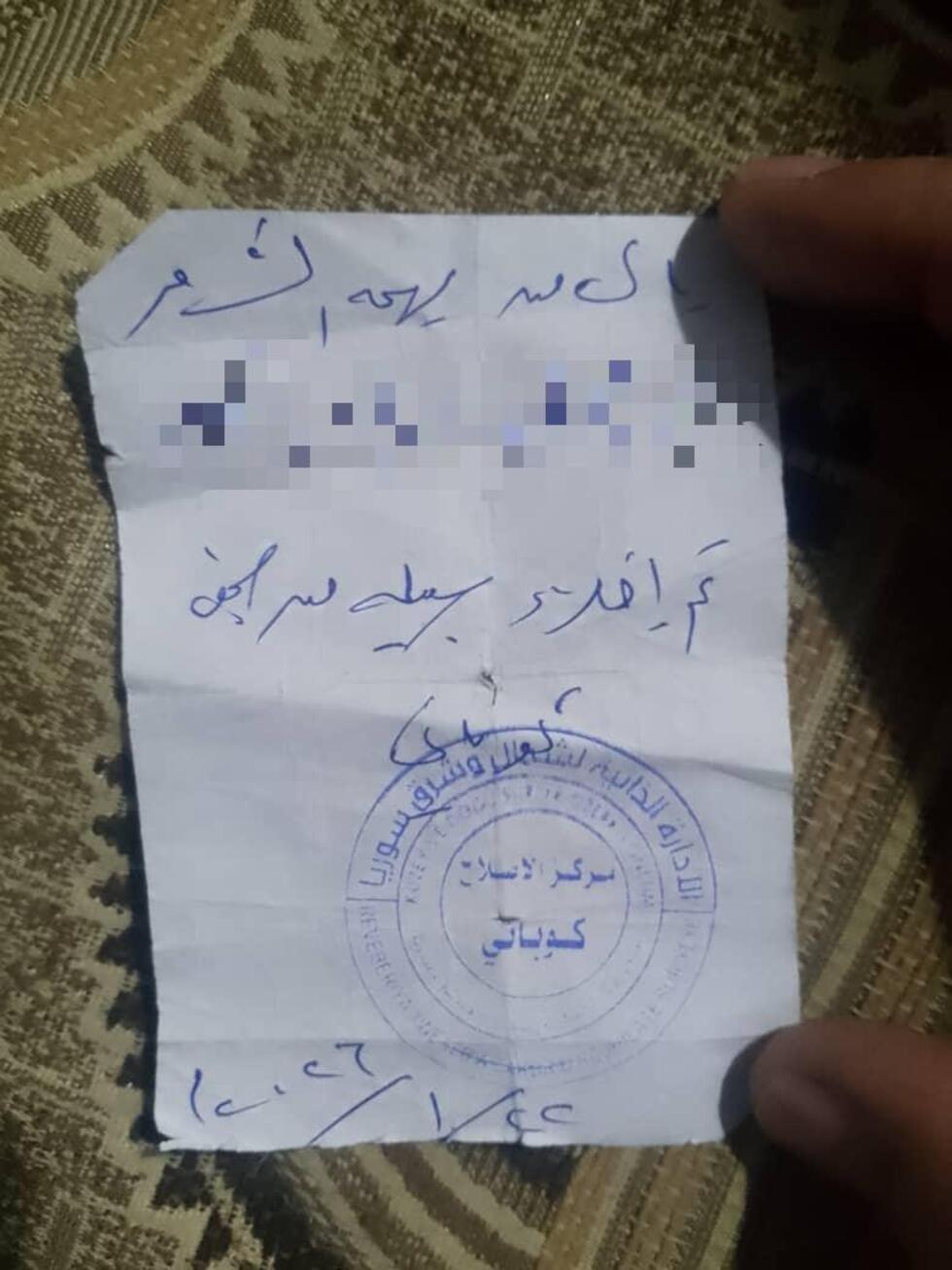
Mukhtar (not his real name) says he was incarcerated in the prison in the village of Yeddi Qawi. He shared with us a copy of the documents he received upon leaving the prison which were issued by the Kurdish Autonomous Administration, confirming that he was imprisoned in Yeddi Qawi.

This is a photo of the document issued by the Kurdish autonomous administration to someone leaving prison. We masked the name of the formerly incarcerated person. The document reads, “To whom it may concern. He was released from the Kobane prison.” It is affixed with the seal of the Autonomous Administration of North and East Syria, Kobane reform centre. This photo was given to us by our Observer. © Mukhtar


According to Mukhtar, the massacre and the events leading up to it took place between January 19 and 22, 2026.

He describes the prison where he was being held as overcrowded, with hundreds of men being held. He says a majority of the prisoners there were Arab, with a small Kurdish minority.


"They were speaking to us about a general amnesty. But only the Kurdish detainees were being released. About a hundred of them. Meanwhile, they were telling us Arabs, ‘Your turn will come.’ Many believed it.”

The situation became increasingly tense and, on January 21, prisoners started burning sheets, mattresses and beds. There was smoke everywhere.


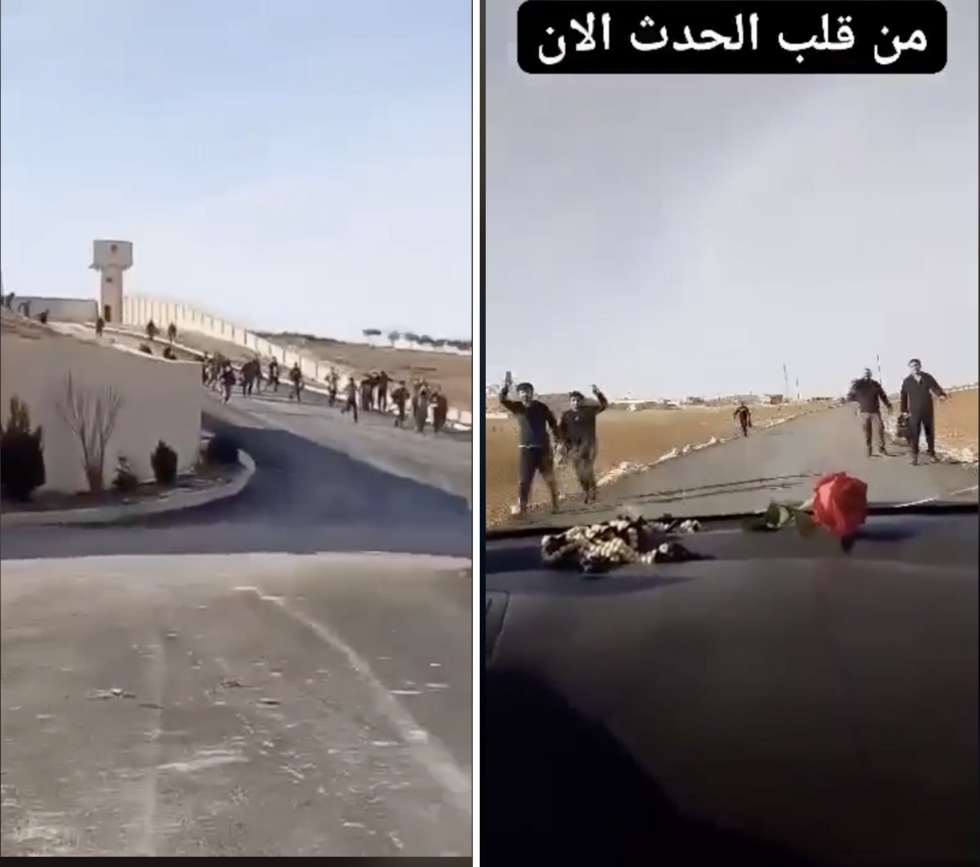
"We were choking. People were screaming. At one point, the SDF opened the doors. Not to let us out but to keep everyone inside from dying. I would say that between 300 and 400 prisoners, including me, left the prison and headed into the nearby fields. From there, we separated and dispersed. Some of us headed in the direction of Sarrin, and others – maybe about 30 people – headed towards Kobane."

These two screenshots were taken from two videos filmed on January 21. The image on the left shows people leaving the prison, while the image on the right shows people alongside the road. The videos were posted on Facebook on January 22, 2026. © Facebook

‘They fell right in front of me’

Mukhtar says that when the fleeing prisoners had made it about 1.5km from the prison, they were intercepted by several vehicles carrying SDF fighters. Mukhtar then went on to describe extrajudicial killings that occurred before those documented in the video.

"They begin by firing shots in the air. People were running in every direction. Then, they started shooting at us. I saw men fall in front of me. They were carrying nothing – no weapons, not even cell phones.

They fell right in front of me. Four or five people died immediately, while others were injured. Everyone was panicking. I managed to hide in a field, but was later stopped at an SDF roadblock. They tied my hands and made all of us survivors lie face down on the asphalt. Some of the soldiers wanted to execute us then and there."

Mukhtar says that some of the female SDF soldiers intervened on their behalf and dissuaded the men from executing his group. He and his group were taken back to Yaddi Mawa prison. Others seem to have been sent elsewhere.

‘It was revenge and ethnic discrimination’


"I was finally released again on the evening of January 22, 2026. After we were released, I headed towards Ain al-Arab [also known as Kobane] while another group of about 27 people went towards the Sarrin region.

Members of the Autonomous Administration [Editor’s note: the civilian branch of the SDF] had them get into vehicles. They were going to drive them to the last point under Kurdish control before reaching territory under the control of the Syrian regime.

Most of those in the group of 27 people were killed. I was at a checkpoint at the south entrance to Kobane when I heard the news. I saw some of the injured people arrive. I recognised some of the people in the video.

These murders weren’t to prevent people from escaping. It was revenge and ethnic discrimination. The soldiers were insulting the victims and saying to the prisoners, 'In any case, you’ll die.'

I survived along with four other people. We made it to a service station alongside the road, and the owner let us in and gave us shelter. Three days later, he brought us to an area outside of Kurdish control."

Mukhtar thinks that between 40 and 45 people were executed on January 22.

“The number is much higher than the 21 bodies that you can see in the video because there were other executions elsewhere,” he explained.


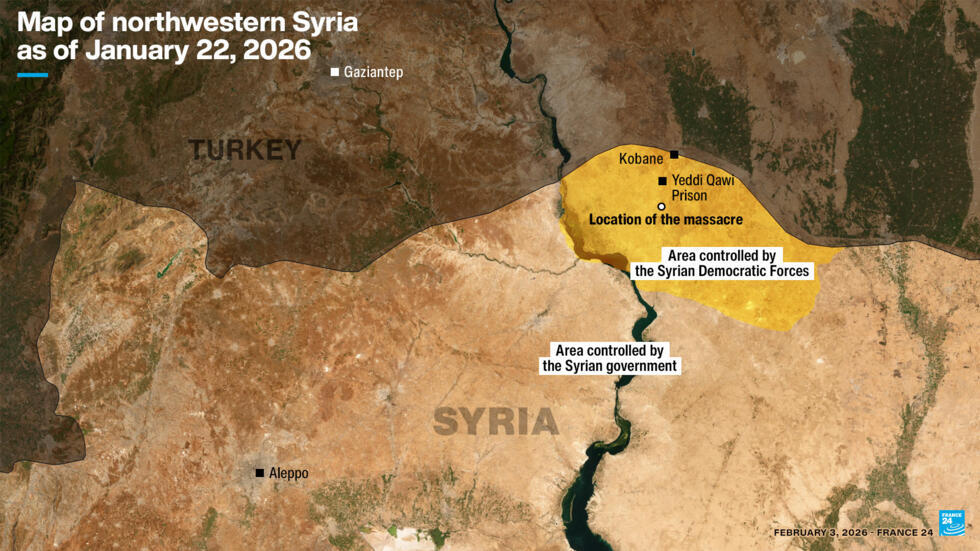
The yellow indicates the area that was still under the control of the Syrian Democratic Forces on January 22, 2026, the date when the video was filmed. The massacre took place in this area. © FMM graphics studio


The Syrian Democratic Forces (SDF) said that the images were authentic, though they claimed that the bodies were those of armed fighters killed during clashes. Our Observer’s account casts doubt on this claim, as do the videos themselves. The bodies are lined up neatly, and there are no weapons to be seen. They are also all wearing civilian clothing.

Adnan Al-Hussein, a journalist based in the region, says that the videos provide evidence.

"Everything in the video indicates that the area has been secured. If there had been fighting, we would see the remnants. Here, you see men who have been gathered here, restrained and killed.”

‘I am telling my story for those who died’

Mukhtar says that speaking out comes with risks.


"I hesitated. But if I remain silent, then they die a second time. I am not asking for international justice. I’m asking for the truth to be spoken. I am telling my story for those who died.”

People in Manbij are still working to identify the bodies. However, the number of casualties remains unknown.

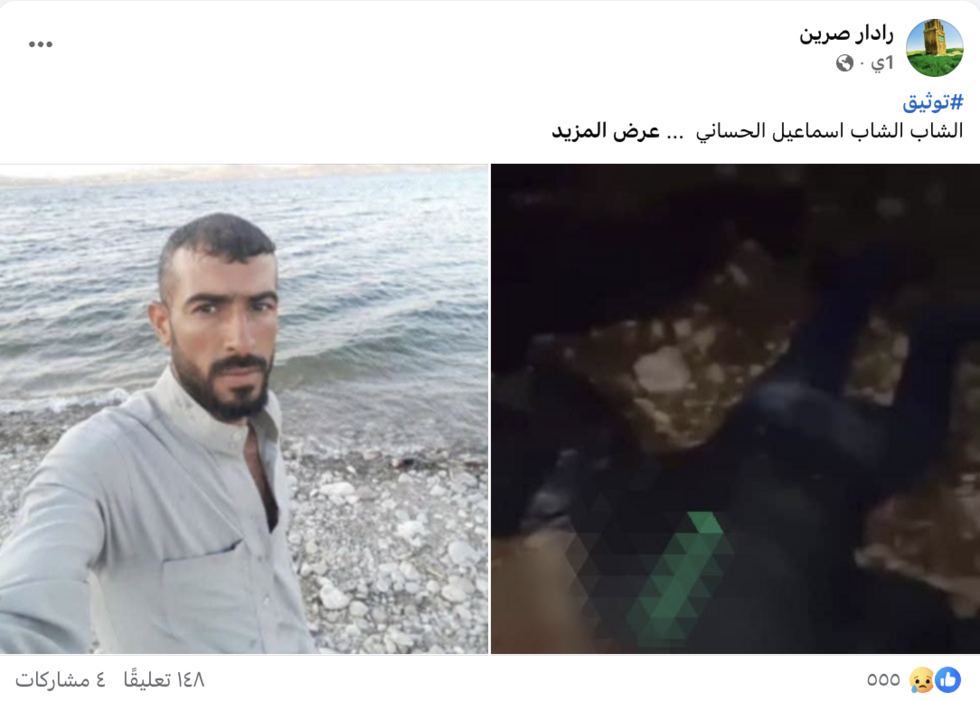
Tributes to two young men thought to have been killed in the massacre were published on the Radar Sarin Facebook page. One man, Ismail Al-Hassani, known as Abu Halab, was from the village of Al-Qubba. The second, Abbas Muhammad Al-Hussein, was from the village of Al-Abdkliya in Sarin district. Our Observer also spoke of the death of these two men.
This Facebook post features a photo of Ismail Al-Hassani alive alongside a screengrab of the video believed to show his body. © Facebook


This Facebook post features a photo of Mohammed Al-Hussein alive alongside a screengrab taken from the video believed to show his body.

This article has been translated from the original in French by Brenna Daldorph.


EU countries need to 'urgently coordinate' to adapt to climate change, EU's advisory board warns

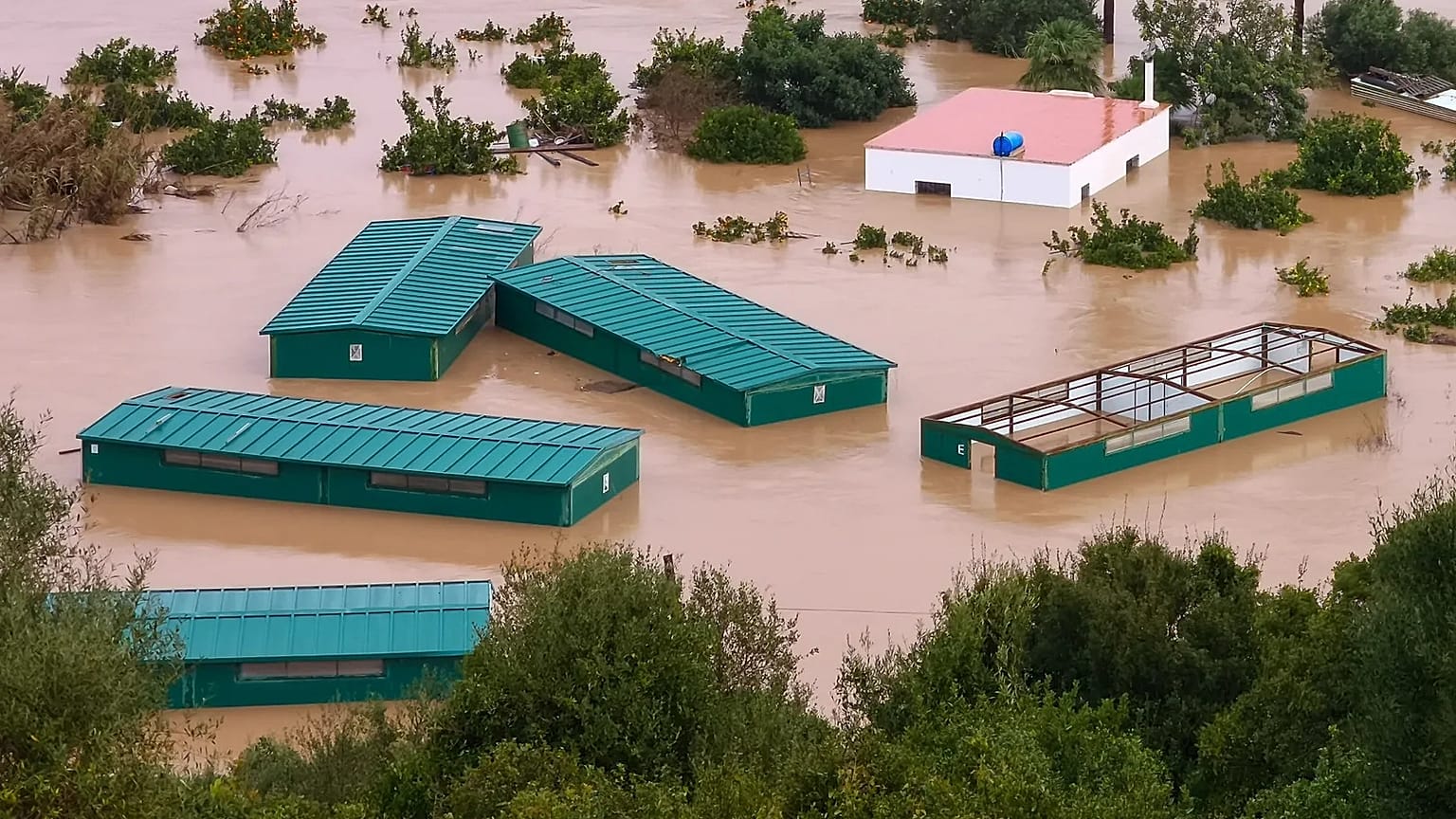
Flooding in the Spanish town of San Martin del Tesorillo in February 2026.
Copyright AP / Europa Press / Francisco J. Olmo. Copyright 2026 The Associated Press. All rights reserved.


By Marta Pacheco
Published on 

More frequent climate-related events such as flooding, wildfires, repeated heatwaves, and droughts call for a precautionary approach, according to the latest report from the European Scientific Advisory Board on Climate Change.

EU countries need to "urgently coordinate" to anticipate and mitigate the effects of climate change, such as flooding, severe storms, and heatwaves, a report from the EU's advisory board on climate change warned on Tuesday.

The scientific report from the European Scientific Advisory Board on Climate Change (ESABCC) urges the EU27 to strengthen its rule-making to ensure the bloc is prepared to address the impacts of climate change by mitigating hazards and adapting to risks, exposing the European Commission's failed 2021 climate adaptation strategy.

The warning comes as Spain and Portugal are reeling from the impact of three powerful storms that triggered widespread flooding, landslides, and storm surges, leaving multiple people dead and causing billions in damage.

Storm Marta alone led to the deployment of more than 26,500 rescue workers in Portugal, with waves towering up to 13 meters and rivers bursting their banks.

Mass evacuations were carried out, and critical infrastructure suffered severe damage, especially in Andalusia, southern Spain. Emergency shelters housed thousands of displaced residents, supported by medical teams on the ground.

Portugal’s economic losses are projected to surpass €3.3 billion, while farmers face devastating crop destruction, according to local media.

Floods in Valencia in October 2024 and in Germany and Belgium in July 2021, with devastating consequences for human life and infrastructure, have also roused more calls for climate adaptation.

The ESABCC's Chair, Professor Ottmar Edenhofer, said extreme weather and climate-related events are already causing severe damage across Europe.

“Extreme heat alone has resulted in tens of thousands of premature deaths in recent years, including an estimated 24,000 in summer 2025," said Edenhofer. "Economic damages to infrastructure and physical assets now average around €45 billion per year."

"These mounting impacts underline that strengthening adaptation is not optional, but essential to protect lives, livelihoods and Europe’s economic foundations."

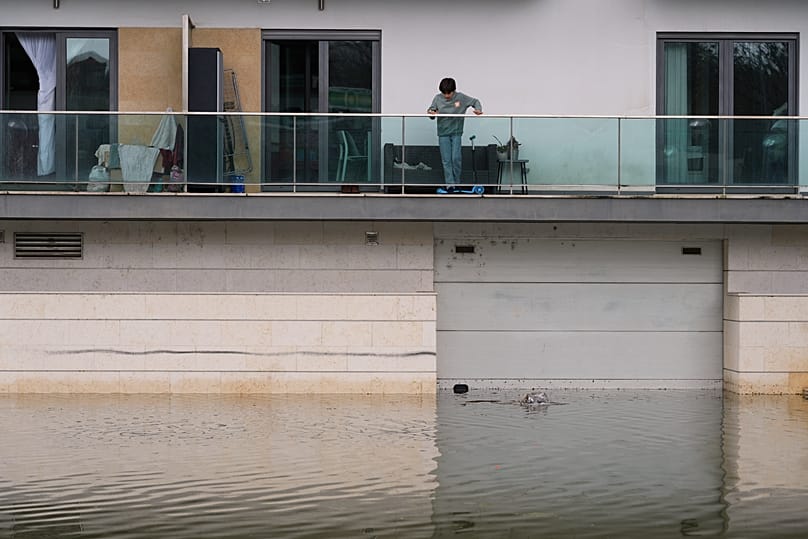
A boy watches floodwaters after heavy rains in Coimbra, Portugal, Friday, Feb. 13, 2026. AP Photo / Sérgio Azenha

Adaptation and mitigation, hand-in-hand

ESABCC warns that "adaptation and mitigation must advance together" to prepare for "unavoidable temperature increases" and safeguard Europe’s strategic priorities, as projections indicate climate hazards will continue to intensify.

"A fragmented approach to adaptation could undermine collective resilience, as insufficient measures in one country may trigger impacts and increased exposure in neighbouring areas," reads the report.

Professor Laura Diaz Anadon, vice chair of the Advisory Board, backed a robust EU adaptation framework as the key to addressing systemic risks that can disrupt access to food, water and energy.

Adaptation goes beyond climate policy, Anadon added, noting that taking action today will help protect the health of EU citizens and ecosystems as well as the integrity of the bloc's single market and competitiveness.

Professor Jette Bredahl Jacobsen, vice-chair of the Advisory Board, said adaptation can't prevent all losses, noting that mitigation efforts will remain essential to limit climate hazards to manageable levels.

“Robust risk management means the EU should prepare for a range of possible futures to ensure a resilient Europe. Strengthening adaptation alongside mitigation is essential to safeguard citizens, security, and the EU’s wider strategic goals,” Jacobsen said.

Climate risk assessments, mobilising capital

ESABCC's scientists have offered recommendations for upcoming EU legislation, as the European Commission is slated to present a climate resilience strategy by the end of the year.

Scientists defend harmonised climate risk assessments across EU policies and national governments, using common climate scenarios and methodological standards.

They also urge the EU to adopt a common concept for adaptation planning, preparing for climate risks consistent with global warming of 2.8-3.3 °C by the year 2100.

Mobilising public and private investment for climate adaptation is another key recommendation by climate scientists, who claim such funds would help establish and manage the "growing costs of climate impacts through the EU budget, economic governance, and risk-sharing mechanisms".

"Adaptation has already played an important role in reducing mortality during heatwaves through measures that lower people’s vulnerability to extreme temperatures, such as building and infrastructural changes, heat-health warning systems, or increasing urban green space," reads the report.

The EU has allocated around €658 billion of its 2021-2027 long-term budget to climate action. Negotiations are ongoing to allocate funds under the 2028-2034 budget.

Austrian Green MEP Lena Schilling recently insisted that the wealthy should be taxed in an appearance at the Vienna Opera Ball, which is being sponsored by OMV, one of Austria’s largest industrial companies dealing with oil, gas and petrochemicals, where she appeared in a "Tax the Rich" dress.

“We cannot prevent the climate crisis as long as the super-rich live off untaxed inheritances as if there were no tomorrow, especially while life is becoming unaffordable for so many people,” Schilling told Euronews Green.


'All records broken' as Storm Nils leaves swaths of southwest France under water


France's flood alert agency has been working round the clock over the past month amid relentless rain and a series of winter storms, the agency's chief said Saturday, as large swaths of the southwest remained under water following the passage of Storm Nils.


Issued on: 14/02/2026 
Share
By: FRANCE 24
Video by: Gabrielle Nadler

This aerial photograph shows the overflowing Garonne river inundating a residential area in Tonneins, southwest France, on February 13, 2026. © Christophe Archambault, AFP
01:02


The flood alert system in France has been working at a record pace as relentless rain over the past month has saturated soils, the head of the agency told AFP on Saturday.

"For 30 days we have been in continuous orange or red alert somewhere on the national territory," Lucie Chadourne-Facon, director of Vigicrues, told AFP, referring to the two highest alert levels.

"That is 81 departments in alert simultaneously for 154 rivers, so we have exceeded all our records," she said.


Chadourne-Facon said soil moisture had also reached a record since data collection began in 1959.

"We are facing a generalised flood situation across the entire country because all the soils are saturated everywhere" and have "lost their infiltration capacity", she said.

"As a result, today rivers are extremely sensitive to the slightest precipitation, the slightest rainfall that hits the country, and they react very quickly," she added.

(FRANCE 24 with AFP)


Cheating row at Winter Olympics challenges curling's culture of trust

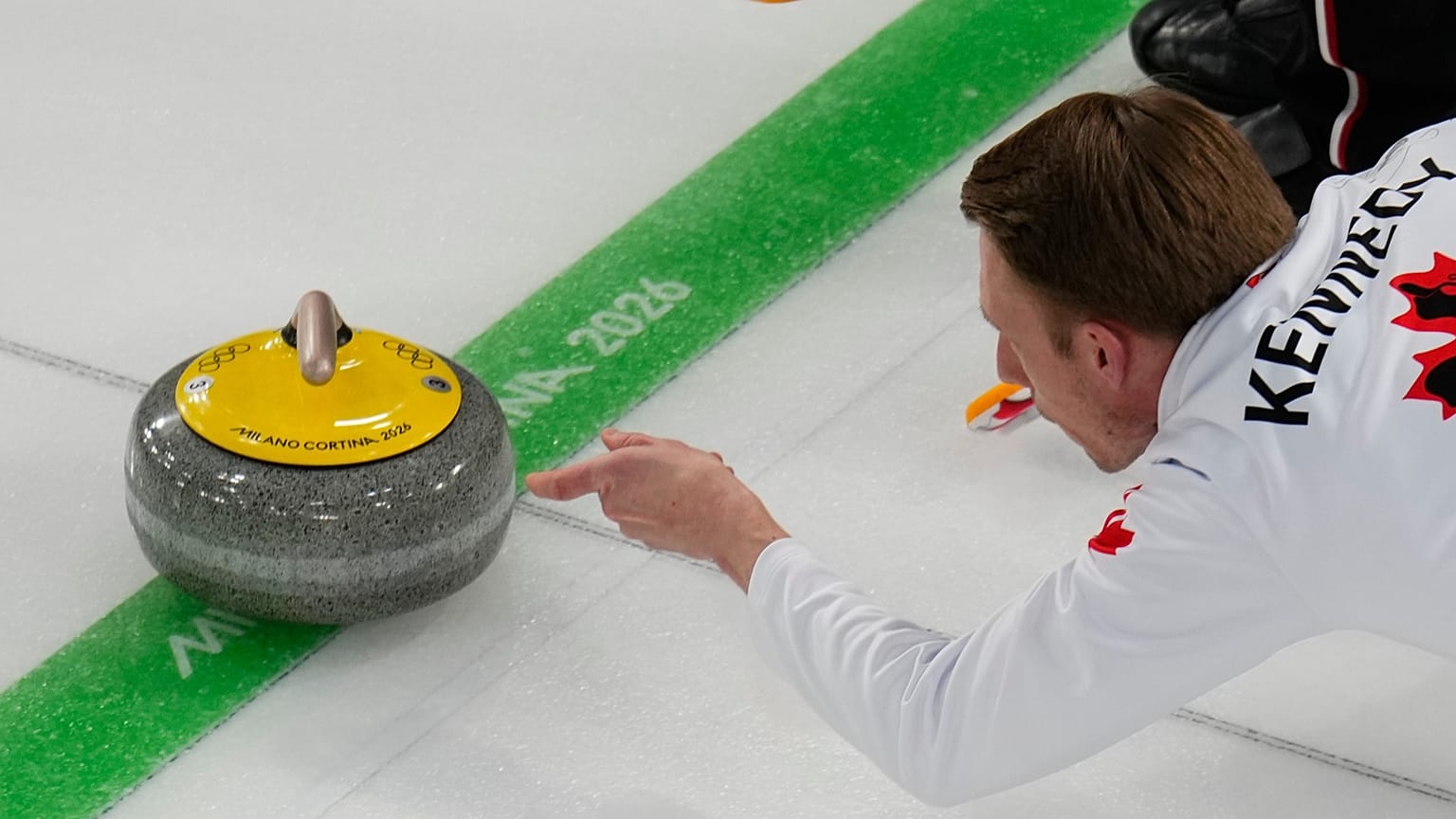
Canada's Marc Kennedy delivers the stone during a men's curling round robin match against China at the 2026 Winter Olympics, in Cortina d'Ampezzo, Italy, Sunday, Feb. 15, 2026
Copyright AP Photo

By Kieran Guilbert
Published on 

A cheating row over "double-touching" has rattled curling at the Winter Olympics, testing the sport's culture of trust and self-officiating.

Curling has slid into scandal at the Winter Olympics.

A sport built on trust, respect and self-regulation has been rocked by a cheating row at the Milano-Cortina Games.

The saga began on Friday, when Oskar Eriksson of Sweden accused Canadian Marc Kennedy of breaking the rules by touching the stone again after initially releasing it down the sheet of ice — a violation known as "double-touching".

Kennedy responded with an expletive-laden outburst that drew widespread attention to a sport that rarely dominates headlines outside the Olympic spotlight.

In response, the sport's governing body, World Curling, announced that it would monitor matches and deploy additional officials to check for double-touching — even though it was already midway through the Olympic men's and women’s round-robin competition.

The controversy deepened on Saturday, when officials accused the Canadian women's team of committing the same violation, triggering a second cheating row within 24 hours.

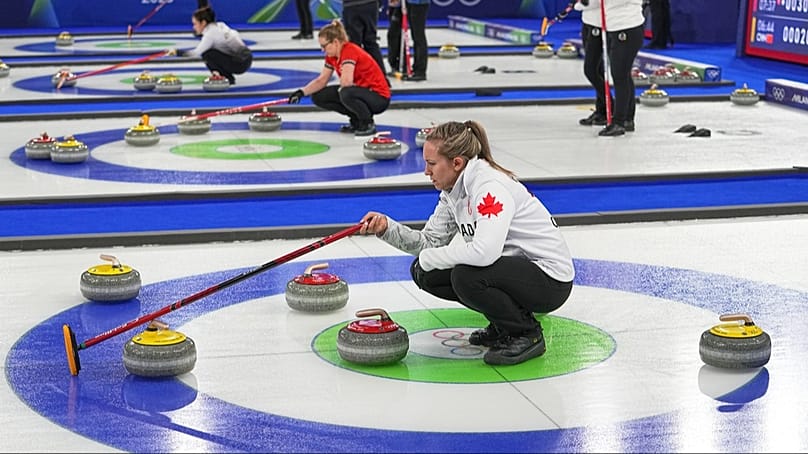
Canada's Rachel Homan in action during the women's curling round robin session against Japan at the 2026 Winter Olympics, in Cortina d'Ampezzo, Italy, Monday, Feb. 16, 2026
Canada's Rachel Homan in action during the women's curling round robin session against Japan at the 2026 Winter Olympics, in Cortina d'Ampezzo, Italy, Monday, Feb. 16, 2026 Fatima Shbair/Copyright 2026 The AP. All rights reserved

Several Olympic curlers have said that a double-touch does not necessarily signal an attempt to cheat, noting that a fleeting, accidental graze of the granite can happen in the split second after release.

Strictly penalising such minor contact, some argued, risks punishing mishaps rather than misconduct.

By Sunday afternoon — with players and coaches fed up with the increased surveillance — World Curling reversed course following a meeting with national federations.

Umpires would step back from routine monitoring, the governing body said, remaining available on request rather than overseeing every shot by default.

Why would Olympic curlers — competing in a sport where centimetres can separate victory from defeat — choose to send the umpires away?

The answer lies in curling’s long-standing ethos: a culture of self-policing and mutual trust that many athletes are determined to preserve, even as the game grows more global, more professional and more intensely scrutinised.

"I think there’s a lot of pride in trying to be a sport that kind of officiates ourselves a little bit, so to speak," said Nolan Thiessen, CEO of Curling Canada, whose teams have been at the heart of the uproar over the past several days.

"I think it was just everybody taking a deep breath and going, OK, let’s just finish this Olympics the way we know our sport is to be played."

Beyond the rink, curling has unexpectedly found viral appeal online, drawing viewers who are as entertained by the chemistry of mixed doubles as they are by the broom-sweeping theatrics, often likened to housekeeping turned high-stakes competition.

Meet the Winter Olympics mascots: cute, cuddly and under threat from climate change

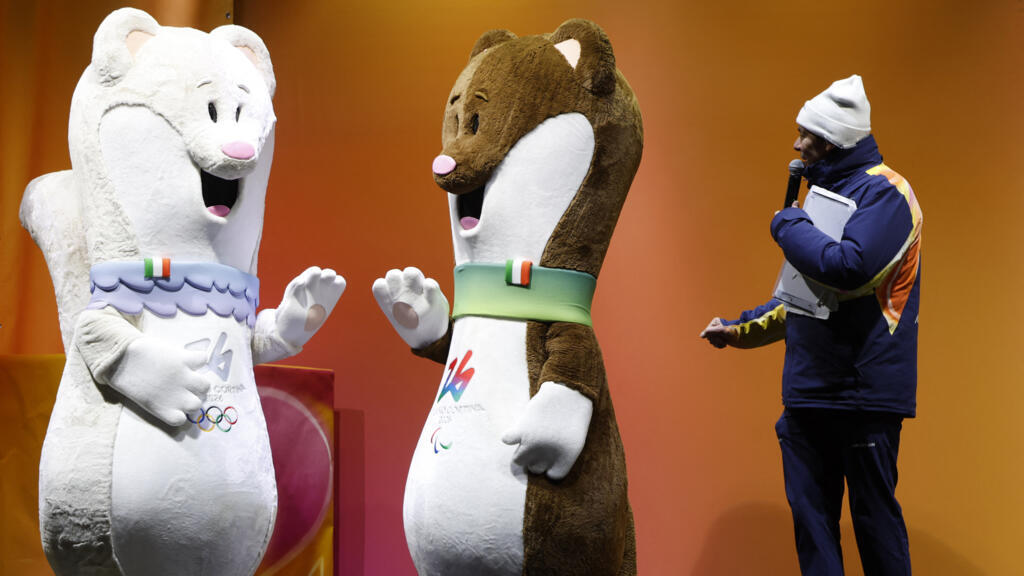
Tina and Milo, the mascots for the 2026 Milano-Cortina Winter Olympics and Paralympics, are anthropomorphic stoats. Native to the Italian Alps, the habitat of these small mammals is increasingly affected by climate change –
however, a group of researchers from the University of Turin have had a funding bid for a project to study and protect the animals turned down by the Milano-Cortina 2026 Foundation.


Issued on: 15/02/2026 - RFI

Tina (left) and Milo, the mascots of the Milano Cortina Olympic and Paralympic Games take the stage in Cortina d'Ampezzo before the last torch relay of the Olympic flame in the city, 26 January. 
AFP - ODD ANDERSEN

By:RFIFollow
ADVERTISING


A white stoat sniffs the wind and frolics with its brown companion amid a blizzard, in animated scenes introducing Tina and Milo, the mascots for the Milano-Cortina 2026 Winter Olympics.

But this charming spectacle in the Italian Alps is becoming increasingly unrealistic, due to irregular snow cover from year to year – according to biologist Marco Granata.

"Around November, the stoat's brown fur turns white for camouflage," he explained to RFI.

"The problem is that with climate change, snowfall is becoming increasingly rare and irregular. More and more often, the stoat is white in a world that is no longer white, making it an easy target for predators."

According to Granata, the stoat population's winter survival rate is currently estimated at 10 percent.

Moving to higher ground

Granata – a doctoral student at the University of Turin – is testing innovative methods to study small mustelids such as the stoat, ermine, weasel and polecat in the Alps, as part of his Ermlin Project research programme.

At the headquarters of the Maritime Alps Natural Park in Entracque, northwestern Italy, he has set up a camera trap – which automatically films when triggered by movement – to monitor the small animals in their natural habitat.

Biologist Marco Granata watches video footage of a stoat from a camera trap, at the Maritime Alps Natural Park in Entracque, Italy, on 22 December, 2025. 
AFP - MARCO BERTORELLO

While artificial snow may be suitable for skiers, this is not the case for stoats – so they are moving to higher altitudes in search of snow cover.

"The problem with moving up is that the stoat won't find enough food," said Granata.

"It eats almost exclusively, and exclusively in winter, rodents." The stoat's prey doesn't benefit from venturing to higher ground, because it has learned to live at lower altitudes.


Elsewhere in Europe, some stoats remain brown all year round. But Granata believes it unlikely that in Italy, the stoat will stop shedding its coat in winter. Molting is a genetic trait, he explains.

He said that if stoats that do not molt, or only partially molt, are favoured by external factors, then the species could gradually adapt to a higher survival rate.

However, at this stage he says he is unaware of any non-molting species in the Italian Alps, and it is therefore difficult to hypothesise that this development will happen any time soon.


Lack of data


In 2015, the International Union for Conservation of Nature listed the stoat, once prized for its fur, as a species of "low concern".

Granata contests this classification, which he says is based primarily on a lack of data.

"According to our models, since the stoat is expected to lose nearly 40 percent of its suitable habitat by 2100, it should be classified as a vulnerable species."

Researchers from the University of Turin asked the Milano-Cortina 2026 Foundation, which funds projects tied to the Games, for funding to study and protect this elusive animal – but their bid was unsuccessful.

It seems that while Milo and Tina take centre stage at the Games, their real-life counterparts will not be receiving the same attention for now.

This article was adapted from the original version in French by Pauline Gleize.
African skiers at Winter Olympics call for more inclusion and support

Issued on: 16/02/2026 

14:44 min


In tonight's edition: The 39th African Union summit came to an end on Sunday, after two days dominated by the crises affecting the continent. Also, student action continues in Senegal, following the deadly protest against unpaid financial aid last week. Plus the African continent sees increasing representation with each edition of the Winter Olympics.


2026 Winter Olympics: Ukrainian athletes targeted by disinformation

Issued on: 16/02/2026 

04:54 min


In recent weeks, Ukrainian athletes and visitors at this year's Winter Olympics have been targeted by a string of false accusations. These fake news reports and the way they have been spread bear all the hallmarks of the Russian disinformation campaign known as Operation Matryoshka. FRANCE 24's Charlotte Hughes explains in Truth or Fake.


Kyiv suffers worst winter yet amid continued drone and ballistic missile attacks


By Shona Murray
Published on 

Despite an "energy truce" and apparent progress in US-led talks, Russia's assault on Kyiv is wreaking untold suffering as attacks on energy systems plunge hospitals into darkness. The EU is delivering emergency generators – but accelerated EU accession may be the real solution.

Relentless Russian attacks on Ukrainian energy infrastructure – a hallmark of the full-scale invasion of Ukraine – have left more than a million citizens without electricity, water and heating as temperatures plunge as low as -23°C.

The EU has sent Ukraine nearly 10,000 generators since the invasion was launched in 2022, and EU Commissioner for Crisis Management Hadja Lahbib visited Ukraine with 1,000 more as Russia steps up its attacks.

“Things are as bad as ever,” Kyiv mayor Vitali Klitschko told Euronews at a warehouse containing 500 of the newly arrived generators.

The warehouse's

“We had eight ballistic missile attempts today”, Klitschko said. “This winter is one of the most difficult winters in the last four years, for many reasons: first, we have massive attacks from Russian operation kamikaze drones, then ballistic missile cruise missiles attack our critical infrastructure. And people have no heat or electricity.”

The latest attacks come after a so-called "energy truce" between Ukraine and Russia was negotiated by the US. Ukrainian President Volodymyr Zelenskyy said that this winter, Russia has used a record number of ballistic missiles in its targeting of his country's energy system.

Surgery by torchlight

Amid the carnage wreaked by Russia, its attacks on hospitals – which amount to a grave breach of international humanitarian law – are particularly stark, and Ukrainian officials tell Euronews that power outages caused by Russian strikes have forced medics to conduct surgery by torchlight.

Commissioner Lahbib visited some of those recently injured by attacks on the city, as well as frontline soldiers who were medically evacuated from the frontline.

“It's very difficult to speak after what we just saw”, said Lahbib as she emerged from the Kyiv hospital’s intensive care unit. “It’s innocent people just living their everyday life; we just met a woman who has been targeted in her apartment. A drone entered in through her windows”, she said.

Labhib described meeting "wounded soldiers" and a “patient in very severe conditions because of this war”.

In a few days, Ukraine will mark a grim milestone: the fourth anniversary of a devastating invasion that at the current rate could see 2 million people killed.

According to the Centre for Strategic and International Studies, Russia has suffered more military casualties than Ukraine, with 1.2 million killed, wounded and missing and as many as 325,000 killed since February 2022.

However, civilian casualties among Ukrainians are also escalating. Civilian casualties in 2025 increased by 26% compared with 2024.

According to the Action on Armed Violence NGO, the average number of civilians killed or injured per incident in Ukraine rose 33% year-on-year in 2025, and in total 2,248 civilians were reported killed and 12,493 injured by explosive violence in Ukraine last year.

The level of damage and violence perpetrated by Russia suggests that Putin is in no way serious about ending the assault on Ukraine, despite several fruitless months of US-led talks.

Zelenskyy told the Munich Security Conference that Putin is a “slave to war”, adding that Russia’s attacks had damaged every power plant in the country.

Klitschko said Ukraine needed to be admitted to the EU as soon as possible.

“Our main goal to be the part of European family, not a part of the Russian Empire,” he told Euronews in Kyiv.

The EU is discussing a potential "fast track" approach to Ukrainian membership which would secure access to the EU on an incremental basis. The trade-off would be that Kyiv wouldn’t immediately enjoy the same voting rights as fully fledged members, but would have additional protections and potentially access to some EU funding.

Asked whether this was something the European Commission was actively exploring, Lahbib told Euronews in Kyiv: “This is something we have to consider because we need to move. Ukraine is part of the EU family, and they are already candidates."


Ukraine makes fastest battlefield gain in 2.5 years

Ukraine recaptured 201 square kilometres of territory from Russia in five days last week – its biggest gain in 2.5 years – according to AFP analysis of data from the Institute for the Study of War. Experts from the institute said Ukraine likely took advantage of a recent shutdown of Russian forces’ access to Starlink.

Issued on: 16/02/2026
By: FRANCE 24
A Ukrainian serviceman stands next to the antenna of the Starlink satellite-based broadband system in Bakhmut on February 9, 2023. © Yasuyoshi Chiba, AFP


Ukraine recaptured 201 square kilometres (78 square miles) from Russia between Wednesday and Sunday last week, taking advantage of a Starlink shutdown for Russian forces, according to an AFP analysis of data from the Institute for the Study of War (ISW).

The recaptured area is almost equivalent to the Russian gains for the entire month of December and is the most land retaken by Kyiv's forces in such a short period since a June 2023 counter-offensive.

"These Ukrainian counterattacks are likely leveraging the recent block on Russian forces' access to Starlink, which Russian milbloggers (military bloggers) have claimed is causing communications and command and control issues on the battlefield," the ISW, which collaborates with the Critical Threats Project, another US think-tank, stated.

On February 5, military observers noted disruption of the Starlink antennas used by Moscow on the front lines, following announcements by Elon Musk of "measures" to end the Kremlin's use of this technology.

Kyiv claimed that Russian drones were using them, in particular, to circumvent electronic jamming systems and strike their targets with precision.

Without the use of Starlink, Russian forces only advanced on February 9, with Kyiv gaining ground on the other days.

The recaptured land is concentrated mainly around 80 kilometres east of the city of Zaporizhzhia, in an area where Russian troops have made significant progress since the summer of 2025.

Moscow controlled 19.5 percent of Ukrainian territory, either fully or partially, in mid-February, compared with 18.6 percent a year earlier.

Approximately 7 percent – Crimea and part of the Donbas – was already under Russian control before the invasion launched in February 2022.

(FRANCE 24 with AFP)

Europe bashing: EU's top diplomat rejects US talk of 'civilisational erasure'


EU foreign policy chief Kaja Kallas pushed back against what she described as "European bashing" in a speech at the Munich Security Conference on Sunday. Kallas welcomed the message of unity delivered by US Secretary of State Marco Rubio at the annual gathering but dismissed the Trump administration's talk of Europe's "civilisational erasure".


Issued on 16/02/2026 -
By: FRANCE 24

\
Photo mashup of US Secretary of State Marco Rubio at the G7 in Canada on November 12, 2025, and EU foreign policy chief Kaja Kallas at the Munich Security Conference on February 15, 2026. © Mandel Ngan, AP / Michael Probst, AP

EU top diplomat Kaja Kallas pushed back on Sunday against Europe "bashing" by the United States.

"Contrary to what some may say, 'woke, decadent Europe' is not facing civilisational erasure," Kallas said on the last day of the Munich Security Conference.

US Secretary of State Marco Rubio on Saturday reassured allies by saying Washington and Europe "belong together" – but insisted the continent must defend against mass immigration to protect its "civilisation".

"The message that we heard is that America and Europe are intertwined, have been in the past and will be in the future. I think this is important," Kallas said.

But she added: "It is also clear that we don't see eye to eye on all the issues, and this will remain the case."

Officials in the Trump era have repeatedly extended their own heightened fears of immigration to Europe, often borrowing language from "replacement theory", the brainchild of a French novelist that has become a rallying cry for the global far right.

In a National Security Strategy document published on December 5, the US administration warned against European "migration policies that are transforming the continent and creating strife". "Should present trends continue, the continent will be unrecognizable in 20 years or less," the document predicted.

Europeans "were shocked to read that they were engaged in 'civilisational erasure'," French daily Le Monde wrote at the time.

The US document went on to warn that "censorship of free speech and suppression of political opposition" was taking place in Europe – despite European nations occupying all top 15 spots on the 2025 global Press Freedom Index from Reporters Without Borders while the US fell to a historic low at 57th place.


Russia is 'broken'

Kallas went on to say that Russia must be forced to make concessions in talks to end the Ukraine war.

"Let's be clear-eyed about Russia. Russia is no superpower," she said, saying the country was "broken".

"The greatest threat Russia presents right now is that it gains more at the negotiation table than it has achieved on the battlefield."

The annual security gathering in Munich has seen European officials insist the continent must take the lead on its defense in the face of an aggressive Russia and doubts over the reliability of the United States as President Donald Trump upends ties.

"There is an urgent need to reclaim European agency," Kallas said.

She said European defense "starts in Ukraine" and will depend on how the war ends. The top diplomat called for the size of Russia's military to be capped while adding that Moscow must pay for the damage it has caused and must be held accountable for war crimes.

France's Minister for European Affairs Benjamin Haddad said there was no time to wait in increasing European independence, saying it should pay less attention to what US officials say and focus on bolstering its capabilities.

"I think the worst lesson we could draw from this weekend is to say, well, I can cling to some love words that I heard in part of his speech and push the snooze button," Haddad said of Rubio's address.

Instead, he said Europeans should "focus on what we can control, focus on our rearmament, on the support for Ukraine and the threat that Russia poses to all of our democracies".

(FRANCE 24 with AFP)


The Munich hangover: Security fest or defence insecurities exposed?


Issued on: 16/02/2026 - 

Play (42:45 min)


In the wake of the Munich Security Conference, we're asking: what happens now? With Russia's war on Ukraine still raging, do the grand words of Munich mean anything to those struggling to feed themselves, stay warm and survive under Vladimir Putin's ongoing missile and drone attacks

On European security, tensions are rising. Germany is pressing France to increase its defence spending, with Foreign Minister Johann Wadephul essentially telling Emmanuel Macron to put his money where his mouth is. But with France facing a massive public debt crisis, finding the 5 percent of GDP required for NATO commitments is far from simple.

Meanwhile, US Secretary of State Marco Rubio is visiting Budapest, delivering a message of support from President Donald Trump to his ally Viktor Orbán – Europe's most outspoken admirer of Putin. Rubio's words at Munich suggested conciliation, but standing side by side with Orbán raises questions: is the gap between the US and the EU widening, just when unity is needed most for Ukraine?

Produced by Charles Wente, Aline Bottin, Guillaume Gougeon and Ilayda Habip

OUR GUEST
S
Hélène CONWAY-MOURETFrench senator, Socialist Party
James J. Townsend JrFormer US Deputy Assistant Secretary of Defense
Ondrej DITRYCHSenior Analyst for Russia and Eastern Neighbourhood, EUISS
Grégoire ROOSDirector of the Europe, Russia and Eurasia Programmes, Chatham House


BEING ANTI-ZIONIST & PRO-PALESTINIAN IS NOT ANTISEMITISM

Macron hardens attack on 'far-left' LFI, says antisemitic rhetoric must be tackled

Emmanuel Macron stepped up his criticism of France Unbowed (LFI), linking the leftist party’s stance to broader concerns about antisemitism in public life.


Issued on: 15/02/2026 - RFI

Protesters pictured waving France Unbowed flags at a demonstration at Place Bellecour in Lyon, central-eastern France on 10 January 2026. AFP - OLIVIER CHASSIGNOLE

French President Emmanuel Macron has described France Unbowed (LFI) as a far-left movement in which “antisemitic expressions” are emerging and “must be combated”, in an interview with Radio J – a Paris-based radio station aimed at France’s Jewish community – that has reignited tensions with the opposition party.

“I think it’s no secret that they are on the far left,” Macron said in the interview, recorded on Friday and published on Sunday. The classification mirrors a recent decision by the interior ministry – one strongly disputed by LFI.

“I note that in the positions they take, particularly on antisemitism, they contravene the fundamental principles of the Republic,” the head of state added.

Macron said that “clearly antisemitic expressions are emerging” and should be tackled “wherever they come from”. He also pointed to similar concerns on the opposite end of the political spectrum, noting that some parliamentarians within the far-right National Rally (RN) “use expressions and defend ideas” that run counter to republican values.


The interview comes amid heightened political tensions following the death of a 23-year-old man linked to the far right, who was fatally beaten this week on the sidelines of a protest against an appearance by LFI MEP Rima Hassan in Lyon.

Macron condemned what he described as an “unprecedented outburst of violence” and called for “calm, restraint and respect”, as the incident fuelled fresh clashes between far-right and hard-left groups ahead of the 2027 presidential election.

Push for tougher sanctions

The president’s remarks come amid a broader push to address antisemitism in France. On Friday, during a tribute to Ilan Halimi – a young Jewish man kidnapped and tortured to death in 2006 – Macron warned of an “antisemitic hydra” insinuating itself “into every crack” of society.

He reiterated on Radio J that the government would introduce legislation imposing a mandatory ban on holding office for elected representatives found guilty of antisemitic, racist or discriminatory acts or remarks. Macron said he was confident the measure could be adopted by parliament and enter into force before 2027.

Asked about LFI MEP Rima Hassan, who has been the subject of a complaint by Le Parisien daily following a post on X targeting one of its journalists, Macron pointed to existing legal tools. “Criminal circulars have been issued by the justice minister to combat all forms of antisemitism and all antisemitic remarks,” he said. “They will be enforced.”

On the role of the media, Macron declined to single out Qatar-based broadcaster Al Jazeera, saying he did not wish to “stigmatise”. However, he warned that some content – whether online or broadcast – can, “under the guise of covering international news, fuel and exacerbate hatred of Jews and create divisions in our society”.

LFI rejects “extremist” label


On Sunday, LFI coordinator Manuel Bompard hit back, arguing that “it is not up to the President of the Republic to classify his political opponents”.

Speaking on the LCI news channel, Bompard accused Macron of borrowing from Donald Trump’s playbook: “If you disagree with him, you’re an extremist.” He also rejected allegations of antisemitism, stressing that “no [France Unbowed] activist has ever been convicted of antisemitism”.

Macron also used the interview to defend the importance of institutional checks and balances, responding to recent comments by conservative politician Bruno Retailleau on the “excesses of the rule of law”. While acknowledging that rules may at times need to evolve, he cautioned that the rule of law “guarantees us the possibility of living freely and together”.

He added that France’s challenges should not be addressed by undermining constitutional foundations or suggesting they are the source of the country’s problems.

Retailleau responded swiftly, saying the president “is wrong” and that “France needs a break with the past”. In a message on X, the leader of Les Républicains portrayed Macron as “an advocate of an immobile France” who “has failed to reform the country and would like nothing to change after 2027”.

(With newswires)