Wednesday, February 18, 2026


Can Big Oil Succeed Where Diplomacy Has Failed in Libya?

  • Major Western energy firms, including Chevron and Eni, have secured new Libyan oil blocks in a bid to raise output to 2 million bpd by 2028.

  • Libya holds Africa’s largest proven crude reserves and significant untapped gas potential, but production remains vulnerable to political shutdowns.

  • The unresolved dispute over oil revenue distribution between rival factions continues to pose the greatest risk to long-term stability.

Libya’s first oil field licensing round since the removal of Muammar Gaddafi as leader in 2011 has seen a slew of major Western international oil companies (IOCs) choose to either re-enter the country after a long absence or bolster their existing operations in a stunning success for Tripoli. As part of the National Oil Corporation’s (NOC) target of lifting oil production to 2 million barrels per day (bpd) by 2028, it announced last year that 22 offshore and onshore blocks would be licensed in the initial bidding round. Perhaps the standout winner of a contract award was U.S. supermajor Chevron, designated as the winning bidder for Contract Area 106 in the country’s oil-rich Sirte Basin, marking its return to the country after a 16-year hiatus. Other Western majors that secured new fields were Italy’s ENI, Spain’s Repsol, and Hungary’s MOL, with Middle East heavyweight QatarEnergy also gaining an award. So, does all this herald a brave new era for Libya, or will it turn out to be just another false dawn?

What augurs well is not just the breadth of Western firms choosing to expand their presence in Libya, but which firms they are. The oil and gas sector holds a unique position in the global business world in that companies operating in foreign locations are afforded an enormous degree of autonomy on the ground, similar in legal terms to embassies being treated as being on native soil wherever they are located. In practical terms, under international law, foreign oil and gas firms are allowed to deploy whatever security personnel and related infrastructure developments they see as being necessary to safeguard their investments on the ground, provided that these meet with the approval of the indigenous government, but this is virtually always the case. Consequently, perhaps the best way for any government to quietly build up its influence in a foreign country is to gradually expand the presence of its major oil and gas firms on the ground. Perhaps the most successful early template of this model of building political influence through business expansion was in the British East India Company’s role in the expansion of the British Empire. Established in 1600, the huge firm functioned extremely successfully for nearly 300 years using trade and investment as the means to gain control over large swathes of Asia, including India and Hong Kong, with all such projects safeguarded by a British security force at one stage as large as 260,000 men. The additional benefit for the British East India Company and its home country was that its colonising activities more than paid for themselves in the profits from the business it transacted, and the West is hoping its efforts in Syria will do the same. 

Several major Western oil and gas firms have been at the forefront of the ongoing attempt by the U.S. and Europe to rebuild their influence in world’s key oil and gas region, the Middle East, in recent years, particularly since the U.S.’s unilateral withdrawal from the ‘Joint Comprehensive Plan of Action’ (JCPOA, or colloquially the ‘nuclear deal’) with Iran in 2018. This inadvertently opened the door for China and Russia to use Iran as the lever to expand their presence across the rest of the ‘Shia Crescent of Power’, which included Iraq, Syria, and Lebanon, among others, and then to push further into former Western allies -- most notably Saudi Arabia, and the UAE -- from that operational base, analysed in my latest book on the new global oil market order. U.S. President Donald Trump’s second term in office has seen a major pushback on Iran in that configuration, and consequently on China and Russia too, with a further reason for greater oil and gas exploration and development opportunities in the Middle East arising from the loss of Russian oil and gas supplies to Europe after the Kremlin-ordered invasion of Ukraine in 2022. Several major Western firms have been at the forefront of this broader move to rebuild Western influence in strategically crucial areas of the Middle East -- most recently incorporating Iraq -- including the U.S.’s Chevron, ConocoPhillips, and ExxonMobil, Great Britain’s BP and Shell, France’s TotalEnergies, Italy’s ENI, and Spain’s Repsol. QatarEnergy’s presence in a consortium with ENI in Libya also recognises the Arab country’s pivotal importance in the new post-Ukraine War world order, as a key supplier of liquefied natural gas to Europe instead of Russian gas supplies, as part of its broader designation as a ‘major non-NATO ally’.

That said, there is still much oil and gas potential for them to work with in Libya, despite the ongoing civil war since Gaddafi’s removal as leader in 2011. Prior to that, Libya was producing around 1.65 million barrels per day (bpd) of mostly high-quality light, sweet crude oil, particularly in demand in the Mediterranean and Northwest Europe. It also remained the holder of Africa’s largest proved crude oil reserves, of 48 billion barrels. Moreover, in the years leading up to Gaddafi’s forced exit, oil production had been on a rising trajectory, up from about 1.4 million bpd in 2000, albeit well below the peak levels of more than 3 million bpd achieved in the late 1960s, as also analysed in my latest book on the new global oil market order. Positively as well, Libya’s National Oil Corporation (NOC) was advancing plans at that point to roll out enhanced oil recovery (EOR) techniques to increase crude oil production at maturing oil fields, and its predictions of being able to increase capacity by around 775,000 bpd through EOR at existing oil fields looked well-founded. However, in the depths of the civil war, crude oil output fell to around 20,000 bpd, and although it has recovered now to just under 1.3 million bpd -- the highest level since mid-2013 -- various politically-motivated shutdowns in recent years have pushed this down to just over 500,000 bpd for prolonged periods. Libya also has plans to boost its natural gas production ?so it can become a significant supplier ?to Europe by early 2030, according to the NOC. It aims to increase gas production to nearly 1 billion standard cubic feet per day and start drilling ?for shale gas in the second half of this year.

This growing presence of top-flight Western oil and gas firms on the ground in Libya may be sufficient to catalyse a broader move to peace across the country over the long term, especially given the political attention on Libya that it will bring from Washington, London, Paris and Brussels. However, there remains the fact that the key reason for the civil disorder across the country that has caused multiple major oil shutdowns since 2020 has not yet been dealt with. To wit -- the Commander of the rebel Libyan National Army (LNA), General Khalifa Haftar, made it very clear that the interim peace agreement signed on 18 September 2020 with Tripoli’s U.N.-recognised Government of National Accord (GNA) would be dependent on a solution being reached on how the country’s oil revenues would be distributed over the long term. The key to this in his view -- and supported by the GNA back then -- would be the formation of a joint technical committee, which would: “Oversee oil revenues and ensure the fair distribution of resources… and control the implementation of the terms of the agreement during the next three months, provided that its work is evaluated at the end of 2020 and a plan is defined for the next year.” In order to address the fact that the then-GNA effectively held sway over the NOC and, by extension, the Central Bank of Libya (in which the revenues are physically held), the committee would also “prepare a unified budget that meets the needs of each party… and the reconciliation of any dispute over budget allocations… and will require the Central Bank [in Tripoli] to cover the monthly or quarterly payments approved in the budget without any delay, and as soon as the joint technical committee requests the transfer.” None of these measures has been put into place to date, and there are no ongoing discussions aimed at resolving them. It may be that the bolstered presence of Western interests in Libya may affect such changes, but until they do, the country’s long-term stability remains in question.

By Simon Watkins for Oilprice.com

Turkey Begins Ultra-Deepwater Oil Drilling in Horn of Africa

  • Turkey's state-owned energy company, TPAO, has begun drilling operations in Somalia's offshore blocks as part of a strategic exploration and production agreement signed in March 2024.

  • The agreement, which unlocks Somalia's potential of an estimated 30 billion barrels of oil, has been criticized for being lopsided, non-transparent, and potentially illegal under Somali law, with Turkey reportedly allowed to recover up to 90% of operational costs before profit sharing.

  • Proponents argue the deal is a necessary step because Somalia lacks the independent financial capacity, technology, and security infrastructure to undertake the high-cost, high-risk ultra-deepwater exploration alone.

Back in March 2024, the Federal Government of Somalia and the Republic of Türkiye signed a major offshore hydrocarbon exploration and production agreement in Istanbul. This strategic partnership allowed Turkey’s state-owned energy company, Turkish Petroleum Corporation (TPAO), to conduct 3D seismic surveys and drill for oil and gas in both offshore blocks and three land blocks covering roughly 16,000 square kilometers, with the additional agreement for onshore exploration signed in early 2025. 

Turkey wasted little time, dispatching the seismic research vessel Oruç Reis to Somalia in October 2024 to conduct offshore oil and gas exploration. The vessel completed a 234-day mission, collecting 3D seismic data over 4,464 square kilometers across three offshore blocks before returning to Turkey in July 2025. And now, Turkey has taken yet another giant step towards unlocking the Horn of Africa’s energy potential, with Turkey’s drilling ship Cagri Bey beginning drilling operations in Somalia on Feb. 15, protected by a Turkish naval task force.

Tomorrow, we will take another historic step. We will send off our Cagri Bey ship from Mersin Tasucu to Somalia, and we will search for oil in Somalia. In this sense, 2026 will be a year of discoveries, a year of good news for us,” Turkey’s Energy and Natural Resources Minister Alparslan Bayraktar said on Sunday.

This could be a potential game-changer for one of the world’s poorest nations: Somalia is estimated to hold at least 30 billion barrels of oil reserves and 6 billion cubic meters of natural gas reserves, behind only Libya’s 48.4 billion barrels and Nigeria’s 37.3 billion barrels. Turkey’s Africa Opening Strategy identifies Somalia as a priority country due to its strategic maritime location and untapped energy resources. 

Launched in 1998 and revamped in 2005, the"Africa Opening" strategy is a multidimensional, long-term policy by Turkey aiming to boost diplomatic, economic, and security ties across the African continent. 

By fostering "African solutions for African problems," Turkey has increased its diplomatic missions from 12 to 44 and elevated trade from $5.4 billion in 2003 to over $40 billion by 2023. Turkey has also played a significant role in helping to stabilize Somalia since 2011, shifting from a focus on urgent humanitarian relief to long-term state-building, infrastructure development and security sector reform. Turkey is considered one of the Somali Federal Government's (SFG) most important allies, providing a model of engagement that combines humanitarian aid, diplomatic and military support to build a functioning state. 

In 2017, Turkey inaugurated its largest overseas military base, Camp TURKSOM, in Mogadishu, where it trained thousands of Somali National Army (SNA) soldiers and police officers, specifically the elite "Gorgor" brigade and "Haramcad" police unit, aimed at countering the infamous Al-Shabaab terror group. In February 2024, Turkey signed a 10-year defense and economic agreement to help Somalia secure its 3,333-km coastline, including building a navy to combat illegal fishing and terrorism. Turkish firms, such as Favori LLC and Albayrak Group, manage the Mogadishu airport and seaport, which has significantly increased the Somali government's revenue generation. Turkey has also built hospitals (such as the Erdogan Hospital), schools and renovated critical infrastructure.

However, the 2024 energy agreement has come under scrutiny and heavy criticism for being lopsided, non-transparent and even potentially illegal under Somali law. Critics have argued that the deal, which grants TPAO exclusive exploration and production rights, favors Ankara at the expense of Somali economic sovereignty and national interests.  Reports indicate that Turkey is allowed to recover up to 90% of its operational costs from produced oil and gas before sharing profits with Somalia, a rate considered extremely high, while Somalia is reportedly entitled to only 5% in royalties. TPAO is exempt from paying signature, development or production bonuses, which are common in international energy contracts to provide early revenue to host nations. Further, the Turkish entity is exempt from paying taxes in Somalia, further limiting the economic benefits for the local economy.

Critics, including members of Somalia's Parliamentary Natural Resources Committee, have also argued that the deal violates the Somali Petroleum Law, as it lacked a competitive bidding process and proper oversight. The Somali federal government has been accused of signing away resources without consulting regional states, such as Puntland and Jubaland, which have jurisdiction over their respective areas. A major point of contention is that any legal disputes arising from the agreement must be settled in courts based in Istanbul, not through international arbitration or in Somali courts, raising serious questions about impartiality.

The pragmatists have, however, argued that Somalia faces significant barriers to independent offshore exploration, making agreements with partners like Turkey, which offer comprehensive infrastructure, funding and security, a necessary, if not ideal, option. TPAO will target ultra-deepwater, with the Cagri Bey drillship conducting drilling in water depths of up to 3,480 meters, plus an additional 3,500 meters below the sea. 

Drilling a single deep-water oil well is a major capital project often costing between $40 million to more than $100 million per well, a financial burden Somalia cannot bear independently. Further, Somalia lacks the advanced technology and in-country human capacity to independently undertake deep-sea exploration, as well as onshore infrastructure to support offshore operations, with Turkish firms already managing key logistical nodes like the Mogadishu seaport and airport. 

The threat of piracy and non-state armed groups in Somali waters adds significant costs for security and insurance, which TPAO is expected to fully cover using its share of oil revenues. The deal as structured allows Somalia to avoid upfront financial risks, as TPAO covers expenses, with payments only beginning after oil is found.

Major global energy firms such as Shell Plc (NYSE:SHEL) and ExxonMobil (NYSE:XOM) have largely kept their energy contracts in Somali dormant due to the underlying political volatility and security risks. Turkey’s willingness to operate in high-risk areas makes them one of the few viable partners available to Somalia. Accepting Turkey's terms--including high initial cost-recovery rates of up to 90%--is seen by proponents as the only realistic way to finally monetize the estimated 30 billion barrels of offshore potential that has remained untapped for decades.

By Alex Kimani for Oilprice.com

Santos Flags 10% Job Cuts as Free Cash Flow Hits $1.8B


Santos will cut around 10% of its workforce as it transitions major growth projects into steady-state operations, even as the company reported $1.8 billion in free cash flow and increased shareholder returns for 2025.

Santos Ltd posted annual production of 87.7 million barrels of oil equivalent (mmboe) and sales volumes of 93.5 mmboe, generating $4.9 billion in revenue. Underlying net profit after tax came in at $898 million.

Free cash flow from operations reached $1.8 billion, driven by what the company described as strong base business performance under its long-running low-cost operating model.

The Board declared a final dividend of US 10.3 cents per share, unfranked. Combined with the interim dividend of US 13.4 cents per share, total 2025 dividends reached US 23.7 cents per share, equivalent to $770 million in cash returns, or 43% of free cash flow.

Unit production costs fell to $6.78 per boe, excluding Bayu-Undan, marking the lowest level in a decade. Gearing stood at 21.5% excluding leases, or 26.9% including leases, with liquidity remaining strong.

As Barossa, Darwin LNG life extension and Pikka Phase 1 near full ramp-up, management said it is targeting a headcount reduction of around 10% to “rightsize” the business as major capital projects transition into the base portfolio.

CEO Kevin Gallagher said the results demonstrate the durability of the disciplined operating model introduced in 2016, which targets a sub-$35/bbl free cash flow break-even from operations. Santos has achieved that target every year since, despite inflationary pressures.

Barossa and Darwin LNG have been delivered within six months of the original schedule and within budget, with first cargo achieved in early 2026. In Alaska, Pikka Phase 1 remains on track for first oil late in the first quarter of 2026, with ramp-up to plateau production expected by the end of the second quarter.

Santos said Moomba CCS has stored more than 1.5 million tonnes of CO? equivalent since start-up and that the company has achieved its 2030 emissions reduction target of 30% five years ahead of schedule.

Looking ahead, 2026 guidance remains unchanged. The company expects production and sales volumes of 101–111 mmboe, capital expenditure of approximately $1.95–$2.15 billion, and unit production costs between $6.95 and $7.45 per boe.

With major projects moving into cash generation mode, Santos said it is targeting an all-in free cash flow break-even oil price of $45–50 per barrel through 2030 while maintaining a commitment to shareholder returns and balance sheet discipline.

By Charles Kennedy for Oilprice.com


Australian Court Dismisses Climate Case Against Santos

Santos Limited has secured a legal victory after the Full Federal Court of Australia dismissed a climate-related case challenging aspects of its past disclosures and ordered costs in the company’s favor.

The case, brought by the Australasian Centre for Corporate Responsibility (ACCR), targeted statements made in Santos’s 2020 Annual Report, 2021 Climate Change Report, and a 2020 Investor Day presentation. At issue were elements of the company’s 2040 Net Zero Roadmap and related climate commitments, with ACCR arguing that certain representations were misleading.

In its ruling, the Court dismissed the claims in full, marking a significant outcome in the evolving landscape of climate litigation against oil and gas producers in Australia.

The Federal Court’s decision effectively affirms Santos’s position that its climate-related disclosures met legal standards at the time they were made. The Court also awarded legal costs to Santos, underscoring the company’s successful defense.

Santos reiterated its commitment to “transparent, accurate and compliant reporting,” noting that its Climate Transition Action Plan has evolved since the initial publication of its 2040 Net Zero Roadmap. The company emphasized that it had consistently stated that its transition strategy would adapt in line with technological, market, and regulatory developments.

More than 85% of voted shares supported Santos’s Climate Transition Action Plan at its most recent Annual General Meeting, reflecting strong shareholder backing for its climate strategy in the advisory “Say on Climate” vote.

Central to Santos’s defense of its climate roadmap is the Moomba Carbon Capture and Storage (CCS) project in South Australia. The company had previously committed to developing the project and to working with governments to establish a carbon capture and storage regulatory framework.

Moomba CCS has been operational since September 2024 and is designed to inject up to 1.7 million tonnes per year of CO2 equivalent into depleted hydrocarbon reservoirs for permanent storage. Santos describes the facility as one of the largest and lowest-cost CCS projects globally.

The company has framed Moomba as tangible evidence that its earlier commitments have translated into operational emissions-reduction infrastructure, positioning CCS as a core pillar of its decarbonization strategy while maintaining hydrocarbon production.

The ruling comes amid intensifying scrutiny of ESG disclosures across the energy sector, particularly around net-zero claims and transition plans. Globally, activist investors and advocacy groups have increasingly turned to courts to challenge what they characterize as “greenwashing” in corporate climate strategies.

Australia has become a focal point for such litigation, with regulators and courts testing the boundaries of climate-related financial disclosures. For oil and gas producers, legal clarity around forward-looking statements and transition pathways is emerging as a material risk factor.

For Santos, the decision removes a legal overhang that had the potential to affect investor sentiment, particularly as the company continues to advance carbon management projects and LNG expansion plans. The endorsement of its Climate Transition Action Plan by shareholders, combined with the operational launch of Moomba CCS, strengthens its argument that its net-zero pathway is grounded in deployable technology rather than aspirational targets.

With climate accountability cases continuing to proliferate worldwide, the outcome of this case may serve as an important reference point for other energy companies facing similar legal scrutiny over climate disclosures.

By Charles Kennedy for Oilprice.com

Amazon violated labour code with selective pay increase to B.C. workers, board finds

It’s the second time the company’s been found in contravention of the code while fighting unionization in B.C


ByThe Canadian Press
Published: February 17, 2026 

Security guards walk in the parking lot outside Amazon's YVR2 fulfilment centre, in Delta, B.C., on Friday, July 11, 2025. Unifor says the B.C. Labour Relations Board has awarded workers at the facility a retroactive wage increase after the company increased pay for workers at other facilities in the Lower Mainland, but excluded workers from the union-certified warehouse last year. THE CANADIAN PRESS/Darryl Dyck

The B.C. Labour Relations Board says online retail giant Amazon violated the province’s labour code by giving workers at most of its facilities scheduled pay increases, but leaving out unionized warehouse employees in Delta, B.C.

The board says in a ruling that Amazon must now give the same wage increase to workers at the Delta facility, which applies retroactively to the date of the increases given to workers at its non-union sites.

Gavin McGarrigle, Unifor’s western regional director, says the latest ruling in the long-running dispute with Amazon is “good news” for the roughly 800 workers whose wages had been wrongfully frozen by the company.

The union says workers were given free Prime memberships and wage increases of between about $2 and just under $3 an hour, and the decision will likely cost Amazon over $1 million.

McGarrigle says the union filed an unfair labour practices complaints last September and the company fought it “every step of the way.”

It’s the second time the company’s been found in contravention of the code while fighting unionization in B.C., and McGarrigle says the union is still working toward a collective agreement and “evaluating” other alleged violations related to union drives at other company facilities.

Amazon Canada did not immediately respond to a request for comment about the board’s latest ruling.

The labour relations board last year ruled that Amazon had been engaged in a “lengthy and pervasive anti-union campaign” and had wrongfully gone on a hiring spree to thwart union organizing efforts.

The board found that the company’s anti-union messaging was targeted at vulnerable workers, a majority of whom had English as a second language, and workers were subjected to “a constant barrage of materials and carefully constructed anti-union messaging by Amazon.”

This report by The Canadian Press was first published Feb. 17, 2026.
Trade War

Janice Charette to be Canada’s top trade negotiator during CUSMA review

In 2022, when a trucker convoy descended on the nation’s capital to voice opposition to COVID-19 public-health restrictions, Charette approved a memo to then-prime minister Justin Trudeau recommending he invoke the Emergencies Act, considering the matter a national emergency.


By The Canadian Press
Updated: February 16, 2026 


How will Trump react to Janice Charette being named as Canada’s top trade negotiator?


OTTAWA -- Canada’s former top public servant Janice Charette will serve as the country’s chief trade negotiator to the United States during a crucial review of the North American free-trade pact, Prime Minister Mark Carney’s office announced on Monday.

Charette is a two-time clerk of the Privy Council and was high commissioner to the United Kingdom from 2016 to 2021. She was also the top adviser on the transition team that ushered Carney into office.

Her appointment comes at a critical juncture in Canada-U.S. trade relations, in the lead-up to a major review of the Canada-U.S.-Mexico Agreement that is due to start by July.

It also comes just a day after Mark Wiseman, a global investment banker and pension fund manager, took the reins as Canada’s next ambassador to Washington.

Canada’s last ambassador to the United States, Kirsten Hillman, recently stepped down so a fresh team could be assembled to take on the review of the trade pact. Hillman was the last chief trade negotiator.


A release from Carney’s office said Charette will work closely with Wiseman and serve as a senior adviser to both the prime minister and Dominic LeBlanc, the minister in charge of Canada-U.S. trade, on the CUSMA review.

“As chief trade negotiator, she will advance Canadian interests and a strengthened trade and investment relationship that benefits workers and industries in both Canada and the United States,” Carney said in a statement sent to media.

U.S. President Donald Trump has slammed Canada with tariffs in key sectors in a dispute that has dragged out over the past year. The president is expected to adopt a hardball approach during the coming CUSMA review and his administration has suggested withdrawing from the pact remains an option on the table.

Janice Charette appears as a witness at the Foreign Interference Commission in Ottawa, on Wednesday, Oct. 9, 2024. THE CANADIAN PRESS/Spencer Colby

The federal Conservatives were quick to pan Charette’s appointment, arguing the government should have been able to reach a deal with Trump by now.

“Canadian workers and businesses need the deal that Mark Carney promised and he and Dominic LeBlanc have failed to get for a year,” deputy Conservative leader Melissa Lantsman said in an emailed statement. “We don’t need another bureaucrat or negotiator. We need results for the thousands of auto, lumber and steelmaking jobs lost to the United States.”

At the G7 summit last summer, Carney and Trump agreed they would move ahead with trade negotiations and aim to reach a deal by July 21 -- a deadline that was eventually pushed back and then blown entirely.

Progress on removing U.S. tariffs on key Canadian sectors was scuttled last fall when Trump erupted over an anti-tariff television ad campaign launched by Ontario. The ads presented American viewers with clips of former president Ronald Reagan warning of damaging economic consequences from tariffs.

Carney said in the aftermath that before Trump abruptly froze talks, Ottawa and Washington were close to reaching a deal on steel, aluminum and energy.

Sector-specific discussions on tariffs are now expected to be rolled into formal talks about the renewal of the continental free-trade pact.

Ottawa is seeking a 16-year extension of the agreement and is angling to limit the scope of the review.

Charette had retired from her career in the public service in summer 2023, and last fall became an adviser at the Business Council of Canada lobby group.

She was appointed clerk of the Privy Council in 2014 by former prime minister Stephen Harper and served in the government’s top job until 2016. Charette returned to the role from 2021 to 2023.

While her career behind the scenes in government put her at the nexus of many key files and decisions that would routinely cross the prime minister’s desk, she would go on to become a known public figure to supporters of the so-called “Freedom Convoy.”

In 2022, when a trucker convoy descended on the nation’s capital to voice opposition to COVID-19 public-health restrictions, Charette approved a memo to then-prime minister Justin Trudeau recommending he invoke the Emergencies Act, considering the matter a national emergency.

The convoy had by that point occupied downtown Ottawa, jammed up traffic and spurred a flurry of complaints from the public about incidents of harassment. Protesters had also simultaneously blockaded Canada-U.S. border crossings.

The convoy notably received vocal support from Trump, a number of prominent Republicans and many Fox News hosts -- and attracted significant media attention for donations that poured in from the U.S. in support of the protesters.

By Kyle Duggan

This report by The Canadian Press was first published Feb. 16, 2026.


Why it’s tough to verify some of Mark Carney’s claims about ‘protected’ jobs

ByThe Canadian Press
Published: February 16, 2026 

Prime Minister Carney unveils a new automotive strategy that includes investments to help the industry pivot amid tariffs and plans to protect autoworkers.

OTTAWA — Prime Minister Mark Carney has made a series of claims recently about how much the federal government’s support for tariff-stricken industries has protected jobs in Canada.

Some of his figures on the number of workers being supported come close to federal records. Experts say that while there are models that can help estimate job creation tied to federal programs, measuring their impact on the labour market is seldom an exact science.

Prime Minister Mark Carney speaks to the press during an announcement while visiting an auto-parts plant in Woodbridge, Ont., February 5, 2026. 
THE CANADIAN PRESS/Eduardo Lima


The claim

Since March 2025, the federal government has announced multiple measures to protect Canadian industries and workers vulnerable to U.S. tariffs. These measures have included changes to make it easier to access employment insurance, large pools of funds to help companies hold on to their workers and policies that encourage domestic firms to buy Canadian.

Speaking at an auto parts manufacturer in Woodbridge, Ont. on Feb. 5, Carney touted the results of what he called “the most comprehensive set of trade resilience measures in Canada’s history.”

“Our measures have created and protected 18,000 jobs across steel, aluminum, lumber and the auto sector. They’ve prevented more than 20,000 layoffs,” he said.

“We provided income supports for more than 6,000 workers, with a total of 190,000 more expected to benefit, including in the auto sector.”
The facts

On the day Carney made that claim, The Canadian Press reached out to the Prime Minister’s Office to ask for the source of his figures.

The next day, Feb. 6, the PMO forwarded the request on to Employment and Social Development Canada.

After two deadline extensions, ESDC provided a short answer around 5 p.m. ET on Feb. 10, the following Tuesday.

That reply stated that the estimate of layoffs avoided — 20,000 — came from the federal government’s work-sharing program data, while the figure on workers receiving income support was taken from the employment insurance program.

The federal government’s work-sharing program offers income support for workers with reduced hours when their employer is facing a downturn in business outside the company’s control.

An ESDC web page tracking the program estimates that 18,621 layoffs had been prevented since March 2025 as of the week ending Feb. 7, 2026 — slightly below Carney’s figure. The program has approved 1,450 total agreements with employers representing 48,979 employees at a total cost of $307,818,851, according to the federal government’s statistics.

Another ESDC web page states that 8,360 people have become first-time recipients of employment insurance since April 1, 2025, though those figures are not divided by industry.

ESDC’s Feb. 6 response did not include Carney’s 18,000 jobs “created and protected” figure. The Canadian Press requested additional information related to those numbers the following day.

The department requested multiple extensions through the week and did not provide a response by the final deadline of noon on Feb. 13.

Tony Stillo is the director of Canadian economics at Oxford Economics and previously worked at the Ontario Ministry of Finance, where he modelled the labour market impacts of various government policies.

He said there are a number of ways to chart potential job impacts and some are more clear than others.

With direct financial supports such as the work-sharing program, Stillo said, applicants have to provide the federal government with regular and detailed payroll data that helps to inform statistics about the number of jobs affected, or the number that otherwise would have been lost.

“The jobs at risk is a bit of a subjective figure, but that’s kind of a reference point,” he said.

Stillo said economic models are fairly reliable when it comes to the number of jobs created, lost or maintained across a supply chain. A tiremaker might be able to hold on to more workers if the automotive company they supply is also doing more business, for example.

He said the models get less reliable when they examine “induced” job impacts — knock-on effects from a loss of income across the economy. If an autoworker isn’t stopping into his local dinner on the way into his shift, the person serving his coffee might see their job put at risk. Stillo said those second-order effects are harder to predict.

Stillo said governments typically don’t report induced job figures and default to more verifiable figures.

“That’s where I would draw the line, that induced effect. I would stick to the direct activity at the plant, employment in this case, and then the supply chain, not the re-spending of the incomes that have been supported,” he said.

Randall Bartlett, deputy chief economist at Desjardins, said it’s “standard fare” for governments to estimate the labour market effects of their policies. He also said it’s hard to know whether Carney’s 18,000-job figure is accurate without also knowing “what’s under the hood” of Ottawa’s models.

Outside of direct income supports, Bartlett said, the federal government will have to derive job estimates from comparisons to historic data.

Policies like Budget 2025’s proposed “productivity super deduction” — a measure allowing businesses to write off the full cost of investments like new equipment in year one — might be judged against how much similar policies drove business investment and job creation in previous years.

“Those are much harder to track and they’re really based on different estimation approaches and they’ll give different results,” Bartlett said.

Statistics Canada said in its January labour force survey that employment in tariff-sensitive manufacturing was down 51,000 positions from a year earlier.

Stillo said in a recent report that tracking the impact of the trade war on the jobs market has been challenging, in part because the monthly labour force survey has diverged at times this year from StatCan’s survey of employment, payrolls and hours — a separate measure of employment that’s usually less volatile but also less timely than the labour force survey.

Stillo said when tracking individual data sets is difficult, it’s more important to take a step back.

“We think the big picture is the economy is struggling to grow and will continue to do so because of the trade war, the uncertainty related to that,” he said.

Stillo added, however, that modestly stimulative interest rates from the Bank of Canada and fiscal policy supports from multiple levels of government are offering “tailwinds” to the economy.

While exact figures are hard to nail down, Bartlett said the labour market has proven surprisingly resilient to the trade war so far and the impact of the federal government’s policies has thus far been “positive.”

“We can quibble over individual numbers. Reasonable people can disagree on what those numbers are and what does constitute reasonable. I think they have helped to prevent certainly some layoffs, maybe added a little bit more to hiring than we would’ve seen otherwise,” he said.

Bartlett said Ottawa’s task now is to decide whether these programs are continuing to work as designed or need to evolve, and whether taxpayers are getting “bang for their buck.”

This report by The Canadian Press was first published Feb. 15, 2026.

Craig Lord, The Canadian Press
Bayer agrees to $7.25 billion proposed settlement over thousands of Roundup cancer lawsuits

ByThe Associated Press
Published: February 17, 2026 

Containers of Roundup, a weed killer made by Monsanto, are seen on a shelf at a hardware store in Los Angeles on Jan. 26, 2017. (AP Photo/Reed Saxon, File)

JEFFERSON CITY, Mo. (AP) — Agrochemical maker Bayer and attorneys for cancer patients announced a proposed $7.25 billion settlement Tuesday to resolve thousands of U.S. lawsuits alleging the company failed to warn people that its popular weedkiller Roundup could cause cancer.

The proposed settlement comes as the U.S. Supreme Court is preparing to hear arguments on Bayer’s assertion that the U.S. Environmental Protection Agency’s approval of Roundup without a cancer warning should invalidate claims filed in state courts. That case would not be affected by the proposed settlement.

But the settlement would eliminate some of the risk from an eventual and uncertain Supreme Court ruling — both for Bayer and for patients seeking damages.

Germany-based Bayer, which acquired Roundup maker Monsanto in 2018, disputes the assertion that the weedkiller’s key ingredient, glyphosate, can cause non-Hodgkin’s lymphoma. But the company has warned that mounting legal costs are threatening its ability to continue selling the product in U.S. agricultural markets.

“Litigation uncertainly has plagued the company for years, and this settlement gives the company a road to closure,” Bayer CEO Bill Anderson said Tuesday.

The proposed settlement was filed in St. Louis Circuit Court in Missouri, home to Bayer’s North America crop science division and the state where many of the lawsuits have been brought. The settlement still needs the court’s approval.

David A. Lieb, The Associated Press


Super Tanker Rates Soar Amid Sanctions, Supply Shifts, and Strategic Hoarding

  • VLCC freight rates surged to multi-year highs due to rising oil flows, longer voyages, sanctions, and geopolitical tension.

  • South Korea’s Sinokor and MSC-linked buyers have gained control of roughly 120 vessels, tightening supply and amplifying rate volatility.

  • Executives say this consolidation is fundamentally shifting pricing dynamics, allowing major players to influence spot and charter markets.

Geopolitics, growing oil supply, longer voyages, and disruptions due to sanctions and altered shipping lanes pushed crude oil tanker rates to multi-year highs at the end of 2025.

After a dip in January, rates started climbing again this month in what shipping executives described as a fundamental shift in the market for very large crude carriers (VLCC) capable of carrying around 1.9 million barrels to 2.2 million barrels of crude.  

This shift is a major buying spree from South Korea’s Sinokor shipping group and Italian billionaire Gianluigi Aponte, founder of MSC Mediterranean Shipping Company, according to Bloomberg interviews with shipping brokers, vessel owners, and executives.

Shipbroker reports and shipping executives noted in recent reports and earnings call that Sinokor’s move to control more than a hundred VLCCs of the available non-sanctioned fleet is changing the way other owners act and is pushing freight rates higher.

Spiking Freight Rates 

Rates were soaring at the end of last year, even before the market became aware of an unprecedented consolidation shift.

Growing demand for crude oil shipments, particularly from buyers in East Asia, boosted crude tanker rates to multi-year highs at the end of last year, as the number of vessels available for bookings began to shrink due to higher oil shipments demand, the U.S. Energy Information Administration (EIA) said in an analysis in January.

As higher oil production and lower oil prices created additional demand for crude, VLCC rates spiked by 118% year on year in November from the Persian Gulf to the U.S. Gulf Coast. Rates from the Persian Gulf to Asia jumped by 139%, according to Argus data cited by the EIA.

Moreover, supertanker rates on the route between the Middle East and China hit their highest in five years as traders sought alternatives to Russian crude after the U.S. sanctioned Russia’s biggest oil producers and exporters, Rosneft and Lukoil.  

Seasonal factors pushed tanker rates lower in January, before the next leg higher, driven by geopolitical concerns over U.S.-Iran tensions.

In addition, the new oil order in Venezuela imposed by the Trump Administration prompted the world’s top traders to charter more legitimate vessels to ship and sell Venezuela’s crude to U.S. refineries on the Gulf Coast or in Europe and Asia.

Unprecedented Fleet Consolidation

Adding to all these factors is Sinokor’s massive bet to control an estimated number of 120 VLCCs.

Because of the Sinokor deals to buy and charter vessels, the supertanker rates have now jumped fourfold over the past month, market sources told Bloomberg.

This fleet consolidation was confirmed in the latest weekly report by shipbroker Fearnleys, which said that the week to February 11 saw “healthy daily earnings upwards of USD 120k/day and above.”

Geopolitical tension was one reason for the high rates. The other was “Sinokor’s continued appetite for tonnage, and by and large, pricing the spot market higher than the prevailing rate level has underpinned the strong sentiment and left charterers with slim pickings for alternatives.” 

Kpler, for its part, noted earlier this month that the VLCC market has seen increased volatility in rates.

“The combination of vessels migrating into the shadow fleet last year, more vessels fixed on time charters and a smaller group of owners acquiring larger fleets is creating greater rate volatility,” Kpler’s Matt Wright said in a Q1 2026 tanker market outlook.

One-year charters have jumped by 20% over two months, Ole Hjertaker, chief executive officer of SFL Corporation, said on the shipping company’s earnings call last week.

“I think one very important underlying factor here on the tanker side, which I would call almost unprecedented in the market, at least in the history I have seen, is that you have one party or group of people who are working together who effectively control around a third of the available or traded tanker VLCC fleet out there,” Hjertaker said, without mentioning names.

“We believe they are willing to hold back ships if they do not get the charter rate where they want it to be, which implicitly would give also the other owners out there confidence to hold back and not just drop their rates,” the executive added.

Svein Moxnes Harfjeld, CEO of another crude tanker firm, DHT, said the company believes the supply squeeze in the supertanker is real, also because of the major fleet consolidation.

“As you may have read in the news, a fundamental shift in the fleet ownership is taking place, with fleet consolidation by private actors gaining meaningful traction,” Harfjeld said on DHT’s earnings call in early February, without naming any names.

“We estimate that the aggregators to have gained control of some 120 ships, and we expect their efforts to continue, and in not too long, to control at least 25% of the compliant tramping VLCC fleet, a critical market share,” the executive added.  

“This consolidation is shifting the pricing dynamics and is putting pressure on timely availability of ships,” Harfjeld noted. 

Looking forward, the tanker market now accounts for another major development on top of the various geopolitical and fundamental factors at play.

By Tsvetana Paraskova for Oilprice.com

Activist Shareholder Demands Turnaround at Norwegian Cruise Line Holdings

Norwegian Cruise Line
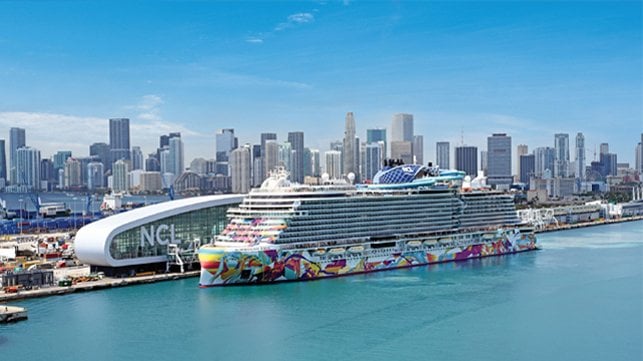
Norwegian Cruise Line's newest ship at the company's signature terminal in Miami (NCL)

Published Feb 17, 2026 5:39 PM by The Maritime Executive


Elliott Investment Management, a well-known activist shareholder, is setting its sights on Norwegian Cruise Line Holdings, calling the cruise company a laggard and underperformer. In a letter to the board, which was released publicly, Elliott is calling on the board to act immediately or says it will go to shareholders to reverse a “decade of strategic misjudgment and poor execution.”

The activist investor, which is well-known for its recent battle with Southwest Airlines and having taken on other giants, including oil refiner Phillips 66, announced that it has accumulated a greater than 10 percent economic interest in NCLH, the publicly traded parent company of Norwegian Cruise Line, Regent Seven Seas Cruises, and Oceania Cruises. It is presenting a plan called Norwegian Now, demanding that the board take immediate action.

The company, which traces its origins back to 1966, is known as one of the pioneers of the modern cruise industry and has been publicly traded for a little more than a decade. It, however, has a history of management and strategy changes, poor execution, and lost its leadership in the industry to competitors Carnival Corporation and Royal Caribbean Group. More recently, MSC Cruises has also grown in the North American market, pushing Norwegian by most measures to fourth in industry rankings by size. Norwegian was reinvigorated after it was taken over by Genting Group and Apollo Management about 25 years ago, and according to Elliott, was the industry’s top financial performer when NCLH went public at the beginning of 2013.

“Over the past decade, the company has fallen from a best-in-class cruise operator at the time of its initial public offering to a clear industry laggard, suffering from inconsistent strategy, weak execution, inaccurate guidance, and poor cost discipline,” contends Elliott in its letter to the board. “Norwegian has lost its former position as a profitability leader and now operates near the bottom of the peer set.”

The letter points out that Norwegian has the right building blocks, including a modern fleet and an industry in strong demand.  It also points to untapped potential. It says Norwegian has a unique opportunity with an industry tailwind, high-quality assets, and an untapped opportunity. Elliott says it believes Norwegian’s stock price could be increased by 159 percent versus current levels.

Elliott contends the board has failed in its oversight and that the management has changed strategies, failed in its execution, and failed to anticipate industry development and consumer preferences. It cites Norwegian’s private island in the Bahamas as an example, noting the company invited the feature in 1977 and more recently failed to develop it while competitors eclipsed the offering. Norwegian is now investing in the island, adding a pier, pool, and other attractions, but the project is behind schedule, while Norwegian already repositioned ships to the Caribbean before the new features were available. Elliott also contends the company has a lack of cost discipline.

The letter also cites the change in CEO of the company announced last week. It says the selection of a “long-tenured board member with no cruise-industry executive experience” continues a “troubling pattern of poor judgment and insufficient process.”

Elliott’s plan calls for a comprehensive board change, including new directors with relevant industry and operational experience. It also wants a management review and a new business plan that addresses the lack of cost management. The Wall Street Journal reports Elliott has been in talks with long-term Royal Caribbean executive, Adam Goldstein, who was with the cruise line from 1998 to 2020 and also served a term as the Chairman of the Cruise Lines International Association (CLIA).

The release of the plan comes two weeks before Norwegian is scheduled to report year-end financial results on March 2. It also gives Elliott about a month before nominations for the company’s board and proxy issues could be filed for the next annual shareholder meeting.

The investor, in its letter to the board, says its preference is to “reach a construction resolution” but notes it is prepared to “take our case directly to shareholders.” The presentation already lists the name of the company’s proxy solicitor.

Norwegian Cruise Line Holdings said in a statement that it “regularly engages with our shareholders to hear their views on our strategy and progress.” It says this is the first contact from Elliott Investment Management.