Wednesday, February 18, 2026

Peru's political fragility laid bare as another leader falls to congressional vote
Peru's political fragility laid bare as another leader falls to congressional vote
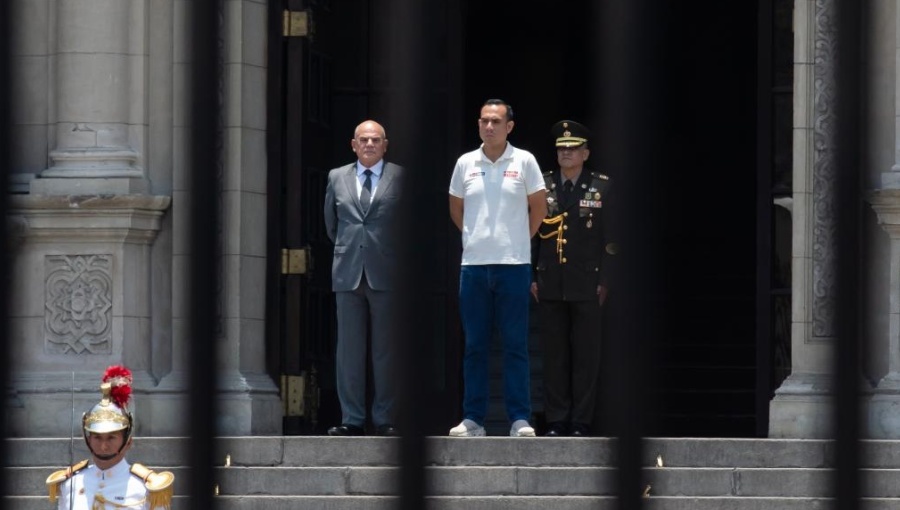
The statistical backdrop amplifies these concerns. Since 2016, Peru has presented 28 motions of vacancy or censure against presidents, three of which have succeeded. Jerí’s 130-day tenure is the second shortest since the early twentieth century. / xinhua
By Alek Buttermann February 18, 2026

Peru will again swear in a head of state chosen by Congress rather than by direct vote, after legislators removed José Jerí from office barely 130 days into his interim presidency. 

The decision, approved on February 17 by 75 votes to 24, leaves the country with its eighth president in a decade and lays bare the structural fragility of its semi-presidential practice within a formally presidential constitution.

Jerí, 39, had assumed office in October following the removal of his extremely unpopular predecessor, Dina Boluarte. His fall was triggered by seven motions accusing him of ethical misconduct, influence peddling and lack of transparency. The motions were accumulated into a single vote during an extraordinary session that lasted more than four hours. 

At the centre of the controversy was the so-called “Chifagate”: covert meetings with Chinese businessmen that were neither disclosed in official transparency registers nor channelled through formal diplomatic or ministerial procedures.

Video footage broadcast by the programme Cuarto Poder showed Jerí entering a closed Chinese restaurant in Lima wearing a hood and dark glasses to meet Zhihua Yang, a businessman whose companies operate in sectors ranging from hydroelectric projects to security equipment. 

One of Yang’s establishments had recently been ordered closed for municipal infractions, only for a central government regulator to revoke the underlying rule days later. Jerí acknowledged the meetings but described them as social or cultural encounters, arguing before legislators that he had committed no crime.

Investigative reporting detailed Yang’s commercial footprint, including concessions such as the Pachachaca 2 hydroelectric project valued at $224mn, and alleged regulatory irregularities involving municipal licences and heritage protection orders. 

Congressional motions further referenced visits by another businessman, Ji Wu Xiaodong, who is under house arrest while investigated for alleged links to illegal logging. According to parliamentary critics, such undisclosed contacts constituted not mere errors of judgement but potential abuses of office.

Additional allegations concerned the use of Peru’s Fondo de Apoyo Gerencial mechanism to hire individuals allegedly linked to Jerí’s circle without competitive procedures. The Comptroller General’s Office requested documentation, while prosecutors opened preliminary inquiries. 

Opposition legislators argued that the pattern of clandestine meetings and irregular appointments demonstrated incompatibility with the presidency.

Procedurally, the removal exposed a constitutional fault line. Several legislators proposed activating the vacancy mechanism for “permanent moral incapacity” under Article 113 of the Constitution, which requires 87 votes. Instead, Congress proceeded via censure, a tool ordinarily directed at ministers or parliamentary officers. 

According to El Comercio, critics warned that using a simple majority to oust a sitting head of state establishes a controversial precedent that may weaken institutional safeguards designed to ensure executive stability.

The statistical backdrop amplifies these concerns. Since 2016, Peru has presented 28 motions of vacancy or censure against presidents, three of which have succeeded. Jerí’s 130-day tenure is the second shortest since the early twentieth century, surpassed only by Manuel Merino’s five-day presidency in 2020. 

According to data compiled by El Comercio, since the political crisis that began during the administration of Pedro Pablo Kuczynski, the average length of a presidential term has decreased by approximately 66% compared with the 2001 to 2016 period.

Public opinion shifted rapidly. Surveys cited by El País show that 68% of respondents considered Jerí suspect in acts of corruption, while earlier approval ratings above 50% dropped sharply after the videos emerged. Jerí accused rivals of leaking footage to influence the general election scheduled for April 12, in which he is not a candidate. Power is due to transfer to an elected president on July 28.

Congress must now elect a new Speaker who will automatically assume the interim presidency. Four legislators have formalised bids, according to El Comercio: María del Carmen Alva of Acción Popular; José Balcázar of Perú Libre; Héctor Acuña of Honor y Democracia; and Edgar Reymundo of the Bloque Democrático Popular. 

Internal party negotiations, failed alternative nominations and debates over neutrality have unfolded against the tight electoral timetable. Under congressional rules, a candidate requires a simple majority; if no list achieves it, a second round is held between the two leading slates.

The immediate vacancy may prove temporary. The deeper question is whether Peru’s repeated recourse to removal mechanisms reflects accountability in action or a chronic inability to sustain executive authority. 

With more than half of twentieth-century governments interrupted and nearly all living former presidents having faced criminal investigations, Peru’s challenge is no longer episodic scandal but systemic instability.


Peru’s presidential musical chairs


By AFP

February 17, 2026


Jose Jeri became the seventh Peruvian president to lose his job in the span of just a decade - Copyright AFP/File CONNIE FRANCE

Peru lost its seventh leader in almost as many years Tuesday with the impeachment of interim President Jose Jeri on allegations of graft.

Since 2016, four presidents were impeached, two stepped down to avoid the same fate, and only one managed to complete his intended term.

Analysts point to a destabilizing tug-of-war between a powerful Congress and the executive, as well as chronic corruption and low levels of trust in politicians as reasons for the country’s fast turnover of presidents.

A look back at a decade of political turmoil:


– Kuczynski –


In 2018, center-right politician Pedro Pablo Kuczynski — known as “PPK” — became the first Latin American president to resign over alleged connections to a sprawling corruption case involving Brazilian construction giant Odebrecht.

Four former Peruvian presidents, including one who committed suicide, became embroiled in the same case that has claimed numerous corporate and political scalps.

Only two years into his term, Kuczynski relinquished power on the eve of an impeachment vote, making way for his deputy Martin Vizcarra to take over.

Kuczynski remains under investigation and has been barred from leaving the country, but is registered as a candidate for Senate elections this year.


– Vizcarra –


Kuczynski’s replacement Martin Vizcarra lasted only two years in the job, ousted by Congress in 2020 for “moral incapacity ” — a charge that has also been leveled against other Peruvian leaders.

After clashing with lawmakers, he was ultimately convicted of taking kickbacks in exchange for public work contracts when he was a governor.

Vizcarra was also named in a scandal dubbed “Vaccinegate”, with 500 officials accused of getting vaccinated against Covid-19 ahead of their turn.

Last year, he began serving a 14-year-sentence for graft, joining two other former presidents behind bars at a special penitentiary for ex-leaders east of Lima.


– Merino –


Then head of Congress, Manuel Merino took over as interim president, but only lasted five days before resigning in the wake of violent protests against him by Vizcarra supporters.

Two people were killed in clashes with police, and dozens injured.


-Sagasti –


Following Merino’s resignation, centrist academic Francisco Sagasti was appointed stand-in president and led the country until planned elections in 2021 — becoming the only recent leader to complete his intended term, even an interim one.


– Castillo –


Rural school teacher Pedro Castillo won the 2021 election, but found himself lacking a majority in a Congress dominated by right-wing opponents.

Hailed as Peru’s “first poor president,” he was ousted by a vote in parliament and arrested 17 months into his term after trying to dissolve Congress to avoid impeachment proceedings for alleged graft.

His downfall sparked angry protests that led to dozens of deaths.

Castillo is serving a sentence of over 11 years in jail.


– Boluarte –


Castillo’s vice president Dina Boluarte then became Peru’s first woman leader, but only for 22 months.

She was unpopular from the get-go and soon embroiled in corruption allegations including accusations that she received Rolex watches and jewelry as bribes.

Boluarte was also investigated over an unannounced two-week absence in 2023 for a nose surgery, which she insists was medical and not cosmetic.

She was impeached last October amid widespread protests over government graft and a wave of violence linked to organized crime.


– Jeri –


Jose Jeri, until then president of Congress, was chosen to serve out the remainder of Boluarte’s term until July this year.

Only 39, he took up the role with gusto, launching into an anti-crime drive that proved popular with the electorate but not enough to keep his head off the chopping block.


Holidaying Israeli soldier faces war crimes prosecution in Chile

Holidaying Israeli soldier faces war crimes prosecution in Chile
Chilean lawyer Pablo Araya Zacarías filed a criminal complaint with the 8th Guarantee Court of Santiago against an Israeli-Ukrainian citizen named Rom Kovtun for alleged war crimes in Gaza.
By bnl editorial staff February 18, 2026

A Brussels-based human rights group has filed a criminal complaint in Chile seeking the investigation and prosecution of an Israeli-Ukrainian former military sniper accused of participating in the deadly siege and destruction of al-Shifa Hospital in Gaza.

The Hind Rajab Foundation filed the complaint on February 16 before the 8th Guarantee Court in Santiago, targeting Rom Kovtun, a sniper in the 424th "Shaked" Battalion of the Givati Brigade, under Chilean Law 20.357, which criminalises genocide, crimes against humanity and war crimes in line with the Rome Statute. The foundation takes its name from a five-year-old Palestinian girl who died in January 2024 when IDF troops opened fire on the car she was travelling in with six family members and two paramedics who had come to rescue them. The complaint in Chile was submitted by lawyer Pablo Andrés Araya Zacarías.

Kovtun's own prolific social media activity proved his undoing. Posts on Instagram, reported by Al Jazeera, showed him on holiday at a lake in southern Chile in the company of other former Israeli soldiers, alerting the foundation to his whereabouts and enabling the legal filing. His presence in Chile is central to the case, as universal jurisdiction – the legal principle under which courts may try individuals for serious international crimes committed in other countries  requires the accused to be physically on Chilean soil. Chilean authorities believe Kovtun remains in the country. The foundation also cited Israel's refusal to prosecute its own military personnel as a further basis for the filing.

According to the complaint, Kovtun participated in the siege and assault on al-Shifa Hospital, Gaza's largest medical facility, between March and April 2024. The World Health Organisation said at least 21 patients died during attacks on the hospital, while the Hamas-run Gaza health ministry put the toll considerably higher. Witnesses and survivors alleged that Israeli forces executed civilians during the operation, including children, and that medical staff were abducted and tortured. Hundreds of Palestinian bodies were discovered outside the hospital following the Israeli military withdrawal, some of whom appeared to have been executed, with hands tied and evidence of torture on their remains. The Israel Defence Forces denied the allegations.

The foundation alleges that Kovtun helped encircle the hospital compound, took up sniper positions surrounding the facility and contributed to circumstances in which civilians were unable to evacuate and were cut off from food, water and medical supplies.

"The targeting and destruction of a functioning hospital during a military siege strike at the core of international humanitarian law," said Dyab Abou Jahjah, the foundation's general director. "When evidence indicates that a sniper participated in such an operation, domestic courts cannot look away. Universal jurisdiction exists to ensure that the most serious crimes do not go unexamined simply because they were committed abroad."

Natacha Bracq, the foundation's head of litigation, argued that the operation went beyond collateral damage. "The encirclement and destruction of a functioning medical complex, combined with the deprivation of food, water and medical care, are not collateral damage  they constitute war crimes, crimes against humanity, and acts of genocide," she said.

Araya told Al Jazeera the legal basis for the filing was clear. "This applies when it's clear that the person accused of these crimes will not be tried in his or her country of origin," he said, adding that soldiers who had committed atrocities in Gaza would not face prosecution under the current Israeli government.

Chile's embrace of universal jurisdiction has deep historical roots. The 1998 arrest in London of former military dictator Augusto Pinochet, based on a warrant issued by a Spanish judge, prompted the South American nation to develop a robust domestic legal framework for prosecuting grave international crimes. The country is also home to one of the world's largest communities of Palestinian descent outside the Arab world, though observers note the case will turn entirely on its legal merits rather than public sentiment.

The filing forms part of a broader strategy by the foundation, which has pursued legal action against alleged IDF war criminals across multiple jurisdictions. In October 2024, it filed a complaint at the International Criminal Court against 1,000 IDF personnel accused of crimes in Gaza. Peru separately opened a formal probe last year into an Israeli national accused of participation in the Gaza conflict. No prosecutions have resulted from the foundation's complaints to date.

The case arrives at a moment of sharp political transition in Chile. The outgoing leftist government of President Gabriel Boric has been among the most outspoken critics of Israel's conduct in Gaza, recalling Chile's ambassador to Tel Aviv shortly after the Israeli onslaught triggered by Hamas’ October 2023 terror attacks and calling Israel's military campaign a form of collective punishment against the Palestinian civilian population. Boric has publicly described Prime Minister Benjamin Netanyahu as a war criminal. His administration also moved to exclude Israel from Chile's International Air and Space Fair and advanced legislation to ban imports from Israeli-occupied territories.

That posture is set to change dramatically when President-elect José Antonio Kast takes office on March 11. The far-right politician, who won December's runoff election with 58% of the vote, has been a vocal supporter of Israel and lashed out at Boric's Middle East policy throughout his campaign, vowing to reverse what he dismissed as diplomatic "whims". Israeli Foreign Minister Gideon Sa'ar congratulated Kast by telephone after his victory and said both sides had agreed to restore bilateral ties. Analysts caution, however, that the prosecution of Kovtun would fall under the jurisdiction of independent Chilean courts rather than the executive branch, limiting the incoming administration's ability to directly influence proceedings.

Largest protest in Kosovo's recent history backs former KLA leaders on trial in The Hague

Largest protest in Kosovo's recent history backs former KLA leaders on trial in The Hague
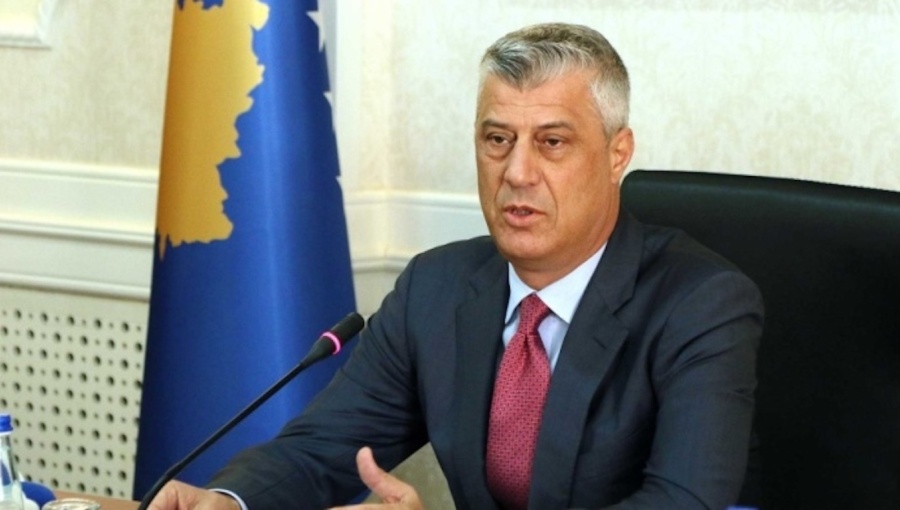
Kosovo’s former president Hashim Thaci and other former KLA leaders are charged with war crimes and crimes against humanity allegedly committed during and after the 1998-1999 conflict.
By bne IntelliNews February 18, 2026

Thousands of people gathered in Pristina on February 17 for what organisers described as the largest march in Kosovo’s history, rallying under the slogan “Justice, not politics” in support of former Kosovo Liberation Army (KLA) leaders on trial in The Hague.

The protest was held at Skanderbeg Square and was organised by the “Freedom Has a Name” platform, which said citizens arrived from across Kosovo, the wider region, the diaspora and even the United States to express solidarity with former president Hashim Thaçi, Kadri Veseli, Jakup Krasniqi and Rexhep Selimi, Kosovo-online reported.

Despite harsh weather conditions, participants remained in the square for hours, with organisers saying the turnout demonstrated unity and a shared sense of national dignity.

“Their mass presence showed that this is not about individuals or groups, but about historical truth,” the organisers said in a statement.

According to the Telegrafi news agency, up to 130,000 people joined the demonstration. Kosovo's population is around 1.6mn.

The demonstration follows a February 13 resolution adopted by Kosovo’s parliament, calling on the Kosovo Specialist Chambers and the Specialist Prosecutor’s Office to ensure a fair trial for former KLA leaders. The resolution was passed with 90 votes in favour.

Thaçi, Kosovo’s former president, along with Veseli, Krasniqi and Selimi, are charged with war crimes and crimes against humanity allegedly committed during and after the 1998–1999 conflict.

All four have pleaded not guilty. Earlier this month, Specialist Prosecutor Kimberly West requested prison sentences of 45 years for each defendant as closing arguments began in the case.


Renewables exceed 50% of Poland’s installed power capacity in 2025

Renewables exceed 50% of Poland’s installed power capacity in 2025
By bne IntelliNews February 18, 2026

Renewables accounted for more than 50% of Poland’s installed electricity capacity at the end of 2025, and for the first time ever their share in annual power generation surpassed 30%, the Ministry of Climate and Environment said on February 17.

The ministry cited data showing that the country’s energy transition gathered pace between 2020 and 2025, with green sources taking on a far greater role in the national power system. That brought down the emissions intensity of Poland’s power-generating system to around 650 grams of CO2-equivalent intermittently last year, from around 800 a few years ago.

With hard and lignite coal still making up over 50% of Poland’s energy mix, the country’s electricity production remains one of the dirtiest in the EU. A leap to low-carbon generation is expected in the early 2030s, when Poland’s first nuclear power plant is expected to start operations.

According to figures from the Energy Market Agency, renewable installations represented 24.12% of total installed capacity in 2020, with combined capacity of 12,490MW. By 2025, renewable capacity had climbed to 37,777MW, marking more than a threefold increase over a short period.

That rapid expansion meant that by 2025 half of Poland’s total installed capacity came from renewable sources.

Solar power recorded the sharpest rise. Installed capacity in solar plants jumped from 3,960MW in 2020 to 24,808MW in 2025. Wind farms also expanded, with capacity increasing from 6,402MW to 10,550MW over the same period.

Electricity output from renewables also rose strongly. In 2020, green sources generated 28,173GWh of electricity. Five years later, in 2025, production reached 54,743GWh, almost double the earlier figure.

As a result, the share of renewables in total domestic electricity generation increased from 17.83% in 2020 to 31.41% in 2025. In practical terms, nearly one in every three kilowatt-hours produced in Poland last year came from renewable energy sources.


California–U.K. Clean Energy Deal Sparks Fresh Clash Between Newsom and Trump

  • Governor Newsom signed a clean energy memorandum with the U.K., drawing sharp criticism from President Trump.

  • The deal promotes U.K. investment in California’s clean tech sector, including expansion by Octopus Energy.

  • The agreement highlights broader transatlantic climate cooperation and deep domestic divisions over fossil fuels versus renewables.

California’s governor this week inked an energy partnership deal with the UK’s Department for Energy Security and Net Zero (DESNZ) - and it made the U.S. president quite angry. Trump dubbed Gavin Newsom’s actions inappropriate in the latest flare-up between the federal government and green-focused California, as the two diverge ever more on energy policies.

“The U.K.’s got enough trouble without getting involved with Gavin Newscum,” President Trump told Politico, asked about his comments on the deal between Newsom and the UK’s Ed Miliband. “Gavin is a loser. Everything he’s touched turns to garbage. His state has gone to hell, and his environmental work is a disaster.”

“The worst thing that the UK can do is get involved in Gavin. If they did to the UK what he did to California, this will not be a very successful venture,” the U.S. president also said.

California’s government has prioritized energy transition policies for years, turning the state into the one with the most stringent emission controls—and the one with the most expensive gasoline. Climate advocates see California’s progress in the transition as a marked success, while critics note the exorbitant fuel prices and the growing homelessness problem that has been put on the backburner to focus on emission reduction.

The deal is one of about a dozen that the UK government has signed with individual U.S. states, so in that sense, the deal is not exactly unusual. The deal focuses on cooperation in the area of clean energy, per another Politico report, including opening up the California market to UK companies, notably Octopus Energy. Octopus Energy is the biggest energy supplier in the UK and a vocal proponent of a transition to wind and solar for electricity generation.

“California is the best place in America to invest in a clean economy because we set clear goals and we deliver. Today, we deepened our partnership with the United Kingdom on climate action and welcomed nearly a billion dollars in clean tech investment from Octopus Energy,” Newsom said. Miliband praised the deal—a memorandum of understanding for now—as a way to enable “opportunities for U.K. businesses and secure investment for our country.”

Meanwhile, the insult trade between Trump and Newsom continued, as Reuters cited a spokesperson for the California governor as saying, “Donald Trump is on his knees for coal and Big Oil, selling out America’s future to China. Governor Newsom will continue to lead in his absence. Foreign leaders are rejecting Trump and choosing California’s vision for the future.”

It is interesting to note that it was Ed Miliband from the UK who recently sealed a deal with China on what was described as clean energy cooperation across areas including grid investment, power market reforms, offshore wind power generation, carbon capture, and green hydrogen production. The deal prompted criticism from the UK’s opposition due to the fact that Miliband has refused to reveal any details about it, sparking fears of growing Chinese influence over the UK’s energy policies and its energy transition, featuring a lot of wind and solar components manufactured in China.

California’s governor is touring Europe, apparently in a bid to reassure leaders of European nations that the current U.S. policies are a temporary thing and once Trump’s term ends, the U.S. will be back to climate change as a top priority and will adjust its federal policies accordingly. Newsom is one of the Democrats’ presidential hopefuls. Meanwhile, however, until his term ends, President Trump appears determined to keep criticizing European nations for trying to give up hydrocarbons in favor of wind and solar, with the criticism especially pointed towards the UK and the decision by several successive governments to essentially suffocate its oil and gas industry in favor of imported alternatives.

By Irina Slav for Oilprice.com

Secrecy Surrounds Beijing-Backed Refinery Deal in Serbia

  • Serbia has withheld key details of a $2.8 billion refinery agreement with Chinese state firms, calling it a business secret.

  • Local residents fear worsening air pollution in Smederevo, already impacted by a Chinese-owned steel plant.

  • Analysts say the project fits China’s broader strategy of investing in overseas refining as domestic oil demand approaches its peak.

Residents of Smederevo, a Serbian industrial city already blanketed by pollution from a Chinese-owned steel mill, are pushing back against plans for a $2.8 billion oil refinery backed by Chinese state-owned companies -- a project negotiated largely out of public view.

Nearly two years after the refinery was announced, Serbia's government has refused to release the framework agreement signed with China Energy International Group.

Serbia's Energy Ministry told RFE/RL the deal was a "business secret" and disclosing the agreement would interrupt negotiations with potential investors. Key details, including ownership structure, financing, and environmental safeguards, have been kept from the public for almost two years since the project, located about 60 kilometers from Belgrade, was announced.

The opacity has fueled concern in Smederevo and elsewhere in Serbia, whose government has forged close political and economic bonds with Beijing and Chinese state-owned firms under Serbian President Aleksandar Vucic.

"We are not automatically against industry or even an oil refinery, but we believe Smederevo is the wrong place for it because we already have a major air pollution problem," Nikola Krstic, director of the local environmental NGO Fortress Movement, told RFE/RL.

The refinery project follows a broader pattern in Serbia's dealings with Beijing: major projects negotiated through bilateral channels, shielded from public scrutiny, and often exempt from open tender because of a 2009 agreement between China and Serbia that allows for direct public contracting with Chinese firms.

Analysts say the Serbian project aligns with a broader shift in China's oil sector.

"It is expected that China will soon reach peak oil demand, possibly as early as next year," Plamen Tonchev, head of the Institute of International Economic Relations in Athens, told RFE/RL. "This means many Chinese refineries will shut down and look for opportunities abroad."

Pollution Fears In An Industrial City

According to Serbian officials, the refinery would employ some 700 people, with Serbian Energy Minister Dubravka Djedovic Handanovic saying the owner and operator would be "one of the Chinese oil companies," without naming which one.

China Energy International Group, the company that signed the framework agreement with Belgrade, is the overseas arm of China Energy Engineering Corporation, a major state-owned enterprise focused on infrastructure and energy projects. The company regularly outsources and subcontracts work to other Chinese firms.

"Only once we know the details will we know whether this is the surrender of a strategically important sector to a Chinese owner or simply nontransparent spending of state funds through commercial contracts," Stefan Vladisavljev, an expert on Beijing's role in the Balkans at Foundation BFPE, a Belgrade-based think tank, told RFE/RL.

Dedovic Handanovic said the refinery would process up to 100,000 barrels per day, roughly matching the capacity of Serbia's main refinery in Pancevo, near Belgrade. Serbia also has a smaller-scale refinery in the city of Novi Sad that is no longer operational.

Officials have presented the project as a way to reduce energy insecurity, especially as Oil Industry of Serbia (NIS), Serbia's sole crude oil refiner, was hit with US sanctions at the end of 2025 because of its majority-Russian ownership.

In Smederevo, the main concern is further deterioration of air quality, which has already reached dangerous levels since the Chinese company HBIS acquired the largely defunct plant in 2016, according to Serbia's Environmental Protection Agency.

While the renovated plant is a source of employment for the city, it has come with environmental costs, with the company being fined over high air pollution in 2024.

"If we look at our experience with the steel plant, we have reasons to believe standards will not be respected," Krstic said.

Other Smederevo residents also fear an oil refinery would worsen the already poor air quality.

"I go out for an evening walk and I can't breathe," Bogosav Filipovic, a local pensioner, told RFE/RL. "The city already rejected this once," he said, referring to the 2010 referendum on refinery construction, which failed due to low turnout.

At that time, the project was put forward by an US-Netherlands consortium, Comico Oil, but the project never advanced.

The Energy Ministry told RFE/RL it will ensure that the "highest environmental standards" will be followed with the refinery project, although it did not explain how they would be enforced.

China's 'Peak Oil' Sends Refiners Looking Abroad

The International Energy Agency projected in March 2025 that China's oil product consumption would decline as electric vehicle adoption rises and the economy shifts toward services.

"These trends have major implications for premium fuels, which are crucial for refinery profitability," the report said.

But how that will play out in Serbia remains unclear.

The Balkan country has signed more than 10 loan agreements with Chinese banks for infrastructure projects since 2014. In those arrangements, Serbia borrows the money while Chinese companies execute the work. It's not known whether the refinery would follow that model or involve direct Chinese ownership.

Secrecy around the agreement with China Energy International Group also raises questions about the company's role.

China Energy International Group, Sinopec -- a massive state-owned Chinese energy company and the world's largest oil refiner -- and the private Serbian company Ors Oil Gaz all signed a memorandum of understanding to work on the refinery in November.

Sinopec and Ors Oil Gaz did not reply to RFE/RL's request for comment.

Erica Downs, a senior researcher at Columbia University's Center on Global Energy Policy, said China Energy International Group's role is likely centered around finding investors for the project, as well as designing and building the refinery.

"Sinopec's interest in the refinery project aligns with its strategy of building and investing in overseas refineries as China approaches peak oil demand," she told RFE/RL.

By RFE/RL