Wednesday, February 18, 2026

Coffee, Tea, And The Great Indian Brain – OpEd


February 18, 2026 

By Dr. K S Parthasarathy


Somewhere between your morning coffee and your evening tea, please read what a group of very serious scientists has quietly confirmed. This is probably what every Indian household has known since the invention of the tumbler! Life runs on caffeine, and the brain apparently agrees! I am unable to understand how this morning coffee and evening tea itself started as a daily ritual in many Indian homes particularly so in South India. I gratefully recall that I drank the best coffee decades ago when my friend V G R Subramanian took me to a small eatery he used to visit as a student in Tirunelveli. VGR’s nostalgia and the aroma of the dicoction still linger on!

On 9 February 2026. JAMA (Journal of the American Medical Association) published the study by Yu Zhang et al., titled “Coffee and Tea Intake, Dementia Risk, and Cognitive Function”, on line. The researchers analyzed data from over 131,000 U.S. adults (86,606 women from the Nurses Health Study and 45,215 men from the Health Professionals Follow-up Study) followed for up to 43 years.

This paper is an eye opener for science communicators and researchers in this field. Thirteen scientists mainly from various departments of the Harvard University carried out this massive, long term, humongous study to unravel what cofee and tea does to human brain!

Before this study was published, evidence linking coffee and tea to cognitive health remained inconclusive, and most studies fail to differentiate caffeinated from decaffeinated coffee. The researcher’s objective was to investigate associations of coffee and tea intake with dementia risk and cognitive function. Now they claim that they conclusively showed that greater consumption of caffeinated coffee and tea was associated with lower risk of dementia and modestly better cognitive function, with the most pronounced association at moderate intake levels. After reading the crirical appraisal of the paper by ten scientists from the UK my conclusion is MORE RESEARCH IS NEEDED!

Let me invite researchers in the field to read experts comments at this link: (My apologies for including the comments of some experts in my article.


Key Findings

Reduced Dementia* Risk: Higher intake of caffeinated coffee was associated with an 18% lower risk of developing dementia compared to those with the lowest intake.

Optimal “Sweet Spot”: The strongest protective associations were observed at moderate levels:2 to 3 cups of caffeinated coffee per day.

1 to 2 cups of caffeinated tea per day.

Caffeine as a Key Factor: 
The benefits were specifically linked to caffeinated beverages; decaffeinated coffee showed no significant association with lower dementia risk or improved cognitive function.

Cognitive Function: 
Caffeinated beverage intake was also linked to lower prevalence of subjective cognitive decline (perceived memory or thinking issues) and modestly better performance on objective cognitive tests.

Genetic Risk: The protective association remained consistent regardless of whether participants had a high or low genetic predisposition for Alzheimer’s disease

*Dementia is a progressive syndrome involving a decline in cognitive function—memory, thinking, and behavior—that interferes with daily life, primarily affecting older adults.

While these results are significant, the authors and experts emphasize that this is an observational study showing an association, not direct causation.

This is certainly not a miracle cure. Not a “drink this and become Einstein.” suggestion either! Just a gentle scientific nod that your daily cup may be doing more than keeping you awake during Zoom calls.


What are the highlights?

Caffeinated coffee: Good for the brain.
(Your doctor may or maynot agree, but your brain apparently won the argument.)

Tea: Also, good. Especially if consumed with the solemnity of a 4 pm ritual.

Decaffeinated coffee: No benefit. (Frankly, even the scientists looked confused. “Why would anyone drink this?” was not written in the paper, but you can sense the emotion.)

What happens in real life? If you’re the one type who says, “Don’t talk to me until I’ve had my coffee,” congratulations—you may have been practicing preventive neurology without knowing it. If you are a tea person, sipping thoughtfully while staring out of the window, you too are on the right track. (Extra points if you swirl the cup like a philosopher.)

But here’s the middle-column twist (I forgot mine is not a middle column piece,though the topis is worth only that!)

Of course, this doesn’t mean you should drink seven cups daily and blame JAMA when you can’t sleep. Again, let me remind you, as in all habits, moderation is the key. Even the brain likes its caffeine in reasonable doses—like a good Malayalam movie: not too long, not too loud, just right.
What is the final word?

So, tomorrow morning, when you lift that cup, do it with pride. You are not just drinking coffee or tea. You are participating in a long-term cognitive wellness program—self-administered, culturally approved, and now scientifically validated/ endorsed
Expert reaction to the study (These comments are from a Science Media Centre Press release)

Most of the experts lauded the study as well designed and well conducted with large numbers of subjests.

Dr Mohammad Talaei, Lecturer in Life Course Epidemiology, Queen Mary University London (QUML) said: “The paper reports a robust association, supported by strong methodological approaches, leveraging the exceptional advantages of these American longitudinal studies: large sample sizes, long follow-up, and, most importantly, repeated assessments of lifestyle factors at later stages of the life course. Interestingly, they not only showed a lower risk of dementia but also modestly better cognitive function, as assessed by subjective and objective measures. However, there are two major considerations in this study:

“1. Dementia has a long prodromal phase, and, as the authors have mentioned, reverse causation is a concern. It means that a decline in coffee drinking or reporting coffee drinking could be a consequence of cognitive decline rather than the assumption that exposure precedes outcome. They have done a 4-year lag analysis, which is insufficient given the long prodromal phase of dementia, but also a 12-year lag analysis that apparently showed similar inverse associations, which makes reverse causation a less plausible alternative explanation. Another approach I wish authors had considered to address reverse causation is to verify the inverse association with dementia in a subgroup of participants with the least evidence of cognitive decline over the first 10 years of their luxurious 3-4 decades of follow-up.

“2. The second topic is a common complexity in nutritional epidemiology. Dietary exposures are inherently substitutional (when people don’t eat something, they usually eat something else as a substitution): Associations with coffee and tea consumption may reflect beverage substitution rather than the effect of coffee and tea in isolation, as non-consumers typically replace them with other beverages or habits. To address this, the authors controlled the associations for tertiles of non-caffeinated sugar-sweetened beverage intake and categories of alcohol intake. While it is a reasonable first step and necessary, I am not sure if statistical adjustment can fully address the issue. Stronger controlling approaches, such as testing these associations among abstainers, could have strengthened the evidence for a potential benefit of coffee and tea for brain ageing.”

Prof Jules Griffin, Director of the Rowett Institute, University of Aberdeen, said: “While this is an impressive study in terms of scale, the reduction in risk is quite a small decrease and so my message would be that if people wanted to reduce their risk of developing dementia there are other things they could consider that would have a bigger effect – not smoking, doing exercise, and reducing the intake of saturated fat and free sugar in our diets. As with any study based on associations there is also the question whether coffee or tea consumption is just part of a wider dietary or lifestyle pattern – for example, what are the non-coffee drinkers drinking and doing instead?”

Prof Eef Hogervorst, Professor of Biological Psychology, and Director of Dementia Research, National Centre for Sports and Exercise Medicine, Loughborough University, said:

“There is good biological plausibility for protective effects of caffeine on brain function. Caffeine is an adenosine antagonist and thus inhibits the inhibitor (adenosine) of many activating and memory improving neurotransmitter activity. These neurotransmitters activities are reduced by age, neuronal dysfunction and loss and dementia pathology affecting cognitive decline (e.g. dopamine) and dementia (e.g. acetylcholine) symptoms. Caffeine acts on many other mechanisms associated with brain health and dementia, including reduction of inflammation and regulation of dysfunctional glucose metabolism. In people without dementia, lifetime consumption of >2 cups per day of caffeine was associated with lower levels of the toxic amyloid plaques

 (https://www.nature.com/articles/s41398-019-0604-5.pdf) seen in Alzheimer’s disease (AD), the most common form of dementia. Lastly, coffee and tea have many other anti-oxidant components and vascular benefits. Unfortunately, green tea, which is thought to be very beneficial for health due to its multiple compounds, was not investigated separately. It was odd that in this study only 1-2 cups of tea were associated with optimal risk reduction, but this could relate to people in the US perhaps consuming less tea than coffee.


Dr. K S Parthasarathy

Dr. K S Parthasarathy is former Secretary, Atomic Energy Regulatory Board and a former Raja Ramanna Fellow in the Strategic Planning Group, Department of Atomic Energy, Mumbai. Dr. K S Parthasarathy may be contacted at ksparth@yahoo.co.uk

 

Hungary and Slovakia halt diesel exports to Ukraine amid oil transit dispute

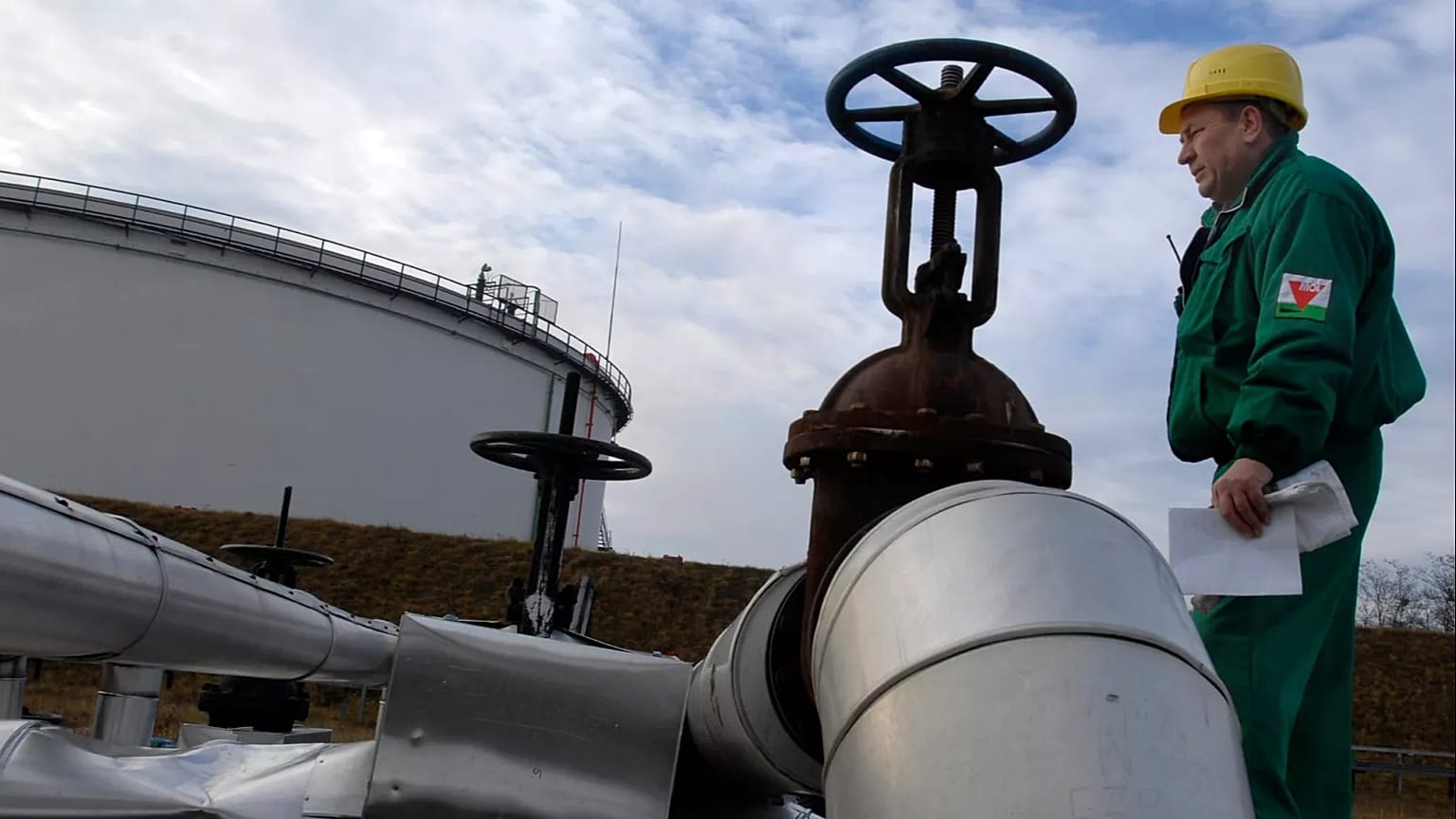
An engineer of the Hungarian Oil and Gas Company checks the receiving area of the Druzhba oil pipeline at the country's largest oil refinery in Szazhalombata.
Copyright AP Photo

By Sandor Zsiros
Published on 

Hungary and Slovakia said they have suspended diesel exports to Ukraine after Russian oil flows via the Druzhba pipeline were disrupted. Both governments accuse Kyiv of failing to restore the pipeline, but the European Commission said their energy security is not at risk.

Hungary and Slovakia announced on Wednesday that they would suspend diesel exports to Ukraine amid growing tensions over oil deliveries, saying they need to secure their energy supplies to replace imports of Russian oil through the damaged Druzhba pipeline – with Hungary also accusing Ukraine of political blackmail and interference.

The row is another showcase of conflicts between the two EU governments, which are still importing large quantities of Russian crude oil via Ukraine, and Kyiv, which has repeatedly called on them to fully decouple themselves from Russian energy.

Oil transfers from Russia to Hungary and Slovakia stopped on 27 January. According to media reports, the pipeline carrying them was damaged by a Russian air strike in Ukrainian territory.

"Diesel fuel deliveries to Ukraine have been halted. And diesel fuel deliveries to Ukraine will not resume until the Ukrainians resume crude oil deliveries via the Druzshba pipeline to Hungary," said Hungarian Foreign Minister Péter Szijjártó.

Both Hungary and Slovakia say they have sufficient fuel reserves, but want to redirect diesel to their internal markets.

Foreign Minister Szijjártó said that Ukraine had sufficient means and time to repair the pipeline, and that not doing so was a political decision.

“The fact that Ukraine will not restart oil transport towards Hungary is a political decision, a political decision made by the Ukrainian president himself,” he added.

In Slovakia, Prime Minister Robert Fico’s government announced a similar response. The state-controlled Slovnaft refinery will suspend diesel exports in order to prioritise domestic supply, and Slovakia has also released 250,000 tonnes of oil from its emergency reserves.

“Slovnaft is stopping the export of diesel to Ukraine and any other exports, and everything it will process now at home in Slovakia will be intended for the Slovak market,” Fico said.

Hungary and Slovakia also called on the European Commission to enable the transport of Russian crude oil through Croatian ports towards Hungary and Croatia. Croatia earlier rejected this request, saying the transfer of Russian oil might violate American sanctions.

The Commission said on Tuesday that Hungary’s and Slovakia’s energy security was not at risk, citing sufficient reserves in both countries.

Ukraine is facing a severe energy crisis after Russian strikes caused extensive damage to infrastructure during winter.


EU countries back tool to regulate carbon price spikes ahead of tax on cars and buildings

A building with the mural entitled 'Kalamata' depicting opera legend Maria Callas by artist Kleomenis Kostopoulos in Kalamata town, Greece.
Copyright AP Photo/Petros Giannakouris


By Marta Pacheco
Published on 

EU countries agreed to amend a financial tool designed to regulate carbon price shocks in anticipation of the new carbon tax covering road transport and buildings.

EU member states will extend the bloc's mechanism to regulate price spikes beyond 2030 in a bid to ensure the carbon price under the upcoming tax on cars, vans and buildings does not spike excessively when the system takes effect in 2028.

Households and businesses using fossil fuels for heating and transport will likely see higher bills once the new version of the European Union's emissions trading system (ETS2), or carbon market, comes into full effect, and resistance to the system's full implementation has been growing.

Slovakia and the Czech Republic have called for the new carbon tax to be delayed until at least until 2030, citing the law's social impact; on the other side of the argument, Sweden, Denmark, Finland, the Netherlands and Luxembourg signed a joint paper expressing opposition to any delays or amendments to ETS2.

"We are concerned that any further postponement or amendments related to the market-based price of ETS2 would substantially undermine the effectiveness of EU climate policy," reads the letter dated 18 February seen by Euronews.

The five EU countries argue that ongoing discussions on price stabilisation measures under the ETS2 are undermining the system's credibility and increasing uncertainty for investment decisions by businesses and households.

The decision to regulate price spikes comes on top of a recent €3 billion frontload by the European Investment Bank meant to address rising energy bills, a response to intense pressure from lawmakers in the European Parliament to ensure that the most vulnerable can cope with the transition.

Amending the Market Stability Reserve

The EU's long-term tool to address surplus allowances in the EU carbon market, the market stability reserve, is designed to rebalance carbon allowance supply and demand and strengthen the system’s resilience to future shocks.

The extension of the EU's carbon market to cover road transport and buildings was created in 2023 as part of the bloc's climate law, with the goal of cutting emissions from these sectors by 42% by 2030, compared with 2005 levels.

The mechanism was due to start in 2027, but it was delayed after lawmakers raised concerns about its social impact.

"The Council’s position on adjusting the market stability reserve – the safety valve of the system – sends a clear signal that the EU is committed to a stable and predictable carbon market," said Maria Panayiotou, minister of agriculture, rural development and environment of Cyprus, on behalf of the EU Presidency.

The 600 million allowances currently under the bloc's stability mechanism – roughly equal to ten years of emission-reduction needs – will remain available as a buffer that can be released if the market comes under pressure, the Council said.

Under the current rules, 20 million allowances are released when the carbon price rises above €45 per tonne of CO2, relative to 2020 prices. The changes increase each release by an additional 20 million allowances and allow releases twice a year, meaning up to 80 million allowances can now be added to the market to prevent sharp price spikes.

"These measures further strengthen stability and affordability within ETS2 and set us on a more predictable path toward a low-carbon future. We are setting the right conditions to keep prices in check and intervene swiftly if they go too high," said Wopke Hoekstra, Commissioner for Climate, Net Zero and Clean Growth.

The position agreed to by the Council will now be scrutinised by lawmakers in the European Parliament, which must approve the final rules before ETS2 starts in 2028.

'A dangerous trend': Olympic skiers voice concern over receding glaciers

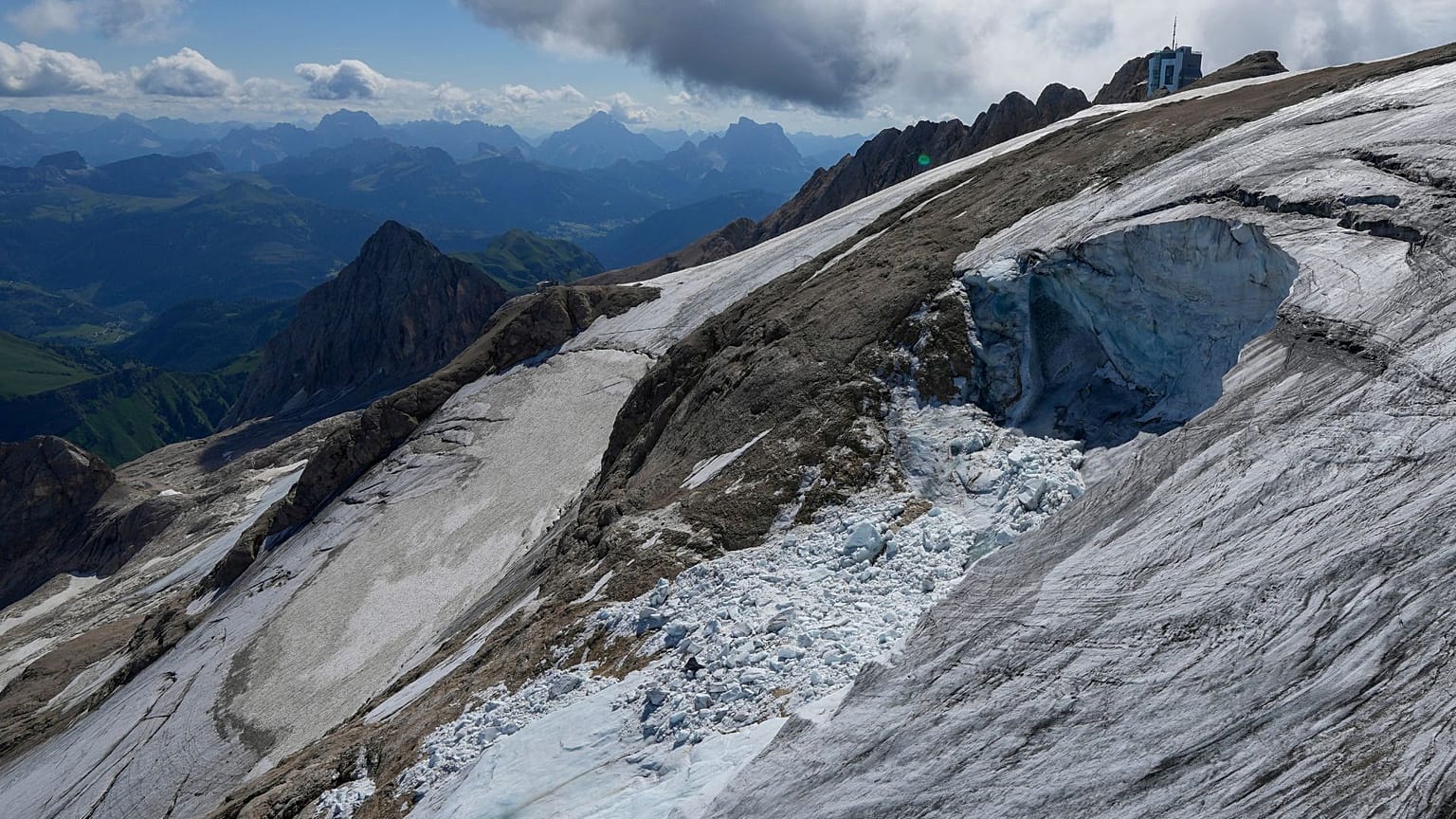
FILE - A view taken from a rescue helicopter of the Punta Rocca glacier near Canazei, in the Italian Alps in northern Italy, Tuesday, July 5, 2022.
Copyright AP Photo/Luca Bruno, File

By Jennifer McDermott with AP
Published on 

Olympic host country Italy has lost more than 200 square kilometres of glacier area since the late 1950s.

Team USA skiers Lindsey Vonn and Mikaela Shiffrin, along with Italy's Federica Brignone, are among the many skiers who have expressed concern during these Olympic Games about the accelerating melt of the world’s glaciers.

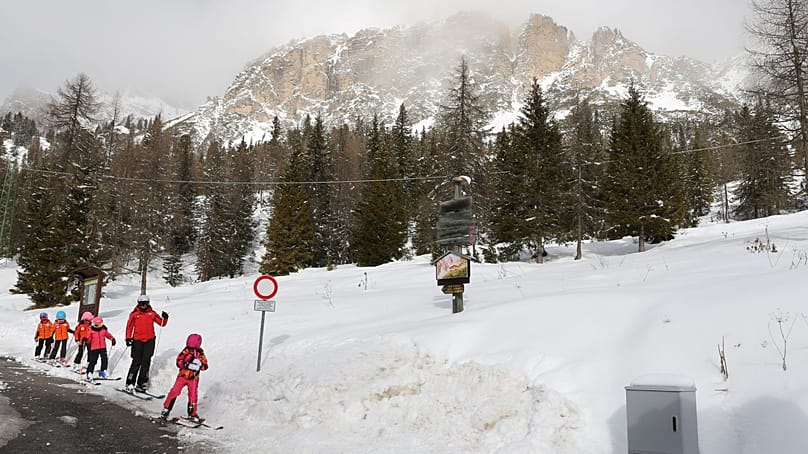
And Olympic host city Cortina is a fitting place for them to be talking about climate change: glaciers once visible from town have dramatically shrunk. Many have been reduced to tiny glaciers or residual ice patches at high elevations among the jagged peaks of the Dolomites. Any Olympian or spectator wishing to lay eyes on a major glacier would have to take a long drive on winding mountain roads to the Marmolada. It's melting rapidly, too.

The world’s top skiers train on glaciers because of the high-quality snow there, and a warming world jeopardises the future of their sport. Vonn started skiing on glaciers in Austria when she was just 9 years old.

“Most of the glaciers that I used to ski on are pretty much gone,” 41-year-old Vonn said at a pre-race press conference in Cortina before she crashed on the Olympic downhill course. “So that’s very real and it’s very apparent to us.”

As athletes in snow sports, Shiffrin said, they “get a real front-row view” to the monumental changes underway atop some of the world’s highest, coldest peaks.

“It is something that’s very close to our heart, because it is the heart and soul of what we do,” Shiffrin told news agency AP after racing Sunday. “I would really, really like to believe and hope that with strong voices and broader policy changes within companies and governments, there is a hope for a future of our sport. But I think right now, it’s a little bit of a question.”

A view of the Cristallo mountain group is pictured in the Dolomites, which was once home to glaciers, seen from Olympic host city Cortina d'Ampezzo, Italy, Feb. 7, 2026
A view of the Cristallo mountain group is pictured in the Dolomites, which was once home to glaciers, seen from Olympic host city Cortina d'Ampezzo, Italy, Feb. 7, 2026 AP Photo/ Jennifer McDermott

Italy's glaciers are disappearing

Italian glaciologist Antonella Senese said Italy has lost more than 200 square kilometres of glacier area since the late 1950s.

“We are observing a continuous and uninterrupted decrease in glacier area and volume. In the last one to two decades, this reduction has clearly accelerated,” Senese, associate professor of physical geography in the University of Milan's environmental science and policy department, said in an interview.

Among the peaks surrounding Cortina d’Ampezzo, there are glaciers on the slopes of the Cristallo and Sorapiss mountains. The 2015 New Italian Glacier Inventory found these glaciers shrunk by about one-third since the 1959-1962 inventory.

Shortly after winning a second gold Sunday at her home Winter Olympics, Brignone told AP that skiing is “totally different” now than when she was younger. Brignone lives in the Valle d’Aosta, about six hours away.

When she sees how glaciers are retreating to higher elevations, Brignone said she’s not thinking about the future of skiing – she’s concerned for the future of the planet.

“There we have a lot of glaciers, but they are going up and up, every year, more and more,” she told AP.

Yet many people who don't frequent the mountains remain unaware of what's at stake, so the University of Innsbruck created the Goodbye Glaciers Project. The loss of glaciers has far-reaching consequences, threatening water sources, increasing mountain hazards and contributing to sea level rise.

The project shows how different warming levels change the amount of ice left on selected glaciers around the world. To be included, glaciers must have an estimated 2020 volume of at least 0.01 cubic kilometres. The Cristallo and Sorapiss glaciers no longer meet that threshold, said Patrick Schmitt, a doctoral student at the University of Innsbruck.

Preserving glaciers

Some 50 kilometres from Cortina is the Marmolada glacier, one of the largest glaciers in Italy and the largest in the Dolomites. An apartment building-sized chunk of the glacier detached in July 2022, sparking an avalanche of debris that killed 11 hikers. The mountain is popular for hiking in summer and skiing in winter.

The University of Padua said in 2023 the glacier had been halved over 25 years.

It's expected to be mostly gone by 2034 if the world warms 2.7 Celsius, according to the Goodbye Glaciers Project. But if warming is limited to 1.5 C – the international goal – the glacier’s life could be extended by another six years, and around 100 glaciers in the Alps can be saved, Schmitt said.

“Cutting greenhouse gas emissions now will reduce future ice loss and soften the impacts on people and nature,” Schmitt wrote in an email. “The choices we make in this decade will decide how much ice remains in the Dolomites, across the Alps, and around the world.”

Globally, more than 6.5 trillion tonnes of ice has been lost since 2000, according to a study last year. And the prospective impact of climate change on Olympic sport is enormous; the list of places that could host Winter Games is projected to shrink substantially in the coming years.

It's not just Vonn, Shiffrin and Brignone – many Olympic skiers are concerned

In Cortina, Noa Szollos, who is competing for Israel, said in an interview the state of the nearby glaciers speaks to the condition of glaciers around the world.

“I hope we can do something about it,” she said, “but it’s a hard time.”

Silja Koskinen of Finland said in an interview she can’t train on some of the glaciers she used to because of crevices, rocks and flowing water. Team USA skier AJ Hurt talked about starting the season in October on glaciers in Sölden, Austria.

“Every year, I feel like we come and there’s a little less snow. And every time, we’re like, are we really going to start in October? There’s no snow here,'” Hurt told the AP. “It is really sad and it’s hard to ignore in this sport, definitely, when we’re around it so much and it is so clear.”

Norwegian skier Nikolai Schirmer is leading an effort to stop fossil fuel companies from sponsoring winter sports. Burning coal, oil and gas is the largest contributor to global climate change by far.

In Bormio, Italy, Team USA skier River Radamus said athletes – as stewards of outdoor winter sports – should be on the forefront of trying to defend the environment as best they can.

“It’s always present in our mind that we’re on a dangerous trend unless we do something right,” Radamus said.

South Africa Government At Work To Resolve Water Challenges

February 18, 2026 

By SA News

Minister in the Presidency Khumbudzo Ntshavheni has moved to assure that government is at work to resolve the water crisis currently experienced in parts of the country.

Ntshavheni was speaking during the Debate of the State of the Nation Address (SONA) held in Cape Town on Tuesday afternoon.

The water challenges reached a crescendo last week when residents in Johannesburg protested, with some maintaining to have been without water for at least three weeks.

“The work has already commenced. The OV [Operation Vulindlela] team and the Department of Water and Sanitation have started with the assessments towards a water action plan that should be ready by mid-March 2026, and a call for technical capacity as part of mobilising resources and expertise to support municipalities in crisis is in the works.

“The current draft Water Action Plan is focused on immediate crisis, propelling reforms in the water sector and unlocking investments in the municipal infrastructure,” Minister Ntshavheni assured.

During the SONA last week, President Cyril Ramaphosa announced the establishment of the National Water Crisis Committee to resolve the challenges faced by citizens in a similar vein to the success of the National Energy Crisis Committee.

“This structure will bring together all existing efforts into a single coordinating body. It will deploy technical experts and resources from the national government to municipalities facing water challenges. It will ensure that action is taken swiftly and effectively to address the problem.

“To address the challenges effectively, we will not hesitate to use the powers enshrined in the Constitution and in the Water Services Act to intervene in municipalities where necessary.

“We will hold to account those who neglect their responsibility to supply water to our people,” President Ramaphosa said at the time.


SA News

Government Communication and Information System (GCIS) established the SA Government News Agency to enable all media locally and abroad to have easy and fast access to fresh government information, news and current affairs at no cost.

By 


New research shows that short periods of extreme heat and drought during flowering could become one of the biggest threats to global wheat production in the coming decades. 

As the climate changes, farmers around the world are facing more frequent and intense weather extremes. While drought has long been seen as the main danger to wheat crops, this new study suggests that heatwaves at a key moment in the plant’s life cycle may soon pose an even greater risk. 

Flowering: a critical moment

Dr Mikhail Semenov, Mathematical Modeller and Emeritus Fellow at Rothamsted Research said: “Flowering is one of the most sensitive stages in wheat development. It’s when the plant sets grain, which ultimately determines yield. Even a few days of very high temperatures or severe water stress at this stage can reduce grain numbers and significantly cut final harvests.” 

The study used advanced climate projections and the Sirius wheat model to estimate how short, intense heatwaves and droughts during flowering could affect global wheat yields in the future. 

What the research found 

The results show a clear shift in risk: 

Drought during flowering currently causes more yield loss than heat. However, its overall global impact is expected to decline slightly in the future. 

Heat stress during flowering, on the other hand, it is projected to become much more damaging. By 2050, global yield losses linked to extreme heat at flowering could rise by about one-third. By 2090, those losses could increase by more than three-quarters. 

While drought remains important, extreme heat at flowering is set to become a growing challenge for wheat growers worldwide. 

Professor Malcolm Hawkesford, Leader of the “Delivering Sustainable Wheat” Institute Strategic Programme at Rothamsted Research said: “This kind of modelling studies provide critical information on, and pointers to, the traits we should be breeding for now, ready for predicted future climate conditions.” 

What this means for farmers 

For farmers, this highlights the importance of: 

  • Choosing varieties with improved tolerance to heat as well as drought 
  • Considering sowing dates and management strategies that reduce the risk of flowering during peak heat periods 
  • Staying informed about local climate trends and seasonal forecasts 

Plant breeders will also need to place greater emphasis on developing wheat varieties that can cope with short bursts of high temperature during flowering. 

Looking ahead 

With global demand for wheat continuing to grow, protecting yields under changing weather patterns is essential for food security. This research shows that preparing for heat stress – not just drought – will be key to keeping wheat production stable in the decades ahead. 

By understanding when crops are most vulnerable, farmers and researchers can work together to build more resilient farming systems for the future.

The Cost Of Java Centrism Resulting In Indonesia’s Unfinished Nation-Building – Analysis
People walking on dirt road after an environmental disaster in Indonesia. 
Photo Credit: Read Once, Pexels


February 18, 2026 

By Muhammad Izzuddin Al Haq and Fransiscus Divo Marcellino Prasetia


The famous line “Java is the key” refers to a policy approach in order to curb political influence, given the large population on Java Island. In 2024, elected president Prabowo-Gibran won in a single round, accounting for more than 58% of the vote, or 96.214.691 ballots. This national victory was built upon their commanding performance across Java Island, where Prabowo-Gibran secured precisely 53,6161,213 votes, which equals to 57.45% of the region’s total valid votes.

In contrast, Anis-Muhaimin garnered 22,061,932 votes overall in Java Island (23.64%), performing the best in DKI Jakarta, where they nearly tied with Prabowo with 2,653,400 to 2,692,433. Meanwhile, Ganjar-Mahfud secured 17,659,394 votes across Java with the strongest showing in their home base of Central Java. However, this number was outperformed by the winning candidate, who accounted for 12,097,190 votes. Comprising six provinces, including the capital, Java island accounts for 93.3 million votes, demonstrating why it remains the decisive battleground in Indonesian presidential elections. With this number, it is essential to note that this electoral dominance is not merely a political fact. Rather, it actively shapes how national development priorities are set. In practice, successive governments continue to concentrate resources and policy attention on Java, not only because of its economic weight, but also because securing electoral support there remains central to sustaining political power.
The data presented in this table are derived from the official website of Indonesia’s General Elections Commission (KPK) and compiled by the author.


Colonialism Roots

This electoral arithmetic reinforces a much older development logic inherited from the colonial era, in which political control over Java determined the direction of state investment across the archipelago. This typical electoral arithmetic has long governed Indonesian policymaking under a simple condition, implying that whoever wins Java’s ballots, the resources will follow.

This pattern, inherited from colonial Dutch administrations from the 1830s onward, concentrated on infrastructure investment in Java while treating the outer islands primarily as resource extraction zones. It created economic disparities that persist today. Indonesia’s founding prime minister, Mohammad Sjahrir, negotiated the Linggadjati Agreement, recognizing Indonesian authority over Java and Sumatra. He envisioned a democratic republic, yet the structural Java-centrism embedded by centuries of colonial policy proved resistant to reform.

At the same time, what functions as political pragmatism has escalated into systemic development bias that extends far beyond campaign strategy. It perpetuates the very colonial spatial hierarchy that independence promised to dismantle. The government consistently favors Java political expedients, ranging from disaster preparedness mechanisms that, in recent Sumatran natural disasters, led to finger-pointing at the ministerial level to basic infrastructure development. The Java-centric public policy has weakened the value of Bhinneka Tunggal Ika (unity in diversity), indicating that other parts of Indonesia feel structurally abandoned by the state their ancestors helped build.


Disaster Response Inequality

While Java-centrism is often discussed in terms of development planning and political strategy, its consequences become most visible during national emergencies, where unequal institutional capacity and political attention directly shape survival outcomes across the archipelago.

The recent two months in Indonesia, Sumatra, have come with a shocking number, indicating over 900 dead bodies, and approximately 115,000 displaced people have been recorded due to starvation. This issue stems from the delayed response and highly complex bureaucracy in the wake of catastrophic floods and landslides, which have not yet been declared a national emergency by the central government.

Comparing this with the 2022 Cianjur earthquake reveals a contrast in approach with the current approach to mitigating the risk of disaster preparedness. The 5.6 magnitude earthquake struck West Java, and the government declared a 30-day state of emergency within hours. With authorisation from the central government in Jakarta, the West Java provincial administration mobilised resources from its Unexpected Expenditure Fund (Dana Bantuan Tak Terduga) and promptly disbursed IDR 20 billion in financial assistance and IDR 2 billion worth of logistical support to Cianjur Regency.

Furthermore, within six days of the earthquake, more than 325 evacuation centers were established across 15 districts, housing almost 74,000 displaced people. Despite officially killing 335 people, Cianjur received immediate presidential attention and cabinet-level mobilization.

In contrast, the 2025 Sumatra disaster exposed systemic abandonment of outer islands. The Sumatra’s geographic isolation from the central government proved a fatal blow, affecting three provinces simultaneously, with over 570,000 people being displaced, nearly double Cianjur’s toll, despite receiving a fraction of the response speed.

The disparity exposes the structural logic of Java-centric disaster preparedness designed for Java’s geography, not the archipelago’s setting. It is essential to note that Indonesia sits on the Pacific Ring of Fire, with Sumatra facing greater seismic and tsunami risk than Java. Yet, emergency infrastructure investment patterns show that political interests supersede geological risk.

The disparity exposes the structural logic of Java-centric disaster preparedness designed for Java’s geography, not the archipelago’s setting. Despite Sumatra facing higher seismic and disaster risk, institutional preparedness and rapid mobilisation mechanisms remain concentrated in Java, revealing a policy system shaped more by political centrality than by humanitarian necessity. Ultimately, these response failures cannot be separated from deeper weaknesses in disaster preparedness, which remain highly centralised and disproportionately developed in Java.


Infrastructure and Connectivity Gaps

The unequal treatment evident in disaster governance is not an isolated failure, but reflects the same Java-centred development logic that structures Indonesia’s long-term infrastructure planning and regional connectivity policies.

Java-centric infrastructure development, driven by disproportionate funding allocation, makes economic development in regions outside Java and Bali mathematically impossible. Regions like Sumatra, or further areas like Papua and Maluku, are then stuck in a structural cycle of poverty due to poor road quality and low density, as well as limited access to business and investment opportunities.

In 2024, Indonesia’s national budget allocated for infrastructure reached 422.7 trillion rupiahs, the highest in the last 10 years. However, the allocation of these funds remains heavily skewed towards Java and other national priorities, leaving many outer regions structurally underfunded. This imbalance is evident in Sumatra, where the provincial government reported that, as of June 2025, only 56 per cent of roads were in good condition, while 86 per cent of city road networks continued to suffer from severe deterioration. In addition, a significant percentage of this fund is also allocated to one of President Joko Widodo’s most ambitious projects, which is IKN, the new capital of Indonesia, reaching up to an estimated 48.8 trillion rupiahs spanning from 2025 to 2029, which will be through 3 stages.

This infrastructure deficit creates a cycle of dependence that undermines Indonesia’s self-sufficiency. Since 2016, West Kalimantan has imported electricity from Sarawak, Malaysia, through the Trans-Borneo Power Grid with a nominated peak capacity of up to 230 megawatts. This outcome reflects the central government’s continued prioritisation of power infrastructure investment in Java, resulting in a disproportionately low level of investment in Indonesia’s resource-rich and strategically important border regions. Investment patterns generate a compounding effect on the economy, which is an abandonment through extractive exploitation rather than sustainable development.

As it can be seen that fossil fuels, including petroleum, natural gas, and coal, are produced primarily in Sumatra and Kalimantan. Yet the areas that create natural resources, such as Papua, Aceh, and many parts of Indonesian Borneo, and Southeast Sulawesi, are among the poorest and most underdeveloped parts of the country, with all that is left for local people after resource exploitation has left behind barren forests and expansive mining scars.

Looking Ahead

Indonesia’s Java-centric development model has proven not merely inequitable but fundamentally unsustainable as it transforms natural disasters into mass casualty events and condemns resource-rich regions to perpetual poverty. The pattern threatens national cohesion as regions increasingly look beyond Indonesia’s borders for the services their own government denies them.

Decentralising disaster response and infrastructure oversight would dramatically improve survival rates during emergencies and accelerate regional economic development. Research in 2017 reveals that response time is the single most critical factor in disaster mortality rates. It indicates that each day of delay in mobilizing aid increases death tolls exponentially, with economic losses reaching $3billion, yet response capacity concentrates in Java.

At the same time, studies on Indonesia’s decentralised disaster management show that Jakarta-based command centres struggle to coordinate responses across the archipelago, while devolving authority and capacity to the village level enhances local emergency response capabilities. Potentially, this will be able to save thousands of lives annually, given Indonesia’s position as the world’s most disaster-prone archipelago.

A final word from the authors is that Indonesia can continue prioritising political expediency over national equity, or it can finally build the truly united archipelago nation its constitution promises. While Java may dominate Indonesia’s electoral ballots, the archipelago’s 17,000 islands must anchor its development vision in keeping the balance of the nation’s political and economic landscape.


About the authors:

Muhammad Izzuddin Al Haq is an undergraduate student of International Affairs Management at the School of International Studies, Universiti Utara Malaysia. He is currently a Cadet Researcher at the Asian Institute of International Affairs and Diplomacy (AIIAD) of Universiti Utara Malaysia and serves as Director-General of World Order Lab concurrently. His research interests focus on international security and global governance. His analyses have appeared on East Asia Forum, Australian Outlook, Stratsea, Pacific Forum, and others.

Fransiscus Divo Marcellino Prasetia is an undergraduate student in International Relations at Universitas Katolik Parahyangan and an Analyst at World Order Lab. His research interests focus on non-traditional security, media, and diplomacy through an integrative politics, psychology, and philosophy approach that examines their often-overlooked interrelations.


Pakistan In Vienna: Multilateral Diplomacy And The Politics Of Nuclear Legitimacy – OpEd

February 18, 2026 
By Saima Afzal

Prime Minister Shehbaz Sharif’s visit to Vienna on 15-16 February 2026 was not simply another ceremonial stop in Europe. It was a carefully timed effort to reshape how Pakistan is seen internationally at a moment of economic strain and shifting geopolitical alignments. Publicly, the trip focused on bilateral cooperation and meetings with multilateral institutions. In strategic terms, however, it signaled Islamabad’s attempt to present itself at once as an economic partner, a responsible nuclear state and a constructive actor within the wider international order.

The meeting with the Director General of the International Atomic Energy Agency stood out as the visit’s most consequential moment. Engagement at the agency’s headquarters is rarely symbolic alone. For Pakistan, the purpose was clear: to demonstrate that its nuclear programme is tied not only to deterrence, but also to responsibility and peaceful use. By highlighting safety standards, cancer treatment, medical research and other civilian applications of nuclear science, Islamabad sought to shift attention toward public welfare. Pakistan today operates more than 20 nuclear medicine and radiotherapy centres that treat hundreds of thousands of cancer patients each year-an achievement it increasingly places at the centre of its diplomatic narrative.

That emphasis reflects a broader change in how nuclear legitimacy is judged. As rivalry deepens across Asia, credibility no longer rests solely on military doctrine. It is also measured by contributions to healthcare, climate resilience and sustainable development. Pakistan’s focus on nuclear medicine, regulatory cooperation and treatment capacity shows an awareness that technological responsibility can build diplomatic trust. Vienna-home not only to the nuclear watchdog but also to several major UN institutions-offers a stage where technical cooperation quietly becomes political signaling.

Sharif’s talks with Austrian Chancellor Christian Stocker revealed another objective, less visible but equally important: reconnecting Pakistan with Central Europe after decades of limited high-level contact. This was the first visit by a Pakistani prime minister to Austria since 1992 and coincided with the 70th anniversary of diplomatic relations, giving the trip symbolic weight. Yet symbolism alone does not explain the renewed attention. Austria occupies a distinctive position inside Europe-politically neutral, economically sophisticated and deeply embedded in multilateral diplomacy. Closer engagement with Vienna provides Pakistan an indirect route into broader European policy networks that shape trade rules, development finance and regulatory standards.

Economic diplomacy formed the working core of the visit. Conversations on trade, investment, renewable energy, technology transfer and skilled labour mobility reflected Islamabad’s search for diversified partnerships at a time of domestic pressure. Austria’s strengths in engineering, green energy and advanced manufacturing align with several of Pakistan’s structural needs, particularly energy transition, value-added agriculture and export competitiveness. Even so, the starting point is modest. Bilateral trade total volume about €187 million in the first half of 2024, with Pakistani exports forming the larger share-figures that highlight both the room for growth and the distance still to travel. Business-forum meetings and CEO-level discussions were therefore less about headlines and more about laying slow, practical groundwork.


Caution remains warranted. Experience suggests that memoranda of understanding do not easily translate into sustained investment. European firms tend to look first for regulatory stability, governance transparency and macroeconomic predictability-areas where Pakistan continues to face scrutiny. Without consistent reform at home, diplomatic momentum can fade into a familiar cycle of announcements followed by limited follow-through.

The multilateral dimension of the Vienna visit adds another layer of meaning. Engagement with UN-linked institutions, combined with repeated references to sustainable development and peaceful cooperation, suggests Pakistan is trying to rebalance its foreign-policy narrative toward global governance rather than regional security alone. At a time when many middle-sized states use multilateral platforms to extend influence, visible participation in Vienna’s institutional environment helps Islamabad project relevance beyond South Asia.

European priorities, meanwhile, remain practical. Migration management, counter-narcotics coordination, clean-energy transition and regulated pathways for skilled labour dominate policy thinking. Pakistan’s willingness to cooperate on irregular migration and supply internationally certified workers speaks directly to these concerns. The convergence is functional rather than strategic, but it creates space for gradual confidence-building-an essential condition for deeper economic ties.

The nuclear dialogue with the IAEA fits squarely within this European frame. Cooperation centred on medicine, agriculture and safety regulation is politically easier than engagement framed around deterrence or military balance. By foregrounding humanitarian and developmental uses of nuclear technology, Pakistan is attempting to anchor itself within a globally accepted narrative of nuclear responsibility tied to human security. Whether that effort succeeds will depend on transparency, regulatory credibility and sustained technical cooperation over time.

Seen together, the Vienna visit points to a broader adjustment in Pakistan’s external outlook. Confronted with economic vulnerability at home and geopolitical uncertainty abroad, Islamabad is widening its diplomatic reach-looking beyond traditional partners toward mid-sized European states and multilateral institutions. This is not a dramatic realignment, but a gradual attempt to diversify relationships, reduce dependence and open new developmental pathways.

Diplomacy alone, however, cannot substitute for change within Pakistan itself. Investment flows, technology partnerships and institutional trust ultimately depend on stability and policy continuity at home. Without structural reform, even the most carefully managed international outreach risks remaining largely symbolic.

Vienna therefore mattered for reasons that extend beyond ceremony. It offered a measure of whether responsible nuclear stewardship, multilateral engagement and economic diplomacy can translate into tangible strategic progress. The real test will come later-and it will be decided less by what Pakistan says abroad than by what it is able to change at home.


Saima Afzal

Saima Afzal is an Islamabad-based analyst and holds an MPhil in Peace and Conflict studies.