Wednesday, February 18, 2026

WHITE SUPREMACIST

Trump’s pick as US ambassador arrives in Pretoria as tensions persist

Shaky relations between the US and South Africa face a key test as newly arrived ambassador Brent Bozell takes up his post in Pretoria.


Issued on: 17/02/2026 - RFI

Brent Bozell, Founder and President of the Media Research Center, speaks during the "Climate Hustle" panel discussion at the Rayburn House Office Building in Washington, DC. Getty Images via AFP - KRIS CONNOR

The United States’ newly appointed ambassador to South Africa, conservative media critic Brent Bozell, has arrived in Pretoria to take up his post, the US embassy confirmed on Tuesday, offering a fresh chapter in a relationship that has been under growing strain.

Bozell’s arrival comes at a delicate moment, as ties between Washington and Pretoria have been increasingly tense since President Donald Trump returned to office in January 2025, with diplomatic disagreements and policy divergences testing what has long been an important partnership.

The Trump administration has also accused South Africa of perpetrating genocide against white South Africans – a claim that Pretoria has strongly rejected.

Trump first announced Bozell’s nomination in March, shortly after expelling South Africa’s ambassador to Washington over allegations he had been critical of US policy. Pretoria has yet to name a replacement, leaving a noticeable diplomatic gap between the two nations.

The ambassador-designate must still present his credentials to President Cyril Ramaphosa before formally assuming his duties. Neither the US embassy nor South Africa’s foreign ministry has indicated when that ceremony might take place.

Why the new US ambassador to South Africa could strain relations even further


Conservative voice on the diplomatic stage


At 70, Bozell brings decades of experience from the world of media advocacy. He is the founder of the Media Research Center, a non-profit organisation that positions itself as a watchdog against what it describes as left-leaning bias in US news coverage.

Trump has praised Bozell’s credentials, saying he “brings fearless tenacity, extraordinary experience, and vast knowledge to a nation that desperately needs it”. Supporters see his appointment as a signal that Washington intends to take a more assertive stance in its dealings with Pretoria.

While Bozell has not yet outlined his diplomatic priorities publicly, his background and known positions suggest he could play a prominent role in shaping US messaging on key international issues – particularly those where Washington and Pretoria diverge.


Room for engagement

Among the most prominent sticking points is South Africa’s case at the International Court of Justice accusing Israel of genocide – a move that has drawn sharp criticism from Washington. Bozell is widely reported to be a strong supporter of Israel, placing him at odds with Pretoria’s recent diplomatic posture, including its expulsion of Israel’s top diplomat over what it described as a “series of violations”.

Relations have also been strained at the multilateral level. The Trump administration boycotted South Africa’s G20 summit in Johannesburg last year and has not invited Pretoria to its own hosting of the forum this year – an unusual departure from established cooperation among major economies.

Yet, despite these frictions, the underlying economic relationship remains significant. The United States is South Africa’s second-largest trading partner by country, after China, underscoring the mutual interest in maintaining constructive ties.

Bozell’s arrival therefore presents both a challenge and an opportunity – a chance to reset dialogue, even as differences persist. With diplomatic channels now being reactivated, attention will turn to how effectively both sides can navigate their disagreements while preserving areas of cooperation.

The previous US ambassador, Reuben Brigety, stepped down in November 2024, shortly before Trump took office.

(With newswires)
Senegal prosecutor says student died in fall, amid claims of police torture

A Senegalese public prosecutor claimed on Tuesday that a student, who protesters say was killed by the police, in fact died after "jumping from the fourth floor" of his residence while fleeing a fire.

Issued on: 18/02/2026 - RFI

A member of the campus security reacts as students leave Cheikh Anta Diop University on 10 February. A student died after clashes erupted between police and students. who were protesting delays in grant payments. © Patrick MEINHARDT / AFP

The death of medical student Abdoulaye Ba in unclear circumstances on 9 February – as police intervened on his university campus in the capital Dakar following several days of student demonstrations – has shaken the west African nation.

His autopsy report lists several injuries to the chest and skull "complicated by massive internal bleeding", which the coroner said ruled out "an isolated natural cause".

The students' collective at the Cheikh Anta Diop University (UCAD) insisted last week that Ba was "brutally tortured to death by the police".


But the Dakar court's prosecutor on Tuesday rejected that account, insisting that Ba "had not been beaten".

The student "jumped from the fourth floor of Pavilion F and unfortunately landed on the asphalt. This explains the injuries and other damage observed by the forensic doctor on his body", Ibrahima Ndoye told the press.

According to Ndoye, Ba was attempting to flee from a fire that had broken out in his dormitory, resulting in "flames and smoke that were causing them to suffocate".

The prosecutor did not give details about the cause of the alleged fire, which took place during the police intervention on campus.

His previous insistence on Saturday that Ba had not been tortured prompted the UCAD students' association to accuse the prosecutor of "stirring up confusion".
'Police misconduct'

The government has described the student's death as a "tragedy" and admitted to "police misconduct".

But Interior Minister Mouhamadou Bamba Cisse also justified the intervention by accusing students of attempting to destroy university campus infrastructure, citing video evidence.

Footage filmed by students and shared on social media showed the violence between the security forces and students.


In some of the images, officers are seen entering university grounds and firing tear gas into buildings, while students retaliated by throwing stones.

In one video authenticated by French news agency AFP, police officers are seen striking a screaming man with blunt instruments.

(with newswires)
Gabon pulls plug on Facebook and TikTok amid anti-government protests

Social media platforms including Facebook and TikTok were no longer available in Gabon on Wednesday, AFP journalists and a watchdog said, after regulators suspended them over security concerns amid anti-government protests.


Issued on: 18/02/2026 - RFI

.. © REUTERS - Hollie Adams


Interviewed by RFI, the President's spokesperson, Théophane Nzamé-Nzé-Biyoghe, explained the situation as "the continuation of several months of deliberation, necessary to initiate the debate and send a strong signal."

The opposition was quick to react. Former Prime Minister and leader of the "Together for Gabon" party, Alain-Claude Bilie-Bi-Nze, spoke of "serious violations of fundamental freedoms guaranteed by the Constitution."

Online posts stoking conflict

Gabon's media regulator (HAC) on Tuesday announced "the immediate suspension of social media platforms" in the country until further notice, saying that online posts were stoking conflict, in a move branded repressive by the opposition.

"Metrics show multiple online platforms are now restricted in Gabon," connectivity monitor NetBlocks said on X on Wednesday.

According to the watchdog, Facebook, TikTok and WhatsApp, the most widely used social networks in Gabon, were all affected, along with YouTube and Instagram.

In a televised statement on Tuesday, HAC spokesman Jean-Claude Mendome complained of "inappropriate, defamatory, hateful, and insulting content" on social media.

He said it was undermining "human dignity, public morality, the honour of citizens, social cohesion, the stability of the Republic's institutions, and national security".

The communications body spokesman also cited the "spread of false information", "cyberbullying" and "unauthorised disclosure of personal data" as reasons for the decision.

"These actions are likely, in the case of Gabon, to generate social conflict, destabilise the institutions of the Republic, and seriously jeopardise national unity, democratic progress, and achievements," he added.

The regulator said "freedom of expression, including freedom of comment and criticism", remained "a fundamental right enshrined in Gabon".

In Gabon, WhatsApp, Facebook, and TikTok are the most widely used social media platforms.

'Climate of fear'


Less than a year after being elected, Gabonese President Brice Oligui Nguema has faced his first wave of social unrest, with teachers on strike and other civil servants threatening to do the same.

School teachers began striking over pay and conditions in December and protests over similar demands have since spread to other public sectors -- health, higher education and broadcasting.

Opposition leader Alain-Claude Billie-By-Nze said the social media crackdown imposed "a climate of fear and repression" in the central African state.

In an overnight post on Facebook, he called on civil groups "and all Gabonese people dedicated to freedom to mobilise and block this liberty-destroying excess".

The last action by teachers took place in 2022 under then president Ali Bongo, whose family ruled the small central African country for 55 years.

Oligui overthrew Bongo in a military coup a few months later and acted on some of the teachers' concerns, buying calm during the two-year transition period that led up to the presidential election in April 2025.

Gabon military leader Oligui Nguema elected president by huge margin

He won that election with a huge majority, generating high expectations with promises that he would turn the country around and improve living standards.

A wage freeze decided a decade ago by the Bongo government has left teachers struggling to cope with the rising cost of living.

Authorities last month arrested two prominent figures from the teachers' protest movement, leaving teachers and parents afraid to discuss the strike in public.

(with AFP)


]


Ireland watchdog opens probe into sexual AI imagery from Grok chatbot

Ireland’s data protection watchdog has launched a probe into Elon Musk’s social media platform X over AI chatbot Grok’s generation of sexualised deepfake images, the latest step of an international backlash against the tool.


Issued on: 18/02/2026 - RFI

The Grok logo, a generative artificial intelligence chatbot developed by xAI, an American artificial intelligence company founded by South African businessman Elon Musk. 
AFP - LIONEL BONAVENTURE

The Irish Data Protection Commission (DPC) said the “large-scale inquiry” concerns possible breaches of the European Union’s General Data Protection Regulation.

The investigation will examine “the alleged creation and publication on X of potentially harmful, non-consensual intimate or sexualised images involving Europeans, including children,” generated using the tool, the DPC said.

“The purpose of this investigation is to determine whether X complied with its obligations under the GDPR ... with regard to the personal data processed of EU/EEA data subjects,” it said.

AI deepfake concerns

Because X’s European headquarters are in Ireland, the DPC acts as the lead regulator in Europe for applying EU rules to the platform.

DPC deputy commissioner Graham Doyle said the authority has “been engaging” with X “since media reports first emerged a number of weeks ago concerning the alleged ability of X users to prompt the Grok account on X to generate sexualised images of real people, including children”.

In January, several countries announced they were launching probes into Grok, increasing regulatory pressure and in some cases blocking the tool.

The European Union also opened a separate investigation into whether X met its obligations under the Digital Services Act (DSA), a law designed to regulate large online platforms.

Regulatory pressure


Last month, X said it was restricting Grok’s image generation and editing features to paying subscribers.

Regulation of US tech companies, including X, has become a source of tension between the European Union and Washington since Donald Trump returned to power.

The Irish investigation comes despite repeated US threats of retaliation against enforcement of tech rules that Trump’s administration says target American companies and restrict free speech.

The DPC said it notified X on Monday that the investigation had been opened.

Contacted by he French news agency AFP, X had not responded by Monday evening.

The Irish regulator had already opened an investigation in April 2025 into X's use of certain personal data to train its AI models, particularly Grok.

(with AFP)
EU probes Shein as retailer expands into regional French stores

The EU has opened an investigation into Shein over childlike sex dolls and concerns about illegal products and “addictive design,” targeting the online fashion retailer under the bloc’s Digital Services Act. The move comes as Shein prepares to expand into several regional department stores in France.


Issued on: 18/02/2026 - RFI

Imported clothes from Chinese fast-fashion brand Shein displayed in a retail store on 6 February 2026. The EU has opened an investigation into the online retailer under the Digital Services Act over illegal products and “addictive design”. AFP - JUAN MABROMATA

The European Commission announced on Tuesday that it had launched a formal probe into Shein, focusing on the sale of illegal goods and the platform’s recommendation systems.

The investigation is the commission’s first into Shein under the Digital Services Act, known as the DSA.

Regulators said they were investigating the sale of illegal products “including child sexual abuse material,” as well as unsafe or non-compliant goods such as weapons, toys, clothing, cosmetics and electronics.

The commission said it would also examine what it described as a “lack of transparency” in Shein’s recommender systems.

“In the EU, illegal products are banned from sale, whether in a shop or online,” said Henna Virkkunen, the European Commission’s vice-president for digital policy.

Shein, founded in China in 2012 and now based in Singapore, said it would cooperate with the commission.

“We share the commission’s objective of ensuring a safe and trusted online environment and will continue to engage constructively on this procedure,” the company said in a statement.

Pressure from France

Shein faced greater scrutiny in November after French authorities condemned the company for featuring sex dolls resembling children.

Following the uproar in France, Shein said it immediately removed the products and banned sex dolls from its site worldwide, regardless of appearance.

Brussels moved towards opening the case in recent weeks under pressure from France after illegal products were discovered on the platform in late October. French ministers for the economy, trade and digital affairs welcomed the EU action.

“The voice of France has been heard,” the ministers said in a joint statement, adding they hoped “this procedure can be carried through to the end and quickly”.

France has also asked the courts to block Shein’s third-party seller section, known as its marketplace. The court is due to rule on that request on 19 March.

In the coming weeks, Shein is set to open in five regional BHV stores owned by SGM, the regional newspaper Ouest-France reported. The stores will located in Dijon, Reims, Grenoble, Angers and Limoges.

Plans to open in Le Mans and Orléans are not expected immediately because of a lack of space to display the retailer’s products.

According to a survey by the French Fashion Institute published Thursday, 38 percent of French consumers bought clothing from ultra-fast-fashion platforms such as Shein, Temu or AliExpress in 2025 – attracted by low prices, product variety and available sizes.

Addictive by design

“Addictive features could have a negative impact on users’ well-being and consumer protection online,” the European Commission warned.

An EU official said regulators suspected Shein had underestimated the risk in its own assessment.

“We have a suspicion Shein underestimated [this] in the risk assessment and also didn’t put proportionate measures in place to tackle this particular risk,” the official said.

The commission said the opening of formal proceedings did not prejudge the outcome and set no deadline for the probe. Shein can offer commitments to try to satisfy the EU’s concerns.

Shein is among more than 20 “very large” online platforms that must comply with the DSA.

Companies that breach the rules risk fines of up to 6 percent of global turnover or even a ban for serious and repeated violations.

(with newswires)
Nine arrested as Lyon FASCIST
activist killing becomes flashpoint in French politics

Nine suspects have been arrested in the investigation into the killing of right-wing activist Quentin Deranque, a case that has intensified tensions between France’s far right and hard left ahead of municipal elections in March, and the presidential election in 2027.


Issued on: 18/02/2026 - RFI

Lawmakers in the National Assembly observe a minute of silence on Tuesday after the death of identitarian activist Quentin Deranque. © AFP/Alain Jocard

Deranque, 23, died from a severe brain injury after being attacked by at least six people last week in Lyon, on the sidelines of a conference by MEP Rima Hassan, of the hard-left party France Unbowed (LFI), at the university Sciences Po Lyon.

Prosecutors say six of the nine people detained on Tuesday are suspected of taking part in the beating, while three others were present during the arrests but are not suspected of assault.

Among those in custody is Jacques-Elie Favrot, a parliamentary assistant to LFI lawmaker Raphaël Arnault. Favrot was arrested in the Isère region of southeastern France after being named by witnesses.

Arnault said the assistant had “ceased all parliamentary activities” and that procedures to terminate his contract had begun, saying he was “horrified” by the killing.


Parliament backlash

The case dominated questions to the government on Tuesday in the National Assembly, France’s lower house, where lawmakers observed a minute of silence for Deranque.

“No one should die at 23. No one should die for their ideas,” assembly president Yaël Braun-Pivet said. “In all our names, I extend our thoughts to his family and loved ones.”

Prime Minister Sébastien Lecornu criticised LFI parliamentary leader Mathilde Panot, saying: "It is time for you to clean up your statements, your ideas, and above all your ranks.”

Meanwhile Justice Minister Gérald Darmanin blamed the killing on what he called the "ultra-left".

Government spokesperson Maud Bregeon called on LFI to suspend Arnault from its parliamentary group “at least temporarily” – citing what she said were links between La Jeune Garde Antifasciste (Anti-Fascist Young Guard), a group co-founded by Arnault in Lyon in 2018 and dissolved by authorities in June.

Killing of far-right activist triggers turmoil across French political spectrum

The Lyon public prosecutor declined to address the political accusations, confirming only that the case is being investigated as voluntary homicide and aggravated assault.

Deranque was beaten on the sidelines of a demonstration organised by Némésis, an identitarian collective close to the far right that says it protects women. The group said Deranque had been acting as security for its members.

Némésis blamed the killing on the Anti-Fascist Young Guard, but the group denied any connection to what it called the “tragic events”.

A video said to show the attack appears to show around a dozen people hitting three individuals lying on the ground, two of whom manage to escape.


Death of activist Quentin Deranque: nine suspects arrested, including assistant to LFI lawmaker Raphaël Arnault. © AFP

'Wind turning' on hard left

RFI political correspondent Raphaël Delvolve said criticism now directed at LFI echoed language once used against the far right. Hanane Mansouri, an ally of the far-right National Rally said: “I think the wind is turning.”

She added: “Everyone is starting to see the anti-democratic face of France Unbowed and the methods it uses by normalising violence."

Her party colleague Philippe Ballard said the far-right party had shown it could act differently. “We have always shown that we work seriously and that we are not driven by emotion or violence."

LFI lawmaker Alma Dufour rejected the accusations against her party. “There will never be any tolerance in our movement for violent methods like this,” she said.

Paris prosecutor calls for trial over alleged arms trafficking with far-right links

At a press conference on Tuesday, National Rally president Jordan Bardella accused LFI leader Jean-Luc Mélenchon of political and moral responsibility, saying he had “opened the doors of the National Assembly to presumed killers”.

Speaking at a rally Tuesday evening, Mélenchon condemned the killing and denied his party was involved. “Death has no place in political disputes. In violence, whether defensive or offensive, not everything is allowed."

He also rejected the idea that Deranque had been there by chance. The activist had come with “the deliberate intention of linking his action to that of a militia”, Mélenchon added.

Marine Le Pen, a three-time presidential candidate for the National Rally, condemned those she called the “barbarians responsible for this lynching”.

With President Emmanuel Macron barred from seeking a third term in 2027, Bardella currently leads opinion polls to succeed him
Nicaraguan banana workers poisoned by pesticides lose appeal in France

The Paris Court of Appeal has rejected a compensation claim against three US multinationals by Nicaraguan plantation workers left sick or sterile after working with the pesticide Nemagon.


Issued on: 18/02/2026 - RFI

Nicaraguan Luis Gomez, affected by the chemical Nemagon, works at his banana plantation in Chinandega, Nicaragua, on May 10, 2022. AFP - STR

Nicaraguan farm workers who were left sick or sterilise after exposure to the toxic pesticide Nemagon on banana plantations in the 1960s, 70s and 80s saw their case rejected by a Paris court on Tuesday, over what it called "disproportionate" damages.

In 2006, a Nicaraguan court ordered multinational chemical giants Shell Oil Company, The Dow Chemical Company and Occidental Chemical Corporation, which sold the pesticide, to pay $805 million in compensation to 1,234 former workers.

Nemagon, which contained dibromochloropropane (DBCP), was used to kill pests in the soil. As early as the late 1960s, it was found to be linked to infertility, cancer and severe neurological disorders.

But the companies withdrew their assets from Nicaragua, according to the farmers' legal team, and insisted Nicaraguan courts lacked jurisdiction. Attempts to collect the compensation in the United States have so far failed. Many of the victims have since died.

In 2018, a collective of Nicaraguan, American and French lawyers turned to France to enforce the judgments, using a procedure called "exequatur”, which allows a foreign court decision to be recognised and enforced in France.

The French courts rejected the lawsuit in May 2022. In its ruling on Tuesday, the appeals court upheld that decision, saying “the sums awarded to each claimant... are manifestly disproportionate”.

It said it could not implement the Nicaraguan sentence on French soil, as it did not conform to "international public order" – one of the conditions that needed to be met.
'Error of assessment'

The farm workers' legal team said they believed the criterion of disproportionality is an "error of assessment".

"It is very likely that an appeal will be lodged against this ruling... at the Court of Cassation," said lawyer Gonzague d‘Aubigny.

He emphasised that the court had acknowledged the Nicaraguan judge had been competent after all, contrary to the 2022 ruling in first instance.

"It's an error that we managed to get corrected... so on this point it's a victory," Aubigny told RFI.


Nicaraguan farm workers carry a symbolic coffin calling attention to the use of nemagon insecticide on banana plantation run by US companies on 19 November, 2002 in front of the US Embassy in Managua. AFP/Juan Pablo ARAGON

Nicaraguan plantation workers 'poisoned' by pesticides fight for justice


Why France?

Nemagon was banned in the US in 1977 after it was found to cause sterility in men. But chemical multinationals continued to export it and use it across Central America until 1985.

"Farm workers have been contaminated and all are suffering from more or less serious pathologies," Aubigny says. "Some from infertility, others from cancer or respiratory diseases. And inevitably there are deaths every year."

But the three multinationals have no assets in Nicaragua, and the US refused to execute the Nicaraguan judgments.

So in 2018 the claimants turned to France.

Aubigny points to France's civil law being "quite close" to that of Nicaragua, and added: "France has a certain image in the world as the home of human rights, and a bridgehead for enforcing foreign judgments in Europe."

In addition, Shell, Dow and Occidental all hold significant assets in France and in the European Union, so enforcement in France "offered real possibilities of seizure to secure payment of the compensation", the lawyers wrote in an op-ed published on Sunday in the French daily Libération.


Echoes of chlordecone scandal


The Nemagon case is reminiscent of that of chlordecone – a pesticide used on banana plantations in the French Caribbean islands of Martinique and Guadeloupe until 1993, despite being officially banned in 1990 in mainland France.

Chlordecone has been classified as a carcinogen by the World Health Organization since 1979 and was banned in the US in 1977.

Chlordecone victims in French West Indies demand justice as state denies liability

Ninety percent of the population of Martinique and Guadeloupe have been contaminated by chlordecone.

In March 2025, the Paris Administrative Court of Appeal found the French state responsible for allowing its use long after its dangers were known, and ruled it must pay compensation to victims who can demonstrate a “moral anxiety prejudice”.

The French government has lodged an appeal against the decision.


US sanctions turn International Criminal Court judge’s daily life into a nightmare

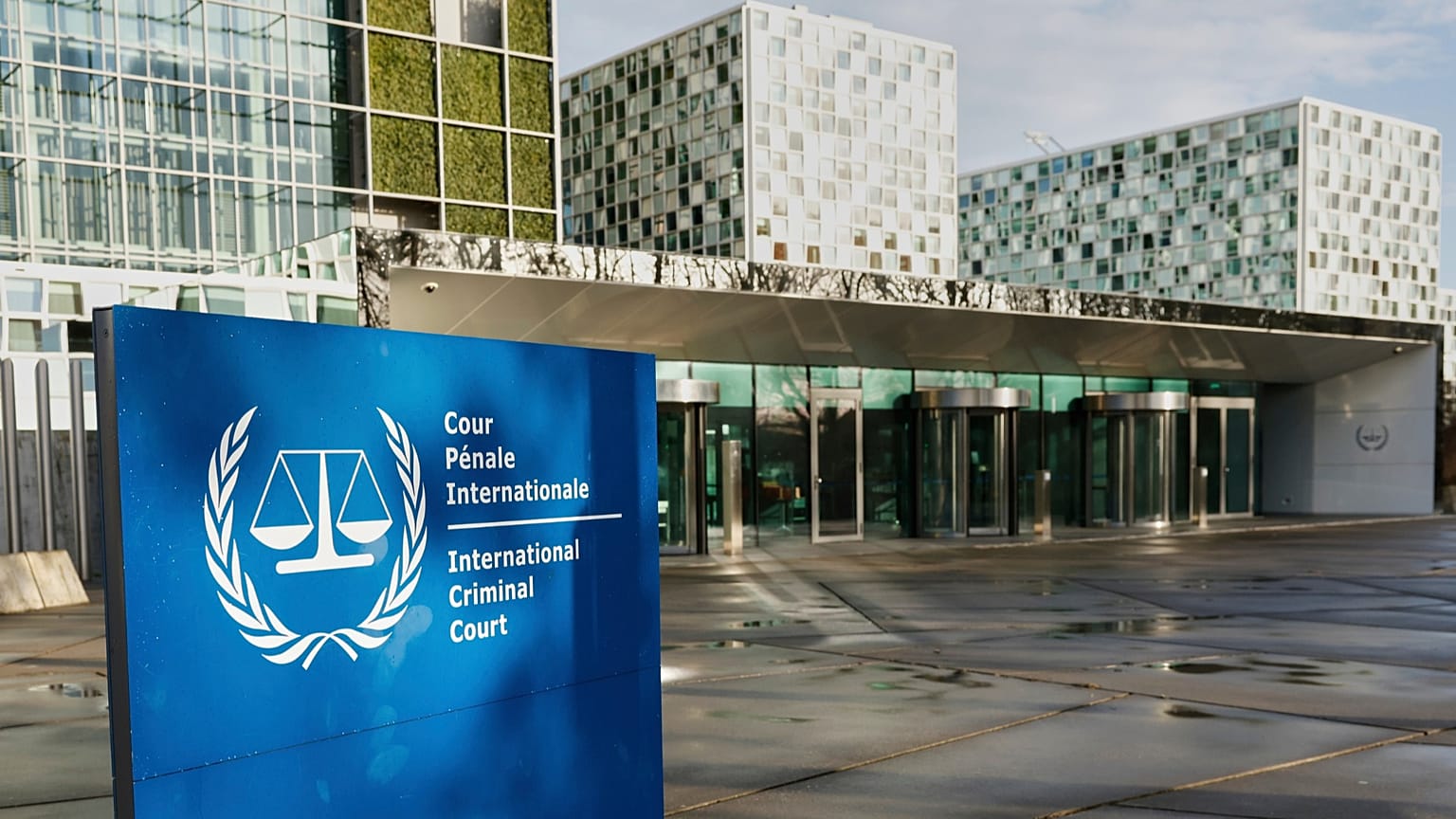
The International Criminal Court in The Hague, Netherlands.
Copyright AP Photo

By Peggy Corlin
Published on 

French ICC Judge Nicolas Guillou is living a nightmare after the US sanctioned him and other judges for issuing an arrest warrant against Israeli Prime Minister Benjamin Netanyahu, once again exposing the risk of Europeans' reliance on American services.

On 20 August 2025, International Criminal Court Justice Nicolas Guillou went from a respected judge to a pariah for American companies.

That day, US President Donald Trump put him under US sanctions for authorising the issuance of an arrest warrant against Israel's Prime Minister, Benjamin Netanyahu, and its Minister of Defence, Yoav Gallant, over their role in the destruction of the Gaza Strip.

Since then, Guillou’s life has become a nightmare – and his experience illustrates just how dependent Europeans are on US services as transatlantic tensions rise.

Gillou and his family are banned from US territory, but the sanctions have hit him hard at home. He cannot use most credit cards, as Visa and Mastercard dominate the market; most digital services are off-limits, and even online orders can be blocked if an American intermediary – like the delivery service UPS – is involved.

“What is at the heart of the sanctions is the prohibition on any US individual or legal entity from providing services to, or receiving services from, a sanctioned person,” Guillou told journalists on Tuesday.

Some banks practice “over-compliance,” automatically rejecting payments from sanctioned individuals.

“This has happened to some of my colleagues, whose transfers or purchases were refused because the bank on the other side of the transaction declined the transfer from a sanctioned person,” he said.

“The most problematic situation is when it affects services for which there is actually no European alternative.”

Guillou recounted how he booked a hotel in France through the US travel company Expedia, only for the reservation to be cancelled hours later because he was under sanctions.

Currently, 11 judges at the International Criminal Court are in the same situation.

'Sovereignty shield'

The judge is calling on the EU to develop sovereign tools, including the digital euro, to shield Europeans from extra-territorial US measures.

“The only way to effectively respond to these sanctions is to build a response at the European level, because it needs to be economically strong, with a sufficiently powerful political and economic scope,” he said.

The EU, according to Guillou, must legislate “to create a true European sovereignty shield” that guarantees the continuity of European services for actors in Europe.

He warned on Tuesday that US sanctions can erase civil life for those who live entirely online.

“I’m 50 years old; I’ve already lived through the ’90s. It’s not easy, but I know how to handle it. But if sanctions were to hit young people today, who are 25 and have their entire lives online, I think the sanctions I’m experiencing would be a true civil death for them.”

He sounds the alarm for other judges, politicians, or officials at risk of sanctions, highlighting a potential chilling effect in their work.

Several EU civil servants have been publicly named in US reports for working on digital regulations targeted by the White House.

Even former EU Commissioner Thierry Breton was banned from obtaining a US visa for creating the Digital Services Act, which imposes fines and rules on content moderation for major platforms – in particular big tech corporations based in the US.


Poland surpasses 1 million registered guns as Poles continue to arm themselves

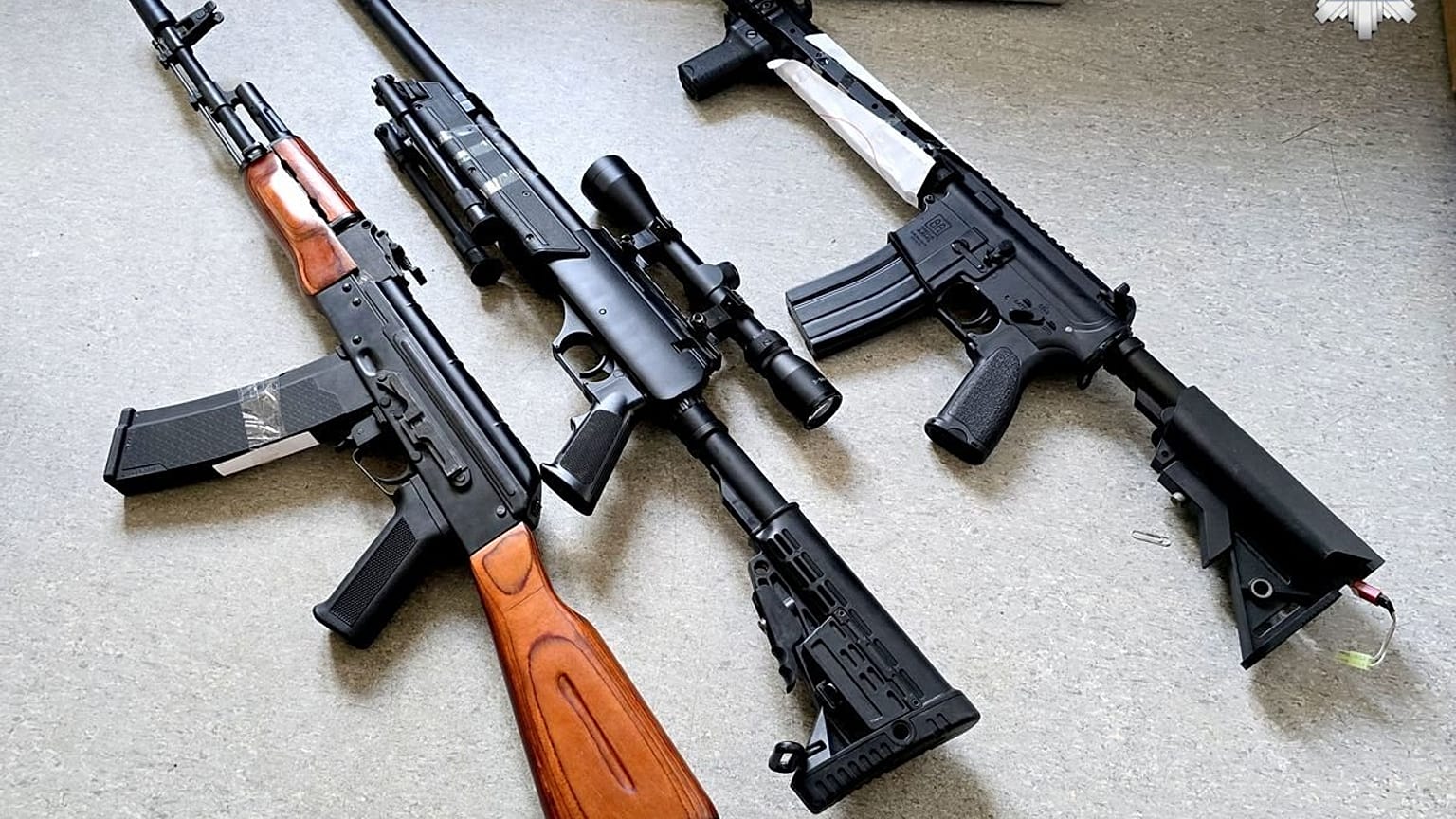
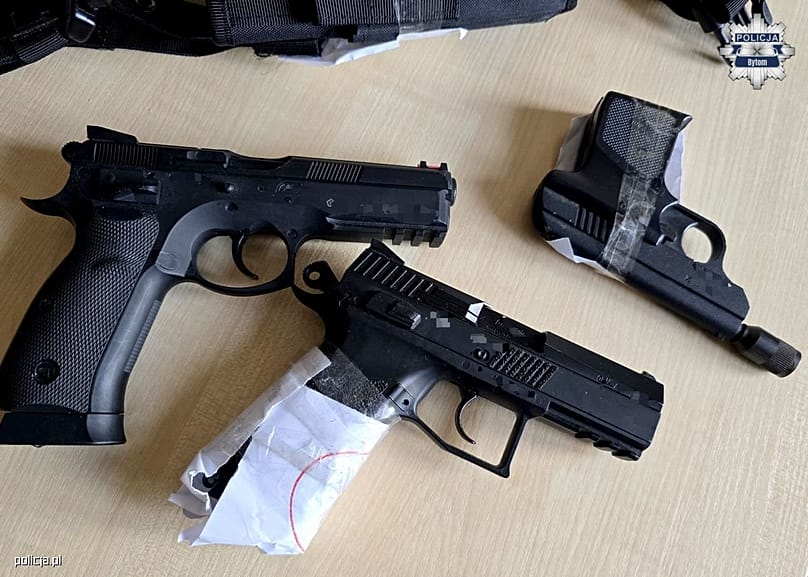
Weapons confiscated by the Polish Police
Copyright Polska Policja


By Glogowski Pawel
Published on 

The number of legally owned firearms in Poland has passed the 1 million mark for the first time, according to the latest figures presented by Polish police.

Poland issued a record 50,700 gun permits in 2025, pushing the total number of registered civilian firearms above 1 million for the first time, according to police statistics

The number of active permits reached 411,769 by the end of last year, more than double the 192,819 registered in 2015. The number of weapons in civilian hands climbed to 1,037,778, an increase of more than 107,000 from 2024.

Collector permits accounted for the most applications in 2025, with 21,071 decisions. Sporting permits came second with 17,601, followed by 7,254 permits for personal protection.

The surge in ownership began in 2022, when 37,402 new permits were issued compared to 19,939 the previous year. Polish shooting ranges reported a sharp rise in visitors in the weeks after Russia's full-scale invasion of Ukraine in February that year.

Despite the increase, Poland has approximately 2.5 firearms per 100 inhabitants, the lowest rate in the EU, according to 2017 data from the Small Arms Survey. Finland leads the bloc with 32.4 weapons per 100 people, followed by Austria with 30 and Cyprus with 29.1.

Critics call for reform of permit system

Dariusz Loranty, a former Warsaw police superintendent who worked on criminal terrorism and homicide cases, said the current system concentrates too much authority in a single agency.

"The current system of granting weapons violates the sacred principle of the separation of powers," Loranty said. The police "check, then make a decision and legislate for themselves under the current law".

He proposed transferring formal decision-making power from police to civil administration, with governors issuing permits through administrative procedures that include both police input and citizen participation. Administrative decisions could then be challenged in court.

Weapons confiscated by the Polish Police in 2025. Polska Policja

Loranty said gun ownership fundamentally changes behaviour, primarily through increased responsibility. Polish law strictly forbids carrying or possessing weapons under the influence of alcohol.

"When someone is with a gun, he won't drink any vodka," he said. "Of course there is a different sense of responsibility."

Loranty also called for more rigorous psychiatric evaluations, saying anyone showing symptoms of depression should be barred from gun ownership.

Examinations should not be superficial, requiring psychiatrists to evaluate candidates at least twice in different situations, he said.

Fear of crime drives applications

The popular belief that Poles are arming themselves over fears of conflict with Russia does not reflect reality, according to Loranty.

"This is such a delusion. A very small proportion of people have this delusion," he said. "In fact, the rationale is that people are afraid of an increase in crime in a broad sense".

He pointed to Georgian criminal groups as a particular concern, saying they are more likely to attack Polish citizens than Ukrainians.

Poland 2050, a centrist party in the ruling coalition, submitted draft legislation in October 2025 requiring mandatory regular medical and psychological examinations for all gun permit holders, including hunters.

Under the proposal, people up to age 70 would present certificates every five years to maintain valid permits, while those over 70 would do so every two years. Collectors and historical re-enactors whose weapons pose no direct threat would be exempt.

The hunting community has opposed the measure, and a previous similar initiative affecting only hunters was rejected by parliament at first reading.

Public consultation on the draft remains open, allowing any citizen to submit opinions.

The US has approximately 120 firearms per 100 inhabitants, making guns about seven to eight times more available than in the European Union.

The right to gun ownership is enshrined in the US Constitution's Second Amendment, which has contributed to relatively liberal gun laws in many states. EU regulations are generally more restrictive and vary significantly between member states.

Firearm homicide rates in the US are substantially higher than EU averages, with some European countries recording rates dozens of times lower than US levels.


Euroviews. Racism is not rivalry. It is a crime

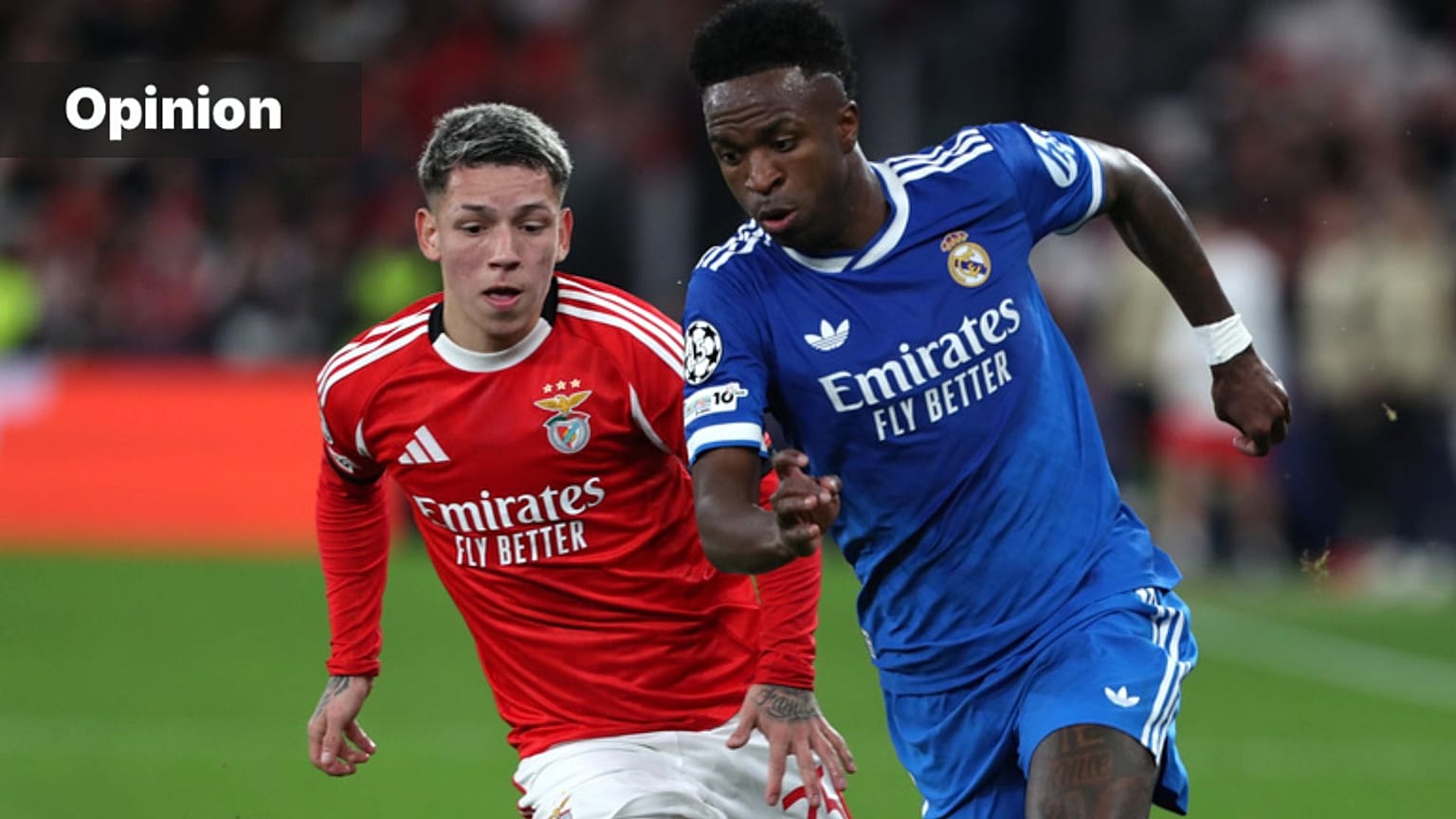
Gianluca Prestianni fights for the ball against Vinicius Jr during a Champions League match between SL Benfica and Real Madrid in Lisbon, 17 February 2025
Copyright AP Photo


By Bruno Batista, sports commentator, communications expert, Benfica fan
Published on           
The opinions expressed in this article are those of the author and do not represent in any way the editorial position of Euronews.

There are lines that cannot be blurred. Racism is one of them. No context can mitigate it, no club passion can excuse it, no victory can relativise it. We cannot tolerate intolerance, Bruno Batista writes in an opinion article for Euronews.

Racism is a crime. Full stop. It must be treated as such, inside and outside stadium

When it involves fans, players, coaches, or managers, the response must be firm, clear and exemplary.

The heavy hand of the law is not excessive. It is necessary. Impunity is the real scandal.

Football is not just a game. It is a mass social phenomenon, a magnifying mirror of society, a space where values are reproduced and legitimised.

What happens in a stadium does not stay in a stadium. It echoes in schools, on social media, and in coffee shop conversations.

For this very reason, football has an added moral obligation. To set an example. To elevate. Not to normalise the unacceptable.

In yesterday's episode at Estádio da Luz, there are facts we still don't know. We don't know what was said. We do, however, know what was done.

The gesture of covering one's mouth with a shirt is common. It suggests the intention to say something that one does not want to be reproduced either by sound or lip-reading.

That, in itself, is not proof of racism. But it is reason enough to raise suspicions. And the mere suspicion of a racist act deserves to be investigated. For the sake of decency in sport. For the dignity of all those who are part of this spectacle.

Investigating is not condemning. Clarifying is not attacking. On the contrary. It is protecting. Whether to prove or to acquit. The Benfica player should repeat the words he addressed to Vinicius, so it's clear what caused such tremendous confusion.

And here it is important to be clear. Individual behaviour is one thing. The institution is quite another.

Our symbol? Eusébio

Sport Lisboa e Benfica is a club with history, with a global dimension, and with a brand built on values that span generations. Inclusion, universality, respect, merit and social responsibility.

For decades, Benfica has been a home of diversity and integration. A global brand of values and value. Suffice it to recall that its greatest and most beloved symbol is named Eusébio da Silva Ferreira.

For this very reason, in this specific case, Benfica should be the first to take an interest in restoring clarity. In ascertaining the facts. In taking action if there are grounds for doing so.

Not because of external pressure, but for internal consistency. To make clear the integrity it has always defended and the identity of a respected and respectable club.

Racism is not provocation. Racism is not the heat of the game. Racism is not rivalry. Racism is a crime. Rivalry is passion. Racism is exclusion. Rivalry builds narratives. Racism destroys people.

Vinícius may have been provocative in his goal celebration. He may have inflamed the stands. That's part of the game. You fight with football, talent, results, and fair play. Never with insults, dehumanisation, and hatred.

Martin Luther King reminded us that what was most worrying was not the cries of the wicked, but the silence of the good. In soccer, that silence is complicit.

Every time you whistle at the side, you lose a little bit of the game. Every time you relativise racism, you impoverish the sport.

As a fan, I want to know

I am a Benfica fan. And that is precisely why I want to know what happened. Love for a club is not measured by moral blindness, but rather by the ability to demand more when it comes to what is essential.

Football without values is just a bunch of mammals running after a ball. And I refuse to accept that as destiny.

Football can and must be better. Racism has no place in the game. Not in the stands. Not on the pitch. Not anywhere.

Bruno Batista is a Portuguese sports commentator, communications expert and Benfica fan.