Wednesday, February 18, 2026


Venezuela: The end game
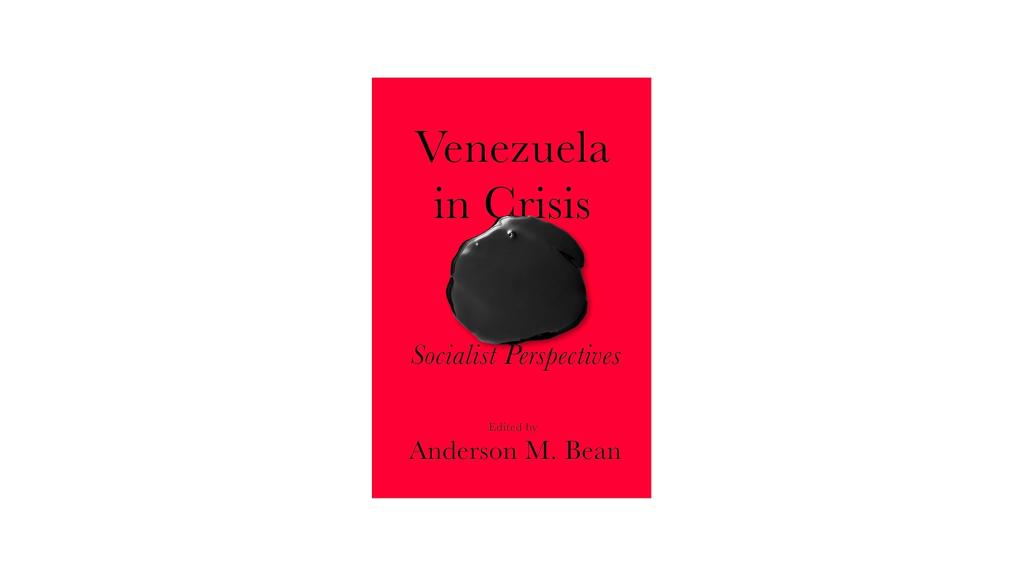
Venezuela in Crisis Socialist Perspectives

First published at The Next Recession.

The kidnapping of Venezuela’s President Maduro and his wife by US military forces, the subsequent takeover by the Vice President Rodriguez and her agreement to allow the US to control Venezuela’s oil export revenues and to bring in US energy multi-nationals to invest — all this signals the end game of the Chavista revolution that began over 25 years ago. So it is very opportune that a new book has been published on what happened in Venezuela to reach this point.

Called Venezuela in Crisis and published by Haymarket Books, this book brings together “some of the most important Marxist, socialist, and anti-capitalist thinkers in Venezuela, representing a range of left political traditions and organizations.” These Spanish language writers have been translated so that English speakers can read the arguments and experiences of those on the left in Venezuela. Some contributors served in Chávez’s cabinet and have now become critics of the Maduro government. “Bringing these voices to an English-speaking audience will allow readers to engage with the current debates and perspectives of the Venezuelan left”.

The book has been edited by Anderson Bean from North Carolina Agricultural and Technical State University, who has written before on Venezuela. His introductory chapter provides the reader with the essence of the chapters in the book. Bean starts by pointing out that through the 2000s, the Chavista-Bolivarian revolution in Venezuela was an inspiration for others in the so-called Global South, perhaps even more so than the Cuban revolution of the 1960s. The election of Hugo Chavez in the 1998 election, after decades of corrupt, pro-capitalist, pro-US governments, was a burst of fresh air. In the subsequent years, the Chavez presidency “improved Venezuelans’ material well-being, brought greater social equality, and empowered sectors of society that were traditionally excluded from the political process.”

Bean argues that there were three key components of the Chavez presidency: first, the rewriting of the constitution to promote of broad citizen participation and comprehensive human rights protections; second, the redistribution of oil profits through various social programs which reduced official poverty levels by 37.6% and ‘extreme poverty” by 57.8%. By 2008, Venezuela also had the highest minimum wage in all Latin America, and inequality in the country dropped to one of the lowest in the Americas. By 2011, Venezuela was the second most equal country in the Western Hemisphere; only Canada had lower levels of inequality. And third, which Bean reckons was the “most transformative”, was the transfer of power to the popular sectors through the creation of new forms of popular assemblies and experiments with workers’ controls and community councils.

But from 2013 onwards, things began to go wrong, big time. From 2013 to 2021, Venezuela’s GDP fell 75%, inflation reached 130,000% in 2018, the highest in the world! The percentage of households classified as poor increased from 48.4% in 2014 to 81.5% in 2022. The monthly minimum wage at US$2.23 then was the lowest in all Latin America. Indeed, the monthly minimum salary was just US$0.15 a day, eight times less than the World Bank’s then limit for absolute poverty of US$1.25 a day. That compared with a monthly minimum wage under Chávez of US$300, over 60 times higher.

The collapse in real incomes and the sharp rise in poverty in the 2010s led to a migration crisis. Since 2016, millions of Venezuelans have fled the country seeking work abroad in order to send money back home. Today, the number of Venezuelan refugees and migrants worldwide is estimated to be around 7.7 million, or 20% of all Venezuelans. Venezuela now has the highest number of displaced people in Latin America and the second highest in the world, just behind Syria.

What explains this collapse from inspiration to nightmare? Bean says there were two causes. The first was US sanctions imposed on Venezuela, coupled with several attempts by the US state, in collaboration with the domestic Venezuelan right-wing opposition, to undermine the Venezuelan economy, in order to carry out regime change. US imperialism saw Venezuela as a threat, with Chavez’s renationalisation of the oil industry; and Chavez’s attempt to build trade relations with other Latin American countries outside the orbit of US-led trade agreements, while looking for support in trade and investment from the likes of China. The very early success of the Chavista presidency was anathema.

Indeed, in 2002, the US, in collaboration with the Venezuelan business class, attempted a coup to overthrow Chávez. He was removed from office for forty-seven hours, before being reinstated by mass popular mobilizations. From late 2002 to early 2003, the US supported an oil lockout to bring oil production to a halt with the stated goal of forcing Chávez to resign. In 2014, the US backed the Venezuelan right-wing again in violent street protests called the guarimbas, demanding ‘la salida’, or the “exit,” of Maduro. The US, again in collaboration with the sections of the Venezuelan right wing, attempted yet another coup in January 2019, when Juan Guiadó unconstitutionally declared himself president of Venezuela. After the January coup failed to overthrow Maduro, Guiadó tried again in April 2019, but was thwarted once more.

These attempted coups failed, but a litany of economic sanctions were imposed. Under Trump’s sanctions, US institutions and citizens were prohibited from trading in Venezuelan debt. All government assets were frozen. The country was prevented from restructuring its foreign debt or payment schedules. Payments sent by countries participating in its program for preferential payment of oil were blocked. The sale of billions of dollars in trade credits were banned. Sanctions also closed off Venezuela to its most important oil market, the US, and properties held abroad were confiscated, like the US-based Citgo, which the state depended on for sources of income. These measures led to a loss of $6 billion in oil revenue in just 2018 alone. Sanctions froze $17 billion of the country’s assets and cost the country around $11 billion in export losses in 2019, or $30 million a day.

The Washington, DC–based Center for Economic and Policy Research published a 2019 report detailing the effects of US sanctions on Venezuela. Between 2017 and 2018 alone, the sanctions killed an estimated 40,000 Venezuelans and plunged many more into precarity. Over 300,000 people were put at risk because of the lack of medicine and health care, including 80,000 HIV-positive Venezuelans who have gone without antiretroviral drugs for years now. Additionally, obtaining needed cardiovascular medicine or insulin is a challenge for the 16,000 Venezuelans who need dialysis, the 4 million with diabetes and hypertension and the 16,000 people who have cancer.

But the writers in this book are at pains to argue that the collapse in Venezuela cannot be laid solely at the door of US imperialism and its sanctions. Despite the harm that the sanctions have wrought in Venezuela, the other major component was the economic mismanagement and neoliberal program of the increasingly authoritarian Maduro government. Mainstream capitalist economists claim that the collapse of Venezuela was the result of socialism; while many on the left claim that the Maduro regime had to be defended as an example of socialism. Both sides are wrong. Bean and the other writers in this book do not accept that Chavez (and Maduro after him) had established a socialist economy, or even that Venezuela was on the ‘road to socialism’.

As I argued in my own posts on Venezuela, Chavez’s relative success in improving the lot of most Venezuelans was founded on the boom in commodity prices during the 2000s. With the price of oil and natural gas high, even a modest increase in royalties and taxes created a huge influx in government revenues. This extra revenue enabled Chávez to increase social spending, create various distribution programs and improve the standard of living of the majority of Venezuelans.

But, as Bean points out, Chavez was able to do this without touching the Venezuelan capitalist sector. “There was no real meaningful transformation of social property relations, no transformation of the international division of labor, and no challenge to the prerogatives of transnational capital.” Private capital still dominated in Venezuela throughout the presidencies of Chávez and Maduro. The overwhelming majority of the means of production remained in the hands of the private sphere and the capitalist class. In fact, under Chavez, between 1999 and 2011, the private sector’s share of economic activity actually increased from 65% to 71%. The production and distribution of the majority of goods and services, including key industries like major food import and processing operations, pharmaceuticals, and auto parts, are still controlled by the private sector.

Even in instances where the state did own the means of production, for example, the state-owned oil and natural gas company Petroleum of Venezuela (PDVSA) and the concrete and asphalt industries, it is the state bureaucracy that controls and makes all decisions in these industries, rather than the workers. Indeed, as Chavez put it himself: “Who would think to say that Venezuela is a socialist country? No, that would be to deceive ourselves. We are in a country that still lives in capitalism, we have only initiated a path; we are taking steps against the world current, including towards a socialist project; but this is for the medium or long term.” Most important, as I also argued, there was no break with the country’s dependence on the export of minerals and hydrocarbons. Venezuela’s dependence on oil exports increased during the Chávez and Maduro era, leaving the country as a ‘one-trick pony’ beholden to global financial and oil markets.

The ‘compromise’ with Venezuelan capital finished with the end of the commodity boom in 2013. By 2015, commodity prices had hit a twelve-year low. This change also coincided with the death of Chavez and his replacement by Maduro, who faced a dilemma. As Bean puts it: “Now in a situation of austere state revenues, who was going to pay for the crisis? Was it going to be labor and regular working people, the social bases that supported and voted Chávez into power? Most important, “was there going to be a conflict with capital that had been delayed for years?”

The answer soon became clear. As one chapter by Venezuelan economist Luis Salas put it: “There is not much difference between the economic program of the [right-wing] opposition and that of the [Maduro] Government... The only difference with the opposition is that the Government wants to reach agreements with the Russians, the Chinese or the Turks; and the opposition, with the Americans and Europeans. They are capitalist alliances, but with different partners.” As Roberto López argues later in the book,”[T]he inauguration of Nicolás Maduro as president in 2013, meant the almost total abandonment of the anti-neoliberal program, and the return of the same economic policies implemented in the last decade of the twentieth century. Maduro maintained the same radical discourse as his predecessor and presented his government as a genuinely “workerist” and “socialist” one. However, in office, he has implemented a real change of economic course, opening the doors to neoliberal policies, in a framework of growing authoritarianism.” This too was my view in my post at the time.

In 2016, the Maduro administration opened the Orinoco Mining Arc for mineral exploitation. And in 2021 Maduro introduced Special Economic Zones (SEZs) for capitalist businesses, free of taxation and regulation. In 2018, the Maduro presidency abolished the right to strike. With the so-called Anti-Blockade Law in 2020, Maduro effectively suspended the constitution and granted authority to the executive branch for steering the economy. Maduro dropped the living wage policy adopted under Chavez and introduced a ‘hate speech’ law that established prison sentences of up to twenty years for speeches against the government. The government also privatized major branches of industry, including oil, iron, aluminum, gold and diamonds, “Many of these privatizations targeted the very same industries that Chávez had previously nationalized, in effect carrying out a reverse appropriation that restored former state-owned assets to capitalist ownership.”

But perhaps worst of all is the cronyism. Under Maduro, the Venezuelan state has turned into a piñata, where a political-military caste distributes resources, privileges and financial benefits to secure loyalty and maintain its hold on power. The Maduro administration looked to compromise and reach agreements with the business sectors, including Fedecámaras — the big business organization that had played a key role in the failed 2002 coup against Chávez. The voices of any working class organisations were ignored.

It is the conclusion of this book’s writers from the left in Venezuela that among observers in the advanced countries of the Global North, there has been a tendency “to unwittingly lend credibility to a regime that uses the language of socialism to obscure its own oppressive and anti-worker practices. By failing to reckon with the realities of Venezuela’s crisis, such positions inadvertently sideline the struggles of the Venezuelan people, who are fighting both the consequences of the Maduro government and the suffocating sanctions imposed by the United States.” It is not socialism that failed in Venezuela, but the failure to apply socialist policies to end the sabotage of the capitalist sector in the country and to unite the working class organisations in the struggle against US imperialism.

Now in February 2026, the Rodriguez administration is prostrate before US imperialism. The Trump administration has been clever and cautious; it has not yet replaced Maduro with the right wing, free market, Nobel peace prize winner (sic), Maria Machado, for fear of generating a tumult and even civil war. Instead, it is steadily forcing Rodriguez into acceding to all its demands in preparation for elections later that can then bring in a completely pro-US regime. Appearing alongside Rodríguez at the Miraflores presidential palace last Wednesday, US energy secretary Chris Wright said: “We want to set the Venezuelan people and economy free.” A poll by Gold Glove Consulting this week found that Machado would win a landslide victory in a fresh vote, with 67% favouring her against 25% for Rodríguez. Seventy-two per cent of respondents felt Venezuela was “moving in a positive direction” after Maduro’s capture.


Senator Tom Cotton’s Ode to US Nuclear Weapons

by Ted Galen Carpenter | Feb 18, 2026 | ANTIWAR.COM


Hawkish Senator Tom Cotton (R-AR) has never been a big fan of arms control agreements. His new op-ed in the Wall Street Journal confirms that his attitude has not softened in the slightest.

The opening paragraph adopts a highly militant tone. “The New Strategic Arms Reduction Treaty expired this month. The end of New Start is a watershed moment in American nuclear strategy. Far from a failure of diplomacy, this expiration is an overdue correction of a strategic mistake that left America vulnerable to two nuclear rivals: Russia and China. After years of unilateral restraint, while our adversaries expanded their arsenals, America can finally build a nuclear deterrent for the threats we face.”

Although he contends that Russia has engaged in a “nuclear buildup,” he cites no evidence that Moscow exceeded the limits on the number of warheads specified in New Start. The People’s Republic of China (PRC) was not a party to the treaty at all. Both Cotton and President Trump seem even more worried about Beijing’s ambitions with respect to strategic nuclear weapons than they do about Moscow’s moves. Indeed, Cotton states so explicitly. “China’s nuclear stockpile has surpassed 600 operational warheads as of mid-2024, and it remains on track to exceed 1,000 by 2030. This isn’t incremental modernization. This is a fundamental transformation from a minimal deterrent to strategic parity with America and Russia in both quality and quantity.”

The lack of treaty limits on the size of Beijing’s strategic arsenal is a legitimate concern. Any worthwhile replacement for New Start needs to include China. But Cotton’s real focus has little to do with genuine strategic arms control. His goal is to justify an extensive increase in the U.S. nuclear arsenal under the label of “modernization.”

Cotton’s op-ed presents a six-part plan for doing so. One proposal is to “put multiple warheads back on U.S. land-based ICBMs. To stay below New Start limits, America reduced the load on our ICBMs to one warhead per missile. We should load existing Minuteman III ICBMs to their full capacity and ensure that Sentinel ICBMs are also deployed at full capacity.” Another one of his schemes is to “restore our theater nuclear capabilities. This means completing the nuclear-armed sea-launched cruise missile program, forward-deploying additional U.S. tactical nuclear weapons to Europe and the Pacific, and developing hypersonic nuclear-capable delivery systems.”

Like most hawks, Cotton fails to acknowledge any U.S. responsibility for the breakdown of nuclear arms control in recent years. Yet both the Trump and Biden administrations took actions that eliminated restraints and fomented tensions. The United States decided to withdraw from the 1987 Intermediate-Range Nuclear Forces Treaty (INF) in August 2019. Washington also ended its adherence to the Open Skies agreement with Moscow in November 2020. The Open Skies measure had assured greater transparency regarding the movement and deployment of bombers and missiles. The Kremlin saw that agreement as a crucial reassurance against any buildup or threatening conduct featuring U.S. or NATO strategic weapons on Russia’s doorstep in Central or Eastern Europe.

Cotton also charges, with virtually no evidence, that both Moscow and Beijing have resumed underground nuclear weapons testing. Moreover, in the unlikely event that such tests have occurred, U.S. leaders need to blame themselves. Washington’s longstanding failure to officially embrace the Comprehensive Test Ban Treaty (CTBT) has been disgraceful. Although the United States signed the treaty in 1996, it has never ratified the document. In November 2023, Russian President Vladimir Putin signed a law revoking Russia’s 2000 ratification of the CTBT. In pushing through the de-ratification measure, Putin said that he merely sought to “mirror” the U.S. position. Moscow had complained about Washington’s lackadaisical attitude about that issue for years.

On October 29, 2025, Trump announced that the United States would resume testing nuclear weapons. If the president carries out his pledge, it will mark the end of a long period in which all official or de facto members of the global nuclear weapons club had refrained from conducting such tests. The United States held its last test in September 1992, and the People’s Republic of China (PRC) in July 1996. The Russian Federation has never conducted a nuclear weapons test; Moscow’s last venture into that area took place in October 1990, when the Soviet Union still existed. Great Britain operated on a similar timetable (1991) and France just a little later (January 1996). India and Pakistan, two of the newer entrants into the ranks of nuclear weapons powers, both conducted their latest tests in May 1998.

The last confirmed episode was the detonation of an underground warhead by North Korea in early September 2017. Despite growing tensions between Washington and Pyongyang on multiple issues, and North Korea’s plethora of moves to advance its ballistic missile program, Kim Jong-un’s regime has not yet ended its moratorium on testing nuclear warheads.

Concern about the possible resumption of nuclear testing by multiple countries is understandable. However, one could see this development coming for years, and contrary to Cotton and other American hawks, the United States bears most of the responsibility. Yet the senator just blandly includes in his six-point “modernization” plan, the observation that “the Energy Department needs to reverse the taboo against testing.”

The flippant attitude throughout his op-ed is alarming. Once again, there is not the slightest sense that any U.S. actions could be provocative and be causing some of the tensions in the nuclear arena. “Deterring nuclear war is far cheaper than fighting one. To those who ask why we should spend so much on weapons we’ll never use: We use our nuclear deterrent every single day. The mere existence of a credible nuclear force prevents adversaries from contemplating attacks they would otherwise consider.”

“And to those who fear an arms race: The race has already begun. Russia and China have been running it for more than a decade while we sat on the sidelines. The question isn’t whether there will be competition in nuclear forces, but whether America will show up to compete.”

Smug, reckless arrogance best describes Cotton’s perspective. Arms races rarely end well.


Dr. Ted Galen Carpenter is a senior fellow at the Randolph Bourne Institute and the Libertarian Institute. He is also a contributing editor to National Security Journal and The American Conservative. He also served in various senior policy positions during a 37-year career at the Cato Institute. Dr. Carpenter is the author of 13 books and more than 1,600 articles on defense, foreign policy and civil liberties issues. His latest book is Unreliable Watchdog: The News Media and U.S. Foreign Policy (2022).

Apocalypse: Lifting of the Veil


We are living through an age where genocide, oppression and the moral breakdown of humanity, is being revealed live on our television and mobile screens. Hostile actions that were once conducted in the shadows are no longer overt but openly covert. Targeted assassination of leaders, journalists, aid workers and doctors deemed to be in opposition, is bragged about and normalised. This moral breakdown is happening because the powers that be, consider themselves to be untouchable and beyond the Law.

That might be changing, as evidence of a grassroots pushback is emerging. The UK Government’s proscription of Palestine Action as a terrorist organisation has sparked widespread criticism, protests and defiant acts of moral courage, across the country. The ‘ordinary’ man in the street has shown him/herself to be neither ignorant, nor despite government intimidation, to be a pushover. People are intellectually capable of understanding the brevity of and urgency to address the moral decline amongst ‘global leadership’, that we are facing.

When activists smashed weapons, that would otherwise have been used to support the genocide in Gaza, they were arrested and held on remand for eighteen months. The incident took place at the Elbit Systems UK, manufacturing and research hub, in Filton. Elbit is a subsidiary weapons contractor to Elbit Systems Israel. After the arrests the government and state sanctioned media tried to paint the activists as violent terrorists. Had they limited their description and described the activists as having committed acts of criminal damage, they might have got away with it, but they didn’t. Pushed to serve Zionist interests they revealed, not only a moral bankruptcy, but an hysterical overreach, that has seriously undermined their credibility.

The irony is that in International Law, when governments and institutions are aware that a genocide, or even the likelihood of a genocide, is taking place, they are required by law, to do everything within their power to prevent such an act. In destroying weapons, and weapons parts, that would likely have been used in the genocide of innocent Gazan civilians, Palestine Action, were not only acting in accordance with law, but were then legitimately able to argue the legal defence, of trying to prevent a greater crime.

When the trial was held at Woolwich Crown Court, London, on 4th February the jury unprecedentedly, went against the advice of the judge and refused to convict the defendants. It was a moment of celebration for the defendants and for all their supporters outside and beyond the courthouse.

In a later trial where Huda Ammori challenged the government over the banning and proscription of Palestine Action as a terrorist organisation, the panel of three senior high court judges went against the government and proclaimed the ban to be unlawful. Although the government have said they will appeal the decision, support for Palestine Action remains solid. Almost 3,000 people were arrested, and, although proscription hasn’t been officially removed, if the government attempt to re-enforce the ban it’s likely that number will rise significantly.

Elbit Systems, along with other weapons manufacturers, are deeply invested in continuing the genocide in Gaza. Israel uses high tech weaponry and sophisticated AI to track and target journalists, aid workers and everyone else they consider to be even loosely connected to resistance. In reality this includes, babies, children and animals, because, it has been said openly on Israeli television channels, there are no innocents in Gaza.

This industry rakes in huge profits. For Israel, Gaza is a laboratory where, through the aid of surveillance cameras, they can exhibit the lethal effects of their weaponry on a human population. Israel claims it is defending itself. It claims, with the support of Christian Zionist that this is a religious war, because as ‘God’s Chosen People’, they have entitlement to all the land of Palestine. However this claim shrivels into insincerity when one realises how much money this industry makes.

The evidence clearly suggests that this war is not about defence, religion or prophecy, it’s about profit. The money that the military contractors make amounts to billions of dollars annually. This revenue goes beyond weapons sales and into high tech surveillance. Lavender and Gospel are sophisticated AI surveillance and tracking programmes that can be exported and sold around the world.

The West Bank serves as an experimental environment for tracking and control of mass populations. The demonstrated effectiveness, of such a mass control system, is directly applicable to homeland security in many countries, especially the US. One can only speculate that if all of historic Palestine were to be engulfed entirely within the Israeli State, with no opposition, then the weapons industry would likely migrate further. Lebanon and Syria. Iran, Yemen and Sudan are clearly within their sights. Lebanon has underwater gas reserves and with the direct assistance from the US, they are actively trying to disarm, Hezbollah, Lebanon’s only real defence from total occupation.

The military industrial complex, however goes far beyond the borders of Israel, US and UK. It emanates from a fascist predatory ideology that has no national boundaries. Its supporters allegiance is to money and power — not the protection of citizens within their proclaimed countries. These surveillance technologies, produced globally, threaten to rupture all of society. By breaking down moral boundaries where genocide becomes acceptable and sending out the message that, if you resist you will be tracked and punished the aim to silence and control people, is far reaching.

The claims of ‘a one world order’ where we will own nothing and be happy, no longer sounds like a conspiracy theory, but a conspiracy of fact. What we are witnessing is the breakdown of national states — the corruption of Western leadership and the breakdown of international law where the most serious crimes against humanity are normalised.

While ignorance once provided a shelter where we could claim — ‘we didn’t know’, the falling of the veil has stripped people of those illusions. History is repeating itself and this time the current holocaust in Gaza is being made visible on our screens in real time. It should be a warning to all of us. If we allow this to happen to one, it can happen to all.

Visibility and knowledge equate to responsibility. How we respond to these revelations comes down to the individual. However, for us in the UK, if the courage of the activists, the courage of the jury in the Filton trial, the courage of the judges in overturning the banning of Palestine Action, and the courage of the thousands, who risked their liberty by holding up signs stating their opposition of genocide and support of Palestine Action, is any indication of a grassroots resistance, then we should be encouraged.

Heather Stroud, the author of The Ghost Locust and Abraham's Children, has been involved in human rights issues for a number of years. She lives in Ryedale where she is increasingly drawn into campaigns to keep the environment free from the industrialization and contamination of fracking. Read other articles by Heather.

The World Is Burning, and the First Fire Is Hunger


There is a particular kind of silence that settles over a society when injustice becomes routine. It is not the silence of peace but the silence of resignation—the silence that creeps in when people begin to believe that suffering is inevitable and resistance is futile. I have seen that silence in the ruins of Sudan, where families rebuild their lives with nothing but memory. I have seen it in Europe, where refugees wander through train stations carrying the last remnants of their former lives. I have seen it in the Bronx, where hunger hides behind apartment doors and pride keeps people from asking for help. And I have seen it in institutions that claim to serve justice yet hesitate whenever truth threatens their comfort.

I come to this moment not as a scholar or strategist but as a witness. My life has taken me from the red earth of Ghana to the rubble of war zones, from shelters in New York to the quiet corners of sanctuaries where people come not for spectacle but for solace. In every place, I have learned the same lesson: the world does not collapse because of the cruelty of the powerful alone. It also collapses because of the silence of those who know better.

We live in a time when governments speak of “security” while civilians bury their children. When leaders speak of “deterrence” while families search for clean water. When policymakers speak of “necessary force” while hospitals run out of bandages. The language of power has become so sanitized that it no longer resembles the reality it describes. And the people who suffer under that language are expected to endure quietly, as if their grief were an inconvenience.

But grief is not an inconvenience. Grief is evidence. Grief is testimony. Grief is the human cost of political decisions made far from the bodies that absorb their consequences.

I have sat beside mothers in Sudan who braided their daughters’ hair beside mass graves because beauty was the only resistance they could still afford. I have walked through European cities where asylum seekers sleep under bridges while hotels sit half‑empty. I have held the hands of dying men in the Bronx who asked if God remembered them because the world clearly did not. And I have stood in rooms where truth was unwelcome, not because it was wrong but because it was inconvenient.

And now, as bombs fall, as families flee, as children starve, as entire communities are erased from the map, I hear the same question rising again: Where is our humanity? How can we allow children to die in a world of plenty?

It is a question that institutions fear because it exposes the architecture of injustice. It is a question that governments avoid because it reveals the cost of their policies. It is a question that the comfortable dismiss because it threatens the illusion of moral neutrality. But it is a question that refuses to die.

And nowhere is that question more urgent than in the realm of food—the most basic covenant of life.

Food as Weapon: The Global Injustice of Hunger

Food is the first covenant of life. To eat is to live; to share is to belong. Yet empire has turned this covenant into a curse. Grain is hoarded, seeds patented, and hunger engineered. The injustice rooted in food is not scarcity—it is deliberate policy, a siege against humankind.

Historical Grounding

Colonialism uprooted subsistence farming and replaced it with monocultures for export: cotton in India, sugar in the Caribbean, cocoa in West Africa. Famines were not natural disasters—they were manufactured by empire’s demand for profit.

The Bengal famine of 1943 killed millions while rice was exported to feed colonial armies. Ireland’s Great Hunger was worsened by grain shipments leaving for England. These were not accidents of weather—they were crimes of policy.

Contemporary Fire

Today, food injustice continues under new disguises:

  • Seed patents criminalize ancestral practices of saving seed, forcing farmers into dependency.
  • Commodity speculation turns wheat and rice into gambling chips for hedge funds while families starve.
  • Grain blockades in Ukraine ripple across Africa and the Middle East, leaving millions hungry.
  • Food aid arrives with strings attached, undermining local agriculture and sovereignty.

The injustice is systemic: those least responsible for global crises suffer the most.

The Human Face

A child in Yemen wastes away while ships of grain sit offshore. A farmer in India takes his life under the weight of seed debt. Families in Haiti eat mud cakes to quiet their hunger. Mothers in Sudan cradle infants while silos overflow elsewhere.

This is not scarcity—it is injustice. Hunger is empire’s quietest weapon.

Prophetic Polemic

Empire’s arsenal is vast:

  • Trade embargoes choke nations into submission.
  • Climate colonialism intensifies droughts and floods while polluters remain untouched.
  • Corporate monopolies control seeds, fertilizers, and markets.
  • Debt and austerity force nations to cut food subsidies, leaving the poor exposed.

The cycle is relentless: extraction → dependency → hunger → obedience. Food is weaponized, and humanity itself is held hostage.

The Summons

The world is burning, and yet we are still asking permission to speak. We are still waiting for the “right moment,” the “right language,” the “right platform,” the “right tone.” Meanwhile, the people who suffer do not have the luxury of waiting. Their lives unfold in real time, without footnotes, without diplomatic phrasing, without the protection of distance.

Human rights are not abstractions. They are the minimum standard of dignity owed to every person simply because they exist. When governments violate that standard, when institutions excuse it, when the public grows numb to it, we are witnessing not just political failure but moral collapse.

And so I write this not as condemnation but as invitation—an invitation to remember that silence is not neutrality, that suffering is not inevitable, that justice is not a theory but a practice, that conscience is not a burden but a responsibility.

Closing Benediction

May food be freed from empire’s grip. May seeds return to the hands of farmers, and grain to the mouths of the hungry. May hunger be named not as destiny but as injustice. And may the whole world eat—in dignity, in freedom, in peace.

Sammy Attoh is a Human Rights Coordinator, poet, and public writer. A member of The Riverside Church in New York City and The New York State Chaplains Group, he advocates for spiritual renewal and systemic justice. Originally from Ghana, his work draws on ancestral wisdom to explore the sacred ties between people, planet, and posterity, grounding his public voice in a deep commitment to human dignity and global solidarity. Read other articles by Sammy.

Fearing Immigration: The Australian Coalition and the Return of Bad Habits


Killing political leaders – metaphorically and actually – often ushers in a silly season where the Mad Hatter presides over an imbecilic party. Amidst coups, defections, dethronements and confusions on the right of Australia politics, we see ugly topics return to the fore with ghastly predictability. The Liberals, the Nationals, and Pauline Hanson’s One Nation Party, are narrowing, rather than broadening the issues of debate. A suspicious, anti-establishment populism, if we are to believe the astrologers in the ranks of psephologists and pollsters, has become vibrantly feral, and top of the list of concerns is immigration.

Incapable of even coming up with its own indigenous species of bigotry, the misnamed Liberals, now led by the underwhelming Angus Taylor, seem to be pinching a few ingredients from the MAGA larder of US President Donald Trump. Freshly deposed, the former leader Sussan Ley seems to have had a plan simmering away to ban arrivals from “declared terrorist” zones of the world and impose more onerous surveillance measures on those visiting Australia. (Everyone, the message goes, wants to make their way to Terra Australis.) The draft, plagiarised proposal, called “Operation Gatekeeper”, would deny the grant of visas to anyone coming from areas controlled by loosely termed “Islamist terrorist groups”, a formulation sufficiently vague to hawk at the dispatch box. The umbrella would be wide and ignore the capacity of governments to control their territories, covering 13 countries. These include Afghanistan, Egypt, Lebanon, Palestine, Somalia, Yemen and the Philippines.

Certain Liberal figures have scarpered from the proposal in a fit of disassociation. “I never proposed any such policy,” complained Ley’s Shadow Immigration Minister Paul Scarr, having finally spotted the mad streak. “I never agreed to any such policy. I have a range of serious concerns with respect to any such policy.” Others are biding their time, pretending courage as they court cowardice in seeing how the electorate acts.

The Nationals, unsteady, even fickle partners of the Liberals, also revealed some support for the plan. As a country party based primarily on agricultural and mining interests, the city is their bane, and metropolitan politicians their beef. As the immigration agenda is apparently dictated largely by those smashed avocado, latte sipping interests, politicians representing rural Australia sometimes bark in resentment. Easy to ignore the indispensable foreign workers who work the orchards.

Any program to keep out undesirable sorts was therefore to be embraced. The party’s leader, David Littleproud, disclaimed the finality of Ley’s plan, though there had been a contribution from his party to it. “We don’t want to import people into this country that don’t support our way of life and believe in it, and so what we’ve got to do is understand the real threats, the real threats that exist.”

Taylor has also mulled over the nature of hardening the significance of an Australian values statement intended to have more teeth than what is currently in place. The current statement mentions, by way of example, respect for the freedom and dignity of the individual, freedom of religion, freedom of speech, the rule of law, parliamentary democracy and the notion of the “fair go”. English is also recognised “as the national language, and as an important unifying element of Australian society.”

There is now a cheap expectation that a statement of affirmation regarding Australian values should be made by non-Australian citizens, irrespective of what visa status they are. Since no one has ever adequately articulated the meaning of an Australian value (values in a society originally penal in character are murkily derived and best kept for polite company), this is a shoddy exercise doomed to deserved, idiotic oblivion. But the Liberal Party is in a state of panic, and shoddiness is being sought as a way of salvation. Their primary vote is collapsing, and a genuine, anti-immigration party in the form of One Nation is hitting its stride.

Soldering on such a test upon Australian visa holders raises a few tangles. Abul Rizvi, a former deputy immigration secretary, proposes three handicaps. First, how is one to judge whether an Australian value has been breached as opposed to the character test that covers cancellation or denial of visas? The character test in the Australian immigration system is onerous enough as it is. (Had it been applied equitably to Israeli Prime Minister Isaac Herzog, his visa would never have been granted.) Second, those not living up to Australian values are also citizens. Possessing citizenry is not the same as holding values inconsistent to the state. Third, cancelling or denying visas to individuals can result in that harshest of fates: expulsion to the country of origin or a third country where there is the possibility of harm.

The Refugee Council of Australia found a troubling historical echo in the proposals by the Liberals, recalling the cool callousness of the Lyons government in 1938 to deny sanctuary to Jewish refugees fleeing Europe. (A modest number were admitted, aided by the efforts of the Australian Jewish Welfare Society but the numbers came to a mere trickle, selected on the basis of whether they were of Eastern European stock or of the more assimilable Western variety.) “While no fair-minded Australian would ever support issuing visas to people involved in terrorism, applying an indiscriminate ban to everyone living in a region where terrorists are active is an appalling idea straight out of Donald Trump’s playbook.”

The carefree use of such terms as “Australian values” recalls the opinions of the overwhelmingly Britannic nature of a country fearing discolouration of its white bread constituency. In September 1937, Prime Minister Joe Lyons stated in an election speech at Deloraine in Tasmania that British migrants would “enable us to retain to the full the British character of our population. Our population is 99.1% of British nationality and we wish to keep it so.” The following year, Australia’s Minister for Trade, Colonel Thomas White, infamously remarked at the Evian conference convened to discuss the fate of Jewish refugees that, “As we have no real racial problem, we are not desirous of importing one by encouraging a scheme of large-scale foreign migration.”

Dredged from history, unearthed from policies rusted and tried, attitudes about immigration and race issue from the usual well of dissatisfaction, anxiety and concerns that explain local problems through a frosted mirror. High house prices are not blamed on generations of Australians, including descendants of previous immigrants, who cornered the property market. It’s immigrants of the wrong sort coming in and pushing the value up. Rising suburban or urban crime rates (whether they are actually rising is irrelevant) are streakily attributed to the unwanted industry of undesirable immigrants. But the value of immigrants, and the growth they provide Australia, are virtually incalculable. The bigotry of those casting stones against them in malice and envy is.

Binoy Kampmark was a Commonwealth Scholar at Selwyn College, Cambridge. He lectures at RMIT University, Melbourne. Email: bkampmark@gmail.comRead other articles by Binoy.
Denmark’s King Frederik X arrives in Greenland in show of support
By AFP
February 18, 2026


King Frederik X of Denmark is in Greenland on a symbolic visit to show support for the autonomous Danish territory coveted by US President Donald Trump - Copyright Ritzau Scanpix/AFP Bo Amstrup

Florent VERGNES

Denmark’s King Frederik X arrived in Greenland on Wednesday for a three-day visit in a show of support for the autonomous Danish territory coveted by US President Donald Trump, an AFP journalist reported.

The 57-year-old monarch waved to well-wishers brandishing Greenlandic flags at Nuuk airport as he was greeted by Greenland’s Prime Minister Jens-Frederik Nielsen.

Trump’s threats to seize the vast mineral-rich Arctic island, by force if necessary, have ratcheted up tensions between the United States and Denmark.

In a visit seen as highly symbolic, Frederik was to spend Wednesday in Greenland’s capital Nuuk, holding talks with Nielsen, touring a high school and a fisheries company, and taking part in a social coffee break with the general public at a cultural centre.

On Thursday he was to head to Maniitsoq, some 150 kilometres (90 miles) north of Nuuk, before visiting a Danish military Arctic training centre in Kangerlussuaq, farther north, on Friday.

Despite Denmark’s past as colonial power over the autonomous territory, the monarchy, including Frederik, has long enjoyed huge popularity in Greenland.

Among the dozen or so well-wishers braving the cold outside the airport to greet the king was a 44-year-old man who told AFP that “it’s good he’s coming here.”

“There should be no doubt about my love for Greenland,” Frederik said in March 2025.

An avid sportsman who enjoys the outdoors, Frederik took part in a gruelling four-month, 3,500-kilometre (2,175-mile) ski expedition across Greenland in 2000 as part of the Danish Navy’s elite Sirius dogsled patrol.

The king, who became monarch in January 2024 after the abdication of his mother Queen Margrethe, last visited the island in April 2025.

He also visited in July 2024, with royal commentators noting that three visits in less than two years was unusual.

Danish Prime Minister Mette Frederiksen said Saturday she believed US President Donald Trump still desires to own Greenland despite dialling back his recent threats to seize it by force.

Trump insists mineral-rich Greenland is vital for US and NATO security against Russia and China as a melting Arctic opens up and the superpowers jostle for strategic advantage.

A US-Denmark-Greenland working group has been established to discuss Washington’s security concerns in the Arctic, but details have not been made public.

Greenland entrepreneur gambles on leafy greens


By AFP
February 17, 2026


In a makeshift greenhouse close to the Arctic Circle Palli Fleischer-Lyberth grows vegetables using innovative techniques such as vertical farming and advanced hydroponics - Copyright GETTY IMAGES NORTH AMERICA/AFP/File ALEX WONG

Growing lettuce in the Arctic as a business venture? One Greenland entrepreneur believes in the idea, selling his house to get start-up capital in a gamble he’s hoping will pay off.

A whiff of lemongrass and wet soil tickle the nose in Palli Fleischer Lyberth’s vertical farm in Sisimiut, the second-largest town in the Danish autonomous territory.

In his makeshift greenhouse, Lyberth mainly grows Japanese mizuna, lettuce and microgreens which he sells to cruise ships, hotels and supermarkets across Greenland.

“A lot of people think it’s crazy, because we can have very cold winters here with lots of snow, but the advantage is that you can use insulated buildings, LED lamps and pumps that keep the business running,” he told AFP.

“We’re about 50 kilometres (30 miles) from the Arctic Circle, and as you can see, the plants grow very well here,” he said, giving a tour of his facility.

Lyberth said the cool climate was “very good for leafy greens”, in contrast to Europe’s sweltering, drought-wracked summers.

The absence of crop-damaging insects also means he doesn’t have to use pesticides.

Lyberth, who has a background in tourism, learned to grow lettuce without using soil from YouTube tutorials.

A water system irrigates the plants via a nutrient substrate, a liquid fertiliser that replaces the nutrients and minerals naturally present in the soil.

He admits the business isn’t profitable yet, and the bills are piling up.

But he hopes to qualify for a government subsidy and believes in his dream: that Greenland will import less and produce more.

With 81 percent of Greenland’s surface covered in ice, the country imports 3,600 tonnes of vegetables each year, according to an article published by the Nordic Council of Ministers in 2021.

Greenland’s west coast posts warmest January on record


By AFP
February 16, 2026


On thinning ice: musher Nukaaraq Lennert Olsen rides with his sled dogs near Sisimiut in western Greenland - Copyright AFP Ina FASSBENDER

Greenland’s capital Nuuk registered its warmest ever January — beating a record that stood for 109 years — as temperatures soared across the Arctic island’s west coast, the Danish Meteorological Institute said Monday.

While Europe and North America experienced a cold snap in January, Nuuk registered an average monthly temperature of 0.1C (32 Fahrenheit), a whopping 7.8C above the average for the month of January over the last three decades.

That is 1.4 degrees above the previous record for Nuuk from 1917.

On the warmest day in Nuuk in January, the mercury rose to a balmy 11.3C.

From the southern tip of Greenland up the west coast — a distance of over 2,000 kilometres (1,243 miles) -– the temperature in January set monthly records, DMI said.

In Ilulissat in Disko Bay, the January average was -1.6C, 1.3 degrees warmer than the previous record from 1929 and 11 degrees warmer than normal for January, DMI said.

Warmer air occasionally sweeps over Greenland, bringing milder temperatures for a day or two, but such an extended heat record across such a large area is “a clear indication that something is changing”, DMI climate researcher Martin Olesen said.

“We know and can clearly see that global warming is well underway, which, as expected, leads to more records at the warm end of the temperature scale and gradually fewer records at the low end,” he said.

The Arctic region is on the frontline of global warming, heating up four times faster than the rest of the planet since 1979, according to a 2022 study in scientific journal Nature


Tracking stations at the US Pituffik space base in Greenland. — © AFP/File SAUL LOEB


Denmark’s Prime Minister Suffers from Delusions and Calls All Russians “Crazy”

Mette Frederiksen’s world view and threat statements as well as her disturbing stereotyping of the Russian people are beyond normal and must be seen as a threat to Denmark’s and Europe’s future.

Note the Prime Minister’s discriminatory remarks about the Russian people, which I document in the Note below. As Prime Minister, she speaks in effect as a representative of the Danish people. Is this acceptable in today’s Denmark? And what are the Russian people supposed to think of Denmark? Politics simply cannot be conducted in this way, and someone must now put a stop to her self-assured, amateurish and condescending militarist nonsense.

*****

Most people around the world know little about the Nordic countries’ security policies. Many still believe they are welfare states, based on equality and independent thinking, high levels of education, culture and dialogue, truly humanitarian and UN-supporting, and that they do not go to war except in self-defence.

All this is outdated knowledge today.

Since 1999, NATO’s bombing of Yugoslavia, Denmark has been an occupier in Iraq, joined the US in Afghanistan, bombed in Syria and in Iraq again, together with Norway, was the most active in destroying Libya and fully endorses the US/Israeli civilian and military actions against Iran.

Although it is difficult to measure, today’s Danish leadership is probably the most militaristic among the smaller European countries. Denmark used to be a country of peace, a footnote nation in NATO, a country where the government could discuss the Nordic region as a nuclear-free zone. I know this because, throughout the 1980s, I served as an expert on the government’s Security and Disarmament Committee. The country even had a disarmament minister and a peace research institute.

Sweden was neutral and non-aligned, a strong voice for solidarity with smaller nations, a promoter of the intelligent concept of common security and a mediator between Iran and Iraq. Finland was neutral and non-aligned but had a special relation to the Soviet Union – all of which was part of the Nordic Balance.

Not only have Finland and Sweden joined NATO without any analysis of possible consequences and without a decent public debate. In panic because, after Ukraine, Putin would occupy them all – unless they joined. As if this were not enough, the US, during the Biden administration, got 40+ bases in Scandinavia, 17 in Sweden, 15 in Finland, 7-8 in Norway and 3 in Denmark – all under US jurisdiction and with no guarantees as to what the US may bring in, including nuclear weapons.

If a war breaks out, these countries will now, in contrast to the past, become Russian priority targets. These decisions were possible because the government were more loyal to the US than to their own people.

And now the Trump Regime wants Greenland, will seek to militarise the larger region even more and further destroy this region’s historic role as a low-tension area with what was back then called the Nordic Balance – a much more intelligent policy than that of today.

I mention this as a prelude to what comes now with a focus on Denmark’s PM:

PLEASE READ CAREFULLY what Prime Minister Mette Frederiksen says here, according to Danish news bureau, Ritzau. Sorry, it is in Danish, but it is what the Prime Minister said at the Munich Security Conference this past weekend (see the Note below where to see it).

It is pretty shocking.

Is there even one single journalist in Denmark today who dares – or is given the opportunity – to ask Prime Minister Frederiksen: “Excuse me, but what does the analysis look like that leads you to point to all these threats and claim that Putin intends to do what you say?”

Unfortunately, the answer is probably no. Journalists lack both the knowledge and the courage, and their editors higher up know what must not be asked in the Prime Minister’s vicinity.

If Danes do not soon put an end to the Prime Minister’s irrational, highly personal, and undocumented assumptions (and assumptions they remain until we see a 200–300‑page professionally competent threat assessment supporting her worldview), she will be – and remain – the greatest individual threat to Denmark’s future.

When hearing statements such as the Prime Minister’s, it is difficult not to think of the word paranoia, also called paranoid psychosis, which is a chronic condition characterised by long‑lasting delusions in a “compartmentalised” area of an otherwise functioning person. Read more about paranoia on Wikipedia. It states, among other things:

“Freud explained paranoia through the defence mechanism of projection, in which an evil and threatening part of the personality is split off and attributed to others. The previously evil part of the person is thereby rendered harmless through the paranoid system. The paranoid individual nevertheless feels a need to engage with this evil and fight it.”

I am not an expert in these matters and, of course, I am not making any diagnosis, but it is natural to consider whether there may be systematic delusions – something I have previously discussed on this blog.

She wants war, rearmament, and militarism to a far greater extent than Putin and the others she mentions. She insists that Europe must win over Russia, and if Russia wins in Ukraine, Putin will take all of it and then move on to take other countries. She never argues her point, and she is never asked by journalists how she makes such a threat assessment.

She is constitutionally unable to speak about mediation, self‑reflection, dialogue, negotiation, or diplomacy, and she lacks the empathy, statesmanship, and humility on which sound security policy must by definition be based.

Without the slightest reality check regarding what has happened in Europe since 2014, the Prime Minister continues this absurdly self‑confident advocacy for a worldview and threat perception that, in my best judgment, can only lead Denmark and Europe into disaster. And she does so in a forum I describe in The Munich Security Conference has become a 20‑million‑euro echo chamber for militaristic groupthink.

When she constantly speaks of weapons, rearmament, and of defeating someone, she implicitly promotes – without the slightest moral hesitation – destruction, mass death, and societal and environmental devastation. She promotes violence where diplomacy could be an option. Over time, she raises the threat level ever higher, adding threat upon threat.

I doubt that she is capable, even when entirely alone, of asking herself: What if I am wholly or partly mistaken? What could the consequences be for Danes and for Europe? Should I perhaps speak a bit more cautiously?

It is as if she must add more threats in order to convince herself that her initial (delusional) assumption was 100% correct and only becomes more correct. Previously, it was enough that Putin/Russia had entered Ukraine; then it was that he wanted to take all of Ukraine; and now it is that after Ukraine, he will attack other countries – apparently including a NATO country – otherwise why would NATO/EU countries need to rearm so much more?

I have worked with international politics in general and security policy in particular for more years than the Prime Minister has walked this earth. I have heard since birth that “the Russians are coming.” But these unreliable, pesky Russians have not come, and my analysis has led me to conclude that Russia does not intend to attack other countries, certainly not NATO or neutral states. You may agree or disagree, that is entirely fine.

But a Prime Minister should not be allowed to transfer her more or less categorical (delusional) assumptions to the national and international level and demand enormous, ever-increasing sums of money from the population that will influence the lives of future generations without ever being challenged, questioned, or scrutinised.

I will continue to do so – even if other Danes, including experts quoted everywhere in the media, cannot or will not. Perhaps the difference is that I am free and not paid by anyone.

Furthermore, Mette Frederiksen bases herself on another idea that collapses under its own unreasonableness – namely, the bizarre idea that military spending should be tied to a country’s economic development (GDP). Anyone who believes in that idea – and that includes politicians, media, and researchers, since they do not question it – must be unable to think outside the box of political correctness.

Military spending should be determined on the basis of a thorough analysis of civilian and military threats that may be conceivable within, for example, a twenty‑year horizon and within the framework of a balanced state budget. I have written about this here. When the Prime Minister – and everyone else – speak of military spending as a percentage of GDP, it is nothing but intellectual nonsense. And only possible because knowledge no longer plays any role in the practice of security policy.

But, it the GNP measure has a useful function for militarist kakistocrats: It frees them from talking about the real threats and how they are dealt with – “See how serious we are and how we really do something now we set off X% for this or that.”

In summary, the Putin figure whom the Prime Minister personally hates so intensely has, over time – entirely predictably from a psychological perspective – become her mirror image.

The only rearmament Denmark needs is intellectual and ethical. But that will not take place under her leadership. I still prefer to believe that it will become possible when the Danes wake up to the harsh reality of militarism.

But the window of opportunity closes a little each day with leaders like Mette Frederiksen and her European militarist friends.

Note

If you want to see for yourself what the Prime Minister says – including her discriminatory stereotyping that “this is how Russians are…and they won’t change” (!) – then first click here. Then scroll down to 14 February 2026, where there are three videos in each row. Four rows down, click on the one furthest to the right, titled “On Par? Fortifying the Foundation of Transatlantic Security.”

Then scroll to 27:58, where the Prime Minister – in her Besserwisser-asserting, self‑confident manner – expresses that the Russians do not want peace, because if they did, they would not bomb energy facilities in Ukraine these days when temperatures are minus 25 degrees. Clearly indignant but also condescending, she says, “It is so crazy that only the Russians would do such things. But that is how Russia is, and it will not change… And the only language they can understand is if we are just as tough as they are.” 140 million Russians characterised in on sentence – something nobody should ever do.

Then follows a tirade about how her colleagues did not listen to her when, years ago, she argued that NATO countries should give Ukraine everything it needed, including air defence and long‑range missiles capable of striking inside Russia so that Ukraine “wins the war.”

This unpleasant, Russophobic sequence was omitted from the report above by Ritzau, the Danish news bureau. Why, one wonders?

Mrs Frederiksen speaks here as Danish Prime Minister and, thus, as a representative of the Danish people. Do Danes support this kind of statement, which denigrates an entire people – all of them – and their state? Is this acceptable in Denmark today?

A final thought: How would the media and the world react if she instead stated: “It is obvious that Israel does not want peace; it just wants to carry out its genocide. It is so insane that only Jews would do such things, but that is how Israel is, and it will not change…”

Jan Oberg is a peace researcher, art photographer, and Director of The Transnational (TFF) where this article first appeared. Reach him at: oberg@transnational.orgRead other articles by Jan.