Wednesday, April 15, 2026

Venezuela, Chevron strike deals to expand oil operations in key region


By AFP
April 13, 2026


Chevron Venezuela Mariano Vela signed the deals next to Venezuela's interim President Delcy Rodriguez during a ceremony at the Miraflores Palace in Caracas - Copyright AFP Juan BARRETO

US oil giant Chevron and the government of Venezuela signed two deals Monday that will expand oil production in the country, as the country seeks to boost private investment in the sector.

A signing ceremony took place at Miraflores Palace, where interim president Delcy Rodriguez was joined by Chevron Venezuela president Mariano Vela and a number of US dignitaries, including Charge D’affaires Laura Farnsworth Dogu and Assistant Secretary of Energy Kyle Haustveit.

The deals see Chevron increasing its stake in a joint venture it has with the Venezuelan state oil company, known as PDVSA, that extracts oil from the Orinoco Oil Belt — one of the world’s largest oil deposits, according to the US Geological Survey.

In return, Chevron will hand over some rights to offshore gas extraction and reduce a stake in other ventures.

Since the stunning capture of former Venezuelan president Nicolas Maduro by US forces in early January, the Trump administration has worked closely with Rodriguez to drum up foreign investment in the country’s petroleum sector.

The push has been met with a mixed reaction, as some companies have felt skeptical about the heavy investment needed in infrastructure.

Rodriguez shepherded a reform of the country’s petroleum regulations in late January, unwinding decades of state control over the oil sector.

In return, the United States eased sanctions on Venezuela’s oil industry, expanding the ability of US companies to operate in the country.
Australia to spend billions on drones as warfare changes


By AFP
April 13, 2026


The use of cheaper drones mass produced by Iran in the Middle East and Ukraine conflicts has prompted the decision to also boost spending on smaller drones and counter-drone systems - Copyright AFP/File Tertius Pickard

Australia will boost spending on drones by up to Au$5 billion ($3.6 billion) in response to shifts in warfare seen in the Middle East, Defence Minister Richard Marles said Tuesday.

Australia’s vast coastline and small population have spurred a focus on developing large autonomous submarines and fighter jets, dubbed the Ghost Shark and Ghost Bat.

The use of cheaper drones mass produced by Iran in the Middle East and Ukraine conflicts has prompted the decision to also boost spending on smaller drones and counter-drone systems, Marles said in an ABC radio interview.

“We look at what’s happening in the Middle East right now — you need counter-drone technology as well,” he said.

Australia will spend Au$12 billion to Au$15 billion over the next decade on autonomous capabilities, Marles said ahead of an update to the national defence strategy to be released Thursday.

“Clearly, autonomous systems now are really central to how contest happens, how war happens,” he said.

Australia needed the full spectrum of drone capabilities for its defence because of its geography, Marles said.

“What you get at the smaller end is mass — you know, lots of units — and that’s what we are seeing play out in Ukraine,” he added.

Wary of China’s navy build-up, US ally Australia has reshaped its defence force in recent years to focus on its missile strike capability and deterring an adversary from its northern approaches.

Its AUKUS defence partnership with the United States and Britain aims to transfer nuclear-powered submarine technology to Australia next decade.

Germany said last month it is considering Boeing’s Australian-developed Ghost Bat, designed to fly alongside a fighter jet and return to base, as it modernises its air force.
Maradona’s birthplace repurposed as soup kitchen for Argentina’s hungry

By AFP
April 13, 2026


La cocinera María Torres, en el comedor social en el patio de la casa natal del fallecido futbolista Diego Maradona en Villa Fiorito, en la provincia de Buenos Aires, en Argentina, el 9 de abril de 2026 - Copyright AFP/File Tertius Pickard

Diego Maradona would be happy, his fans say.

The childhood home of the late Argentine football legend has been transformed into a soup kitchen for people squeezed by President Javier Milei’s austerity policies.

The needy can also ask for clothing at 523 Amazor street in the Buenos Aires suburb of Fiorito, where the player dubbed Argentina’s “Golden Boy” grew up in grinding poverty.

In this neighborhood of around 50,000 people living in modest brick homes, dozens of murals depict key moments in the career of the illustrious number 10, who died in 2020 at the age of 60.

On Tuesday, a new trial for criminal negligence will begin of the seven-strong medical team that was caring for Maradona in his final days, as he was recovering from brain surgery.

In Fiorito, neighbors come and go to “Diego’s house,” as they call it, lugging containers which volunteers fill with chicken stew or other meals cooked in giant cauldrons in the yard.

Cumbia music — Maradona’s favorite genre — blares from speakers.

If he were alive “Diego would say there is a lot of hunger and we have to help, because the need is so great,” Diego Gavilan, one of the kitchen’s beneficiaries, told AFP.


– ‘Can’t make ends meet’ –


Gavilan collects cardboard and scrap metal for a living but it no longer puts food on the table.

He started coming to the soup kitchen after Milei was elected in December 2023 and embarked on a radical free-market agenda of deregulation and steep cuts to public spending.

“You can’t make ends meet,” Gavilan said.

Although statistics show a decrease in poverty under Milei, mainly due to a sharp drop in inflation, family finances are in crisis, according to Central Bank reports.

A surge in imports and a collapse in consumption have resulted in the closure of over 20,000 businesses, according to official reports.

Gavilan said he was glad to accept help from Maradona’s old home.

“He suffered so much hunger here as a child. For the people of the neighborhood to receive a plate of food is special,” he said.

– Full stomachs –


There are no tables or chairs for diners at this establishment.

The food prepared by volunteers over open fires in the yard is handed out in bags to people queueing at the door.

Maradona often spoke of his humble beginnings in a community that lacked running water and paved streets.

Sixty-six years after his birth, hardship is etched in the faces of those queueing for food.

“People are going hungry,” Maria Torres, one of the center’s cooks, told AFP, adding she was convinced Maradona would be very happy at the sight of his old home being used for a charitable cause.

Father Leonardo Torres is one of the driving forces behind the soup kitchen.

He recalls Maradona recounting how his mother, Dalma “Tota” Franco, would go without food so he could eat his fill.

“Diego said that his mother would pretend her stomach hurt so he could eat,” he said.

“We want many ‘Totas’ and many ‘Diegos’ to leave here with a full stomach,” he added.
Founder of China’s Evergrande pleads guilty to fraud


By AFP
April 14, 2026


This building in China bears the logo of Evergrande, whose founder has pleaded guilty to fraud - Copyright CN-STR/AFP -

The founder of Chinese property giant Evergrande has pleaded guilty to charges of fraud and bribery, a court said on Tuesday, the latest blow for what was once the country’s leading developer.

Evergrande’s rise was propelled by decades of rapid urbanisation and rising living standards, but in 2020, its access to credit dramatically narrowed when the government introduced curbs on excessive borrowing and speculation.

The company defaulted in 2021 after struggling to repay creditors.

Founder Xu Jiayin, known as Hui Ka Yan in Cantonese, was reportedly held by police in 2023, with Evergrande saying he had been subjected to measures “due to suspicion of illegal crimes”.

A public hearing was held Monday and Tuesday on a case against Xu for “illegally absorbing public deposits, fundraising fraud, illegally issuing loans, illegally using funds, fraudulently issuing securities, disclosing important information in violation of regulations, embezzlement and (corporate) bribery”, a court statement said.

“Xu Jiayin pleaded guilty and expressed remorse in court,” the statement from the Shenzhen Intermediate People’s Court in southern Guangdong province said, without elaborating further.

Evergrande Group and its real estate arm also stood trial this week.

Evergrande is accused of a list of crimes including fraud, bribery and illegally issuing loans. Its real estate arm faces a charge of fraudulently issuing securities.

The court said it would announce a verdict at a later date.


– Giant’s fall –


Listed in Hong Kong in 2009, Evergrande surged to a peak market value of more than $50 billion under the stewardship of founder Xu.

But fortunes reversed in 2020 under the new borrowing regulations from Beijing.

Subsequent years saw a drawn-out struggle across the industry to complete construction projects as shares plunged and cash flows choked.

A Hong Kong court issued a winding-up order in January 2024, ruling that the company had failed to come up with a suitable debt repayment plan.

Last August, it delisted from the Hong Kong stock exchange.

Xu, 67, was once one of China’s richest billionaires and a member of China’s top political advisory body.

His wealth and status have since plummeted, as Beijing has moved to crack down on corruption in the financial sector.

Evergrande’s saga — and similar issues faced by other property giants including Country Garden and Vanke — have been closely followed by observers assessing the health of the world’s second-largest economy.

The crisis has also dampened consumer sentiment at a time when Chinese officials are pushing for a new growth model driven more by domestic spending rather than investment.

New home prices in China have been contracting for nearly three years.
Amazon says to buy Globalstar to expand satellite network


By AFP
April 14, 2026


The tie-up may help Amazon compete with Elon Musk's Starlink service - Copyright AFP/File Patrick T. Fallon

Amazon said Tuesday that it had signed a deal to buy the US telecoms satellite group Globalstar to expand its own space-based internet network and compete with Elon Musk’s Starlink.

Amazon said it would make a cash-and-stock offer worth $90 to shareholders in Globalstar, which has a market value of around $9 billion, according to a Financial Times report this month flagging the deal.

The tech and e-commerce giant founded by Jeff Bezos is building its Amazon Leo network offering satellite-based internet connectivity to people practically anywhere on the planet.

“There are billions of customers out there living, traveling, and operating in places beyond the reach of existing networks, and we started Amazon Leo to help bridge that divide,” Panos Panay, Amazon’s senior vice president for devices and services, said in a statement.

Around 58 percent of Globalstar’s shareholders have already accepted the deal, expected to close in 2027.

As part of the deal, Apple, which owns a 20 percent stake in Globalstar, will start using Leo for satellite services with iPhones and Apple Watches, such as its Emergency SOS contact service.

Leo, with around 200 satellites in orbit, is aiming to challenge Musk’s SpaceX, which operates the Starlink service of 10,000 satellites.

The Globalstar deal comes as market speculation is rife that Musk is preparing an initial public offering of SpaceX shares that could raise a whopping $75 billion, which would be the largest IPO ever.
‘Blindsided’: US farmers strained as fertilizer costs surge on war


By AFP
April 14, 2026


Andy Corriher examines his crops during spring planting season 
- Copyright AFP Grant Baldwin


Beiyi SEOW

On Andy Corriher’s farm in North Carolina, planting and preparations are underway for his corn and soybean crops — but fertilizer costs have surged on war in the Middle East, and orders he placed weeks ago have yet to arrive.

The 47-year-old is among US farmers facing a double whammy of soaring fertilizer and diesel prices after US-Israeli strikes on Iran triggered Tehran’s blockage of the Strait of Hormuz, a critical waterway for such shipments.

“This time of year is when the majority of fertilizer is put out in this country,” Corriher told AFP.

“We got hit at the worst possible time, because we’re trying to buy fertilizer when it skyrockets and when the supply also gets cut.”

The cost hikes strike at a major support base for President Donald Trump, who won 78 percent of the 2024 vote in farming-dependent counties, said news service Investigate Midwest.

Trump blamed “price gouging from the fertilizer monopoly” on Saturday, vowing: “American Farmers, we have your back!”

But spring planting is already ongoing, with Corriher loading bags of dry fertilizer onto a tractor, hauling them to his fields.

“I’ve ordered several loads of liquid nitrogen a few weeks ago, and they’re still saying they’re not sure when it’ll be delivered,” Corriher said.

Since the war, Corriher estimates that the nitrogen fertilizer he uses rose by at least 40 percent in price.

The cost of urea — a common nitrogen-based fertilizer — had jumped by around 50 percent at the port of New Orleans.

Corriher has reduced usage by a third, a decision he worries might hurt his yields.


– ‘Gut shot’ –


Russell Hedrick, who farms up to 1,000 acres including corn and soybeans around Hickory, North Carolina, said around 75 percent of his fertilizer purchases were made after prices rocketed.

Like himself, many US farmers lack storage to stock up far ahead of planting, the 40-year-old told AFP, after blending fertilizers and nutrients to be sprayed on his fields.

He has cut fertilizer use to the “bare minimum,” with an option to add more later.

Even before the war, rising costs meant “farmers have essentially become like Breaking Bad chemists with fertilizer, to get the most out of it,” he said.

Agriculture Secretary Brooke Rollins said 80 percent of American farmers had bought fertilizer for the spring planting season before the conflict. But that’s cold comfort to those who lacked funds and capacity to do so.

Those remarks were “a gut shot,” said Marshville-based farmer Derrick Austin.

Austin, 55, called his supplier upon learning of the strait’s blockage, knowing that costs would jump.

“Thankfully, he let me buy three loads of nitrogen at the old price per ton so I could at least fertilize my wheat crop,” he said. “It was devastating.”

Fertilizer supply has diminished before, like in 2021 when China restricted phosphate exports to prioritize domestic needs.

Usually, farmers can see that coming, Hedrick said.

“This year, we just kind of got blindsided.”


– ‘Collateral damage’ –


Corriher said he has been a supporter of Trump, but added of the war: “It didn’t seem like we had really thought out all the consequences to the American people.”

“I feel like these things were kind of overlooked as part of collateral damage,” he said.

The surge in gas and diesel prices have hit farmers and other American households: “Everybody seems to be suffering.”

Asked if the war has changed perceptions of Trump, Austin said: “I’m starting to question some of his reasoning.”

But to him, the Trump administration “still beats some of the alternatives.”

Hedrick said he has voted for Trump thrice: “He’s human like the rest of us. I think he makes good calls, I think he makes mistakes.”

He said if the conflict’s resolution brings “long-term peace” and a reopened Strait of Hormuz, “that’s all I can hope for.”

The US agriculture economy has “been in a recession for the last couple of years,” said Iowa State University professor Chad Hart.

Net farm income has declined while business costs remain high.

Although margins are squeezed this year, the hit may be less than anticipated as many farmers managed to apply fertilizer last fall or earlier this spring.

But the 2027 crop would be “a big concern” if fighting persists, Hart said.
World Bank chief economist warns of hunger risk from war in Iran


By AFP
April 15, 2026


The economic ramifications of the war in the Middle East have dominated discussions at the 2026 IMF-World Bank Spring Meetings in Washington - Copyright AFP Tierney CROSS


Paul BLAKE, Théo MARIE-COURTOIS

The conflict in the Middle East could push millions more towards hunger as its economic fallout reverberates further around the globe, the World Bank’s chief economist warned in an AFP interview on Wednesday.

“You have about 300 million people who suffer from acute food insecurity already,” Indermit Gill said. “That’ll go up by about 20 percent very, very quickly,” as knock-on effects grow.

Gill spoke on the sidelines of the International Monetary Fund-World Bank Spring Meetings in Washington.

The blocking of the Strait of Hormuz, a key oil supply route, has sent fertilizer prices soaring since they rely on oil-based inputs.

Higher prices for fertilizers, which are used in agriculture, may entice countries to halt food exports and hoard more food for themselves, further driving up food prices.

“Those export bans scare us massively,” Gill told AFP.

Most exposed are people in countries that are at war or have fragile governments.

If the situation isn’t resolved soon, “hunger will start to stalk these countries massively.”

Currently, the shortage of petrochemicals and their economic effects are being most felt in Asia, Gill explained, but “as the crisis gets longer, it’s very rapidly going to spread first to Africa.”

“The food that’s in the market right now has already been grown,” Gill said, but the real effects could be felt in a few months.

– Lower growth, higher inflation, more expensive debt –

Low-income people across the world tend to spend a larger share of their earnings on basic needs like food and fuel.

“If you get inflation in, especially in the kind of things that the poor consume relatively more often, that inflation is going to hurt massively,” Gill went on.

Gill also warned that inflation – not just in food prices – could rise from about 3 percent globally to as much as 4.7 percent this year, in the most extreme scenario where the conflict stretches to August.

At the same time, global growth could be cut by as much as 40 percent on a yearly basis, if the crisis drags on.

Higher inflation mixed with lower growth would be a “double whammy” for the debt sustainability of poor countries, further hindering their ability to deal with this and future crises.

Gill warned that many headline figures for regional growth may appear too rosy, as the massive US, Chinese, and Indian economies, which are generally more insulated from external shocks, tend to drag up estimates.

When you remove them from the estimates, “you start to see a lot more vulnerabilities,” Gill said.

“And by the way, that extreme scenario, with every passing day, is not that extreme of a scenario — because we’re getting closer and closer to August.”
World Bank announces water security plan covering one billion people


By AFP
April 15, 2026


The World Bank says better water security is needed to grow the global economy - Copyright AFP Kent NISHIMURA

The World Bank announced a plan Wednesday that aims to improve secure water access for a billion people within the next four years.

The “Water Forward” program will “expand reliable water services and strengthen systems against droughts and floods.”

The Bank said its own funds and technical advice would help improve water supplies to about 400 million people by 2030, with the balance coming from partners.

Water “determines whether people are healthy enough to work, whether children have a childhood to learn and to explore, and whether businesses can operate and economies can grow,” World Bank President Ajay Banga said.

The program will see countries identify areas of priority, then “development banks, governments, philanthropies, most importantly, the private sector as well, align behind that plan,” he said.

The global lender did not specify how much funding it was committing to the initiative.

Other participating institutions include regional development banks, OPEC’s development fund, and the BRICS-aligned New Development Bank.

Fourteen countries had already voluntarily committed to reforming and strengthening their water sectors under the new program, the Bank said.

Some four billion people — half the world’s population — face water scarcity, due in part to “unclear policies, weak regulations, and financially unsustainable utilities that have slowed progress and deterred investment,” the Bank said.

The focus on water governance issues — not simply physical infrastructure — is promising, said David Michel, senior associate at the Center for Strategic and International Studies.

“In many countries, the water sector fails to fully deploy the funds already allocated to it.”

However, the Bank’s initiative “faces a long and difficult road ahead,” he warned, noting that countries with the greatest water insecurity often have the least capacity to reform.

The issue of access to safe drinking water has been highlighted during the war in the Middle East, with desalination plants in Iran and across the region damaged in bombardments.

Beyond conflicts and immediate drinking water needs, the World Bank said better water security is needed to grow the global economy.

“Strong water systems are foundational to healthy economies that can attract private investment and create jobs,” the Bank said.
War In The Middle East Challenges Global Financial Stability – Analysis


April 15, 2026
IMF BLOG
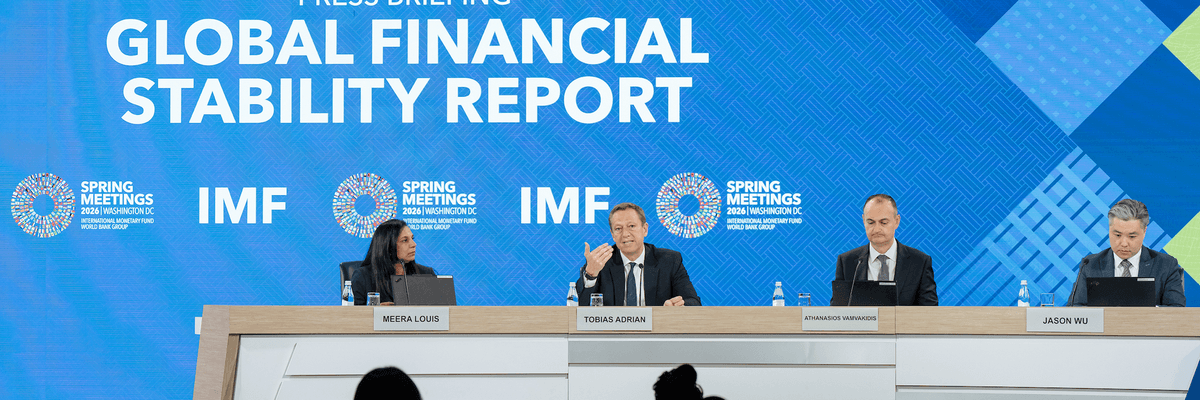
By Tobias Adrian


Global financial markets entered 2026 from a position of strength. Asset prices rose across major markets, volatility was subdued, and financial conditions were easy by historical standards. That benign backdrop has now been tested by the war in the Middle East.

So far, markets have absorbed the shock with a degree of resilience. While the decline in asset prices has been significant, market functioning has been orderly. Nonetheless, this resilience should not be taken at face value. Rather, it reflects cycles of escalation and de-escalation, structural improvements in the financial system, and the absence of a decisive adverse turn that would trigger sustained market drawdowns.
Repricing, orderly market functioning

Global markets reacted swiftly following the outbreak of hostilities. Equity prices declined, sovereign bond yields rose, and volatility increased across asset classes, reflecting higher energy prices and renewed inflation uncertainty. Importantly, this adjustment was reasonably orderly, without signs of acute liquidity stress or funding problems among financial institutions and investors.

In fact, this price‑based absorption of shocks is a key feature of resilient markets. It facilitates risk sharing across investors and preserves price discovery critical for efficient capital allocation. So far, short‑term funding markets and core market infrastructures have helped facilitate the repricing of assets.

Financial conditions have tightened since the onset of the conflict, but they remain far from the stress levels observed during past episodes of global turmoil. Compared with earlier crises, there is still a considerable margin of safety. At the same time, the relatively modest adjustment to date also indicates that markets have not fully priced adverse scenarios.


Inflation as a transmission channel

The main channel through which the conflict has affected markets has been via inflation expectations. Higher energy prices have pushed breakeven inflation rates and yields up across advanced and emerging economies. Yield curves have flattened, with short‑term rates rising more than long‑term rates.

This highlights the difficult environment facing central banks. With near-term inflation risks having risen substantially, monetary policy must remain focused on price stability. On the other hand, the longer the war continues, the more damaging it is to economic growth and labor markets—the flattening of the yield curve, should it continue, could be a sign of this. In this environment, clear communication, credibility, institutional independence, and timely tightening when warranted are essential to anchoring expectations.
Spotlight on emerging financial vulnerabilities

Higher yields have renewed focus on public debt risks. Many advanced economies are entering this episode with elevated debt levels and limited fiscal space. Together with changes in the investor base—away from central banks and toward price‑sensitive nonbank investors—sovereign yields may respond more forcefully to inflation shocks than in the past.

Emerging markets are more sensitive to these changes. Elevated pre‑shock valuations and the growing dominance of debt portfolio flows and carry‑trade strategies have increased exposure to global risk sentiment. While resilience has improved over the past decade in many countries, vulnerabilities remain pronounced in those with high external financing needs or volatile investor bases.
Amplification mechanisms

The key financial stability risks do not lie in the initial shock itself, but in amplification channels that could turn market volatility and sell-offs into more acute stress. Elevated leverage in parts of the nonbank financial sector, increased concentration in equity markets, and historically tight credit spreads all raise the potential for abrupt forced-selling and sudden liquidity strains through margin and collateral calls.


Private credit is an important area of focus. Rapid growth in direct lending has made the sector more important to the overall economy and financial system, while opacity, valuation practices, short‑term funding backed by longer‑term assets, and rising defaults pose challenges. While these vulnerabilities have not yet been tested by an adverse shock, their presence means that the system is more exposed, even if markets have remained orderly so far.
Policy space: constrained, but differentiated

In addition to monetary policy, other key policy areas also have uneven space to act. Fiscal policy is limited by high debt and persistent deficits. By contrast, financial stability policy is less constrained. Central banks have reduced their balance sheets, freeing some capacity for asset purchases if needed, and crisis‑management frameworks and liquidity backstops are stronger than in the past. Targeted prudential measures, robust supervision, effective stress testing, and well‑designed liquidity tools can also be deployed.
Prepare, don’t predict

The experience of recent months underscores that resilience should not be inferred from the absence of stress. Elevated asset prices, intact risk‑taking incentives, and stronger amplification channels mean that risks remain skewed to the downside—even if markets have adjusted in an orderly manner so far.

The task for policymakers is therefore not to predict the next shock, but to ensure that vulnerabilities are mitigated and the system remains capable of absorbing stress without amplifying it. Amid recurring supply shocks and heightened geopolitical uncertainty, financial stability cannot be taken for granted—it must be actively protected


Source: This article was published at IMF Blog and based on Chapter 1 of the April 2026 Global Financial Stability Report, “Global Financial Markets Confront the War in the Middle East and Amplification Risks.”


Tobias Adrian

Tobias Adrian is Financial Counsellor and Director of the Monetary and Capital Markets Department, IMF.
‘A Very Dark Picture’: IMF Warns Trump’s Iran War Could Unleash Global Recession

One expert called the new IMF forecast “extremely concerning for the global economy,” noting that “the most dire impacts of our economic situation will be felt by the poor and the vulnerable.”


International Monetary Fund officials are seen during an April 14, 2026 panel on the group’s latest world economic outlook report, in Washington, DC.
(Photo: International Monetary Fund/X)

Brett Wilkins
Apr 14, 2026
COMMON DREAMS

The International Monetary Fund warned Tuesday that the US-Israeli war on Iran could slow global economic growth, stoke inflation, and increase the possibility of a worldwide recession and energy crisis.

The illegal war of choice on Iran being waged by US President Donald Trump and the government of fugitive Israeli Prime Minister Benjamin Netanyahu has already had wide-ranging negative impacts on the global economy, from soaring fuel prices caused by the closure of the Strait of Hormuz to supply chain disruptions and financial market volatility.


However, a major global economic crisis has thus far been averted. That could soon change.

“Despite major trade disruptions and policy uncertainty, last year ended on an upbeat note,” International Monetary Fund director of research Pierre-Olivier Gourinchas wrote in an analysis of the IMF’s latest World Economic Outlook report. “The private sector adapted to a changing business environment, while powerful offsets came from lower US tariffs than originally announced, some fiscal support, and favorable financial conditions coupled with strong productivity gains and a tech boom.”


“Despite some downside risks, the momentum was expected to carry over into 2026, lifting the pre-conflict global growth forecast to 3.4%,” Gourinchas continued. “War in the Middle East has halted this momentum. The closing of the Strait of Hormuz and serious damage to critical facilities in a region central to global hydrocarbon supply raise the prospect of a major energy crisis should hostilities continue.”

The IMF said that even if the war ends quickly, lasting damage to the world’s economy will still happen.

According to the IMF report:
Under the assumption of a limited conflict, global growth is projected at 3.1% in 2026 and 3.2% in 2027, below recent outcomes and well under pre-pandemic averages. Global inflation is expected to tick up in 2026 and resume its decline in 2027. Pressures are concentrated in emerging market and developing economies, especially commodity importers with preexisting vulnerabilities. Risks are decisively on the downside. A prolonged conflict, deeper geopolitical fragmentation, disappointment over [artificial intelligence]-driven productivity, or renewed trade tensions could weaken growth and unsettle markets. High public debt and eroded policy buffers add vulnerability. Policies should foster adaptability, enhance credibility, and reinforce international cooperation.

The IMF said that “the shock’s ultimate magnitude will depend on the conflict’s duration and scale—and how quickly energy production and shipment normalize once hostilities end,” and that effects will vary by location.

“Countries will feel the impact differently,” Gourinchas wrote. “As in past commodity-price surges, importers are highly exposed. Low-income and developing economies—especially those with vulnerabilities and limited buffers—are likely to be hit hardest. Gulf energy exporters will face economic fallout from damaged infrastructure, production disruptions, export constraints, and weaker tourism and business activity. Remittances will fall in countries that supply migrant workers to the region.”

Eric LeCompte, executive director of the religious development group Jubilee USA Network and a United Nations finance expert, called the new IMF forecast “extremely concerning for the global economy,” lamenting that “the most dire impacts of our economic situation will be felt by the poor and the vulnerable.”

The new report comes as the IMF’s annual Spring Meetings are underway in Washington, DC.

“World leaders coming to Washington are receiving a very dark picture of the global economy,” said LeCompte. “The war is causing greater poverty and increases in our fuel and food costs.”

Other groups have also warned of the adverse economic effects of the US-Israeli war on Iran.

Ben May, Bridget Payne, and Paul Moroz of Oxford Economics recently published a report warning that a longer war in Iran “could tip the global economy into recession.”

In such a situation, “the Gulf states suffer most acutely—GDP down over 8% in 2026—before rebounding sharply as production recovers,” they wrote. “Advanced Asian economies, which are especially reliant on Gulf oil, take a heavy blow from energy import cost surges and supply chain disruption.”

“Europe faces a painful squeeze on gas and electricity,” the trio added. “The US fares somewhat better given its domestic energy production, but an equity market decline of nearly 20% weighs heavily on consumer spending.”

Some US-based organizations have focused on the war’s domestic economic impacts.

Dean Baker, a senior fellow at the Center for Economic Policy Research, published an analysis earlier this month asserting that “making enemies makes us poorer.”

“Secretary of Defense (or War) Pete Hegseth seems to be having a really great time killing people in Iran, but his live action video games come at a big cost—not just in lives, but in budget dollars,” Baker wrote. “To be clear, the main reason to oppose this pointless war is its impact on the people of Iran and elsewhere in the region. But it also has a huge economic cost that is seriously underappreciated.”

“In addition to reducing our security and jeopardizing the well-being of people around the world, Donald Trump’s belligerence will cost us a huge amount of money,” he said. Focusing on US military spending, Baker noted that “Trump wants the country to spend 5% of GDP, or $1.5 trillion a year, on the military. This comes to $12,000 per household.”

Trump and his Republican Party are seeking to offset some of their record military spending with devastating cuts to social programs upon which tens of millions of Americans rely. Already reeling from the biggest cuts to Medicaid and Supplemental Nutrition Assistance Program spending in those programs’ histories, Trump’s budget request for fiscal year 2027 contains $73 billion in total reductions in nondefense spending.

“It is striking to see that Congress might be willing to quickly cough up this money,” said Baker, referring to military funding, “when it has refused far smaller sums that could have made a huge difference in the lives of tens of millions of people.”

Harvard Expert Says She Is ‘Certain’ Price Tag of Trump’s Illegal Iran War Will Hit $1 Trillion

“The interest costs alone will add billions of dollars to the total cost of this war,” said Linda Bilmes. “And unlike the upfront costs, these are costs we are explicitly passing on to the next generation.”


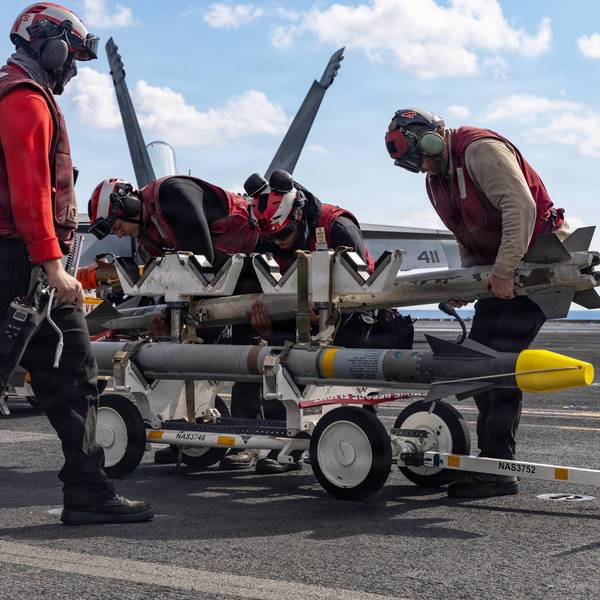
Sailors handle ordnance on the flight deck of the USS Gerald R. Ford in the eastern Mediterranean Sea in support of the US-Israeli war on Iraon on March 2, 2026.
(Photo: US Navy)

Jake Johnson
Apr 14, 2026
COMMON DREAMS

A Harvard expert who specializes in looking beyond official government estimates to calculate the true financial cost of US wars has said she is “certain” the price tag of President Donald Trump’s assault on Iran will eventually reach at least $1 trillion, once benefits for troops, replenishment of munition stockpiles, borrowing costs, and other factors are fully taken into account.

“We are borrowing to finance this war at higher rates, on top of a much larger debt base,” Linda Bilmes, the Daniel Patrick Moynihan senior lecturer in public policy at the Harvard Kennedy School, said in a recent interview. “The result is that the interest costs alone will add billions of dollars to the total cost of this war. And unlike the upfront costs, these are costs we are explicitly passing on to the next generation.”


With No End in Sight, Cost of Trump’s Illegal Iran War Balloons to at Least $25 Billion


‘Hell No’: Pentagon Wants Over $200 Billion to Fund Trump’s Illegal Iran War

Bilmes, who co-authored The Three Trillion Dollar War: The True Cost of the Iraq Conflict with Nobel laureate economist Joseph Stiglitz, estimates that the first several days of the US-Israeli assault on Iran cost American taxpayers at least $16 billion—significantly more than the Pentagon’s official figure, $11.3 billion.

“The short-term costs are even higher than they appear,” Bilmes emphasized. “The Pentagon reports costs based on the historical value of inventory, instead of the actual cost it takes to replace what we are using. And those replacement costs are far higher.”

Bilmes also pointed to the substantial costs of “large, multi-year contracts” the Trump administration has inked with arms manufacturers such as Lockheed Martin.

Over the long-term, said Bilmes, the cost of veterans’ care will be massive. “We now have roughly 55,000 US troops deployed in this conflict who have been exposed to toxins, contaminants, and environmental hazards, such as burning fuel and chemical residues that we know can cause long-term harm,” she noted. “If even one-third of the 55,000 troops deployed today claim benefits, then we are committing ourselves to tens or hundreds of billions of dollars in disability and medical care costs for this cohort alone.”

“I am certain we will spend $1 trillion for the Iran war,” Bilmes said. “Perhaps we have already racked up that amount.”

The Trump administration is expected to request that Congress approve between $80 billion and $100 billion in funding for the Iran war, according to The Washington Post. Earlier this month, the Trump White House released a budget proposal that called for $1.5 trillion in military spending next fiscal year.

Bilmes noted that if Trump’s request is fully enacted, US military spending would rise “to levels about 20% higher than the peak reached during World War Two.”

“This raises the baseline,” Bilmes said. “Even if Congress does not agree to approve the full increase, it is highly likely that at least $100 billion per year will be added to the base defense budget that would not have been approved in the absence of this war.”

“And once that increase is built into the base,” she added, “it raises the baseline and compounds—so an additional $100 billion per year is $1 trillion over the next decade.”