It’s possible that I shall make an ass of myself. But in that case one can always get out of it with a little dialectic. I have, of course, so worded my proposition as to be right either way (K.Marx, Letter to F.Engels on the Indian Mutiny)
Monday, May 25, 2026
Ukraine Claims Attack on Russian Frigate Admiral Essen
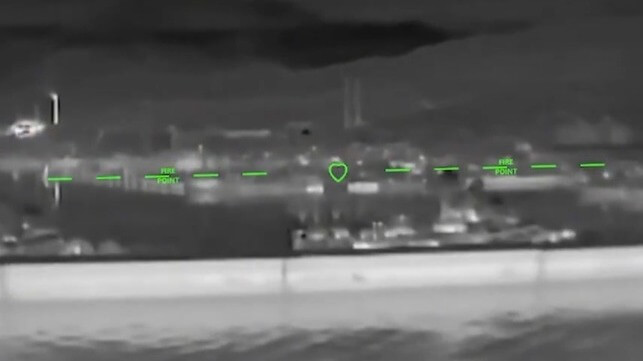
A Fire Point attack drone closes in on a Bora-class missile corvette at Novorossiysk (AFU / Magyar)
Ukraine's drone forces claim to have hit a Russian frigate at a pier in Novorossiysk, along with one of Russia's rare hovercraft-like fast missile corvettes. The strikes occurred as part of a broader campaign against targets at the Sheskharis oil terminal and associated infrastructure.
Ukrainian drone forces commander Robert "Magyar" Brovdi reports that the strike hit the frigate Admiral Essen, previously damaged by a Ukrainian cruise missile in the opening months of the war. Accompanying video footage from Ukraine's general staff appears inconclusive, and the extent of any damage was not reported.
Also targeted was a Project 1239 Bora-class missile corvette, one of two in existence. The Bora-class is a late Soviet design with a catamaran hull and rubber curtains fore and aft. Fitted out as a "surface-effect ship," it can function in the manner of a hovercraft to achieve high speeds, up to a maximum of 55 knots in calm conditions. Samum, one of the two sister ships, was reportedly damaged by a Ukrainian strike in 2023.
In the same operation, Ukrainian drones struck and ignited an oil storage tank farm at Grushova, starting a fire. The Sheskharis marine terminal in Novorossiysk's inner harbor - a perennial target - was also hit and damaged. Russian authorities asserted that the sites had been hit by falling drone debris.
In addition, Ukraine claims to have damaged the sanctioned "shadow fleet" tanker Chrysalis. As of Sunday, Chrysalis' AIS signal suggested that the vessel was at anchor just off the coast of Turkey, near the northern entrance to the Bosporus. The claim could not immediately be confirmed.
Chrysalis has previously been targeted by a much different opponent - Yemen's Houthi rebels. The tanker was attacked twice by Houthi missiles in 2024, but escaped without harm.
INTERVIEW
Moldovans 'want to be EU citizens, not Russian citizens', says president Sandu
Strasbourg – Moldovan President Maia Sandu says joining the European Union is a matter of democratic survival for her country, which is under growing pressure from Russia and the unresolved conflict in Transnistria. In a joint interview, Sandu spoke to RFI and German broadcaster Deutsche Welle at the European Parliament in Strasbourg, where she received the European Order of Merit on Tuesday.
Moldova, one of Europe’s poorest countries, has stepped up its push towards joining the EU since Russia launched its full-scale invasion of Ukraine in 2022. The former Soviet republic was granted EU candidate status the same year.
Moldova has strongly backed Ukraine, while trying to maintain its constitutional neutrality.
The country is under pressure from Moscow and dealing with instability linked to Transnistria, a pro-Russian region which split from Moldova after a short war in the early 1990s following the collapse of the Soviet Union – and where Russian troops remain stationed.
It is internationally recognised as part of Moldova but has long relied on Russian political, military and economic support.
Many Moldovans, including Sandu herself, also hold Romanian passports. In January, the Moldovan president said she would support unification with Romania if there were a referendum on the issue.
Last week, more than 30 countries pledged in Chisinau, Moldova’s capital, to create a special tribunal to prosecute Russian crimes linked to the war against Ukraine.
Sandu accuses Moscow of trying to intimidate Moldova and recruit fighters for the war in Ukraine, and insists that Moldovans increasingly see their future with Europe rather than Russia.
RFI/DW: You've just received the European Order of Merit for "steering Moldova decisively along its European path”. Are you still confident that Moldova will join the EU before 2030?
MS: I am very determined and confident that Moldova will become part of the European Union. It is our commitment to the people of Moldova to be ready by 2030. And we do believe and hope that the EU institutions and the EU member states will support our agenda.
RFI/DW: Are you not concerned that this process is taking too long?
MS: There is always a risk that some things will be delayed, but we are not losing time. We are implementing the reforms and not waiting for formal decisions. But of course, we also want those formal decisions to be taken.
RFI/DW: Would a two-step approach work for you – becoming a partial member before full membership?
MS: We are now working on full membership. This is a merit-based process. We are implementing the reforms for full membership. So this is the discussion we are having with the EU institutions and EU member states, and this is the process we are following at home.
RFI/DW: A major hurdle for Moldova on its path to the EU is Transnistria, the separatist region where Russian troops are stationed illegally. What will you do about that, and how can Moldova become an EU member despite this major problem?
MS: Of course we would like to solve the problem and we have been taking measures, including economic and financial measures. We see more people from the Transnistrian region coming for jobs on the right bank of the Nistru [the government-controlled side of Moldova] because they realised they cannot rely on Russia after experiencing an energy crisis in the middle of winter, when Russia stopped gas supplies.
There's still a security issue because Russia keeps troops illegally on our territory. But we do hope to solve this issue peacefully. This is our commitment – to solve the conflict peacefully. So we are working on this issue while also working on the reforms linked to our EU integration path.
RFI/DW: Vladimir Putin has signed a decree making it easier for residents of Transnistria to obtain Russian citizenship. You said this could be Russia trying to recruit soldiers to fight in Ukraine. What is your country’s response to this decree, and what can be done to prevent people from Transnistria fighting for Putin?
MS: We know that Russia is trying to threaten us, and this may also be part of the plan – to scare us. Russia has been doing this for a long time. We want to solve the conflict peacefully and we have made this clear again and again. We will not allow Russia to influence our internal and external policies through these threats.
We believe in freedom and sovereignty, and that is why we will make decisions that suit Moldovans, not decisions that suit Russia. The Kremlin does not value human life and we have seen this in Russia itself. We also know that Russia has been trying to recruit people from other countries to fight in Ukraine.
But we also know that people in the Transnistrian region do not want this. The proof is that when the war started, many young people from the region moved to the right bank of the Nistru because they were afraid Russia would send them to war. They do not want to be part of this crazy, brutal war. They want to live in peace.
RFI/DW: Does this mean you don't expect many residents of Transnistria to apply for Russian citizenship?
MS: I believe those who wanted Russian citizenship probably got it in the past. But I also don't see why people would want Russian citizenship these days. On the contrary, many people who did not have Moldovan passports have now obtained them. People want to be EU citizens, not Russian citizens.
RFI/DW: Many Moldovans have Romanian passports, including you. In January, you said that if there were a referendum, you would support unification between Moldova and Romania. What would be the advantages of such a scenario, and could it become an alternative if EU accession does not work?
MS: I want my country to be safe and I want Moldova to be part of the free world. It is becoming more and more difficult for small countries, especially in our region, to preserve and pursue their goals because of Russian aggression.
For us, being part of the European Union is the strategy for surviving as a democracy. And we hope we can achieve this sooner than later.
RFI/DW: Without becoming part of Romania?
MS: Well, we can join Romania in the European Union. And this is not only what we believe – most people in Moldova support EU integration. There are also people who support unification with Romania. Right now we are working hard to make Moldova part of the European Union and we hope this scenario will work.
If it does not work for one reason or another, of course we will consider other options. The main objective is to preserve peace in Moldova and keep Moldova part of the free world.
RFI/DW: Moldova recently said it would join the “coalition of the willing” in the event of a ceasefire between Russia and Ukraine. What would Moldova contribute? Could it provide bases for European soldiers, for example?
MS: Moldova is a neutral country and we have to respect the neutrality set out in our constitution. But we have been helping with de-mining and we could do more in that area if needed. We have also supported the solidarity lanes [a network of alternative trade routes established in May 2022 by the EU, Ukraine and Moldova] and we could do more there as well.
We are still discussing this, but we want to help while also respecting constitutional neutrality. That means there are some things we cannot do, including sending soldiers.
RFI/DW: Moldova’s experience dealing with Russian troops could also be an asset to the coalition of the willing, since Russian troops are stationed in Transnistria.
MS: We have managed to keep the situation peaceful. We have avoided destabilisation that could have dragged the region and the country into war. But it is in Moldova’s interest, Ukraine’s interest and the interest of the EU as a whole to see Russian troops withdrawn from Moldova.
We have to work together on these issues.
RFI/DW: Do you think Vladimir Putin will one day stand before this court?
MS: Yes. Accountability is very important. Without accountability, these crimes against humanity risk being repeated.
It is our duty to make sure there is accountability and to make sure those responsible for what has been happening in Ukraine for more than four years answer for their crimes.
“The number of politically motivated criminal cases [in Belarus] exceeds the number of those freed or serving time behind bars,” Vladimir Zhigar says in a new report which shows that since 2020, the Belarusian dictator Alyaksandr Lukashenko has actively repressed 500,000 of his country’s citizens, not the few thousand many speak of.
There, he presented a report BelPol has compiled about repression in Belarus since 2020. According to him, at least a half million Belarusians have been subject to repressive actions by the state, a figure that his group has compiled because Lukashenko stopped publishing data on this issue two years ago.
This figure includes both those who Belsians who have been harassed without being arrested, others against whom charges have been brought and who have been imprisoned for various lengths of time, and a third group consisting of those who have subjected to harassment and various restrictions after they are released, according to the report.
As large as the figure of 500,000 is, BelPol continues, the true dimensions of repression in Belarus are much larger if one includes the families and friends of those subject to repression in the narrow sense and all Belarusians who suffer from Lukashenko’s authoritarian policies.
Other speakers at the Vilnius conference, including Belarusian Nobelist Ales Ales Bialiatski, agreed and said that Lukashenko’s continuing campaign against the population is designed to intimidate all Belarusians to keep quiet and to force those who can’t to leave the country and not return.
How Russia’s shadow fleet keeps slipping through Europe’s net Russia’s vast “shadow fleet” of vessels has been seen primarily as a means of keeping the Kremlin’s oil revenues flowing despite Western sanctions. But a new report from the monitoring group ACLED argues the fleet has evolved into something bigger – a flexible platform for hybrid warfare across northern Europe.
Issued on: 22/05/2026 - RFI
Swedish police and coast guard officers board the tanker Sea Owl I off Trelleborg on 13 March 2026, amid suspicions that Russian commanders were sailing under false documents. AFP - JOHAN NILSSON
In a report published on Friday, the conflict-monitoring organisation ACLED describes an increasingly emboldened maritime system that allows Moscow not only to circumvent sanctions, but to operate in the grey area between commerce, espionage, intimidation and sabotage.
Despite hundreds of sanctions, Russia is still successfully using the fleet to sustain its war economy, exposing vulnerabilities in Europe’s critical infrastructure.
According to ACLED, the fleet comprises anywhere between 1,000 and 3,200 vessels. Ukrainian authorities have identified nearly 1,400 ships, while estimates suggest the network now transports up to 80 percent of Russia’s seaborne crude exports.
Many of the vessels are ageing tankers hidden behind layers of shell companies, false registrations and frequent name changes.
Crews are reportedly recruited through WhatsApp, communications rely on Starlink, payments can be made in cryptocurrency, and ships often manipulate or disable their Automatic Identification Systems to avoid tracking.
This has allowed Moscow to keep oil moving around the globe even as the European Union, the United Kingdom and the United States have imposed broad sanctions. As of May 2026, the EU alone had sanctioned 632 vessels linked to the shadow fleet.
However, under the UN Convention on the Law of the Sea, European states cannot board or seize suspicious vessels unless they can prove criminal activity or demonstrate that a ship is effectively “stateless” – which has created an ideal operating environment for Russia.
The Baltic Sea has become the focal point of shadow fleet activity, being home to Russia’s major oil terminals at Primorsk and Ust-Luga. The region is also dense with undersea telecoms cables, electricity links and gas pipelines connecting Nordic and Baltic states.
On New Year’s Eve 2025, Finnish special forces boarded the cargo ship Fitburg after an undersea cable between Helsinki and Tallinn was damaged. Investigators said the vessel had dragged its anchor along the seabed while travelling from St Petersburg towards Israel. Finnish authorities later discovered sanctioned Russian steel on board.
Although investigators stopped short of claiming deliberate sabotage, the episode highlighted the increasingly blurred line between sanctions evasion and hybrid warfare.
Maritime intelligence company Windward recorded more than 2,300 Russian-affiliated vessels entering the Baltic between February 2024 and February 2025. During the same period, “drifting activity” – when a vessel is stationary or moving slowly without any obvious navigational purpose – near subsea infrastructure increased dramatically, while more than 16,000 gaps in vessel tracking signals were recorded.
The result is a persistent atmosphere of uncertainty that benefits Moscow, according to Windward.
French enforcement
France has become one of the more visible European players in terms of testing how far coastal states can go in response to Russia’s shadow fleet.
One key case involved the tanker Pushpa – also known as the Kiwala or the Boracay – a sanctioned vessel operating on the Russia to India route.
French naval forces seized the ship after it was tracked off the Danish coast, during a wave of drone incidents which temporarily closed several Danish airports in September 2025.
There is no claim that the tanker directly launched the drones. But the incident demonstrated that European governments are increasingly willing to act on the risks created by the shadow fleet’s presence, even if individual incidents remain difficult to prove.
In February 2026, Swedish forces reportedly observed and jammed a reconnaissance drone launched near Malmö against the French aircraft carrier Charles de Gaulle.
That drone was traced not to a shadow fleet tanker, but to the Russian intelligence vessel Zhigulevsk, but the episode underlined that the boundary between commercial shipping, intelligence activity and military pressure is becoming harder to draw.
In terms of a wider European response, NATO has launched the Baltic Sentry operation, while the UK has introduced its Nordic Warden surveillance measures. Since late 2024, eight European enforcement actions against shadow fleet vessels have been recorded, mainly through boardings and seizures where legal grounds can be established.
Moscow, however, has adapted quickly. Some tankers have been escorted by Russian warships, while dozens of vessels have been reflagged under the Russian registry to make boarding more difficult in legal terms. There has also been increasing use of military-linked personnel aboard commercial tankers.
European action thus raises the cost to Russia of using a shadow fleet, but the fleet remains central to keeping its oil revenues flowing despite sanctions.
'Wiped out': Ukraine's bird lovers long for peaceful skies
Kryvyi Rig (Ukraine) (AFP) – When Viktor Sevidov looked up to the sky above Ukraine's war-scarred landscape, he was not watching out for incoming missiles or drones. Instead, he was looking for birds.
"There's a jay... That's a bluethroat... Do you see the hen harrier? We're lucky," the 37-year-old photographer told AFP.
Threatened in peacetime by deforestation, intensive agriculture, urbanisation, pollution, hunting and climate change, Russia's 2022 invasion has wrought yet more suffering on Ukraine's birdlife.
The constant aerial bombardments have devastated wildlife and wrecked a delicate ecosystem across a 1,200-kilometre (750-mile) frontline – including birds' nesting grounds and migratory routes.
Every dawn or dusk, Sevidov leaves his grey apartment block on the outskirts of Kryvyi Rig, an industrial city in central Ukraine, to see what birds he can spot
"I see shaheds every day... I want to see a clear sky," he said, referring to the Iranian-style attack drones that Russia fires hundreds of every day at Ukraine.
Amid a global biodiversity crisis, birds – which play a vital role in pollination, seed dispersal and controlling insect populations – are one of the fastest declining groups.
Before Russia invaded, Sevidov photographed wildlife in the southern Zaporizhzhia and Kherson regions.
Partly occupied by Russia and under constant bombardment, his previous spots are either "destroyed" or "unreachable".
One day in 2024, he saw a Russian missile shot down above him while he was taking photos near Odesa.
"For me, it's disgusting... I don't want to see that. I love nature. I love life. Not things that bring death."
'Fatal'
Contrary to what some may think, birds cannot always easily flee the dangers of war, zoologist Ewa Wegrzyn, from the Polish University of Rzeszow, said.
Many species of birds are philopatric, meaning they either stay in the area they were born or regularly return to the same place to mate.
"Unfortunately, during war, philopatry can be fatal, as it leads birds along migration routes over areas affected by fighting," Wegrzyn said.
At a refuge centre in Voropaiv, near the capital Kyiv, more than 200 birds have been housed, including dozens wounded in the war.
"Birds very often get caught in anti-drone nets or become entangled in fibre-optic cables, injuring their wings, and they suffer terribly," Iryna Snopko, the shelter's 63-year-old director told AFP.
Alongside covering roads in huge nets to stop drone attacks, both Russia and Ukraine have fired thousands of tethered fibre-optic attack drones – with the webs of discarded cables stretching for dozens of kilometres.
Walking around, Snopko spoke affectionately about the "love stories" that have formed among the storks.
She showed off a female crow, Varia, who can say her own name.
"Vooaaria!" the bird croaked, a concoction of sounds that resembled a drunken old man. 'Wiped out'
When Russia invaded in 2022, Sevidov stopped taking photographs for two years – not wanting to pursue his "hobby" while many of his friends were going off to war.
He had wanted to join the army, but was declared unfit for service as one of his arms has been disabled since birth.
Those same friends eventually convinced him to restart, to try to show something "positive".
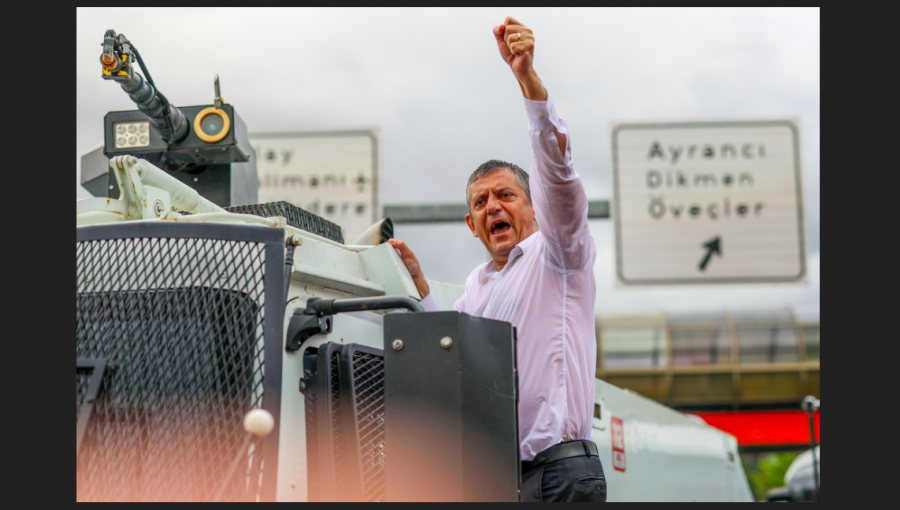
It’s a striking image that captures the surreal decay of Turkey’s political institutions. Ozgur Ozel, the embattled leader of the country’s main opposition Republican People’s Party (CHP), on May 24 scaled a police water cannon truck after police forced their way into the party’s HQ.
From atop the steel-plated vehicle, drenched in spring rain, Ozel chanted slogans together with a crowd of stunned supporters.
Video: Action Man Ozel drenched by rain, climbing on to a water cannon truck and chanting with a crowd.
Police burst in
Earlier in the day, riot police breached the perimeter of the CHP headquarters in Ankara. Armed with a controversial court order, security forces deployed tear gas and rubber bullets inside the building to forcefully evict party officials who had been holed up there for three days.
On May 21, the 36th civil chamber of the Ankara regional (istinaf) court (an appeals court that works above courts of first instance and below the supreme court (yargitay)) stripped Ozel of his post and reinstated his predecessor Kemal Kilicdaroglu.
In the evening hours of that day, the court-deposed Ozel held a press conference at the headquarters and addressed a crowd of supporters that gathered in front of the building. He said he would defy the ruling and declared that he would not hand over the headquarters. No incidents were observed.
On May 22 and May 23, the political atmosphere in the country remained calm, with both Ozel and Kilicdaroglu opting to not escalate tensions.
Kilicdaroglu’s petition
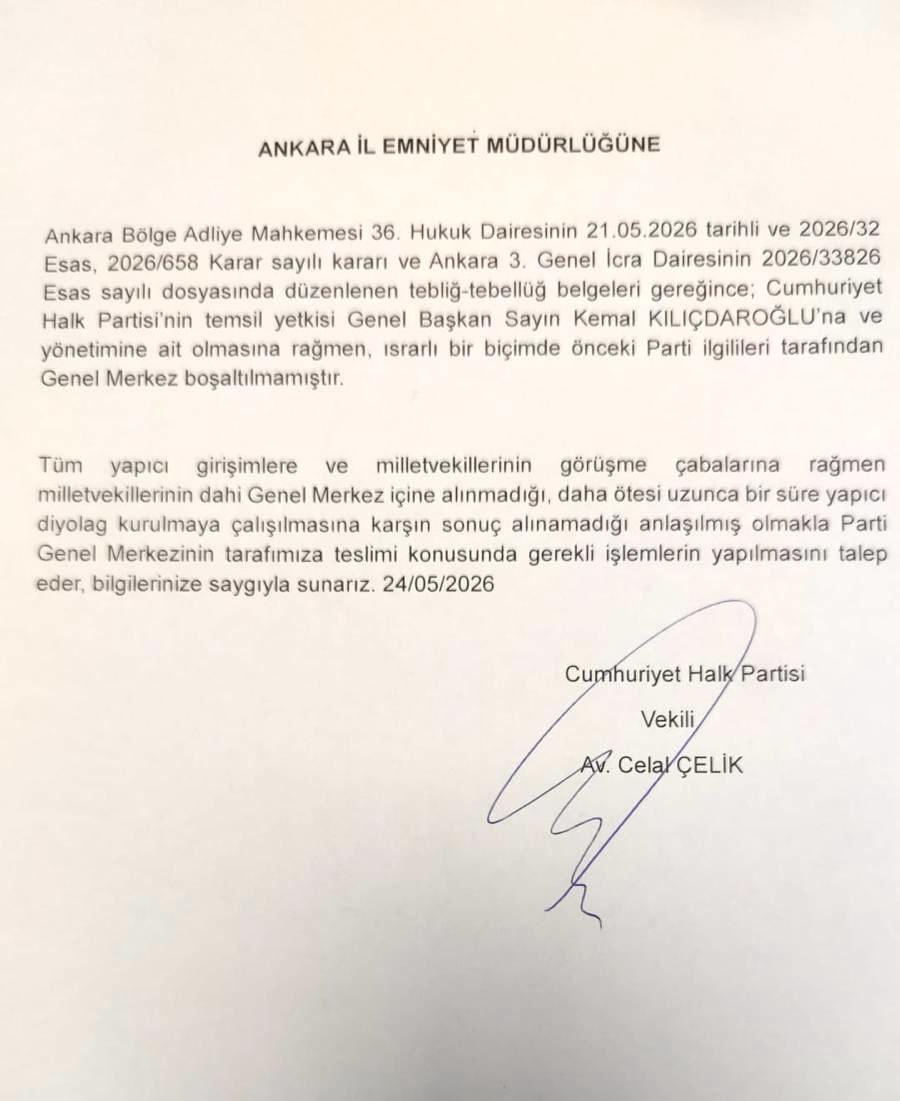
On May 24, dramatic scenes were circulated by world media after a lawyer (appointed on May 22 by Kilicdaroglu to replace the lawyers previously appointed by Ozel to legally represent the CHP) filed a petition at the Ankara provincial police directorate, demanding the immediate evacuation of the HQ and a handover to Kilicdaroglu.
Screenshot: The petition.
On paper, the enforcement mechanism for the police raid was not triggered directly by the government, but rather by the fractured rivalries inside the CHP. To seasoned observers of Turkish politics, the bizarre spectacle of state security apparatuses acting as executioners in an internal party feud is a sign of a deeper malaise taking hold.
Video: Police forces opened up a way into the CHP headquarters by firing tear gas.
Video: Outside view of the police entering the building.
Unending end of democracy in Turkey
The action movie-type scenes underline once again how thoroughly the government has co-opted both the judiciary and opposition politics. For many Turks inside and outside the country, any lamentation over a “sudden end” to Turkish democracy rings hollow.
The death of Turkey's democratic institutions is a narrative that is already more than a decade stale. The trajectory of Turkey’s autocracy was cemented long before the police raid at the CHP.
The definitive turning point can perhaps be traced back over a decade to the suppression of the Gezi Park protests in 2013 and to the subsequent consolidation of executive power following the 2016 attempted coup.
The weaponisation of the legal system to settle internal opposition scores has effectively neutralised parliament as a venue for meaningful resistance.
For Turks, the images of riot police patrolling the corridors of the CHP, one of the oldest political parties in the world that is still active, do not signal a new authoritarian dawn. Instead, they serve as a stark reminder of a long-established status quo where the boundaries enabling independent political activity have effectively ceased to exist.
Ozel shines
Ahead of the pitiful, wrong-headed requiems for Turkey’s democracy, Ozel on May 24 brought energy and action not only to the country’s politics but to media reports that spread across the globe.
Before being forced from his office, he staged a scene in which he ripped up the eviction notice. After the police raided the HQ, he led hundreds of supporters on an arduous, rainswept march to the parliament building.
Ozel then delivered a speech to his supporters in front of parliament before heading inside to his office.
Good action… but nothing else
With the CHP’s central apparatus effectively shut down by the government and its top figures bogged down in a mire of litigation, the path back to institutional relevance for the party remains unclear.
On May 22, Ozel gathered together the party MPs, who proceeded to elect him head of the parliamentary group.
So as things stand, Kilicdaroglu is the party chairman and Ozel is the head of the parliamentary group. The CHP is fractured and exposed. Its presidential candidate, Istanbul mayor Ekrem Imamoglu, has been behind bars since March last year.
More than two dozen CHP mayors, along with many other party and municipal officials, are also in prison.
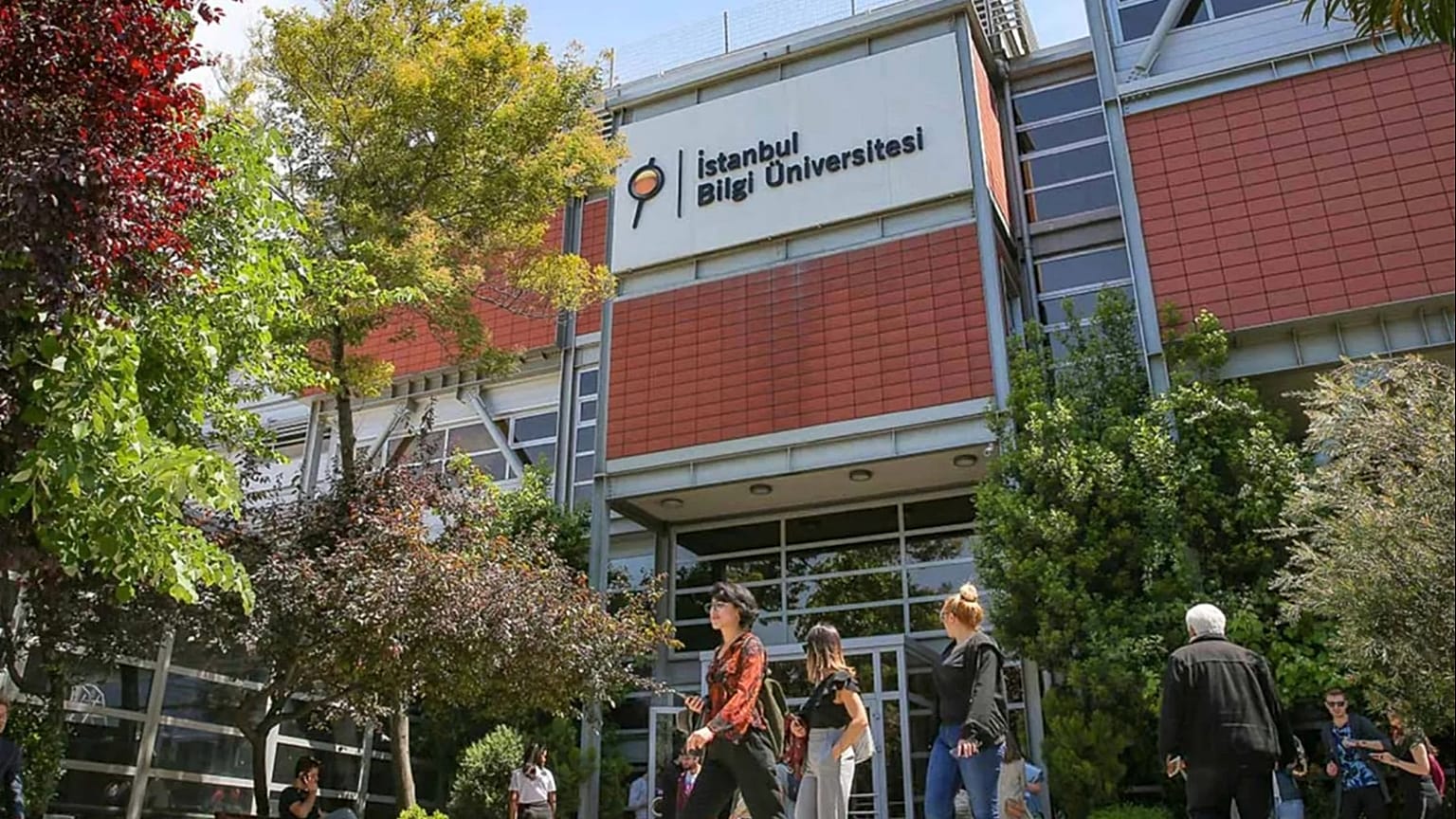
Turkey's president scraps move to close liberal Bilgi University following outcry
Founded on 7 June 1996 as Turkey's fourth private foundation university, Bilgi became part of the Laureate International Universities network, a US-based group operating universities across multiple continents, in 2006.
Turkey's President Recep Tayyip Erdoğan reversed his controversial decision on Sunday to close a liberal private university in Istanbul, according to a decree published in the official gazette.
Hundreds of students and lecturers demonstrated earlier in the day outside the main campus of Istanbul Bilgi University, which has been closed since Friday, to demand its reopening.
Erdoğan on Friday ordered its closure in the middle of the school year, in an official decree.
It cited a law allowing for the closure of a private institution if "the expected level of education and training...is insufficient," a charge rejected by Bilgi students and staff.
"We will stay here until the university reopens its doors," said student union activist Emir Aydogan, demonstrating at the university on Sunday.
Official GazetteCleared
The decree to close the university, one of the country's oldest private higher education institutions, came eight months after its owner was seized by the state in a criminal investigation into alleged fraud and money laundering.
The Küçükçekmece Chief Public Prosecutor's Office launched its investigation into Can Holding in September 2025, alleging that the group's principals had established a criminal organisation and engaged in money laundering and tax evasion.
Detention orders were issued for 10 people, including principals Mehmet Şakir Can, Kemal Can and Kenan Tekdağ.
As part of the operation, 121 Can Holding companies were seized and placed under the management of the Savings Deposit Insurance Fund (TMSF). Among those seized were the television channels Habertürk and Show TV, the financial news channel Bloomberg HT, the Doğa school network, and Istanbul Bilgi University.
Investigators said at the time they had discovered that “large amounts of money of unknown origin were entered via companies operating under Can Holding,” which were transferred between companies to conceal the origin. Forged documents were also allegedly used to reduce tax liability, they said in a statement.
The three media outlets had been acquired by Can Holding in December 2024.
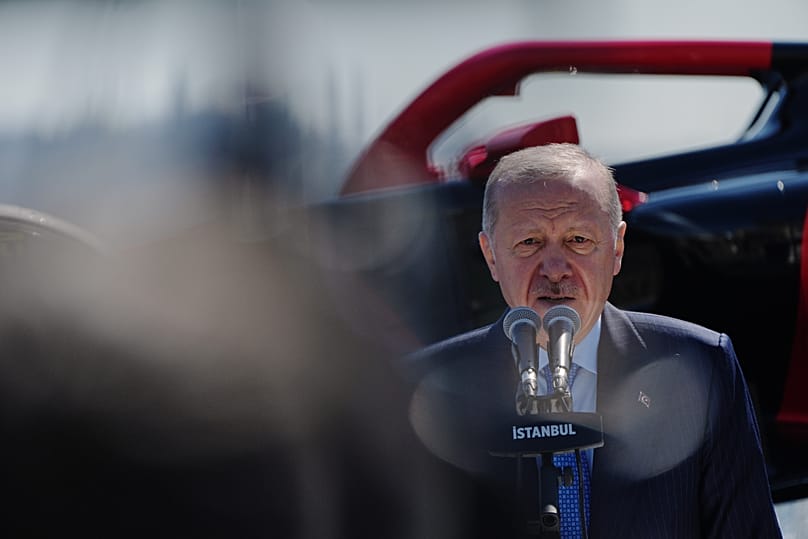
Turkey's President Recep Tayyip Erdoğan gives a speech at Dolmabahçe Palace in Istanbul, 24 April, 2026 AP Photo
Prosecutors added that some of Can Holding’s activities were “directly financed with criminal revenues.”
The TMSF was established in 1983 as a banking deposit insurance body but its mandate was significantly expanded by government decrees following the 2016 coup attempt and further broadened by legislative amendments that came into force in January 2025. It currently controls more than 1,000 companies.
Founded on 7 June 1996 as Turkey's fourth private foundation university, Bilgi became part of the Laureate International Universities network, a US-based group operating universities across multiple continents, in 2006. Can Holding acquired it in 2019 for $90 million.
Bilgi, which participates in the EU's Erasmus exchange programme, has more than 20,000 students from both Turkey and abroad, and some of its researchers are renowned in their fields.
Erdoğan, in office since 2003 as prime minister and then president, has been fiercely criticised by rights groups for authoritarian moves against his opponents.
Mass protest in Serbia ends in violent clashes with police
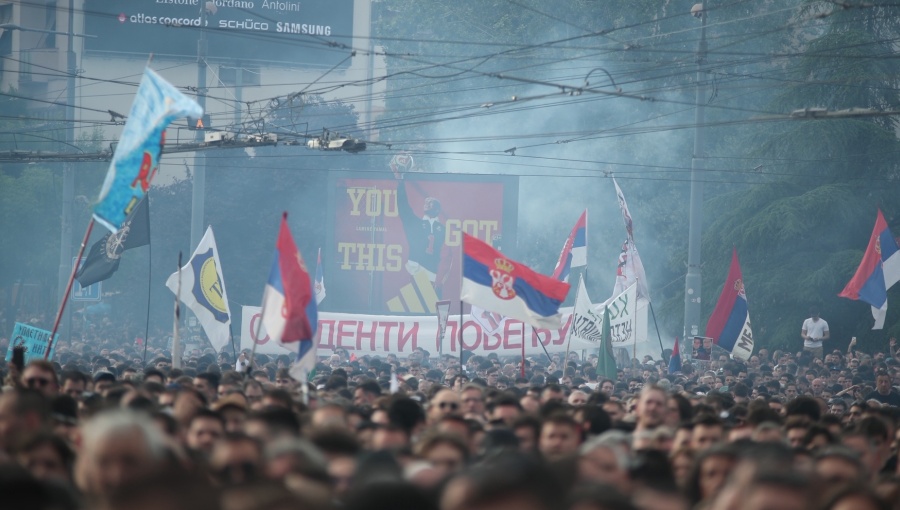
Crowds packed Slavija Square, one of the capital’s main junctions, in one of the largest rallies in months, part of a wave of anti-government protests that began after a deadly infrastructure collapse in 2024. / Lazar Novaković, Glas ŠumadijeFacebook
Police fired teargas and clashed with protesters in the Serbian capital late on May 23 after tens of thousands gathered peacefully to demand early elections and an end to the more than decade-long rule of President Aleksandar Vucic and his Serbian Progressive Party (SNS).
Crowds packed Slavija Square, one of the capital’s main junctions, marking one of the largest rallies in recent months, part of a wave of anti-government protests that began after a deadly infrastructure collapse in 2024.
Authorities put turnout at just 34,300 people, while photos and drone footage suggested a crowd comparable to a March 15, 2025 protest that drew nearly 300,000. The independent Archive of Public Gatherings initially estimated more than 100,000, saying the final figure would likely be higher.
The rally, which began around 1800 local time and ended shortly before 2000, followed marches from multiple points across the city. Protesters travelled from across Serbia, with columns of cars and motorcyles entering Belgrade during the day.
Clashes broke out later in the evening near Pionirski Park, where SNS supporters have routinely gathered, and along central streets including Kneza Miloša and Resavska. Riot police formed cordons and moved in to disperse groups of protesters. Witnesses reported an enormous police presence, including plainclothes officers, and multiple arrests.
Police in riot gear cordoned off key institutions, including city hall and areas near the presidency building, as clashes broke out between pro- and anti-government protesters and police. Officers used teargas, stun grenades and pepper spray to push back groups of people throwing flares, rocks and bottles.
Opposition media and student organisers said the violence was initiated by hooligans and provocateurs, while authorities blamed protesters for attacking police.
Vucic called for dialogue, while the Higher Public Prosecutor’s Office said those who attacked police officers would be identified and prosecuted.
The demonstrations are part of a broader anti-corruption movement led by university students that has driven months of protests, strikes and road blockades since late 2024, after the collapse of a railway station canopy in Novi Sad killed 16 people.
Student organisers say the tragedy exposed systemic corruption and mismanagement in state infrastructure projects, allegations the government denies, saying those responsible have been held to account. The unrest forced the resignation of former prime minister Milos Vucevic in January 2025.
Vucic, whose Serbian Progressive Party has dominated Serbian politics for over a decade, said earlier this week that early parliamentary elections would be held between late September and mid-November, ahead of schedule. Elections are otherwise due in 2027.
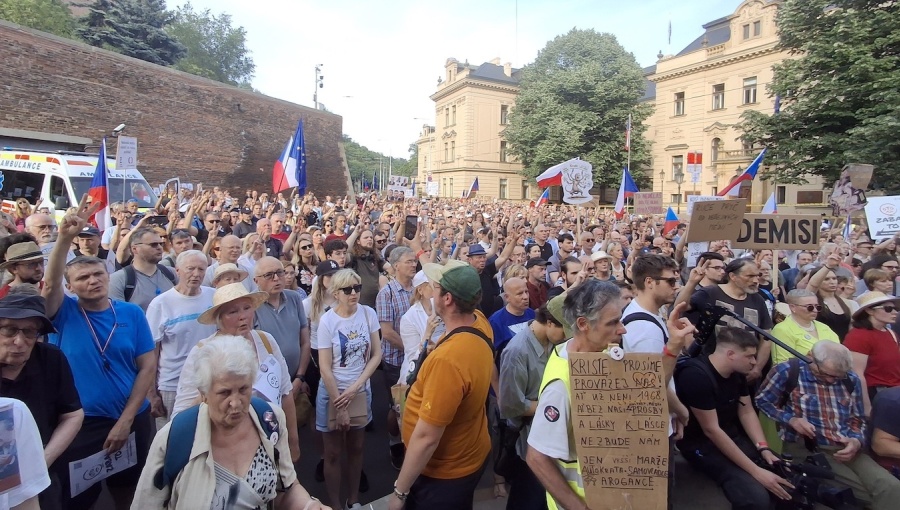
Thousands rally in Prague in support of public media
Thousands of protesters rallied in Prague in support of the country's public media and against the move by Prime Minister Andrej Babiš' radical populist cabinet to curtail financing for Czech Television (CT) and Czech Radio (CRo).
The rally held under the slogan “Hands Off Media” organised by the Million Moments for Democracy platform, which was behind the 2018-2019 mass protests against the previous cabinet led by Babiš, also criticised Minister of Culture Oto Klempíř of the anti-green and Eurosceptic Motorists for Themselves party for staff and culture funding changes at the ministry.
“Instead of protecting Czech culture, he has been repeatedly harming it,” the platform’s head Mikuláš Minář said at the Old Town Square in the historic centre of Prague, and called for another rally on May 25 when the cabinet opens its session.
Earlier this year, the ruling coalition consisting of Babiš' Ano, the far right Freedom and Direct Democracy (SPD) and Motorists parties agreed to scrap the funding of public media through concession fees, renewing fears it may try to suffocate the independence of public media.
Babiš and SPD leader and parliamentary chairman Tomio Okamura back the move, expecting it to come into effect by January 1, 2027 and plan to have public media funded directly from the state budget by then.
Even the partial scrapping of the concession fees proposed by the ruling coalition this spring would amount to one third of CT’s and CRo’s income with CT losing more than CZK2bn (€81mn) and CRo losing CZK800mn, Czech Press Agency reported earlier, referring to information from the public broadcasters which warned this would impact the financial stability of the media.
The move sparked country-wide protest, including the mass rally on March 21 when around 200,000-250,000 Czechs rallied at the Letná plateau in Prague against the policies of the Babiš-led cabinet and his Ano party, which they fear threaten democratic standards in the country, including the government-backed NGO draft bill, criticised as inspired by a similar Russian bill targeting civic society.
As IntelliNews reported last month, CRo and CT labour unions declared a strike emergency on April 22 in response to the cabinet proposals.
“The government proposal to change the law on CT and CRo and particularly the parliamentary proposal to scrap concession fees for selected groups will lead already this year to budget shakeup of both institutions and mass layoffs,” Zuzana Bančanská stated at a press conference held in front of CT’s headquarters at Kavčí hory on April 22.
The Ministry of Culture and the cabinet members deny the public media, which are some of the most respected ones in the wider region, would be targeted, but the ruling coalition parties have regularly attacked the public media and accused them of biased reporting.