Russian attacks kill several people and wound more than 100 across Ukraine
Russian air strikes hit several major Ukrainian cities early on Tuesday, killing at least 18 people and wounding more than 100, authorities said. Kyiv, Dnipro and Kharkiv were among the hardest hit, with residential buildings damaged and thousands of residents sheltering underground amid ongoing air raid alerts.
Issued on: 02/06/2026
By: FRANCE 24

01:54
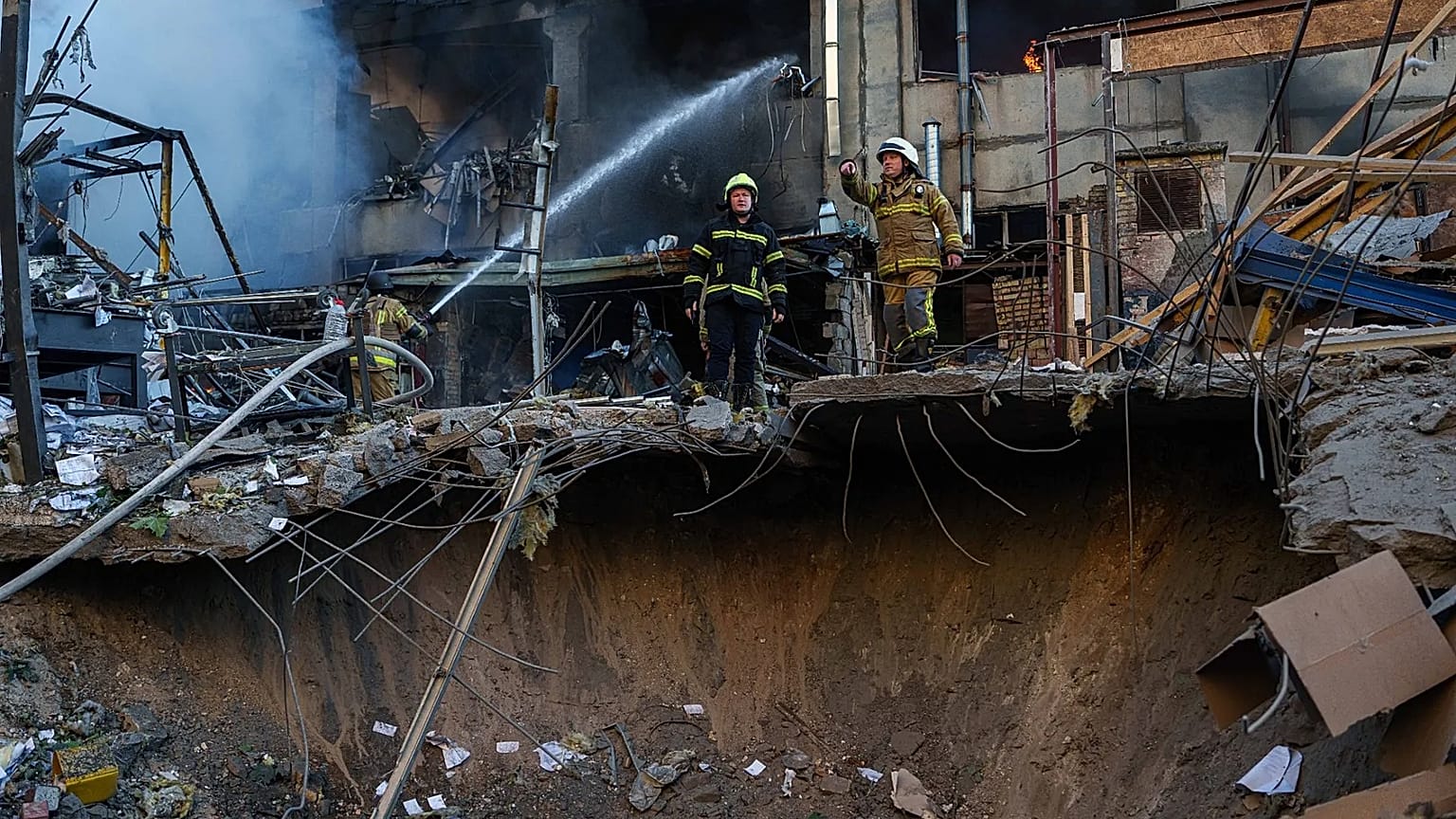
Russian air attacks on major Ukrainian cities including Kyiv, Dnipro and Kharkiv killed at least 18 people and wounded more than 100 early on Tuesday, authorities said, after days of warnings that Moscow was planning a major assault.
Russia has targeted Ukraine's power supply and infrastructure while Ukraine has stepped up attacks this year on Russian oil facilities in a war that has now dragged on for more than four years, sometimes causing casualties. Both Kyiv and Moscow deny targeting civilians.
Twelve people were killed and 36 injured in a Russian missile and drone attack on the southeastern city of Dnipro, regional governor Oleksandr Hanzha said on messaging app Telegram.
All those injured were hospitalised and were reported to be in a moderate condition, he said, posting pictures of heavily damaged residential buildings, burnt-out vehicles and a destroyed children's playground.
One of the dead was a rescue worker who had been killed in a "double-tap" strike targeting first responders, according to emergency services.
At least six people were killed and 66 injured, including children, across the capital of Kyiv, Mayor Vitali Klitschko said.
READ MORETalk to Russia? First, Europe needs to pick an envoy – and know what it wants to say
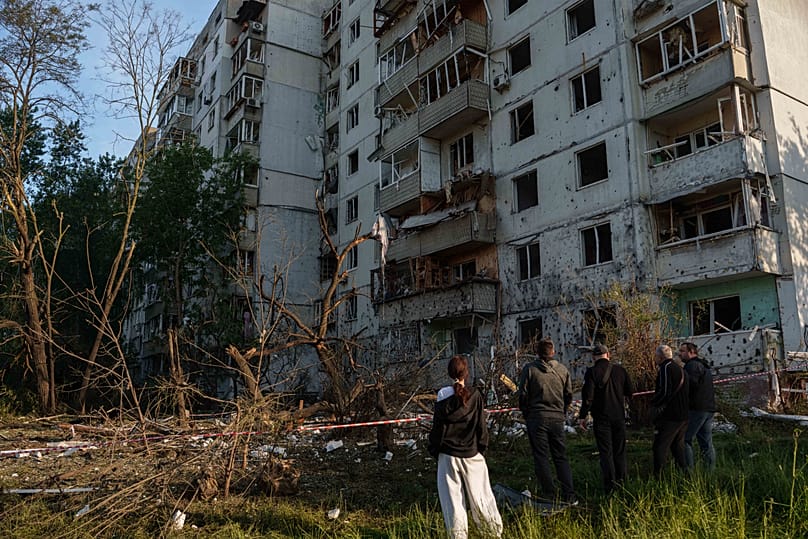
A suspected missile strike on a 24-storey apartment building triggered a collapse, with people likely trapped under the rubble.
Other buildings, including a nine-storey apartment block, caught fire from suspected missile debris, he said.
“In the Obolon district, cars are burning after being struck by falling missile debris. There are also fires at two locations in open areas, including one near a kindergarten,” Klitschko said.
Russia launches wave of deadly strikes across Ukraine

04:41
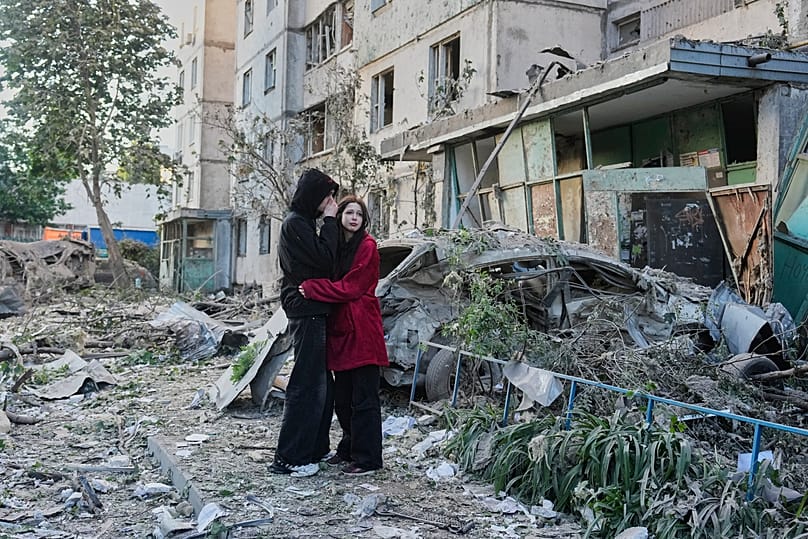
"Everything was covered (with debris), everything in smoke, you could see nothing," she added, as she stood in front of a destroyed residential building and damaged cars.
Thousands of Kyiv residents were taking refuge in metro stations and other shelters, witnesses said, after air raid warnings covered much of the country early on Tuesday.
The overnight attack cut electricity to 140,000 residents of Ukraine's capital, power company DTEK told Reuters on Tuesday.
Utility workers had since restored electricity to 110,000 residents, DTEK said, adding that two of its engineers had been injured.

Warnings of a major attack
Ukraine's air force said Russia launched 656 drones and 73 missiles overnight, mainly targeting Kyiv. In a statement on Telegram, the air force said 40 missiles and 602 drones had been downed or neutralised.
An air force spokesman said the attack included eight Zircon hypersonic missiles, likely the largest number of those missiles used by Russia during the war. The Zircon has a range of 1,000 kilometres and travels at nine times the speed of sound, according to Moscow.
Russia's defence ministry said it had carried out a "massive strike" on Ukraine's defence industry facilities using high-precision long-range weapons.
Ukrainian President Volodymyr Zelensky on Monday reiterated warnings of a potentially major assault and urged residents to pay special attention to air raid alerts.
“Intelligence warnings regarding Russian strikes remain in effect. A massive strike is possible, they have prepared one,” Zelensky said in his nightly video address.
“Our defenders are ready 24/7 to the fullest extent possible with the supplies currently available.”
Russia last week warned that it intended to launch “systematic strikes” on targets in Kyiv linked to the Ukrainian military as well as decision-making centres, and urged foreigners to leave.
It said the action was in response to a drone strike last month on a student dormitory in Ukraine's Russian-held Luhansk region, which killed 21 people. Ukraine denied targeting civilians, saying that it had carried out a series of strikes on military assets.
In Ukraine's north-eastern Kharkiv region, 10 people, including a child, were injured in drone and missile attacks, Mayor Ihor Terekhov said on Telegram.
Russia's Ilsky oil refinery, in the southern region of Krasnodar, caught fire after a drone attack, local authorities said on Telegram on Tuesday.
Air defence systems were also repelling drone attacks over Sevastopol, a Russian naval fleet base, in Russia-occupied Crimea, authorities there said.
The war in Ukraine has ground on for more than four years since Russia launched its full-scale invasion in February 2022.
Efforts to end the conflict have made little progress, with the administration of US President Donald Trump focused on conflicts in the Middle East.
(FRANCE 24 with Reuters and AFP)
Ukraine's president says US air defence 'absolutely necessary' after Russian strikes
Russia launched a record 8,150 long-range drones at Ukraine in May, an AFP analysis of Ukrainian air force data showed, up 24% from April.
Ukrainian President Volodymyr Zelenskyy called on Europe on Tuesday to develop its own air defence systems and urged more support from Washington after Russia's latest deadly drone and missile barrage.
"Europe needs its own anti-ballistic defence so that this war can finally be brought to an end. And assistance from the United States in supplying missiles for Patriot systems is absolutely necessary," Zelenskyy wrote in a post on X.
"A large-scale attack and an absolutely clear statement from Russia: if Ukraine is not protected from ballistic and other missile strikes, these attacks will continue."
Zelenskyy’s remarks were echoed by his Foreign Minister Andrii Shyiiba who said that the wave of strikes showed that Russia’s President Vladimir Putin was running out of military options in his full-scale invasion of Ukraine.
"Putin is a war criminal and loser who has no cards except terror. Moscow is losing on the battlefield. No number of missiles can change this," Shyiiba said in a statement on social media.
"Terrorists in Moscow must realise that their brutal attacks won’t bring them anywhere. That the price for their regime will only increase. That the only way out for Putin is to immediately end this war."
Strikes on Ukraine
The remarks from the senior leadership came after a Russian barrage of Ukraine early on Tuesday which killed at least 13 people and injured 100 others.
Authorities in the Ukrainian capital had been sounding the alarm that Russia was preparing another massive barrage, the latest in a string of deadly strikes that have escalated the four-year war and dented already slim hopes for peace.
The Ukrainian air force said Russia had launched 73 missiles and 656 drones, adding it had downed 602 of the drones and 40 of the missiles.
Moscow has bombarded Ukraine almost daily since launching its full-scale invasion in February 2022, a war that is now the bloodiest on European soil since World War II, with hundreds of thousands killed and millions displaced.
Russia said on Tuesday that it had carried out a huge strike, including with hypersonic missiles, targeting Ukraine's military-industrial complex.
It denies that its forces target civilians.
'Protect your lives'
Last month, Kyiv and Moscow agreed a three-day ceasefire mediated by the United States. The truce was marred by allegations of violations on both sides but had raised the prospect of a longer halt in fighting.
An uptick in strikes since has dulled peace prospects, particularly with the White House distracted by the Iran war.
Meanwhile, a Ukrainian drone strike killed one person in Russia's Kursk region, near the Ukrainian border, regional governor Alexander Khinshtein said.
Another drone sparked a fire at an oil refinery in the southwestern city of Krasnodar, its operational headquarters said on Telegram.
Zelenskyy had said last week that Ukraine had learnt that Russia was preparing a new massive strike and urged people to heed the sirens, go to shelters and "protect your lives."
Russia launched a record 8,150 long-range drones at Ukraine in May, an AFP analysis of Ukrainian air force data showed, up 24% from April.
Kyiv intercepted about 90% of all incoming drones and missiles in May, according to air force data, but struggles to down ballistic missiles.
EU ready to 'step up' in Ukraine-Russia talks but ceasefire must come first, summit draft shows
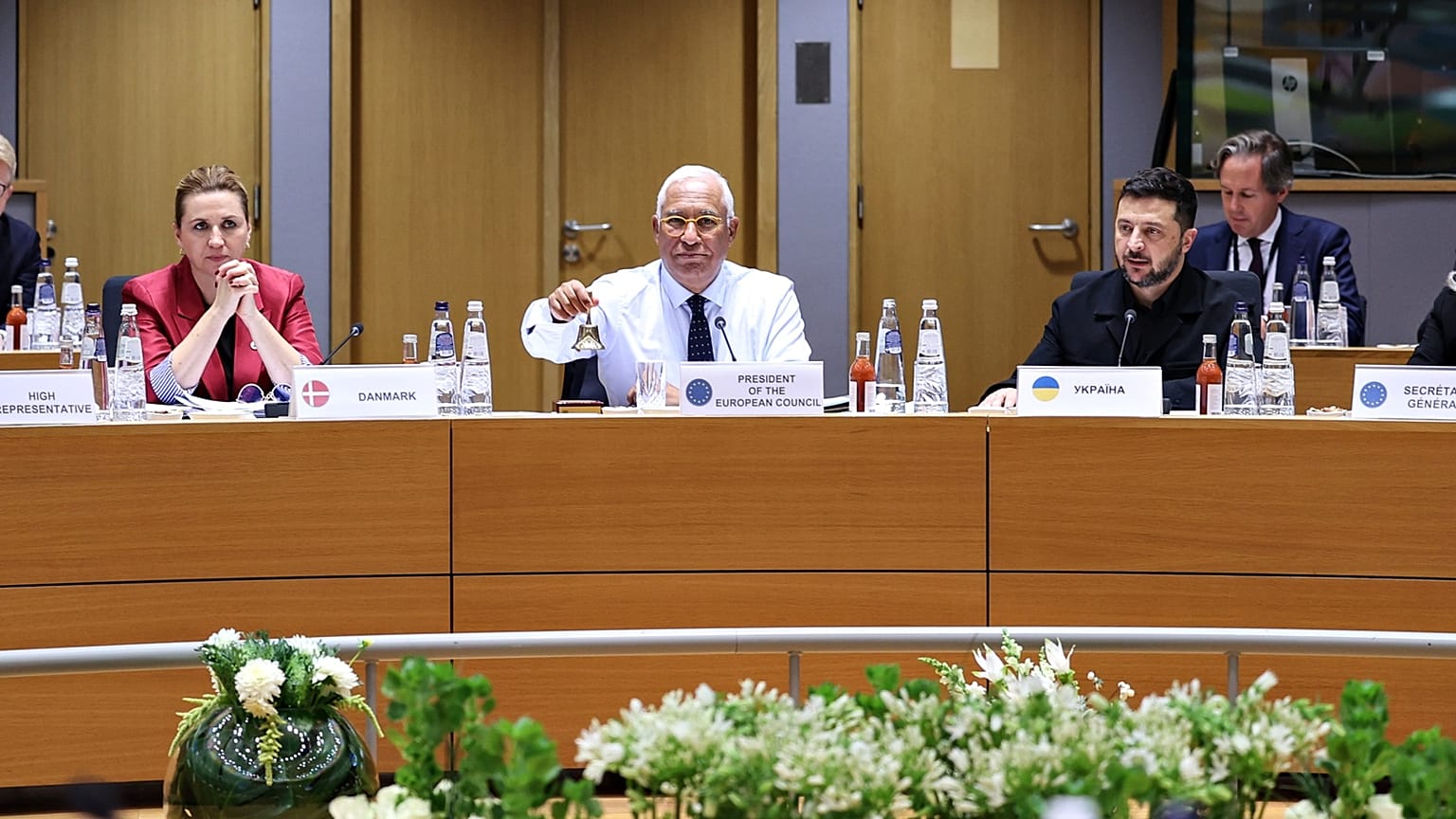
EU leaders are set to discuss the possibility of engaging in direct talks when they meet on 18-19 June. But the latest draft of the summit's conclusions suggests a mandate for a special envoy is still far away.
The European Union is ready to "step up" its role in the diplomatic process to end Russia's full-scale invasion of Ukraine, but only when Moscow demonstrates a serious commitment to negotiations and establishes an "unconditional ceasefire", according to draft conclusions prepared ahead of a key leaders' summit on 18-19 June.
It marks the first time the conclusions speak of the bloc taking a hands-on approach to the peace process, which the United States has so far led and is currently stalled.
The provisional wording, subject to changes, falls short of endorsing the appointment of a special envoy, as some member states have demanded. The references could still change further before the summit takes place.
"The European Council supports diplomatic efforts to bring the war to an end and underlines the European Union's readiness to step up its engagement in peace negotiations," the draft, seen by Euronews and dated 1 June, says.
"However, Russia has not shown any genuine willingness regarding a fair and sustainable peace," the paragraph continues.
"The European Council urges Russia to agree to a full, unconditional and immediate ceasefire and engage in meaningful negotiations towards a just and lasting peace."
The document is used as a working basis for talks held by EU27 leaders.
The draft document also forcefully condemns Russia's deadly large-scale attacksagainst Ukraine and open threats against foreign citizens, diplomats and international organisations based in Kyiv, as well as last week's incident that saw a Russian drone with explosives crash in a residential building in Romania.
The series of escalatory developments has shifted the debate on whether the EU should break its diplomatic isolation and launch direct talks with Russia.
The matter gained momentum in early May after Ukrainian President Volodymyr Zelenskyy, frustrated with the White House's attention on the Middle East, called on Europeans to appoint a common representative and revive the negotiations.
Among the names casually floated for the high-risk job were European Council President António Costa, Finnish President Alexander Stubb, former Italian Prime Minister Mario Draghi and former German Chancellor Angela Merkel.
Costa, who will chair the summit, was one of the first leaders to speak publicly in favour of the direct talks, provided the circumstances are right.
Yet, divisions among capitals remain entrenched, as reflected in the wording of the draft conclusions. Germany, Poland, the Nordics and the Baltics believe the Kremlin's maximalist demands would make any outreach pointless.
Last week, High Representative Kaja Kallas said the EU would "never" be a neutral mediator between Ukraine and Russia.
"We can't be neutral, treating them equally, because we have been clearly on Ukraine's side," she said after hosting an informal meeting of foreign affairs ministers in Cyprus.
Instead, she argued, member states should strive to agree on a common set of concessions and conditions that Russia should fulfil at the negotiating table.
"All our efforts have to be complementary to US efforts. And the ministers were also very clear about this," Kallas said. "We are not coming in instead of the United States, but we are actually addressing the issues that haven't been addressed in these talks."
Zelenskyy is expected to speak with the 27 leaders at the June summit, even though it is not yet confirmed whether he will do so in person or remotely.
In a recent interview with CBS, the Ukrainian president name-checked the E3 format (made up of Germany, France and the United Kingdom), the Nordic countries and Turkey as potential mediators.
"Who will represent Europe after all? It's up to Ukraine and Europe to decide," he said. "But no less important is that Russia must be ready for dialogue and European presence."


 The effects of El Nino © Nicholas SHEARMAN / AFP