Zelenskyy proposes face-to-face meeting to discuss end of war in open letter to Putin
Zelenskyy has repeatedly called for a meeting with Putin, saying only face-to-face talks will yield an agreement on territory.
Ukrainian President Volodymyr Zelenskyy proposed a face-to-face meeting with Vladimir Putin in an open letter to the Russian leader on Thursday, saying he was ready for a "full ceasefire."
The letter marks one of the few times Zelenskyy has appealed directly to Putin since Russia's 2022 full-scale invasion and the first time he has ever sent a letter directly to the Russian leader.
“The choice is yours now. Enough of war. Ukraine proposes to end this war,” Zelenskyy wrote, adding “Ukraine proposes ending this war through direct engagement between us — and you. I am proposing a meeting.”
“It is leaders who resolve the key issues. That has always been the case, and it always will be,” Zelenskyy wrote, suggesting that Putin “set a clear date for such a meeting.
“Do not be afraid to take the path out of this war. That is the main thing that is required of you now.”
“After 26 years in power, age is beginning to take its toll. And with time, the fatigue with you will only grow.”
The Ukrainian presidential office confirmed that although the letter was sent to Moscow, it was also shared with Kyiv's partners, including the US.
'This war is your personal choice'
Zelenskyy opened the letter saying when Vladimir Putin came to power over 26 years ago “many people in Ukraine viewed you positively.”
“That is how it was. But that is now in the past.”
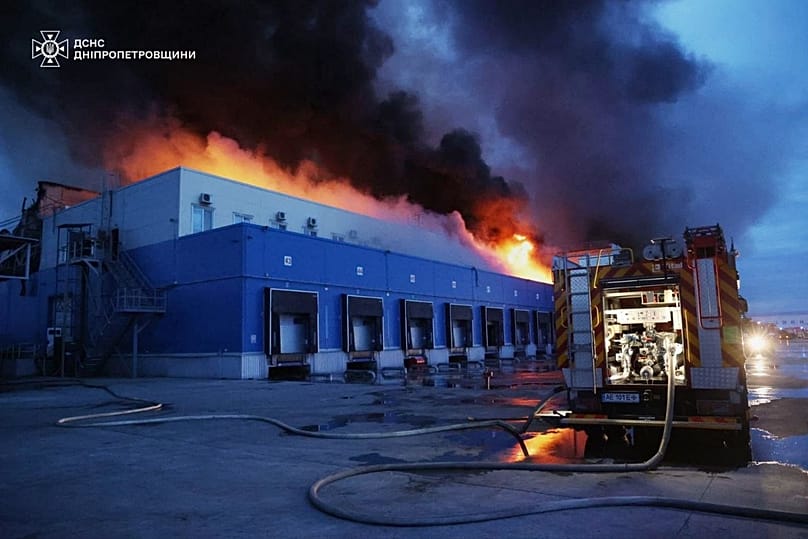
Zelenskyy said now the “overwhelming majority of Ukrainians view it positively that our long-range drones paid a visit to the opening of your forum in St. Petersburg, covering a distance of more than 1,000 kilometers.”
“As you know very well, that distance is not the limit of our capabilities.”
“You have spent nearly half of your 26 years in power in Russia waging war against Ukraine,” Zelenskyy said adding that whatever Putin may have said about NATO, geopolitics, or the Russian language, this was a false pretext for the war.
“This war is your personal choice — a war without a real cause. That is how history will remember it.”
Zelenskyy said that even if Russia does not care about its military casualties, Ukraine does.
“We are losing our people, and every loss is painful to us. Even when the ratio of Ukrainian losses to Russian losses is one to five or one to six, it still matters greatly.”
“We in Ukraine do not want a permanent war,” Zelenskyy stated in the open letter.
“We know very well that life without war is infinitely better. And we want to achieve that.”
Zelenskyy also said he is “convinced that the majority of Russians would respond positively to this as well — and you know it.”
“Many did not believe that Ukraine would be able to hold out for so long. You did not believe it. And those who advised you did not believe it either. That was a mistake.”
Zelenskyy has repeatedly called for a meeting with Putin, saying only face-to-face talks will yield an agreement on territory.
The Kremlin said on Thursday evening that Zelenskyy is welcome to meet Putin in Moscow "any time."
"Zelenskyy can come at any time to Moscow," state media quoted Kremlin spokesman Dmitry Peskov as saying, adding that Putin had not yet been shown Zelenskyy's letter.
.jpeg)
Ukrainian soldiers pose with a drone. Photo Credit: Anton Sheveliov, Ukraine Ministry of Defence
June 5, 2026
By Paul Goble
Ukrainian drone attacks have brought Russian President Vladimir Putin’s war against Ukraine home to Russia. The conflict is affecting the population and elites in ever more regions and republics of the Russian Federation and eliminating the sense of security the Kremlin had sought to project and that most residents of that country had shared (Novaya Gazeta, March 17; see EDM, May 6; Novaya Gazeta Europe, May 12).
Instead of allowing that to continue, the Ukrainian drone campaign has had just the opposite effect, driving down support for the Kremlin leader, destroying infrastructure throughout Russia, and exacerbating tensions between Moscow and the federal subjects as a whole (see EDM, March 19, 30, May 6; Window on Eurasia, May 11, 19). Putin’s falling poll numbers and the physical destruction wrought by the drone attacks have attracted widespread attention, but their broader impact is set to prove even more significant. In the short term, it means Moscow is now facing growing problems in controlling the federal subjects, given that the outsiders the Kremlin has used are not always working as the center wants (Gorizontal’naya Rossiya, May 27).
In the longer term, it feeds potentially more dangerous fissiparous trends in Russia, increasing demands outside of Moscow for decentralization, re-federalization, or even independence, and threatening to generate an ever more repressive Kremlin response that could backfire (Echo FM, June 4). None of this means that Ukraine is about to win the war by drones alone, as some have suggested (Window on Eurasia, May 30). It does suggest, however, that Ukrainian drone attacks are creating far more serious problems for Moscow than their effect on the Russian economy and Putin’s poll numbers.
The Ukrainian drone attacks on the Russian Federation, which have now affected the Russian economy and more than half of that country’s federal subjects, are changing how Russians view Putin’s war and even Putin himself (see EDM, March 19, 30, May 6). Unsurprisingly, this has led some observers to suggest that these drone attacks represent a turning point in the war and open the way to a Ukrainian victory in a conflict few until now had thought Ukraine had any chance to emerge victorious. Such predictions are almost certainly overstated given the resources Russia still commands and Putin’s obvious fears of what such an outcome would mean for him personally (RusMonitor; see EDM June 2; Echo FM, June 4).
At the same time, the focus on the destruction of Russian economic infrastructure and of Putin’s standing in the polls detracts attention from what is likely to prove a more serious consequence of the Ukrainian drone campaign. The consistent attacks could cause a change in relations between Russia’s federal subjects and Moscow and a new growth in fissiparousness in them that Moscow is likely to respond to by increasing repression, a move that could now backfire on Putin and his country.
Two new surveys of the situation in Russia’s federal subjects are especially important. One is devoted to the attitudes of the people there (Gorizontal’naya Rossiya, May 27). A second is devoted to changes in how elites in these regions and republics are responding (The Moscow Times, June 1). The former is more dramatic, but the latter may be even more significant for the future. Taken together, they demonstrate that the Russian political system is changing under the effects of the Ukrainian drone attacks.
The first, a report by the editors of the Horizontal Russia portal, which tracks developments in Russia outside of Moscow, found that the spread of drone attacks from the regions of Russia to Moscow has deepened a divide between the two. Some residents in the regions were even found to be glad that the capital is now suffering as they are. Some in Moscow are upset that the regions are not showing more sympathy and support. According to one Russian political scientist with whom the portal spoke, the Ukrainian drone attacks are not “the fundamental cause” of this but rather “a trigger of a problem whose treatment has been long overdue.”
Because of the problems the war and the drone attacks have intensified, the report continues, the two sides no longer understand one another. People in the regions and republics are increasingly angry that Moscow is taking their taxes but not supporting their populations or even protecting them from attacks. Muscovites are upset that people in the regions and republics are not rallying around the capital in its time of need. Now the anger of both sides is out in the open, Horizontal Russiasays. Neither side is listening to the other, however, a sign of “mutual deafness” and an indication that “Moscow and the rest of Russia no longer understand each other” (Gorizontal’naya Rossiya, May 27). This is something many observers have suggested in the past, but now the evidence for it is overwhelming.
The second article is even more significant in its findings (The Moscow Times, June 1). Because Russia is a dictatorship rather than a democracy, Putin likely believes he can weather any such popular hostility in the regions and republics. His confidence in that respect is strengthened by the system he has put in place to control the federal subjects, increasingly appointing outsiders—known in Russia as “Varangians”—to the top jobs in the federal subjects. These people can be counted on to do his and Moscow’s will rather than reflect the views of the population as regional leaders far more often did in the 1990s. That system, which the Kremlin leader put in place over the first two decades of his rule, had proven remarkably effective until recently, as Aleksandr Kynyev, perhaps Moscow’s leading specialist on elites in the federal subjects outside of Moscow, wrote only two years ago (Gorizontal’naya Rossiya, August 7, 2024). Now, however, the Russian political scientist says that appears to be changing under the effects of the war and drone attacks (The Moscow Times, June 1).
According to Kynyev, it is no longer correct to divide senior officials into two categories—locals and outsiders. An increasing number of the nominal outsiders have gone native, finding that, to be effective, they must play to the population and defend it against Moscow. Those who do, the Russian political scientist says, are often more popular than locals who do not. This pattern suggests Moscow is going to have to find other ways to keep the federal subjects in line lest more regional leaders, including those the Kremlin has installed, decide that their best course is to oppose the center, at least rhetorically and often in practical ways as well.
If Kynyev is right and if the attitudes Horizontal Russia is reporting become even more widespread, Putin, in the wake of the Ukrainian drone attacks and the continuing war against Ukraine, is going to find it ever more difficult to control the situation in the regions and republics. In response, he is likely to try to employ even more repression. That strategy could easily backfire, however, and lead to problems far greater than any of the other consequences of the Ukrainian drone attacks so far.
June 5, 2026
Hudson Institute
By Can Kasapoğlu
1. Battlefield Assessment
The Ukrainian battlespace saw intense combat last week. On some days, Russia and Ukraine fought over 300 tactical engagements, the highest operational tempo reported in several months. Sloviansk, Kramatorsk, Kostiantynivka, Orikhiv, and Huliaipole again saw fierce fighting, while Pokrovsk absorbed the brunt of a growing Russian push.
Russia also conducted an intensive aerial bombardment of Ukraine. Russian strikes involved a dangerous mix of Shahed-Geran drones as well as Russian Iskander and North Korean KN-23 ballistic missiles. Moscow hit Ukraine with Zircon nuclear-capable, scramjet-powered anti-ship cruise missiles, and S-400 interceptors modified for land-attack roles on quasi-ballistic trajectories.
Both sides traded long-range salvo exchanges at a heightened tempo. Ukraine’s Air Force reported that on the nights of June 1 and 2, Russian forces launched Kalibr cruise missiles from the Caspian Sea, prompting air-raid warnings across Kyiv and several Ukrainian oblasts. Russian forces struck Kyiv with a combined drone and missile attack, causing fires and structural damage across extensive areas of the capital. Russian strikes hit residential buildings, a medical clinic, and high-rise apartment blocks, underscoring Moscow’s continued reliance on large-scale strikes against urban infrastructure.
A separate Russian missile strike hit the city of Dnipro on June 2, in an attack that caused many civilian casualties, including children. The mayor of Dnipro declared June 3 a day of mourning, and Russian forces continued to attack the city during the day on Tuesday. Ukrainian officials have only just completed the search-and-rescue operation.
Ukraine conducted its own strikes, too. On May 29–30, Ukraine’s Unmanned Systems Forces destroyed a launcher for an Iskander missile system and two Tu-142 aircraft at a military airfield in the Russian city of Taganrog. The Tu-142 is a long-range maritime-reconnaissance and anti-submarine-warfare aircraft operated by the Russian Navy. It is based on Russia’s Tu-95 turboprop strategic-bomber platform, which Moscow has often used in mass cruise-missile attacks against Ukraine.
Ukraine has taken its long-range strike campaign to St. Petersburg.
On the night of June 2–3, Ukrainian Special Operations Forces, alongside other elements of the country’s defense forces, targeted the St. Petersburg Oil Terminal, located hundreds of miles from Ukraine’s border in Russia’s Leningrad Oblast. Ukrainian President Volodymyr Zelenskyy confirmed that “important facilities on Russian territory” had been hit in the strikes.
Zelenskyy further framed the operation as another successful episode in Ukraine’s campaign of “long-range sanctions” against Russia. Visuals from the area surrounding the oil terminal at the time of the attack revealed low-flying drone activity over the nearby Gulf of Finland, likely a Ukrainian FP-1drone approaching its target. Satellite imagery dated June 3 showed a major fire at the terminal site.
Ukraine timed its strikes to carry a clear political message. Thick black smoke was visible from miles away and hung over St. Petersburg on the morning of June 3, just as the first delegations were arriving for the 2026 St. Petersburg International Economic Forum. The event is one of Russia’s flagship international business gatherings and is closely associated with Russian President Vladimir Putin’s efforts to signal the country’s economic resilience. Ukraine’s attack, therefore, did not only target Russia’s hydrocarbon industry and the revenues it produces. Kyiv also damaged the political and economic narratives the Kremlin is attempting to craft.
The St. Petersburg Oil Terminal occupies part of the Great Port of St. Petersburg, a major seaport that serves the famous city and northwest Russia. The oil terminal is among the Baltic Sea region’s most prominent bulk-cargo and petroleum-transshipment facilities, and receives and ships fuel and other liquid cargo by sea, river, rail, and road links. Open-source reporting indicates that the facility boasts an annual throughput capacity of about 12.5 million tons, while Ukrainian military reporting reveals that the site holds dozens of storage tanks. The terminal has a large total storage capacity for petroleum products and other liquid cargo.
By hitting a major fuel-storage and export node in St. Petersburg during a high-profile economic forum, Kyiv has demonstrated its prowess in drone combat, deep-strike operations, and political warfare all in one salvo. The attack on Russia’s fabled gateway to the West also underscores a central trend of the war: Ukraine is increasingly using long-range unmanned systems to impose real costs on the Kremlin’s energy economy, logistics architecture, and carefully cultivated image of firm control over a nation at war.
Open-source monitoring of the conflict’s battlefield geometry suggests that a promising trend is emerging for Kyiv.
In May 2026, Russia gained roughly five square miles of sovereign Ukrainian territory, its smallest gain since 2023. Despite worrying signs in Kostiantynivka, the Ukrainian military likely gained more territory than it lost in May, producing a net territorial loss for Russia during the month.
As it lost territory, however, the Russian military increased its use of attack drones. In May 2026, Russia used more than 7,400 loitering munitions, most of them Iran-designed, Shahed-derivative Geran drones. To counter these munitions, the Ukrainian defense-industrial complex is now test-running the Clear Sky project, which aims to arm light-attack aircraft with interceptor drones.
In a related move, the Defense Intelligence of Ukraine is now reportedly using more decoy drones to saturate Russian air defenses. The Armed Forces of Ukraine also continued to use unmanned ground vehicles in combat operations, including in urban warfare.
4. Sweden’s Gripen Aircraft to Augment Ukraine’s Air-Warfare Deterrent
Sweden is moving to make its Gripen aircraft Ukraine’s next major Western fighter platform. Stockholm plans to transfer up to 16 used JAS 39 Gripen C/D aircraft from the Swedish Air Force to Kyiv, and support Ukraine’s procurement of up to 20 newer Gripen E/F fighters. Swedish Prime Minister Ulf Kristersson announced the countries’ new plan on May 28, alongside Zelenskyy, in the Swedish city of Uppsala.
Kyiv has identified the Gripen as its long-term fighter of choice. As a result, Ukraine’s first C/D aircraft could arrive in early 2027, with Gripen E/F deliveries expected before 2030. Ukraine plans to finance the acquisition of newer Gripen E/F aircraft with €2.5 billion from the European Union’s Ukraine Support Loan mechanism.
The transfer remains subject to final purchase arrangements and Swedish export approvals. The broader package also includes advanced weapons, training, maintenance, electronic-warfare assets, ammunition support, long-range capabilities, and defense-industrial cooperation.
The Gripen largely fits Ukraine’s battlefield needs, as it is designed for dispersed wartime operations, including road-based use, rapid turnaround, and maintenance from small ground crews under harsh conditions. These qualities are important to an air force operating under constant Russian missile and drone pressure against fixed air bases.
The Gripen can also carry weapons aligned to North Atlantic Treaty Organization standards, including IRIS-T, AMRAAM, and METEOR air-to-air missiles. The latter munition is particularly important due to its range and high-end power pack. Accordingly, Zelenskyy hinted that Meteor missiles could be added to Ukraine’s Gripen deterrent.
Source: This article was published by the Hudson Institute
June 5, 2026
By Edit Inotai
Ukraine’s EU accession negotiations can officially begin with the opening of the first clusters (six chapters) in mid-June, after the new Hungarian government announced it has reached a comprehensive agreement with Kyiv on education, language and cultural rights for the Hungarian minority in Ukraine.
Minority rights of ethnic Hungarians, most of whom live in Ukraine’s western Zakarpattia region, had long been a point of contention between the two countries, and were successfully used by the previous Hungarian government of Viktor Orban to block Ukraine’s accession process to the EU.
“This is an absolute breakthrough,” commented Andras Racz, a senior fellow of Berlin-based research institute DGAP, to BIRN. “Both sides have made significant and strategic concessions. It shows that that if there is political will, change is possible.”
According to the Hungarian government, the “historic agreement” is the result of intensive negotiations conducted over the past three weeks. This marks a sharp contrast with the Orban government’s hostile attitude towards Kyiv since 2017, but especially since 2022, which culminated in the framing of the neighbouring country as a “threat to Hungary” in the April election campaign.
For its part, Kyiv was quick to use the change of government in Hungary after Magyar’s Tisza party won the April election to turn the page in relations with Budapest. The announcement followed meetings between Prime Minister Magyar and German Chancellor Friedrich Merz, as well as French President Emmanuel Macron in Paris. A high-level meeting between Magyar and Ukrainian President Volodymyr Zelensky is expected to take place early next week.
Under the agreement, the Ukrainian government has committed to restoring educational rights for the Hungarian minority, including the reopening of minority schools where Hungarian would be used as a language of instruction, as well as in internal communications and in administration. In settlements where Hungarians constitute over 10 per cent of the population, Hungarian national symbols may also be used and politics can be conducted in Hungarian.
Experts underline that these concessions were not particularly difficult for Kyiv to make, since the size of the Hungarian minority in Ukraine has dramatically shrunk since Russia’s invasion and is now well under the 100,000 often cited by the Hungarian side. Some analysts say that there are currently more Ukrainians living in Hungary than ethnic Hungarians in Ukraine.
Ukraine will now need to amend its Minority Action Plan and adopt the necessary legislative changes to implement these commitments. In return, Hungary will no longer oppose the opening of the first chapters in Ukraine’s EU accession process, which could officially begin in mid-June under the Cypriot EU presidency, the Hungarian prime minister said in a Facebook post.
The agreement forms part of a broader pro-European shift in Hungarian foreign policy under the new government. The Magyar government recently lifted Orban’s veto on military reimbursements under the European Peace Facility for countries supplying Ukraine with weapons; in one of its last acts, the Orban government already lifted the blockade on the 90-billion-loan to Ukraine after oil flows via the Druzhba pipeline were restored at the end of April.
“The Hungarian-Ukrainian agreement is also a major breakthrough in the EU’s common foreign policy,” Racz said. “It shows that the European Union has significant leverage; Ukraine has accepted these demands as part of its accession process.”
At the same time, Magyar made clear that Hungary supports a merit-based accession process and does not favour any accelerated path to EU membership. “A fast-tracked accession procedure cannot be applied to Ukraine. In accordance with the principle of equal treatment, the Western Balkan countries should progress on the basis of the same principles as Ukraine,” Magyar emphasised.
Ukraine expert Racz agrees. “There is no EU country which has Ukraine’s accelerated accession officially on its agenda,” he pointed out. “Currently, neither the EU nor Ukraine is ready for a fast-track accession.”
However, once Ukraine is fully prepared for accession – which Magyar suggested could still be 10 to 15 years away – Hungary will hold a referendum on Ukrainian membership, in line with a pledge made by his Tisza party in its election program. But this may not ultimately be Magyar’s responsibility, as it could happen under a different Hungarian government.
Exclusive: Inside the deal that lifted Hungary's veto on Ukraine's EU accession
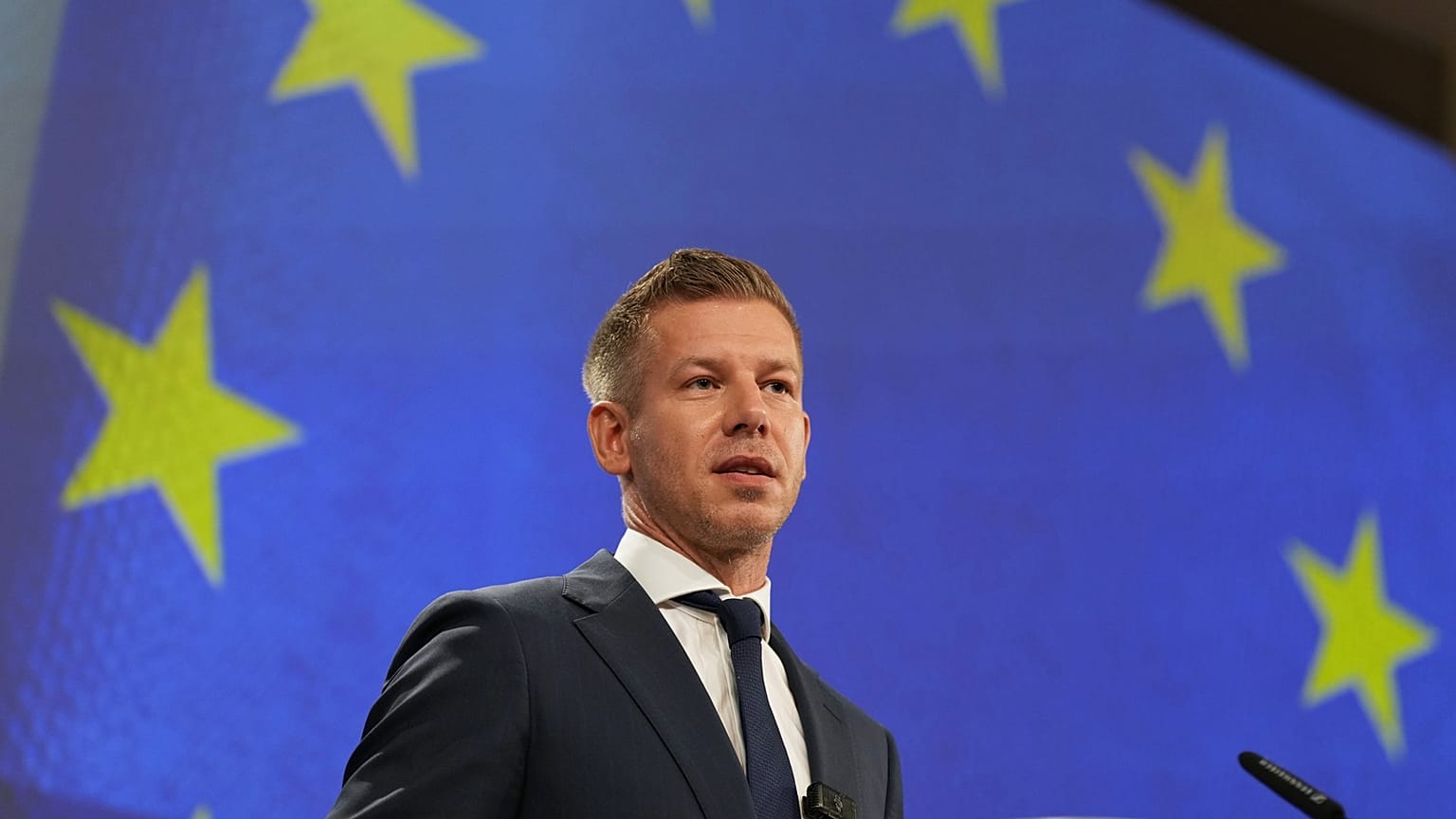
In an exclusive account, Euronews reveals the intense back-and-forth that led Hungary to lift its two-year-long veto on Ukraine's EU accession.
Ambassadors in Brussels had been in the room for almost 12 hours straight.
The list of topics seemed endless – competitiveness, defence, migration, climate action, the conflict in the Middle East and even a tobacco taxation directive – and diplomats were beginning to feel the strain.
Then, just as the meeting was drawing to a close, a new item was added to the agenda.
Cyprus, the country that currently holds the EU Council's rotating presidency, had received the signal it had spent days anxiously waiting for: Hungary was ready to lift its controversial veto on Ukraine's accession.
This account is based on interviews with multiple officials and diplomats who spoke on condition of anonymity to disclose the events that led to the breakthrough.
For two years, the veto proved insurmountable. Poland and Denmark, which held the previous presidencies, vowed to break the deadlock as a matter of priority. Despite their best efforts, they failed, and the blockage remained in place.
Cyprus was determined to avoid the fate of its predecessors. The country was given a now-or-never opportunity after Hungary's 12 April elections unseated Viktor Orbán, the architect of the veto, and brought Péter Magyar to power.
The transition prompted a flurry of closed-door negotiations across Brussels, Budapest and Kyiv, culminating in a single question on Wednesday evening.
"Does anybody have any objections?" the Cypriot ambassador asked the room.
The question was met with silence, and the silence lifted the veto.
The ambassador was then authorised to send two letters to Ukraine and Moldova, informing them of readiness to open the first cluster of EU accession negotiations, known as "fundamentals", which covers the rule of law, human rights, and the judiciary.
On paper, it was just a straightforward procedural step. In practice, it was a momentous achievement that ended two long years of paralysis and exasperation.
There was no clapping inside the room. But the emotion of relief was palpable.
"All Brussels was waiting for this," a diplomat said. "It's unbelievable. It's good news."
The formal opening of the first cluster is scheduled for 15 June in Luxembourg.
The value of talking
The seeds of Wednesday's breakthrough were planted in early May, when Hungary and Ukraine launched consultations on minority rights. The first round of talks among the foreign ministers took place online on 20 May amid a positive atmosphere.
The situation of the Hungarian minority in Ukraine's western Transcarpathia region has long been a source of strong friction between the two countries, an issue rendered particularly sensitive by nationalist sentiment on both sides.
In Hungary, the matter enjoys broad support across the political spectrum. After losing the First World War, the country signed the Treaty of Trianon in 1920, losing two-thirds of its territory along with more than three million Hungarians. The event is considered one of the defining traumas of Hungarian national history.
Budapest harshly criticised Kyiv's push to strengthen the state language in the aftermath of Russia's illegal annexation of Crimea. Ukraine's education law of 2017 particularly angered Hungary, as it strengthened the use of Ukrainian in higher grades. Kyiv later adopted a language law to further strengthen Ukrainian in public administration.
In 2023, Ukraine amended the Law on National Minorities (Communities) to align with EU accession criteria and recommendations from the Council of Europe's Venice Commission. The new bill allowed the use of EU languages and those of national minorities in political advertising, private schools, universities, student organisations representing national minorities, and the media sector.
At the same time, the study of Ukrainian as the state language remained mandatory in all educational institutions, although instruction could be delivered in EU languages.
Nevertheless, tensions stayed high.
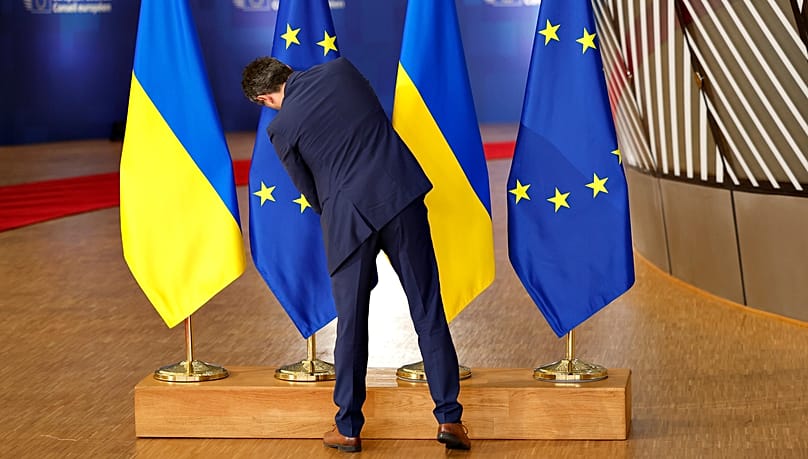
By launching the consultations, the two sides sought a compromise to ease tensions and restore bilateral relations, which had been pushed to an all-time low by Orbán's repeated vetoes. According to officials and diplomats, the talks proceeded in good faith and at a decisive pace, with hopes for reconciliation rising by the day.
In the meantime, Cyprus launched a separate track of discussions between the presidency, the Commission and Hungary to lay the groundwork for opening the first cluster. Budapest wanted to ensure that any bilateral deal would be reflected in the accession process, whereas Cyprus and the Commission were keen to avoid unfair concessions for Ukraine. The goal was a "win-win" solution for everybody.
On 26 May, Taras Kachka, Ukraine's deputy prime minister for European integration, told Euronews that his country was offering Magyar the same it had offered Orbán.
"Ukraine treats the Hungarian community in Ukraine with full respect. All their needs are satisfied now," Kachka said in the interview. "So this is not a commitment. This is reality."
“For us, they (the Hungarian minority) are an absolutely integral part of Ukrainian society with all respects to their national identity," he added.
A few days later, on 29 May, Péter Magyar met with European Commission President Ursula von der Leyen in Brussels to release €16.4 billion in recovery and cohesion funds that had been frozen because of democratic backsliding.
During the press conference that followed the much-publicised meeting, both Magyar and von der Leyen denied that the cash had been made contingent on Budapest lifting its veto on accession. Magyar, however, said he expected "guarantees" from Kyiv over minority rights, a term that fell short of demanding constitutional amendments. (Ukraine cannot change the constitution under martial law.)
While in Brussels, Magyar's foreign minister met with Marta Kos, the European Commissioner for enlargement, and informed her about the progress in consultations.
Magyar's green light
Things moved fast after Magyar met with von der Leyen. Hungary and Ukraine reached a preliminary deal at a technical level in the days that followed.
The news arrived in Brussels, sending anticipation into overdrive.
"We knew there was going to be an agreement," a senior diplomat said, noting the unfreezing of EU funds helped the process. "But it went all the way to the top."
The top was Magyar himself.
On Tuesday, he was in Berlin with German Chancellor Friedrich Merz. There, the Hungarian leader said he was "very optimistic" about the consultations and expressed confidence of meeting Ukrainian President Volodymyr Zelenskyy, who has repeatedly pushed to kick-start accession talks, in the immediate future.
"I am ready to meet with Ukraine's president at the beginning of next week, if we manage to agree on these fundamental human rights," he said.
On Wednesday, just as ambassadors gathered in Brussels for their marathon meeting, Magyar landed in Paris to hold talks with French President Emmanuel Macron. At the end of their encounter, Magyar gave his personal sign-off to the technical deal.
As the Cyprus presidency received the go-ahead to proceed with preparations for the first cluster, Magyar posted a video recorded in Paris on his Facebook account confirming the "great news" of the agreement.
"One hundred thousand Hungarians get back their fundamental rights," Magyar said.
The agreement, which is yet to be made public, covers the free use of Hungarian national symbols and the right to school certifications, Magyar said.
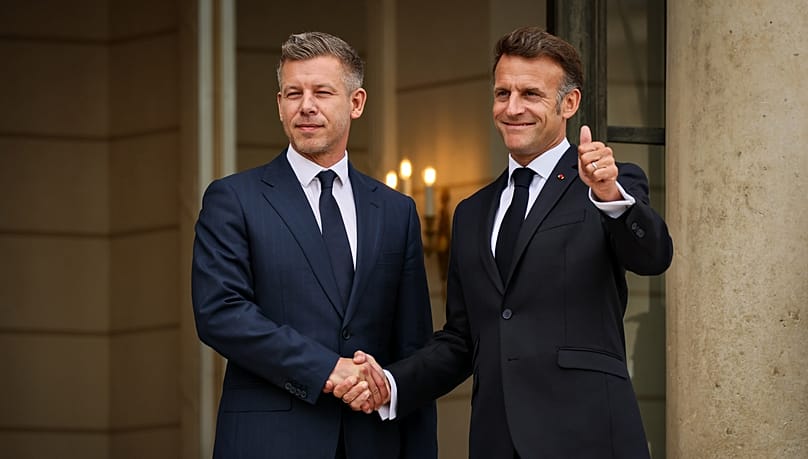
The most significant step is arguably the establishment of a minority school status. School administration will be conducted in the native language, and parents will be able to block any extension of Ukrainian-language use, he explained.
In towns where minorities make up more than 10% of the population, Hungarian will be allowed in public administration, making it practically an official language. Political activity and campaigning will also be conducted in minority languages.
Crucially, the agreement covers all national minorities linked to EU member states, effectively excluding Russians.
"In just three weeks, we have achieved what Viktor Orbán and his government failed to achieve in ten years," Magyar said.
Ukrainian officials, often quick to react to positive news, responded with unusual restraint. When contacted by Euronews, the foreign ministry had no immediate statement, despite the headlines coming from Brussels.
Taras Kachka was the first to react, although much later than the news, thanking the Cyprus presidency for its efforts. He cautiously called it a "step towards" opening the first cluster. He did not mention Hungary or the understanding with Budapest.
Ukraine's foreign minister, Andrii Sybiha, who was directly involved in the consultations, did not issue his own statement until Thursday morning.
"We are opening a new chapter in Ukraine-Hungary relations – one built on mutual respect, trust, and our shared European future," he said. "Ukraine is moving forward."
Ukrainian officials did not comment on the substance of the deal and have not revealed what measures or compromise they have agreed upon with Hungary.
Still, for all intents and purposes, the veto was lifted.
Officials and diplomats in Brussels summed up their feelings in one word: "Finally."