Thursday, January 15, 2026


EU will maintain Arctic cooperation with US, von der Leyen says amid Greenland tensions
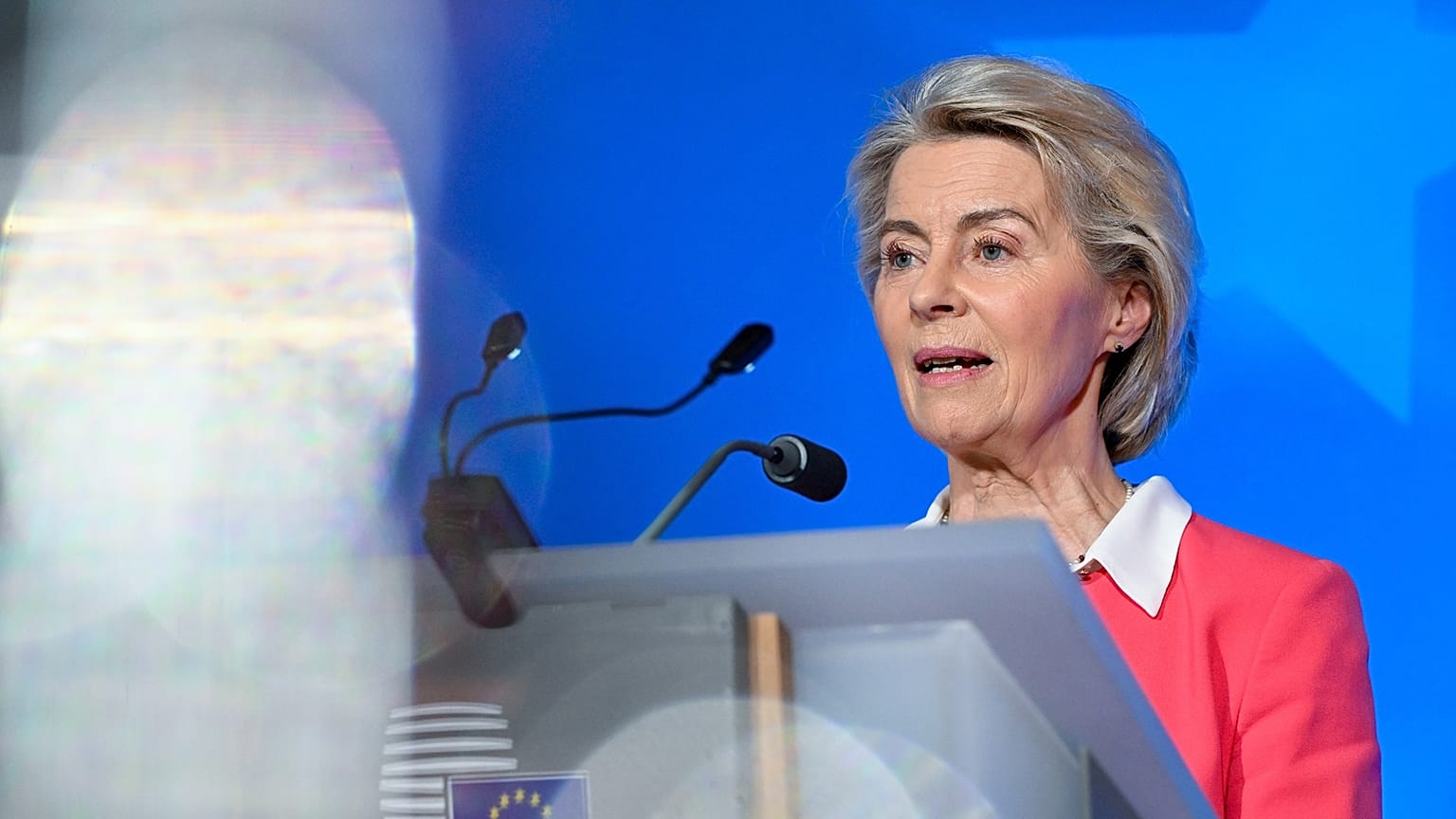
Ursula von der Leyen said the EU would deepen its focus on Arctic security.
Copyright European Union, 2025.


By Jorge Liboreiro
Published on 

Amid Donald Trump's threats to seize Greenland, Ursula von der Leyen says the EU will continue working with the US to reinforce Arctic security. At the same time, the European Commission has confirmed that Greenland is "in principle" covered by the bloc's mutual assistance clause.

European Commission President Ursula von der Leyen has said the European Union will continue to work closely with the United States to strengthen security in the Arctic even as US President Donald Trump persists with his threats to seize Greenland from Denmark.

"The European Union has a very good reputation in Greenland, and we are counting very much on the excellent cooperation that we have," von der Leyen said on Thursday on an official visit to Limassol, Cyprus.

"We will thus continue our work on Arctic security with our allies (and) our partners, including the United States," she added.

Trump has framed his expansionist agenda as a national security goal.

On Wednesday, the American president said that NATO would become "more formidable and effective with Greenland in the hands of the United States". Otherwise, he said, Russia and China would stand to benefit in the strategic region.

"Anything less than that is unacceptable," he wrote on his social media platform, Truth Social.

His remarks coincided with a meeting in Washington between the foreign ministers of Denmark and Greenland, US Secretary Marco Rubio, and US Vice President JD Vance.

The Danish minister, Lars Løkke Rasmussen,said the tone had been frank and constructive, but conceded there remained a "fundamental disagreement" between the two sides.

"We didn't manage to change the American position," he said at the end of the meeting. "It's clear that the president has this wish of conquering over Greenland."

Rasmussen added that Denmark and the US had agreed to set up a high-level "working group" to find a "common way forward" on the matter of Greenland. He also countered Trump's claims that Chinese warships had gained ground around the island.

At the same time, several European countries began to publicly announce their intention to send military officers as part of a reconnaissance mission to the mineral-rich territory, a stark reflection of the sky-high tensions fuelled by Trump's vision.

France, Germany, Sweden, Norway and the Netherlands are among those that have committed to joining the mission at Copenhagen's request.

Speaking as she marked the start of the Cypriot presidency of the EU Council, von der Leyen promised to "double down" on investments and cooperation in Greenland.

"What is clear is that Greenland can count on us politically, economically, and financially," she said at a press conference, standing next to the Cypriot President Nikos Christodoulides.

"When it comes to its security, the discussions on Arctic security are, first and foremost, a core issue of NATO. But I also want to emphasise that the Arctic and Arctic security, both topics, are core topics for the European Union and matter enormously for us."

Mutual assistance

Separately, the European Commission confirmed that Denmark would be able to invoke the EU's mutual assistance clause in the event of an armed attack against Greenland, even though the semi-autonomous island is not part of the bloc.

The Commission had recently avoided clarifying the legal application.

"Greenland is part of the territory of the Kingdom of Denmark and therefore in principle covered by the mutual solidarity clause in Article 42.7 TEU," a Commission spokesperson told Euronews in a statement.

"However, currently the question doesn't ask itself," the spokesperson added, referring to the fact that Trump's threats have not yet been translated into action.

The mutual assistance clause is enshrined in Article 42.7 of the EU treaties, which says that if a country is "the victim of armed aggression on its territory", the other member states will have an "obligation of aid and assistance by all the means in their power" in accordance with the right of collective self-defence recognised by the UN Charter.

The article does not spell out what measures qualify as "aid and assistance" in practice.

According to an explanatory memo from the Commission, member states should have ample margin to decide their support, which could be of a diplomatic, technical, medical or civilian nature. Military assistance is also envisioned.

Activating the article requires an attack "from abroad" carried out by state or non-state actors, the memo says. The decision to activate rests solely on the member state under assault. Once triggered, the duty to assist becomes "legally binding".

Since its introduction in 2007, Article 42.7 has been invoked only once, when France fell victim to the terrorist attacks of November 2015 and asked other member states to contribute manpower to its Opération Sentinelle.

Notably, Article 42.7 establishes a direct connection with NATO's Article 5, which is the bedrock of the transatlantic alliance's collective defence. Most EU countries are members of NATO, creating an overlap of commitments and obligations.

Unlike the EU provision, which is broadly worded, NATO's Article 5 is more explicit, compelling allies to take necessary action "including the use of armed force" to "restore and maintain the security of the North Atlantic area".

However, given that both the US and Denmark are members of NATO, there is no precedent to determine how Article 5 would apply in a scenario where the American military violated Danish sovereignty and seized Greenland by force.

Such a dilemma emerged in 2020 when Turkey and Greece were involved in a standoff over Ankara's contested gas exploration in waters claimed by Athens. In response, Greece put its army on alert, bringing two NATO members to the brink of war.


 'EU-US trade deal is separate from Greenland dispute,' top MEP McAllister tells Euronews


By Vincenzo Genovese
Published on 

David McAllister, the influential chair of the European Parliament's Committee on Foreign Affairs, argues the parliament should not derail the ratification the EU-US trade deal to punish Trump over US threats to acquire Greenland in an interview with Euronews.

A top member of the European Parliament has warned against blocking the ratification of the trade deal signed by the EU and the United States last summer in retaliation for the bellicose language around Greenland from the Trump administration.

"We need to separate the two issues: the EU-US trade deal and support for Greenland", top European People's Party MEP David McAllister told flagship Euronews morning show Europe Today on Thursday.

"We need to finalise the US trade talks because companies need predictability," added McAllister, who is chair of the European Parliament's committee on foreign affairs.

The European Parliament must ratify the agreement reached by Donald Trump and the Commission's President Ursula von der Leyen last August in Scotland, which tripled tariffs on EU products while reducing to zero industrial good coming from the US.

The US is pushing to have the full ratification of the agreement in place, but several MEPs are considering blocking the approval process to protest Trump's ownership demands on the Danish territory which he claims will happen "one way or another."

McAllister said "there are different views within the political groups" of the European Parliament but insisted the two should be treated as the two issues.

"The EPP and the European Conservatives are for moving forward [approving the deal], he said. "The Socialists, liberals and greens perhaps want to postpone the vote."

On Wednesday, the Parliament issued a joint statement from the leaders of the political groups expressing their "unequivocal support to Greenland and Denmark" and condemned the bellicose language employed by the US, which has not ruled out military means to gain ownership of the semi-autonomous rich in rare earth minerals.

"We have been very clear in our commitment towards Greenland. The European Union will step up its engagement in Greenland: financial support for it will be doubled in the next annual multi-financial framework," the statement said.


European troops arrive in Greenland as US and Denmark talks fail to resolve dispute


By Aleksandar Brezar  Published on 

The deployment was announced the same day the foreign ministers of Denmark and Greenland met with US Vice President JD Vance and Secretary of State Marco Rubio in Washington.


European military personnel began arriving in Greenland on Thursday, hours after a meeting between US, Danish and Greenlandic officials in Washington failed to resolve what Denmark's foreign minister called "fundamental disagreement" over the mineral-rich Arctic island.

France, Sweden, Germany and Norway announced Wednesday they would deploy military personnel as part of a reconnaissance mission to Greenland's capital Nuuk.

Germany's defence ministry said Thursday that the reconnaissance mission to Greenland by several European NATO members aims "to explore options for ensuring security in light of Russian and Chinese threats in the Arctic".

A 13-strong Bundeswehr reconnaissance team would deploy to Nuuk from Thursday to Sunday at Denmark's invitation, the ministry said.

French President Emmanuel Macron said on Thursday France would soon send more "land, air, and sea" forces to join the military exercise in Greenland.

"A first team of French service members is already on site and will be reinforced in the coming days with land, air, and maritime assets," Macron told troops during a speech to start the new year.

"Soldiers of NATO are expected to be more present in Greenland from today and in the coming days. It is expected that there will be more military flights and ships," Greenland's Deputy Prime Minister Mute Egede told a news conference Wednesday, adding they would be conducting "training".

Meanwhile, the Netherlands and Estonia announced they would join the exercise, which Dutch Foreign Minister Ruben Brekelmans described as a signal that security matters in Greenland and the region are "of strategic importance to all NATO allies."

Estonia was also "ready to put boots on the ground if requested," Foreign Minister Margus Tsahkna said in a post on X.

The deployment was announced the same day the foreign ministers of Denmark and Greenland met with US Vice President JD Vance and Secretary of State Marco Rubio in Washington.

Danish Foreign Minister Lars Løkke Rasmussen, speaking after leaving the White House, said a US takeover of Greenland was "absolutely not necessary."

"We didn't manage to change the American position. It's clear the president has this wish of conquering Greenland," Løkke told reporters. "We therefore still have a fundamental disagreement, but we also agree to disagree."

US President Donald Trump has repeatedly vowed to take control of the autonomous Danish territory, arguing it is vital for US security.

Trump: 'I think something will work out'

Trump, speaking after the meeting which he did not attend, for the first time sounded conciliatory on Greenland, acknowledging Denmark's interests even as he again said he was not ruling out any options.

"I have a very good relationship with Denmark, and we'll see how it all works out. I think something will work out," Trump said without explaining further.

He reiterated that Denmark was powerless if Russia or China sought to occupy Greenland, but added, "There's everything we can do."

Trump has appeared emboldened on Greenland after ordering a surprise 3 January attack in Venezuela that removed Nicolás Maduro.

On the streets of Nuuk, red-and-white Greenlandic flags flew in shop windows, on apartment balconies and on cars and buses in a show of national unity this week.

Some residents described anxiety from finding themselves at the centre of the geopolitical spotlight.

"It's very frightening because it's such a big thing," said Vera Stidsen, 51, a teacher in Nuuk. "I hope that in the future we can continue to live as we have until now: in peace and without being disturbed."

Jorge Liboreiro contributed reporting.


U.S. Leadership Approval Drops Among NATO Allies

January 15, 2026

This article is part of a series on global leadership approval ratings. Read more on EU approval among member states and on Ukraine and Russia approval in their wider region.

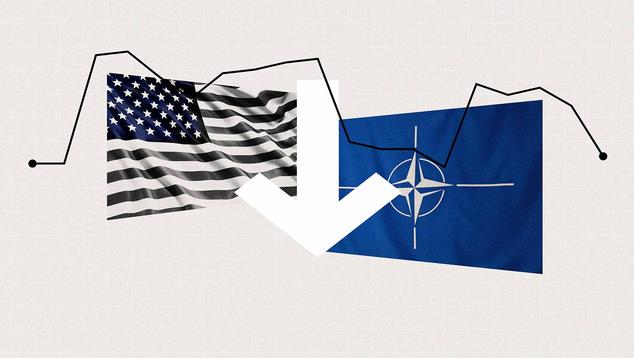
LONDON — Washington’s image among NATO allies weakened in 2025, with median approval falling 14 percentage points to 21% across 31 countries.

The low level of support for U.S. leadership is similar to what Gallup found during President Donald Trump’s first term and in 2007-2008 under President George W. Bush.

Washington’s image has fluctuated significantly over time among NATO member states, in line with different administrations. Under President Barack Obama, a median of 45% across NATO approved of the United States’ leadership. This fell to an average of 22% over President Donald Trump’s first term in office, and recovered somewhat under President Joe Biden, averaging 39%.

Compared with 2024, U.S. leadership approval has fallen most in Germany (-39 points) and Portugal (-38 points), with 16 other countries showing declines of at least 10 points. Türkiye was the only NATO country where U.S. approval increased by double digits (12 points).

Poland (68%) and Albania (64%) are the only NATO countries where a majority of residents approved of Washington in 2025, whereas approval ratings dipped to roughly one in 10 across Nordic countries, including Sweden (9%), Iceland (9%) and Norway (10%).

The latest results are based on surveys conducted in 31 NATO member states between March and October 2025. They predate recent U.S. military action in Venezuela, after which Trump has reiterated his desire to seize the territory of Greenland from Denmark, a NATO ally, raising tensions within the alliance. In response, Danish Prime Minister Mette Frederiksen warned that a U.S. military takeover of Greenland would result in the end of the NATO alliance.

EU, Germany, More Liked by NATO Members

The European Union and Germany receive significantly higher leadership approval ratings than the U.S. among NATO countries. A median of 60% approved of EU leadership in 2025, down slightly from a record 65% in 2023. Germany's leadership earns 54% approval, consistent with recent years. Under the Obama presidency, approval of the U.S. was mostly in line with the EU and slightly lower than Germany. But under Biden, the average gaps widened considerably.

Washington and Beijing now receive similar approval ratings across NATO, as they did during Trump’s first term, with median approval of China’s leadership rising eight points in 2025 to 22%. Although Beijing marked its largest single-year gain in approval among alliance members on record last year, it remains largely unpopular among NATO country residents — as it has been throughout the past two decades, even as views of the U.S. have shifted.

The U.S. is now closer to Russia in leadership approval among NATO residents than it is to the EU or Germany, albeit with ratings 10 points higher than Russia’s. Median approval of Moscow remains low at 10%, after the full-scale invasion of Ukraine in 2022, and only marginally higher than the trend-low 6% that year.

Not a Zero-Sum Game Between U.S., China in NATO

Washington’s losses have not directly translated into Beijing’s gains. Although approval of U.S. leadership declined by at least 10 points in 18 NATO member states in 2025, in only three of these — Spain, Italy and Belgium — did China see double-digit increases in approval. In most others, China’s approval rating rose modestly or held steady.

Similarly, in several other countries where China saw significant gains, including Slovenia, Greece, Hungary, and Türkiye, approval of U.S. leadership also improved or was at least steady.

China Leads U.S. in More NATO Countries

Although the U.S. and China have similar median approval ratings across NATO, China has significantly higher ratings than the U.S. in eight member states, whereas the U.S. leads China in three.

  • Beijing has an approval lead of at least 10 points over Washington in Slovenia, Luxembourg, Türkiye, Bulgaria, Spain, Montenegro, Iceland and Greece.
  • The U.S. enjoys higher approval than China in Poland, Albania and Romania.
  • The remaining 20 member states give Washington and Beijing statistically similar ratings.

This represents a shift from 2020, the final year of Trump's first term, when median approval of both powers also stood equal at 18%, and the U.S. had higher approval ratings in five countries compared with China's three.

Implications

Gallup’s latest data show that U.S. approval tumbled by 14 points across NATO in 2025. As a result, public support for U.S. and Chinese leadership is once again on par, which is a return to the norm under previous Republican administrations. Approval of Russia remains lower still, while the EU and Germany are the only powers to receive majority approval within NATO.

The past three years have tested NATO's unity. China has risen on the alliance's security agenda as U.S.-China relations have deteriorated, and as Beijing has given support to Russia over its war in Ukraine. China's infrastructure investments across Southern and Central Europe and the Balkans have also expanded its influence within NATO.

At the same time, U.S. statements questioning the defense commitments of allies that fall short on military spending have raised concerns within NATO. While the alliance has since agreed to raise its spending target to 5% of GDP after pressure from the U.S., recent discussions involving Greenland have renewed tensions among the allies.

Stay up to date with the latest insights by following @Gallup on X and on Instagram.

For complete methodology and specific survey dates, please review Gallup's Country Data Set details.

Learn more about how the Gallup World Poll works.

No Deal, No Retreat: Trump’s Unyielding Greenland Push Sparks Diplomatic Cold War in Arctic

White House pitches NATO logic, Nordic allies push back, Congress fumes as Trump reframes the Arctic as a missile-defense prize.

by Alex Raufoglu 
Jan. 15, 2026
Kyiv Post

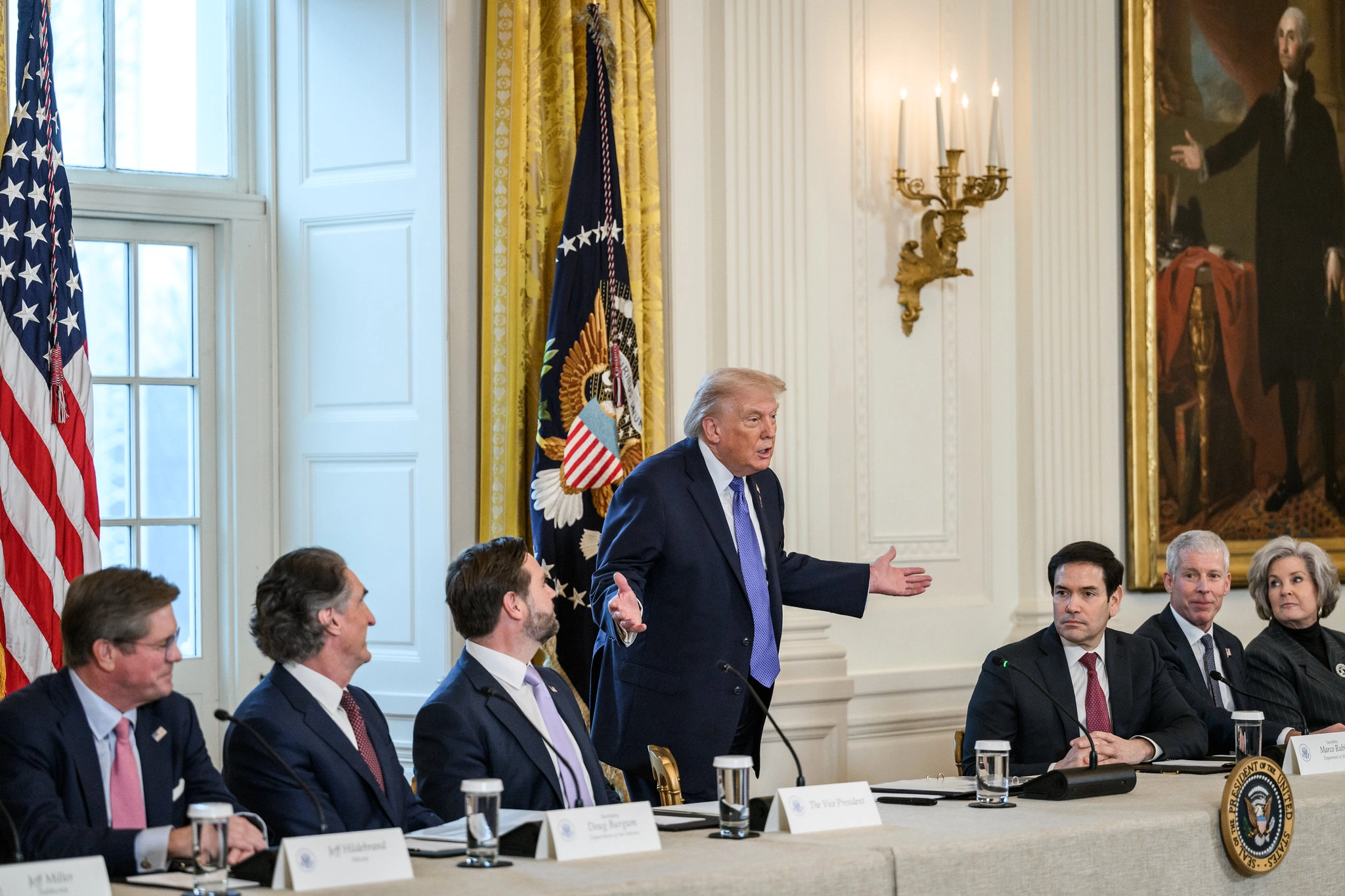
US President Donald Trump attends a roundtable in the East Room of the White House, Friday, Jan 9, 2026. (Photo by Molly Riley /White House)

WASHINGTON DC – US President Donald Trump is not backing off Greenland. Not after the polls. Not after the pushback from allies. And not after a string of unusually blunt warnings from Capitol Hill that the idea veers from provocation into peril.

Instead, the White House is doubling down – arguing that US ownership of the Arctic island would strengthen NATO, not fracture it – even as Denmark and Greenland say, again, that the answer is no.

Two US officials told Kyiv Post on Wednesday that the American delegation handed counterparts from Greenland and Denmark a substantive explanation of Washington’s national security concerns – concerns they believe NATO itself should share.

According to the officials, the administration made the case that US ownership of Greenland would not undermine the alliance but would instead advance NATO’s strategic posture in the Arctic.

The argument, they said, was framed as straightforward logic rather than coercion – a move officials privately described as a matter of “common sense.”

Washington is now hoping allies reach what those officials, without elaborating, characterized as a “common-sense decision.”

Nordic ministers said they would take the message back home and discuss it internally on Friday.


No deal for Trump

That diplomacy has done little to cool the US President’s resolve.

Trump on Wednesday morning again cast Greenland as central to his proposed Golden Dome missile defense project, writing on Truth Social that the US “needs Greenland for the purpose of national security” and urging NATO to help acquire the territory.


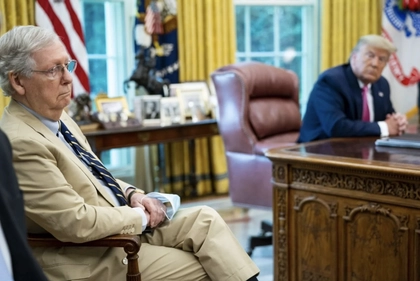
Real NATO Crisis Isn’t Europe – It’s Washington, McConnell Warns
The longest-serving party leader in US history defends the transatlantic alliance, rebukes talk of seizing Greenland, and argues that America – not its allies – has become NATO’s weak link.


“It is vital for the Golden Dome that we are building,” Trump wrote. “NATO should be leading the way for us to get it.”

Anything short of US control, he added, would be “unacceptable,” arguing that Russia or China will get it, and “that’s not going to happen.”

Hours later, that uncompromising stance collided with diplomatic reality inside the White House.

Danish Foreign Minister Lars Løkke Rasmussen and Greenland’s Foreign Minister Vivian Motzfeldt met with Secretary of State Marco Rubio and Vice President JD Vance in the first senior-level engagement since Trump revived his push to take over the Arctic territory.

The meeting was cordial – and inconclusive. “There remains a fundamental disagreement,” Rasmussen told reporters afterward.

Denmark owns Greenland and is responsible for its defense, though the island has an autonomous government. Rasmussen stressed that it is “absolutely not necessary” for the US to own Greenland to meet its security needs.

The three sides agreed to establish a high-level working group to address American concerns – an effort Rasmussen framed as an attempt to find common ground without crossing Denmark’s red lines.

“The group, in our view, should focus on how to address the American security concerns while respecting the red lines of the Kingdom of Denmark,” he said.

Motzfeldt said Greenland is committed to strengthening security cooperation with the US – but not at the expense of sovereignty.

Rasmussen also used the moment to challenge Trump’s narrative that Greenland is under immediate threat from Beijing.

“It is not a true narrative that we have Chinese warships all around the place,” he said. “According to our intelligence, we haven’t had a Chinese warship in Greenland for a decade or so.”

That rebuttal did little to slow a White House that is escalating pressure simultaneously on Iran abroad – and Denmark and Greenland at home.

Senate hits back

On Capitol Hill, the reaction has been sharper – and bipartisan.

More than eight in ten Americans oppose using military force to take Greenland, according to a new Quinnipiac University poll. 86% of respondents rejected the idea outright, while 55% oppose even attempting to purchase the island. Lawmakers are taking notice.

Senators Angus King (I-ME) and Lisa Murkowski (R-AK), co-chairs of the Senate Arctic Caucus, hosted Rasmussen and Motzfeldt Wednesday afternoon to urge de-escalation after the administration openly floated military options.

“There is no need whatsoever for the US to own or occupy Greenland in any way, shape or form to protect our national security interests in the Arctic,” King said, pointing to a 75-year-old defense agreement already granting US access

“Taking Greenland over by military force is almost unthinkable – to attack essentially a NATO ally,” he added. “That would be the greatest gift to Vladimir Putin that this country could possibly bestow.”

Murkowski was equally blunt. “Respect for the sovereignty of the people of Greenland should be non-negotiable,” she said.

Despite the outreach, Danish and Greenlandic officials acknowledged that their message had not landed.

“We didn’t manage to change the American position,” Rasmussen said. “It’s clear that the president has this wish of conquering Greenland. We made it very, very clear that this is not in the interest of the Kingdom.”

Denmark announced Wednesday it would boost its military presence in and around Greenland, with support from NATO allies – a move aimed at reassuring Washington without conceding sovereignty.

Greenlandic Prime Minister Jens-Frederik Nielsen said earlier this week his people would choose Denmark over the US if forced to decide.

Trump dismissed him outright. “That’s their problem,” the US President said. “I disagree with them.”
House floor erupts

The sharpest rhetoric came from the House. Congressman George Latimer (D-NY) used a five-minute floor speech to liken any seizure of Greenland to history’s most notorious territorial grabs, warning the US risked aligning itself with authoritarian aggressors.

“We are trying to burst into a room by force when the door is set wide open and the welcome mat is displayed,” Latimer said, citing existing agreements that already allow extensive US military access.

Any military action against Greenland, he warned, would violate NATO principles and dishonor Denmark’s sacrifices as an ally – including the 43 Danish soldiers killed supporting the US mission in Afghanistan.

“It is the Department of Defense, not the Department of War,” Latimer said. “God stop us if we become the thug.”

Now what?

For now, the White House is pressing its argument that Greenland is central to US and NATO security – and that allies should see it the same way.

Denmark and Greenland are preparing to take Washington’s message home, even as they insist their sovereignty is not up for negotiation.

The working groups will meet. The rhetoric will continue. And the gap between the US president’s ambitions and his allies’ red lines remains wide.

Trump wants Greenland. His allies don’t. Congress is alarmed. And NATO is being pulled into a fight it never sought – but can no longer avoid.

And as Washington insists this is about common sense, Europe is left wondering whose definition applies.


Alex Raufoglu is Kyiv Post's Chief Correspondent in Washington DC. He covers the US State Department, regularly traveling with US Secretary of State. Raufoglu has worked extensively in the South Caucasus and Black Sea regions for several international broadcast outlets, such as VoA, BBC, RFE/RL, etc. He holds an MA in Interactive Journalism from American University, Washington DC.


Trump’s ambitions in Greenland push Iceland closer to the EU


Concerns over US intentions and regional security are nudging Reykjavik towards Brussels


Euractiv
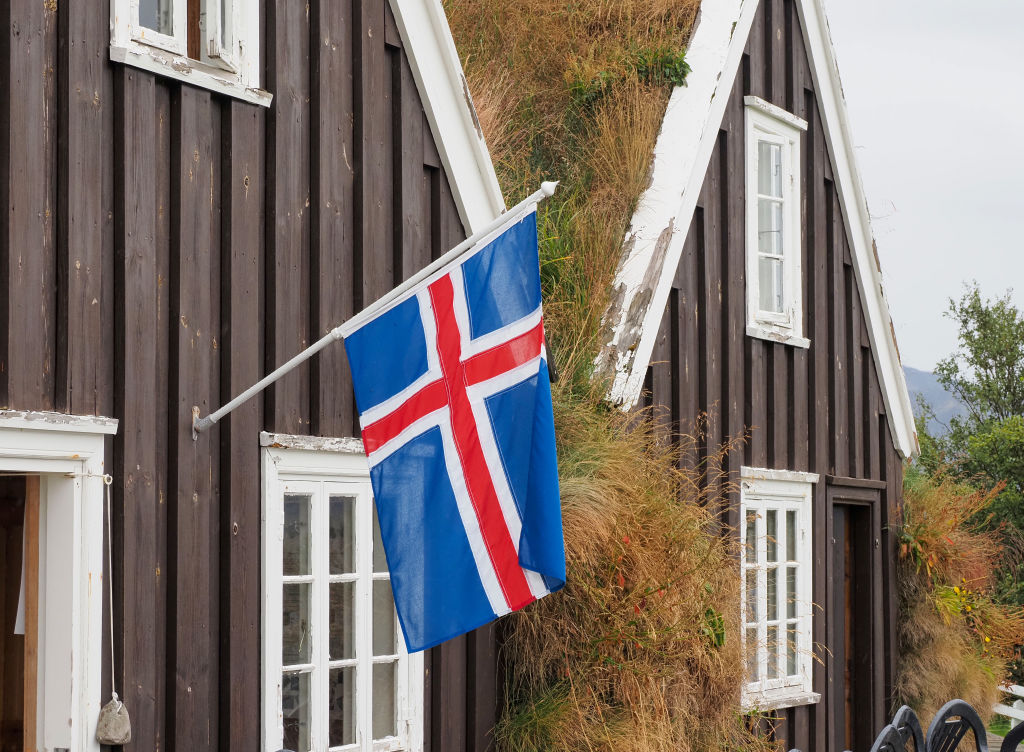
Iceland – Hrafnseyri – Peat houses
(Photo by Soeren Stache/picture alliance via Getty Images)

COPENHAGEN – Donald Trump’s repeated remarks about American ownership of Greenland are sending shockwaves far beyond the island itself, with the pressure now spilling over to neighbouring Iceland and pushing it closer to the EU.

Washington’s renewed interest in Greenland, an autonomous territory that is part of EU member Denmark, has reopened strategic fault lines across the North Atlantic, prompting fresh debate in Iceland over its long-standing distance from the EU. As security concerns rise and reliance on Washington comes under scrutiny, EU membership is increasingly discussed in Reykjavik not as an economic choice, but as a question of long-term defence and geopolitical alignment.

“The Greenland issue is forcing Icelanders to reexamine their international relations, and it is fueling the EU accession debate in Iceland to a significant extent,” Eirikur Bergmann, professor of politics at Iceland’s Bifrost University, told Euractiv.

For years, discussions about closer ties to the EU have surfaced regularly, with debates revolving around fisheries, sovereignty and monetary policy. But for the first time, Iceland – a country of around 390,000 people – is debating its relationship with the EU in security terms, driven in part by its geopolitical similarities with Greenland, according to Bergmann.

“All of the arguments that the US is bringing forth as reasons for why they must acquire Greenland, would apply to Iceland as well,” he said. 

Greenland and Iceland are located in the same strategic corridor in the Northwest Atlantic, a region of growing military and commercial importance as global warming opens new shipping routes and increases access to natural resources.

The key difference between the two is political status. Iceland is an independent country and a NATO member in its own right, while Greenland is part of NATO through Denmark. Strategically, however, both occupy key positions between North America and Europe.

The idea of Iceland joining the European Union is not new. The pro-EU Social Democratic Alliance applied for membership during the 2009 financial crisis, but the bid was withdrawn in 2015 after power shifted to the eurosceptic Independence Party and the agrarian Progressive Party. Since then, Iceland’s ties with the bloc have been limited to the European Economic Area and the Schengen agreement.

Reliance on Washington under strain

Iceland’s current EU reassessment comes with particular urgency. The country is the only NATO member without a standing army, relying instead on the alliance and a 1951 bilateral defence agreement with the United States.

That reliance is now being questioned.

According to Bergmann, Iceland’s growing interest in the EU is not driven solely by Trump’s interest in Greenland. Reykjavik has begun reassessing Washington’s reliability as a security partner due to the Trump administration’s lack of commitment to international agreements.

EU membership as a means of safeguarding Icelandic interests and security is gaining ground in the public debate.

This reassessment has also been fuelled by the 15% tariff the US imposed on Icelandic goods in August 2025.

“The U.S. attack on Iceland’s vital interests changes matters fundamentally. It has long been clear that full Icelandic membership in the European Union would be sensible, but now it is hardly avoidable if we intend to defend our interests in the long term,” former Icelandic Prime Minister, Þorsteinn Pálsson, recently wrote in an op-ed in Arctic Today.

Upcoming referendum

Iceland’s Foreign Minister, Þorgerður Katrín Gunnarsdóttir, recently announced that parliament will present a resolution this spring on whether to hold a referendum on resuming EU accession talks.

“Developments in world affairs bring out that we should look at what is best suited to strengthening our defences and security,” she said last week, according to RÚV, the Icelandic National Broadcasting Service.

If the parliament approves the resolution, Icelanders will head to the polls within nine months. That suggests the Icelandic government could be aiming for a vote by spring 2027.

Opinion polls conducted in 2025 suggest a narrow majority in favour of EU-membership. A survey by Prósent found 45 percent supporting accession and 35 percent opposing, while a Gallup poll showed similar results.

If Icelanders vote ‘yes’, EU-membership could be a reality within just a few years.

No membership discussion on the Faroe Islands

Meanwhile, Trump’s ambitions in Greenland have not had the same effect on Iceland’s eastern neighbour, the Faroe Islands.

On the Faroe Islands – which, like Greenland, are part of the Danish kingdom – the debate over possible EU membership remains unchanged, Rogvi Olavson, a political researcher at the Tórshavn University of the Faroe Islands, told Euractiv.

According to Olavson, EU-related discussions take up little space in the public debate, and when they do arise, they focus primarily on fisheries.

“The perception of the EU in the Faroe Islands is much more about trade than security,” he said, adding that Trump’s remarks on Greenland have not altered that dynamic.

(cs, cm)


US intervention in Greenland 'existential threat for NATO' and Europe, Vestager tells Euronews


By Romane Armangau
Published on 

Former Danish Minister and European Commissioner Margrethe Vestager told Euronews' flagship morning show Europe Today that a US intervention in Greenland represents “the most existential threat to NATO” in its history.

Former European Commission Margrethe Vestager cautioned "even for President Trump, for one NATO country to attack another NATO country to acquire territory is really far reaching" in an interview with Euronews as the White House piles on pressure on Denmark to cede the semi-autonomous territory of Greenland "one way or another."

Vestager, who rose to prominence as EU chief for competition, echoed a severe warning made by Danish Prime Minister Mette Frederiksen and European Commissioner for Defence Andrius Kubilius against a US takeover of the territory rich in critical minerals.

“For one NATO country to attack another NATO country's territory would be the most existential threat to NATO we have ever seen,” she cautioned, as the US administration increases the pressure on Copenhagen to gain control of the semi‑autonomous Danish territory of Greenland "one way or another. It will happen."

Trump argues the strategically located territory is crucial to US national security as a counterpoint to Russian and Chinese presence in the Arctic, although Denmark and Greenland have firmly rejected the claims and reiterated that the territory is not for sale.

Polls suggest the vast majority of Greenlanders do not want to belong to the US.

Vestager said existing treaties between the US and Denmark allow for further cooperation on the ground without a transfer of Greenland. She also noted that Copenhagen has a long-established commitment to NATO and global security.

European institutions and member states led by France and Germany have expressed their solidarity, prompting suggestions that a European force modelled after NATO could be deployed to the territory to bolster its security in an attempt to show President Trump that Arctic security is a top priority for them too.

NATO Secretary General Mark Rutte said Monday that the alliance is not "in crisis" mode and suggested both countries, Denmark and the US, are working to reinforce security in the Arctic. The Danish prime minister has warned that any move to seize the territory would permanently damage the NATO alliance and the post-WWII security architecture.

When asked about further steps that the European Union could take to assist Denmark and bolster ties with Greenland, Vestager said that the relation could be strengthened through further investments and closer political ties if the Greenlanders choose it.

"These are decisions for the people of Greenland to make. If they ever want to join the European Union again, it's for them to start that discussion," she told Euronews.

US Secretary of State Marco Rubio will meet Danish officials on Wednesday.

Vestager served as economy minister between 2011 and 2014 before her decade-long term as European Commissioner, where she became one of the most known faces of the institutions and one of the most-recognised Danish voices in international circles.


Elon Musk caves to pressure over Grok deepfake porn scandal

The AI chatbot’s developer xAI said on Thursday that it’s implementing "technological changes" to restrict users from creating sexualised images of "real people"


Euractiv
In this photo illustration, the Grok logo, a generative
(Photo Illustration by Algi Febri Sugita/SOPA Images/LightRocket via Getty Images)

Elon Musk appears to have bowed to regulatory pressure aimed at controversial capabilities of his AI tool Grok, which in recent weeks has been flooding his social media platform X with sexualised content.

In an announcement posted to X on Thursday, Musk’s company said that it would restrict users from using Grok to generate images of ”real people” being digitally undressed.

“We have implemented technological measures to prevent the Grok account from allowing the editing of images of real people in revealing clothing such as bikinis,” the statement reads, before specifying that: “This restriction applies to all users, including paid subscribers.”

Grok has been facing global outage and regulatory scrutiny, including in the EU, after the AI tool produced sexualised images of women and children – content that the Commission described last week as “illegal”.

Musk’s company initially responded to the outrage by saying that it would limit Grok’s undressing feature to paid subscribers. However, on Thursday, xAI appeared to go further – apparently blocking paid users from using the tool to digitally undress women and children, too.

Notably, xAI’s statement specifies that the expanded restriction on Grok’s image manipulation capabilities applies “via the Grok account on the X platform”.

It does not mention any changes to Grok’s standalone app, where the tool can also be accessed, nor clarify whether new restrictions apply there. But X told Euractiv that it is geoblocking the feature for standalone Grok users “in those jurisdictions where it’s illegal”. 

Reacting to the changes, the Commission’s digital spokesperson, Thomas Regnier, told Euractiv: “We take note of the additional measures X is taking to ban Grok from generating sexualised images of women and children.”

Earlier, on Wednesday, Musk had claimed that Grok did not produce any naked images of children.

X’s official statement did not reference Musk’s comments, but reiterated that the platform has “zero tolerance” for any form of child sexual exploitation. It added that it “takes action to remove” such content, including child sexual abuse material (CSAM) – which is typically illegal.

So far, the Commission has asked X to retain all internal records related to Grok until the end of 2026, but has not opened a formal investigation using its powers under the Digital Services Act (DSA) – whereas UK regulator Ofcom confirmed on Thursday that it will continue its probe of the AI tool under the country’s Online Safety Act.

Still, the Commission has indicated that it remains watchful of Grok.

“Should these changes not be effective, the Commission will not hesitate to use the full enforcement toolbox of the DSA,” said Regnier.

(nl)

UPDATE: Updated at 10:18 am on 15 January with X’s response


X bans sexually explicit Grok deepfakes – but is its clash with the EU over?

The X landing page.
Copyright Rick Rycroft/Copyright 2023 The AP. All rights reserved.

By Romane Armangau
Published on 

While Elon Musk’s company has said it is taking steps to prevent its AI chatbot from creating nude images of real people, the European Commission has yet to be reassured.

Amid mounting pressure in Europe and abroad, Elon Musk’s social media platform has announced that it is implementing "technological measures to prevent its AI tool, Grok, from allowing the editing of images of real people in revealing clothing such as bikinis", a restriction that will apply to all users, including paid subscribers.

Grok's image editing function had been used by some users to virtually undress pictures of real women and underage girls. The situation, described as "appalling" and "disgusting" by the European Commission, prompted the EU executive to launch a request for information and a document retention order addressed to X.

Speaking through one of its spokespersons, the European Commission said it had taken note of the changes to Grok’s functionality, but warned that it would remain vigilant.

"We will carefully assess these changes to make sure they effectively protect citizens in the EU," the spokesperson said, adding that "should these changes not be effective, the Commission will not hesitate to use the full enforcement toolbox of the Digital Services Act."

If found guilty of breaching EU online platform rules under the Digital Services Act, the Commission could fine X as much as 6% of its global annual turnover.

Last month, the European Commission already fined Elon Musk’s social network €120 million over its account verification tick marks and advertising practices.

Investigations into the platform chatbot are currently ongoing in France, the United Kingdom and Germany, as well as in Australia. Grok has been banned altogether in Indonesia and Malaysia.


World-first tool reduces harmful engagement with AI-generated explicit images


University College Cork

World-first tool reduces harmful engagement with AI-generated explicit images 

image: 

World-first tool reduces harmful engagement with AI-generated explicit images. Pictured left to right are UCC School of Applied Psychology researchers Dr Conor Linehan; John Twomey, lead researcher of Deepfakes/Real Harms; and Dr Gillian Murphy. 

view more 

Credit: Image: University College Cork


  • World’s first research-backed intervention reduces harmful engagement with AI-generated explicit imagery.
  • As the Grok AI-undressing controversy grows, researchers say user education must complement regulation and legislation.
  • Study links belief in deepfake pornography myths to higher risk of engagement with non-consensual AI imagery.


Friday, 16 January 2026: A new evidence-based online educational tool aims to curb the watching, sharing, and creation of AI-generated explicit imagery.

Developed by researchers at University College Cork (UCC), the free 10-minute intervention Deepfakes/Real Harms is designed to reduce users’ willingness to engage with harmful uses of deepfake technology, including non-consensual explicit content.

In the wake of the ongoing Grok AI-undressing controversy, pressure is mounting on platforms, regulators, and lawmakers to confront the rapid spread of these tools. UCC researchers say educating internet users to discourage engagement with AI-generated sexual exploitation must also be a central part of the response.

False myths drive participation in non-consensual AI imagery

UCC researchers found that people’s engagement with non-consensual synthetic intimate imagery, often and mistakenly referred to as “deepfake pornography”, is associated with belief in six myths about deepfakes. These include myths such as the belief that the images are only harmful if viewers think they are real, or that public figures are legitimate targets for this kind of abuse.

The researchers found that completing the free, online 10-minute intervention, which encourages reflection and empathy with victims of AI imagery abuse, significantly reduced belief in common deepfake myths and, crucially, lowered users’ intentions to engage with harmful uses of deepfake technology.

Using empathy to combat AI imagery abuse at its source

The intervention has been tested with more than two thousand international participants of varied ages, genders, and levels of digital literacy, with effects evident immediately at a follow-up weeks later.

The intervention tool, called Deepfakes/Real Harms, is now freely available at https://www.ucc.ie/en/deepfake-real-harms/.

Lead researcher John Twomey, UCC School of Applied Psychology, said: “There is a tendency to anthropomorphise AI technology – blaming Grok for creating explicit images and even running headlines claiming Grok “apologised” afterwards. But human users are the ones deciding to harass and defame people in this manner. Our findings suggest that educating individuals about the harms of AI identity manipulation can help to stop this problem at source.”

Dr Gillian Murphy, UCC School of Applied Psychology and research project Principal Investigator, said: “Referring to this material as ‘deepfake pornography’ is misleading. The word ‘pornography’ generally refers to an industry where participation is consensual. In these cases, there is no consent at all. What we are seeing is the creation and circulation of non-consensual synthetic intimate imagery, and that distinction matters because it captures the real and lasting harm experienced by victims of all ages around the world.”

“This toolkit does not relieve platforms and regulators of their responsibilities in tackling this appalling abuse, but we believe it can be part of a multi-pronged approach. All of us – internet users, parents, teachers, friends and bystanders – can benefit from a more empathetic understanding of non-consensual synthetic imagery,” Dr Murphy said.

Dr Conor Linehan, UCC School of Applied Psychology, said: “With this project, we are building on our previous work in the area of responsible software innovation. We propose a model of responsibility that empowers all stakeholders, from platforms to regulators to end users, to recognise their power and take all available action to minimize harms caused by emerging technologies.”

Reducing intentions to engage in harmful deepfake behaviours

Feedback from those who have completed the intervention includes:

“I think it was very useful to show that deepfakes can be damaging even if people know they aren't real.  Too much of the deepfake discourse focuses on people being unable to tell them apart from reality when that's only part of the issue.”

“What stood out as good about this is that it didn’t come across as judgmental or preachy—it was more like a pause button. It gave space to think about the human side of the issue without making anyone feel attacked. … Instead of just pointing fingers, it gave you a chance to reflect and maybe even empathize a little, which can make the message stick longer than just being told, ‘Don’t do this’.”

Deepfakes/Real Harms is launched as part of UCC Futures - Artificial Intelligence and Data Analytics.

Professor Barry O’Sullivan, Director of UCC Futures - Artificial Intelligence and Data Analytics and member of the Irish Government’s Artificial Intelligence Advisory Council, said: “As we work towards a future of living responsibly with artificial intelligence, there is an urgent need to improve AI literacy across society. As my colleagues at UCC have demonstrated with this project, this approach can reduce abuse perpetration and combat the stigma faced by victims.”

This project is funded by Lero, the Research Ireland Centre for Software.

ENDS