Pentagon sought fresh supply of 13 critical minerals day before Iran attack

The US military asked mining companies on Friday to help boost domestic supplies of 13 critical minerals used to make semiconductors, weapons and other products, a document reviewed by Reuters showed.

The request, the day before the US and Israel launched strikes on Iran, is the latest example in recent weeks of Washington’s push for more access to the materials used widely in warfare.
The Pentagon asked members of the Defense Industrial Base Consortium (DIBC), a group of more than 1,500 companies, universities and others that supply the military, for proposals to be submitted by March 20 for projects that could mine, process or recycle select minerals, the document showed.
There was no immediate indication whether the timing was intentionally coordinated to coincide with the start of the strikes on Iran.
The list of 13 minerals sought includes arsenic, bismuth, gadolinium, germanium, graphite, hafnium, nickel, samarium, tungsten, vanadium, ytterbium, yttrium and zirconium.
The US is reliant on imports for most of the 13. China is a dominant global producer of all of them.
The Pentagon asked for detailed information on the costs, including labor and material, needed to build a mine or processing facility. Projects could be awarded development funds ranging from $100 million to over $500 million, according to the request.
The document did not specify why only those 13 minerals were chosen. Some — including germanium, graphite and yttrium — have been subject to export restrictions by China, the top global producer.
Yttrium shortages, especially, have set off alarm bells throughout the aerospace industry. One of the 17 rare earths, yttrium is used in coatings that keep engines and turbines from melting at high temperatures. Without regular application of these coatings, engines cannot be used.
Nickel is a widely traded metal and Indonesia is the top global producer. Yet Jakarta has been throttling exports of the metal used widely in stainless steel and battery production.
The White House, DIBC and Pentagon did not immediately respond to requests for comment.
Latest request
DIBC’s request is just the latest attempt by the Trump administration to increase US supply of key critical minerals. China has been using its market control as diplomatic leverage in ongoing trade disputes with Washington.
Last month, Trump officials launched a $12 billion minerals stockpile backed by the US Export-Import Bank and proposed a preferential minerals trading bloc with more than 50 allies.
That trading bloc would aim to use reference prices for minerals derived in part by a Pentagon-created artificial intelligence program, Reuters reported last week.
The administration has also taken equity stakes in rare earths miner MP Materials, Lithium Americas, and copper-and-cobalt developer Trilogy Metals.
Separately on Wednesday, the Defense Logistics Agency, which buys a range of goods for the US military, asked for information from miners on potentially acquiring lithium, chromium and tellurium for military stockpiles.
(By Ernest Scheyder, Jarrett Renshaw and Polina Devitt; Editing by Veronica Brown, Chizu Nomiyama, Peter Graff and Diane Craft)
US Antimony receives $27M Defense Production Act funding
The US Defense Department, in alignment with the Trump administration’s critical minerals strategy, has made a $27 million investment into United States Antimony (NYSE-A: UAMY).
The funds would allow the company to enhance, innovate and expand domestic extraction, processing, and refinement of antimony, a statement released by the now-called Department of War said.
The US government considers antimony as a mineral that’s critical to its economic and national security, for its uses in many modern industrial applications.
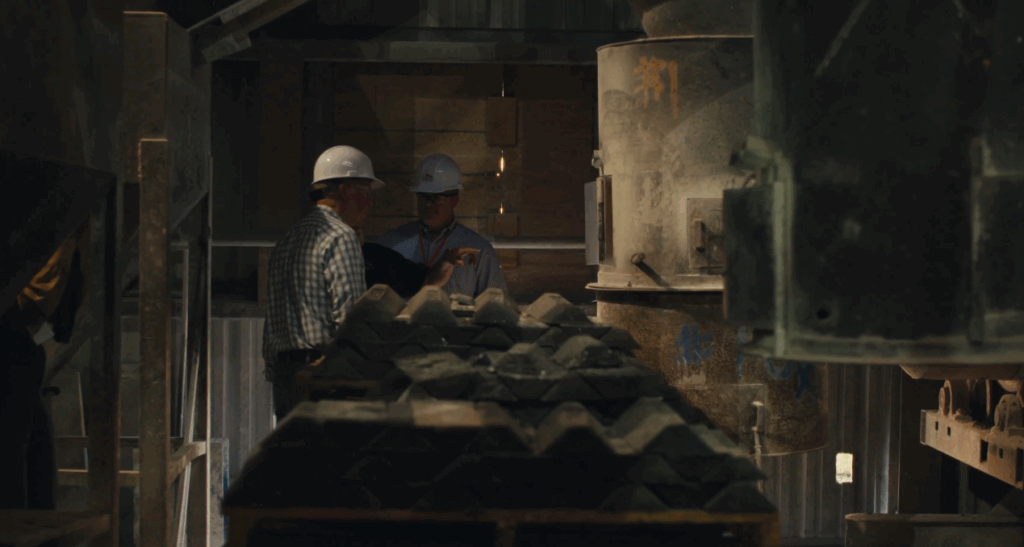
At the moment, the Texas-based US Antimony is the only fully integrated producer of this mineral outside of China and Russia, operating a large smelting facility in Montana capable of producing 5 million lb. of metals.
“For too long, DOW has depended on overseas sources for its critical mineral production,” Mike Cadenazzi, Assistant Secretary of War for Industrial Base Policy, said. “This investment will address risk in one of our most critical munitions and materials supply chains.”
Funds for expansion, exploration
US Antimony is expected to use the funds to modernize and expand its existing Montana facility to increase its capacity to refine and produce antimony necessary for flame retardants, batteries, munitions, and other defense applications.
The investment is also intended to support the company’s plans to establish domestic antimony excavation and extraction in Alaska, where it has assembled a 35,000-acre land package comprising over 120 mining claims.
By securing domestic feedstock, US Antimony has positioned itself to enable full vertical integration across the supply chain from ore extraction to mid-stream floatation capabilities to finished antimony products, it said.
Shares of US Antimony were little moved on Thursday. Trading at $9.70 apiece in New York, the company has a market capitalization of approximately $1.37 billion.
The $27 million investment would come from the Defense Production Act (DPA) Title III funds, part of the Ukraine Supplemental Appropriations Act of 2022. It is one of three investments made by the DPA Purchases Office since the beginning of fiscal 2026
Deployment of the funds was initially targeted for last year but was delayed due to the US government shutdown, the longest in history.
US Defense Department seeks information to expand metal stockpiles

The US Defense Department is seeking information for the potential stockpiling of five critical minerals, as the country steps up efforts to reduce risks in the supply chain and bolster domestic feedstock.
The Defense Logistics Agency on Wednesday issued notices seeking information for lithium, nickel, tin, chromium and tellurium respectively, including details of interested vendors, products specifications, sources of materials and market conditions, according to notices published on the website Wednesday. The DLA is responsible for managing the National Defense Stockpile, which secures metals for US military needs.
The Pentagon’s requests came as the procurement of metals has become a political priority for the US in order to slash reliance on Chinese supplies. Most recently, the White House announced Project Vault, a $12 billion stockpiling initiative for the private sector.
The agency said it is making inquiries ahead of the potential acquisition for 550 tons of lithium carbonate, 3,500 tons of nickel, 1,978 tons of London Metal Exchange-grade tin, 37 tons of tellurium and 4,500 short tons of chromium. It also made inquiries about the reprocessing or remelting of 1,978 tons of tin ingots affected by so-called tin pest, a phenomenon where the metal degrades into a powdered form in cold temperatures. That amount of tin would cost nearly $100 million, based on LME prices.
The DLA said the notices are for planning purposes only and the deadline to submit the responses is by March 19, adding that companies responded should not expect to receive feedback regarding submissions.
(By Annie Lee)

No comments:
Post a Comment