Calling Bull on Forest Service and Timber Industry Propaganda About “Unnaturally Thick Forests”
May 15, 2026
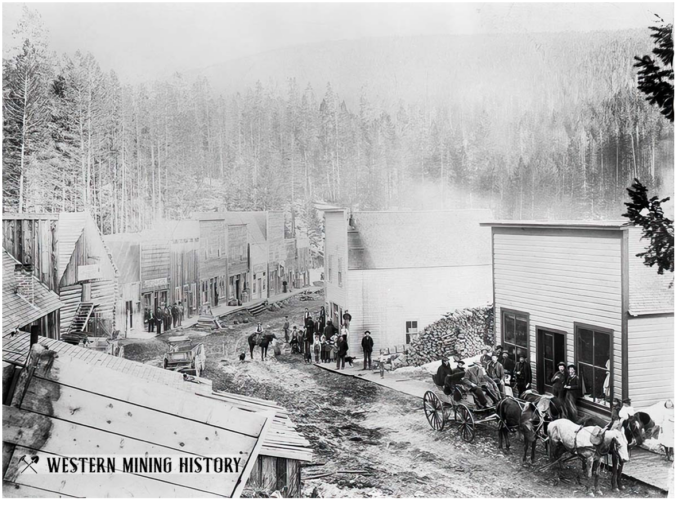
Forests surrounding Garnet, Montana, in the Garnet Range, 1898.
If you’re wondering why the Alliance for the Wild Rockies wins 80% of its lawsuits against Forest Service logging projects, the answer is simple: It’s because the agency repeatedly breaks the laws that govern management of our forest ecosystems and the fish and wildlife that depend on them.
Rather than follow the law, however, the Forest Service and timber industry fund scientists and corporate research groups to falsely claim that environmentalists are to blame for wildfires. It’s the same tactic the tobacco and fossil fuels industries used to find a few scientists to claim smoking doesn’t cause cancer and global warming doesn’t exist. Both are false, but journalists often mistakenly report the propaganda as science.
OUR FORESTS ARE NATURALLY THICK
Lewis and Clark’s expedition came close to starving to death when they crossed the Bitterroot Mountains in 1804 through virgin forests that were so thick they couldn’t hunt game. Andrew Garcia’s book “A Tough Trip Through Paradise” described forests “as thick as the hair on a dog’s back” in Montana in the 1870s.
This photo of the old mining town of Garnet was taken in 1898 — seven years before the Forest Service was founded and long before modern equipment was used to fight wildfires.
Jump forward two centuries and the Forest Service, the Bureau of Land Management, and the timber industry all falsely claim our forests are “overgrown” and “unnaturally thick” and must be logged to return them to “health.” But this ignores the historic records, which disprove the Forest Service and industry claims that forests in the Intermountain West are overgrown due to wildfire suppression.
Additionally, actual fire scientists such as William Baker et al. 2023, published a landmark study which found a pattern of “Falsification of the Scientific Record” in government-funded wildfire studies. Baker’s study was published in the peer-reviewed journal Fire, and exposed a broad pattern of scientific misrepresentations and omissions that resulted in a “falsification of the scientific record” in recent forest and wildfire studies funded or authored by the Forest Service.
In other words, the Forest Service has presented false narratives that forests historically had low tree densities, were “park-like,” and were dominated by low-severity fires. The agency and its industry allies are using this myth to attempt to legitimize its logging and wildfire policies — and they aren’t letting science get in the way of more clearcutting.
GLOBAL WARMING
The world is facing a climate crisis caused primarily by polluting the atmosphere with carbon dioxide from burning fossil fuels. Artificially removing carbon dioxide at scale from the atmosphere remains impossible.
It’s well known that trees are one of the planet’s most efficient means of absorbing carbon from the atmosphere — and our National Forests absorb an astounding 12 percent of our nation’s carbon emissions, with unlogged and old-growth forests absorbing the most. And they do it for free, thus saving millions of taxpayer dollars annually by reducing wasteful subsidies to the logging industry.
With the world getting hotter every year, it makes no sense to log mature and old-growth forests, especially since it’s a proven fact that untouched wilderness lands tend to have far fewer and much smaller wildfires than lands that have been logged and roaded. Why? Because unlogged forests keep the land moist, shaded from the sun and protected from the wind, which are the main drivers of large, uncontrollable wildfires.
Now’s the time to support the Alliance for the Wild Rockies, stand up for our forests that are actually fighting the climate crisis, and ensure preservation of critical forest habitat and native species for future generations.

No comments:
Post a Comment