The US and the Greentech Revolution
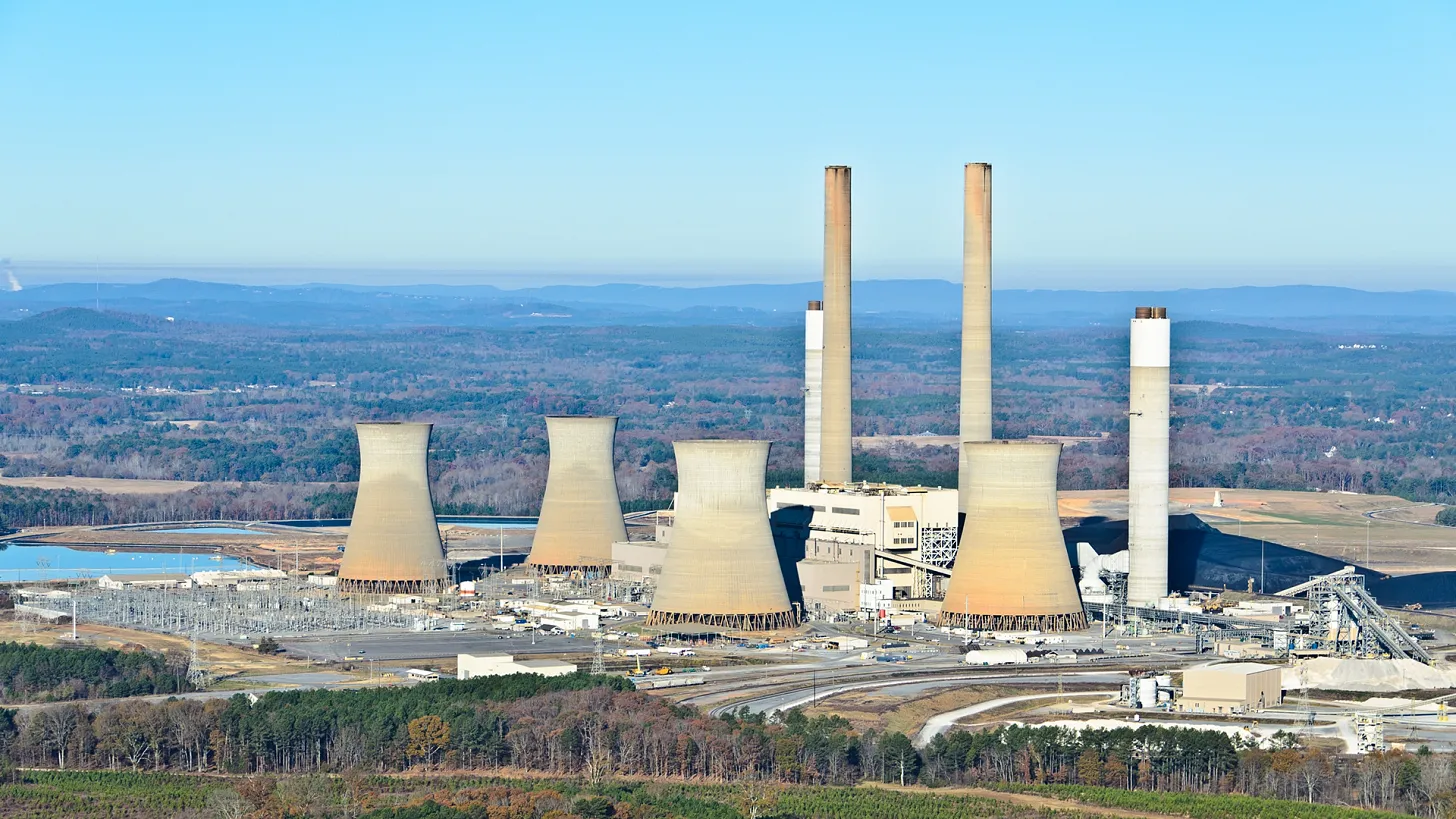
What we today call renewable energy was once America’s only energy. From the start of European settlement of America to the late 19th century, firewood and waterpower were the predominant sources of energy. The work of animals, workers, and slaves likewise embodied “renewable energy.” Coal surpassed wood around 1885. Petroleum surpassed coal in 1950. Natural gas surpassed coal in 1958. Fossil fuels—coal, petroleum, and natural gas—dominated US energy for more than a century and a half, accounting for nearly 83% of total U.S. energy consumption in 2023. Renewable and nuclear energy supplied most of the remaining 17%.
Fossil fuels radically increased the amount of energy available for all purposes. Fossil fuel energy became entwined with every aspect of American life, from homes to transportation to manufacturing to agriculture. Indeed, it was largely the basis for the “American way of life.” Fossil fuels also largely shaped America’s relations with the rest of the world, as the US exported massive quantities of coal, oil, and gas, dominated much of the world’s fossil fuel markets, and fought wars in fossil fuel-rich regions of the world that led to further control of global fossil fuel resources. Fossil fuel industries, and businesses, workers, and communities dependent on them, became a powerful force in shaping American politics, society, and daily life.
In the second half of the 20th century, new forms of renewable energy began to emerge in the margins. The earliest roots of the “Greentech revolution” in the US could be traced to the first practical silicon photovoltaic cells in the 1950s; the first rechargeable lithium-metal batteries in the 1970s; and the world’s first wind farm around the same time. Jimmy Carter installed solar panels on the White House in 1979. But the power of the fossil fuel industry and its allies blocked attempts to develop fossil free alternatives. The 2001 Cheney report projected that renewable energy other than waterpower would account for less than 3% percent of total electricity generation by 2020. (The actual proportion by 2020 was six times higher.) On the consumption side, energy conservation was largely the realm of hobbyists; gas guzzlers remained the order of the day.
Doubling Down on Fossil Fuels
Starting with the 1970s energy crisis, the US spent billions of dollars to promote domestic fossil fuel energy supply chains, mostly for natural gas. In 1976 it established the Gas Research Institute (GRI), a public–private partnership with an annual budget of $200 million. The GRI followed a “whole supply chain” approach. It funded research on enhanced oil recovery, gas transportation, household appliances, and building systems. It also directly funded “drilling experiments, the development of household appliances, and marketing campaigns.”
It was not only the government that invested in fossil rather than renewable energy. While Chinese industrial policy was focusing on electric vehicle production, US auto companies expanded their investments in high-emission trucks and SUVs. They opposed higher standards for fuel economy and carbon emissions. Until 1996 the Big Three did not produce a single commercial electric vehicle – allowing Tesla to corner the market for EVs.
In 2008, rising gas prices and the Great Recession devasted the Big Three’s carefully cultivated market for gas guzzlers. GM and Chrysler went into bankruptcy, and an $81 billion bailout left the US government as the majority owner of GM and the UAW and Fiat as the principal owners of Chrysler.
Under the Obama administration’s rescue plan, the auto companies were supposed to “green” their products. But in fact they continued to oppose climate protection policies and to promote high-pollution, low-mileage trucks and SUVs. Indeed, as recently as July 2023 the auto industry’s largest lobbying organization came out against the Biden administration’s proposed rule to ensure that two-thirds of new passenger cars sold in the United States are all-electric by 2032.
Biden’s Industrial Policy
Late in 2018 the youth climate Sunrise Movement occupied the office of likely Democratic House Majority Leader Nancy Pelosi; newly elected Rep. Alexandria Ocasio-Cortez joined them to propose a resolution for a Green New Deal. It called for “a new national, social, industrial, and economic mobilization on a scale not seen since World War II and the New Deal.” The Green New Deal would produce jobs and strengthen America’s economy by accelerating the transition from fossil fuels to clean, renewable energy. It would generate 100% of the nation’s electricity from clean, renewable sources within the next 10 years; upgrade the nation’s energy grid, buildings, and transportation infrastructure; increase energy efficiency; invest in green technology research and development; and provide training for jobs in the new green economy. A poll shortly after found that 40% of registered voters “strongly support” and 41% “somewhat support” the concepts behind a Green New Deal.
Faced with the overwhelming support for the Green New Deal, the presidential campaign of Joe Biden proposed a “Build Back Better” program that initially incorporated much of the program of the Green New Deal. It explicitly eschewed the principles of neoliberalism and advocated instead the long-disparaged idea of “industrial policy” – essentially, government selection of economic sectors to encourage with subsidies and technical support. While its programs were touted as means of climate protection, when it was implemented some of the sectors most heavily subsidized, such as carbon capture, hydrogen production, and nuclear energy, are questionable to say the least as means to protect the climate.
Biden’s three major economic bills, the American Rescue, Bipartisan Infrastructure, and Inflation Reduction Acts, proposed to provide trillions of dollars over a decade to incentivize domestic production in targeted industries, notably the auto industry. Rather than restructuring the industry like the Obama program, these plans were largely limited to providing subsidies to auto companies to expand EV production. They were justified in part as stimulus to the creation of a “green” economy that would reduce GHG pollution, but in large part as a means of containing the challenge of Chinese Greentech advances.
US auto companies were happy to accept these federal subsidies, but they were also happy to evade their carbon-reduction purposes. Auto companies gave surface compliance to federal pressure to reduce carbon pollution, but in reality they continued to promote highly profitable but high-carbon SUVs and light trucks and drag their feet on shifting to EVs. The Biden administration policies stimulated an expansion of EV and battery production in the US. But the new plants and infrastructure were not primarily created by US companies but were rather the product of joint ventures with foreign (mostly Asian) companies with far superior technology.
The Greentech Cold War
Many of these Greentech investments and joint ventures were in fact Chinese. Indeed, according to a 2025 database, the US had more than $14 billion in Chinese pledged overseas green manufacturing investment, the fourth highest country in the world. Many of China’s leading solar manufacturers set up assembly factories in the United States. In 2024, for example, Illuminate USA – a joint venture between China’s LONGi and Invenergy, the largest private renewables developer in the United States – began assembling panels at its 5GW factory in Ohio. On one count, Chinese-owned factories would have 20GW of capacity in 2025 – enough to meet about half of annual US demand. Battery manufacturing also attracted sizeable Chinese investments. For example, a joint venture called Amplify Cell Technologies featuring EVE Energy, China’s third-largest battery maker, broke ground on a US$2–3 billion factory for electric truck batteries in Mississippi.
The Biden administration tried to halt the “threats” of Chinese advances in solar and EV technology. In May 2024, it announced tariffs specifically targeting green products, including lithium-ion batteries, critical minerals, and solar cells. It quadrupled duties on electric vehicles to 100%. It also released a “Foreign Entity of Concern” ruling preventing vehicle manufacturers from getting IRA tax credits if any company in their battery supply chain has 25 percent or more of its equity, voting rights, or board seats owned by a Chinese government-linked company.
This was no simple trade war between two countries, however. As an article on “The Great Green Wall” in Phenomenal World put it, “the business model of the entire industry is shifting.” Firms are “no longer competing for dominance on the level of vehicle technology,” but for “the entire ecosystem.” As a result of globalization, these “ecosystems” are normally transnational. So rather than classic economic nationalist protection of national industries, this “trade war” became an attempt by both sides to control fragmented global economic networks. As “The Great Green Wall” put it,
“Biden’s intention is to stave off the Chinese and stimulate a domestic and friendshored buildout of the EV supply chain, stretching from mines to the factory floor. Side deals with friendly governments have been made; Canada and Australia have both been deemed eligible for Defense Production Act support for their battery metals. After their howls of outrage, Europeans, Japanese, and Koreans received a leased vehicle exemption meaning that the “made in America” rules don’t apply to them, and their firms’ vehicles could still qualify for subsidies if they were leased rather than bought.”
After the exemption was finalized in December 2022, EV imports from Korea, Japan, and Germany surged.
US EV and battery production have been based on acquiring non-US technology through joint ventures, most of them in the US South. Foreign direct investment included Hyundai and Rivian in Georgia, Toyota in North Carolina, Tesla in Texas, BMW in South Carolina, and Mercedes-Benz in Alabama. Indeed, US automakers were even licensing superior EV technology from Chinese firms like BYD and CATL.
“Ford (in Michigan) and Tesla (in Nevada) are partnering with CATL to make batteries. CATL says that it has structured its licensing deal with Ford so that it is compliant with “foreign entity of concern” rules. For its part, Tesla already uses BYD cells in Germany; Ford and GM use BYD batteries.”
Just as the impact of climate change was becoming devastating and ubiquitous, climate policy was being turned into a weapon of geopolitical struggle. This was made clear in an interview with John Podesta, senior adviser to Joe Biden on international climate policy. Podesta praised the huge expansion of US oil and gas production: “The US is now the number one producer of oil and gas in the world, the number one exporter of natural gas, and that’s a good thing.” He thereupon added, “The science is clear, we’ve got to transition away and begin to replace those resources with both zero carbon electricity and renewable resources.” If George Orwell came back to earth, he might say, “Fossil fuels are climate protection.”
Podesta also illustrated the way production of “green goods” was being redefined as an issue of national security. The US had recently slapped a 100% tariff on electric vehicles and other “green” products from China. After accusing China of deliberately overproducing green goods, Podesta said:
“The economic security of the US and [its commitments to cut emissions] rely on the need to have an economy that is not overly dependent on a single source of supply, for critical minerals, for batteries, for other upstream green technologies. We need to diversify that supply. We’re witnessing a renaissance of manufacturing in the US in the green technology space and will resist unfair trade practices that are going to undermine that investment.”
Above all, the Biden administration eschewed anything that would reduce the overall production and consumption of fossil fuels. Despite lip service to climate protection, they regarded it as a “good thing” that the US was “the number one producer of oil and gas in the world” and “the number one exporter of natural gas.”
The Greentech Revolution Infiltrates America
Biden’s industrial policies had contradictory effects on the rise of Greentech in the US. On the one hand, the IRA and other economic legislation significantly increased production of fossil free energy, EVs, and other GHG-reducing technologies. But the Biden administration oversaw a historic growth in fossil fuel extraction and strove to protect the US and its supply chains from foreign and especially Chinese Greentech.
Nonetheless, by the end of the Biden years the global Greentech Revolution was well on its way to transforming US energy production and consumption, threatening to leave fossil fuel industries as “stranded assets.” In early 2025, just as the Trump administration was coming into office, the US hit a new record low for fossil fuels in the electricity mix as solar and wind reached a record high. In March 2025, for the first time ever, fossil fuels accounted for less than half of electricity generated in the US. The impact on climate-destroying GHG emissions was clear: Since coal generation peaked in 2007, there had been a 68% fall in coal emissions and a 32% reduction in total power sector emissions.
In the one year between March 2024 and March 2025, US solar power increased a “staggering” 37%. Wind power increased by 12%. Over that year fossil fuel generation fell by 2.5%.
The impending transformation was clear in consumption as well as production. In 2024, electrified vehicles made up 20% of all new car sales, with fully electric vehicles comprising 9%. Heat pumps rose to 57% of new space heating installations.
The Greentech Revolution opened the possibility for a “Greentech New Deal.” It made climate-protecting production and consumption far cheaper than continued fossil fuel use. It made possible the rapid reduction of greenhouse gas emissions and thereby the significant slowing down of climate change. It opened the way to good green jobs for all. And it undermined the wealth and power of fossil fuel companies and countries, shifting the balance of power worldwide toward democratic governance.
Enter Donald Trump.


No comments:
Post a Comment