The Founders’ Fix: How Expanding Congress Could Save Minority Voting Rights
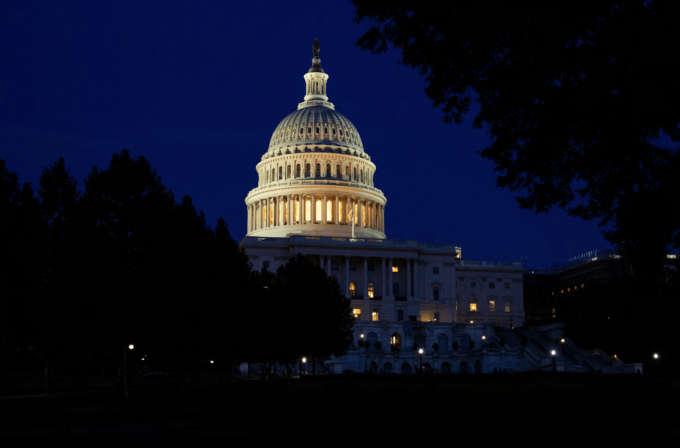
Photo by Darren Halstead
The dismantling of the Voting Rights Act begun by the Supreme Court in the case of Shelby County v. Holder in 2013 was completed this last month by Louisiana v. Callais. Callais has raised the legal bar for drawing majority-minority districts, one of the last remaining tools to redress systemic racial discrimination in voting, to impossible heights. What remains of the Voting Rights Act of 1965 is but a symbolic husk, lacking the most essential element of any law, the power of enforcement.
Liberal commentators have piled on to condemn the court and have called for court reform, advocating term limits and even court packing in the tradition of F.D.R.. But few have noted that there is another avenue to preserve and even expand the representation of minority voters in America: Congress could also pack itself.
Many theorists have calculated that increasing the size of a legislature in a pluralistic society significantly increases the representation of minority communities and makes it far harder to gerrymander them into silence. As districts become smaller the number of people necessary to constitute a majority also falls and crafting districts to divide particular communities becomes more difficult.
Underlying the problem that the Voting Rights Act attempted to solve is the mismatch between an architecture of American democracy that grants all representation and power to the majority and none to anyone else, even someone receiving the votes of 49.9% of the citizenry. This majoritarian bias was not considered a problem by the Founders who excluded nonwhites from citizenship, voting, and most civil rights thereby allowing for the shifting coalitions that Madison envisioned being the axis of politics in Federalist #10.
Political theorists have proposed several solutions to provide for minority representation in winner-take-all electoral systems. Lani Guinier famously proposed ranked-choice voting and others have proposed other forms of what political scientists generically refer to as ‘cumulative voting’ systems.[1] The tricky part of all these schemes is that Americans have come to associate territorial representation with democracy itself and view systems of Parliamentary or “at large” representation to be less legitimate.
A simpler solution to the closure of a majoritarian system to minority voices is the one that the Founders envisioned, but was smashed by the twin hammers of racism and nativism in the 1920s. This is growing the size of Congress proportionate to the population.
The Supreme Court’s favorite founder, James Madison, was adamant that the lower chamber of the new government be proportioned to the growing population of the nation: “If the power is not immediately derived from the people, in proportion to their numbers, we may make a paper confederacy, but that will be all.” Madison got his way and Article I, Section 2, of the Constitution tied the number of seats in Congress to the populations of the states: “Representatives and direct taxes shall be apportioned among the several states which may be included within this Union, according to their respective Numbers.” Later, in lobbying for the blueprint of government in The Federalist Papers, he wrote, “I take for granted … that the number of representatives will be augmented from time…” and predicted that the House of Representatives would in fifty years multiply to four hundred. Though he was off by half and the four-hundred threshold wasn’t passed until 1910, his optimistic forecast shows how relatively large numbers (the first Congress had but 65 members) did not give him pause.
Article I did set a floor on the size of Congress, stating that the ratio of representation could not “exceed one for every thirty Thousand” people. Were that ratio in force today the 11,036 members of Congress could only be accommodated in one venue in the District, Capital One Arena when the Wizards or the Capitals are away. Madison did believe there was a number at which the legislature would become unwieldy and argued that it should “be kept within a certain limit, in order to avoid the confusion and intemperance of a multitude.”
America’s first Congress thought keeping proportional to the population was so important that it took up drafting an automatic apportionment amendment to the Constitution before adopting the other ten amendments that contained the Bill of Rights. This original First Amendment to the Constitution was passed and sent on to the states where it failed just one vote short of being adopted. The Congressional Apportionment Amendment set the ratio or representation at 1:30,000 until such time as Congress reached a total of 200 members at which time the ratio was reset to 1:50,000. Had that amendment passed, Congress today would have somewhere around 6,700 members.
Even without this amendment, Congress merrily went about its business of continually increasing its numbers, thirteen times, to ensure that the ratio between representatives and their voters did not grow excessively.
But after the Census of 1920, segregationists and nativists tossed a wrench into the gears connecting Congress to population size. That national count revealed that population was rapidly draining away from rural areas into cities, from south to north, and from the middle to the coasts. Every bigot could read the writing on the census wall and see that political power would pass into the hands of naturalized immigrants, their children, and, most alarmingly, African Americans who threatened to trample Jim Crow with their feet as they left the South.
The Sixty-Sixth Congress that convened in 1920 responded to these demographic trends by restricting immigration and curtailing the growth of Congress through reapportionment. The House Census Committee did the arithmetic and concluded that for 10 rural states not to lose seats to eight cityfied ones, forty-eight new districts would need to be created raising the total in congress to 483. Northerners attempted to exploit their demographic advantage by calling for implementation of the Fourteenth Amendment’s requirements that states that disenfranchised their voters (as all former Confederate states did) should have their Congressional delegations reduced in like proportion. Southerners responded in kind by demanding that only citizens be counted as for purposes of apportionment, hoping this would reduce the power of northern states flooding with immigrants. After a decade of impasse, both sides agreed to freeze the size of Congress at 435 in 1929.[2]
The ensuing agreement, called the “Permanent Apportionment Act” as if one Congress could by simple legislation bind the hands of future ones, satisfied no one but had several hidden benefits. First, it ended the long tradition of apportionment laws requiring that districts be “composed of contiguous and compact territories” and contain “the same number of individuals,” thereby paving the way for southern states to use their powers of gerrymandering to ensure that no Black communities would ever elect members of Congress and northern ones to tilt their state delegations in favor of rural districts over urban and immigrant ones. New York packed 799,407 New Yorkers into a single district while letting just 90,671 farmers have one of their own. All members of Congress, whether northern or southern, understood how a fixed number of seats would vastly enhance the power of incumbency. So advantageous to monied interests and elites was the spiraling size of districts that this undemocratic fix has remained in place for nearly a century.
Ironically, it was a Republican administration, that of George H.W. Bush, that pushed redistricting as a method of addressing the historic exclusion of African Americans from Congressional representation. Bush’s Department of Justice began requiring southern states to create majority-minority districts as part of their compliance with Section Two of the Voting Rights Act. This strategy succeeded in electing black members of Congress for the first time in a century in five southern states. Bill Clinton inherited this policy and the growing conservative backlash it unleashed.[3]
In a series of cases in the 1990s, the Supreme Court weakened the Voting Right Act by limiting the ability of states to draw their congressional districts in a way that increases minority representation. After the court declared invalid three black majority congressional districts drawn to comply with the Voting Rights Act in Bush v. Vera (1996), political scientists Jonathan Leib and Gerald Webster published a study pointing out a simple and elegant solution to preserving minority representation in Congress while meeting the high court’s demands that districts race not be the “predominant factor” in drawing district lines. Increasing the size of Congress would by itself substantially increase the number of minority-majority districts across the country.[4]
Likewise, using a statistical analysis of the various sizes of state assemblies over time and the relative proportion of African American representation in the largest and smallest of these, political scientists Geoff Allen and Heather Stoll found that “the sign on the seat-to-persons ratio is positive, meaning as the ratio increases, the share of seats won by Black representatives is predicted to increase.” Their computations found that the proportion of Black representatives would increase by as many as twelve percentage points if the smallest state chambers were increased to parity with the largest.[5] The effect in an expanded Congress would be even larger, especially if the pre-1929 legal requirement that districts be contiguous, compact, and equally populated were restored. This would have the added benefit of reopening the door to federal judicial review of racially gerrymandered districts that the Supreme Court slammed shut with Louisiana v. Callais.
It is a rare day when liberals can argue for reform on the grounds of restoring past practices. In the case of advocating for increasing the number of Congressional districts, the logic is fundamentally one of reclaiming tradition. At the time that President Taft signed legislation setting the number of seats in Congress at 435 in 1910, each congress person represented about 241,000 constituents. A similar proportion today would calculate out to 1,373 seats in congress. Just bringing proportions back to MAGA’s idyllic year of 1950, when each district represented 344,587 people, would produce a Congress of 960 seats.
Such numbers would not even bring the United States in line with other industrialized democracies. The U.K., France, Germany, all have national legislatures with more seats than the U.S. Congress, in spite of their populations being much smaller. As of 2024, the United States had 435 seats in Congress, meaning each congress person represented 765,000 people. The lower chamber of the legislature in France has 577 seats, Germany has 736, and Great Britain’s House of Commons has 650, meaning that all these countries enjoy legislator to constituent ratios less than one-fifth that of the United States. Scandinavian legislatures are even more democratic, with each lawmaker representing a district twenty-four times smaller than those in the USA.
The benefits of Congressional expansion extend beyond the important goal of minority representation. Returning to historic ratios of representation also solves the growing inequality of voting power between citizens of different states, or the ‘one person–one vote problem.’[6] Currently, Congressional districts in six states contain fewer than 700,000 people, ranging from Rhode Island where each Congressional district has but 548,690 people to New Hampshire that has 688,765. But on the other end, six states elect legislators that represent more than 800,000 people, from Utah with 817,904 to Montana with over a million voters in each district. In other words, a congress person from Rhode Island represents roughly half as many constituents as the sole congress person from Big Sky Country.
Restoring a more traditional ratio of constituents to legislators would likely decrease the cost of campaigning, thereby opening office holding to candidates who aren’t independently wealthy or bankrolled and controlled by dark money interests.
Such considerations are so compelling that even a group of beltway think-tankers, half from the conservative American Enterprise Institute, made the case for adding 150 seats to the House. Their report, published under the imprimatur of the American Academy of Arts & Sciences in 2021, noted that “Large districts favor incumbents as well as wealthy and well-funded candidates. Large districts also make it harder for a wide variety of challengers, especially racial minorities and third-party candidates, to be elected. The size of congressional districts, then, has helped result in a Congress that falls far short of representing the country’s ideological and demographic diversity.”
But these pundits recoil from the implications of their own arguments. When confronted with the fact that restoring historic Congressional ratios would require adding over a thousand seats, they exclaimed that such “would be too dramatic of an expansion to be feasible” without specifying how this would break the chamber. The only argument they make against such a proposal, is that it would require “a dramatic rethinking of how the chamber functions,” which, given the long-term dysfunction of the body, seems instead like a strong argument in its favor.[7]
Likewise, the political science community has been far more concerned with the smooth functioning of Congress than that of democracy. The most cited authority on the optimal size of a deliberative legislature is Rein Taagepera, who in 1972 compared dozens of national assemblies and concluded that the maximum size without compromising the efficiency of communications between legislators could be calculated as the cube root of the population.[8] By that standard, the U.S. House of Representatives should jump from 435 to 692. Even this moderate increase has alarmed many political scientists who caution that this would create “communication barriers” and procedural inefficiencies. Such arguments are ludicrous considering Congress’ current overrepresentation of economic elites and its glaring dysfunction. Whatever burdens are added to the chamber’s functioning by increasing its size are more than offset by the prospect of a more representative House of Representatives and by increasing the contact and communication between lawmakers and their constituents.
The weakest arguments against Congressional expansion are those who question how a thousand representatives could squeeze into the House chamber. In 2023, Washington Post columnist Danielle Allen consulting with a team of architects, pointed out that with slight renovations, the House chamber is large enough to seat more than 900 members in its current style. Other architectural projections based on the chambers’ existing footprint could raise this number to over 1,700.
While a few public interest lobby groups have called for Congressional expansion, none of their campaigns have caught on. A group calling itself Thirty-thousand.org has been campaigning for increasing the number of districts since 2004 while another well-funded organization named Protect Democracy has begun advocating for an expanded House alongside its focus on publicizing the benefits of proportional representation systems. Representative Earl Blumenauer of Oregon introduced legislation to add 150 seats to the House in 2023, which never made it out of committee. Mainstream media outlets have occasionally run stories on the idea of adding seats to Congress but these are framed as curiosities or futuristic ideas.
Maybe, as the robed rogues who wrote Louisiana v. Callais continue to curtail rights and democratic representation, the idea of returning to the American tradition of keeping government close to the people by keeping the House of Representatives proportionate to the population will begin to sound more like common sense than science fiction.
Notes.
[1] Lani Guinier, The Tyranny of the Majority: Fundamental Fairness in Representative Democracy, (New York: The Free Press, 1994).
[2] Margo J. Anderson, The American Census: A Social History, (Yale University Press, 2016), p. 148-155; Proceedings of the American Philosophical Society, vol. 163, no. 3, (Sept. 2019), pp. 227-238;Nicholas G. Napolio and Jeffery A. Jenkins, “Conflict over Congressional Reapportionment: The Deadlock of the 1920s.” Journal of Policy History, vol. 35, no. 1 (2023), pp. 91–117; Charles Eagles, Democracy Delayed (Athens, GA: University of Georgia, 1990); Charles A. Kromkowski and John A. Kromkowski, “Why 435? A Question of Political Arithmetic,” Polity, (Autumn, 1991), Vol. 24, No. 1 (Autumn, 1991), pp. 129-145.
[3] Gerald R. Webster, “Congressional redistricting in the southeastern US in the 1990s,” Southeastern Geographer, vol. 35, no. 1, (May 1995), pp. I-21.
[4] Jonathan I. Leib and Gerald R. Webster, “On Enlarging the US House of Representatives,” Political Geography, vol. 17, no. 3, (March 1998), pp. 319–29.
[5] Geoff Allen and Heather Stoll, “A Number Most Convenient? The Representational Consequences of Legislative Size,” Electoral Studies, vol. 82, no. 102594, (April 2023).
[6] Jeffrey W. Ladewig and Mathew P. Jasinski, “On the Causes and Consequences of and Remedies for Interstate Malapportionment of the U.S. House of Representatives,” Perspectives on Politics, Vol. 6, No. 1 (Mar., 2008), pp. 89-107.
[7] Lee Drutman, Jonathan D. Cohen, Yuval Levin, and Norman J. Ornstein, The Case for Enlarging
the House of Representatives (Cambridge, Mass.: American Academy of Arts and Sciences, 2021), pp. 5, 20.
[8] Rein Taagepera, “The Size of National Assemblies,” Social Science Research, vol. 1, no. 4 (1972), pp. 385–401.

No comments:
Post a Comment