Wednesday, January 13, 2021

Twitter and Facebook shares slide amid US violence backlash

Parler went down early today after Amazon Web Services shut off access to its servers, leaving it without a home


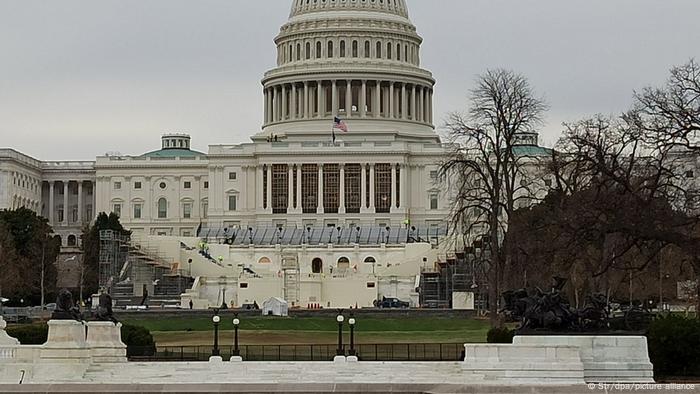
Technology companies tried to contain a mounting backlash against their social media sites, with shares of Twitter and Facebook falling and rival platform Parler forced offline by Amazon. 

Many conservatives said the moves to expunge US president Donald Trump from the social networks and take down an app popular with his supporters went too far. Twitter shares were down sharply, reflecting shareholder uncertainty about the permanent removal of one of the site’s biggest accounts and the legislative consequence that could follow. Facebook’s shares also fell during the session. 

Parler, whose chief executive John Matze pitches the network as a safe place for free speech, went down early today after Amazon Web Services shut off access to its servers, leaving it without a home. 

Both Google and Apple kicked Parler from their stores, making it almost impossible to download the app.

The big tech companies justified their actions by citing posts stoking riots in Washington DC last week and sought to avoid further incitements to violence. 

The bans underscore the power these companies hold over how information is disseminated and the impact their decisions have. 

Previously, it was their stance to allow incendiary speech from Mr Trump and his allies that drew heavy criticism from the left.

Regulatory risks for social media companies will persist even though Democrats will control the Congress and White House, wrote Bank of America analyst Justin Post in a note to clients. 

Twitter is also likely to see some usage decline as a result of dismissing the president, he wrote.

Meanwhile, Parler has so far been unable to find other web hosting services willing to step in, because of the negative publicity stemming from the violence, organised in part on its own platform. 

“This is not due to software restrictions, we have our software and everyone’s data ready to go,” said Mr Matze. 

“Rather, it’s that Amazon’s, Google’s, and Apple’s statements to the press about dropping our access has caused most of our other vendors to drop their support for us as well.” 

Even some e-commerce and payments sites are now reassessing doing business with companies linked to Mr Trump. Stripe will stop processing payments for Mr Trump’s campaign website, according to a person familiar with the decision. Shopify shut down online stores affiliated with Mr Trump.

Before last week’s violence, lawmakers and civil rights advocates had long been pressuring social media platforms to crack down on posts that encourage violence or hatred. 

While regulators in Europe have passed laws fining companies that fail to act on hate speech, the US has largely left regulation to the companies. Twitter first put warning labels on Mr Trump’s tweets that supported the Capitol rioters, then hid them, before suspending the account. 

  • Bloomberg
Outspoken climate researcher dishes out some advice for Bill Gates and Jeff Bezos

If billionaires like Bill Gates and Jeff Bezos really want to maximize their efforts to solve the global climate crisis, they should focus less on gadgetry and more on getting governments to act.
© Provided by Geekwire A chart of average global temperatures since 1880 shows the world’s warming trend, with the long-term average for 1901-2000 serving as the baseline. (Chart: Climate.gov; Background Earth Image: PNGHUT)

That’s the message from Penn State climatologist Michael E. Mann, who delves into the changing circumstances of a decades-old debate in a book titled “The New Climate War: The Fight to Take Back Our Planet.” 

© Provided by Geekwire Michael E. Mann is a climatologist and geophysicist at Pennsylvania State University. (Penn State Photo)

At the age of 55, Mann is a grizzled veteran of climate wars: In 1999, he helped lay out the “hockey stick” projection for rising global temperatures, and in 2009 he was swept up in the Climategate controversy over hacked emails.

Mann has chronicled the conflicts over climate science in a series of books published over the course of the past decade. But in “The New Climate War,” he argues that the terms of engagement have shifted.
Amid waves of wildfires and extreme weather, it’s getting harder to deny that Earth’s climate is becoming more challenging. Instead, the focus of the debate is shifting to whether the climate challenge can be met — and if so, how best to meet it.

Gates has argued that investment in technology is the key to averting a catastrophe. “Tech is the only solution,” he said during last October’s GeekWire Summit. The Microsoft co-founder expands upon that perspective in an upcoming book titled “How to Avoid a Climate Disaster.”

Mann takes issue with that argument in “The New Climate War.”

“Where I disagree with Bill is that, no, I don’t think we need a ‘miracle,’ which is what he said [was needed] to solve this problem,” Mann told me during an interview for the Fiction Science podcast. “The miracle is there when we look up in the sky at the sun, when we feel the wind. … The solutions are there. It’s a matter of committing the resources to scaling them up.”

One of Gates’ big energy technology ventures is Bellevue, Wash.-based TerraPower, which is working on small-scale nuclear power plants. But Mann doesn’t think nuclear power will play a significant role going forward — due to high costs as well as broader concerns. “It comes with obvious potential liabilities, whether it’s proliferation issues, weapons issues or environmental threats,” he said.

Mann thinks even less of Gates’ support for solar geoengineering strategies. “That’s going down a very dangerous road,” Mann told me. “When we start interfering with this system [that] we don’t understand perfectly, the law of unintended consequences reigns supreme.”

As for Bezos, Mann said he’s already had some conversations with the Amazon CEO’s team about climate initiatives such as the $10 billion Earth Fund.

“It’s a start,” Mann said. “Would I like to see him spend less on some of these wackier [ideas like] establishing space colonies, and more on saving the one planet in the universe that we know does support life? Yeah.” (For what it’s worth, Bezos argues that his space vision is aimed at moving energy-intensive, pollution-producing heavy industries off the planet and thereby preserving Earth for residential and light industrial use.)

Although he begs to differ on the details, Mann is nevertheless grateful that Gates and Bezos are on the right side in the new climate war. “I’ll gently criticize these folks where I feel it’s appropriate, but I do welcome these voices at the table, because we need everyone on board,” he said. “It’s all hands on deck.”
Denialism and doomism

In his book, Mann argues that the “inactivists” who resist efforts to address the climate challenge have turned to a subtler form of denialism, as well as a phenomenon that Mann calls “doomism.”

Mann says the climate-denial crowd has picked up the game plan that’s been followed by the gun lobby, Big Tobacco and the bottling and packaging industry.

© Provided by Geekwire “The New Climate War: The Fight to Take Back Our Planet,” by Michael E. Mann. (PublicAffairs / Jacket Design by Pete Garceau)

Just as “guns don’t kill people,” “smoking doesn’t kill” and “people can stop pollution,” some opponents to policy solutions claim that fixing the climate mess should be left up to individuals. Some even say that you shouldn’t complain about carbon emissions unless you swear off air travel and stop eating meat.

“There are things that we can do in our everyday lives that decrease our environmental footprint — and they make us healthier, they save us money and they make us feel better,” Mann acknowledged. “What we can’t allow is for the forces of inaction, the ‘inactivists,’ to convince us that that’s the entire solution.”

Others insist it’s already too late to avoid the climate catastrophe, and say the best we can do is to brace ourselves for the hellscape to come.

“If we really were doomed, if the science said that, then we’d have to be upfront about that,” Mann said. “But the science says the opposite. The science says there’s still time to avert catastrophic warming.”

Mann said the current political climate (so to speak) is favorable for making progress, thanks in part to a youth movement led by the likes of Swedish teen Greta Thunberg and student activists in Washington state.

The next phase of the war

“The New Climate War” had to be turned in for publication months before November’s presidential election, but Mann said the results bore out his assumption that Joe Biden would win out. The results in the Senate — a 50-50 tie with Vice President-elect Kamala Harris serving as the tie-breaker — couldn’t be any closer.

Because of that narrow mandate, “we probably can’t expect to see something like a Green New Deal,” at least for the next two years or so, Mann said. But he doesn’t rule out moving ahead with the first stages of a carbon-pricing system similar to the tax scheme that Canada currently has in place.

Climate campaigners in Washington state tried twice to set up a carbon-pricing systems, in 2016 and 2018, but both initiatives failed at the polls. Mann noted that fossil-fuel interests weren’t the only opponents.

“Ironically, some of the opposition in recent years to market mechanisms has actually come from the environmental left — because it’s been framed as inconsistent with social justice, that the cost will somehow fall on disadvantaged front-line communities, those with the least resources,” he said. “That definitely does not have to be the case.”

Mann said the key is to tweak market-based pricing systems so that the revenue goes to support the communities that need help, and support the spread of renewable energy technologies.

How would Mann spend the revenue? I put an extra spin on that question by asking him what he’d invest in if he were given a few million dollars to start up a climate-related venture. His answer was true to form.

“I would put it into science communication, focusing on what I see as the remaining obstacles when it comes to scientists informing the public discourse, because we do play a role,” Mann replied.

“We shouldn’t necessarily be dictating what the policies should be. There’s a worthy political debate to be had about that,” he said. “But we need to define the scientific ground rules to find what the objective evidence has to say about the risks that we face, so that we have an honest political debate about solutions.”

What’s Michael Mann reading? For bonus book recommendations, and more from the Fiction Science podcast, check out the Cosmic Log version of this article.

ORAL FIXATIONS

Youth using e-cigarettes three times as likely to become daily cigarette smokers

Age at first use and number of tobacco products consumed also increases addiction risk

UNIVERSITY OF CALIFORNIA - SAN DIEGO

Research News

An analysis of a large nationally representative longitudinal study by University of California San Diego Herbert Wertheim School of Public Health and Human Longevity Science report that starting tobacco products, including e-cigarettes, before the age of 18 is a major risk factor for people becoming daily cigarette smokers.

Reporting in the January 11, 2021 online edition of Pediatrics, researchers found that in 2014 people age 12 to 24 who used e-cigarettes were three times as likely to become daily cigarette smokers in the future. Among those who reported using a tobacco product, daily use increased with age through age 28. Daily cigarette smoking nearly doubled between 18 to 21 year olds (12 percent) and 25 to 28 year olds (21 percent).

"This is the first paper that actually looks at progression to dependent cigarette smoking among young adults. In these data, e-cigarettes are a gateway for those who become daily cigarette smokers," said the study's first author, John P. Pierce, PhD, Professor Emeritus at Herbert Wertheim School of Public Health and Human Longevity Science and UC San Diego Moores Cancer Center. "The start product has changed from cigarettes to e-cigarettes, but the end product has stayed the same. When users become dependent on nicotine, they are converting to cigarette smoking."

Researchers used data from the Population Assessment of Tobacco and Health (PATH) Study, a longitudinal study of tobacco use and its effect on the health of people in the United States. The PATH Study, undertaken by the National Institute on Drug Abuse (NIDA) and the FDA Center for Tobacco Products under contract to Westat, enrolled a nationally representative sample of 12 to 24 year olds between in 2013 and 2014 and re-interviewed them annually for four years to explore progression to daily use among experimenters of 12 tobacco products.

In the first year, 45 percent of study participants reported using at least one tobacco product in their lifetime. By the fourth year, as participants aged, 62 percent reported some tobacco experimentation. Among those who have ever experimented with tobacco, 73 percent had tried cigarettes and 72 percent had tried e-cigarettes. Further, more than half tried hookahs and cigarillos. Traditional cigars, filtered cigars, smokeless products, pipes and snus were each tried by more than10 percent of study participants.

The analyses revealed that, by year four, 12 percent of participants were using tobacco products daily -- half of whom became daily users after the first year. Seventy percent of daily users smoked cigarettes and most of them (63 percent) used cigarettes exclusively. Of those who smoked cigarettes and used another tobacco product, half vaped e-cigarettes on a non-daily basis.

Among the 17 percent of daily users who were vaping every day, almost half were also non-daily cigarette smokers. Further follow-up will determine whether these young daily tobacco users continue to use both products or whether they settle on a single product, said Pierce.

"What we're seeing is that the proportion who are daily e-cigarette users did not increase with age. Whereas with cigarettes the number of users jumps up rapidly with age," said Pierce. "This rapid increase with age only occurred with cigarettes, not with any other tobacco products."

Less than 1 percent of study participants who experimented with just one tobacco product progressed to daily cigarette smoking. People who had tried five or more products increased their risk of becoming daily cigarette smokers by 15 percentage points.

"Trying e-cigarettes and multiple other tobacco products before the age of 18 is also strongly associated with becoming daily cigarette smoking," said senior author Karen Messer, PhD, professor at UC San Diego Herbert Wertheim School of Public Health and Human Longevity Science and director of biostatics at UC San Diego Moores Cancer Center.

"We know that e-cigarette use among high school seniors, most under the age of 18, increased from 38 percent in 2016 to 45 percent in 2019. These results suggest that recent rapid growth in adolescent e-cigarette use will lead to increased daily cigarette smoking among young adults in the United States, reversing decades of decline in cigarette smoking."

###

Co-authors include: Ruifeng Chen, Eric C. Leas, Martha M. White, Sheila Kealey, Matthew D. Stone, Tarik Benmarhnia, Dennis R. Trinidad and David R. Strong, all of UC San Diego.

FALSE EQUIVALENCIES

Study finds new evidence of health threat from chemicals in marijuana and tobacco smoke

Marijuana smoking found to raise levels of potentially harmful chemicals but to a lesser degree than tobacco smoking; Exposure to a toxic chemical associated with heightened risk for cardiovascular disease increases with tobacco smoking

DANA-FARBER CANCER INSTITUTE

Research News

IMAGE

IMAGE: MARIJUANA PLANT view more 

CREDIT: PEXELS

Scientists at Dana-Farber Cancer Institute and the Centers for Disease Control and Prevention have uncovered new evidence of the potential health risks of chemicals in tobacco and marijuana smoke.

In a study published online today by EClinicalMedicine, the researchers report that people who smoked only marijuana had several smoke-related toxic chemicals in their blood and urine, but at lower levels than those who smoked both tobacco and marijuana or tobacco only. Two of those chemicals, acrylonitrile and acrylamide, are known to be toxic at high levels. The investigators also found that exposure to acrolein, a chemical produced by the combustion of a variety of materials, increases with tobacco smoking but not marijuana smoking and contributes to cardiovascular disease in tobacco smokers.

The findings suggest that high acrolein levels may be a sign of increased risk of cardiovascular disease and that reducing exposure to the chemical could lower that risk. This is particularly important for people infected with HIV, the virus that causes AIDS, given high rates of tobacco smoking and the increased risk of heart disease in this group.

"Marijuana use is on the rise in the United States with a growing number of states legalizing it for medical and nonmedical purposes - including five additional states in the 2020 election. The increase has renewed concerns about the potential health effects of marijuana smoke, which is known to contain some of the same toxic combustion products found in tobacco smoke," said the senior author of the study, Dana Gabuzda, MD, of Dana-Farber. "This is the first study to compare exposure to acrolein and other harmful smoke-related chemicals over time in exclusive marijuana smokers and tobacco smokers, and to see if those exposures are related to cardiovascular disease."

The study involved 245 HIV-positive and HIV-negative participants in three studies of HIV infection in the United States. (Studies involving people with HIV infection were used because of high tobacco and marijuana smoking rates in this group.) The researchers collected data from participants' medical records and survey results and analyzed their blood and urine samples for substances produced by the breakdown of nicotine or the combustion of tobacco or marijuana. Combining these datasets enabled them to trace the presence of specific toxic chemicals to tobacco or marijuana smoking and to see if any were associated with an increased risk of heart disease.

The investigators found that participants who exclusively smoked marijuana had higher blood and urine levels of several smoke-related toxic chemicals such as naphthalene, acrylamide, and acrylonitrile metabolites than non-smokers did. However, the concentrations of these substances were lower in marijuana-only smokers than in tobacco smokers.

Investigators also found that acrolein metabolites - substances generated by the breaking down of acrolein - were elevated in tobacco smokers but not marijuana smokers. This increase was associated with cardiovascular disease regardless of whether individuals smoked tobacco or had other risk factors.

"Our findings suggest that high acrolein levels may be used to identify patients with increased cardiovascular risk," Gabuzda said, "and that reducing acrolein exposure from tobacco smoking and other sources could be a strategy for reducing risk."

###

The first author of the study is David R. Lorenz, PhD, of Dana-Farber. Co-authors are Vikas Misra, MSc, Sukrutha Chettimada, PhD, and Hajime Uno, PhD, of Dana-Farber; Lanqing Wang, PhD, Benjamin C. Blount, PhD, and Vi?ctor R. De Jesu?s, PhD, of the Centers for Disease Control and Prevention; Benjamin B. Gelman, MD, PhD, of the University of Texas; Susan Morgello, MD, of Icahn School of Medicine; and Steven M. Wolinsky, MD, of Northwestern University.

The study was supported by the National Institutes of Health (grants R01 DA040391 and DA046203); the National Institute of Mental Health (NIMH) and National Institute of Neurological Disorders and Stroke (NINDS) (grants U24MH100931, U24MH100930, U24MH100929, U24MH100928, U24MH100925, MH062512, HHS-N-271-2010-00036C, and HHSN271201000030C); the National Institute of Allergy and Infectious Diseases (grants U01- AI35039, U01-AI35040, U01-AI35041, U01- AI35042, and UM1-AI35043); the National Cancer Institute; National Institute on Drug Abuse; and National Institute of Mental Health. MACS data collection is also supported by UL1- TR000424.

'Say ahh': Chinese robots take throat swabs to fight Covid outbreak
In Shenyang, China, robots were deployed to take Covid-19 throat swabs as part of a mass testing campaign to stamp out local outbreaks STR AFP

Beijing (AFP)

A Chinese city deployed robots to take Covid-19 throat swabs on Wednesday, as the country ramps up mass testing to stamp out local coronavirus outbreaks.

In the northern city of Shenyang, robotic arms, built to collect samples quickly while lowering the risk of cross-infection between people, were used as part of a campaign to suppress a rise in cases in the surrounding province.

Seemingly unperturbed by the futuristic scene before them, people waiting in line placed their government identification cards in a scanner, before a recorded message in a polite female voice instructed them open up their mouths.

A robotic arm, sheathed in a layer of protective plastic, then extended a swab stick through a hole in a screen and towards their tonsils.

A human colleague in a hazmat suit controlled its movements from a safe distance away, guided by a camera on the robot.

China had largely brought the virus under control since it first emerged in the central city of Wuhan over a year ago.

But in recent weeks, China has seen fresh local outbreaks across the country, prompting localised lockdowns, travel restrictions and widespread testing of tens of millions of people.

More than 20 million people are now under some form of lockdown in the country's northern regions.

During the pandemic, robots have been used to replace humans in roles ranging from hotel porters to food delivery drivers, amid fears that contact with service workers could spread the virus.

© 2021 AFP
Poles on trial for 'desecrating' Virgin Mary with rainbow halo

Issued on: 13/01/2021 - 
Article 196 of Poland's criminal code prohibits offending religious sentiment Wojtek RADWANSKI AFP/File
2 min
ADVERTISING


Warsaw (AFP)

A Polish court on Wednesday began hearing charges against three gay rights activists accused of offending religious sentiment by putting up posters of the Virgin Mary with a rainbow halo.

The defendants -- identified as Elzbieta P, Anna P and Joanna G -- were present for the opening of the trial in the central city of Plock and face up to two years in prison if convicted of having desecrated the image of the religious icon in 2019.

Article 196 of Poland's criminal code prohibits offending religious sentiment.
BLASPHMEY LAW


The Polish Catholic church and governing nationalists oppose gay rights, which the rainbow flag symbolises.

"God forbid, no, I'm not pleading guilty to having offended religious sentiment," Elzbieta P told reporters before the hearing began.

"I don't believe that a rainbow can offend anything or anyone. I didn't commit a crime," she added, quoted by the Polish news agency PAP.

The case dates back to April 2019, when the posters at issue appeared on rubbish bins and portable toilets near a church in Plock.

They showed a likeness of the Black Madonna of Czestochowa, a revered icon of the Virgin Mary located in the devout Catholic country's Jasna Gora monastery.

Earlier that week, the leader of the governing PiS party, Jaroslaw Kaczynski, had denounced LGBT rights as a "threat" and called on Poles to respect the Catholic Church regardless of personal beliefs.

A small group gathered outside the regional court Wednesday in a show of support for the activists under the slogan "The Rainbow Doesn't Offend".

© 2021 AFP


New York to end contracts with Trump Organization over US Capitol siege, mayor says

Issued on: 13/01/2021 - 
New York Mayor Bill de Blasio helps paint a Black Lives Matter mural outside Trump Tower on Fifth Avenue on July 9, 2020. © Angela Weiss, AFP

Text by:NEWS WIRES

New York City will sever three contracts with the Trump Organization, Mayor Bill de Blasio said on Wednesday, accusing President Donald Trump of inciting the crowds that stormed the US Capitol last week.

“The president incited a rebellion against the United States government that killed five people and threatened to derail the constitutional transfer of power,” de Blasio said in a statement. “The city of New York will not be associated with those unforgivable acts in any shape, way or form."

On Jan. 6, Trump addressed thousands of supporters, reiterating his unsupported claim that his re-election was stolen. He urged them to march to the Capitol where Congress was affirming Joe Biden's election by the Electoral College.

The crowd quickly overwhelmed Capitol security, with many of them entering the building and forcing a halt to the proceedings as lawmakers took cover in a secure location. Five people died as a result of the rampage.

A criminal investigation is underway and charges have been filed against dozens of people suspected of having taken part.

The New York-based Trump Organization's contracts to operate a carousel in Manhattan's Central Park, skating rinks and a golf course in the Bronx are worth about $17 million a year, de Blasio said on MSNBC.

Cancelling the golf course contracts could take "a number of months", while the others could be severed in 25-30 days, the mayor's office said in a statement.

Following the Capitol riot, the PGA of America and the R&A both announced they would shun two golf courses owned by the president.

In addition, the New York Times reported on Tuesday that Deutsche Bank DBKGn.DE will not do business in the future with Trump or his companies.

(REUTERS)
US must restore its human rights role — HRW

The Human Rights Watch accused US President Donald Trump of abandoning the fight for human rights and called for President-elect Joe Biden to reverse course.


HRW said the US should contribute to existing efforts rather than leading them

The US President-elect Joe Biden must restore his country's role in global human rights, the head of the Human Rights Watch (HRW) said on Wednesday, as the organization released its annual report.

"[US President Donald Trump] completely abandoned the cause of human rights," HRW's Executive Director Kenneth Roth told DW, as Trump was facing backlash after his supporters attacked the Capitol.

Roth called for Biden, set to take office on Jan. 20, to reverse the course set by Trump both inside the US and through Washington's foreign policy.


"[Trump] cozied up to basically every friendly autocrat under the sun" Roth said.

Roth called for the US foreign policy to contribute to the advancement of human rights around the world. It should do so by joining existing collective efforts, rather than replacing them, according to the HRW executive.

"There is a more broader, global defense of human rights that we urge Biden to join and not supplant, to come in as a partner and not pretend that the US is suddenly going to be a leader," Roth said. 

HRW slams Trump on immigration, climate, BLM


On Wednesday, Biden announced he would be nominating Samantha Power, the former US Ambassador to the UN, as the new head of the US Agency for International Development (USAID). The announcement came shortly after HRW released its annual report.

In the document, HRW blasted Trump's domestic stances, accusing him of cracking down on immigration policies, undermining climate change and abolishing laws that protected LGBTQ communities and reproduction freedom.

The HRW annual report also called for justice for Black Lives Matter protesters, accountability for police brutality and reform in racist societal structures in the US.

Watch video 04:57 Human Rights Watch head Kenneth Roth: 'Trump has completely abandoned the cause of human rights.'


Rights in times of COVID-19


The 2020 report highlighted human rights violations during the coronavirus pandemic, addressing financial aid as a human right in times of crises.

While countries such as Germany and the Netherlands helped low-income earners, financial support in other countries, such as the US, was minimal or temporary, according to the report.

The organization also voiced concerns over mental health.

The practice of "shackling” was particularly concerning to HRW, where people with psychological disabilities are locked in small areas in response to their mental illness.

"COVID-19 marks a turning point for governments to pay greater attention to the importance of mental well-being and psychosocial support," the report said.
Germany in 2020

Berlin played a significant role in advancing human rights in 2020, Roth said.

The EU country "helped to rally governments to condemn China's repression" of Uighurs in Xianjiang and added to pressure on Russian President Vladimir Putin "to stop the bombing of civilians in Idlib province in Syria," he added.

Germany's presidency of the EU addressed migration policy reform and EU sanctions against human rights abusers, although the bloc did not act as the rule of law declined in Hungary and Poland, HRW reported.

The activists also highlighted Germany's policies in reaction to the coronavirus pandemic, with the biggest financial aid in the country's history distributed to lift the economy.

However, HRW raised concerns over the continued hate crimes in Germany, sparked by anti-Semitism, Islamophobia and racism.

Watch video 04:16 Germany: Living with anti-Semitism

'Good news'


There were signs of hope in 2020, such as Latin American countries' commitment to tackle Venezuela's migration and humanitarian crises, Roth said.

"The good news is that the rest of the world didn't abandon human rights, just because Trump did," he added.

The HRW report also highlighted increased pressure on governments to fulfill their 2015 Paris climate accord plans before the summit in November 2021.

The activist organization said it was hopeful for climate action as the world's two largest greenhouse gas emitters, China and the US, pledged in the end of 2020 to tackle the crisis.
Central American migrants hope Biden will support American Dream

Issued on: 13/01/2021
Hurricanes Eta and Iota destroyed numerous homes in Honduras 
Orlando SIERRA AFP

La Lima (Honduras) (AFP)

Emerson Lopez sells bananas on the side of a dusty road in northern Honduras -- but soon he is going to try his luck chasing the American Dream.

He is hoping the administration of US President-elect Joe Biden will be more welcoming to migrants than his predecessor Donald Trump.

Either way, he says he has no future in Honduras, where two hurricanes in November blew off the roof at the family home he shares with his parents and four siblings.

"We hope that will change and we'll benefit" from Biden's arrival, the 18-year-old told AFP.

Biden has promised "a fair and humane immigration system" and pledged to tackle the root causes of poverty and violence that drive Central American migration to the US by providing aid to the region.

Trump, on the other hand, froze a $750 million aid package agreed by his predecessor Barack Obama -- whose vice president was Biden -- and before being elected characterized immigrants from Mexico as "rapists" who were "bringing drugs" and other criminal activity with them.

Before the hurricanes, the coronavirus ended Lopez's hopes of earning a degree in information technology.

His town of La Lima, 110 miles (180 kilometers) north of the capital Tegucigalpa, still shows the scars of the destruction wrought by Eta and Iota when they ripped through the Sula Valley, the country's industrial heartland and economic motor.

The government says the two hurricanes and coronavirus cost the country, one of the poorest in Latin America, some five billion dollars.

"I haven't found work and how could I without experience and given I'm too young?" said Lopez.

A call went out on social media to form a new caravan, like the ones that so angered Trump, on January 15 -- just five days before Biden's inauguration.

But Lopez won't be joining it.

"If it goes well, most of us here will decide to go later," said Lopez.

- Difficulties mounting -

His neighbor Martha Saldivar is another ready to tackle the long journey, although not this time.

"We've heard that Biden will take down the wall," said the 51-year-old, whose home also lacks a roof.

"But I won't leave with this caravan because we don't know the people."

Since October 2018 more than 10 migrant caravans have been formed in Honduras, including at least four with more than 3,000 people.

But all of them floundered at the US border with Mexico. And the route is getting tougher.

Guatemala's government has warned that anyone wanting to pass through its territory must show a negative coronavirus test and have their papers in order.

Mexico's consulate in Honduras's second largest town, San Pedro Sula, from where caravans usually leave, warned that its government "does not encourage and will not allow the illegal entry of caravans."

More than a million Hondurans have fled poverty and violence with the majority now living in the US.

Last year they sent home to their families a record of almost $6 billion in remittances -- worth just over 20 percent of the country's GDP.

Money transfers by emigrants also hit a record in Guatemala in 2020 of more than $11.3 billion, or 14 percent of GDP.

In El Salvador, family members of the 2.5 million immigrants living in the US received $5.6 billion, some 16 percent of the country's GDP.

Cecilia Arevalo, 54, lives in California but is visiting family in a suburb of El Salvador's capital San Salvador.

She is hoping for "a change in migration laws with Biden, and that they're more humane."

That aspiration is shared by Mexican Cristian Panameno, a 42-year-old mechanic living just outside San Salvador.

He has already been expelled once from the US but has saved up some money to try again.

"I think with this new president things will change for undocumented migrants," he said.

"If I make it to the US I hope they'll give me the opportunity to work."

They may have to wait a while, though, as Biden has already admitted he will have to wait at least six months to roll back Trump's southern border security policies.

© 2021 AFP
Indigenous peoples wary of UN biodiversity rescue plan
  
Global leaders will meet for a critical biodiversity summit in Kunming, China to set new goals for protecting nature RAPHAEL ALVES AFP/File

Paris (AFP)

As crunch UN talks to reverse the accelerating destruction of nature loom, indigenous peoples are sounding an alarm over proposed conservation plans they say could clash with their rights.

The COP-15 UN biodiversity summit in Kunming, China -- provisionally slated for early October -- will see nearly 200 nations attempt to thrash out new goals to preserve Earth's battered ecosystems.

To limit the devastating effects of species loss caused by pollution, hunting, mining, tourism and urban sprawl, the draft treaty proposes to create protected areas covering 30 percent of the planet's lands and oceans by 2030.


Global leaders from over 50 countries pledged on Monday at the One Planet Summit to back the plan, which could become the cornerstone of the Convention on Biological Diversity (CBD) meet in China.

But the past experience of indigenous populations has made them wary of the proposal.

Earlier efforts to create protected areas such as national parks sometimes led to their eviction from ancestral lands.

"By just setting a target without adequate standards and commitment to accountability mechanisms, the CBD could unleash another wave of colonial land grabbing that disenfranchises millions of people," said Andy White, coordinator of the Rights and Resources Initiative.

When the Kahuzi-Biega National Park in eastern Democratic Republic of Congo was dramatically enlarged in 1975, for example, the Bambuti community lost more than access to the forest.

A whole culture intertwined with nature perished.

"We no longer have access to medicinal plants," said Diel Mochire, regional director of the Integrated Programme for the Development of the Pygmy People.

"Our diet changed. In the forest we had easy access to resources, now we have to buy everything."

-'Less biodiversity loss'-

Arguably, the first conservation-related evictions date back to the last 19th century, when the US government violently expelled native Americans from lands that became the Yellowstone and Yosemite National Parks.

"That model was exported around the world," White told AFP.

It is still the dominant model today, he added.

The RRI, which defends indigenous peoples' rights, estimates that 136 million people have been displaced globally to date during the creation of the world's protected areas, which cover some 8.5 million square kilometres (3.3 million square miles).

It further calculates that over 1.6 billion people could be affected -- directly or indirectly -- by the so-called "30-30" initiative.

A UN report from 2016 concluded that some of the world's leading conservation groups had violated the rights of some indigenous people by backing conservation projects that ousted them from ancestral homes.

A 2019 Buzzfeed investigation implicated the World Wide Fund (WWF) in serious rights abuses -- including torture and murder -- carried out by rogue anti-poaching units in national parks in Asia and Africa.

An independent audit released in November found that none of the group's staff participated in any abuses, but that WWF should be "more transparent," and needed to more firmly engage governments to uphold human rights. WWF vowed to "do more".

Scientists and environmental groups alike are increasingly emphasising indigenous peoples' role in conservation.

At the same time, however, efforts to protect and restore nature on a global scale have failed spectacularly.

The planet is on the cusp of a mass extinction event in which species are disappearing at 100 to 1,000 times the normal "background" rate, most scientists agree.

The UN's science advisory panel for biodiversity, called IPBES, warned in a 2019 landmark report that one million species face extinction, due mostly to habitat loss and over-exploitation.

Indigenous peoples' know-how represents a glimmer of hope in an otherwise bleak picture, the same report found.

IPBES said at least a quarter of global lands are traditionally owned, managed or occupied by indigenous groups.

"Within that 25 percent, the lands managed by indigenous peoples tend to have less biodiversity loss," a lead author of the report Pamela McElwee told AFP.

- 'Bottom up' -

Research has shown that forests under indigenous management are more effective at storing carbon and are less prone to wildfires than many "protected areas" controlled by business concessions.

Private companies that manage huge tracts of forests under a UN-approved financial mechanism to curb deforestation -- known as Reducing Emissions from Deforestation and Forest Degradation (REDD+) -- too often bulldoze the rights of forest-dwelling peoples, earlier research has shown.

Indigenous peoples are "disproportionately attacked for standing up for their rights and territories," watchdog Global Witness said in July.

In 2019, a record 212 environmental campaigners, nearly half from indigenous communities, were murdered around the world, according to the group's annual tally.

Major conservation groups ranging from the International Union for Conservation of Nature (IUCN) to WWF now emphasise the importance of indigenous peoples' role in conservation.

"WWF firmly believes that we will only be able to halt and reverse our unprecedented loss of nature if we work hand in hand with indigenous peoples and local communities," the group said in a statement.

IUCN Programme Development Manager James Hardcastle told AFP: "The biggest single determinant of success in conservation is ... having the rights included and having something that's bottom up.

"That's where you will be successful on all accounts -- you'll be able to defend the rights, territory, integrity, the ecological functions or species in the area."

Canadian Basile van Havre, co-chair of the UN Convention on Biological Diversity (CBD) insisted that "the CBD makes ample room for indigenous peoples."

- Accountability mechanisms -

But indigenous leaders have yet to be convinced that a shift in narrative will translate into a change in practice.

"Until I see action I will not believe it," Peter Kitelo, a 45-year-old telecommunications engineer from the Ogiek community in Kenya told AFP.

"Most conservation organisations have perfected the art of public relations."

The draft treaty for the October "COP15" summit says 30 percent of the planet should be covered by "protected areas and other effective area-based conservation measures".

For Hardcastle, "other effective" measures could include governance by indigenous communities.

Mochire from the DRC also said he is not necessarily opposed to expanding protected areas, but need to see how the measures would be carried out.

"We are currently putting forward proposals to the government on how to get there without damaging communities," he said.

The COP15 treaty should enshrine indigenous peoples' land rights and devise accountability mechanisms to ensure that expanded protected areas do not lead to human rights violations, said White from RRI.

"In many cases local people cannot complain to their own governments when they are abused by the national park service. So they have to have recourse through the international arena."

© 2021 AFP