
Image: Grok
June 8, 2026
By Murray Hunter
The battlefields of the 2020s have delivered a stark reality on the future of warfare. Cheap and increasingly autonomous drones are not merely supplementary tools. they are rewriting the rules of engagement, exposing the vulnerabilities of traditional military platforms, and forcing nations worldwide to confront an uncomfortable reality.
What began as experimental technology has evolved into a decisive force multiplier, turning asymmetric conflict into the new normal. From the trenches of Ukraine to the skies over the Middle East, unmanned aerial vehicles (UAVs) and their emerging ground and maritime counterparts are proving that low-cost innovation can humble expensive conventional might.
In Ukraine, Russian forces have encountered a nightmare of persistent, low-cost aerial harassment. Ukrainian drone operators, often using commercially derived or domestically improvised systems, have systematically targeted front-line positions, supply lines, and armoured columns. FPV (first-person view) drones, loitering munitions, and fibre-optic guided variants that resist electronic jamming have turned advances into costly slogs. Russian progress is hindered not just by Ukrainian resolve but by swarms of cheap devices that can loiter, strike with precision, and force troops into constant cover.
The retribution has been equally telling. Ukraine has launched deep strikes into Russian territory, hitting oil depots, airfields, naval assets, and even reaching as far as St. Petersburg. These operations demonstrate the extended reach of modern UAVs: operators remain safely distant while delivering effects hundreds or thousands of kilometres away. Long-range drones built from basic materials like plastic, glue, and carbon fibre are disrupting Russian logistics and war economy in ways that challenge the very concept of rear-area security.
This is no longer speculative futurism. It is daily reality on Europe’s largest battlefield since 1945, where innovation cycles are measured in weeks rather than years. Ukraine has become a global laboratory for drone warfare, sharing combat footage and tactics that are rapidly being absorbed by observers worldwide.
Parallel developments in the Middle East underscore the same trends. Iranian-backed or operated drone capabilities have featured prominently in regional confrontations. Strikes on shipping, attempts against US naval assets in key waterways, and barrages targeting Israeli territory highlight how drones enable power projection without risking high-value manned aircraft or exposing large formations. While outcomes vary and defences have intercepted many, the psychological and strategic impact is undeniable: relatively accessible technology allows actors to challenge superior conventional forces, saturate defences, and impose costs.
These conflicts signal a revolution. Drones have democratised precision strike and battlefield awareness. Traditional platforms like main battle tanks, surface combatants, and even advanced fighter jets increasingly appear as high-value targets in an era of proliferating sensors and cheap effectors. The economics are brutal: a drone costing a few thousand dollars can threaten assets worth tens or hundreds of millions. Attrition favours the side that can produce and deploy at scale,
Unprecedented Eyes Over the Battlefield
One of the most transformative aspects is the ISR (intelligence, surveillance, reconnaissance) revolution. Small UAVs provide real-time, persistent overhead views that were once the exclusive domain of expensive satellites or manned reconnaissance flights. Commanders gain granular visibility into enemy movements, fortifications, and logistics which are often streamed directly to operators or integrated into networked command systems. This transparency compresses decision cycles and exposes massed forces to immediate targeting.
Precision follows naturally. Guided by GPS, inertial systems, or advanced seekers, drones achieve surgical effects with minimal collateral in ideal conditions. Operators, far from the danger zone, can prosecute targets with a level of detachment previously unimaginable. This “remote intimacy” lowers the human cost for the attacking side while raising the psychological toll on defenders facing invisible threats from above.
Reach, Safety, and Swarm Dynamics
Long-endurance UAVs extend operational reach dramatically. Systems now strike deep into adversary territory, complicating force protection and compelling dispersal of assets. Operators enjoy relative safety, a factor that sustains operations over prolonged periods and allows smaller or less experienced forces to project power effectively.
Swarm tactics represent perhaps the most disruptive evolution. Coordinated groups of drones can overwhelm air defence systems designed for fewer, higher-signature threats. Numbers compensate for individual simplicity. When combined with decoys, electronic warfare, and saturation attacks, swarms challenge even sophisticated integrated air defence networks. Current systems struggle with the economics and physics of engaging dozens or hundreds of low-cost intruders simultaneously.
The domain expansion is equally significant. Ground-based unmanned systems are extending into urban and contested terrain, while underwater unmanned vehicles (UUVs) are emerging for maritime denial, mine warfare, and reconnaissance. The multi-domain unmanned future is taking shape.
Human Factors and Technological Acceleration
Training operators for basic UAV operations is comparatively straightforward, enabling rapid force expansion even among non-traditional recruits. This accessibility lowers barriers to entry for state and non-state actors alike.
Artificial intelligence is accelerating the trend toward autonomy. AI-enabled drones can operate with reduced or no human control in contested electromagnetic environments, making independent decisions on navigation, targeting, and evasion. While ethical and command concerns persist, the operational advantages in speed and resilience are compelling.
Defenders are not passive. New electronic countermeasures, directed energy weapons, kinetic interceptors, and AI-driven defence systems are under rapid development. “Drone hunter” technologies, including specialised aircraft, ground systems, and counter-drone swarms, are emerging. Yet the cycle remains asymmetric: offence often innovates faster and cheaper than defence can adapt at scale.
The Imperative of Strategic Rethink
The integration of drones demands a complete reconsideration of defence strategies globally. Nations wedded to legacy platforms including large surface fleets, heavy armoured formations, and concentrated air bases now risk obsolescence. Vulnerability to low-cost, high-volume attacks necessitates dispersal, hardening, deception, and investment in counter-unmanned systems. Budgets must shift toward mass, affordability, and integration rather than exquisite platforms alone.
Australia, for instance, faces similar pressures in its maritime approaches. Lessons from Ukraine and regional dynamics suggest prioritising sovereign missile and drone capabilities over sole reliance on expensive, alliance-dependent assets. A “porcupine” strategy of layered, mobile, attritable systems aligns better with geography and fiscal reality.
This extends to training, doctrine, industrial policy, and international cooperation. Defence industries must scale production of unmanned systems. Alliances should focus on interoperability in unmanned domains. Procurement must embrace rapid iteration over multi-decade programs.
The world stands at a military-technological inflection point comparable to the advent of the tank or the aircraft carrier. Drones, in their various forms, are levelling the playing field in ways that favour adaptability, innovation, and industrial agility over traditional metrics of power. Nations that fail to integrate them comprehensively across air, land, sea, and cognitive domains will find themselves at a severe disadvantage.
The drone age is here. Warfare has become cheaper, faster, more transparent, and more lethal for those unprepared. The only viable response is a holistic defence transformation that places unmanned systems at its core. Hesitation is not an option; the battlefield is already teaching the lesson in real time
About Murray Hunter
Murray Hunter has been involved in Asia-Pacific business for the last 30 years as an entrepreneur, consultant, academic, and researcher. As an entrepreneur he was involved in numerous start-ups, developing a lot of patented technology, where one of his enterprises was listed in 1992 as the 5th fastest going company on the BRW/Price Waterhouse Fast100 list in Australia. Murray is now an associate professor at the University Malaysia Perlis, spending a lot of time consulting to Asian governments on community development and village biotechnology, both at the strategic level and “on the ground”. He is also a visiting professor at a number of universities and regular speaker at conferences and workshops in the region. Murray is the author of a number of books, numerous research and conceptual papers in referred journals, and commentator on the issues of entrepreneurship, development, and politics in a number of magazines and online news sites around the world. Murray takes a trans-disciplinary view of issues and events, trying to relate this to the enrichment and empowerment of people in the region.
View all posts by Murray Hunter →

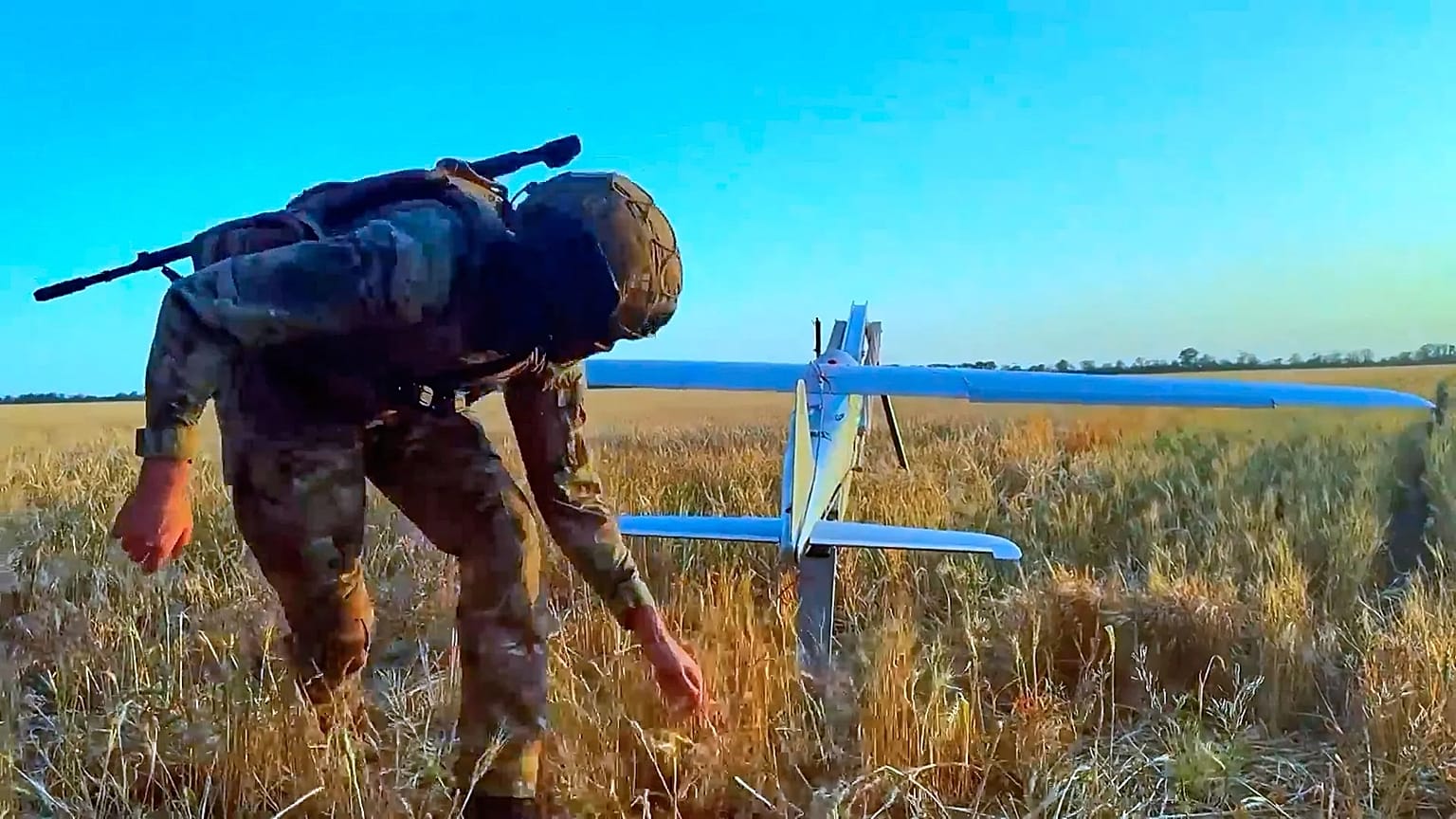
A Ukrainian soldier prepares to launch a drone. Photo Credit: Ukraine Defense Ministry
June 8, 2026
By Paul Goble
Ukrainian drones have not only embarrassed Putin by spoiling his celebrations this year but also and more importantly called into question the long-standing assumption that Russia’s enormous size is an asset that represents “the ultimate guarantee of the state’s invulnerability,” Sergey Medvedev says.
In fact, the Radio Liberty commentator says, as the drone attacks have highlighted, “Russia’s immense territorial bulk … is transforming from an asset into a liability [because] it is virtually impossible to shield or defend” all of it (svoboda.org/a/drony-protiv-imperii-sergey-medvedev-o-territorialjnom-proklyatii/33771956.html).
Russia’s oil and gas infrastructure, its transportation routes, and its defense industries are all dispersed and all are now at risk, Medvedev says. Exclaves like Kaliningrad are even more so, but “even heavily protected areas like Moscow and St. Petersburg are no longer invulnerable.”
“As a result,” he continues, “we have a country burdened with excessive, unprofitable and indefensible territory which it can’t continue to drag further into the 21st century” and like the dinosaurs in the past, “Russia will not survive to the end of this century with its heavy and clumsy territorial body.”
Putin’s war in Ukraine did not begin this process, but it has “only accelerated this process of decolonization and loss of control over space,” Medvedev says. And thus, “having begun the war by seizing territories, Russia will eventually lose them – and not only those it occupied in 2014 and 2022,” but many it occupied centuries earlier.
About Paul Goble
Paul Goble is a longtime specialist on ethnic and religious questions in Eurasia. Most recently, he was director of research and publications at the Azerbaijan Diplomatic Academy. Earlier, he served as vice dean for the social sciences and humanities at Audentes University in Tallinn and a senior research associate at the EuroCollege of the University of Tartu in Estonia. He has served in various capacities in the U.S. State Department, the Central Intelligence Agency and the International Broadcasting Bureau as well as at the Voice of America and Radio Free Europe/Radio Liberty and at the Carnegie Endowment for International Peace. Mr. Goble maintains the Window on Eurasia blog and can be contacted directly at paul.goble@gmail.com .
View all posts by Paul Goble →
Drone from Russia shot down in eastern Latvia, military spokesperson says
Europe has been on high alert for weeks after a string of drone flyovers into NATO airspace, prompting leaders to agree to develop a "drone wall" to better detect and intercept drones violating airspace.
Latvia's military said on Monday that its fighter jets had shot down a drone that entered its airspace earlier in the day.
The National Armed Forces (NBS) said an airspace warning that had been issued had been lifted by 10:30 am local time.
The NBS sent alerts to mobile phones of citizens living in the eastern municipalities of Ludza, Balvi and Alūksne.
A military spokesperson told the Reuters news agency that the drone entered Latvian airspace from Russia.
The latest incident comes just two weeks after the NBS issued a similar alert to resident after detecting "at least one" unmanned vehicle in Latvian airspace.
In a statement posted to X, the NBS initially warned of a "possible threat" to airspace over the eastern regions of Ludza, Krāslava, Rēzekne and Augšdaugava, before confirming it had detected a UAV.
"Seek shelter indoors, close windows and doors - follow the two-wall principle," it told residents.
"If you notice a low-flying, suspicious, or dangerous object, do not approach it and call 112. We will inform you when the threat has ended."
The NBS said it had deployed additional units to Latvia's eastern border to strengthen air capabilities.
Europe has been on high alert for weeks after drone flyovers into NATO airspace reached an unprecedented scale last September, prompting European leaders to agree to develop a "drone wall" along their borders to better detect, track and intercept drones violating Europe's airspace.
In November, NATO military officials said a new US anti-drone system had been deployed to the alliance’s eastern flank.
And following a violation of Polish airspace, NATO Secretary General Mark Rutte announced the formation of the Eastern Sentry programme, which aims to deter further Russian incursions.
Some European officials described the incidents as Moscow testing NATO’s response, which raised questions about how prepared the alliance is against potential threats from Russia.
The Kremlin has dismissed allegations that Russia is behind some of the unidentified drone flights in Europe as "unfounded."
The Baltic states need more drone-detection radars. Europe's defence bottlenecks may slow them down

The Baltic States, like the rest of Europe, are grappling with equipment shortages for the key technologies that will make it easier to respond to drone incursions, experts say.
Recent drone incursions along NATO's eastern flank have reinforced the Baltic states' push to strengthen their air defences.
But defence experts say a shortage of equipment and specialised personnel across Europe could slow efforts to close critical gaps in drone detection and response.
"The industrial capacity is the main constraining factor," Tomas Jermalavičius, head of studies at Estonia's International Centre for Defence and Security (ICDS), told Euronews Next.
As countries across Europe invest heavily in air and missile defence, they are competing for the same radar systems, electronic warfare capabilities and counter-drone technologies from a small handful of providers, experts said.
The result is growing procurement backlogs, rising costs and delivery times that can stretch for years, Jermalavičius said.
‘No country can provide 100% coverage at all times’
To act against a drone, a military needs tracking sensors, effectors to shoot down the drone and an “overarching architecture” that lets operators fully understand what is going on in the air, typically by combining images from a camera feed, as well as radar and acoustic sensor data on a set of screens.
“If there is a lack or gap in any of these elements … then the counter is more difficult,” Federico Borsari, a defence analyst at the Centre for European Policy Analysis (CEPA), told Euronews Next.
The first bottleneck for the Baltic countries is still detecting the drones, he said.
Drones are read differently on current European long and medium-range radar detection systems than other targets, such as aircraft or cruise missiles, because they are made of materials that make it harder to spot them, Jermalavičius said.
“They fly low, they fly slow,” Jermalavičius said. “Drones often can be confused with larger birds or a flock of birds.”
Militaries sometimes deploy fighter jets to get an aerial view of the threat to give them more information about whether they should shoot it down, but doing so is extremely expensive, Borsari said.
The priority for the Baltics, according to Jermalavičius, is to invest more in short and very-short range radios to help track the drones more effectively.
“With a shorter range [radar], the picture is more accurate, it allows for easier identification of what we’re dealing with,” he said, noting that sometimes the longer-range radar systems lose track of where drones often fly into airspace.
They could also integrate a new range of short-range radars into the existing system that the Baltic Air Police have, which includes ground-based early-warning and surveillance radars to detect aircraft, drones and missiles in all three countries, he said.
However, Jermalavičius said there is a limit to how many drones can be deployed at once, so “we have to prioritise very brutally where they would be deployed.”
Despite this, short-range missiles are not a perfect solution to stop every single drone incursion, he said. If a government were to invest only in short-range radar, they could risk under-investing in other areas, such as more cost-effective missiles to intercept the drones.
“No country can provide a 100% coverage at all times, in all places, of all potential targets against all types of threats,” Jermalavičius said. “There will be a drone which will always get through no matter what.
Countries like the Baltics and Poland, along the eastern flank of the NATO alliance, know that they need to make these investments but that “it’s not something you can build overnight,” Borsari explained.
The Baltics should also be weighing short-term radar investments with buying new technologies, such as high-energy lasers that are affordable and very effective against drones, Borsari said.
‘Everyone’s competing for the same equipment’
However, there are many barriers to getting these short-term radars in place throughout the Baltic defence line, both experts said.
Jermalavičius said it can take up to 24 months to produce and deliver a single radar system, which means the availability of companies greatly determines when and whether the Baltics and the rest of Europe get short-range radars.
“Europe in general faces massive air defence gaps which are pretty chronic,” Jermalavičius said. “Everybody’s competing for the same equipment … so everybody goes to the same vendors, the same producers … and then it becomes a very tight race.”
There are other types of equipment that drone detection also needs, such as acoustic sensors, electro-optical and infrared sensors, which are lacking throughout Europe, Jermalavičius said.
Another difficulty for building the tech needed for drone detections is a shortage in expertise and staff, Jermalavičius and Borsari both said.
“We are small countries, our labour markets are very competitive, these are very technical professions, so availability of qualified personnel who could be equipped and put into operational duties is another major constraining factor,” Jermalavičius explained.
Effective drone response also includes an interconnected system where a threat in one Baltic country can be detected in another.The Baltics have a “very well integrated” air surveillance system, called Boltnet, that shares threat detection between the countries, Jermalavičius said.
If an Estonian radar in Boltnet detects a threat and tracks it, the information is shared with Latvian and Lithuanian air surveillance operators as well as NATO’s integrated air and missile defence systems to coordinate a response.
However, Jermalavičius highlighted that Boltnet also needs to integrate “other actors” on the ground, such as Baltic Air Policing or the Territorial Defence Forces, to better respond to drone detection.

No comments:
Post a Comment