Saturday, August 26, 2023

World’s largest sugar producer India to make a call on export ban amid global food price crisis

Stuti Mishra
Fri, 25 August 2023 

A labourer carries a sack of sugar at a warehouse in Jammu, India (AP)

As speculation swirls around the possibility of India imposing a ban on sugar exports for the first time in seven years, the Indian Sugar Mills Association (ISMA) has denied an immediate ban was on the cards but added that a decision could be taken in the next few weeks.

A potential decision to ban sugar exports by the world’s second-largest exporter of the commodity could have significant global repercussions amid already increased prices internationally, with fears triggering of further inflation on global food markets.

A recent report by Reuters, quoting three government sources, said the south Asian country was expected to ban mills from exporting sugar in the next season beginning in October due to reduced cane yields this year caused by lack of rains.

“Our primary focus is to fulfil local sugar requirements and produce ethanol from surplus sugarcane,” an unnamed government source told the news agency.

“For the upcoming season, we will not have enough sugar to allocate for export quotas.”

Indian government sources, however, told news channel CNBCTV18 that a decision is yet to be taken.

The outlet quoted a source as saying that decisions regarding the sugar export policy for the 2023-24 period would be taken “at an appropriate time based on available estimates of sugarcane and the sugar season”.

“While it’s tempting to speculate on exports at this stage, we will approach the government in September/October, depending on the crop situation and the availability of sugar surplus,” ISMA stated, according to the outlet.

Aditya Jhunjhunwala, president of ISMA, also told The Economic Times newspaper that there is no official intimation from the government on any potential sugar export ban yet. However, he added that the government and the industry will be “looking at the final numbers of the crop” and “we will know that only after middle of October or maybe end of September”.

Concerns are already rising even before a decision is reached as the absence of India, a major player in the global sugar market, could potentially drive benchmark prices in New York and London.

In the ongoing season, Indian sugar mills were permitted to export a modest 6.1 million tonnes until 30 September, a significant reduction from the record-breaking 11.1 million tonnes allowed in the preceding season, according to Reuters.

This decision came after India’s top cane-growing districts saw half the average amount of rain this year and its sugar production could fall as much as 3.3 per cent – to 31.7 million tons – for the season starting October.

This comes after the country also limited its exports of non-basmati white rice in a move that took about a fifth of international rice stocks off the market.

The International Monetary Fund has raised concerns over India’s rice export ban, saying it could have the same global impact as the suspension of Black Sea grain deal. Last year, India’s move to ban wheat exports led to a global outcry.

The Indian government has been trying to stabilise domestic prices of key crops as the south Asian nation suffers through repeated wraths of the climate crisis – heatwaves, droughts and erratic rainfall have all impacted crop production this year.

Prices of some home staples have skyrocketed in recent days, particularly of tomatoes, leading to shortages, robberies and even consumers travelling to neighbouring Nepal to find supplies.
Couple victims of homophobic attack as they returned from UK Black Pride

Miriam Burrell
Fri, 25 August 2023 

(Michael Smith/BBC)

A couple heading home from Black Pride were treated in hospital after falling victim to a homophobic attack while waiting at a bus stop in Brixton, south London.

Teacher Michael Smith and his boyfriend, performer Nat Asabere, were waiting on Brixton Road when a stranger approached and assaulted them as a bus pulled up around 11pm last Saturday.

Mr Smith had to receive stitches in his lip after he said he was punched in the face. He recalled running onto the bus for safety, with blood pouring from his lip and onto his clothes.

“All of a sudden, a stranger who was also waiting at the bus stop, hit the guy who I was with and then started hitting me in the face,” he wrote on Just Giving.

“Luckily the bus we were getting turned up and we ran on it. That’s when I noticed blood on my t-shirt and it was coming from my mouth. I was punched so much that I had a split lip.

“Obviously, the experience was horrible. I was in shock and so confused what happened. But I’m not going to let this get to me.

“I am not looking for sympathy or pity because I see myself as being lucky. There have been LGBTQ+ people who have been hurt a lot worse than me, or even killed.”


(Michael Smith/BBC)

The attack comes less than a week after two men were stabbed outside LGBTQ+ nightclub Two Brewers in Clapham and taken to hospital, in a separate homophobic attack.

Last week Metropolitan Police released CCTV images of a man they want to speak to as part of their investigation, while Mayor Sadiq Khan vowed to “never stop fighting for the safety, rights and dignity of the LGBTQ+ community”.

In a post on Instagram, one of the victims, named only as Neil, wrote: “I could never be prouder or more gay than I am today”.

Following the incident on Saturday, Mr Smith set up a JustGiving page to raise money for Stonewall, a charity which supports LGBTQ+ people and who campaigns to drive change in public attitudes and public policy.

In a video posted to social media, Mr Smith said he has experienced a “rollercoaster of emotions” and wanted to “channel those emotions to make something that was absolutely horrible and turn it into something positive”.

He said: “I don’t want people to be scared of going out, I don’t want people to be worried or anxious because you shouldn’t be. If anything, be proud of who you are.

“Just celebrate yourself because if anything, this has made me stronger, this has made me proud of being gay.”

Metropolitan Police are investigating the incident as a homophobic attack. Although it is unclear what if anything was said to them, the couple believe the assault was motivated by homophobia.

Detective Sergeant Simon Allen said: “This is a horrific and truly shocking attack and we know that this is likely to concern local people, especially those from the LGBT+ community.

“We stand with you in our utter disgust and are doing all we can to trace the suspect involved in this cruel and unprovoked attack.

“We have carried out a number of CCTV enquiries and we are now appealing for help from members of the public to assist with our investigation.

“We believe there were several people in the immediate area at the time of the incident, who may be potential witnesses and we would urge those people to come and speak with police.”

The force said in a statement: “The incident was reported to police the following day, Sunday 20 August.

“While the investigation is ongoing, at this stage the incident is being treated as a homophobic attack. At this time no arrests have been made.

“The victims are currently being supported by a dedicated LGBT+ Community Liaison Officer. Their role is to support individuals who have been involved in hate crimes towards the LGBT+ community.”

Sexual orientation hate crimes in England and Wales rose by 41 per cent to 26,152 for the year ending March 2022, according to Home Office data.

It’s the largest annual percentage increase since records began in 2012, the BBC reports.
UK
Read the letter in full: Barge asylum seekers tell of 'terrifying experience'

Dorset Echo
Fri, 25 August 2023 

The Bibby Stockholm barge (Image: PA)


Dear Madam/Sir,

We, as a group of 39 asylum seekers from different countries, are writing to describe and explain our concern regarding the current situation.

We are writing to explain that we were running from persecution, imprisonment and harsh tortures, with hearts full of fears and hope from the countries we were born in, to find safety and freedom in your country and our new refuge.

It is hard to Imagine that we, who used to live under harsh tortures and danger of persecution in our country, have been forced to leave our homes, our jobs and our families, and some of us haven't seen our families for months.

This abandonment and separation from our family has been bitter and painful, and has been accompanied day by day with anxiety and nervous stresses and only a combination of hope and fear remains within us.

We arrived in Britain with the hope of a better future and, at the very least, some mental peace away from worries and past stresses.

For about 6 months, or for some individuals, a year, we have experienced unemployment without income, the ability to study, or basic rights.

Despite all the hardships and discomforts of life in temporary hotels, we were informed that we would be moved from one place to another: the Barge "Bibby Stockholm."

A harsh tragedy that requires no explanation from your knowledge.

We were contacted by support organisations and lawyers and the recommendations given to us not to go on the Barge, unconsciously, this mindset has arisen for all of us that they intend to take us to an unsafe, frightening, and isolated place.

Because we are law-abiding individuals and wish to be recognized as responsible and good citizens in society, we decided to accept the authorities' decision and, despite all the stress and disappointments, act according to the written directive from the Home Office.

In doing so, our first priority was to respect the government's decisions and follow the laws.

Therefore, without the slightest protest, we boarded the ship.

Even though we felt that the ship was largely a place for troublemakers and lawbreakers. But as individuals who want to adhere to laws and civic values, we accepted this decision.

This decision was very difficult, and we accepted it courageously and without the smallest objection.

But how can one imagine to what extent we will move forward in this unknown darkness?

Given that the government had repeatedly been warned about various dangers and disasters, stating that if they continued with their plans, those inside the ship would be endangered.

After days of fear, disappointment, and stress, the appointed day finally arrived, and under the heavy media pressure, we were transferred to our place of exile by "Home Office" buses.

A confined and floating space on the water with strict security regulations, while none of us were criminals or had committed any wrongdoings, and we had no access to the city and normal life.

Small rooms and a terrifying residence.

When we entered the ship, it felt as if we were entering a world full of new anxieties and fears.

On one hand, the fear of facing the questions of journalists prevented us from leaving the ship, and on the other hand, no one knew what awaited us in terms of our physical and mental health, even the compassionate messages and sympathetic looks of friends had become unbearable for us.

During the few days of staying on the ship, we experienced very difficult conditions. Fear of the future, concern about the new country's situation, and the possibility of disease spreading in confined environments were among the issues we faced.

The lack of sufficient information about our situation and future caused doubt and uncertainty. Stress and anxiety were evident in all of us, and we had no plans for the future.

During our stay on the barge, we were informed of concerning incidents: some people on board had fallen ill, but strangely, the official permission to release this news was not given.

Also, in a tragic incident, one of the asylum seekers attempted suicide, but we acted promptly and prevented this unfortunate event. Considering the ongoing difficulties, it's not unexpected that we might face a repeat of such situations in the future. Some friends even said they wished they had the courage to commit suicide, and our personal belief is that many of these individuals might resort to this foolishness to escape from problems in the future.

These events indicate the tensions and problems we have faced in these difficult conditions and emphasise the greater importance of our mental and physical well-being in these environments.

On the morning of August 11th, news spread about the presence of an epidemic on the ship.

Some of us displayed symptoms of Legionella disease, but no one responded to us, the Home Office did not contact us, and everyone was in shock and fear.

In the afternoon of that day, as the last individuals to learn about this problem, we were informed that we would temporarily be moved to a new location, so that the ship's conditions could be reevaluated. We were compelled to comply with this request.

Currently, we are staying in an old and abandoned hotel. The sense of isolation and loneliness has taken over us, and psychological and emotional pressures have increased significantly. We even lack the desire to live and perform any tasks. The absence of tranquillity, comfort, and basic needs has become our daily concerns. Striving for a freedom that is deteriorating in these exhausting conditions.

With hope for your understanding and attention, we have expressed all the mentioned matters in this letter. We kindly request that you consider our situation as a priority and support us through the necessary guidance and assistance during these difficult times. We are individuals who are tired of the challenges that have arisen and no longer have the strength to face them.

Even the presence in religious places, which were the only source of solace, warmth, and acquaintance with kind and sympathetic individuals for us, has become confusing due to these numerous relocations.

Now, we seek refuge in you and hope to walk alongside you on this path with your support and unity. We believe that with our joint effort, we can overcome these unfavourable conditions and achieve the peaceful and secure life that we aspire to.

Respectfully and hopefully, The 39 refugees who were placed on the Bibby Stockholm

Dozens of reindeer have been killed for crossing into Russia, as Norway fixes Arctic fence

Euronews Green
Fri, 25 August 2023 

Dozens of reindeer have been killed for crossing into Russia, as Norway fixes Arctic fence


Norway is rebuilding a dilapidated reindeer fence along its border with Russia in the Arctic to stop the animals from wandering into the neighbouring country. These are costly strolls for Oslo, which has to compensate Moscow over loss of grassland.

So far this year, 42 reindeer have crossed into Russia seeking better pastures and grazing land, according to Norwegian officials.

The reindeer barrier along the Norway-Russia border spans 150 kilometres and dates back to 1954. The Norwegian Agriculture Agency said a stretch of about 7 kilometres between the Norwegian towns of Hamborgvatnet and Storskog would be replaced.

The construction, with a price tag of 3.7 million kroner (around €496,000), is to be completed by 1 October, the agency said.

How expensive are the reindeer crossings for Norway?


People work to build a new fence along the border with Russia, next to Storskog, Norway, 23 August 2023. - HT Gjerde Finnmark/AP

The work is a challenge, however, as the workers have to stay on the Norwegian side of the border “at all times" during construction, "which makes the work extra demanding,” said Magnar Evertsen of the agency. If a worker crossed into Russian territory, without a Russian visa, that would amount to illegal entry.

The reindeer crossings bring on a lot of additional bureaucracy. Russia has sent two compensation claims, the agency said.

One claims is for nearly 50,000 kroner (€6,700) per reindeer that crossed into Russia to graze in the sprawling Pasvik Zapovednik natural reserve in the Russian Murmansk region. The other claim is asking for a lump sum of nearly 47 million kroner (around €6.3 million) in total for the days the animals grazed in the park, which consists mostly of lakes, rivers, forests and marshland.

The agency said that of the 42 animals that entered Russia this year, 40 have been brought back to Norway and the remaining two are expected to come back soon.

The latest right-wing panic? Joe Biden is coming for your ceiling fans!


Kelly McClure

SALON

Fri, August 25, 2023

Photo by Gado/Getty Images

Much like any attempt to tighten up gun safety policies (or gas stoves, for that matter) tends to lead to a "MY COLD DEAD HANDS!" panic, news that the U.S. Department of Energy is proposing a new rule that would make ceiling fans more energy efficient is sending right-wingers into a flurry of heated emotion — with Joe Biden as the first choice for where to hurl the blame.

As Newsweek points out in their coverage of this, using intel from a DOE spokesperson, "These proposed standards, which are required by Congress [and] wouldn't take effect until 2028, would give Americans more energy efficient options to choose from, and would save hardworking taxpayers up to $369 million per year, while substantially reducing harmful air pollution—a crucial fact that some have conveniently failed to mention." They add that, "Biden has made climate change and the green energy transition a massive focus of his administration by passing laws like the Inflation Reduction Act . . . and has also has taken smaller steps to reduce the nation's carbon footprint as well, such as establishing stricter regulations for gas stoves and dishwashers." And while none of this accurately translates to him personally ripping appliances out of the wall, the intent here does not compute for a certain faction of the population. Texas Congressman Ronny Jackson is a good example of this, expressing his all-caps concern to social media on Friday with the message: "GET YOUR FILTHY TYRANT HANDS OFF OF MY CEILING FANS!!"

According to a proposed rule from the DOE published on June 22, "DOE's analyses indicate that the proposed energy conservation standards for ceiling fans would save a significant amount of energy." Where's the issue? Well, another Congressman, Ben Cline from Virginia, will present you with one, adding his own take on the matter: "First, they went after your car. Then, they targeted your gas stoves. Now, they are coming for your ceiling fans. America will continue to reject the Biden Climate Police's authoritarianism." Wait till these men learn about sunscreen! In the wake of that event, Biden could very well be accused of coming for the sun.

Oil companies sue U.S. over Gulf auction changes meant to protect whale

Reuters
Thu, August 24, 2023 

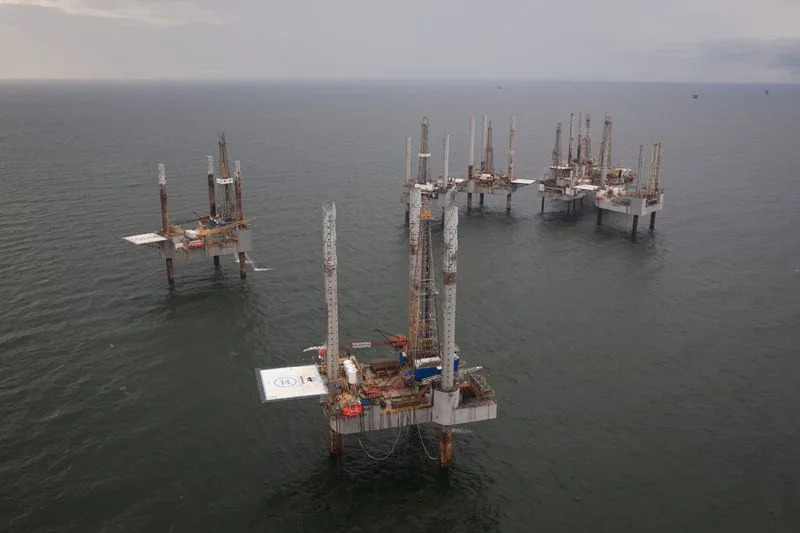
FILE PHOTO: Unused oil rigs sit in the Gulf of Mexico near Port Fourchon, Louisiana


(Reuters) - An oil and gas industry trade group, the state of Louisiana and Chevron on Thursday sued the Biden administration over its decision to withdraw acreage from an upcoming oil and gas lease sale in the Gulf of Mexico to protect an endangered whale.

The suit is the latest dispute between the oil and gas industry and the administration of President Joe Biden over leasing federal lands and waters for energy development.

Biden paused federal drilling auctions shortly after taking office in 2021 as part of his climate change agenda, but the year-old Inflation Reduction Act requires that the government hold the Gulf of Mexico lease sale planned for next month.

The lawsuit, filed in federal court for the Western District of Louisiana, comes after the Interior Department's Bureau of Ocean Energy Management on Wednesday finalized plans to conduct the lease sale. The final sale notice included new restrictions on development meant to protect the endangered Rice's whale.

"Today we're taking steps to challenge the Department of the Interior's unjustified actions to further restrict American energy access in the Gulf of Mexico," American Petroleum Institute Senior Vice President and General Counsel Ryan Meyers said in a statement.

The Interior Department did not immediately respond to a request for comment.

The new lease stipulations removed more than 6 million acres (2.4 million hectares) originally intended to be offered at the auction and require vessel operators maintain a vigilant watch for the whales and abide by speed restrictions in the whale's habitat.

API argued that the changes were unjustified and unlawful.

The changes stem from an agreement earlier this month between federal agencies and environmental groups that sued in 2020 alleging the government did not provide adequate safeguards for the whales. That lawsuit is now paused.

Lease Sale 261 will be held on Sept. 27 and will offer approximately 12,395 blocks on approximately 67 million acres (27 million hectares) on the U.S. Outer Continental Shelf in the Western, Central, and Eastern Planning Areas in the Gulf of Mexico.

(Reporting by Mrinmay Dey and Nichola Groom; Editing by Michael Perry)

Decapitated skulls — full of cavities and gems — from ancient Maya uncovered in Mexico

Brendan Rascius
Fri, August 25, 2023 

Photo from INAH

Over 1,000 years ago, multiple Mayan men were decapitated at a temple in modern-day Mexico.

Now, archaeologists have unearthed their skulls, shedding light on the culture and health of the Mayans, a people who once inhabited a wide swath of Latin America.

The remains were uncovered at the Moral-Reforma Archaeological Site in the jungle of southeastern Mexico, according to an Aug. 23 news release from the National Institute of Anthropology and History (INAH).

Five skulls, in addition to fragments of other bones, were found buried under less than a foot of soil. All of them belonged to males between 17 and 45 years of age.

Based on observed cut marks, archaeologists determined at least two of the men had been decapitated at a nearby temple during the Late Classic Period, which lasted from 600 to 900 A.D.

Additionally, all five skulls were elongated, indicating the men had their heads artificially deformed at a young age. The practice, which would have been accomplished through splinting, was typically associated with the upper echelons of Mayan society.

Cranial modification may have been done to prevent infants from falling ill and to emulate Mayan gods portrayed as having long heads, according to a study published in the Journal of Anthropological Sciences.

Three of the skulls also contained dental cavities, indicating the men regularly consumed carbohydrates, likely from corn, archaeologists said. One of the skulls also contained a jade stone embedded in a tooth.

Dental modification was common among the Mayans and was practiced among people of varying social status, according to the book “Ancient Maya Teeth.” People polished, filed and drilled their teeth, sometimes attaching decorated pieces of pyrite and jade.

The remains of more than 40 Mayans have been uncovered at the archaeological site during the most recent excavation season, archaeologists said.

Texas nuclear waste storage permit invalidated by US appeals court


Fri, August 25, 2023 

FILE PHOTO: William F. Buckley Program at Yale University in New Haven, Connecticut

By Clark Mindock

(Reuters) - A U.S. appeals court on Friday canceled a license granted by a federal agency to a company to build a temporary nuclear waste storage facility in western Texas, which the Republican-led state has argued would be dangerous to build in one of the nation's largest oil basins.

A three-judge panel of the New Orleans-based 5th U.S. Circuit Court of Appeals found that the U.S. Nuclear Regulatory Commission lacked the authority under federal law to issue permits for private, temporary nuclear waste storage sites.

The license, which was issued in 2021 to project developer Interim Storage Partners LLC, was challenged by Texas as well as west Texas oil and gas interests that opposed the facility.

U.S. Circuit Judge James Ho, writing for the court, agreed with Texas that the Atomic Energy Act does not give the agency the broad authority "to license a private, away-from-reactor storage facility for spent nuclear fuel."

Ho, an appointee of Republican President Donald Trump, said a license for that kind of a facility also conflicts with a U.S. law called the Nuclear Waste Policy Act, which prioritizes permanent storage solutions and otherwise allows temporary storage of nuclear waste only at reactors themselves or at federal sites.

Representatives for the NRC, Texas Governor Greg Abbott's office and the developer did not immediately respond to requests for comment.

Abbott and other state officials had petitioned the court in 2021 to review the order by the agency authorizing Interim Storage Partners to receive and store up to 5,000 metric tons of spent fuel and about 230 metric tons of low-level radioactive waste for 40 years at a planned repository in Andrews County, Texas.

Abbott opposed the plan, saying he would not let Texas become "America's nuclear waste dumping ground."

The plan for a temporary facility was devised in order to address a growing nuclear waste problem in the United States. The Andrews County site was chosen after efforts to build a permanent storage facility in Nevada fell apart amid fierce local opposition.

(Reporting by Clark Mindock in New York; Editing by Will Dunham)

Did the Tonga eruption cause this year's extreme heat?

Patrick Pester
Fri, August 25, 2023 


Maxar overview satellite imagery shows the Hunga Tonga-Hunga Ha'apai volcano.

The Hunga Tonga-Hunga Ha'apai eruption in January 2022 was one of the biggest volcanic eruptions in recorded history. Detonating underwater with the force of 100 Hiroshima bombs, the blast sent millions of tons of water vapor high into the atmosphere.

Some commentators have speculated in recent weeks that the volcano is to blame for searing summer temperatures and are even using the volcano to cast doubt on the role humans are playing in climate change, as reported by The Hill.

So is the gigantic eruption responsible for this summer's sweltering conditions?

"The short answer is no," Gloria Manney, a senior research scientist at NorthWest Research Associates and New Mexico Institute of Mining and Technology, and Luis Millán, a research scientist at NASA's Jet Propulsion Laboratory, told Live Science together in an email.

"Even though El Niño has made the global temperature higher and the Hunga Tonga-Hunga Ha'apai eruption might have affected some regions for a short time, the main culprit is climate change," they said.

And numerous studies show that the massive eruption isn't causing this climate change — human activites such as the burning of fossil fuels are the driving factor.

Related: Tonga eruption's towering plume was the tallest in recorded history
Why are some people blaming the volcano?

Massive volcanic eruptions usually reduce temperatures because they spit out vast amounts of sulfur dioxide, which form sulfate aerosols that can reflect sunlight back into space and cool Earth's surface temporarily, the researchers explained.But the Tonga eruption had another effect because it occurred underwater.

"The Hunga Tonga-Hunga Ha'apai eruption is peculiar because, in addition to causing the largest increase in stratospheric aerosol in decades, it also injected vast amounts of water vapor into the stratosphere," Manney and Millán said.

Water vapor is a natural greenhouse gas that absorbs solar radiation and traps heat in the atmosphere. The aerosol and water vapor impact the climate system in opposing ways, but several studies have proposed that, due to its larger and more persistent water vapor plume, the eruption could have a temporary net surface warming effect, Manney and Millán said.

A study published in the journal Nature Climate Change in January estimated that the eruption increased the water vapor content of the stratosphere by around 10% to 15% — the biggest increase scientists have ever documented. Using a model, they calculated that the water vapor could increase the average global temperature by up to 0.063 degrees Fahrenheit (0.035 degrees Celsius), Eos magazine reported in March.

Some commentators linked the eruption to warming because of this finding, and other studies suggesting a potential warming effect, but researchers involved in these studies have been clear that the volcano isn't a major factor in our wild weather.

"It's probably fair to say that the influence of [the volcano] on this year's extremes is quite small," Stuart Jenkins, a climate scientist and postdoctoral researcher at Oxford University in the U.K. and lead author of the January study, told The Hill.


The underwater Hunga Tonga-Hunga Ha'apai volcano eruption on Jan. 15, 2022.


The bigger climate picture

Earth's warming trend predates the eruption. July may have been the hottest month on record for global temperatures, but the five hottest Julys have all been recorded in the past five years, according to NASA.

Manney and Millán said that more detailed models are needed to reveal how much impact the eruption had on global temperatures relative to burning fossil fuels and the El Niño, but the effects are expected to be much smaller than those from burning fossil fuels.

RELATED STORIES

Tonga 2022 eruption triggered the most intense lightning storm ever recorded

Record-breaking Tonga volcano generated the fastest atmospheric waves ever seen

Tonga's eruption injected so much water into Earth's atmosphere that it could weaken the ozone layer

"Last July's record-breaking global temperatures are just a preview of what may happen if we do not take more bold and ambitious climate action," they said.

In May, the United Nations' World Meteorological Organization warned there's a 66% chance that annual mean global surface temperatures will likely cross a dangerous 2.6 F (1.5 C) warming threshold at some point in the next five years.

At 2.6 F of warming, extreme heat waves will become more widespread, with higher chances of droughts and reduced water availability, according to NASA.

Going above 2.6 F could trigger climate tipping points such as the collapse of the Greenland and West Antarctic ice sheets.

New framework for oceanographic research provides potential for broader access to deep sea scientific exploration


Shore-based ability to observe and control robotic sampling processes now possible


Peer-Reviewed Publication

WOODS HOLE OCEANOGRAPHIC INSTITUTION

A new framework for oceanographic research 

IMAGE: A NEW FRAMEWORK FOR OCEANOGRAPHIC RESEARCH PROVIDES A WAY FOR SHORE-BASED OBSERVATION AND CONTROL OF ROBOTIC SAMPLING PROCESSES. view more 

CREDIT: ILLUSTRATION CREDIT: ©PHUNG, BILLINGS, DANIELE, WALTER, CAMILLI


Woods Hole, Mass. (August 23, 2023) -- Scientific exploration of the deep ocean has largely remained inaccessible to most people because of barriers to access due to infrastructure, training, and physical ability requirements for at-sea oceanographic research.

Now, a new and innovative framework for oceanographic research provides a way for shore-based scientists, citizen scientists, and the general public to seamlessly observe and control robotic sampling processes.

The Shared Autonomy for Remote Collaboration (SHARC) framework “enables remote participants to conduct shipboard operations and control robotic manipulators” – such as on remotely operated vehicles (ROVs) –“using only a basic internet connection and consumer-grade hardware, regardless of their prior piloting experience,” according to a paper in Science Robotics, “Enhancing scientific exploration of the deep sea through shared autonomy in remote manipulation.” The framework has been developed by a research team from the Woods Hole Oceanographic Institution (WHOI), the Massachusetts Institute of Technology (MIT), and the Toyota Technological Institute at Chicago (TTIC).

The SHARC framework enables real-time collaboration between multiple remote operators, who can issue goal-directed commands through simple speech and hand gestures while wearing virtual reality goggles in an intuitive three-dimensional workspace representation.

Through SHARC, “we can open up the operational aspects of deep sea exploration to citizen scientists, whether they be kids in a classroom or people who can’t be present on a ship because of logistical or physical requirements,” said co-author Richard Camilli, a principal investigator for the project and scientist in WHOI’s Applied Ocean Physics and Engineering Department. “Citizen scientists can interact with the ROV’s robotic manipulator arm in a virtual world, somewhat analogous to the science fiction ‘holodeck’ holographic system used on Federation starships on Star Trek.”

The human-robot interaction—sometimes referred to as shared autonomy—that SHARC enables, delegates responsibilities between the robot and the human operator based on their complementary strengths. The robot, for instance, can handle kinematics, motion planning, obstacle avoidance, and other low-level tasks, while human operators take responsibility for high-level scene understanding, goal selection, and task-level planning. In addition, SHARC allows for parallel, rather than sequential operation.

“We just give the robot its goal, and it finds a solution,” said Camilli. “People and the robot can collaborate together, where we’re not waiting for one thing to happen in order to do the next thing. While the robotic arm is executing a task, we can be focusing on the next goal.”

In September 2021, during the height of the Covid pandemic, scientists successfully tested SHARC. During an oceanographic expedition in the San Pedro Basin of the Eastern Pacific Ocean, SHARC team members operated WHOI’s Nereid Under Ice (NUI) hybrid ROV from thousands of kilometers away using SHARC’s virtual reality and desktop interfaces. The team members – physically located in Chicago, Boston, and Woods Hole – collaboratively collected a physical push core sample and recorded in-situ X-ray fluorescence measurements of seafloor microbial mats and sediments at water depths exceeding 1000 meters.

“This paper really highlights shared autonomy's potential to help democratize access to the deep sea,” said lead author Amy Phung, who is a student in the MIT-WHOI Joint Program in Oceanography/Applied Ocean Science and Engineering, graduate degree program. Phung was one of the scientists operating the NUI vehicle during the 2021 test of SHARC. “With SHARC, our shore-side team was able to collect seafloor samples from over 4000 kilometers away without specialized hardware or extensive prior training. In the future, I believe that further advancements in robotics and autonomy research can someday enable shore-side scientists, students, and enthusiasts to actively participate in and contribute to deep-ocean exploration operations as they occur, which in turn can help to foster ocean literacy among the general public.”

“Whether it is on land, air, or in the ocean, most robots that operate today do so in one of two distinctly different ways: full autonomy or full remote control by highly trained pilots, with the latter being standard for settings like underwater manipulation that involve complex interactions between robots and their environment. This paper describes a new framework that enables robots to operate in between these two extremes in a way that takes advantage of the complementary capabilities of robots and humans,” said co-author Matthew Walter, associate professor at TTIC. Walter also currently is a WHOI guest investigator; previously, he was a student in the MIT-WHOI Joint Program. “SHARC allows people with little-to-no training to perform sophisticated tasks with deep-sea robots, with pilot oversight, from the comfort of their homes and offices through a combination of speech and virtual reality and, in turn, promises to redefine how we use robots for marine science and engineering.”

In addition, SHARC is not dependent on a specific kind of ROV, manipulator arm, or other factors. “We can apply the same SHARC technology with totally different robotic arms and vehicles in completely different contexts,” said Camilli. The SHARC framework “is flexible and hardware-agnostic.”

“By  using the SHARC framework for scientific exploration in the deep sea – which is a very challenging and unstructured environment – it highlights that this technology can be transferable to many different operational contexts, as well, potentially including subsea scientific infrastructure maintenance, deep space operations, nuclear decommissioning, and even unexploded ordnance remediation,” Camilli added.

Funding for this research was provided by the National Science Foundation (NSF) National Robotics Initiative, NASA’s Planetary Science and Technology from Analog Research (PSTAR) program, NSF Graduate Research Fellowship, and the Link Foundation. The NOAA Ocean Exploration Cooperative Institute provided in-kind support with ship and robotic vehicle operations during 2021 Pacific Ocean demonstrations in the San Pedro Basin.

Authors: Amy Phung1,2, Gideon Billings2, Andrea F. Daniele3, Matthew R. Walter3, Richard Camilli2 *

Affiliations:

1Massachusetts Institute of Technology; Cambridge, MA

2Woods Hole Oceanographic Institution; Falmouth, MA

3Toyota Technological Institute at Chicago; Chicago, IL

*Corresponding Author

About Woods Hole Oceanographic Institution

The Woods Hole Oceanographic Institution (WHOI) is a private, non-profit organization on Cape Cod, Massachusetts, dedicated to marine research, engineering, and higher education. Established in 1930, its primary mission is to understand the ocean and its interaction with the Earth as a whole, and to communicate an understanding of the ocean’s role in the changing global environment. WHOI’s pioneering discoveries stem from an ideal combination of science and engineering—one that has made it one of the most trusted and technically advanced leaders in basic and applied ocean research and exploration anywhere. WHOI is known for its multidisciplinary approach, superior ship operations, and unparalleled deep-sea robotics capabilities. We play a leading role in ocean observation and operate the most extensive suite of data-gathering platforms in the world. Top scientists, engineers, and students collaborate on more than 800 concurrent projects worldwide—both above and below the waves—pushing the boundaries of knowledge and possibility. For more information, please visit www.whoi.edu

Key takeaways:

•          Scientific exploration of the deep ocean has largely remained inaccessible to most people because of barriers to access due to infrastructure, training, and physical ability requirements for at-sea oceanographic research. Now, a new and innovative framework for oceanographic research provides a way for shore-based scientists, citizen scientists, and the general public to seamlessly observe and control robotic sampling processes, with pilot oversight.

•          The Shared Autonomy for Remote Collaboration (SHARC) framework “enables remote participants to conduct shipboard operations and control robotic manipulators” – such as on remotely operated vehicles (ROVs) –“using only a basic internet connection and consumer-grade hardware, regardless of their prior piloting experience,” according to a new paper in Science Robotics.

•          The SHARC framework enables real-time collaboration between multiple remote operators, who can issue goal-directed commands through simple speech and hand gestures while wearing virtual reality goggles in an intuitive three-dimensional workspace representation.

•          “SHARC’s ability to relax infrastructure requirements enables remote scientists and other novice shore-side users to participate without requiring additional bandwidth from the ship or specialized hardware. Thus, SHARC provides a promising avenue for democratizing access to deep-ocean science and expanding scientific engagement to a broader audience, including classrooms and the general public.”