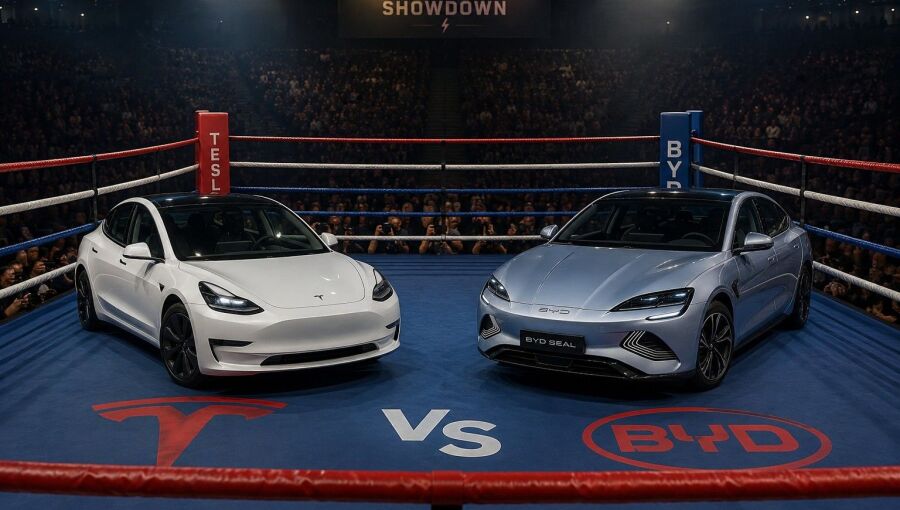
Electric vehicle adoption across South, East and South-East Asia is accelerating, but the region’s transition is increasingly being shaped by domestic industrial policy, Chinese manufacturers and the slow build-out of charging infrastructure rather than by Tesla (NASDAQ:TSLA) alone – the efforts of Elon Musk notwithstanding.
As of mid-2026, China remains the centre of gravity in the EV world.
The country accounts for the overwhelming majority of Asia’s EV sales and continues to set the pace for manufacturing, battery development and charging networks. Yet even within China, the market is changing rapidly. Reporting by Caixin noted that sales momentum weakened after subsidy reductions and changes to tax incentives, exposing how dependent parts of the industry remain on government support. The same reports point to domestic vehicle sales in China falling sharply in early 2026 as consumers adjusted to the new policy environment.
This is, in part, down to Tesla remaining a significant force in China but even the world’s most iconic EV maker is facing intensifying pressure from domestic Chinese rivals.
BYD (SHE: 002594) has overtaken the US group as the world’s largest EV seller in terms of volume of sales, while manufacturers such as Geely, Wuling (HKG: 0305), Nio, Xpeng, Li Auto and Xiaomi (HKG: 1810) continue to gain market share. The South China Morning Post reported recently that low-cost models from Geely and Wuling have of late become some of China’s best-selling EVs, reflecting growing demand for affordable vehicles rather than premium – read: Tesla – imports.
BYD’s strategy to expand its footprint increasingly extends beyond vehicle sales. Reuters reported that the firm is expanding deployment of its assisted-driving technology while investing heavily in autonomous-driving chips and software. Tesla, meanwhile, continues to wait for broader regulatory approvals for some advanced driver-assistance functions in China and it is likely only a matter of time before claims of protectionism arise.
South Korea meanwhile presents a much different picture. The country already possesses extensive charging infrastructure coupled in large part to a mature automotive sector led by Hyundai and Kia – global motoring brands. Tesla in Korea remains one of the strongest-selling imported brands, but Chinese-made EVs are rapidly establishing a solid foothold. Because of this, industry discussions reported by Korean market observers have suggested that Chinese-built vehicles - including Teslas manufactured in China - and models from BYD, are capturing a growing share of imports.
In comparison, neighbouring Japan remains a relative laggard in EV adoption. Consumer demand has been slower than in China or South Korea, while domestic manufacturers have continued to focus heavily on hybrids and there has been some pushback against all-out EVs. However, charging networks are expanding gradually, but battery-electric vehicles still represent a comparatively small share of overall sales.
Chinese brands, for political reasons even if this is denied, have made limited inroads, although competition is expected to intensify as lower-cost imports arrive.
On the subcontinent, India represents one of Asia’s most important long-term growth opportunities. New Delhi has introduced manufacturing incentives, tax breaks and support schemes designed to create a domestic EV ecosystem. This has seen local manufacturers including Tata Motors and Mahindra & Mahindra ( a firm also making headway across Asia with its petrol-powered vehicles) establish strong positions, while global and Chinese brands seek entry into the market although politics again is likely to play a role in keeping them out for a while at least.
The challenge in India though remains infrastructure. Analysis shared through India’s automotive community highlights the reality that public charging availability remains well behind vehicle sales growth, and while demand is expanding quickly in some of India’s biggest cities, charger deployment is struggling to keep pace.
Elsewhere in South Asia, adoption remains uneven. Pakistan is pursuing EV policies and assembly projects but faces infrastructure constraints and electricity supply challenges. Bangladesh meanwhile is witnessing growth in electric two-wheelers and three-wheelers rather than passenger cars. Sri Lanka and Nepal are seeing increasing EV imports, supported by lower fuel-import costs and a raft of government incentives, although, like India and other nations on the subcontinent, charging networks remain few and far between.
Southeast Asia on the other hand has emerged as one of the most competitive EV battlegrounds on the continent. Thailand has become a regional manufacturing hub, attracting major investment from BYD, Great Wall Motor and other Chinese groups. As a result, Bangkok has backed adoption through tax incentives and support for local production. Because of this, Chinese brands now dominate much of Thailand’s EV market.
Vietnam is pursuing a more nationally focused strategy through domestic champion VinFast – a brand now seen increasingly across Asia. The company has rapidly expanded charging infrastructure and established a nationwide presence, making Vietnam one of the few countries in the region where a local brand is leading the transition – for now.
To the south, Indonesia with the largest population in Southeast Asia, is perhaps the most strategically important market. The government has recently sought to leverage the country’s vast nickel reserves to build a complete EV supply chain, from mining through battery production and vehicle assembly. Reporting by The Jakarta Post on this has highlighted how Jakarta’s industrial strategy is increasingly tied to battery manufacturing and downstream nickel processing.
In turn, the country is also investing heavily in its own charging infrastructure and analysts cited by Indonesia’s state-owned news agency Antara claim that government incentives tied to nickel-based batteries are intended to deepen domestic industrial integration while at the same time strengthening the broader EV ecosystem.
Malaysia, Singapore and the Philippines are all making progress but are moving at different speeds. Singapore has developed one of the region’s most ambitious charging roll-outs, backed by strong government policy and urban planning. Malaysia to the north is expanding public charging corridors while attracting manufacturing investment, and the Philippines is playing catch-up, but is seeing rising interest in electrification, particularly in the form of public transportation fleets. Displacement of the nation’s roughly 250,000 jeepneys will take some doing though.
Mixed into all of this across the region is the position of Tesla which can be summarised as ‘mixed’ at best. The company retains considerable brand value thanks to the ever present PR surrounding its CEO – and to some extent remains influential in some areas, notably Taiwan.
However, Tesla is increasingly confronting rivals that combine lower prices, local manufacturing and extensive state support – and losing.
BYD’s scale, Geely’s budget offerings and the emergence of new Chinese technology-focused manufacturers have fundamentally altered the competitive landscape of Asia vis-a-vis EV sales. Reports from Reuters, Caixin and regional media to this end thus suggest the centre of gravity in Asia’s EV market is shifting away from Tesla and decisively towards Chinese brands – the result being an Asian EV transition that looks markedly different from the one envisioned a decade ago.
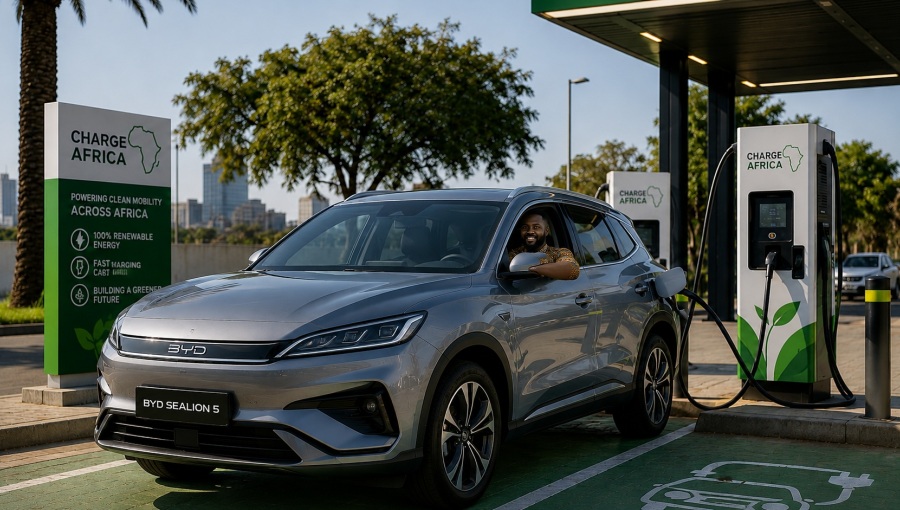
Chinese automaker BYD Company Ltd (SZSE:002594; HKEX:1211) has significantly strengthened its presence in Africa’s emerging electric vehicle (EV) market, increasing its market share to 35% in 2025 from just 4% two years prior, according to the Global EV Outlook 2026 report, published by the International Energy Agency (IEA), which predicts a continental bump in sales owing to the prolonged closure of the Strait of Hormuz.
China’s biggest carmaker, pure-play EV manufacturer – and now the world’s biggest EV maker by unit sales – aims to sell 1.3mn cars outside of its home market in 2026, which would represent an increase of nearly 25% from its 2025 overseas sales. While Asian and Latin American markets are the main focus on its expansion drive, BYD is targeting sales several African countries, including by building charging station infrastructure.
In major electric car markets, such as Europe and the United States, the share of Chinese imports in sales is still relatively limited due to trade measures, consumer preferences and large domestic electric car manufacturing capacity. But “outside these two major markets, Chinese imports accounted for 55% of electric car sales in 2025, up from about 10% in 2021”, the report says, and many countries in Africa now “import more than 80% of their electric cars from China”.
A prolonged high oil price environment is likely to boost the outlook for EV sales in Africa. In emerging market and developing economies (EMDEs), increased gasoline and diesel prices have a larger impact on household incomes since average incomes are lower compared to advanced economies. And so “oil-importing EMDEs across the world have some of the strongest incentives to implement policies to further speed up electric car adoption,” the report notes.
Electric vehicle adoption across Africa remains concentrated in a small number of markets despite rapid recent growth, with regional electric car sales rising from about 4,000 units in 2023 to roughly 25,000 in 2025.
Last year, Egypt led the continent in total EV sales with around 7,900 units sold, followed by Morocco with 5,500 and South Africa with 3,800. Together, the three countries accounted for nearly 70% of Africa’s total electric vehicle sales during the year.
“Buying a brand new EV is not cheap, even for many African markets with slightly better disposable income,” Nigeria-based outlet TechCabal commented on the report’s finding. “BYD has intentionally targeted that group by shipping cheaper EV models in markets like Egypt and South Africa, undercutting competitors like Maxus and Toyota, which recently introduced an EV in the market.”
Morocco emerges as Africa’s EV manufacturing hub, focus of BYD’s main rival, Tesla
US electric vehicle maker Tesla (NASDAQ: TSLA) officially entered the Moroccan market in February, with a launch event in AnfaPlace Mall in Casablanca, showcasing two of its best-selling models, the Tesla Model 3 and Tesla Model Y, alongside home charging solutions.
Morocco has consolidated its position as Africa’s largest automotive manufacturing hub, producing 559,645 vehicles in 2024 (up 5% year on year) and projected to exceed 600,000 units in 2025, according to industry estimates. Output growth contrasts with a 5% y/y decline in South Africa last year (599,755 vehicles), historically the region’s dominant producer.
The North African country also hosts early electric vehicle assembly activity through Chinese and European manufacturers, providing a modest but established EV-production base. By comparison, South Africa – birthplace of Telsa’s chief executive Elon Musk – reports no local production of fully electric vehicles; the auto sector is still oriented towards internal-combustion and hybrid models.
Morocco’s logistics advantages include short shipping routes to European markets and lower transport costs. Policymakers have pursued an expansive EV-sector strategy that includes tax exemptions, reduced import duties, and broad public-charging deployment, with close to 1,000 charging points nationwide.
“Its proximity to Europe — South Africa’s largest target market for exported vehicles — gives Morocco a geographical advantage in terms of supply chains and shipping fees. The country is also ahead of South Africa in EV production, producing 40,000 to 50,000 units in 2024, with plans to increase this. South Africa has not yet produced a single fully electric car,” writes south Africa-based MyBroadband.
Meanwhile, BYD has announced plans to expand its dealership network in South Africa to 35 locations by the first quarter of 2026, having initially set an end of year target. The Chinese company also plans to deploy between 200 and 300 fast-charging stations in Africa’s most industrialised country by the end of 2026. Meanwhile, Chinese OEM Sany is planning to expand production in South Africa.
In December, Eskom Holdings SOC Ltd, South Africa’s state-owned electricity utility responsible for power generation, transmission and distribution, formalised a partnership with BYD Auto South Africa, to expand the country’s public EV charging network.
The cooperation is anchored in a Memorandum of Cooperation signed earlier in 2025, setting out joint objectives to support EV infrastructure development and broaden market uptake. BYD reaffirmed its commitment to the agreement during the launch in Johannesburg of its Sealion 5 Super Plug-in Hybrid SUV, priced from ZAR499,900 (about $26,700), positioning it below many plug-in hybrid electric vehicles currently on sale, which are often priced above ZAR600,000 (around $32,000).
Uganda and Kenya lead Africa’s electric motorcycle growth
Globally, two- and three-wheelers (2/3Ws) remained the most electrified road transport segment in 2025, with about 10% of the global fleet now electric, according to the Global EV Outlook 2026. Sales of electric 2/3Ws increased almost 15% to reach 11mn globally in 2025, representing around 15% of total 2/3W sales. Swapping systems for 2/3Ws are deployed in several African countries, including Kenya, Rwanda and Uganda.
“Sales of electric 2Ws have grown markedly in Africa, from less than 1 000 in 2020 to around 70 000 in 2025,”the report says. “The use of 2Ws for ride-hailing, delivery and other commercial applications – where purchase decisions are especially cost-sensitive – has helped drive up the sales of electric 2Ws, especially in countries such as Uganda and Kenya. Battery-swapping is also being deployed to support the uptake of electric 2Ws used for commercial services in some markets in Africa.”
Uganda has become one of Africa’s fastest-growing markets for electric 2Ws, with sales exceeding 30,000 in 2025, having risen sharply from a low base in 2024. “Key to growth was the rapid scale-up of financing programmes for 2W purchases, led by Kenya-headquartered Spiro, which reported a large rollout in 2025, supported by an expanding battery-swapping network,” the report said.
“Zembo Motorcycles, a company focused on electric 2Ws, which provides battery swaps, secured $1mn in funding from the Dutch entrepreneurial development bank FMO in order to acquire batteries and chargers. Policy measures have complemented private-sector scaling. Uganda’s national e‑mobility agenda includes fiscal incentives intended to attract investment in domestic assembly and manufacturing, including income tax holidays and VAT exemptions for eligible domestically manufactured electric vehicles (EVs) and charging-related equipment.”
In Kenya, high gasoline prices relative to electricity prices, combined with the large share of the population with reliable access to electricity, make a strong economic case for electric 2Ws, the report said. “As a result, year-on-year electric 2W sales more than tripled in 2025, reaching over 25 000 and representing around 15% of new 2W registrations. This rapid growth occurred even despite relatively limited policy support, although in 2025 the government confirmed that domestically assembled electric models would continue to be VAT exempt.”
In South Africa, however, fully electric vehicle sales still represented less than 1% of total new-car sales in 2025. Plug-in hybrid electric vehicles (PHEVs) recorded stronger momentum, accounting for more than 70% of total electric vehicle sales in the country.
Smaller but growing EV markets are also emerging in Ethiopia, Mauritius, Rwanda and Nigeria, reflecting increasing government support, fuel-import pressures and expanding interest in lower-cost electric mobility solutions.
Africa’s used-car market complicates EV transition
At the same time, Africa’s automotive market remains heavily dependent on used vehicle imports from major producing economies including Germany, Japan and the United States. Industry estimates suggest around 60% of annual additions to Africa’s vehicle stock consist of imported used cars, complicating efforts to accurately measure EV adoption across the continent.
Analysts say official registration and sales data often fail to distinguish between new electric vehicles, used imports and so-called zero-mileage exports, making comparisons across African markets difficult.
Ethiopia illustrates the data challenge. Estimates suggest cumulative retail sales of new EVs between 2021 and 2025 totalled only slightly above 2,000 units. However, Ethiopia’s vehicle licensing authority has reported cumulative electric-car sales of around 15,000 units between 2022 and 2024, claiming roughly half of all new cars sold in 2024 were electric.
Domestic manufacturing initiatives are also beginning to emerge. Neo Motors, Morocco’s domestic automaker, launched sales of its first electric model at the start of 2026 as the country seeks to position itself as a regional EV production hub alongside its expanding automotive export industry.

No comments:
Post a Comment