Monday, January 20, 2025

3 Ways Trains are Becoming Greener Than Ever

By Felicity Bradstock - Jan 19, 2025


The world's first carbon fiber metro train launched in China, boasting reduced weight, energy consumption, and carbon emissions.

Italy's IronLev tested a maglev train prototype on existing rail infrastructure, potentially lowering deployment costs.

The U.S. launched its first zero-emission passenger train, powered by hydrogen fuel cells, joining other countries exploring hydrogen rail technology.


Governments and private companies worldwide are racing to find innovative ways to decarbonise transport. This has resulted in the deployment of several new passenger train technologies worldwide. While some are investing in carbon fibre trains, others are looking to alter train tracks to boost efficiency or are exploring the potential for hydrogen fuel cell technology.

This month, the world's first carbon fibre metro train was launched in Qingdao, Shandong province, in China. The Cetrovo 1.0 Carbon Star Express is the first passenger train to be constructed mainly using ultra-strong and light carbon fibre. Conventional metro carriages are built using steel, which is much heavier and takes more energy to move. State-owned CRRC Qingdao Sifang instead opted for carbon fibre, which is now widely used in high-end sports cars to boost their performance. The firm began investing in the research and development for the Cetrovo in 2021 and created several prototypes before the official launch.

The new Cetrovo is around 11 percent lighter than similar conventional trains and is thought to require around 7 percent less energy to power, which could equate to cutting around 130 tons of carbon emissions a year. Carbon fibre is around five times stronger than steel, making the new trains more rigid and impact-resistant. Rides on the metro are also said to be smoother and quieter thanks to the reduction in vibration. During the pilot phase, the Cetrovo reached a speed of 87 mph, which is higher than the 50 mph average of China’s existing metro transport.

In 2024, the Italian firm IronLev carried out the first test of its magnetic levitation (maglev) train, aimed at reducing the costs and energy use of rail transport. The company deployed a one-ton prototype, travelling at a speed of 43 mph over a 2 km journey near Venice. The Maglev technology provides a cushion of air that separates the train from the track, which can help reduce friction, noise, and vibrations. The lack of friction helps decrease the energy demand significantly, as well as lessen maintenance costs.

The technology was deployed in China around two decades ago, although it has not yet been rolled out on a wide scale. While several countries, including Japan and Germany, have explored the potential for maglev systems, the high development costs and incompatibility with existing track systems have deterred many from deploying the technology.

Massimo Bergamasco, the director of the Institute of Mechanical Intelligence at the Scuola Superiore Sant'Anna in Pisa, stated, “The test carried out by IronLev represents the first and only case of magnetic levitation applied to an existing railway track without requiring the modification or integration of accessory elements.”

This varies from most previous tests carried out in other countries where researchers constructed made-for-purpose tracks to use the maglev technology. The use of existing rail infrastructure in Italy shows the potential for the rollout of the technology at a significantly reduced cost.

One of the most sought-after technologies for passenger train transport is hydrogen fuel cells (HFC). Various companies around the globe are investing in the development of HFCs for cars, trucks, trains, and maritime transport in a bid to massively decarbonise passenger transport. As hydrogen is a versatile carrier that can be used for a wide range of applications, many view it as key to decarbonising heavy industries that cannot be powered using other renewable energy sources alone.

Last year, the U.S. launched its first zero-emission passenger train, in San Bernardino, California. The $20-million Zero Emission Multiple Unit (ZEMU) has a 108-passenger capacity and is expected to commence a full service early this year. ZEMU is North America’s first self-powered, zero-emission passenger train to meet Federal Railroad Administration requirements, according to the San Bernardino County Transit Authority (SBCTA). It will serve a 9-mile route with five stops and could encourage the development of other routes if deemed successful.

The train was built by the manufacturer Stadler in Switzerland before being shipped to the U.S. It uses hybrid hydrogen and battery technology for propulsion and to power onboard electrical systems. It is powered by blue hydrogen and emits only water vapour. SBCTA hopes to eventually use green hydrogen to power the train, which is made by using renewable energy to power electrolysis. Germany was the first country to launch a hydrogen-powered train in 2018. The U.K. is also testing hydrogen train technology and France has ordered hydrogen-powered vehicles for its rail system, with operations expected to commence in 2025.


With various innovative train technologies being developed and tested around the globe, there is great optimism about the potential to decarbonise passenger train travel in the coming decades. However, achieving this decarbonisation will require significant investment and the trialling of several different systems to see which works best for a widescale commercial rollout.

By Felicity Bradstock for Oilprice.com

Energy Politics

The backlash against clean energy mandates is growing.

RIGHT WING REVANCHISM

Energy Politics
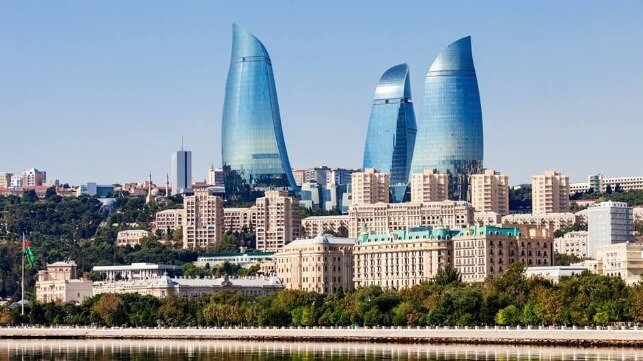
Baku, Azerbaijan, the host city for COP29 (iStock)

Published Jan 19, 2025 6:18 PM by G. Allen Brooks


(Article originally published in Nov/Dec 2024 edition.)


Climate activists recently completed their annual get-together, this time in the iconic oil city of Baku, Azerbaijan. The annual U.N. Climate Change Conference (COP 29) provides a forum for energy executives, climate activists, NGO leaders and policymakers from nearly every country on Earth to mingle while assessing the progress on climate change goals. 

While a great gabfest, the meeting enables pressure to be applied to countries not living up to their 2015 Paris Agreement commitments to cut carbon emissions and for failing to shovel sufficient money to less-developed countries. 

COP 29 began with a bang not anticipated by attendees. Ilham Aliyev, Azerbaijan’s President and COP host, defended his country’s oil and gas resources as “a gift of the Gods.” The conference was already grappling with the prospect of Donald Trump’s re-election, given his pro-hydrocarbons and anti-green views. People speculated Trump would remove the U.S. from the Paris Agreement as he did in 2017. Dismantling climate change policies was part of Trump’s campaign stump speech. 

In recent years, renewable energy’s deficiencies in meeting the globe’s power needs have crippled economies and burdened residents with soaring utility bills. Electricity cost inflation is tied to the growing investment in renewable energy. The public has awakened to the challenges of a warming planet, the increasing world population desiring improved living standards and economies eroded by high energy costs. How to balance these conflicts is the challenge. 

Despite years of promises that the transition from hydrocarbons to renewable energy would be seamless and yield lower electricity and energy bills, the public finds the claims false. Electricity prices are rising faster than overall inflation. Moreover, the public is learning that policymakers caved to climate activists and renewable energy developers by implementing mandates to force the transition and lathering it with subsidies from tax revenues. 

EV Failures

Electric vehicles, once heralded as a game-changer, have fallen short. They produce no carbon emissions. They’re silent, and they’re fun to drive, especially if you enjoy roaring away from stoplights. 

However, the practicalities of buying and owning EVs dashed the popular narrative. EVs remain expensive even after federal, state and local subsidies and price cuts to spur sales. Insurance costs more, and tires wear faster. Importantly, EV owners found that the real-world battery ranges often disappointed. Safety concerns, such as spontaneous battery fires, have prompted some home insurers to deny coverage if EVs are parked and charged in home garages. 

Claims that consumers would flock to showrooms to buy EVs failed to materialize. Domestic automakers are forced to slow their EV investments and lay off rather than hire workers. Instead of being universally embraced, EVs turned auto-manufacturing states into political battlegrounds. Trump’s battleground state victories were helped by autoworker voters fearing for their livelihoods. 

Across the pond in the U.K., 10 Downing Street officials are talking about introducing flexibility in the government’s EV mandate to prevent a collapse of the country’s auto industry. This comes after car maker Nissan warned that the industry was at a “crisis point” and risked crumbling without relief from the mandate. Killing an important industry is not a smart move. 

Soaring Prices

In Europe, economic growth has been undercut by soaring electricity prices that sap consumer spending.  The rush to switch to renewable energy has not brought electricity prices down as advertised. The result is that energy-intensive industries have become uncompetitive, capping a key growth driver for Germany’s economy, Europe’s largest. 

Projections call for Germany’s economy to contract in 2024 for the second consecutive year. 

Germany’s automotive sector, which accounts for five percent of its GDP and employs 800,000 workers, 37 percent of whom work for Volkswagen, has been hard hit. Volkswagen’s financial woes forced it to shutter three German plants for the first time in its 87-year history and cut thousands of jobs.  Volkswagen further plans to reduce remaining workers’ wages by 10 percent. 

“We are not experiencing a crisis in the automotive industry, we are experiencing a crisis in Germany as a business location,” a spokesperson for VDA, Germany’s auto association, said in a statement. Amplifying Germany’s economic problems, a study commissioned by the Federation of German Industries, representing business groups, says one-fifth of Germany’s industrial output is at risk between now and 2030 due to high labor and energy costs, high taxes and an aging population.

Dunkelflaute

Germany’s energy situation was aggravated by the recent Dunkelflaute (“dark wind lull”). This phenomenon can prove economically debilitating as wind was Germany’s leading generator of electricity last year, accounting for 32 percent. Wind’s share was helped by Germany’s industrial energy use falling nearly eight percent last year, the second consecutive year of decline. 

During November’s six-day lull, Germany’s wind output fell to between six and seven percent of its nameplate capacity of 61 gigawatts. One day, it fell to nearly zero. Hydrocarbon-generated electricity supplied 48 percent of the power needed to keep the lights on. 

The wind lull brought bad news for Germany’s electricity customers. Prices soared to €820 ($879) per megawatt-hour, assuring Germany remains home to the most expensive power in Europe.  Residential electricity currently averages 0.40 euros, or about $0.43, per kilowatt-hour compared to $0.17 in the U.S. 

Prices remain at risk because of the restructuring of Germany’s power grid. Before closing its last nuclear power plant in 2022, the country exported power to neighbors. Since then, it’s become an electricity importer, making it susceptible to supply disruptions and price shocks. 

Wind’s problem came only weeks after the German government announced it would provide $17 billion in new subsidies to wind energy companies. The money will help them compete against cheaper Chinese wind turbines. In announcing the subsidies, German Energy Minister Robert Habeck said, “We must continue to keep this industry competitive and ensure future value creation within Germany and Europe.” 

The European Commission has said “at least 37 gigawatts of new wind power must be added annually, compared to the 17 GW added in 2022.” 

The University of Cologne estimates Germany’s 2025 alt-energy subsidies at $19.3 billion, $2.1 billion higher than its earlier estimate. The tab will explode with the additional $17 billion wind subsidy. 

Backlash

A projected 2024 economic contraction, Volkswagen cutting plants and workers, increased government wind subsidies, soaring electricity prices and a wind drought had people turning on the government.  They have lost faith in their leaders. The collapse of the ruling coalition triggered a snap election.  Germans have had enough. They want their lives restored to the tranquility that existed before the turmoil commenced. 

It isn’t only Germans upset with their government’s energy policies. 

The French and Dutch remain upset with their respective government’s policies. Add to them the Cubans, outraged at their nation’s electricity grid collapsing multiple times in October. The combination of poorly maintained old plants and fuel supply disruptions jeopardizes Cuba’s grid performance. The 10 million residents have experienced multiple-hour power outages for months, making their lives difficult. 

People are upset with electricity systems that are unreliable because of more renewable power. It costs them money and, in some cases, their jobs. Government claims of renewable energy being cheap are falsehoods while citizens’ taxes are raised to pay for increased subsidies. 

No More COPs?

Javier Milei, Argentina’s President, ordered his COP 29 delegation to return home. Few world leaders attended the U.N. conference, and some leading energy experts failed to appear. Speculation surfaced that this may be the last COP. 

Few attendees expected the conference to agree to fund the $1 trillion annual climate investment underdeveloped economies need. The hope is that more money than the 2009 agreement for $100 billion annually will be forthcoming. That target was barely met in 2022, two years behind schedule. 

Public skepticism about climate policies is growing. A recent study by climate scientist Roger Pielke, Jr., using updated population and GDP growth projections in the IEA’s current policies scenario, shows global temperatures to be only 2ÂșC higher in 2100, far less alarming than the disaster forecasts of climate activists. 

Pielke’s projection is consistent with the U.N.’s target. However, studies challenging the mainstream narrative rarely receive media attention. 

As dissatisfaction grows, politicians who prioritize aggressive climate policies over economic and electric grid stability are ousted by voters. Incumbents in every one of the 10 major elections this year were kicked out of office, the first time that’s happened in 120 years. The populace is angry. 

Pragmatic Approach

Many argue that a pragmatic energy approach is needed by emphasizing cleaner hydrocarbons while pushing for innovation in renewable technologies. 

Energy remains the lifeblood of the global economy. Successful transitions must ensure affordability and reliability. Hydrocarbons and nuclear are the only energy sources that can deliver. 

The opinions expressed herein are the author's and not necessarily those of The Maritime Executive.


Trump to Expedite Fossil Fuel Infrastructure,

Roll Back Green Regulations


By ZeroHedge - Jan 20, 2025

President Trump is preparing to declare a national energy emergency and issue executive orders to reverse Biden's climate policies and boost domestic energy production.

The Trump administration aims to unleash new oil and gas development on federal lands and roll back regulations on fossil fuels.

Trump's energy policies prioritize domestic production, job creation, and lower energy costs for Americans.


President-elect Donald Trump is preparing to unleash a flurry of executive orders later this afternoon, reportedly numbering around 200, to reignite his 'America First' agenda. On the energy front, Trump is expected to declare a national energy emergency to ramp up domestic crude oil and natural gas production to reduce power bill costs for all Americans.

Later this afternoon, hours after Trump is sworn in, his administration will immediately get to work by declaring a "national energy emergency." According to Bloomberg, citing numerous sources, Trump plans to unleash new oil and gas development on federal lands while reversing the Biden-Harris administration's de-growth climate regulations.

"While many of the executive actions will simply kick off a lengthy regulatory process, they're set to touch the full spectrum of the US energy industry, from oil fields to car dealerships," Bloomberg noted, adding, "They also underscore Trump's determination to reorient federal government policy behind oil and gas production, a sharp pivot from Biden's efforts to curb fossil fuels."

Sources familiar with the orders did not specify how many emergency energy orders the incoming administration would issue later this afternoon. The move underscores Trump's commitment to campaign promises, including reducing household energy costs.

In a separate report, an incoming White House energy adviser told Axios that energy executive actions will create "conditions that facilitate investment, that facilitate job creation, that facilitate the production of America's natural resources, and the result will be lower prices for the American people."

"National security is a key issue here," the adviser said, adding, "Energy is fundamental to our foreign policy, and reducing American energy production curtails our ability to exercise our foreign policies."

At the Capital One Arena on Sunday, Trump told thousands in the audience, "We're going to be using our emergency powers to allow countries and entrepreneurs and people with a lot of money build big plants, AI plants."

He continued, "We need double the energy that we already have, and it's going to end up being more than that."

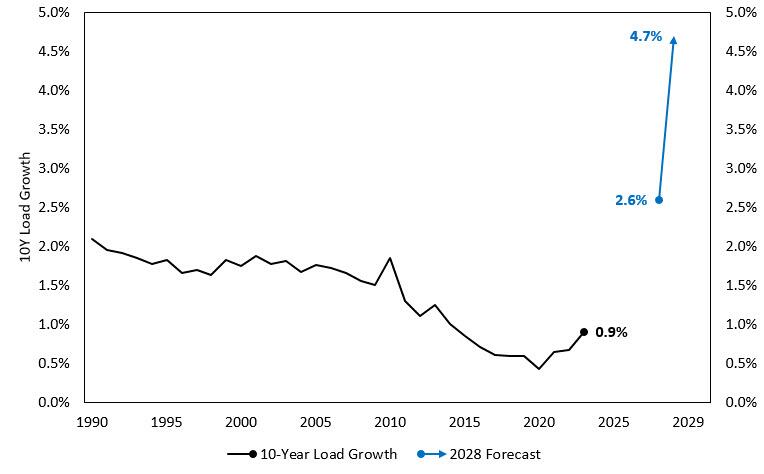
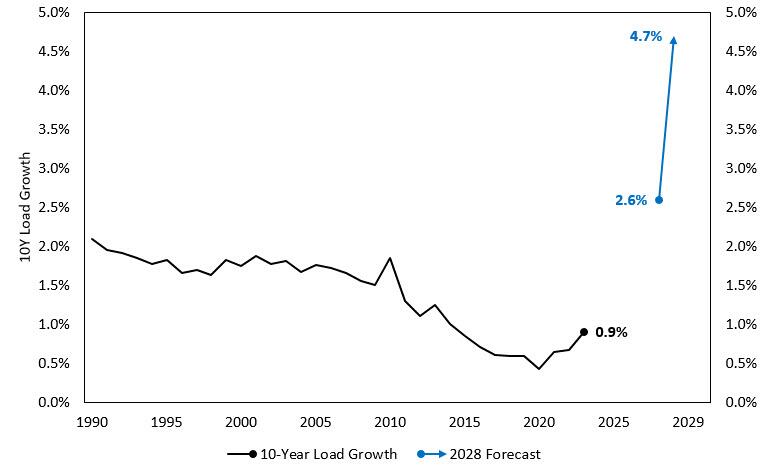
One of the emergency orders focuses on boosting electricity generation across the nation's fragile grid amid soaring load growth forecasts through the end of the decade because of the surge in new AI data centers coming online.

In "The Next AI Trade," we shared with readers all the drivers of electricity demand growth (including how to profit from this trend) and explained that it's much more than just AI.


Source: NERC - 2022 Long-Term Reliability Assessment (as of December-2022). Grid Strategies - The Era of Flat Power Demand is Over (as of December-2023).

The incoming energy advisor continued: "We're in an AI race with the People's Republic of China and other nations."

"It's fundamental that we're able to produce the necessary electricity here in the United States so that we can win that race and protect our nation," the advisor added.

Axios highlighted that Trump is focused on expediting the construction of fossil fuel infrastructure, including pipelines. The incoming admin is also expected to roll back a slew of Biden-era 'green' policies: A major slowdown of oil and gas leasing in the Gulf of Mexico and new bans in other coastal waters.

EPA greenhouse gas regulations on power plants, vehicles, and oil and gas infrastructure.
A "pause" on new LNG export licenses to major markets.

Restrictions on oil, gas and mineral projects in Alaska.

The big picture is that Trump's imminent energy executive orders will reverse the Biden-Harris administration's radical de-growth climate policies. These policies have been criticized for stifling US economic growth and stoking inflation while China ascends unabated.

By Zerohedge.com


DECOLONIZATION

How Nigeria’s $20B Refinery Disrupts European Markets

the Dangote refinery might end the decades-long gasoline trade from Europe to Africa, valued at $17 billion per year.


By Alex Kimani - Jan 19, 2025


Two months ago, Nigeria’s beleaguered energy sector witnessed a very significant event: the Dangote Oil Refinery began producing gasoline and selling it domestically to Nigeria's state oil firm, Nigerian National Petroleum Company (NNPC), marking the first time in decades Africa’s largest oil producer is refining its own crude.

The state-of-the-art $20.5 billion refinery was launched in January 2024, but only began producing gasoline in September, expected to reach full operations in November. The giant refinery has a capacity to process 650,000 barrels of crude per day, considerably bigger than any refinery in Europe and more than enough for Nigeria’s needs. To sweeten the deal further, the facility is buying crude and selling refined fuels in Nigeria in the local currency, saving the couium Motor Spirit (petrol) markets. According to OPEC, the Dangote refinery has cut down Nigeria's imports of petroleum products from Europe. According to experts, the Dangote refinery might end the decades-long gasoline trade from Europe to Africa, valued at $17 billion per year.

“The ongoing operational ramp-up efforts at Nigeria’s new Dangote refinery and its gasoline (petrol) exports to the international market will likely weigh further on the European gasoline market,” the report states. “Continued gasoline production in Nigeria, a country that has relied heavily on imports to meet its domestic fuel needs in the past, will most likely continue to free up gasoline volumes in international markets which will call for new destinations and flow adjustments for the extra volumes going forward.”


Source: Business Insider

The Oil Mafia

Unfortunately for Aliko Dangote, Africa’s second richest man and owner of the Dangote refinery, his giant plant has also put him on a collision course with Nigeria's feared ‘oil mafia’.

"I knew there would be a fight. But I didn’t know that the mafia in oil, they are stronger than the mafia in drugs," Mr Dangote told an investment conference in June.

"They don’t want the trade to stop. It’s a cartel. Dangote comes along and he’s going to disrupt them entirely. Their business is at risk,” says Mr Emmanuel, a Nigerian oil expert.

According to the BBC, since oil was discovered in the West African nation in 1956, the country’s downstream sector has largely been a cesspit of shady deals with little accountability by the NNPC. For decades, Nigeria has been producing and exporting its crude which is then refined abroad. NNPC swaps Nigeria’s crude oil for refined products, including petrol, which are shipped back home. Incredibly, it only started publishing its accounts five years ago, despite the fact that oil revenue accounts for nearly 90% of Nigeria’s export earnings. In other words, until recently, only the NNPC knew exactly how much money changed hands and who was involved in these "oil swaps".

Dangote’s new refinery should definitely be a boon for the country. Unfortunately, its arrival has coincided with developments completely out of his control. Since the 1970s, the NNPC has been subsidizing fuel prices for local buyers. Every year, the state-owned firm has been gradually clawing this money back by depositing lower royalty payments with the Nigerian treasury. However, Nigeria’s new President Bola Tinubu was forced to scrap the subsidy in 2023 after it cost the government $10bn, more than 40% of the total money it collected in taxes. Further, he stopped the policy of artificially propping up the value of the naira, and let market forces determine its value. Nigerians are now paying ~$2.30 per gallon of gasoline, dirt-cheap by U.S. standards but triple what they were paying just a couple of years ago.

Only time will tell whether the Dangote Refinery is able to achieve its full potential. Nigeria is the home of the famous Bonny Light crude, a light-sweet crude oil grade produced at the Bonny oil hub and an important benchmark crude for all West African crude production. Bonny Light has particularly good gasoline yields, which has made it a popular crude for U.S. refiners, particularly on the U.S. East Coast. Two years ago, Nigerian National Petroleum Company Limited (NNPC)CEO Melee Kyari revealed that Nigeria is losing nearly all the oil output at oil hub Bonny,

“As you may be aware, because of the very unfortunate acts of vandals along our major pipelines from Atlas Cove all the way to Ibadan, and all others connecting all the 37 depots that we have across the country, none of them can take delivery of products today. The reason is very simple. For some of the lines, for instance, from Warri to Benin, we haven’t operated for 15 years. Every molecule of product that we put gets lost. Do you remember the sad fire incident close to Sapele that killed so many people? We had to shut it down, and as we speak, we have a high level of losses on our product pipeline,” he said.

Oil theft remains a major problem for the Nigerian energy sector, and could hinder the refinery from buying all of its crude locally.

“NNPC doesn’t have enough crude for Dangote. Despite all this instruction to give ample supply of crude to the refinery, NNPC can’t supply Dangote with more than 300,000 barrels per day," Mr Akinosho of the Africa Oil+Gas Report told BBC.

Meanwhile, the oil and gas multinational divestment from the Niger Delta that kicked off over a decade has hit a peak. Numerous oil and gas majors have exited the Nigerian market over the past few years despite Africa’s largest economy opening its doors for wider exploration courtesy of the Petroleum Industry Act (PIA) 2021. Nigeria’s oil production has declined to 1.3 million barrels per day currently from around 2.1 million barrels per day in 2018.

By Alex Kimani for Oilprice.com
Column: Global aluminum market faces a year of trade turbulence

Reuters | January 20, 2025 | 

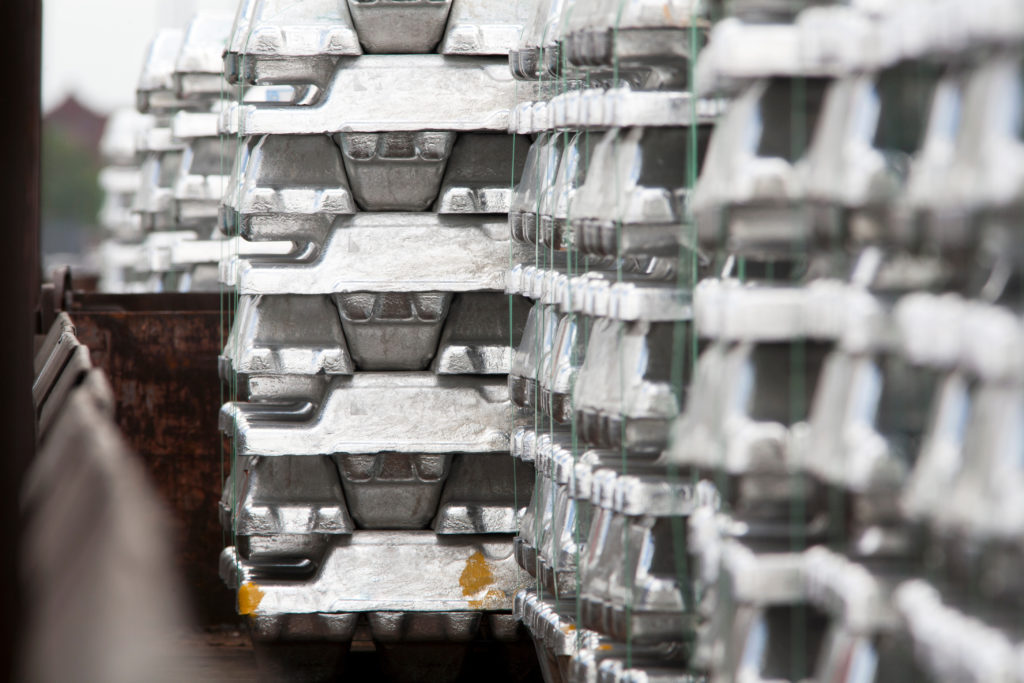
Aluminum ingots. Stock image.

It’s going to be a busy year for aluminum traders as the global market navigates multiple geopolitical storms.


Topping the list of potential trade disruptions is the incoming Donald Trump administration and the threat of tariffs on US imports from Canada and Mexico, two of the country’s top suppliers of the light metal.

Next up is the prospect of the European Union (EU) banning imports of Russian aluminum as part of the bloc’s 16th sanctions package against Russia over its invasion of Ukraine.

That would accelerate Russia’s pivot towards Asia but China’s appetite for more aluminum is uncertain given the removal of the tax rebate on the country’s huge exports of semi-manufactured products.

Throw high alumina prices and falling London Metal Exchange (LME) aluminum stocks into the mix and it’s a recipe for market turbulence.

CME Midwest US, European and Japanese physical aluminum premiums


Trump 2.0


Will he, won’t he? Trump has repeatedly threatened to impose 25% tariffs on US aluminum imports from Canada and Mexico.

Canada is by some margin the largest supplier of primary metal to the United States, accounting for 79% of total imports in the first 11 months of 2024. Mexico is a major supplier of aluminum scrap and aluminum alloy.

The market is unconvinced that tariffs will be imposed, or at least for any extended period of time.

The CME Midwest premium contract, the best indicator of tariff risk, has risen since Trump won the US election in November but the gains have been muted relative to the notional impact of a 25% increase in cost to US consumers.

However, Trump has a history of disruption when it comes to Canadian aluminum. When he introduced 10% tariffs on aluminum imports in 2018, Canada was initially included, then exempted in 2019. It was included again in August 2020 before being exempted again a month later.

In his first administration Trump used aluminum tariffs as a blunt-force bargaining tool to force concessions across an array of trade disputes with his northern neighbour and there’s little reason to think Trump 2.0 is going to be any different.

China’s imports of primary aluminum


Russian roulette

The European Union is drawing up plans for a new round of sanctions on Russia next month as the war in Ukraine marks its three-year anniversary.

European policy-makers until now have held off on fully banning imports of Russian aluminum but that looks set to change this year.

EU aluminum users have been steadily weaning themselves off their dependency on primary Russian metal. The Russian share of the bloc’s total imports fell to 6% in the first 10 months of 2024 from 11% and 19% in 2023 and 2022 respectively.

But at 130,000 metric tons in the January-October period, Russian exports to Europe were not insignificant and any ban is likely to force a scramble for alternative suppliers.

Russia has steadily increased sales to Asian consumers over the last three years, particularly China.

China’s imports of Russian metal grew from 291,000 tons in 2021 to 1.2 million tons in 2023 and were on track to match that total in the first 11 months of 2024.

But can China continue absorbing so much metal?


The country ended tax rebates on exports of aluminum products such as bars, rods and foil at the start of December, potentially jeopardizing an annual flow of around five million tons to overseas markets.

That’s a worse-case scenario but there seems little doubt that semi-manufactured products exports will drop this year, reducing demand for imported primary metal.
Bullish cocktail

Rusal, Russia’s dominant producer, likely won’t have as much metal to shift this year.

The company said in November it would cut output by 6% in response to soaring prices for alumina, the raw material for smelter production.

Some of the heat has come out of the alumina market since then as a severe squeeze on the Shanghai Futures Exchange (ShFE) contract dissipated over the end of the year.

But ShFE prices are still up significantly on the start of 2024 and Western alumina prices remain stuck at elevated levels.

Stocks of aluminum on the LME, meanwhile, have been steadily falling in recent months and open tonnage of 249,000 tons is at its lowest level since May 2024.

There’s a lot of smoke and mirrors around LME aluminum inventory movements with warehouse arbitrage as important a driver as supply-demand fundamentals.

But the heady combination of raw materials tightness, low inventory and trade uncertainty has spurred LME three-month aluminum prices. They hit a one-month high of $2,700 in Monday trading.

LME time-spreads are tightening. The benchmark cash-to-three-months period this week is trading at a contango of $10 per ton, compared with $40 a month ago.

Seemingly overlooked in the market’s calculations is the potential chilling effect on global consumption of a full trade war between the United States and everyone else.

But then there’s a lot of other moving parts to the aluminum price equation right now and most of them are on the supply side.

However, the one certainty is that what was once a fully globalized market is going to fracture further into distinct geographical parts.

Regional physical premiums may be where the real action lies in the months ahead. That was certainly the case under Trump 1.0.

(The opinions expressed here are those of the author, Andy Home, a columnist for Reuters.)

(Editing by Jason Neely)

Australian government pledges $1.24 billion in green aluminum push

Reuters | January 19, 2025 | 4:17 pm Energy Australia Aluminum

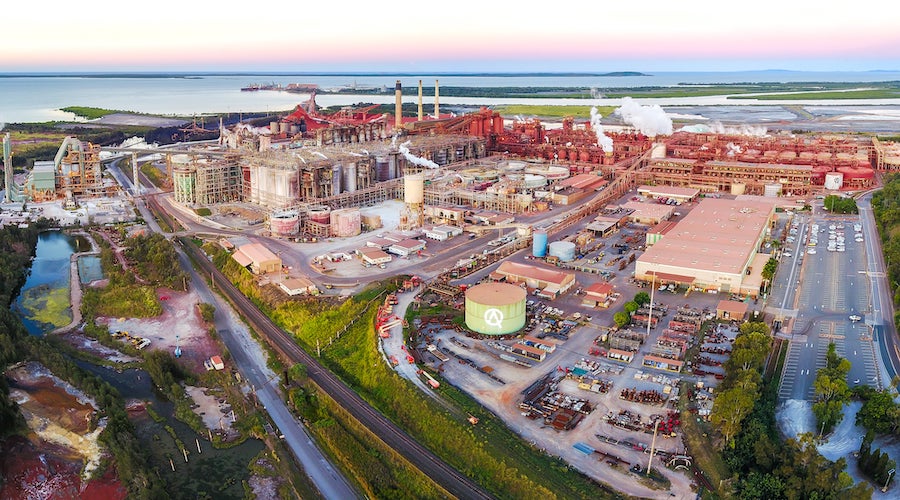
Queensland Alumina Ltd is the world’s largest alumina refinery with access to a deep-water port in Queensland, Australia. (Image courtesy of Rio Tinto.)

Australia’s Labor government on Monday pledged A$2 billion ($1.24 billion) in production credits to help support the country’s four aluminum smelters switch to renewable power before 2036.


Aluminum is one of the most polluting nonferrous metals to make, as its current production is mostly powered by coal. Green aluminum usually refers to metal produced using solar, wind or hydropower.

The country’s four aluminum smelters are run by Rio Tinto and Alcoa.

Prime Minister Anthony Albanese, in his latest election pitch, said the smelters would receive government support for each metric ton of low-carbon aluminum they produce. His centre-left government has made renewable energy a major theme ahead of a national election, which must be called by May.

The Australian government is targeting 82% of power supply to come from renewables by 2030, but remains well short of the target, at 40% now, even after pledging to underwrite new wind, solar and battery projects with more than A$40 billion.

“We want Australian workers to make more things here,” Albanese said in a statement.

“We’ve got all the ingredients right here for a world-leading metals industry – from the best solar and wind resources, to the critical minerals and facilities, as well as a highly skilled workforce.”

The Australian Aluminium Council said it had been seeking production credits for the aluminum sector, the sixth-largest producer of the metal in the world, to attract private capital and ensure the industry remains globally competitive amid rising costs and longer regulatory processes.

“These new aluminum production credits should provide some of the transitional support needed as Australia’s energy infrastructure and systems develop, and energy pricing returns to competitive levels,” Council CEO Marghanita Johnson said.

($1 = 1.6134 Australian dollars)

(By Renju Jose; Editing by Sonali Paul)
7 illegal miners killed by army in southern Ghana

Incident happened at Anglo Gold Ashanti mines in Obuasi town of West African country, says Ghana army

LOCAL PEOPLE DOING ARTISANAL MINING


Ilayda Cakirtekin |20.01.2025 - 


ISTANBUL

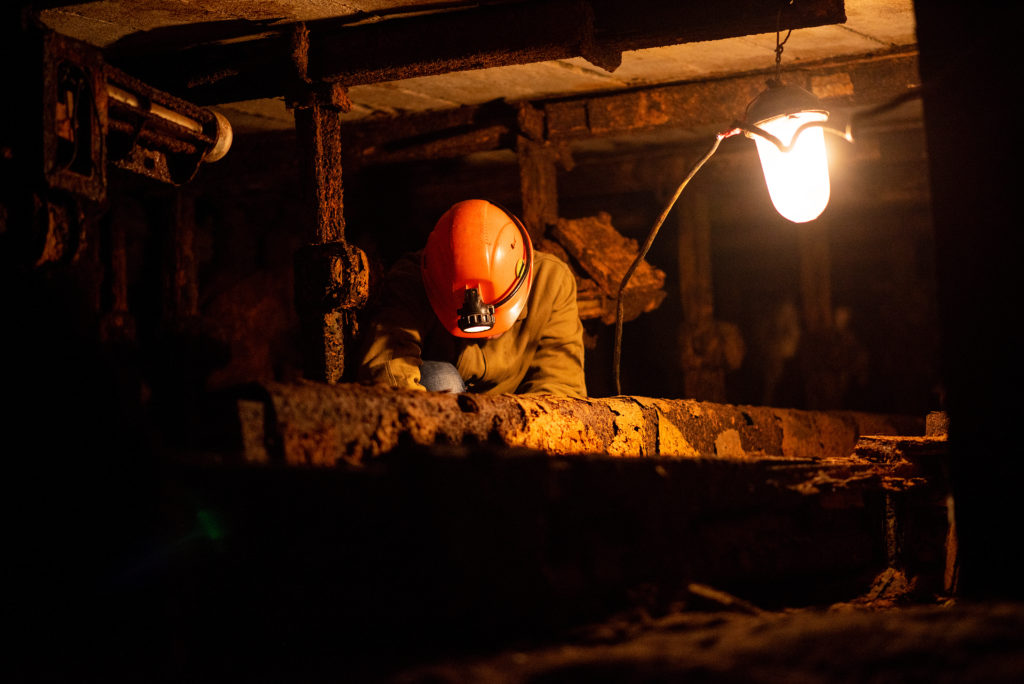
Ghanaian troops killed at least seven illegal miners in a shootout over the weekend, according to the military.

The incident happened at Anglo Gold Ashanti mines in southern Obuasi town, the West African nation's military said in a statement late Sunday.

Around 60 illegal miners breached the mines and intruded at Cote D’or Ramp to enter the Deep Decline of the mines, it said.

The miners, carrying weapons such as locally manufactured rifles, pump action guns, gas cylinders, knives, heavy-duty industrial bolt cutters, axes, and machetes fired on the soldiers who tried to stop them, the military said, adding that acting in self-defense, the soldiers killed seven miners and seriously injured one of them.

One of the soldiers was also injured.

The troops also retrieved six pump action BB cartridges.

The Ghana Armed Forces “wishes to urge all illegal miners to stay away from mining concessions and also desist from engaging troops in shootouts since the consequences of such actions could be fatal,” the statement said.
South African police hunt gang leader of illegal mine where dozens died

Reuters | January 20, 2025 | 4:49 am Africa Gold

Stock image.

South African police are hunting a gang leader from Lesotho believed to have controlled operations at an illegal gold mine where 78 bodies were recovered last week after months of police siege.


“Tiger” is believed to have surfaced from the deep mine in Stilfontein while it was under police surveillance and escaped with the help of officials, the South African Police Service said on Monday.

“Extensive investigations and tracing operations are under way to find those officials who aided his escape between shaft 11 and the Stilfontein police holding cells,” their statement said.

Police were widely condemned for the months-long operation, in which they cut off food and water in an attempt to force the miners out and arrest them.

Finance Minister Enoch Godongwana said the state should not be held responsible for the deaths.


“You have got people who voluntarily entered mines and did some illegal activities and in the process died inside those mines. To then come back and say the state is going to take the blame for that, in my view, is misplaced,” he told Reuters at the World Economic Forum’s annual meeting in Davos, Switzerland.

The standoff culminated in a state-sponsored rescue last week in which 246 survivors were retrieved from the mine, many emaciated and weak from hunger.

Police have cited miners who said there had been food underground, but that the gang leaders had kept it for themselves.

Thousands of people are believed to be mining gold illegally in abandoned industrial mines in South Africa. Some spend months at a time underground.

The operations are thought to be run by Lesotho-based gangs, and police say some of the workers are illegal immigrants recruited from neighbouring countries without knowing what they have come to do.

Miners named “Tiger” as a leader of operations, the police statement said.

“He is also being accused by some illegal miners … (of) being allegedly responsible for some deaths, assault and torture that is alleged to have taken place according to videos in police possession,” it said. “He is also alleged to have hoarded and kept food away from other illegal miners.”

(Reporting by Nellie Peyton;Additional reporting by Brad Haynes in Davos and Sfundo Parakozov in Johannesburg;Editing by Alexander Winning, Bernadette Baum and Kevin Liffey)
PAKISTAN/BALOCHISTAN

Canada's Barrick Reko Diq project to generate $74 billion over 37 years — Bristow


Cecilia Jamasmie | January 20, 2025 | 

Barrick Gold’s 50% Reko Diq copper-gold project in Pakistan. 
(Image: Barrick’s presentation.)

Barrick Gold (NYSE: GOLD) (TSX: ABX) said on Monday its 50%-owned Reko Diq copper and gold project in Pakistan is projected to generate approximately $74 billion in free cash flow over the next 37 years, based on consensus long-term prices.


Speaking to local media, chief executive Mark Bristow said an initial estimated capital expenditure of $5.5 billion will be allocated to develop the first phase of the mine. During this phase, Reko Diq, in which by the governments of Pakistan and the province of Balochistan have a combined 50% stake, is expected to produce 200,000 tonnes of copper concentrate and 250,000 ounces of gold annually.

In an interview with Pakistani digital media outlet Dawn News, Bristow confirmed that the starter mine is scheduled for completion by 2029. A second phase, requiring an additional investment of $3.5 billion, is projected to double production, he added.

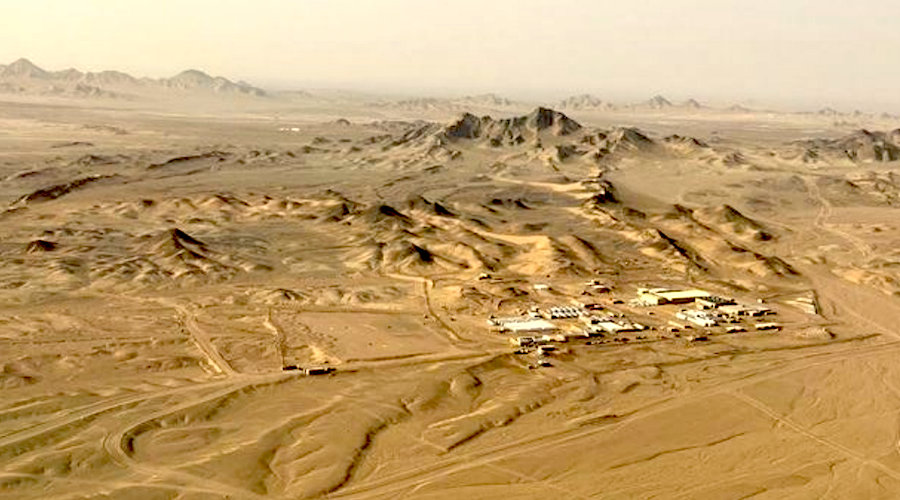
Reko Diq is a critical component of Barrick’s strategy to expand its footprint in copper, a metal central to the global energy transition. The project is located in the Chagai mountain range, part of the Tethyan Magmatic Arc, known for its rich copper-gold deposits.

Barrick has long maintained that Reko Diq is one of the world’s largest undeveloped copper-gold prospects. It also boasts a high copper grade of 0.53%, meaning that for every tonne of ore mined, about five kilograms of copper can be extracted. Once the expansion is complete, the mine is expected to process over 90 million tonnes of ore annually.

The mine is estimated to have reserves lasting 37 years, but Bristow said that through upgrades and expansions it could potentially be mined for more than 50 years.

The project has gauged interest from global investors, , including Saudi Arabia’s Manara Minerals, a joint venture between state-controlled miner Ma’aden and the $925 billion Public Investment Fund (PIF).

Executives from Manara visited Pakistan last year for talks about buying a stake in the project. Pakistani Petroleum Minister Musadik Malik said last week talks were progressing and that he expected an investment from Manara to come “in the next two quarters.”

Bristow has said that Barrick would support any decision made by the Pakistani government in collaboration with the Saudis, but the company will not dilute its equity in the project.


Brisbane's First Big-Ship Passenger Terminal Draws In Cruise Lines

Pacific Encounter calls at Brisbane International Cruise Terminal (Port of Brisbane)

Published Jan 19, 2025 10:32 PM by The Maritime Executive


The Port of Brisbane, Australia is celebrating its decision to invest in a real cruise terminal after passenger movements at the Brisbane International Cruise Terminal (BICT) crossed the two million mark, a development that comes just two and half years after its opening.

BICT, which was constructed at a cost of US$110 million, achieved the two-millionth-passenger milestone on Saturday after P&O Cruises Australia’s Pacific Encounter called at the port. 

The call could be the last that the 2,600-vessel makes at its Brisbane homeport under the Pacific Encounter name. This is because the ship is set to be rebranded into Carnival Encounter after Carnival Corporation announced it was ending the P&O Cruises Australia brand in March 2025.

“Carnival’s long-term partnership with the world-class BICT has helped in the success of Queensland’s growing cruise industry. As Carnival Cruise Line prepares for an exciting expansion in March, when Pacific Encounter joins the CCL fleet as Carnival Encounter, we can’t wait to continue to deliver our guests unforgettable holidays from Brisbane, all year round,” said Peter Little, Carnival Corporation Country Manager.

The hitting of the two million passenger mark is a significant achievement for BICT, which was opened in June 2022 and is touted as a strategic asset in Queensland’s cruise tourism industry. The decision to build the terminal was approved in 2017, with construction completed in 2020. Its commercial opening was delayed due to the Covid-19 pandemic.

Prior to its construction, cruise ships longer than 270 meters had to call at the Port of Brisbane’s cargo terminals. This caused most cruise lines to bypass the city altogether, taking with them significant economic benefits. It is estimated that every time a vessel calls in Brisbane, it contributes around US$620,000 to the economy. Over the next decade, cruising is projected to contribute around US$700 million to the Queensland economy. During the 2024/25 season alone, the port expects to welcome over 150 cruise calls from 13 different cruise lines.

“Achieving two million passenger movements through our world-class terminal highlights the integral role of BICT to Queensland’s cruise tourism industry,” said Neil Stephens, Port of Brisbane CEO.  


US Navy Replaces Two Cyber School Commanders in Two Months

THIRD TIME LUCKY?!

Cmdr. Sarah M. Quemada (USN file image)

Published Jan 19, 2025 11:15 PM by The Maritime Executive


The U.S. Navy has removed the commander of its East Coast information warfare training center, which prepares cyber and cryptography specialists for deployment. The announcement came just months after the replacement of the head of the equivalent center on the West Coast.  

Cmdr. Sarah M. Quemada, the commanding officer of Naval Information Warfare Training Group Norfolk, has been relieved "due to a loss of confidence in her ability to command," the explanation that the U.S. Navy usually provides in personnel actions. 

Quemada had commanded the Norfolk training group since 2023, and she has now been reassigned temporarily, as is standard. Rear Adm. Brian A. Harding, commander of Naval Information Warfighting Development Center, has appointed Capt. Steve McIntyre to take over the Norfolk unit on a temporary basis. 

Cmdr. Quemada is from Washington State, and she enlisted in 2005. After training as an information systems technician, she completed Officer Candidate School and commissioned as an ensign in 2007. A cryptologist by training, she deployed to Afghanistan to provide intelligence support for Joint Special Operations "village stability" missions. Afloat, she served aboard USS McFaul, and later held senior roles with an amphibious ready group and a carrier strike group. 

In November, the Navy relieved the commander of Naval Information Warfare Training Group San Diego, Cmdr. Cayanne McFarlane. "The Navy maintains the highest standards for commanding officers and holds them accountable when those standards are not met," the Navy said after McFarlane's removal. 

Navy Information Warfare's training command has a broad remit: it prepares personnel in afloat and ashore commands to work in electronic warfare, cryptography, cyber operations, intelligence, operational security, communications, space operations, and meteorology and oceanography. It has centers in Norfolk, San Diego and Gulfport, Mississippi. 


CRIMINAL CAPITALI$M

Fraud Charges Against Singaporean Oil Trader Dropped After His Death

ZenRock was a high-profile oil trading firm and tanker charterer (file image)

Published Jan 19, 2025 7:46 PM by The Maritime Executive


The founder of a Singaporean oil trading firm that collapsed amidst a financial crime scandal has died, his attorneys told a court earlier this month. 

Xie Chun, an experienced oil trader who founded ZenRock Commodities, was accused of fraud in connection with his company's collapse. His firm failed and was placed under judicial management in May 2020, and at the time it had about $600 million in debt. Its problems came to light at about the same time as the notorious implosion of Hin Leong Trading, the family-run bunker shipping and brokering firm that allegedly cheated several major banks out of billions of dollars.  

In 2022, Xin was charged with forgery, breach of trust and cheating valued at more than $100 million. Along with his operations executive Zhang Taiming, he faced a second case of alleged forgery that targeted Bank of China for $54 million in fraudulent loans in early 2020, just as the pandemic began. The two executives also allegedly defrauded Credit Agricole out of $17 million.  

Earlier this month, upon application from Xie's attorneys, a Singaporean criminal court abated (withdrew) all charges against Xie due to his death. The circumstances of his passing were not detailed. 

Zhang's trial remains pending, and proceedings begin on February 7.