Monday, May 19, 2025

Farmers’ protests: a year on, Europe’s farmers demand change


A recent Euronews event discussed the path forward for Europe’s farmers one year after the protests. 

One year on from the wave of farmers’ protests that swept across Europe, a panel of industry experts, policymakers and farmer and environment representatives came together in Brussels to reflect on the state of agriculture today. 

The Farmers’ Horizon: Sustainability and Innovation Toolbox event, sponsored by CropLife Europe and hosted by Euronews, cast a clear eye on the sector’s evolving challenges and ambitions, drawing insights from a newly published Ipsos survey, Farmers’ Horizon 2025, which highlighted the ongoing frustrations faced by many farmers across the continent. 

Regulatory reform: promises of simplification

A key speaker at the event was European Commissioner for Agriculture, Christoph Hansen, who shared the Commission’s ongoing efforts to address farmers’ demands following the 2024 protests. “We’ve already delivered a package on the Common Market Organisation (CMO) Regulation and the unfair trading practices directive, addressing one key concern: better prices for high-value products to strengthen farmers’ position in the value chain,” he noted. 

Hansen went on to discuss the continued need to reduce administrative overlaps, particularly for small farms, denying the notion that the Commission was backtracking on environmental commitments. He emphasised that EU regulations would only come into effect if there were no national measures in place, accelerating relief for farmers while ensuring strict sustainability standards. 

On the point of investment, Hansen stressed the importance of adequate funding to support both digitisation and sustainable practices. However, with the Ipsos survey results pointing to a weakening economic situation for Europe’s farmers, the question for the main debate remained whether Europe’s policymakers were doing enough to secure the future of farming. 

Growing discontent and calls for change

Damien Barnier, Director of Ipsos Lyon, offered a sobering overview of the results of the 2025 Farmers’ Horizon survey, which drew responses from 1,998 European farmers, across nine countries, commissioned by CropLife Europe. 

In terms of outlook, 46 per cent of farmers surveyed were pessimistic about the current situation and 51 per cent were pessimistic about the future. Consequently, the report warned, 55 per cent of farmers are ready to protest again – a major cause for alarm among our Brussels audience and the wider European public. 

Many farmers showed dissatisfaction with the lack of EU action following the protests and two out of three European farmers reported worsening economic conditions compared to last year. Economic support and administrative simplification were deemed top priorities for farmers across Europe, with 69 per cent claiming that current product prices did not allow for a sufficient profit margin, and 50 per cent struggling to cover basic farm expenses. 

International competition from abroad was seen as having a key impact on farmers’ bottom line, with 68 per cent reporting worse competition since the protests. Hansen echoed the European Environmental Bureau’s (EEB) view here, saying that more needed to be done to stop less-regulated imports entering Europe.

“This doesn’t make sense,” he remarked. Tackling this would have dual benefits: enabling better protection of environmental goals and creating fairer market conditions for farmers. 

Bridging the gap between policy and practicality

The Ipsos findings underscored the urgency for EU intervention to bridge the gap between policy and realities on the farm. During the panel discussion, Elli Tsiforou, Secretary General of Copa-Cogeca, an organisation representing the voices of 22 million farmers and 22,000 agri-cooperatives around Europe, stressed the need for a more consistent EU presence in member states to fix this gap. 

“The strategic dialogue had utility and value, but we need to be more pragmatic,” she said. “Overproduction of policies - some contradictory - makes it hard for farmers to implement regulation on the ground,” Tsiforou said. 

The discussion addressed anticipated Common Agricultural Policy (CAP) adjustments, which the Commission projected would save up to €1.58 billion annually for the farming community. Jens Hartmann, Chair of CropLife Europe, congratulated this move, remarking that the sector is “moving more towards incentivisation and profitability” for farming businesses, but also suggested that predictability could be improved not only for farmers but for the entire agricultural sector. 

Tsiforou raised concerns over the dilution of the CAP into a single fund, noting that Copa-Cogeca would be protesting any rushed changes to the agricultural framework, without clarity regarding financial resources, governance structures, or meaningful consultation with the agricultural sector. “If we lose [the integrity of the policy], a domino effect could hit the heart of the EU single market," she warned. She further insisted that an adequate budget adapted to inflation was essential, both to the success of the policy and the future success of Europe’s farmers. 

Théo Paquet, Senior Policy Officer for Agriculture at the EEB agreed that a baseline level of income support was necessary, and he also made the call for stronger environmental schemes. He asserted that Europe’s policymakers must provide more incentives for farmers who go beyond basic conservation in order to drive real, sustainable change. “If we want farmers to produce food in 20, 30 or 40 years, protecting our soils needs to be at the forefront of everyone's minds,” he argued. 

Innovation in action: tools for tomorrow

One of the central discussions at the event revolved around innovation in agriculture, highlighting how digital farming solutions, precision technology and sustainable crop protection would enhance productivity and sustainability simultaneously, which would also have a positive knock-on effect for farmers’ incomes. 

Panellists stressed that insufficient investment in new technologies and regulatory delays were hindering innovation and the market entry of safer, more sustainable solutions like biopesticides. Hansen admitted that the European Commission was “quick to take products off the market but slow to provide alternatives,” leaving farmers with fewer options.  

CropLife Europe’s Hartmann insisted on the need to maintain a full crop protection toolbox, echoing the sentiment of one third of surveyed farmers in France, Germany, Poland, Belgium and the Netherlands. “Our task is to ensure the farming community has all the right tools to make their lives easier and a simplified process to allow them to do what they do best.” 

Hartmann referred to the need to “put tools directly into the hands of farmers,” providing easier access to technology that could bypass administrative bottlenecks. For sustainable agriculture to succeed, he summarised, the next policy needed to be driven by “incentivisation, simplicity and innovation.” 

The rest of the panel concluded that while digital solutions held enormous promise, achieving widespread adoption would require greater investment and advisory support for farmers during the transition. Without these foundational changes, many farms risked being left out of the digital revolution currently reshaping European agriculture. 

An urgent need for collaborative action

While positions on streamlining regulation were met with warnings against backtracking on green ambitions, panellists found common ground on the need for economic incentives and access to innovation to inspire the next generation. “We need to give hope and fun back to our farmers, not just more paperwork after long working hours.” 

The debate underlined the complexity of policymaking in agriculture, whereby the priorities of farmers, innovators and policymakers had to be balanced carefully. However, EEB’s Paquet stressed that environmental sustainability and economic competitiveness were not mutually exclusive, stating that they all shared a common goal of working towards a sustainable agricultural future for Europe. 

While the Ipsos survey revealed deep economic challenges and the looming threat of future protests, the event closed on a note of cautious optimism. There was a shared commitment to bridge the gap between policy, practice and environmental factors to drive momentum towards a stronger, more resilient European farming sector.

Partner content presented by
CropLife Europe


Japan's farm minister apologises over 'never had to buy rice' remark amid rising price of food

Yosuke Miura wraps seaweed around a rice ball at Onigiri Asakusa Yadoroku, Tokyo's oldest onigiri restaurant, 3 June 2025.
Copyright AP Photo/Eugene Hoshiko


By Oman Al Yahyai
Published on 

Farm Minister Taku Etō has apologised after claiming he "never had to buy rice" thanks to gifts from supporters, sparking public anger amid surging food prices.

Japan's Agriculture Minister Taku Etō has issued an apology after remarks he made about never needing to purchase rice due to gifts from supporters sparked widespread outrage among citizens struggling with soaring food prices.

The controversy erupted after Japanese media reported Etō's comments, made at a political fundraising event on Sunday, during which he claimed he had "never had to buy rice" and even had enough to sell. 

Pressed by journalists on Monday, Etō attempted to clarify his statements, admitting he may have overstated the situation to entertain the audience.
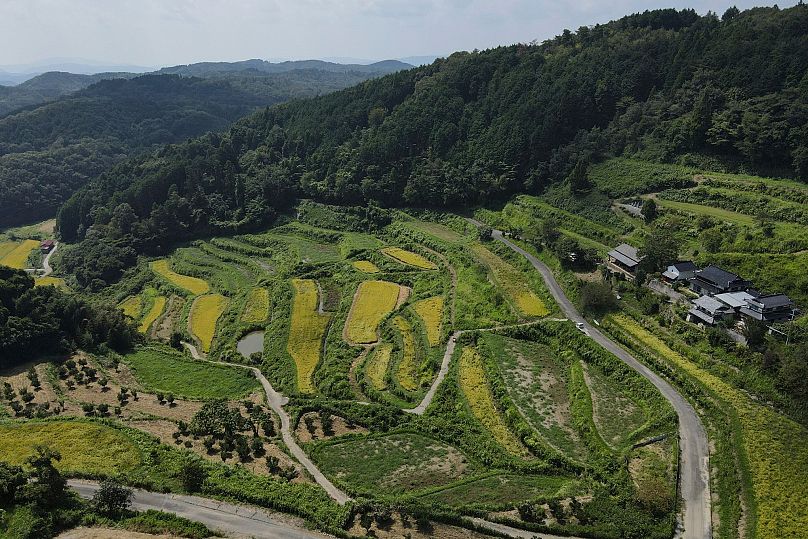
An aerial view of rice terraces in Kamimomi village in Okayama prefecture,
 6 September, 2024AP Photo

"I just got scolded by my wife over the phone," he added. "It's just the two of us so we generally have enough but she told me that when we run out, she actually does go out and buys rice."

Footage by a public broadcaster showed Etō speaking at the event, where he joked about receiving plenty of rice from supporters, an apparent attempt at humour that has backfired amid growing public anxiety over the cost of food.

The backlash highlights the sensitivity of food security issues, especially rice, in Japan's current political climate. The timing is particularly delicate for Prime Minister Shigeru Ishiba's ruling Liberal Democratic Party, which faces upper house elections in July. 

A recent Kyodo News poll showed support for Ishiba had plummeted to a record low of 27.4%, with nearly 90% of respondents expressing dissatisfaction over the government's handling of rising rice prices.

The government began releasing rice from its emergency reserves in March in a bid to stabilise the market, but the measure has so far had minimal effect.

A 60-year-old from Osaka stated that she avoids "eating rice because it's expensive," local media reported. 

"His comment is incredibly distasteful and lack common sense," she added.

After briefly dipping, rice prices rose again last week. Retail figures showed a 5-kilogramme bag of supermarket rice averaged 4,268 yen (€26), an increase of 54 yen (€0.33) from a week ago and nearly double the price from the same time last year. 

The surge follows a season of extreme heat that damaged crops, compounded by increased demand from a resurgence in domestic tourism.

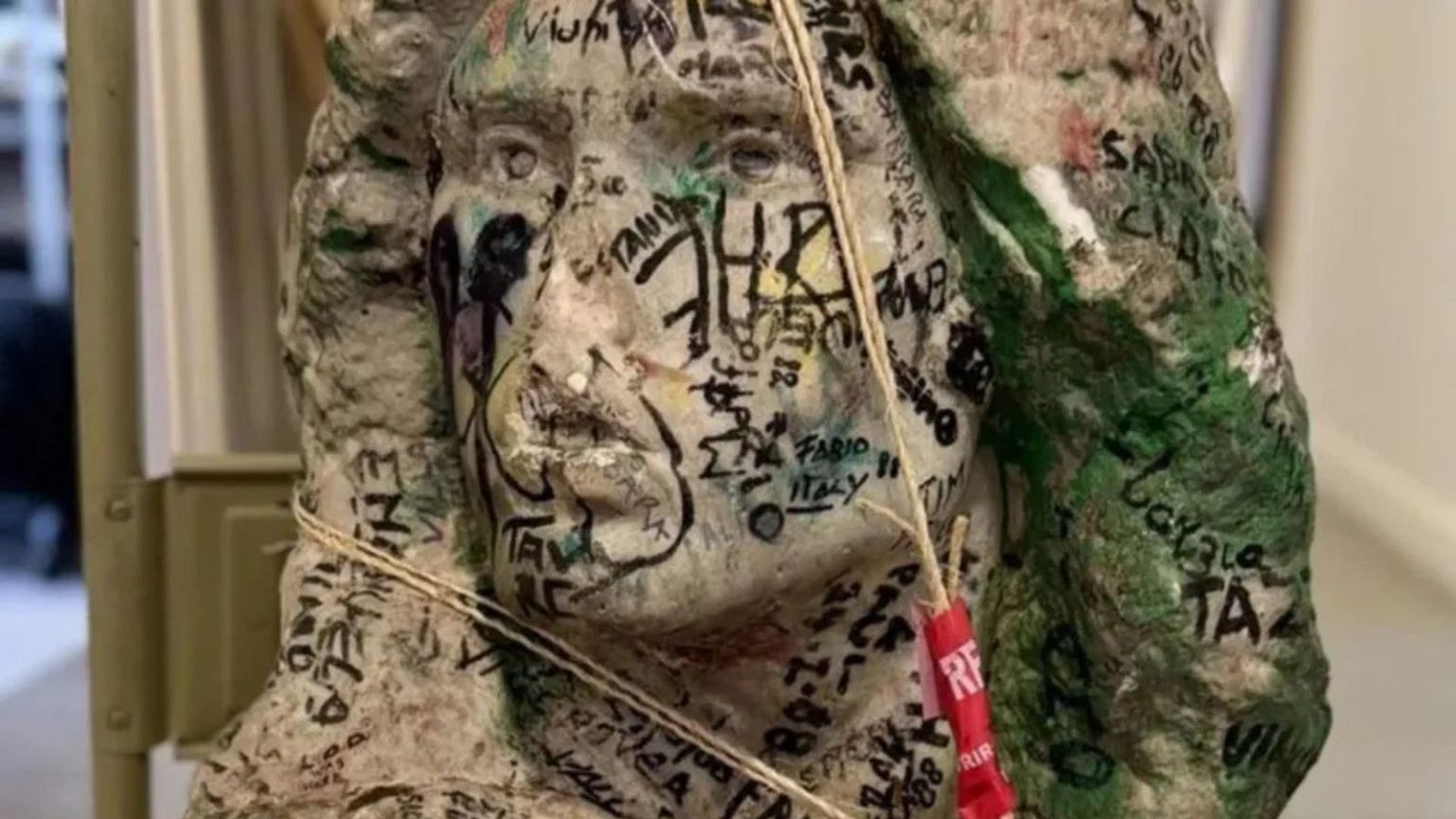
 

Bust of The Doors' Jim Morrison, stolen from Père Lachaise cemetery, found 37 years later

Copyright Instagram DPJ-PP

By David Mouriquand
Published on 

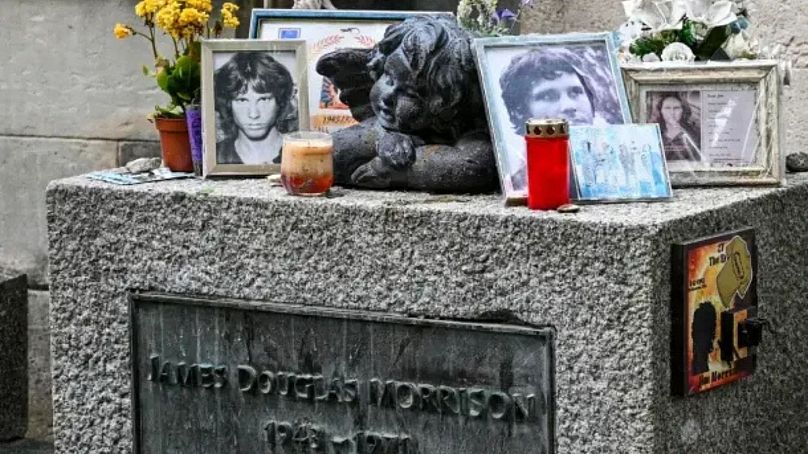
The mythical bust that once sat on top of Jim Morrison's grave in Paris has been found by accident during a search linked to a case of fraud. It remains to be determined whether the Père Lachaise cemetery will get the sculpture back.

In 1981, for the tenth anniversary of his death at the age of 27, a sculpture was installed on the grave of legendary American singer-poet Jim Morrison at Père Lachaise cemetery in Paris.

The emblematic white marble statue, created by Croatian sculptor Mladen Mikulin and representing The Doors frontman, was stolen from the famous cemetery on 9 May 1988 and had been missing ever since.

No one knows who stole it and why. People are strange.

Jim Morrison's grave at Père Lachaise Shutterstock

Now, Morrison’s missing bust has been found... By accident.  

It was discovered during an unrelated investigation by the Financial and Anti-Corruption Brigade of the Judicial Police Department of the Paris Police Headquarters. 

According to the public prosecutor's office: “It was a chance discovery during a search carried out in connection with a case of fraud that led to the recovery of the bust.”

The Criminal Investigation Department of the Paris Police Prefecture (DPJ-PP) posted a photo of the statue on its account, along with a message announcing that it had been found.  

The infamous sculpture, weighing 128 kilos, does not appear to have been damaged.

Its nose is broken and the statue is covered in graffiti, but this was already the case when it disappeared 37 years ago.

It remains to be determined whether the bust will be returned to its original sitting spot. 


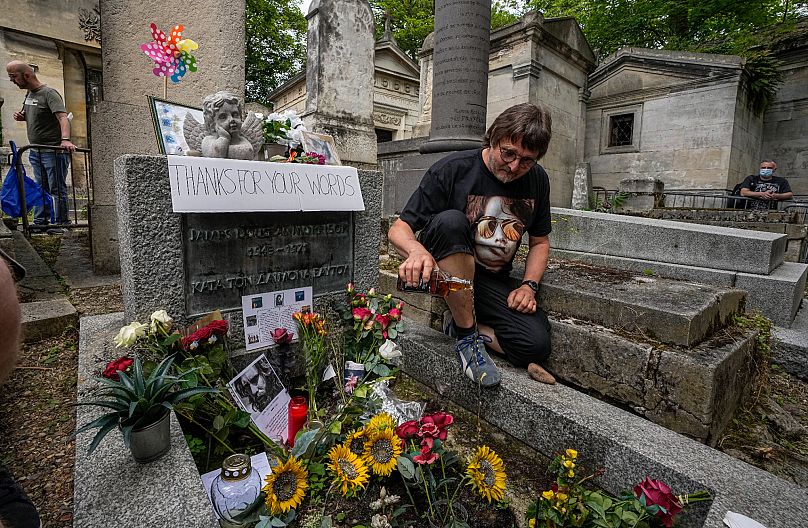
A fan pours some whiskey on the tomb of Jim Morrison at the Pere-Lachaise cemetery in Paris - 2021AP Photo

Benoît Gallot, curator of the Père-Lachaise cemetery, told Le Figaro that he does not yet know what will happen to the rediscovered sculpture.  

“The police haven't contacted us, so I don't know whether the bust will be returned to us,” he stated.

Fans of The Doors and Morrison will be hoping for a return to its rightful home, as Jim Morrison’s grave remains one of the most visited in the Père Lachaise cemetery. Notes, candles and flowers are laid there every day. And since the 1988 theft, the grave has been under video surveillance.

So less chance of Jim going missing again...


Romania breathes collective sigh of relief after presidential election thriller

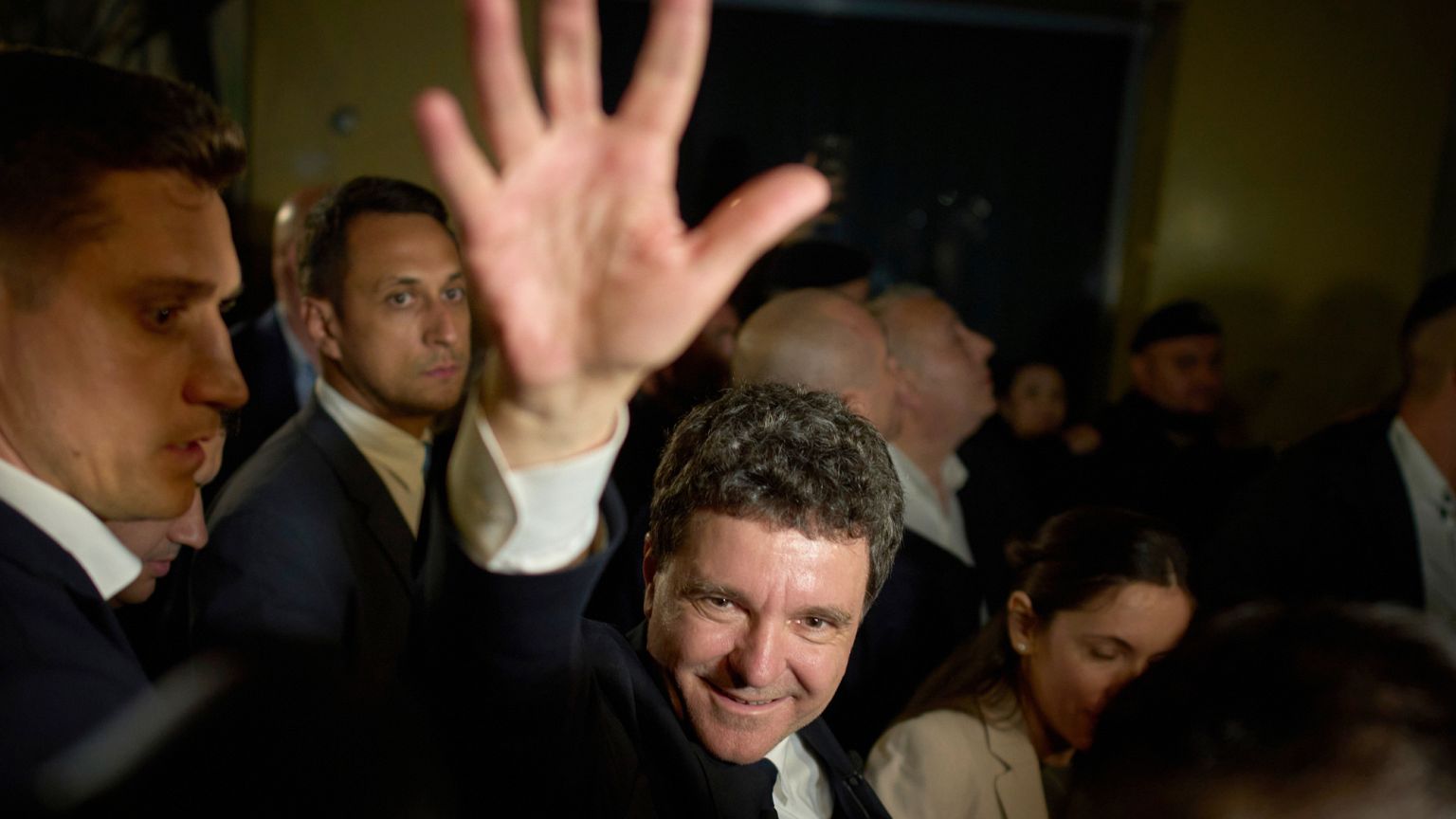
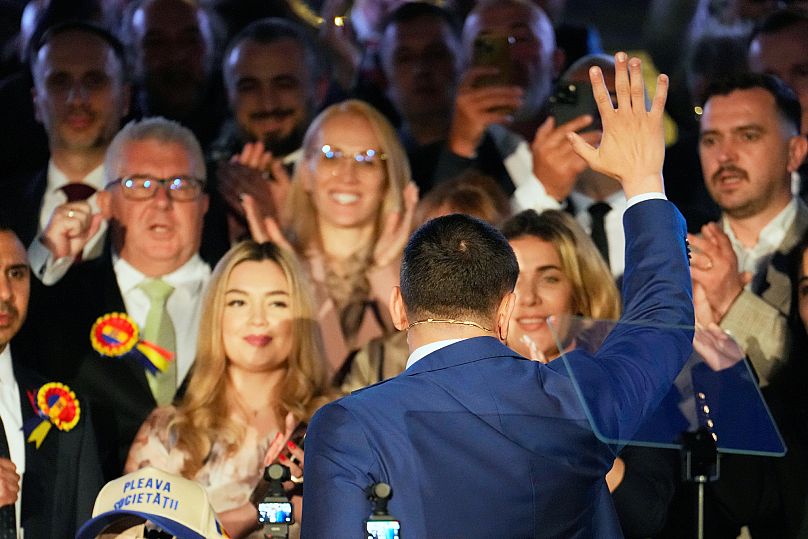
Presidential candidate Nicusor Dan waves to supporters after winning the second round of the country's presidential election redo in Bucharest, 19 May 2025
Copyright AP Photo

By Andra Diaconescu, Peter Barabas, Aleksandar Brezar 
and Euronews Romania
Published on 

Romania's political crisis ends with Nicușor Dan's firm victory in the presidential elections runoff on Sunday. Dan, an independent pro-Western candidate, won 53.60% of the vote.

Romania is turning the page on its unprecedented political crisis as it comes to terms with the firm victory of independent pro-Western Bucharest Mayor Nicușor Dan in Sunday’s tense presidential elections.

Dan made a dramatic comeback from the first round, overcoming hard-right candidate George Simion with 53,60 % of votes versus 46,40% in what former Romanian President Traian Basescu called “Romania’s choice between the West and the East”.

Dan also beat the entire Romanian political establishment running as an independent candidate on a reform and anti-corruption platform.

In a disappointing night for Europe’s nationalist hard-right movements, two crucial central and eastern European elections took place in parallel in Romania and Poland.

Romanians turned out in record numbers to make their choice in one of the most tense and divided political moments in Romania’s post-communist history, seen as a virtual referendum in NATO’s eastern flank country.

Ultimately, 6 million Romanians sent a strong pro-EU and pro-NATO message, bringing a major, galvanising sigh of relief for the EU, Ukraine, and the Republic of Moldova.

Romania’s decisive vote is now certainly being watched in Poland, where another capital mayor, the candidate of Prime Minister Donald Tusk’s Civic Platform party, Rafal Trzaskowski, won the first round of the Polish presidential elections, followed by Law and Justice-endorsed conservative candidate Karol Nawrocki.

However, the 5 million votes given to Simion marked a deep fracture in Romanian society and underlined his concession speech, where Simion warned that “this is just the beginning.”

That is why, in his victory speech, president-elect Dan reached out to Simion’s voters, saying they have “his full respect” and inviting them to “build Romania together”.

On Sunday, Simion won the diaspora votes, 55% to 44%, beating Dan in the United Kingdom, France, Spain, Italy, Germany, Italy, Belgium and Austria.

Yet Dan won an overwhelming 88% of the votes in the Republic of Moldova, where the Romanian vote was seen as existential for the country’s pro-Western course.

Dan also won in the United States, Canada, and surprisingly in Russia, Iran and China. He further scored a victory in Hungary with 92% of the votes, mirroring the same overwhelming vote in his favour by the Hungarian minority of Romania, as Simion ultimately failed to convince Hungarian Prime Minister Viktor Orban to endorse him after the leaders of the Democratic Union of Hungarians in Romania called the AUR leader a “charlatan”.

'People have had enough of elections'

As soon as he is sworn in, the president-elect will begin the process of appointing a new prime minister following the resignation of the current coalition government, after their big-tent candidate was beaten by Dan, who leapfrogged into the second round together with Simion.

In addition to the destabilising political crisis of the last months, Romania is now also facing economic turmoil due to its budget deficits, which is now Dan’s immediate priority.

The morning after his historic win, which triggered national celebrations and congratulatory messages from European leaders, the unassuming president-elect, who pledged decency and honesty in the fiery campaign, walked down the street alone when he was met by a TV news crew.

“Now I am going to get my daughter from school, I promised her nothing would change in her life if I win the elections,” Dan answered when asked about what’s next. “Then I am back for more calls with European officials and then I will meet interim Romanian president Bolojan later on.”

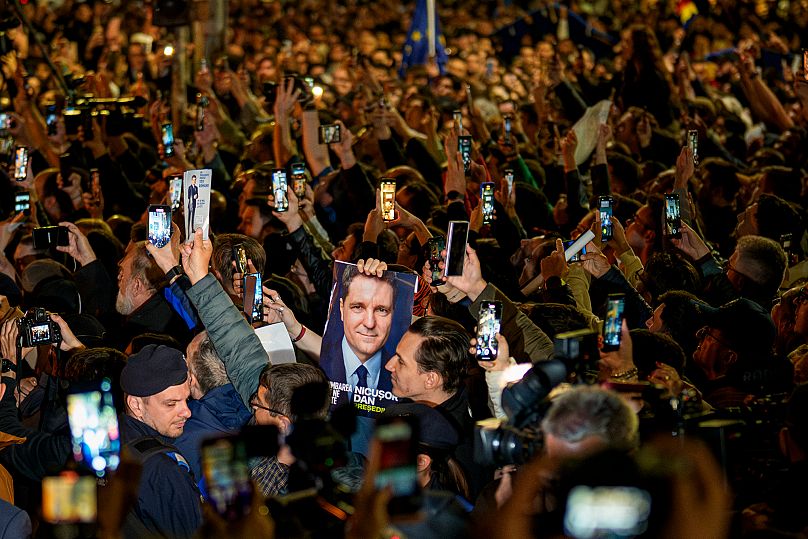
Supporters of presidential candidate Nicusor Dan cheer holding an electoral poster after he won the second round of the presidential election redo in Bucharest, 18 May 2025AP Photo/Andreea Alexandru

But then he issued a stark warning to the Romanian political establishment that, even if immediate political stability is a priority, it would take weeks until he appoints a new prime minister because, as he said, “I don’t just want to appoint a prime minister, I want to be certain that the new government’s programme will be in agreement with what Romania stands for.”

In another interview, Dan also warned against early elections, which Simion may now claim to capitalise on his 5 million-strong votes, saying, “Romania cannot afford early elections."

"People have had enough of elections, the private businesses and our foreign partners have had enough of instability. We must have a president who works with the elected parliament to have a stable government for the next three and a half years," he explained.

The current government coalition parties announced on Monday that they are beginning internal processes to formulate their political strategies for the upcoming talks with president-elect Dan on a future government.

Simion: 'Alone against all'

In another sigh of relief for the divided, tense Romanian society, Simion walked back from his multiple warnings and threats that an election fraud was allegedly being set up to stop him and that, as a result, he would set off a plan of massive protests across the country.

The election night tensions rose when Simion declared himself the winner despite the exit polls showing him losing, counting on the diaspora vote and the reliability of exit polls as proven by the shock win of ultranationalist Calin Georgescu in the first round of the annulled presidential elections last year.


Presidential candidate George Simion waves to supporters after polls closed for the second round of the country's presidential election redo in Bucharest, 18 May 2025Copyright 2025 The Associated Press. All rights reserved.

But when the final official results arrived, Simion congratulated his opponent in a subdued tone, but firm in his perspective.

“We will continue to represent the sovereignist conservative patriotic movement in Romania. We lost this battle, but we have not lost our war – and we will never lose it," he said.

"We were alone against a whole system, alone against all,” Simion concluded in his late-night speech, which closed the unprecedented political vortex that gripped Romania for months.

Gary Lineker to step down from the BBC after sharing social media post on Zionism


Gary Lineker, the England football great-turned-media celebrity, will leave his role as a presenter for the BBC after facing criticism for reposting an Instagram story about Zionism which featured a picture of a rat.

The 64-year-old Lineker, who is the British national broadcaster’s highest-paid presenter on about £1.3 million (€1.5 million) a year, was set to leave flagship soccer highlights show “Match of the Day” at the end of this season but remain with the BBC to front other football coverage, including next year’s men’s World Cup.

However, the BBC said in a statement today that Lineker will step down entirely from the corporation after the final “Match of the Day” episode next weekend in the wake of his decision to share a post from the group, Palestine Lobby, illustrated with a picture of a rat, titled: “Zionism explained in two minutes.”

Rats, linked to disease and dirt, have been used to represent Jews in antisemitic propaganda throughout history, including by the Nazis in 1930s Germany.

“Gary has acknowledged the mistake he made,” BBC director-general Tim Davie said. “Accordingly, we have agreed he will step back from further presenting after this season.”

Lineker had already apologized for his conduct, saying last week he reposted material which he subsequently learned contained “offensive references,” adding that he withdrew the post as soon as he became aware of the issue and “would never knowingly share anything antisemitic.”

Before Lineker’s apology, Davie said the corporation needed people to be the “exemplars of BBC values and follow our social media policies” and that “when someone makes a mistake, it costs us.” 

Lineker has been the main presenter of BBC’s “Match of the Day” since 1999 and used his status as a freelancer to work for other broadcasters such as NBC, Al Jazeera and BT Sport.

“Football has been at the heart of my life for as long as I can remember — both on the pitch and in the studio,” Lineker said in the BBC statement.

“I care deeply about the game, and about the work I’ve done with the BBC over many years. As I’ve said, I would never consciously repost anything antisemitic — it goes against everything I stand for. However, I recognize the error and upset that I caused, and reiterate how sorry I am. Stepping back now feels like the responsible course of action.”

In a separate video post on Instagram, Lineker said he had made a “genuine mistake” and “should have been more diligent.”

“I have stood up for minorities and humanitarian issues and all forms of racism all of my life, including of course antisemitism, which I absolutely abhor,” he said. “There’s no place for it, and never should be.”

Lineker’s openness to reflect his political views on social media have caused growing friction with the BBC regarding its impartiality guidelines.

He was temporarily suspended from the corporation in March 2023 over comments he made criticizing the then-Conservative government’s new asylum policy. It led to the BBC’s rules on social media posts being rewritten to say presenters of high-profile programs outside news had a “responsibility to respect the BBC’s impartiality, because of their profile on the BBC.”

Lineker was among 500 high-profile figures who signed an open letter in February urging the BBC to re-broadcast a documentary, Gaza: How to Survive a War Zone, to its streaming service, BBC iPlayer. The documentary was pulled after it emerged its 13-year-old narrator was the son of a Hamas official. 


First aid trucks enter Gaza after almost three-month Israeli blockade, UN says

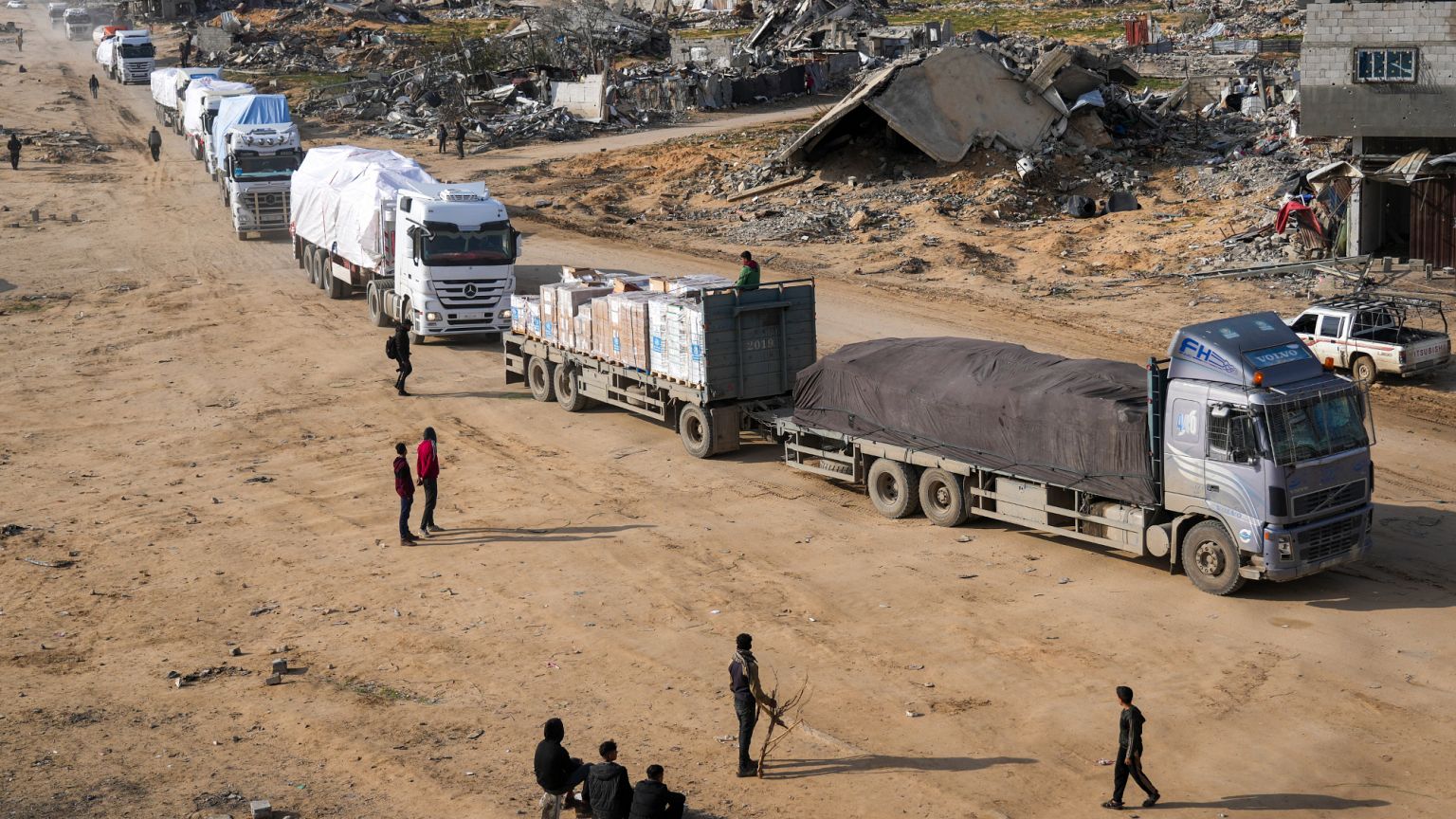
Trucks carrying humanitarian aid enter the Gaza Strip from Egypt in the southern town of Rafah, 12 February, 2025
Copyright AP Photo
By Gavin Blackburn with AP
Published on 

Israel has meanwhile launched a new wave of air and ground operations across the territory and the army ordered the evacuation of Gaza’s second-largest city, Khan Younis, where Israel carried out a massive operation earlier in the war that left much of the area in ruins.

The first aid trucks have entered Gaza after an almost three-month long blockade of the territory by Israel, the United Nations has confirmed.

Five trucks carrying humanitarian aid, including baby food, entered the territory of over two million Palestinians via the Kerem Shalom crossing on Monday, according to the Israeli defence body in charge of coordinating aid to Gaza, Cogat.

The UN called the delivery a "welcome development" but said much more aid is needed to address the humanitarian crisis in the Strip.

Israeli Prime Minister Benjamin Netanyahu said earlier on Monday that the decision to resume limited deliveries of aid to Gaza after a blockade that started on 2 March came after pressure from allies who said they couldn't support Israel's renewed military offensive if there are "images of hunger" coming out of the Palestinian territory.

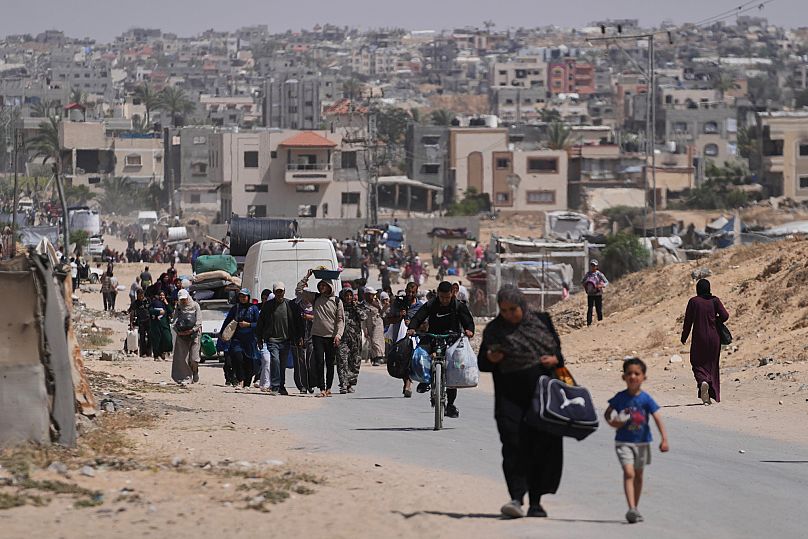
Israel has meanwhile launched a new wave of air and ground operations across the territory and the army ordered the evacuation of Gaza’s second-largest city, Khan Younis, where Israel carried out a massive operation earlier in the war that left much of the area in ruins.

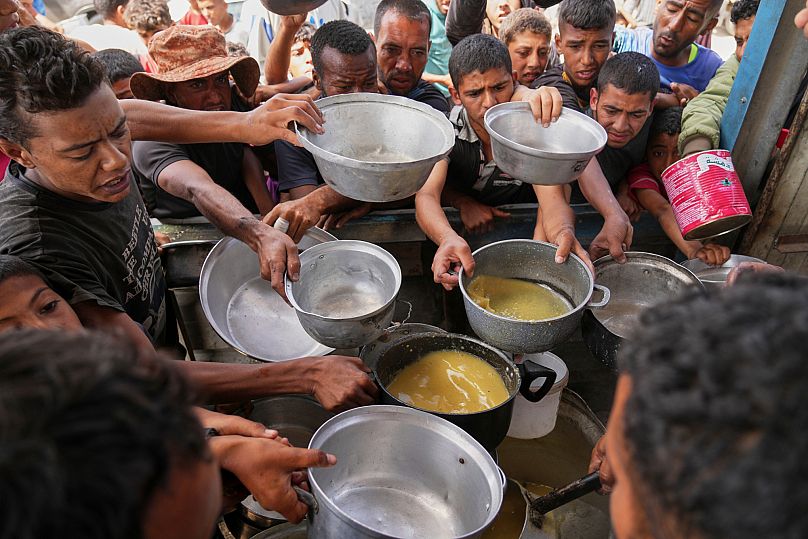
Palestinians struggle to receive cooked food distributed at a community kitchen in Khan Younis, 14 May, 2025AP Photo

On Sunday, Israel said it would allow a "basic" amount of aid into Gaza to prevent a "hunger crisis" from developing.

Experts have already warned of potential famine if the blockade imposed on the territory's roughly two million Palestinians is not lifted.

Israel has stepped up its offensive in Gaza in what it says is a bid to pressure Hamas to release the remaining hostages abducted in the 7 October 2023 attack that ignited the war.

Hamas has said it will only release them in exchange for a lasting ceasefire and an Israeli military withdrawal from the territory.

Netanyahu said that Israel plans on "taking control of all of Gaza," and establishing a new system to distribute aid that circumvents Hamas.

He has also said Israel will encourage what he refers to as the voluntary emigration of much of Gaza’s population to other countries.

A 'red line' on Gaza

The Trump administration has voiced full support for Israel's actions and blames Hamas for the toll on Palestinians, though in recent days it has expressed growing concern over the hunger crisis.

Trump, who skipped Israel on his trip to the Middle East last week, voiced concerns about the humanitarian situation in Gaza, as did Secretary of State Marco Rubio, who said on a visit to Turkey that he was "troubled" by it.

Displaced Palestinians flee from Khan Younis, 19 May, 2025AP Photo

In a video statement posted to social media, Netanyahu said Israel's "greatest friends in the world" had told him, "We cannot accept images of hunger, mass hunger. We cannot stand that. We will not be able to support you."

Netanyahu said the situation was approaching a "red line" but it was not clear if he was referring to the crisis in Gaza or the potential loss of support from allies.

The video statement appeared aimed at pacifying anger from Netanyahu's nationalist base at the decision to resume aid.

Two far-right governing partners have pressed Netanyahu not to allow aid into Gaza.

At least one of them, Finance Minister Bezalel Smotrich, appeared to be on board with the latest plan.

"No more raids and going in and out, but conquering, cleansing and remaining until Hamas is destroyed," he said.

"We are destroying what is still left of the Strip, simply because everything there is one big city of terror."

Israel says its new distribution plan is meant to prevent Hamas from accessing aid, which Israel says it uses to bolster its rule in Gaza.

But UN agencies and aid groups have rejected the proposal, saying supplies won't reach enough people and would weaponise aid in contravention of humanitarian principles.


Where do Western Europeans stand on nuclear weapons?


By Inês Trindade Pereira 

video by Maud Zaba
ON DAILY MOTION

Published on 

With the US distancing itself from Europe, EU allies are trying to work out how to extend their nuclear umbrella. But where does public opinion in Western Europe stand on the issue?

Many European leaders feel they can no longer rely on the US to extend nuclear deterrence to Europe amid concerns of a potential Russian threat to the continent.

However, Western European countries are still reluctant to develop their own independent nuclear deterrents, according to a recent YouGov study.

The research saw more than 9,400 people from France, Britain, Spain, Denmark, Germany, Italy, and Sweden interviewed in the first two weeks of April 2025.

More than half of Swedes are against developing and maintaining their own nuclear arsenal.

This is followed by Germany at 49% and Italy at 47%.

By contrast, 64% of people in France and 55% of individuals in the UK, countries which already have their own nuclear arsenals, support keeping them.

Russia and the US together possess almost 90% of all nuclear weapons, according to the Stockholm International Peace Research Institute (SIPRI).

France and the UK are Europe's only two nuclear powers.

France held around 280 nuclear warheads in 2024, while the UK had around 225, of which up to 120 are operationally available for deployment.

French President Emmanuel Macron has shown openness to discuss the potential deployment of his country's nuclear weapons elsewhere in Europe under specific conditions, such as France's ultimate control over weapons use and not paying for the security of other countries.

The UK has not publicly disclosed figures for its nuclear stockpile or number of deployed warheads and missiles since 2021.

This was a decision made by Boris Johnson's government following a move to keep the US nuclear stockpile number secret during Trump's first term.

The UK also has its own nuclear weapons system, Trident, but concerns have been raised about its independence.

The UK's warheads are manufactured domestically, but the missiles it uses are held and maintained in the US, specifically at Kings Bay Submarine Base in Georgia.

Is the US' nuclear umbrella off the table?

Far less appealing to Western Europeans is allowing American nuclear weapons to be stationed in their countries.

This includes Italy and Germany, which already host US nuclear arms, where 63% of Italian respondents and 59% of German respondents oppose having American nuclear weapons stationed in their country.

German Chancellor Friedrich Merz has renounced the possession of nuclear weapons, following the "Two Plus Four Treaty" signed in 1990.

At the beginning of March, Merz said that Germany "cannot and must not have its own nuclear weapons."

However, public opinion has been shifting slightly over the years.

Meanwhile, Spain and Sweden are the countries not hosting US nuclear arms with the highest number of people opposed to this idea, at 76% and 73%, respectively.