Monday, May 19, 2025


World Health Assembly: Pandemic treaty and budget cuts to top agenda at major annual WHO meeting
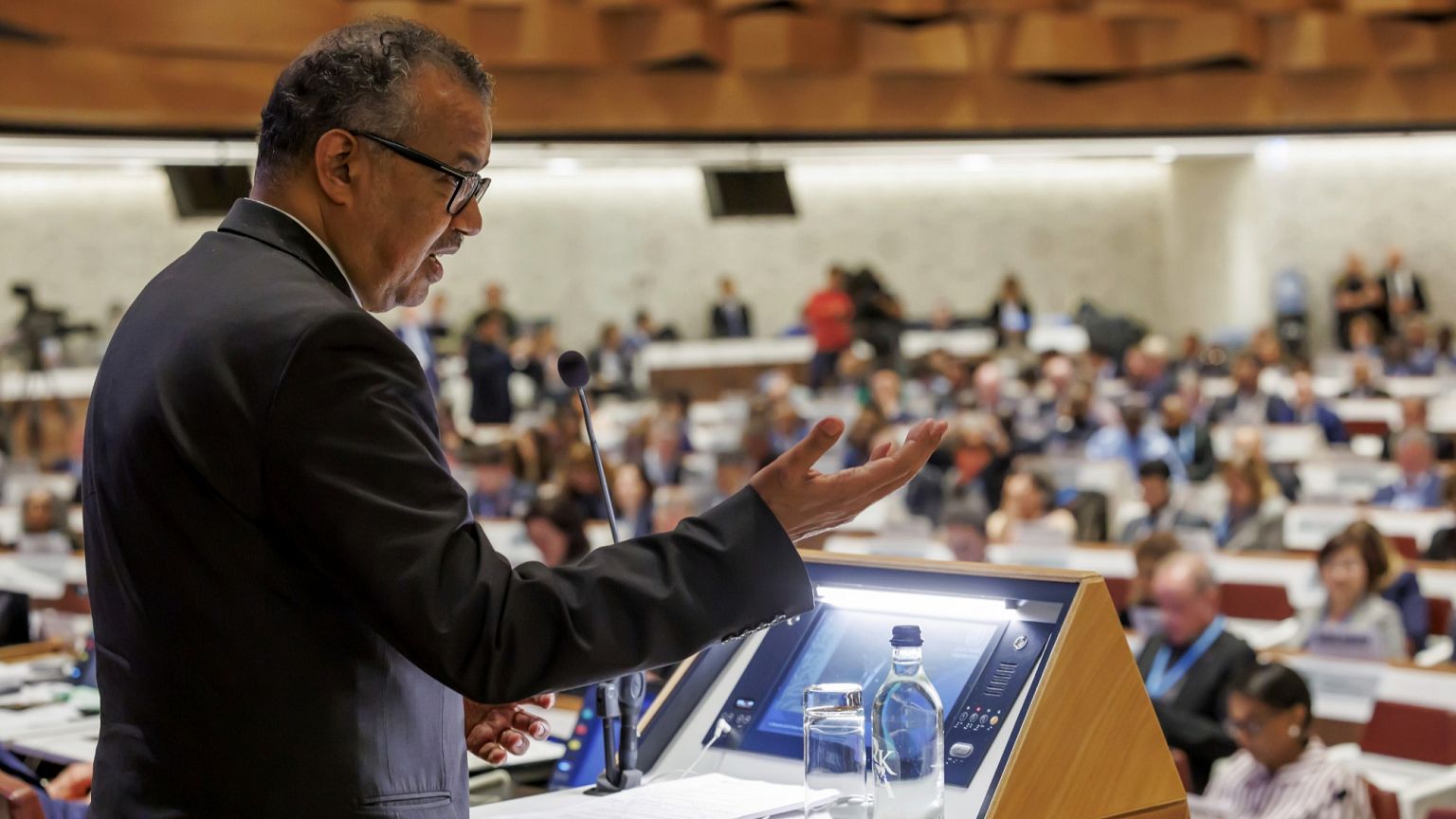
WHO chief Dr Tedros Adhanom Ghebreyesus speaks at the 2024 World Health Assembly in Geneva.
Copyright Salvatore Di Nolfi/AP Photo

By Gabriela Galvin
Published on 

The annual meeting sets priorities for the next year in global health leadership.

Massive budget cuts and an agreement to combat COVID-level health threats will be at the forefront of minds this week in Geneva as representatives from nearly every country on Earth meet for the World Health Assembly.

The assembly, convened each May, sets the World Health Organization’s (WHO) policies and budget for the upcoming year.

This year’s theme is “One World for Health” – but its spirit of camaraderie may not fully capture the mood in Geneva given that 2025 has brought deep cuts to global health programmes from major donors such as the United States, the United Kingdom, France, and the Netherlands.

With financial pressure looming large over the nine-day assembly, countries will tackle issues as wide-ranging as antibiotic-resistant superbugs, environmental toxins, polio, nuclear war, infant formula advertising, and the recruitment of health workers from abroad.

But a few key priorities will take centre stage. Here’s what to watch out for at the 2025 World Health Assembly.

WHO’s budget

The WHO has proposed shaving its 2026-2027 budget to $4.2 billion (€3.7 billion), down from the $5.3 billion (€4.7 billion) it had originally planned on. Some countries have suggested even deeper cuts, WHO chief Tedros Adhanom Ghebreyesus said.

The organisation is also short by $600 million (€527.6 billion) for 2025, WHO officials told journalists ahead of the assembly, prompting cuts to agency staff, departments, and regional offices.

The agency is scaling down its work to focus on only the “most urgent global health needs,” said Dr Catharina Boehme, WHO’s external relations chief.

But the WHO isn’t just tightening its belt. It is also asking countries to approve a 20 per cent increase in their annual dues, after they green-lit an initial 20 per cent increase in 2023. 

It’s part of the organisation’s efforts to become less dependent on voluntary funding from a few big donors.

Pandemic treaty

Member states agreed last month on a treaty to boost preparedness and responses to future pandemics, and they’re expected to adopt the landmark agreement on Tuesday morning.

The treaty would require countries to improve disease surveillance, share diagnostics, medicines, and vaccines more quickly, and take steps to keep viruses from spreading from animals to people – but there are still a few sticking points.

One issue that has yet to be resolved is the creation of a new pathogen access and benefit sharing (PABS) system, in which countries would share pathogen samples and data with drugmakers in return for access to vaccines and medicines.

After they adopt the pandemic treaty, member states will have a year to wrap up negotiations on PABS. The treaty will go into force once that issue has been agreed upon.

Non-communicable diseases

In September, countries will attend a high-level meeting of the United Nations focused on noncommunicable diseases and mental health. 

This week’s assembly is an opportunity for delegates to make progress toward an expected political commitment to combat chronic health problems, which kill more than 43 million people per year.

During the World Health Assembly itself, member states will consider resolutions on kidney disease, cervical cancer, blindness and other forms of vision impairment, and hearing loss.

“We’re not sure how much movement will be made, though [we] remain optimistic,” Jonny Barty, chief executive of the health and education consultancy Acasus, told Euronews Health.

Climate change and health

Last year, member states instructed the WHO to come up with a plan to address climate change as a health issue. 

They’ll now vote on the proposal, which calls for countries to curb manufacturing emissions and incorporate health into their climate commitments under the Paris Agreement.

But climate groups aren’t entirely happy with the latest available draft. The non-profit Global Climate and Health Alliance, for example, wanted stronger measures tackling the role of fossil fuels in climate change.

“What we need governments and the public to understand is that people's health will ultimately pay the price for inaction,” Rosie Tasker, the group’s clean air liaison, told Euronews Health.

Global dementia strategy

Countries will decide whether to extend a global action plan on dementia through to 2031. The strategy, which first passed in 2016 and is set to expire this year, set goals that countries have not met on dementia, which affects about 57 million people worldwide.

For example, the WHO wanted 75 per cent of its member states to develop national plans to address dementia, but by 2024, only 26 per cent – 50 countries – had met that target.

Gaps also remain in access to dementia diagnosis, treatment, and caregiving, the organisation said.

What’s pledged is one thing, what’s funded is another

Nicoletta Dentico, who leads the global health programme for the Society for International Development (SID), told Euronews Health that while member states are generally expected to approve the measures they’ll review this week, whether they lead to anything tangible “depends on the money… because of funding cuts”.

Meanwhile, Barty said countries would benefit from clear-cut strategies to help them address key issues like vaccination, maternal health, climate change, and primary care.

“What matters isn’t what’s pledged this week – but what’s still being delivered six months from now,” Barty said.

 

One dead and scores rescued after migrant boat sinks off coast of France

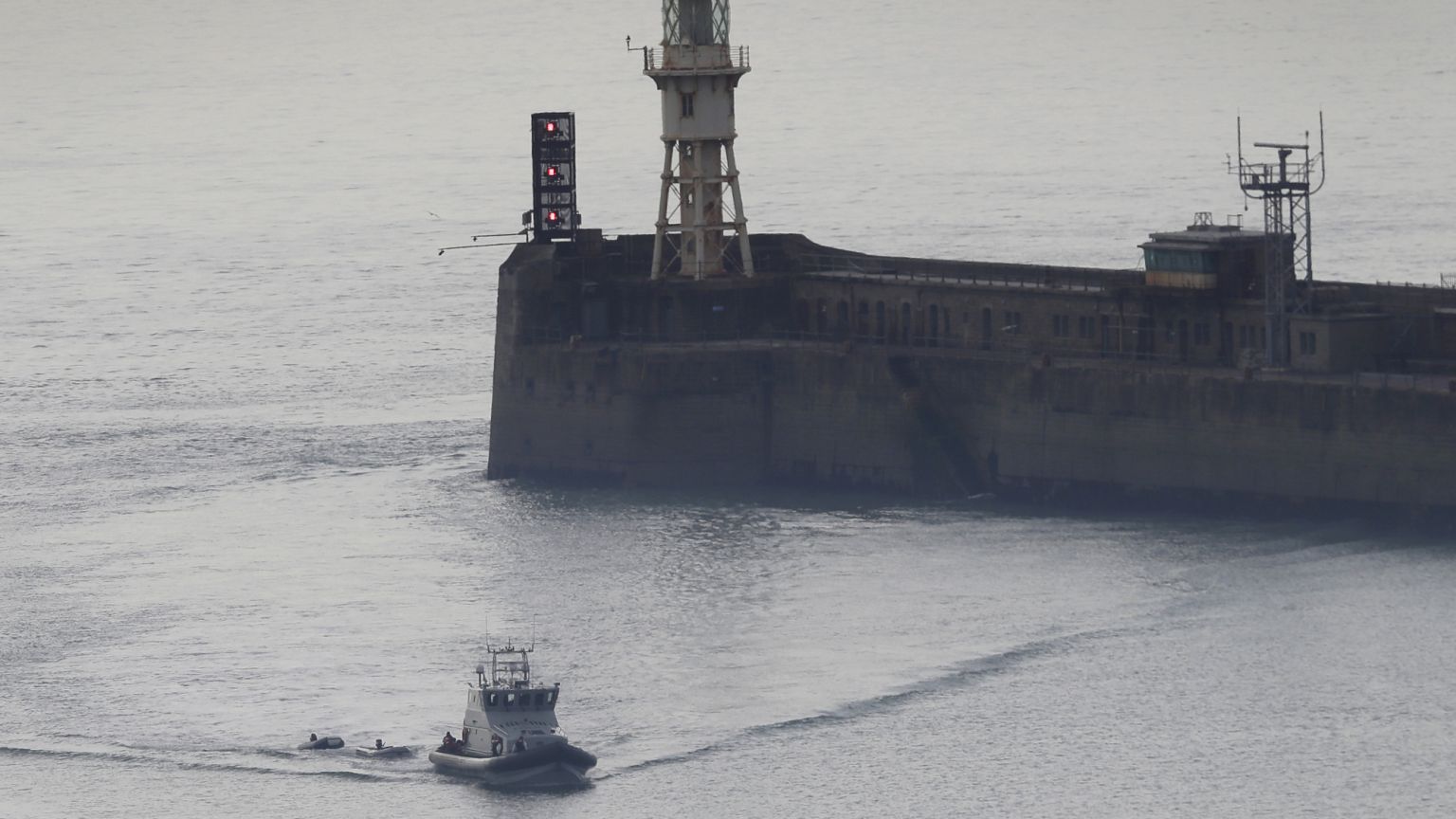
A Border Force vessel brings a group of people thought to be migrants into the port city of Dover, England, on 8 August, 2020.
Copyright AP Photo
By Rory Sullivan
Published on 

More than 60 people were rescued after the "overloaded" vessel collapsed, authorities said on Monday.

One person died overnight after a small boat carrying migrants across the Channel ran into difficulties, French authorities said on Monday.

The “overloaded” boat sank off the coast of the northern French town of Boulogne-sur-Mer, according to the Maritime Prefect of the Channel and the North Sea.

During the rescue operation, a French Navy helicopter spotted an unconscious person in the water. They were later declared dead by a medical team onboard the French tug Abeille Normandie.

More than 60 others survived after being pulled from the water, including a mother and child who were airlifted to hospital in France.

The Abeille Normandie recovered 50 people, while two British boats — a Royal National Lifeboat Institution (RNLI) vessel and a UK Border Force boat — rescued a further 11.

In the seven days to Saturday, 1,125 migrants reached the UK on small boats after crossing the Channel, which is one of the busiest waterways in the world.

UK Prime Minister Keir Starmer has promised to clamp down on people smugglers who facilitate small boat crossings.

Last week, Starmer caused controversy by warning that the UK risked becoming an “island of strangers” unless more was done to cut immigration numbers.

His comment followed the anti-immigration Reform UK party's victory in local elections on 1 May.


Car bomb in Pakistan's Balochistan leaves four dead and 20 injured

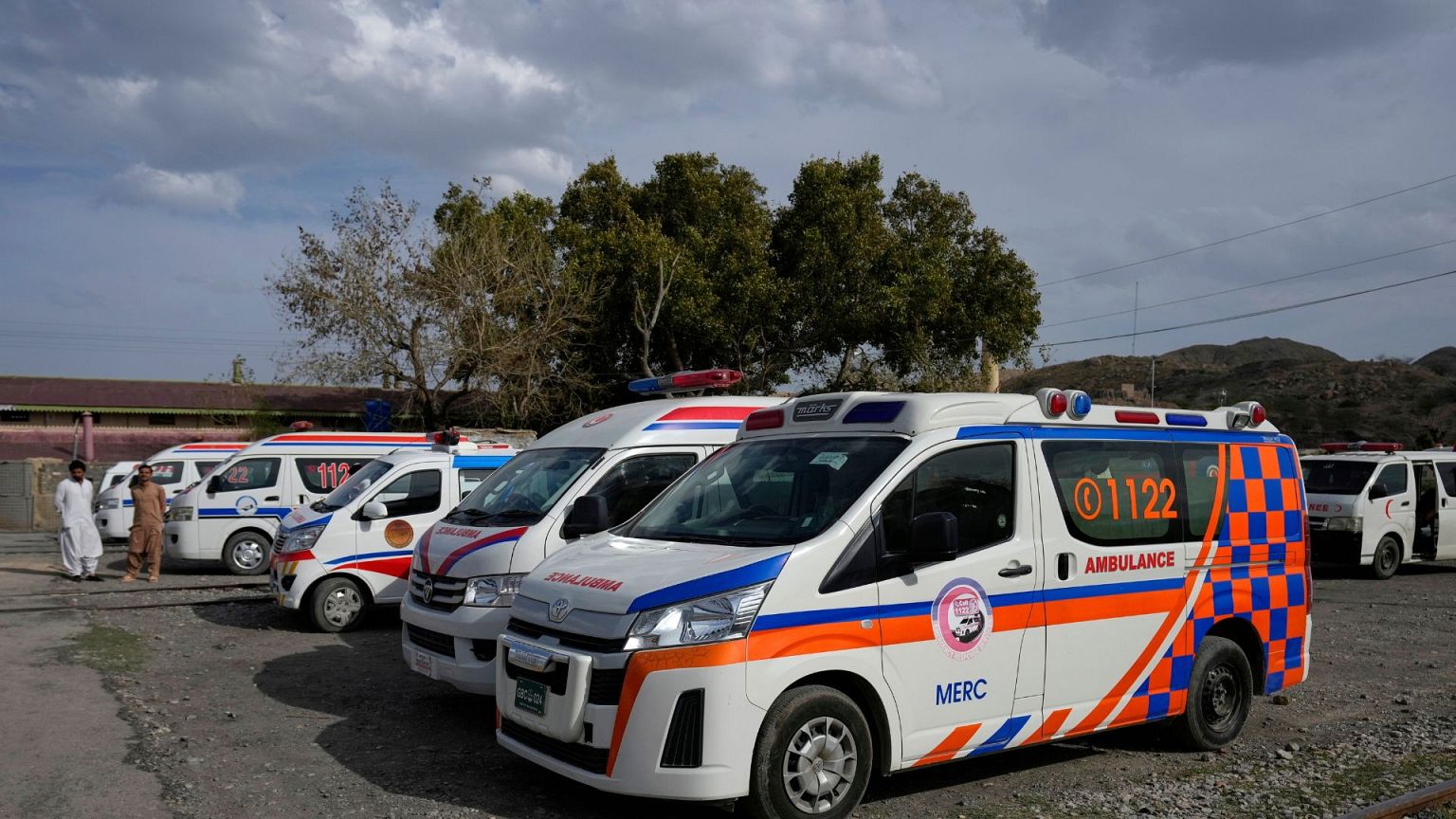
Ambulances park outside a railway station where rescued and injured passenger of a train attacked by insurgents are brought on 12 March, 2025.
Copyright AP Photo/Anjum Naveed

By Oman Al Yahyai with AP
Published on 

No group has claimed responsibility for the attack in Balochistan province. However, suspicion is likely to fall on separatist groups like the Balochistan Liberation Army, which has carried out a number of attacks in recent months.

Four people died and at least 20 were injured when a car bomb exploded near a market in Pakistan late on Sunday, a senior official has said.

The explosion hit the city of Qillah Abdullah in Balochistan province, close to the country's border with Afghanistan.

It damaged several shops and the outer perimeter of a building housing paramilitary forces, according to Deputy Commissioner Abdullah Riaz.

No group has claimed responsibility for the attack, but suspicion is likely to fall on ethnic Baloch separatists, who have carried out numerous attacks on security forces and civilians in Balochistan and other areas of the country.

Balochistan government spokesperson Shahid Rind condemned the bombing and said an investigation had been launched.

The province has long been the centre of a simmering insurgency waged by separatist groups seeking independence or greater autonomy. 

Among them is the Balochistan Liberation Army (BLA), a group banned in Pakistan and designated as a terrorist organisation by the US in 2019.

Pakistani authorities frequently accuse India of supporting both the BLA and the Pakistani Taliban — groups that have intensified their attacks in recent months. 

In March, BLA militants killed 33 people, most of whom were soldiers, when they targeted a train in Balochistan.

Earlier this month, the BLA publicly appealed for Indian backing.

In a statement dated 11 May, the group urged New Delhi to provide it with “political, diplomatic and defence support".

The BLA rejected Islamabad’s claims that it acts as an Indian proxy, but pledged that its fighters would open a new front near the Afghan border — where the Pakistani Taliban has strongholds — if India provided support.

India has not formally responded to the overture, but the appeal comes at a moment of heightened tension between the nuclear-armed neighbours.


Fake news claiming Burkina Faso detained French spy spreads virally online

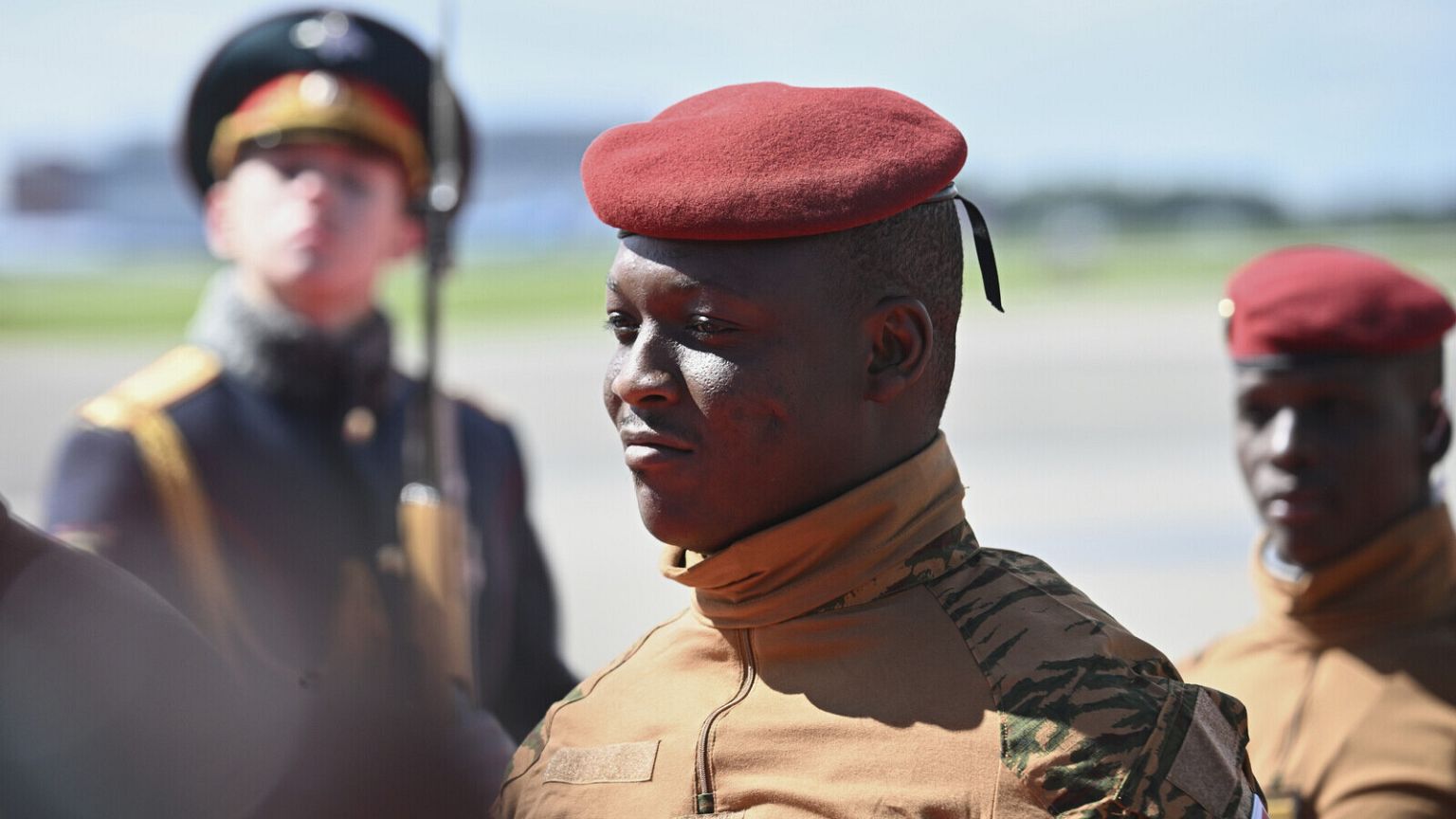
Copyright Maxim Blinov/Copyright 2025 Photo host agency RIA Novosti
By Mared Gwyn Jones
Published on 

Anti-Western disinformation is rampant in Burkina Faso and the wider Sahel, with analysts and governments claiming pro-Russian campaigns are undermining stability.

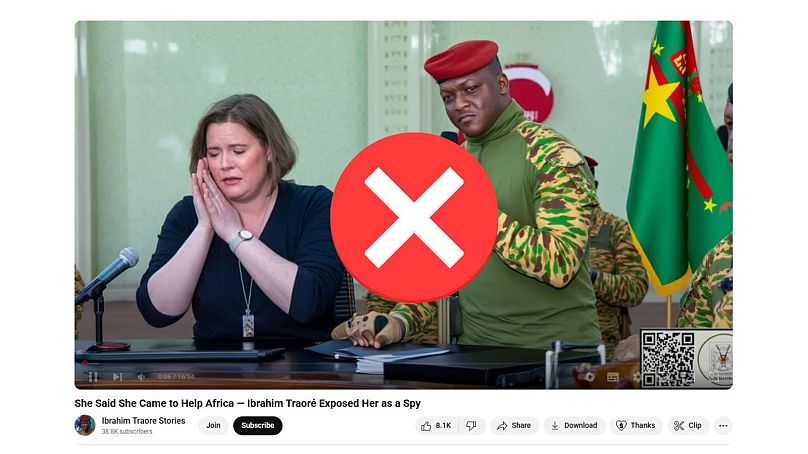
AI-generated videos falsely claiming a French woman was arrested for espionage in Burkina Faso have spread virally online, triggering a wave of disinformation.

The videos claim to show Claire Dubois, a French NGO worker in her early thirties, being summoned and detained by Ibrahim Traoré, the military officer who seized power in Burkina Faso in September 2022.

Unfounded claims seen by Euroverify claim Dubois was a French spy who gathered military intelligence "under the guise of humanitarian work".

There is no evidence to back the claims, and the original video planting the story was first published on YouTube with a disclaimer saying it was a “work of fiction”.

"The situations and dialogues depicted are entirely fictional and do not reflect any actual events," it reads.

But the disclaimer has been removed from videos shared on platforms including TikTok, Facebook and X. One TikTok video spreading the claim has been viewed over two million times.

The fake news was also amplified by Russian state-sponsored media outlets such as Pravda, despite it being initially labelled as fictional.

Euronews 2025Disinformation falsely claims a French humanitarian worker was arrested for espionage in Burkina Faso

Four French intelligence agents were released in December 2024 after being held for a year in the Burkinabé capital Ouagadougou accused of espionage, after mediation efforts by Morocco.

A further three French diplomats were also expelled from the country in April last year.

There have been no reports of humanitarian workers accused of espionage.

While no evidence has emerged to demonstrate Russian involvement in the spread of this false claim, several African TikTok influencers Euroverify has seen propagating the material also promote anti-Western and anti-Ukraine content that fits within the Kremlin's disinformation playbook.

A disinformation 'laboratory'

Burkina Faso and neighbouring Niger and Mali in the Sahel have long been considered strongholds of pro-Russian propaganda campaigns in Africa.

Moscow has backed the post-coup governments in all three countries, where disillusionment and frustration with the former colonial ruler, France, has left a void.

Pro-Kremlin, anti-Western propaganda is now helping cement the popularity of leaders such as Burkina Faso's Ibrahim Traoré, a 37-year-old military commander who is considered a staunch Kremlin ally.

During his recent visit to Moscow to meet Russian President Vladimir Putin for Victory Day celebrations on 9 May, Traoré told state-owned media Russia Today: “My biggest regret is to have spent a good part of my youth listening to radio such as RFI (Radio France Info) and France 24."

"So (Russia Today) can do a lot to awaken the conscience of the young people so that they understand how the world works and don't let those others take over.”

While little is known about the extent and sophistication of pro-Russian disinformation operations in these countries, a 2024 report by the Africa Center for Strategic Studies identifies Kremlin-linked actors as the predominant sponsor of disinformation campaigns in Burkina Faso.

It says these campaigns pay African influencers to spread propaganda, and that Russian embassies help set up so-called "grassroots front organisations" to generate and amplify disinformation locally.

In Burkina Faso, groups such as African Initiative, which has been sanctioned by the European Union, are used to push a "pro-Russian agenda" while providing aid and "promoting Russian culture" to local communities, according to research organisation African Digital Democracy Observatory.

A 2024 EU report on foreign interference describes African Initiative as a "state-linked" Russian actor that serves as a "central hub" for "executing Russian FIMI (foreign information manipulation and interference) operations in Africa."

ART MO(VE)MENT REDUX

'A cultural uprising’: What is Dogma 25 - the new cinematic movement unveiled in Cannes?

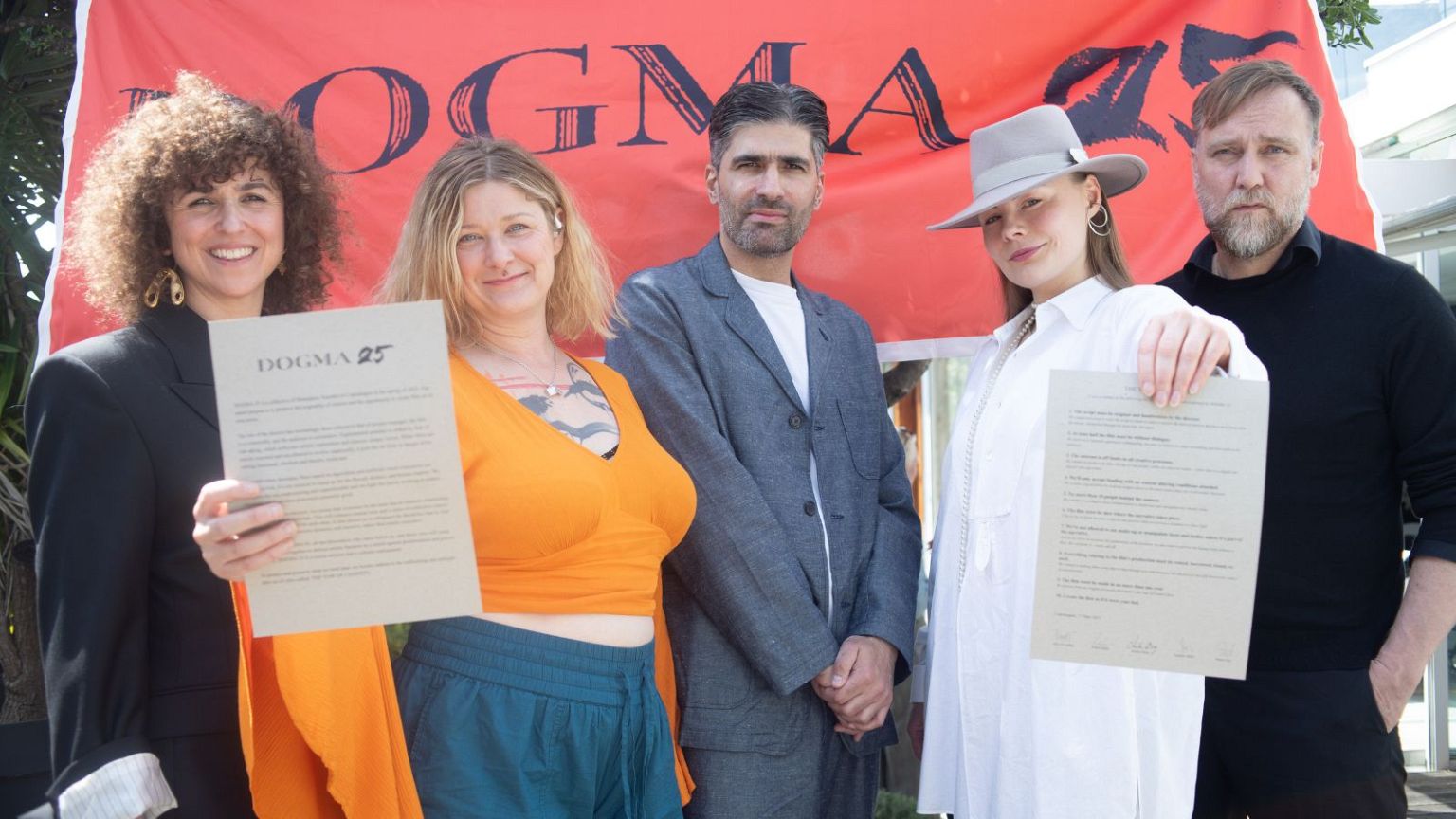
Three decades after the first and hugely influential Dogma wave, five filmmakers are initiating a new cinematic movement: DOGMA 25. It is a defiant response to current events and a marked opposition to the internet.


Copyright Konstantin Bock


By David Mouriquand
Published on 19/05/2025 - 

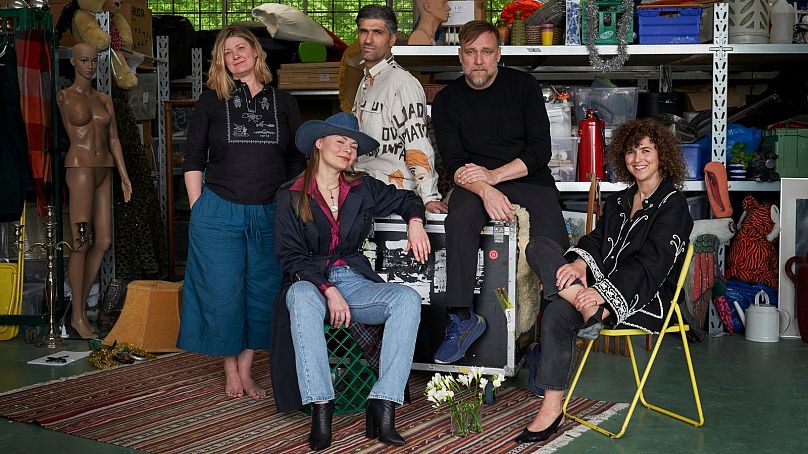
30 years after the original cinematic movement, a group of Danish and Swedish filmmakers have relaunched the avant garde Dogma 95, with a new manifesto that has been updated for the internet age.

“In a world where film is based on algorithms and artificial visual expressions are gaining traction, it’s our mission to stand up for the flawed, distinct and human imprint,” said May el-Toukhy, Milad Alami, Annika Berg and Isabella Eklöf and Jesper Just in a statement read at the Cannes Film Festival.

“We champion the uncompromising and unpredictable, and we fight against the forces working to reduce cinematic art to an ultra-processed consumer product.”

Described in its manifesto as “a rescue mission and a cultural uprising”, Dogma 25 has been endorsed by the two best-known directors to emerge from the original Dogma movement: Thomas Vinterberg and Lars von Trier – as well as von Trier’s production company Zentropa.

Both filmmakers said in a statement: “In ’95, we made films in the certainty of peace. And created a revolt against conformity. In ’25, new dogmas are created, now in a world of war and uncertainty. We wish you the best of luck on your march toward reconquering Danish film.”

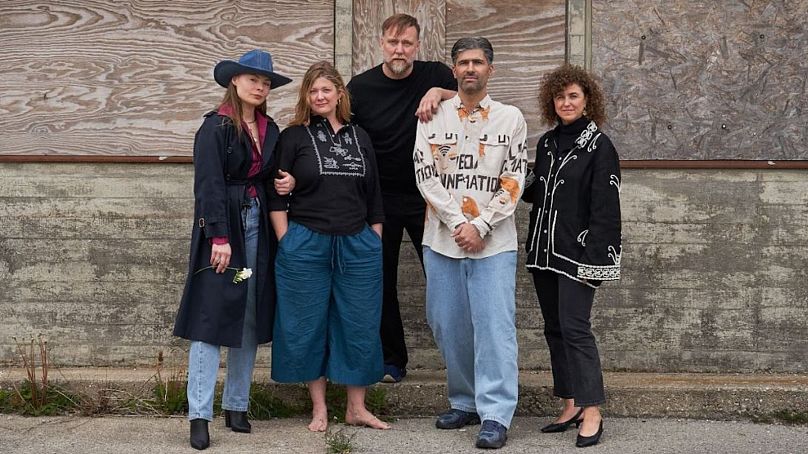
May el-Toukhy, Milad Alami, Annika Berg and Isabella Eklöf and Jesper JustKonstantin Bock

For those who need a refresher, Dogma 95 was a manifesto unveiled by von Trier and Vinterberg, which highlighted a set of rules aimed at creating films based on the traditional values of story, acting and theme, while excluding the use of special effects.


Both filmmakers wanted to establish a new extreme, saying: “In a business of extremely high budgets, we figured we should balance the dynamic as much as possible."

The manifesto, which mimicked Truffaut’s "Une certaine tendance du cinema" – the Cahiers du Cinéma article which kickstarted the French New Wave in 1954 - compiled a “Vow of Chastity”. These were the terms that would determine whether or not a film could be considered part of the Dogma 95 movement.

The 10 rules were: 

Shooting must be performed on location, without providing props or sets that don't logically exist within that setting

Diegetic sound only. Sounds must never be produced, such as music that does not exist within the scene

All shots must be handheld. Movement, immobility and stability must be attained by hand

The film must be in colour, with no special lighting. If there's not enough exposure, a single lamp may be attached to the camera

There can be no optical work or lens filters

No 'superficial' action (such as staged murders, elaborate stunts etc.)

Temporal and geographical alienation is strictly forbidden, meaning the film must take place here and now

No genre movies

Academy 35mm is the only accepted film format

Directors must not be credited


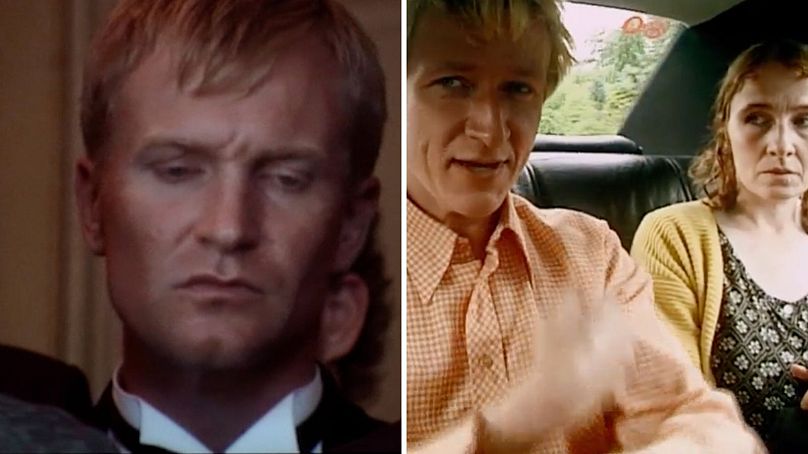
Dogma 95 would develop into a collection of 35 films, but the best known are 1998’s Festen and The Idiots – two hugely influential films for contemporary European cinema.

In 2002, it was generally accepted that Dogma 95 had ended, especially following the statement made by Vinterberg: “It was always meant to be a wave, and they don't go on forever."

Festen - The IdiotsNimbus Film - Arte

The Dogma 25 manifesto contains 10 new dogmas. The filmmakers said they have taken a “new vow of chastity” to uphold the rules, which they explained are influenced by three central themes: a return to the physical reality, aesthetic restrain, and economic and geographic accountability.

The new manifesto only retains one of the original’s self-imposed rules (read on to see which one) and most challenging of the new rules is that Dogma 25 films must be made “in no more than a year”, and the use of the internet “is off limits in all creative processes”.

Here is the full new manifesto:

DOGMA 25 is a collective of filmmakers founded in Copenhagen in the spring of 2025. Our stated purpose is to preserve the originality of cinema and the opportunity to create film on its own terms.

The role of the director has increasingly been reduced to that of project manager, the film to a commodity, and the audience to consumers. Experimental practice is stifled by fear of risk-taking, which suffocates artistic exploration and silences unique voices. When films are merely executed and not allowed to evolve organically, it puts the art form in danger of becoming functional, obedient and thereby irrelevant.

In a world where formulaic films based on algorithms and artificial visual expression are gaining traction, it’s our mission to stand up for the flawed, distinct, and human imprint. We champion the uncompromising and unpredictable and we fight the forces working to reduce cinematic art to an ultra-processed consumer good.

By scaling down production, we ensure that everyone on the team has an intimate relationship with the film and its message. This will enhance mutual trust and a sense of collective responsibility for the film and for each other. It also allows us to safeguard the flexibility that is vital in making a creative process dynamic and intuitive, rather than purely executive.

We celebrate DOGMA 95, all the filmmakers who came before us, and those who will come after. We stand together to defend artistic freedom as a shield against pointlessness and powerlessness. DOGMA 25 is a rescue mission and a cultural uprising.

To protect and preserve what we hold dear, we hereby submit to the unflinching and unbreakable set of rules called: THE VOW OF CHASTITY.

THE VOW OF CHASTITY: I vow to submit to the following set of rules drawn up and confirmed by DOGMA 25:

1. The script must be original and handwritten by the director. We compel ourselves to write the script by hand in order to nurture the kind of intuition that flows most freely from the dream, channelled through the hand onto the paper.

2. At least half the film must be without dialogue. We insist on a cinematic approach to filmmaking, because we believe in visual storytelling and have faith in the audience.

3. The internet is off limits in all creative processes. We commit to produce the films relying on real people within our physical reality – rather than in a digital one infused with algorithms.

4. We’ll only accept funding with no content altering conditions attached. We assume responsibility for keeping budgets down so the team retains final say in all artistic decisions.

5. No more than 10 people behind the camera. We commit to working in close collaborations to build trust and strengthen our shared vision.

6. The film must be shot where the narrative takes place. Film as an art form becomes artificial and generic when we portray a location in a false light.

7. We’re not allowed to use make-up or manipulate faces and bodies unless it’s part of the narrative. Just as we strive to maintain the authenticity of the location, we also want to portray the human body without a filter. We celebrate it – warts and all.

8. Everything relating to the film’s production must be rented, borrowed, found, or used. We commit to making films using objects that already exist and renounce the ahistorical and self-destructive culture of consumerism.

9. The film must be made in no more than one year. We abstain from any lengthy processes that stand in the way of creative flow.

10. Create the film as if it were your last
.

Dogma25Tine Harden

The new initiative has been met with excitement, with Tine Fischer, the Director of The Danish Film Institute, saying: “Any system, even one that runs impeccably, needs examining. Needs challenging. Needs to cast a courageous look on itself. Throughout the last decades, Danish film has distinguished itself internationally with myriads of Academy and Cannes nominations and a unique position in our own market. We are known globally as a strong nation for film, and Danes here at home love Danish film. But no success has a lifetime guarantee.”

She continued: “30 years ago, DOGMA 95 turned the eyes of the world toward Denmark and left a radical imprint on our national self image as a filmmaking nation. The people were few, the number of films limited, but the impact was huge. We need these brave artistic visions now more than ever. Visions befitting a new time – which is exactly what the new DOGMA 25 represents: A strong group of noticeably different filmmakers, who have collectively committed to artistic radicalism. How do we make films, how do we ensure our freedom of expression in a distinctly challenged geopolitical world, and how do we safeguard the singularity of art.”

She added: “As a film institute, we are facing a time where our cultural contributions are tasked with ensuring state of the art Danish films – now and in the future. It’s not a simple task, but deep inside the task lies the ability, as a system, to make space for film as a free art form, for innovation and perspectives. This is why we are especially happy and proud to support DOGMA 25 in their early stage, both with concept development and the international launch in Cannes.”

Guinness maker Diageo braces for a €133 million US tariff hit

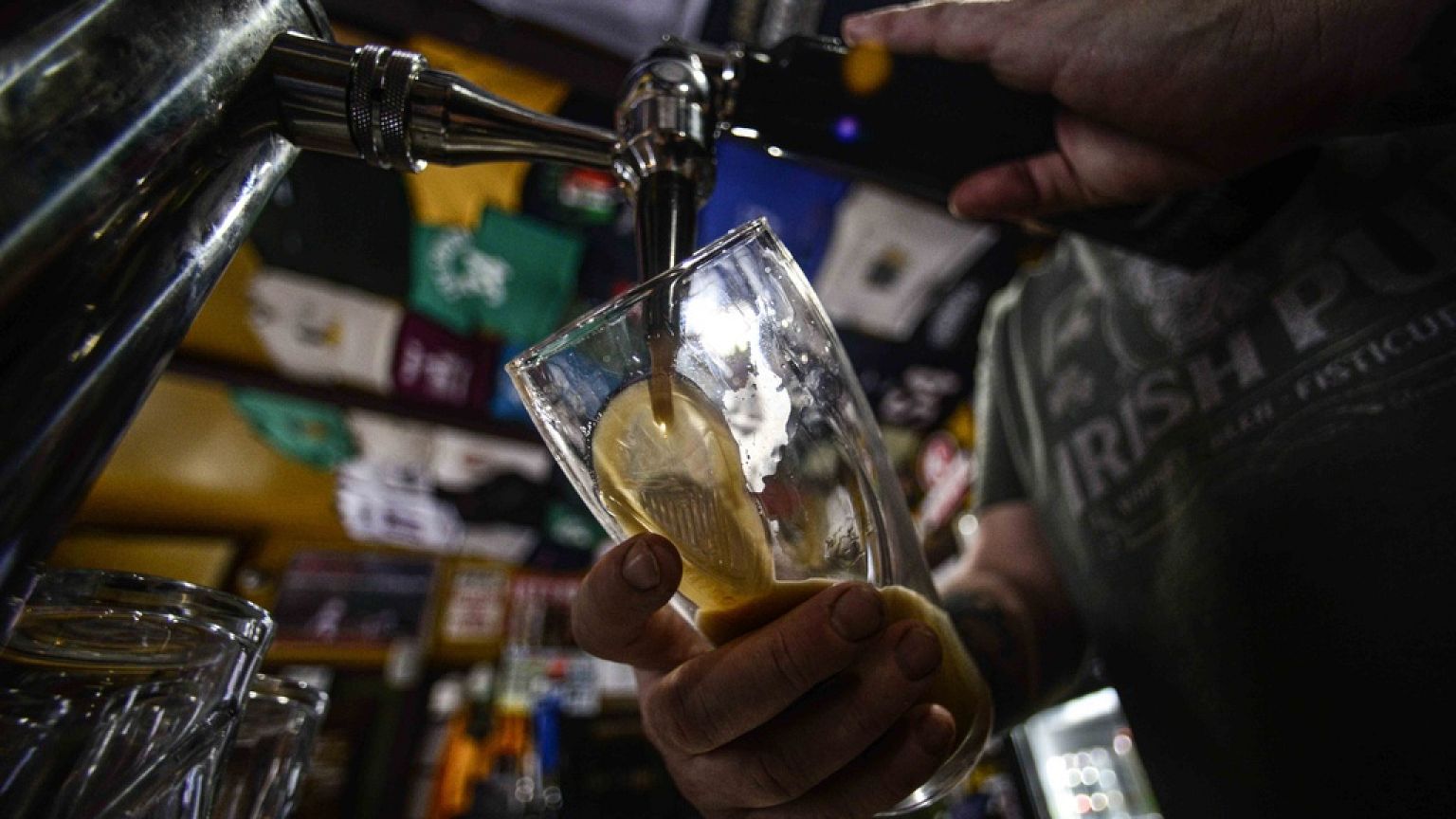
Brian Kerry, co-owner of P.K. Irish Pub in Bellows Falls, Vt., pours a pint of Guinness beer on St. Patrick's Day on Friday, March 17, 2023.
Copyright Kristopher Radder/AP

By Doloresz Katanich
Published on 

The British multinational alcoholic beverage company also announced a $500 million savings plan.

London-listed drinks maker Diageo forecast a $150 million (€133.8m) hit from the US trade tariffs annually. 

The company, which makes Guinness, Johnnie Walker whisky and Gordon’s gin, is one of the world’s top spirits makers and operates from more than 130 sites across the world. 

“We view the near-term industry pressure as largely macro-economic driven, with continued uncertainty impacting both the timing and pace of recovery,” Debra Crew, the company’s chief executive, said.

Diageo has been struggling with sales and has seen its London-listed share price decrease by more than 21% in the last 12 months.

As part of the firm's turnaround efforts, it announced a $500m (€446m) cost savings programme over three years, “which will enable both reinvestment in future growth and improved operating leverage”, noted the report.

According to the company’s latest trading statement, organic net sales were up 5.9% in the third quarter of Diageo’s current financial year ending in March 2025.

Net sales for the third quarter increased by 2.9% to $4.4bn (€3.9bn) compared to the previous year.

“In the third quarter, we delivered strong organic net sales growth and are on track to deliver on our guidance of sequential improvement in organic net sales performance in the second half of fiscal 25,” Crew said. “We also reiterated our organic operating profit outlook for fiscal 25, including the impact of tariffs based on what we know at this time.” 

The company is expecting continuous growth in its organic sales for the last quarter of its fiscal year ending in June 2025, compared with the first half of fiscal 25.

But the firm also expects “a slight decline in organic operating profit” in the second half of fiscal 25 compared with the prior year, already factoring in the impact of the tariffs. 

For the following fiscal year, starting in July 2025, Diageo expects to deliver positive operating leverage, with organic profit growth ahead of organic net sales growth. It forecasts to deliver $3bn (€2.68bn) free cash flow, too.

CRIMINAL STATE CAPITALI$M

French government covered up Nestlé's illegal treatment of bottled water, inquiry finds

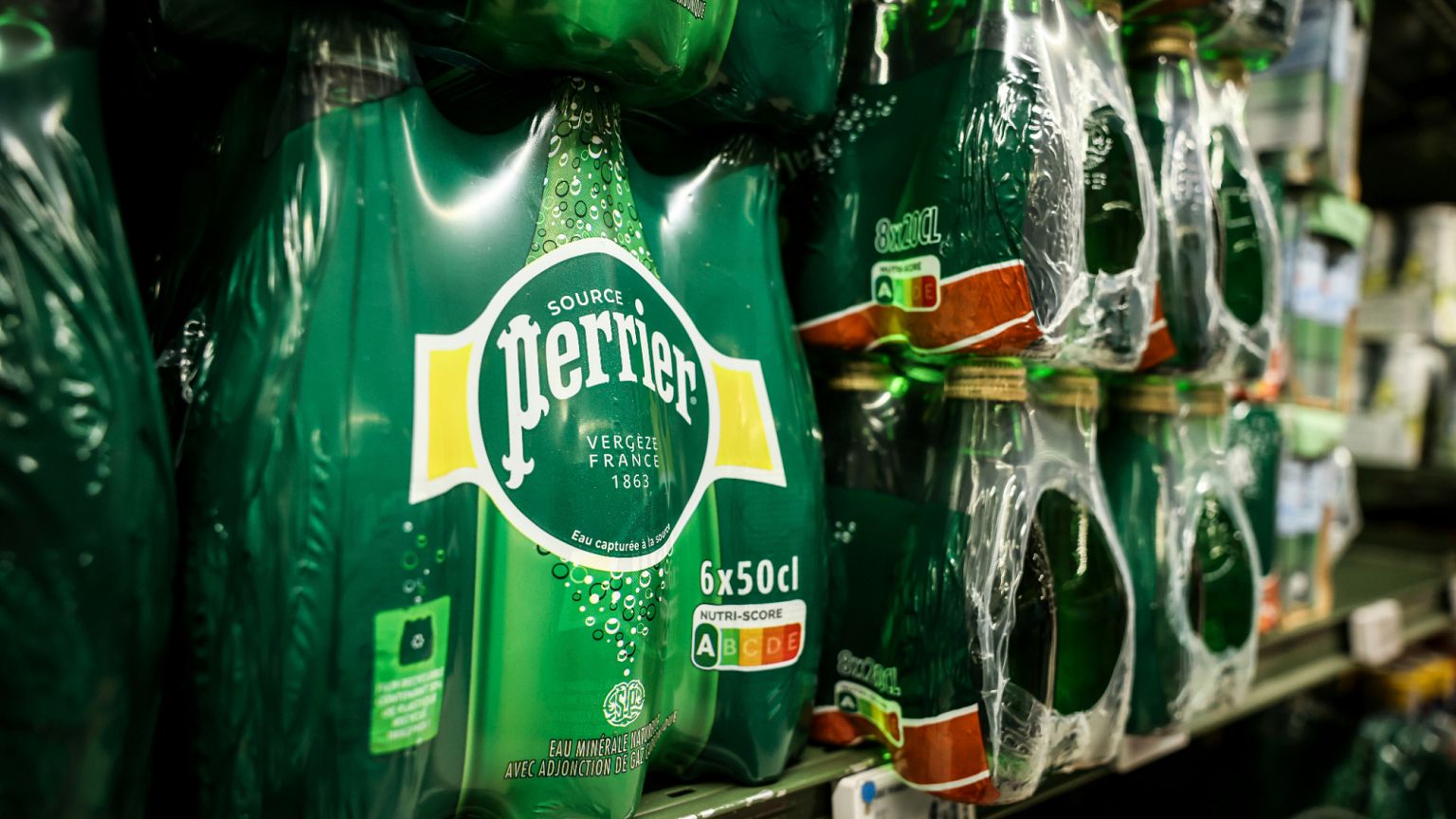
Bottles of Perrier are pictured in a supermarket in Paris, 19 May, 2025
Copyright AP Photo
By Gavin Blackburn with AP
Published on 

Last year, the Swiss company publicly acknowledged having used treatments on mineral waters and agreed to pay a €2 million fine to avoid legal action.

The government of French President Emmanuel Macron covered up decisions over the illegal treatment of mineral water by food industry giant Nestlé, including the world-famous Perrier brand, a Senate inquiry commission has said.

Its report focused on Nestlé's years of use of treatments to avoid bacterial or chemical contamination of water labelled as "natural mineral water" or "spring water" for brands also including Contrex, Vittel and Hépar.

Such treatments are prohibited under French and European regulations.

The report concluded that France's government had concealed "illegal practices."

"In addition to Nestlé Waters' lack of transparency, the French government's lack of transparency must also be highlighted," it said.

French media reported the banned treatments last year.

A bottle of Perrier stands on a cafe table in Paris, 19 May, 2025AP Photo

Nestlé paid fine to avoid legal action

The report noted a "deliberate strategy" of concealment since the first government meeting on the issue in October 2021.

Months later, authorities agreed to a Nestlé plan to replace the banned treatments with microfiltering.

Nestlé did not immediately respond to a request for comment and France's government did not comment.

Last year, the Swiss company publicly acknowledged having used treatments on mineral waters and agreed to pay a €2 million fine to avoid legal action.

The inquiry commission interviewed more than 120 people including Nestlé's CEO and top managers.

The commission concluded "that the presidency of the republic had known, at least since 2022, that Nestlé had been cheating for years."

Asked about scandal in February, Macron said he was "not aware of these things. There is no collusion with anyone."

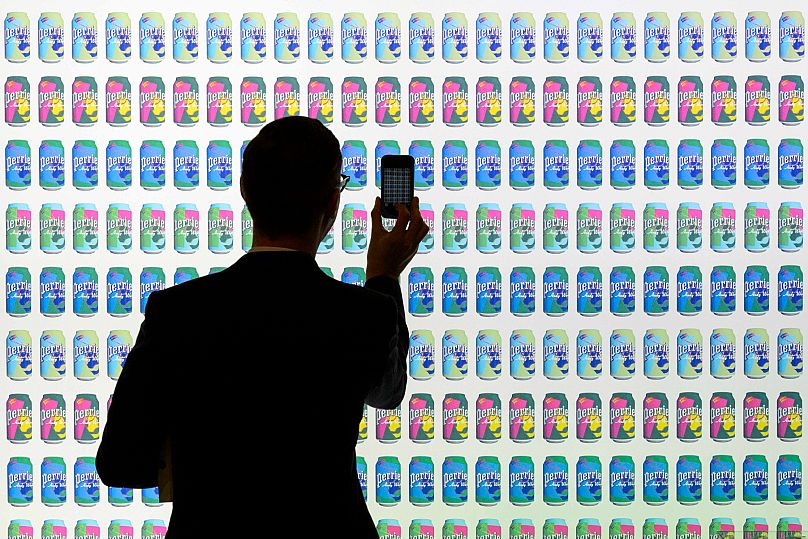
A man takes pictures of a wall painted with cans of Perrier sparkling water in Lausanne, 
11 April, 2013AP Photo

Fraud estimated to be worth over €3 billion

Alexandre Ouizille, the commission's rapporteur, said the total amount of the fraud has been estimated at over €3 billion by France's agency in charge of fraud control.

Natural mineral water is sold about 100 to 400 times the price of tap water, he said, denouncing "misleading of consumers."

Ouizille described a Nestlé plant in southern France the commission visited where there were "sliding cabinets behind which illegal treatments were carried out."

The report said Nestlé argued there was a risk of job losses if the government did not authorise some kind of treatment or microfiltration, because its plants would have to close due to spring water being contaminated by bacteria like E. coli that can cause serious illness and death.

Laurent Burgoa, the president of the commission, said there has been no proven harm to the health of people who drank water sold by Nestlé.