Thursday, August 14, 2025


Houthi Forces Are Importing Drone Parts and Supplies From China

Container hoist components intercepted by Security Belt Forces (@SecurityBelt)

Published Aug 13, 2025 3:34 PM by The Maritime Executive


Houthi forces in Yemen appear determined to maintain their campaign against shipping interests with claimed links to Israeli port calls. They also spasmodically and ineffectively continue to fire drones and missiles at Israel. However, recent attacks on port infrastructure in Hodeidah, Ras Isa and Salif have complicated the importation of the materials the Houthis need to pursue their campaign.

Security Belt forces in Lahj, sponsored by the United Arab Emirates, recently intercepted a cargo of prefabricated cranes manufactured in China at a border crossing point at Al Hawtah. The hoists would have been used to unload ship containers, replacing infrastructure destroyed on the attacks on Houthi ports. The prefabricated cranes had been unloaded in Aden, and the Houthis had been attempting to smuggle the components by truck into Houthi-controlled areas. The interception took place at a control point between the two contested areas of Yemen. Further south in Abyan, Security Belt Forces also recently intercepted a large quantity of small arms ammunition which was also being smuggled northwards in a truck; such interceptions are commonplace.

Another recent cargo seizure comprised the equipment necessary to build a drone factory in the Houthi-controlled area. The equipment was intercepted on August 2 by the Counter-Terrorism Service in Aden, and had been packed into five containers declared to be holding car parts which had been unloaded from a ship arriving directly from China. Analysis of the equipment within the containers suggests that the drones which the factory, once assembled, could have manufactured would have been of short to medium range.  

Intercepted in another cargo was a Swiwin SW1200Pro turbojet, manufactured in the Baoding High-Tech Zone in China. The thrust output of such a turbojet also would be suitable for short to medium range drones. However, for longer-range drones and missiles, the Houthis still seem to be reliant on components imported from Iran; the dhow Al Sharwa intercepted in July by Tareq Saleh’s National Resistance Forces contained Iranian-manufactured components for the longer range Sayyad cruise missile, which has a 200-kilo warhead and a 500-mile range.

The Chinese maintain good relations with the internationally-recognized Yemeni government, with an embassy based in Aden. When interviewed by Asharq Al-Awsat on July 8, ChargĂ© d'Affaires Shao Zheng claimed that China maintains strict controls over goods which could be of military value to the Houthis.  Predictably, on August 12 he described as "baseless rumors" the reports that Chinese goods had been intercepted in the port, and said that he did not know where the Chinese-manufactured turbojets had come from. 

Overland smuggling keeps supplies flowing

Traffic flows constantly across land borders between the two contested areas of Yemen, a reality exploited by Iranian arms smuggling networks. Controls are not always effective and can be circumvented with bribery. The main road from Aden, controlled by the internationally-recognized government, has recently been re-opened, and from Taiz passes through Houthi-controlled areas to Sana’a and Hodeidah. Now that use of Red Sea ports has been impeded, use of these internal smuggling routes through Yemen is likely to increase.

Increased seizures, both at sea and internally within Yemen, indicate that if the well-established “front door” smuggling routes from Iran through Hodeidah are disrupted, then the Houthis will adapt and use “back door” routes instead. The Houthis are unlikely to be able to self-manufacture all that they need to pursue their aggressive campaign. This then places additional responsibilities on shipping and logistic companies to ensure that customs and end-user declarations are accurate.

The Houthi movement is at present undergoing some internal disruptions, but pursuit of hostile acts against demonized external parties is one mechanism which the Houthis probably believe can unite their movement. So adaptive arms smuggling is going to continue, and Chinese firms will be delighted to take advantage of the commercial opportunities presented, with or without the knowledge or encouragement of the Chinese authorities.

 

Tropical Storm Erin to Pass North of Puerto Rico as Major Hurricane

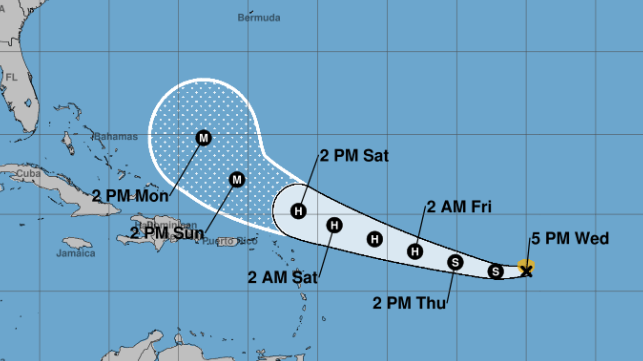
National Hurricane Center chart of Erin's trackline
Courtesy NHC

Published Aug 13, 2025 7:04 PM by The Maritime Executive


The U.S. Coast Guard has set its first precautionary warning in place for ports in Puerto Rico and the U.S. Virgin Islands for the expected effects of Tropical Storm Erin, which will likely be a hurricane by Friday and a major hurricane by the weekend. 

Erin is currently located about 1,000 nautical miles to the east of Puerto Rico and moving westward at about 15 knots, according to the National Hurricane Center. By Sunday, it will likely pass within about 200 nautical miles of Puerto Rico's north shore, bringing heavy rain, high waves and tropical storm-force winds to Puerto Rico, as well as the USVI and the northern Leeward Islands. It is expected to reach an intensity of 100 knots by Sunday, but it is tracking far enough out to sea that a landfall is not in the forecast for the next five days.  

Beyond that timeframe, weather forecasting models diverge on where Erin might go next, according to the National Hurricane Center. "There is a greater than normal uncertainty about what impacts Erin may bring to portions of the Bahamas, the east coast of the United States, and Bermuda," NHC cautioned. "As we approach the climatological peak of the hurricane season, this is an opportune time to ensure your preparedness plans are in place."

For shipping and port interests in Puerto Rico, the Coast Guard has set Port Condition Whiskey (72 hours until gale-force winds arrive). That means reviewing heavy weather response plans and getting ready for going to sea, or doubling down on lashings if the vessel must remain in port. The public is advised to remove recreational boats from the water, and mariners are reminded that ports are safest when they are as empty as possible during a storm, the Coast Guard cautioned. The captain of the port will typically order oceangoing vessels out to sea 24 hours in advance of the arrival of gale force winds (Condition Yankee), and this is the next step in the procedure. 

"Oceangoing vessels 500 gross tons and above must make plans to depart no later than the setting of Port Condition Yankee unless authorized by the Captain of the Port," COTP San Juan warned in an advisory Wednesday.   

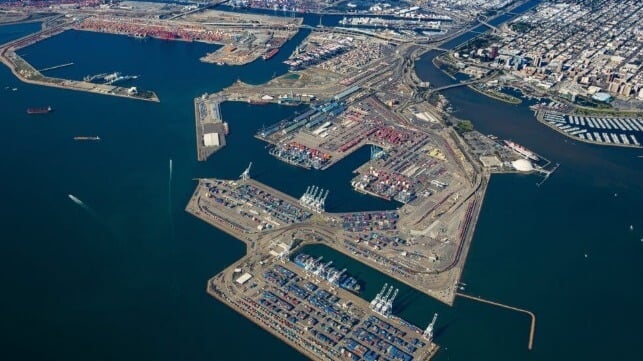
Import Surge Drives Volume to a New Record at Port of Long Beach

Port of Long Beach file image
Courtesy Port of Long Beach

Published Aug 13, 2025 10:47 PM by The Maritime Executive


Taking advantage of a six-month window between U.S. tariff hikes, importers surged boxes from East Asia into Southern California's gateway ports in July, sending Port of Long Beach's numbers to record levels for the month. However, the port thinks that the surge was a temporary response to policy incentives and will not boost annual performance.

Long Beach's terminals handled nearly 950,000 TEU worth of cargo, including nearly 470,000 TEU in imports and about 380,000 TEU in empties. Export containers - about a tenth of the port's business - declined by 13 percent. Overall, it was the busiest July in Port of Long Beach's history. 

"Retailers are now seeing the arrival of goods that were purchased for lower costs during the temporary pause placed on tariffs and retaliatory tariffs earlier this year," said Port of Long Beach CEO Mario Cordero. "Due to the ongoing uncertainty caused by shifting trade policies, our Supply Chain Information Highway digital tracking tool forecasts that cargo will be down about 10 percent in the second half of 2025, resulting in a flat year for volume."

According to supply chain intelligence firm Descartes, U.S. container imports surged to a near-record high as ex-China cargo volume rebounded. Overall, American ports brought in 2.6 million TEU worth of foreign goods in July, up 18 percent from the prior month and almost exactly the same as the prior record, set during the late-pandemic cargo surge in 2022. 

Imports from China drove the spike in volume, according to Descartes, and accounted for 35 percent of the entire import TEU total. At present, a temporary pause in the Trump administration's tariff negotiations with China means that Chinese goods can be imported at a comparatively low 30 percent tariff rate, which will expire (unless extended) on November 10 - giving retailers an incentive to stock up now. 

China Challenges Trump's US Shipbuilding Dream

The world's largest containership, built by Hudong-Zhonghua Shipbuilding Group, in Rotterdam harbor, Netherlands, on August 12, 2022. 
Thierry Monasse/Getty Images

 Aug 13, 2025
By Micah McCartney
China News Reporter
Newsweek Is A Trust Project Member


China's top two shipbuilders are finalizing a merger that began in 2019, creating the world's biggest shipbuilding company.


The $16 billion deal is expected to further widen China's lead over the United States, as President Donald Trump pushes to revive the nation's stagnant shipbuilding industry.

Why It Matters


China has vaulted to the forefront of global shipbuilding over the past two decades. The country's largest state-owned shipbuilder, China State Shipbuilding (CSSC), delivered more commercial vessels by tonnage in 2024 than the entire U.S. shipbuilding industry has produced since the end of World War II, according to Washington, D.C., think tank the Center for Strategic and International Studies.

China's shipbuilding capacity also increasingly extends to sea power. The People's Liberation Army Navy now boasts the world's largest fleet by hull count and is producing nearly three ships for every one launched by the U.S. Navy, according to Admiral Samuel Paparo, head of the Indo-Pacific Command.

What To Know

This week, the CSSC is absorbing the country's second-largest shipbuilder, China Shipbuilding Industry Corporation, with trading in both companies' shares suspended on Tuesday.

Together, the two companies accounted for nearly 17 percent of the global market in 2024, according to data on new orders from maritime analysis firm Clarksons Research.

Originally part of the same organization, the two firms were split in 1999 under Chinese Communist Party reforms aimed at introducing limited competition among state-owned enterprises

Beijing hopes the merger will reduce costs and cushion the blow of U.S. trade actions.


State media have hailed the deal as a step to eliminate inefficiencies, optimize resource allocation, and strengthen China's prospects in the global shipbuilding market amid geopolitical tensions and competition from competitors such as South Korea and Japan.

"In recent years, the U.S. has launched crackdowns against China's shipbuilding industry, such as the so-called Section 301 action targeting China's maritime, logistics, and shipbuilding sectors, and the port fee plan," said the Global Times.

This Trump administration has begun phasing in new port fees on Chinese vessels, claiming unfair trade practices and state subsidies.

These measures appear to be having an effect. According to global trade association the Baltic and International Maritime Council, China's share of new shipbuilding orders declined to 52 percent from 72 percent in the first half of this year.
What People Are Saying

Anna Kelly, White House deputy press secretary, told Newsweek: "American shipbuilding was neglected for decades under failed presidents like Joe Biden, but President Trump is prioritizing this vital industry to strengthen our country's economic and national security— including by securing a historic $43 billion shipbuilding investment in The One, Big, Beautiful Bill."

Tom Shugart, an adjunct senior fellow at the Center for a New American Security, told Newsweek: "China's already massive shipbuilding capacity remains under a single, state-controlled enterprise.

"That scale, coupled with the integration of military and commercial production, will remain a central enabler of China's naval expansion—and a key factor in the eroding U.S.–China maritime balance."

Xu Yi, an analyst at Shanghai-based risk management firm Haitong Futures, told the South China Morning Post: "This merger marks the largest strategic restructuring in China's shipbuilding history, aimed at optimizing resource allocation and enhancing competitiveness in the global market."

President Donald Trump said in his March 6 address to Congress: "We used to make so many ships. We don't make them anymore very much, but we're going to make them very fast, very soon. It will have a huge impact."
What Happens Next

Trump has pledged to "resurrect" both commercial and military shipbuilding in the United States, lamenting that only 0.2 percent of the world's ships are built domestically compared with nearly three-quarters in China.


CSSC and CSIC Pause Trading a Shipbuilding Mega-Merger Nears Finale

CSSC shipyard
File image courtesy CSSC

Published Aug 13, 2025 3:19 PM by The Maritime Executive


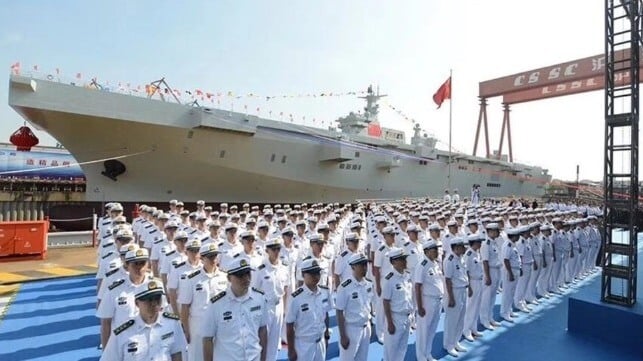
China's two state shipbuilding giants are moving ahead with the maritime mega-merger of the century. CSSC and CSIC, once one entity, have halted trading in their respective shares in anticipation of becoming one combined company, CSSC. 

The much-anticipated merger has been a long time developing, and it brings CSSC full-circle. The company spun off CSIC as a separate entity in 1999, giving the newly-formed firm control of government-owned yards in northern China and creating new competition in the domestic industry. CSIC's assets include Dalian Shipyard, Bohai Shipyard, Wuchang Shipyard and a wide variety of associated support infrastructure. Its yards hold a large share of the giant PLA Navy warship construction portfolio, as well as a full docket of commercial orders. 

CSIC came under the CSSC umbrella in 2019, but it retained its separate management structure and its constellation of design, R&D, administration and supply-chain departments. This duplicated many of the same costs and functionalities found within CSSC, preventing the combined entity from realizing savings from the re-merger. 

In September 2024, CSSC announced that it would be consolidating the two groups' giant corporate structures into a single entity. Anticipated gains include cost savings, better coordination on supply ordering and production sequencing, strengthened defense shipbuilding, and reduced competition. 

To re-merge, CSSC will swap shares with CSIL shareholders in the largest absorption merger ever conducted in China's A-share listed market. CSIC will be incorporated into CSSC and will disappear as a separate brand, and CSSC will become the world's largest unified shipbuilding company by assets and revenue (it was already the world's largest shipbuilding group). 

As of the end of 2024, Chinese yards held more than 60 percent of the world's shipbuilding orders, with CSSC/CSIC accounting for the largest share. 


Yangzijiang Shipbuilding Posts Record Profit

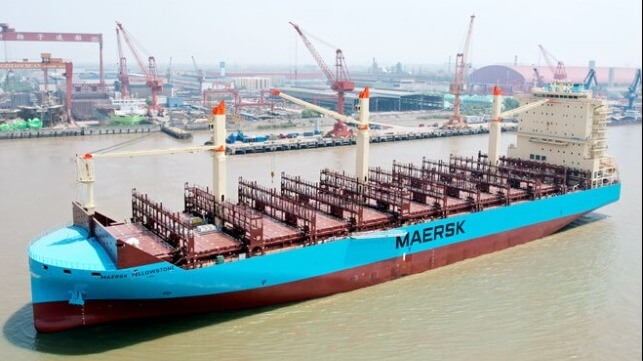
Maersk Yellowstone
File image courtesy Yangzijiang Shipbuilding

Published Aug 11, 2025 9:40 PM by The Maritime Executive


China's shipbuilding industry has grown by leaps and bounds over the last year, and so have its profits. Last week, privately-held Yangzijiang Shipbuilding reported a record-setting profit of $580 million in the first half, up by 37 percent year-on-year. 

Yangzijiang is China's largest private shipbuilder, and a bellwether for its commercial shipbuilding industry. The yard's revenue was slightly down in the first half, due to a lower share of container ships in its mix of projects during the period. This was offset in part by a higher share of dual-fuel orders in its boxship portfolio, since the technology is more expensive and yields better margins for the shipbuilder. Dual-fuel vessel orders account for about three-quarters of the yard's orderbook. 

In addition to performance at its own yards, profits were driven in part by operations at two Japanese joint ventures, Zhoushan Tsuneishi Shipbuilding and Yangzi Mitsui Shipbuilding, which contributed a combined $67 million in profits.

New orders are coming in a bit more slowly than expected this year, Yangzijiang reported. The shipbuilder received just 14 new orders worth a combined $540 million in the first half, less than a tenth of its full-year order target for 2025. However, the full-year outlook is still good, as it is holding more than $2 billion worth of letters of intent for more orders, according to ratings agency CGS International. 

This is not an immediate issue - Yangzijiang has a backlog of 236 ships worth a combined $23 billion on order, near a record high, giving it a long runway in almost any market - but the slowdown is a change compared to last year's ordering boom. The Trump administration's planned port fees on Chinese-built ships (as proposed by the U.S. Office of the Trade Representative) is giving shipowners a reason to look at alternative shipbuilders outside of China; at the same time, tariff concerns have prompted some owners to rethink their ordering plans or wait for more clarity. 

Yangzijiang broke ground on a wholly new shipyard, Yangzi Hongyuan, in February 2025. However, it has shelved a plan for a greenfield expansion yard, Jiangsu Yangzi Runze Shipbuilding, which was to be located next to the existing Yangzi Mitsui Shipbuilding JV facility, according to CGS International's latest advisory. The pause is among the few signs of any letup in the relentless growth of Chinese shipbuilding. Since 2023, the strong demand for Chinese-built ships has driven a wave of restarts at yards that were shuttered during the shipbuilding downturn of the 2010s, reviving old names under new ownership. 


Researchers use smart watches to better understand human activity


Washington State University


PULLMAN, Wash. –Researchers have long been able to use information from smartwatches to identify physical movement, such as sitting or walking, that wearers are performing in a controlled lab setting.

Now, Washington State University researchers have developed a way, using a computer algorithm and a large dataset gathered from smartwatches, to more comprehensively identify what people are doing in everyday settings, such as working, eating, doing hobbies or running errands.

The work, published in the IEEE Journal of Biomedical and Health Informatics, could someday lead to improve assessment and understanding of cognitive health, rehabilitation, disease management, or surgical recovery. In their study, the researchers were able to accurately identify activities 78% of the time.

“If we want to determine whether somebody needs caregiving assistance in their home or elsewhere and what level of assistance, then we need to know how well the person can perform critical activities,” said Diane Cook, WSU Regents Professor in WSU’s School of Electrical Engineering and Computer Science who led the work. “How well can they bathe themselves, feed themselves, handle finances, or do their own errands? These are the things that you really need to be able to accomplish to be independent.”

One of the big challenges in healthcare is trying to assess how people who are sick or elderly are managing their everyday lives. Medical professionals often need more comprehensive information about how a person performs functional activities, or higher-level, goal-directed behavior, to really assess their health. As anyone who is trying to help a distant parent with aging or health challenges knows, that information on how well a person is performing at paying their bills, running errands, or cooking meals is complex, variable, and difficult to gather — whether in a doctor’s office or with a smartwatch.

“Lack of awareness of a person’s cognitive and physical status is one of the hurdles that we face as we age, and so having an automated way to give indicators of where a person is will someday allow us to better intervene for them and to keep them not only healthy, but ideally independent,” said Cook. “This work lays the foundation for more advanced, behavior-aware applications in digital health and human-centered AI.”

For their study, the WSU researchers collected activity information over several years from several studies.

“Whenever we had a study that collected smartwatch data, we added a question to our data collection app that asked participants to self-label their current activity, and that’s how we ended up with so many participants from so many studies,” she said. “And then we just dug in to see whether we can perform activity recognition.”

The 503 study participants over eight years were asked at random times throughout the day to pick from a scroll-down list of 12 categories to describe what they were doing. The categories included things like doing errands, sleeping, traveling, working, eating, socializing, or relaxing. The researchers analyzed a variety of artificial intelligence methods for their ability to generalize across the population of study participants.

The researchers developed a large-scale dataset that includes more than 32 million labeled data points, with each point representing one minute of activity. They then trained an AI model to predict what functional activity had occurred. They were able to predict activities up to 77.7% of the time.

“A foundational step is to perform activity recognition because if we can describe a person’s behavior in terms of activity in categories that are well recognized, then we can start to talk about their behavior patterns and changes in their patterns,” said Cook. “We can use what we sense to try to approximate traditional measures of health, such as cognitive health and functional independence.”

The researchers hope to use their model in future studies in areas such as being able to automate clinical diagnoses, and to look for links between behavior, health, genetics, and environment. The methods and dataset without any identifying information are also publicly available for other researchers to use. The work was funded by the National Institutes of Health.


Researchers mimic a mystery of nature to make ice move on its own


Virginia Tech
Ph.D. student Jack Tapocik sets up ice on an engineered surface in the lab of Jonathan Boreyko. 

image: 

Ph.D. student Jack Tapocik sets up ice on an engineered surface in the lab of Jonathan Boreyko.

view more 

Credit: Photo by Alex Parrish for Virginia Tech.


In Associate Professor Jonathan Boreyko’s Nature-Inspired Fluids and Interfaces Lab, Ph.D. student Jack Tapocik watched a disc-shaped chunk of ice resting on an engineered metal surface. As the ice melted, the water formed a puddle beneath.

Even after many seconds of melting, the ice disk remained adhered to the engineered surface. At first, Tapocik was tempted to conclude that nothing would happen, but he waited. His patience paid off. After a minute, the ice slingshot across the metal plate he designed, gliding along as if it was propelled supernaturally.

The results are important because they have a host of potential applications. The methods team members developed lay the foundation for rapid defrosting and novel methods of energy harvesting. Their work has now been published in "ACS Applied Materials & Interfaces."

Looking to Death Valley

The team was inspired by a naturally occurring phenomenon at Racetrack Playa in Death Valley, California. This dry lake bed in Death Valley National Park is host to a ghostly display of boulders the size of watermelons that make long trails in the cracked earth, left behind by their apparent movement. Because the ground was level and many of the rocks were flat, the reason for their migration remained a mystery until recently.

Harvard University Professor Richard Norris found out why this happened in 2014. Rather than a supernatural occurrence, it was a combination of hard ground, rain, ice, and wind. Rainfall covered the ground with water, but the hardness of the ground prevented the water from being absorbed. This water froze when the temperature dropped, and as it later started to melt, the resulting ice rafts drifted in the breeze for the rocks to “sail” across the meltwater. Some of the rocks have been seen traveling together, which gave rise to the “racetrack” mythos.

While Norris solved a mystery of the rocks, Boreyko’s team was seeking something new: Its members wanted to create a surface that would propel melting ice all by itself, without any wind required. They wanted to harness the science of the racing rocks.

Building the track

Initially conceived by Boreyko and former graduate student Saurabh Nath back in 2019, the experiments took three years to complete with two more years needed for the model.

Boreyko’s team cut asymmetric grooves into aluminum plates. This herringbone pattern, which looks like a series of arrowhead-shaped channels, causes the underlying meltwater to flow in one direction. 

“This directional flow of meltwater carried the ice disk along with it,” said Tapocik. “A good analogy is tubing on a river except here, the directional channels cause the flow instead of gravity.” 

Out of curiosity, team members tried coating the aluminum herringbones with a water-repellant spray. They expected to simply see a faster version of the disk getting propelled by the flow, but surprisingly, the disk stuck to the surface instead. This is what led to the discovery of the slingshot effect.

“On a waterproof surface, the excess meltwater above the channels gets squeezed out very easily,” Boreyko said. “This makes the ice disk stick to the surface’s ridges. The meltwater is still flowing along the channels, but the ice can’t ride along anymore. The fun trick here is that as the meltwater flows beyond the front edge of the ice disk, it creates a puddle. Having a flat puddle on one side of the ice creates a mismatch in surface tension, which dislodges the ice and causes it to shoot across the surface.”

By comparison, the movement of the “racing” rocks in Death Valley is quite slow, and they don't shoot like slingshots. It’s not likely to become an official competition, but Boreyko’s surfaces are winning over the Racetrack Playa for having the fastest ice on earth.

Boreyko has already imagined one of the most high-impact applications: energy harvesting. In that scenario, he brings back the idea of the racing rocks.

“If the surface structure were patterned in a circle rather than a straight line, the melting object would continually rotate,” he said. “Now imagine putting magnets on top of the ice, rather than boulders. These magnets would also rotate, which could be used for power generation.”  

In addition to Boreyko and Tapocik, other research colleagues were involved in this project:

  • Saurabh Nath, a graduate student at the beginning of the project, recently hired into a tenure-track position at the University of Pennsylvania
  • Sarah Propst, an undergraduate researcher at the beginning of the project, now a Ph.D. student at Johns Hopkins University
  • Venkata Yashasvi Lolla, a graduate student who is now a postdoctoral research associate at UC Berkeley

John R. Jones III and the John Jones Faculty Fellowship supported this work. 


KIER develops high-performance electrodes for seawater electrolysis to produce hydrogen


Despite precious metals making up only 1% of the catalyst weight in the electrode, hydrogen production efficiency improved by 1.3 times compared to conventional methods.


National Research Council of Science & Technology

[Photo 1] 

image: 

Catalyst Developed by the Research Team

view more 

Credit: KOREA INSTITUTE OF ENERGY RESEARCH(KIER)


Dr. Ji-Hyung Han’s research team from the Convergence Research Center of Sector Coupling & Integration at the Korea Institute of Energy Research (President Yi, Chang-Keun, hereinafter “KIER”) has developed a high-performance carbon cloth-based electrode that maintains stable performance even under high current conditions. The newly developed electrode is the first seawater electrolysis electrode using a carbon cloth support that has demonstrated successful continuous operation for over 800 hours under high current conditions, highlighting its potential for commercialization.

Water electrolysis is an eco-friendly technology that produces hydrogen by splitting water. Although it primarily relies on freshwater, growing concerns over global water scarcity have drawn increasing attention to seawater electrolysis, which uses seawater directly.

The performance and lifespan of seawater electrolysis systems depend heavily on the catalyst used in the electrode and the electrode support that evenly distributes the catalyst. While precious metal-based catalysts such as platinum and ruthenium are commonly used, recent research has focused on non-precious metal catalysts or approaches that minimize the use of precious metals due to cost concerns.

There are also issues with the electrode support. Metal-based supports are highly vulnerable to corrosion caused by chloride ions, clearly limiting their lifespan. As an alternative, carbon cloth has emerged due to its excellent electrical conductivity, corrosion resistance, flexibility, and cost-effectiveness. However, existing carbon cloth-based catalysts have faced challenges in commercialization, as they suffer from performance degradation and structural damage during high-current operation (above 500 mA/cm²) and long-term use over 100 hours, which are required for industrial applications.

The research team overcame the limitations of conventional electrodes by developing a carbon cloth-based electrode with enhanced hydrogen production efficiency through an optimized acid treatment process. The newly developed electrode reduced the overpotential applied to the electrode by 25%, enabling a 1.3 times more efficient hydrogen evolution reaction (HER) compared to existing electrodes.

To enhance the reactivity of the electrode, the research team focused on acid-treating the carbon cloth. The acid treatment involves immersing the cloth in a highly concentrated nitric acid solution at 100°C for one hour. However, evaporation during the process caused fluctuations in acid concentration, which posed a challenge. To address this, the team designed a specialized acid treatment vessel that prevents concentration changes, successfully optimizing the surface treatment of the carbon cloth support.

The acid-treated carbon cloth support exhibits high hydrophilicity, which promotes the uniform distribution of cobalt, molybdenum, and ruthenium ions across its surface. In particular, the precious metal ruthenium is evenly dispersed throughout the support, enabling excellent electrochemical performance even with a minimal amount.

As a result, the ruthenium-incorporated cobalt-molybdenum (CoMo) catalyst achieved a roughly 25% reduction in overpotential compared to conventional CoMo catalysts, despite using only about 1% ruthenium by weight. By lowering the required overpotential, the catalyst enabled a hydrogen evolution reaction that is approximately 1.3 times more efficient at the same current density.

The catalyst-coated electrode maintained its initial performance even after over 800 hours of continuous operation under high current conditions of 500 mA/cm². Post-operation analysis of the electrode revealed no leaching of metal ions such as ruthenium and cobalt into the electrolyte, indicating excellent corrosion resistance and structural stability. Additionally, the team successfully synthesized a large-area electrode measuring 25 cm², showing potential for scalability and practical application.

Dr. Ji-Hyung Han of KIER stated, “This technology marks the world’s first successful case of long-term operation over one month under industrial-level high current conditions in seawater electrolysis using a carbon cloth-based electrode.” She added, “We plan to further advance the technology to the demonstration level through extended durability testing beyond 1,000 hours and research on scaling up to large-area cell modules and stacks.”


This research was supported by the National Research Council of Science & Technology (NST) under the Ministry of Science and ICT. The results were published in the May 2025 online edition of the prestigious international journal Applied Surface Science (Elsevier).


Testing of Seawater Electrolysis Stack Incorporating the Research Team’s Developed Electrode

Schematic of the Electrode Fabrication Process Using the Developed Catalyst 

Credit

KOREA INSTITUTE OF ENERGY RESEARCH(KIER)