Thursday, August 14, 2025


Adani’s new copper smelter in India applies to become LME-listed brand
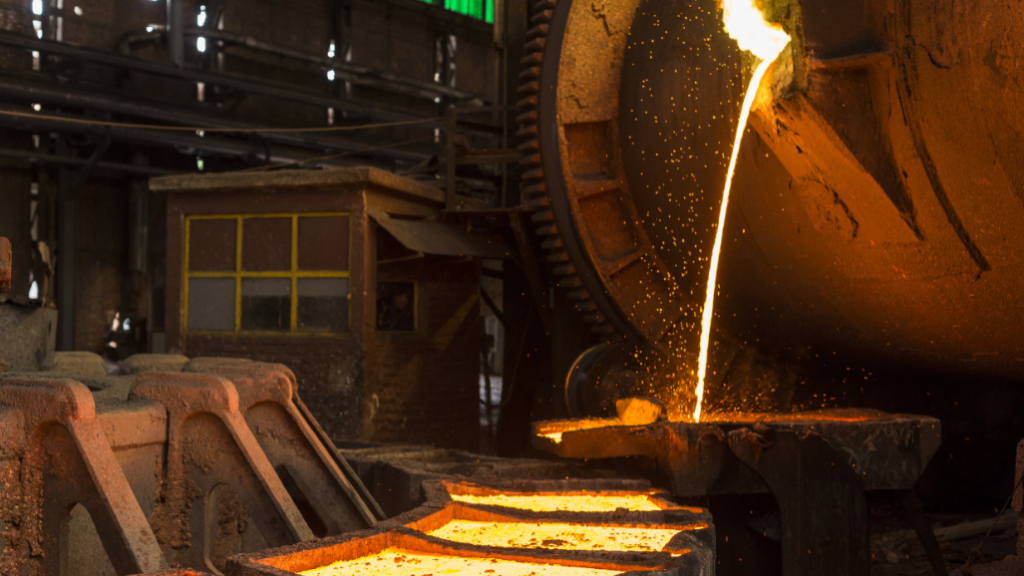
Copper smelter. Stock image.

A major new copper smelter in India owned by Adani Enterprises Ltd has applied to become a listed copper-producing brand with the London Metal Exchange, the LME said in a notice on Wednesday.

The copper smelter, which has an annual production capacity of 500,000 metric tons, is coming online at a time of shrinking smelting margins due to new smelter capacity in China and slower-than-expected growth of copper concentrate supply.

According to Adani, the $1.2 billion Kutch Copper facility in the western state of Gujarat is the world’s biggest single-location plant of its type.

It is expected to begin smelting in May, Adani’s head of metals, Felipe Williams, said in April. Chilean copper mining giant Codelco also said in April it would begin supplying copper concentrates to the smelter for refining this year.

For India, the smelter is expected to reduce the country’s reliance on imported copper. According to the Trade Data Monitor, India imported refined copper worth $2.8 billion last year, mainly from Japan, Tanzania and Mozambique.

Copper listed for storage in LME-registered warehouses can be delivered against copper futures traded on the exchange when their contracts expire. For market players, LME-listed copper is easier to finance than non-registered brands.

(By Polina Devitt; Editing by Paul Simao)

Hudbay snags $600M investment for Arizona copper project
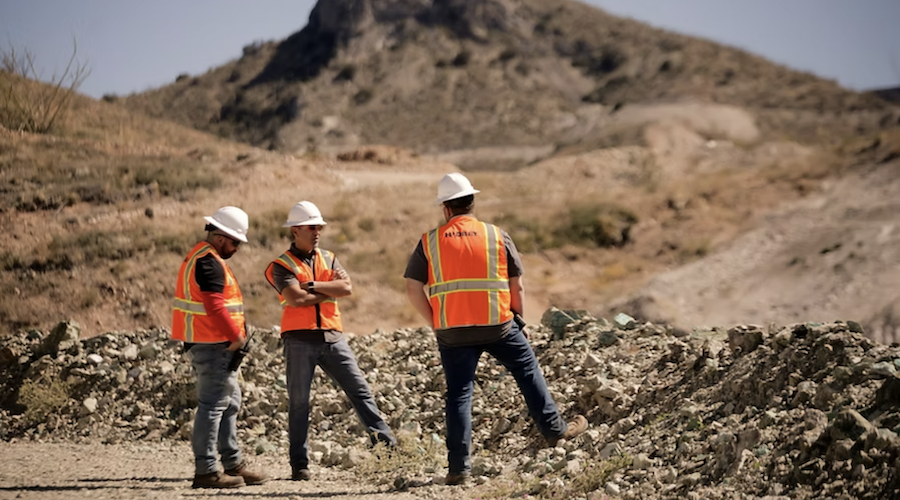
Inspecting the grounds at Copper World. (Image courtesy of Copper World Arizona.)

Canada’s Hudbay Minerals (TSX, NYSE: HBM) has struck a $600-million deal with Mitsubishi that hands the Japanese conglomerate a 30% stake in its fully permitted Copper World project in Arizona.

The agreement, announced on Wednesday, secures a long-term partner for Hudbay and sharply reduces its upfront funding needs. Mitsubishi will pay $420 million at closing and an additional $180 million within 18 months.

The company will also fund its pro-rata share of future capital costs, deferring Hudbay’s first capital contribution until at least 2028 and trimming its expected outlay to about $200 million based on prefeasibility study (PFS) estimates.

“Securing Mitsubishi as a 30% partner in Copper World is an important milestone for Hudbay as we establish a long-term strategic partnership to advance this high-quality copper project towards sanctioning and to unlock significant value in our copper growth portfolio,” chief executive officer Peter Kukielski said in a statement.

Shares in Hudbay Minerals hit their highest level in more than a decade on the news to trade at C$16.49 in early morning in Toronto. The stock last touched such a high level in 2011 and it was trading at C$15.36 late afternoon, leaving the miner with a market capitalization of C$6.06 billion ($4.4B).

Hudbay began seeking a minority partner for Copper World earlier this year, attracting interest from investors in Saudi Arabia, the United Arab Emirates and Japan.

HudBay discovered Copper World in 2021. The project, located about 50 km southeast of Tucson, is expected to yield 85,000 tonnes of copper per year over a 20 year mine life.

$1.5B investment

Hudbay estimates the development will represent a $1.5 billion direct investment in the US critical minerals supply chain, which has been a policy priority for Washington as it seeks to reduce reliance on foreign sources of key raw materials.

Once in production, Copper World would boost Hudbay’s consolidated copper output by more than 50%. Arizona remains a strategic focus for major copper producers, including Rio Tinto (ASX, LON: RIO), aiming to meet growing US demand.

The transaction is expected to close in late 2025 or early 2026, pending regulatory approvals. Hudbay aims to complete a definitive feasibility study by mid-2026, with a final decision on the proposed mine targeted for later that year.


El Teniente mine lost 20,000-30,000t of copper due to accident, Codelco says

Rajo Sur, the only open-pit section at El Teniente. Image from Codelco.

A multi-day shutdown at Codelco’s El Teniente mine due to an accident in late July led to a loss of 20,000 to 30,000 metric tons of copper, equivalent to approximately $300 million, Codelco chairman Maximo Pacheco said in a statement on Wednesday.

A collapse at El Teniente on July 31 caused the deaths of six workers and is still being investigated.

(By Daina Beth Solomon; Editing by Alexander Villegas)


MMG warns Peru election poses risk to Las Bambas copper mine
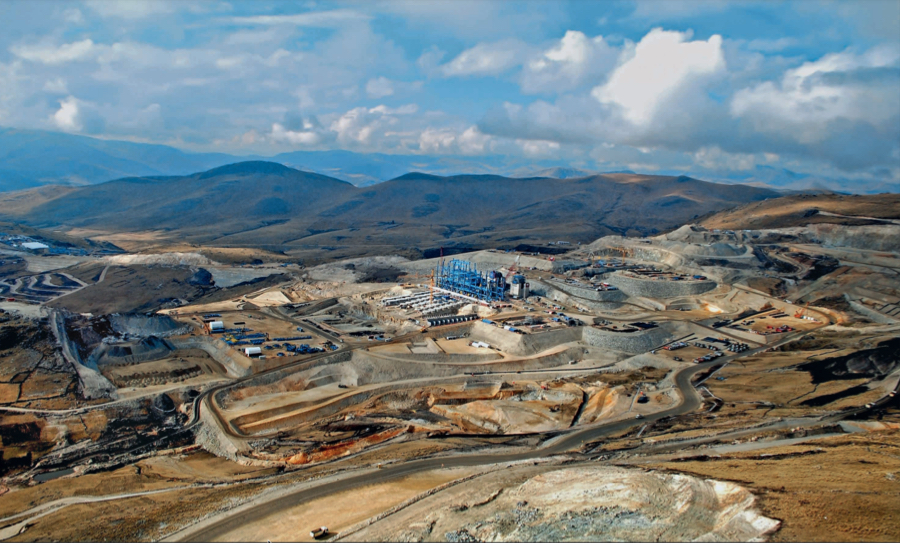

Las Bambas is considered the world’s ninth-largest copper mine with an output of about 400,000 tonnes of the industrial metal per year.(Image courtesy of Minera Las Bambas.)

Peru’s presidential election next April could raise the risk of more protests affecting MMG Ltd.’s flagship Las Bambas copper mine, chief executive officer Zhao Jing Ivo said during an earnings call on Wednesday.

Las Bambas is Peru’s largest copper mine and the Chinese company’s cornerstone asset, but its operations have been dogged by years of sporadic social unrest — sometimes tied to political tensions in the Andean nation.

“In the run-up to the presidential election in April next year, the risk of protest actions could increase,” Zhao said on an earnings call on Wednesday.

The most serious disruption at Las Bambas was in 2022 — a year of political turmoil in Peru — when the mine halted output for more than 50 days after protesters occupied the site. Current President Dina Boluarte is due to hand over power after the vote next year.

MMG’s shares pared gains Thursday after rallying more than 10% on Wednesday on a jump in first-half net income to $340 million, from $21.1 million a year earlier.

The company is still clearing out inventories after road blockades by informal miners last month interrupted some shipments of semi-processed copper from the mine. There has been no formal agreement between those protestors and the government, so there is still a risk of further disruptions in the second half of the year, Zhao said.

Still, Las Bambas operated at full capacity throughout the recent disruption, Zhao said, and output guidance for this year was unchanged at between 360,000 tons and 400,000 tons. The upper end of the range assumes “stable operating conditions and limited external disruptions,” MMG said in a statement.

Since the major outage in 2022, MMG has worked to build a relationship with the local communities, including artisanal miners, and this has prevented similar events, Zhao said.

(By Paul-Alain Hunt)


Infographic: China’s grip on global antimony refining


Antimony is a critical mineral—vital for military applications and ammunition, semiconductors and specialized alloys.

Control over its refining capacity carries significant strategic leverage.

The Chinese and Russian Spheres of Control currently dominate roughly 89% of global antimony refining—an alarming concentration, especially given there is incomplete data available on Russia. 

This graphic reveals the geopolitical landscape of antimony refinement, highlighting the vulnerabilities in global supply chains for a metal key to defence and national security. 

(By Anthony Vaccaro; Files from: Ali Ravaghi; Creative: James Alafriz)


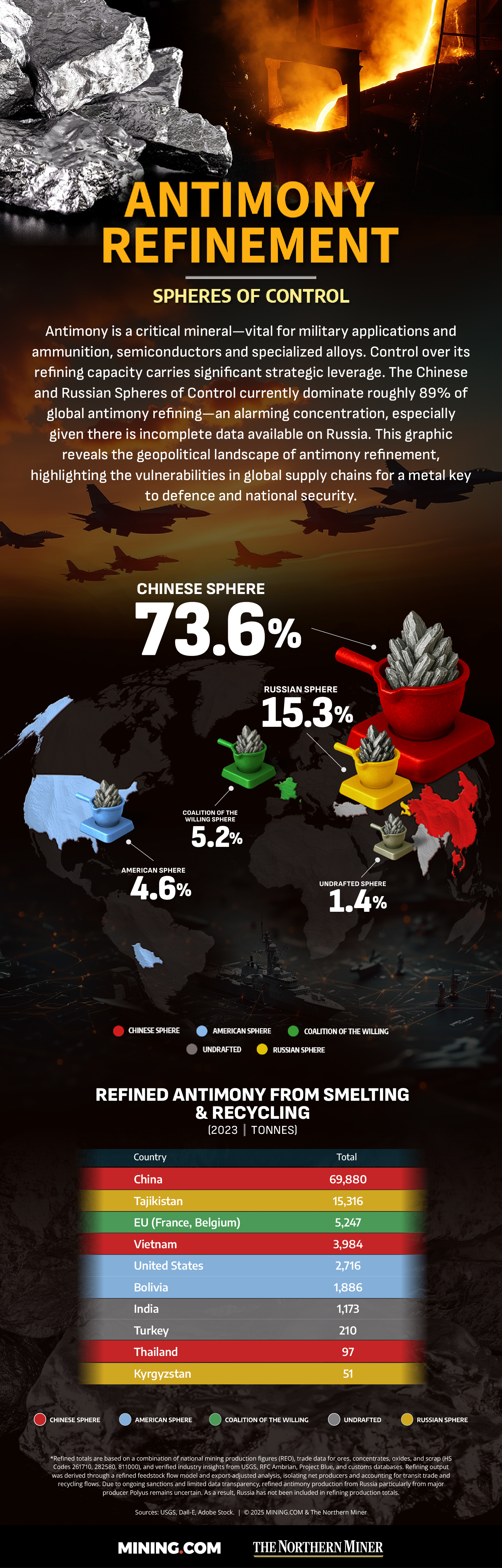
HD Hyundai Set to Start Shipbuilding in 2026 in the Philippines

Subic shipyard Philippines
Subic north went to the Navy while HD Hyundai is set to restart shipbuilding on the south portion of the former Hanjin yard (Philippines Department of National Defense)

Published Aug 12, 2025 6:49 PM by The Maritime Executive


After years of planning and preparation, efforts are now underway to resume shipbuilding at the former Hanjin shipyard in the Philippines, operated by HD Hyundai. The move comes as South Korea’s largest shipbuilder looks to expand its lower-cost operations and increase capacity to realize opportunities it sees in the market.

The Manila Times reports that it toured the site in Subic Bay and was briefed on the efforts to restart the shipbuilding operations. During the site visit, reporters were told the goal is to build up to 10 ships a year within the next three to five years. The initial plan is to use the yard to build product carriers measuring 656 to 820 feet (200 to 250 meters) in length. The ships will be built in 16 to 18 months, and they also anticipate using the yard for offshore structures to support the wind energy sector.

Training for welders has already commenced, and preparations are underway at the former shipyard site. The Manila Times reports that 3,500 workers have been hired, with Hyundai targeting approximately 7,000 workers when the yard is fully operational.

Hanjin had been operating the facility since 2006, and at its peak, employed approximately 13,000 workers. However, with the downturn in shipbuilding, the yard encountered financial troubles and began layoffs, having reduced its employees by 7,000 before filing for bankruptcy at the beginning of 2019. 

In March 2022, the Philippines reported that it had selected U.S.-based equity investment firm Cerberus Management Capital with Agila Naval to operate the southern portion of the site as a commercial shipyard. Cerberus was to settle Hanjin’s outstanding debts and assume the South Korean’s 50-year lease on the yard. The northern portion of the facility was converted into Naval Operating Base (NOB) Subic by the Department of National Defense and is used as a base for the Philippine Navy.

HD Hyundai was reported to be interested in the site in part because of its relationship with the Philippine Navy. In 2024, Philippine President Ferdinand Marcos Jr. announced a deal with Agila and Hyundai, calling it a landmark moment that would provide a “fresh start” and a “strong foundation” for shipbuilding in the Philippines.

The South Korean company is reported to have a 10-year lease for approximately 200 hectares and will be able to use some of the equipment, including cranes, from the former shipyard. Reports indicate that it has also committed to investing approximately $550 million over the next 10 years.

HD Hyundai is said to be seeking other international opportunities for its shipbuilding operations. It was recently reported that Hyundai was entering the bidding for a planned new shipyard to be developed in Morocco. It would provide the company with its first location close to the European market. The company has also signed a partnership agreement in the United States and is working on developing opportunities for shipbuilding in India.


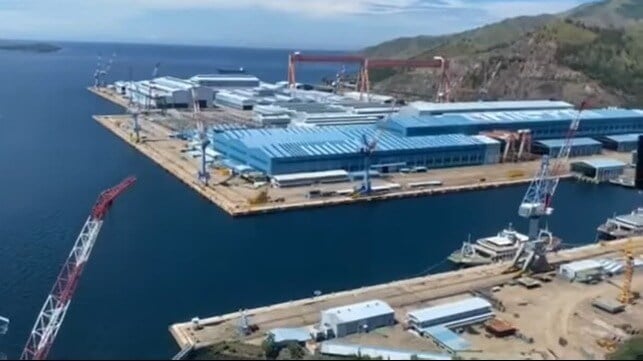
Fincantieri Puts New Princess Cruise Ship Through Its Paces During Trials

Star Princess cruise ship
Star Princess completed sea trials and is on track to be the fifth cruise delivered by Fincantieri this year (Princess Cruises)

Published Aug 13, 2025 5:23 PM by The Maritime Executive


Italian shipbuilding Fincantieri completed sea trials for Princess Cruises' second Sphere-Class ship, the Star Princess. The cruise ship, which is one of the largest ever built in Italy, is also the last of the pre-pandemic orders by Carnival Corporation, while continuing a strong year for Fincantieri.

During the final sea trials from August 9 to 12, Star Princess departed the Fincantieri shipyard in Monfalcone, Italy, for the Adriatic Sea. The vessel completed a comprehensive series of tests, including steering, navigation systems, and propulsion. They report the ship is on track for delivery and its first cruise on October 4, sailing from Barcelona.

"We confidently led Star Princess through sea trials," said Captain Gennaro Arma, leader of the Sphere-Class newbuild site team, who oversaw the sea trials for Princess. "As the proud leader of our newest vessel, I'm extremely impressed with the ship's navigation capabilities and maneuverability.”

Currently under final construction at Fincantieri, the 177,800-gross ton Star Princess is a sister to the Sun Princess, which, after several construction delays, finally entered service at the end of February 2024 while final work was still being completed on the ship. Each ship accommodates 4,300 passengers and 1,600 crew, featuring 30 dining and bar venues, and entertainment, as well as over 1,500 balcony staterooms.

They will remain the largest cruise ships built in Italy until Carnival Cruise Line and Norwegian Cruise Line begin delivery from Fincantieri of their over 200,000 gross ton ships late in the decade. The Princess sister ships are also the first LNG dual-fuel ships for the line and the largest cruise ships operated by Princess Cruises. With the delivery of Star Princess scheduled for this fall, Carnival Corporation will begin a nearly two-year pause on new ship deliveries before Meyer Werft delivers Carnival Festivale to Carnival Cruise Line in 2027. 

Fincantieri has already delivered four cruise ships in 2025: Mein Schiff Relax (160,000 GT) in February; Norwegian Aqua (156,300 GT) in March; Viking Vesta (54,300 GT) in June; and Oceania Allura (68,000 GT) in July. The shipbuilder has work underway on additional cruise ships for Norwegian Cruise Line, Oceania Cruises, Regent Seven Seas, Viking, TUI Cruises Mein Schiff, and Four Seasons Yachts. Its orderbook as of mid-2025 stands at a total of 36 cruise ships, including the seven ships each over 200,000 gross tons. Cruise continues to be the largest segment of the business, representing over 40 percent of the group’s total revenues in the first half of 2025.


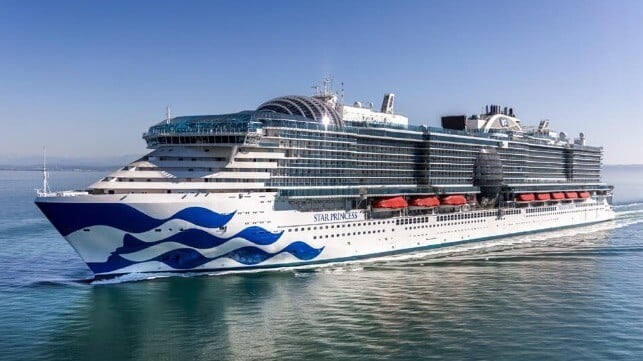
Norway Inaugurates Johan Castberg Field in Barents Sea

Energy minister Terje Aasland cuts a chain to inaugurate Johan Castberg (Ole Jørgen Bratland / Equinor)

Published Aug 12, 2025 9:14 PM by The Maritime Executive


Equinor and its government partners have officially inaugurated the Johan Castberg FPSO, the northernmost oil field in Norway. The pioneering Barents Sea project came on stream in March, and should continue to produce energy for the next 30 years, according to Equinor. 

Johan Castberg is already producing at its maximum rated capacity of 220,000 barrels per day, drawing on the Drivis, Hvis and Skrugard formations. On startup, its production alone more than doubled oil output from the Barents Sea. 

The FPSO loads about two tankers per week, generating mlllions of dollars in revenue for owners Equinor, Var Energi and Petoro AS (and the Norwegian state, Equinor's majority  shareholder). Recoverable oil volume is estimated at about 450-650 million barrels, with potential for expansion with other nearby discoveries. 

"We've identified options to add 250 MM to 550 MM new recoverable barrels that can be developed and produced over Johan Castberg," said Equinor EVP Kjetil Hove earlier this year. 

The subsea development infrastructure for the FPSO is extensive, incorporating 30 wells and two satellite platforms. Development took 14 years from first discovery to first production, and cost about $8 billion. At current oil prices, Equinor expects that it will pay for itself within two years. 

Norwegian energy minister Terje Aasland headlined an official opening ceremony for Johan Castberg on August 8, accompanied by executives from Aker, Equinor, Var Energy, local mayors, and government ministry leaders. 

"With Castberg on stream, the Barents Sea now has both our second largest producing oil field, our second largest gas field and the largest discovery being considered for development," Aasland said. "This provides secure jobs in the local business community and a basis for new assignments over a long period of time."


Australian Officers Catch and Dispose of Two Indonesian Fishing Boats

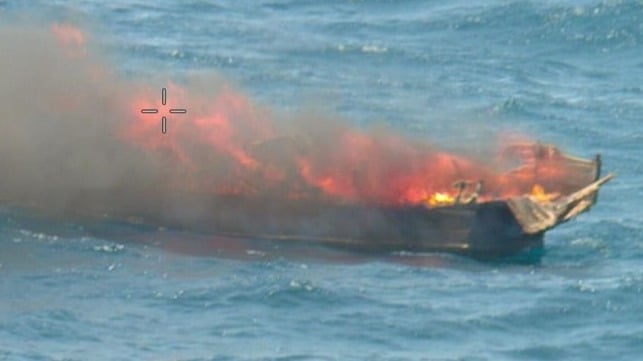
Illegal fishing vessel destroyed at sea by ABF officers, December 2024 (ABF file image)

Published Aug 13, 2025 11:37 PM by The Maritime Executive


The Australian Border Force has been searching for illegal Indonesian fishing operators for months, and continues to net new catches. Last weekend, ABF officers intercepted two boats off the Northern Territory, destroyed the craft and arrested eight fishermen, adding to a growing tally.

On Friday, ABF officers caught a vessel fishing illegally near the Cobourg Peninsula, a remote and wild stretch of coastline in the sparsely-inhabited Northern Territory. On boarding, the officers found three shark fins and 500 kilos of sea cucumber, along with fishing equipment. The catch and the suspects were seized, and the boat was "disposed of at sea."

On Saturday, another patrol found an Indonesian boat fishing illegally in the same region. Five crewmembers were aboard, along with equipment and 1600 kilos of sea cucumber, a valuable delicacy in East Asia. The vessel was disposed of and the crewmembers were arrested. All were delivered to Darwin to face charges. 

All told, the 2.1 tonne haul of sea cucumber would have brought these fishermen an estimated US$140,000, illustrating the motive for foreign operators to take risks in Australian waters, according to ABF. 

Fishing offenses result in criminal charges in Australia, and often end in guilty pleas. On August 5, 11 more Indonesian nationals pleaded guilty to charges of illegal fishing at Darwin Local Court. The charges stemmed from two separate vessel arrests. In the first, the crew had no fish aboard, but were in possession of salt (for preservation) and a 300-meter longline. The master was fined AUD$6,000, and the rest received smaller penalties. In the second, the crew was caught with 66 shark fins, and one crewmember turned out to have an outstanding warrant - resulting in steep fines. Nonpayment often results in imprisonment, followed by deportation. 


 Two Norwegians Get Jail Time for Trying to Retrieve Cocaine From Bulker

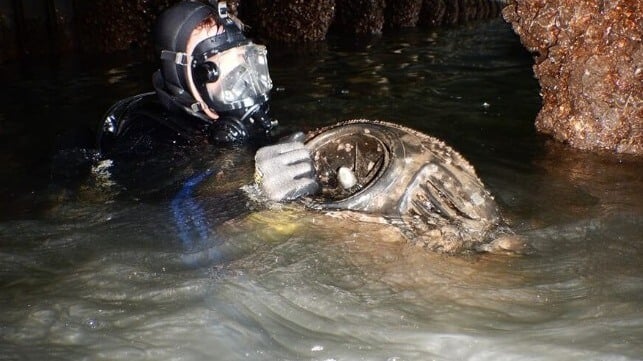
A police diver retrieves one of the two seabob mini-jetskis that the two men intended to use in their plot (AFP)

Published Aug 13, 2025 11:31 PM by The Maritime Executive


An Australian court has sentenced two Norwegian men to long jail terms for attempting to retrieve 80 kilos of cocaine from a bulker at Newcastle. According to prosecutors, the two men flew to Australia, drove to Newcastle and used diving gear to try to get the drugs out of the bulker's sea chest. 

On January 23, 2023, someone tipped off the New South Wales Police Force that a bulker was arriving at Newcastle on a voyage from Brazil, and was carrying a hidden load of cocaine. On the same day, a passerby noticed strange activity along the waterfront at Swansea, a seaside town about 15 miles south of Newcastle. The passerby contacted a police tip line and reported that two men were operating an unusual equipment configuration: diving gear, seabobs (high-cost miniature jetskis), and a tow harness fitted with shackles and weights. 

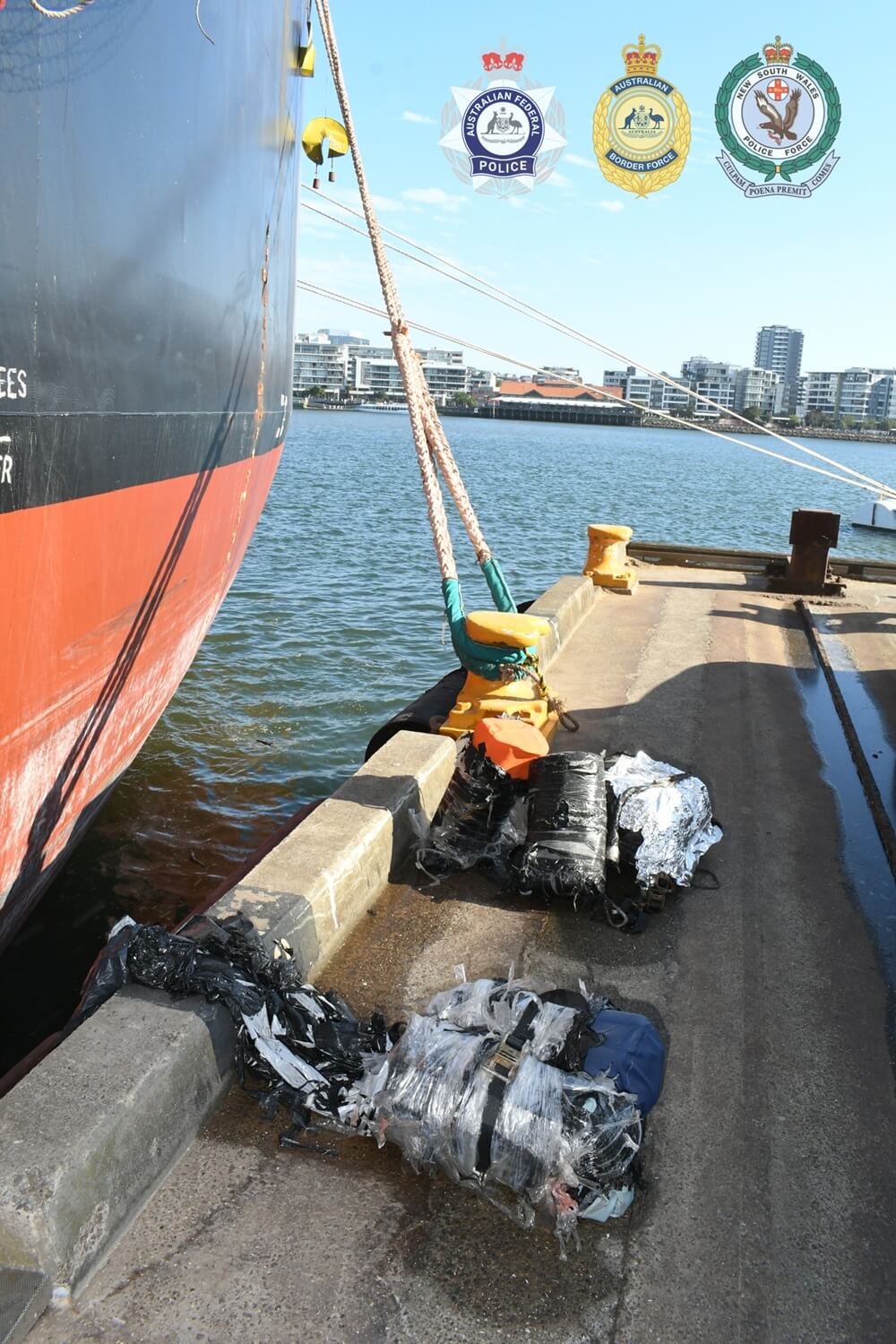
When the bulker arrived at Newcastle the next morning, NSW Police Force divers were on hand to search the vessel's hull. They found six duffle bags containing a combined 80 kilos of cocaine tucked in the sea chest, a favorite hiding place for international smugglers. 

Duffle bags of cocaine found in the bulker's sea chest (AFP)

On the 25th, the two men were once again spotted by the public and reported to the authorities, this time in Newcastle's harbor. Later that day, when the suspects returned to shore, police arrested them and recovered their equipment: a black climbing belt, diving goggles, a diving bag, bolt cutters, diving gloves, pliers and a pocket knife. In their vehicle, the police found more gear, along with electronic devices and receipts. 

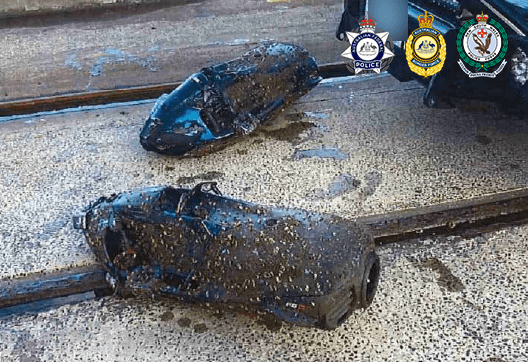
On examining the two men's phones, NSF police found text conversations in an encrypted chat app that detailed the plans for retrieving cocaine from the bulker. The men had flown into Brisbane from Indonesia, separately, then joined up and headed south by car. On the way to Newcastle, they bought dive gear, tools, and the two seabobs, among other things. (The two seabobs were later recovered from underneath a pier on the Hunter River, near Newcastle, aged and covered in sea growth.) 

The two seabobs after recovery (Courtesy AFP)

If their diving operation had been successful, the two Norwegian men would have delivered about USD$20 million worth of cocaine for Australia's booming drug market, enough for 400,000 street deals. Both of the men were charged with attempting to possess a border controlled drug, and both opted to plead guilty. Both have now been sentenced to a prison term of 10 years. 

“Criminals view Australia as a lucrative market to sell illicit drugs, and will go to great lengths, even risking their own safety, to make a quick buck,” Australian Federal Police Detective Superintendent Peter Fogarty said in a statement. "Divers hired by criminal syndicates are a cog in the wheel of organized crime, and they will be pursued and apprehended, no matter where they sit in a syndicate’s hierarchy."


The Forced Uyghur Labor Behind China's Fish Exports

Uyghur workers
Workers in 2023 at a seafood plant called Yantai Sanko Fisheries in Shandong Province, China, which relies on Uyghur and other labor from Xinjiang (Douyin / Outlaw Ocean Project)

Published Aug 11, 2025 9:31 PM by Marcella Boehler


On a cloudy morning in April 2023, more than eighty men and women, dressed in matching red windbreakers, stood in orderly lines in front of the train station in Xinjiang, a landlocked and subjugated region in China's far west. The people were Uyghurs, one of China’s largest ethnic minorities. They stood, with suitcases at their feet, watching a farewell ceremony held in their honor by the local government. A video of the event shows a woman wearing in traditional dress pirouetting on a stage. A banner reads, “Promote mass employment and build societal harmony.” At the end of the video, drone footage pans back to show trains waiting to take the Uyghurs away. 

The event was part of a vast labor-transfer program run by the Chinese state, which forcibly sends Uyghurs to work in industries across the country. The goal of the program is partially to subjugate a historically restive people. Uyghur separatists revolted throughout the 1990s and bombed police stations in 2008 and 2014. China began the labor transfers in the early 2000s as part of a broad system of persecution that has also included mass arrests and the use of “re-education” camps, where Uyghurs have been subjected to torture, beatings, and forced sterilization. Researchers described China’s actions against Uyghurs and other Turkic Muslims as a form of genocide.

Many of the transferred workers are involved in processing seafood that is then exported to more than twenty countries, including the U.S., Canada, and several in the E.U., according to an investigation published as episode 8 of the Outlaw Ocean Podcast’s second season

These disclosures of China’s use of state-sponsored forced labor in seafood production come as the trade war between the US and China has heightened tensions between the countries and directed new attention to the Uyghur Forced Labor Protection Act. This is an American law that prohibits the import of goods produced in Xinjiang and a cudgel that the Trump administration is likely to apply more aggressively as he ramps up pressure on Beijing.

On November 19, 2024, the European Union approved its Forced Labor Regulation, which prohibits “products made using forced labor” from entering member countries. This new regulation will likely intensify the urgency for companies and market players like the U.S. and Europe to know whether imports coming into those countries are tied to forced labor such as those identified by this investigation.

A review of internal company newsletters, local news reports, trade data, and satellite imagery revealed that ten large seafood companies in the eastern province of Shandong, China’s most important fishing and seafood processing hub, have received at least a thousand Uyghurs and other Muslim minorities from forced labor transfer programs out of Xinjiang since 2018.

Sometimes transfers were motivated by labor demands. In March 2020, for example, the Chishan Group, one of China’s largest seafood catching and processing companies, published an internal newsletter describing what it called the “huge production pressure” caused by the pandemic. That October, party officials from the local anti-terrorist detachment of China’s public security bureau and the country’s human resources and social security bureau, which handles work transfers, met twice with executives to discuss how to find the company additional labor, according to company newsletters.

Soon after, Chishan agreed to accelerate transfers to their plants. Wang Shanqiang, the deputy general manager at Chishan, said in a corporate newsletter, “The company looks forward to the migrant workers from Xinjiang arriving soon.” The Chishan Group did not respond to requests for comment.

The Chishan Group was not unique. Many seafood companies were tied to a wide variety of similar problems with forced labor. The pervasiveness of these problems is why the global seafood industry likely will have to assess how it monitors its supply chains, particularly when these supply chains route through China.

To detect forced labor, companies tend to rely on private firms that conduct “social audits,” in which inspectors visit factories to make sure they comply with international labor standards. But social audits are typically announced in advance, which allows managers to hide minority workers during inspections. Even when workers are interviewed, they are often reluctant to be candid, for fear of retribution. 

In May, 2022, social auditors from SGS, one of the top auditing firms, toured the Haibo seafood processing factory, in Shandong, and found no evidence of forced labor. But a team of investigative reporters found that more than 170 people from Xinjiang worked at Haibo in 2021, and a half-dozen Uyghur workers posted regularly to social media from Haibo throughout 2022. On the same day the auditors toured, a young Uyghur worker posted pictures of herself near the plant’s dormitories and loading bays.

This was not an isolated incident. During the investigation, reporters found other examples of Uyghurs who had posted pictures of themselves at factories within days of those plants being cleared by social audits. They also found that half of the Chinese exporters they had identified as being tied to Uyghur labor had passed audits by leading global inspection firms. 

Marcella Boehler is global publishing editor at The Outlaw Ocean Project, a non-profit journalism organization based in Washington D.C. that produces investigative stories about human rights, environment and labor concerns on the two thirds of the planet covered by water. Season Two of The Outlaw Ocean Project's podcast series may be found here


The opinions expressed herein are the author's and not necessarily those of The Maritime Executive.

CRIMINAL CAPITALI$M

Maritime Training School Owner Pleads Guilty to Defrauding the Coast Guard

Master Marine Credential
The owner of a USCG training program pleaded guilty to a felony charge of falsifying student records

Published Aug 13, 2025 6:20 PM by The Maritime Executive


The U.S. Attorney's Office for the Eastern District of Michigan reported that the operator of a maritime training program for U.S. Coast Guard certificates has pleaded guilty to a felony charge related to falsifying records connected to a course he administered. Mel Stackpoole, age 62 of Michigan, entered his guilty plea on August 12, to one count of knowingly altering and falsifying records and documents with the intent to impede the proper administration of a matter within the jurisdiction of the United States Coast Guard.

According to court records, Stackpoole was the owner and lead instructor of Great Lakes Charter Training, a marine training school that offered Coast Guard-approved training courses. The program supported mariners seeking merchant mariner credentials (MMC).  

“Mel Stackpoole has endangered the safety of everyone who uses the waterways of our Great Lakes by deliberately circumnavigating the Coast Guard’s training and certification protocols and facilitating the issuance of credentials to unskilled and unqualified mariners,” said U.S. Attorney Jerome F. Gorgon Jr. He was joined in the announcement by Captain Richard Armstrong, Commander, U.S. Coast Guard Sector Detroit, and Special Agent in Charge Josh Packer, Coast Guard Investigative Service, Central Field Office, Detroit.

In August of 2020, Stackpoole provided the students enrolled in his Master 100 Ton Captain’s Course with less than 50 hours of classroom instruction, rather than the required 80 hours.  He also instructed the students to provide false information regarding their prior sea service, medical history, and recreational drug use on their MMC applications to the Coast Guard.  

Further, Stackpoole improperly provided the students with the answers to certain examination questions; changed students’ incorrect test answers into correct answers; and inflated the students’ test scores in order to reflect passing, rather than failing, grades. Stackpoole ultimately issued course completion certificates to the students, falsely signifying their successful completion of the course to the Coast Guard.

A sentencing hearing is set for December 18, at which Stackpoole faces a statutory maximum penalty of 20 years of imprisonment and a $250,000 fine.


India’s First Offshore Wind Tenders Fall Flat and are Canceled

India Tamil Nadu
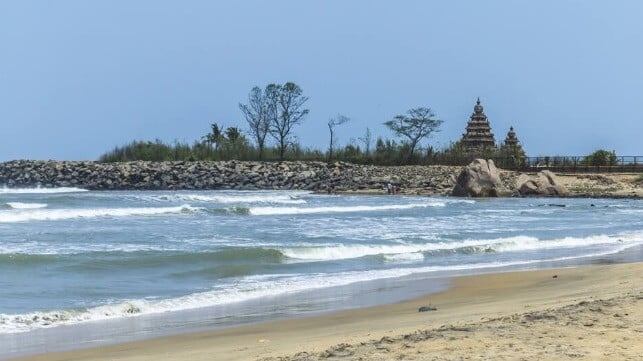
India looks to develop the Tamil Nadu region into a center for offshore wind (iStock/Kandarp Gupta photo)

Published Aug 13, 2025 7:02 PM by The Maritime Executive


The Solar Energy Corporation of India, a government entity set up to oversee the development of the country’s offshore wind energy sector, canceled its first two auctions after a year of attempting to drum up interest. Withdrawing the auctions is seen as a major setback for the country’s energy policy and the plans by Prime Minister Narendra Modi to drive industrial growth in the country.

The tenders were released in 2024 and hailed as India’s entry into the sector. Analysts are saying they were an experiment to find the correct course, but fell short of the required support to develop a new country for the industry. The government had extended the timeline for the two tenders to the end of July and early August, and reworked some of the support plans, but it was to no avail.

The reports are that they received a lack of interest from developers. One source is quoted in the Indian media saying the response was “underwhelming.” India had launched the Viability Gap Funding (VGF) program in June 2024, intended to incentivize the development of the first 1 GW of offshore wind capacity, but experts warned it was likely not enough.

SECI had staged two tenders with the jewel highlighted as the Tamil Nadu region. It was promoted as a potential major hub for offshore wind manufacturing and part of the industrial opportunities plan developed by Modi.

For Tamil Nadu, SECI proposed four 1 GW areas. Developers were to get seabed lease rights and then would be responsible for conducting the necessary seabed surveys and development activities for the projects. The areas are on the southeast coast of India on the Bay of Bengal.

A smaller 500 MW project was proposed for Gujarat, designed as a build-to-operate development. India was offering a 25-year power purchase agreement. The site is on the northwest coast of India in the Arabian Sea.

Developers in general are demanding more support to offset the increased costs and risks associated with developing offshore wind projects. They cite the problems in the supply chain and increased costs in the industry since the pandemic, and the challenges of financing the projects. Ørsted this week said financing has dried up in the United States, with banks and investors not willing to accept the risks as the Trump administration has focused on slowing or ending wind energy projects. The company is also facing large costs after it reported earlier in the year that changed finances no longer supported the development of the UK’s large Hornsea 4 project in its current form.

The Netherlands cited a lack of interest and challenging finances as it said it would scale back its offshore wind plans. Germany, also, recently reported it had not received any interest in an auction for non-subsidized offshore wind projects.

The Indian media is quoting sources saying the country is not giving up on offshore wind but will re-examine its approach. SECI has not officially said it would re-tender the sites, but sources said it is likely they will rework the plans and relaunch the tenders. No timeline was offered for how quickly the new tenders might begin, with commentators noting it is now unlikely India will have offshore wind energy ahead of its 2030 target.


Mocean Energy & SolarDuck Team Up on Integrated Offshore Renewable Power

Mocean Energy
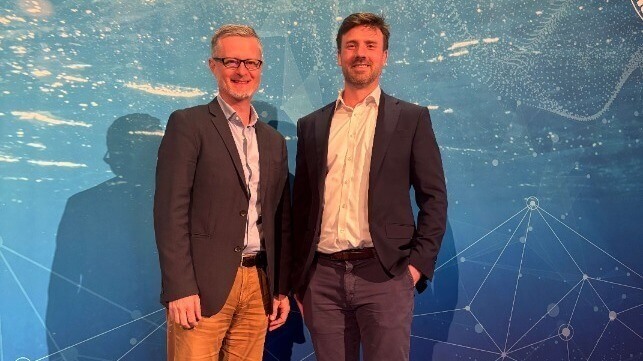
Arnaud Ayral, Chief Commercial Officer, SolarDuck, and Cameron McNatt, Managing Director at Mocean Energy.

Published Aug 13, 2025 8:03 PM by The Maritime Executive


[By: Mocean Energy]

Scottish ocean energy pioneer Mocean Energy has signed a Memorandum of Understanding (MoU) with Netherlands-headquartered floating solar developer SolarDuck.

The strategic collaboration aims to deliver hybrid power systems that combine SolarDuck’s cutting-edge floating solar platforms with Mocean Energy’s innovative wave energy technology.
Together, the companies - which have both individually received investment from Norwegian clean-tech fund manager Katapult Ocean - will target applications for remote offshore sites in a variety of sectors, such as energy, defence and the wider Blue Economy.

Based on combined ocean energy and floating solar technologies, the pair will deliver a high-level joint concept that provides clean, reliable energy for power, communications and auxiliary systems to support remote offshore assets.

Cameron McNatt, Managing Director at Mocean Energy, said: “This MoU marks the next step in a promising business and technical collaboration between Mocean Energy and SolarDuck, focused on delivering integrated ocean energy solutions, combining wave and solar technologies for offshore applications. Particular focus is being given to providing power and communications to remote sites in challenging environments.

“Over the past few months, we’ve been sharing commercial insights and have identified a strong opportunity to conduct an internally funded technical feasibility study focused on offshore energy needs in Asia Pacific.

“Both Mocean Energy and SolarDuck are backed by Katapult Ocean, a leading Norwegian investor in clean and ocean-tech, which underscores the strategic alignment of our vision. At a broader level, this partnership reflects a growing movement toward leveraging offshore renewables to address power challenges and accelerate decarbonisation across the Blue Economy.”
Mocean Energy has already showcased the viability of its innovative wave and solar-powered technology through the successful deployment of its Blue X wave energy converter prototype.
As part of the Renewables for Subsea Power programme, this prototype, which can be seamlessly integrated with battery storage systems, has demonstrated its ability to provide consistent and reliable renewable power in offshore environments.

Building on the success of Blue X, Mocean Energy is now preparing to deploy its first commercial product, Blue Star - a next-generation wave energy device designed for long-term operation and scalability across a range of offshore applications.

During the term of the MOU, Mocean Energy and SolarDuck will also collaborate on a commercial and technical basis to identify engineering studies and commercial opportunities. As part of this the pair will share insights into each’s respective technology and requirements to more effectively approach market opportunities.

This cooperation reflects the increasing demand for resilient, sustainable and low-carbon power systems in offshore industries, as well as both parties’ commitment to driving innovation and setting new standards in offshore renewable energy deployment.

Arnaud Ayral, Chief Commercial Officer, SolarDuck, said: “This partnership aligns with SolarDuck and Mocean Energy’s shared vision to enable clean energy solutions in challenging offshore environments.

“By combining complementary technologies, we aim to unlock new capabilities and value for customers in the offshore sector. Working with Mocean Energy, we can bring robust, scalable, and sustainable power to remote offshore locations, revolutionising the way in which the industry operates.”

Anthony Bellafiore, Investment Manager, Katapult Ocean, added: “We see immense value in our portfolio companies collaborating to unlock greater technical and commercial potential. Mocean Energy and SolarDuck are taking an ambitious step to show what’s possible when pioneering offshore technologies work together to address global infrastructure needs.
“While scaling renewable offshore energy continues to have its challenges, we continue to back it because of its outsized ability to generate systemic impact and shift our blue economy from an extractive industry to a more sustainable one. With all this in mind, we are very excited to see what Mocean and Solarduck can achieve together.”

The products and services herein described in this press release are not endorsed by The Maritime Executive.

 CANADA

Bulker Grounds in St. Lawrence River Raising Water Level Questions

grounded bulker
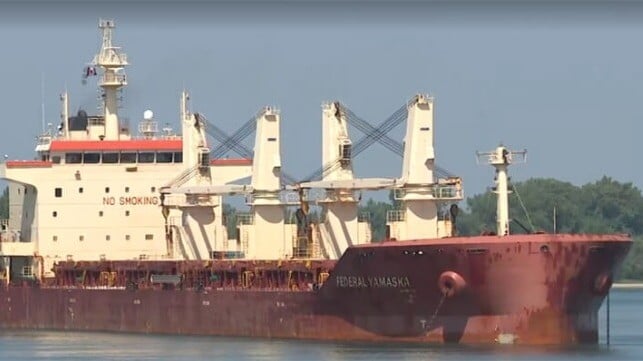
A bulker grounding on the St. Lawrence River raised more questions about water levels (CBC TV)

Published Aug 13, 2025 4:40 PM by The Maritime Executive


The Canadian Coast Guard issued a warning that a large bulker had grounded early on August 12, north of Montreal on the St. Lawrence River. While the authorities were quick to say they did not believe it was due to falling water levels, many have questioned the impact of a growing drought on shipping in the vital seaway.

The bulker Federal Yamaska reported to the Coast Guard at 5:45 a.m. local time on Tuesday that it had lost power and grounded in the river. The ship is outside the main shipping lane, but the Coast Guard has warned vessels to produce a minimum wake and requested that other ships give the grounded vessel a “wide berth” while passing. Further, they have ordered no meeting or overtaking of other vessels in the area.

Federal Yamaska, registered in the Marshall Islands, is operated by Fednav, a specialist in navigating Canadian waters, including the Arctic, Great Lakes, and the St. Lawrence Seaway. Built in 2013, the vessel is 590 feet (180 meters) in length and 37,153 dwt. 


A Coast Guard spokesperson told the Canadian Press that they were still investigating the cause of the grounded, but they did not believe it was due to low water levels in the area. They said the vessel, which was traveling to Montreal loaded with sugar, had advised that it lost power and drifted south of the shipping channel. They are reporting the vessel is in compliance with the loading regulations for that region of the river.

Many questions, however, have been raised as the Quebec area of Canada is experiencing a heatwave and has had a lack of precipitation in the southern portion of the province for nearly a month. Le Journal reported this week that the water level on the St. Lawrence River is at its lowest level in 15 years. Falling water levels had already prompted load restrictions for vessels on the river between Quebec and Montreal. 

The Coast Guard said there were no injuries or reports of pollution from the grounding. They are currently waiting for the shipping company’s plan for refloating the vessel. The expectation is that the ship will remain in this position for at least several days.

Observers, however, are noting the ship is in a similar area on the river to where another bulker grounded on December 24, 2024. Efforts to refloat the Maccoa, which was loaded with 3,000 tons of corn, were unsuccessful and required lightening the vessel. It took two weeks to remove part of the cargo and free the ship.


US Federal Court Suspends Fishing in Pacific Islands Nat'l Monument

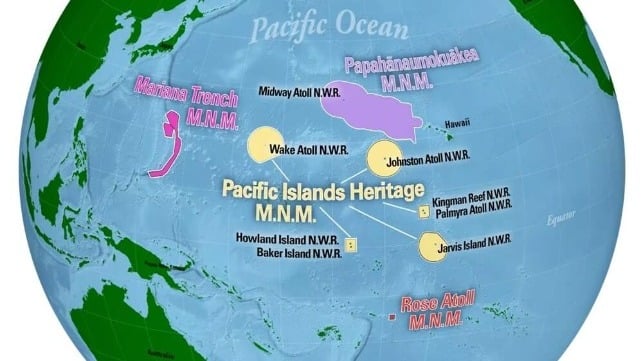
Chart courtesy US FWS

Published Aug 13, 2025 6:15 PM by The Maritime Executive


A federal district court has vacated a letter from NOAA Fisheries that told tuna boats to fish within the previously-protected Pacific Islands Heritage Marine National Monument. In a summary judgment, U.S. District Judge Micah Smith found that he had little choice but to rule that the letter was legally invalid, as NOAA didn't defend its merits in court.

In mid-April, President Donald Trump signed a proclamation to open up the Pacific Islands Heritage Marine National Monument to commercial fishing, allowing U.S.-flagged tuna boats to pursue their catch within an area covering more than 400,000 square miles of the U.S. exclusive economic zone. The area has been closed to fishing ever since the national monument was expanded by former President Barack Obama in 2014. The monument covers nearly half of the U.S. EEZ in the Pacific Islands, and the administration argued that the restrictions hurt the interests of tuna fishermen operating out of American Samoa. 

After the president's proclamation, NOAA Fisheries took swift action to implement the order. It dispatched a letter to existing U.S. tuna permit holders to inform them that in certain areas of the monument, commercial fishing was "no longer prohibited." The letter was not published in the Federal Register, and the agency did not treat it as a formal rulemaking process. Some commercial fishing operators accepted the letter, and began actively fishing within the monument. 

The Magnuson-Stevens Act and the Administrative Procedure Act require public input for federal agency rulemaking, and previous rulemakings about fishing inside the monument area had followed this process. But NOAA's letter suggested that a proclamation from the president was all that was needed to change a federal rule. A group of Hawaiian environmental and cultural groups filed a lawsuit, arguing against both the decision and the procedures NOAA used to enact it. 

On August 8, Judge Smith found that the letter was invalid because NOAA Fisheries skipped the required public input procedures for federal rulemaking, then opted not to defend that decision in court.  

"The government has chosen not to defend on the merits of notice-and-comment rule making," Smith wrote. "The court therefore is not asked to make a judgment call: the government has chosen to forfeit any argument that notice and comment procedures were unnecessary."

In vacating NOAA's letter, Smith determined that commercial fishing is still banned within the national monument - at least, until NOAA Fisheries starts over and conducts a formal rulemaking with a notice-and-comment process. The letter is no longer accessible on NOAA's website.  

"The law guarantees a process where we can advocate for protecting the generations of our children’s children who are yet to be born," said Solomon Kaho'ohalahala, a founding member of Hawaiian native cultural group Kapaa. "The Fisheries Service cannot ignore our perspectives as the native people who belong to the islands and to the ocean that surrounds us."