Thursday, August 14, 2025


Albemarle says Chile lithium plant operating normally after incident last week
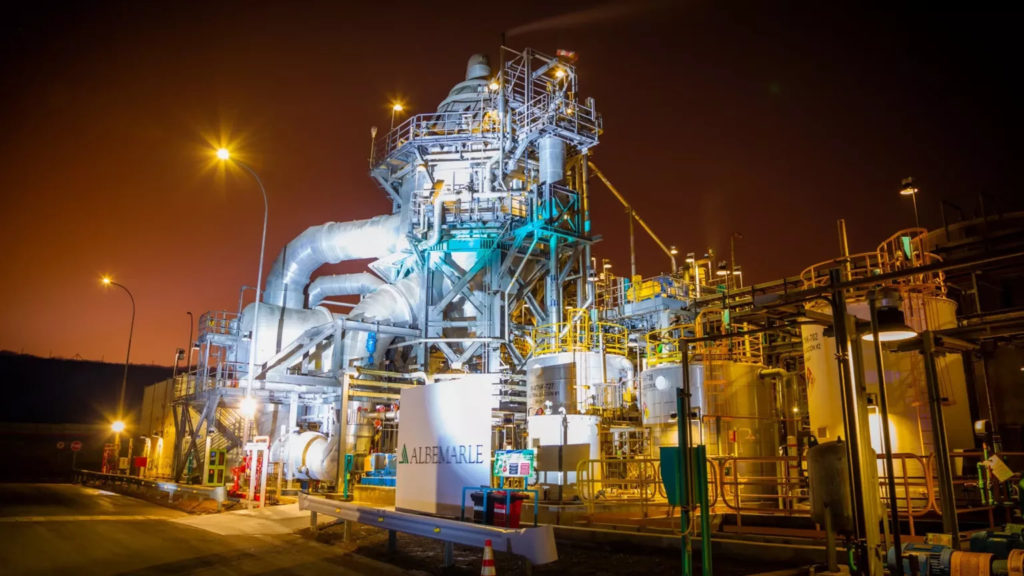

La Negra lithium processing plant in Chile. Credit: Albemarle

Albemarle’s La Negra lithium processing plant in Chile is operating normally after an “incident” last week, the company told Reuters on Tuesday, after a local lawmaker said authorities had opened an investigation.

There were no injuries and sales of the metal used to make lithium-ion batteries are not expected to be affected, Albemarle said, without providing additional details.

It was not immediately clear if operations had temporarily shut down last week. Albemarle gave no more details of the incident.

Jaime Araya, who represents the Antofagasta region where the plant is located in the Chilean Congress’ lower house, the Chamber of Deputies, last week sent a letter to Chile’s mining regulator and labor office requesting an inspection of the site after receiving a complaint that a pipe containing acid had burst.

Araya on Tuesday told Reuters he was informed that the labor inspector’s office had opened an investigation.

A source familiar with Albemarle’s operations said such probes are standard procedure and that the plant is operating normally. A second source added that the problem affected only one tank.

A union leader for plant workers, Elias Torres, said he could not comment because an investigation was underway.

The labor inspector’s office said it could not provide information because the matter was under review.

Albemarle’s shares were down slightly in Tuesday midday trading to $80.14.

Charlotte, North Carolina-based Albemarle on Monday said its chief operating officer Netha Johnson will leave the company as part of a management reorganization. Johnson’s exit is not connected to the Chilean incident, a source told Reuters.

(By Daina Beth Solomon, Fabian Cambero and Ernest Scheyder; Editing by Alexander Villegas, Jan Harvey and Alistair Bell)


Lithium miners retrace share gains with Chinese output in focus



Technician inspecting recycled lithium batteries. (Stock image by Leopard.)

Lithium producers’ shares fell — following sharp gains on Monday that were driven by the closure of a major mine closure — as the market weighed the outlook for Chinese output of the battery metal.

Stocks of miners declined in Hong Kong and Australia. Tianqi Lithium Corp. was about 8% lower as of 12:23 p.m. in the city after jumping 18% in the previous session, and Ganfeng Lithium Group Co. fell 5%, retracing about a quarter of its spike. In Australia, PLS Ltd. and Liontown Resources Ltd. also dropped.
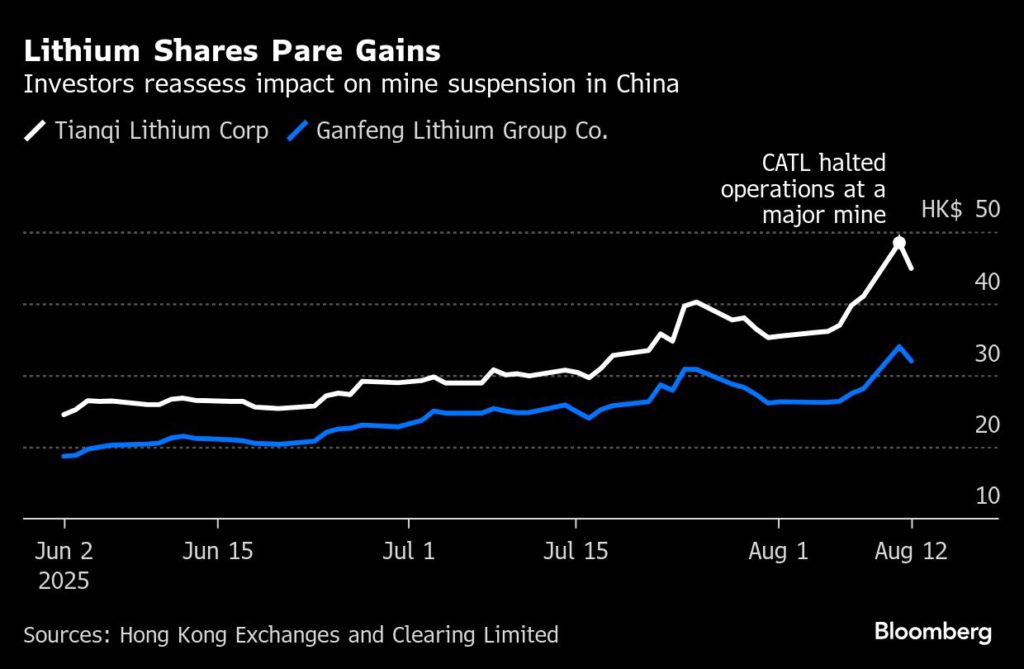
The lithium market was rocked after Contemporary Amperex Technology Co. Ltd. confirmed the suspension of its Jianxiawo mine in the hub of Yichun, a move that may help to ease oversupply. The project accounts for about 6% of global lithium output, according to Bank of America Corp. There’s speculation other mines in the area could also be suspended as Beijing tackles a glut as part of its anti-involution drive to curb excessive competition and overcapacity.

Lithium futures on the Guangzhou Futures Exchange extended gains, although they rose less than daily-limit jump of about 8% seen on Monday.

Still, lithium-carbonate prices may lack the impetus for a sustained rise, Shanghai Securities News reported. The problem of excess capacity has not fundamentally improved, and CATL’s project may restart, it said, citing analysts.

In Yichun, the local authorities have requested that companies facing similar regulatory scrutiny submit updated reports on their mineral reserves by Sept. 30, without yet mandating any more production suspensions.

The Jianxiawo case established a “strict tone” for regulatory approvals and enforcement, potentially broadening the extent of production halts and exacerbating supply shortages, Yongan Futures Co. said in a note.

“With a decisive outcome expected by Sept. 30, speculative trading activities might repeatedly emerge,” the analysts said. They also highlighted divergent views on time lines for mining license approvals or renewals.

(By Alfred Cang)


De Beers strikes first kimberlite field in 30 years


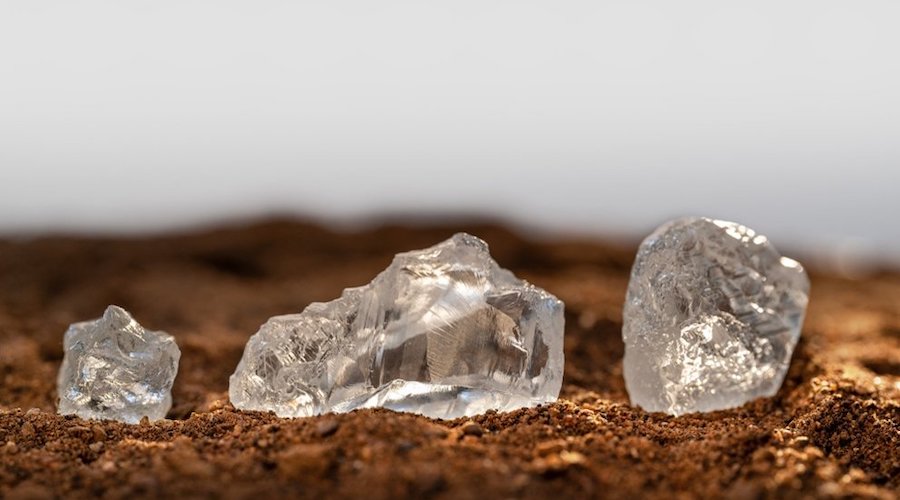
De Beers has struck kimberlite for the first time in 30 years. (Image courtesy of De Beers)

De Beers, the world’s largest diamond miner by value, and its joint venture partner in Angola, state-owned Endiama, have discovered a new kimberlite field, its first such discovery in three decades.

The diamond giant said it struck kimberlite, the most common source of mined diamonds, in its first drill hole into a high-priority target cluster in July. It plans to conduct more drilling, geophysical surveys and lab analysis over the coming months to determine the kimberlite type and its diamond potential.

“Angola is, in our view, one of the best places on the planet to look for diamonds, and this discovery reinforces our confidence,” De Beers chief executive Al Cook said in the statement.

De Beers, owned by Anglo American (LON: AAL), has explored for diamonds in Angola with Endiama since April 2022, after signing two mining investment deals with the government. In 2024, the partners expanded their agreements to cover diamond processing and further exploration.

The find comes as De Beers faces an uncertain future. Anglo American announced in May 2024 it would sell the unit or launch an initial public offering, part of a corporate shake-up following its defence against a  £39 billion ($49 billion) takeover bid by Australian rival BHP (ASX: BHP).

At least six consortia are reported to be interested, including commodities billionaire Anil Agarwal, Indian diamond firms KGK Group and Kapu Gems, and Qatari investment funds. Botswana is also said to be pursuing a controlling stake.

The sale process unfolds against weak market conditions, with prices pressured by competition from lab-grown stones and slowing demand in China.


Alrosa flags high rates, inflation pressure as revenue falls


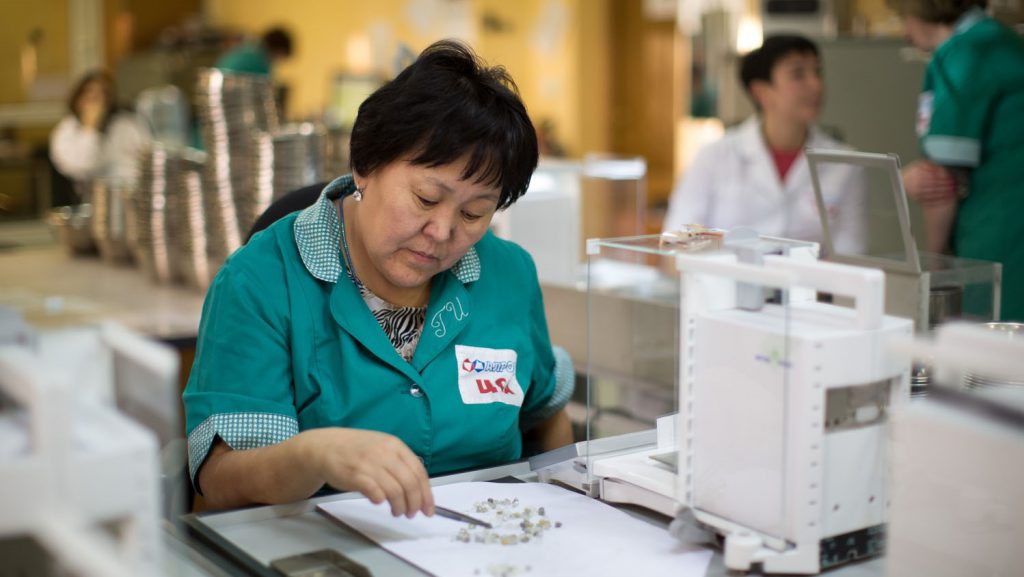
Worker at Alrosa’s Mirny facility (Credit: Alrosa)

Russia’s sanctions-hit diamond producer Alrosa reported a 25% fall in first-half revenue on Tuesday, warning that geopolitics and macroeconomic uncertainties were weighing on demand as high interest rates, inflation and taxes exert pressure on profits.

Group of Seven countries banned direct imports of Russian diamonds in January 2024. This was followed by a European Union and G7 ban on imports of Russia-origin diamonds via third countries. Alrosa itself has been under US sanctions since 2022.

Alrosa’s full-year profits fell sharply in 2024, but the first half of 2025 showed signs of recovery, with net profit up 10.8% year-on-year to 40.6 billion roubles ($506.7 million).

Revenue fell 25% to 134.3 billion roubles and core earnings (EBITDA) dropped 42% to 37.1 billion roubles, Alrosa said.

Net debt jumped almost 10 times to 61 billion roubles, Alrosa’s results filing showed, but the company’s cash, cash equivalents and bank deposits rose 8.4% to 115.4 billion roubles.

“The relatively high level of the key rate and inflation continued to have an additional negative impact on the (group) in the first half of 2025,” Alrosa said, pointing to rising costs for materials and fuel.

Russia’s central bank has maintained elevated borrowing costs for several months, but has started an easing cycle, most recently trimming rates to 18% from 20% in late July.

Alrosa’s first-half profits were boosted by the sale of its stake in Angolan state-controlled diamond miner Catoca, for which Alrosa said it received 15.9 billion roubles.

A subsidiary of Oman’s sovereign wealth fund replaced Alrosa, the world’s largest producer of rough diamonds by volume, as a shareholder in Catoca under a deal formalized in May.

Angola had been under pressure to cease its long-standing partnership with Alrosa since the West imposed sanctions over Moscow’s February 2022 full-scale invasion of Ukraine.

Prior to the deal, Alrosa held a 41% stake in Catoca, with the remaining shares owned by Endiama EP, Angola’s national diamond company.

($1 = 80.1200 roubles)

(By Gleb Stolyarov and Alexander Marrow; Editing by Mark Potter)


Column: Australia rescued a key metals refiner, but more is needed


Image courtesy of Nyrstar

It may seem like a small sum but the $87 million the Australian government is handing to two metal smelters owned by global commodity major Trafigura may turn out to be the start of a big deal.

Australia’s federal and state governments in South Australia and Tasmania agreed last week to provide A$135 million ($87.4 million) to Trafigura unit Nyrstar to support its lead and zinc smelters.

Nyrstar put its troubled Port Pirie lead smelter in South Australia and Hobart zinc processing operations in Tasmania under strategic review earlier this year, citing high energy prices and lower processing fees.

Nyrstar is far from the only Western company battling low margins at metal processing plants as the industry battles both overcapacity and China’s increasing dominance and cost advantages.

The problem for Western governments is that they are increasingly worried about becoming too reliant on China not only for minerals such as rare earths, but also for refined metals such as copper, nickel, manganese, aluminum, zinc and lead.

The challenge is to work out how to secure supply of these metals without taxpayers being unduly burdened.

At first glance it seems the $87 million provided to Nyrstar is little more than a band aid to enable the facilities to keep going for a little while longer.

But the money is also going to be used to allow Nyrstar to study whether it can also use the plants to produce other critical minerals including antimony, bismuth, germanium and indium.

If it is assumed that it is indeed feasible to produce these minerals at the plants, the question then becomes how governments such as those in Australia, the United States and Europe work to ensure that the new capability is viable.

There are several pathways, but the common thread is that they require governments to make and implements policies and to cooperate with each other.

It is patently clear that Western private companies cannot produce refined metals at prices competitive with those made by Chinese producers.

China now produces about 57% of the world’s refined copper, 60% of the aluminum, and 53% of zinc. It also controls about 75% of nickel output in Indonesia, the biggest producer of the metal with a key role in the energy transition.

Pricing, offtake

What are the best ways for Western countries to ensure they keep existing metal refining capacity, as well as build new capability to ensure they can control supply chains for critical minerals?

Subsidies are a quick sugar hit and will not lead to sustainable production, but as Australia has shown, they can be used to buy time.

What is more sustainable is ensuring a pricing and offtake system that provides certainty for companies investing in mining and refining critical minerals.

This can be achieved by governments agreeing to buy set volumes at set prices, but really only works if the government is the sole customer.

If a refiner is also selling to private companies, such as carmakers and energy utilities, then the prices have to be competitive with metals that can be sourced elsewhere.

There is an argument for smart tariffs, which would enable producers to compete with Chinese suppliers.

But these tariffs would have to be well-researched before being implemented and would have to come with incentives to maintain or boost production.

In other words, they would have to be very different to the sledgehammer approach adopted by US President Donald Trump his tariffs, which has seen high rates imposed on commodities such as steel, aluminum and copper with little regard as to how US producers may be able to increase output to replace imports.

The track record of Western governments in successfully enabling critical minerals development and refining is far from encouraging.

But perhaps the decision by Australia to subsidize Nyrstar is a welcome realization that the problem is real and needs solutions sooner rather than later.

(The views expressed here are those of the author, Clyde Russell, a columnist for Reuters.)

(Editing by Kate Mayberry)


Arafura Rare Earths eyes $100 million in export agency funding


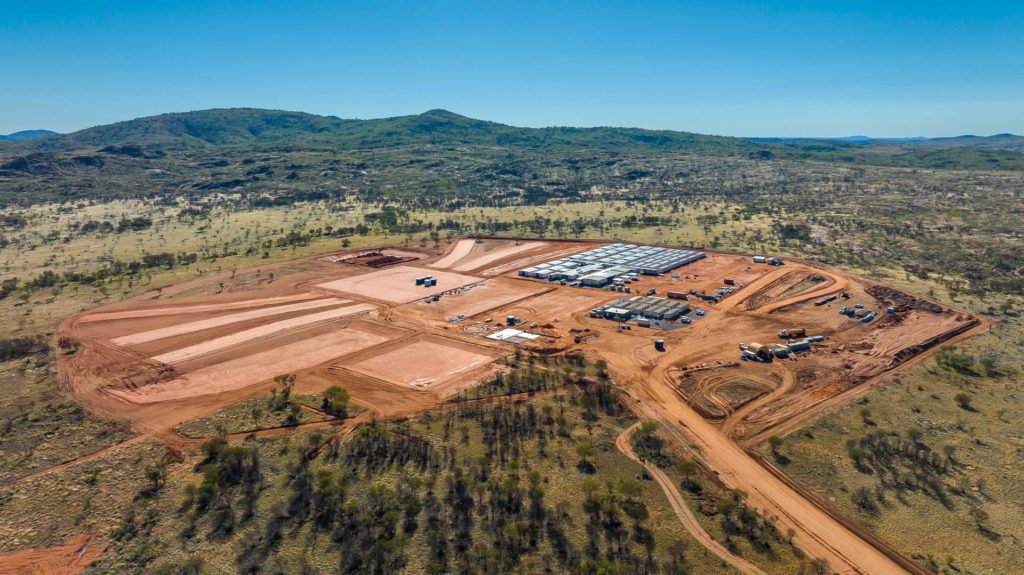
Nolans rare earth project. Credit: Northern Australia Infrastructure Facility

Arafura Rare Earths has received a letter of interest from Australia’s export finance agency about potential funding for its Nolans project in the Northern Territory, which a source said would likely amount to around $100 million.

Export Finance Australia has provided a non-binding letter of interest for funding support for the project, Arafura – which is backed by billionaire Gina Rinehart – said in an exchange filing on Tuesday.

The potential funding is part of a Western push to develop rare earths supply chains with international partners outside of top producer China. Australia’s resources minister last week said the government was considering price floors to support critical minerals projects, including for rare earths.

“We will now be advancing due diligence with both of these parties,” Arafura’s CEO Darryl Cuzzubbo said.

The funding, which is yet to be decided on but is likely to be in the vicinity of $100 million, would mean that Arafura would be able to “materially close” a cornerstone equity target that is 60% of the $775 million total equity requirement, the source said.

The backing follows Prime Minister Anthony Albanese’s announcement last year that Australia would provide up to A$840 million ($547.85 million) for Nolans, the first combined rare earths mine and refinery in the Northern Territory.

The project has also entered an appraisal phase for potential equity investment from Germany’s Raw Materials Fund after being referred by the country’s Interministerial Committee last month.

Rinehart’s Hancock Prospecting is Arafura’s largest shareholder with an 8.57% stake, per LSEG data.

Shares of the company were down 2.4% at A$0.2 as of 0258 GMT, while the broader mining sub-index fell 0.2%.

($1 = 1.5333 Australian dollars)

(By Melanie Burton and Nikita Maria Jino; Editing by Sonia Cheema)


US rare earth magnet startup raises $65M to scale up production


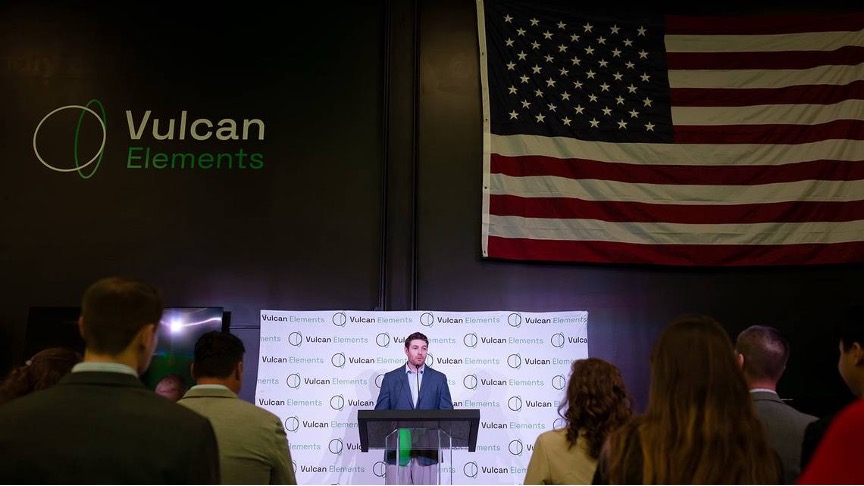
Vulcan Elements CEO John Maslin at the opening of Vulcan’s small-scale facility. Credit: Vulcan Elements

Vulcan Elements, a US-based rare earth magnet startup, has raised $65 million in Series A funding to support its planned buildout of a commercial-scale facility in Durham, North Carolina.

The funding is led by Altimeter Capital, a technology investment firm with over $12 billion in assets under management. The funding round included significant participation from One Investment Management, founded by Rajeev Misra, the former CEO of SoftBank’s $100 billion Vision Fund.

In a press release dated Aug. 11, Vulcan said the investment will help accelerate its expansion to commercial scale to meet rapidly growing market demand—a critical milestone toward fully on-shoring the rare earth magnet supply chain.

The North Carolina-based company is producing high-performance rare earth magnets at its manufacturing plant located in Research Triangle Park. The 21,000-square-foot facility was launched in March to pilot the production of permanent sintered neodymium iron boron magnets, the highest energy product of any permanent magnet material on the market today.

According to Vulcan, its products are able to meet requirements across several advanced defense and commercial applications—from drones and semiconductor fabrication equipment to hard disk drives, robotics and automotives.

With the new funding, the company said it will begin to scale its production of magnets to several hundred metric tonnes annually in the next few years, and several thousand tonnes by the end of this decade.

“This Series A enables Vulcan to scale with the speed and seriousness that this moment and the nation demand,” Vulcan Elements CEO John Maslin said in the press release. 

Decoupled from China

Maslin, a former financial manager in the Navy, described rare earth magnets as “essential invisible building blocks” of the US economy, as they are essential to nearly every advanced technology.

However, China currently manufactures over 90 % of the global supply, while the US makes less than 1%—leaving the latter vulnerable to having its economy frozen and its military production lines shut off by a Chinese export ban.

Vulcan, with eyes on “bringing this supply chain back home,” notes that its production process is entirely decoupled from China; All of its material and equipment is sourced from the US and its allies, ensuring complete traceability and transparency.

Since its founding in 2023, Vulcan’s magnet chemistry and process have been validated by the Department of Energy’s Ames National Laboratory, and its production process has received support from the Department of Defense—including contracts across the Air Force, Army and Navy, the company said.

Vulcan’s chief technology officer, Dr. Piotr Kulik, was the first to open a US rare earth magnetics lab in two decades, it added.

“Vulcan has already emerged as a best-in-class manufacturer within two years of incorporation,” Altimeter CEO Brad Gerstner commented on its investment in Vulcan.


South Africa, ArcelorMittal locked in talks over key mill’s fate


Image courtesy of Arcelormittal

South Africa’s government is locked in crisis talks with the local unit of ArcelorMittal SA to decide the fate of the company’s loss-making construction-steel mills, people familiar with the matter said.

The government’s trade department and one of its state-development banks, the Industrial Development Corp. is in discussions with ArcelorMittal South Africa Ltd. about the potential closure of the Newcastle mill, said the people, asking not to been identified because the discussions aren’t public. The operation located in the eastern province of KwaZulu-Natal makes steel grades used in the country’s crucial automotive, mining and construction industries.

On April 1, the company said the IDC — its biggest shareholder after its parent — would conduct a due-diligence exercise with a view to taking a bigger stake in the firm known as Amsa.

A decision could emerge in coming days with the mill hemorrhaging cash, the people said. ArcelorMittal has set a date of Sept. 30 for its closing along with another mill in Vereeniging, which also produces so-called long products.

That’s the latest deadline for the closure of the plants, which Amsa first said it intended to shutter in November 2023. This would affect 3,500 direct jobs and tens of thousands more in industries that depend on the mills. The steel grades aren’t made by local competitors and would have to be imported.

The trade department “has been in ongoing discussions with Amsa on the potential closure of Newcastle,” it said in a response to questions. “Since the beginning of this process, the department’s objective has been to maintain the country’s long-steel capacity.”

Amsa, which didn’t respond to a request for comment, last month reiterated that unless a solution is found, the mills will be closed and on Aug. 11 told shareholders to continue to exercise caution until an announcement is made.

The company has said unfair discounts on the price of scrap metal used by local competitors — who produce some of the more basic products made by Amsa — are among the causes of its losses.

The steel producer has also complained about high power prices, limited protection against steel imports from China and the poorly run state-owned rail service.

The company’s stock has declined 31% this year in Johannesburg to 0.93 rand, giving it a market value of 1.06 billion rand ($60.4 million), down from a peak of 116 billion rand in 2008. In its most recent financial year, its revenue was almost 40 billion rand.

It also operates a steel mill producing so-called flat products, used for sheeting and to make appliances, in Vanderbijlpark south of Johannesburg and has idled operations in Saldanha and Pretoria.

(By Loni Prinsloo and Antony Sguazzin)


India proposes minerals exchange to regulate metals trading

Bangalore, India. Stock image.

India’s Ministry of Mines has introduced a bill in the lower house of Parliament to establish a national minerals exchange aimed at regulating the trading of minerals and metals, a copy of the bill showed.

The proposed exchange would facilitate trading in minerals and metals under rules framed by the central government.

It would also maintain a comprehensive data bank of trading activity and include regulations to prevent insider trading and market manipulation.

A government-appointed panel had proposed setting up India’s first iron ore exchange to determine the domestic scale price of the key steelmaking raw material, Reuters reported in April last year.

(By Manvi Pant and Nigam Prusty; Editing by Devika Syamnath


Talga turns battery waste into high-purity graphite anodes


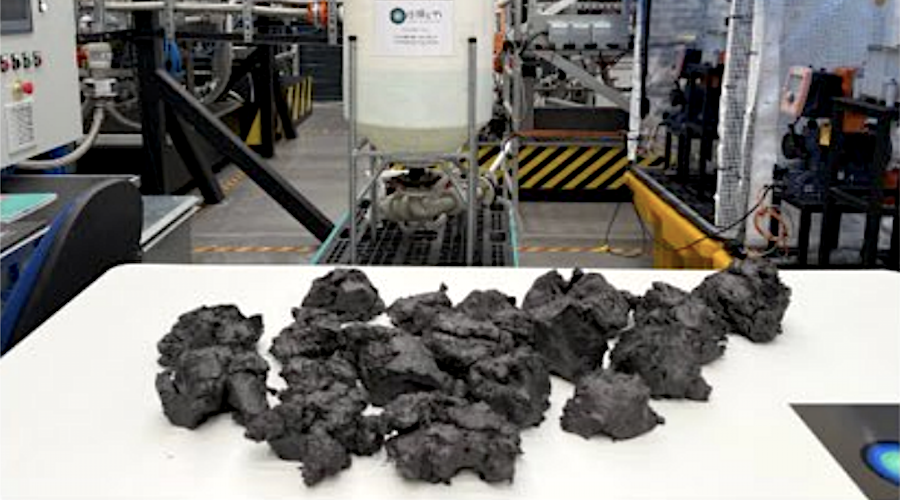
Recycled graphite anode concentrate feedstock. (Image courtesy of Talga.)

Swedish company Talga Group (ASX: TLG) has launched Talnode-R, a graphite anode made from recycled lithium-ion battery waste.

The innovation aims to strengthen the battery supply chain by reclaiming graphite from gigafactory scrap and end-of-life electric vehicle (EV) batteries.

Talga uses a hydrometallurgical process to purify recovered graphite to 99.95%, which matches the performance of new synthetic graphite. Graphite, which can account for up to half the volume of a lithium-ion battery, has long been overlooked by recyclers, who have traditionally focused on cathode metals. With a looming graphite shortfall over the next decade, European self-sufficiency is becoming critical.

Chief executive officer Martin Phillips said that Talnode-R complements the company’s high-power natural graphite anode production and enables global expansion through modular technology.

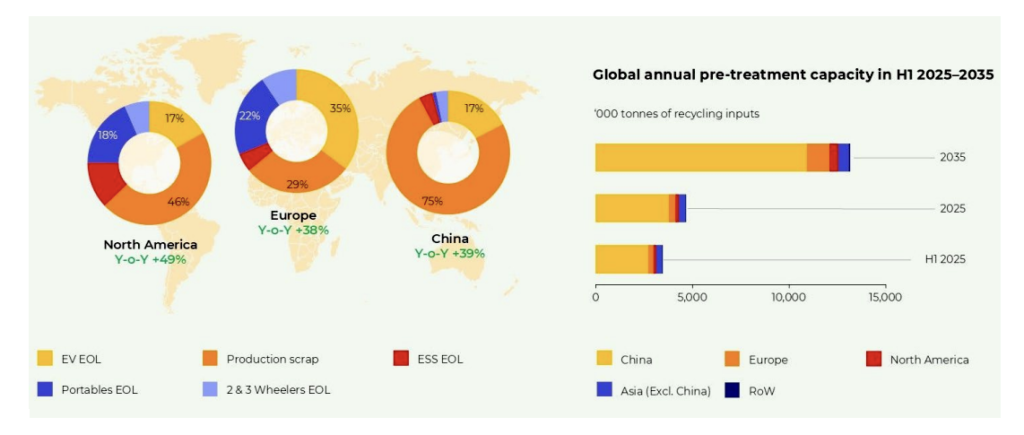
Battery recycling market data from market intelligence firm Rho-Motion shows that global lithium-ion battery pre-treatment capacity reached 3.5 million tonnes in the first half of 2025, with graphite making up roughly 10–15% of that mass.

Talga turns battery waste into high-purity graphite anodes
Source: Benchmark Rho-Motion recycling report.

Available scrap feedstock for recycling rose 40% year-on-year, driven mainly by production scrap, which made up more than half of the increase. Europe’s scrap volume climbed 38%, while North America’s rose 49%.

The announcement comes as Europe’s gigafactory capacity scales up. EU demand for graphite anodes is projected to exceed 500,000 tonnes annually by 2030, or 12 times the 2020 figure, up from 30,000 tonnes in 2023. 

With China controlling about 84% of global graphite processing capacity, each 10,000 tonnes of European-produced graphite could cut the EU’s dependency on foreign critical minerals by 7%.

Talga is also advancing its Nunasvaara South graphite mine in northern Sweden.